RSS
 

Posts Tagged ‘LUMIX’

Panasonic Lumix DMC-ZS35 and ZS40 travel zooms unveiled

11 Jan

ZS40_slant.png

CES 2014: Panasonic has introduced the Lumix DMC-ZS40 travel zoom, also known as DMC-TZ60 in some markets. Equipped with Wi-Fi and NFC, it provides a 30x zoom range (24-720mm equiv), an 18.1MP sensor, and a built-in electronic viewfinder. Its enthusiast-leaning feature set includes a control ring around the lens, Raw shooting, and focus peaking. Also introduced is a lower-cost model, the Panasonic Lumix DMC-ZS35 (TZ55), with Wi-Fi connectivity (though no NFC). The ZS35 covers a 28-560mm equivalent 20x zoom range, uses a 16MP sensor, and lacks a viewfinder. 

News: Digital Photography Review (dpreview.com)

 
Comments Off on Panasonic Lumix DMC-ZS35 and ZS40 travel zooms unveiled

Posted in Uncategorized


Sizing it up: Our Panasonic Lumix DMC-GM1 Review

19 Dec

gm1_2.jpg

We’ve just posted our full review of the Panasonic Lumix DMC-GM1. It underscores the ‘Micro’ in Micro Four Thirds as the smallest model in that class, with a 16MP Four Thirds sensor and a collapsible 12-32mm F3.5-5.6 kit lens. It offers many features that its bigger Lumix GX7 sibling does, starting with the sensor, but in a much smaller package. See how it measures up. Read the full review

News: Digital Photography Review (dpreview.com)

 
Comments Off on Sizing it up: Our Panasonic Lumix DMC-GM1 Review

Posted in Uncategorized


DPReview Gear of the Year Part 2: Panasonic Lumix DMC-GM1

20 Nov

gm1.jpg

A lot of equipment passes through our Seattle and London offices, everything from high-end cameras to inexpensive accessories. A lot of it gets reviewed, but we can’t cover everything. In this series of short articles, DPReview staff will be highlighting their personal standout products of the year. In part 2, Allison Johnson comments on her personal favorite – the Panasonic Lumix GM1.

News: Digital Photography Review (dpreview.com)

 
Comments Off on DPReview Gear of the Year Part 2: Panasonic Lumix DMC-GM1

Posted in Uncategorized


A different point of view: Our Panasonic Lumix DMC-GX7 Review

07 Nov

gx7.jpg

We’ve just posted our full review of the Panasonic Lumix DMC-GX7. With a 16 megapixel Four Thirds sensor, in-body image stabilization, and built-in articulated EVF, the GX7 boasts a lot of refinements to tempt enthusiasts away from similar Olympus and Sony offerings. Panasonic engineers have thrown just about everything they’ve got into this mid-range mirrorless camera, will it find a loyal audience the way its GF1 predecessor did? Click through and read our review.

News: Digital Photography Review (dpreview.com)

 
Comments Off on A different point of view: Our Panasonic Lumix DMC-GX7 Review

Posted in Uncategorized


Real-world samples added to Panasonic Lumix DMC-GM1 first impressions

05 Nov

P1010131.JPG

We’ve just updated our first impressions review of the Panasonic Lumix GM1 with a gallery of real-world sample images. Panasonic’s latest G-series camera underscores the ‘Micro’ in Micro Four Thirds as one of the smallest interchangeable lens cameras ever brought to market. Despite its size, it still offers a 16 megapixel Four Thirds sensor, 3.0-inch touch screen, and full suite of manual exposure controls. Does its image quality in the field measure up? Click through and see for yourself.

News: Digital Photography Review (dpreview.com)

 
Comments Off on Real-world samples added to Panasonic Lumix DMC-GM1 first impressions

Posted in Uncategorized


Panasonic Lumix DMC-GM1 updated with test scene samples

01 Nov

TestScene2.jpg

We’ve updated our first impressions review of the Panasonic Lumix DMC-GM1 with our studio test scene showing image quality for both JPEG and Raw files. The new scene also offers downloadable Raw samples of both daylight and low light scenes. As always, you can compare the GM1 to a number of other cameras.

News: Digital Photography Review (dpreview.com)

 
Comments Off on Panasonic Lumix DMC-GM1 updated with test scene samples

Posted in Uncategorized


Panasonic Lumix DMC-GX7 Review

20 Oct

Panasonic Lumix DMC-GX7 Review.jpg

The MILC models keep rolling out Panasonic’s door. Mirrorless Interchangeable Lens Cameras still appear to have flavour of the month gloss, so Panasonic as well as Olympus are keen to milk every drop from the technology.

This one is especially attractive, although it does appear you will have to pay for the ‘smarts’ in the camera as it leads the G Series in imaging capability.
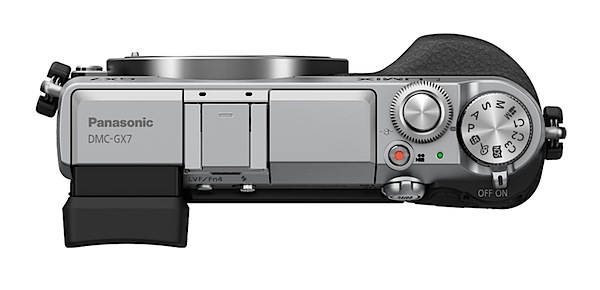
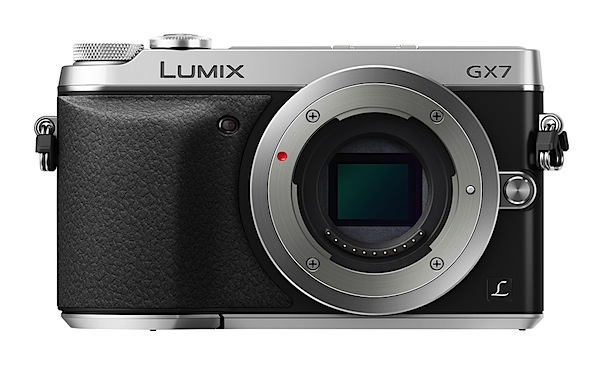
The review camera was fitted with the G Vario f3.5/14-42mm kit lens. The body is made from magnesium alloy and the camera is available in silver+black or black.
Panasonic Lumix DMC-GX7 Review back.jpg

Panasonic Lumix DMC-GX7 Review top.jpg

Panasonic Lumix DMC-GX7 Features

There’s a whole heap of attractive features on the Panasonic Lumix GX7.

  • A 16.00-megapixel Live MOS sensor.
  • Shutter speeds run to 1/8000 second.
  • The rear 7.6cm LCD screen tilts and swivels in a vertical plane, tilting up by 80 degrees and down by 45 degrees.
Panasonic Lumix DMC-GX7 Viewfinder.jpg

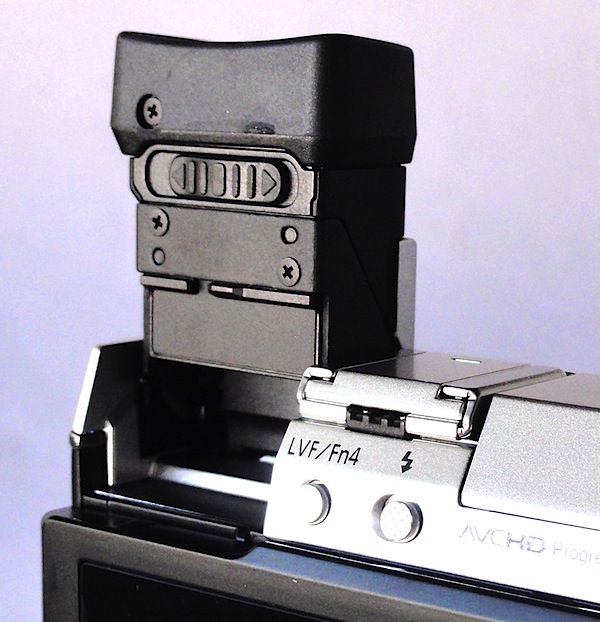
  • For the first time in a digicam the top Live View viewfinder rotates through 90 degrees, so you can view downwards.
  • The AF system has functions including Low Light AF, Pinpoint AF and One-shot AF.
  • Focus peaking can be monitored in Live View. This shows the focus peak of focus in MF and AF+MF mode.
  • The camera has Wi-Fi connectivity (IEEE 802.11 b/g/n) with NFC (Near Field Communication), supported by the Panasonic Image App for iOS/Android smart devices.
  • Touch screen AF to focus and lock on the subject and release the shutter.
    The GX7′s maximum image size is 4592×3448 pixels, sufficient to make a 39x29cm print.

Video? It can shoot in AVCHD or MPEG4 format, recording Full HD 1920×1080 pixels. I was able to record video and shoot stills mid recording.

Panasonic Lumix DMC-GX7 Review - Curl Curl beach arch.JPG

Panasonic Lumix DMC-GX7 Mural

Panasonic Lumix DMC-GX7 Window

Stabiliser

But the big news for those who may have been tossing up between Olympus and Panasonic in the quest for a MILC camera is that the GX7 now has an internal stabiliser. Up to now only Olympus offered an internal stabiliser, while Panasonic’s G series had to rely on specific lenses to keep the camera image steady.

In Panasonic’s own words: ‘The DMC-GX7 is Panasonic’s first G Series camera to offer an in-body optical image stabilisation system. Now blur-free photography can be enjoyed with classic non-digital lenses and digital interchangeable lenses without image stabilisation.’

Mind you, there always was a degree of noise from some Olympus owners that ‘Image stabilisers in Olympus cameras are mostly useless, claiming only the OM-D E-M5 as being acceptable.’

Wasn’t me that said it!

Handling

The camera is comfortable in the hand, thanks to a well-defined speed grip, nobbly surface texture and good balance. The lensless camera body is pocketable.

Controls

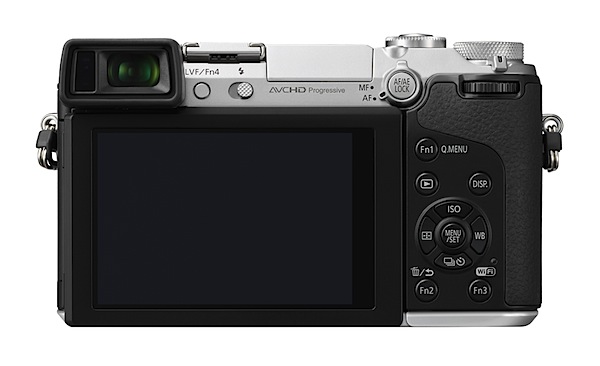
No surprises as we find the top deck relatively uncluttered. Rightwards we find the on/off lever; nearby is the red video record button.
Scene guide.jpg

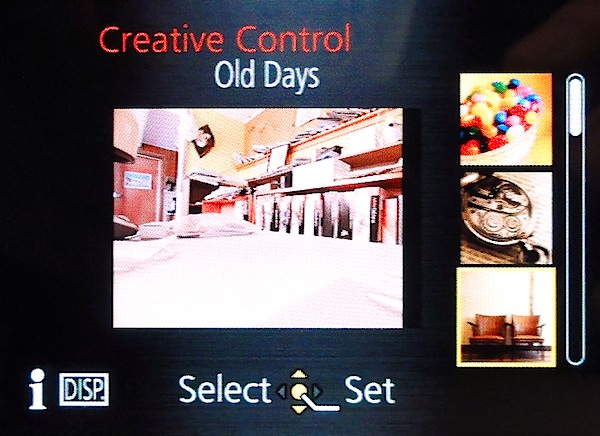
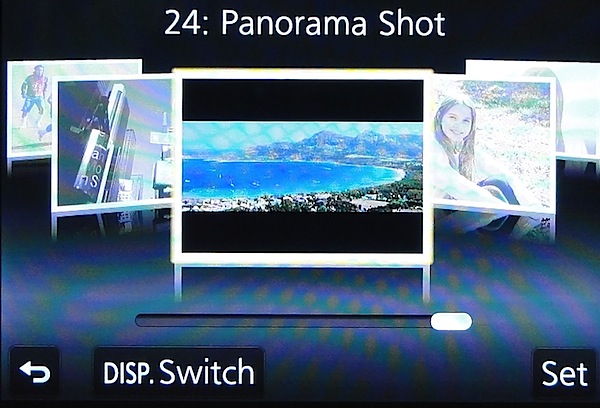
The mode dial has positions for auto, PASM, creative video (you can manually set aperture and shutter speed), three custom modes, scene guide mode (24 settings from clear portrait to sunset glow to panorama) and creative control mode (eight settings, from expressive to retro, high and low key etc).

The shutter button is encircled by the front command dial. A second command dial is placed just behind the on/off switch. Nearby is the AF/MF lever.

Rear panel: three function buttons, replay and trash, display options plus the four way jog dial offering access to ISO, white balance, continuous shooting, self timer and AF mode options.

Overall, the control geography is well designed, with no devious buttons or mysterious options.

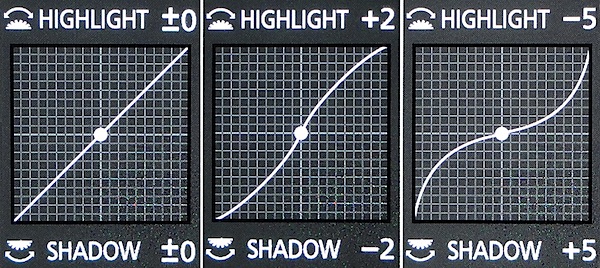
And then I fell upon a neat scheme where you can adjust the highlight and shadow curves of an image pre-shoot. Simply tap the function 2 button and you sight a series of preset curves. Alternatively, you can adjust the highlight and/or shadow section of the curves by rolling the forward or rear command dial.
Menu.jpg

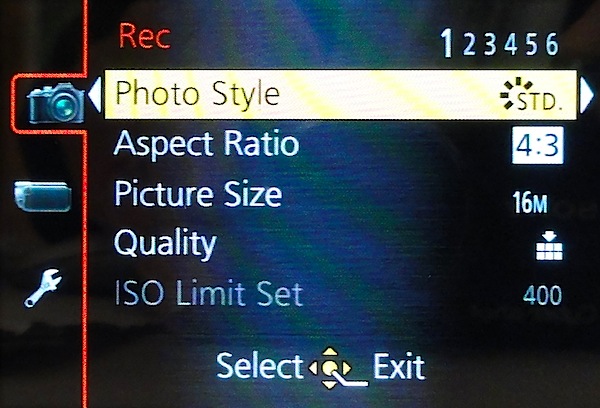
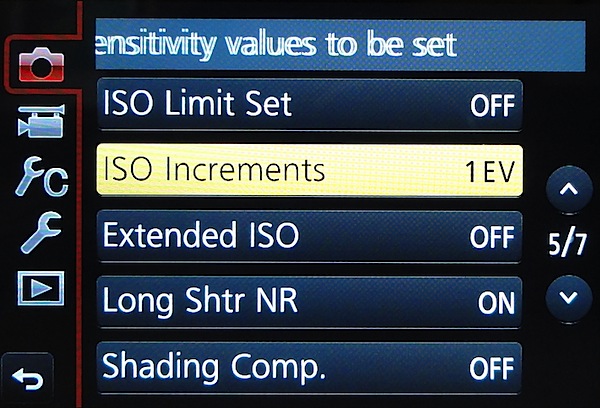
The menu setup is well-designed and not overpowering.
Curves.jpg

One feature that should tug the heart strings of video shooters is the option to completely suppress camera sounds, you know those bumps and clicks from operating the camera, rolling the lens’ zoom etc. The camera also switches the shutter from mechanical to electronic, turning off any operating sounds, and suppresses the AF assist lamp and flash. Good news.

The sad news is that there is no input for an external mic for video work.

Panasonic Lumix DMC-GX7 ISO Tests

Good quality all the way up to ISO 6400. Only at ISO 12800 is a slight appearance of noise visible. At ISO 25600 noise is up further but images are useable.

Panasonic Lumix DMC-GX7 Review Verdict

Panasonic Lumix DMC-GX7 ISO 200.JPG

Panasonic Lumix DMC-GX7 ISO 800.JPG

Panasonic Lumix DMC-GX7 ISO 1600.JPG

Panasonic Lumix DMC-GX7 ISO 3200.JPG

Panasonic Lumix DMC-GX7 ISO 6400.JPG

Panasonic Lumix DMC-GX7 ISO 12800.JPG

Panasonic Lumix DMC-GX7 ISO 25600.JPG
Quality: above average.
Why buy the Panasonic Lumix DMC-GX7: enthusiast features; compact size.
Why not buy the Panasonic Lumix DMC-GX7: no reason.

An ideal camera for the enthusiast who wants the benefits of an internal stabiliser and ability to use a wide range of lenses.

Panasonic Lumix DMC-GX7 Review Rating: 4 Stars out of 5.

Panasonic Lumix DMC-GX7 Specifications

Image Sensor: 16 million effective pixels.
Metering: Multiple, centre-weighted and spot.
Effective Sensor Size: Four Thirds 17.3×13.0mm CMOS.
Lens Factor: 2x.
Compatible lenses: Micro Four Thirds.
Exposure Modes: Auto, Program AE, shutter and aperture priority, manual.
Shutter Speed: Bulb, 60 to 1/8000 second; flash sync 1/320 sec.
Burst Speed: 5 fps.
Memory: SD/SDHC/SDXC cards.
Image Sizes (pixels): 4592×3448 to 1712×1712. Movies: 1920×1080, 1280x720p, 640×480.
Viewfinders: Turret finder: 2,764,800 pixels. 7.6cm LCD screen: 1,040,000 pixels.
File Formats: JPEG, RAW, JPEG+RAW, AVCHD/MPEG4, MPO (3D).
ISO Sensitivity: Auto, 125 to 25600 (25,600 with boost).
Interface: USB 2.0, AV, HDMI mini, WiFi, DC input.
Power: Rechargeable lithium ion battery, AC adaptor.
Dimensions: 123x71x55 WHDmm.
Weight: Approx. 402 (inc card and battery).
Panasonic Lumix DMC-GX7 Price: Get a price on the Panasonic LUMIX GX7 Body Only or Panasonic LUMIX GX7 with LUMIX G VARIO 14-42mm II Lens or Panasonic LUMIX GX7 with LUMIX G 20mm F1.7 II ASPH Lens.

Post originally from: Digital Photography Tips.

Check out our more Photography Tips at Photography Tips for Beginners, Portrait Photography Tips and Wedding Photography Tips.

Panasonic Lumix DMC-GX7 Review

The post Panasonic Lumix DMC-GX7 Review by Barrie Smith appeared first on Digital Photography School.


Digital Photography School

 
Comments Off on Panasonic Lumix DMC-GX7 Review

Posted in Photography


Panasonic unveils tiny Lumix DMC-GM1 ILC and compact 12-32mm lens

17 Oct

GM_s_front_H_FS12032-small.png

One of the original promises of the Micro Four Thirds system was to permit the design of small mirrorless cameras. Today Panasonic released its Lumix DMC-GM1, a tiny camera which can literally fit in the palm of your hand. Don’t be fooled, though: it shares the same 16 megapixel sensor as the GX7 and also offers silent shooting at shutter speeds as high as 1/16000 sec, Wi-Fi, and 1080/60i video recording. It’s bundled with a new 12-32mm F3.5-5.6 lens (also available separately) that rivals a pancake lens for compactness when ‘collapsed’.

News: Digital Photography Review (dpreview.com)

 
Comments Off on Panasonic unveils tiny Lumix DMC-GM1 ILC and compact 12-32mm lens

Posted in Uncategorized


Panasonic Lumix DMC-GX7 samples gallery updated

10 Oct

D8959A4BA6094431A49A0BE6BFE10BDE.jpg

We’ve been taking plenty of photos while working on our upcoming review of the Panasonic Lumix DMC-GX7. Our samples gallery has been updated with an additional fifteen photos to tide you over until the review is posted. Follow the link to see glass sculptures, a beautiful sunset, and a defunct nuclear plant.

News: Digital Photography Review (dpreview.com)

 
Comments Off on Panasonic Lumix DMC-GX7 samples gallery updated

Posted in Uncategorized


Panasonic Lumix DMC-FZ70 Review

27 Aug

Panasonic Lumix DMC-FZ70.jpg

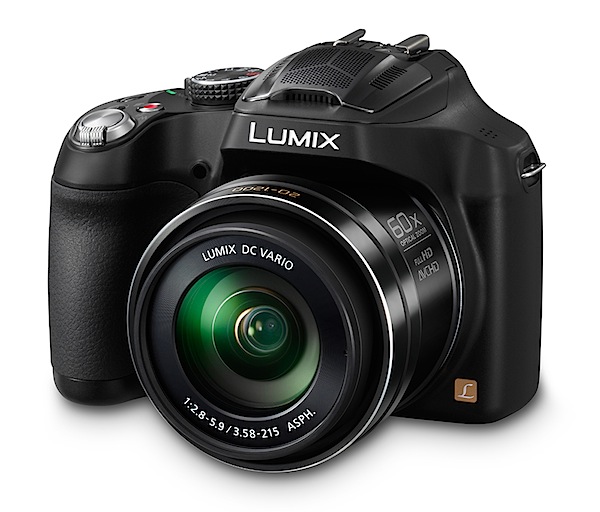
What a whopper! It looks like a compact digital camera but sure as hell offers far more than your average CDC.
Narrabeen lake tele 2.JPG

Narrabeen lake wide 1.JPG

The 60x zoom runs all the way up to a 35 SLR equivalent of 1200mm but — note this! — it begins from a super wide 20mm equivalent. That means you can shoot close shots of sports players from the sidelines and then cover cramped interiors with the same camera. You can also buy a 1.7x tele conversion lens that will take the focal length to 2040mm! Beat that!

The maximum image size is 4608×3456 pixels, large enough to make a 34x29cm print.

Video can be shot in either AVCHD or MPEG4 formats at Full HD 1920×1080 pixel resolution. But no, you can’t shoot stills mid video recording.

Another spec to die for is a 9fps continuous shooting rate at full resolution; moderating this is a continuous rate of 5fps with full AF in play.

Panasonic Lumix DMC-FZ70 back.jpg

Panasonic Lumix DMC-FZ70 top.jpg

Panasonic Lumix DMC-FZ70 Features

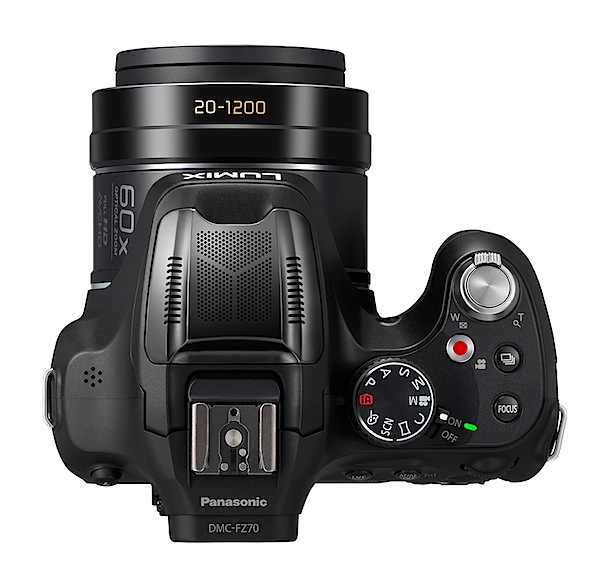
Controls: the top deck houses the mode dial with positions for intelligent auto, PASM, creative video, custom mode, scene mode, panorama shooting, scene and creative control modes.
Scene mode.JPG

Creative control.jpg

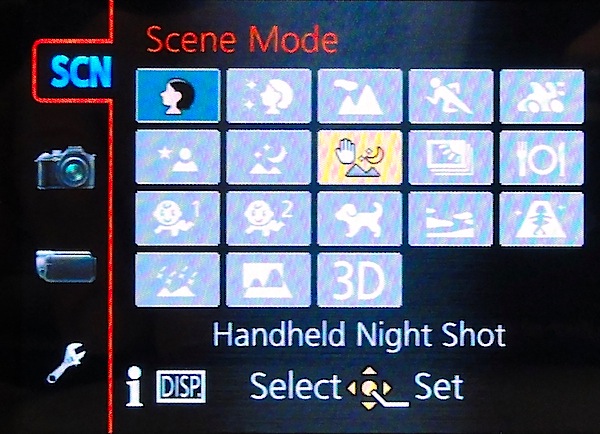
In scene mode you can choose from portrait, scenery, panning, HDR and 14 other settings. This feature alone should tell you heaps about the intended market: those with tonnes of ambition but little real photographic knowledge.

Creative control takes you further and into a re-rendering mode that can impart to a picture the feelings of a retro or old days look, high or key, sepia, dynamic monochrome, impressive art, high dynamic, cross processing plus a miniature or toy effect plus quite a few others.

Close to the mode dial is the shutter button, encircled by the zoom lever; the red video record button; a burst shooting button; and finally, a button that can lock in focus mid shoot … haven’t seen one of these before.

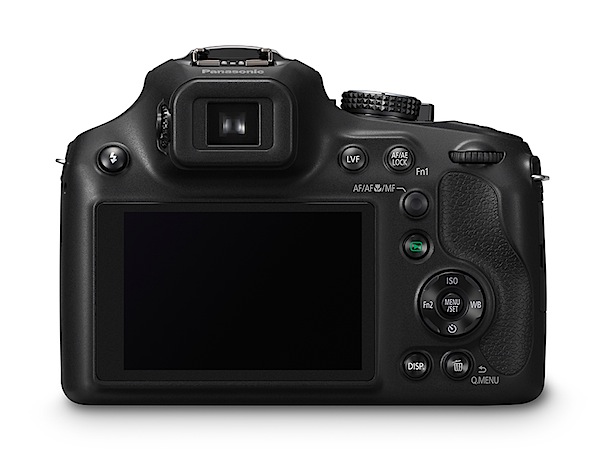
The camera’s rear has the flash activation button at extreme left; top viewfinder focus; a button to switch between the turret finder and the rear LCD screen; one to lock focus and exposure; the rotating rear dial that takes you through selection of settings; replay; the four way jog dial that offers control of ISO, white balance, self timer and function selection; centred is the menu button.

Lower are buttons for display options and access to a quick menu.

Battery and memory card are loaded via a door at the base of the camera.

I found the control arrangement to be entirely logical and non-confusing.

Menu.jpg

The menus are similarly well laid out and abundantly clear in their intent.
Narrabeen lake island.JPG

Family and kayaks 1.JPG

Some Notes

I had taken temporary ownership only a matter of hours before I took it out on a shooting essay: I found the camera to be well-balanced and easy to operate, even tapping controls during a video shoot.

The zoom needs special mention: don’t think for a moment that you can hand hold it with the focal length anywhere past 10x. No way José!

The zoom action is smooth and, amazingly, provides minimal steps along way. The stabiliser is most effective. A fine effort.

Notable is the wind noise protection thanks to a special wind shield built onto the microphone’s housing.

The rear LCD screen is of course virtually useless for viewing outdoors, so the top viewfinder comes in to play, although it offers less resolution.

The panorama mode offers four options: pan left or right; pan up or down.

Startup Time

It took two seconds to power up and let me take my first shot. Follow ons came in as fast as I could tap the button.

Distortion

No problems at the wide or tele ends of the zoom. A fine piece of glass.

Panasonic Lumix DMC-FZ70 ISO Tests

Panasonic Lumix DMC-FZ70 ISO 100.JPG

Panasonic Lumix DMC-FZ70 ISO 400.JPG

Panasonic Lumix DMC-FZ70 ISO 800.JPG

Panasonic Lumix DMC-FZ70 ISO 1600.JPG

Panasonic Lumix DMC-FZ70 ISO 3200.JPG
Only by ISO 1600 did some noise appear but with sharpness still acceptable; by ISO 3200 a blue colour cast appeared over the image, with noise up and sharpness down.

Panasonic Lumix DMC-FZ70 Review Verdict

Quality: average.
Why you’d buy it: that 60x zoom! excellent AF and stabiliser action; feels good in the hand.
Why you wouldn’t: bulky for some.

I well remember handling my first camera with a 10x lens …it was a Kodak I think! I thought the world had taken a turn for the best. Now look where we are!

Top gear.

Panasonic Lumix DMC-FZ70 Specifications

Image Sensor: 16.1 million effective pixels.
Sensor: 11mm CMOS (6.17×4.55mm).
Metering: Multi, centre-weighted, spot.
Lens: Leica DC Vario-Elmar f2.8-5.9/3.58-215mm (20-1200mm as 35 SLR equivalent)
Exposure Modes: Auto, Program AE, shutter and aperture priority, manual.
Shutter Speed: 8-1/2000 second.
Memory: SD/SDHC/SDXC plus 200 MB internal.
Image Sizes (pixels): Stills: 4608×3456 to 480×480.
Movies: 1920×1080, 1280×720, 640×480.
Continuous Shooting: 9fps max.
Viewfinder: Turret (202,000) and 7.6cm LCD screen (460,000).
File Formats: JPEG, RAW, MPO 3D, MPEG4, AVCHD.
ISO Sensitivity: Auto, 100 to 6400 (with boost).
Interface: USB 2.0, HDMI mini.
Power: Rechargeable lithium ion battery.
Dimensions: 130x97x118 WHDmm.
Weight: 606 g (inc battery).
Price: Get a price on the Panasonic LUMIX DMC-FZ70 at Amazon.

Post originally from: Digital Photography Tips.

Check out our more Photography Tips at Photography Tips for Beginners, Portrait Photography Tips and Wedding Photography Tips.

Panasonic Lumix DMC-FZ70 Review


Digital Photography School
 
Comments Off on Panasonic Lumix DMC-FZ70 Review

Posted in Photography