RSS
 

Posts Tagged ‘like’

Concrete Like You’ve Never Seen It: 15 Unexpected Furniture & Object Designs

21 Sep

[ By SA Rogers in Design & Furniture & Decor. ]

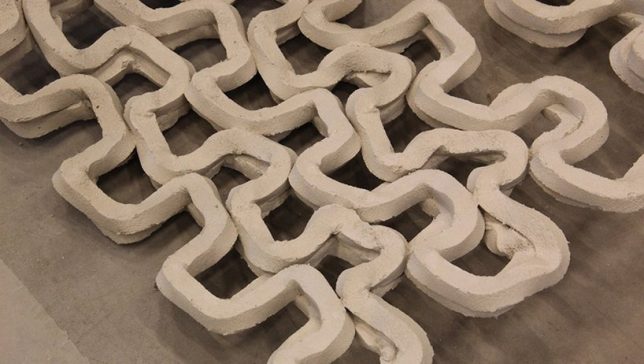
Concrete might typically be cold, hard, impersonal and impermeable, but treat it right and it’ll soften right up into surprisingly comfortable, accessible and usable everyday items, from pens and iPhone skins to rocking chairs and squishy-looking seating. Cast it from pillowy molds, 3D-print it in squiggles, brush it onto highly detailed objects, impregnate it into textiles or imprint it with delicate textures and you’ll have objects full of intriguing contradictions.

Concrete 3D Printer Enables Innovation

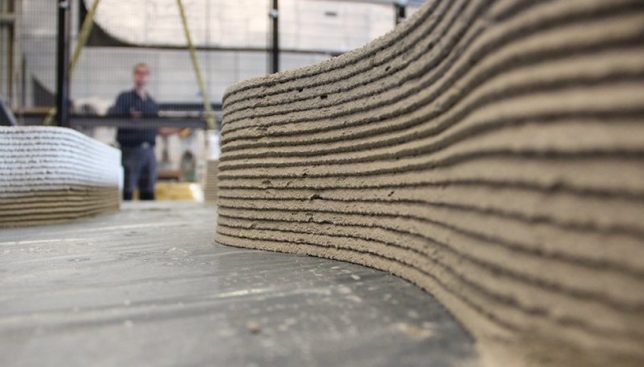
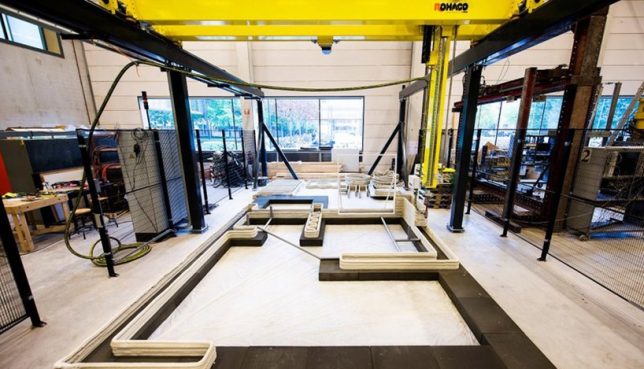
This 3D printer by Dutch company ROHACO spits out concrete in all manner of shapes, even squiggly lines, through a swivel head attached to a hose from a concrete mixer. Not only does this enable concrete to take unprecedented forms, it makes it possible to 3D print entire homes unsupervised, with the kinds of curves and details that would normally take an extraordinary amount of work.

3D-Printed Concrete Canoe

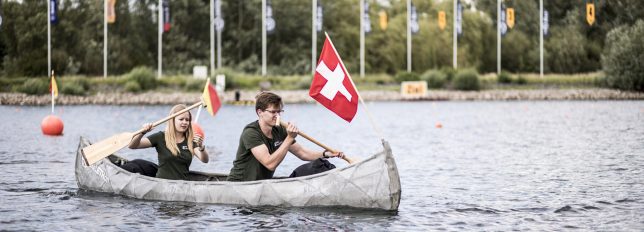
3D printing with concrete makes it possible to produce things like the skelETHon 3D printed concrete canoe, which won first place at the 16th Concrete Canoe Regatta competition in Germany. That’s right, it’s not even the first canoe to be made from concrete! The inner frame of this one is made of concrete reinforced with stiff steel fibers, while the shell is a two- to three-millimeter-thick waterproof concrete skin.

Concrete & Canvas Seating

These objects are a bit of a contradiction: simultaneously appearing soft and hard. That’s because they’re both, technically. ‘Fabric’ is an outdoor seating collection by Miriam Estévez, wherein soft fabric poufs are soaked in a liquid concrete and allowed to dry in order to create a surprisingly strong, durable, waterproof result.

Traditional Chair Covered in Concrete

You might imagine that someone took a mold of a traditional chair and then cast it with solid concrete, producing the detailed form you see before you. The truth is actually much simpler. Bentu Design teamed up with Guangzhou fine arts students to carefully cover an existing chair with concrete mixture, making sure to preserve every detail, from the scallops along the wooden frame at the top to each individual upholstery nail.

Delicate Persian & Islamic Patterned Tables

Concrete doesn’t take on the adjective ‘delicate’ easily, but every now and then, something qualifies. This disc-shaped tabletop, just a few millimeters thick, balances on the neck of a water-filled jug to form a beautiful recycled coffee table. Milan-based design studio Daevas printed the top with a traditional Persian pattern.

Next Page – Click Below to Read More:
Concrete Like Youve Never Seen It 15 Unexpected Furniture Object Designs

Share on Facebook


[ By SA Rogers in Design & Furniture & Decor. ]

[ WebUrbanist | Archives | Galleries | Privacy | TOS ]


WebUrbanist

 
Comments Off on Concrete Like You’ve Never Seen It: 15 Unexpected Furniture & Object Designs

Posted in Creativity


Like a Music Festival, Minus the Dirt: Social Hostel Offers Indoor Camping

19 Sep

[ By SA Rogers in Boutique & Art Hotels & Travel. ]

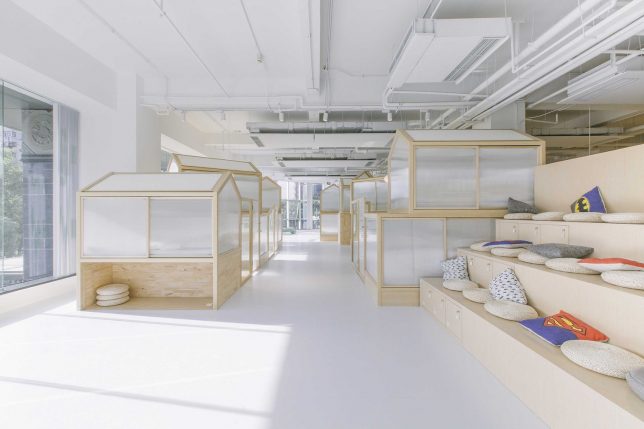
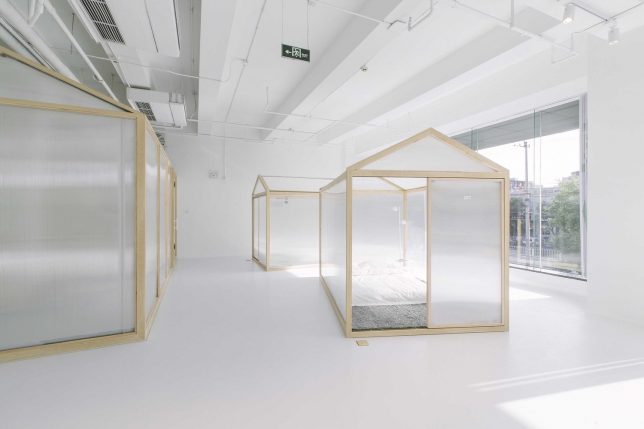
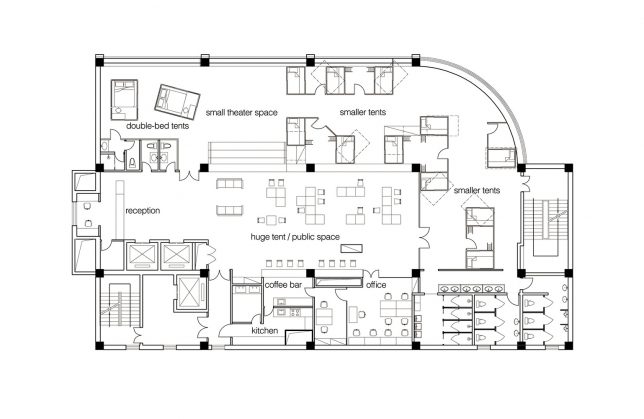
If you love the sense of community at multi-day outdoor music festivals like Glastonbury, Coachella and Bonnaroo but hate the mud, dust, noise and filthy porta-potties, this hostel was designed just for you. Cao Pu Studio designed ‘Together Hostel’ as an indoor camping experience, with guests staying in translucent individual ‘tents’ under a common roof. The experience emphasizes socializing, with lots of shared interactive spaces, but provides a tad more privacy than the average hostel bunk room.

The tents are organized in groups of four or five, making the hostel ideal for small groups traveling together, or for travelers prioritizing making new connections with strangers. Each tent is equipped with power sockets, extension cords and reading lights. Each of the timber-framed structures is finished in frosted polycarbonate, which doesn’t offer total privacy, but at least gives occupants a sense of their own personal space within the larger hostel without shutting them off altogether. If you’re backpacking, you can even roll out your sleeping pad in the theater area at night instead of sleeping in a ‘tent’ for a lower rate.

There’s a food court with lots of seating, a shop, a bar, a small theater space, a kitchen, offices and plenty of private showers and restrooms in addition to the tents, which come in single or double sizes. Modular tables in the central hall fit together like puzzle pieces, creating larger or smaller surfaces depending on whether you want to sit with a big group or dine alone.

The concept capitalizes on growing trends (voluntary or not) toward living in smaller spaces and in closer quarters with others rather than spreading out in suburban-style homes. People who travel on the cheap are accustomed to giving up space and privacy in exchange for a good deal, and this design makes the experience feel cleaner and more intentional. Would you stay at the ‘Together Hostel?’

Share on Facebook


[ By SA Rogers in Boutique & Art Hotels & Travel. ]

[ WebUrbanist | Archives | Galleries | Privacy | TOS ]


WebUrbanist

 
Comments Off on Like a Music Festival, Minus the Dirt: Social Hostel Offers Indoor Camping

Posted in Creativity


This simple web tool helps you find the lenses you like best

10 Sep
Photo by Brandi Redd

If you’re having trouble deciding what lens to buy next, and diving into the technical details isn’t helping (we have no idea what that’s like… but we hear it happens), a simple web tool called What the Lens might be able to help. Created by photographer Willie Chik, the tool reveals your lens preference by having you pick your favorite photos from a gallery.

The site pulls images from 500px, automatically sorting them by brand—so you can use What the Lens to find your favorite Canon, Nikon, Fuji, Sony FE, Sony A, Olympus, or Panasonic lens. Then, once you’ve selected your brand, you can further break down the gallery by category—selecting either Landscapes, Macro, Animals, Travel, People, and City.

Finally, once you’ve done all that, it’s time to pick your favorite 20 photos. You can scroll down as far as you’d like, loading more shots until you find 20 you really like, and once you’re done the site will reveal what lens suits you best. In my case, after selecting 20 canon portraits, it came up with this:

Of course, we prefer a more technical approach here at DPReview… one that’s not liable to be skewed by your post-processing preference, what kind of landscapes you like best, or the variety of other issues that come up when you really start to think about this tool as a buying guide.

But if you’re looking for a simple and possibly even fun way to determine what lens deserves to go next on your to-buy list, What the Lens might be worth a go. Just be careful with the “People” category… that one can get a bit not safe for work (NSFW).

Articles: Digital Photography Review (dpreview.com)

 
Comments Off on This simple web tool helps you find the lenses you like best

Posted in Uncategorized


These drink coasters look like a camera lens when stacked

02 Sep

Looking for a stylish way to keep condensation from forming unsightly rings on your desk? Are you a huge photography nerd? Fotodiox has a solution that will keep both parts of your psyche nice and happy: cup coasters that, when you stack them together, appear to form a single camera lens.

Fotodiox calls the quirky product the CraftMaster LenzCoaster, and offers them in three different varieties.

A careful look at each LenzCoaster ‘lens’ reveals that it is split into five sections, each section a different drink coaster with silicone padding. Magnets embedded in each coaster keep the pieces together when stacked.

The lens coasters are offered in white and black, the latter of which comes in a variety with black and red ‘caps.’ Fotodiox is offering all three versions now for $ 25.

Articles: Digital Photography Review (dpreview.com)

 
Comments Off on These drink coasters look like a camera lens when stacked

Posted in Uncategorized


Tips for Doing Concert Photography like a Pro

21 Aug

Imagine being a concert photographer and getting the chance to cover loads of concerts. Imagine standing just feet away from your favourite artists as you capture so many shots of them. Doesn’t that just sound like the best thing? As opposed to other genres of photography like portraiture, fashion, etc., we have little to no control over lighting, the artists, and tons of other factors in concert photography.

So what are some of the best settings and tricks to capture those perfect shots at concerts? Images which will make you proud, make the artists and the viewers sat “Wow that is indeed one brilliant capture.”?

Tips to capture concert photos 7

Use a fast lens and shoot wide open

Using a fast lens is highly important and is a basic requirement for concert photography. Almost all concerts happen during evenings or night, or indoors under low lighting, which is why your camera sensor requires more light to enter through the lens opening. Moreover, the performers keep moving around the stage so you need to use faster shutter speeds to freeze their motion.

A fast lens is one which allows shooting at wider apertures such as f/2.8, f/1.8, etc. By using lenses like the 50mm f/1.8 or 135mm f/1.8 at the smallest aperture value, you can capture a well exposed shot by keeping the shutter speed fast enough. Another reason for using a fast lens is because usually the distance between the backdrop and the subject is minimal, so to create a shallow depth of field with a bokeh effect, a smaller aperture value would have to be used.

Tips to capture concert photography 5

Shoot in Aperture Priority Mode

Using Aperture Priority Mode to shoot concerts allows for more stress-free shooting. You simply tell your camera the aperture you want to use and it automatically sets the corresponding shutter speed. For many newbies shooting their first few concerts and even for many pros, using aperture priority allows for hassle free shooting.

Also, since the your mind is not all occupied by technical settings, you have freedom to look around at the artists, the crowd, etc., and end up shooting something really creative.

Shoot in aperture priority, with your f-number set to the smallest available on your lens, usually f/1.8 or f/2.8.

Crank up the ISO

Tips to capture concert photos 1

Concerts usually take place in low light settings and for many reasons, using a tripod is not possible. So you can resort to the one setting which you have control over and can easily use, the ISO.

Before the concert really gets going, fire off a series of test shots at different ISO values to judge after what point the noise becomes unacceptable. (Usually ISO 3200 or 6400). Some noise is actually okay and is far better than having a totally underexposed or blurry shot simply because you didn’t increase your ISO value.

The noise generated by the high ISO values can be used creatively to capture something unique. A monochrome shot with some noise would lend a really cool film grain effect to your shot. High noise can be fixed later on in post-processing too. So don’t think twice before cranking up that ISO, it’s far better than having no photo to show.

Avoid using your flash

Tips to capture concert photography 2

MOST important- Avoid using your flash at concerts. It is looked down on and frowned upon a lot. Imagine that you are firing your flash towards the performer(s), and there are 10 others doing the very same. That is surely going to annoy the artists, not to mention almost blind them.

Another important aspect of concert photography is photographing the audience, and no photographer would like to distract the audience from the artist who is performing for them. Repeatedly firing the flash at their faces while capturing their photos can easily annoy audience members.

Also, if we are aiming to capture candid photos of either the artists or the crowd, then firing a flash at them surely is not the right way to do that. And yes, a majority of photos using the built-in pop-up flash simply aren’t worth it. They look flat and uninspiring.

Move around

Tips to capture concert photography 4

You are not there to stand at one place and shoot the same picture 10 times. As a concert photographer it goes without saying that you will have to move around. Move with the artists, move as the lighting changes, etc., to capture those standout moments. (Note: unless, of course, the venue or artist has put restrictions on photographers moving around.)

If you find people blocking your view, you have to move. After all, they have paid to watch their favourite artists perform. If the lead singer moves to one side of the stage, then you have to follow him over there.

The lights too will change from time to time, and it is important to know when which area of the stage will be illuminated to capture the performers properly with adequate lighting.

Tips to capture concert photos 6

Moving around will always get you some really creative shots. You could capture a shot of the lead guitarist under the spotlight, a shot of the lead singer standing isolated from everyone else, etc. The possibilities are endless.

Wait and anticipate

Waiting for that perfect moment is as important as learning to anticipate it. This is a habit which can be developed easily, and is only fine tuned over time. Observe the artists and you will notice certain habits of theirs.

Moments such as a guitarist bending backwards during a particularly intense moment, a DJ waving his arms in the air, a singer grabbing the mic in a particular manner, etc., are all moments which would make for a perfect shot. It is important to know when these moments are around the corner so that you are ready to fire your camera when they come.

Tips to capture concert photography 3

Conclusion

These are just a few tips to help you do better concert photography. Please share any others you’ve learned as well as your concert photos, in the comments below.

The post Tips for Doing Concert Photography like a Pro by Kunal Malhotra appeared first on Digital Photography School.


Digital Photography School

 
Comments Off on Tips for Doing Concert Photography like a Pro

Posted in Photography


Like A Rock Star: 12 Iconic Movie Corvettes

03 Jul

[ By Steve in Culture & History & Travel. ]

The Chevrolet Corvette’s long list of silver screen starring roles turned America’s first mass-produced sports car into an automotive pop culture icon.

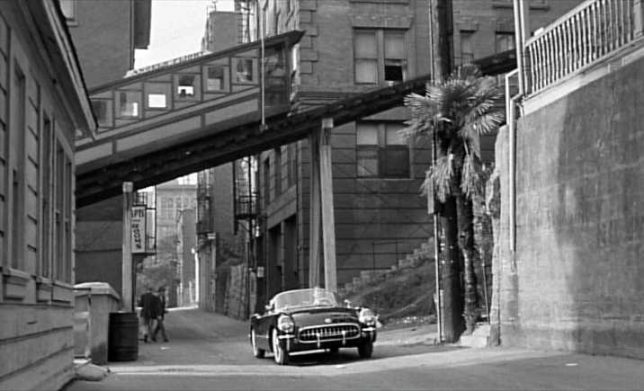
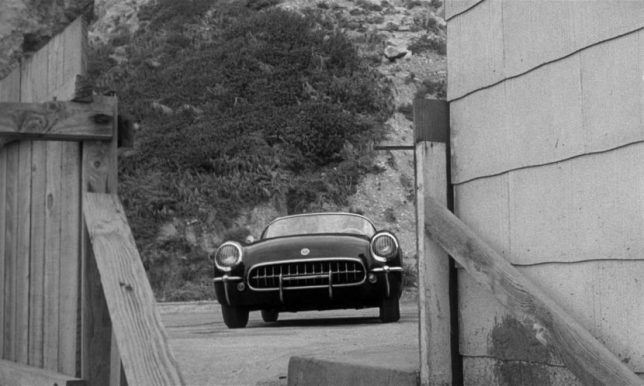
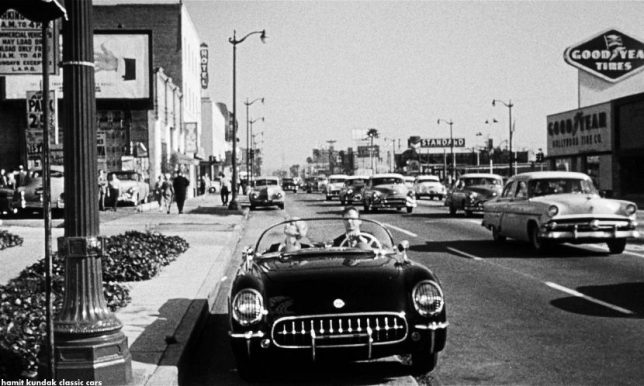
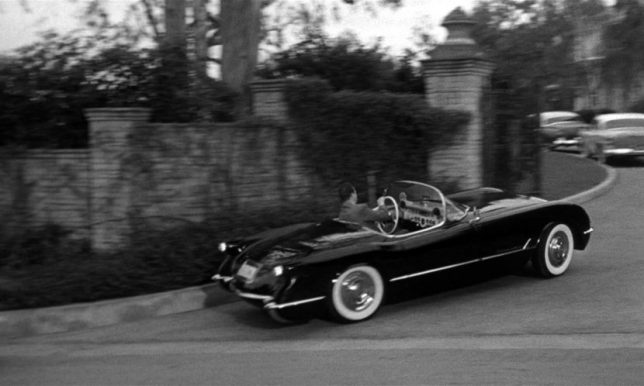
One of the Corvette‘s first film appearances was in the 1955 film noir classic Kiss Me Deadly. Directed by Robert Aldrich, the movie starred Ralph Meeker as Mickey Spillane’s hard-boiled private investigator Mike Hammer. The latter roamed the mean streets of Los Angeles in his 1954 Corvette, one of only 3,640 manufactured that year and one of only FOUR painted black.

Hammer’s black ‘vette may have looked cool but performance was anything but hot due to the pedestrian Stovebolt Six engine under its fiberglass hood. GM introduced a V8 for 1955 but limited model year production to just 700 in order to move the rest of the slow-selling ’54s. Even so, Hammer’s sleek (for the times) ride definitely added badly-needed panache to a niche model whose future was very much in doubt.

True Lies – 1959 Corvette

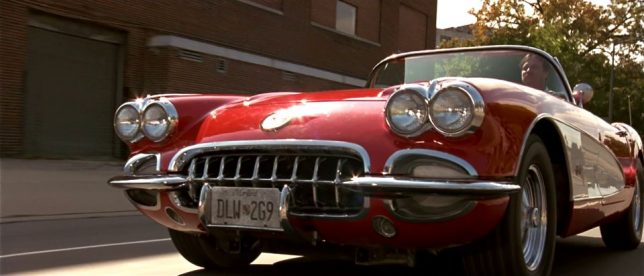
True Lies, a 1994 action-adventure-comedy starring Arnold Schwarzenegger, Jamie Lee Curtis, Tom Arnold, Tia Carrere, Bill Paxton, Eliza Dushku, and even Charlton Heston has aged rather well. Ditto for the red 1959 Corvette driven by Paxton (playing sleazy used car salesmen Simon) as he regales AH-nold on his time-tested seduction technique: “Let’s face it, Harry, the ‘Vette gets ’em wet.”

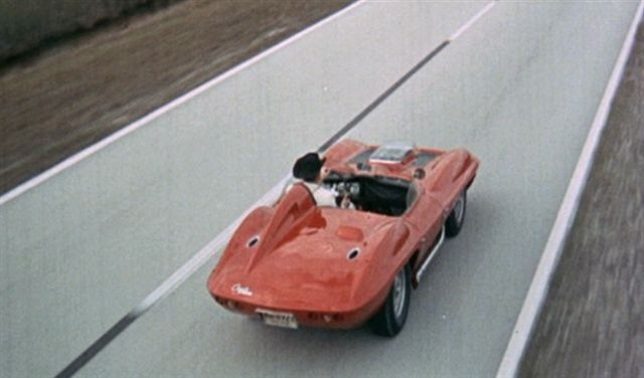
Clambake – 1959 Corvette XP-87 Stingray Racer

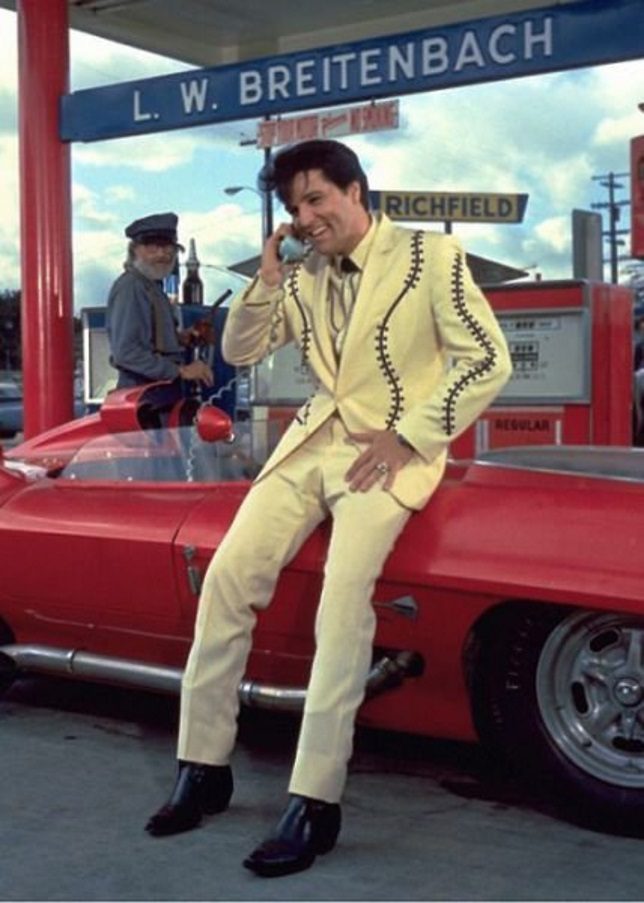
“Hey buddy, where’s the gas cap on this thing?” Built in 1959 “to test handling ease and performance,” the Corvette XP-87 racer won an SCCA National Championship in 1960. It was then modified with the addition of a passenger seat and made the rounds of the auto show circuit.

The XP-87 bowed out in grand style, appearing in the 1967 film Clambake as the private car of Elvis Presley’s oil tycoon character. Thank you, XP-87, thank you very much.

Heavy Metal – 1960 Corvette

“You can hedge your bet on a clean Corvette”… Heavy Metal – the 1981 animated sci-fi fantasy film produced by Ivan Reitman and inspired by the eponymous graphic magazine, featured a 1960 Corvette but if you arrived a few minutes late to the movie theater, you probably missed it.

Here’s a link to the ‘vette’s impressive entrance (dude totally sticks the landing!) in which it literally brings evil to the world in the form of the glowing green loc-nar. Mustang owners most definitely approve.

Next Page – Click Below to Read More:
Like A Rock Star 12 Iconic Movie Corvettes

Share on Facebook


[ By Steve in Culture & History & Travel. ]

[ WebUrbanist | Archives | Galleries | Privacy | TOS ]


WebUrbanist

 
Comments Off on Like A Rock Star: 12 Iconic Movie Corvettes

Posted in Creativity


Getting the shot: macro photos of paint and water that look like CGI

24 Jun

Vibrant colors of acrylic paint billow into clouds inside a water tank. © Photo by Alberto Seveso

Illustrator and photographer Alberto Seveso’s paint photography is out of this world. His images – macro photos of billowing clouds of color – look like they were generated by an animation program. But as he tells DPReview, it’s all very real.

The process itself, says Seveso, is quite easy: just pour varnish or acrylic colors into a water tank and take a burst of photos. Understanding exactly how to do that – what light you need, what works, and just as importantly, what doesn’t work – is the time-consuming part.

‘I spent a lot of time building all the stuff I use to shoot varnish into the water, and it’s still a work in progress,’ Seveso tells DPReview. ‘It’s very important to find the right light and, the hardest part, find the perfect mix between varnish and water and the way to pour this mix into the tank… not too fast not too slow.’

For his pictures, he uses either a Canon EOS 60D or Canon 7D Mark II with a Canon EF-S 60mm F2.8 macro lens attached. The tank is lit by either fluorescent light (personal projects) or higher quality tungsten Fresnel lights (for commercial assignments), two on either side of the tank, placed in front of either a black background or a softbox if he’s shooting on white.

You can see the setup for yourself in the BTS shots below:

$ (document).ready(function() { SampleGalleryV2({“containerId”:”embeddedSampleGallery_9818299609″,”galleryId”:”9818299609″,”isEmbeddedWidget”:true,”standalone”:false,”selectedImageIndex”:0,”startInCommentsView”:false,”isMobile”:false}) });

And here is a video Sony made to show off Seveso’s paint work (and sell some phones and tablets while they’re at it):

Seveso says he was inspired to create this kind of photography in 2009, when he saw ‘something similar but classic,’ probably ink drops in water.

‘I realized there was more to explore, different materials to mix, so I started to experiment with different kinds of liquid like acrylic colors, different types of oils, sparkling water, gels, metallic colors, ice, food coloring, and other things,’ he says. ‘Over the years, I’ve tried to develop a personal approach to this technique, developing the project in a very personal way and trying to focus on the details.’

Translation: macro photography.

These close-up, colorful photographs have become Seveso’s calling card. And what a gorgeous calling card they are.

$ (document).ready(function() { SampleGalleryV2({“containerId”:”embeddedSampleGallery_4295038061″,”galleryId”:”4295038061″,”isEmbeddedWidget”:true,”standalone”:false,”selectedImageIndex”:0,”startInCommentsView”:false,”isMobile”:false}) });

Before we let Alberto go, we asked him one more question. Does he have any advice or tips for people who would like to try this kind of paint photography for themselves?

His answer?

‘Practice,’ he told us emphatically. ‘It takes a lot of practice to understand the exact mix between liquids to get separate colors, details and color filaments – this is perhaps the hardest part.’

To see more of Alberto’s work, visit his website or follow him on Behance, Facebook, and Instagram.

Articles: Digital Photography Review (dpreview.com)

 
Comments Off on Getting the shot: macro photos of paint and water that look like CGI

Posted in Uncategorized


This USB flash drive looks like a miniature Leica M10

08 Jun

Eager to get your hands on a Leica M10? While the camera itself hasn’t yet started shipping, a smaller, much cheaper rendition of it has appeared online: a 16GB USB flash drive in the shape of a tiny M10. The dongle is made from molded rubber and includes a keyring. Several online retailers are listing the USB drive, including B&H Photo, the Leica Store in Miami, Amazon, and Adorama. The unit is priced at $ 45.

Via: LeicaRumors

Articles: Digital Photography Review (dpreview.com)

 
Comments Off on This USB flash drive looks like a miniature Leica M10

Posted in Uncategorized


Modular Remix: Parking Garage Picked Apart, Reassembled Like LEGO

31 May

[ By WebUrbanist in Architecture & Offices & Commercial. ]

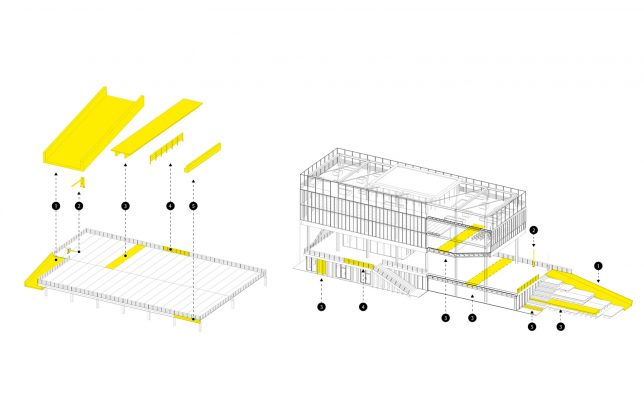
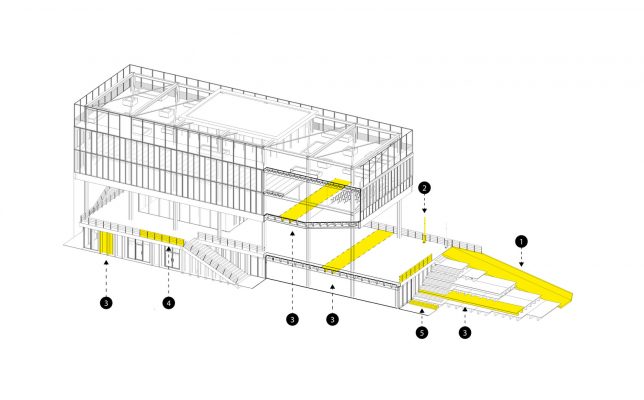
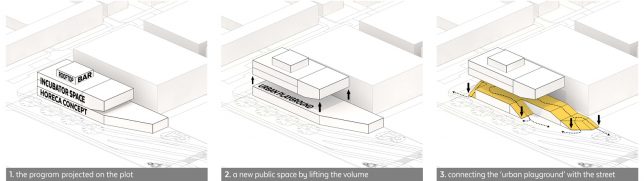
As autonomous vehicles begin to roll out on city streets, adaptive reuse projects like this one could help old parking structures readily find new and productive urban purposes. This award-winning design by Dutch firm Studio Komma and The Men of Foam for The Hague features a mixed-use program built on the bones of an existing parking garage, with a twist: parts can be moved around like modular LEGO blocks.

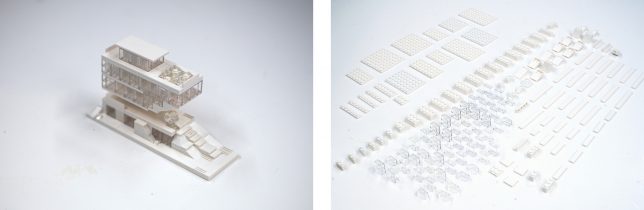
And the LEGO piece is no idle comparison — the team used actual bricks to mock up their designs, focusing on how individual modules could play larger roles in the overall scheme. They also considered how these same re-situated units might later be shifted around to serve other functions.

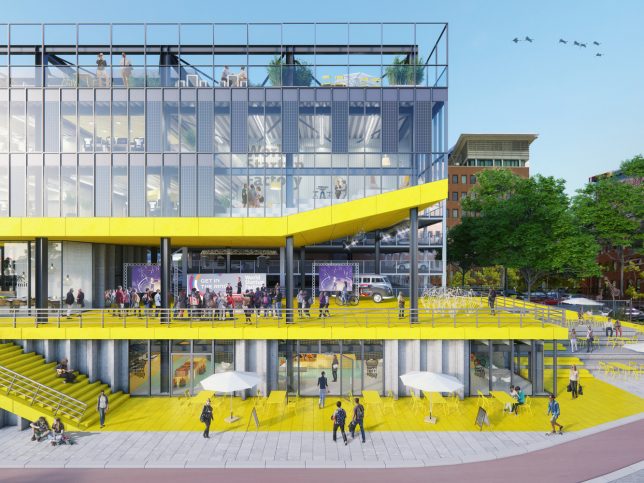
Ground floors commercial and social spaces are fit into the framework of the extant garage, using the old second-story parking level for overhead shelter. Above the existing second level, new levels reuse ramps and other elements to grow the program vertically — these mostly-indoor third and fourth floors shelter an outdoor public zone left open in the middle.

Colors and details in the proposed scheme highlight elements of the adaptive reuse while aiming “to create an iconic building that is an accelerator for the transformation of an industrial area into a new energetic urban district.” Pieces of the old structure are preserved and made modular, fitting into the new program where useful but retaining aspects of their original shape and character to illustrate change over time.

In developing the ZIP2516 scheme, which subsequently won the Lot 2 Urban Lab Challenge, the architects were “challenged to think about temporary structures that have a permanent high quality.” Its modularity is intended to extend into the future as well — additional elements (like glass cladding and structural supports) are made to be moved as the needs of the site and city continue to evolve.

Share on Facebook


[ By WebUrbanist in Architecture & Offices & Commercial. ]

[ WebUrbanist | Archives | Galleries | Privacy | TOS ]


WebUrbanist

 
Comments Off on Modular Remix: Parking Garage Picked Apart, Reassembled Like LEGO

Posted in Creativity


‘That article was more like gossip’ Panasonic’s head of cameras talks downsizing, GH5 and the 8K era

08 May
 Yosuke Yamane: Division President, Imagine Network Business Division

Yosuke Yamane, the Director of Panasonic’s imaging business visited DPReview on a recent trip to the United States. He spoke to us about the GH5, the promise of 8K, reports of downsizing and why we haven’t seen on-sensor phase detection in one of the company’s cameras.

Initial response to the GH5

Given it’s the company’s latest product and that Yamane arrived after visiting the video-focused NAB Show in Las Vegas, we started off asking about the GH5.

Early response has been positive, he says, pointing out that it immediately topped the sales chart at one of the US’s largest dealers. ‘The sales were more than we’d originally planned for,’ he says: ‘It depends on the region: some regions sold three times more than we planned and others it was one-point-five times. We’re very satisfied with the result.’

‘Based on our survey, the first customers are mainly videographers,’ he says. But he expects this mix to change: ‘The GH5 provides the best still picture as well as the best moving picture quality ever in any Lumix, so we expect hybrid photographers and videographers to be 50:50.’

‘For video users, the specifications of the video are very important whereas the stills photographers tend to want to evaluate the image quality, based on pictures taken with the camera. In that sense, more and more photographers will come to the GH5. That’s what we expect.’

Who is buying the GH5?

We pressed Yamane on whether he thought the GH5 was selling beyond existing GH4 owners. ‘We don’t have any specific numbers,’ he says: ‘but my gut feeling is that many GH4 users are upgrading to the GH5, this is a decent portion of our first buyers. But, beside GH4 users, maybe it’ll be Canon EOS 5D III and IV users, or Alpha 7S Mark II users. Especially, my feeling was that EOS 5D Mark III users are very much interested in GH5.’

‘The majority of GH5 sales have been body only: that means lots of GH4 users are buying GH5. But also, at the introduction of the Sony a7S, it took share from the Canon EOS 5D Mark II because of the size. I think the same tendency is happening here: Canon EOS 5D Mark III customers are coming to the GH5 because of the compact size and the quality.’

‘The professional camcorder users coming to the GH5 because of the 4:2:2 10-bit video. 4:2:2 10-bit capable cameras are usually very expensive. It’s a feature mainly incorporated in cameras costing over $ 10,000 but we realized these functions for the GH5, so it can easily become part of their workflow at a very affordable price.’

Stumbling over Log?

On the topic of high-end video users buying the camera, we asked about the popularity of the paid upgrade to add V-Log. ‘We started selling V-Log as an upgrade with the GH4,’ explains Yamane: ‘We don’t know the exact attachment ratio but I know we sold more V-Log packages than we expected. When it comes to the GH5, because the stills side is improved, we don’t know if the attachment rate will be higher or not.’

Yamane was very open about the reasoning behind selling the V-Log feature as a paid upgrade: ‘If we incorporated it into the camera, we would have to charge a higher price for the GH5. As of now we believe it’s appropriate to offer V-Log as an option.’

‘It’s not a cost issue, it’s that Log is recognized as having a certain value in the market. If we want to add that value into this camera, we need to keep the value of Log video to the industry.’

Improvements to be made

With the GH5, Panasonic took the unusual decision to launch the camera with the promise of more features that would come after a few months. Yamane confirmed that the delay to introducing 4:2:2 All-Intra recording was simply because it wasn’t ready in time for the planned launch, though it’s noticeable that the V60 cards guaranteed to support its 400mbps write speed aren’t widely available yet. However, he confirms the engineering team is working on more than just delivering the promised features: there will be an update to improve movie autofocus.

‘Now we are brushing up the smoothness of DFD for video. We don’t know when we can announce it but there will be firmware.’

‘The most important part of video autofocus is not just speed but also the smoothness. We need to find a concession point for the smoothness of autofocus and the speed of autofocus. First we realized fast AF on the stills side using depth-from-defocus (DFD). Now we are brushing up the smoothness of the DFD for the video category. We are working on it right now. We still don’t know when we can announce it but there will be firmware.’

Why not adopt the phase detection approach used by many of its rivals, we asked. ‘On-sensor phase detection doesn’t work any darker than F8, [which can be a problem in video]. It’s not necessarily true that phase detection is better than DFD plus contrast detection.’

‘We think our DFD is going to be better than [the best of our rivals]. That’s our target.’

‘We are also aware of other brands’ excellent [phase detection-based] autofocus: we really respect the quality of their sensors and their technology. But if we wanted to do the same; to make our own sensors [using a comparable technology], we’d have to apply those sensors to all of our cameras. The development costs for this kind of sensor would be huge.’

‘Our DFD system is not dependent on a specific sensor, so from the viewpoint of expandability, we should probably go with DFD technology.’

‘But,’ he says: ‘we think our DFD is going to be better than [the best phase-based AF]. That’s our target and we want to realize that accurate autofocus.’

Engine of change

This bold claim is likely to stem from Yamane’s confidence in the GH5’s underlying hardware. This was the most difficult aspect to develop, he says. ‘Really at the core of the camera is its performance, which comes from the LSI’s development: the new processing engine. I truly believe this is the most special engine in the entire industry. This is not only for DSC but also for consumer and professional camcorders.’

He gave examples of all the things that are asked of the processor: ‘4:2:2 10-bit codec is 64x as much data as before. 4:2:0 8-bit at 60p. Also the DFD system’s speed, Dual IS stabilization, the best image quality for Lumix all need to be calculated in a very short time.’

The challenge extended beyond simply making a powerful processor, he says: the chip has to be efficient so that it allows good battery life and doesn’t generate excessive heat. ‘The heating issue was very tough to overcome. How to make the most efficient engine and how to dissipate heat was the most difficult part of the product development.’

Lenses for a hybrid camera

The Leica DG Vario-Elmarit 12-60mm / F2.8-4.0 ASPH. / POWER O.I.S. is the first in a range of F2.8-4.0 zooms for the Micro Four Thirds system

Moving on from the GH5, we expressed our surprise that the company would introduce a range of variable aperture zooms alongside such a capable video camera.

‘We are not just targeting GH5 customers,’ he explains: ‘we’re targeting all the other Micro Four Thirds cameras users. We’ve also taken other cameras’ sizing into account, and it also fits on the G85 and the GX85 and some other Micro Four Thirds cameras.’

‘The benefit of Micro Four Thirds style is that it can be smaller and lighter. If we made constant aperture F2.8 lenses, they’d be more expensive and bigger. Considering the benefit we can provide stills photographers we decided to go with F2.8-4 and give rather smaller lenses at reasonable prices.’

The lenses include stepless apertures, to minimize any impact on video while zooming, and, he suggests, for anyone concerned about changes in exposure while video shooting, there are workarounds: ‘Videographers can use them as a constant F4: I think we can also give videographers a solution in that way. I agree that in the future we need to offer lenses that best suit videographers but this camera is targeting hybrid users, both videographers and stills shooters, so we decided with this direction for the next three or four lenses.’

Ambitions and focus

It’s unusual for camera makers to talk much about the future, but during our discussion, Yamane set out some pretty bullish ambitions. ‘For Lumix, the United States is a very strategic market. Our target is to double the business volume by 2020.’

We asked him how this would be achieved.The current business in the United States is 30% mirrorless and 70% compact camera,’ he says: ‘though nearer to 50:50 if you count interchangeable lenses as well.’

‘For the future, to double the business, we’re going to focus on high end product: mirrorless cameras and high-end compacts. We expect a decent increase of the compact market to be sustainable.’

In addition to this, he says: ‘We’re also going to strengthen our product for the high-end video market.’

But, initially at least, this is going to be through cameras like the GH5: ‘firstly we’ll focus on the hybrid form factor. Also help photographers interested in making additional income from providing video. I think this camera will help this kind of photographer.’

In terms of compacts, we’ll focus on the ZS (TZ) series, such as the ZS100. Then the LX series, we’d like to strengthen. In this category the Sony RX100 series is very important, we have to directly compete with that. Our strength comes from ZS series. We’ll focus on that strength and FZ series long zoom.’

One camera he didn’t mention was the LX100, which we know to have an avid following. Should we expect a successor, we asked. ‘As I said, RX100 competes directly with LX10 but LX100 is one step higher. So as the customer expects LX200 we will also strengthen the successor of LX100. How will we answer to the passionate customers of the LX100? We will study how we’re going to answer these customers.’

Trickle-down of technology?

Yamane (center) was accompanied on his visit by Terry Takabayashi (left), General Manager, Merchandising Department and Kazuki Sugahara (right), Manager, Americas Section, Imaging Marketing Group.

One method for refreshing models might be through the trickle-down of technology, Yamane suggested: ‘After we introduced the GH4, which was the world’s first 4K mirrorless camera, this 4K technology has been applied in models like G7, G8 and LX100. For the development roadmap, the new technology will first appear in the flagship and then, looking at price and value for money, we will expand the range.’

‘we would like to expand the [GH5’s] technology to other models’

The rationale is pretty straightforward, he says: ‘R&D development of technology requires a lot of investment. So to amortize that investment we have to apply that technology to other models to expand the volume and realize a return on our investment. After we get a return on that investment we have to reinvest that return in new technology: we have to continue that kind of cycle to evolve our product.’

This means using the GH5 technology more widely, without under-selling it, he says: ‘With GH5 also we would like to expand the technology to other models, looking at striking a balance between offering good value for money and at the price zone at which a customer can expect that technology.’

All of this comes back to a phrase that recurred throughout our talk: the use of features such as 4K and 6K Photo modes to ‘create a new photo culture.’

Nikkei, restructuring and gossip

This all sounds very ambitious for a company reported to be considering scaling back its camera business. Yamane says customers shouldn’t worry too much about what the Nikkei, which published the story, said.

‘That article was more like gossip, saying the business may be moving towards the smaller side in the restructuring,’ he says, before explaining what’s happened.

‘Panasonic has four companies. The camera division used to be in the AVC Networks business but, as of the first of April, we moved Digital Camera and Camcorders to the Appliances company.’

‘I’m really proud of the engineering groups that made this camera available to the market’

Moving cameras and camcorders away from the pro video division and into the same company as refrigerators may seem odd, but Yamane explains the logic: ‘The Appliances business is much more consumer focused than the AVC group, which has a significant business-to-business component.’

‘The move will bring our marketing, manufacturing and R&D departments together in one place, so we gain better integration [by moving]. We’ll still co-ordinate across with the AVC business on advanced technologies but [the restructuring] means our R&D and marketing efforts are together.’

The coming of the 8K era

Along with its ambitious targets for US sales, Yamane says the company has ambitious targets for hardware, too. ‘Towards the year 2020, 4K will evolve to 8K. Panasonic has supported the Olympic Games for a long time and in 2020, when the games are in Tokyo, the era of 8K will start, [and] we will develop the hardware to develop the 8K picture.’

This doesn’t necessarily mean 8K video, though: ‘As far as for the customer category, we don’t know if we will be able to record all of the output from 8K video. So the question is how we utilize 8K information and create a new photographic culture’

‘In 2020, when the [Olympics] are in Tokyo, the era of 8K will start: we will develop the hardware to develop the 8K picture’

‘8K Photo will completely change the photo shooting style with 33MP resolution. Whether that’s a 4K crop from 8K or 2K cropping from 8K or it’s 33MP images on the stills side.’

But Yamane makes clear that he’s not just interested in the technology: he’s interested in its photographic benefits to users: ‘Based on the customer voice and the customer opinion, we will make the maximum effort to develop strong products to answer the needs of the customers.’

A team effort

Yamane is immediately clear about what’s going to enable the company to achieve these ambitions: when asked what he was most proud of, he was quick to give credit. ‘The engineers who make the product: my team. As the director of the imaging group I’m really proud of the engineering groups that made this camera available to the market. I am proud of every single feature and I respect the engineers who made each function. As long as those talented and reliable engineers are with me, I believe we can make even more innovative products.’

Articles: Digital Photography Review (dpreview.com)
 
Comments Off on ‘That article was more like gossip’ Panasonic’s head of cameras talks downsizing, GH5 and the 8K era

Posted in Uncategorized