RSS
 

Posts Tagged ‘like’

New dSP Course: How to Shoot Landscapes & Nature Like a Pro

11 Apr

Would you like to learn how a professional landscape photographer composes stunning landscape shots.

Aussie Photographer Johny Spencer has shot and edited 10’s of 1000’s of landscape photos as part of his career as a professional landscape and nature photographer for the National Parks Service.

And he’s partnered dPS to create our latest course, shot in HD video – it’s called Landscapes & Nature Like a Pro.

You’ll take a journey with Johny from his studio to the great Aussie outback where you’ll learn how to:

  • Take long exposure shots for that beautiful silky affect with water
  • Photograph nature up close with macro focusing
  • Compose detailed landscape shots even when the light isn’t ideal
  • Shoot in the forest with dappled light
  • Create amazing panoramas
  • Use water to create stunning reflection images
  • And how to shoot sand dunes, seascapes and wildlife

You’ll get an over the shoulder experience riding along with Johny as he shoots breathtaking scenes on location, then show you all his tips for editing in Lightroom back in the studio.

Here’s Johny Spencer to tell you a little more about the course:

2 Weeks Only: Special Launch Bonuses and Discount

All up there’s over 4 hours of landscape & nature photography training that you can consume at your own pace… as well as two special launch bonuses:

  • Lightroom Preset Pack – worth $ 40
  • 60 Day Community Access (case studies, assignments and photo critiques) – worth $ 40
  • Best of all – to celebrate the release of this brand new course we’re not only offering these launch bonuses but you can also pick it up at 30% off the normal price.

    Hurry this special course launch offering is only available for 2 weeks.

    Check out the some of Johny’s amazing photos and the full course description here.

    Guaranteed to Improve Your Landscape Photography

    As with all of our courses, eBooks and presets this course comes with a 30 day money back guarantee, so if you do access the course and decide it’s not for you, we’ll refund you – no questions asked.

    The post New dSP Course: How to Shoot Landscapes & Nature Like a Pro appeared first on Digital Photography School.


    Digital Photography School

     
    Comments Off on New dSP Course: How to Shoot Landscapes & Nature Like a Pro

    Posted in Photography


    How to Clean Your Tripod and Make it Like New

    25 Mar

    Your tripod deserves a good cleaning if you don’t want to have to buy a new one every couple of years. Cleaning your tripod will help it last 10+ years and keep Gear Lust at bay. It also makes you feel like you just got a new piece of equipment for the cost of only 1-2 hours of mild effort.

    How to Clean Your Tripod and Make it Like New

    What’s You’ll Need

    Before you get to the cleaning part, you’ll need some supplies. I suggest the following:

    • Cotton cloth.
    • Soapy water in a bowl.
    • Old toothbrush.
    • Canned air or blower.
    • Waterproof lubricant (marine grease, brake grease, etc.)
    • Tools to disassemble your tripod (typically Allen wrenches, socket wrench or a screwdriver).
    • Camera (ideally just a smartphone) so you can document how things came apart
    • A small bowl for the small parts.
    • Clean and clear working surface.

    Disassemble the Legs

    The first step to cleaning your tripod is taking it apart. A number of tripods come with the tools to disassemble them, but if not, a quick search of your owner’s manual will point you in the right direction.

    How to Clean Your Tripod and Make it Like New

    I’m going to use two tripods as examples in this article because they should cover a wide range of options included on tripods on the market today. The first is a Vanguard Abeo Plus 323CT carbon fiber tripod with BBH-200 Ballhead and the second is the MeFoto Classic Aluminum Globetrotter Tripod/Monopod. The Vanguard has flip-lock on the legs, and the blue MeFoto has twist locks. This matters most in the leg section of the tutorial.

    It’s important to take photos when cleaning your tripod the first time. This helps you remember what went where and how to put it all back together. I suggest using a clean surface, free of clutter so nothing gets lost.

    Taking the legs apart

    Twist locks, like those on the MeFoto, are straightforward. Simply twist the lowest section as if you are extending the leg, then keep twisting until the ring comes free.

    cleaning, tripod, twist lock, twist-lock - How to Clean Your Tripod and Make it Like New

    Slide the lowest leg section from the one above it, being careful to not lose any plastic parts near the top of the tube. Under normal use, these plastic parts (typical of most tripods) help the leg section to not slide out under normal use. They are important don’t lose them!

    twist lock, twist-lock, tripod, cleaning - How to Clean Your Tripod and Make it Like New

    Flip locks need a little extra help. In this case, the Vanguard requires the flip lock to be open and then use a Phillips head screwdriver to loosen the bolt.

    tripod, disassemble, clean - How to Clean Your Tripod and Make it Like New

    Note that on the back side of the screw is a nut that needs to be retained. Not all tripods require complete removal of the screw/nut for the leg to slide free.

    screw, nut, tripod, cleaning - How to Clean Your Tripod and Make it Like New

    The top of each tripod leg also has a plastic retaining cap, the same as the twist lock, that may fall out when the leg is removed.

    clip, tripod, cleaning - How to Clean Your Tripod and Make it Like New

    It’s also important to note that your tripod might have notches to help it align when assembled. In this case, the Vanguard has two small notches in each leg tube that fit in the gap between the top plastic cap. Keep in any rubber O-ring gaskets in the correct order.

    notches, tripod, cleaning, clean - How to Clean Your Tripod and Make it Like New

    Remove all legs pieces, laying them out in order. The Vanguard I am using also has an added shim that sits in the flip-lock mechanism and I need to keep this safe.

    shim, vanguard, tripod, latch, flip-lock - How to Clean Your Tripod and Make it Like New

    The shim inside the legs of the Vanguard tripod. Yours may contain something similar if it has flip-lock legs.

    Once all the legs are removed, use the blower/compressed air to clear obvious dust, dirt, and sand. Next, dip your toothbrush in soapy water and scrub the remaining debris from threads and leg parts. Dry with a rag.

    How to Clean Your Tripod and Make it Like New

    Use air first to blow any debris out of the grooves.

    How to Clean Your Tripod and Make it Like New

    Then use an old toothbrush and soapy water to get the hard to remove dirt.

    cleaning, tripod, legs - How to Clean Your Tripod and Make it Like New

    The tops, where the legs attach to the tripod head unit, may or may not have the ability to be dissembled. The Vanguard pictured is not user-friendly and the best I can do is to clean it with the toothbrush and blower.

    The MeFoto tripod, however, has two easily removed screws which, when removed, allow me to clean the sliding mechanism underneath.

    How to Clean Your Tripod and Make it Like New

    dirt, cleaning, tripod - How to Clean Your Tripod and Make it Like New

    Dirty

    dirty, clean, tripod - How to Clean Your Tripod and Make it Like New

    All clean!

    Wipe down the outside of the leg tubes with the damp rag.

    Tripod Feet

    The feet of tripods take the most abuse and deserve to be cleaned too, even if you will just get them dirty again tomorrow. The Vanguard pictured here has rubber feet to cover spikes which invite sand and debris aplenty.

    The MeFoto has flat feet that can be screwed off (and replaced with other optional feet) which trap grit.

    How to Clean Your Tripod and Make it Like New

    Dirty

    cleaning, feet, tripod - How to Clean Your Tripod and Make it Like New

    Clean!

    For removable feet, give them a dip in the soapy water and a scrub with the brush. Otherwise, use your blower and toothbrush to remove all dirt.

    Let all the components dry thoroughly before moving on to reassembly (below).

    Tripod Head

    Most tripod heads are not meant to be fully disassembled like the legs. The ball heads pictured here are sealed at the factory and can only be cleaned to a certain degree.

    Remove any quick release plates and clean under and around them. Loosen up all twist-locks that tension the ball or swivel head and clean the threads the best you can.

    How to Clean Your Tripod and Make it Like New

    cleaning, tripod, head - How to Clean Your Tripod and Make it Like New

    Remove the head from the tripod and clean the underside with a damp cloth.

    Other Parts

    Both of my tripods have a removable hook on the bottom to hold a weight for stabilization. I will take those apart too and give them a cleaning.

    How to Clean Your Tripod and Make it Like New

    Reassembly

    When all parts are dry, it’s time to put everything back together. I suggest using the waterproof grease on threads that are meant to tighten and loosen. In my case, I’ll grease the threads of the MeFoto leg twist-locks and the control screws for the ball head.

    cleaning, grease, clean, tripod, legs

    How to Clean Your Tripod and Make it Like New

    Add a small amount of the grease to the threads to ensure easy movement of the parts.

    Some people prescribe putting a little bit of grease in the ball head and working it around. This can be helpful, but I would check your owner’s manual first to see if the manufacturer recommends it or not.

    Sliding the legs back together, make sure any notches are properly aligned and that plastic end caps are in place before assembly. It’s also important to ensure you aligned the flip-locks so they are all facing the right way. Tighten up all locks and give your tripod a quick run through to make sure nothing is too loose or too tight.

    Conclusion

    A properly cleaned tripod will last much longer than any camera body you will ever own. While you may want to upgrade to a lighter or stronger unit in the future, there’s no reason your current tripod can’t serve you well into the future.

    The post How to Clean Your Tripod and Make it Like New by Peter West Carey appeared first on Digital Photography School.


    Digital Photography School

     
    Comments Off on How to Clean Your Tripod and Make it Like New

    Posted in Photography


    How to Make Your Digital Photo Look Like a Polaroid Using Photoshop

    06 Mar

    Nostalgic for the printed photos? Polaroids are coming back as trend as are many vintage things. Do you want to achieve this effect while still maintaining the advantages of the shooting digital? In this tutorial, I’ll show you how to make your digital photo look like a Polaroid and even like a stack of Polaroids in a very easy way using Photoshop.

    From digital to Polaroid effect intro

    Make a new document in Photoshop

    The size of the image in an original Polaroid (just the image without the white frame) is 3.1 inches by 3.1 inches. Therefore, you need to open a new document in Photoshop with those measurements. If you are going to keep the result digital then you can leave it at 72 dpi (dots per inch). If you want to print it then set it to 300 dpi. Make sure the background color is black and then click OK.

    Polaroid effect tutorial size document

    Double-Click on this background so that you make it a layer, that is by default called Layer 0. Then make a new empty layer by going to Menu > Layers > New Layer.

    Add the white frame

    Now you need to do the outer frame which is the white border of the Polaroid. In order to make sure it’s centered, you can do it in two steps. First, go to Menu > Image > Canvas Size and this will open a pop-up window. The original Polaroid has a width of 3.5 inches, regardless you put it as both width and height. Make sure the point in the grid below is on the center square.

    Polaroid effect tutorial canvas size white frame

    Now you just need to make the bottom part of the frame larger. For that, go again to the Canvas Size but this time the point should be in the top square. Now fill this layer with white color by going to the paint bucket tool, make sure white is the foreground color and then click on the layer.

    Polaroid effect tutorial canvas size white frame2

    Add the background and a drop shadow

    Create a new layer that will be your background. It can be white for now, but you can also add a texture like wood, for example, if you want to make it look like a table top, and so on. Go to Canvas Size and make it bigger once again. You can choose the size that’s best for you, here I’m doing 5.5×6.5 inches.

    Select the layer that contains the frame (the white rectangle) and click the Add a Layer Style button at the bottom of the palette (fx). Select Drop Shadow and in the window that will pop-up, you can choose your settings. I’m using a 45-degree angle, with a distance of 30, a size 10, and setting the opacity to 29. You can set all these however you want, just move them around until you like how it looks. Make sure the preview option is ticked so that you see what you’re doing.

    Polaroid effect tutorial drop shadow

    Put your image inside the frame

    Up until now, you have prepared your Polaroid and you can use this process for any photo or save it as a template.

    To put your photo inside the frame you need to open your raw image and make the adjustments you want until you are satisfied, as you would do normally.

    Now open the image as a Smart Object by holding Shift to make the Open Image button turn into Open Object and click on that. Another way to do it is to click the link at the bottom of the image window and in the pop-up window tick the option “Open in Photoshop as Smart Object”.

    For more information about Smart Objects you can see my previous article on that topic here: How to Create with a Good Workflow Using Smart Objects in Photoshop.

    Polaroid effect tutorial open as smart object

    Now drag the thumbnail of that image into the layers palette of the Polaroids document you’ve been working on and it will be added as a Smart Object there as well. Now you can choose the image and keep working on the Polaroids.

    Make sure the Smart Object (your image layer) is on top of all the other layers (with your black square directly underneath). Right-click on the image layer and select Create a Clipping Mask from the menu. Then use the Move tool to position the image to best compose it within the square.

    Polaroid effect tutorial clipping mask

    Oops, notice my layers are in the incorrect order here. Make sure your image is on TOP of the black square.

    Try out some backgrounds to make it more interesting!

    How to make a stack of Polaroids

    If you want to make a stack of Polaroids follow these directions.

    Select all the layers except the background and put them into a group by going to Menu > Layers > Group Layers. Now make as many copies of it as you’d to have like in your stack. You can do this just by dragging the group into the New Layers button at the bottom.

    Finally just give a little twist to each one (use Edit > Transform > Rotate). There you go!

    Digital to Polaroid Stack Effect tutorial

    Digital to Polaroid Effect tutorial

    Or you can play around with the composition. Remember you can also change the image that appears in each frame.

    Digital to Polaroid Stack wide Effect tutorial

    Extra effects

    If you like to give your digital photo a printed quality but you don’t want to do a Polaroid, try curling the corner as if it was a page turning in only three steps.

    1. Draw a square selection in the corner and draw a Gradient inside it with the Gradient tool set to go from black to white.

    Tutorial Curl Turn Page effect 1

    2. Go to Menu > Edit > Warp and drag the corner to create a curl.

    Tutorial Curl Turn Page effect 2

    3. Add a Drop Shadow like you did with the Polaroids.

    Tutorial Curl Turn Page effect

    Give it a try

    So have fun making Polaroids in Photoshop and share your questions, comments and Polaroid compositions in the comments section below.

    The post How to Make Your Digital Photo Look Like a Polaroid Using Photoshop by Ana Mireles appeared first on Digital Photography School.


    Digital Photography School

     
    Comments Off on How to Make Your Digital Photo Look Like a Polaroid Using Photoshop

    Posted in Photography


    How To Cook Great Tasting Food Like A Pro

    01 Mar


    Whether you’re a brand new cook or an experienced one, there are plenty of sources of frustration in the kitchen. No matter what your cooking skills are like, little annoyances can make preparing a meal much more stressful. Here are some cooking tips that will help preparing your meals go a little more smoothly.

    When cooking any recipe, use the best ingredients that you can afford. Splurge a little on imported cheeses or better quality meats when you can, so that you can experience a restaurant, quality-tasting meal at home. To enhance the experience even further, try to creatively plate up the meal with a little thought, for something different every now and then.

    Being properly prepared is key to success in cooking for your family and friends. Make sure you have everything you need to make your food. Plan out your cooking the day before. Make sure all the necessary utensils are clean and ready to use.
    This will limit the amount of stress you experience when cooking the meal and help to ensure that you are able to cook the masterpiece you want.

    Olive oil is one of the most important investments that you can make during the course of your cooking career. Find a high quality brand of olive oil and add this ingredient to a variety of different foods. This oil will help bring out the taste in pasta, fish and meat.

    When you are seasoning a salad, add a small dose of olive oil in addition to natural sea salt. This will help to give your salad a crunchy appeal even after you add the dressing. Keeping your salad as crunchy as possible will create a feeling of freshness upon consumption.

    There are plenty of things you can do to take the stress out of cooking. Now that you’ve read this article, you have plenty of advice you can apply the next time you head to the kitchen. Now that you have these tips, you may find you’re willing to try cooking something a little more challenging.

    The post How To Cook Great Tasting Food Like A Pro appeared first on Photonovice.

    Photonovice

     
    Comments Off on How To Cook Great Tasting Food Like A Pro

    Posted in Equipment


    DJI Mavic Air leaked ahead of announcement, looks like a Spark-Mavic hybrid

    23 Jan
    Close-up of a banner of the DJI Mavic Air, which DJI is supposedly planning to announce officially in less than 24 hours.

    We’re less than 24 hours away from the drone announcement DJI started teasing last week, and it looks like our guesses based on the tagline “adventure unfolds” were spot on: it’s going to be a folding drone. More specifically, a followup to the folding DJI Mavic Pro… but not the followup most of us expected.

    According to Drone DJ, who got ahold of a treasure trove of leaked specs and photographs of the upcoming drone, DJI is preparing to announce the DJI Mavic Air: a drone that looks like a hybrid between the DJI Spark and DJI Mavic Pro.

    If these leaked photos and specifications are accurate, the Mavic Air will put Mavic-level hardware—a 3-axis gimbal, 1/2.3-inch CMOS sensor, 4K 60p video capture, obstacle-avoidance sensors on the front, back, and bottom—into a body that looks very much like the diminutive DJI Spark. The upside is that 4K 60p video capture that the Mavic Pro and even Mavic Pro Platium has been missing; the downside is that the smaller body means even less flight time, which is rumored at just 21 minutes. The drone is also purported to have a 32MP panorama mode.

    Here’s a look at the real thing:

    And here are the full set of leaked specs, as reported by Drone DJ:

    • 1/2.3 CMOS sensor and new Image Processor
    • 32-megapixel panorama mode
    • 4K/60p video capture
    • 3-axis gimbal
    • Four Foldable Legs
    • Obstacle-avoidance sensors in the front, back, and bottom
    • Equipped with aVisual Positioning System for better control, hovering and indoor flying
    • Gesture control
    • 21-minute flight time (9 minutes less than the Mavic Pro Platium)
    • It will be available in at least three colors: white, black and red
    • Compatible with DJI Goggles

    We won’t be able to confirm these specs until the official announcement tomorrow morning (DJI is streaming the event live at 10am Eastern), but leaks this major and this close to the official reveal are rarely faked. Which leaves us feeling a bit… “meh” about the whole thing.

    With Autel Robotics releasing its Mavic Pro competitor Autel EVO at CES, and the original Mavic Pro now nearly a year and a half old, we were hoping for a true Mavic Pro replacement. The Mavic Air seems, instead, like a DJI Spark upgrade… or even what the DJI Spark should have been at launch.

    That said, we agree with Drone DJ when they say that this is probably not the true successor to the DJI Mavic Pro, but a separate product line—sort of like Apple’s MacBook Air vs MacBook Pro. It just means we have a bit longer to wait before we see a true Mavic Pro replacement.

    Articles: Digital Photography Review (dpreview.com)

     
    Comments Off on DJI Mavic Air leaked ahead of announcement, looks like a Spark-Mavic hybrid

    Posted in Uncategorized


    Interview with an astronaut: What it’s like shooting photos from space

    28 Dec

    Jared Polin (aka. Fro Knows Photo) recently scored an interview that has us all extremely jealous here at DPReview. A phone call to NASA to find out if astronauts shoot Raw in space led to an interview with Marine fighter pilot and NASA astronaut Randy Bresnik, who had arrived back to Earth from the International Space Station just three days before Jared spoke with him!

    The entire interview is fascinating from first question to last, but first things first: yes, astronauts do shoot Raw in space. Bresnik himself says he shot RAW+JPEG so he could download the JPEGs onto his laptop and see the shots ASAP, but the Raw files are beamed down to Earth where the folks at NASA process them to their full potential.

    This is far from the only only topic Polin and Bresnik cover, though. They hit everything from radiation damage, to stabilizing your shots in space, to the glass available, to what it was like switching from Nikon D4 cameras to the brand new D5s that arrived on the ISS in mid-November, and much more.

    And all the while, gorgeous photos Bresnik captured while up there scroll across your screen. Photos like the ones below—some of our favorites from Bresnik’s last 2 months on the ISS:

    $ (document).ready(function() { SampleGalleryV2({“containerId”:”embeddedSampleGallery_3868241639″,”galleryId”:”3868241639″,”isEmbeddedWidget”:true,”selectedImageIndex”:0,”isMobile”:false}) });

    Editor’s Note: Bresnik also contributed the #oneworldmanyviews hashtag, which paired shots of beautiful locations captured in space with photos of the same spot taken from Earth.

    For Polin, the conversation seemed surreal. He tells DPReview that:

    For me I was in awe for a lot of the interview. It’s not easy to wrap your head around SPACE and the sheer fact you can transfer the data back to earth. Sure that’s been going on for decades but think about it. 250 miles up in space there’s a station with six astronauts on it, with an entire Nikon setup of D5’s and glass up to an 800 5.6 for god sake. The direct downlinks to NASA transfer data all night long.

    Check out the full interview up top, scroll through the gallery above for a bit of awe, and if you want even more, head over to Bresnik’s Twitter account where you can find enough photos, videos, and timelapses to keep you busy until New Years and beyond.

    And, since Polin says he may actually get to interview an astronaut who is on the space station when he talks to them, we’re curious: what would you ask an astronaut about photography in space? Drop your suggestions in the comments.

    Articles: Digital Photography Review (dpreview.com)

     
    Comments Off on Interview with an astronaut: What it’s like shooting photos from space

    Posted in Uncategorized


    What it’s like to photograph a sandstorm

    06 Dec

    This article was originally published on Photography Life, and is being republished in full on DPReview with express permission from Spencer Cox.


    One of the windiest nights I’ve ever taken pictures turned into perhaps the single most rewarding—and frightening—landscape photography experience of my life. I was on the Mesquite Sand Dunes in Death Valley, a place I had visited twice in the past, though under much tamer conditions. This night, the gusts of wind were far greater than I had seen before, and they kicked up a layer of sand that made for amazing sunset photos. But as the day came to a close, it was clear I had entered uncharted waters.

    Even before sunset, the wind was fairly heavy. Sand stung at my feet, but it wasn’t any worse than a breezy day at the beach. I had a scarf over my nose and mouth to avoid inhaling too much dust, and I wore sunglasses to protect my eyes.

    It was a beautiful sunset. The clouds were something special—patchy, orange, blue, and dark. The atmosphere was perfect for photography. Over the course of an hour, I made a series of mad dashes from dune to dune in search of the best composition, and I captured a handful of shots I liked along the way. The whole time, in the distance, one dark cloud was lower than the rest. Although it stood out somewhat, I filed it away in the back of my mind as I focused on capturing other parts of the landscape.

    Soon, the day had ended. The sun dipped out of view, and the light began to fade even further. I saw, then, how far I had traveled. I was already at the tallest dune, which rose next to me in a gentle slope. The best colors in the sky had ended, but I decided to climb this last peak to see the view before turning back for the night.

    That was when the air began to change. The low, dark cloud I noticed earlier had grown much closer, and the reality of my situation became obvious: this was not a typical low-hanging cloud, but, instead, a sandstorm. The wind picked up in powerful gusts, and I took a photo.

    NIKON D800E + 35mm f/1.8 @ 35mm, ISO 100, 1.3 seconds, f/16.0
    On the lefthand side of the image, you can see the front edge of the sandstorm approaching.

    For half a second, everything was completely still. The sky dimmed and turned dirty. I started to hear sifting noises, and a thin layer of dust fell on my shoulders and backpack.

    When the wind picked up again, much faster than before, it was a completely different world. I stood looking ahead, unable to see the next dune in any direction. As the atmosphere thickened, darkness fell rapidly. I pulled out my flashlight, which illuminated swirls of sand racing through the air.

    When the wind picked up again, much faster than before, it was a completely different world.

    After bracing myself into the ground, I went through the inevitable safety checks. Was my GPS still working? Check. Did I have enough water to last the night, in case of a true emergency? Check. But even then, it’s hard to feel completely safe at a time like this.

    The storm didn’t seem natural. Or, instead, it seemed too natural. The power of the wind and sand was overwhelming. If you want to feel completely helpless in the face of the world’s chaos, get lost in a sandstorm.

    Of course, I wasn’t truly lost. The GPS had found a path back, pointing to where my car sat in the distance (though I no longer saw it, or the road). I started moving in that direction.

    It soon became apparent that my progress was slow. Indeed, I thought I was walking in circles, despite following the GPS’s recommended route. To be clear, it didn’t just seem like I might be walking in circles. I truly believed I was going around the same sand dune over and over, retracing my own footprints as the wind blew them away.

    Especially in a situation like this, I am inclined to trust technology. I know that a GPS is far more likely than a clueless photographer to pinpoint its location in a sandstorm. But I was thankful to have packed along a backup GPS, which I pulled out now to calculate the same route—sending another signal to perfectly-placed satellites flying thousands of kilometers overhead. When that, too, confirmed the same path, I knew to stifle my intuition and follow the light back home.

    To describe the rest of the hike, the best comparison I can make is to say that it felt like walking on an ocean. I would climb up a dune, shine my flashlight ahead, and then step down into darkness. And this repeated itself for an hour—up, down, up—on waves of sand.

    To describe the rest of the hike, the best comparison I can make is to say that it felt like walking on an ocean.

    Then, suddenly, I was at the car. I threw my backpack on the back seat, climbed in, and closed the door. That moment was absolutely eerie.

    The constant push of wind and sand suddenly stopped; even as the car shook in the breeze, it felt like everything was absolute silence. The dim glow of the reading light overhead seemed like the only island in the entire world. I was back—back to a refuge from the relentless wind and sand. I was also back to civilization, where, surreally, the nearest town was a five minute drive away.

    The fact that I could order a burger moments after I had been inside of new sand dunes forming was amazing, and deeply unsettling.

    Writing this, I’m on the third floor of a huge building with glowing lights, and, a few hundred feet away, tall waves are crashing ashore. It’s nighttime, and there is a light drizzle. Heavy winds are whipping around. A car just drove past.

    We’re living in shelters that we created at the doorstep of a storm, and it’s so incredibly difficult to remember that. It shouldn’t take an otherworldly night of photography to put things like this into perspective; it should be at the core of who we are.

    Landscape photography is a strange art. I’ve realized that my true motivation for taking pictures is not to create beautiful images. Instead, it’s to be out there — walking into a sandstorm, surrounding by waves of dunes — to watch the planet change so spectacularly.


    Spencer Cox is a landscape photographer and writer who spends his free time… taking landscape photos and writing. It works out well. His photos have gained international recognition and awards, and his work has been displayed worldwide, including at the Smithsonian Museum of Natural History.

    To contact Spencer directly or view more of his work, visit his website at Spencer Cox Photography. Or, follow him on Facebook and 500px.

    Articles: Digital Photography Review (dpreview.com)

     
    Comments Off on What it’s like to photograph a sandstorm

    Posted in Uncategorized


    Demo: Adobe’s experimental ‘Cloak’ tech is like Content Aware Fill for video

    21 Oct

    Yesterday at Adobe MAX, the lucky attendees got to see a few of Adobe’s signature “Sneaks”: sneak peeks at crazy features that are in development. And chief among them this year was something code-named Adobe Cloak.

    In essence, Adobe Cloak is the video-editing counterpart to Photoshop’s Content Aware Fill. Simply outline the portion of your video that you would like removed—be it a stationary object or a couple walking through your scene—and Adobe Cloak will intelligently erase them from the shot. This is, of course, something VFX artists have been doing for ages, but automating the process to this degree is impressive to say the least.

    Adobe sent us a few demo videos of the feature in action, which you can check out above. And if you want more details about how Adobe Cloak works/was developed, Engadget got to sit down with Adobe research engineer Geoffrey Oxholm and VFX product manager Victoria Nece to talk about the technology, which is still “in the experimental stages.”

    The bad news is, there’s no current plans to implement it. The good news? They wouldn’t be working on it if they didn’t plan to implement it some time, right!?

    Articles: Digital Photography Review (dpreview.com)

     
    Comments Off on Demo: Adobe’s experimental ‘Cloak’ tech is like Content Aware Fill for video

    Posted in Uncategorized


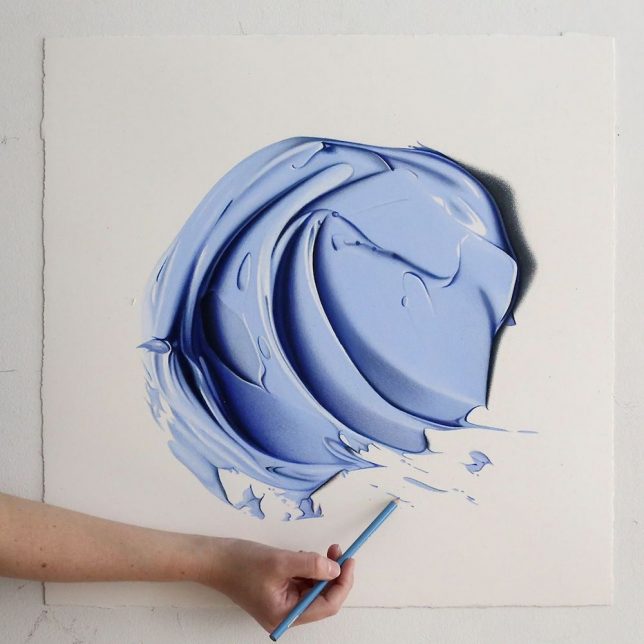
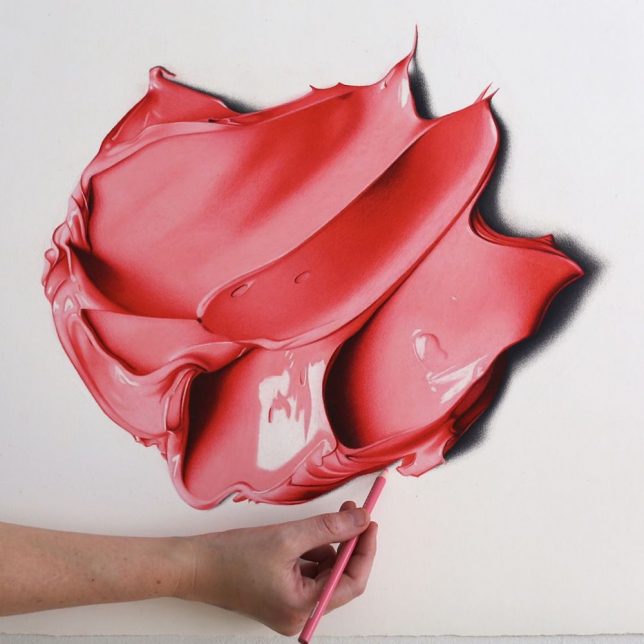
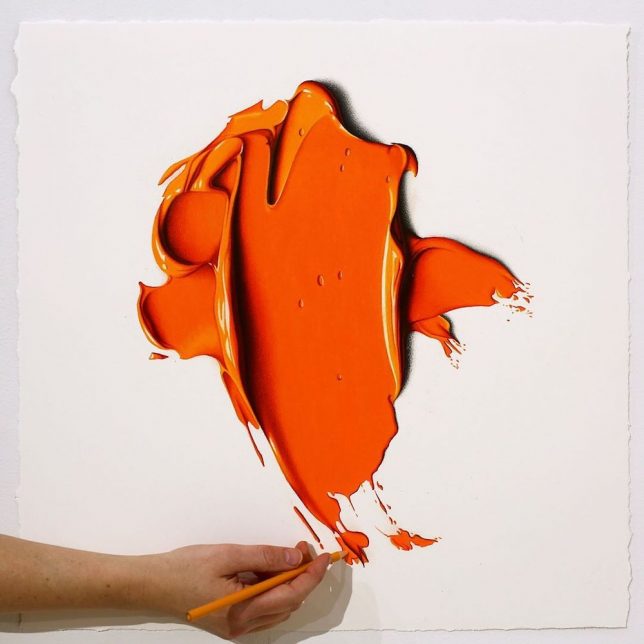
    Art of Deception: Pencil Drawings Look Like Colorful 3D Splashes of Paint

    01 Oct

    [ By WebUrbanist in Art & Drawing & Digital. ]

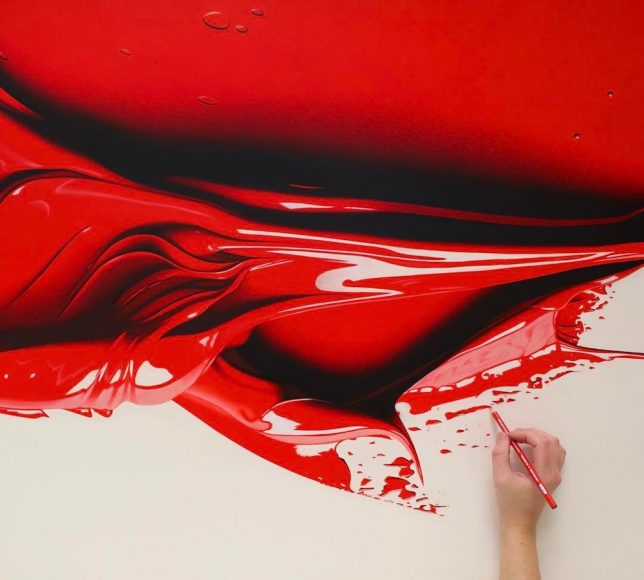
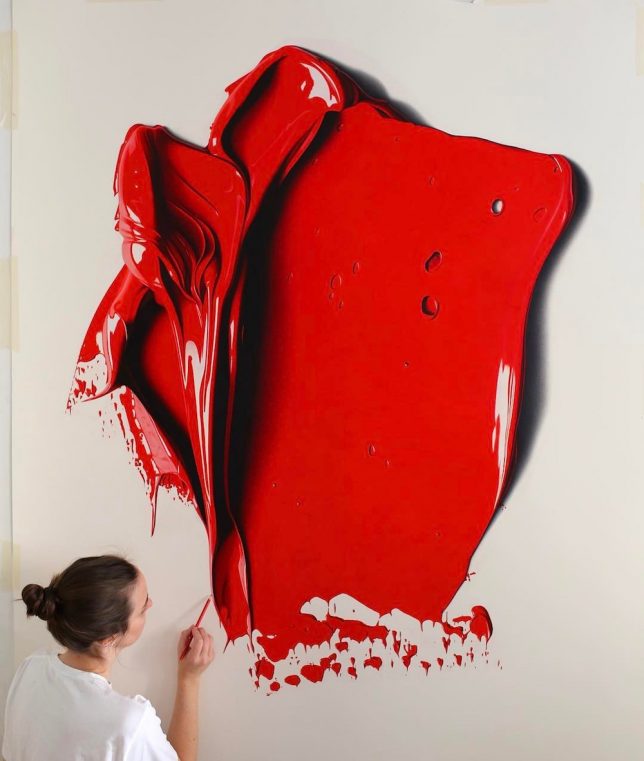
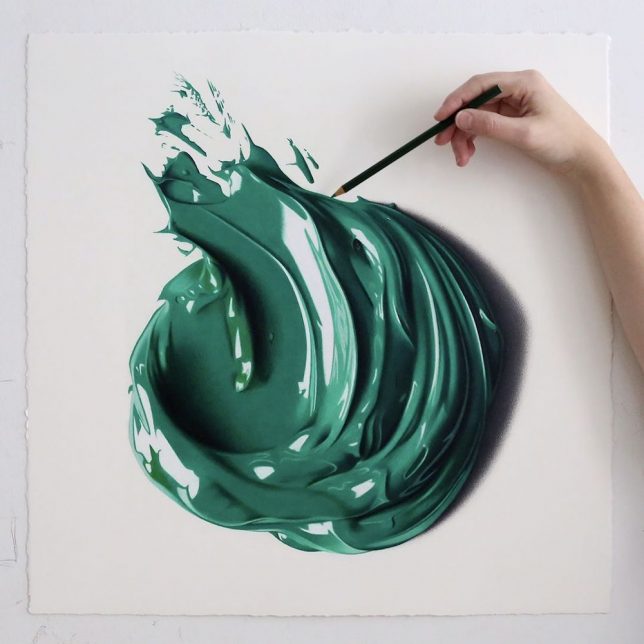
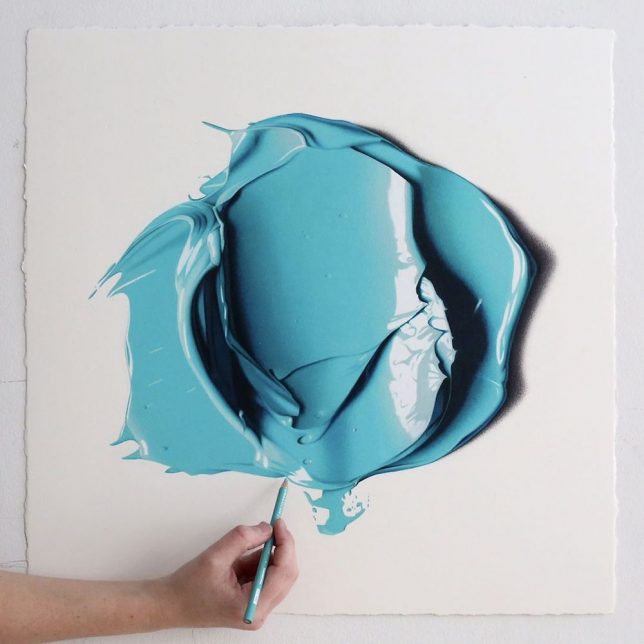
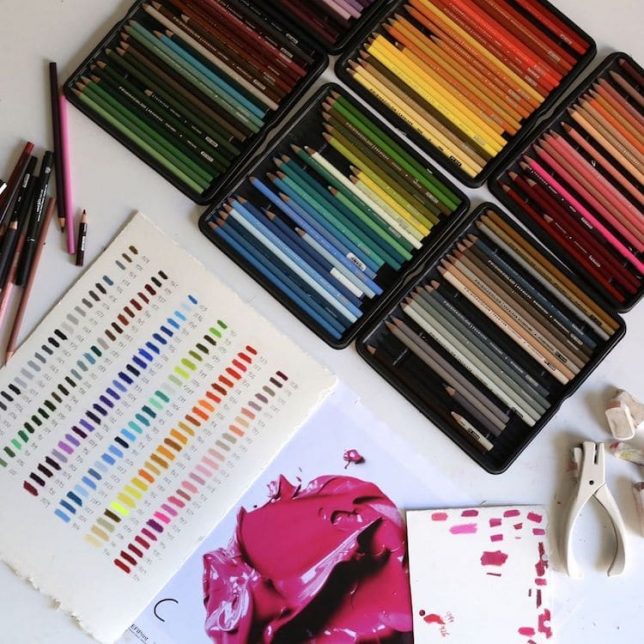
    Seeming to rise up off the canvass, a viewer would be impressed to discover these swaths of paint to be two-dimensional in nature, but then further shocked to realize the material isn’t paint at all but pencil.

    Australian artist Cj Hendry has an eye for hyper-realism, but in this series: instead of using it to draft convincing landscapes or portraits has turned to emulating oil paint.

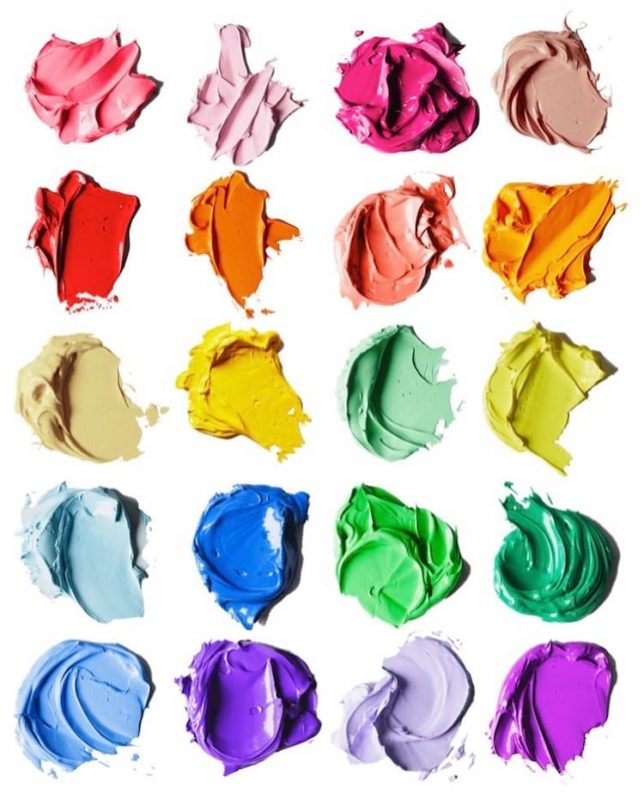
    Layers of carefully applied pencil slowly add depth and dimension to the flat surface, capturing the lush appearance of semi-liquid paints. The effect is so convincing the artist often includes a hand and pencil in photographs of the work to highlight the fact that what is being seen is both two-dimensional and drawn with pencils.

    It is a dramatic shift from previous work by Hendry done in black and white. And going to color didn’t mean just picking one per piece, either — each of these colorful works employs a number of different colors, which is not at all obvious at a glance.

    Share on Facebook


    [ By WebUrbanist in Art & Drawing & Digital. ]

    [ WebUrbanist | Archives | Galleries | Privacy | TOS ]


    WebUrbanist

     
    Comments Off on Art of Deception: Pencil Drawings Look Like Colorful 3D Splashes of Paint

    Posted in Creativity


    Spiky Shipping Container Home Blooms Like a Flower in the Joshua Tree Desert

    30 Sep

    [ By SA Rogers in Architecture & Houses & Residential. ]

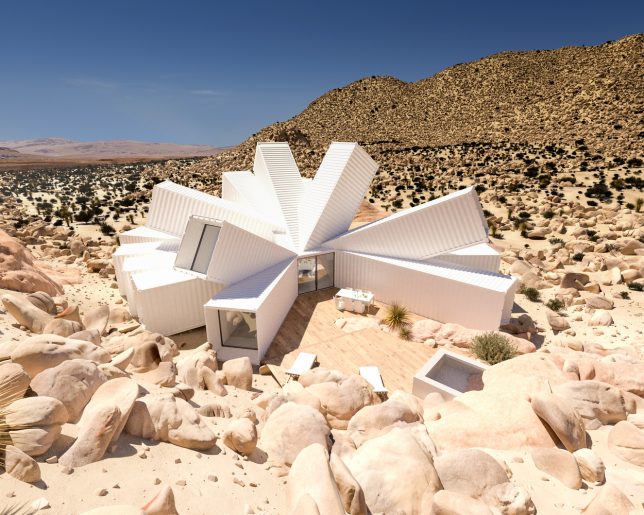
    Since shipping containers are made to be stacked, that’s how they’re usually arranged when reclaimed for architectural projects. It just makes sense, right? They fit together in a certain way. But architecture firm Whitaker Studio just smashed that convention in spectacular fashion with one of the most bonkers shipping container projects we’ve ever seen, and the results are as beautiful as they are unusual.

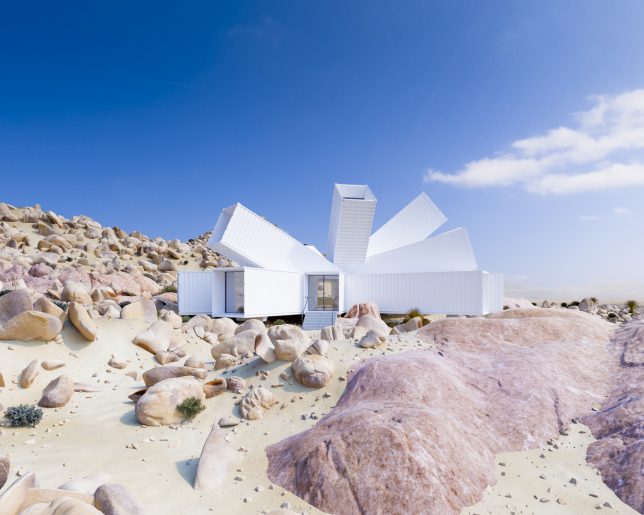
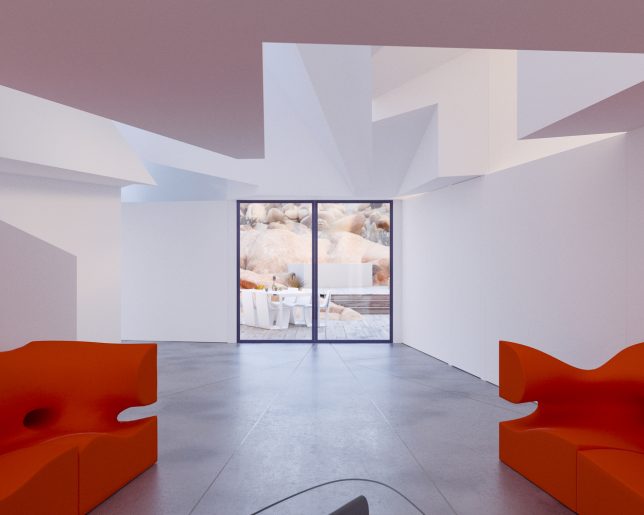
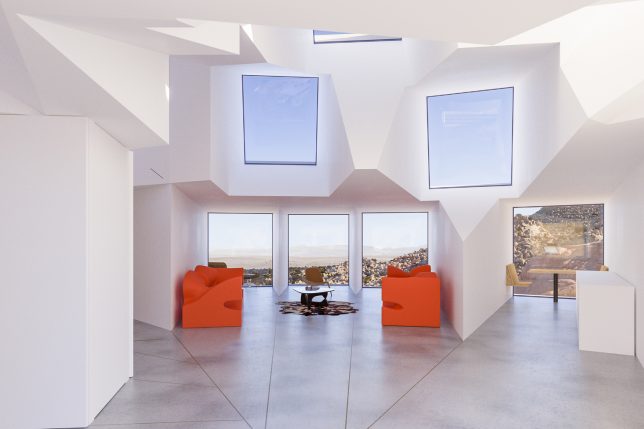
    Rising from the rocky Joshua Tree desert in California like a rare flower, this all-white residence is laid out in a starburst shape with several shipping containers pivoted up toward the sky. Each container is capped with glass and oriented to take advantage of a certain view, whether of the sky, the distant mountains, or the adjacent boulders.

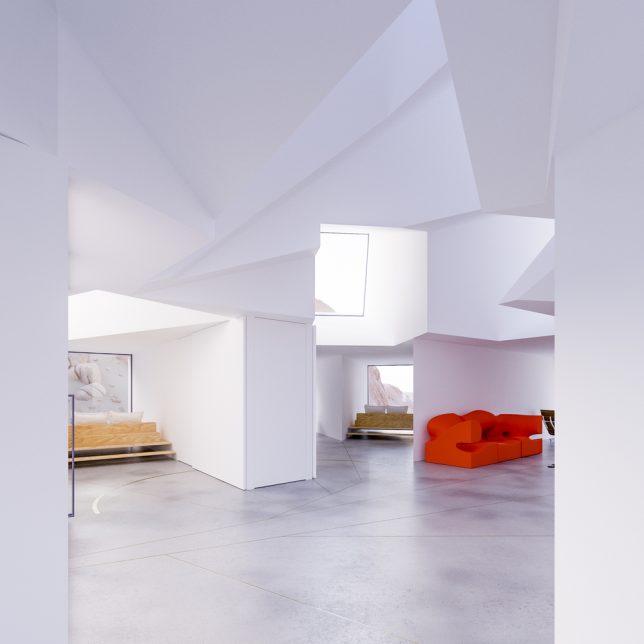
    Each individual container either serves as a small room for the interior, or as a giant skylight bringing natural light into the core. Dining tables and beds can be spotted through the glass from outside, wedged into the narrow spaces. In some areas, several containers are combined with their walls removed to create larger rooms. The layout is hard to determine from the exterior, but once you see images of the 2,150-square-foot interior, it makes more sense.

    Though these renderings are pretty convincing, construction on the Joshua Tree residence is not set to start until 2018 on a 90-acre plot owned by a film producer. Architect and studio founder James Whitaker told ArchDaily that the client and his friends were visiting the plot of land, imagining what should be placed there, when someone pulled out their laptop and showed the group an image of a structure he’d designed several years prior, but that had never been built.

    The containers are arranged to fit within the topography of the site, angled wider in some areas to accommodate the hills and rocks, creating sheltered outdoor areas for decks and hot tubs. The site is set on a natural gully created by stormwater, so the containers are raised off the ground, allowing water to pass underneath.

    Share on Facebook


    [ By SA Rogers in Architecture & Houses & Residential. ]

    [ WebUrbanist | Archives | Galleries | Privacy | TOS ]


    WebUrbanist

     
    Comments Off on Spiky Shipping Container Home Blooms Like a Flower in the Joshua Tree Desert

    Posted in Creativity