RSS
 

Posts Tagged ‘Lights’

AurumLight: Mixing Flash and Modeling Lights

17 Dec

One of my New Year's resolutions is to learn to be more creative and adventurous with mixing color and light. UK-based photographer Jarek Wieczorkiewicz's photograph of Jay Jessop does just that—using daylight flash, gelled flash and tungsten modeling lamps.

I love this kind of thing, and would like to evolve my lighting to the point to where I can have the confidence to almost never use just white light. Below, a full BTS video on how Jarek lit this image. Read more »


Strobist

 
Comments Off on AurumLight: Mixing Flash and Modeling Lights

Posted in Photography


RC4WD Gelande walkaround showing lights

07 Dec

Very quick video showing the front and rear lights I installed for my Gelande project truck.
Video Rating: 4 / 5

 
Comments Off on RC4WD Gelande walkaround showing lights

Posted in Nikon Videos


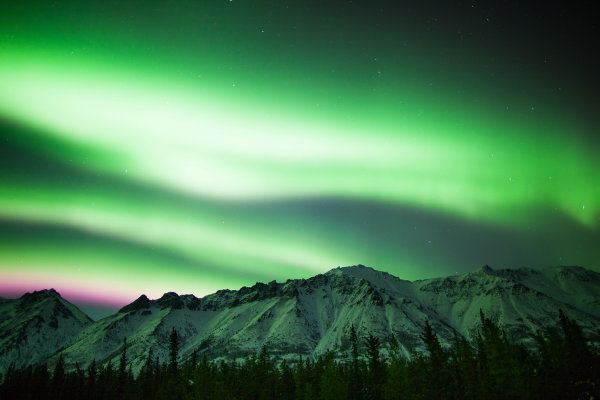
Timelapse Northern Lights And Startrails 720p HD

30 Nov

All video footage is copyrighted to me. A storm on the surface of the sun known as a “coronal mass ejection” pushed billions of tons of superheated gas into the solar system, which is now appearing over some parts of the northern hemisphere in the form of aurora borealis. The Telegraph reports: “Dramatic auroras were seen in Denmark, Norway, Greenland, Germany and across the northern United States and Canada” Tuesday night. Watch in HD! 2900+ still images taken with Nikon D40 through a Sigma 10-20mm f4 lens and nikon 35mm f1.8. I used Camera control pro for some clips, but most of them were taken only using the Nikon ML-L3 remote since D40 doesn’t have a built in intervalometer. One clip is taken in Bergen, Norway, the remaining clips are taken in Levanger, Norway. Some aircraft navigation lights and even a few meteors are captured in this timelapse. The star trails effect was created using photoshop and a star trails action which can be found here: timelapseblog.com and downloaded from here: www.mediafire.com Thanks to Owen Scharlotte! Camera: Nikon D40. The soundtrack is Mika: Fall to pieces -Silence, it can be found here: ccmixter.org
Video Rating: 4 / 5

Taking stock of the gear used on a trip is important to help you better pack and plan in future. Today I go through and honestly evaluate what I took, how useful it was, and how often I used each piece of gear. I love going to Cheung Chau – it is a tradition of mine. A few days of relaxation, good food and photography. Check out the map here: g.co Join our new Flickr forum: www.flickr.com www.facebook.com www.mattgranger.com https
Video Rating: 4 / 5

 
Comments Off on Timelapse Northern Lights And Startrails 720p HD

Posted in Nikon Videos


Capturing the Northern Lights in Timelapse Video

29 Nov

A guest post by Phil Hart – author of the Shooting Stars eBook (use code DPSTARS for a 25% discount).

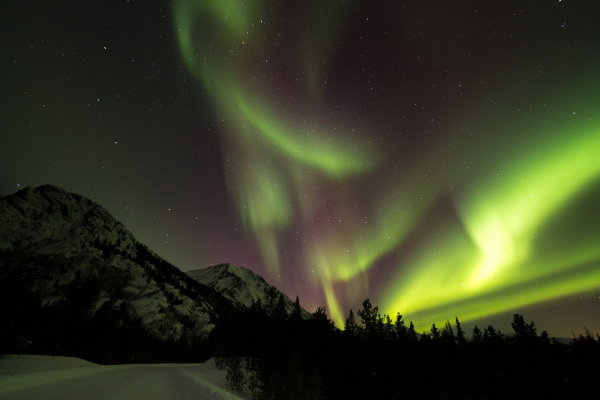
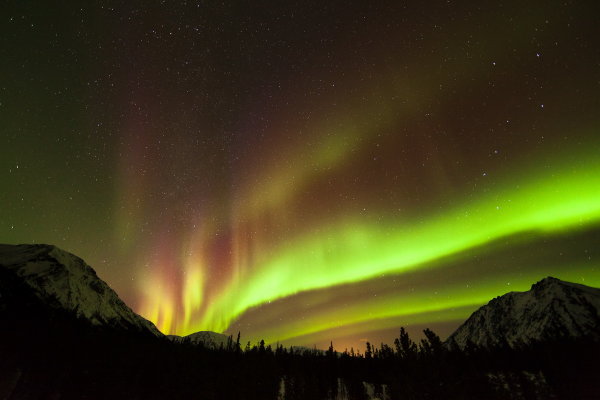
In this post, I’d like to share the back story to a new video I have released after a nine week ‘extreme astronomy’ adventure in the Yukon earlier this year, where I went to capture timelapse footage of the Northern Lights (the ‘Aurora Borealis’).

First the video, ‘Valentine’s Aurora’, which I hope you will enjoy with the lights down and the music up:

Valentine’s Aurora from Phil Hart on Vimeo.

The Location

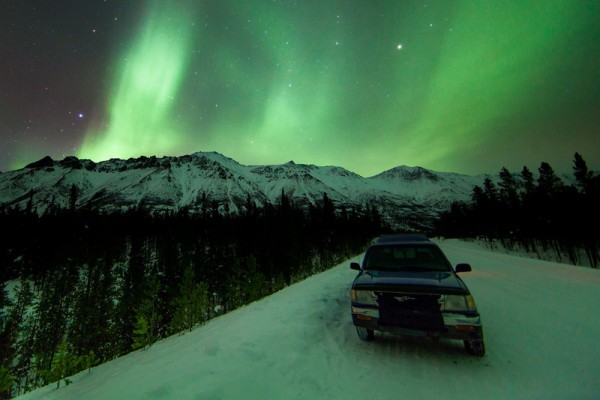
All of the footage for this video (except the fisheye sequences) was shot on Annie Lake Road, south of Whitehorse the capital of Canada’s Yukon Territory. See this Map Link.

It was the 14th February, and only my second night out on location away from home base where I was staying on the shores of Shallow Bay, Lake Laberge, to the north of Whitehorse. The weather was good during the day and I was confident of clear skies, so I made the trek an hour and a half south. There was nothing to indicate that aurora activity was going to storm that night, but that’s the nature of aurora. When you’re this far north you have to get out whenever the weather is good and capture whatever happens. Further south, you might like to monitor the forecasts on spaceweather.com.

I could actually see aurora curtains low in the north even before the end of twilight, so I had an idea I was in for a great night, and had to get moving quickly.

On location at Annie Lake Road: Canon 5D Mark II, 14mm lens, 30 secs, f2.8, ISO800

Camera Gear and Exposure Settings

I used four cameras to capture all the footage in this video:

  1. Canon 5D Mark II with 24mm f1.4 lens
  2. Canon 5D Mark II with 14mm f2.8 lens
  3. Canon 1100D (Rebel T3) with 10-22mm lens
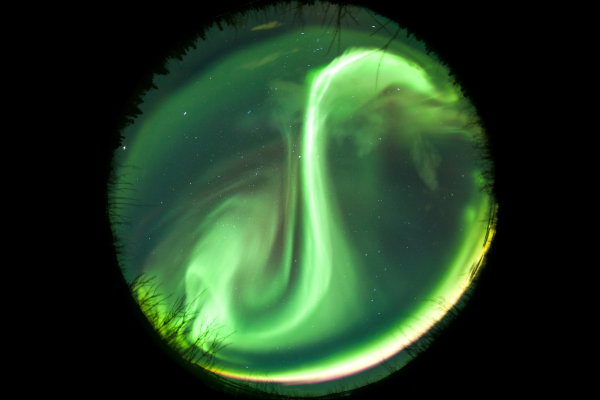
  4. Canon 5D (original) with Peleng 8mm Fisheye lens (running autonomously with an intervalometer back at Shallow Bay)

Fisheye Aurora: Canon 5D, 8mm lens, 30 secs, f3.5, ISO800

All of these lenses were used at their maximum aperture, as to capture the motion of the aurora requires exposures that are as short as possible. In general, exposures were ~6-8 seconds with the fast f1.4 lens and ~15-25 seconds with the slower lenses. But when the aurora was very bright and active, I was using exposures as short as ½ second with the f1.4 lens. In fact, there were actually a few minutes that night where I could record live video of the aurora, but that footage was too grainy to use in this compilation.

Although I was recording long timelapse sequences of images very quickly, I still tried whenever possible to capture full size RAW files. Only when the exposures were short (<1 second) was I forced to shoot straight to JPG as the camera could not keep up otherwise. At the end of the nine weeks, I had nearly three terabtyes of data, which is quite a headache!

Motion Control and Accessories

  • The 5D Mark II and 24mm lens were carried on an alt-azimuth panning mount with a custom controller, to create some of the panning sequences in the video.
  • The 1100D (Rebel T3) with 10-22mm lens was carried on a little Vixen Polarie, used in a horizontal panning mode, which provided for simple panning sequences.
  • The other 5D Mark II with 14mm lens was used on a standard tripod.

These last two cameras were set to continuous shooting mode, and a simple push button remote release was used to fire off the shutter for as long as the button was locked down.

Canon 1100D (Rebel T3), 10-22mm lens @10mm, 25 secs, f3.5, ISO800

Composition

With aurora, like other night sky photography and landscape work in general, it’s the combination of foreground and sky that makes an image. So I spent a lot of time looking for rugged mountains and other attractive foregrounds. But location scouting is quite difficult in the Yukon in the middle of winter, with very few roads open and clear. Despite several more weeks touring around after this, Annie Lake remained one of my favourite locations and it was one of the more accessible as well.

One of the factors to consider when chasing aurora, and one of the advantages of this site, is to look for a low northern horizon to increase visibility when aurora activity is low, but interesting horizons around to the east and west for when activity increases.

Landscape with low northern horizon: Canon 5D Mark II, 14mm lens, 15 secs, f2.8, ISO1600

Unless you resort to light painting, in general the foreground appears silhouetted against the aurora, so you need strong profiles (isolated trees for example, rather than a wall of them). But occasionally the aurora is so bright overhead that it can actually illuminate the scenery. You can see that in the image below. Other times you may have moonlight which creates a very different lighting environment, and turns the sky blue just like the daytime sky.

Bright aurora illuminating the landscape: Canon 5D Mark II, 24mm lens, 5 secs, f1.4, ISO800

Post Processing

I learnt a lot as I began to process these Image sequences back home in Melbourne. To get the most out of them, I used Adobe After Effects to directly import the RAW image sequences. I also used the Neat Video noise smoothing plugin to reduce the appearance of noise without sacrificing too much detail. In some cases I also used Lightroom and LR Timelapse to smoothly vary some development parameters across the sequence, to cope with large variations in brightness of the aurora, before importing the sequence into After Effects. These frequent and often fast changes in brightess of the aurora is one reason why I often shot at lower ISO settings (~ISO800) than I normally would for night sky photography, to prevent clipping of bright areas of the aurora as much as possible.

The Star Trail effect at the end of the video was created using the ‘Lighten’ blending mode in the freeware program StarStax by Markus Enzweiler, which I highly recommend.

I hope you enjoy this Valentine’s Aurora video and a little of the behind the scenes story. Feel free to share it!

Post originally from: Digital Photography Tips.

Check out our more Photography Tips at Photography Tips for Beginners, Portrait Photography Tips and Wedding Photography Tips.

Capturing the Northern Lights in Timelapse Video


Digital Photography School

 
Comments Off on Capturing the Northern Lights in Timelapse Video

Posted in Photography


Illuminating Inventions: 10 Twists to Simple Street Lights

29 Nov

[ By Delana in Conceptual & Futuristic & Technology. ]

Street lights are a ubiquitous part of the urban landscape – so much so that most of us hardly notice their presence at all. What would happen if improving the aesthetics, functionality and environmental footprint of street lights suddenly became a priority? A few forward-thinking designers would have a head start. These concepts for improved street lights may just be the lights that guide us in the coming years.

Solar Trees

(images via: Ross Lovegrove)

Taking streetlights off of the sometimes-unpredictable electricity grid is a priority for many designers. Ross Lovegrove created the Solar Tree, an LED-lit fixture that relies on the power of the sun to illuminate the streets. The array of up to ten leaf-like photovoltaic (PV) structures soaks up solar energy during the day and stores it in integrated batteries. When the built-in light detectors sense that the sun has set, the lights flip on, using much less power than traditional street lamps.

Flowlight

(images via: Shane Molloy)

The Flowlight uses an incredibly powerful natural force to light the way: tides. Designer Shane Molloy used the tidal river called the River Sur as the basis for his design, which would light up piers and other waterside areas. A water turbine-equipped arm dips down from each light into the water, gathering energy from the movement of the waves. The arm floats higher or lower depending on the position of the tide, ensuring that it never misses an opportunity to build up some more energy for lighting the path after dark.

sTREEt

(images via: Kibisi)

Utilizing a brand new kind of network or grid, the sTREEt concept would connect neighborhoods through a series of “urban furniture” pieces. The central part of the plan is the “mother tree,” a tall structure outfitted with lots of solar panels. The big “tree” feeds energy to smaller structures all throughout a neighborhood. These smaller modular structures feature changeable configurations which can be set up as just street lights or street lights with advertising space, convenient seating, or even fun swings.

EnergyMe

(images via: Dido Studio)

Would you donate your gym time for the good of the city you live in? That’s what the designers of the EnergyMe street light concept would like all of us to do. In order to keep the street lights on, the EnergyMe system requires citizens to walk, run, push, pull and pedal their way to fitness. The energy spent on working out is translated into power for street lights. The concept not only cuts down on the environmental impact of street lighting, but encourages everyone to get out and exercise.

Urban Green Energy Renewable Street Lamps

(image via: UGE)

As a commercially-available product, the renewable street lamp from Urban Green Energy has already proven that off-grid lighting is possible. The dual-powered street lights utilize both wind and solar energy to power lights that illuminate streets, parking lots and walking paths. The built-in battery keeps each light going for 3-5 days in the event that the sun doesn’t shine and the wind doesn’t blow. As an added incentive to businesses looking to add this type of eco-friendly light to their properties, the street lights also include ample advertising space.

Windtulip

(images via: Yanko Design)

Designer Mebrure Oral shakes off the usual stereotypes about ugly wind turbines with the Windtulip design. Meant to look like a sleek piece of urban art, the Windtulip is actually a covert energy-producing turbine. Its top spins with the wind all day, every day, charging the internal battery. When the sun goes down the efficient LEDs light up to illuminate the cityscape.

Dial4Light

(images via: Dial4Light)

Dial4Light is a German startup company that doesn’t want to change the way street lights look – just the way they work. Rather than keeping all of the lights in any given city on all night, their concept lets users tell the lights when they are needed.Citizens call a special phone number to turn on the street lights in a particular zone that they will be traveling through. The system has been implemented in several German towns already and is not without controversy, particularly since some localities require users to pay for the privilege of using street lighting.

Energy Seed

(images via: Yanko Design)

When you use up the batteries in a favorite gadget, the chances are very good that there is still at least a little power left in them. The Energy Seed street lighting concept from designers Sungwoo Park and Sunhee Kim would use those leftover bits of power to light city streets and sidewalks at night. Each light is “planted” in a pot with little round battery receptacles in the top. Users plop their old batteries in and the device (either through magic or some sort of unexplained mechanism) turns the leftover juice into illumination. Obviously this concept would need to be refined and expanded significantly before it could be introduced as an actual product, but the idea of using every last bit of stored energy is an appealing one.

Sunflower Street Lights

(images via: Tuvie)

A very straightforward and easily understandable design, the Sunflower street light from designer Riis Ros simply uses solar power rather than grid power to light up its surroundings. The “petals” of the sunflower feature PV panels on top and lights on the bottom, spread out in an array that does indeed resemble a flower. Entire gardens of these solar-powered flowers could one day light up towns and cities around the world.

Intellistreets

(image via: Intellistreets)

Perhaps the most controversial street light since towns changed from gas to electric lamps, the Intellistreets light is much more than just a light in the dark. It also features speakers, digital signs, a dual band transceiver, an emergency alert system, and a camera. It is, understandably, this last part that makes some people wonder whether this next-generation street light will be used to spy on citizens in the near future. The Intellistreets lamps were already introduced in parts of Michigan in 2011; according to city officials, they will help cities save money by using less energy and only operating when needed.


Want More? Click for Great Related Content on WebUrbanist:

Dial4Light: Turning Street Lights On Via Mobile Phone

A groundbreaking cost-cutting, energy-saving program in Germany called Dial4Light requires pedestrians to activate street lights using their cell phones.
5 Comments – Click Here to Read More »»


Stop, Look and Love: 8 Redesigns of Classic Traffic Lights

The instantly-recognizable traffic light has been a standard sight on streets around the world for generations, but these designs aim to improve on a classic.
9 Comments – Click Here to Read More »»


Share on Facebook


[ By Delana in Conceptual & Futuristic & Technology. ]

[ WebUrbanist | Archives | Galleries | Privacy | TOS ]


WebUrbanist

 
Comments Off on Illuminating Inventions: 10 Twists to Simple Street Lights

Posted in Creativity


A soldiers Christmas Lights

22 Nov

I’m an Army Soldier deployed to Iraq that had a little extra time on my hands. I created this christmas video using glowsticks and flashlights. My camera was a Nikon D300 using a 30sec exposer @ ISO 200 & F11. It is hard to get Christmas lights out here in the desert that work on 220volts so I made my own kind of holiday lighting outside of my CHU / housing unit. The rest of the pictures were pulled from DVIDS from last years Christmas in Iraq. I felt that America needed some Christmas cheer, and a brief reality check, that their are still troops overseas fighting for their freedom.
Video Rating: 5 / 5

 
Comments Off on A soldiers Christmas Lights

Posted in Nikon Videos


Why Speedlight not studio Lights for Shooting? (by Dom Bower)

13 Nov

dombowerphoto.blogspot.com In this video I answer another question about flash. this time Why do i use nikon speedlights and not studio lights for my shoots” well here is the answer If you enjoy my videos please post them on your Facebook page and let others know about this channel, please subscribe and share on Facebook and twitter. Also check out the links below. If you really like my work please feel free to check out or buy a copy of the my PHOTOGRAPHY BOOK: Getting There With Photography: By Dom Bower www.blurb.com FACEBOOK Critique/advice GROUP www.facebook.com FACEBOOK PAGE www.facebook.com TWITTER page twitter.com WEBSITE www.dombower.com PHOTOGRAPHY CLOTHING Point and destroy clothing http For my AZ of Weightloss Tips check out: dombowerexercise.blogspot.co.uk And to donate to The Cancer Charity that I am doing a Trek for please visit www.justgiving.com
Video Rating: 4 / 5

 
Comments Off on Why Speedlight not studio Lights for Shooting? (by Dom Bower)

Posted in Nikon Videos


Light’s Out: Seven More Eerie Abandoned Lighthouses

04 Nov

[ By Steve in Abandoned Places & Architecture. ]
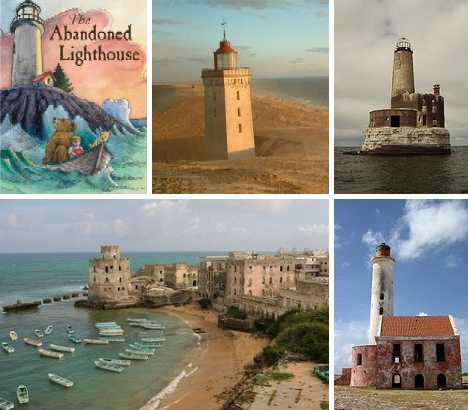

Is a lighthouse still a lighthouse when the light goes out and no one’s left to call it home? These 7 scenic sentinels slowly succumbing to the endless onslaught of wind and waves stand – barely – as solitary reminders of a time when fog-piercing lighthouse beams guided wayward mariners from the cold clutches of the devil and the deep blue sea.

Mys Aniva, Sakhalin, Russia
(images via: Flavorwire and English Russia)

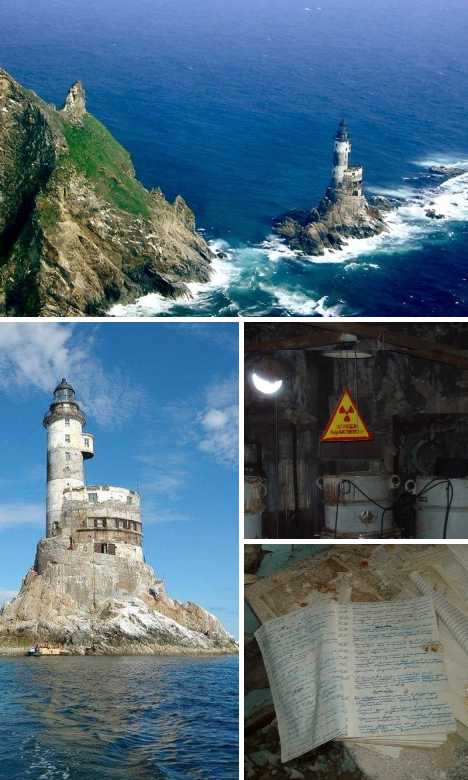
Built under extremely difficult conditions on a formerly jagged rock just off the southeastern-most cape of Sakhalin island, the Mys Aniva lighthouse has seen a lot of history over its 3/4 of a century lifespan. Japan ordered the lighthouse built in the late 1930s when Sakhalin was divided between that country and the USSR. Sometime after the Soviets seized the whole of Sakhalin at the end of World War II, they installed an RTG (Radioisotope Thermoelectric Generator) to supply electricity to the lamp – yes, this was a nuclear-powered lighthouse!
(image via: Remembering Letters and Postcards)

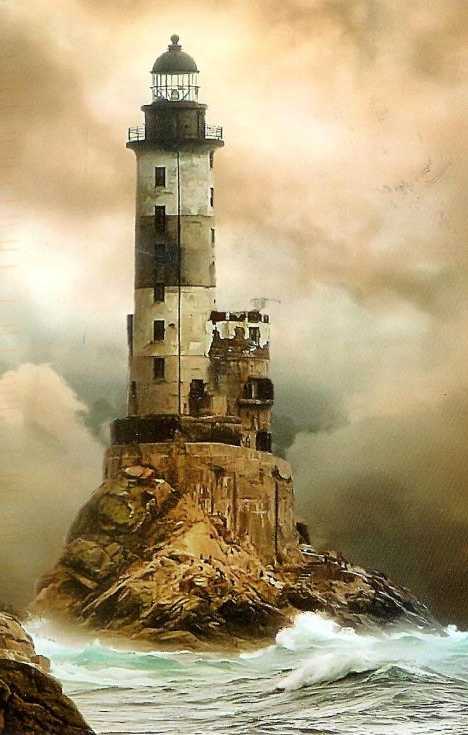
The fall of communism in the early 1990s led to a decade of near-chaos with funds for all purposes in short supply. The Mys Aniva lighthouse, isolated though it was and is, has been looted and ransacked for its metal fittings though luckily its RTGs were removed before the unofficial salvage crews arrived.

Grand Harbor Lighthouse on Fish Fluke Point, Canada
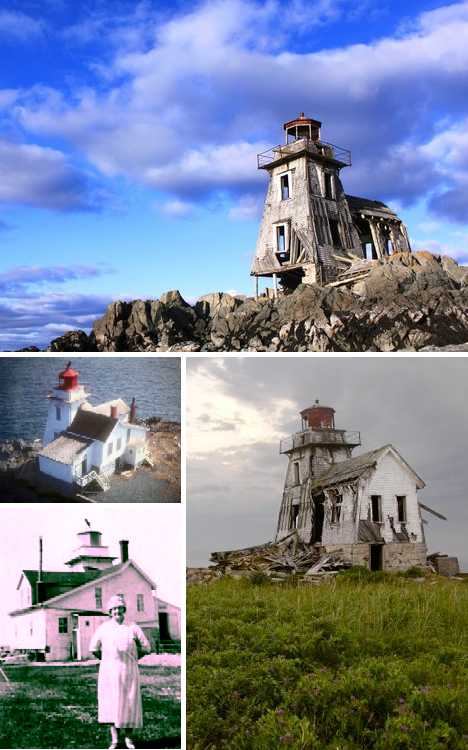
(images via: National Geographic, Lighthouse Friends and Robert Williams Photography)

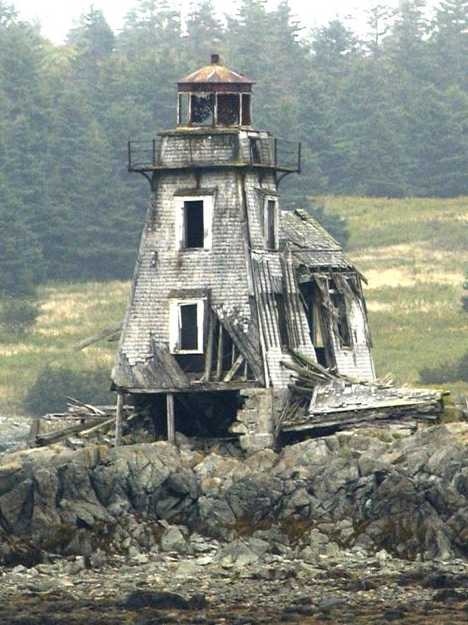
The Grand Harbour Lighthouse and attached keeper’s house at Fish Fluke Point on Ross Island, New Brunswick, Canada has been in a state of slow-motion collapse since 1963 when the station was closed. The once-picturesque lighthouse’s degeneration was accelerated by the great Groundhog Day Gale of 1976 but though it may make an excellent setting for a horror movie the lighthouse itself refuses to implode.
(image via: Swallowtail Keeper’s Society)

Opened in the fall of 1879, the Grand Harbour Lighthouse was a low-budget affair from the get-go: one of the early keepers was issued a hand-operated foghorn to be used as required. Cheap or not, the wood-framed complex has lasted longer than many stone structures of similar age. At this point it’ll take a superstorm of, say, Sandy-like intensity to finally knock its lights out for good.

Klein Curacao Lighthouse, Curacao
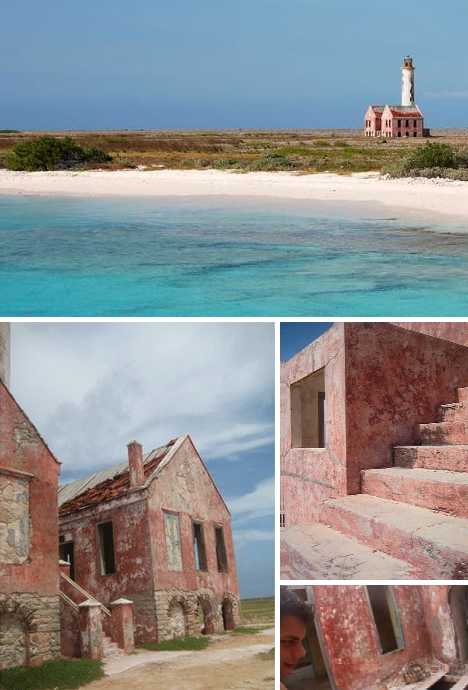
(images via: Curacao-TravelGuide.com, Debi van Zyl and Foter)

The Caribbean island of Curacao bore witness to the golden age of exploration, pirates, treasure-ships and more – and it’s got plenty of shipwrecks to prove it. In 1850 a lighthouse was constructed on the tiny, (3 km2 or 1.2 square mile) island of Klein Curacao situated 10 kilometers (6.2 miles) south-east of the mother island.
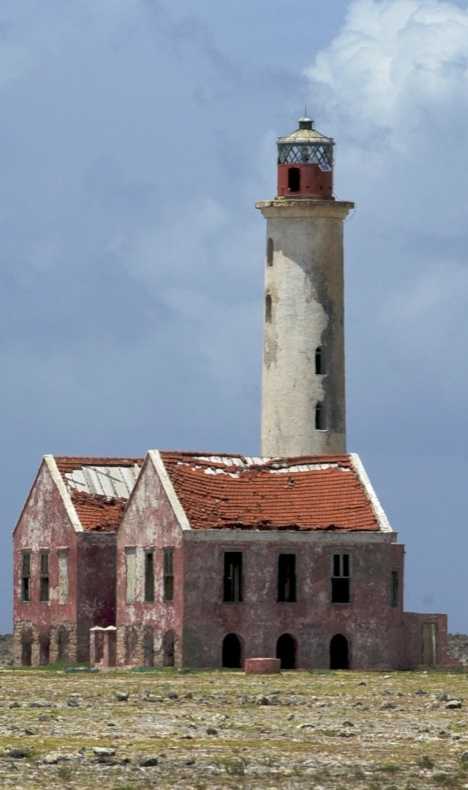
(image via: Gordon_C)

In 1877 a powerful hurricane destroyed the original lighthouse and in 1879 a stronger replacement was built. This lighthouse was subsequently storm-damaged and repaired again in 1913. Though the lighthouse had been abandoned decades ago and had been left to decay, the light itself was recently reactivated and an automatic solar-powered LED beacon was installed.

Waugoshance Light, Michigan, USA
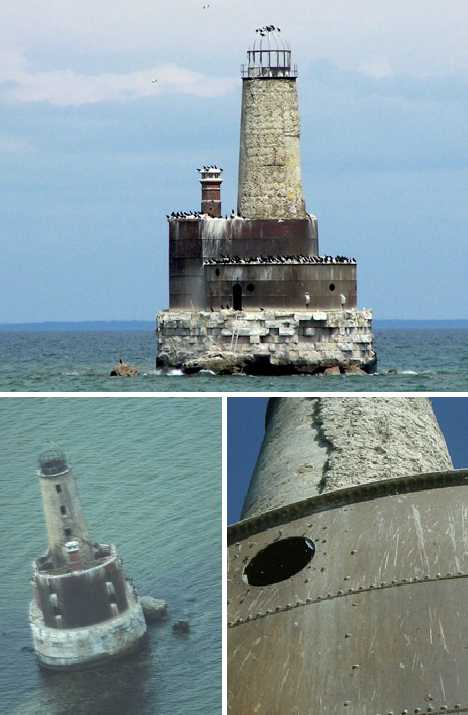
(images via: Waugoshance Lighthouse Preservation Society and Beaver Island Jewelry)

Not all lighthouses stand on the seashore; lakes need lighthouses too! Especially great lakes like, er, the Great Lakes where shipping (and shipwrecks) have been commonplace for several centuries. Take the late, great Waugoshance Light for instance. Built in 1851 to replace a lightship guiding ships through a treacherous area of the Straits of Mackinac, the Waugoshance Light was the first Great Lakes lighthouse to be surrounded on water on all sides.
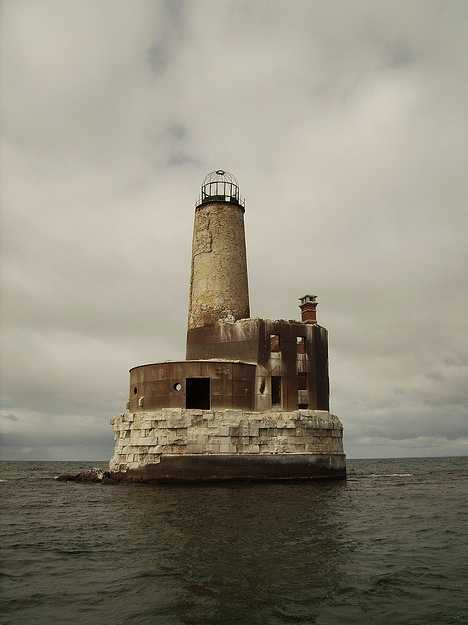
(image via: Divemi)

The Waugoshance Light was built of brick and covered with iron plating – built to last, it was. Unfortunately, the creation of deeper draft ships that had to use the Gray’s Reef passage saw the building of the White Shoal Light and the Grays Reef Light. The Waugoshance Light was decommissioned in 1912 and was used as a gunnery target by the U.S. Navy during World War II. That anything still remains of this rugged feat of engineering after more than 160 years is remarkable to say the least.

Mogadishu Lighthouse, Somalia

(images via: Dissident Nation and National Geographic)

Though shattered by two decades of on & off civil war, the Somali city of Mogadishu has a long and prosperous history based on sea trading. The country’s network of ports appealed to Italian colonizers during the latter quarter of the 19th century and with the establishment of Italian Somaliland extensive infrastructure was built. One of the outstanding and surviving examples is the Mogadishu Lighthouse, or the ruins thereof.
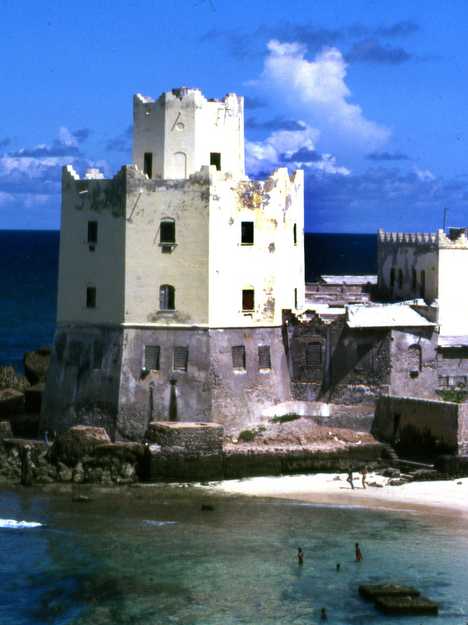
(image via: Frankkeillor)

Its light long dimmed and its open spiral staircase on the verge of collapse, the lighthouse serves these days as a shady retreat for fishermen, gamblers and partakers of the aromatic stimulant shrub called qat.

Rubjerg-Knude Fyr, Denmark
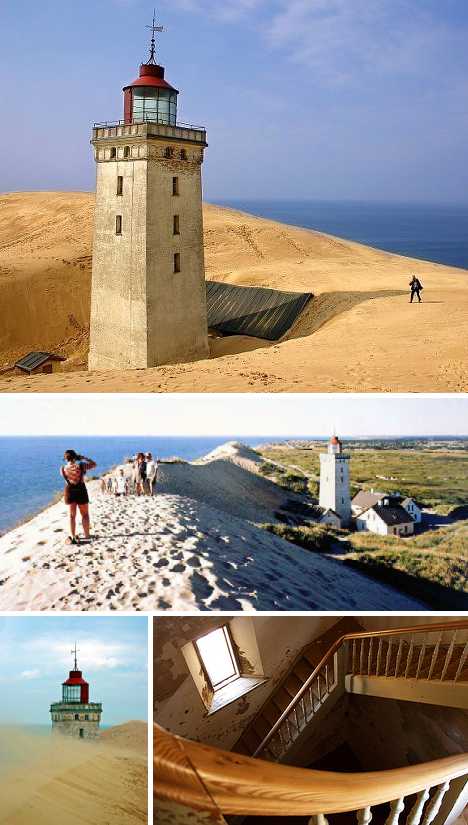
(images via: Environmental Graffiti/Anders Hollenbo, CIB W78 and ForoCoches)

When the Rubjerg Knude Lighthouse in Jutland, Denmark first fired up its lamp on December 27th of 1900, its builders were confident its location atop Lønstrup Klint 60 meters (200ft) above sea level would keep it out of the reach of windblown sand dunes that had made any seaside construction untenable. Though in time the dunes would not be denied, it would take almost 70 years for the lighthouse to be rendered inoperable and a further 35 for all the buildings in the complex to be abandoned altogether.
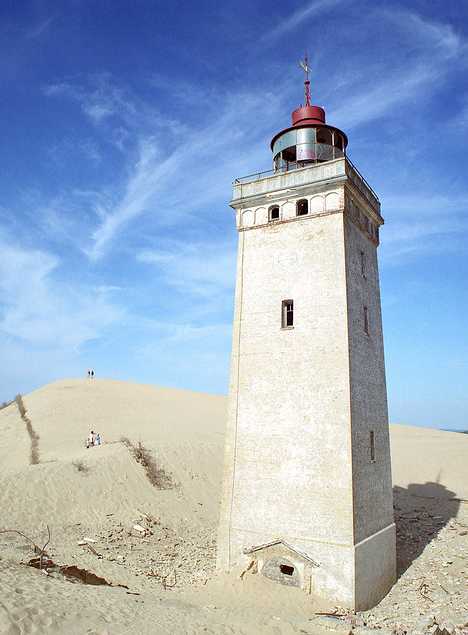
(image via: Mariorei)

One might think a lighthouse nearly subsumed by sand dunes would be located in the Middle East, North Africa, basically anywhere but Denmark! Live & learn, constant readers and potential lighthouse builders. It’s somewhat ironic a lighthouse constructed to help those who sail the waves would be wrecked by windblown waves of sand.

Great Isaac Cay Lighthouse, the Bahamas
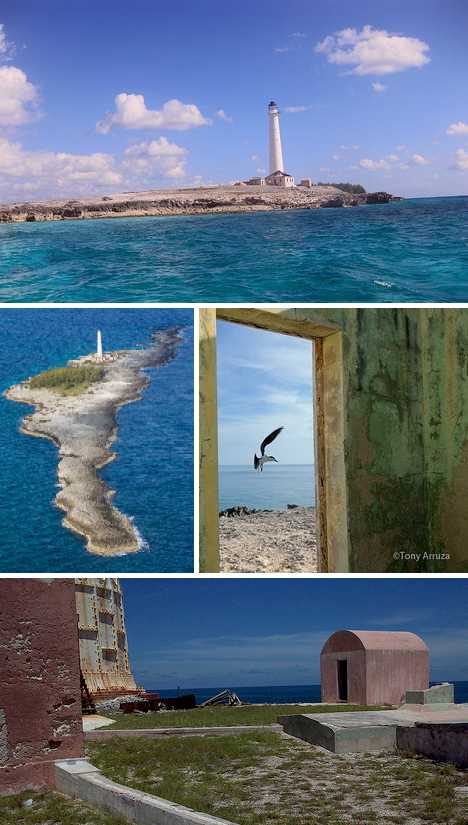
(images via: Megali.ST, FKA, Tony Arruza Photography and Joyous!))

The Great Isaac Cay Lighthouse was built in 1859 on tiny Great Isaac Cay in the Bahamas. The 152ft-tall tower is surrounded by a small group of decrepit and decaying outbuildings abandoned after the lighthouse’s last two keepers mysteriously vanished in 1969.
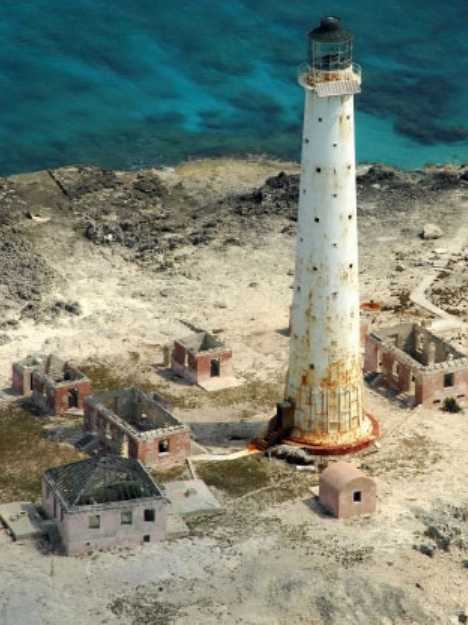
(image via: Artificial Owl)

The lighthouse still functions using an automatic lighting mechanism as it is still needed as a navigational aid. That’s just as well – the lighthouse has acquired a reputation for being haunted by the ghosts of shipwrecked ship passengers. It’s said that when the full moon shines, the spectral shades of a mother and child shipwrecked off the island in the late 19th century can be heard bemoaning their fate.

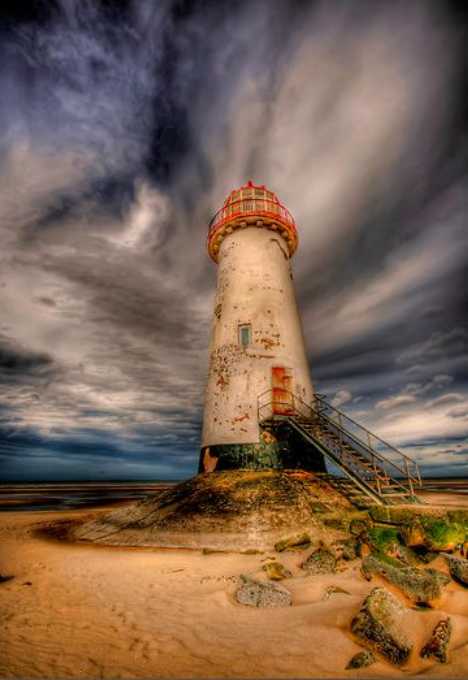
(image via: Michael John Grist)

The first to go were the keepers, made redundant by automated power generators. Next were the lighthouses themselves, relegated to superfluousness when GPS navigation offered ship captains accurate positioning any time of day, whatever the weather. Often built in isolated locations beset by the harshest of environments, these relics of a more romantic age are gradually giving up the ghost, ravaged by the same seas they sought to make safer for sailors. Last one to leave, please shut the door and turn out the light.


Want More? Click for Great Related Content on WebUrbanist:

Lost at Sea: Seven Beautiful Abandoned Lighthouses

These seven abandoned and inactive lighthouses represent marine history, and stand as tall, quiet beacons to what once was.
20 Comments – Click Here to Read More »»


14 Amazingly Beautiful and Historic Lighthouses From Around the World: Part Seven in an Eight-Part Amazing Houses Series

What is it about lighthouses that captures our attention? Is it the history behind these relics of a less technologically-advanced age? Is it the quaint charm of the towers?
8 Comments – Click Here to Read More »»


Share on Facebook


[ By Steve in Abandoned Places & Architecture. ]

[ WebUrbanist | Archives | Galleries | Privacy | TOS ]


WebUrbanist

 
Comments Off on Light’s Out: Seven More Eerie Abandoned Lighthouses

Posted in Creativity


Friday Night Lights Follow-Up: Don’t Try This at Home. Or Away.

29 Oct

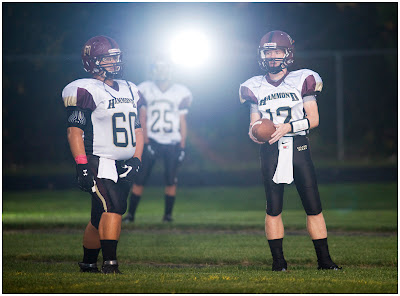
Remember last month's post on lens-axis fill flashing high school football? I promised to get back with you after experimenting with lighting a game with off-camera flash—way off-camera.

I spent a decent amount of time figuring out how to approach it: what flash, what beam throw, light position, dealing with the coaches, remotes, fill light, ambient balance, yada yada.
Here's what happened. Read more »


Strobist

 
Comments Off on Friday Night Lights Follow-Up: Don’t Try This at Home. Or Away.

Posted in Photography


Art Streiber Lights Bear Grylls for Outside

16 Oct

Literally.

-30-


Strobist

 
Comments Off on Art Streiber Lights Bear Grylls for Outside

Posted in Photography