RSS
 

Posts Tagged ‘lighting’

Using four Godox EC-200 extension heads as a quad-flash for beauty and close-up lighting

25 May

Flashpoint/Godox have just announced the EC-200 extension head, adding an effective and extremely low-cost tool for cosmetic and macro photography. These heads are exclusively designed for the Evolve 200 / AD200 pocket flash, a widely popular and highly efficient product, operated by long-lasting lithium batteries.

Throughout my career I have used various types of ring flashes and parabolic umbrellas. I also collaborated with Swiss lighting manufacturer Broncolor for over a decade on countless marketing and promotional projects, and shot their launch campaigns for the original Para 330 and Ringflash C.

Super model Iman for DeBeers global campaign (2003), shot with Broncolor Para330, and Fujifilm GX680III, on Fujifilm Provia film.

These types of lights are often used by fashion photographers, as they are both easy to work with and offer many options—the Broncolor Paras in particular, which range from the 88 to 330, can produce a wide variety of effects. However, neither types are ideal for extreme close up work when balanced, even front-lighting is required.

The new remote heads from China on the other hand, are small and light enough to allow for several of them to be mounted on a camera flash bracket and rail.

Selecting tiny but wide-angled reflectors, the resulting light is much less harsh, and more feathered than the output from a ring flash, in very close distance. The total weight of, let’s say, four extension heads with the small reflectors and including the bracket/rail set is just about 24 ounces, making handheld shooting is easy.

This new kind of ‘Quad Ring’ set up offers also the additional advantage over traditional ring flashes of allowing individual control of each of the flash heads in turn, which permits me to limit the output of the flash hitting the model’s face from underneath.

This is not as easily achieved with a ring flash.

Placed on tripod, the four extension heads are still mounted on the bracket and rail, but the camera is hand-held, so the four lights hit from a slight angle.

Fujifilm GFX 50S, GF 250mm lens, F8, 1/4000 sec, ISO 100

The Evolve 200 / AD200 pocket flash performs extremely well and reliably in HSS (High Speed Sync) mode, and when used for this ‘Quad Ring’ arrangement, provides output powerful enough to completely black out direct midday sunlight.

This four-light arrangement also makes an excellent off-camera light by simply setting the contraption on a tripod and shooting from various angles around it.

The ‘Quad Ring’ is also off-centered in this image. This time it’s placed to the camera angle, resting on a tripod.

Fujifilm GFX 50S, GF 120mm macro lens, F11, 1/125 sec, ISO 100

As evident by the unusual catchlights, the four extension heads are mounted on bracket and rail around the lens here.

Fujifilm GFX 50S, GF 120mm macro lens, F11, 1/125 sec, ISO 100

The announcement of the new remote heads is timely. The recent release of new macro extension tubes by Fujifilm for the mirrorless medium format GFX 50S (and the release of the GF 120mm macro lens) have ushered in a new era for macro photography. One can now easily shoot 1:1 handheld, with very fast and reliable autofocus, or manually focus while zoomed in.

Compared to previous systems, macro photography with medium format mirrorless cameras has become easy and accessible. Adding the creative options created by the convenient new remote heads, it has never been more fun to shoot close up!


About the Author: Markus Klinko is an award-winning, international fashion/celebrity photographer and director, who has worked with many of today’s most iconic stars of film, music, and fashion.

Klinko has photographed the likes of Beyonce, Lady Gaga, David Bowie, Jennifer Lopez, Britney Spears, Mary J. Blige, Mariah Carey, Kanye West, Anne Hathaway, Kate Winslet, Will Smith, Eva Mendes, Kim Kardashian, Naomi Campbell, and Iman. His editorial clients include Vogue, GQ, Vanity Fair, Harper’s Bazaar, and Interview magazine.

You can find more of his work on the Markus & Koala website or by following him on Instagram.

Articles: Digital Photography Review (dpreview.com)

 
Comments Off on Using four Godox EC-200 extension heads as a quad-flash for beauty and close-up lighting

Posted in Uncategorized


Latest Apple ad: iPhone Portrait Lighting is a ‘studio in your pocket’

20 May

No matter your attitude towards Apple and its products, it’s probably fair to say the company’s iPhone ads are among the more visually pleasing and entertaining commercials we get to see on TV or online. And like many recent ads, Apple’s latest clip is related to its smartphone’s photography capabilities.

The ad—titled ‘Studio in your pocket’—promotes the iPhone X and 8 Portrait Lighting feature. In the ad, a woman pulls out her iPhone to take a selfie in a train station when all sorts of studio lights, umbrellas and softboxes materialize out of nowhere around her—emphasizing one of the iPhone’s most distinguishing photography features.

Despite some manufacturers now offering similar functions, Portrait Lighting is still pretty much exclusive to Apple devices. It works on both front and main cameras (on the iPhone X, only rear on the iPhone 8 Plus and below) and applies computational effects to a subject that aim to simulate lighting effects you could achieve in a studio with proper lighting equipment. The effects can be applied at capture or later during editing. Options include Natural Light, Studio Light, Contour Light, Stage Light and Stage Light Mono.

You can read more about the feature in our iPhone X review or watch a tutorial here, and while it is most certainly not equal to a bunch of softboxes, umbrellas, or other professional lighting equipment, the feature is impressive in its own right.

Have you used Apple’s Portrait Lighting? Do you think the results can compare to the real thing? Let us know in the comments.

Articles: Digital Photography Review (dpreview.com)

 
Comments Off on Latest Apple ad: iPhone Portrait Lighting is a ‘studio in your pocket’

Posted in Uncategorized


The new Honor 10 features portrait lighting and advanced scene recognition

17 May

Huawei has just launched the latest flagship model of its sub-brand Honor, and at 400 Euros (approximately $ 475) for the 64GB version or 450 Euros (approximately $ 530) for the 128GB variant, the Honor 10 offers the same Kirin 970 top-end chipset as Huawei’s flagships P20 and P20 Pro at a significantly lower price point.

The camera specifications are different to the Huawei models—unfortunately, there is no P20 Pro-like triple cam—but, at least on paper, the specs still look pretty good. The Honor 10 features a dual-camera setup that comes with a 16MP/F1.8 main camera and a 24MP monochrome secondary chip.

Image data from the latter is merged computationally with the main camera for advanced digital zoom, lower noise levels and better detail. And, of course, there’s a native monochrome mode as well.

Huawei puts a lot of emphasis on the camera software, too. As is currently en vogue, AI is used for object recognition, and the Honor 10 has 22 shooting modes that recognize and adjust to different objects and scenes in real time. However, the Honor 10 goes one step further than most similar systems.

It can identify several elements of a scene and optimize them individually, according to the context of the image. This can happen in real-time, thanks to dedicated Neural Processing Unit (NPU).

Finally, the Honor 10 also includes an Apple-like Portrait Lighting mode that works with both the rear cameras and the 24MP/F2.0 front-facing cam.

Other specs for the affordable flagship smartphone include 4 GB RAM, a 5.84-inch IPS LCD panel with Full HD+ resolution and 19:9 aspect ratio, and a 3,400 mAh battery. A 3.5mm headphone jack is included as well, but the phone does lack a memory expansion slot.

The Honor 10 is available in Europe starting today. No information for availability in other regions has been provided yet. To find out more, watch the video below or visit the Honor website.

Articles: Digital Photography Review (dpreview.com)

 
Comments Off on The new Honor 10 features portrait lighting and advanced scene recognition

Posted in Uncategorized


How to Simulate Venetian Blinds Lighting Using Photoshop

16 Apr

When you’re having a romantic dinner you light it with candles and not a bright reflector, right? That’s because light contributes to forming an atmosphere. When you’re making a photograph, measuring the right exposure is not the only thing that matters. Wouldn’t you agree that manipulating that light is what makes it or break it?

In this tutorial, I’ll show you how to simulate light coming in through a window, so that your photo has a warmer ambiance.

Venetian Blinds Lighting Effect Photoshop Tutorial Intro

Getting started

In this case, we’re going to make the effect of sunlight passing through a window with Venetian blinds. This is why the first thing you need to do is delineate the spacing in between the blinds. To make this task easier you can turn on the rulers, just go to Menu > View > Rulers so you can make the spaces more evenly.

Make a new empty layer by going to Menu > Layer > New Layer. Then select the Rectangle Marquee Tool and start tracing. They don’t have to be perfect just try to keep more or less the same width and the same spacing in between. The amount is up to you, for this example, I’ll do 8.

NOTE: Hold the Shift key down to add multiple rectangular selections.

Marquee Selection Venetian Blinds Through Window Light Photoshop Tutorial

Adding the light

Next, you need to fill the selections with white. You can either select the Paint Bucket Tool and click inside each of the rectangles, or you can go to Menu > Edit > Fill which will bring out a pop-up window. Just make sure the content is set to white and all the selected areas get colored at once when you click OK.

Edit Fill Venetian Blinds Through Window Light Photoshop Tutorial jpg

This doesn’t look very realistic yet, but don’t worry, we’ll make it better. To start, you need to give it some perspective to make it fit your image. For this, you can go to Menu > Edit > Transform > Perspective. Find the real light source and make the light (the white bars) smaller on that side. Then turn it and drag it until it feels as if the strips are coming out from that source.

Free Transform Venetian Blinds Through Window Light Photoshop Tutorial jpg

Tweak the light beams

Once it fits you need to make the white bars look more like light beams by smoothing them using a blur filter. Go to Menu > Filter > Blur > Gaussian Blur.

A pop-up window appears and you can set how blurred you want it by dragging the Radius slider. Make sure the preview option is checked so that you can see how your adjustment looks before you apply it. I’m leaving it at around 50 pixels but this is up to you. When you’re happy just click OK.

Gaussian Blur Venetian Blinds Through Window Light Photoshop Tutorial jpg

Then change the blending mode of the layer where your stripes are so that it integrates better with the background image. You can do this in the drop-down menu on top of the layers panel. Open it and select Soft Light blend mode.

SoftLigh Blend Mode Venetian Blinds Through Window Light Photoshop Tutorial

Apply a gradient

It’s already looking much better, there’s just one final touch that needs to be done. Because the light will obviously be stronger closer to the source and slowly fade away; you need to apply a gradient to achieve this effect.

Add a Layer Mask by clicking on the button that looks like a rectangle with a circle in the middle, located at the bottom of the layers panel. While the mask is selected, go to the Gradient Tool that is hidden behind the Paint Bucket Tool. Then from the top sub-menu, choose the one that goes from black to transparent.

Apply the gradient by dragging your mouse across your image. Follow the lines and make sure the white part of the gradient is at the end of the image where you want the light the brightest. If it’s not, you can just invert the layer mask, or undo it and try again.

Graded Layer Mask Venetian Blinds Through Window Light Photoshop Tutorial jpg

Finishing up

There you go, light passing through Venetian blinds from the window onto your subject without even needing a window!

Venetian Blinds Lighting Effect Photoshop Tutorial After

Applying the effect to the background only

This, of course, works if your subject is lit by the same source as the background, but what happens if you have two different light sources? Let’s do an example where we want only the background to receive the light from the window and the subject will be lit by a different light source.

Venetian Blinds Lighting Effect Photoshop Tutorial Before2

Start by doing exactly the same as you did in the previous example. When you’re done with that you have to add one more step. Duplicate the subject that you want to be in front of the Venetian blinds lighting effect.

You do this by selecting the object. It doesn’t matter which tool you use. In this case, I used a combination of the Quick Selection tool refined later in the Quick Mask. Once you have your selection go to Menu > Layer > New > Layer via Copy. A new layer will be created duplicating the subject that you selected onto an empty background; drag this layer to the top.

Venetian Blinds Lighting Effect Photoshop Tutorial Duplicate Layer

That’s it, your subject will be in front of the lighting effect and therefore won’t be affected by it. Give it a try and show us your results in the comment section below.

Venetian Blinds Lighting Effect Photoshop Tutorial After2

The post How to Simulate Venetian Blinds Lighting Using Photoshop appeared first on Digital Photography School.


Digital Photography School

 
Comments Off on How to Simulate Venetian Blinds Lighting Using Photoshop

Posted in Photography


New Oppo flagship R15 comes with iPhone X-style design and portrait lighting

20 Mar

Chinese manufacturer Oppo has unveiled its latest two high-end Android smartphones, the R15 and R15 Dream Mirror Edition. The new devices are among the first of likely very many Android devices to be launched with an iPhone X style camera notch at the front this year. There is also a tall 6.28″ screen with 19:9 aspect ratio and 1080 x 2280 pixel resolution. The device comes with a metal frame and glass at front and back.

The R15 doesn’t only come with the iPhone X’s camera notch, though. It also borrows a face unlock feature from the X and the dual-camera comes with a portrait lighting mode, similar to what we’ve seen on Apple’s latest models.

In terms of camera specifications, the R15 features a main camera with a 1/2.6″ 16MP Sony IMX519 sensor and F1.7 aperture. The secondary lens comes with a 5MP resolution and F2.2 aperture. It is used to generate a bokeh mode and, according to OPPO, the new setup is capable of automatically recognizing up to 120 scenes and adjusting the camera settings accordingly, thanks to built-in Sony AI.

In the processing department the R15 runs a Helio P60 chipset with octa-core CPU and features 6GB of RAM. 128GB of storage and a 3,450 mAh battery are on board as well.

The Oppo R15 Dream Mirror Edition swaps the Helio chipset for a Snapdragon 660 but comes with otherwise very similar specs. That said, there is one important difference in the camera module: instead of the standard model’s 5MP sensor, the Dream Mirror Edition’s secondary camera comes with a 20MP sensor and fast F1.7 aperture, making it look very similar to the unit used in the 5T model of Oppo’s sister company OnePlus.

Scene recognition and portrait lighting modes are the same as on the standard R15, however. Both new models will be available from April 1 in China. The R15 will retail at CNY 2,999 (approximately $ 475), while the Dream Red model will set you back CNY 3,299 (approximately $ 521). There is no word on international availability yet, but we would expect the new devices to become available outside China at some point.

Articles: Digital Photography Review (dpreview.com)

 
Comments Off on New Oppo flagship R15 comes with iPhone X-style design and portrait lighting

Posted in Uncategorized


Adaptalux’ miniature lighting studio gets Laser, UV, and Arm-s lighting arms

30 Dec

$ (document).ready(function() { SampleGalleryV2({“containerId”:”embeddedSampleGallery_4251822673″,”galleryId”:”4251822673″,”isEmbeddedWidget”:true,”selectedImageIndex”:0,”isMobile”:false}) });

Adaptalux Studio, the miniature lighting studio launched on Kickstarter in 2015, is on the receiving end of some new special effect lighting attachments called the EFX Lighting Arms. The new lighting arms bring three special effects to Adaptalux Studio: Laser, UV (ultraviolet), and Arm-s (super-bright with a TIR lens).

As with the existing Adaptalux arms, these new EFX Lighting Arms plug directly into the Studio and are flexible enough to be arranged in nearly any position. Adaptalux explains that its UV EFX arm features a purple anodized connector, while the Arm-s has a silver finish connector and the Laser arm has a red finish connector, helping distinguish them from each other and existing arms.

The UV EFX arm features a UV LED coupled with a UV Band Pass Filter, the latter of which is able to filter out 99% of visible light, according to Adaptalux. The Arm-s EFX arm, meanwhile, has a super bright white LED joined by a built-in TIR lens, which “greatly improves the amount of light reaching the subject,” the company explains. Finally, the Laser EFX arm features laser diodes with a focus-able lens to produce a red beam of light.

Adaptalux has 48 hours left in its EFX Lighting Arms Kickstarter campaign, where it’s already raised about $ 16,000 more than it needed to bring this idea to fruition. But funded or not, backers have 2 more days to get a single pack of either the Laser Arm or Arm-s Arm for a pledge of $ 50, a single pack with the UV Arm single pack for a pledge of at least $ 70, or a triple pack with all three arms for a pledge of $ 160.

Here are video intros to all three of the new arms, embedded for your viewing pleasure:

Shipping to Laser/Arm-s single pack backers is expected to start next April, while UV single pack backer shipments are expected to start in May 2018. To learn more or put down your pledge before the campaign ends, head over to Kickstarter.

Articles: Digital Photography Review (dpreview.com)

 
Comments Off on Adaptalux’ miniature lighting studio gets Laser, UV, and Arm-s lighting arms

Posted in Uncategorized


How to use Off-Camera Flash to Create Dramatic Images with Cross Lighting

01 Dec

Learning to use off-camera flash allows you to create and shape light, giving you plenty of new opportunities for dramatic photography.

But for many photographers, starting up with flash can be intimidating. It’s not just a matter of aiming a flash at your subject and hoping for the best. Choosing the wrong angle or positioning for your flash can have a negative effect, casting unflattering or irregular shadows.

A tennis player lit by off-camera flash cross lighting

A tennis player lit by off-camera flash cross lighting

I remember when I was starting out with off-camera flash I would sometimes get images where the light simply didn’t look right. But when it’s used effectively, flash adds to an image – it shouldn’t make the lighting seem unnatural or otherworldly (unless, of course, that’s the effect you’re going for – to each their own!).

But where’s a good place to start? Where should you put your flash in order to get good light? This article will show you one method you can use called cross lighting that you can use to create dramatic images with off-camera flash.

What is cross lighting?

For both beginners and pros alike, cross lighting is a very quick and simple setup that results in a dramatic, well-lit shot.

Like the name implies, this setup features two light sources on opposite sides of the subject. Hitting your subject from both sides adds a sense of depth to the image, while still producing natural-looking light.

An example showing an off-camera flash cross lighting setup for a portrait of a tennis player.

An example showing an off-camera flash cross lighting setup for a portrait of a tennis player.

The key or main light

Typically you want your light that will provide the most illumination, also know as the key light, placed in front of the subject and a bit to one side. For portraits, you will typically want to use a modifier on your light, such as a softbox or umbrella. This isn’t a requirement – but it will help soften the shadows and create more flattering light on the subject.

The purpose of this key flash is to light up the subject’s features and put a sparkle of catch light in their eyes.

A demonstration of the key light only in a cross lighting setup - How to do Cross Lighting to Create Dramatic Off-Camera Flash Images

We convinced this model to act as our stand-in for a few quick portrait shots. Here is an image with only the key light, an off-camera flash positioned to the right of the camera.

Add a second flash as a rim or separation light

The second light is placed behind the subject on the opposite side as the first one. The purpose of this light is to create an “edge” of light around your subject. This is traditionally called a “rim light” or a “separation light” since it helps to separate the subject from the background.

Demonstration of cross lighting on a subject

By adding a second light to the left of the camera and behind our model, we’ve created a rim of light that separates him from the background for a much more pleasing and dynamic image. Notice the highlight on his hat and hand on the left side.

Voila! This quick setup is an easy way to get started and start exploring the creative potential of a shoot. As you begin to snap pictures, you may find something about your setup that you want to change, but the cross lighting gives you a solid foundation from which to build.

An alternate setup of the previous cross lighting example with the off- camera flash locations reversed

We’ve flipped the orientation of the lights for this shot – while keeping the same cross-lighting style. Now our key light is on the left, and the rim light is provided from the right.

Quick to set up

One of the reasons I love using this setup for off-camera flash is that it takes away the guesswork and provides a solid foundation of light that you can then begin to work with and modify.

And also that it takes only moments to set up! When you start lugging around multiple flash units, light stands, and modifiers, it’s nice to have a consistent starting position that provides even lighting.

An example image showing the setup of flash units for cross lighting - How to do Cross Lighting to Create Dramatic Off-Camera Flash Images

An overview of our setup, with the flashes oriented for cross-lighting and our subject right in between.

The final image of a carpenter, photographed using cross lighting - How to do Cross Lighting to Create Dramatic Off-Camera Flash Images

The final shot, where the light has given a sense of depth to make the subject stand out from the clutter behind him.

It’s a good idea to get the correct flash power for your key light dialed in before adding your second flash. Trying to figure out the correct outputs for two lights at the same time and adjusting in your camera on the fly is a recipe for a headache.

Cross lighting with a single flash

One of the reasons this setup is so easy and versatile is because you don’t necessarily need to use two flash units – the sun can step in as either your key or secondary light.

This approach is particularly effective at golden hour. As evening falls and soft, warm light floods across the fields, you have a ready-made separation light. Many natural light photographers are already familiar with this and use this rim light in their shots.

Example of a portrait shot with cross lighting using a single off-camera flash as a key light and the sun as a secondary light

The key light here is an off-camera flash fired into an umbrella just outside the left edge of the image. The sun, coming from the right, acts as the secondary light. The key here is in balancing the flash with the natural light.

The benefit of adding an off-camera flash as a key light is that you can create a much more dramatic image with dark, rich colors. Colors lose their vibrancy as they get brighter. By keeping the exposure low and using your off-camera flash to light up your subject, your background can be full of vivid contrast and color.

Using the sun as your key light

The sun doesn’t always have to play second fiddle to your flash. You can create the same effect by using the sun as your key light – coming in at your subject from a slight angle – and then using your off-camera flash as the rim or separation light.

The biggest drawback here is that you can’t adjust the power of the sun quite as easily as you can on the back of your flash! However, taking the time to learn how your camera settings can make a picture darker or lighter, and how you can use this skills in conjunction with your off-camera flash, will give you allow you to build the shot you want.

Cross lighting with a flash and a reflector

Here’s the last variation of this setup. By setting up your off-camera flash on one side of the subject and angling a reflector just right on the other, you can mimic the effect of two light sources. This approach might take a bit of practice and a steady hand, but it’s a fun way to learn what you can accomplish as you learn how to control light.

An example of a portrait using a reflector and sunlight to create cross light

Here we used a reflector to provide the key light from the left side of the shot, while the sun comes from the back right.

Give it a shot

Learning to maneuver and shape light is a fun challenge. Being able to quickly and reliably get top-notch results with flash is an important aspect of photography – especially if your model or clients are waiting impatiently for you to get your lighting figured out.

By starting with cross lighting and working from there, you have a reliable method for nailing some great shots. Please share your comments, questions and cross lighting images in the comments section below.

The post How to use Off-Camera Flash to Create Dramatic Images with Cross Lighting by Frank Myrland appeared first on Digital Photography School.


Digital Photography School

 
Comments Off on How to use Off-Camera Flash to Create Dramatic Images with Cross Lighting

Posted in Photography


The Isolite intelligent modifier system lets you change a photo’s lighting after it’s taken

01 Dec

An intriguing new lighting system called Isolite just launched on Kickstarter. The system of hardware accessories for strobes and speedlights comprises what parent company Phototechnica calls the “first ever intelligent light modifier.” What does that actually mean? Basically, with Isolite, photographers are able to modify the lighting in an image after taking it.

Phototechnica stresses that this process involves turning on and off actual lighting in the image, not simply lightening /darkening it or adjusting contrast—this is the real deal, not a post-processing trick.

The Isolite system doesn’t require a 3D render or special camera to enable light changes during post-processing. Raw images are converted by the Isolite converter, which enables users to adjust the image’s lighting before outputting it as a raw DNG file. That final DNG file can then be edited with compatible software like Capture One and Lightroom.

Phototechnica lists the following capabilities on its Kickstarter campaign:

  • Turn real lights on and off after the capture has been made.
  • Push, Pull, Paint light after the capture has been made.
  • Hard and soft light in one capture.
  • Adjust the exposure and ratio of each light source after the capture has been made.
  • With selective masking of each light source, difficult or impossible lighting control can be done with ease.
  • Light can be animated after capture turning still image captures into full motion video.
  • Using our proprietary tools, online images can be brought to life with light.

Here’s a video intro the further explains what the Isolite system is and how it works:

As far as hardware is concerned, the Isolite system features the Duolite and Beauty Dish Kit. The gear is designed to work with popular Speedlight sizes, most legacy Speedlights, the newest Profoto and Tri/Bowens Mount Strobes, plus there are adapters for using it with Elinchrom products.

Phototechnica is offering the Isolite Dualite through Kickstarter for pledges of at least $ 195 CAD (~$ 150 USD), a Dualite Speedlight Kit for $ 250 CAD (~$ 195 USD), Isolite Studio for $ 500 CAD (~$ 390 USD), and the Isolite Deluxe Studio for $ 1500 CAD (~$ 1,165 USD). The campaign is also offering early bird versions to backers who make pledges starting at $ 95 CAD (~$ 75 USD).

For now the campaign has a long way to go before its funding goal is met, and only 15 days to get there, so we’re not holding our breath on this one. But if the campaign is successful, shipments to some backers are estimated to start in May 2018.

To find out more or put down your own pledge, head over to the Kickstarter campaign.

Articles: Digital Photography Review (dpreview.com)

 
Comments Off on The Isolite intelligent modifier system lets you change a photo’s lighting after it’s taken

Posted in Uncategorized


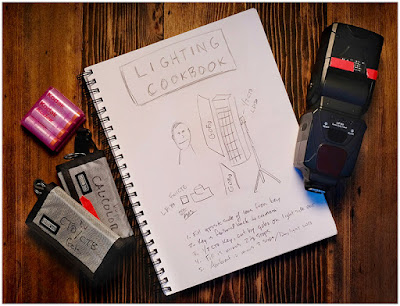
Strobist Lighting Cookbook

29 Nov

Introducing the Strobist Lighting Cookbook. Read more »
Strobist

 
Comments Off on Strobist Lighting Cookbook

Posted in Photography


How to turn household lights into cheap DIY lighting modifiers

27 Nov

This article was originally published on Jake Hicks blog, and is being republished in full on DPReview with express permission from the author.


There is an almost endless supply of lighting modifiers available on the market right now—some are cheap, and some of the better ones are certainly a lot more expensive. But does cost directly relate to quality?

Well, a lot of the times yes it does, especially if you’re referring to build quality. In general, the more you spend, the better-made and more durable the modifier will be. But does that extra money you spend mean you’re getting a better lighting modifier overall? I would have to say no; in fact, for less than £15/$ 20 you can get some stunningly beautiful light from a homemade lighting modifier.

Read on to see examples of the stupidly cheap DIY lighting modifiers I’m referring too.

I’d like to think that my work is known for its creative approach to lighting. The reason for that is because I strongly believe lighting is the single most important subject in a shot.

I can honestly say that I’ve ‘saved‘ some frankly awful shoots through engaging lighting alone. Terrible locations, inexperienced or even no experience in the model/subject can certainly make a shoot hard, but far from impossible to pull off engaging results. Dynamic lighting can bring a boring room to life and flattering lighting can enhance any subject, lighting really is the one and only tool you need and should have complete control and mastery of.

So what makes good lighting? Well that is probably a topic/article/book/anthology for another day as there are certainly a lot opinions on the subject, but I think no matter how experienced or inexperienced you are as a photographer, we all know what we don’t like and we definitely know what we do like when we see it.

In this article I aim to show you a couple of very cheap alternatives to professional lighting modifiers that I think create some beautiful light that are very functional in a lot of situations.

Regular Household Lights

The lighting modifiers we’ll be taking a look at are the dome-like frosted globes. These can be fantastic at lighting a scene in a shot, as they spread light everywhere very evenly. It also turns out that, not only do they spread light everywhere, but they also create a beautiful portrait light as well. Let’s take a closer look at the lights in question.

I purchased two white frosted dome lights from IKEA. One was small and the other was far larger. The smaller one is intended to be used as ceiling light in a bathroom. The reason it’s intended for this is because it casts light everywhere from a very small source close to the ceiling making it ideal for small rooms and corridors.

Small bathroom ceiling dome light.

The second one I purchased was far larger and is actually originally intended as a table lamp. Again this dome-like design is perfect for casting light over a large area without being overly harsh.

Large table lamp dome.

Where can you get them?

I got mine from IKEA and they are silly-cheap.

The small globe is a ceiling light called VITEMÖLLA and it can be found here for £13. The one in the picture looks slightly different as it has a white base compared to my silver one but the dome (the important part) is the same.

The large dome is a table lamp called FADO and that can be found here for £15. It’s worth pointing out and making sure that you get the white one. There are several of these FADO’s in a variety of tones so just make sure you choose the white one as the others will be fairly useless.

Regular Photographic Modifier

I also wanted to get a bit of a gauge on how the light from these domes looked compared to a regular photographic lighting modifier. For the sake of this test I actually compared them to a few shots taken with a 22″ white beauty dish.

There’s a couple of reasons for this. Firstly, it’s probably my most used lighting modifier so I have a very good idea of how the lighting looks with it. And secondly, the beauty dish is pretty pricey compared to these domes so I thought it would be an interesting comparison.

The image above also gives a nice size comparison and it clearly shows how all three of the modifiers used in the test look when side-by-side.

Getting the Domes ‘Shoot-Ready’

Obviously the domes are designed for an alternative purpose to a photoshoot, so I needed to do make a few adjustments before they were ‘shoot-ready’.

Small Dome

The smaller dome was fairly simple: I just removed the inner wiring and bulb housing and then I simply rested it atop one of my standard dish reflectors. I could have taped it on but there was no fear of it moving or tipping out so I just left it as it was and it was fine.

The small dome was easily made shoot-ready by removing the inner workings and then simply resting it in a current reflector dish.

Large Dome

The larger dome took a little more work, but not much. I simply removed the inner workings once again and then found an old speed-ring to attach it too.

A speed-ring is the metal rotating mount that attaches modifiers like softboxes to your flash head. I’ve acquired a few over the years that I no longer use so I simply taped one of them to the dome. With strong tape like gaffers tape it was surprisingly snug and there was no fear of it coming loose even when mounted on its side.

The large dome was taped snugly onto an old speed-ring which enabled me to attach it to my light horizontally if needed.

The Setup

The actual lighting setup was nothing fancy, but I also wanted to try out some alternative colouring ideas at the same time.

The model was positioned about 5 feet from the white wall behind her. I had the main lights positioned about 2 feet in front of her and above eye level, and then I also had a small softbox on the floor at the models feet with an orange gel* in place for the entirety of the test.

*Obviously you don’t need to the orange gel but I was seeing how much the gel was washed out by the modifiers so that’s why I had it in place.

A very simple setup that involves two lights; a key and orange gelled fill light.

The Results

After I had taken a few shots with the beauty dish, I switched that out for the larger dome. Then, after a few more frames, I changed it too the smaller dome. The resulting images should speak for themselves.

Beauty dish Images

Beauty Dish Shot – Click to Enlarge Beauty Dish Shot – Click to Enlarge

The Small Dome Images

The small dome setup
Small Dome Shot – Click to Enlarge Small Dome Shot – Click to Enlarge

Large Dome Images

The big dome set-up
Large Dome Shot – Click to Enlarge Large Dome Shot – Click to Enlarge

CAUTION: I’m using LED modeling bulbs in my flash heads which produce very little heat. If your flash heads have tungsten modeling bulbs, these globes will get VERY HOT as there is nowhere for the heat to escape when the globes are in position on the heads. Be sure to turn them down or off entirely.

Conclusions

I think you guys can draw your own conclusions from the images above and however you feel about the three looks, I think one thing is very clear that we can all agree on: you don’t necessarily need to spend a lot of money on expensive modifiers to produce beautiful light.

The beauty dish obviously produces a more directional light, and you can see that by how dark the background is compared to the other setups. The other dome shots throw light everywhere so more light is spilling onto the background. Because of this beauty dishes directionality and lack of spill, you should notice that the shadows on the models face are darker too. In contrast, the domes are bouncing light around the room and that spilled light is filling in a lot of the shadows on the models face. This gives the appearance of a far more flattering light as a result.

This dome spill is far from being a bad thing either; in fact, if you’re using the domes in a small space you can use that spill and bounce to really blend the subject into a scene with just a single light. This type of modifier is perfect for location shooting or environmental shots, and it’s certainly something I’ll be using for that type of work.

The small dome actually produced a far better light than I expected. Its small source creates a contrasty light that falls off quite quickly, leaving brighter highlights and darker shadows as a result. I also found that this creates some nice shimmering effects on the skin and makeup as a result of the hard-light properties.

I was really excited to try the big dome, as I thought it was going to be far and away the best looking lighting. Although I wasn’t disappointed, I still feel the resulting light didn’t look like I expected. The light was very clean in that there was a very smooth transition from shadow to highlight, which was nice, but it was still darker overall than I expected.

As a singe beauty light I think the small dome won for me with its look. If I was shooting in a larger area and wanted to illuminate more of the subject in a scene then the big dome placed a little further away would surely be the best choice.

In hindsight, I think I know where I went wrong with this test and what I would like to do differently next time.

You’ll notice that the light stand did not move the entire time, so from the small dome setup to the big dome setup the angling of the flash head caused the light source to get a lot closer to the model, which required me to turn the power of the head down. That’s not a problem normally, but when I turned the power of the head down, I also reduced the amount of light that bounced around the room. This in turn reduced the amount of light falling back into the shadows making the light appear darker than it actually is.

I would like to try this big dome again, but move it further back from the model, thereby allowing that light to bounce around the room and giving a far softer impression to the lighting—perfect for environmental shots.

Closing Comments

So there you have it: a couple of great lighting modifiers and at the cost of just over £25 for the both of them! That’s pretty damn impressive in my book, and you’d be crazy not to grab at least one of them and give them a go. Of course, if you really wanted an excellent dome modifier then you can always grab the Profoto frosted dome one here for a cool $ 177! I’m sure that’s miles better 😉

As always, if you have any questions then let me know. If there was something that didn’t make sense and you wanted clarification on then let me know. Also if you’ve ever tested a DIY modifier that has provided excellent results, I’d love to hear about it. Let me know in the comments!


Jake Hicks is an editorial and fashion photographer specializing in keeping the skill in the camera not just on the screen. To see more of his work or read more tutorials, be sure to visit his website, like his Facebook page, and follow him on Instagram and Twitter.

Articles: Digital Photography Review (dpreview.com)

 
Comments Off on How to turn household lights into cheap DIY lighting modifiers

Posted in Uncategorized