RSS
 

Posts Tagged ‘lighting’

Setting The Mood With Low Key Lighting

29 Jul
This image was made using a flash on camera, bounced into an uncoated muslin reflector.  The uncoated muslin warms the light up about 400 degrees Kelvin.  The reflector was positioned above and to the left of the camera, with the flash aimed into it.  EOS-1D Mark IV, EF 100mm f/2.8L Macro. ISO 100, 1/250, f/4.

This image was made using a flash on camera, bounced into an uncoated muslin reflector. The uncoated muslin warms the light up about 400 degrees Kelvin. The reflector was positioned above and to the left of the camera, with the flash aimed into it. EOS-1D Mark IV, EF 100mm f/2.8L Macro. ISO 100, 1/250, f/4.
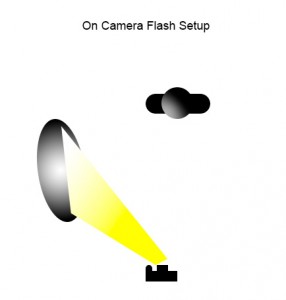
This diagram shows the lighting for the image above.  The uncoated muslin reflector is positioned above and to the left of the camera, with the flash bounced into it. Play with the angle of the reflector to get the lighting just right.

This diagram shows the lighting for the image above. The uncoated muslin reflector is positioned above and to the left of the camera, with the flash bounced into it. Play with the angle of the reflector to get the lighting just right.

Last week I wrote about high key portrait lighting and how it creates a very upbeat feel in images lit that way.  The opposite end of the spectrum is low key lighting, which creates a more moody feeling in images.  Low key lighting tends to be lit with one light on the subject, using reflectors or fill light if necessary to fill in shadows. Because only one light is required, it can be a bit easier to light a subject in the low key style, and certainly less costly indoors.

Light reveals your subject, and shadows define your subject.  The shadows you create are equally as important as the light you use to expose your subject.  Low key lighting will have a high lighting ration from main to fill, typically as high as 8:1.  High key, by comparison, will approach 1:1.

Indoors, the simplest way to achieve low key lighting is to use a speedlite on camera, bounced off a wall, or into a reflector angled to catch your subject in the face. Adjusting the flash output will help you get the softness in light, as well as using a larger reflector. Another reflector on the opposite side of your subject can be used to throw reflected light back where it came from for fill if desired.  Using a silver or gold reflector will create a harsher light, while using uncoated muslin or soft white will create a softer light.

If you’re able, and want to get the flash off camera, using a wireless trigger on your speedlite, while placing it in a softbox gives you another option to light your subject.  A softbox gives you soft, directional light, without spilling the light into the background.  Softboxes work by enlarging your light source.  The larger the light source, the softer the light will be.   I use several softboxes depending on what I need.  The first is a Westcott Bruce Dorn 18×42 assymetrical strip box.  This is great for

lighting a full length figure, with a natural falloff at the feet.  The rest I use are Westcott Apollo softboxes. I have the 16″,  28″ and 50″ softboxes, depending on what the situation calls for.  The 50″ creates light very similar to window light, with a nice soft wraparound effect.  The 28″ is a bit harsher, and the 16″ harsher still.

For this image, I used a Westcott 28" Apollo softbox, with a speedlite off camera. I turned down the flash output slightly to give a more moody feel. EOS 5D Mark II, EF 24-70 f/2.8L. ISO 100, 1/200, f/8.
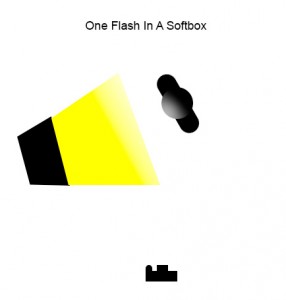
For this image, I used a Westcott 28″ Apollo softbox, with a speedlite off camera. I turned down the flash output slightly to give a more moody feel. EOS 5D Mark II, EF 24-70 f/2.8L. ISO 100, 1/200, f/8.

The softbox is positioned to the left of the camera and aimed at the subject as the subject is turned toward the light. The camera shoots from the shadow side of the subject, allowing the light to just kiss the contour of the subject from the side.

The softbox is positioned to the left of the camera and aimed at the subject as the subject is turned toward the light. The camera shoots from the shadow side of the subject, allowing the light to just kiss the contour of the subject from the side.

Outdoors, to get a low key lighting effect, you’ll need to catch the sun when it’s low in the sky, just as it’s setting, or in the morning as the sun rises. Alternatively, standing at the edge of deep shade can help create a low key effect as well.  If needed, a scrim can help soften the light hitting your subject, but generally a sun low in the sky creates a soft warm lighting on your subject.

Low key lighting is great for setting a mood. Add it as another option in your lighting toolbox and see what happens.  Share your favorite low key images in the comments too!



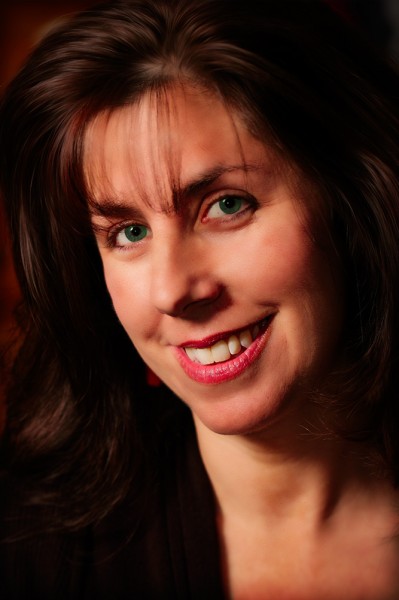
This shot was taken using only late afternoon sun, just before sunset. When the sun sets it becomes directional, and all I had to do was instruct my model to face the light, watching the soft shadows it created. EOS-1D X with EF 85mm f/1.2L II. 1/320, f/4, ISO 320.

This shot was taken using only late afternoon sun, just before sunset. When the sun sets it becomes directional, and all I had to do was instruct my model to face the light, watching the soft shadows it created. EOS-1D X with EF 85mm f/1.2L II. 1/320, f/4, ISO 320.

Post originally from: Digital Photography Tips.

Check out our more Photography Tips at Photography Tips for Beginners, Portrait Photography Tips and Wedding Photography Tips.

Setting The Mood With Low Key Lighting

Digital Photography School

 
Comments Off on Setting The Mood With Low Key Lighting

Posted in Photography


Photographic Lighting [Book Review]

23 Jul

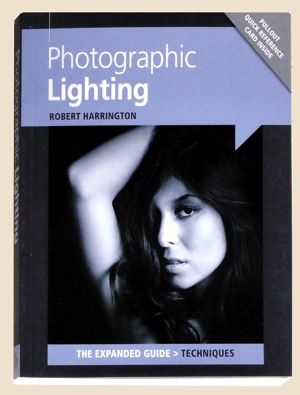
Photographic LightingIf you’re looking for a book that takes you through the mysteries of natural light, shadows and highlights … this is not the one.

Instead, it gives:

‘Expert advice on the basics of on-camera and off-camera flash photography. Professional guidance on choosing flash equipment and accessories. Advice on setting up a photographic studio in the home. Tips on postprocessing techniques to get the best results from flash photography.’

And not a moment too soon for many people. Let’s face it, flash is one of the most misunderstood and misused technologies in photography. Bar none!

And then again, you wouldn’t put a raw amateur into a situation where he or she has access to a battery of studio lamps. Even more chaos.

The book’s chapters:

  • The basics
  • On-camera flash
  • Off-camera flash
  • Using off-camera flash
  • The home studio
  • Putting it into practice
  • One speedlight, 13 looks
  • Postprocessing

The help begins in the first chapter by spelling out the basics of flash: Guide numbers; on camera TTL; the inverse square law explained; reading a histogram; white balance; the RAW format explained; using on-flash colour gels. And we’ve only touched on the basics.

Although the book is relatively small, I was surprised at the depth of info passed on within its pages.

By the time we reach the second chapter we begin to learn how an on-camera flash is set up, power output, battery needs, operational modes, use of diffusion and bounce operation, shutter sync etc.

Matters get even more serious when author Harrington explains ‘Getting the flash off your camera is one of the best things you can do to advance your photographic skills.’ Hear, hear! He goes on to describe the various accessories such as boom arms, flash umbrellas etc. One very useful section recommends using a dummy styrofoam head (purchasable from art supply stores) to run test sessions on how to light a portrait.

Actual off-camera flash shooting situations are discussed and mention is made of some interesting devices which may help: such as Radio Poppers and Pocket wizards that can fire your flash from a distance with no need to use a connecting PC cord.

Also touched on are convertible flash umbrellas: these can be used in a reflective style or in shoot-through style; when used as originally intended, the former can deliver ‘beautiful contrasty light …’, while the latter allows you to shape light ‘and add or subtract softness.’

The degree of detail in the book is admirable and, IMHO, would take the photographer up a notch or two in skills level.

With each chapter there are multiple illustrations to support the text of sufficient size and quality that you quickly see what the info is all about.

Another chapter on choosing lenses will be of help when expanding your optical arsenal. Take heed: ‘buy the best you can afford until you can afford better.’

And then, right in the middle of the book is the sage advice that ‘Film is not dead.’ This is supported by the advice to play around with fun film cameras like the Holga and its ilk.

Creativity is foremost in the book’s pages, with ideas on how to extract the utmost, even when flying with one engine, or even one flash and one reflector.

An important factor in any photography and most especially with flash is post processing; the book deals with file formats and software choices and then gets into detail on white balance as ‘one of the main reasons photographers shoot in RAW format.’

A pair of pop out hint cards at the back of the book suggest the maximum shooting range, f stop, shutter speed and ISO setting with varying flash Guide Numbers.

All in all, a very useful, pocketable guide book.

Author: R Harrington.
Publisher: Ammonite Press.
Size: 18x15x1cm.
Length: 192 pages.
ISBN: 978 1 90770 875 6.
Price: Get a price on Photographic Lighting at Amazon (currently 23% off).

Post originally from: Digital Photography Tips.

Check out our more Photography Tips at Photography Tips for Beginners, Portrait Photography Tips and Wedding Photography Tips.

Photographic Lighting [Book Review]


Digital Photography School

 
Comments Off on Photographic Lighting [Book Review]

Posted in Photography


QA: Lighting a 1,300-Person Group Shot [Magnum Opus]

23 Jul

Reader Albert Yee asks, via Twitter:

Ever shoot a group of 1,300 before? Trying to wrap my head around a possible assignment: Teachers and staff in a basketball arena.

1,300? 1,300. Hmm.

Lighting 1,300 people indoors is a Herculean task, no matter how you slice it. Can you do it? Do you wanna do it? How would you charge for it? Lotsa questions.

Let's jump in.

Read more »
Strobist

 
Comments Off on QA: Lighting a 1,300-Person Group Shot [Magnum Opus]

Posted in Photography


Create Dramatic Lighting in your Photography by Introducing Darkness

22 Jul

Every professional photographer that you’ll ever talk to, will tell you that light is the most important part of photography. These people, myself included, are absolutely right, it is! Without it our photographs would be dull sheets of empty paper! Using dramatic lighting to a photographer’s advantage is the universal lesson preached to every photography student on the planet! But Continue Reading

The post Create Dramatic Lighting in your Photography by Introducing Darkness appeared first on Photodoto.


Photodoto

 
Comments Off on Create Dramatic Lighting in your Photography by Introducing Darkness

Posted in Photography


Discover These Stunning Creative Lighting Techniques That Will Electrify Your Photos

03 Jul

Light is photography.. Without it, photographs would make for some of the dullest looking objects; as pointless an activity, as that of watching a documentary on the beauty of rainbows on a black and white television set! Many first time photographers struggle with the fundamentals of lighting, I certainly did, as there are so many options and choices available to Continue Reading

The post Discover These Stunning Creative Lighting Techniques That Will Electrify Your Photos appeared first on Photodoto.


Photodoto

 
Comments Off on Discover These Stunning Creative Lighting Techniques That Will Electrify Your Photos

Posted in Photography


Natural Lighting: Grow Your Own Glow-in-the-Dark Plants

10 Jun

[ By WebUrbanist in Conceptual & Futuristic & Technology. ]

glowing plant synthetic biology

Imagine the possibilities: cities illuminated at night not with carbon dioxide-producing energy sources, but with real glow-in-the-dark trees that light up streets and sidewalks alike.

glowing plant use cases

What started as a Glowing Plant campaign to raise just sixty-five thousand dollars has now ended with ten times that much in funding, all toward one purpose: naturally-glowing, biologically engineered plant life. The seed funding, in both senses, has been secured.

Glowing plants are not new, but crowd-funding the research and gene splicing,  aiming for sustained bioluminescence, and distributing the resulting plants all push into new (and apparently fertile) territories. The project team will start small, with household plants including glowing roses, and work up from there.

glowing plant how to

Concerned critics, however, have also noted that such ground-up, grass-roots synthetic biology experiments come with risks – including releasing new and untested plant strains into the wild.

glowing plants history process

With recommendations coming in from folks with Harvard to Singularity University on their resume, ranging to endorsements from known names including Cory Doctrow of BoingBoing, one hopes this team has their house in order. Still, even if the researchers in this case are careful and responsible, who is to say the next project of this type will be devoid of danger?

Share on Facebook


[ By WebUrbanist in Conceptual & Futuristic & Technology. ]

[ WebUrbanist | Archives | Galleries | Privacy | TOS ]


WebUrbanist

 
Comments Off on Natural Lighting: Grow Your Own Glow-in-the-Dark Plants

Posted in Creativity


Studio Lighting Tips For Beginners

04 Jun

Even as a new photographer you’ll no doubt be aware of the not-so-secret ingredient to creating stunning photographs – lighting. But there are so many things to consider so where do you start? This article will hopefully ‘shed some light’ on some basic but important techniques to improve your shots.

Choose the best light source

Remember that your lighting setup should depend on the purpose of your shoot, the time of day (if you want natural light), and what you’re capturing. Your first task therefore is to choose the right type for the job. So without further ado here’s a breakdown of the main lighting sources and what they’re best for:

  • Continuous light sources, as the name implies, stay lit continuously much like a lightbulb or tube. They’re a great option for beginners on a budget as they’re generally much cheaper than flash lights. A big benefit is that they immediately show you where shadows will appear in the studio. Be wary that such lighting tends to release a lot of heat – not ideal for photographing human subjects for long periods.
  • Flash lighting tends to be a lot more powerful than continuous equipment and is great for capturing quick-moving subjects – for instance when you’re shooting a family session in your studio with energetic children running about.
  • Natural light isn’t for everyone. It can boost portraiture shots with a realistic, natural quality when there’s plenty of it (and vastly reduces the strength of catch light in the eyes). However, if there isn’t enough, it can have an adverse effect on your subjects – giving them a dull, dark look. If your studio allows for a good amount of natural light though, I do recommend you at least give it a try.

Portrait photography ideas

An excellent way of brightening up your portraits without using harsh lighting is by utilising a reflector. Simply sit your subject near a window and place a reflector up to a metre from their face – the natural light bounces off, illuminating the portrait and filling up unwanted shadows. Don’t want to spend lots on a reflector? Make your own! Simply use a sheet of card covered in tin foil. You’ll be surprised how effective it is.

studio-lighting-tips-beginners

Also, try experimenting with the angles of the light source in relation to your subject. Small angle adjustments can make big differences to the look of your photos. As a general guide, lighting from a person’s side produces more of a shadow-heavy yet dramatic style, whilst placing the light behind creates a silhouette. To emphasise your subject even more, or to highlight a particular aspect (such as their hair), try experimenting with a second flash light. We do of course recommend you master a one-flash set up first before taking on two.

Photographing children

As we suggested before, using continuous light sources near people can sometimes cause discomfort due to the high amount of heat they emit, and is even more of a concern for young children. If there’s sufficient natural light available, it’s best to use that. Otherwise, opt for a softbox attachment. For movement-heavy shoots, go for flash.

lisa2

For older children I suggest utilising both flash and continuous. Softboxes help brighten children’s already cute faces and you may want to try large umbrellas to really enhance the catch lights.

Lisa Gill is a professional photographer who also teaches a range of courses from her studio in Buckinghamshire, UK.
http://www.lisagillphotography.co.uk

dslrBlog

 
Comments Off on Studio Lighting Tips For Beginners

Posted in Photography


6 Secret Photography Lighting Techniques For Capturing A Good Photo

22 May

Everyone loves to take pictures. With the easy availability of cheap DSLR cameras on the market and the advent of affordable photography gadgets, who wouldn’t right? If you are one of those who loves photography, then you probably are already aware of one or two techniques to make your pictures look awesome! But if you’re looking to further improve your Continue Reading

The post 6 Secret Photography Lighting Techniques For Capturing A Good Photo appeared first on Photodoto.


Photodoto

 
Comments Off on 6 Secret Photography Lighting Techniques For Capturing A Good Photo

Posted in Photography


My First Concert: Lighting Craziness

19 May
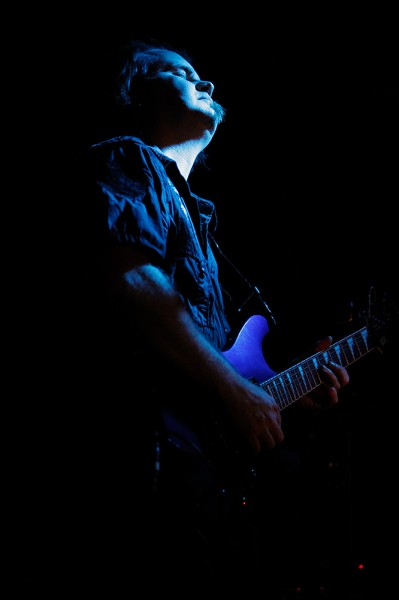
I had noticed this lighting scheme earlier in the song and missed it, focusing elsewhere. But when guitarist Brendt Allman went into his solo, I waited to see if it would happen again. Sure enough, it did. EOS-1D Mark IV, EF 70-200 f/2.8L IS II. ISO 3200, 1/200 f/2.8.

I had noticed this lighting scheme earlier in the song and missed it, focusing elsewhere. But when guitarist Brendt Allman went into his solo, I waited to see if it would happen again. Sure enough, it did. EOS-1D Mark IV, EF 70-200 f/2.8L IS II. ISO 3200, 1/200 f/2.8.

A few years ago, I managed to start working with one of my favorite groups of musicians, a progressive heavy metal band from Pennsylvania called Shadow Gallery.  This has led to me collaborating with them in a number of ways.  I did some publicity photos for them, shot a music video (in another first for me) that ended up getting play on MTV in Europe, and in what I consider a career highlight, shot my first concert performance- which also happened to be their first concert performance.

Having never shot a live performance, I didn’t know what to expect.  I knew the venue was a small local place, so I had no idea what the lighting would be like. I came prepared with two lenses, an EF 24-105 f/4L and EF 70-200 f/2.8L IS II, as well as a 580EX II speedlite. I wasn’t sure the speedlites would be allowed, and even if they were, felt they would limit my shooting since I’d have to wait for the recycle. I used two cameras- a Canon EOS 7D and a Canon EOS-1D Mark IV. Both are capable of relatively high ISO’s, which I knew I’d be using in a dimly lit concert venue. By raising the ISO, it minimized how hard the flash would have to work.  I experimented starting at ISO 800, and finally settled on ISO 3200 a song or two into the show.

The great thing about musical performances is the lighting is generally pretty

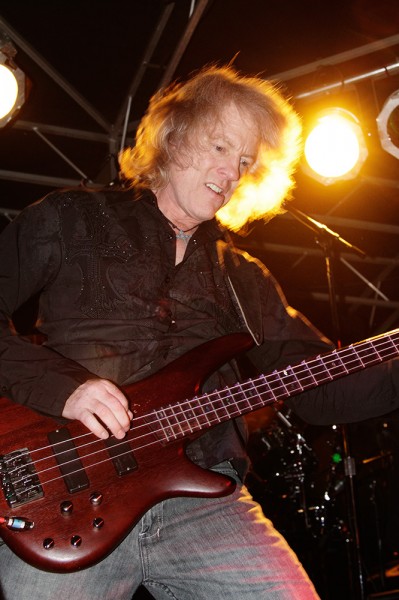
This shot was early in the show, and I was experimenting with flash for my exposures. I used the built-in flash on the EOS 7D, and set the flash exposure compensation to -1 so as not to overpower the ambient. The result was good fill on his face, while the stage lighting created a nice backlight. The slower shutter speed of 1/100 allowed some motion blur in the hair, but that adds to the energy of the image. ISO was only 800 here, as it was the first song and I was still experimenting.

This shot was early in the show, and I was experimenting with flash for my exposures. I used the built-in flash on the EOS 7D, and set the flash exposure compensation to -1 so as not to overpower the ambient. The result was good fill on his face, while the stage lighting created a nice backlight. The slower shutter speed of 1/100 allowed some motion blur in the hair, but that adds to the energy of the image. ISO was only 800 here, as it was the first song and I was still experimenting.

interesting, if not all that bright.  What I wanted to do was figure out, when the lights were at their brightest, what my exposure should be.  I had the luxury of an opening act to shoot some tests. In addition, I wasn’t limited to just three songs like you might be with more well-known performers. I had an entire two hour show, so I took the first two songs to really nail my exposure down.

Even when using flash, I wanted to balance the flash with ambient light, not overpower the ambient lighting.  To do this, I shot in Manual mode.  I set my aperture wide open at f/2.8 or f/4 depending on the camera.  I wanted a shutter speed fast enough to stop any movement on stage, so I ended up settling on 1/200 for the most part. Knowing the 7D would be a bit noisier at the high ISOs due to the smaller sensor, and that the lens I was using was a stop slower, I put the 24-105 on that camera and shot it at 1/100 at f/4 to give it an extra stop of exposure.  That allowed some motion blur to creep in, but for the most part I lost very shots due to motion blur.

The constantly changing lighting meant that some shots just vanished as I pressed the shutter button.  The lighting was frantic and pulsing and constantly changing. But after a song or two, it got easier to predict the patterns, as well as see where the band members liked to stand so I could plan for a shot. After a time I ditched

the flash and opted to shoot sequences at 8 and 10 frames per second to be sure I caught a good expression or peak action. In some cases, I’d catch great lighting for an instant, and then wait to see if the lighting sequence repeated and I could catch it again.

Overall, it was a great experience, one I hope to repeat again some time. It was the perfect combination for me- great music and photography.

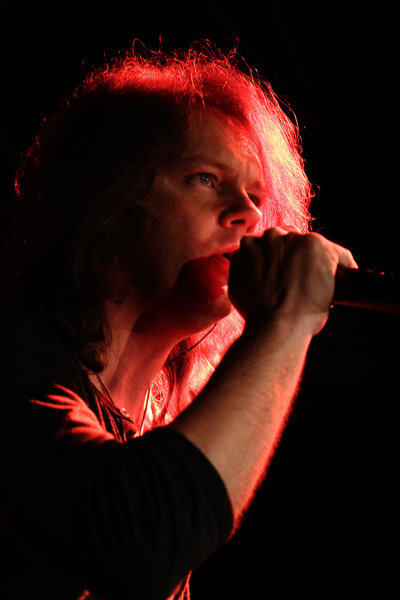
After a while I turned off the flash and raised the ISO up. Shooting using only the ambient light created some dramatic lighting situations. EOS 7D, EF 24-105 f/4L IS/ ISO 3200, 1/100, f/4.

After a while I turned off the flash and raised the ISO up. Shooting using only the ambient light created some dramatic lighting situations. EOS 7D, EF 24-105 f/4L IS/ ISO 3200, 1/100, f/4.

Post originally from: Digital Photography Tips.

Check out our more Photography Tips at Photography Tips for Beginners, Portrait Photography Tips and Wedding Photography Tips.

My First Concert: Lighting Craziness


Digital Photography School

 
Comments Off on My First Concert: Lighting Craziness

Posted in Photography


Lighting In Layers on Lynda.com

13 May
I am happy to announce that Strobist’s video series, Lighting in Layers, has by special arrangement been adapted for the video tutorial site Lynda.com. Those of you who are Lynda subscribers can now view the videos there. (This includes Lynda’s many corporate subs, so check with your company.)

Last week saw the launch of the first segments, which are primarily aimed at beginners. Additional sessions will be released each week.

So even if you are not a newb, stick around. It’ll get more complex soon enough…

-30-


Strobist

 
Comments Off on Lighting In Layers on Lynda.com

Posted in Photography