Here is a Nikon tutorial on Digiscoping/Telescopic lenses. For more tutorials please visit www.nikon-is-different.com
Video Rating: 4 / 5
Here is a Nikon tutorial on Digiscoping/Telescopic lenses. For more tutorials please visit www.nikon-is-different.com
Video Rating: 4 / 5

Canon has announced two lenses for its EOS system. The EF 24-70mm f/4L IS USM is designed as a relatively compact image-stabilized standard zoom for full frame SLRs, and will be offered as a kit with the EOS 6D. It includes a Macro setting offering an impressive 0.7x magnification, backed up by Canon’s Hybrid IS that promises increased effectiveness at close distances. It’s also weather-sealed, and will be available from mid-December at an RRP of £1499.99 / €1459. Meanwhile the EF 35mm f/2 IS USM features an all-new optical design, and includes image stabilization and an ultrasonic focus motor. It will be in on sale early December for £799.99 / €849. Both lenses will work on full frame and APS-C cameras.

Nikon has announced that it is developing three additional lenses for its 1 System mirrorless cameras. The 32mm f/1.2 will offer a classic short telephoto ‘portrait’ option, equivalent to an 86mm lens on the 35mm full frame format. The 6.7-14mm f/3.5-5.6 VR is an image-stabilized, 18-35mm-equivalent wideangle zoom. Finally the 10-100mm f/4-5.6 VR superzoom will offer a similar 27-270mm-equivalent range to Nikon’s existing 1 System powerzoom, but in a smaller package with a mechanical zoom ring. Full specifications, price and release date are yet to be revealed.
This article was written by Andrew S Gibson, the author of Understanding Lenses: Part II, and is part of a series of lessons about camera lenses. Links to the others are at the bottom of the article.

Buying a new lens is a bit like meeting new people. It takes time to get to know someone well, to gain an understanding of their character and outlook on life.
It’s the same with lenses. It takes time to understand the optical qualities of a new piece of glass. These include perspective, bokeh and focal length, all of which affect the look of the photo.
That’s why I spend a lot of time taking photos whenever I buy a new lens. They don’t have to be great images. The aim is to get a feel for how things look through the viewfinder with that particular lens. As my understanding of its optics improves, so do my photos.
Here are some suggestions for getting to know your lenses better. They apply to lenses you already own as well as new ones:

1. What is the minimum focusing distance of your lens? Get as close to your subject as you can and take some photos. Then move further away and repeat. How does the camera to subject distance affect the images?
If you have a close-up lens or extension tubes, try fitting them to the lens and see how close you can get now. How good is the lens for close-up photography?
2. Is your lens a zoom? If so, then it is possible that you skip from focal length to focal length as you shoot, never really getting to know any of the settings well.
Instead, lock your lens to a specific focal length and shooting with nothing but that for a while. Some lenses have a zoom lock, if not you can use masking tape to hold the zoom ring in place.
If the subject is too small in the frame, walk towards it (where possible), or further back if it is too large. This will teach you how the perspective of that focal length changes with distance.

3. Change the aperture. Aperture has a dramatic effect on the appearance of the photo. Try using the widest aperture of your lens to see how your photos look.
Repeat with smaller apertures (f5.6, f8, f11 etc). How does aperture affect the look of the photo? How is depth-of-field affected as you get closer to your subject? (hint: it gets smaller).
4. Shoot a variety of subjects, including ones that you may not immediately think of. If you have a wide-angle lens, take some portraits. How close to your sitter can you get before the distortion is too great?
If you have a telephoto lens, try taking some landscape photos. How does the ability to crop in on a small part of the landscape affect the way you take photos? What happens if you use the widest aperture setting of the lens? What does the background look like?

5. How does your position affect the perspective of the lens? What happens if you get down on the ground and shoot? Or up above your subject? Practise taking photos from different heights and angles to see the affect the changes have on your images.
6. How good is the autofocus performance of the lens? Some lenses have better autofocus motors than others. This affects autofocus performance, regardless of which camera you have.
If you take photos of moving subjects, it is a good idea to test your particular camera and lens combination in AI Servo mode so that you can get a feel for how accurately it tracks a moving subject.

Here are some photos taken with my most recent purchase, the Canon EF 40mm f2.8 STM pancake lens. They cover a variety of subjects, techniques and aperture settings (close-ups taken with an extension tube fitted).
Taking photos like this has helped me familiarise myself with the lens. I’m using it mainly for portraits, and the more I take more I understand how to get the best out of this particular focal length.

Here are some photos taken in China with my 85mm f1.8 lens. There are a variety of images taken at different focusing distances and aperture settings (I used an additional close-up lens for the close-up photos).
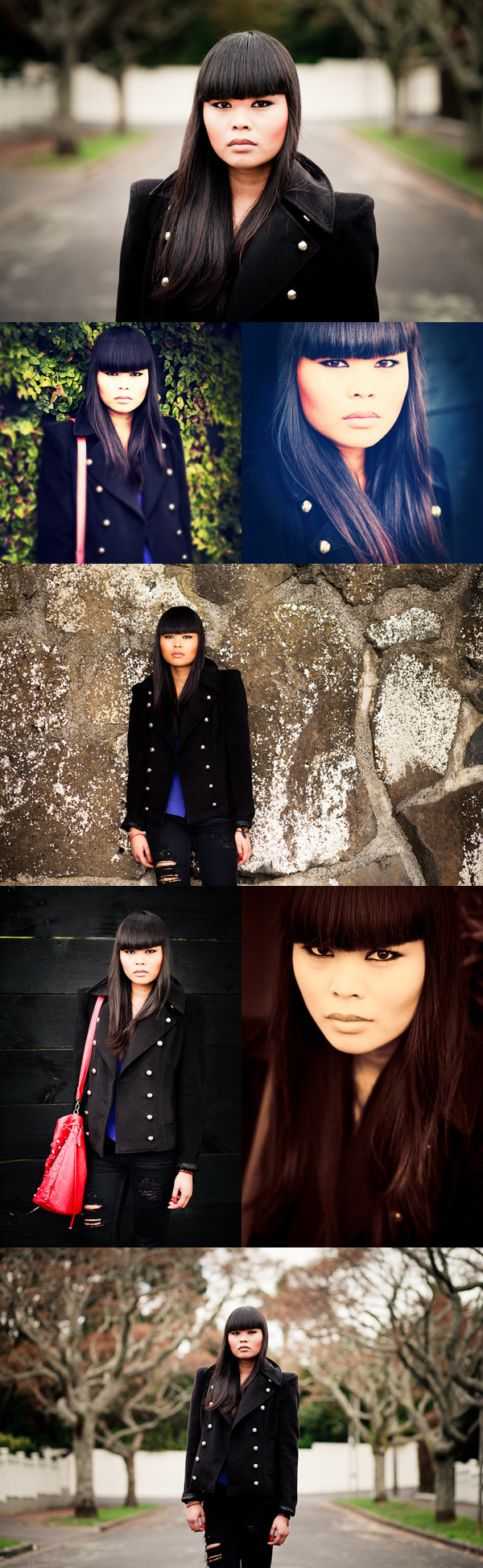
And here is a set of portraits taken with the same 85mm lens. The variety is created by varying the focusing distance, background, point of view, aperture and post-processing.
These are the previous articles in the series:

If you liked this article then take a look at my latest eBook, Understanding Lenses: Part II – A guide to Canon normal and telephoto lenses.
My next lesson in this series will explore ways of using aperture creatively to create dramatic images.
Post originally from: Digital Photography Tips.
Check out our more Photography Tips at Photography Tips for Beginners, Portrait Photography Tips and Wedding Photography Tips.
Getting to Know Your Lenses
www.DMGPhoto.com Comparing the Nikon Portrait Lenses. Nikon 85mm 1.4G vs Nikon 85mm 1.4D vs 135mm f2.0 DC (Defocus Control)

Sony has announced a series of firmware updates for its cameras and lenses, including the addition of Hybrid-AF compatibility for key E-mount lenses and the option to disable the movie record button on cameras including the NEX-7. The NEX-7 also gets an increase in the range over which you can set exposure bracketing – the ±3EV range it now offers is something a users have been calling for. Firmware v1.01 also promises to improve the responsiveness of post-shot image review. Further updates for the SLT-A37, A57, A65 and A77 also offer the option to disable the movie button and provide lens correction for a broader range of lenses.

Sony has published details of its latest 12MP 1/1.7″-type (7.5 x 5.6mm) back-lit CMOS sensor. The IMX144CQJ offers full-resolution 12-bit output at up to 35 frames per second or a roughly ‘widescreen’ 17:9 crop at up to 60 fps – allowing 4k video. Sony stresses how well the sensor can receive light from oblique angles, thanks to its large pixel size, making it able to work with ‘brighter lenses and high power zoom lenses.’ This is interesting, given the recent launch of a group of wide-maximum aperture compacts based around 12MP, 1/1.7″-type BSI CMOS sensors, such as the Olympus XZ-2, Nikon Coolpix P7700 and Samsung EX2F.

Just Posted: Sony E-mount 10-18mm F4, 35mm F1.8 and 16-50mm F3.5-5.6 Power Zoom lens samples on the NEX-6. Our last set of images from the Sony press trip is a series shot with the latest NEX camera and the three E-mount lenses announced at Photokina – the E 10-18mm F4 OSS super-wide-angle zoom, the E 35mm F1.8 OSS fast normal prime, and the E 16-50mm F3.5-5.6 PZ OSS power zoom. We’ve selected ten images shot with each lens and compiled a combined gallery. Full-size images are, as ever, available for download.
This article was written by Andrew S Gibson, the author of Understanding Lenses: Part II, and is part of a series of lessons about camera lenses. Links to the others are at the bottom of the article.

Before zoom lenses became the norm most cameras came with a 50mm lens as standard. Since then, the humble 50mm prime has fallen somewhat out of favour. Which is a shame, because 50mm prime lenses can give you high quality and versatility at a low price point. On an APS-C camera it’s one of my favourite focal lengths. Let’s take a look at why.
If you own a kit lens or zoom that covers the 50mm focal length you may be wondering why you would buy a 50mm prime. After all, you already have that focal length covered. The answer is that 50mm lenses have some advantages that kit lenses don’t:
50mm lenses are simple beasts from a design point of view. Lens designers figured out a long time ago how to make a good quality 50mm lens, and the result is that the optical performance of even the least expensive 50mm prime outshines many zooms.
I used a Canon EF 50mm f1.8 II lens (Canon’s cheapest) on a full-frame camera to take the photo below, my first time using it for photographing architecture, and I was amazed at the detail it captured when I enlarged it to 100%.
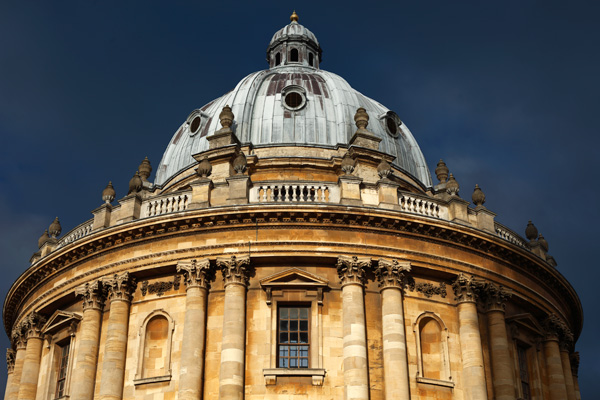

50mm lenses are simple. They tend to have six to eight elements inside – zoom lenses may have more than double that. That means manufacturing costs are lower. It is likely that the cheapest lens in your camera manufacturer’s range is a 50mm prime. Most 50mm lenses represent excellent value for money.
However, when making a purchase (of any lens, not just a 50mm) it is wise bear in mind that more expensive models of the same lens have better build quality, autofocus performance, weatherproofing and maybe a wider maximum aperture.
Canon, for example, has three 50mm prime lenses (plus a 50mm macro lens) in its current range. You may not notice much difference in image quality between the 50mm f1.8 II and 50mm f1.2L – but you will notice the difference in build quality and autofocus performance. I opted for the middle option and bought the mid-range 50mm f1.4.
For me this is the most exciting aspect of 50mm primes (indeed, any prime lens). If you have a kit lens the long end (around 55mm) has an aperture of f5.6 or thereabouts. A prime 50mm lens has an aperture of f1.8 or wider. That’s over three stops. It makes a difference when shooting in low light as you can open up the lens rather than increasing ISO. It also helps you take photos with shallow depth-of-field.
This photo was taken at f1.8 with a 50mm lens:

Once you have a 50mm prime lens the next step is learning to get the best out of it. These are the things that I use my 50mm lens for:
A 50mm lens is a nice walk-around lens to take on a day out. I took these photos with my 50mm f1.4 lens in China. On a full-frame camera it’s a convenient focal length for this very casual style of photography. On an APS-C camera it will help you close in on interesting details.


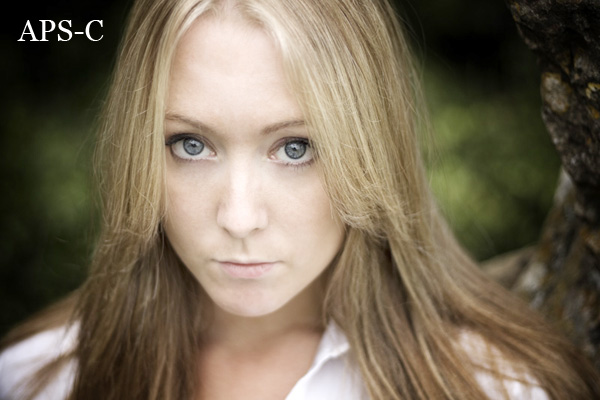
On an APS-C camera a 50mm prime lens effectively becomes a short telephoto lens, ideal for portraits. It works well on a full-frame camera as well, as long as you don’t mind a little distortion. The photos below show a couple of portraits taken with an 85mm lens.

You can use a close-up lens or extension tubes with a 50mm lens to take close-up photos. You can also reverse mount it onto another lens to take macro photos (the techniques are covered in detail in the linked articles). This greatly increases the versatility of the lens. If you already own a 50mm lens these are cheaper options than buying a macro lens.

These are the previous articles in the series:
Why your Kit Lens is Better than You Think
7 Ways to Get More Out of a Wide-angle Lens
Why Lens Quality Doesn’t Matter Quite as Much as You Think it Does
How to Prevent Lens Flare
How a Humble 85mm Lens Became my Favourite

If you liked this article then take a look at my latest eBook, Understanding Lenses: Part II – A guide to Canon normal and telephoto lenses. If you hurry, you’ll get a discount – scroll down for details.
Post originally from: Digital Photography Tips.
Check out our more Photography Tips at Photography Tips for Beginners, Portrait Photography Tips and Wedding Photography Tips.
Nifty Fifties – Why I Love 50mm Prime Lenses

Tune in every other Monday to learn firsthand how to film, edit and shoot like the pros, from your favorite videographers and photographers in skateboarding! Subscribe to Ride: www.youtube.com facebook.com twitter.com instagram @ridechannel
Video Rating: 4 / 5
Erin Manning’s Top 5 Posing and Directing Photo Tips Some people are really uncomfortable in front of the camera—they aren’t sure what they’re supposed to do, and they’re afraid they’ll look bad. This can result in stiff, unnatural looking photographs. It’s your job as the photographer to help your subjects feel comfortable and relax. You can do this by talking, interacting, giving them direction and encouragement. When you are photographing people, you are in a relationship, whether it lasts for a few minutes, a few hours, or a lifetime. Following are five tips that can help you direct your subject and capture natural-looking portraits. Tip 1 Have your subjects make a three-quarter turn to camera and shift their weight to the back leg. This position gives the body shape, dimension and makes them look slimmer. Tip 2 Create a sense of movement in your photograph. Direct your subjects to shift their weight back and forth from one foot to the other. Tip 3 Most people are uncomfortable in front of the camera. Help them out by giving them direction. Tell them they look great, give them feedback and interact. The positive energy will show in your photographs. Tip 4 A real expression is always better than a fake one. To alleviate a frozen, unnatural smile, try my Pufferfish technique for relaxing your subjects face. Do it together! Puff out your cheeks, hold, then blow it out. This exercise relaxes your face, and the goofy look is enough to make anyone laugh. Tip 5 Portraits are …
Video Rating: 4 / 5