RSS
 

Posts Tagged ‘Lenses’

Meyer-Optik Goerlitz unveils titanium and gold-plated Trioplan 100mm F2.8 limited edition lenses

20 Jun

$ (document).ready(function() { SampleGalleryV2({“containerId”:”embeddedSampleGallery_3987015483″,”galleryId”:”3987015483″,”isEmbeddedWidget”:true,”standalone”:false,”selectedImageIndex”:0,”startInCommentsView”:false,”isMobile”:false}) });

Meyer-Optik Goerlitz recently announced a pair of limited edition Trioplan 100mm F2.8 ‘soap bubble’ lenses available for pre-order, one with an anodized titanium surface and the other plated with gold. The lenses were unveiled late last month to celebrate Trioplan’s 100th anniversary. The company is producing 100 units of the titanium version, as well as a very limited run of 10 ‘Golden Eye’ gold-plated units.

The new limited edition version of the lens, save for the ten gold-plated units, features a titanium anodizing on the outer surface, making the lens harder than its aluminum counterpart while retaining the same resistance to high temperatures and corrosion. Thanks to this surface, the company says, ‘buyers will get a superior lens that is much less likely to show signs of age and wear.’

Both versions of the lens feature the following specifications:

  • Optic construction as classic triplet (3 elements in 3 groups)
  • Focal distance: 100mm
  • Maximum aperture: continuous F2.8
  • Iris diaphragm with 15 aperture blades specifically constructed of steel segment belt and with special coating
  • View format: 24mm x 36mm (image circle diameter 44 mm)
  • View angle: 24°
  • Filter: 52 x 0.75 (mm)
  • Clip-on diameter: 54mm
  • Mounts: M42, Canon, Nikon, Fuji X, Sony-E, Micro Four Thirds

Meyer-Optik is offering the titanium lens for $ 2499/€2499 and the Golden Eye lens for $ 3499/€3499; both are available to preorder on the company’s website.

Via: PhotoRumors

Articles: Digital Photography Review (dpreview.com)

 
Comments Off on Meyer-Optik Goerlitz unveils titanium and gold-plated Trioplan 100mm F2.8 limited edition lenses

Posted in Uncategorized


OOWA smartphone lenses use ‘free-form’ tech for improved image quality

09 Jun

DynaOptics, an optical engineering company that has previously looked at bringing zoom lenses to smartphones, has launched a Kickstarter campaign for its OOWA smartphone add-on lenses. 

The lenses, a 2.5x tele-lens with an equivalent focal length of 75mm and a 15mm equivalent super-wide-angle, use DynaOptics’ patented free-form system design methodology which promises improved edge-to-edge sharpness, minimal distortion, no chromatic aberrations and no vignetting, compared to conventional optical designs. This is achieved through a rotationally asymmetric design that optimizes image quality in a rectangular shape (i.e, the shape of an imaging sensor). In contrast, conventional rotationally symmetric lenses optimize image quality in a circle.

Both lenses attach to iPhone 6-series models via an included protective case. The tele-lens has 5 elements, one made from glass and 4 made out of plastic. The wide-angle has three plastic elements and one glass element. 

You can currently secure either lens by pledging $ 65 on the OOWA Kickstarter page, or $ 120 for the kit. If you like the idea behind the lenses but don’t currently own an iPhone you can also help OOWA select the next devices that it will make lenses available for. Samples and comparison shots can be be found on the DynaOptics website.

Press Release:

Palo Alto, CA and Singapore – June 8, 2016 – DynaOptics, an innovator in optics technology, entered the mobile photography market today with OOWA, a suite of iPhone lens attachments powered by free-form lenses. OOWA’s high-quality wide-angle and telephoto lenses, together with protective phone cases, are available for pre-order on Kickstarter now.

“The introduction of OOWA lenses marks a true innovation in the world of optics: for the first time, a free-form lens is incorporated into a camera lens,” said Li Han Chan, DynaOptics CEO and co-founder. “OOWA’s precision-crafted lens attachments are now available for the iPhone 6 series. Our technology empowers these users to see the world from a fresh perspective — with unprecedented clarity — zero chromatic aberration (no color bleeding) and zero vignetting (no dark corners).”

Photographs taken by OOWA can be found on Instagram at #madewithoowa.

OOWA’s suite of products includes:

  • a 2.5X zoom telephoto lens,
  • a 110 degree diagonal field-of-view wide-angle lens, and
  • a phone case that allows for lens attachment with ease and precision while protecting the phone

A Single Lens Kit (telephoto or wide-angle lens) comes with the selected lens and a phone case, a lens cap, and a carrying pouch. The Pro Kit comes with both lenses, two lens caps, two carrying pouches, and a phone case. OOWA’s Kickstarter supporters can purchase lens kits at early-bird prices (Single Lens Kit at $ 65; Pro Kit at $ 120) during the first three days of the campaign. After which, the kits will be offered at regular reward levels of $ 79 and $ 139 respectively.

As mobile phones capture an ever-increasing share of the world’s photos, the pressure is on for cell phone technology to compete with the image quality of DSLR cameras. Market research firm InfoTrends estimates that more than one trillion photos will be taken by mobile phone users in 2017, up from 0.14 trillion in 20101.

OOWA’s products address this insatiable demand for ever-improving image quality and technology in today’s mobile camera world. Visit OOWA’s press page here for more information on OOWA’s free-form technology, product specifications, lab and field image quality results, and a prototype review by a professional photographer. 

OOWA products are available today for pre-order on KICKSTARTER. OOWA lenses are compatible with the iPhone 6, 6S, 6+ and 6S+ (other phone users — watch this space!), and with screen protectors. The products are expected to ship in November 2016.

Articles: Digital Photography Review (dpreview.com)

 
Comments Off on OOWA smartphone lenses use ‘free-form’ tech for improved image quality

Posted in Uncategorized


Sigma says three of its lenses are not fully compatible with the Canon EOS-1D X II

03 Jun

Sigma has announced that three of its lenses, the 20mm F1.4 DG HSM Art, 35mm F1.4 DG HSM Art and the 85mm F1.4 EX DG HSM, aren’t ‘fully compatible with’ Canon’s newly released EOS-1D X Mark II. When one of these lenses is used with the camera, the resulting images may be underexposed. The company is developing firmware to correct the issue.

According to Sigma, the issue manifests when users choose ‘Center-weighted Average Metering’ or ‘Evaluative Metering.’ In addition, the company recommends users disable lens correction settings in the camera when using one of Sigma’s interchangeable lenses. This includes Chromatic aberration correction, Peripheral illumination correction, Distortion correction and Diffraction correction.

The latter point likely refers to an issue with the 35mm F1.4 Art lens and 1DX Mk II that surfaced last month in which images taken with the pair showed unusual banding around the edges. As SLR Lounge noted, turning off Peripheral illumination correction in-camera fixed the issue, which now appears to be Sigma’s official workaround. The camera maker also says that the Manual Override focus function isn’t available with the 1D X II when using its lenses.

Via: Sigma

Articles: Digital Photography Review (dpreview.com)

 
Comments Off on Sigma says three of its lenses are not fully compatible with the Canon EOS-1D X II

Posted in Uncategorized


Fast Glass: Tips for Working With Wide Aperture Lenses

29 May

As photographers, many of us become infatuated with new gear, such as a new flash, tripod, or lens. We scrimp and save our money, and go off to the camera store to purchase that new lens we’ve had our eye on, most times satisfied with whatever new piece of kit has found its way into our bag. Sometimes, though, it happens that for some reason that new gear we’ve spent our hard-earned money on doesn’t live up to our expectations.

Shallow depth of field

Fast lenses enable the photographer to use shallow depth of field creatively. A 24mm f/1.4 lens, shot at f/1.4 was used for this image.

It may be that it was overhyped, or it doesn’t suit your workflow. There are occasions, however, when a piece of gear has a learning curve attached to it that needs to be solved before you can fully enjoy it. One such item that seems to have that learning curve attached, is a fast lens (one with large maximum aperture).

At some point, we all begin dreaming of fast (large aperture) lenses. For the purpose of this article, I’m going to define fast lenses as ones with maximum apertures wider than f/4.

Fast lenses are great for a lot of things, shooting in low light being one of the major advantages, because the wider aperture allows more light into the imaging sensor, which in turn allows you to use a faster shutter speed. This is why lenses like the 70-200mm f/2.8 are such a workhorse in a photojournalist’s camera bag. Another advantage to the wider aperture is the ability to create shallow depth of field in your image, which can make your subject really stand out from the background. The 85mm f/1.4 is one of my go-to lenses for almost any portrait situation for just that ability.

Focus on the eye

When photographing portraits, focusing on the closest eye is ideal when using shallow depth of field.

That all sounds great, right? But it’s that last point regarding shallow depth of field which seems to create the biggest problems for most photographers, who are new to using a fast lens. I often hear of photographers complaining about a lack of sharpness in their lenses, and more often than not, the issue crops up when the photographer is using a fast lens.

It may be a portrait photographer trying to use an 85mm f/1.8 wide open, or someone doing street photography with a 35mm f/1.4, and for some reason there’s a lack of sharpness to the image that will invariably be blamed on the lens. In my 20 years in photography, I’ve owned and worked with a lot of gear – 0ver a dozen different camera bodies, and several dozen lenses I’ve used at one point or another. I can honestly say that I have never once had one come straight out of the box brand new, and not be in perfect working order, so treat that option (that the lens is faulty) as a last resort for now.

Understanding Depth of Field

In addition to their low light capabilities, many photographers purchase fast lenses simply because of the ability to shoot with a shallow depth of field. When used creatively, a lens with a large aperture used wide open, allows you to be very selective in what you show the viewer, and what you hide in soft out of focus areas, known as bokeh.

However, it’s very important to understand that depth of field works differently dependent on the lens you are using. For instance, a lens such as the Nikon 85mm f/1.4 will have paper thin depth of field when used at f/1.4, at close distances to the subject. As the subject moves further away from the camera, that depth of field becomes a little greater. But at the minimum focusing distance, you could focus on an eyelash on your subject, and still have the eyeball be out of focus, despite the fact it’s only half an inch behind the eyelash. Assuming you don’t want to back up and change the framing on your subject, the best way to ensure sharp focus on the eye, is to choose a focus point on the eye and be careful it does not accidentally focus on an eyelash.

If you are willing to sacrifice a bit of that shallow depth of field, simply stop down a bit to give yourself some leeway on where you focus. While at f/1.4 or f/1.8 you may not be able to get both the eyelash and the eye in focus, but at f/2.2 or f/2.8, you’ll likely have enough depth of field to achieve sharp focus on both.
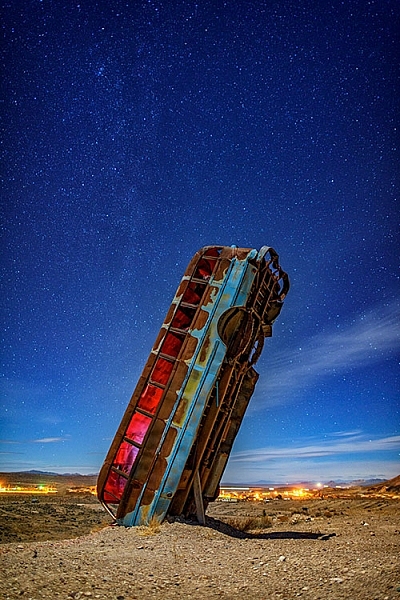
hyperfocal distance

Using a 24mm f/1.4 lens wide open, setting the focus distance to the hyperfocal distance, allows you to get greater depth of field even when photographing wide open.

Even on wide angle lenses, such as a 24mm f/1.4 or 35mm f/1.4, which have inherently (seemingly) greater depth of field due to the nature of wide angle lenses, you’ll still notice some issues arising due to the use of a wide open aperture. If you can step back from the subject, you can increase the perceived depth of field since you’ll be focusing further away. You can calculate how far away you need to be by using a hyperfocal distance calculator.

The hyperfocal distance is the closest distance at which a lens can be focused, while still keeping objects at infinity acceptably sharp. In the shot of the upended bus at night, knowing the bus was about 30 feet away, I calculated the near limit of focus for the lens I was using at about 18 feet and the far limit was 91 feet, meaning anything past that distance would still be out of focus at f/1.4. By focusing at the hyperfocal distance of 44 feet, I knew the bus would fall into the area of sharp focus, while still keeping the stars in sharp focus. This is true because the hyperfocal distance is where everything from that distance to infinity falls within your depth of field, and everything from the hyperfocal distance to the point halfway between the camera and that distance, also falls within your depth of field.

Unfortunately, it’s not always possible to focus at the hyperfocal distance. For instance, photographing at a party in a dimly lit room, you may notice some areas out of focus due to the shallow depth of field. The fix here is to  stop down a bit if you can. If you need more light, consider using a flash if appropriate, and stopping down the lens to give greater depth of field. Another option is to raise the ISO a bit to allow you to stop down the aperture more.

You may find yourself saying, “I didn’t purchase a fast lens to use it at a smaller aperture!” While that may be true, if you find yourself unable to capture sharp images due to the shallow depth of field, stopping down is the best solution. Please keep in mind, I’m not talking about a lens that just isn’t sharp. I’m talking about a lens that, due to its fast aperture, isn’t capable of capturing the depth of field needed to keep everything that you want sharp in focus.

Choosing Your Focus Point
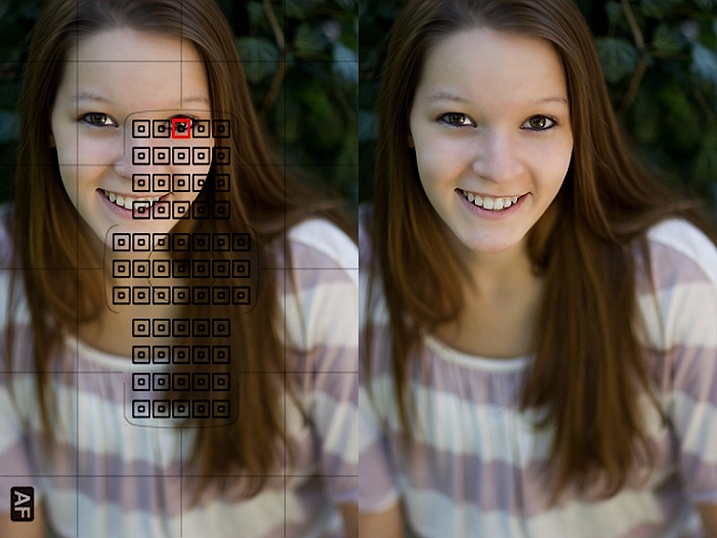
choose a focus point

When it is critical to focus on a specific area in the image, choosing the correct focus point will ensure sharp focus where you want it, even when using a wide aperture with shallow depth of field.

One of the best things you can do when using a fast lens, is to ensure you’re focusing precisely where you think you are focusing. You want to be sure your camera is set to allow you to manually choose a focus point. By manually selecting a focus point, you can ensure the camera focuses on what you think it should. Most cameras default focus point selection method is automatic. In this mode, the camera will generally try to focus on the nearest object with detail that is covered by one of the focus points. Allowing the camera to choose can be a recipe for disaster, since quite often, the nearest object with detail is not what you want to focus on.

One of the best things you can do as a photographer is take control of where your camera is focusing by selecting the focus point that you want, and ensuring that the focus point you choose is on the subject you want to be sharp. Cameras today have multiple focus points, with some having as many as 61 AF points. While it’s true that generally speaking the center point will be the most accurate of those points, technological advances have made the points along the outer edge much more accurate than in the past. This means that you can choose those outer focus points with confidence when composing your image.

Focus on the eyes

Using shallow depth of field on a portrait allows the photographer to focus on the eyes, and lets the rest of the body fall out of focus. An 85mm f/1.2 lens was used here.

Another related problem to the camera choosing the wrong AF point, is photographers employing a technique known as focus and recompose. This technique came about back when cameras only had a few AF points bunched around the center of the viewfinder. In many situations, it’s not a problem, as long as you are using an aperture that will provide adequate depth of field to maintain focus on the object or person you’ve focused on.

However, when using a fast lens, at a wide open aperture, focusing and then recomposing your shot becomes a real problem. This is because when using a fast lens at a wide aperture, the depth of field is so thin, that recomposing the shot will actually shift the plane of sharp focus away from the subject you initially focused on. So while you may have focused on the correct subject, using the center AF point, in adjusting your composition you knocked your subject right out of focus again. The solution for this issue is the same as above: manually select an AF point that you can place right on top of your subject, without recomposing your shot.

Embrace the Bokeh

shallow depth of field

Shallow depth of field can be used to create interesting effects and force your viewers to look where you want them. This image was made with a 70-200mm lens at f/2.8.

Lastly, in answer to those who bought fast glass to shoot it wide open, I say – embrace the bokeh! Bokeh is defined as the visual quality of the out of focus areas of an image, and each lens renders these areas a bit differently. Fast lenses typically have beautifully smooth bokeh.

Compose your shots so that the shallow depth of field is used creatively. To do this, you’ll need to understand what you can and can’t do when shooting wide open. Knowing that you will have a shallow depth of field, you’ll want to avoid stacking subjects at different distances. Create compositions that contrast sharp areas, with out of focus areas. Use that contrast to highlight certain objects within your frame, and by the same token, hide other objects by causing them to be drastically out of focus.

Highlight an object using shallow depth of field

Using shallow depth of field allows you to highlight one object in sharp focus against a blurry background. This image was made with an 85mm f/1.2 lens.

Images created using shallow depth of field force your viewers to look where you want them to, because the eye is naturally drawn to areas of sharp focus. By using proper focusing techniques, you can ensure the image you see in your mind is the one you capture, and by understanding how the lens will handle depth of field, you can ensure that you’ll know to stop down when you need to for added depth of field, avoiding the mistake of having an important part of your image out of focus.

What’s your favorite fast lens to work with and why?

googletag.cmd.push(function() {
tablet_slots.push( googletag.defineSlot( “/1005424/_dPSv4_tab-all-article-bottom_(300×250)”, [300, 250], “pb-ad-78623” ).addService( googletag.pubads() ) ); } );

googletag.cmd.push(function() {
mobile_slots.push( googletag.defineSlot( “/1005424/_dPSv4_mob-all-article-bottom_(300×250)”, [300, 250], “pb-ad-78158” ).addService( googletag.pubads() ) ); } );

The post Fast Glass: Tips for Working With Wide Aperture Lenses by Rick Berk appeared first on Digital Photography School.


Digital Photography School

 
Comments Off on Fast Glass: Tips for Working With Wide Aperture Lenses

Posted in Photography


Sigma offers part replacement to prevent lenses scratching Pentax K-1

13 May

Lens manufacturer Sigma has announced that it will replace parts on its Pentax-mount lenses that are known to scratch the new Pentax K-1 full-frame camera. The company says that certain lenses that it produces clash with the shape of the upper part of the mount on the K-1 and that using one of the listed lenses ‘could leave a small scratch on part of the camera body’.

Sigma has issued a list of current and past lenses that it knows create a problem, and advises Pentax K-1 owners not to use them until the repair is carried out. Three current lenses are included in the advisory: the 30mm F1.4 DC HSM Art, 35mm F1.4 DG HSM Art and APO 50-500mm F4.5-6.3 DG OS HSM. A time scale for the repair service to begin has yet to be announced though.

The company also says that some of its lenses are not recognized automatically by the K-1, and that users will need to manually enter whether the lens is designed for full frame or APS-C sensors via the camera’s menu system. The announcement makes no mention of whether this issue will also be fixed.


Press release:

Use of Pentax mount SIGMA interchangeable lenses when attached to the Pentax K-1

Thank you for purchasing and using our products.

We have found that some SIGMA interchangeable lenses for Pentax mount could leave a small scratch on part of the camera body when they are attached to the PENTAX K-1, released by RICOH IMAGING COMPANY, LTD. on April 28th, 2016. In this circumstance, please do not use the following lenses for Pentax mount on the PENTAX K-1.

We are planning to provide a repair service to replace a part of the lens for this issue. We will make a further announcement on our website when specific details, such as the service period, are finalized.

In addition, please also refer to the usage notice related to this announcement below.

Phenomenon
When some SIGMA interchangeable lenses for Pentax mount are attached to the PENTAX K-1, the upper part of the mount can be scratched.

This phenomenon is due to the interference with the shape of the upper part of the mount on the PENTAX K-1 camera body and it does not occur to any cameras other than PENTAX K-1.

Applicable products
Current Line-Up

  • 30mm F1.4 DC HSM| Art
  • 35mm F1.4 DG HSM| Art
  • APO 50-500mm F4.5-6.3 DG OS HSM

Discontinued Lenses

  • 50mm F1.4 EX DG HSM
  • 85mm F1.4 EX DG HSM
  • 24-70mm F2.8 IF EX DG HSM
  • APO 70-200mm F2.8 EX DG OS HSM
  • APO 70-200mm F2.8 II EX DG MACRO HSM
  • APO 50-150mm F2.8 II EX DC HSM
  • APO 120-400mm F4.5-5.6 DG OS HSM
  • APO 150-500mm F5-6.3 DG OS HSM

Usage Notice for customers who are using Pentax mount SIGMA lenses on a PENTAX K-1
In some cases, depending on the lenses to be attached on the camera, the angle-of-view cannot be recognized automatically. Please select an angle-of-view that is appropriate for the lenses to be attached from “Crop” in the camera’s menu.

When DG lenses are attached, please select “FF”.
When DC lenses are attached, please select “APS-C”.

We appreciate your continued support for our company and products.

Articles: Digital Photography Review (dpreview.com)

 
Comments Off on Sigma offers part replacement to prevent lenses scratching Pentax K-1

Posted in Uncategorized


Win One of Three Lenses from Tamron – Enter the Sunshine Photography Contest

09 May

Win one of THREE lenses from Tamron! Enter the “Sunshine” photography contest today.

Win one of the following:

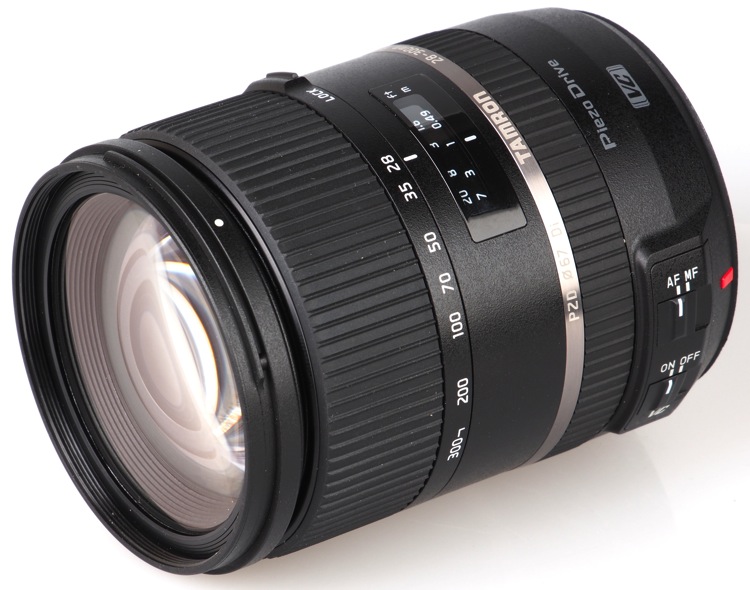
  • A Tamron 28-300mm Di VC PZD lens
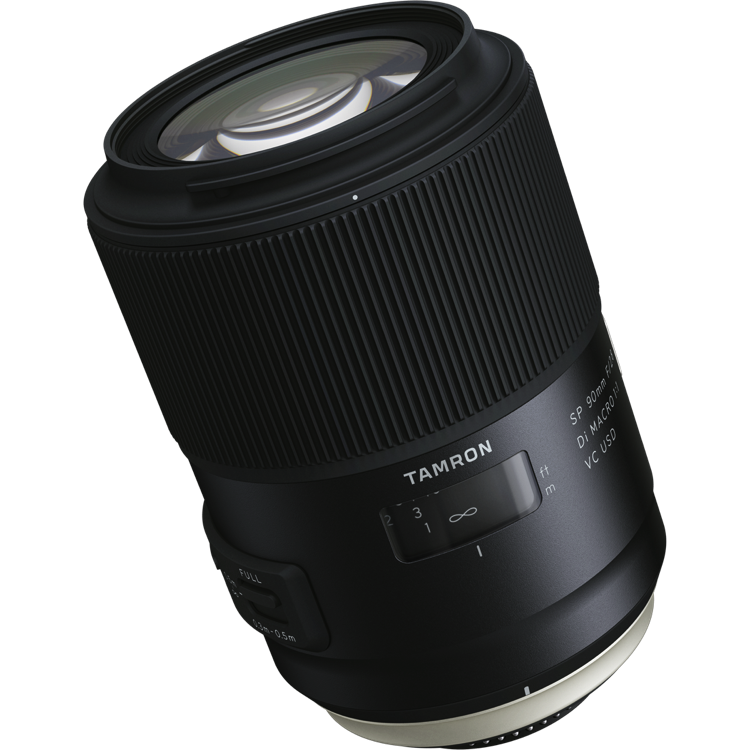
  • A Tamron SP 90mm F/2.8 Di VC USD lens
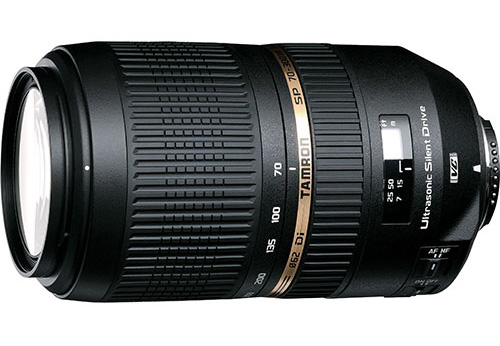
  • A Tamron SP 70-300mm Di VC USD lens

Over the last few years here at dPS, we’ve run very some very popular competitions with our partners, to give away to lucky dPS readers some of their great photographic products. We are lucky enough to be able to do it again.

For this contest, Tamron is giving away three lenses!

These three unique prizes are designed to help every level of photographer create better pictures. Tamron is the world’s most awarded photographic lens line. Each will be won by a different dPS reader. Here’s what you could win:

Our First Prize Winner will receive:

A Tamron 28-300mm Di VC PZD (model A010) – $ 849 value, for canon, Nikon or Sony cameras.

Tamron 28 300mm

The Second Place Winner will receive:

A Tamron SP 90mm F/2.8 Di VC USD Macro Lens (model F017-new) – $ 649 value, for canon, Nikon or Sony (without VC) cameras.

Second Prize SP 90mm

The Third Place Winner will receive:

A Tamron SP 70-300mm Di VC USD Zoom Lens (model A005) – $ 449 value, for canon, Nikon or Sony cameras.


Tamron-70-300

Learn a little more about Tamron here: Tamron USA

How to win

To win this competition you’ll need to:

  • Visit the above lens information pages and learn more about the lens and its core use.
  • Post your sunshine photo, along with a few words on how you feel one of the above Tamron lenses would help your photography. It’s as easy as that!
  • Do this in the next 21 days and after June 1st, 2016, the team at dPS will choose the best three photos and we will announce the winners in the following days.
  • The deadline to enter is May 30th at 11:59pm PST (UTC-7). Photos and comments left after the deadline will not be considered.

Bee Image

By best – we’re looking for people who have an understanding of photography, the role of lenses, and how they will best suit your needs. So you’ll need to check out the product pages to put yourself in the best position to win.

There’s no need to write essay length comments to win – but we’re looking to hear what you like about the lens, and how it would help your development as a photographer. Don’t forget to include your favorite sunshine themed photo. We encourage you to have fun and be creative.

This competition is open to everyone, no matter where you live – but there is only one entry per person. To enter – simply leave your photo and comment below.

Tamron logo

Disclaimer: Tamron is a paid partner of dPS

googletag.cmd.push(function() {
tablet_slots.push( googletag.defineSlot( “/1005424/_dPSv4_tab-all-article-bottom_(300×250)”, [300, 250], “pb-ad-78623” ).addService( googletag.pubads() ) ); } );

googletag.cmd.push(function() {
mobile_slots.push( googletag.defineSlot( “/1005424/_dPSv4_mob-all-article-bottom_(300×250)”, [300, 250], “pb-ad-78158” ).addService( googletag.pubads() ) ); } );

The post Win One of Three Lenses from Tamron – Enter the Sunshine Photography Contest by Darlene Hildebrandt appeared first on Digital Photography School.


Digital Photography School

 
Comments Off on Win One of Three Lenses from Tamron – Enter the Sunshine Photography Contest

Posted in Photography


Samyang announces 14mm F2.8 and 50mm F1.4 autofocus FE lenses

04 May

Samyang Optics has announced its first autofocus lenses. The 14mm F2.8 ED AS IF UMC and 50mm F1.4 AS IF UMC will be offered in Sony’s E-mount and are designed to cover a full-frame sensor. With a robust metal housing, each lens will be able to utilize phase detection AF as well as contrast detection, and will offer 67mm filter threads.

The 14mm F2.8 and 50mm F1.4 will be available in July 2016; no price is given yet. Keep an eye on Samyang’s Facebook page and website for more information.


Press release:

May 3rd, 2016, Seoul, Korea – The global optics brand, Samyang Optics (http://www.samyanglensglobal.com) today announced the long-awaited launch of two autofocus lenses: 14mm F2.8 and 50mm F1.4 lenses for Sony E mount Mirrorless cameras with full frame sensor size. The new 14mm and 50mm are the widest and brightest lenses in their class and offer superb quality images to photographers. This launching expands the boundaries of Samyang Optics photo lens line-up from manual focus only, to now include autofocus lenses.

Optimised Optical Design as Full Frame Mirrorless Camera Lens

Both 14mm F2.8 ED AS IF UMC and 50mm F1.4 AS IF UMC are specifically designed to work in harmony with full frame mirrorless cameras in Sony E mount. The flow of light is devised based on the uniqueness of the distance from glass to sensor in mirrorless cameras to create optimal performance. Along with portability of mirrorless lenses, the 14mm F2.8 and 50mm F1.4 are compatible with full frame sensors to deliver the wideness and sharpness of image to photographers.

The 67mm filter diameter brings the maximum amount of light into the lens to create the best work of light in photography. The 14mm F2.8 is the widest angle available in the market and the F1.4 of 50mm and F2.8 of 14mm apertures are by far the brightest of full frame mirrorless lenses, offering a beautiful bokeh effect and the best quality images under various exposure conditions.

Based on Samyang Optics’ exceptional optical technology, aspherical lenses have been included in both lenses to minimise aberration and unnecessary light dispersion, delivering high resolution from the centre to the corners of the image.

AF Performance and Ergonomic Design Based on Class-Leading Technology

These new products will be the first autofocus lenses in over 40 years of Samyang’s class-leading core optics technologies. Samyang has captured the essence of world leading image technology with their manual focus lenses and reinterpreted it into autofocus lenses. Photographers now can enjoy the prime manual lens image quality and autofocus lens. These new 14mm F2.8 and 50mm F1.4 are compatible with both phase detect and contrast detect sensors to operate fast and accurate focus detection.

The 67mm filter diameter is also the result of years of R&D for best handling, by adding stability to the photo-taking experience. Also the minimal and sleek design and metal-housing solidify the build quality with the internal focus system.

These two new autofocus lenses from Samyang Optics will be exhibited at the Photo & Imaging 2016 Show in Seoul, South Korea. The lenses will be globally available from July 2016. Further details, pricing and availability will follow.

Articles: Digital Photography Review (dpreview.com)

 
Comments Off on Samyang announces 14mm F2.8 and 50mm F1.4 autofocus FE lenses

Posted in Uncategorized


Beastgrip expands into UK and Japanese markets, announces plans for high quality lenses from Kenko Tokina

13 Apr

$ (document).ready(function() { SampleGalleryV2({“containerId”:”embeddedSampleGallery_4199009759″,”galleryId”:”4199009759″,”isEmbeddedWidget”:true,”standalone”:false,”selectedImageIndex”:0,”startInCommentsView”:false,”isMobile”:false}) });

US mobile phone rig and lens mount manufacturer Beastgrip has started distribution of its Beastgrip Pro smartphone grip in the UK and Japan, and announced it is working on new ‘high quality’ lenses with Kenko Tokina. The Beastgrip Pro is an adaptable smartphone housing that uses adjustable clamps and a sliding lens mount assembly to fit conversion lenses over the camera of any model – Beastgrip claims.

The system uses a 37mm threaded lens mount that accepts conversion lenses from Beastgrip’s own collection as well as those from independent manufacturers. The company also offers what is calls a DOF (depth-of-field) adapter that allows Canon EF-mount lenses to be used on the rig in front of the smartphone lens to achieve a shallow depth of field.

The rig also features a cold shoe and tripod thread for attaching accessories such as microphones and lights, as well as a number of mounting threads.

While the company offers its own wide, ultra-wide and fisheye conversion lenses the partnership with Kenko Tokina promises some extra interesting lenses. Kenko’s own line of smartphone conversion lenses includes a 7x telephoto lens that would convert most smartphone focal lengths to 196mm – but that’s not to say it would be also produced to fit the Beastgrip Pro.

The system will be distributed by Kenko Tokina in Japan and Intro2020 in the UK. The price of the rig on its own is $ 139.99/£139.99, and kits are available that include wide and fisheye conversion lenses. For more information visit the Beastgrip website.


Press release:

Beastgrip Pro – the world’s first universal lens adapter and camera rig for smartphones

With immediate effect, Intro 2020 has been appointed sole UK distributor of BEASTGRIP PRO.

Beastgrip Pro is the world’s first universal lens adapter and camera rig system for smartphones. It is the ultimate tool for photographers, videographers and the rapidly growing live streaming market.

The Beastgrip Rig features an adjustable lens mount with spring loaded clamps to ensure a secure grip and perfect fit with virtually any smartphone on the market. It is a modular rig system with a removable lens mount assembly and handle that allows the user to modify the Beastgrip Pro to their own personal preference. It comes with industry-standard photography mounts and an ergonomic grip, allowing you to attach all kinds of photography gear and take a better shot.

There are 3 kits in the product range, including 2 with lenses, as follows:

Beastgrip Pro Rig
Universal/adjustable and works with virtually any camera phone on the market. It is simple and convenient to use and works with or without a protective phone case. It features a standard 37mm threaded lens/filter mount and is compatible with wide variety of conversion lenses and filters. It also features a cold shoe mount for attaching LED lights, microphones, and other accessories plus comes with five standard ¼”-20 threaded mounts for attaching to supportive photo/video gear such as tripods, stabilizers, sliders and other accessories.

Beastgrip Pro Rig plus Wide Angle Lens
This set includes a 37mm 0.43x Extreme Wide-Angle lens, which nearly doubles the field-of-view in your photo/video, letting the user see much more in the frame than a standard phone camera. It’s perfect for shooting large scenes like landscapes, concerts, sports, family photos etc.

Beastgrip Pro rig plus Wide Angle and Fish-eye lenses
Includes the Beastgrip 37mm 0.43x Extreme Wide-Angle lens and an ultra wide-angle lens that produces strong visual distortion, i.e. the classic “fisheye” circle, and an immersive 180° field-of-view. It’s perfect for action sports like skateboarding, biking, snowboarding/skis, etc.

SUGGESTED RETAIL PRICES:
•    Beastgrip Pro Rig £139.99 including VAT
•    Beastgrip Pro Rig plus Wide Angle Lens £169.99 including VAT
•    Beastgrip Pro Rig plus Wide Angle & Fisheye Lenses £199.99 including VAT

All units are available immediately.

Articles: Digital Photography Review (dpreview.com)

 
Comments Off on Beastgrip expands into UK and Japanese markets, announces plans for high quality lenses from Kenko Tokina

Posted in Uncategorized


Sony announces 50mm F1.8 and 70-300mm F4.5-5.6 full-frame lenses

29 Mar

Sony today announced a pair of FE-mount full-frame lenses for its Alpha and NEX mirrorless cameras. The first is an FE 50mm F1.8 prime lens, giving photographers a considerably less expensive option compared to the Zeiss 55mm F1.8 currently on the market. This compact and lightweight lens is priced at $ 249 and will ship in May.

The other lens is the 70-300mm F4.5-5.6 G OSS, which is the longest FE-mount tele-zoom available. It features four aspherical and two ED elements, optical image stabilization, and a Nano AR coating to reduce flare and ghosting. The lens offers a minimum focus distance of 0.9m/3ft, and uses a linear actuator for smooth and silent autofocus. The 70-300 will also be available in May at a price of $ 1199.


Press release:

Sony Bolsters Full-Frame FE Lens Lineup with New 70-300mm High-Resolution Zoom and 50mm F1.8 Prime Lenses

New FE 70-300mm F4.5-5.6 G OSS Telephoto Zoom and 50mm F1.8 Prime Lens Extend Sony ? Shooting Possibilities

SAN FRANCISCO, Mar. 29, 2016 – Sony Electronics, a worldwide leader in digital imaging and the world’s largest image sensor manufacturer, has today introduced two new full-frame lenses for their E-mount camera system, the FE 70-300mm F4.5-5.6 G OSS telephoto zoom and 50mm F1.8 prime lens. 

The new FE 70-300mm F4.5-F5.6 G OSS zoom lens represents the first Sony ? E-mount lens to reach a 300mm focal length, featuring high resolution and excellent overall optical performance throughout the entirety of its range.  The new 50mm F1.8 prime lens is extremely compact, lightweight and affordably priced, making it an ideal choice for those looking to explore the benefits of a large aperture prime lens at a reasonable cost. 

            “We’re continuing to build out our FE lens lineup, offering more variety than ever for today’s imaging enthusiasts,” said Neal Manowitz, Vice President of Digital Imaging at Sony Electronics.  “Representing two of the most requested focal lengths by our customers, the new 70-300mm zoom and 50 F1.8mm prime become ideal choices for those looking to expand and enhance their Sony ? kits.

New FE 70-300mm F4.5 – 5.6 G OSS Telephoto Zoom Lens

Sony’s longest reaching E-mount lens to date, the new FE 70-300mm F4.5 – 5.6 G OSS telephoto zoom lens (model SEL70300G) features a state-of-the-art optical design including four aspherical glass elements, two ED (Extra-low Dispersion) glass elements and Sony’s Nano AR coating, which all work together to effectively suppress spherical aberration, distortion, and chromatic aberration.  This ensures beautiful high-resolution results for both still and video shooting.

The new telephoto zoom lens also features class-leading close-up performance, with a minimum focusing distance of less than 3 feet (0.9m) and a maximum magnification of 0.31x, making it an ideal choice for tele-macro photography.  This outstanding close-up performance also factors into the lens’ excellent corner-to-corner sharpness.

The versatile zoom lens includes built-in Optical SteadyShot image stabilization that helps to reduce camera shake, making it easier to capture clear images when shooting handheld.  Additionally, the new SEL70300G model has a linear actuator that allows it to achieve fast, smooth and quiet autofocus and is also dust and moisture resistant1 to ensure reliable operation in harsh outdoor conditions.

New FE 50mm F1.8 Prime Lens

Weighing in at less than 7 oz (192 g), the new lightweight FE 50mm F1.8 “normal” prime lens (model SEL50F18F) delivers an outstanding blend of performance, compactness and value, making it a perfect choice for hobbyist photographers and videographers looking to experience the benefits of a wide aperture prime lens at an attainable cost.

The lens features a new optical design with an aspherical element that effectively compensates for all forms of aberration, resulting in beautiful, crisp imagery.   Additionally, it has a circular aperture with a maximum of F1.8, producing beautiful ‘bokeh’ in images that allows the subject to stand out against a smoothly defocused background.  For extended durability, the new prime lens is built with a solid metal mount.

Pricing and Availability

The new FE 70-300mm F4.5 – 5.6 G OSS telephoto zoom lens will be available in May for about $ 1,200 US and $ 1,700 CA, respectively. 

The new FE 50mm F1.8 prime lens will also be available in May for about $ 250 US and $ 350 CA, respectively. 

Both of the new FE interchangeable lenses will be sold at a variety of Sony authorized dealers throughout North America.   

A variety of exclusive stories and exciting new content shot with the new lenses and other Sony ? products can be found atwww.alphauniverse.com , Sony’s new community site built to educate, inspire and showcase all fans and customers of the Sony ? brand. 

Content is also available for viewing at the sony.com product pages for the FE 70-300mm F4.5 – 5.6 G OSS telephoto zoom lens and the FE 50mm F1.8 prime lens.

Articles: Digital Photography Review (dpreview.com)

 
Comments Off on Sony announces 50mm F1.8 and 70-300mm F4.5-5.6 full-frame lenses

Posted in Uncategorized


Irix 15mm F2.4 ‘Blackstone’ and ‘Firefly’ lenses for DSLRs to launch this spring

22 Mar

$ (document).ready(function() { SampleGalleryV2({“containerId”:”embeddedSampleGallery_6100492303″,”galleryId”:”6100492303″,”isEmbeddedWidget”:true,”standalone”:false,”selectedImageIndex”:0,”startInCommentsView”:false,”isMobile”:false}) });

Switzerland-based company TH Swiss has introduced the Irix 15mm F2.4 lens for DSLR cameras. The manual focus lens features a ‘neutrino’ coating that helps keep ghosting, color aberration and flare under control.

The 15mm F2.4 is designed for full-frame cameras. It offers a minimum focusing distance of 28cm/11in, and the focus ring provides a ‘click’ tactile feedback when focused to infinity. The lens is composed of 15 elements in 11 groups. Three of the elements have a high refractive index (HRI) elements while another two feature extra-low dispersion (ED) glass. A pair of glass aspherical lenses ensure minimal distortions and aberrations while improving image edge brightness and overall image quality, says the company.

The Irix 15mm is offered in two varieties: ‘Blackstone’ and ‘Firefly.’ The Irix Blackstone features a magnesium and aluminum body able to withstand ‘extreme conditions,’ while the Irix Firefly model is, according to the company, the lightest lens in its class. Both versions of the lens will launch this spring in Canon EF, Nikon F and Pentax K mount; price hasn’t been revealed at this time.


Press release:

Meet the Irix 15mm f/2.4. The photographers dream. Built by engineers and perfected by designers.

The new ultra wide-angle, rectilinear manual lens designed for DSLR cameras guarantees exceptional optical performance.

The Irix 15mm f/2.4 lens is designed to deliver the best optical performance and match full frame DSLR cameras demands. Providing a focal length of 15mm, this new lens model is ideal for outdoor and indoor photography whether it is photojournalism, landscapes or architecture.

From 19 to 22 March, during The Photography Show in Birmingham, TH Swiss will be premiering new family of lenses. Visit Irix at Stand No F121.

Innovative technology

Combining capabilities specific to analogue photography with ingenious technology and solutions, the Irix 15mm f/2.4 is the perfect tool for both professionals and hobbyists. The new special features such as focus lock, infinity click and hyperfocal scale set a new level of manual lens functionality. Focus lock enables to lock the focus ring at any time enssuring the chosen settings. Hyperfocal distance scale gives information about the accessible range for depth of field for a given aperture simply and intuitively. When the focusing ring is set in the “infinity” position, there is a noticeable “click” (infinity click), making it easier to find the value without looking.

Extraordinary optical performance

The Irix 15mm f/2.4 meets the most demanding requirements of modern cameras. Thanks to sophisticated optical construction and special neutrino coating, colour aberration, ghosting and flare effects have been reduced to the absolute minimum, so the lens is ready to meet the requirements of the 50+ megapixel sensors of the newest cameras.

The complex optical system consist of 15 elements in 11 groups. Three of the lens elements have a high refractive index and two others have been made from extra-low dispersion glass. The construction also contains two glass aspherical lenses that are responsible for extremely high image quality and improving image brightness at edges, while minimizing distortions and aberrations at the same time.

With a minimum focusing distance of 0.28 metre and 9 rounded shaped aperture blades, the lens stands for supremely smooth out-of-focus areas. Working with a narrow depth of field it allows the user to fully enjoy the bokeh effect.

Resistant to extreme conditions

Irix 15mm f/2.4 lenses are made with extreme precision, allowing them to be used in even the harshest weather conditions. Each lens is equipped with a weather sealed construction that protects the interior against dust and moisture. Thanks to inner seals they are also protected from accidental water splashes.

Prepare for more and create

Despite its short focal length and large aperture, the Irix 15mm f/2.4 is equipped with not only a front filter mount, but also has a rear gelatin filter slot. The design of the lens allows the use of 95 mm screw-in filters at the front in the petal-shape lens hood and gelatin filters at the back of the lens. This ensures unlimited possibilities for image creation.

Personalize your view

For the comfort of our customers Irix has created two versions of the Irix 15mm f/2.4 to meet their personality and individual taste.

Irix Blackstone: classic design meets maximum functionality, achieving the perfect match of innovative technology. The durable aluminium and magnesium body ensures foolproof protection of your lens, even in extreme conditions. Engraved fluorescent markings that reflect the light enable easy operation in all lighting conditions.

Irix Firefly: high quality mechanism in a handy design. Ergonomic focusing ring offers the freedom to capture the most ideal moment, whether it is big city architecture or wildlife scenery. The most lightweight lens in its class. Challenge accepted.

Irix Swiss Design

Irix Swiss Design stands for minimalism in style while maintaining maximum functionality. It is a perfect mixture of European design combined with Korean precision. The same look and feel of all products in the Irix family. The same consistency, product packaging and complementary elements, all perfectly shaped and fitting one another.

Ultimate precision

Each Irix 15mm f/2.4 lens leaving the factory has been properly calibrated. However, the focus calibration function provides the unique opportunity to adjust the focusing scale for a particular model of camera.

Technical data

  • IMAGE SIZE 35mm “Full Frame”
  • FOCAL LENGTH 15 mm
  • FIELD OF VIEW 110? (diagonal)
  • FOCUSING RANGE 0.28 m (0.92 ft) – ?
  • FOCUSING TYPE manual with lock function
  • APERTURE RANGE f/2.4 – f/22
  • APERTURE CONTROL via camera
  • APERTURE SHAPE 9 rounded blades
  • LENS CONSTRUCTION 15 elements in 11 groups 3x HR, 2x ED, 2x ASP
  • FRONT FILTER THREAD 95 x 1.0 mm
  • REAR GELATIN FILTER SLOT 30 x 30 mm
  • AVAILABLE MOUNTS Canon EF, Nikon F, Pentax K
  • DIMENSIONS (DXH) 114 x 100 mm (4.49” x 3.94”)
  • WEIGHT FIREFLY CANON 608 g (1.34 lbs)
  • NIKON 581 g (1.28 lbs)
  • BLACKSTONE CANON 685 g (1.51 lbs)
  • NIKON 653 g (1.44 lbs)

Pricing and availability:

Spring 2016

Articles: Digital Photography Review (dpreview.com)

 
Comments Off on Irix 15mm F2.4 ‘Blackstone’ and ‘Firefly’ lenses for DSLRs to launch this spring

Posted in Uncategorized