RSS
 

Posts Tagged ‘Lens’

DSLR Lens Reviews 2013: Which Lens To Buy?

10 May

Without the right DSLR lenses, you’re not taking the best possible pictures that you can, nor are you living up to your full potential as a photographer. Do you want to snap the sharpest, most crystal clear pictures ever? You need to use a really high-quality lens to make your pictures come out the best every time. In this list Continue Reading

The post DSLR Lens Reviews 2013: Which Lens To Buy? appeared first on Photodoto.


Photodoto

 
Comments Off on DSLR Lens Reviews 2013: Which Lens To Buy?

Posted in Photography


Lens reviews update: 70-200mm lenses added to our test data widget

30 Apr

lensreview-thingsmall1.png

As part of our ongoing collaboration with DxOMark we’ve added more lenses to our test data comparison widget. These include a range of 70-200mm zooms from Canon, Nikon, Tamron and Sigma, and the Nikon-mount version of the Sigma 35mm F1.4 DG HSM tested on both the D7000 and D800. Click through for links to view these lenses in our widget, and for the full data on DxOMark.

News: Digital Photography Review (dpreview.com)

 
Comments Off on Lens reviews update: 70-200mm lenses added to our test data widget

Posted in Uncategorized


Why a 50mm Lens is your new Best Friend

25 Apr

nifty-fifty-featured
You may have heard the term “Nifty Fifty“ before.  If you haven’t, it is usually a reference to the Canon 50mm f1.8 lens. But for the purpose of this article I’m going to use it synonymously with any prime 50mm lens.

What’s the best “next” lens to buy?

I get asked all the time by my students about what lens they should buy next after the basic kit lens that came with the camera. I almost always recommend picking up a simple 50mm prime lens. Let’s look at some reasons . . .

Reasons why this lens should be in your bag

  •  GREAT FOR LOW LOW PHOTOGRAPHY – with the wide aperture of f1.8, especially going from your typical kit lens which is usually f5.6, this lens gives you 3 stops or EIGHT times (2x2x2) more light coming through the lens opening. This allows you to use either a faster shutter speed and avoid camera shake, or a lower ISO and avoid the noise you get from higher ISOs, or a combination of both.

    DandC-Feb2013-0094-600px

    Shot at ISO 1600, 1/50th a f1.8. Without the 1.8 aperture I would have needed a much slower shutter speed or even higher ISO.

  • GREAT VALUE, LOW COST – at a price range of $ 100-200 for most popular brands this lens’ low price tag makes it affordable as a good first lens investment
  • LIGHT WEIGHT – ranging from only 4.3 oz to 6 oz (Pentax, Canon, Nikon, Sony in order of lightest to heaviest) there is no reason to leave this lens at home. That means even when you don’t want to haul a whole bag full of stuff around, you can easily grab your camera and the Nifty Fifty and go. No excuses!
  • KILLER BOKEH – prime lenses typically produce nicer bokeh (how the lens renders out of focus areas) than most zooms, and with the f1.8 aperture you can make some really nice bokeh. Bright lights, off in the background, twinkle with this little lens! DrinkClickDec2012-0021-600px
  • SUPER SHARPNESS – prime or fixed focal length lenses are usually inherently sharper than zoom lenses, partly due to there being less moving parts inside the lens, and less lens elements. You will also experience increased sharpness due to the wider aperture which allows, as I mentioned above, being able to shoot at faster shutter speeds and lower ISO.  Being able to get a fast enough shutter speed to eliminate camera shake, or freeze a moving subject has a lot to do with getting sharper images as does minimizing noise.
  • IT’S VERSATILE – the 50mm lens is a great street shooting lens, not too wide, not too long. On a cropped or APS-C sensor (any non full frame camera body) it is also a great portrait lens, just long enough to remove distortion from your subject’s face and flatter them a bit more, not so long you need to stand across the street.
  • GREAT FOR TRAVELING – because it’s light weight, and is a fast lens (big aperture f1.8) the 50mm is a great addition to your bag for trips. Usually I take along a good wide zoom lens (my 17-35mm), a good long zoom (70-200mm) but I never forgot my little Nifty Fifty.  Even if you have two kit lenses that cover that focal length, say an 18-55mm and a 55-200mm, the 50 f1.8 fills the bill for low light photograph that the other two can’t because of their aperture limitations.  Plus it weighs practically nothing, you don’t even know it’s in there.Latinfest2010-00333-600px
  • HELPS MAKE YOU A BETTER PHOTOGRAPHER – whoa, what?!
    I’ve been thinking a lot lately about “the good old days” when I all my lenses were prime or fixed focal length, and how we’ve come to be dependant on using zoom lenses for convenience. They absolutely have a place in photography especially if you’re photographing things like sports or weddings. However, I also think they can make us lazy as photographers.  Instead of walking two feet to get the crop we want, we can just zoom in.  But what if that angle of view two feet closer makes for a better image?  We’ll never know because we have our feet planted, so use your feet and walk around your subject and see different views. I believe using a prime lens challenges you to think more about composition before you press the shutter, which often makes for better photos in the end. If you want more challenges, you might want to read my free ebook 10 Challenges to help you take better photos without buying any new gear.
Fun bokeh at a wedding using ambient light. Almost impossible to get this shot without the big aperture.

Fun bokeh at a wedding using ambient light. Almost impossible to get this shot without the big aperture.

Summary and action plan

Like I tell most of my students, I highly recommend you have a 50mm lens in your bag.  If you can afford a fancier one go for the f1.4 or even the f1.2.  However they do come with much bigger price tags, and are a lot heavier.  So keep that mind if you go shopping for a 50.

Here’s some of these 50mm lenses listed on Amazon:

  • Canon EF 50mm f/1.8 II Camera Lens
  • Canon EF 50mm f/1.4 USM Standard & Medium Telephoto Lens for Canon SLR Cameras
  • Canon EF 50mm f/1.2 L USM Lens for Canon Digital SLR Cameras
  • Sigma 50mm f/1.4 EX DG HSM Lens for Canon Digital SLR Cameras
  • Nikon 50mm f/1.8D AF Nikkor Lens for Nikon Digital SLR Cameras
  • Nikon AF-S 50mm f/1.4G SIC SW Prime Nikkor Lens for Nikon Digital SLR Cameras
  • Nikon 50mm f/1.2 Nikkor AI-S Manual Focus Lens for Nikon Digital SLR Cameras
  • Sigma 50mm f/1.4 EX DG HSM Lens for Nikon Digital SLR Cameras
  • Sony 50mm f/1.8 SAM DT Lens for Sony Alpha Digital SLR Cameras
  • Pentax DA 50mm f1.8 lens for Pentax DSLR Cameras

Then think outside the zoom lens box and see what other prime lenses might be perfect for the kind of photography you do. I love my 85mm f1.8 as well, it’s great for portraits (I use a full frame camera so will be similar to the 50 on a cropped sensor).  If you like macro work perhaps a 60mm macro or 100mm will do the trick for you.  Either can also double as a nice portrait lens.   Take on my 10 challenges if you dare!

Lastly – show me your Nifty Fifty photos!  Share some images you’ve done with your little 50mm lens. Let’s see what it can do!

Post originally from: Digital Photography Tips.

Check out our more Photography Tips at Photography Tips for Beginners, Portrait Photography Tips and Wedding Photography Tips.

Why a 50mm Lens is your new Best Friend


Digital Photography School

 
Comments Off on Why a 50mm Lens is your new Best Friend

Posted in Photography


How taking tablet photos can look even sillier: Just add a telephoto lens

23 Apr

ipad_telephoto_lens.jpg

If taking a photo with a nearly 10-inch tablet didn’t look silly enough, you can now pair your iPad with a telephoto lens to expand tablet photography horizons. Regardless of the awkward appearance of the iPad as a camera, shooting with the tablet has grown in popularity. The new 10x zoom accessory for the iPad 3 and 4 and 12x zoom for the iPad Mini is a further proof. Read more about the lens at connect.dpreview.com.

News: Digital Photography Review (dpreview.com)

 
Comments Off on How taking tablet photos can look even sillier: Just add a telephoto lens

Posted in Uncategorized


The iPad Telephoto Lens Has SuperZoom Powers

22 Apr
Check it out

Elephants, body pillows, King sized candy. We’re huge fans of big things.

We’ve taken to photoing with our iPad because we can’t get enough of that super-sized viewfinder.

So when we peeped iPad Telephoto Lenses that super-size the telephoto power of your iPad, we had to have ‘em.

Round up the right iPadcessories and take full advantage of that big beautiful viewfinder/photo viewer/your iPad.

The (New!) iPad Telephoto Lens
$ 25 at the Photojojo Shop


      The iPad Telephoto Lens

The iPad Telephoto Lens uses optical zoom to see 10-12x farther than your iPad can see on its own. So there’s no need for pixel killing digital zoom.

This little lens makes a big difference. It’ll grab more detail, add a touch of vignetting, and help you photograph a raccoon while keeping a safe distance.

The iPad Telephoto Lens
$ 25 at the Photojojo Store

 Tweet it!      Share
 

iPad SD Card Readers

The iPad SD card reader allows you to upload and view photos from your DSLR or point-and-shoot on your iPad in a flash.

Review your shots on a big screen before you get back to your computer, no cables or syncing required.

iPad SD Card Readers
from $ 15 at the Photojojo Store

 Tweet it!      Share


      iPad Fisheye, Telephoto, Wide/Macro Pro Lenses

Add interest to your photos with these pro quality lenses, made of optical glass and solid aluminum.

Shoot with a wide angle or 2x telephoto. Take stunning macro shots, or facetime through a fisheye.

The iPad Lens Series
$ 20 at the Photojojo Store

 Tweet it!      Share

The Pocket Spotlight

More than make up for your iPad’s lack of flash with the Pocket Spotlight.

Mount it to your iPad’s headphone jack to take portraits indoors. Or, hold it in your hand to light up a scene just the way you want it before you snap that pic or roll that video.

The Pocket Spotlight
$ 30 at the Photojojo Store

 Tweet it!      Share


Related posts:

  1. iPad CF & SD Card Readers — Get Photos Straight from Your DSLR to Your iPad We love taking photos, and even more, we love seeing…
  2. All New Telephoto Cell Lens! If humans were designed to have retractable zoom eyeballs, the…
  3. The iPhone 8x Telephoto Lens Ever since the iPhone became your go-to camera, you’ve been…


Photojojo

 
Comments Off on The iPad Telephoto Lens Has SuperZoom Powers

Posted in Equipment


Fujifilm releases XF 55-200mm F3.5-4.8 R LM OIS and updates lens roadmap

17 Apr

XF55-200-news-vertical.png

Fujifilm has officially announced the Fujinon XF 55-200mm F3.5-F4.8 R LM OIS telephoto zoom for its X system of mirrorless cameras. Headline features include optical image stabilisation with a claimed 4.5 stops benefit, dual linear stepper motors for focusing, all-metal barrel construction, and premium optics. The lens also features an aperture ring like that on the company’s XF 18-55mm zoom. Fujifilm has also updated its roadmap of upcoming lenses to include the XF 56mm F1.2 R, which is scheduled for release in January 2014. Finally the company is promising firmware updates to improve the autofocus speed of both the X-Pro1 and X-E1, which will be available to download in July.

News: Digital Photography Review (dpreview.com)

 
Comments Off on Fujifilm releases XF 55-200mm F3.5-4.8 R LM OIS and updates lens roadmap

Posted in Uncategorized


Tips for Shooting Landscapes with a Telephoto Lens

10 Apr

Landscape photography is often synonymous with wide-angle lenses, strategically placed foreground elements and all encompassing vistas that stretch from the very near to the very far.  There is no doubt that using that approach can create wonderful images that lead the viewer through a grand landscape however there is also merit in taking a different approach and using a telephoto lens.
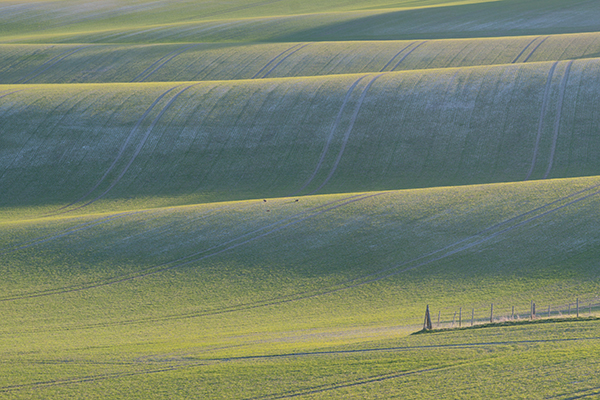
Telephoto Landscape - Rolling Farmland

This rolling farmland was isolated using a focal length equivalent to 280mm, f/13, 1/200s, ISO 200, using a tripod

Often, when photographing a landscape, there is a particular element of the scene that has caught your eye and made you want to capture the image.  With a telephoto lens, it is possible to isolate that key element and bring it to the fore of the composition, rather than let it get lost amongst the other distractions introduced when shooting with a wide angle.  You will find that a telephoto lens will also compress the perspective of the landscape, brining distant objects much closer, giving a different sense of scale to when using a wide-angle lens.

The approach taken to shoot landscapes with a telephoto lens is similar to when using a wide-angle lens, though there are some additional considerations.  Here are a few tips to help you along the way:

1. Composition: Look for a strong feature of the landscape and try to isolate it within the frame, leaving out unnecessary elements that detract from the composition, for example, the sky – we often feel the need to include the sky within landscape images, however if it doesn’t add significant interest, or would detract from the main element, why not leave it out?

2. Sturdy support: You will want to use a sturdy tripod to ensure you can shoot without suffering from camera shake.  Telephoto lenses are very sensitive to the slightest movement so a solid support is key to capturing sharp images.  If shooting handheld, a good rule of thumb is to aim for a shutter speed quicker than ‘1/focal length’ to avoid camera shake however depending on the available light that is not always possible, hence the recommendation for a tripod.

3. Camera shake: Utilise ‘mirror lock-up’ or a remote shutter release (even both) to further reduce the chances of vibrations.  When the shutter is pressed, the movement of the mirror can introduce vibrations that can cause loss of sharpness, so the ‘mirror lock-up’ feature (found within the menus of most DSLRs) introduces a small delay between lifting the mirror and opening the shutter.

4. Image Stabilisation: Switch off any image stabilisation features on the lens or within the camera body.  That feature that you rely on when shooting handheld can actually introduce camera shake if left on when your camera is mounted on a tripod, and when using a telephoto lens, those movements will be exaggerated and result in a softer image.
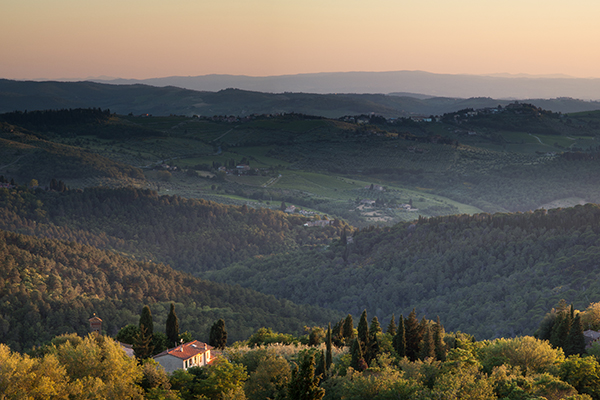
Telephoto Landscapes - Tuscan Sunset

A Tuscan landscape captured using a focal length equivalent to 120 mm

5. Aperture selection: Be aware of the optimum aperture required to capture the scene in sharp focus.  When the subject is distant, a large depth of field can be easily achieved (even with a telephoto lens) so consider using apertures within the ‘sweet spot’ of your lens (typically f/8 to f/11).

6. Filters: If you do chose to incorporate the sky within a telephoto landscape you may find that the dynamic range of the scene is greater than your camera can capture in one shot.  Typically, you may use graduated neutral density filters to overcome this, however it is more than likely that the diameter of your wide-angle lens will differ to your telephoto lens, meaning you may not have the appropriate filter ring size to use with your telephoto lens.  Adapter rings are fairly cheap to buy and keep in your camera bag just in case, otherwise think about capturing bracketed exposures (exposed correctly for the sky and land) in order to blend them together later on.
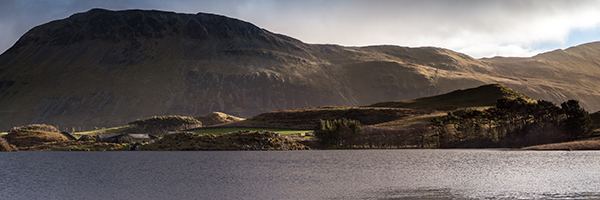
Telephoto Landscapes - Panorama

A panorama stitched from 7 images taken at a focal length equivalent to 100 mm.

7. Panoramas: Telephotos lenses are great for capturing panoramas as there is very little distortion due to focal length.  This means you can zoom in even further on a feature within the landscape and capture a number of images to stitch together into one panoramic image (even though the final field of view may not actually be that wide).

Seeing compositions that work with a telephoto lens may be challenging initially, however it won’t be long before you start isolating elements of the landscape in your minds eye.  A good exercise is to go out and challenge yourself to shoot landscapes with only your telephoto lens.  You will find that the change of focal length may be refreshing as even local landscapes can be transformed to something unfamiliar when seen through a telephoto lens.

Post originally from: Digital Photography Tips.

Check out our more Photography Tips at Photography Tips for Beginners, Portrait Photography Tips and Wedding Photography Tips.

Tips for Shooting Landscapes with a Telephoto Lens


Digital Photography School

 
Comments Off on Tips for Shooting Landscapes with a Telephoto Lens

Posted in Photography


Canon announces development of 35mm Cinema EOS prime lens

04 Apr

shared:logo_2x.png

NAB 2013: Canon has announced the development of a 35mm prime lens in its Cinema EOS range. It is designed to be used on movie cameras with image sensors up to 35mm full frame in size, and includes a range of features optimized for movie shooting. The company has not finalized its specifications and pricing, but says it will release further details in due course. However as the Cinema EOS primes offer T-stops that correlate closely with existing L-series primes, it seems likely the 35mm will be approximately T1.5, and of course use the EF mount.

News: Digital Photography Review (dpreview.com)

 
Comments Off on Canon announces development of 35mm Cinema EOS prime lens

Posted in Uncategorized


Just posted: Our Fujifilm XF 14mm 1:2.8 R lens review

02 Apr

xf14mm.png

Just posted: Our review of the Fujinon XF 14mm 1:2.8 R lens. Fujifilm has been steadily building up its X-system of rangefinder-inspired mirrorless cameras since its launch in January last year, and the 14mm F2.8 is the fifth lens in the family. It’s a 21mm-equivalent ultra-wide prime that’s designed to match the full field of view offered by the X-Pro1’s optical viewfinder. Like the other XF primes it has an aperture ring on the lens barrel, but it also includes an improved manual focus ring with distance and depth of field scales. Fujifilm makes some grand claims for its optical performance; click through to see if it lives up to them in our detailed review.

News: Digital Photography Review (dpreview.com)

 
Comments Off on Just posted: Our Fujifilm XF 14mm 1:2.8 R lens review

Posted in Uncategorized


SLR Magic releases Monster Lens II spotting scope for Micro Four Thirds

28 Mar

monsterlens2.png

SLR Magic has announced its Monster Lens II spotting scope for Micro Four Third cameras. The optic mounts directly on the camera body, allowing users to shoot distant images, commonly referred to as ‘digiscoping’. The 12-36×50 ED lens gives an equivalent optical zoom range of 840-2,520mm and aims to keep image quality high with extra-low dispersion optics and multi-coated glass elements. It will be available in June 2013 at a suggested retail price of $ 799. Click through to to read more.

News: Digital Photography Review (dpreview.com)

 
Comments Off on SLR Magic releases Monster Lens II spotting scope for Micro Four Thirds

Posted in Uncategorized