RSS
 

Posts Tagged ‘Lens’

Lens Review: Sigma 18-35mm f/1.8 DC HSM Art Lens

21 Sep

In the world of photography, there are several different schools of thought when it comes to third party lenses. Some photographers love them, some photographers choose to only purchase lenses made by their camera manufacturer. Personally, I have never had a problem with third party lenses, and they make up about half of my current camera bag. So when I had the chance to try out the Sigma 18-35mm f/1.8 DC HSM lens for APS-C cameras for about a month, I happily jumped on the opportunity to put it to good use!
sigma-lens-review-8

Lens Features and Build

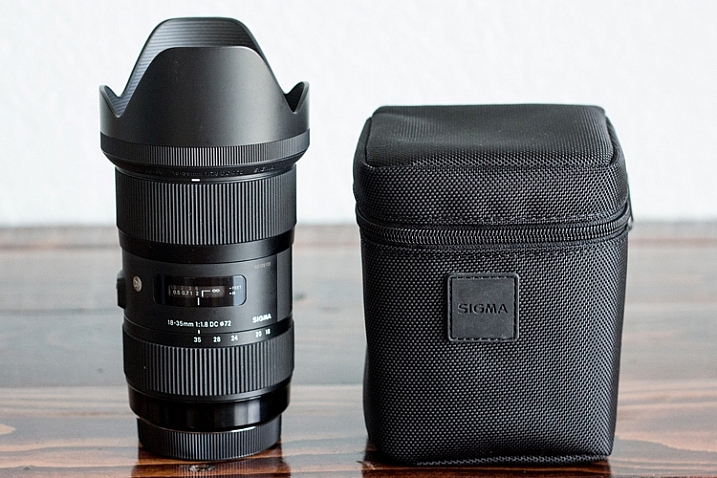
Right out of the box, it was evident that this lens is something special. Sigma 18-35mm f/1.8 Art Lens offers a focal range that makes it useful for a number of different genres of photography such as weddings, portraits, and family photography. As an added bonus, it offers a fast constant aperture (f/1.8) that’s practically unheard of in similar zoom lenses.

Sigma’s Art line has been getting a lot of buzz over the past couple of years for being high-quality lenses at an affordable price point, and this one certainly did not disappoint. Some third party lenses can have the tendency to feel plastic-y, but this lens is made of Thermally Composite Material, which both looks and feels sturdy and professional.
sigma-lens-review-9

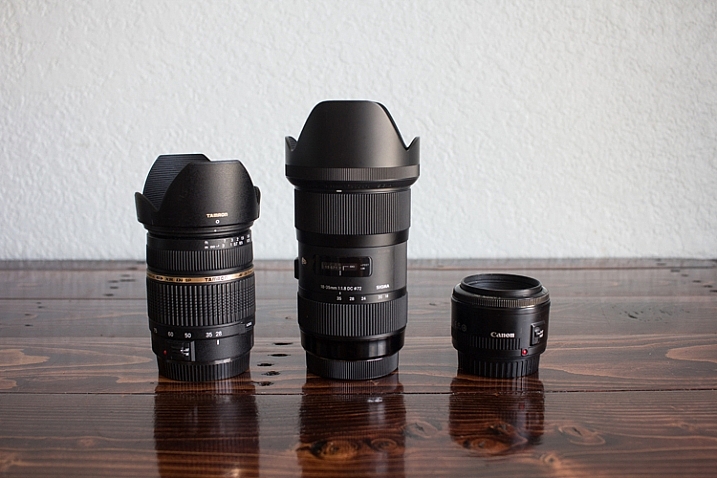
For size comparison: Left: the Tamron 28-75mm f/2.8 | Center: the Sigma 18-35mm f/1.8 | Right: the Canon 50mm f/1.8

This particular lens was physically larger than I expected based on other lenses in my bag, and it felt quite a bit heavier than I imagined as well. One weekend I took this lens to an RC air show, and several people commented to me that they wished they’d brought a telephoto lens like I had! It definitely isn’t a particularly small and compact lens. In terms of functionality, the zoom was heads above any other lens I own in terms of smoothness, and the auto-focus is fast and silent.

Sharpness Test

In order to test edge-to-edge sharpness of this lens, I used a tripod to photograph a brick wall at different focal lengths and apertures. Then I zoomed in and compared the top left-hand corner of each image to check for sharpness and vignetting.
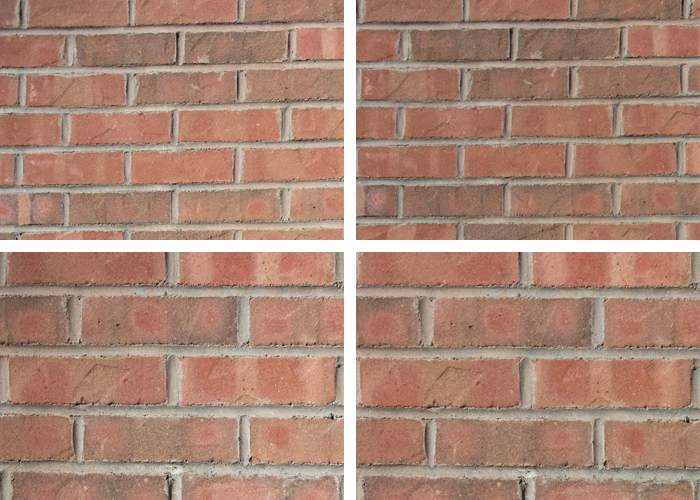
Clockwise from Upper Left: 18mm at f/1.8, 18mm at f/16, 35mm at f/16, 35 mm at f/1.8. I cropped to include only the upper left hand corner of each image to check for edge to edge sharpness.

Clockwise from upper left: 18mm at f/1.8; 18mm at f/16; 35mm at f/16; 35 mm at f/1.8. I cropped to include only the upper left-hand corner of each image to check for edge-to-edge sharpness.

When shooting wide open, some consumer lenses have a tendency towards vignetting and/or have a loss of sharpness towards the edge of the image that can be very frustrating as a photographer. In this case, I noticed no discernible difference in sharpness along the edge of the image whether I was shooting at f/1.8 or f/16, even when zooming in significantly on the image. I also didn’t notice any vignetting even when shooting at small apertures. In fact, any vignetting that you see on any of the images in this article was added in the post-processing phase.

I was really pleased with the performance of this lens, and had no issues with its edge-to-edge sharpness, vignetting, or lens creep, in the month that I tested it out.

In the Field: People Photography

sigma-lens-review-1

Newborn photography

I’m primarily a child and family portrait photographer, so those genres were the first places that I put the Sigma 18-35mm f/1.8 to the test. In terms of newborn photography, I typically shoot on location in the client’s home for newborn sessions. While I find this works very well for the comfort of both mom and baby, the one variable that can sometimes be difficult is the available natural light. In the case of photographing newborns in unpredictable lighting situations, having a zoom lens with such a fast aperture is a huge asset.

sigma-lens-review-2

Kids photography

Next, I took the lens to the park with my kids, my nieces, and my nephew. Half of these kiddos were just about to move across the US, and so I wanted to be sure to take a few photos of them all together for our family. The Sigma 18-35mm stayed on my camera nearly the entire time we were at the park because it transitioned from a few semi-posed portraits to candid images of the kids playing together so seamlessly.

sigma-lens-review-3

Single portraits

Though I typically prefer using a 50mm lens on the 60D for portraits (which is closer to 85mm when considering the crop factor), I was surprised at how useful the 18-35mm lens was for single-person portraits as well. The thing that I really loved about this lens was that with my kids, I often have to choose whether I want to photograph an event with a portrait bent, or a photojournalism one because sometimes there’s just not enough time to do both.

If we head to the fire station with the girls, I can capture portraits of them in the fire gear with my 50mm lens, or I can capture pullbacks of them with the trucks with my 24mm lens. I could have taken my zoom lens, but it doesn’t have the ability to shoot as wide open as I often prefer in portraits. The Sigma 18-35mm lens is the best of all worlds–it’s wide enough to shoot pullbacks with the firetrucks and offers the functionality to zoom in and shoot portraits with a beautiful smooth bokeh at the aperture that I prefer.

Overall, this is a really fantastic and functional lens for people photography. Whether you’re interested in portraits or weddings, this lens can handle nearly any people photography situation absolutely beautifully.

In the Field: Nature and Landscapes

sigma-les-review-10

Though my real passion is in people photography, there are lots of other genres of photography that I enjoy as a hobbyist. I figured that in reviewing this lens, it only made sense to put it through some of those paces as well.

Whether photographing wide landscapes or flower blooms up close, this lens didn’t disappoint. I should mention that this lens features a maximum aperture of f/16, which may or may not be sufficient for someone who specializes primarily in landscapes. For me, as someone who shoots people photography but occasionally wants to be able to photograph a beautiful sunset or landmark, a maximum aperture of f/16 is more than sufficient.

sigma-lens-review-7

I did notice that even when shooting during the golden hour, this lens doesn’t tend towards large sun flares. Rather, it tends towards smaller sunbursts or small flares, which I find to be a benefit for both nature photography and for photographing people during the golden hour.

sigma-lens-review-5

Astrophotography

Lastly, I decided to use this lens to try out astrophotography. I’ve dabbled with photographing the moon before. But I haven’t had much success photographing stars because I just didn’t have the right lens that offered both a fairly wide angle and a fast aperture.

I was really pleased with the results of shooting the Sigma at 18mm, f/2.2, and 1600 ISO. Though I did notice some minor lens coma, it was far less noticeable than any other lens I’ve ever tried at similar settings. Again, astrophotography is not my specialty. However, it is something that I’ve enjoyed experimenting with on occasion, and it’s a bonus to me that a lens I’d primarily use for photographing people could also be used in this way as well!

sigma-lens-review-4

Overall Impressions

This is a really fantastic lens. If I owned it, I’m certain that it would get a ton of use. I could absolutely envision it as being my “walking around” lens that is attached to my camera most of the time.

That said, the one thing that would prevent me from purchasing it is that at $ 799, it’s more than I typically like to spend for a lens that only works for APS-C cameras. My photography budget is definitely not unlimited, so I think long and hard before I make any new purchases. When I do make a purchase, I typically try to choose lenses and other equipment that will serve me now, while also being good investments as I look to the future. I love my Canon 60D, and it currently suits all of my photographic needs just fine. However, I can’t say with 100% certainty that I would never eventually upgrade to a full-frame camera.  So I would be hesitant to invest this significantly in a lens that would not be able to transition with me.

All that said, this is where it is absolutely crucial that you consider your own approach to photography. Not every photographer in the world needs or wants a full-frame camera, and that is perfectly fine. If you are fairly certain that you don’t have plans to transition to full-frame in the near future, then I really cannot recommend this lens highly enough. It is well-made, high quality, and useful in so many different situations. Kudos to Sigma for producing a really extraordinary product with the Sigma 18-35mm f/1.8 DC HSM Art Lens!

googletag.cmd.push(function() {
tablet_slots.push( googletag.defineSlot( “/1005424/_dPSv4_tab-all-article-bottom_(300×250)”, [300, 250], “pb-ad-78623” ).addService( googletag.pubads() ) ); } );

googletag.cmd.push(function() {
mobile_slots.push( googletag.defineSlot( “/1005424/_dPSv4_mob-all-article-bottom_(300×250)”, [300, 250], “pb-ad-78158” ).addService( googletag.pubads() ) ); } );

The post Lens Review: Sigma 18-35mm f/1.8 DC HSM Art Lens by Meredith Clark appeared first on Digital Photography School.


Digital Photography School

 
Comments Off on Lens Review: Sigma 18-35mm f/1.8 DC HSM Art Lens

Posted in Photography


How Using a Manual Focus Lens Can Make You a Better Photographer

19 Sep

Back in the days of all manual, focusing your lens was a  skill that every photographer had master. Focusing used to be that thing that made your camera an extension of your hand, therefore a direct extension of your photographer’s eye. That whole agenda came to an end in the early 1990s with the arrival of autofocus systems that were able to actually focus faster than us humans.

That is another key frame along the medium’s timeline. Where new technology started a chain reaction that changed the face of photography forever. Until the appearance of mirrorless cameras that is.

Manual Focus Ouria Tadmor

A photographer looking to purchase a new lens for their mirrorless camera in 2016 might find that there are many manual focus lenses made nowadays alongside the autofocus ones. That means one thing: the market has said the word, manual focus is not dead.

Feed your spirit with the following thoughts to learn how manual focusing can make you a better photographer.

Doing versus supervising

And old carpenter once said, “If you want something done right the first time, do it yourself.” That was always reiterated when a new machine came to the industry to perform a task better, faster, and more efficient than a trained man could ever do.

Instead of being a skilled craftsman, now all you need to know is how to make sure that the machine is doing its job, that’s the truth about an autofocus camera. It is one thing for your brain to rotate the focusing ring with your left hand and stop rotating at the correct focus, and a whole different thing to wait for the green light or beep confirming focus has been achieved. 

Manual Focus Ouria Tadmor

Sometimes you might choose to use only one central focusing point, lock it on your subject and then recompose your frame. That way you are still doing some of the work yourself, but you do it by pressing a button rather turning a ring with your left hand.

Pressing a button (or half-pressing the shutter, in most cases) is a very different connection between your hand and the machine than turning a ring with your left hand. Allowing your hand to learn the feel of the lens. Letting your hand know when and where to turn the dial and where to stop. It takes a greater effort of your brain, but only until your muscles learn it and bypass the need to think about the action. Then it frees your brain to think about the picture. In autofocus mode, your brain always has to check on the machine, make sure that focus is where you want it. That takes brain power every time. Brain power that could have been used to be more creative.

The need for speed

Manual Focus Ouria Tadmor

It’s true, the autofocus machine is indeed faster at turning the lens to the right distance than any human hand will ever be. But then it needs to wait for the brain to approve it before the shutter is pressed all the way and the photo is taken. So it is actually you that slows down the machine.

There are ways to overcome the speed limit of manual focus. For example, one way is to pre-focus on the distance your subject will be positioned at the moment of exposure. This is a technique that was very popular among sports photographers in the days before predictive dynamic autofocus. It required a fair amount of planning and knowing the nature of your subject. A property that let to visualization of the final image even in sports photography.

Another way, more popular among street photographers is called Zone Focus. You approximate the distance of your subject and make sure that they are within the depth of field by setting the focus and aperture correctly. It is a fast and simple technique that will force you to plan your frames. Thus forcing you to be more sensitive to your surroundings than a photographer who responds to a moment by half-pressing the shutter and then pressing it all the way. A street photographer trained in zone focusing does not have to pay attention to focus at all because they adjust their focus and aperture with every change in the scene without even thinking about it.

Manual Focus Ouria Tadmor

Move slow, think fast

When photographing a portrait with a fast telephoto lens you want to have the subject’s nearest eye in focus. There are many ways to achieve that with autofocus cameras. Some of the modern mirrorless cameras will lock on the near eye and stay focused on it for you as long as it’s there.

What a manual focus lens does for you is exactly the opposite. It is almost impossible to keep the near eye in focus with a portrait lens at a wide open aperture. The shallow depth of field means you will have to pay attention to your subject’s smallest moves such as breathing. By doing so it will focus your attention on the subject and you will start noticing facial features that would have been left behind at the photographing speed of autofocus lenses.

Manual_Focus_OT

Zen and manual focus

Use manual focus to put control of your photography back in your hands. It will slow you down and make you think more. For many of the greatest photographers throughout history, the process was as important as the final picture. When you let yourself indulge the process your photographs will benefit.

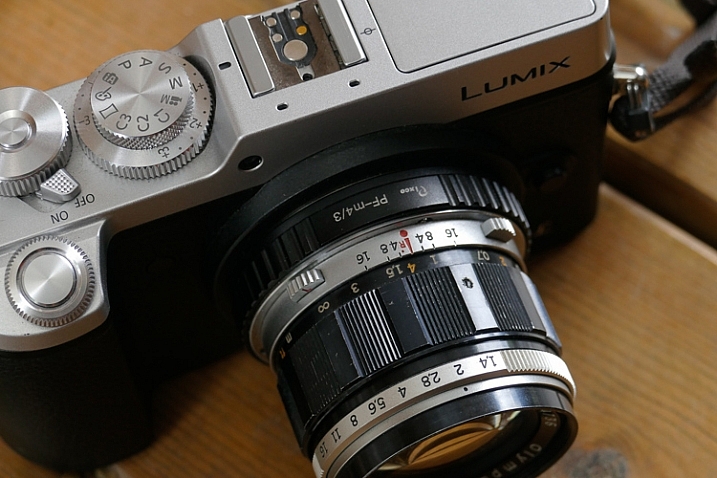
It is a totally different experience to manual focus using a lens that was created for autofocus than one that was made to be focused by a human. Invest in yourself and buy a vintage affordable lens that fits on your camera then go out shoot with only that lens. This way you will be able to feel what it is like to really do manual focus photography.

googletag.cmd.push(function() {
tablet_slots.push( googletag.defineSlot( “/1005424/_dPSv4_tab-all-article-bottom_(300×250)”, [300, 250], “pb-ad-78623” ).addService( googletag.pubads() ) ); } );

googletag.cmd.push(function() {
mobile_slots.push( googletag.defineSlot( “/1005424/_dPSv4_mob-all-article-bottom_(300×250)”, [300, 250], “pb-ad-78158” ).addService( googletag.pubads() ) ); } );

The post How Using a Manual Focus Lens Can Make You a Better Photographer by Ouria Tadmor appeared first on Digital Photography School.


Digital Photography School

 
Comments Off on How Using a Manual Focus Lens Can Make You a Better Photographer

Posted in Photography


Tokina launches FiRIN mirrorless lens series with 20mm F2.0 FE MF

18 Sep

Tokina has today introduced a new prime lens that is specifically designed for Sony E-mount mirrorless full-frame cameras. The 20mm F2.0 FE MF is the first lens in the new FiRIN mirroless lens series and combines a fast aperture with a wide angle of view and manual focus.

“This is an exciting first step into the mirrorless market for Tokina,” says Kenko Tokina USA President, Yasu Suga. “The all-new design delivers a sharp edge-to-edge image and greatly reduces exposure fall-off for a crisp, clear image. The lens is manual focus with manual aperture control but transmits distance and aperture information to the lens allowing the camera to utilize the 5-axis Image Stabilization, Manual Focus Assist, and other features that require electronic lens communication. I am happy to report that our engineers in Japan are hard at work designing more lenses for the FiRIN mirrorless series; the future is bright.”

The lens comes with a wide focus ring for easy manual focusing and the aperture ring can be “clicked” for stills photography and “de-clicked” for smoother operation when shooting video. Electronic contacts allow for communication with the camera. The lens will officially be unveiled at the Photokina trade show in Cologne, Germany, next week. We expect more information on pricing and availability to be released then as well.


Press release:

NEW TOKINA FíRIN 20mm F2 FE MF

HUNTINGTON BEACH, Calif., Sept. 13, 2016 /PRNewswire/ — Tokina USA introduces the fast aperture, full-frame 20mm F/2.0 FE MF prime camera lens. This lens marks the initial offering of FiRIN, a new mirrorless lens series. This new lens series from Tokina is designed for a photography market that is rapidly adopting mirrorless camera systems as a standard. The FiRIN 20mm f/2.0 lens is a bright, wide-angle lens that is compatible with Sony E-Mount cameras.

“This is an exciting first step into the mirrorless market for Tokina,” says Kenko Tokina USA President, Yasu Suga. “The all-new design delivers a sharp edge-to-edge image and greatly reduces exposure fall-off for a crisp, clear image. The lens is manual focus with manual aperture control but transmits distance and aperture information to the lens allowing the camera to utilize the 5-axis Image Stabilization, Manual Focus Assist, and other features that require electronic lens communication. I am happy to report that our engineers in Japan are hard at work designing more lenses for the FiRIN mirrorless series; the future is bright.”

The FiRIN 20mm f/2.0 features a wide focus ring for smooth manual control, an aperture ring that can be “clicked” and “de-clicked” on demand for cinema and photo use, and electronic contacts for maximum communication with the camera. The lens will be unveiled at Photokina 2016 in Cologne, Germany. The Kenko Tokina booth is located in Hall 5.2, stand C020.

Tokina 20mm F2 FE MF specifications

Principal specifications
Lens type Prime lens
Max Format size 35mm FF
Focal length 20 mm
Image stabilization No
Lens mount Sony FE
Aperture
Maximum aperture F2
Minimum aperture F22
Aperture ring Yes
Number of diaphragm blades 9
Optics
Elements 13
Groups 11
Special elements / coatings Multi-layer coatings
Focus
Minimum focus 0.28 m (11.02)
Maximum magnification 0.1×
Autofocus No
Full time manual Yes
Focus method Internal
Distance scale Yes
DoF scale Yes
Physical
Weight 490 g (1.08 lb)
Diameter 62 mm (2.44)
Length 69 mm (2.72)
Sealing No
Colour Black
Filter thread 62.0 mm
Hood supplied Yes
Tripod collar No

Articles: Digital Photography Review (dpreview.com)

 
Comments Off on Tokina launches FiRIN mirrorless lens series with 20mm F2.0 FE MF

Posted in Uncategorized


dPS Writer’s Favorite Lens: Nikon 35mm f/1.8G

14 Sep

A few years ago Nikon started revamping their lens lineup to include faster focusing, better coatings on the glass elements, and for the first time, no manual control over the size of the aperture. This series of lenses was given the “G” moniker, and one of the earliest that went into production is still one of the best: the 35mm f/1.8G.

This inexpensive little workhorse is not only supremely versatile but performs well beyond its price range in almost any shooting situation. It was designed to work for crop-sensor cameras, which Nikon refers to as DX models, but in many circumstances, it works just fine on full-frame FX cameras as well. I enjoy shooting mostly portraits and nature photography and there’s hardly a situation in which this 35mm lens doesn’t give me good results. It’s by far my favorite lens, and I’d like to share a little bit more to let you know why.

favorite-lens-nikon-35mm-seattle-skyline

Seattle skyline, photographed with the 35mm f/1.8G DX on a Nikon D7100.

One of the best features of the 35mm 1.8G lens is something that could also be seen as a significant limitation: it does not zoom in and out. It’s a prime lens which means it has a fixed focal length. So if you are used to twisting your lens to get a close-up view of your subject, you will have to train your mind to think about things a bit differently when using this lens. Since it is permanently stuck at 35mm you have to use your feet and get creative when shooting pictures. But once you get past this limitation you will start to notice that it pales in comparison to one of its most important strengths: a super wide aperture.

Fixed focal length, amazing results

If you’re not entirely familiar with what the term aperture means, it’s basically the opening in your lens that lets light pass through. This is an f/1.8 lens which means it has a huge maximum aperture, or opening, compared to some other lenses, especially most zooms. This feature allows the lens to capture much more light so you rarely have to use the flash, and also helps you get the kind of smooth blurry backgrounds you see in professional-style portraits. The f/1.8 aperture is the one key factor that makes this lens so incredibly useful and versatile. Even though it lacks the ability to zoom in and out it’s a tradeoff well worth making, in my opinion.

I took this quick snapshot of my niece while she was playing with her cousins, but the wide f/1.8 aperture on the 35mm lens gave me a nice blurry background.

I took this quick snapshot of my niece while she was playing with her cousins. The wide f/1.8 aperture on the 35mm lens gave me a nice blurry background.

Avoid dreaded pop-up flash issues

Before I got into more advanced photography several years ago I owned a decent pocket camera. While it did take good pictures in broad daylight, any time the sun even started to get low on the horizon it would fire the flash and bathe everything in a weird artificial light. I noticed the same thing happening to my friends with DSLR cameras too, and couldn’t figure out why even the more expensive cameras were always turning on the pop-up flash when the lighting was dim.

If you have wondered about this yourself, the answer almost certainly relates to the aperture of your lens. Smaller apertures let in less light, which therefore require the use of an additional light source like a flash in order to take a picture. The 35mm f/1.8 lens almost never has that problem because it lets in so much light (when you shoot at f/1.8), which can seem like a miracle from heaven if you are tired of shooting so many of your photos with the flash turned on.

The lighting in this church was very poor, but thanks to the f/1.8 aperture I got several photos of this baby at his baptism without using the a flash.

The lighting in this church was very poor, but thanks to the wide f/1.8 aperture I got several photos of this baby at his baptism without using the flash.

Whether you are out taking photos of nature and wildlife, doing paid portrait sessions, or just snapping photos of your kids playing around the house, the f/1.8 aperture is going to give you outstanding results if you are used to a lens with a smaller aperture. I was blown away when I first started shooting with this and other prime lenses and began realizing that I could use the natural light all around me to get the photos I was really trying to shoot. That, instead of constantly relying on a tiny little pop-up flash.

No zoom, no problem

Many years ago when some of my photographer friends first recommended a prime lens to me I thought they were joking. Why on earth would anyone want a lens that doesn’t zoom in and out? The fixed focal length of a prime lens, I soon realized, forces you to be more creative and puts you in a different frame of mind than a zooming lens by making you work around a limitation. In the years since, as my collection of lenses has grown to include several prime lenses, I keep coming back to this specific 35mm f/1.8 lens as a workhorse not just for daily pictures of my family but for professional photo sessions too. 35mm is somewhere between a wide angle and telephoto lens, which makes it ideally suited for a variety of types of photography. It’s not too zoomed out and not too zoomed in, so it’s kind of like the Goldilocks of camera lenses. It’s just right.

In the years since, as my collection of lenses has grown to include several prime lenses, I keep coming back to this specific 35mm f/1.8 lens as a workhorse. It’s not just for daily pictures of my family but for professional photo sessions too. 35mm is somewhere between a wide angle and telephoto lens, which makes it ideally suited for a variety of genres of photography. It’s not too zoomed out and not too zoomed in, so it’s kind of like the Goldilocks of camera lenses. It’s just right.

favorite-lens-nikon-35mm-olympic-mountains

The Cascade Mountains: shot with the 35mm 1.8G DX on a Nikon D7100

Is like “normal”

On a crop-sensor camera like the Nikon D3300 or D7200 the focal length of this lens is multiplied 1.5x which puts it right about 50mm, or very close to what the human eye naturally perceives. This means that the image you see when you hold your camera up to compose a shot is very similar to that which you would see without any camera at all. There is very little distortion, and everything just tends to look…well…

There is very little distortion, and everything just tends to look…well…normal. I know some people are put off by this type of lens because it’s so pedestrian that it borders on boring, and because it does so many things well it also excels at nothing in particular. However I happen to like the 35mm focal length precisely because of the photos I can get with it, and also because it’s wide enough that I can take pictures at relatively slow shutter speeds like 1/45 second and not worry too much about motion blur.

favorite-lens-nikon-35mm-kansas

Hay bales in Kansas: shot with the 35mm 1.8G DX on a Nikon D7100

Works on full frame too

One bonus feature, of this lens in particular, is that, unlike some other lenses that are designed for crop-sensor cameras, this one performs quite well on full-frame models too. If I put it on my D750 I can get outstanding results provided I shoot around f/4. If I use an aperture much smaller than that, however, it starts to exhibit some pretty bad vignetting on the corners.

This makes the lens ideal for situations where you want to get a little closer to your subjects for pictures that are a little more personal and intimate, and also for landscapes where you want to take in a much broader view of the scene. All this for a lens that costs about $ 200 and you can hopefully see why it is, without question, my favorite lens.

favorite-lens-nikon-35mm-hairless-cat

Even though this lens is designed for crop-sensor cameras, it works fine on full-frame cameras like the D750 if you can put up with some vignetting around the corners. This allowed me to get right in the middle of the action while having a wide enough angle to get several people in the shot.

I recommend this lens often

I often have people ask me for recommendations when it comes to camera lenses, and if they are Nikon shooters my advice is always the same: The 35mm f/1.8G DX. I recently followed up with about a dozen friends and family members to see if my recommendation was to their liking after using the lens for several months. Every single one of them said that yes, the lens was great and did just what they were hoping it would do. Some said that it helped them explore new aspects of photography and while a few had since augmented their collection with zoom lenses or other primes, they all agreed that this particular lens worked like a charm.

favorite-lens-nikon-35mm-fountains

Theta Pond: shot with the 35mm 1.8G DX lens on a Nikon D7100

At this point, it probably sounds like I’m some kind of paid shill for Nikon, but I promise you that is not the case. I buy all my gear the same as anyone else and have never gotten any lenses, cameras, or other gear from Nikon or any other company. I just like this lens so much, and I think you would too, that I can’t help but gush about how it’s by far the favorite one in my kit and the one that gets used more often than anything else. But what about you? Do you have this lens and if so, what do you think of it? What other lenses do you like that you wish other people would learn about? Leave your thoughts in the comments below!

But what about you? Do you have the Nikon 35mm f/1.8G lens? If so, what do you think of it? What other lenses do you like that you wish other people would learn about? Please leave your thoughts in the comments below!

googletag.cmd.push(function() {
tablet_slots.push( googletag.defineSlot( “/1005424/_dPSv4_tab-all-article-bottom_(300×250)”, [300, 250], “pb-ad-78623” ).addService( googletag.pubads() ) ); } );

googletag.cmd.push(function() {
mobile_slots.push( googletag.defineSlot( “/1005424/_dPSv4_mob-all-article-bottom_(300×250)”, [300, 250], “pb-ad-78158” ).addService( googletag.pubads() ) ); } );

The post dPS Writer’s Favorite Lens: Nikon 35mm f/1.8G by Simon Ringsmuth appeared first on Digital Photography School.


Digital Photography School

 
Comments Off on dPS Writer’s Favorite Lens: Nikon 35mm f/1.8G

Posted in Photography


Samyang goes Premium with MF lens range

13 Sep

Korean optical manufacturer Samyang has announced a new series of upper-class lenses called Premium MF. The company has released details of a new manual focus 14mm F2.4 wide angle lens and an upgraded version of its popular 85mm lens but with an F1.2 maximum aperture. The models have a very smart-looking redesigned exterior and are finished in aluminum with narrow focusing rings in smooth rubber and an outline reminiscent of the Zeiss Milvus range.

Samyang says that the new optical construction of the lenses produces resolution suitable for 8K video and 50MP still sensors, and new coatings and special elements reduce aberrations to enhance the clarity of the pictures they create.

The 85mm F1.2 uses 10 elements in 7 groups and features a 9-bladed iris and a filter thread of 86mm. The Canon version, which is the only one mentioned at the moment, is set to weigh 1050g. The Premium MF 14mm F2.4 will have 18 elements in 14 groups, and will also have a 9-bladed iris but no filter thread. It is quoted as being available for Canon EF, Nikon F and Sony E cameras and will weigh 791g.

The company has yet to announce prices for these lenses but has said they will go on sale this year. For more information see the Samyang website.

85mm F1.2 MTF Samyang Premium MF 85mm F1.2
14mm F2.4 MTF Samyang Premium MF 14mm F2.4

Press release

Samyang introduces new Premium Lens Line-up

September 12th, 2016, Seoul, South Korea – Photokina, Global optics brand, Samyang Optics (http://www.samyanglensglobal.com) will announce its long-awaited first premium lens line-up: 85mm F1.2 and 14mm F2.4. This launch is a cornerstone for Samyang Optics to become a ‘Total Imaging Solution’ brand along with the introduction and expansion of autofocus lenses and XEEN lenses.

Founded in 1972 in South Korea, Samyang Optics has been the representative of Korean optics industry. With over 40 years of research and development in optics, Samyang integrates the essence of history and introduces a signature lens line-up of Samyang. “We believe a lens is one of the foremost elements in photography and videography”, says Haejin Lee, the head of Samyang Research Centre. He continues, “to create a signature Samyang Lens series, we have reviewed all the meetings and talks with photographers and cinematographers from past decades. They always return to one concept, the image quality. And it’s what we are after.”

85mm F1.2 and 14mm F2.4 manual focus lenses inherit and upgrade the eminent Samyang’s image quality to the next level. The new Samyang Lenses have the unprecedented resolving power, matched with 50 megapixels photo and 8K video productions. The two lenses enable you to capture life-long memories in everlasting image quality. Bokeh, out-focusing, starburst effect creates unforgettable image. Photographers can rely on the lens under various conditions. The resolving power contains abundant pixel information, allowing photographers the freedom in post-production to create unique image of own. Also, the minimised aberration enhance the clarity of image, creating more impressive image than your eyes can see.

The F1.2 of 85mm is, by far, the brightest lens in existing full frame DSLR lenses, securing the fast shutter speed. It has ten elements in seven groups, applying one aspherical lens and two high refractive lenses. The aspherical lens minimises the aberration and unnecessary light dispersion. Two high refractive lenses effectively adjust the path of light and deliver maximum amount to the sensor for clear and vibrant image.

The 14mm F2.4 is equipped with the most advanced optical technology among Samyang Lenses. It has 18 glasses in 14 groups including four different special optics: two aspherical lenses, one hybrid aspherical lens, two extra-low dispersion lenses and one high refractive lens. This optimal performance creates impressive image quality from centre to corner of image.

Also, the design itself is the statement. Aluminium alloy metal is adopted for maximum durability. With a sleek yet unprecedented design with flowing curves, this signature line-up is a one-of-a-kind lens. The usability is maximized with considerate diameter in 93~95mm.

In pursuit of image quality itself, Samyang will continue to develop premium manual focus lenses in response to the demands of professionals and will compete with world famous optics brands in quality and design. The lenses will be globally available in 2016, with suggested retail prices announced at a later date.

Samyang Premium MF 14mm F2.4 / 85mm F1.2 specifications

  Samyang Premium MF 14mm F2.4 Samyang Premium MF 85mm F1.2
Principal specifications
Lens type Prime lens
Max Format size 35mm FF
Focal length 14 mm 85 mm
Image stabilization No
Lens mount Canon EF
Aperture
Maximum aperture F2.4 F1.2
Minimum aperture F22 F16
Aperture ring No
Number of diaphragm blades 9
Optics
Elements 18 10
Groups 14 7
Special elements / coatings 2 aspherical + 1 hybrid aspherical + 2 extra-low dispersion + 1 high refractive lens + Ultra Multi Coating 1 aspherical + 2 high refractive elements + Ultra Multi Coating
Focus
Minimum focus 0.28 m (11.02) 0.80 m (31.5)
Maximum magnification 0.08× 0.13×
Autofocus No
Full time manual Yes
Distance scale Yes
Physical
Weight 791 g (1.74 lb) 1050 g (2.31 lb)
Diameter 95 mm (3.74) 93 mm (3.66)
Length 109 mm (4.29) 98 mm (3.86)
Materials Aluminum
Sealing No
Colour Black
Hood supplied Yes

Articles: Digital Photography Review (dpreview.com)

 
Comments Off on Samyang goes Premium with MF lens range

Posted in Uncategorized


Sigma 30mm F1.4 DC DN Contemporary for Sony E-mount lens review

13 Sep

The Sigma 30mm F1.4 DN DC Contemporary was announced in February 2016, and sits atop Sigma’s line of DN mirrorless lenses, with a two-stop advantage over their previous 30mm F2.8 offering. It’s currently the only APS-C F1.4 autofocus lens currently available for the Sony E-mount and has an MSRP of $ 339.00.

With F1.4 and a 45mm equivalent field of view, this lens on paper appears to be a good choice for a ‘walkaround’ normal prime lens. The bright aperture will satisfy low light shooters and bokeh fanatics, and the near 50mm field of view puts it right inside the versatile ‘normal’ lens range. While it won’t replace a dedicated macro lens with its magnification ratio of 1:7, it still is able to focus down to a working distance of 30cm (less than a foot).

The relatively low price, especially for an E-mount lens, means it’s also accessible to beginners and enthusiasts alike, making it sound like an ideal prime lens that may never leave the front of the camera once it’s mounted.

Within the E-mount system this lens has one natural competitor: the Sony 35mm F1.8 OSS. Let’s look at how the two stack up on paper:

  Sony E 35mm F1.8 OSS Sigma 30mm F1.4 DC DN | C
MSRP $ 448 $ 339
Image Stabilization Yes No
Max Aperture F1.8 F1.4
Minimum Aperture F22 F16
Aperture Ring No No
Diaphragm Blades 7 9
Number of elements 8 9
Number of groups 6 7
Special elements/coatings 2 aspherical elements 1 aspherical and 1 double-sided aspherical
Minimum Focus 0.30 m (11.81?) 0.30 m (11.81?)
Maximum Magnification 0.15x 0.14x
Motor Type Stepper motor Stepper motor
Full Time Manual No No
Weight 155 g (0.34 lb) 265 g (0.58 lb)
Dimensions (DxL) 63 x 45 mm (2.5 x 1.8 in.) 65 x 73mm (2.6 x 2.9 in.)
Sealing None None
Filter Thread 49mm 52mm

In terms of just spec we see a couple of major differences. First, while the Sony is 2/3 of a stop slower than the Sigma, it does include optical image stabilization. That alone gives it a better chance at being the preferred lens for video, although when shooting 4K the slightly wider FOV of the Sigma might fare better on any body that gives an additional crop.

In stills terms, though, there’s little real-world difference between the Sigma’s 45mm equivalent view and the 52.5mm equivalent of the Sony. The difference between them doesn’t suddenly open one up to a type of photography that couldn’t be achieved with the other.

Build quality between the Sigma and the Sony is fairly similar. They both use a machined metal chassis with plastic internals. Compared to older Sigma DN lenses, the 30mm F1.4 doesn’t let its focus elements rattle about when unmounted, which is a very welcome change. The focus ring is also an improvement, and a step above the Sony. The rubber grip turns smoothly and easily with minimal effort, making the Sony feel a bit stiff. The only downfall in terms of build is the Sigma’s lens hood, which doesn’t seem to confidently click in to place, and is made of rather fragile feeling plastic.

The long barrel of the Sigma, and even longer overall dimensions do make it quite large in comparison to APS-C Sony Alpha cameras, but the weight isn’t entirely off-balance. While heavier and much bigger, it is less expensive and brighter than the Sony 35 F1.8. The question is, does the extra weight and lack of OSS keep it from topping the Sony as the ideal ‘normal’ for APS-C E-mount shooters?

Articles: Digital Photography Review (dpreview.com)

 
Comments Off on Sigma 30mm F1.4 DC DN Contemporary for Sony E-mount lens review

Posted in Uncategorized


This film camera is 100% 3D-printed, including the lens

13 Sep

3D modeler Amos Dudley has created a 35mm film camera using only 3D-printed parts, including a hand-and-machine polished resin lens. Called SLO, the finished camera is functional and can take photographs, albeit somewhat low in quality, demonstrating the successful construction of a fairly complex device using only 3D-printing technologies.

Dudley has detailed the creation process on his blog, explaining that SLO is made with some basic elements like a shutter, film cartridge, spool gears and an aperture plane among other pieces. In order to support future designs, Dudley made the lens and shutter as removable modules that can be swapped out for different ones. The camera supports 35mm film and uses a two-button shutter system that provides manual speed control based on how faster the user presses the button.

89590009

Once completed, the camera was used with Fujicolor Superia 400 film to take the photos above (click for the full set).


As expected, the lens was one of the harder elements to create, at first involving between 5 and 6 hours of hand polishing followed by polishing with a DIY motorized machine. Neither proved entirely sufficient, so Dudley dipped the resin lens in epoxy instead and cured it using UV lights.

Articles: Digital Photography Review (dpreview.com)

 
Comments Off on This film camera is 100% 3D-printed, including the lens

Posted in Uncategorized


iPhone 7 Plus dual-cam only offers stabilization in wide-anlge lens, report says

12 Sep

According to a report by Ming-Chi Kuo of analyst firm KGI that was obtained by MacRumors, the iPhone 7 Plus dual-camera is equipped with optical image stabilization in the 28mm equiv. wide-angle lens, but not in its longer 56mm equiv. lens. In the report, KGI claims that optical image stabilization will likely make it into the tele lens with the next upgrade of the device in 2017 via a ‘voice coil motor’ upgrade:

“Note that for the dual-camera of iPhone 7 Plus, wide-angle CCM is equipped with optical image stabilization (OIS) VCM, while telephoto CCM only comes with general VCM. We believe the focus of the dual-camera upgrade will be equipping telephoto CCM with OIS CCM, so as to significantly enhance optical and digital zoom quality.”

In the same report KGI predicts that for the foreseeable future the dual-camera feature will remain exclusive to the larger iPhone Plus model which is expected to represent 30-40% of all iPhone sales. 

Apple limiting certain camera features to the larger model is not without precedent. In the iPhone 6 and 6s generations only the Plus devices were equipped with optical image stabilization. With the 7th generation this has now trickled down to the standard model and we would expect the same thing to happen with the dual-camera at some point in the future. 

During the launch presentation Apple did not mention a lack of OIS in the tele lens. In practical terms this would mean that, when shooting with the tele module,  the camera has to use higher ISO values in lower light to avoid camera shake. That said, we’ll have to wait for a review model to find what this means for image quality.

Articles: Digital Photography Review (dpreview.com)

 
Comments Off on iPhone 7 Plus dual-cam only offers stabilization in wide-anlge lens, report says

Posted in Uncategorized


Tamron 18-270mm travel zoom lens gets slight update with fluorine coating

08 Sep
 Tamron’s new 18-270mm…  …and the previous version.

Tamron has introduced an updated version of its 18-270mm travel zoom lens, the Tamron 18-270mm F3.5-6.3 Di II VC PZD model B008TS. Unlike the previous version (model B008), the B008TS features a fluorine coating on the front lens element, in addition to the existing Broad-Band Anti Reflection coating. With the fluorine coating, Tamron says the lens element is water and oil-repellant and less likely to be harmed by dirt, fingerprints, moisture, and dust.

While the fluorine coating is the new model’s biggest change, the folks at Imaging Resource have pointed out some minor cosmetic changes, as well. The gold trim ring found on the previous lens model has been replaced with a silver ring; as well, the overall lens design has been simplified, with both the zoom ring’s and focus ring’s styles being altered. According to Tamron, these changes ‘create an external design with a high-grade feel.’

According to Tamron’s website, the new lens will launch tomorrow in Japan with Canon and Nikon mounts for ¥83,000 before tax.

Articles: Digital Photography Review (dpreview.com)

 
Comments Off on Tamron 18-270mm travel zoom lens gets slight update with fluorine coating

Posted in Uncategorized


Sigma gets into the cinema lens game starting with 18-35mm T2 and 50-100mm T2 zooms

07 Sep

$ (document).ready(function() { SampleGalleryV2({“containerId”:”embeddedSampleGallery_5923700790″,”galleryId”:”5923700790″,”isEmbeddedWidget”:true,”standalone”:false,”selectedImageIndex”:0,”startInCommentsView”:false,”isMobile”:false}) });

Sigma has announced its own line of lenses for filmmakers. Sigma Cine Lenses are weatherproof and designed with an emphasis on optical performance and making the most of high-resolution sensors. An 18-35mm T2 and 50-100mm T2 for APS-C bodies will be the first introduced. 

A full-frame 24-35mm T2.2 and an assortment of primes will follow in 2017 and beyond. All lenses will be introduced in EF- and E-mounts, with PL versions coming later for each except the 24-35mm T2.2 FF. Pricing isn’t given at this time; Sigma says the first lenses will be available near the end of 2016 starting with Japan and the US.

Press release:

SIGMA ANNOUNCES NEW CINE LENSES

Amsterdam, The Netherlands — September 7, 2016 – The SIGMA CORPORATION is pleased to announce that it will enter into the cinema lens market with the release of its SIGMA CINE LENSES, designed specifically for cinematography. In the world of digital film production, there is an increasing demand for higher resolution, and SIGMA’s new lineup of high-performance lenses is compatible with the latest, high-resolution digital cinema cameras. SIGMA has developed its own production system by establishing the required technology for mass production of high-performance lenses for ultra-mega-pixel shooting. The company feels this valuable new lens line could create a fundamental change in digital film production, and provide a new solution for cinematographers.

  • Unbeatable value – the highest optical performance in its class and outstanding compact design
  • Wide range of lenses for professional use
  • Optimized for the latest digital moviemaking technology

For the first phase, SIGMA will release two zoom lenses in Japan and the USA for EF and E mount camera systems. Furthermore, another zoom lens and five prime lenses will be released to the market in sequence from 2017 onward. SIGMA plans to develop additional zoom and prime lenses as well as add support for PL mount camera systems. The latest release information will be sequentially updated on its official website.

High Speed Zoom Line
High Speed Zoom Line offers the constant aperture of T2 throughout the zoom range, and the optical performance is ready for high-resolution shooting such as 6K – 8K. Furthermore, while offering the highest image quality in its class, the High Speed Zoom Line has a compact construction and offers amazing value.

FF Zoom Line
FF Zoom Line is compatible with a full-frame image circle, and the optical performance is ready for high-resolution shooting such as 6K – 8K. It provides a rare option for cinematographers since very few lenses can cater to the requirements of the latest digital cinema cameras’ image sensor, which is larger than Super 35, and expand the range of compatible cameras. This is the cinema zoom lens offering the highest image quality and compact design. This lens is not available in PL mount.

FF High Speed Prime Line

The lineup ranges from 20mm to 85mm, and all five lenses are T1.5. They are compatible with full-frame sensors and, while being more compact, can offer superior resolution than other high-end prime sets do. With the five prime lenses from FF High Speed Prime Line, there is no need to change the lighting to shoot a variety of cuts. These lenses bring a consistent level of light to the production and offer greater consistency with regards to the film’s look and color/contrast before it enters post-production.

Each CINE lens model is weatherproof and has luminous paint markings to aid in changing and operating the lens in the dark. It touts a long focus rotation of 180 degrees and is guided by cams for smooth operation and accuracy. The CINE lens design features standardized essentials such as an 82mm front for ND filters* and a 95mm front diameter for matte box use and standard gear positions for accessories like follow focus. They also include a manual linear iris control and electronic mounts that provide vital camera metadata. Each lens is manufactured and inspected in the Sigma factory located in Aizu, Japan.

Availability/Pricing

Availability: toward the end of 2016 (in Japan and USA in the first phase)
Pricing: TBD
Mounts: Initially Canon-EF and Sony-E to be followed later by PL**

*20mm T1.5 FF doesn’t accept filters.
**24-35mm T2.2 FF is not available in PL mount. The appearance and specifications are subject to change without notice.

Articles: Digital Photography Review (dpreview.com)

 
Comments Off on Sigma gets into the cinema lens game starting with 18-35mm T2 and 50-100mm T2 zooms

Posted in Uncategorized