RSS
 

Posts Tagged ‘Lens’

Adobe Camera Raw 9.9 launches with new camera and lens profile support

08 Mar

Adobe has announced the release of Camera Raw 9.9 for Creative Cloud subscribers, adding expanded lens profile and camera raw support. In addition to the new support, ACR 9.9 fixes a trio of bugs, including a ‘rare crash’ associated with JPEGs, a bug that affected Lens Profile Auto Matching when used with Zeiss Batis 85mm lenses, and an Upright bug issue.

The latest version of Camera Raw adds support for the following cameras:

  • Canon PowerShot G9 X Mark II
  • Casio EX-ZR3200
  • Fujifilm GFX 50S
  • Fujifilm X100F
  • Fujifilm X-A10
  • Fujifilm X-T20
  • Leica M10
  • Olympus E-M1 Mark II
  • Panasonic DC-FZ80
  • Panasonic DC-GF9
  • Panasonic DC-GH5
  • Panasonic DMC-TZ82
  • Phase One IQ3 100MP (“S” compression mode not supported)

The update also adds support for another 28 lens profiles, including the iPhone 7 lenses, the DJI Mavic Pro FC220, several Nikon F and Canon EF lenses, and more. The full list can be found here. Existing Camera Raw users can update to the new version by selecting the ‘Help’ menu in the application, then ‘Update.’

Via: Adobe Blog

Articles: Digital Photography Review (dpreview.com)

 
Comments Off on Adobe Camera Raw 9.9 launches with new camera and lens profile support

Posted in Uncategorized


CP+ 2017 – Sigma interview: ‘We’ve learned that some customers require exceptional lens performance’

27 Feb
Kazuto Yamaki, CEO of Sigma Corporation, pictured at CP+ 2017, with Sigma’s new 14mm F1.8.

Sigma released four lenses at this year’s CP+ show in Yokohama – the 14mm F1.8 DG HSM Art, 24-70mm F2.8 DG OS HSM Art, 135mm F1.8 DG HSM Art and 100-400mm F5-6.3 DG OS HSM. We’re at the show, where we made time to sit down with Kazuto Yamaki, CEO of Sigma, to find our more about the new lenses. 


You’ve told me previously that you really want Sigma to make more wideangle lenses. Do you think you’re achieving that goal with the 12-24mm and new 14mm?

Yes, but I’m still not satisfied. I think we need to make more wide-angle lenses. A fast 14mm was one of the lenses that our customers were asking for. Most existing 14mm lenses are F2.8, so F1.8 was a challenge.

The new Sigma 14mm F1.8 is the fastest lens of its kind, and according to Sigma, should outperform competitive, slower designs from other manufacturers.

What have you learned, from making the Art series?

We’ve learned that some customers require exceptional lens performance. We believe that our mission is to make products that other manufacturers don’t have. If we just released similarly-specified lenses to existing models, we wouldn’t be contributing to the industry, or benefiting customers. So our Art series is meant to provide the best performance.

They’re bulky and heavy, it’s true, but our customers like them because of the performance. That’s what we learned.

Hands-on with Sigma MC-11 (CP+ 2016)

You now make a mount adapter for Sony E-mount, but are you planning native support for the Sony E-mount in the future?

Yes, that’s our plan. Our plan is to develop full-frame lenses for Sony E mount, and in the future we will have more E mount lenses. But it takes time. Normally it takes about two years to develop one lens, sometimes three. So even if I start the process now, the lens might come out in two years time.

Sigma’s new Art-series lenses have a degree of weather-sealing – why now?

It’s based on customer demand. Some of our customers said that rain and snow sometimes got into the lens mount, so they wanted sealing. And the other reason is that it’s becoming a trend. Other manufacturers are offering sealed mounts.

Does that make the design process more complex?

No, not really. The only seal is around the lens mount. It’s not a perfect weather-proofing like our Sports series. The 150-600mm for instance has sealing everywhere, on the focus ring and zoom ring.

Of the lenses in the Global Vision line, which were the most complex to bring to market?

Our 12-24mm zoom. Because that lenses uses a very large aspherical element, and at the time, no other company was producing an element of this kind, and there were no machines capable of producing it. So we designed a custom machine to make that element. But as a result of developing that technology, we were able to create this new 14mm F1.8.

The Sigma 12-24mm ultra-wide zoom is a complex design, containing a very large aspherical (front) element.

The Global Vision line is almost five years old. What are you most proud of?

Firstly, I’m still not satisfied. We need to do more. But these days, I’m pretty happy that people regard Sigma as a high-quality company. In the past, some people regarded Sigma as just another third-party lens manufacturer, and maybe even as a cheap, low-quality lens supplier. But people’s perception has been changing, gradually, and I’m very happy about that.

One of the things that professional Canon and Nikon photographers rely on is the support networks for service, like CPS and NPS. Is a professional service support system something that Sigma is interested in creating?

I think we’ll have to. In Japan we’ve already started a pro support project, and I hope we can create a global professional support system very soon.

In the past you’ve expressed concern that you don’t want Sigma to grow too much, too quickly, because this might threaten some the magic of being a small company. Is this something that you’re still worried about?

Growing too fast is not good. We need to grow, but we should grow gradually. We need to develop our capability to produce higher-quality products. That’s the priority. Then turnover, and sales, and profit will follow. We do not prioritize making the company bigger. We focus on product quality, and technology.

Over the past five years, we’ve actually been making fewer lenses, because we decreased the number of cheaper lenses we were producing. But we’ve expanded our manufacturing capacity, because the higher-end lenses use more glass. Cheaper lenses might use 10-15 elements, but these higher quality lenses use 15-20, sometimes even more elements. So more capacity is needed to make a single lens. We’ve actually invested massively in the past five years.

Sigma and Fujifilm have recently introduced lineups of cine lenses. How much growth do you see in this segment?

We don’t know. Even before I decided to get into the cine lens market, I tried to collect market data, but there’s no data out there. It’s not available. It’s only anecdotal. But we guessed that this segment will grow in the future.

Video has lower resolution demands than stills, but we’ve been designing lenses for 36+ megapixel sensors for several years. That is equivalent to 8K, in video terms. A lot of traditional cine lenses aren’t that high resolution. Our lenses might be more affordable, but they’re top quality.

The Sigma Cine lens range includes a geared version of the company’s 18-35mm F1.8, now known as the 18-35mm T2. The lens covers the Super 35 format and requires a roughly 350 degree rotation to zoom from 18-35mm, allowing very precise control.

Do you have a market share target for your cine lenses?

No, we’re waiting to see how the market develops. We can dream, but it’s not the same thing!


Editors’ note:

We always enjoy speaking to Mr Yamaki, partly because on the occasions when we get the opportunity to do so, it’s usually because he’s just unveiled something really interesting. Mostly though, we enjoy speaking to Sigma’s CEO because he’s a nice guy. Open, honest, and candid about Sigma’s plans and ambitions, Mr Yamaki is well-liked in the photography industry, even by his competitors.

Speaking of competitors, I get the feeling that Mr Yamaki was compelled to deliver the new 14mm F1.8 partly out of a general disappointment with the available options for photographers. Sigma has a strong history of innovating in the wide and ultra-wide market, and the new 14mm, alongside the previously-released 12-24mm certainly look like a confident statement of intent. If the 14mm is as good as Mr Yamaki claims (and we are rarely disappointed by the optical performance of Sigma’s Art series) it looks set to be a reference lens for landscape, architectural and astrophotographers. We’re hoping to be able to post a gallery of samples very soon – watch this space.

Also interesting, is another statement of intent – Sigma’s move into affordable cine lenses. While the company is not competing (yet) with the Arris of this world, or with Canon’s Cinema EOS optics, Sigma (like Fujifilm) sees an opportunity to cater to a newer generation of videographers who are working with mirrorless systems. Optically, Sigma’s cine lenses should be top notch, although being based on existing stills lens designs, we’re told that some qualities, such as focus breathing, might cause issues for professional broadcast and film cinematographers. There is a reason, after all, that high-end professional cine lenses can cost tens of thousands of dollars.

So what next for Sigma? We wouldn’t be surprised if Mr Yamaki is working on more wideangle lenses, and following the new 24-70mm F2.8, it seems likely that the company will refresh its 70-200mm F2.8 in the near future, too. More Sony E-mount optics are also on the way, we’re told, which will be welcome news to Sony a7-series users.  

Articles: Digital Photography Review (dpreview.com)

 
Comments Off on CP+ 2017 – Sigma interview: ‘We’ve learned that some customers require exceptional lens performance’

Posted in Uncategorized


Kamerar Lens Zoom Kit for iPhone 7 Plus review

24 Feb

Kamerar Zoom Lens Kit for iPhone 7 Plus review

If you’re shopping for accessory lenses, for most iPhone models the choice can be overwhelming. The lenses on offer range from cheap plastic variants for very little money to hefty high-quality glass in metal bodies that require a three-figure investment. However, the situation is slightly different for Apple’s current flagship, the iPhone 7 Plus. Because of the unique design of its dual-camera there are currently still very few attachment lenses on the market. That said, we’ve had a chance to have a closer look at one of the first available options, the Kamerar Zoom Lens kit. 

For $ 50 the kit includes a protective case for the iPhone, two lens modules that slide into the case and two small protective lens-cases. The first module combines a fisheye-adapter for the iPhone’s wide-angle lens with a tele-converter for the longer lens in the dual-cam. The fisheye offers a 160 degree angle of view and the converter comes with a 1.5x zoom factor, giving the 7 Plus tele lens a total zoom factor of 3x when compared to the wide-angle. The second module has two macro lenses that apply a 10x magnification to both iPhone camera lenses. 

The complete kit consists of the phone case and two lens modules with a little protective case for each.

Operation and build quality

Apart from the little plastic rails that the lens modules slide on, the Kamerar-case looks like most plastic phone cases and offers access to all ports. The case’s slightly shiny tile design is pretty much a matter of taste, but with its understated gray tones should work for most. 

Build-quality is pretty much in line with the price point. The plastic material looks a little cheap but the construction of the individual pieces is solid. Attaching and removing the lens modules is very easy but moving them in position in front of the iPhone camera and back requires a little bit of force. When not in use the lens modules can be stored in their cases, protecting them from scratching.

One important thing to consider when shooting with the Kamerar kit has nothing to do with the lenses but with the iPhone camera. As we found in our review, below a certain brightness threshold the iPhone 7 Plus camera switches from its tele lens to the wide-angle and applies digital zoom. When shooting with just the phone this switch is hardly noticeable and you usually only find out when looking at images on a big screen or checking EXIF-data.

However, the impact is much more noticeable with the Kamerar lenses attached. If you are using the tele-converter in low light and the iPhone camera switches to the wide-angle, you end up with a 2x digitally zoomed version of the fisheye image, which isn’t really what you want. To avoid this it’s best to use the kit with a camera app that lets you force the camera to use the tele-lens, even in lower light, for example Camera+ or Manual Camera.

Image Quality

Image quality varies between the conversion lenses. The tele-converter is capable of producing surprisingly sharp images, but photos taken with the fisheye look noticeably softer when viewed up close. All pictures are perfectly usable for social media and similar purposes though. The macro converters produce decent results as well, though as you would expect, the tele-version offers visibly better magnification.

When using the macro lenses the challenge mainly lies in keeping the device as still as possible. You have to get very close to the subject for the lenses to focus and motion on any axis will lead to camera shake and/or focus shift, and therefore blurry images. Overall the Kamerar Zoom Lens kit offers good image quality, especially when considering the affordable price point. 

The two samples below illustrate how the fisheye allows you to capture large objects or the interior of small rooms when there is no space to go further back. The fisheye images look a little soft up close, but color and tonality hardly change compared to the standard image without attachment lens.

 iPhone 7 Plus wideangle, ISO 20, 1/2660
 iPhone 7 Plus wide-angle with Kamerar fisheye, ISO 20, 1/3546

The tele-converter only offers a 1.5x zoom factor over the iPhone’s built-in tele lens. The difference in terms of angle of view is not massive but the lens is certainly useful when photographing objects further away and the image output is surprisingly sharp. Again, the attachment lens doesn’t noticeably alter tones and color. 

 iPhone 7 Plus tele lens, ISO 20, 1/595s
 iPhone 7 Plus tele lens with Kamerar tele-converter, ISO 20, 1/736s

The Macro lenses allow you to get really close to your subjects and, with the right subjects, for some interesting shots. Just make sure you have plenty of light and / or hold the camera very still, otherwise you’ll inevitably end up with shaky images. If the focus plane is in the right place, the macro lenses are capable of capturing detailed images though.

 iPhone 7 Plus wide-angle with Kamerar 10x macro converter, ISO 40, 1/17 sec
  iPhone 7 Plus tele lens with Kamerar 10x macro converter, ISO 320, 1/50 sec

With the macro module, the fact that the the iPhone camera switches lenses in lower light can actually work in your favor. The wide-angle has a shorter minimum-focus distance and combined with a 2x digital zoom captures the subject larger in the frame than tele + macro. 

iPhone 7 Plus wide-angle with Kamerar 10x macro converter and 2x digital zoom, ISO 32, 1/25 sec

Conclusion

The Kamerar Zoom Lens Kit is currently one of the few options for mobile photographers who want to use attachment lenses on the iPhone 7 Plus dual-camera. It’s entirely made out of plastic but feels solid and is very easy to use. As far as smartphone accessory lenses go, the image quality is decent across all four lenses. The kit is currently available for $ 35 on Amazon.com. Whether attachment lenses have been part of your arsenal for a long time, or you just feel like trying them out, at this price point you can’t go wrong with the Kamerar Kit. 

What we like:

  • Easy to use design
  • Affordable kit
  • Relatively good image quality

What we don’t like:

  • Unexpected results when iPhone camera app switches to wide-angle in low light
  • A little force is needed to move lenses into position
  • Macro lenses require a very steady hand

Sample Gallery

There are 14 images in our Kamerar Zoom Lens Kit samples gallery. Please do not reproduce any of these images on a website or any newsletter / magazine without prior permission (see our copyright page). We make the originals available for private users to download to their own machines for personal examination or printing (in conjunction with this review), we do so in good faith, please don’t abuse it.

Unless otherwise noted images taken with no particular settings at full resolution.

$ (document).ready(function() { SampleGalleryV2({“containerId”:”embeddedSampleGallery_9473139005″,”galleryId”:”9473139005″,”isEmbeddedWidget”:true,”standalone”:false,”selectedImageIndex”:0,”startInCommentsView”:false,”isMobile”:false}) });
Articles: Digital Photography Review (dpreview.com)

 
Comments Off on Kamerar Lens Zoom Kit for iPhone 7 Plus review

Posted in Uncategorized


Fujifilm updates X-mount lens roadmap

24 Feb

Fujifilm’s creation of cine lenses and a medium-format system doesn’t mean it’s forgotten its stills-shooting X-mount audience. The company has announced an updated lens roadmap, adding an ultra-wide zoom and a telephoto prime lens, both due in 2018.

The updated roadmap positions the ‘Ultra Wide Angle Zoom’ fractionally to the left of the existing 10-24mm F4 R OIS (15-36mm equiv), suggesting it’s likely to cover a similar range but presumably with a different aperture value. Meanwhile, the ‘Telephoto Prime’ lens seems pinned around the 200mm (300 equiv) point.

The X-mount versions of the MK cine zooms are also added to the roadmap, joining the 80mm F2.8 R LM OIS WR Macro as being expected in 2017.

 The latest version of the Fujifilm X-mount lens roadmap can be found here.

Articles: Digital Photography Review (dpreview.com)

 
Comments Off on Fujifilm updates X-mount lens roadmap

Posted in Uncategorized


First Look: Fujinon MK18-55mm T2.9 cine lens

23 Feb

First look: Fujinon MK18-55mm T2.9 cine lens

The new Fujinon MK18-55mm T2.9 cine lens is the first of the company’s new line of ‘MK’ series Fujinon lenses aimed at the ’emerging production’ market. These lenses are designed to meet the needs of cinematographers who require features generally found on cinema lenses, who often work in the Super 35 format, and can’t justify the cost of lenses costing tens of thousands of dollars more than their cameras.

According to Fujifilm, the MK lenses are basically a smaller version of its Cabrio series of cinema lenses, which typically cost $ 20,000 or more. The two lens lines share the same coatings and general mechanical design for moving lenses and groups. Between the 18-55mm and the already-announced MK50-135mm lens, the MK line covers the very useful 18-135mm range for Super 35 shooters.

Perhaps the most interesting feature, however, is Fujifilm’s use of Sony’s E-mount standard, which we’ll look at next.

First look: Fujinon MK18-55mm T2.9 cine lens

So why Sony E-mount? Fujifilm already builds high-end lenses for the PL mount favored by film and broadcast studios. But the company wants to address the burgeoning market of independent filmmakers, small production houses, and other professionals using the Super 35 and APS-C formats. Sony has a huge presence in this market, with many professionals using the Sony FS7, FS5, and even a-series cameras. However, there are few dedicated cinema lenses for E-mount, with many shooters using EF-mount lenses via adapters.

This means there’s a huge potential market of professional videographers who can be targeted. Also, since these lenses are built to mount so close to the sensor, they can’t be adapted to mount on PL mount cameras, meaning that Fujifilm doesn’t risk cannibalizing sales of their HK, ZK, and XK range of cine lenses.

First look: Fujinon MK18-55mm T2.9 cine lens

One difference between cinema lenses and most modern photography lenses is that cinema lenses use an all mechanical design. There’s no ambiguity of movement, such as focus mechanisms that keep turning when they reach the end of their range.

Additionally, gearing on lens elements allows the use of accessories such as a follow focus (a geared control that allows fine-grained, smooth control over focus, often relocated to a more convenient position). The gearing also allows motorized control of any of theses rings, if the lens itself is buried too deeply in a rig or placed on a shoulder mount or Steadicam, where direct access is not practical.

The Fujinons both use the industry-standard 0.8 gear pitch, which allows them to be used with the broadest range of existing accessories.

First look: Fujinon MK18-55mm T2.9 cine lens

An important aspect of cinema lenses is that lens sets are often matched so that lenses are the same (or very similar) size and weight, which facilitates easy switching and doesn’t require the entire camera rig to be modified or rebalanced when a lens change occurs. This way, it’s easy to switch lenses while keeping things such as matte boxes, follow focus, or stabilization systems in place. 

Lenses in a set typically have the same T-stop to insure perfectly consistent exposure when switching lenses, as well as producing the same color and contrast.

The MK lenses appear to achieve this. The MK18-55mm and MK 50-135mm lenses have the exact same weight, dimensions, front diameter, and filter size, which should make it easy to switch between them without issue.

First look: Fujinon MK18-55mm T2.9 cine lens

The MK18-55mm lens, as well as the upcoming MK50-135mm version, are both T2.9 lenses. Unlike F-stops, which are based on the physical aperture size of a lens, T-stops indicate the actual amount of light transmission for the lens. This makes it possible to switch lenses with the confidence that all lighting and exposure settings will be consistent when a lens change occurs, and that all footage can be matched very closely.

First look: Fujinon MK18-55mm T2.9 cine lens

The focus system of this lens is designed to meet the needs of cinematographers. It has 200 degrees of focus rotation, allowing for very precise focus adjustments using a follow focus system. Additionally, the focus mechanism has hard stops at the end of its range, making it possible to do things like mark positions for a focus pull with no ambiguity about where focus will occur. In contrast, most DSLR or mirrorless lenses continue rotating even after reaching the end of their focus range, making this extremely difficult.

The lens also includes precise distance marks. This may not be a big deal to still photographers, who typically focus through the lens or on an LCD screen, but it’s important if you have a separate focus puller who’s trying to follow the action in a ‘blocked’ scene, where all the action takes place at prearranged distances.

First look: Fujinon MK18-55mm T2.9 cine lens

Another feature that is hugely valuable for video work, yet not generally important for stills, is a parfocal design.

Parfocal zooms maintain focus at the same distance, even when you change the focal length. This is of little value in the autofocus world of stills shooting: it’s trivial to get the lens to refocus after a zoom and before you fire the shutter. But in the realm of video shooting, where the process of zooming the lens may be part of the final product, you can’t afford for the footage to drop out of focus, mid shot.

The parfocal design means, for instance, you can frame a wide-shot of a two-person interview and then zoom-in on one of the subjects, without them dropping out of focus. Both of the Fujinon lenses exhibit parfocal behavior. Zoom can be adjusted using the included lever or via the lens gearing.

First look: Fujinon MK18-55mm T2.9 cine lens

In addition to parfocal design, another desirable property of cinema lenses is that they don’t exhibit lens breathing, a phenomena in which adjusting the focus of a lens slightly changes the field of view at the same time.

As with parfocal design, this isn’t a big issue for most still photographers as only the ‘decisive moment’ is being captured. For cinematographers, however, adjusting focus during a shot is very common (racking between two subjects, for example), and it’s distracting to the audience when this also causes the field of view to shift. As such, the MK18-55mm is designed to suppress lens breathing during focus operations.

First look: Fujinon MK18-55mm T2.9 cine lens

In addition to regular shooting, the MK18-55mm also includes a macro function that makes it possible to focus within a few inches of the front lens element. It’s probably not something most people will use all the time, but if you need a macro shot in your production it allows you to capture the footage without bringing in a non-standard lens.

Additionally, and consistent with being developed alongside studio-quality lenses, the MK lenses feature an adjustment flange to correct back focus. In video circles, ‘back focus’ refers to the distance at which the lens is attempting to focus its image: and perfect performance can require very slight adjustment to correct for any manufacturing tolerances. Studio cameras often allow tiny movements of their mount to ensure the correct lens to sensor distance. Since the MK lenses are likely to be used on cameras without this correction, it’s included in the lens, instead.

First look: Fujinon MK18-55mm T2.9 cine lens

One of the most exciting aspects about the Fujinon MK lenses requires taking another look at why these are going to be E-mount lenses.

In addition to a potential market of E-mount videographers, and Sony’s willingness to share its E-mount specification, there’s another reason we suspect Fujifilm has gone with E rather than EF or PL: the similarity to its own X mount. While the details differ, the flange-back distances of the two mounts vary by only 0.3mm, meaning that any optical design that works for the E-mount should work similarly well for Fujifilm’s X-mount.

In fact, Fujifilm has already announced that X-mount versions of these lenses are being developed for launch later this year, which raises the question: is Fujifilm really expecting owners of current X-mount cameras to spend $ 4000 on video-specific lenses? Or does this lens, and all the work done on developing the X-T2’s 4K capabilities, herald a more substantial entry for Fujifilm into the semi-pro video space?

Articles: Digital Photography Review (dpreview.com)

 
Comments Off on First Look: Fujinon MK18-55mm T2.9 cine lens

Posted in Uncategorized


Fujinon MK18-55 T2.9 cine lens: First impressions and shooting experience

22 Feb
Setting up the Fujinon MK18-55mm T2.9 cine lens with the Sony FS7 and Zacuto rig. (I accidentally left the matte box back at the office. Shh… don’t tell anyone.)

Fujifilm is a respected name in the photography world thanks in part to its highly regarded X-series cameras and lenses. However, Fujifilm is also a major player in the professional cinema market, producing cinema lenses with prices that reach upward of $ 90,000. The company is now extending its cinema expertise into what it calls the ‘emerging production’ market: users who need capabilities and features beyond what’s available in standard DSLR or mirrorless lenses, but who don’t have a budget to spend tens of thousands of dollars on a single lens.

The Fujinon MK18-55mm T2.9 cinema lens is the first in Fujifilm’s new MK line of Super 35 lenses designed specifically for this market. It will be joined later in the year by the matching MK50-135mm T2.9 lens, giving users complete coverage of the very useful 18-135mm range of focal lengths. The MK line is based on the company’s Cabrio line of cinema lenses, which have prices starting around $ 15,000, and both lens lines share the same coatings and basic mechanical build. At $ 3,799, the MK18-55 is still a bit pricey by photography standards, but a relative bargain for a high quality cinema lens.

Sony E-mount on a Fujinon lens? Read our First Look slide show to learn why.

Despite being a Fujifilm product, this lens uses Sony E-mount. (We discuss Fujifilm’s reasons for choosing E-mount in our First Look slide show.) As a result, I tested the lens attached to a Sony FS7, a Super 35 camera that’s very popular among this segment of users.

Shooting with the MK18-55mm T2.9

We only had a couple days to do our testing, so I threw together a quick shoot highlighting one of the Pacific Northwest’s favorite sports – climbing – and met up with local climber Jay Griffin at The Mountaineers climbing wall in Seattle. This scenario was perfect for shooting with focal lengths across the range of the lens, as well as for some good follow focus opportunities.

TL;DR – I really like this lens. In fact, I won’t even make you wait to get to the video, so here it is:

Video shot using the Fujinon MK18-55mm T2.9 cine lens and Sony FS7 camera. All footage was captured in DCI 4K/24p using Sony SLog3, edited in Final Cut Pro X, and graded using LUTs from Color Grading Central.

I chose to shoot the entire video shoulder-mounted, so I set up the FS7 on a Zacuto Recoil rig with rails, a Z-Drive follow focus, and a Gratical Eye viewfinder, along with the FS7’s remote grip. This is a fairly straightforward setup, but it takes a few minutes to arrange all the pieces so that everything works correctly and is ergonomically arranged for the camera operator

Setting up the rig highlighted one of the important features of the MK lenses: they’re matched. For this shoot I only had the MK18-55mm available, but later in the year Fujifilm will be adding the MK 50-135mm to the line as well; both lenses share the same weight and dimensions. In a two-lens shoot, it would be incredibly easy to switch between the two while leaving things like matte boxes and follow focus in place. Also, since both lenses have identical T-stops it would be easy to match exposure as well.

Using the lens was a joy. As with most cinema lenses, it’s completely mechanical, and build quality is outstanding. Every movement feels well damped, and one gets the immediate sense that it’s a high quality piece of precision equipment.

One place where this mechanical build is immediately noticeable is the focus ring. Unlike most modern DSLR or mirrorless lenses, which continue to spin after reaching the end of their focus range, the MK18-55mm has hard stops.

Working with a follow focus is a breeze thanks to the mechanical lens design and geared focus ring.

It was simple to set up the Z-Drive follow focus with the standard pitch gearing on the focus ring, and thanks to the 200 degree focus rotation angle it was easy to make precise focus adjustments, using peaking in the viewfinder as a guide. The large rotation angle made it easy to adjust for small movements or to follow Jay when he moved slowly. You don’t get this level of precision with the shorter focus throw of most DSLR lenses, and you certainly don’t get it with focus-by-wire!

I didn’t notice any obvious signs of lens breathing, a phenomena that causes a lens’s field of view to change slightly as a lens is focused. Breathing is fairly common on stills camera lenses, and it rears its ugly head when you’re trying to do something like rack focus between two subjects. Cine lenses are designed to suppress lens breathing, and as far as I could tell the MK18-55 did so extremely well.

Like other cine lenses, the MK18-55mm has a parfocal design, meaning it should maintain precise focus during zooming. Still photographers often don’t care much about this since it’s simple to zoom and then refocus before taking a shot. For video work, however, you sometimes want the zoom to be part of the shot. Loosing focus mid-zoom is a big deal.

Since I was using a shoulder mount rig without an assistant, it wasn’t very practical to test the parfocal performance of the lens with Jay. However, back in the studio I lined up the lens with our studio scene and confirmed that its performance is excellent in this regard; once focused, the subject remains in focus throughout the zoom range.

 Shooting with the Fujinon MK18-55mm T2.9 lens and Sony FS7.

It should be pretty obvious by now that I really enjoyed using the MK18-55mm. In addition to finding it well designed and delightful to work with, I was very pleased with the footage I captured. Optical performance appears to be outstanding. Based on my brief experience I would have no qualms about shooting a full project with this lens. It’s exciting to see Fujifilm entering this market, and I’m really looking forward to future lenses in the MK line.

Now, bring on the MK50-135mm so I can use the set!

Articles: Digital Photography Review (dpreview.com)

 
Comments Off on Fujinon MK18-55 T2.9 cine lens: First impressions and shooting experience

Posted in Uncategorized


Sigma Announces 100-400mm F5-6.3 DG OS HSM lens

22 Feb

$ (document).ready(function() { SampleGalleryV2({“containerId”:”embeddedSampleGallery_4367973287″,”galleryId”:”4367973287″,”isEmbeddedWidget”:true,”standalone”:false,”selectedImageIndex”:0,”startInCommentsView”:false,”isMobile”:false}) });

Sigma has announced the 100-400mm F5-6.3 DG OS HSM, a relatively compact and lightweight optically stabilized super-telephoto lens with with a dust and splashproof mount. The lens weighs 1160g/41oz, is 182mm/7.2in long, and the lens’ front element has a 67mm diameter filter thread.

For zooming, the lens utilizes a standard twist mechanism, or the front of the lens can be pushed or pulled. It can focus down to 1.6m/5.2ft, and features a maximum magnification ratio of 1:3.8. The optical design comprises of 21 elements in 15 groups with four SLD (Special Low Dispersion) elements and a hypersonic motor with an updated algorithm.

Pricing will be announced at a later date.

Press Release

SIGMA 100-400mm F5-6.3 DG OS HSM

 Introducing the light bazooka-a new approach to the ultra-telephoto zoom

  1. Top performance with the specification and functionality of a more expensive unit
  2. Compact packaging with uncompromising image quality
  3. Push/pull zoom mechanism incorporated
  4. Telephoto plus macro functionality
  5. Other features?

A compact body and top performance in one complete package

An ultra-telephoto lens with an optical stabilizer (OS) system has several advantages. The OS allows the photographer to take photographs in unstable circumstances. The narrow angle of view makes it possible to dramatically compress perspective and flexible handling of the background. The photographer can thereby make the subject appear to jump out of the image, with the area in focus impressively sharp and clear. Nevertheless, ultra-telephoto lenses have traditionally had some disadvantages as well. As the nickname “bazooka” implies, they have tended to be big, heavy, and therefore burdensome to carry around. With the goal of creating an ultra-telephoto lens that is far more accessible, SIGMA incorporated all of its latest technologies into SIGMA 100-400mm F5-6.3 DG OS HSM | Contemporary. With its outstanding combination of optical performance and compactness, this is an ultra-telephoto lens that is a joy to carry and use. While keeping the robust functionality and exceptional image quality of an ultra-telephoto zoom lens intact, SIGMA has achieved amazingly compact packaging enclosing 400mm optics. Introducing the new and greatly enhanced “light bazooka” ultra-telephoto zoom lens.

SIGMA 100-400mm F5-6.3 DG OS HSM | Contemporary offers the compact size, lightweight, and high cost performance of a 70-300mm lens while delivering 400mm telephoto performance. This approach results in a tempting new ultra-telephoto choice for photographers. Offering a combination of stunning image quality and outstanding functionality, this lens satisfies the needs of pros and amateurs alike.

?Key features?

  1. Top performance with the specification and functionality of a more expensive unit

Since its release, the SIGMA 150-600mm F5-6.3 DG OS HSM | Contemporary has won photographers over with its strong fundamental performance and exceptional image quality. The new lens retains all of this performance in a compact 400mm ultra-telephoto zoom package with a filter size of just ?67mm and weight of just 1,160g. Yet it also comes with the full range of features and functions expected of an ultra-telephoto zoom: optical stabilizer (OS), hypersonic motor (HSM) with updated algorithm for fast autofocus, focus limiter, and more. In addition, this uncompromising specification becomes customizable with the available SIGMA USB Dock accessory.

  1. Compact packaging with uncompromising image quality

In designing this lens, SIGMA strived to push both compactness and image quality to the limit. Four SLD (Special Low Dispersion) glass lens elements and an optimized power distribution help minimize optical aberrations. Moreover, by taking special care to minimize transverse chromatic aberration, which cannot be corrected via aperture control, SIGMA has ensured outstanding image quality throughout the zoom range. 

  1. Push/pull zoom mechanism incorporated

For quick control of the angle of view, the zoom ring incorporates a push/pull mechanism in addition to the regular twist mechanism. The exclusive lens hood has also been designed to accommodate push/pull zooming and overall lens maneuverability. By making it possible to adjust the angle of view instantly, this lens gives photographers an even better chance of getting that crucial shot.

  1. Telephoto plus macro functionality

With a minimum shooting distance of 160cm and a maximum magnification ratio of 1:3.8, this lens can shoot either from a distance or up close. 

  1. Other features
  • Dust- and splash-proof mount

Since the area of the lens most vulnerable to dust and other foreign bodies is the mount, rubber sealing helps provide peace of mind.

  • All-new optical stabilizer (OS) unit with exclusive algorithm

Featuring a newly developed gyroscopic sensor and a new and exclusive algorithm, the all-new OS unit provides a powerful stabilization effect. An acceleration sensor detects camera shake in any direction—horizontal, vertical, or diagonal. This technology allows the OS to stabilize the image very effectively, regardless of whether the camera is being held in horizontal or vertical orientation.

  • Nikon electromagnetic diaphragm mechanism included

The Nikon mount version of this lens includes an electromagnetic diaphragm mechanism that allows it to receive the appropriate signals from the camera body. This feature ensures precision diaphragm control and stable Auto Exposure (AE) performance during continuous shooting.

Note: Functionality may be limited on some camera bodies. 

  • Rounded diaphragm 
  • Designed to minimize flare and ghosting
  • Compatible with the newly developed tele converters
  • Fast AF with full-time manual override

Note: The operation of full-time MF may vary based on mount type

  • Compatible with Mount Converter MC-11
  • Available SIGMA USB DOCK (Makes customization and flexible adjustment possible)
  • Available Mount Conversion Service (Allows use with another camera body)
  • High-precision, durable brass bayonet mount
  • Evaluation with SIGMA’s own MTF measuring system “A1”
  • Made in Japan (With outstanding craftsmanship)
  • The lens barrel is engraved with the year of release

Sigma 100-400mm F5-6.3 DG OS HSM | C specifications

Principal specifications
Lens type Zoom lens
Max Format size 35mm FF
Focal length 100–400 mm
Image stabilization Yes
Lens mount Canon EF, Nikon F (FX), Sigma SA Bayonet
Aperture
Maximum aperture F5–6.3
Minimum aperture F22
Aperture ring No
Number of diaphragm blades 9
Optics
Elements 21
Groups 15
Special elements / coatings Four SLD elements
Focus
Minimum focus 0.16 m (6.3)
Maximum magnification 0.26×
Autofocus Yes
Motor type Ring-type ultrasonic
Full time manual Yes
Focus method Internal
Distance scale No
DoF scale No
Physical
Weight 1160 g (2.56 lb)
Diameter 86 mm (3.4)
Length 182 mm (7.18)
Sealing Yes
Colour Black
Zoom method Push/Pull (extending)
Power zoom No
Filter thread 67.0 mm
Hood supplied Yes
Hood product code LH770-04
Tripod collar No
Other
Notes Rotating or push/pull zoom.

Articles: Digital Photography Review (dpreview.com)

 
Comments Off on Sigma Announces 100-400mm F5-6.3 DG OS HSM lens

Posted in Uncategorized


Fotodiox Pro launches five GFX lens adapters

21 Feb

Fotodiox Pro has launched five new lens adapters for the forthcoming Fujifilm GFX medium-format system. This will allow lenses from other systems to be used with the GFX 50S, though as Fotodiox’s website points out, not every lens will give great results. All tilt-shift lenses and many full-frame lenses longer than 50mm will cover the GFX’s sensor, but anything wider will produce vignetting.

The new lineup features adapters for the Canon EF-Mount, Nikon F-Mount, Olympus OM-Mount, Mamiya 645, and Contax. The adapters are priced at $ 150 with the exception of the Mamiya 645, which is priced at $ 170.

The adapters are made entirely from metal with chrome-plated brass mounts and a ‘precise fit and solid connection.’ The company also says it uses ‘enhanced craftsmanship and high-tolerance construction for demanding professionals.’

Finally, Fotodiox cautions, ‘This is a manual adapter, so lens functions that rely on electronic communication with the camera body (autofocus, AE metering, image stabilization, etc.) will be disrupted.’ All five lens adapters are available from the company’s website now.

Via: ThePhoblographer

Articles: Digital Photography Review (dpreview.com)

 
Comments Off on Fotodiox Pro launches five GFX lens adapters

Posted in Uncategorized


Yongnuo YN 85mm F1.8 lens now available

18 Feb

Yongnuo has announces its full-frame 85mm F1.8 lens, for Canon and (eventually) Nikon mounts. This budget-friendly lens, which closely resembles Canon’s 85mm F1.8, first surfaced a couple of months ago. It features 9 elements in 6 groups, as well as a 0.85m minimum focusing distance, a 58mm filter diameter, and an overall weight of about 460g/16oz. It’s offered Canon EF mount now, with reports pointing to a Nikon version coming soon.

Yongnuo announced the launch on its Facebook page, where it is also giving away three lenses for testing. The lens features an AF/MF switch and according to its B&H listing, gold-plated contacts. The new lens is priced at $ 177 at B&H, but is currently backordered.

Via: PhotoRumors

Articles: Digital Photography Review (dpreview.com)

 
Comments Off on Yongnuo YN 85mm F1.8 lens now available

Posted in Uncategorized


dPS Writer’s Favorite Lens – the Canon 100-400mm f/4.5-5.6 L-Series Lens

13 Feb

Last August I bought the Canon 100-400mm f/4.5-5.6L IS II USM L-series lens for myself as a birthday gift. Since then it’s been in almost constant use as I’ve photographed horses and wildlife in Arizona, Florida, Georgia, Illinois, Nevada, and Utah. I’ve made more than 14,000 images with it in the last five months! Read on to learn more about why I love this lens so much.

Favorite Lens Canon 100-400mm

Salt River wild horse yearling with ferns – 5D Mark III, Canon 100-400mm @ 248mm, 1/350th, f/5.6, ISO 8000.

Canon 100-400mm f/4.5-5.6L IS II USM technical specs:
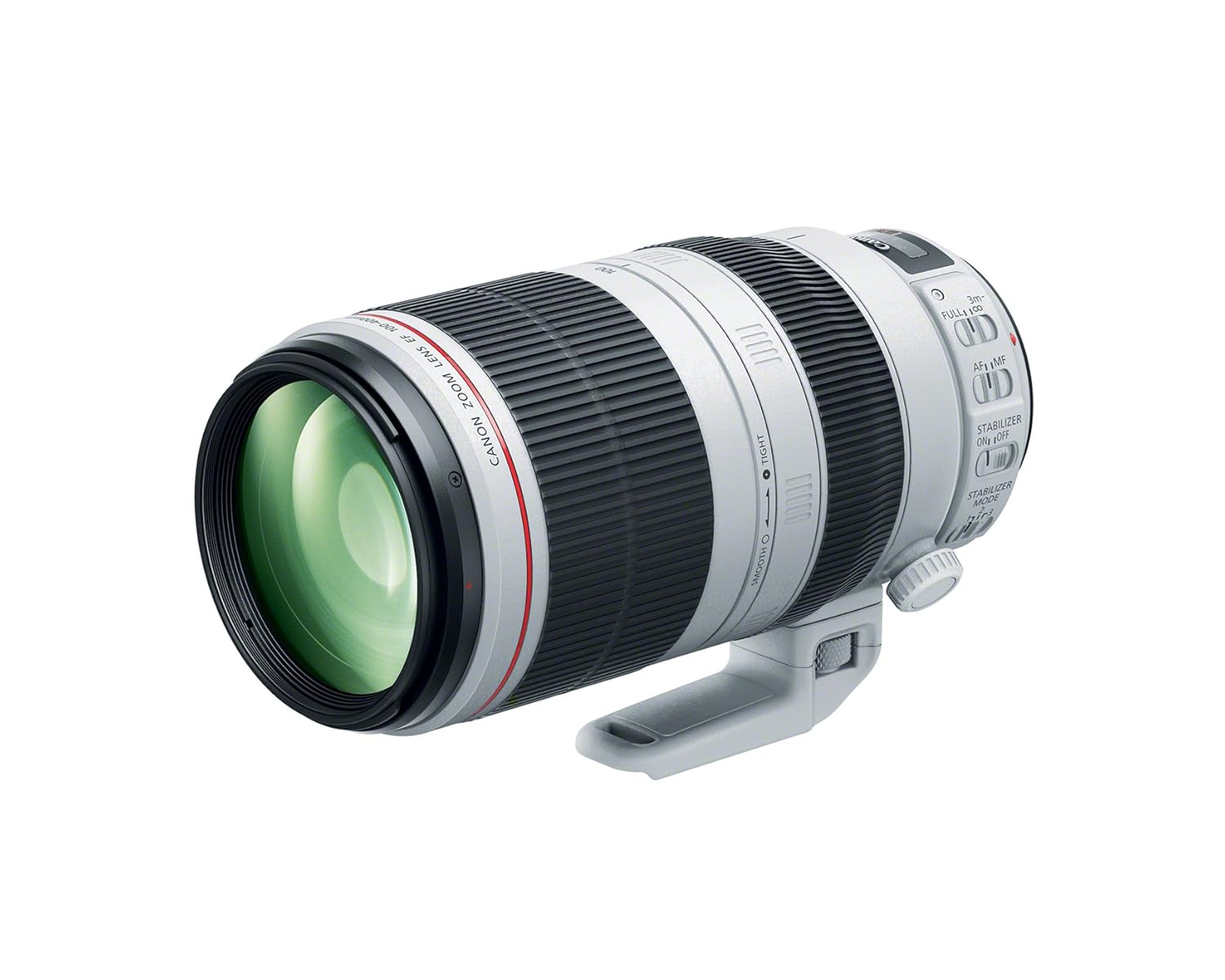
  • Focal Length: 100-400mm
  • Maximum Aperture: f/4.5-5.6, variable
  • Minimum Focusing Distance: 3.2 feet (0.98m)
  • Zoom: Rotation
  • Filter Size: 77mm
  • Weight: 3.62 pounds (1.64kg)
  • Price: $ 2,049.00 USD (at the time of writing this article)

Compared to the Canon 200-400mm

Compared to other lenses of similar focal length the Canon 100-400mm is a bargain, especially since there’s no sacrifice to image quality. Compare it to the Canon flagship telephoto lens, the 200-400mm f/4 which is a whopping $ 10,999. The 100-400mm lens is a moderate $ 2,049. Of course, the 100-400mm is one to two stops slower than the 200-400mm but for an $ 8,800 price reduction, I can handle the loss. I think you probably can too.

Favorite Lens Canon 100-400mm

Salt River wild horse with bird, monochrome – Canon 5D Mark III, 100-400mm lens @ 400mm, 1/1000th, f/8, ISO 500.

Those of you who know long lenses also know that the 200-400mm has a built-in 1.4x extender. Sold separately, those are about $ 500 so if you invest in one (and you should) your savings between the two lenses is now $ 8,300. In other words, you still save a small fortune by shooting with the 100-400mm lens instead of the 200-400mm.

Lastly, the 200-400mm weighs in at almost 8 pounds (3.63 kg). By shooting with the 100-400mm, you also save your back, neck, hands, and shoulders from a lot of wear and tear. I personally can’t hand hold an 8-pound lens, which means to use the 200-400mm I’d also have to carry a heavy monopod with a gimbal head. My always-aching upper body thanked me for buying the 100-400mm instead.

Favorite Lens Canon 100-400mm

Peeking Salt River wild foal – Canon 5D Mark III, 100-400mm lens @ 340mm, 1/350th, f/8, ISO 500.

Practical size

For a telephoto lens of its focal length, the 100-400mm is a relatively compact, hand-holdable, and practical lens. I can attach it to my Canon 7DII or Canon 5DIII camera bodies and shoot with it all day long without using a monopod or tripod. The combination with either camera weighs in at about 6 pounds (2.72 kg). Note that that’s a whole 2 pounds (907g) less than just the weight alone of the 200-400mm lens. It’s a lot of focal length, in a fairly small package.

Favorite Lens Canon 100-400mm

Splashing Salt River wild stallion, monochrome – Canon 5D Mark III, 100-400mm lens @ 278mm, 1/750th, f/6.7, ISO 500.

The 100-400mm lens also easily fits into my Kata backpack (now manufactured by Manfrotto). When I pack for an equine and wildlife photography trip, I cram the 100-400mm, 70-200mm, 24-105mm, extender, both my camera bodies, laptop, hard drives and a slew of accessories into this bag. Yes, it’s a great bag and holds a lot for its size but the point is, the 100-400mm fits in it. Larger lenses like the 200-400mm would not.

The 100-400mm is on the left; accessories like batteries, cards, and a rocket blower fit in the same divider, tucked in at the top of the bag. 7DII is in the middle with 24-105mm attached, the open divider is for the 5DIII camera body (which I used to take the pic). 70-200mm lens is on the right; 1.4x extender fits in the same divider in its own little case, tucked in at the top of the bag.

Same arrangement, top view.

Bag zips!

Features of the Mark II version

If you’ve shot with the original 100-400mm lens, the Mark II has some great new features and I’d recommend upgrading. The original was more of a pumping action when you extended it. The Mark II extends with a twisting action. Twisting to extend is faster and easier to use than the original mechanism. There’s also a ring that you can tighten or loosen, increasing or decreasing the torque on the twisting mechanism. In other words, if you want to rapidly zoom in and out, you loosen the ring to reduce the torque. If you want to keep the lens zoomed at a specific focal length, or locked into its most compact position, you can tighten the ring and increase the torque.

It’s a very intuitive motion. As you use the lens, you’ll find your hand easily moves from the rubber grip used to adjust the focus to the grip used to extend the focal length and to the adjustment ring.

Favorite Lens Canon 100-400mm

Cumberland Island wild horse in the live oak shadows, monochrome – Canon 5D Mark III, 100-400mm lens @ 400mm, 1/350th, f/9.5, ISO 320.

Built to last

The Canon 100-400mm lens is also built to last. The metal, weather-sealed build is why I always invest in original, L-series Canon lenses. I trip, I fall, I drop things. It’s just part of who I am. When I invest in a lens that I plan to use all the time, it can’t be a fragile little thing that needs to be babied. It has to be able to withstand my clumsiness plus dusty, desert winds, and driving snowstorms.

Favorite Lens Canon 100-400mm

Antelope Valley wild horse snuggles – Canon 7D Mark II, 100-400mm lens with 1.4x III extender @ 560mm, 1/200th, f/8, ISO 200.

Just a few weeks ago I was shooting in very snowy, wet, conditions in Nevada. When I made it back to the car, I was soaked. My camera and lens were also dripping with melting snow. I toweled everything off and had a moment of panic when the inside of the lens fogged just a tiny bit. Happily, 15 minutes later, the slight condensation dissipated. If the lens hadn’t had such excellent weather sealing, that snow storm might have ended my shoot. A lens with a cheaper build may have been out of commission for days.

Favorite Lens Canon 100-400mm

Wild horse blizzard in Antelope Valley – Canon 7D Mark II, 100-400 @ 400mm, 1/250th, f/9, ISO 800.

Superfast autofocus

This lens focuses quickly, especially on my 7DII. I rarely miss a fleeting moment. I’ve actually captured images other people in my group are surprised to see. I credit that both to the fast focusing ability and the maneuverability of the 100-400mm lens.

Favorite Lens Canon 100-400mm

Antelope Valley wild horses snow globe – Canon 7D Mark II, 100-400mm with 1.4x III extender @ 560mm, 1/4000th, f/8, ISO 1000.

On occasion, I do have trouble focusing due to low contrast. Let’s face it, that happens to all of us. With this lens, I pull back a bit to 200mm or 300mm, grab the manual focus ring and dial in until I start to feel like I have an edge. Once I do, I use back-button focus to lock in sharpness. Once I’m focused, I zoom back to 400mm. The focus holds through this transition and I grab the shot. It’s quick and magical. None of the other long lenses I’ve used have quite the same intuitive feel for focusing.

Favorite Lens Canon 100-400mm

Antelope Valley winter white wild stallion – Canon 7D Mark II, 100-400 @ 400mm, 1/4000th, f/5.6, ISO 500.

Flexibility

One of my favorite aspects of this lens is its flexibility. I use all focal lengths and apertures of this lens without hesitation. For a standard 100-400mm, I attach it to my full frame 5DIII. For a little extra reach, I attach it to my crop sensor 7DII.

On a crop sensor, the effective focal length of the 100-400mm increases to 160-640mm (1.6x). If I need even more reach, I add the Canon 1.4x Extender and the effective focal length on my 7DII increases to 224-896mm. The extender also increases the total weight by about 8 ounces, but I don’t even notice it.

Note: For Canon crop sensor cameras, multiply the focal length by the 1.6x crop factor to determine the effective focal length. Read more here: Crop Factor Explained.

With the Canon 1.4x Extender

Favorite Lens Canon 100-400mm

Antelope Valley band of wild horses running in the snow – Canon 7D Mark II, 100-400mm with 1.4x III extender @ 560mm, 1/1000th, f/8, ISO 1000.

I love using an extender with this lens. At 400mm, the minimum aperture is f/8, which is my preferred wildlife setting anyway. Autofocus is still blazing fast, although it is limited to the center focus point when the extender is attached. I haven’t seen a significant loss of quality or sharpness with the extender. Since I can still handhold this combination, even if there was a slight loss, I’d be more than okay with it. A slight loss of sharpness is always preferred (in my book at least) to missing a shot because you were fiddling with your tripod or just didn’t have the reach you needed.

Note: Read more about extenders here: The Pros and Cons of Using Teleconverters (Extenders) on your DSLR.

Stability

Favorite Lens Canon 100-400mm

Salt River stallion and son eating eel grass in the river – Canon 5D Mark III, 100-400mm @ 400mm, f/9.5, 1/125th, ISO 320.

My job as a photographer is to put myself in the right place at the right time, to find the beauty once I’ve put myself in that place, and to understand the light and compose my image. My gear gives me the technical boost I need to pull all that off.

I’m going to be honest here, I’ve rarely shot with third-party lenses. I can’t compare Canon lens IS (Image Stabilization) to other brands. But, what I can tell you is that when I find myself shooting at 400mm with a 1.4 extender at a relatively slow shutter speed of 1/250th, it’s not my steady hands ensuring that my shot is in focus – it’s Canon’s. Their IS in this lens is like a super power. It is exactly the technical boost I need to make the images I want to make.

Even works for panoramas

Favorite Lens Canon 100-400mm

Ely County Nevada Open Range, panorama – Canon 7D Mark II, 100-400mm @ 100, 1/320th, f/11, ISO 250.

I’ve even used this lens to create panoramas – handheld, no less. If I’m using the 100-400mm and I see a gorgeous vista, I set the lens to 100mm. I create a very secure hold by pressing together my elbows and locking them into my chest. Then I slowly click my way through the scene. Lightroom or Photoshop both do an amazing job of stitching and correcting perspective issues. If you’re a landscape photographer you might be horrified at this method but if you’re a wildlife photographer, it’s truly another practical tool in your photographic arsenal.

Image quality

Favorite Lens Canon 100-400mm

Salt River wild mare silhouette at sunset – Canon 5D Mark III, 100-400mm lens @ 400mm, 1/8000th, f/11, ISO 600.

With all this technical talk, you might be wondering why I haven’t said all that much about image quality. I’ve included over a dozen images here and I hope that speaks for itself. Details render crisply. I haven’t discovered any artifacts or unusual aberration in any of the 14,000+ images I’ve shot with this lens.

In wildlife images, I prefer a creamy blurred background rather than a bubbly bokeh background since I find that big, bokeh circles detract from my subject. This lens renders the sort of backgrounds that I prefer.

Favorite Lens Canon 100-400mm

Backlit Cumberland Island wild horse at sunset – Canon 5D Mark III, 100-400mm lens @ 100mm, 1/500th, f/4.5, ISO 2000.

Shooting into the sun for a backlit image produces just the right amount of lens flair. Shooting with the sun at my back or off to my side produces just the right amount of contrast. With bright overcast skies, the lens still shapes the light beautifully.

The Canon 100-400mm lens renders color in a very neutral way. While it’s fun that some lenses render brighter or more vivid colors, I prefer to have a more neutral starting point when I begin to edit my RAW images.

Over to you

In all, this is the absolute best birthday gift I’ve ever given myself. I even wish I’d bought it before I upgraded my 70-200mm.

What about you? Have you used either the original or Mark II version of the Canon 100-400mm lens? Or do you have another favorite telephoto zoom lens? Share your feedback on your favorite lens with the dPS community in the comments below.

Shop for the Canon 100-400mm lens here:

  • Amazon.com
  • B&H photo.com
Favorite Lens Canon 100-400mm

Mom!! – Canon 7D Mark II, 100-400mm lens with 1.4x III extender @ 560mm, 1/1250th, f/8 ISO 800.

googletag.cmd.push(function() {
tablet_slots.push( googletag.defineSlot( “/1005424/_dPSv4_tab-all-article-bottom_(300×250)”, [300, 250], “pb-ad-78623” ).addService( googletag.pubads() ) ); } );

googletag.cmd.push(function() {
mobile_slots.push( googletag.defineSlot( “/1005424/_dPSv4_mob-all-article-bottom_(300×250)”, [300, 250], “pb-ad-78158” ).addService( googletag.pubads() ) ); } );

The post dPS Writer’s Favorite Lens – the Canon 100-400mm f/4.5-5.6 L-Series Lens by Lara Joy Brynildssen appeared first on Digital Photography School.


Digital Photography School

 
Comments Off on dPS Writer’s Favorite Lens – the Canon 100-400mm f/4.5-5.6 L-Series Lens

Posted in Photography