Despite some sales growth, mirrorless isn’t taking over photography. Equally, DSLRs aren’t flying off the shelves the way they used to. But if you’ve found yourself arguing about whether mirrorless is the future, you’ve probably been addressing the wrong question. DPReview’s Richard Butler argues that convergence is coming and that it’s not the mirrors that matter. Read more
Tag: Learned
-
CP+ 2015: Nikon Interview – ‘We learned from the D600 episode’
When we attended CP+ earlier this year in Yokohama, Japan we sat down with senior executives from several major camera and lens manufacturers. We were lucky enough to sit down with a number of Nikon engineers to ask them about their overall strategy with respect to FX vs DX, and DSLR vs mirrorless. We were also able to ask pointed technical questions regarding innovative technologies in Nikon cameras, and the answers were very enlightening. Click through to read the interview
-
5 Lessons Learned Switching from DSLR to Mirrorless for Travel Photography
Two months ago, after shooting for 10 years with Canon, I completely switched to Sony. It surprised some readers of my blog, as well as some fellow photographers. To address the issue, I published a detailed post on my blog with the reasons behind my switch. To save you time, I will summarize my reasoning, not only in one sentence but in one word: INNOVATION. I could see that, in the last two to three years, the main innovation was happening in the realm of mirrorless systems and I felt that Canon was simply an outside observer.
I considered the switch for a long time. I first waited because mirrorless systems were not up to DSLR standards to which I was accustomed. Then suddenly, about a year ago, all mirrorless manufacturers began releasing new camera models that could compete with any DSLR and, in some cases, even surpassed them.
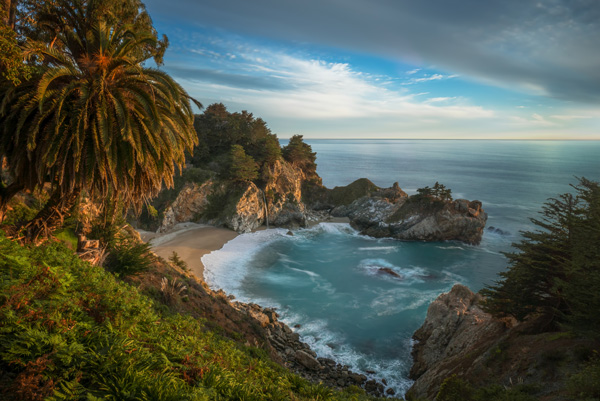
Big Sur, California – Sony A6000, Sony 10-18mm lens
That was when I decided to switch. But, it took another six to seven months to choose the right kit (camera and lenses) for my travel photography needs.
My initial choice was the Panasonic Lumix GX-7 which was the perfect camera for me feature-wise but I was not too crazy about the selection of high-end wide angle lenses.
My second choice was the full frame Sony A7 and, I almost pulled the trigger last fall. However, after holding it in my hands, the Sony A7II in combination with the newly released Zeiss 16-35mm lens was almost comparable to the DSLR in weight and size.
That was when my choice was made. Just before the Christmas holidays, I sold all of my Canon gear to prevent cold feet. Then, I ordered the Sony A6000, Sony 10-18mm f/4, and Zeiss 16-70mm f/4 in one shot. I paid $ 2000 in total. Sony lenses are always pricy but I found that the price of the complete kit was very reasonable.
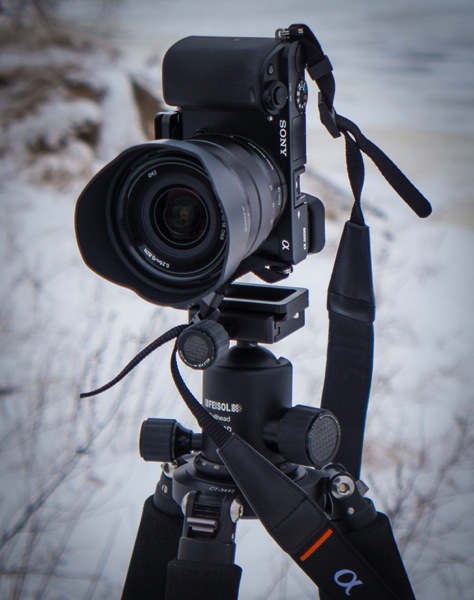
Sony A6000, Sony 10-18mm lens and Feisol Tournament Tripod
I just returned from my first photography trip of the year; I spent two weeks in Hawaii and Northern California where I exclusively shot with my brand new Sony gear.
Below are my thoughts after putting this new equipment through the real life test of travel photography. Please note, I only addressed the features of the camera which are important to me as travel photographer.
Lesson 1: Size does matter in travel photography
As a DSLR shooter, when preparing for a long and demanding sunrise/sunset hike, I always faced the same dilemma – what equipment to bring? Should I carry everything and look (and feel) like a Sherpa tackling Everest? Or should I hike light and risk missing important gear?
I do not have to compromise anymore as I can now put everything in a small camera bag and bring it with me. The Sony A6000 (344g) and the Sony 10-18mm (220g) weigh 564g (19.9oz) total. I still cannot believe that a high-quality wide angle zoom lens can weigh only 220g. I call it freedom.
Don’t get me wrong, the size and the weight were not the main reasons for my switch. I would never jeopardize quality for the sake of weight reduction but it was important consideration.
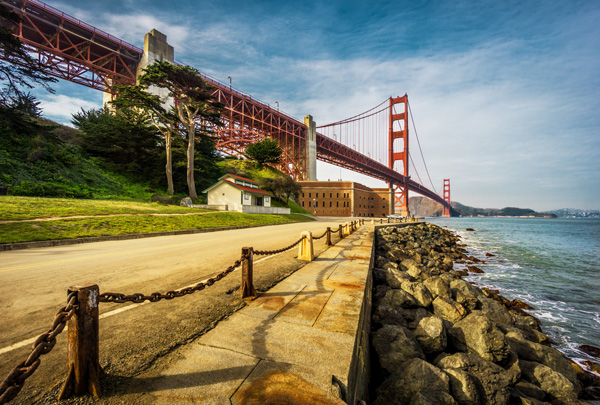
San Francisco, California – Sony A6000 with Sony 10-18mm lens
Lesson 2: Electronic Viewfinder (EVF) – a new way of looking at the scene
Somehow, in many mirrorless reviews, the EVF is presented as a negative factor and is portrayed as somewhat of a disadvantage compared to the DSLR optical viewfinder. I do not agree with that conclusion. For me, the EVF is one of the main advantages of mirrorless cameras. Finally, when I look through the viewfinder I can see what the camera’s sensor sees.
It is a very new and refreshing experience with the EVF, when you can assess the depth of field of the scene before taking the picture.
Here’s a real life scenario. Earlier I was shooting using exposure compensation -2EV and I forgot to reset it to zero. Now, when looking through the EVF, I can see right away that the exposure is wrong because the EVF picture is too dark.
When I shoot wide at 10mm, I can even see barrel distortion which realistically represents the photo I am about to take.
I often use manual focusing when shooting landscapes, which was pretty much an impossible task with the DSLR in bright conditions because of the display screen glare. Now, not only can I easily use the manual focus in any condition, I can also take advantage of Focus Peaking, an amazing feature that highlights areas that are in focus with the bright color. There is no more guess work.
In one of the reviews, I read how awful and pixelated the EVF picture becomes in dark conditions. I can confirm that it looks pretty bad but it is good enough for composing the shot and beats the DSLR where all you can see is pitch black.
For me, the EVF simplifies the process of taking pictures and makes it more predictable.
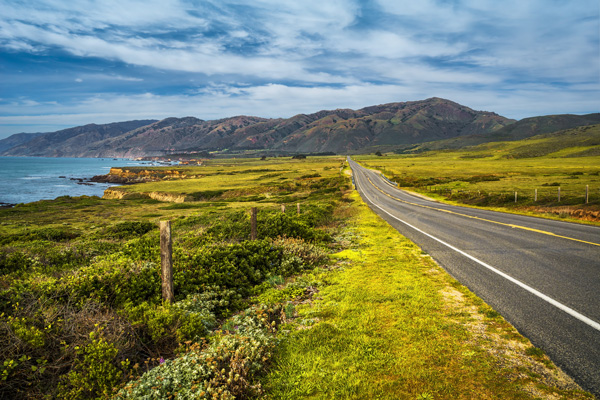
California State Route 1 – Sony A6000 with Zeiss 16-70mm lens
Lesson 3: I love the 24 megapixels sensor
During the silly megapixel war between major camera manufacturers, I decided for myself that 16Mpx was the right pixel count for my needs and I had no plans of upgrading only for that reason.
The Sony A6000 comes with 24Mpix, which I initially did not consider as an important upgrade. What I realized later, after starting to process photos, is that the 24Mpx sensor produces unbelievably clean and sharp images and, in combination with native quality lenses, it resolves an insane amount of detail. Photos look acceptable even at 100% magnification.
Although, I have to admit the higher pixel count is more taxing on my computer and I might need to upgrade it soon.
High ISO photography is not something that I do often when I travel and it was hard for me to assess low light performance of the sensor. But, what I can see based on family photos from the holidays is that ISO 3200 is still acceptable and excessive noise is easy to eliminate in Lightroom.
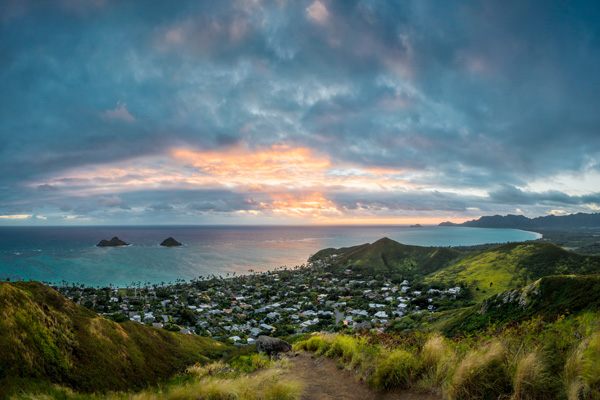
Lanikai Beach O’ahu, Hawaii – Sony A6000 with Sony 10-18mm lens
Lesson 4: 11fps is a game changer
Sports photography is somewhat of a hobby for me. The only times when I shoot sports are when professional cycling peloton comes to Montreal every September and when my daughter is playing water polo. In order to test 11fps in combination with the fastest focusing system in the industry, I went to the beach in Hawaii to photograph surfers.
I switched from RAW to JPEG, set the camera to a continuous shooting mode and enabled Object Tracking. I was amazed not only with the new experience of shooting but with the results as well. Shooting at 11fps reminded me of filming the video and then going frame by frame in the editing software, selecting the best frames. There are no missing moments. The focus was spot on, in pretty much every frame.
I can see how the Sony A6000 can be a game changer for sports and wildlife photographers.
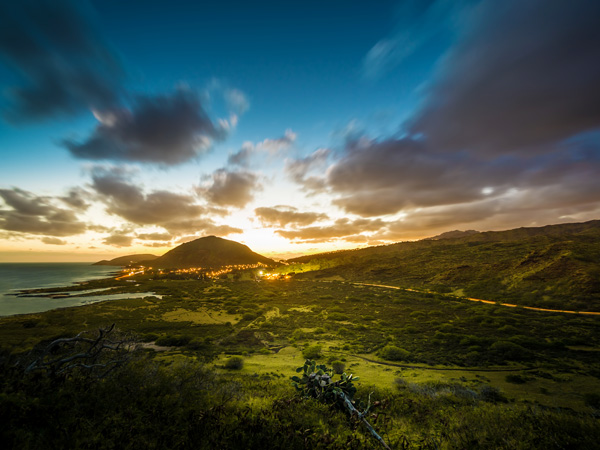
Makapu’u Point O’ahu, Hawaii – Sony A6000 with Sony 10-18mm lens
Lesson 5: Not everything is perfect in paradise
Even though my initial experience of using the Sony A6000 is very positive, there are some shortcomings and annoyances I want to address.
Battery life:
According to Sony, you can take up to 360 shots on a single battery charge and I found this number to be pretty accurate. I even managed to take close to 390 shots when shooting in bracketing mode. It is not bad at all considering the small battery size and the EVF high power consumption. However, when you are accustomed to shooting 1500 shots on a single charge with the DSLR, the difference is very obvious. Now, I carry three spare batteries with me at all times and I have to remember to keep them charged.
Bracketing:
For some inexplicable reason you can shoot five bracketed shots at 0.7EV intervals only, which makes it completely useless. In extreme lighting conditions I have to shoot two sets of bracketed shots (-2, 0, +2), offsetting them manually using exposure compensation (-1 EV). This is very annoying.
No GPS tagging:
Even though the camera has decent wireless connectivity, the GPS tagging utilizing a mobile phone is missing.
Buffer writing lock:
When a camera transfers photos from the buffer to a memory card, the system is completely locked. You cannot even preview images during the transfer.
2-Second delay shortcoming:
You cannot trigger bracketed shots using the 2-second delay functionality. I had to buy, and carry around, an unnecessary extra piece of equipment: Wireless Shutter Release ($ 10).
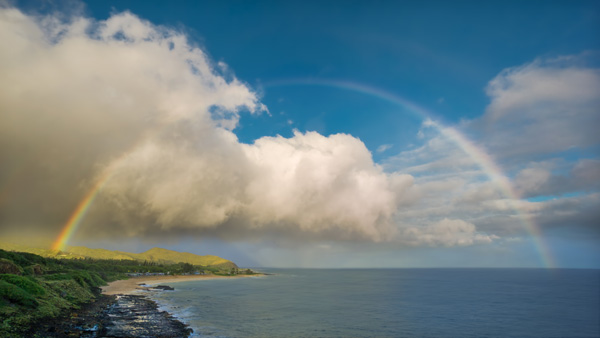
Sandy Beach, Hawaii – Sony A6000 with Sony 10-18mm lens
Conclusion
The switch from a Canon DSLR to the mirrorless Sony A6000 was less stressful and less painful than I expected. I believe that one of the main factors that made it possible was my purchase of native Sony lenses so I did not have to deal with the glass from other systems with the converters.
I am waiting for the widely rumored Sony A7000 which is supposed to be the successor of the Sony NEX-7. I hope Sony addressed the shortcomings of the A6000 and introduces new pro features like: weather sealing, built-in body stabilization, GPS tagging and advanced bracketing. I am definitely planning to get the new A7000 and keep the A6000 as a backup body.
googletag.cmd.push(function() {
tablet_slots.push( googletag.defineSlot( “/1005424/_dPSv4_tab-all-article-bottom_(300×250)”, [300, 250], “pb-ad-78623” ).addService( googletag.pubads() ) ); } );googletag.cmd.push(function() {
mobile_slots.push( googletag.defineSlot( “/1005424/_dPSv4_mob-all-article-bottom_(300×250)”, [300, 250], “pb-ad-78158” ).addService( googletag.pubads() ) ); } );The post 5 Lessons Learned Switching from DSLR to Mirrorless for Travel Photography by Viktor Elizarov appeared first on Digital Photography School.
-
7 Things I’ve Learned from Photographing Storms
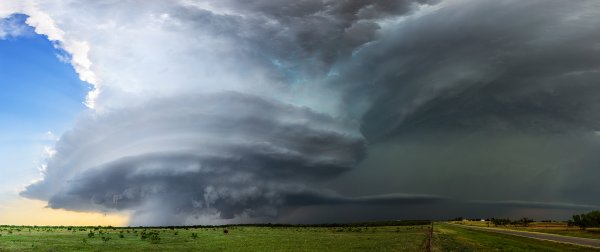
A massive supercell near Henrietta Texas in May, 2014. © James Brandon
I’ve been a professional photographer for around five years now. I’ve photographed a lot of different subjects throughout the years, but nothing in the world could have prepared me for photographing storms. When I stood in front of my first supercell on May 8th of 2013, I was hooked. A low hanging wall of cloud hovered over the field in front of me as its rotation increased by the second. The 40mph winds at my back were feeding moisture and warm air into the storm. The grass in the field was all bent down towards the monster looming in front of me. Yeah, that’s all I needed to become totally obsessed.
That was back in the spring of 2013. Since then I’ve become good friends with a few very seasoned storm chasers and have gotten a chance to ride along with them on several storms, both last season, and now this season. Mike Mezeul, for example, has become a great friend over the past couple of years and we even lead workshops together now. He’s an absolute wealth of knowledge when it comes to weather and I highly suggest you check out his work.
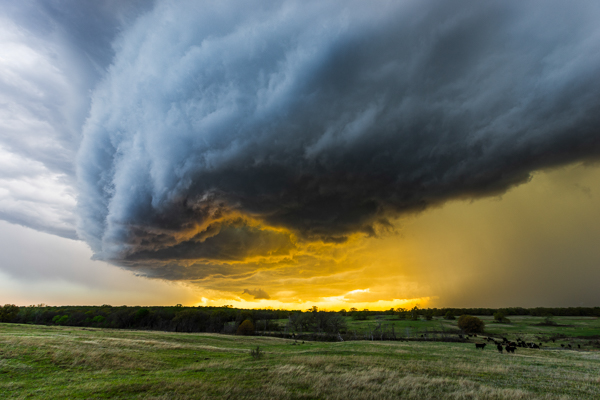
In these brief two seasons of chasing, I have already racked up countless hours chasing, God knows how many miles, and my bank account certainly knows how many tanks of gas. In spite of all that, I’m still very new to this world of storm chasing and storm photography, and to be honest, at this point, I’m more of a storm photographer than a storm chaser. I’ve already started getting a lot of questions about storm chasing so I thought I’d put together an article here on dPS going over some of the things I’ve learned thus far, with the preface that I am not an expert at this point. Whether you’re interested in dipping your toes into this genre of photography or just want to know more about it; read on.
1) Storm chasing and storm photography are two very different things
This is something that has become more apparent the more I go out. It’s tough to separate the two because when I go out in search of storms, even I say that I’m going storm chasing (but I’m really not at this point). The people up front in the car are the chasers. The driver is actually doing the chasing and the person riding shotgun is navigating and forecasting. Me? Well most of the time, at this point, I’m in the back; along for the ride. So you might say that I’m chasing with them and you might not. Who cares. I have been in the passenger seat a few times now (in charge of forecasting and navigating) and it is not easy. You can’t be focused on getting pictures in that seat. You’re responsible for navigating the road networks out on the chase — staying one step ahead at all times — while also keeping an eye on the storms using radar.
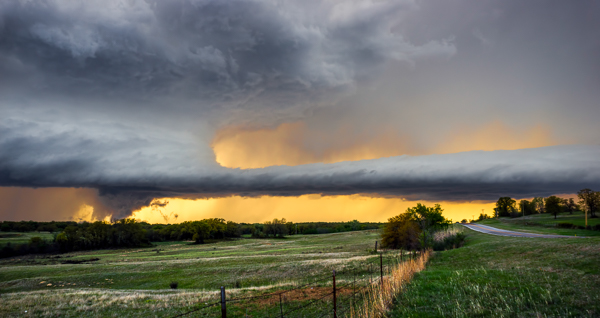
I haven’t photographed a tornado yet, but this is about as close as I’ve come. This wall cloud (the section of a storm where tornadoes DO come from) began lowering behind the tree line while rotating quite rapidly. © James Brandon
2) Becoming a good chaser takes time, dedication, mentoring and experience
Learning about weather has become a huge passion of mine ever since starting the process of getting my private pilot’s certificate (which I finally got back in late 2012). Weather has to be a passion to get into chasing. It just has to. You’ve got to have an intimate knowledge of weather patterns, frontal systems, pressure systems, lifting mechanisms, dry lines, triple points, dew points, troughs and so much more. You have to know when a scary looking cloud is just that; a scary looking cloud. Many rookie chasers (yes, I’ve done this) will see a scary, ominous looking cloud that is low to the ground and think it’s a tornado forming. They are looking in one direction — at the wrong part of the storm — while the actual danger is somewhere else. Lucky for me, I’ve always had experts with me to point out what I should be concerned with, and what I shouldn’t be.
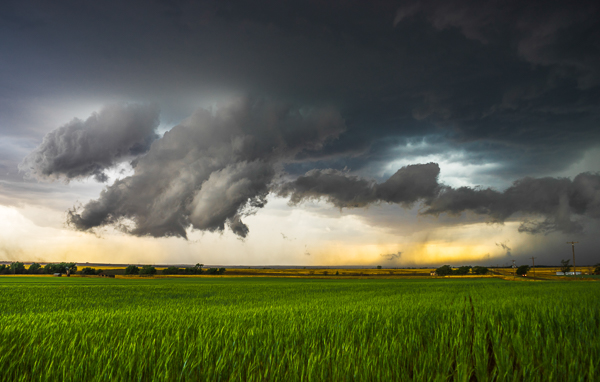
This image shows an area of outflow from the storm that was moving off to the right. At one point the cloud began to resemble a funnel that was almost touching the ground. However, it wasn’t rotating and it was on the wrong part of the storm. A few minutes later, tornado sirens began going off in the small town nearby, even though the storm wasn’t tornado warned yet. Someone had called in and said a tornado was on the ground.
3) Until you become a seasoned chaser, NEVER go alone
The best chasers out there have dedicated their lives to this stuff. It’s not a weekend hobby. Seriously: Don’t go out alone if you’re a rookie. Just don’t do it. You’ll be putting both your life and the lives of others at risk. Going out on your own means becoming driver, navigator, forecaster, and photographer all at the same time. Just earning a permanent spot up front in a chase vehicle is a coveted thing that takes years (and should) of experience to accomplish. It’s referred to as the “hot seat” for good reason. When you’re on your own, it’s impossible to be totally safe. You have to concentrate on driving, but you also have to pay attention to the storm. That means that you’ll likely be using some sort of radar app on your phone or laptop and will be checking that instead of paying attention to driving. This is a recipe for disaster that will catch up to you eventually.
4) Like any hobby/interest, there are a lot of egos and hot heads
I’m sure this one is going to piss some people off but it’s just the truth. It’s true with anything though. Go buy a Remote Control car and get into RC car racing. Go join your local camera club. Buy an RV and start spending time with fellow RV owners. Every group has them. In storm chasing you will see them driving on the wrong side of the road, passing people with their amber lights flashing while driving 90 in a 55 to get to a storm that’s still 20 miles away (risking lives just to get on a storm), parking their cars just off the side of the road and then leaving their doors open so that traffic has to swerve around them…the list goes on.
Most of them also cover their entire car in storm chasing decals, weather instruments, antennas, and amber lights. The point is: Pay attention to the stuff that these people do and don’t do it. Having amber lights on your car doesn’t make you any more important than the guy in front of, or behind you. Storm chasers are not law enforcement or emergency services. Being a chaser doesn’t give you any special powers or authority.
5) There are also a lot of amazing people
While there are a lot of egos out there, there are just as many incredible people who have more knowledge about weather than I could ever even dream of. These are the people who make storm chasing a noble pursuit. Some of them are self taught, some have masters and doctorates in meteorology or climatology. I’ve had the fortune of meeting some amazing people already just in two seasons. If you can befriend these people, and honor their knowledge and authority, you will have a good chance at advancing your own knowledge at an accelerated pace.
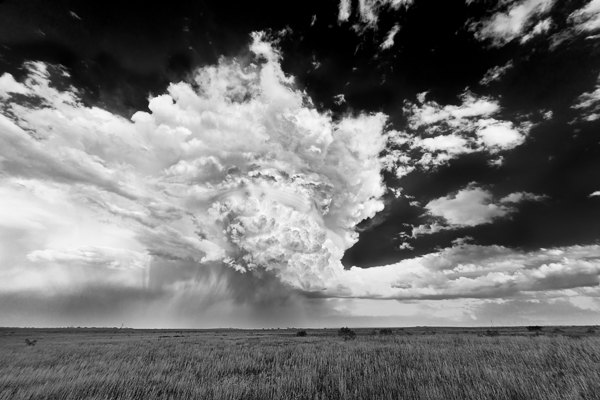
A beast of a supercell in Throckmorton, TX back in May of 2013. Around 10 minutes after I took this photo the storm fell apart and disappeared.
6) It’s not about tornadoes
Sure, easy to say for the guy who hasn’t photographed a tornado yet. In all seriousness though, tornadoes occur in somewhere around 1-2% of supercells. I don’t do this for a living and it’s still a very new passion, so I’m not going to drive 10,000-15,000 miles across the country ever year in search of tornadoes. Even if I did, I’d still see tornadoes so seldom that if that were my goal, I’d feel like a failure. On top of that, tornadoes are incredibly dangerous and destructive, and take lives every year. If I can one day photograph a beautiful tornado in the middle of nowhere, miles away from a town or residence, I’ll be happy. But if there’s a town nearby, or a neighbourhood, or even just a house, I’ll be praying against a tornado each and every time. I’m not after tornadoes. I’m after structure.
Standing in front of a supercell with 30-50mph winds at your back, watching as it rotates and grows, is one of the most awe-inspiring things you’ll ever witness. Seeing the raw power and fury of mother nature is just incredible. I’ve stood in a field with warm, moist 40mph winds at my back feeding the storm in front of me. Then, in an instant, the air turned dry and super cold. The storm had began ingesting the cold air from the evaporating rain it was dropping, and in essence it killed itself by doing so. Within 10 minutes, the entire storm was gone.
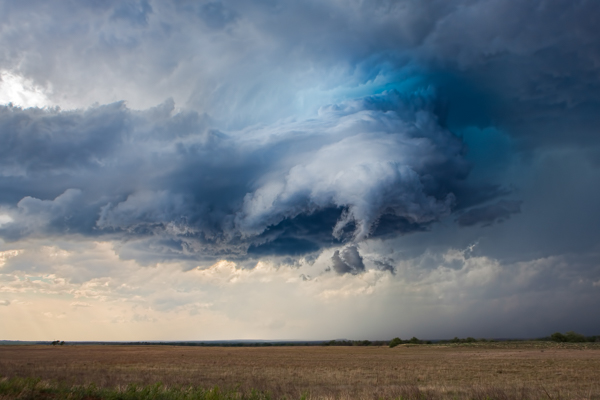
An image of a rotating wall cloud from the storm I described in the paragraph above. This was actually my first storm to ever photograph.
7) Chasing has become a circus in recent years – tread lightly
It’s something you can’t fully understand unless you see it. With shows like Storm Chasers, the constant media attention that chasers get during storm season, social media, etc., an innumerable number of people have come out of the woodworks to chase storms in the U.S. When the Storm Prediction Center posts a moderate or severe risk day, you can rest assured that the roads will be packed with chasers (especially if it’s during a weekend). This can, and does, present an added element of danger to chasing storms. I’ve heard stores of road networks being completely clogged up from just chasers while a tornado is on the ground nearby. Because of this, the people I chase with usually don’t go out chasing on days like this. Some of the best storms I’ve seen to this day were on slight risk days when most chasers stayed home.
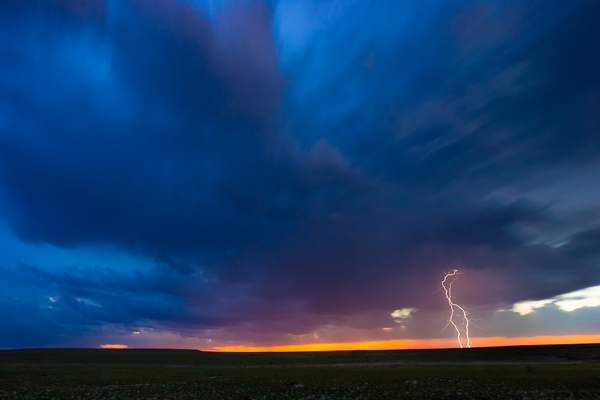
A CG (cloud to ground) lightning bolt strikes in a field somewhere in east Texas as a storm moves off into the distance.
In closing
Storm photography, storm chasing, whatever you want to call it, has become something I look forward to all year long now. The main months for chasing in Texas, and the surrounding area, is March through May – which means I have to dream about it from June through February. Sure, supercells can pop up in the surrounding months but not nearly as often. If you want to see what chasing is all about, please follow the advice that I set out above. These storms kill people every single year and should not be taken lightly. Don’t go unless you can secure a seat in the car of an experienced and knowledgeable chaser. For the record, someone who chases storms doesn’t necessarily qualify as an “experienced and knowledgeable chaser.” There are many people who chase solo year after year who shouldn’t be out there. Use caution and choose wisely.
If you have any questions, let me know in the comments below! To follow along with me during the upcoming storm season, be sure to follow me on Instagram. Thanks!
googletag.cmd.push(function() {
tablet_slots.push( googletag.defineSlot( “/1005424/_dPSv4_tab-all-article-bottom_(300×250)”, [300, 250], “pb-ad-78623” ).addService( googletag.pubads() ) ); } );googletag.cmd.push(function() {
mobile_slots.push( googletag.defineSlot( “/1005424/_dPSv4_mob-all-article-bottom_(300×250)”, [300, 250], “pb-ad-78158” ).addService( googletag.pubads() ) ); } );The post 7 Things I’ve Learned from Photographing Storms by James Brandon appeared first on Digital Photography School.
-
My Biggest Photography Failures and What I Learned
“Success is a poor teacher. We learn the most about ourselves when we fail, so don’t be afraid of failing. Failing is part of the process of success. You cannot have success without failure.” – Rich Dad, Robert Kiyosaki
I was at a high-pressure shoot recently, and one of my clients was watching me make adjustments to my camera and lighting. They commented, “How do you remember all that stuff? You make it all look so effortless.”. The truth is that after thousands of photo shoots it has become second nature, but this wasn’t always the case.

I broke a wedding.
Why am I always checking and rechecking exposure? Because I broke someone’s wedding. Yep, broke it.
The wedding was ten years BD (before digital) and very early in my career. I was so inexperienced that I didn’t realize the flash tube on my external flash was only emitting about 1/4 of its power and, as a result, I underexposed all the images by three to four stops. They could not be salvaged. I only managed to get one useable frame.
At the time, I just wanted to crawl into a hole and stay there, but this nightmare scenario defined the style of fill flash lighting I still use today.
I also developed a pre-shoot protocol that ensured I would never have this kind of disaster again. I always test all my equipment before a shoot and check and recheck exposure as I’m shooting.
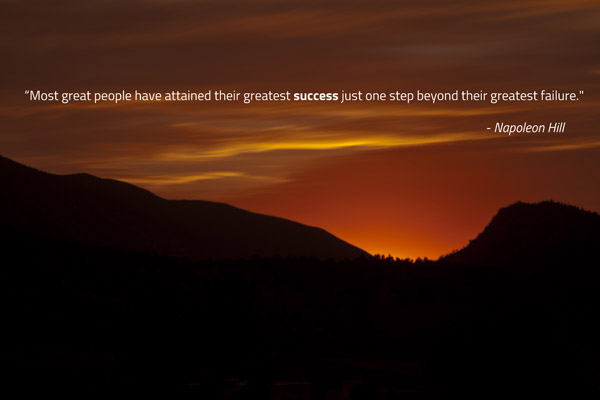
“Fears are nothing more than a state of mind. Most great people have attained their greatest success just one step beyond their greatest failure.” – Napoleon Hill
If I had not experienced this crushing blow early in my career, I might have become more slap dash as a photographer and prone to more failures, steering my career to go in another direction.
By Trevor Dennis
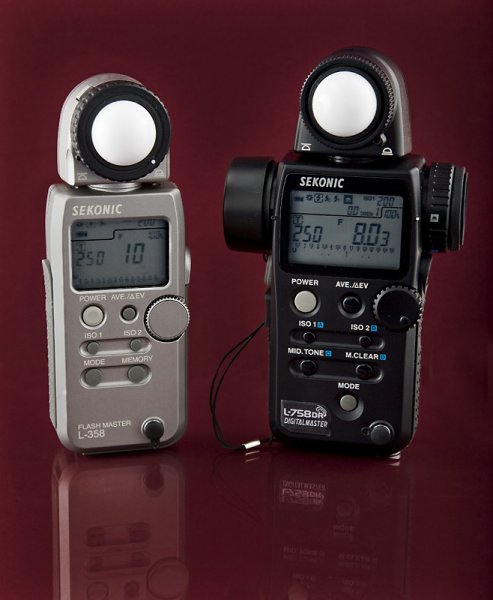
Why do I always use a light meter? Because I ruined the shot of my life by looking at my camera screen for the exposure and my hair light ended up being three stops over exposed. That shot should have stopped traffic. Instead, I lost a client.
Why do I back up twice while I’m shooting? Because an assistant (accidentally) dumped an entire shoot into the trash. I’m still in need of therapy over that one.
I’m proud to admit that I have failed spectacularly on countless occasions.
The aftermath was always the same. I’d have a complete meltdown and become a bit tired and emotional. I’d then spend a week at home curled up in the fetal position watching entire seasons of One Tree Hill and consuming my body weight in Nutella.

By Janine
As painful as each failure is, I learned something new each time, and I never made those mistakes again. They became burned into my brain.
“Failing is one of the greatest arts in the world. One fails toward success.” – Charles Kettering
You need to go out and fail, time and time again. Get up, cry for a bit, learn, grow, and move on.
At the time, these failures were devastating but I now know that my spectacular failures and toughest moments have been my greatest teachers and have molded me into the photographer that I am today.
I’m also proud to be part of a massive club of spectacular failures who have all gone on to achieve remarkable success.
Here are a few of my favorites:
- Comedian Jerry Seinfeld completely froze during his first stand up gig and was booed off stage. He went back the next night was a huge success and went on to become one of the most successful American comedians in history.
- Elvis Presley got fired from one of his first gigs and was told, “You ain’t goin’ nowhere, son. You ought to go back to drivin’ a truck.” Elvis Presley is one of the greatest recording artists of all time.
- Oprah Winfrey (my hero) was fired from her television reporting job because TV executives thought she wasn’t fit to be on screen.
She went on to create and star in “The Oprah Winfrey Show” the most watched talk show in the world, turning Oprah into a billionaire. - Winston Churchill failed grade six and lost every government position he ran for. He went on to become British prime minister at the age of 62.
And one of my all time stories of how failure led to success is Apple founder, Steve Jobs. He was devastated after being removed from the company he started. Years later in a commencement speech at Stanford University he reflected:
“I didn’t see it then, but it turned out that getting fired from Apple was the best thing that could have ever happened to me. The heaviness of being successful was replaced by the lightness of being a beginner again, less sure about everything. It freed me to enter one of the most creative periods of my life.”
When he returned to Apple, he created some of the most iconic products in the world, including the iPhone, iPad, iPod, and he went on to become one of the richest men in the world.
“Never, never, never give up.” – Winston Churchill
Have you experienced any spectacular failures, and what have you learned from them? What are your strategies for coping with failure? I’d love to hear from you.
Gina is the author of four dPS eBooks including:
- Portraits: Making the Shot
- Portraits: Striking the Pose
- Portraits: Lighting the Shot
- Portraits: After the Shot
You can buy one for $ 19.99 or grab the whole bundle for only $ 49.99 (save 38%) from any of the links above.
googletag.cmd.push(function() {
tablet_slots.push( googletag.defineSlot( “/1005424/_dPSv4_tab-all-article-bottom_(300×250)”, [300, 250], “pb-ad-78623” ).addService( googletag.pubads() ) );
} );googletag.cmd.push(function() {
mobile_slots.push( googletag.defineSlot( “/1005424/_dPSv4_mob-all-article-bottom_(300×250)”, [300, 250], “pb-ad-78158” ).addService( googletag.pubads() ) );
} );The post My Biggest Photography Failures and What I Learned by Gina Milicia appeared first on Digital Photography School.
-
Week in review: 8 things we learned
It’s been a busy week and as we head into a long weekend here in the US, it seemed like a good time to take a look back at everything that’s happened in the past seven(ish) days. With new products from Fujifilm, Olympus and Ricoh, Photokina fever is definitely taking hold. And the week wasn’t without an oddball moment or two, including the emergence of Sony’s Asia-only ‘perfume bottle selfie camera.’ Relive the highs, the lows, the weird and the wonderful with us, in this slideshow.
-
Tips for Taking Street Portraits – Lessons Learned in India
On my trip to Rajasthan, India I packed my Canon 400D (Rebel XTi) with two lenses: my Canon EF 70-200mm f/2.8 IS USM (for long and candid photos) and my Canon EF 50mm f/1.8 II (for indoor portraits and low light photos) because I was aiming for portrait on the streets and specially head shots. Here are a few tips for taking street portraits, from my humble experience, and how to approach people before you take you shot.
#1 Always smile
You always want to let anyone who sees you with a camera know that you are a cheerful person and therefore they won’t mind being photographed by you. Even if they become angry because you asked, just smile and back off. You need to remember that being a photographer in the street is an image for all photographers in the public eyes.
#2 Avoid using the built-in flash on your camera
A common mistake that most beginners fall into is using the built in flash. For me this is meant only for quick shots of friends or family. But if you want to a portrait with great light, use natural daylight in the shade by making the subject face towards the light not the opposite.

#3 Don’t shoot in the sun
The reason is simple, hard light means hard shadows! Normally when you take a portrait for someone in the sun it creates hard shadows under the eyes, which is very bad for a portrait most of the time. Try to draw your subject to the nearest shady area available, or you can use a smooth board (or reflector) to make the light more even on the subject, that is if you dare to do all that with a stranger.
#4 Think about the light and shadows
It’s not enough just to take the shot in the shade during the day, away from the sun. You also need to consider how the light and the shadows are becoming on the subject’s face. You can do that by taking a test shot, then reviewing it on your camera screen by looking for the highlights and the shadows. If you don’t know how, practice it at home with your family or friends before going out to the streets.
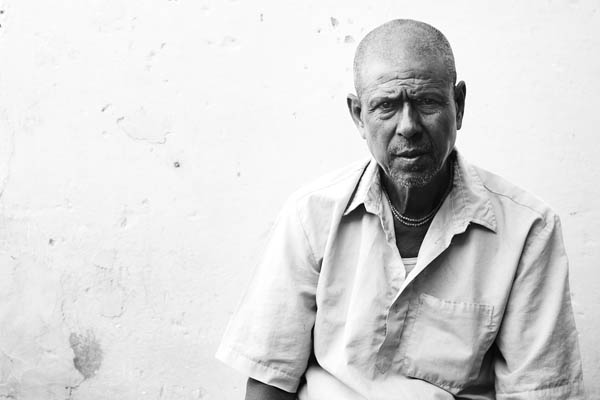
#5 Don’t ask the person to smile
The good portrait comes first from the subject, then from you. So when you ask someone to smile, and they will, it won’t be a natural smile and sometimes it will bad for the shot. So don’t ask and they will reveal their true expression to the camera whether it’s a smile or sadness, sometimes you will be surprised.
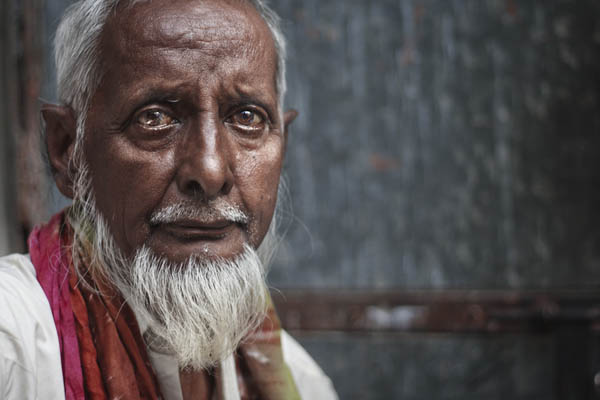

#6 Use a large aperture for a blurry background
One of the key important things in portraiture is to focus on the eyes and blur the background, and sometimes part of the face. It will make a more dramatic and more attractive portrait to the viewer. And it also blur the background so it makes the viewer’s eye go only to the subject’s eye.
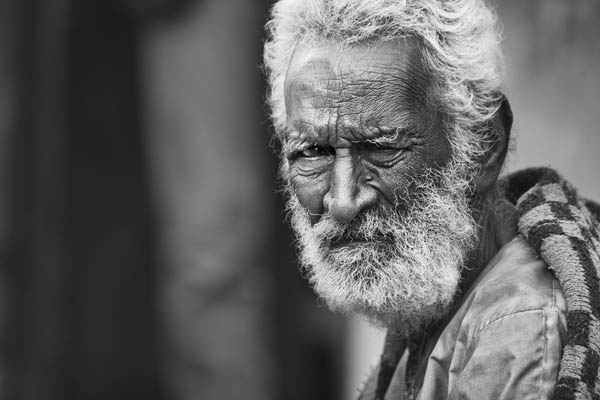
#7 Think about the background
What lies behind the subject is important, sometimes it’s good to have people in it and sometimes it’s better empty with no one. It really depends on how you intend to show your portrait.
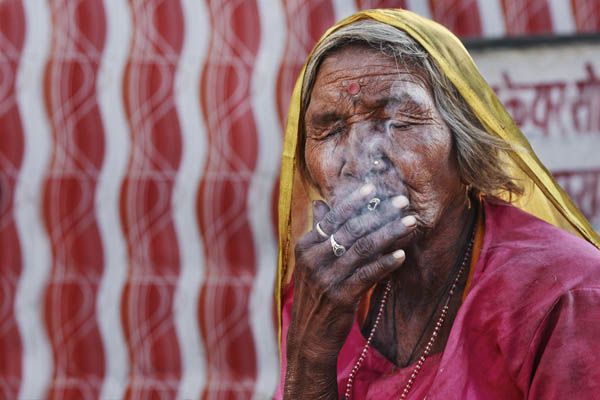
Editor’s note: as I was searching Flickr for portrait images for the weekly inspiration collections (Portraits of men – portraits of women, I kept finding Zuhair’s portraits stood out among the rest. So I approached him and asked him to share some tips with us and he was gracious enough to do so. I hope you enjoy his images as much I do. If the eyes are the windows to the soul, I feel Zuhair’s portraits do a great job of showing us his subjects’ souls.
The post Tips for Taking Street Portraits – Lessons Learned in India by Zuhair A. Al-Traifi appeared first on Digital Photography School.
-
Tips for Taking Street Portraits – Lessons Learned in India
On my trip to Rajasthan, India I packed my Canon 400D (Rebel XTi) with two lenses: my Canon EF 70-200mm f/2.8 IS USM (for long and candid photos) and my Canon EF 50mm f/1.8 II (for indoor portraits and low light photos) because I was aiming for portrait on the streets and specially head shots. Here are a few tips for taking street portraits, from my humble experience, and how to approach people before you take you shot.
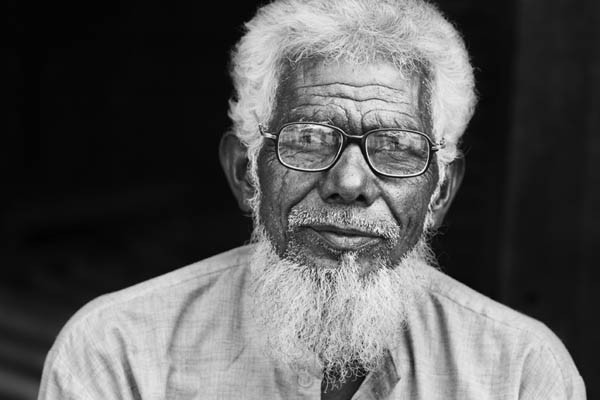
#1 Always smile
You always want to let anyone who sees you with a camera know that you are a cheerful person and therefore they won’t mind being photographed by you. Even if they become angry because you asked, just smile and back off. You need to remember that being a photographer in the street is an image for all photographers in the public eyes.
#2 Avoid using the built-in flash on your camera
A common mistake that most beginners fall into is using the built in flash. For me this is meant only for quick shots of friends or family. But if you want to a portrait with great light, use natural daylight in the shade by making the subject face towards the light not the opposite.
#3 Don’t shoot in the sun
The reason is simple, hard light means hard shadows! Normally when you take a portrait for someone in the sun it creates hard shadows under the eyes, which is very bad for a portrait most of the time. Try to draw your subject to the nearest shady area available, or you can use a smooth board (or reflector) to make the light more even on the subject, that is if you dare to do all that with a stranger.
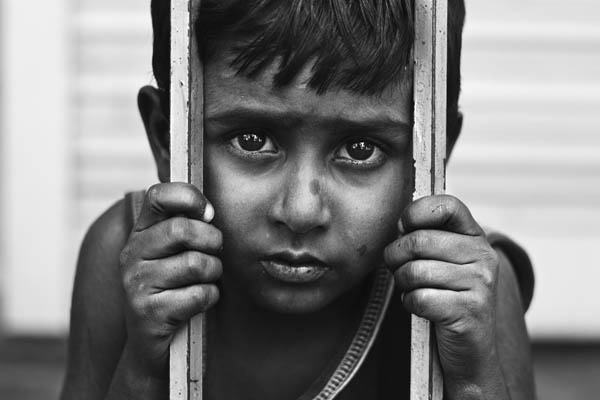
#4 Think about the light and shadows
It’s not enough just to take the shot in the shade during the day, away from the sun. You also need to consider how the light and the shadows are becoming on the subject’s face. You can do that by taking a test shot, then reviewing it on your camera screen by looking for the highlights and the shadows. If you don’t know how, practice it at home with your family or friends before going out to the streets.
#5 Don’t ask the person to smile
The good portrait comes first from the subject, then from you. So when you ask someone to smile, and they will, it won’t be a natural smile and sometimes it will bad for the shot. So don’t ask and they will reveal their true expression to the camera whether it’s a smile or sadness, sometimes you will be surprised.
#6 Use a large aperture for a blurry background
One of the key important things in portraiture is to focus on the eyes and blur the background, and sometimes part of the face. It will make a more dramatic and more attractive portrait to the viewer. And it also blur the background so it makes the viewer’s eye go only to the subject’s eye.
#7 Think about the background
What lies behind the subject is important, sometimes it’s good to have people in it and sometimes it’s better empty with no one. It really depends on how you intend to show your portrait.
Editor’s note: as I was searching Flickr for portrait images for the weekly inspiration collections (Portraits of men – portraits of women, I kept finding Zuhair’s portraits stood out among the rest. So I approached him and asked him to share some tips with us and he was gracious enough to do so. I hope you enjoy his images as much I do. If the eyes are the windows to the soul, I feel Zuhair’s portraits do a great job of showing us his subjects’ souls.
The post Tips for Taking Street Portraits – Lessons Learned in India by Zuhair A. Al-Traifi appeared first on Digital Photography School.
-
CP+ 2014 interviews: What we learned

Regular site visitors will have seen a series of interviews on dpreview over the past couple of weeks, during and after the CP+ show in Yokohama Japan. It’s always interesting to speak to the people in charge of the companies that make the products we love and this year, what was most telling was the consistency of the themes that came out of our conversations. Click through for a distillation of the major themes that emerged from our CP+ interviews.
-
Ten things we learned this week

It’s been a busy few days here on DPReview.com, with new products being released in both the camera and mobile industries, news, previews and of course plenty of in-depth reviews still in progress. In this short article we look back at some of the things we’ve learned over the past week or so from the industry and from you, our readers. Click through to read more.