RSS
 

Posts Tagged ‘Help’

LEE’s new Reverse ND filters help you tame that bright horizon

21 Oct

LEE Filters has launched three new Reverse ND filters that are designed to reduce horizon exposure by up to 4 stops, helping you get ‘perfectly balanced’ sunrise and sunset photos.

What distinguishes a Reverse ND from a regular graduated ND filter is that the center of these filters are most opaque, becoming clearer and clearer as you ‘fade’ to the top of the filter. This makes them ideal for scenes where the sun sits close to the horizon. And unlike competing Reverse ND filters, LEE claims that its versions have an “extremely smooth and gradual” transition so that the resulting images don’t appear to have a strong dark stripe in the middle.

Here they are demonstrated by photographer Mark Bauer, who worked with LEE to develop this range of Reverse ND filters that he says, “do the job properly” without the harsh transitions he’s noticed when using other brands:

The new filters are offered in 0.6, 0.9, and 1.2 strengths representing 2, 3, and 4 stops of exposure reduction, respectively. As well, all three filters are hand-manufactured for 100mm, Seven5, and SW150 systems. LEE says its Reverse ND filters work best when used with lenses that are at least 24mm wide.

The filters are currently available for preorder at the following prices:

Seven5: $ 125 / £81.80
100mm: $ 175 / £114.34
SW150: $ 200 / £125.56

To learn more, head over to the LEE Filters website by clicking here.

Articles: Digital Photography Review (dpreview.com)

 
Comments Off on LEE’s new Reverse ND filters help you tame that bright horizon

Posted in Uncategorized


3 Tips to Help You Take Better Autumn Photos

13 Oct

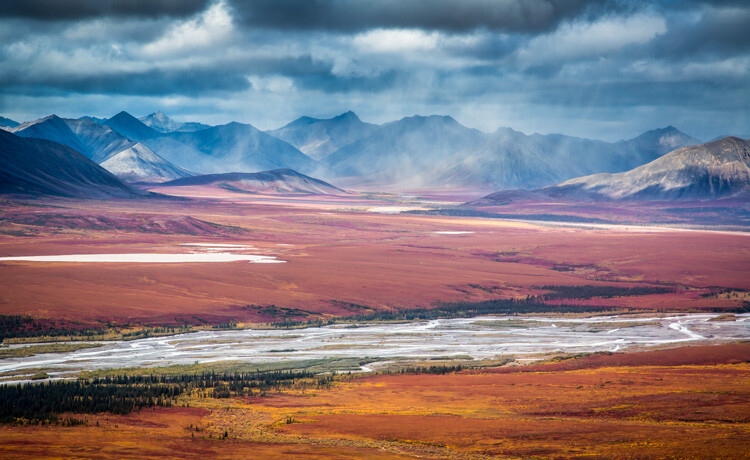
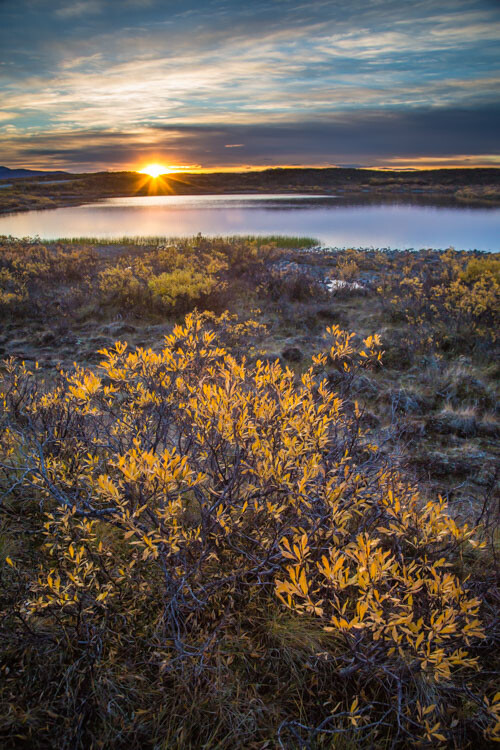
I’ve recently returned from leading a photography workshop in the Alaska Range, south of my home in Fairbanks, Alaska. The trip was timed with the peak of fall colors. My students and I spent dozens of hours over the week, exploring the vibrant colors, and trying really hard to make the weird orange, red, and yellow landscape look the way we wanted it to in our autumn photos.

It occurred to me that autumn, photographically speaking, is weird. It throws our perception of colors through a loop. The world, normally a mix of blues and greens, suddenly shifts to crazy warm tones of yellow, orange, and red.

4 Tips to Help You Take Better Autumn Photos

To effectively photograph autumn colors, you need to refocus not just your camera, but also your brain. The standard compositional “rules” of landscape photography shift quite a bit during the fall. The background, which for much landscape work is the actual subject of the image (think big mountains) becomes the setting rather than the subject in the autumn. Our attention falls to the foreground, where the colors are exploding.

In this article, I’m going to cover three composition types for autumn: details, broad landscapes, and local landscapes. When mixed together, these three types of images will help you tell a compelling visual story of your autumn experience.

#1 – The Details

4 Tips to Help You Take Better Autumn Photos

Photographing details lies in the fuzzy gray area between macro and landscape photography. Sometimes it’s one or the other, sometimes it is a little bit of both. In general, however, I see photographing the details as another part of landscape work. These images tell a small, but important part of the story.

Mentally, details give us a starting point for seeing the way a landscape will come together, and they also play an important role in providing a sense of scale. The small bits of the scene are rarely captured in a big landscape photo, and yet they are a very important part of our experience in the field. The details too should be an important part of the story we are telling our audience.

4 Tips to Help You Take Better Autumn Photos

Lens choice

Close-up work requires a lens capable of a relatively close focus, or a powerful telephoto. I’ve used big 500mm and 600mm for this kind of shot and I’ve used wide angles that have the ability to focus a few inches away from the lens. But most often I use a moderate telephoto with decent macro capabilities. Nothing fancy, just a good lens that lets me get close to the subject.

4 Tips to Help You Take Better Autumn Photos

Whichever you choose, these kinds of images rarely have a great deal of depth. Even photos from a low perspective only show a few inches from front to back. Therefore detail shots are usually about pattern and color. Here are a few things to look at as you compose:

  1. Consider how the lines in the image interact. Do they cross distractingly or guide your eye around the frame in a pleasing way?
  2. Which color dominates? In the autumn, colors like red can be overwhelming and often need to be balanced by cooler greens or blues.
  3. Isolate your subject by cropping out extraneous details, or using a shallow depth of field.
  4. Embrace the autumn colors, but don’t overwhelm your viewer with too much of the same thing. Good images usually show a variety of textures and colors.

#2 – The Local Landscape

4 Tips to Help You Take Better Autumn Photos

When you zoom back a bit from the details, you get local scenes within the landscape. This type of image is rarely shot wide, rather you apply medium to strong telephotos to isolate compelling parts of the scene. I really like these kinds of shots. They allow enough space to apply the elements of both depth and scale, and yet are tight enough that distractions are more easily avoided and make great autumn photos.

4 Tips to Help You Take Better Autumn Photos

This type of shot is particularly suited to autumn photography because the fall colors are by nature, patchy. Using a short to moderate telephoto, you can select the patches of dramatic color that may be surrounded by brown in late autumn or green early in the season.

Consider using focal lengths in the 70-200mm range, and select a part of the landscape that draws your eye. Find lines that guide your image through the frame, not out of it, or look for juxtapositions of color and texture.

#3 – The Grand Scene

4 Tips to Help You Take Better Autumn Photos

I’m going to be honest here. In the fall, when the colors of my home state are going off like fireworks, it is rarely the wide open scenes that draw my eye. However, sometimes the scope and size of the landscape cannot be ignored. It is in those rare moments that I reach for my wide angle lenses.

And yet, my focus often remains close to me. The foreground in the autumn, perhaps even more than other times of the year, is vital. When shooting wide, I will often get low, using my background not as the subject, but as the setting for something bright, flashy and interesting close by.

4 Tips to Help You Take Better Autumn Photos

Use the foreground

I was shooting in late August in Denali National Park. The colors were bright and beautiful, and on one sunny day, the mountains of the Alaska Range, including Denali itself, had emerged from behind the clouds to loom, white and glaciated, over the landscape. It was beautiful, and yet my focus kept falling on the colors in front of me. I didn’t ignore that dramatic backdrop, but I used it as just that, a backdrop.

When shooting wide, don’t forget about the details I noted earlier, nor the patterns of local landscapes. Those two are integral to the wide scene and will help you understand how the elements of the landscape fall together.

4 Tips to Help You Take Better Autumn Photos

I once heard it said that wide-angle landscapes were easy. I disagree entirely, wide angles are the hardest because there is so much space for distraction. Understanding and including compelling foreground subjects, like a splash of fall color will take you a long way toward creating a dynamic wide angle landscape.

Bonus tip – Bring it all together

In a world where most of our images end up on Facebook and Instagram, the art of a photo story is fading. Stand-alone shots get the most attention, the most likes, hearts, or whatever, on social media, but they do a lousy job of telling the whole story. Details, local scenes, and wide landscapes in combination are far superior.

4 Tips to Help You Take Better Autumn Photos

In conclusion, I encourage you to tell the whole story by embracing numerous shots. Use the focal lengths available to you, all of them. Through your lens, explore the fall landscape, and share your autumn photos in the comments section below.

The post 3 Tips to Help You Take Better Autumn Photos by David Shaw appeared first on Digital Photography School.


Digital Photography School

 
Comments Off on 3 Tips to Help You Take Better Autumn Photos

Posted in Photography


10 Things You Can Learn from the Pros to Help You Take Better Photos

28 Aug

As a photographer, there are so many things that you learn and do on a regular basis. Creating habits in your craft is a good approach to making it become second nature. Here are a few things that most professionals do that you can incorporate into your workflow to help you take better photos.

10 Things You Can Learn from Professional Photographers to Help You Take Better Photos

1. Blink Blink

Pros use the highlight overexposure alert. If you have this turned on in your camera, you will no doubt understand one of its more common name, “blinkies”. When this feature is turned on, it gives a preview of your image with blown out highlights slowly blinking black and white, as a warning.

Blinkies (or blown out highlights) are not always wrong, but if it is in an area you want to show detail, then this information will be useful. You can then correct the exposure as necessary and review the image again.

10 Things You Can Learn from the Pros to Help You Take Better Photos

The highlight alert (circled) blinks to show an overexposed/blown out sky.

2. Focus Focus

Knowing how to quickly move your focus point where you want it is a definite plus. On the opposite side of that is locking focus, which is another great skill to have. Both tell your camera exactly where you want to focus. Moving your focus point helps you place it exactly where you want while locking your focus enables you to grab your focus point, lock it in and recompose your image.

Knowing when to use both of these can also help you get more creative, so practice.

3. Know when to use spot metering

The in-camera light meter helps you determine how to adjust your exposure settings by measuring the brightness of the scene. The default metering mode in your camera is most likely set to Matrix mode (also called Evaluative or Pattern metering).

Evaluative metering works well in most situations but pros know that there are times when they need to switch. Spot metering evaluates only the light around your focal point and calculates exposure based on just that area. Some examples of when a pro would use spot metering include; photographing the moon, someone on a stage, or any scene with a lot of contrast.

10 Things You Can Learn from the Pros to Help You Take Better Photos

Evaluative Metering versus Spot Metering.

A good way to learn when Spot metering is the right choice is by switching to it from time to time and looking at your results.

4. Use Live View to set White Balance

A handy little trick is using the LCD monitor at the back of the camera to set your White Balance (WB). This way you get a real time preview of what your final shot will look like comparatively. This is especially handy if you are shooting jpeg and don’t have the luxury of changing the White Balance after the fact.

5. Good Memory

Simple enough is to walk with extra memory cards. A trick that you can only get from experience though is not cramming too much on any one card. If you are shooting for any paying client, split your shots into several cards because believe it or not, cards can fail on you. If your shots are spread out, you may still have enough images to salvage a shoot.

Bonus memory card tip: Invest in good card recovery software. If you take your card out and for some reason are not seeing the images on your computer, do not put it back in and shoot. Good recovery software has saved many a pro.

6. Bracket

Bracketing in short, is taking several shots of a subject using different exposure levels. It is one of the easier ways to produce images with a high dynamic range. Pros also use bracketing when they unsure about exposure or dealing with tricky lighting.

10 Things You Can Learn from the Pros to Help You Take Better Photos

Bracket images to reveal more dynamic range.

7. Sharpness – Check

By now you may have realized that everything looks sharp on a 3” screen – only to open it up on your computer and see that it is blurry. You could save yourself some heartache by zooming in and checking the image sharpness while you’re still in the field as the pros do.

8. Extra Batteries

When packing your gear, always make room for extra camera batteries. This seems obvious enough, but of note is that if you are shooting in cold weather you may even need to supplement that. Batteries are the one part of your camera that is affected the most by cold weather. A drop in temperature causes your battery to deplete faster and thus not last as long. Keep this in mind the next time you are outdoors targeting golden hour into twilight time.

10 Things You Can Learn from the Pros to Help You Take Better Photos

Pack extra batteries when shooting in the cold.

9. Use a lens hood

The main reason to use a lens hood is to prevent side light from hitting the front of the lens. A lens hood thus reduces or eliminates lens flare that can occur when shooting outdoors during daylight hours.

But, most pros keep their lens hood on even when shooting indoors for more than just blocking light. They use it as protection against scratches, cracks, fingerprints and even some impact. It’s a good habit to use a lens hood.

10. Beep Beep Beep

Backup your images. Pros will tell you that this is at the top of their list. One recommended backup strategy is twice before formatting your memory cards – once to your computer and make a secondary copy to an external drive. If you are even more paranoid, it does not hurt to back up while out in the field. There are a number of portable drives available where you can copy your cards over without a computer.

10 Things You Can Learn from the Pros to Help You Take Better Photos

Backup your images to save yourself some heartache.

Conclusion

Those were just a few of the many things you can keep in mind and add to your own routine. What are some of the things that you would suggest to help newbies take better photos? Share in the comments section below.

The post 10 Things You Can Learn from the Pros to Help You Take Better Photos by Nisha Ramroop appeared first on Digital Photography School.


Digital Photography School

 
Comments Off on 10 Things You Can Learn from the Pros to Help You Take Better Photos

Posted in Photography


Cheap purchases that will help improve your photography

18 Aug

Cheap items that will help improve your photography

Photography gear isn’t cheap. If you’re looking to take your photography to the next level, there’s no shortage of expensive lenses and accessories that will beckon to you.

Sometimes it’s worth it to save up for the right piece of equipment, but you don’t necessarily have to make a serious investment if you’re looking to make gains in your creative pursuit. Here are a few relatively cheap buys that will pay off dividends if you’re looking to try something new, build on your current photography skills, or just add another visual trick to your arsenal.

Go back to school

To really master the arts of things like lighting or post-processing, online courses are invaluable. They can also be pretty expensive. But if you’re looking to pick up some additional knowledge on the cheap, Creative Live hosts classes on an array of topics – and best of all, they’re free when you watch live. The Creative Live app also offers a free lesson of the day.

Along those lines, maybe read some books for inspiration. Remember the library? The library! Learn about past masters of photography or see what current photographers are doing. Bryan Petersen has a whole slew of instructional books, or you could look for some creativity boosters like David du Chemin’s follow-along lessons.

Join the club

Local photography groups can help you get out the door and put you in good company. Being around other photographers and making connections within your area’s photography community are great ways to keep furthering your skills, and organizations often have very affordable yearly membership fees or suggested donations – one Seattle group suggests $ 20 per year. Many clubs organize through meetup.com, which is a good place to start looking.

For an even lower barrier to entry, join a local photography group on Facebook for sharing and critiquing photos. And if you’re looking for extra incentive, think about starting a 365 or 52 project, where you take a photo a day or a photo a week for a year. There are tons of online groups to join for support and critiques, and there are also options for 30-day projects if you feel overwhelmed by an entire year.

White and black poster board

A couple of pieces of white and black poster board make for quick and cheap ways to play with lighting. White poster board can act as a reflector, and a piece of black poster board can help tame unwanted light and reflections. It’s not fancy, but it’s a very cheap way to add some visual tricks to product and still life photos. And depending on the situation, poster board can act as a makeshift backdrop for portraits.

Photo by northfromseattle, licensed under CC 2.0

Colored plexiglass

A bit of bold color can make your product photography pop. A brightly colored sheet of plexiglass costs somewhere around $ 10 and can lend product shots a new level of professional polish. Out here, west coast retailer TAP Plastics offers plenty of affordable options, but online options abound. Make sure to add on a bottle of glass cleaner to your order, if you haven’t got some already – the fingerprints will accumulate faster than you think.

Pop up flash diffuser

If you’re not ready to spring for a flashgun, you can dip your toe into the vast waters of lighting by modifying the light from your camera’s pop-up flash. Sure, a Gary Fong Puffer or a Light Scoop looks a little silly, but at $ 20 and $ 30 respectively, they’re a reasonably priced way to make more of what your camera already offers.

Speedlight modifier

If you’ve gone ahead and purchased a flashgun, congratulations – you’re already reaping the benefits of a more powerful and pliable source of illumination. But there’s a lot more you can do. For less than $ 10 you can start with a bounce diffuser, and for around $ 30-50 you can add something a little more exotic, like a Rogue FlashBender.

Or go no further than your local craft store: if you’re just looking to experiment, some construction paper can be fashioned into a snoot and taped to a flashgun. It doesn’t get much cheaper than that.

Wireless flash trigger

Moving your flash off camera will also open up new possibilities, and third-party radio flash triggers are more affordable than ever – a Yongnuo wireless trigger kit can be had for about $ 30. It’s a whole new ballgame when you free your flashgun from the confines of your camera hotshoe.

LED flashlight

You can drop a whole lot of cash on a fancy LED light for photography, but if your aim is to experiment with another kind of off-camera illumination, pick up an LED flashlight. They’re a great way to play with light painting, and if you’re feeling industrious, an LED flashlight can be modified into a makeshift Ice Light for a fraction of the cost of the real thing.

ExpoDisc

If you find yourself spending a lot of your photo editing time nudging the color temperature slider back and forth, ExpoDisc is worth looking at. At $ 50 it’s on the expensive end of ‘cheap’ but we know a number of wedding and portrait photographers who swear by it.

It’s a magical world – go exploring

To quote an extremely wise and temperamental philosopher, “It’s a magical world out there, Hobbes ‘ol buddy… let’s go exploring!” Photography is in itself a wonderful excuse to get out and explore. A new neighborhood, a historical site, a park – going somewhere new can spark creativity, awaken a new interest, and generally be a good exercise for the mind and the body. Pick a location, set yourself a goal, grab your camera and get out the door.

Articles: Digital Photography Review (dpreview.com)

 
Comments Off on Cheap purchases that will help improve your photography

Posted in Uncategorized


7 Questions That Will Help You Decide Which Camera To Buy

09 Aug

People often ask me for advice on which camera to buy. Most often they expect me to say, “Buy a Nikon” because that’s what I use. But that is not what I tell them.

If you were to ask me which camera you should buy I would first ask you a series of questions. From the answers, you give me I would guide you towards either a compact camera, mirrorless, or DSLR. So if you aren’t sure which camera to get, ask yourself these seven questions before you go shopping.

1. Why do you want a camera?

Doesn’t your phone take good enough photos? I’m not joking, this is a serious question.

Phone - 7 Questions That Will Help You Decide Which Camera To Buy

I know if you are asking questions about buying a new camera you’ve already given some thought to the decision and are reasonably serious about it. I’m looking for an answer telling me how your phone is failing you in your endeavors to make photos. I want to know what you are hoping a camera will do that your phone cannot. Your answer will help me guide you towarwd the type of camera that will best suit you and your needs.

2. How and when will you use your camera?

The answer to this question will help determine what size camera to buy. Recently I’ve had two friends who are embarking on a once in a lifetime traveling experience ask me about what camera to buy. Both were thinking of buying DSLRs, expecting that those big cameras would give them the best results. But, I encouraged them each not to buy a DSLR because they are big and heavy!

It’s often said that the best camera is the one you have with you. If your camera is reasonably small you are more likely to want to carry it everywhere with you while traveling. Read more on this subject here: Must Have Gear for Travel Photography Newbies.

Compact travel camera - 7 Questions That Will Help You Decide Which Camera To Buy

If you want to mainly use a camera to photograph products for your online store or to take pics of your garden I would be more likely to suggest you look at DSLRs (depending on the answers you give to some of the following questions).

The size and weight of a camera must be seriously considered because it’s no good buying a camera you find too big and heavy to carry with you. You will not use it often and will be disappointed with your purchase.

3. What will you use the photos for?

Enthusiast - 7 Questions That Will Help You Decide Which Camera To Buy

Your answer to this question will ascertain the level of image quality you will need. These days most people want photos to share on social media. If this is you, then you will not need a camera with the maximum megapixels available! Most compact cameras these days will produce images of high enough pixel quality for social media posting.

Producing prints, photo books or photos to sell online will require a camera with a larger sensor. For people who enjoy time in front of their computers post-processing photos, more megapixels and a larger sensors in DSLR and mirrorless models will be an advantage. Which leads me to the next question.

4. Do you take time to post-process your photos?

Full frame dslr - 7 Questions That Will Help You Decide Which Camera To Buy

If you enjoy taking the time to do some post-processing on your photos and want to maintain high technical results, this starts to narrow down your camera options. Generally, cameras with larger sensors will produce photos that hold up to more post-processing. For example, a full frame sensor (36mm X 24mm) containing 24 megapixels will allow more post-processing before the image starts to deteriorate than a smaller 24 megapixel micro four thirds sensor (17.3mm X 13mm.)

You want to have confidence that your image quality will remain intact as you apply some color balancing and filters or more advanced post-processing techniques.

5. How big are your hands?

Small hands - 7 Questions That Will Help You Decide Which Camera To Buy

Seriously! If you have small hands you will find it difficult to use a large camera. If you have big hands, you will find it more difficult to use a small camera. You will need to consider the layout of the buttons and dials on a camera so you are comfortable using it.

Some camera manufactures manage to design small cameras which have well configured layouts and are easy to use, others do not seem to do such a good job. Before you buy, go hold the cameras you have short listed in your hands and see how they feel.

Small hands - 7 Questions That Will Help You Decide Which Camera To Buy

6. What’s your budget?

This is an obvious consideration for most people, but you are best to consider it along with these other questions, not separately. Sometimes budget limits your choice considerably. Sometimes the answers to other questions will lead you to purchase a camera and spend less than you may have thought initially. I think both my friends who asked for travel camera advice found this to be the case.

You may find a high-end compact camera with a one-inch sensor will give you more pleasure and provide high enough quality photos than a DSLR … because it’s small and you will take it with you everywhere.

Compact happy - 7 Questions That Will Help You Decide Which Camera To Buy

7. Do you have a preferred brand?

I do have a preferred brand of camera. But I will never push people to buy the brand I use just because I like it. If you are already familiar with a camera brand and are happy with it, that is a good reason to stick with it.

Dslr - 7 Questions That Will Help You Decide Which Camera To Buy

Camera manufacturers often configure their cameras to feel and function the same with each upgrade they produce. I like it when I purchase a new camera that has the same feel in my hand as the one from which I’m upgrading. It makes it quicker and easier to start using the camera intuitively.

If you do not have a preferred brand I encourage you to stick with one of the major brands that fit within your budget.

Conclusion

Doing some careful research will help you make a decision to be able to buy a camera you’ll be satisfied with, one that will hopefully last you a long time. Using your new camera frequently and enrolling in a course or taking a few workshops will help you up-skill more quickly and gain more enjoyment from your purchase.

What other questions might you ask yourself before making a decision on which camera to buy? Do you have any other tips or advice for photography newbies just starting out? Please share in the comments section below.

The post 7 Questions That Will Help You Decide Which Camera To Buy by Kevin Landwer-Johan appeared first on Digital Photography School.


Digital Photography School

 
Comments Off on 7 Questions That Will Help You Decide Which Camera To Buy

Posted in Photography


4 Key Elements to Help You Create Stronger Landscape Photography

08 Aug

If you’re like me and love great landscape photography, then you’ve probably wondered how the same photographers seem to be able to pull off beautiful shots of sweeping mountain vistas or incredible black and white images of rolling hills and valleys. It’s as if they have some secret formula for “getting lucky” time and time again. Have you ever thought about what goes into making a strong landscape photograph? The techniques, the composition, the timing, the tools?

4 Key Elements to Help You Create Stronger Landscape Photography

The fact is, there is no secret formula for making better photos of landscapes. There’s almost always much more that goes into the task than simply snapping a picture of a pretty place. Most great landscape photos are made in beautiful places but that doesn’t mean that every picture of beautiful scenery is a great landscape. While there are no concrete “rules” for doing solid landscape photography there are a few ways to strengthen your landscape work and make those “awesome shots” happen more frequently.

#1 – Construct Interesting Elements

I once had a professor of photography tell me that any photograph could be judged by how much information it contained. It’s easy to say that a successful landscape photo shows the beauty and majesty of a place, but the truth is there is so much more. When setting up for your photo, pay attention to everything that falls within the frame. Look for interesting foreground elements such as trees or rocks, water, even people or animals.

4 Key Elements to Help You Create Stronger Landscape Photography

Look for ways to add more information to the photograph. Generally, the more you fill the frame with interesting elements the more interesting and appealing the overall photograph will be. But there is also a flip side to this concept as sometimes less is more. There are times when you must know what to NOT include in order to give a better feel to the photo. Look at this photo from a blustery winter morning.

4 Key Elements to Help You Create Stronger Landscape Photography

The feelings of solitude and isolation are brought about by the use of empty space. More on composing your landscape photos a little later.

#2 – Lighting

Yes, yes…I’m sure you’ve heard the phrase “chasing the light” when it comes to making good photos. This is especially true when it comes to landscape photography. There’s a reason why photographers love to shoot in the early morning hours (ugh) or in the waning light of the afternoon or late evening.

4 Key Elements to Help You Create Stronger Landscape Photography

It comes down to the quality of light which again, adds more interest to a landscape. When you have beautiful light, the entire landscape is transformed into something different. It becomes less ordinary and more extraordinary.

4 Key Elements to Help You Create Stronger Landscape Photography

As much as it pains me, getting up early and staying out late is virtually a necessity for landscape photographers. The reason being is that some of the most gorgeous golden light comes in the late afternoon as the sun gives way to night. Just as true, the early morning “Blue Hour” as the first glimpses light begin to appear, is another prime time for shooting landscapes.

Even locations that seem somewhat lackluster at midday can take on an entirely new feel in the late or early hours of the day. So be sure to try out different spots at daybreak and sundown. There’s a good reason why we landscape junkies really do chase the light.

#3 – Composition

The very word “composition” describes the nature of how something’s parts are constructed or arranged together. Having all the best ingredients doesn’t help you much if you don’t know how to put them all together into an awesome cake, a beautiful symphony, or in your case…a strong landscape photograph. The way you compose the elements in your landscapes can often make or break the photograph. Again, there are no actual rules to composing your photo but there are some tried and true practices.

4 Key Elements to Help You Create Stronger Landscape Photography

Adjust the horizon so that it isn’t exactly in the middle of the frame and place foreground or background elements off-center to add interest and make stronger images.

4 Key Elements to Help You Create Stronger Landscape Photography

It helps to use imaginary lines such as the Rule of Thirds (again, not exactly a rule) to help compose your image.

4 Key Elements to Help You Create Stronger Landscape Photography

Just as importantly, always remember to shoot your landscapes in accordance with how they “feel”. Composition in landscape photography is about conveying a feeling, not just how the scene looks. Shoot different compositions of the same location until you find one that works best for that particular landscape.

#4 – Gear and Technical Considerations

While a successful landscape photo doesn’t rely on having the latest or greatest gear, there are a few gear and technical aspects that make for better photos. Here are a few tips.

Use a wider lens

Even though many solid landscape photos can be shot at long focal lengths using zoom lenses, generally short focal length (wider angle) lenses work best. Wide angle lenses allow you to include more into the frame of your photo.

4 Key Elements to Help You Create Stronger Landscape Photography

Use smaller apertures

Continuing on from lenses, using a smaller aperture increases the depth of field and brings more elements into focus. Remember, the larger the F-Number the smaller the physical aperture of the lens becomes.

….and wait for it…..

Use a tripod

If you’ve read any of my other articles, you’ll know that when it comes to landscape photography I believe a sturdy tripod is worth its weight in gold. Reducing motion as much as possible is key for obtaining sharper landscape photographs. Using a tripod helps to eliminate as much camera shake as possible. This becomes important because generally the smaller apertures used in landscape photography call for longer shutter speeds which make hand holding the camera less desirable.

Final Thoughts

A successful landscape photo is a careful construction of multiple ingredients. Knowing what to include (or exclude from your photo) and understanding when the best light happens, go a long way to making a better image.

4 Key Elements to Help You Create Stronger Landscape Photography

Just as importantly, knowledge of how to compose the elements in the frame and what techniques or gear will be needed are both essential to “getting lucky” time and time again. Producing stronger landscapes takes patience and a little planning but it is well worth the effort.

The post 4 Key Elements to Help You Create Stronger Landscape Photography by Adam Welch appeared first on Digital Photography School.


Digital Photography School

 
Comments Off on 4 Key Elements to Help You Create Stronger Landscape Photography

Posted in Photography


Art of Wearable Tech: 10 Fashionable Designs Help with Fun, Sex & Self-Defense

03 Aug

[ By SA Rogers in Gadgets & Geekery & Technology. ]

Not all wearable tech has to be a tiny smartphone on your wrist or a device that tracks how many steps you’ve taken – it can also record your memories as you see them, visibly react to your emotions, flirt with people on your behalf, warn others they’re invading your personal space or even measure your sexual performance. These unconventional wearables are also a little less dorky than usual, aiming to blend fashion and technology in a way that’s exciting,  beautiful and sometimes strange.

Robotic Jewelry by MIT Media Lab

What look, at first, like jewels or little bulbous decorative accents on a blouse suddenly start crawling around like they’ve got minds of their own. ‘Kino’ is a collection of ‘living’ jewelry from MIT Media Lab, designed to reconfigure itself in response to environmental conditions. “It is our vision that in the future, these robots will be miniaturized to the extend that they can be seamlessly integrated into existing practices of body ornamentation. With the addition of kinetic capabilities, traditionally static jewelry and accessories will start displaying life-like qualities, learning, shifting, and reconfiguring to the needs and prefereces of the wearer, also assisting in fluid presentation of self.”

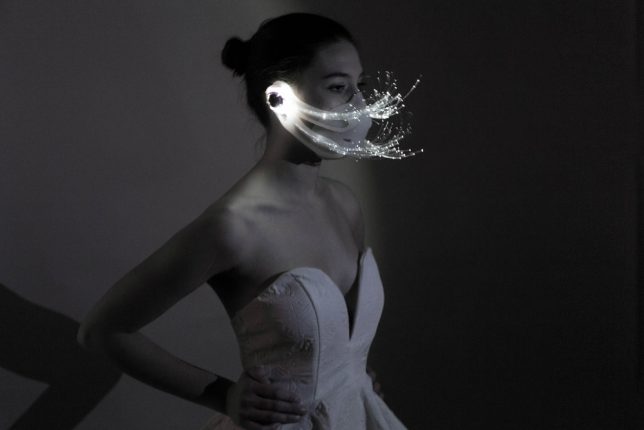
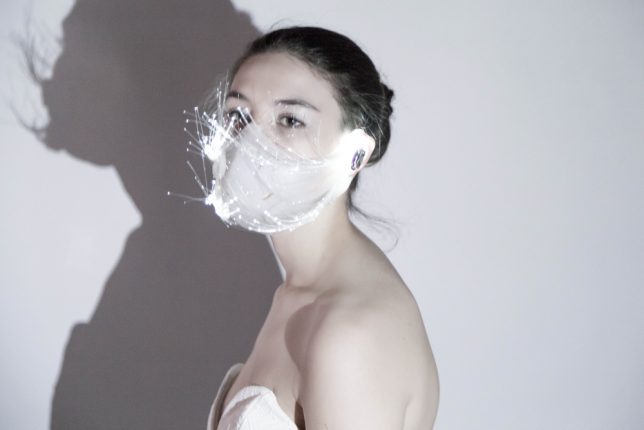
Lumoscura Smog Mask by Stephanie Liu

Dazzling fiber optics inspired by shimmering white peacock feathers make the need to wear a smog mask at least a little bit more fashionable. Says designer Stephanie Liu, “Masks have always been associated with disease, fear and negativity. Some wear it in public to hide their identities, in reality it attracts attention and can generate fear and stress amongst those in their immediate surroundings. As air pollution becomes more and more of an issue in many countries, people have begun to surrender to wearing a mask for the sake of their health, however there are still a lot of people who do not wear masks for many reasons – the top three being unattractive, uncomfortable and repelling people.”

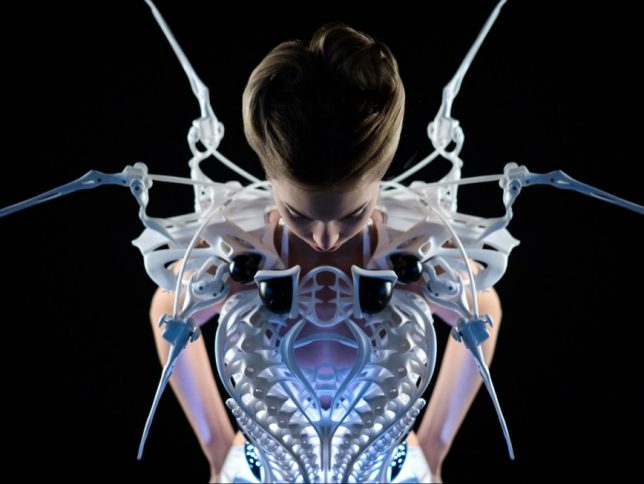
Smart Self-Defense Spider Dress by Anouk Wipprecht

People might be less likely to mess with you if the mechanical spider you’re wearing as a dress makes a sudden move. That’s the idea behind the Smart Spider Dress by Anouk Wipprecht, powered by Intel Edison. The legs of the spider constantly move, reacting to the wearer’s real-time biometrics as well as violations of social norms, like when someone invades their personal space. “Since the system based with mechanic spider legs is literally hosted on the shoulders of the wearer and attacks using the same viewing angle as the wearer, the system knows how you feel and adapts to those feelings,” says Wipprecht.

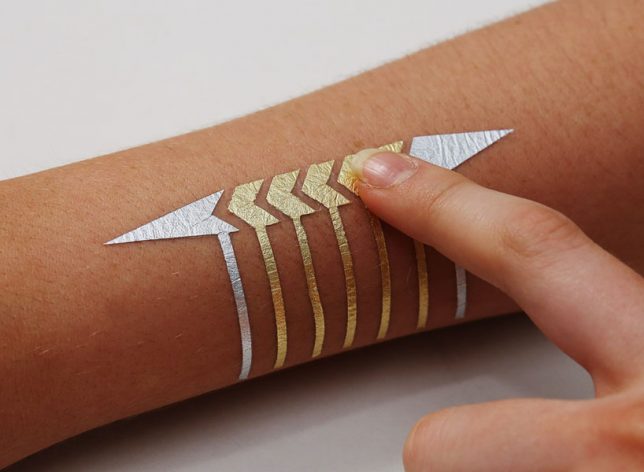
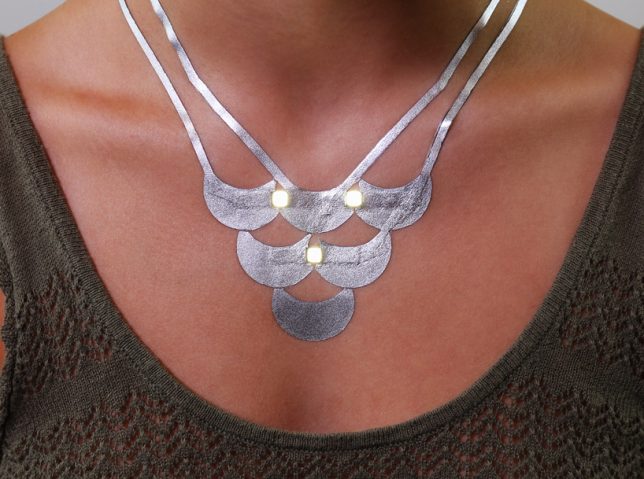
MIT Duoskin Temporary Electrical Tattoos

Anyone can create functional devices directly attached to their skin, including lights and controls for mobile devices, using an electricity-conducting gold leaf paint in a fun design that makes it look like a metallic tattoo. “We believe that in the future, on-skin electronics will no longer be black-boxed and mystified; instead they will converge toward user friendliness, extensibility, and aesthetics of body decorations, forming a DuoSkin integrated to the extent that it has seemingly disappeared,” says MIT, who refer to the project as ‘digital skin jewelry.’

i.Con Smart Condom Ring Measures Performance

No more boasting about your performance using inaccurate figures. The i.Con smart condom ring by British Condoms will know exactly how long you last, how many positions you used, ‘velocity of thrusts,’ ‘girth’ and other data, sending the information straight to your smartphone via bluetooth. One positive of this technology is, it can give users a way to measure improvement if their data is disappointing and they want to work on things. But perhaps even more valuable is the fact that the wearable comes with an ‘antibodies filter’ to detect the presence of sexually transmitted infections.

Next Page – Click Below to Read More:
Art Of Wearable Tech 10 Fashionable Designs Help With Fun Sex Self Defense

Share on Facebook


[ By SA Rogers in Gadgets & Geekery & Technology. ]

[ WebUrbanist | Archives | Galleries | Privacy | TOS ]


WebUrbanist

 
Comments Off on Art of Wearable Tech: 10 Fashionable Designs Help with Fun, Sex & Self-Defense

Posted in Creativity


5 Questions to Ask Yourself to Help Improve Your People Photography

27 Jul

They say the lines on a person’s face can tell a thousand stories. Getting the photo that tells those many stories is the holy grail of photography. So what can you do to create standout people photography, especially if you don’t already know the person?

The approach that every people photographer takes is different, but below are five questions that all most will have asked themselves. Each photographer may answer the questions differently and yet still produce amazing results, as photography styles are all different, of course. To improve your people photography, take the time to look at these questions, and ask how they apply to you.

5 Questions to Ask Yourself to Help Improve Your People Photography

This is a photo of a Shaman from Malaysian Borneo. A connection had already been formed with this man after my friend told him I’d photographed for National Geographic. So we were able to use off-camera flash as he posed for us.

1 – Long lens or short lens?

The chances are when you start photographing people you’ll use a longer focal length. This can be true of people who you know, it’s especially true of people you don’t know. Photographers who enjoy street photography will tell you that using a 50mm lens is best. But the truth is that it really depends on the situation.

The long lens

This really means any lens over 85mm on a full frame camera. The nice thing about these lenses is that you can photograph from a distance that’s non-invasive. This is great because you don’t need to interact with the person you’re photographing, and this is terrible because you don’t need to interact with the person you’re photographing.

There are good reasons for and against direct interaction with your subject, something we’ll come to later. The reason you may come to use a long lens is that it compresses the scene, and allows you to focus in on the person, without outside distracting elements.

5 Questions to Ask Yourself to Help Improve Your People Photography

A longer lens was used in this photo, resulting in a simpler photo.

The short lens

This means lenses 50mm or below, with the 50mm lens being the street photographers go-to lens. Using a lens like this will force you to interact with the person you’re photographing on some level. It’s far better to build a rapport with the person than going with hit and run. Besides the advantages you will gain from building rapport, wider lenses also allow more context to be seen in the frame.

5 Questions to Ask Yourself to Help Improve Your People Photography

Using a wider lens can improve your portraits. This was photographed at 50mm, and more of the story behind the scene can be seen.

Now, of course, you can get prime or zoom lenses that are both long or short in focal length. When it comes to people photography, the larger aperture that prime lenses offer is a great advantage. Photographing people with prime lenses is, therefore, best and will to improve your portraits.

2 – What technique works best?

There are many different approaches to people photography to improve your portraits. As discussed above, choosing your lens will help. Applying techniques like bokeh can also get you better results. A few ideas that might help you are described here.

Shoot from the hip photography

This means leaving your camera at your hip and photographing without lifting your camera to your eye. How can this be good photography you may ask? Those experienced at this technique know how to use their camera, and can pre-visualise the result without needing to confirm it with their eyes.

  1. To take photos like this focus the lens to a set distance in front of you.
  2. Use an aperture of f/11 or smaller to have more depth of field.
  3. Choose an ISO that allows for a fast enough shutter speed to avoid motion blur.
  4. Make sure your camera isn’t too crooked, although some angles can work for this style of photography.
  5. Walk past the location you wish to photograph, and hit the shutter as you’re walking or with a brief pause.
5 Questions to Ask Yourself to Help Improve Your People Photography

This scene from the New York subway was photographed from the hip.

Use the light

The correct use of light will always improve your people photography. There are occasions when natural or artificial light can drastically improve your photo. At night you will need to look for a strong artificial light that people can stand near, during the day a shard of sunlight through a gap in the roof could also be used.

Here are some tips for using light to your advantage:

  1. Take up position away from the light source. You will want people walking towards you and into the lit up area.
  2. Wait until the magic moment comes, and the person’s face is well lit by the source of light.
  3. Have your camera focused on the area where the person will become lit up, and switch the camera to manual focus.
  4. Expose for the person’s face. This will mean the background appears very dark, or even black. The background may be at a -2 or -3 exposure value.
  5. Wait for people to walk into the lit up area, and then photograph them. You will need to wait patiently for people to walk by, into the correct area.
5 Questions to Ask Yourself to Help Improve Your People Photography

This man was lit up by artificial light, giving the photo a low-key, high-contrast look. Learning how to use light will improve your people photos.

Patience

Waiting for people to walk into the light isn’t the only time patience will be needed. You might have a natural frame like a doorway, so you will need to wait for someone to walk through it. This approach is not unlike fishing, and the time spent waiting for the right moment can be calming. The most important thing is to make sure your composition and camera settings are already set. Now it’s just a waiting game for somebody to walk past. Alternatively, you could speed things up by asking a friend to walk into the frame.

Forming relationships

5 Questions to Ask Yourself to Help Improve Your People Photography

The value of building relationships in photography is important, it will improve your portraits. This was the first time I saw the monk, Cheongsan. I didn’t interact with him at all, and this is the result.

The very best way to take photos of people, time permitting, is to form a bond with them. Taking the time to interact, and find out about the person you want to photograph will almost always give you a much better photo. The chances of them giving you permission to photograph will be much higher, and you can control the scene more.

Once you have permission you then have the choice between a staged or candid photo, since you can ask the person to ignore you when you are shooting. The chance to get a great photo that you can share with them can form a lasting connection with you as a photographer. The level of interaction also depends on time, whether it’s 30 minutes or several hours. The types of photos you may get if you’re able to revisit the person on several occasions will also improve dramatically.

5 Questions to Ask Yourself to Help Improve Your People Photography

The next time I saw Cheongsan, I made the effort to approach him. As a result, he let me take this photo and gave me a business card.

3 – Do you ask for permission?

When the person you’re photographing is your friend or a model, then in most cases asking permission would not be needed, and indeed might be strange to ask. Photographing a stranger is a different proposition though, so to ask or not to ask, that is the question.

There is no one correct answer to this conundrum, but certain situations may dictate your actions. If you want a truly natural moment, with no hint of a staged photos then you’ll want to try and avoid asking permission. The caveat to that statement is that if you have time to build a friendship with those people you wish to photograph in a natural way this is also possible, after getting permission to take the photograph.

5 Questions to Ask Yourself to Help Improve Your People Photography

The next time I visited Cheongsan, I had contacted him ahead of time and asked if I could take some photos of him. You will improve your people photography even more by setting up a shoot with someone.

Asking permission is the polite thing to do, and will often improve your photos. You need to have thick skin when asking people though, as asking on the spot will lead to many rejections. You need to ask yourself how you can form a relationship with someone even quickly to smooth this process, so you’re more likely to have the person say yes. Is the person you want to photograph a vendor, for instance. Perhaps you need to show some goodwill and buy one of the things they’re selling. If you’re in a country where English is not spoken asking permission may involve the use of body language. So perhaps learning a few polite words like please and thank you for going along with those non-verbal cues would be prudent.

The general rule on whether you should ask permission is up to you. When the photo you’re taking is in that person’s personal space, it’s much better to ask permission.

5 Questions to Ask Yourself to Help Improve Your People Photography

I loved this man’s glasses and general style, so I asked if I could take his picture. I got a posed photo, but loved the way he posed.

4 – Candid versus staged?

This is related to the question above, but you can get candid photos even after asking permission. If the quest here is for authenticity, can you capture a great moment with your camera that’s natural? This is the aim of many photographers. However, if your aim is to tell a story through a series of photos you should really try and get a mixture of both. On an individual basis, let’s weigh up both the pros and cons of candid and staged photos.

Candid captures

This requires a keen eye, sharp reflexes, but also absolute patience. When walking around taking photos you have to be hyper aware of your surroundings in order to get photographic moments that last the blink of an eye. Photographing split second moments means you need to be utterly absorbed in your surroundings, you need to become the surroundings.

You almost have to achieve an internal meditative state. Staying on the move means you are going to the moment of capture. This means you need to be very quick to catch it. Alternatively, you can find a location, compose your photo, and then wait for the right moment to come to you. This approach can take hours, so you will need a lot of patience!

5 Questions to Ask Yourself to Help Improve Your People Photography

This photo taken was taken in the harbor in Yangon. There is nothing staged about it, I just had to wait for the right moment.

Staged shots

Once the photo is going to be staged, you have a lot of control over how the photo is taken. At this stage the person you’re photographing has consented and will be actively involved in how the photo is produced. When done well, this often leads to a more striking photo than one produced candidly, you are in the realms of a visual storyteller.

The photograph could be a simple head shot, or a more complex photo when your model interacts with their surroundings. As the photo is staged, you can ask your model to stand in the best position for available light, and the background. Your model should be well lit, with the eyes illuminated by the light in the frame. If you have off-camera flash with you, you might even consider using this to really improve your portraits.

5 Questions to Ask Yourself to Help Improve Your People Photography

In this photo, I asked the lady if she would pose for me. After getting permission, I was able to set up the photo and use off-camera flash to light her face.

5 – Where should you take people photos?

The answer to that is anywhere there are people, which is more or less everywhere. You can also choose a location to visit such as a market. Below are a few ideas you can try, though you may have some better ideas specific to where you live.

  • The market – This is the stock location for many people wanting to take people photos. There will always be people at the market. You can take photos of the vendors, customers, or the vendors and customers interacting. The downside is the people working in the market may not like yet another photographer take photos of them. This is where building relationships with the people in the market can help.
  • Public transport – A great reason to avoid the taxi, and leave your car at home. Getting on public transport is a great way to explore a location, and the people there. Be aware that in some locations you will need to get permission from the transport operator, as well as the people you are photographing.
  • A harbor – Anywhere there is a river will likely have a harbor. The life of people working in these places can produce great photographs. You will need to be prepared to wake up early in the morning to see the fishermen at work. This is another great example of how building relationships help, you might be invited onto one of their boats if you get to know a fisherman.
  • Festivals – This could mean a cultural festival such as Chinese new year, or a rock concert. Festivals will have people dressed in attention grabbing clothes that look great when photographed. You may find people more open to having their photo taken at an event as well, because they’re having a good time, and are often dressed well.
5 Questions to Ask Yourself to Help Improve Your People Photography

Visiting places people work can be good locales for people photography. A sulfur mine is an extreme example, however, going to extremes will improve your photos though.

Getting model releases, and paying your model

Whether or not to pay for a photo is another question many people ask about. It is up to you to judge each situation for yourself. Photos being taken for a specifical commercial usage are the types of images where you should pay the model a percentage of your fee. When the photos you are taking are for personal use, paying the model is at your discretion. Chances are you will find someone who will let you take their photo for free, so it’s a nice gesture to send them an image once you have processed them.

Once you decide to pay the person to take their photo, it’s unprofessional not to get a model release. If the person you’re paying won’t sign a model release then don’t pay them, and move onto somebody else. The reason you are paying for a photo is you intend to use it for promoting your work, or for direct commercial usage. This means you need to get a model release, and there are apps available for smartphones that make this very easy.

5 Questions to Ask Yourself to Help Improve Your People Photography

This is one of the miners at Kawah Ijen in Indonesia. He signed a model release and was paid for this photo.

It takes practice to improve your people photography

Now it’s your turn. It’s time to go out and practice your people photography in your local area. Are there any ways that you like to take portraits that are different from this article? I’d love to hear your ideas as well, so please share them in the comments below.

What’s your favorite people photo you’ve taken? Again share your great photo with us, and describe how you went about taking it. Finally, get out there and get some new people photos. Hopefully, some of the ideas in this article will help improve your images.

The post 5 Questions to Ask Yourself to Help Improve Your People Photography by Simon Bond appeared first on Digital Photography School.


Digital Photography School

 
Comments Off on 5 Questions to Ask Yourself to Help Improve Your People Photography

Posted in Photography


How a Compact Camera Can Help You Shoot Stunning Images While Traveling on a Budget

20 Jul

Vacations can be a great time to capture some of the most captivating photos ever, and it doesn’t even require using an expensive equipment to do so. In fact, whether your vacation involves hiking, skiing, snorkeling, a safari, mountain biking, or a scenic road trip, a compact camera can also provide stunning results while traveling, with little effort and without Continue Reading

The post How a Compact Camera Can Help You Shoot Stunning Images While Traveling on a Budget appeared first on Photodoto.


Photodoto

 
Comments Off on How a Compact Camera Can Help You Shoot Stunning Images While Traveling on a Budget

Posted in Photography


5 Guidelines of Minimalist Photography to Help Improve Your Work

18 Jul


Minimalism is one of those movements that some people see as a recent fad or newfangled things, like fidget spinners or man buns. In reality, minimalism is a true case of making what was once old new again, and unlike the aforementioned man bun, that’s a good thing.

In photography, minimalism is an obvious visual statement; the story of the photograph is simplified, elements are reduced, and clean space is added. Not only has minimalist photography become its own genre (you can see some excellent examples of minimal imagery here), but photographers specializing in the discipline have come into their own, creating a revitalized, attractive space of art for us all to enjoy.

5 Guidelines of Minimalist Photography to Help Improve Your Work

Minimalism (even in photography) isn’t new. Before the term became ubiquitous and synonymous with “new” and “clean”,  the style existed in various forms under other names. It has had a profound and positive influence on photography as it exists in the modern world.

But do you have to fully embrace specializing as a minimalist photographer to benefit from the advantages of the style? Absolutely not! Each of the tips below can work for almost any kind of photography. Let’s explore some of the guidelines and see how you can apply them to your own work, regardless of genre or type.

#1 – Make the story concise

As with any photo, the story is the most important thing to convey to your viewer. In minimalism, you want to tell that story as efficiently as possible. That means clean backgrounds, negative space where appropriate, and a well-defined subject.

We will discuss background and separation of the subject in more detail below, but generally, you don’t want any distracting elements in ANY photograph. Keeping your background clean, whether through blurring, or using a solid color or simple texture can remove any unwanted distractions.

5 Guidelines of Minimalist Photography to Help Improve Your Work

Negative space is defined as the margin around your subject and other important objects in your composition. Properly used, this space accentuates what you actually want the viewer to deem as most important in the photo.

When looking through the viewfinder at a potential shot, take a moment to get a feeling of the complexity of what you’re seeing. If the composition feels muddy or hard to discern, recompose your image to include some extra negative or white space around your subject.

#2 – Isolate the subject

Wide-open apertures along with proper positioning of the subject to background tend to make smooth, creamy backgrounds, separating it from the subject of the photo. This is right up the minimalist’s alley. Having a solid or smoothly blurred background really isolates what you want to highlight in the photo, and keeps the viewer’s eye from being overrun by more complex patterns to distinguish.

5 Guidelines of Minimalist Photography to Help Improve Your Work

In some photos, you may not want that blurred effect on your background. Many landscape photos, for example, are shot using stopped-down apertures such as f/11 or f/16, because you want most of the scene in focus. This is because, in those situations, the entire scene can be the subject. In those situations, using color or patterns are other ways of separating the subject from your background.

But many other types of photos, especially nature and portraiture, benefit greatly from a wider aperture and using that to create separate layers in the image. Experimenting with the effects that aperture and distance have on that separation can provide many different looks for the same composition.

#3 – Use color to your advantage

One of the most powerful methods of constructing a minimalist image is by using color to create a contrast. While you don’t necessarily have to go to the extremes that you would in a completely minimalist photo, picking two or even three colors that juxtapose well with each other and featuring them prominently in the textures of the image can improve the attractiveness of the shot.

While minimalist photographs tend to use large areas of solid contrasting colors to establish simplicity, other photography can benefit by keeping the color palette small and using colors that work well together or invoke a particular feeling in the viewer. For example, I find one of the most intriguing and pleasing color combinations to the eye to be blue and red, as in this example of the old red rowboat on the shore (bel0w).

5 Guidelines of Minimalist Photography to Help Improve Your Work

Using a color wheel (as shown below), you can identify color harmony, which are complementary color combinations that are pleasing to the eye. Then try to use those color combinations in your images.

Color wheel

Diagram by Wikipedia contributor Jacobolus

#4 – Embrace leading lines

Because minimalist photography tends to feature very simple compositions, lines and textures are often used to improve upon storytelling and point the viewer in the right direction. Finding natural leading lines in your compositions can help guide the eyes of the viewer where you want them to go, which allows you to minimize the number of elements in your photo needed to tell the story.

5 Guidelines of Minimalist Photography to Help Improve Your Work

Lines can be found everywhere; train tracks, roads, sidewalks, and buildings are just a few examples. While they are easy to find, it is just as easy to misuse them and confuse the viewer. If the line is easy to pick out, then it should lead the eyes somewhere relevant. Lines should not lead the viewer randomly away from the subject, or out of the frame with no real destination.

#5 – Find texture and use it

Texture can be a powerful element in a photograph, especially when an entire image is built around it. Obviously most often used when shooting subjects in the natural world around us, textures are a tool that can communicate many things to the viewer, including emotions, mood, light, and darkness.

Because of the limited language of minimalism, texture itself is often used as the subject, usually in the form of repeated patterns. All photography, however, can benefit from its strategic use. What is the effect when the subject features a consistent, repeating texture, as opposed to one that consists of an uneven texture made up of objects of varying size and smoothness?

5 Guidelines of Minimalist Photography to Help Improve Your Work

Texture is a great way to put a large, consistent element in your image without introducing too much distraction.

Can millions of grains of smooth beach sand, saturated with ocean water, serve as a different backdrop than a large area of broken shells and sand mixed together? What type of effect will this have on the viewer’s perception of the image?

Conclusion

As photographers, regardless of skill level, we are destined to be students of an innumerable amount of subjects. We must constantly keep learning, and apply the things we learn to our work, to keep innovating our style, invigorating our images, and keep our viewers interested.

While minimalist photography is very popular today and is an intriguing discipline, it’s not the chosen style for us all. But the ability to take the most important points from that genre and apply it to your own work is what elevates you as a photographer, and keeps you on top of your game.

What are your thoughts on the current state of minimalism, and its influence on art and photography? Is minimalism your favorite photography style? Have some minimalist images of your own to share? Let’s discuss this and more in the comments below.

The post 5 Guidelines of Minimalist Photography to Help Improve Your Work by Tim Gilbreath appeared first on Digital Photography School.


Digital Photography School

 
Comments Off on 5 Guidelines of Minimalist Photography to Help Improve Your Work

Posted in Photography