RSS
 

Posts Tagged ‘Help’

4 Tips to Help You Overcome the Fear of Photographing People

13 Jul

Are you someone who shies away from photographing people?

I this article, I want to share with you some of my journey and four tips to help you become more confident photographing people. I went from being fearful of photographing people to absolutely loving it.

Portrait of an Asian woman with a Nikkormat FTN film camera - 4 Tips to Help You Overcome the Fear of Photographing People

She’s holding the same camera and lens I used to take the next photo in this article.

The fear is real

Many photographers who join our workshops tell us they find it a real challenge to photograph people. Whether it’s people they know or complete strangers, so many people struggle to photograph others. I think this my be one reason selfies have become so popular.

When I bought my first camera I was 19 years old and very shy. I had a small group of friends and a few places I enjoyed socializing. But beyond that, I preferred not to interact with others. I loved taking photos – landscapes, flowers, still life, but not people. I could not bring myself to do it.

My sister encouraged me. She said she loved my photos, but they would be better if there were people in them. So I started photographing her.

girl on the beach in the morning - 4 Tips to Help You Overcome the Fear of Photographing People

One of my favorite photographs of my sister when we were on a camping trip in 1986. Shot with the Nikkormat camera above.

Build your courage and confidence

She was a reluctant subject, which gave me more of a challenge. We used to hang out a lot together with a few other friends, and I started photographing them as well. Slowly my confidence built.

Sometimes I would sneak candid photos of strangers. I had bought a zoom lens which made this easier. Being separated by the distance the long lens gave me, I was not as uncomfortable.

After a while I packed my camera and bag and headed off. When I traveled overseas I found it easier. Somehow being a tourist changed things. I became more confident. Even so, there were many people I connected with along the way that I did not photograph and now regret that I was not bold enough.

Asian woman with a camera - 4 Tips to Help You Overcome the Fear of Photographing People

The story continues

I returned to New Zealand after only six months. My sister had died suddenly so I went back. Thankfully, I have a number of lovely portraits of her.

Not long after I landed a job at a daily newspaper in the Illustrations Department. No, I wasn’t doing drawings, this was where the editorial photographers worked. The task of an editorial photographer is to illustrate the story. Hence the department name.

man holding a photo of himself - 4 Tips to Help You Overcome the Fear of Photographing People

There I learned many things very quickly. The most challenging thing I learned was that most photos published in newspaper stories include at least one person in the image. If I was going to make the most of this lucky break I needed to overcome my fear, quickly. I knew I would not keep my job long if I returned from an assignment with no photos of people and an excuse that I was too shy.

It has not been easy and it has taken a long time to really be confident photographing people, most of the time. But not all the time. Sometimes I can’t do it, as I am still essentially a shy person.

Young Thai woman in traditional costume - 4 Tips to Help You Overcome the Fear of Photographing People

4 Tips for Overcoming the Fear of Photographing People

1. Find someone who will let you photograph them.

This might be a spouse or sibling, or maybe a good friend. If you can find someone who enjoys being photographed then you have already overcome the biggest hurdle.

Photograph them whenever you can. Build a photographer/model relationship. Be aware of times you and your model have the most fun and replicate the circumstances again in future.

If things work out well, invite some other people to join you. Sharing your photos with them and asking them to post to their social media accounts will help boost your confidence.

young woman lying on the grass - 4 Tips to Help You Overcome the Fear of Photographing People

2. Join a club or group and volunteer to be their photographer.

Maybe you are already a member of an organization you could offer your services to. You might be the official photographer for your church picnic. Or perhaps you could start making a series of portraits of gardeners in their element for the local gardening club.

Think of other ways you can offer your services which will give you a valid reason to take people’s photographs. I found this a great confidence boost when I started at the newspaper.

Studio portrait of a mud covered woman holding clay - 4 Tips to Help You Overcome the Fear of Photographing People

3. Offer to cover events for your local newspaper or community website.

Put yourself on the spot. Commit yourself to a task. Make a reason that you have to come up with pictures. You can’t offer to cover an event and then only supply photos with no people in them.

Woman being kissed by an elephant - 4 Tips to Help You Overcome the Fear of Photographing People

4. Practice being bold enough without appearing to be rude or pushy.

Practice this without being self-effacing. Having your camera in your hand will help.

People will respond to you very differently if you display confidence when you ask them to take their photo. If you come across apprehensive they may doubt your ability as a photographer and respond with reluctance.

So much of creating a good portrait is in how you present yourself. If your subject is comfortable when they are being photographed you will get better pictures of them. They are also more likely to appreciate the portrait you have made.

Portrait of a rice vendor at Muang Mai Market - 4 Tips to Help You Overcome the Fear of Photographing People

Start Today

If you have been wanting to start photographing people and have not – today is the day to start. You never know how much you might truly bless someone by taking their photo.

Here’s a video story of how I was able to share a special portrait I had initially been reluctant to make.

?

The post 4 Tips to Help You Overcome the Fear of Photographing People appeared first on Digital Photography School.


Digital Photography School

 
Comments Off on 4 Tips to Help You Overcome the Fear of Photographing People

Posted in Photography


21 Tips to Help You Create Better Panoramas

18 Jun

Panoramas are a great way to approach photographing landscapes. By allowing you to capture a larger amount of the scene in front of you, it is easier to portray what you actually saw with your eyes in your photographs. Software has made it stupidly easy to stitch your photos into panoramas; however, there are still some considerations you can take to get the most out of your landscapes and make better panoramas.

panorama of mountains and a lake - 21 Tips to Help You Create Better Panoramas

This article presumes you already know how the basics of capturing a sequence of images and to how to stitch them together as panoramas in Lightroom or another dedicated software package.

Part 1 – Gear

Such a specialized technique may seem like it requires a lot of specialist gear to get right, but that’s not the case. Of the three items listed below, only two are absolutely necessary and as someone interested in landscapes, you probably already have the most important one.

1) Tripod

21 Tips to Help You Create Better Panoramas - camera on a tripod

A tripod is an absolute necessity if you want to create better panoramas.

This first one is probably obvious, but it’s the most important when it comes to creating better panoramas. All of the images in your sequence need to line up perfectly and the only way to ensure that is with a good, sturdy tripod. The tiniest of movements between your photographs can cause Lightroom to fail when stitching your photos together.

failed panorama - 21 Tips to Help You Create Better Panoramas

You never know when an image might not get through the stitching software. Do your best to get it absolutely right in camera to avoid situations like this one (notice the disconnected railing).

Disheartened may be the feeling you get when you see the words “Unable to merge the photos. Please cancel and review the selection.” So, please, for your own sanity, use a tripod when shooting panoramas.

2) Panoramic tripod head

21 Tips to Help You Create Better Panoramas - tripod head detail

If you have a tripod head that can turn in measured increments like this one, attach your lens to the tripod if you can (using a tripod collar), rather than your camera body.

This is an optional piece of kit, but I promise you, if you plan on doing panoramas often, make sure you have a panoramic head on your tripod. These heads rotate on the center axis of your camera and help minimize distortion in your final image.

Panoramic heads are also marked with numbers from 0 to 360 degrees so you can make your camera movements with absolute accuracy. There are a lot of good panoramic tripod heads available and you will be able to find one in the same price range as other styles of heads.

Now, to be absolutely clear, I’m talking about the cheap kind that you can find in a normal price range. There are panoramic heads with motorized components made for the explicit purpose of stitching together photos. I’m not talking about those. If you can afford one, by all means, go for it, but unless you specialize in panoramas, it’s unlikely that you would ever need to even consider one.

3) Spirit level

spirit level - 21 Tips to Help You Create Better Panoramas

Spirit levels will help you guarantee that all of your shots line up in the stitching software.

While you can still achieve good results without one, using a spirit level will help you make sure that your panoramic sequence stitches together with a minimal amount of distortion. This is important when you have compositional elements at the edges of your frame. If those elements get distorted too much, they will wind up (either partially or fully) outside of your crop.

You may already have one or more built into your tripod, but if not, you can buy one that fits your cameras hotshoe for a reasonable price.

Part 2 – Capture

Camera craft is easily the most important aspect of capturing better panoramic images. From getting a correctly aligned sequence of images, to focus and exposure, there are a lot of elements that you need to get right in camera to ensure that your images come out well.

4) Practice your movements

To be fast, you should be able to operate your camera and your tripod without thinking about them. In fact, these movements should be ingrained as muscle memory. How do you do this? Practice, lots of practice.

21 Tips to Help You Create Better Panoramas - panorama of a scene outside

Practice your camera and tripod movements when it doesn’t count. For example, I had an hour of down time in a hotel, so I took a few sequences through the window.

One of the best ways to go about getting that practice is to make some time to set up in a low-value environment. So when your practice images are (inevitably) bad, you won’t have missed any images that were worth taking. It can be as simple as going into your backyard and setting up there for an hour.

Once you’re set up, go through the motions of taking a panorama in slow, deliberate steps. Make sure that every action from focussing through to the actual camera movements is perfectly executed. Go through the motions a few times and when you are sure that you have it down, speed up a little. Again, repeat this until you’re satisfied that you have it down. Then speed up again.

Keep practicing like this until you’re performing all the actions without even thinking about them. Doing this for just an hour will reduce your chances of a mistake when you are standing at the edge of a lake in that once in a lifetime perfect light.

If you really want to hammer it down, don’t just practice like this once. If you have some downtime, try using that time to reinforce these skills instead of, say, scrolling through your phone.

5) Take notes

21 Tips to Help You Create Better Panoramas - notes on paper

Notes don’t have to be complicated, they just need to be clear enough that you understand them without much effort.

Taking notes will ensure that you are an organizational genius. It doesn’t matter how you take your notes, whether it be on a notepad, your phone, or in voice recording app such as Evernote. As long as you can annotate the file numbers where each of your panoramas starts and stops, you’re on to a winner.

Editor’s tip: You can also take a shot of your hand in front of the lens before and after your pano shots so you can mark the beginning and end of the series that way as well. 

6) Longer lenses

Instead of using your wide-angle lenses, use longer focal lengths when making panoramas. 35mm, 50mm and 85mm are all good choices depending on the scene in front of you. The longer focal lengths allow a different perspective by bringing everything forward in the frame, unlike wide-angle lenses that push everything back.

Because you are both shooting in portrait orientation and stitching together multiple images, you will still get a wide view of your scene with the sky and foreground intact.

Create Better Panoramas - using a longer focal length

Long lenses are great for panormas. The images for this panorama were shot at 200mm. However, 50mm, 85mm and any focal length above that, will help to bring your subject forward in the frame.

7) Manual exposure

For the best results, set your camera to Manual mode for the duration of your sequence. If your exposures don’t match from frame to frame, then the software may not be able to merge your panorama.

If your scene is simple and has relatively few elements in it, you may get away with Aperture Priority mode. However, if one half of your image has a mountain or a building and the other half a clear sky, the difference in exposures will result in unusable images for the panorama merge.

8) Small aperture to help with stitching

Another way to make sure the stitching software performs well is to use a small aperture to keep everything in the frame as sharp as possible. Using apertures like f/11 and f/16 will go a long way in helping you to get sharp panoramas.

You can use larger apertures if you’d prefer, but just be aware that it might result in the software being unable to merge your panorama.

9) Focus somewhere inside your frame

Create Better Panoramas - wide shot of a path in the forest

In this image, I focused two-thirds of the way down the path, set the lens to manual focus, and then reframed the camera to start at the left.

When focusing, it seems easy enough to set your focus somewhere in the first frame of your sequence. If you’re focusing to infinity, that’s fine, but if you’re focusing on a point closer to you, your focal point may not wind up in your final crop.

It takes longer and requires you to be careful not to jar the camera, but consider setting the focus on your main focal point of the image. Then switch to manual focus and recompose the camera to your starting position.

This does create an extra chance for things to go wrong. However, you have to ask yourself whether it’s better to have an out of focus image because of a mistake or an out of focus image because you didn’t bother to take the necessary steps in the first place?

10) Portrait orientation

camera on a tripod shooting vertically - Create Better Panoramas

When shooting panoramas, you have access to all the information in the horizontal aspects of a scene. Maximize your information in the verticals by shooting in portrait orientation.

Because you will be creating one big image out of many smaller images, it’s a good idea to maximize the amount of real estate you have to create the final photo. Instead of keeping your camera in landscape (horizontal) orientation, put it into portrait (vertical) orientation so that you get as much information as possible on the vertical axis of your scene.

As far as the horizontal, you can always take more photos at either end of the sequence to make sure you get the most information, but this isn’t the case with the vertical.

11) Excessive overlap

example of image overlap - Create Better Panoramas

In this sequence of three images, you can see just how much overlap there is. With the left and right images lined up, the middle image is barely visible. Overkill? Maybe, but it’s worth it for peace of mind.

When you are taking the images that you will stitch together, be overly generous with the amount you leave as overlap from one image to the next. Yes, this will result in you needing more frames for a complete sequence and it will require more processing power as well. But it also gives you more leeway in the stitching process and it will result in better final images.

12) Overshoot

Create Better Panoramas - panoramic scene

Taking more images than you need for your final panoramas will provide you with a wealth of options for composition once you’re back at the computer.

When creating panoramas, there’s only one hard and fast rule (apart from the tripod) that I adhere to. That is to take more images in a sequence than I think I need. For example, if you’re trying to create an image of a church and you get all the images you think you need in five frames, shoot five more.

If you allow yourself excess on either edge frame, you will have far more compositional choices later. On top of that, you will also negate any potential distortion that may cause your focal point to be cropped during merging. Trust me, the wiggle room this provides is well worth the tiny bit of extra time and space on your memory card.

13) Be fast

Because you are taking multiple images for each panorama, there is a chance that elements in your scene may be moving. Water and clouds can prove to be a huge headache in the stitching process. You can alleviate this to a degree by being fast. Once your first shot is created, your hands should be already moving to change the camera to its next position.

14) Bracket for HDR

HDR pano shot - Create Better Panoramas

Merging to HDR and stitching panoramas in Lightroom works really well. Merge each individual frame to HDR first, then stitch them together as a panorama.

Should you find yourself in a high contrast scenario, feel free to bracket your exposures for HDR blending. I have had good results in Lightroom with blending each frame (from a bracketed set of exposures) into HDR individually and then merging them all together as a panorama.

If you try this, make sure you don’t use the Auto Tone function in Lightroom’s Merge to HDR dialogue box. It will treat each image as an individual and will make it next to impossible to stitch your images together as a panorama. Instead, wait until your panorama is merged and then make your adjustments manually.

15) Use your GND filters

Create Better Panoramas - pano of a mountain scene

When creating panoramas, use your GND filters to your heart’s content.

Likewise, you can use graduated neutral density filters to your heart’s content. If you have a tricky horizon line, such as a mountain range, just move your filter into the appropriate place between taking the images. As long as you are careful to not move your camera, this will work just fine.

Part three – Post processing

Because you are stitching together your images in software, the post-production stage of creating panoramas cannot be ignored.

16) Create a system to differentiate sequences in Lightroom

After a heavy session of shooting images for panoramas, you may find yourself inside Lightroom utterly confused. Triple that confusion if you were shooting HDRs and panoramas together. With so many similar images, it can difficult to figure out what starts and stops where.

An easy way to deal with this at the time of shooting is to devise a way for you to know when a sequence starts and when it ends.

All I do is wave my hand in front of the lens for the first image, then I take the first frame again having removed my hand. At the end, if I’m starting another panoramic sequence, I do it again. Inside Lightroom, all you have to do is look for the images that fall between the shots of your hands.

thumbnails of pano shots in Lightroom - Create Better Panoramas

It doesn’t matter how you differentiate your sequences, but you definitely need to do something. It will save you hours of frustration and confusion.

I also use the color label system in Lightroom. After identifying a panoramic sequence, I select them all and right click and select “Set Color Label > Blue” from the menu.

Other options include taking a photo with the lens cap on or holding a piece of paper in front of the lens. You could do anything for this as long as it helps you figure out where things begin and end.

If you combine this with taking notes, then you should never find yourself in a state of confusion.

17) Do Lens Corrections and Chromatic Aberration removal first

Create Better Panoramas - lens correction panel in LR

An important step to take before you start the stitching process is to apply any Lens Corrections and removal of Chromatic Aberrations before you stitch the images together. Any vignetting or distortion caused by your lens can have drastic effects on your panoramas and it’s best to deal with them before they have a chance to become a problem.

18) Use boundary warp

merge to panorama in LR - Create Better Panoramas

Using boundary warp in LR Merge to Panorama can help ensure that you get everything you intended in your frame.

The Auto Crop function often works well to get rid of the white space around a stitched panorama, but sometimes elements in your scene (foreground elements most of the time) can wind up cropped out of the composition. You can use the boundary warp slider in the Merge to Panorama dialogue box to adjust how your image is cropped.

It doesn’t always work, but if you are unhappy with how things appear, remember to try the boundary slider as it may fix your problem.

19) Crop

If you’re at all like me, then cropping is a bit of a dirty word. You know, get it right in camera and don’t sacrifice the resolution and all that jazz. In terms of panoramas, throw that out of the window. Not only should you crop to your heart’s content, but you should revel in it.

If you have overshot a scene, you probably have a really wide image. The thing is, those really wide panoramas often aren’t very pleasing. Go in with the crop tool, and find a strong composition inside of your stitched frame.

Try to think about it like this – your image, straight out of the stitching software is what you saw at the scene. Instead of composing your image while behind your camera, you’re now composing it with the crop tool. Because you (hopefully) took more images than you needed and you have far too much information to best present your subject. Just get rid of the excess and leave only what needs to be there.

20) Consider standard crop ratios

Create Better Panoramas - ultra wide panorama shot

Here is the original panorama straight out of the stitching software. While cool, the format is a bit wide for most uses.

As mentioned, ultra-wide panoramas are a hard sell. They are cool from a technical standpoint, but in terms of composition, they tend to fall short. Instead, consider using crop ratios already associated with panoramic images. These include 16:9, 16:10, 1:3, 6:17, 1:2.

The first two of these are already crop presets in Lightroom. The last three are all aspect ratios native to dedicated panoramic cameras. In order, they are the Hasselblad Xpan, the Fuji GX617, and the Lomography BelAir.

16:9 Ratio

16:10 Ratio

1:3 Ratio

6:17 Ratio

1:2 Ratio

As you can see, there are plenty of options for established crop ratios.

Bonus round

21) Shoot panoramas of normal scenes for bigger files

Not every scene needs to be shot as a panorama. In fact, there is more than enough for you to accomplish as a photographer if you never so much as touch the technique.

However, panoramic stitching offers you another tool that may not be as obvious.

Create Better Panoramas

Shot normally, the resulting PSD file is about 35mb.

If you approach a normal scene (let’s say in a 2:3 ratio) and shoot it in a panoramic sequence, the extra information you capture in the vertical means that your final image size will be quite a bit larger than just a straight shot from your camera.

If, for example, you suspect that you will want to make a huge print of a particular image, this technique will give you some extra resolution to work with.

Cropping in from the panoramic sequence gave me a PSD file of 55mb, nearly twice the size of the original.

Conclusion

That’s a long list, but it’s not exhaustive. If you’ve stuck with me this long, you’re probably pretty serious about getting the most out of your panoramas.

If you’re just starting out with this technique, remember not to be too hard on yourself if you forget to use every one of these tips. Take it slow and before you know it, you’ll find that all of this becomes second nature with only a little bit of effort and practice.

The post 21 Tips to Help You Create Better Panoramas appeared first on Digital Photography School.


Digital Photography School

 
Comments Off on 21 Tips to Help You Create Better Panoramas

Posted in Photography


5 Framing Tricks to Help You Capture Better Landscape Photos

05 Jun

Landscape photography is one of the most popular genres of photography and for good reason. A great landscape photo has the power to wow the viewer and captures the beauty of the incredible planet that we live on. But landscape photography is also difficult to master as not only are you often at the mercy of the elements, but you are also fighting against the limitations of digital cameras versus the human eye.

As advanced as digital cameras are, they are still no match for your eyes and that sometimes means you feel let down when you look at photos you’ve taken. A big part of this could be as simple as framing your shot correctly. So here are 5 framing tricks to help you capture better landscape photos.

sunset over a valley - 5 Framing Tricks to Help You Capture Better Landscape Photos

1. Add a Sense of Scale

Think about that feeling you get when you first see an amazing landscape in front of you. It’s often the sense of feeling really small compared to those towering mountains or that deep valley. But capturing that feeling in a photo isn’t as straightforward as just taking a shot of the scene. To be able to convey that sense of scale you need to help the viewer by showing them a comparison with something they can relate to.

For example, photograph a large boulder and it will be difficult for someone looking at the photo to know how big it is in reality. But put a person next to the boulder and suddenly there is an instant sense of scale. This is a great way to really make your landscape photos jump off the page and captivate the viewer.

mountain scene - 5 Framing Tricks to Help You Capture Better Landscape Photos

2. Point of Interest

A good landscape photo should lead the viewer’s eyes around the image. Sometimes to achieve this you need to add a point of interest to your image. This is especially true if you are photographing a scene where there is a vast empty area where nothing is happening.

Without a clear point of interest, the viewer’s eyes will get lost in the photo and it won’t work. For example, the photograph below would be pretty uninteresting without the people in it. But by including people not only does it add that point of interest but it also tells a much more intriguing story.

A point of interest could be anything. It can be a rock, person, animal, a tree, or a building. So next time you are evaluating a scene, think if it will benefit from having a point of interest. If so, try to frame your photo using the rule of thirds to capture this in the composition.

2 small people on large sand dunes - 5 Framing Tricks to Help You Capture Better Landscape Photos

3. Zoom In

In landscape photography, it’s really easy to try and capture everything in front of you. After all, that amazing vista is what usually wows people. But sometimes a wide-angle shot of a scene just doesn’t work because there is too much for the viewer to process. On those occasions, you need to zoom into your scene and try to capture a small section rather than the whole thing.

Think about the small section in the same way as if it was a wide-angle shot and frame up your image with the same thought process. The key is to not be afraid to forego the “big wide-angle shot” for the smaller zoomed in section. Remember that you can always try a few different crops and then decide on the best one later in post-production.

But don’t make the mistake of just capturing wide-angle shots and relying on cropping in post-production as the more you crop an image, the more pixelated it will become if you want to print it at really large sizes. Try to actually capture some photos zoomed it with your camera instead.

green landscape scene - 5 Framing Tricks to Help You Capture Better Landscape Photos

4. Sky or Land?

One of the best ways to ensure that your landscape photos look dramatic and stunning is by focusing as much of the photo on the part that is going to give you impact. That means really considering where to put the horizon line. If you have a dramatic sky with lots of clouds, beautiful dramatic sunsets or even moody stormy weather, then place your horizon line in the lower third of the image, so you are showing more of the sky.

If on the other hand, your foreground is interesting with a good point of interest, then place your horizon in the top third of the image. Thus maximizing the area showing the foreground in the image. Just try to avoid placing your horizon line in the middle of the image where possible as it can make your photo seem uninteresting.

So always remember, sky or land? Whichever it most important to your image, show more of that part of the scene.

beach sunset - 5 Framing Tricks to Help You Capture Better Landscape Photos

5. Extreme Angles

Most people see landscapes from one particular view only – eye level view. The great thing about photography is that it allows you to capture a photo at a completely different point of view to what most people see. You don’t need to dangle yourself off a cliff to capture unique views, sometimes just being slightly lower or more elevated can have incredibly dramatic results.

For example, set your camera really low (almost on the ground) and you will capture a unique angle from a worm’s eye viewpoint. Put your camera on a tall tripod and lift it up so that it’s higher than normal eye level and again you’ll capture a unique shot.

There’s also the option of using drones these days which can give you even more stunning photos of landscapes. But make sure you always check local laws regarding drone usage. As with any type of photography, the key is to experiment.

seascape and castle on a hill - 5 Framing Tricks to Help You Capture Better Landscape Photos

Conclusion

Capturing the perfect landscape takes time, effort and usually some luck a well.

You need so many factors to be working together to capture stunning photos and even then you still need to think about how to frame all of those elements into a photograph that will do the scene justice. But once you have a great location, an interesting subject, and the perfect light, follow these framing tricks and you may well capture some stunning landscape photos.

The post 5 Framing Tricks to Help You Capture Better Landscape Photos appeared first on Digital Photography School.


Digital Photography School

 
Comments Off on 5 Framing Tricks to Help You Capture Better Landscape Photos

Posted in Photography


7 Quick Tips To Help You Capture Better Portraits

24 May

Taking great portraits is a great genre of photography to master. Some of the most famous photographs in the world and even paintings are simple head and shoulder portraits. They can tell us so much about the person being photographed. Think of arguably the most famous painting of all time and most people would probably say the Mona Lisa. But taking portraits also seems to be a difficult thing for newbie photographers to do. Fear not, here are 7 quick tips to help you capture better portraits.

7 Quick Tips To Help You Capture better Portraits - portrait of a chef

1. Start with a conversation

It might seem daunting taking someone’s portrait, even in a studio. But it will get so much easier if you build a rapport with the person first. Whether it’s in the studio or in the street, start the shoot with a conversation and get to know who they are. Find out what they do, what they like, and even what their personality is like.

If you can, make them laugh with a joke. Not only will all of this help build a picture of who they are which can influence the photo, but it will also mean that they are much more comfortable working with you.

This, in turn, will mean that they will be more relaxed and also more be accommodating to you taking their photo. Clearly, sometimes that will be difficult in travel photography, for example, when you might not speak the same language. But even then it’s amazing what a few hand gestures, a few local phrases, and a smile can achieve.

portrait of a lady smiling - 7 Quick Tips To Help You Capture better Portraits

2. Frame carefully

While it might seem obvious, it’s amazing how often I’ve seen a portrait taken where it hasn’t been framed properly. When you are taking an environmental portrait, you need to capture some of the person’s surroundings to be able to tell a story. But when you’re doing a normal head and shoulders portrait, the sole focus should be the person standing in front of you. Their face is where the focus should be, so if there are distracting elements near them or in the background try to crop those out.

Often the reason that photographers end up with too many distractions in the photo is that they are too far away from their subject. So, if you find that you are not able to focus primarily on the subject’s face when taking a portrait, get closer.

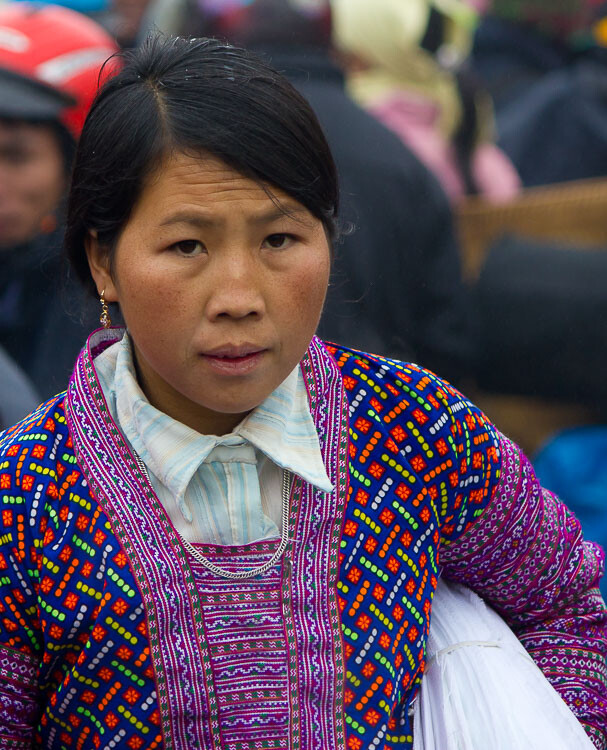
portrait of an Asia lady - 7 Quick Tips To Help You Capture better Portraits

3. Think about the background

Another key element of framing your portrait properly is to ensure that the background isn’t too overpowering. Ideally, a muted or plain surface such as a wall works best as the viewer isn’t distracted by anything else. They can focus solely on the person’s face. If you find that your subject is standing somewhere that doesn’t work best for the portrait, ask them if you can move them and position them somewhere better. Even if you don’t speak their language, usually pointing to where you want them to go does the trick.

If you find that you have to take the photo with too much stuff happening in the background, set a wide aperture so that you will get the background blurred. This will help make your subject stand out from the busy background and not get lost in the photo.

portrait of a person in costume in Italy - 7 Quick Tips To Help You Capture better Portraits

4. Experiment

Most of the time the advice that you are given is to try and light your portrait using natural light, photograph your model from the front, and get close enough to eliminate any distractions. Sound familiar? For example, being outside on an overcast day is ideal for taking portraits as the soft even light means you don’t get harsh shadows on the person’s face.

But while these are great bits of advice that you should follow, it is also worth sometimes pushing the boundaries. So experiment with harsh lighting or even a more creative shots such as in the example below. I took a step back to let people pass and was immediately struck with the dynamism that having someone walk across the image brought to it. It’s still a portrait, but it’s a little more interesting than if there was no one else in the shot.

The key is to not be afraid to go against convention and try something different, you might be surprised by the results.

7 Quick Tips To Help You Capture better Portraits - portrait of person in costume in Venice

The passer-by added a sense of mystery to this portrait.

5. Keep the eyes sharp

If there is just one rule that you need to follow when it comes to taking better portraits, it is to ensure that the subject’s eyes are sharp and in focus. If the eyes are not in sharp focus, the whole image looks soft and unappealing. So, take extra care that you are focusing correctly and that you are keeping the eyes sharp.

When taking portraits outside, the majority of the time you can get away with using a fairly wide aperture. So as long as there is decent light your shutter speed should remain fast enough to avoid camera shake. If you are unable to keep a fast enough shutter speed, raise your ISO accordingly.

portrait of a young Asian child crying - 7 Quick Tips To Help You Capture better Portraits

6. Take multiple shots

You often have a relatively short window when taking portraits as your subject will usually want to get on with their day. But that should still give you plenty of time to take multiple photos. Try taking photos in burst mode so that you can capture the exact moment when your model has their eyes open or has an expression on their face that works for the photo.

You can also try a few different compositions and even angles to give your photos variety. The great thing about digital photography is that it won’t cost you anything to take multiple photos as long as you have enough memory space.

man taking a photo in Venice -7 Quick Tips To Help You Capture better portraits

7. Just relax

Sometimes the real key to taking any great photo is just relaxing and letting it happen naturally. So rather than rushing around and clicking away frantically, just slow down and take your time.

Start talking to people without the burden of knowing that you want to photograph them and if the situation lends itself to a photo just enjoy the process and have fun. Show the person the photos you’ve taken, keep everything casual and you will find that your photos become much better and more intimate.

young girl's portrait - 7 Quick Tips To Help You Capture Fantastic Portraits

Taking a great portrait takes great skill, but when done well it can have incredible results. You will find that not only will you have amazing photos that will look great anywhere, but also memories that you will cherish. Just follow these 7 quick tips to help you capture better portraits and you’ll be on your way to capturing great photos of people.

Please show us your portraits and share your tips advice below.

The post 7 Quick Tips To Help You Capture Better Portraits appeared first on Digital Photography School.


Digital Photography School

 
Comments Off on 7 Quick Tips To Help You Capture Better Portraits

Posted in Photography


4 Reasons Why Putting Your Camera Down Can Help You Take Better Photos

15 May

We’ve all been there; in a new country, a new city or just a new part of your local town. Camera in hand, you shoot and shoot and shoot as your memory card never seems to fill up. It’s thrilling and you don’t want to waste a moment because there is so much to capture. But what if putting your camera down, even just for 20 minutes, can help you take better photos?

I don’t mean leave it unattended. But I do mean put it away or leave it behind as you go for a walk in your new environment.

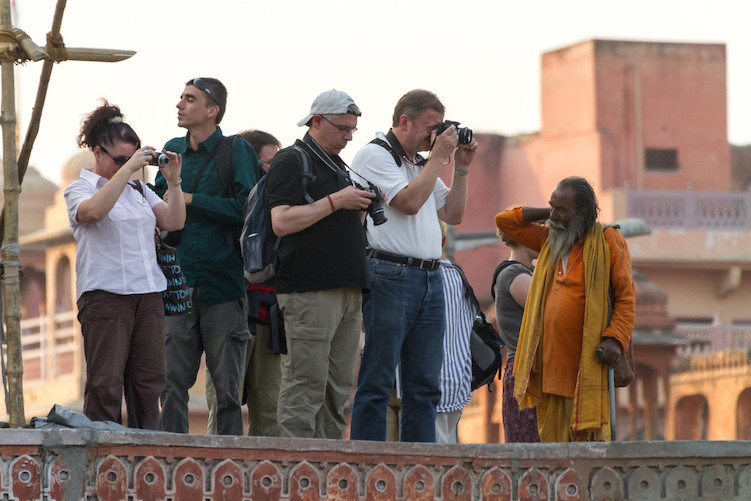
group of photographers shooting - What Happens When You Put Your Camera Down

I know some of you are getting the shakes at the mere thought of being without your camera in a new area, but indulge me for a moment. In this article, I will bring to light a few thoughts on why putting away your camera might actually help your photography.

1 – Greater Awareness

How can you truly capture the essence of a location without first experiencing it? There are always bright and colorful things to shoot. But if you go around grabbing each little scene like a bird grabbing nectar from a cherry blossom, you risk miss seeing the whole tree.

Jordan ruins at night in candlelight - 4 Reasons Why Putting Your Camera Down Can Help You Take Better Photos

I had time to visualize the shot above while watching an evening program at the Treasury in Petra, Jordan. While the program played, I was seated and limited in my movements, so I looked around at the space and tried to imagine photos from each location. At the end of the program, I was only allowed 10 minutes to get my shot (which took one minute to set up and 30 seconds to take), so my time spent gaining a greater awareness for my surroundings helped me greatly to take better photos in the time allotted.

Being aware of your surroundings is also important for safety. We all know the feeling of looking through our viewfinder, or camera screen, and losing all sense of what’s going on around us. It’s the feeling of “flow” when everything else melts away and there is just the joy of photography. That lack of awareness can work against you when in unfamiliar locations.

Beyond safety, having an awareness of your surroundings will also alert you if the clouds are about to cover the sun or if your scene is becoming more or less active. Watching others around you for clues on what to shoot is the next step.

2 – Observe Others

I love people watching in new environments. Even at home, if I go shopping with my wife I will typically end up on a bench just taking in the plethora of different shoppers passing by. Even we introverts can enjoy watching how people interact.

Look for clues about relationships and friendships while observing others. Do most people seem aloof or is there a lot of interaction? Watch how transactions are negotiated in markets. Is there a lot of haggling over price before money changes hands? These clues will help you anticipate when you can get those key shots when you return with your camera.

hat selling in Peru - take better photos

Because I took some time to people watch when the previous train came through town in the Urubamba Valley of Peru, I knew this colorful hat-seller would work the crowd when the next train arrived. So I waited and watched and was able to capture this image.

Is there a flow to the traffic of people around you? If so, look for a good location to set up and get some candid street photos. While crowds always draw attention, look for those standing back from the bustle if you want to capture a variety of everyday life.

Now is also a good time to realize who around you might not want their picture taken. Or who is charging photographers to pose for photos?

4 Reasons Why Putting Your Camera Down Can Help You Take Better Photos - officers in Jordan

In this shot of officers in Jordan, I hung around for a few moments with my camera down, said “Hi” and let the men get back to their conversations before taking the shot. I had noticed that they all looked intently at anyone new coming through the door and that wasn’t the shot I wanted. This more relaxed version was my goal.

3 – Observe Patterns

With patterns, I don’t mean just the cool shapes made by architecture or found in nature. I also mean the patterns humans create as they go about their day. Observing patterns will help you return with your camera (or simply get it out of your bag) and better anticipate the moment for shutter release and ultimately you will take better photos.

4 Reasons Why Putting Your Camera Down Can Help You Take Better Photos

For instance, watching a worker at the leather tannery in Fez, Morocco or a gentleman unloading chickens in Kathmandu, Nepal, with my camera down for a minute or two, helped me to visualize the action I wanted to capture and better time my shots.

4 – Interact Differently

Imagine someone came up to you on the street and instantly lifted a camera to snap a photo of your face. How would you feel?

Empathy for strangers and how they will react to my camera pointed in their direction is why I will typically recommend you ask permission first before taking a shot. Or better yet, with your camera down or put away, interact with your subject first. See what they are doing and ask questions if you can. Something about them made you want to take their photo, so take it one step further and interact before snapping away.

Peruvian kids - 4 Reasons Why Putting Your Camera Down Can Help You Take Better Photos

I played with these kids in Peru for a bit before having them ham it up for the lens. I don’t speak Quechuan and only poor Spanish, but I can recognize kids playing “shop” with weeds and flowers when I see it. I could tell who was in charge and I played along for a few minutes, trying in vain to get a good deal on my ugly weeds, before snapping this photo.

People will interact differently with you if you approach them first with your camera down or put away. Sometimes there is a fleeting moment that most feel needs to be caught candidly. But far more often a richer image can be created when you make human-to-human contact first. Rather than human-to-camera-to-human contact.

Conclusion

If you’ve never left your camera behind for even 10 minutes, I suggest giving it a try. It’s unnerving, I know! But it can lead to seeing your new environment in a way not possible with a camera constantly popping up to your eye.

Now you tell me; do you think you can take a walk and experience a new location without your camera? Do you think it might change the way you see the world before photographing it? Will it lead to helping you take better photos?

The post 4 Reasons Why Putting Your Camera Down Can Help You Take Better Photos appeared first on Digital Photography School.


Digital Photography School

 
Comments Off on 4 Reasons Why Putting Your Camera Down Can Help You Take Better Photos

Posted in Photography


Camera Basics – Two Video Tutorials to Help You Master Your Camera Settings

12 May

Okay so you’ve got a new camera and want to learn some camera basics, these two video tutorials will give you a hand. Or perhaps you’ve been shooting for a while and want to get off Auto mode – this applies to you as well.

Camera Basics

In this first video, Peter McKinnon explains the three parts of the exposure triangle in an easy to understand format.

?

Understanding Exposure

Next, in this second video, Tony Northrup demonstrates the basics of exposure and how the elements of the exposure triangle work together.

?

One thing he explains well is how adjusting just one of the three parts of the exposure triangle doesn’t make the photo darker or brighter when using one of the auto or semi-automatic modes.

Tony encourages you to watch his demonstration and then set up a similar arrangement in your home and try the experiments yourself. This is a great way to learn so that you can really see the results of changing the various settings and understand how they work.

The post Camera Basics – Two Video Tutorials to Help You Master Your Camera Settings appeared first on Digital Photography School.


Digital Photography School

 
Comments Off on Camera Basics – Two Video Tutorials to Help You Master Your Camera Settings

Posted in Photography


The Importance of Learning From Failure to Help You Grow as a Photographer

07 May

There’s a scene in the 1995 movie Apollo 13 when Gene Kranz, flight commander of the ill-fated moon mission, tells his team that, “Failure is not an option” as they struggle to find a way to bring three astronauts home from the depths of space. While that moment certainly makes for dramatic storytelling, it’s often far from the case when photography is concerned.

I would even go so far as to say failure is not only an option but necessary for you to grow as a photographer. There will be times in your photographic journey that things just don’t go as you had hoped despite how much you plan ahead. While some of these instances might slow you down the important part is learning from failure, growing from your mistakes, and becoming a better photographer as a result.

This picture turned out great, but there have been plenty over the years that didn’t.

I would like to share some things I’ve learned over the years from times that I have failed. Hopefully, this will help you benefit from my experiences.

Know your gear well

On some of my first sessions with clients, I had a very difficult time getting my camera to do what I wanted it to do, and many of my images were ruined because of it. A few were too bright, others were too dark, and some weren’t even in focus.

Luckily I shot in RAW so I could fix some of the issues in Lightroom. But things would have gone a lot smoother if I had just taken the time to understand my camera, learned how to use it, and knew what to do when shooting instead of spending hours adjusting images afterward.

The Importance of Learning From Failure and Your Growth as a Photographer - DLSR camera

Your camera is loaded with buttons, dials, menus, and options. Do you know what they all do?

Example

To illustrate what I mean by this, take a look at the following image I shot almost five years ago. Thankfully I did this session as a favor for some friends of our family because looking back on it I would feel terrible if I charged them money for these pictures!

dark family photo (underexposed) - The Importance of Learning From Failure and Your Growth as a Photographer

I remember being frustrated at seeing the LCD screen of my Nikon D7100 as I took these pictures because they were all coming out so dark! I didn’t know what was wrong, and I didn’t know what to change on my camera to fix the problem.

Looking back there was any number of remedies for this overly-dark photograph that I could have used. Had I only known how to actually work the knobs and dials on my camera, simple things like the follow could have solved it:

  • Adjust the exposure compensation (duh!).
  • Change to spot metering instead of matrix metering (of course!).
  • Locked exposure on a bright part of the scene and recomposed the shot (why not?).

Thankfully I used RAW and not JPG so the image wasn’t a total loss, but the skin tones are washed out and the picture is not nearly as vibrant and dynamic as if I had just gotten it right at the time of the shoot.

family portrait in the park - The Importance of Learning From Failure and Your Growth as a Photographer

Clearly, I had a lot to learn about lighting, composition, and why having clients sit on a canvas drop-cloth with their feet out is not a good idea.

This advice is not just for newbies

This advice isn’t just for professional sessions with clients either. Something happens when you get new gear and want to put it through its paces. I attended a wedding recently as a guest, not as the official photographer, but I had my shiny new Fuji X100F with me and even though I thought I knew how to operate it, I made a crucial mistake that cost me a lot of good shots throughout the evening.

For a good 20 minutes I couldn’t figure out why my camera wasn’t focusing right and all my shots were coming out poorly exposed. Finally, I realized that I had accidentally activated the built-in ND filter. There was even an icon on the LCD screen indicating the ND filter was turned on, but I didn’t see it because I just wasn’t as familiar with the camera as I should have been.

people dancing at a party - The Importance of Learning From Failure and Your Growth as a Photographer

Suffice it to say I felt like a complete amateur when I realized that a mistake I made had ruined so many good photo opportunities, but I quickly learned from it and hopefully now you can too!

Familiarize yourself with the location beforehand

Years ago, not too long after I got my Nikon D200 and 50mm lens, I thought I was a pretty big deal and knew everything there was to know about pictures. After all, I had a prime lens! What else was there to understand? (Spoiler alert: A lot. A whole lot!)

One of the biggest mistakes I made during this early period was to show up for photo sessions without ever having been to the location beforehand. This made it impossible, as any seasoned photographer would know, to plan out some of the basic essentials of a photo shoot and look for things like lighting, foreground and background elements, and even where to have my clients sit, stand, or walk.

Hard lesson to learn

The worst offender of the bunch was a session I did for a high school senior where most of the pictures turned out –  well, let’s just say less than ideal because I failed to plan ahead in terms of the physical location. We agreed to meet at a cross-country track, with almost no natural shade, at 5 pm. This is what happened:

portrait in the shade - The Importance of Learning From Failure and Your Growth as a Photographer

From one of my first high school senior sessions, and one I wish I could erase from existence altogether.

After searching for something, anything, to block the sun so he wasn’t squinting – I finally found this set of metal bleachers behind a tree. But because I didn’t understand how to operate my camera to get the exposure right (see failure tip #1) I got shots that were lit like some kind of circus act and were far too over or underexposed.

If I had taken some time to visit the location first I could have at least mentioned some alternative places at the track, or even suggested a different location entirely. Instead, I got out of my car and met the client and his mom with the kind of overconfident swagger that only a new wet-behind-the-ears photographer has, and ended up biffing most of the shots.

I did scrape by with enough competent shots to make it worth their while, but nonetheless, I walked away having learned something I will never forget.

senior portrait - The Importance of Learning From Failure and Your Growth as a Photographer

This was from one of my more recent high school senior sessions. I think it’s just a bit better, don’t you?

A few more for good measure

There are a host of other times I have failed as a photographer but each time I have tried to engage in some self-reflection and understand where I went wrong, As well, I tried to talk with other photographer friends, so I don’t make the same mistakes in the future.

My work has grown, and so have I, as a result of these failures. I would almost go so far as to say that failure is downright essential if you want to refine your craft as a photographer.

dogwood flower - The Importance of Learning From Failure and Your Growth as a Photographer

It took years of poor decisions and overlooking the obvious for me to learn enough about photography to take this simple picture of a dogwood flower.

Without going into too much detail, here are just a couple of other times I have swung and missed, photographically speaking, over the years along with a bit of caution for others thrown in for good measure.

When in doubt, take more photos

I was born in 1980 and grew up in the era of physical film, so when I got my first digital camera I carried that mentality with me. As a result, I missed out on a lot of good shots, especially with clients, because I thought I already had enough and didn’t want to fill up my memory card.

With the price of memory cards being so astronomically low, there is no excuse for not taking enough pictures, and you can just delete them later if you need to.

Control your depth of field

After I got my 85mm f/1.8 lens I took it out to a photo session with clients before thoroughly using and understanding it, which is always a big mistake. I also thought that I could shoot everything at f/1.8 because it gave me such a cool background blur!

What I didn’t realize at the time was the extra-large aperture was also causing half the people to be out of focus due to the insanely shallow depth of field. Just because your lens has a super wide aperture doesn’t mean you should always use it. When in doubt, stop it down a bit.

family portrait outdoors - The Importance of Learning From Failure and Your Growth as a Photographer

I focused on the mother, front and center, and shot this with my 85mm lens at f/1.8 to get a blurry background. What I didn’t realize was that also meant the husband was out of focus as a result.

Know when enough is enough

This one is going to vary depending on the type of photography you do. But as someone who takes a lot of family and child photos, it’s important to know when to hold ’em and know when to fold ’em.

Kids, and even parents, can be fickle and there were times early on when I would drag out photo sessions long after I should have called it quits. “Hey let’s get some more shots over there!” I would say. My clients would begrudgingly oblige while I scampered off ahead of them in a vain effort to capture authentic smiles and emotions.

Dragging out a photo session won’t help you get better pictures. But it will make your clients roll their eyes and think about booking someone else next time. Someone who will take a hint and pay attention to their needs!

family photo - The Importance of Learning From Failure and Your Growth as a Photographer

I learned over the years that kids just don’t last long at family photo sessions, so I took a ton of pictures and tried to keep things interesting by switching up the poses. 20 minutes later these kids were ready to be done, and I could have tried to stretch things out further but it would have only led to frustration.

Conclusion

These are just a few of the many lessons I have learned over the years that, while painful at the time, have served me well in the long run.

What are some of the ways in which you have failed, fell down, or otherwise came up short and what did you learn from it? I’d love to hear your thoughts and experiences in the comments section below. Hopefully, we can all learn from each other’s mistakes.

The post The Importance of Learning From Failure to Help You Grow as a Photographer appeared first on Digital Photography School.


Digital Photography School
 
Comments Off on The Importance of Learning From Failure to Help You Grow as a Photographer

Posted in Photography


4 Tips to Help You Love Using Manual Mode

07 May

In this article, I’d like to share with you a few tips on how to utilize some of your camera’s functions to help you come to grips with shooting in Manual Mode.

Sometimes stripping back to the basics and only using minimal, older equipment with none of the modern features new cameras possess, can help you grow as a photographer. Sometimes making good use of selective technology on your digital camera can also help you learn and create more accurate exposures more easily than is ever possible with older cameras.

Asian woman holding an old 35mm film camera - 4 Tips to Help You Love Using Manual Mode

I started learning on a camera which had no auto anything. There were no options other than to learn Manual Mode. I still use shoot manual 99% of the time.

During the photography workshops we run, I love to encourage people to switch to manual and commit to it for a period of time. If you try Manual Mode once or twice for a short time it’s likely you will not “get” it. You need to commit and using only Manual for most of what you photograph for long enough until you feel you are making progress.

man taking a photo - 4 Tips to Help You Love Using Manual Mode

1. Live View/Electronic View Finder

Many cameras now have LCD screens/electronic viewfinders which display how the exposure will look when you take a photo in Manual Mode. If your camera has this function it pretty much eliminates the need to look at the exposure meter or change your metering mode to obtain well-exposed photographs.

By focusing your attention on the exposure of the image on your LCD screen or in your electronic viewfinder while you are adjusting your aperture, shutter speed, and ISO settings you can easily see when your photo will look good.

Asian woman photographer 4 Tips to Help You Love Using Manual Mode

You need have your screen or viewfinder set so it’s neutral, not too bright and not too dark. To check this you can take a few test photos and then review them (on the computer). If they are over or underexposed adjust the brightness value of your camera’s LCD screen and/or viewfinder until your photos have the same exposure value you are seeing in the viewfinder or on your monitor in Live View mode.

2. Use Your Spot Meter

If you prefer not to use Live View or do not have an electronic viewfinder which displays the changes to the exposure value as you adjust your controls, using the spot meter can help you achieve more accurate reading and set your exposures more precisely.

Woman selling mangoes - 4 Tips to Help You Love Using Manual Mode

Modern cameras have a selection of metering modes which include a spot meter. Most often using the averaging mode, which takes a reading from multiple segments of the image area and gives an exposure value the camera calculates, is sufficient.

However, in some situations, particularly if your subject is back-lit or contrast in the scene you are photographing is high, using the spot meter setting will allow you to make a reading off the area of the image which is most vital to you.

For example, making a portrait where your background is significantly lighter or darker than your subject it is best to take a spot meter reading from their face as this is usually the most important part of your image. Using the averaged setting your camera’s meter will also read from the background and calculate that into the result it returns, potentially giving you a less than satisfactory exposure.

Karen woman smoking a pipe - 4 Tips to Help You Love Using Manual Mode

Learning to use your spot meter will assist you in creating more accurate exposures. I have one of the function buttons on my cameras set to switch to spot metering, allowing me to quickly and easily take a reading from any particular part of my composition.

3. Review Your Photos

It’s not a healthy practice to always be checking your camera’s monitor after every photo you take, as this can interrupt your attention from your subject. But it can be helpful to review your first few images after making adjustments to your exposure settings.

Taking a look at the results after changing your aperture, shutter speed, or ISO will give you a clear idea as to whether your settings are suitable for the photos you want to create. If you see a photo that’s too bright or too dark overall or in a part of the composition you prefer to see well exposed, then you will need to make some adjustment to your settings.

Asian woman reviewing a photo on a DSLR camera monitor - 4 Tips to Help You Love Using Manual Mode

As you practice this technique you may start to find you can estimate how much you need to alter your exposure settings rather than consulting your exposure meter again. This does take some practice, but if you form a habit of doing this, you will find this is a quick and easy way to achieve a better exposure.

4. Check Your Metadata

Our digital cameras record an incredible amount of metadata, associated information about each photograph you take. Learning to read and understand even a small amount of this information can assist you in producing more consistently pleasing exposures.

Back of a DSLR camera at dusk - 4 Tips to Help You Love Using Manual Mode

Being able to freely review the exposure value for any photo you have taken can help you understand why it’s good or maybe why it needs improving. I find this information most handy when I am sitting at my computer reviewing my images from a photography session.

Comparing photos made with different exposure values and looking at the metadata can help you have a better understanding of what settings you can use next time.

In Conclusion

Evening photo with bold colors taken during a Chaing Mai Photo Workshop

Autofocus, Facial Recognition, Auto White Balance, and ISO flexibility are all modern advancements in camera technology which make using Manual Mode easier. Because you don’t have to pay so much attention to these things and can better concentrate on setting your exposure well.

Exposure is one of the key elements of every photograph. Learning to understand how you can use the various features of your camera to assist you in making better exposures will help you become a more creative photographer.

?

The post 4 Tips to Help You Love Using Manual Mode appeared first on Digital Photography School.


Digital Photography School

 
Comments Off on 4 Tips to Help You Love Using Manual Mode

Posted in Photography


Discuss: Better Equipment Versus Knowledge – Which Will Help You Improve Your Photography More?

22 Apr

As a photographer, you always have the urge to buy new equipment thinking it will bring you better results. This might be true, but only up to a certain point, because if you don’t have the knowledge you can’t make the most out of your equipment. I started with a Nikon D3200 and I use it to this day because, in my opinion, it’s not the equipment that is going to help me take better photos.

If you’re asking yourself, “What can I do with my entry-level camera?” then this is the article that’s going to prove that you can achieve great things and be a great photographer with your own camera. There are many photographers that took some amazing pictures with film cameras, photographers like; Andreas Feininger, Henri Cartier-Bresson, Eve Arnold, etc.

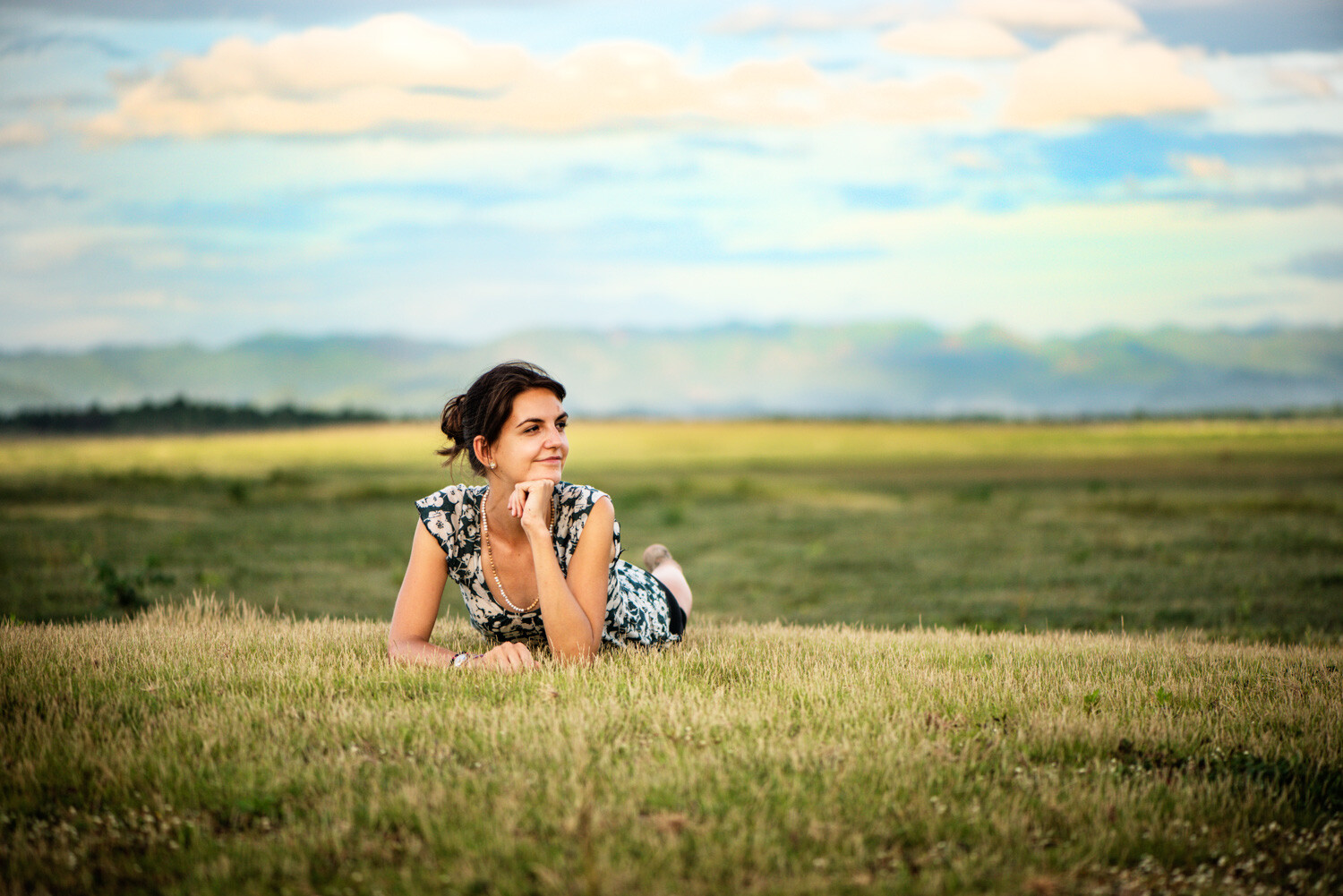
What keeps you from taking better photos, your EQUIPMENT or your KNOWLEDGE? - portait in a field

We cannot deny that their cameras were the best of their time. But my point is that even today they could compete with any owner of a fancy camera because having the latest camera is not going to guarantee a better vision.

I’m going to give you some tips and tricks on how to take better photos and overcome the obstacle of not having the latest equipment.

1. Read

The most important thing you can do is to read. Many people skip this step and think that only by practicing will they improve. It is true that you have to practice, but unless you study the theory first there is no way of practicing in an efficient way.

For example, if you read an article about shutter speed and aperture it’s easier the understand the mechanism and then apply it, than trying to figure it out all by yourself.

Start here to get to many great dPS articles and find the topics that interest you the most.

girl reading in the grass - What keeps you from taking better photos, your EQUIPMENT or your KNOWLEDGE?

2. Know your equipment

You just bought your first camera and you are stuck with your kit lens. But before buying a new lens you have to learn the basics. You can use your kit lens for numerous types of photos, from landscapes to portrait photography.

I took more than 5,000 images with my kit lens before buying my second one, and I learned a lot of helpful things. If you’re shooting portraits, 35mm focal length can get a nice bokeh having an aperture of f/4.5. This focal length is perfect because it’s not wide so you’re not going to distort the face and you can have more light than shooting the same lens at 55mm, f/5.6.

3. Know what to buy

Buying equipment can be difficult when you can’t afford expensive things and you have to spend your money right. I am speaking from the perspective of a portrait photographer. My first portrait lens was (and still is my main lens) a 35mm f/1.8. If you want nice bokeh for a cheap price this is the right choice. I’m still exploring with this lens and I always find new perspectives.

Knowledge Over Equipment

Next, I’m going to present some arguments on why better equipment doesn’t necessarily make you a better photographer and on why knowledge can help you overcome your equipment struggles.

Buying new equipment is always tempting, but you have to learn how to make the best of what you already have. The best thing you can do as an amateur is buying an entry-level camera and a prime lens. Stick with it and see if you can come up with a new vision every time you go out to take photos.

At first, I didn’t know how to use manual mode. But do you think buying a better camera is going to help with that? No is the answer, you have to read and understand how the relationship between ISO, shutter speed and aperture affect everything in a photo.

After learning that no picture is the same and the settings are going to change every time, you have to do a lot of trial and error. If you practice enough you can achieve great things. After learning how to use your equipment you have to learn how to process your pictures because it makes a big difference as well.

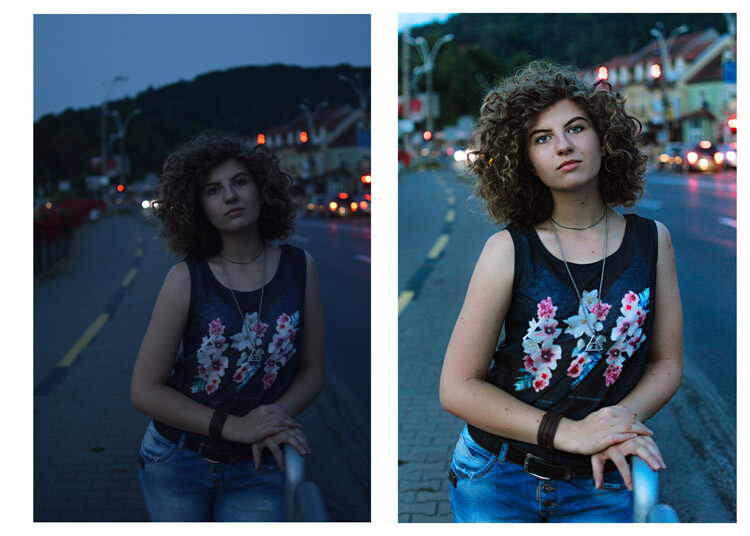
What keeps you from taking better photos, your EQUIPMENT or your KNOWLEDGE? - before and after processing

What keeps you from taking better photos, your EQUIPMENT or your KNOWLEDGE?

The next thing you have to know is that light makes the difference in every picture, you have to learn how to manipulate and control the light. Once you know how light works you are going to love your equipment.

lady and umbrella snowing - What keeps you from taking better photos, your EQUIPMENT or your KNOWLEDGE?

lady in leaves - What keeps you from taking better photos, your EQUIPMENT or your KNOWLEDGE?

When do you need better gear?

There are a few situations where better equipment can be helpful. I’ll give you a few examples and some tips to overcome the difficulties.

1. Shooting in low light conditions

Having expensive equipment can help you here, you can have a higher ISO without a lot of digital noise. With my entry-level camera, I can raise the ISO to 400 and it already looks really noisy. With a full frame camera or even an expensive DX sensor you can raise the ISO to 1600, or 3200 and your image is still going to look fine.

girl walking in the woods in winter - What keeps you from taking better photos, your EQUIPMENT or your KNOWLEDGE?

2. Sports photography

This is another hard thing to do with an amateur camera, you can still achieve great things. Your autofocus is going to play some tricks on you, so you have to work on your timing. Knowing where and when to press the trigger will help your autofocus a lot. Another thing you can do is to learn the panning technique.

Conclusion

So in summary, equipment is just a tool. It doesn’t help you to shape your vision and buying the latest gear as a beginner is not the best choice you can make. When you find that you have difficulty expressing your vision with your current equipment, then you can start thinking about upgrading.

The post Discuss: Better Equipment Versus Knowledge – Which Will Help You Improve Your Photography More? appeared first on Digital Photography School.


Digital Photography School

 
Comments Off on Discuss: Better Equipment Versus Knowledge – Which Will Help You Improve Your Photography More?

Posted in Photography


Top 10 Subjects to Help You Tell the Story of Your Neighborhood

12 Apr

In this article, you will get 10 photo story ideas to help you connect with and tell the story your community including; bus stops, your community garden, and the grocery store.

Finding a unique and extraordinary scene to photograph can take a lot of energy. Thanks to the internet, you’re bombarded daily with exotic scenes caught on camera from all around the world and suddenly your own community or neighborhood feels commonplace by comparison.

What we often forget is that magic happens in our own backyards. What feels mundane to you, can be fascinating to people from other regions, countries, and cultures (and looking back from future decades).

Animal - Top 10 Subjects to Help You Tell the Story of Your Neighborhood

To get that magic working in photographs of your community, tell a clear story with a mix of long shots, mid shots, close-ups, and extreme close-ups. You’ve already overcome the first hurdles. You know what the light is like and probably have an idea of some settings to use. Chances are, you speak the language and understand the culture.

You know the best place to pick up a coffee, and what time the trains, boats, or sheep go past each day. With technical and communication issues sorted before you begin, you can work on breaking some (photographic) rules. Push your creativity by experimenting with composition, framing, and movement to further convey the vibe of your neighborhood.

Need some inspiration? Here are my top ten subjects to help tell the story of your neighborhood:

1. Bus Stop Narratives

Bus stops speak volumes about the neighborhood. Whether your closest one is posh or plain, busy or quiet – there’s always something there to photograph.

If the bus stop is a building, look for strong lines and shapes. If it’s busy, experiment with different shutter speeds to show the movement of vehicles and people. Perhaps it’s just a seldom-used seat overgrown with weeds.

Use wide angle shots to convey a feeling of space and emptiness as the light fades at the end of the day. Get friends or family to pose to provide context and scale to the scene.

Bus stop Top 10 Subjects to Help You Tell the Story of Your Neighborhood

2. Animal Life

For some, photographing animals in their neighborhood means capturing images of local domestic pets, or common birds. For others, it means finding larger, scarier animals (the rest of us are jealous).

Even the common sparrow can be a beautiful subject to photograph, and it can help tell the story of your community. Get familiar with where local wildlife (or pets) hang out, and the times they show up. Take snacks and water for yourself, and a good zoom lens if possible.

Using a fast shutter speed is ideal for photographing animals but reduces the amount of light entering the camera, so you might need to increase your ISO to compensate. Try a shallow depth of field for slow animals, and greater depth of field for the less predictable species.

Animal - Top 10 Subjects to Help You Tell the Story of Your Neighborhood

3. Found Neighborhood Alphabet

This subject is super fun and easy to get a bit obsessed over. The idea is to find an alphabet made entirely of shapes and forms, but not actual letters. You might come across twigs making the shape of an E, a roofline that looks like a V, or stonework in the shape of a J. This makes you look at details in quite a different way and is a great exercise for your brain.

There’s a catch to this – you actually have 27 photographs to make. The 27th is the ampersand, which is the “&” shape (and not particularly easy to find)!


4. The Grocery Store

People have a love/hate relationship with grocery stores. It might be a place you associate with stress and fatigue . . . but also with ice cream! All that shelving and stacking provides fantastic lines, repetitive patterns, and colors.

Perhaps your neighborhood store is small and full of old character, or it might feel vast with plenty of reflective surfaces and wide aisles. Keep an eye on your White Balance setting, as it might need some adjustment with fluorescent lighting.

As with photographing any business, talk with the management first about your project, and be prepared to share your results with them.

Grocery - Top 10 Subjects to Help You Tell the Story of Your Neighborhood

Grocery - Top 10 Subjects to Help You Tell the Story of Your Neighborhood

5. Signage

Signs come in all shapes and forms and have a wide range of purposes. Street signs, shop signs, road works signs, lost cat signs, temporary signs – they all tell a unique narrative of your neighborhood.

While the graphic design of some signage can be beautiful in itself, try photographing signs with some of the surroundings in the frame. Look for groups of signs, clever signs, and signage that evoke emotions. You don’t have to include the whole sign in your frame – perhaps pick out specific words or colors that have meaning.

Combined, a series of signage photographs can tell a story figuratively or literally.

Signage - Top 10 Subjects to Help You Tell the Story of Your Neighborhood

Signage - Top 10 Subjects to Help You Tell the Story of Your Neighborhood

6. A Year of a Community Garden

If you’re lucky enough to live near a community garden, you’ve got a fantastic year-long photographic project ready to start. Talk with the garden organizers about access and the best times to photograph gardeners in action. Return regularly to capture the changing colors and textures.

The photographs don’t have to all be pretty. Use a macro or zoom lens to photograph the decomposition and composting processes. Take a small ladder to photograph garden patterns from a fresh viewpoint. If it’s surrounded by buildings, celebrate the contrast of colors and shapes that the garden provides.

Garden - Top 10 Subjects to Help You Tell the Story of Your Neighborhood

7. Ground-Level Series

A lot goes on at ground level, regardless of what type of environment you live in. In our day-to-day lives, we scurry on by without noticing the details at our feet. At ground level, your neighborhood might be full of sand dunes, grasses, and bare feet. Or maybe you’re surrounded by fences, road markings, and running shoes.

Try shooting from a standing position using a bird’s eye view angle, or you can sit or even lie down so that you’re at the same level as the subject.

Hot tip: Take a small mat or tarpaulin to lie down on and make sure you aren’t a tripping hazard!

Ground Level - Top 10 Subjects to Help You Tell the Story of Your Neighborhood

8. Street Art Story

My favorite subject to photograph is street art. I love documenting other people’s creativity – particularly if it’s temporary artwork that is scheduled to be covered up or torn down. Every town and city has their own unique art vibe.

If you live in a community with lots of street sculptures and paintings, find out the stories behind them. Photograph their relationship with the surrounding buildings at different times of the day. Capture people interacting with the artwork, and include some of the environment around it by using different angles.

Street Art - Top 10 Subjects to Help You Tell the Story of Your Neighborhood

9. Demolition Documentary

This won’t work for all neighborhoods, but you might live in an area where there are lots of physical changes happening. Buildings coming up and going down are fantastic to photograph. Apart from the changing lines, shapes, and angles, this is a cool way to document an interesting moment in time for your community.

By using a shallow depth of field and/or by getting close-up to safety fencing, you may be able to get a clear shot of the subject without the fence getting in the way.

If there’s an authorized opportunity to get onto a building or demolition site – grab it! Follow health and safety guidelines at all times, and get to know people at the site so you get a heads-up of upcoming activity to photograph.

Demo - Top 10 Subjects to Help You Tell the Story of Your Neighborhood

Demo - Top 10 Subjects to Help You Tell the Story of Your Neighborhood

10. Doorways

If you have great neighbors who you’re on good terms with, have a go at photographing a doorway series. The good thing about this theme is that you can stick with one lens and work to easily measurable straight-lines.

Places of worship and heritage buildings can have beautiful doorway architecture, but don’t underestimate the aesthetics of barn doors and slick city business entrances.

Hot tips: Photograph the doorways closed and avoid private properties unless you have permission. Watch out for reflections in glass or polished surfaces. You might need to use the distortion or upright tools in your post-production software to make sure the lines are nice and straight.

Door - Top 10 Subjects to Help You Tell the Story of Your Neighborhood

Conclusion

Exploring your neighborhood with your camera is a great way to get back to the basics of photography. You can make mistakes and test out new techniques without feeling like you’re wasting time and money. It compels you to find beauty and diversity in everyday objects and push the boundaries of your creativity close to home.

The post Top 10 Subjects to Help You Tell the Story of Your Neighborhood appeared first on Digital Photography School.


Digital Photography School

 
Comments Off on Top 10 Subjects to Help You Tell the Story of Your Neighborhood

Posted in Photography