Google launched the stand-alone Photos app with unlimited storage in May. Now it has announced it will be phasing out its predecessor, Google+ Photos. On August 1, the Google+ Photos Android app will stop working and soon afterwards the iOS and web versions will cease to be operational as well. Read more
Tag: Google
-
Getting Organized: My Experience Using Google+ Photos
Some time ago, I wrote a post covering different options for organizing and storing your photos. I did this as a first step toward getting my own photographic catalog in order. I decided to pull the trigger, so to speak, and give it a go. I decided to start out with Google+ Photo. I’m already pretty invested in the Google Continue Reading
The post Getting Organized: My Experience Using Google+ Photos appeared first on Photodoto.
-
NCTech announces single-shot 360 camera for Google Street View applications
UK imaging systems firm NCTech is to introduce a four-sensor, single-shot camera that it says can create a 360 degree image of a street scene or an interior in less than two minutes. The iris360 uses four lens units in front of four 10MP sensors arranged at 90 degree intervals, and images can be uploaded directly to Google Street View. The lenses are triggered simultaneously and the resultant images are stitched together automatically in-camera. Read more
-
More Thoughts on Google Photos
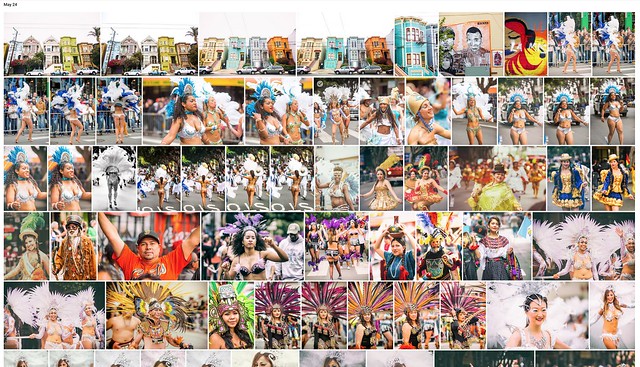
Last week when Google Photos launched, I quickly tested it out and then wrote a post with my immediate initial reaction to the service. Much of my early disappointment centered around the fact that Google chose to limit the size of photos in the service to 16 megapixels. As a DSLR shooter this meant that a large portion of my library would be downsized with Google Photos. Bummer.
Flickr by contrast offers every user 1TB of free storage for your photos (which is more than 99.999% of photographers need at present) at full original high resolution.
So in my mind this made Flickr’s free offering a vastly superior offering over Google Photo’s free offering. Flickr’s had that offer out for a while now which is why I hoped that Google would respond by offering us a similar 1TB (or more) of full high res original storage. Google Photos will let you have a terabyte of storage for your high res photos as well, it will just cost you $ 120 per year vs. Flickr’s free deal.
David Pogue (who works for Yahoo) wrote up a thoughtful review today comparing Google Photos and Flickr and made the same observation pointing to the negative of Google downsizing your original photos in Google Photos.
Despite my disappointment about Google’s decision to downsize our photos with the free version of their product, after having spent a week seriously digging into Google Photos, I’m much more optimistic about the service than I was a week ago. There’s a lot to love here.
1. Google Photos will back up your RAW files.
At present I have two Drobo 5D units with 15TB worth of storage in each of them. In addition, I’ve got an 8TB Western Digital MyBook thunderbolt duo.
I don’t actually have 38TB of storage because both the Drobo and the Western Digital (each in their own way) replicate my data. This protects me against hard drive failure. While it doesn’t necessarily protect me against fire or theft, this is a pretty good first line of defense. Most of the storage that I’m using right now is dedicated to the hundreds of thousands (million?) of RAW frames that I’ve fired off over the last 10 years. These are my RAW, unedited, original negative files.
Flickr does not support RAW yet — although Flickr’s former Chief Bernardo Hernandez mentioned in a tweet after he left that RAW was “coming at some point,” at Flickr.
Even though I am losing a lot of data when Google Photos converts my RAW files to JPG photos and also downsizes them, something (for free) is better than nothing.
While it is still my responsibility to come up with a better suitable offsite backup solution for my terabytes of RAW photos, until I do I’d rather have a converted, compressed 16 megapixel version of my photo backed up online than nothing. I’ve been planning for a year or so now to duplicate all of my original RAW files and then store them on drives in a safety deposit box in a bank vault, but until I get around to doing that it’s nice to know that I’ll have at least an inferior version of my original RAW backed up online.
2. Google’s free offering is unlimited.
Flickr currently gives everyone a free terabyte of storage for your high res originals. In his review Pogue said that Flickr told him that less than 50 users out of 100 million are actually using over 1 terabyte.
One terabyte certainly seems more than enough for Flickr’s present offering for most people. I am one of those few prolific photographers who will exceed the 1 terabyte limit though. At present I’ve uploaded about 950 gigabytes to Flickr (which is about 105,000 high res photos) and I should cross the one terabyte limit sometime within the next year.
Fortunately for me, I was one of the original early Flickr users who signed up for their old paid “Pro” service ($ 24.99 per year). This service has since been discontinued, but old “Pro” accounts have been grandfathered their original unlimited high res storage deal and so I won’t need to worry about exceeding one terabyte when I hit it later this year.
Although I’m an extreme edge case, if we assume that in the future camera makers will continue pushing technology with more and more megapixels (i.e. larger and larger files) and at the same time people begin taking more and more photos, I can see where a lot more people than 50 will end up exceeding their free terabyte at Flickr over the course of their life.
While Yahoo could always extend the offer to two terabytes or raise their limits as people’s storage use increases over their lives, their is no guarantee that they will. It would be a bummer if you spent 10 years uploading all of your photos to Flickr and then ran out of space, which sounds unlikely, but might actually be more likely than we realize, especially given that some of us may actually live to be 150 or more in the future!
Google Photos by contrast is offering unlimited storage if you downsize your photos.

3. Google has interesting facial recognition software.
Google’s facial recognition software is pretty slick. It’s very clever how the software can actually track a face as it ages and include a baby photo in the same batch of photos of someone when they are older. It seems to work best where you have a lot of photos for them to analyze and I found photos of my family members were much more accurately grouped than photos of strangers in crowds or people who I only have one or two photos of.
Flickr doesn’t do facial recognition yet, but I get it’s something that they are working on. One of the advantages that Google has over Flickr here though is that their service is 100% a private service. 100% of your photos on Google can only be seen by your account unless you manually choose to create a link and share it with others. Facial recognition software can be scary stuff and even though Google doesn’t attach names and faces together, it’s the sort of thing that people get easily freaked out over.
Flickr is a hybrid public/private service. Even though by default you can upload your photos privately to Flickr, you can also upload them publicly by default as well. Sometimes even a simple thing like a public vs. private setting on a photo can be screwed up by your average user. It’s not that Flickr won’t offer facial recognition in the future (they probably will) it’s just that they probably need to think a little bit more about privacy and the implications of people accidently making things public that they might not want to.
4. Google Photos Assistant is fun.
Although we’ve all probably seen way too many gifs in our lifetime already, when your own photos are turned into gifs just for you it can still be delightful. Because my photos are personal to me, I find that I’m enjoying Google Photos gifs much more than I thought I would. If someone else posted a gif of Jerry Seinfield moving his microphone stand around on stage I’d probably think it was boring, but when I was actually at the comedy show and watched him do it, and the gif was made from my photos, somehow it makes it more interesting to me. Most people could care less about my dog Bucky sitting in my friend Scott Jordan’s Pocketmobile, but it tickles me to see it — and Scott will probably like it too and I can share it with him and I bet he even posts it on Facebook.

I find myself going back to my Google Photos assistant several times a day and hoping that they will have more treats for me.
5. Google Photos is an interesting digital diary.
Although Flickr has Camera Roll, Flickr doesn’t include all of my RAW photos so it is not as complete as Google Photos is turning out to be for me. I’m finding it more enjoyable to just randomly choose times in my life and scroll through my photos on Google Photos. There’s something about all the bad photos, unedited, raw material that feels like a more complete digital diary for me than the finished processed photos I’m posting on Flickr. I’d never want anyone else to see my raw material unedited and bad photos, but just for my eyes only I’m finding it a very interesting experience.
It will be interesting to me to see how I like Google Photos as my digital diary when I’ve finally got everything uploaded into the service. In my case, I have a feeling that this will take a few years. So far I’ve uploaded 39,312 to the site in a little over a week. I’ve had it running pretty much non-stop since Google Photos launched. Sometimes it feels like it’s hanging and I’ll force Google Photos to quit and relaunch it, but still, it’s going to take a long, long time to get all of my photos up there. By the way, Google Photos doesn’t provide you a photo count of your photos, but if you want to see how many you have uploaded you can get that number here (it’s in light gray in the upper right hand corner).
6. Google can give you back all of your photos at once.
One of the things that I like about Google Photos is that they give me an option to get all of my photos back at once. While Flickr will let you get all of your photos back as well, you have to manually drag and select your photos at Flickr (us use an album) to get them put into a zip file that they send you. With tens or even hundreds of thousands of photos online, I like the way that Google can deliver all of my photos back to me better. Although I don’t ever plan on having to get all of my photos back at once, I feel good knowing that Google will let me have them all back with just a few clicks vs. Flickr’s more difficult way.
7. No ads.
It’s nice that Google is giving you Google Photos completely ad-free. Although as a paid Pro Flickr user my Flickr experience is also ad-free, Flickr’s free service does/will have ads. When I’ve browsed Flickr outside of my Pro account I’ve noticed ads every so often. They don’t feel very disruptive, but still, no ads are always better than even just a little.
I did think it was interesting earlier this week when it felt like Apple CEO Tim Cook took a pretty direct swipe at Google’s new photo offering in a speech that he gave highlighting the importance of your digital privacy.
“We believe the customer should be in control of their own information. You might like these so-called free services, but we don’t think they’re worth having your email, your search history and now even your family photos data mined and sold off for god knows what advertising purpose. And we think some day, customers will see this for what it is,” said Cook.
Cook’s comment does make you think just a little bit about how much data you may end up giving sites like Google Photos and Flickr with all of these photos. On the other hand, I’m sure a lot of people probably wonder why you’d want to pay for Apple’s iCloud storage when Google or Flickr will give you all you need for free. Google and Flickr are competitors to Apple’s paid storage service and so you have to wonder how much of Cook’s warning is dire vs. how much is just that he’d rather you pay Apple to store your photos for you than let Flickr or Google do it for free.
Anyways, those are my more detailed thoughts on Google Photos thus far. I’m sure I’ll blog more about Google Photos as I use it more, but after a week of use I have a much more optimistic view of it than I thought I would. I find myself using it much more and going back to it several times a day over and over again.
Disclaimer: yeah, yeah, yeah, nothing is forever (except diamonds right?), both Flickr and Google could always renege on whatever deal they currently are marketing out there.
-
Google and GoPro unveil 16-camera ‘Array’ VR rig
During the re/code Code Conference earlier this week in California, GoPro’s CEO Nick Woodman detailed a rig the company is working on that will accommodate six Hero4 cameras to record multi-angle footage for virtual reality uses. Google revealed a similar setup at its I/O 2015 conference yesterday, with the primary exception being that it holds 16 GoPro action cameras rather than six. The rig is called Array, and it was made in partnership with GoPro for Google’s new Jump virtual reality platform. Click through to read more
-
Thoughts on Google Photos

Google launched Google Photos today.
For months now people have been talking about how Google was going to decouple photos from Google+ and create a standalone photo product and today at I/O they finally unveiled their latest effort to the world.
Last August when rumors about this new service started circulating I wrote a blog post titled 10 things Google should consider in launching a standalone photo sharing service. Here I outlined ways that Google could come up with a very competitive product in the photo sharing space. Google could have given the world something really amazing today and instead we just got something lackluster.
The new offering is fine, but in a lot of ways it is a big disappointment to me.
The biggest part of today’s announcement was that Google was going to give every user unlimited photo storage.
That sounded pretty good until I understood the catch. The catch is that the unlimited photo storage offer only applies to photos 16 megapixel or smaller.
Although it may be tempting to write this off as a “Pro” problem as most modern DSLRs today shoot over 16 megapixel, there are also a lot of new non-pro consumer cameras that shoot over 16 megapixel today too. Heck, there’s even a mobile phone out now (admittedly an outlier) shooting at 41 megapixel. So what this means is that almost every DSLR out today, along with many smaller consumer cameras, will require your Google Photos images to be downsized.
It’s not just Canon and Nikon DSLRs that produce images over 16 megapixel today, but many models of popular mirrorless and consumer cameras by Panasonic Lumix, Sony, Olympus, etc. Here is a list of currently manufactured digital cameras 15 megapixels and above which shows some models and brands this might include.
While I do understand that storing photos is not cheap, I do not understand why Yahoo’s Flickr is able/willing to give every user a full terabyte of full high res original photo storage, and Google, a company almost 10x the size of Yahoo by market cap cannot or will not. Flickr raised the bar when they offered every user a free terabyte of high res photo storage and Google’s response is to offer us unlimited downsized and compressed photos? Come on Google, you can do better than that!
The other problem is that the camera manufacturers (for better or worse) are in a war of who can raise megapixels the most. Earlier this year Canon came out with a mindblowing 50.6 megapixel 5DS. 16 megapixels is going to feel smaller and smaller as new and better camera, and even mobile phone technology is released.
If this was the year 2003 and Canon had just released the 6.3 10D, this might make sense to me — but in 2015? No way.
While you can purchase Google Drive storage for your photos over 16 megapixel at Google, 1TB of high res storage at Google would cost you $ 120/year — the same thing that Flickr will give you for free.
In my case I have one of the old grandfathered Flickr Pro accounts where for $ 24.95/year I get even more than 1 terabyte of high res storage on Flickr, I actually get unlimited (I’m currently using about 940 GB of my unlimited storage on Flickr, which is a lot).
The other main thing missing from this new offering by Google is social. While Google has had a tough time with social and I get why they are wary of it, I was hoping that there would be a social element to their new photo service. Instead, every photo you upload to Google Photos is private only for you and you then share out your photos to other platforms. One of the most exciting things about Flickr is that there are a lot of social components to the site. While photos are uploaded as private to Flickr by default (like Google), you have the option of making these photos public and sharing them with other users on the site.
While you can use Google and Flickr both as private shoeboxes for all of your photos, I like that Flickr gives you the option to turn your photos public and share them with the world. 99.99% of the photos that I upload to the web are meant to be shared publicly and so I was disappointed that Google didn’t deliver us anything here today. Google does still have Google+, or course, where you can share your photos too and be social, but that’s an entirely different site that you leave Google Photos to go use. Flickr does a much better job at combining both private and social.
Google did showcase some other features with photos today. They released a sort of timeline camera roll view and some image recognition technology. What I saw today was very similar to what I saw two weeks ago when Yahoo rolled out Flickr 4.0. I’m not saying Google copied Flickr here, but it is odd how Flickr shipped these almost identical features two weeks before Google did. Whatever the case, I’m not terribly excited by camera rolls from Google or Flickr, although I do see where they would be helpful and nice features for the broader mass market audience.
I prefer to organize my photos myself rather than have an algorithm try to do it for me. I carefully keyword each of my photos in Lightroom and when I upload them to Flickr I’m able to create smart albums (like smart playlists in iTunes) where I can organize my photos into albums by keywords. That’s something that I still can’t do at Google Photos today, at least not in the automated way that I do it with SuprSetr.
I am glad that Google is still investing time and development into photos. For a while there when they first launched Google+ it really felt like they were going to do something spectacular with photos, today, unfortunately, not as much. To me, today’s offering feels more like a step back from Google+ to Picasa circa 2004.
-
Google rolls out standalone Photos app with unlimited free storage
Confirming rumors from earlier in the week, Google has announced its new Photos app – a standalone service that separates the photo component of its Google Plus app. It’s available now for Google and iOS and comes with unlimited free storage of 16MP or smaller images. Read more
-
Street Re-View: Hacking Google with Theatrical Performances
[ By Steph in Art & Photography & Video. ]

Mons, Belgium might just be the most interesting and artistic-looking city on the entirety of Google Street View, full of seemingly spontaneous dramatic scenes like chaotic clouds of floating white feathers, painters turning sidewalk crossings neon pink, and basketballs falling out of trees like fruit. The theatrical performances are timed to coincide with the arrival of Google’s camera-equipped van when it comes along to map out the area.


Mons Street Review, spearheaded by artists Ludovic Nobileau and Antonia Taddei, is an initiative put on by the city as part of its agenda as a European culture capital. The scenes are curated by citizens, who transform the streets into urban theater sets and pose as the camera passes.


The artists encouraged people to come up with their own ideas, create their own roles and costumes, and arrange props however they like. About 900 people participated on 42 streets, essentially hijacking Google’s service to promote themselves and their city.


The aim is to present Mons the way the people see it, as a living place of culture and history rather than a series of static street view images. Says Nobileau, “It should be up to people, rather than Google, to represent cities.”
Want More? Click for Great Related Content on WebUrbanist:

Google Street View: Accidental Art or Invasion of Privacy?
Already someone is asking Google to take down an image of her house cat – if Google complies, what could it mean but the end of this tool?
Click Here to Read More »»

10 Urban Snaphots: Google Street View Pictures Freeze Time
The now-infamous Google Street View van has captured embarrassing moments, created accidental celebrities and documented interesting urban changes over time.
Click Here to Read More »»
5 Google Street View Images: Errors, Glitches & Mistakes
With so much focus on Google Street View privacy issues, many people have missed a whole subset of non-controversial but much more strange Street View images.
Click Here to Read More »»


[ By Steph in Art & Photography & Video. ]
[ WebUrbanist | Archives | Galleries | Privacy | TOS ]
-
Google Nexus 6 camera review
The latest in Google’s line of showcase devices – the Nexus 6 – was designed and built in cooperation with US company Motorola. The Nexus 6 comes with the same dual-LED ring flash as the Motorola Moto X and a 13MP imaging sensor. However, at F2.0 its aperture is a touch faster and it comes with an optical image stabilization system which should make for improved low light performance. Click through to read our detailed review of its camera’s performance
-
Google Nexus 6 DxOMark Mobile Report
The Nexus 6 is Google’s showcase phone for Android 5.0 ‘Lollipop’ and the first Nexus device made by Motorola. It comes with a dual-LED ring flash, a 13MP sensor with a fast F2.0 aperture, optical image stabilization and 4K video recording. DxOMark Mobile put the Nexus 6 through its image quality tests and has just published the results. Read more