RSS
 

Posts Tagged ‘Good’

3 Ways to Guarantee Good Exposures

16 Sep

There is no excuse for coming home from a photo shoot to discover that your images are over or under exposed.

Your camera’s light meter will guide you to choose the right aperture and shutter speed settings to get a good exposure, or it will choose them automatically if you are using the automatic or semi-automatic modes.

The problem is that your camera can be fooled by tricky lighting situations and that’s why your image may not come out exactly the way you want it, despite all the advanced technology in your camera.

Below are 3 techniques you can use to make sure you get a good exposure. Choose the technique that works best for the type of photo shoot you are on and how much time you have while making images.

1. Automatic Exposure Bracketing (AEB)

One way to make sure you get at least one image that has a good exposure is to use bracketing, which means that you take one exposure at the setting your camera’s light meter thinks is correct (0 on the light meter) and you take at least two more exposures, one at -1 stop and one at +1 stop.

That might sound like a bit of a hassle, but most cameras have a setting for automatic exposure bracketing which makes it quick and easy. Check your camera manual to see whether your camera has this feature and, if so, how to turn it on.
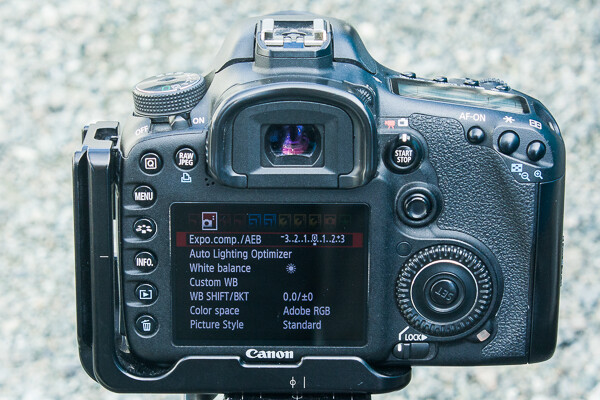
AEB in Camera Menu
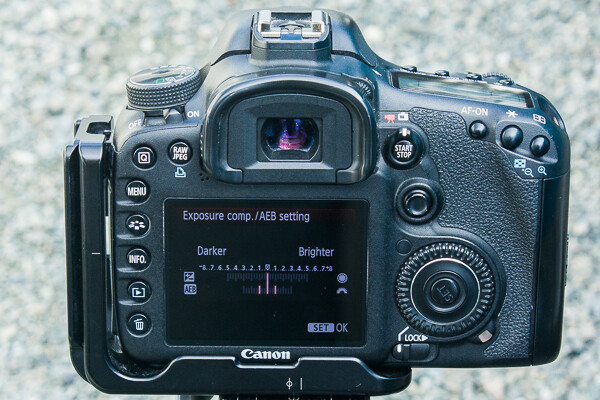
AEB in Camera Menu

AEB showing +1, 0, -1 brackets

AEB showing +1, 0, -1 brackets

With automatic exposure bracketing on, you simply hold down the shutter until your camera takes 3 exposures and voilà. This is even faster if you set your shutter drive mode to continuous high speed.

AEB will work on Aperture Priority and Shutter Priority exposure modes and on some cameras it will even work in Manual mode.

I usually use AEB on Aperture Priority mode because I like to have control over my depth of field for landscape photography. On this setting the camera will take the photo at three different shutter speeds to give you the three different exposures. It is important to use this setting if you think you might want to combine the exposures in post-processing.
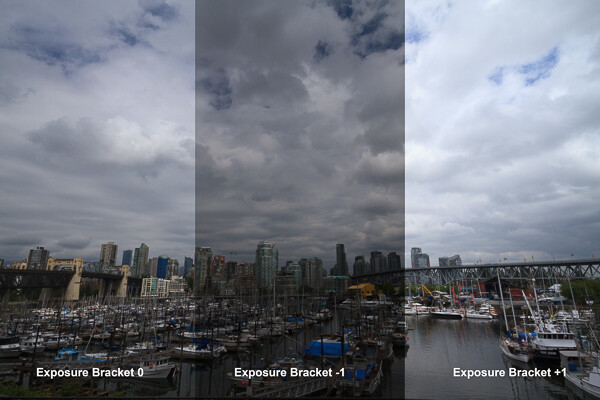
Exposure bracketing example

In this scene, the white sky caused the camera’s light meter to choose a darker exposure than was necessary. I decided that the +1 exposure was the best option.

Vancouver, British Columbia, Canada by Anne McKinnell

After processing the +1 exposure, this is the final version of the Vancouver City Skyline image.

If you use AEB on Shutter Priority mode, the camera will take the photo at three different apertures to give you the three different exposures. This is the best option to choose if you need to freeze motion at a fast shutter speed and depth of field is less of a concern.

Using AEB is the best method to use when things are happening quickly and you don’t want to spend any time looking at your LCD (known as “chimping”) after you make an image. When things are happening fast, chimping can cause you to miss a shot.

2. Exposure Compensation

Chimping is not necessarily a bad thing and unless there is a possibility of missing a shot, reviewing your images after you take them is a good practice to double check the exposure, focus and composition.

To use exposure compensation, just take the shot and then evaluate the image using the histogram. It is important to use the histogram for this and not just the picture as it appears on the back of your camera. The LCD is not all that accurate when it comes to exposure. Remember that if you shoot in RAW, what you are seeing on the back of your camera is a compressed version of the image and not an accurate representation of the RAW file. Also, your LCD’s brightness can be adjusted, so if you turn the brightness down when you are photographing at night all your images will appear darker during the day.

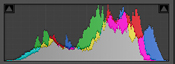
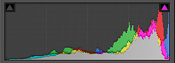
Using the histogram is easy. The blacks are on the left, the whites are on the right, all the mid-tones are in between. All you really need to know is that a spike on either edge of the graph is bad.
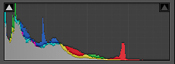
Under exposed image.

Under exposed image.

Good exposure.

Good exposure.

Over exposed image.

Over exposed image.

If there is a spike on the left edge, it means part of your image is completely black. You may want to use your exposure compensation to adjust the exposure to the right to make it brighter. But remember that having part of your image completely black, especially for a night shot, is okay.

If there is a spike on the right edge, it means part of your image is completely white and contains no data. Never let any substantial part of your image go completely white. Because it contains no data at all, it will always remain a white spot no matter what you try to do in post-processing. It’s better to keep the graph off the right edge. You only need to worry about this if the spike is right on the very edge of the histogram – if it spikes before the edge it is not a problem.

Once you evaluate your image using the histogram, you can use your exposure compensation to make the image darker or lighter without having to worry about changing the aperture, shutter speed, or ISO. If you just want it a little darker, turn the exposure compensation down a little. Or turn it up a little if your image is too dark. You’ll have to check your camera manual again to see how to do this. On my camera, I hold the shutter half way down and move the wheel on the back of my camera to change the exposure compensation.
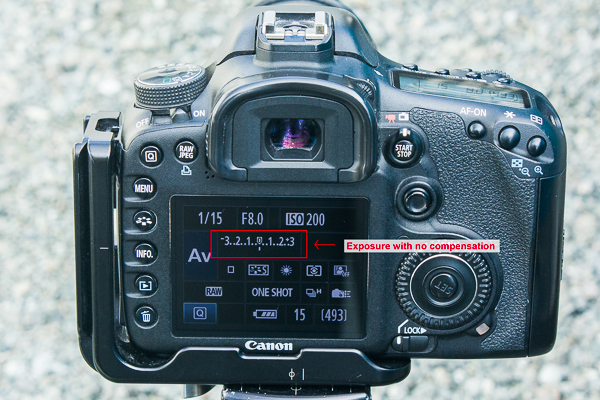
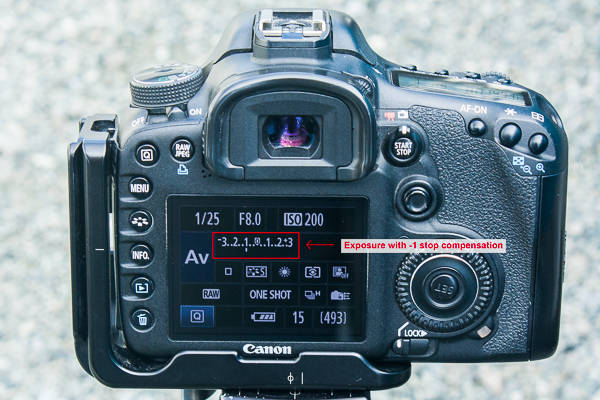
Exposure with no compensation

Exposure with -1 compensation

This is the quickest method to use when you have time to chimp. While bracketing will ensure one of the three exposures is useable, this method is more precise and deliberate.

3. Exposure Lock

Exposure lock is my favourite method to use when I have lots of time. It actually doesn’t require that much time to do, especially when you get in the habit.

If you have a subject that isn’t moving, such as a landscape scene, and you have time to be purposeful about what you are doing, this is the ultimate method for getting the perfect exposure.

I like to use exposure lock in combination with the “spot metering” exposure mode so that the camera will only take into account the light level at the exact spot in the frame that I tell it to. I decide what part of the image is most important for the exposure. For example, if I am making a silhouette image at twilight, I will point the camera at the sky and use the exposure lock button to exposure for the sky, then I recompose the image, focus, and take the shot.
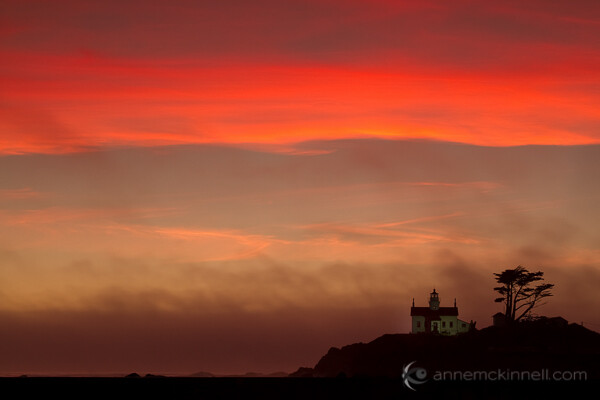
Battery Point Lighthouse, Crescent City, California, by Anne McKinnell

To make this image of Battery Point Lighthouse in Crescent City, California, I pointed my camera at the bright red band of clouds in the sky, used my exposure lock, and then recomposed the image and pressed the shutter.

Check your camera manual to see how to use exposure lock. On my camera, I press a button with a * on the back of my camera.
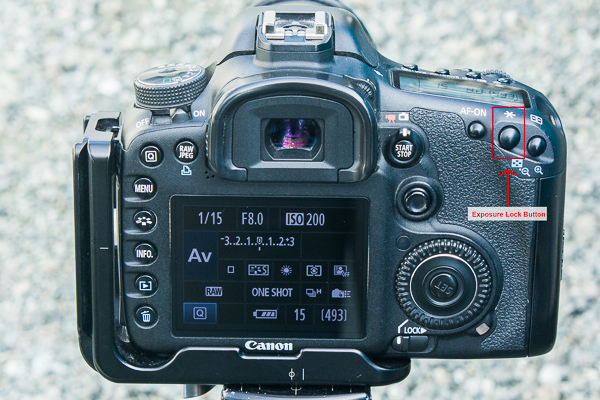
Exposure Lock Button

Depending on the type of subject you are photographing and whether things in your scene are changing quickly or slowly, one of these methods will ensure you always get a good exposure.

Post originally from: Digital Photography Tips.

Check out our more Photography Tips at Photography Tips for Beginners, Portrait Photography Tips and Wedding Photography Tips.

3 Ways to Guarantee Good Exposures


Digital Photography School

 
Comments Off on 3 Ways to Guarantee Good Exposures

Posted in Photography


Good Pie & Farewell: 10 Crusty Old Abandoned Pizzerias

18 Aug

[ By Steve in Abandoned Places & Architecture. ]

abandoned pizzerias
Hold the anchovies and everything else! These 10 crusty old abandoned pizzerias have sliced their penultimate pepperoni and will cut the cheese no longer.

Antonio’s Pizza – Long Beach, California

Antonio's Pizzeria North Torrance abandoned(image via: Nobody Walks In Long Beach)

It’s hard to believe a pizzeria with a BYOB policy could fail but fail Antonio’s Pizza did, and its remains still stand in North Torrance, California to remind us of its past glory. You might still see the store’s flaked and fading shell still standing at the corner of Prairie Avenue and 182nd St. Question: is it still OK for pizzerias to depict stereotypical Italian chefs in their signage, or has that practice gone the way of the Frito Bandito?

abandoned Antonio's Pizzeria North Torrance

Antonio’s Pizza closed almost 20 years ago but as of August 2012 when these photos were taken, it still stood abandoned. Even odder, the building is remarkably unmarked by graffiti. Kudos to the indomitable Dennis of Nobody Walks In Long Beach for capturing the ruins of Antonio’s Pizzeria on a marvelously sun-soaked southern California afternoon. I’d bring my own beer there just to enjoy the building’s timeless and atmospheric presence.

Bilit’s Pizza & Philly Steaks – Beaufort, South Carolina

Bilit's Pizza & Philly Steaks abandoned Beaufort fire(images via: The Beaufort Gazette)

We’re shocked, SHOCKED to hear that a “suspicious” fire destroyed a long-abandoned pizzeria but believe it or not, it happened… one night in late June of 2013, in Beaufort, South Carolina to be exact. The foreclosed & bank-owned shell of the former Bilit’s Pizza & Philly Steaks on 500 Laurel Bay Road gutted the building, which had been abandoned for several years and had no working electrical service. In related news, time was you could get Philly Steaks in South Carolina.

Read more here: http://www.islandpacket.com/2013/06/24/2553651/abandoned-pizza-restaurant-outside.html#storylink=cpy

Melina’s Pizzeria – Hoboken, New Jersey

Melina's Pizzeria Hoboken abandoned(image via: Baseballoogie)

Something’s broken in Hoboken (more than a few, though that’s changing) and we’re looking at you, Melina’s Pizzeria on the corner of 6th and Adams Street. Flickr user Baseballoogie snapped what may be the last and best image of the well-loved Jersey landmark though it’s not known if he was the last to gustatorially experience its “well-regarded” and “unique” pizza style.

abandoned Melina's Pizzeria Hoboken(images via: Hoboken411 and Baseballoogie)

Who knew the Animaniacs loved Melina’s Pizzeria so much? Not Steven Spielberg, we’re guessing, though potential legalities are a moot point now that Melina’s is no more. The undoubtedly unauthorized art does serve to effectively date the tableau, however, as a lost signpost of Nineties pop culture.

Next Page:
Good Pie Farewell 10 Crusty Old Abandoned Pizzerias

Share on Facebook


[ By Steve in Abandoned Places & Architecture. ]

[ WebUrbanist | Archives | Galleries | Privacy | TOS ]


WebUrbanist

 
Comments Off on Good Pie & Farewell: 10 Crusty Old Abandoned Pizzerias

Posted in Creativity


How Capturing Expressive Eyes Can Be The Key To Good Portraiture

13 Aug

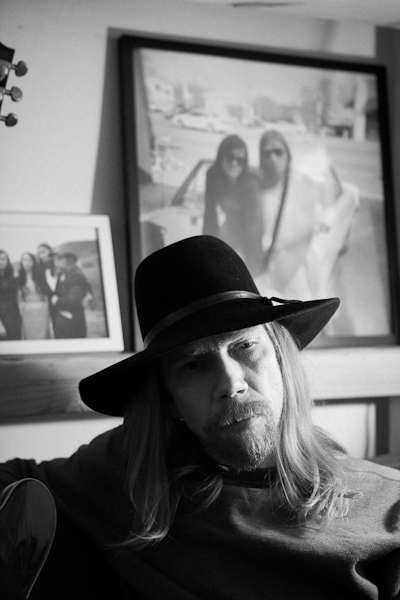
Paul Kostabi

If you look at some of the most famous photographs in history, such as Dorothea Lange’s Migrant Mother, Steve McCurry’s Afghan Girl, or much of Irving Penn’s work, you might notice there’s one thing that they have in common, a powerful emotion in the main subject’s eyes.

While this is far from a steadfast rule, if you’re doing portraiture, street photography, or photojournalism, catching a powerful expression in the eyes can be the difference between a mediocre photograph and the best photo you’ve ever taken.

If you watch a person’s eyes and wait, you can see when they are experiencing something, recalling a moment, or feeling an emotion.  That sometimes split second is when you need to take the shot.  You can create an amazing composition with gorgeous lighting, but if there is no expression coming through from the subject then the photograph will be lacking.  And that expression often begins with the eyes.

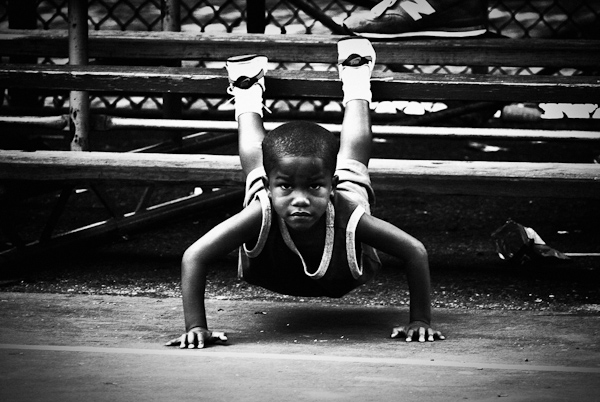
It could be a fleeting glance away from the camera as the subject recalls a story or a powerful gaze into the camera.   A momentary glance from the eyes can portray strength, fear, romance, nostalgia, confidence, glamour, and so many other emotions.

A good trick to elicit these emotions is to get the subject talking about a meaningful moment in their lives.  The more time you are able to spend with them, the more they will open up and the more opportunities you will have to capture these emotions.  Or with some, you can even simply state the emotion and they will be able to portray it (“Give me confidence!”)

So the next time you create a portrait, make sure to pay special attention to the eyes.

Pushups, Rucker Park

Post originally from: Digital Photography Tips.

Check out our more Photography Tips at Photography Tips for Beginners, Portrait Photography Tips and Wedding Photography Tips.

How Capturing Expressive Eyes Can Be The Key To Good Portraiture


Digital Photography School

 
Comments Off on How Capturing Expressive Eyes Can Be The Key To Good Portraiture

Posted in Photography


1 August, 2013 – Good News / Bad News

01 Aug

We normally don’t publish news reports, leaving that to those sites who feed us all a daily stream of new product announcements. But, there were so many interesting developments in the past few days that we thought it worth bringing them to your attention.

– Adobe has released updates to both Lightroom and Camera Raw. These incude bug fixes and support for several new cameras.

– Sigma has announced a new service that will allow owners of their latest series of lenses to change the lens’ camera mount when one changes systems. A cool and innovative service.

– The Swiss company Ilford Imaging has stated to it has been unsuccessful in finding new owners or investors, and has laid off 220 employees in prepartion for bankrupcy filing.


The Luminous Landscape – What’s New

 
Comments Off on 1 August, 2013 – Good News / Bad News

Posted in News


Start Feeling GOOD About YOUR Photography

24 Jul

As I’ve begun teaching others how to edit their photos I’ve begun to realize that a lot of new photographers lack the confidence in their own work. I get questions like “Why don’t my photos look like this?” or “Should I buy a D800 so I can take better photos?” all the time and I’m starting to wonder if it’s simply because people don’t feel good about the work that they do create.

I’ll be the first to admit that I’m my hardest critic, but I do always feel good about the photographs that I share, even if I wish I’d done something differently I am always happy that I got a result and gained some experience in the process.

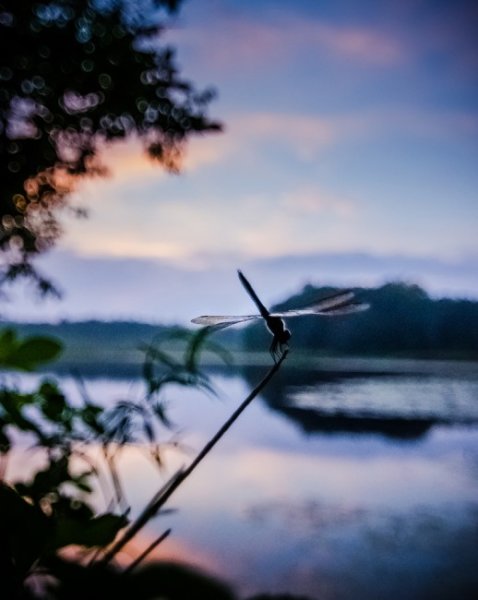
Dragonfly-Watching-Sunset-518x650

Of course, it can be pretty obvious why people might feel this way when you think about it. After all the internet is filled with amazing photographs, just look at any of these inspirational posts on DPS and unless your one of the featured photographers you might wonder how you too could get to that level.

The simple answer is… First you have to feel good about your photography, because the instant you start doubting your own work, your work will start to suffer.

Of course that’s easier said than done, so confronted with these questions about confidence, I decided I’d take the time to come up with five little nuggets of inspiration that everyone should keep in mind. By doing so I think you will start to feel good about your photography no matter who or where you are in your journey.

Compare Yourself to Yourself Three Months Ago – Not To Art Wolfe

No matter who you are the best benchmark for improvement is yourself in the past. Take a minute and dig through your archives look back at the photos you took three months ago, a year ago, or even further.

When I do this task I’ll notice that my composition and my choice of settings continue to improve. I make smarter choices for focal points and I get better and better at picking the right exposure in camera. Whatever you do don’t compare your photography to another photographer’s work – good or bad – it’s not a fair benchmark and you won’t be helping yourself appreciate your work.

Defeat Gear Envy

Gear envy is something we all struggle with from time to time and unless you’ve been blessed with that mythical tree made of money you’re going to be doing more wanting and less buying. Don’t let the idea that a better camera, lens, accessory, gadget or what-have-you will make you a better photographer – it won’t – and worrying about it won’t help either.

Be happy with what you have and spend your time learning to get the best photos that you can out of this equipment instead of daydreaming about your dream machine – your wallet will thank you later.

Out-in-the-Backyard-520x650

Beat the Critics By Remembering Your Fans

Even if the only fans you have are your friends and family let them be your motivation to continue to produce more work and better quality work. Let them move you beyond the point your at now and push you to where you want to be. Be happy with every like they give you on Facebook or every comment they leave on your site – or even – every time your mom tells you that she got your newsletter and loved the photo of that flower that you took at her house last weekend.

Fans are why I do what I do and I still remember when my Facebook page had less than 30 likes and almost no interaction. It takes time and a lot of work to grow, but if you’re consistent, true to yourself, your fans, and always remember it’s not a race you’ll start to feel good about what you’re doing and then the rest will fall into place.

Know Why You’re Photographing

Are you taking photos because you want to pass time on the weekends, record family moments, or are you trying to make a career out of it? There many reasons why we take photos and before you can truly be happy with the results you capture you should define why you’re picking up the camera in the first place.

A-Fantasy-World-521x650

Share Your Work

And finally – this is probably the most important one – share what you do. Open yourself up to the world and let others see the what you’ve captured. Take the critiques with dignity and class and revel in the compliments from your fans and family.

If you need a stiff kick of inspiration here are some tips to help you get the confidence to share your photos I wrote for my own site a few months ago. The truth of the matter is the more you share the more you’ll improve and the more you improve the more you’ll be able to look at step number one and say – “Wow, look at how far I’ve come!”.

And that is what feeling good is all about.

Post originally from: Digital Photography Tips.

Check out our more Photography Tips at Photography Tips for Beginners, Portrait Photography Tips and Wedding Photography Tips.

Start Feeling GOOD About YOUR Photography


Digital Photography School

 
Comments Off on Start Feeling GOOD About YOUR Photography

Posted in Photography


Canon EOS Rebel SL1/100D studio samples and good light samples gallery

18 Jun

ShawnGallery.jpg

Just Posted: Canon EOS Rebel SL1/100D studio samples and good light samples. We’ve just got a production version of Canon’s miniaturized DSLR and, as part of the process of reviewing it, have shot our standard studio scene. We’ve also taken it out to see how it performs away from the studio lighting and have put together a series of daylight samples. Click through to see how it fares.

News: Digital Photography Review (dpreview.com)

 
Comments Off on Canon EOS Rebel SL1/100D studio samples and good light samples gallery

Posted in Uncategorized


6 Secret Photography Lighting Techniques For Capturing A Good Photo

22 May

Everyone loves to take pictures. With the easy availability of cheap DSLR cameras on the market and the advent of affordable photography gadgets, who wouldn’t right? If you are one of those who loves photography, then you probably are already aware of one or two techniques to make your pictures look awesome! But if you’re looking to further improve your Continue Reading

The post 6 Secret Photography Lighting Techniques For Capturing A Good Photo appeared first on Photodoto.


Photodoto

 
Comments Off on 6 Secret Photography Lighting Techniques For Capturing A Good Photo

Posted in Photography


Props Are Evil: How To Use Them For Good

21 May

A Guest Post by Lynsey Peterson.

Nothing freaks me out like props.  Every time I see a picture of flower girls holding an empty frame that is outlining a bride and groom kissing in the distance, I die a little inside.  

Whenever I am subjected to a photo that attempts to bring in a letter jacket and a football and a casual I’m-just-hanging-out-here-in-my-letter-jacket-holding-my-football expression, I try to remember that I am terrible at making coffee and therefore cannot give-up photography immediately and go get an application at Starbucks.  We have come to a place where portrait photography trends are natural and candid and while you would think that means we are leaving all props behind to die a formal, posed, and staged death, we just can’t help ourselves from wanting to put a little extra something in there.  

Something personal.  Or themed.  Or fun.  As a photographer, the logistics of getting something personal or themed or fun in an image and having it look natural are overwhelmingly complicated.  Often leading to overwhelmingly complicated images.  But if done right, a little extra something adds…….a little extra something.  Photographing people with props comes down to one basic thing: how can you make this interact with that?

Props1 1

Make it Natural

This shot doesn’t scream A PROP WAS USED HERE, though it was.  This bride did not provide me with a “must have” shot list, which of course makes her my favorite bride ever, but she had one simple request: one picture of her drinking a can of PBR in her wedding gown.  

Now admittedly when she told me that, I wanted to pass out from the biggest eye roll that has ever happened because……….how on earth was I going to pull that off?  The goal was a tongue-in-cheek stylish effort that didn’t come across as a classless snapshot.  

Had there been any posing or obvious mention of the can, it could have easily gone from sweet and funny to tasteless and tacky.  Instead it’s a near romantic take on a candid moment at a reception.  It’s rare that making a joke out of the prop or drawing obvious attention to it generates a beautiful and interesting portrait.  Since it’s already on the losing side of “one of these things is not like the other”, there is no need to point it out.

Props2 1 

Make it Different

When it comes to props in portrait photography, chances are good that it’s been done before.  So do it different.  Photography is just storytelling and a prop is just another subject in your cast of characters; how many lines it gets is totally up to you.  High school seniors tend to be the group most interested in including a prop.  Which is often sports equipment and getting creative and unposed with things like sporting equipment is not an easy task.  Step out of the intended purpose and treat it like an object.  

A soccer ball doesn’t have to go at the feet, a letter jacket doesn’t have to be worn, a lacrosse stick doesn’t have to……do whatever it is that lacrosse sticks do.  The image is about a person—the viewer knows what the intended purpose is of a practical use prop.

Props3

Make it Simple

Including a prop adds another level for the eye to process, so clean up everything else as much as you can.  A tight frame, a clean background, and minimal distractions are all your friends.  Stick with them and they won’t do you wrong.

Props4

Make it Meaningful

As props go, the easiest of the bunch are the ones people want included because they are highly personal and mean a great deal.  Wedding rings, special stuffed animals, maybe their cat (tip: avoid this one if you can).  The interaction here will be easier, so the key is highlighting the connection between the person and their special prop.  

The book in this photo was written by their great-grandmother and has obvious family importance.  Before this shot I took dozens of them just holding the book, wanting badly to document the entire cover.  Finally it dawned on me that the the story here was about kids having something so significantly personal and historic still able to generate their interest.  Great images are never about the prop, but the people it connects to and why.  

Props5 1

Make it Timeless

Props have a way of dating a photograph.  Take a moment to consider what the image you are about to take will feel like in 10 years.  Or 20.  Or 50.  If there is anything that can be changed, deleted, or moved so that in a decade this image will have every bit as much relevance as it has today, do it.  

These kids had on screen print t-shirts featuring cartoon characters that most of us likely won’t know in a few years.  T-shirts, messy faces, lollipops, and two boys makes for a complicated snapshot.  Colorful props, interaction, and sweet expressions makes for a timeless portrait.  

Props6 1

Make it make Sense

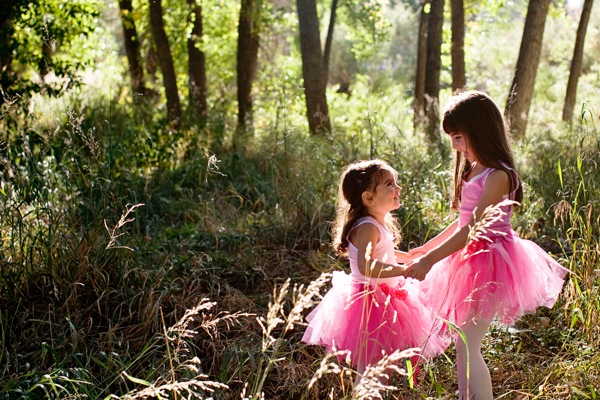
In my opinion, there is no tougher prop than a costume.  And when these sweet girls showed up in tutus at a suburban park, I had no idea how PINK TUTUS and grass and dirt were going to mix together.  Seemed a little like onion flavored ice cream.  If you take it apart piece by piece, it’s easier to vision it as a whole.  

I knew I wanted to show off the tutus full glory so the girls had to be standing.  I wanted the relationship of the sisters to play a huge role.  And I wanted it to have a feeling of magic.  Much like how I feel when I go to the park in my own pink tutu.

Props7 1

With enough creativity, almost any prop can make an image fun, personal, and interesting.  Unless someone shows up with their cat and lacrosse stick.  Then you’re on your own.

Check out more of Lynsey Peterson’s work on her website.

Post originally from: Digital Photography Tips.

Check out our more Photography Tips at Photography Tips for Beginners, Portrait Photography Tips and Wedding Photography Tips.

Props Are Evil: How To Use Them For Good


Digital Photography School

 
Comments Off on Props Are Evil: How To Use Them For Good

Posted in Photography


Change is Good

04 May

Google Co-Founder Sergey Brin Sports the New Google Glasses at Dinner in the Dark, a Benefit for the Foundation Fighting Blindness -- San Francisco, CA

If you want to make enemies, try to change something.

– Woodrow Wilson

I’ve been watching with great interest over the past few weeks as the naysayers seem to have gone CRAZY overboard trying to bash Google Glass every chance they can. I’ve seen articles in Wired and on CNN and on blogs, etc., all stating how terrible Google Glass is. Oh NO, geeky white dudes are wearing Google Glass! This will never work! Oh no, someone wore a pair into the shower! Oh no, I will punch someone in the face if they try talk to me with them on — all sorts of gibberish.

There’s nothing like change to bring out the absolute haters.

It seems like every time something comes out that represents change, people freak the fcuk out.

It’s not enough to say, “oh no, this thing is not for me.” People have to go absolutely overboard, talking about how horrible some new thing is for everybody ELSE.

I remember when I waited in line overnight (with my pal Robert Scoble, probably today’s biggest Google Glass cheerleader) for the very first iPhone. Robert’s son Patrick was the very first person to buy an iPhone at the Palo Alto store.

I’m not sure I’d ever been mocked by people so much. “You waited in line overnight to pay HOW MUCH?” for a stupid phone??? People thought the iPhone was the dumbest thing ever. “Why would you ever need a phone to surf the web?” “Why would you pay so much for a phone?” They laughed at me for camping out overnight to get the first generation phone — even though camping out overnight in front of an Apple store has been one of the most fun things I’ve ever done. Getting to hear Apple luminaries like Andy Hertzfeld and Bill Atkinson talk about Apple’s early days was a blast! It’s where I first met the awesome guys from SmugMug. Was it dorky and geeky? Sure, but whatever.

Read some of these early quotes about the iPhone when it first came out. Even though some of us loved it early, so many more were so “doom and gloom” on it. Now, of course, everybody loves the iPhone and the whole generation of Android and other smartphones that followed.

I remember when Twitter first came out. People hated that too. “Twitter is still a fad, and according to a study out today, it looks like it’s popularity may soon fade,” wrote BusinessWeek. People constantly mocked Twitter — “who wants to read a dumb post about what someone had for breakfast,” they’d say. I hopped on Twitter right away while so many of my friends refused to join. Those same friends now complain about how everybody else has more followers than they do.

The same naysayers took umbrage with Google+. Despite being named earlier this week as the second largest social network, the “change is bad” crowd hated Google+ when it came out. How many articles out there were written about Google+ being a ghost town? My good friend Trey Ratcliff passed 5 million followers on Google+ earlier this morning. That sure is an awful lot of ghosts if you ask me.

I’m having the best time on Google+. I’ve met some of the most talented and interesting photographers in the world, I’ve been on tons of great live hangouts and photowalks, and it’s been the best designed social network I’ve ever been a part of. I’m glad I joined it the first day it was available to the public.

When one of my heros, William Eggleston, had the first color photography show at MOMA in New York, a lot of people hated that too. Many people called it the most hated fine art photography show ever. Ansel Adams, the most famous photographer in the world at the time, even wrote a letter to MOMA curator at the time, John Szarkowski, trashing the change that Eggleston represented. Now everybody loves Eggleston and color photography is firmly established as a photographic fine art aesthetic. Just last month the Independent called him the world’s greatest living photographer.

I remember when I first started posting my photos online at Flickr back in 2004, their first year in existence. So many photographers gave me a hard time. They kept going on and on about how my photos would be “stolen.” “Who the hell cares,” I’d answer back. Now everybody posts their photos online, everywhere.

So what is it about Google Glass, the iPhone, Twitter, Google+, color photography, photo sharing that scare people so much? What is it that brings out the naysayers and haters?

It’s simple. Most people hate change. Most people fear change. Most people hope the world around them never changes and turns into something else. They are afraid that change will take their job, or their income, or somehow hurt them. A lot of these people are also lazy. They groan about having to learn a new thing or technology. They worry they will be left behind. So it’s easier for these people to bash whatever is new and interesting and jump on the anti-change bandwagon.

As far as Google Glass goes, I have no idea if it’s going to be a hit or not. I do think it represents an interesting new tool to use for street photography and I’m excited about trying them out myself at some point. I think it’s dumb though to see article after article by scared people trying to talk the rest of the world out of them. Articles that try to paint them as dorky or geeky or creepy. These are just more of the same old complainers/haters who hate every new thing that comes along.

Change is good. Don’t let the naysayers tell you otherwise. The next time somebody brings up some new idea, check yourself. Instead of immediately starting to bash it, resist that urge and keep an open mind. Every so often you just might be surprised.

Oh, and personally speaking, I think journalists that like to bash change are far, far, more dorkier than bloggers who like to take showers with their Google Glass on. ;)


Thomas Hawk Digital Connection

 
Comments Off on Change is Good

Posted in Photography


Good Stuff, Free: Joey L. on Creative Live, Now

29 Apr

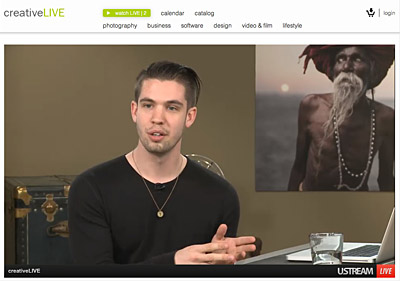
Just a quick heads-up: for three full days, photographer Joey L. is teaching all day live on Creative Live. And it’s free.

So far, it looks like really good stuff, and definitely worth your time.

:: CreativeLive.com ::

-30-


Strobist

 
Comments Off on Good Stuff, Free: Joey L. on Creative Live, Now

Posted in Photography