RSS
 

Posts Tagged ‘Going’

An Exercise For You to Practice Depth of Field Without Going Outside

01 Apr

lead-photo-Vickie-Lewis-Photography-for-dps

Many photographers, especially when starting out, have a difficult time understanding depth of field. I also hear quite often that photographers are waiting for nice weather to get out and shoot. So, here’s a fun exercise you can do at home, in any weather, that will help you understand the finer aspects of depth of field.

Depth of field is determined by which aperture you choose, what focal length you’re using, and the distance between the camera and the subject. In this example, we’ll explore depth of field using a 100mm lens.

To set up

Find between one and three small objects you can photograph. I found three sports water bottles with balls on the top to shoot. Next, you need some studio space. A patio door or very wide window works well.

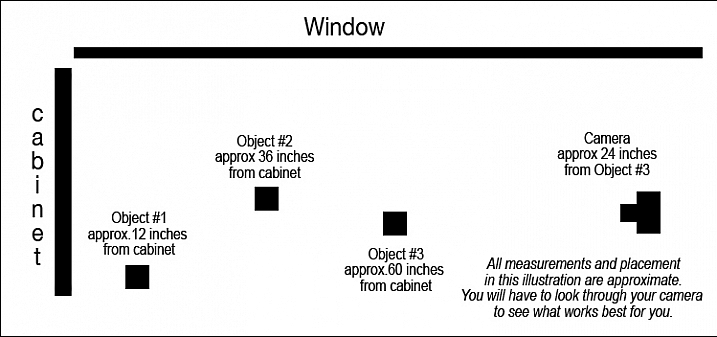
Your next step is to set up your object, or objects, in front of the window and to place your camera in position. The object and camera should be parallel to the window.

depth_of_field_illustration

This is how I set up my camera and objects.

I put the first ball, the soccer ball, about 12 inches in front of the cabinet. Then I put the second ball, the baseball, about 24 inches in front of that. I put the third object, the basketball, 24 inches in front of the next object, and finally I set my camera about two feet in front of the last object.

You’ll need to play a little bit to see what works best for you. It will vary depending on the size of the object you are shooting, and the focal length you are using. You want to be able to focus on all three objects, and take a photo of them without moving your camera, so play for a minute. Focus on the first object and make sure you can see all three objects in the frame. Then focus on the second and make sure you can still see them all. Lastly, do it with the third one, too.

Set your camera on either aperture priority or manual exposure, and use the widest aperture you have. I chose f/2.8. Your lens might not have that aperture available, if so f/4 or f/4.5 will be just fine.

Shoot wide opened focusing on each object in turn

Now, without changing anything but your focus, take a photo of each of the three objects.

200__depth_of_field_f-2.8

This photo was shot at f/2.8 while focused on the object closest to the camera, the basketball. Notice the narrow depth of field, in other words, how blurry the background is.

201__depth_of_field_f-2.8-f-2.8

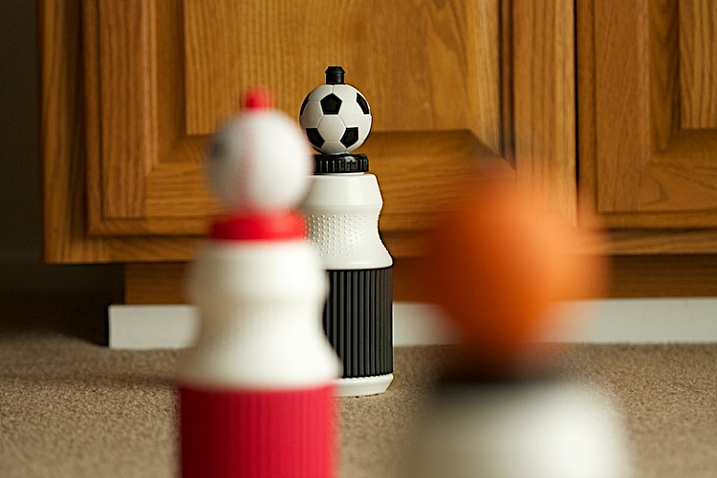
This was also shot at f/2.8, but this time, I focused on the middle object, the baseball. Notice that it is blurry in front and in back.

202__depth_of_field_f-2.8

This photo was also shot at f/2.8, but I focused on the soccer ball. I did not change camera position nor did I change lenses. Notice the depth of field, but also notice the change in perspective. Can you see that more of the cabinet is in the photograph?

Next shoot with a small aperture

Now, let’s try something a little different. Instead of shooting at your widest f-stop, shoot at your smallest, which means a higher number, like f/32 or f/16.

205__depth_of_field_-f-32

Here is the same situation. The camera hasn’t moved, but the aperture is now at f/32. The focus is on the basketball, but look how much is sharp.

204__depth_of_field_-f-32

Look closely. The aperture is still at f/32, but the focus has changed to the baseball. Notice the basketball is more out of focus, but the soccer ball in the back looks pretty sharp.

203__depth_of_field_-f-32

Above is the third example. The focus is on the soccer ball.

You can practice each of these things with different f/stops to see the difference between f/4, f/8, f/11, f/16 and f/32. Each choice will change the depth of field.

Change the distance to the subject

209__depth_of_field_-f-2.8

In the above photograph, I moved the camera closer to the baseball and shot at f/2.8. Practice isolating the elements and see what happens. Notice how the baseball really stands out, and look at the background. By isolating the baseball with a very narrow depth of field, the background becomes really out of focus. This tool is very helpful to clean up backgrounds.

210__depth_of_field_-f-2.8

Then I changed my focus to the soccer ball. The aperture is still at f/2.8. What do you notice about the background?

213__depth_of_field_-f-32

In the shot above the soccer ball is still in the original position, about a foot away from the cabinet. Notice how sharp the background is – this was shot at f/32.

214__depth_of_field_-f-11

Now, notice how we start to lose detail in the cabinet behind. This image above was shot at f/11.

215__depth_of_field_-f-2.8

Finally, by shooting at f/2.8, and without moving the position of the soccer ball or the background, the background has become more out of focus and less distracting.

Take some times and practice this at home. So what you’ve learned here is a great way to practice depth of field at home–even on a rainy day! So take out your camera, find some small objects to shoot and start practicing.

Please share in the comments below how controlling the depth of field could impact how you shoot. What did you learn by doing this exercise?

googletag.cmd.push(function() {
tablet_slots.push( googletag.defineSlot( “/1005424/_dPSv4_tab-all-article-bottom_(300×250)”, [300, 250], “pb-ad-78623” ).addService( googletag.pubads() ) ); } );

googletag.cmd.push(function() {
mobile_slots.push( googletag.defineSlot( “/1005424/_dPSv4_mob-all-article-bottom_(300×250)”, [300, 250], “pb-ad-78158” ).addService( googletag.pubads() ) ); } );

The post An Exercise For You to Practice Depth of Field Without Going Outside by Vickie Lewis appeared first on Digital Photography School.


Digital Photography School

 
Comments Off on An Exercise For You to Practice Depth of Field Without Going Outside

Posted in Photography


Going Pro: We interview Fujifilm execs in Tokyo

21 Jan

Toru Takahashi, (l) Director, Senior Vice President and General Manager of Fujifilm’s Optical Device & Electronic Imaging Products Divison and Toshihisa Iida, (r) General Manager of the Sales and Marketing Group of Fujifilm’s Optical Device & Electronic Imaging Products Division.

Both men are pictured at Fujifilm’s Tokyo headquarters at the launch of the X-Pro2 and X70.

Last week, Fujifilm announced several new products including two major new cameras – the X-Pro2 and X70. DPReview was at the launch event in Tokyo where we made time to sit down with two senior Fujifilm executives – Mr. Toru Takahashi and Toshihisa Iida. As well as the new cameras, we also spoke about Fujifilm’s long-term ambitions, which cameras sell best in which countries and Samsung’s apparent exit from the camera market.

The following transcript has been edited slightly for clarity.


The X-Pro2 clearly replaces the X-Pro1 but is it the new flagship? Or does it sit alongside the X-T1?

Toru Takahashi (TT): We have two flagships. The X-T1 and the X-Pro2. [Even after] the launch of the X-T1 the X-Pro1 still had a function. We have two different kinds of photographers to cater for.

Can you explain more about these different kinds of photographers as you see them?

TT: When we started the X-series with the X100 we were aiming at street photographers. And the X-Pro1 and now the X-Pro2 are extensions [of that concept]. The X-T1 is for those photographers who like to photograph sports, nature and wildlife. What they like to shoot is different, so we need to provide for two different kinds of photographers.

It has been four years since the X-Pro1 was announced – did you always intend to replace it with the X-Pro2?

TT: Of course. The X-Pro1 was our first mirrorless interchangeable lens camera. We knew it wasn’t perfect. And we’re always pursuing the perfect camera, so we always knew we’d have to improve on the X-Pro1. And now the time has come.

So why did it take so long?

TT: It’s not easy to improve this kind of camera! That’s one reason. The biggest element is the processor. The speed [of the X-Pro2] is much faster, in every respect. So that’s one reason it’s taken so long.

Fujifilm’s X-Pro2 brings several updates compared to the original X-Pro1, including an improved hybrid viewfinder, better autofocus and significantly increased resolution.

Can you tell me approximately how long it took to create the X-Pro2 from the original design concept?

Toshihisa Iida (TI): Since we produced the original X-Pro1 we got a lot of feedback from photographers, and we tried to improve it with various firmware upgrades. After receiving all that feedback we started designing [what became] the X-Pro2. Also we asked for feedback on operability. For example, it’s a small change but all the buttons on the back of the X-Pro1 are on the right side of the LCD, not the left side. This research took one year or so, and then we decided ‘OK this will be the right product’. Of course at the same time we were developing the sensor and the processor. So maybe two years, in total.

Mr. Takahashi – you mentioned in your presentation at the press conference that Fujifilm is not interested in becoming involved in a ‘pointless technical race’. What did you mean by that?

TT: We think that the most important thing is overall image quality. So for example just increasing [pixel count] won’t make a better picture. We [also] need better high ISO image quality. It’s always a tradeoff, and to find the optimal point is very difficult. That’s the reason we why we picked the APS-C image format. A 35mm full-frame sensor is bigger, but it’s difficult to handle and will make the camera bigger. So we’re trying to pursue the optimal [combination of qualities] for photographers.

A lot of photographers still regard full-frame as a better format – do you think in the future that Fujifilm will create a full-frame camera?

TT: First of all, I think you need to understand their thinking. Because of 35mm film, they’re convinced that sensors should be [this format]. But it’s not true. Now, you can shoot detailed images [on the X-Pro2] at ISO 3200. In the film age, the maximum ISO was 400-800. So things are changing, and innovations have occurred but [some photographers’] mentality has not changed. I think we can offer the best picture quality by using the APS-C format.

TI: If we could create a camera of this [X-T1 / X-Pro2] kind of size with a larger format sensor, that would be good, but the lens is analog technology so a bigger format means a bigger size, and weight.

Is there anything that Fujifilm will never compromise on?

TT: As I mentioned before, picture quality. And because we picked the APS-C format, also size and operability.

Historically I know it has been a little more difficult in America to sell cameras which are smaller. There seems to have been a feeling that bigger cameras are more professional. Is this still true, or is this changing?

TT: I think that kind of mentality is gone. Remember at the beginning of the home video age, people had huge cameras for shooting their family occasions, but that was ten, twenty years ago. The mentality has changed – even though [Americans] still have big cars!

TI: I think that the American consumer is very smart. I respect them a lot. Their number one priority I think is actually performance, not size and weight. Asian consumers care more about [smaller] size but for Americans the quality and performance are the priorities. So if big cameras offer much better results, they’ll pick them. But when small camera systems [achieve parity] they’ll start to buy into smaller systems.

Fujifilm’s X-A2 is a budget X-series model aimed at beginners and compact camera upgraders. Although it has not sold well in the USA, we’re told that thousands are sold every month in Thailand, where they are popular with young female photographers.

I learned yesterday that the X-A2 is very successful in some countries – specifically Thailand. Can you give me some idea of how your sales differ globally, from country to country?

TI: At the professional level – so cameras like the X-Pro1, X-T1 and hopefully the X-Pro2 as well – we can sell them across the world. They’re very popular in Japan, Germany and in the USA. But cameras like the X-A2, while they haven’t done as well in the USA, they’re popular in Asian countries.

Young women are buying these cameras, and the primary reason they like them is for their rendition of skin tones. Mirrorless sales are now double compared to DSLRs [in these countries] and we’ve captured a large market share. The latest market data from Thailand for example shows that Fujifilm is number one in terms of value within the total interchangeable lens system.

What are the essential ingredients of the Fujifilm X-series?

TT: Product design is a key point of differentiation. We do this by ourselves. So sensor design, although we don’t make the sensors by ourselves. We design our processors, but of course we do not manufacturer them so we require other companies. But [whether we manufacturer a component or not] we stick to designs that we’ve come up with [in house]. So [the sensor in the X-Pro2] is a good example. This is a 24MP sensor that can produce something like 30-36MP equivalent resolution. Design is our strength I think. And lenses. We have very strong lens design capabilities. Lenses, we have our own technologies, we make lenses by ourselves.

I was pleased to see that apparently, video quality in the X-Pro2 has been improved. Is this a consequence simply of the higher resolution sensor and a difference in sampling, or has the processing been improved?

TT: It’s due to processing.

TI: It’s also due to the sensor readout speed. Because of the copper circuitry the sensor reads out very quickly and the camera’s sensor is powerful enough to process all of this information.

Previous generations of X-Trans had a lot of moiré – what was the cause of that?

TT: It was because of the X-Trans filter pattern. They bayer-pattern is very simple, but we chose X-Trans, which is complicated. And I won’t say that video quality was the number two priority, but the number one priority was still imaging. So we needed to focus on movie image quality, and now thanks to the faster sensor and faster processor [in the X-Pro2] even with the complicated filter pattern we’re able to improve the quality of the video a lot.

In the past you’ve primarily focused on the needs of stills photographers – are you moving into trying to appeal to video shooters too?

TI: Also we have a lot of customers who use Fujinon cine lenses and they’ve made specific requests for these lenses to be useful on our X-series cameras. They want one set of lenses for everything. So we’re listening to feedback from these customers and from our X photographers.

TT: And as you know, still imaging and video are merging anyway…

In your opinion, what is the perfect sensor resolution for all purposes?

TT: We should separate commercial photographers [in this discussion]. I think we can satisfy [most] photographers with the APS-C format, but commercial photography is different. Excluding commercial usage I think 24MP is good enough and more than this I think would require a larger sensor format than APS-C.

TI: The megapixel race means much less in [cameras like the X-series]. Output quality is everything. So at the moment we think that 24MP is maybe not the maximum resolution, but certainly the best. Considering lens resolution, it is the best resolution for APS-C. If we increased to 28 or 30MP there would be more disadvantages than advantages. Of course technology changes and I can’t predict the future, but at the moment 24MP is the best.

The only manufacturer to go above 24MP in the APS-C format is Samsung, which has recently apparently retreated from the mirrorless camera market. How do you react to that?

TT: I am not surprised. I think that their cameras are mechanically good, but something is missing. Heart, or emotion. That’s just my personal opinion.

TI: Samsung’s processing engines are so powerful, as in the NX1. But a camera is more than just a processor. It’s a lens, sensor, processor, ergonomics and operability and also [customer] service and everything.

The slimline X70 boasts a 16MP APS-C sensor and a fixed 28mm equivalent F2.8 lens.

A lot of the X70’s features are taken from the X100T. Do you anticipate the customer base being different for the X70 versus the X100T?

TT: I like both cameras very much. But for me, the X70 is the perfect camera to carry around, and if someone asked me to pick up either camera I’d pick up the X70. It’s more flexible for picture-taking. It is 28mm, and [although] F2.8 is a little dark, it is bright enough. For me, 28mm [is perfect] and it’s smaller than the X100T. Someone who already owns an X100 might buy an X70.

TI: I had a discussion with one photographer who specifically said that he was going to buy the X70 in addition to his X100T. Two cameras, both small cameras, one with a 35mm lens and one with a 28mm. More flexibility.

TT: This is just my personal opinion but 24mm would be even better, but we couldn’t make [the X70] this size if it had a 24mm lens.

Something we’re interested in at DPReview is the emergence of virtual reality imaging. Is this something Fujfilm is looking into?

TT: For the moment we want to work on the basics. Products like GoPro are popular, but the cameras are nothing special. We like to provide our customers with something special and unique so for now, that area is not an are we’re [interested in] pursuing.

What kind of company will Fujifilm’s camera division be in five years’ time?

TT: We’d like to be at least in the top three companies in the camera business by market share.

And how will you achieve that?

TT: As you know, mirrorless cameras have many advantages over DSLRs. That is a fundamental fact. So we pursue this approach, while the other two manufacturers [Canon and Nikon] stay with DSLR. But I don’t think they will stay there forever!

So you think that Canon and Nikon will be forced to move into mirrorless?

TT: They will. For sure. But the question is just how soon.

And the other company of course is Sony…

TT: Sony has a big advantage, they make their own sensors. That is a very big advantage for them, but they are weak in lenses.

TI: And they are weakened by having so many formats. APS-C, full-frame, [across both] DSLR and mirrorless. So their lens division must be under a lot of pressure!

Where are the remaining gaps in the X-series lens lineup?

TT: Customers are requesting more compact lenses. Our 35mm F2 is one example. So we may need to supplement this lens [with others of this kind].

TI: And also photographers are challenging us to make more telephoto primes. And astrophotographers want fisheyes, and also [we have requests] for tilting lenses. So although the volume [of those products] might not be as big, photographers are asking us.

Fujifilm’s new 100-400mm telezoom, pictured under assembly in Fujifilm’s factory in Sendai, northern Japan.

We talk a lot about digital imaging, but Instax is still very popular. Why is that, in your opinion?

TT: Instax is being used by the younger generation. They have never seen prints! So a print popping out the side of a camera is a [novelty] for them. And physical pictures. Exchanging pictures has become a new mode of communication.

Do you think film in general will have a resurgence?

TT: No, I don’t think so. The infrastructure [is no longer in place]. We have to continue to supply film and maintain our labs for another 10-20 years, maybe but I don’t think we can change the [downward] trend.

You mentioned in your presentation that demand for film peaked in 2000. Can you give me a current idea of how that compares to demand today?

TT: We sell less than 1% of that amount now. Across all formats. But we have to supply film to photo enthusiasts. They demand it of us, so we do.


Editor’s note: Barnaby Britton

I’ve spoken to Mr. Iida many times over the past few years, both in interviews and privately. As always, he was candid and thoughtful when I spoke to him in Tokyo most recently. I have not met Mr. Takahashi before, but he impressed me with his candor, humor and obvious enthusiasm for photography. A keen amateur photographer before taking on his current role, Mr. Takahashi is very obviously someone with a clear idea of what makes Fujifilm unique, and a vision for how the company will develop in the future.

It was clear during our conversation that both Mr. Iida and Mr. Takahashi are proud of and pleased with the X-Pro2, and for good reason. As the successor to the original X-series interchangeable lens model it is perhaps the purest expression yet of the original concept behind the system. Fujifilm has yet to convince us that it can truly cater to the modern sports or wildlife photographer (the X-T1 is certainly no slouch but its autofocus system cannot compete with the likes of Nikon’s 3D tracking and as Fujifilm admits, the X-series lacks much in the way of serious long glass) but the X-Pro2 is an easier camera to get right and its appeal is obvious. It’s not too big, it’s not too small, its viewfinder is excellent and let’s be honest – it looks great. In short, it has precisely the same appeal as the original X-Pro1 and X100 but improves upon those models with significantly more resolution, better ergonomics (I love the AF joystick) and – after the passage of four years – a much more mature lens lineup.

And of course, better video. Although we haven’t yet tested the X-Pro2’s video mode in any depth, it certainly seems that the worst of the issues that afflicted previous X-Trans models are gone. Fujifilm’s focus is still primarily on stills shooters but we’re optimistic that the X-Pro2 is at least usable for video, if not entirely optimized for it. I get the feeling that the poor quality video of previous models in the X-series was something of an embarrassment for Fujifilm and it’s good to see the company making an effort to improve this feature. Part of the reason for this improvement is processing, and part of it might also be the increased resolution of the new sensor and a change in how the data is sampled to create a video signal. Regardless, both the new sensor and upgraded processor are good news for stills photographers, too. With significantly more resolution than the previous generation this new 24MP sensor is a big step up for the X-series and our first impressions of image quality are very positive.

I agree with Mr. Iida when he says that for now, pixel counts much beyond 24MP are of limited usefulness on APS-C format sensors, and I very much doubt that Fujifilm will ever create a full-frame camera built around the 35mm film format. However, I would not rule out a move into medium format. Fujifilm has a long history of creating cameras and lenses built around medium format film (and, it is rumored, also around medium format sensors) and with the X-series reaching maturity, I would not be at all surprised if Fujifilm unveiled a new medium format digital system at some point. And don’t forget: 2016 is a Photokina year…

Speculation aside, it is interesting to note that it was me, not Mr. Iida nor Mr. Takahashi that brought up Sony. Mr. Takahashi told me that he wanted Fujifilm to be in the top three camera manufacturers, but it was obvious that he was imagining Canon and Nikon to be the other two brands in that trio. Perhaps he was thinking in terms of competition in the APS-C space (representatives from more than one manufacturer have suggested to me privately that they doubt whether Sony is serious about sub full-frame formats in the long term) or maybe – to Mr. Iida’s point – he thinks that Sony will flounder as a consequence of supporting too many systems.

My personal opinion is that Sony will be fine, and will continue to concentrate on the full-frame space alongside Canon and Nikon, but that Fujifilm will side-step them all by focusing on APS-C and (in the longer term) medium format platforms. What do you think? Let us know in the comments.

Articles: Digital Photography Review (dpreview.com)

 
Comments Off on Going Pro: We interview Fujifilm execs in Tokyo

Posted in Uncategorized


Orbis is Going Away. Grab One (for Cheap) While You Can.

11 Dec

For those of you late to the party, the Orbis Ring Flash Adpater is a passive, add-on light shaping device that turns your speedlight into a ring flash. There are others, but for a slew of reasons the Orbis has long been my favorite of the lot.

And it is about to go away forever. This post is a quick heads-up to grab one while you can—and a pointer to a fantastic deal on the last units as they are closed out.

The Orbis was developed in 2008 as a sophisticated answer to the DIY efforts of the Strobist community. After seeing what was possible with cereal boxes, aluminum foil and gaffer’s tape, reader James Madelin wanted to build something better. Meaning nicer looks, better durability, more efficiency, more color correct and with a better quality of light. So that’s exactly what he did.

The Orbis is surprisingly complex on the inside in the way it bends light around the donut. It strikes the balance between lighting efficiency vs. evenness (both being very important) just about as well as possible.

Interestingly, of all of the best ring flash adapters, the Orbis was the only one that was never knocked off by the shady Chinese photo gear copiers. It’s not that they never thought of it. Lord knows, they put out crap versions of all the others.

My guess? They cut one open, took a look inside and said, “Eff this. Let’s knock off the Ray Flash instead.

What it Will Do

The Orbis Ring Flash Adapter is not a flash. It is a passive light mod that mounts onto your existing speedlight.

Used alone, on-axis (classic ring light position) it creates that signature glam ring light look as seen above. And because it retains any TTL functions of the speedlight crammed into it, the Orbis is very popular with club/event photographers. Stick on a wideangle lens, work two stops over the ambient in TTL mode, and the results look cool as crap.

And that’s fine for event shooters. But I prefer to use mine more in a way inspired by portrait shooters like Greg Heisler and Dan Winters.

In this mode, the Orbis becomes a very sophisticated fill light. You can use it in combo with another off-camera speedlight acting as key light, and it fills in the gaps—to whatever level you choose based on how you power it.

The photo above of poet Linda Joy Burke is a good example. The key light is coming from upper left. I am working well above the ambient with my flash exposure. So Linda’s shadow side would be very, very dark without the Orbis that is wrapped around my lens.

The light from the orbis reaches into the shadow side without really adding any footprint, and creates legibility. How much? Your choice. Just dial the power of the ring-fill light up or down as much as you want.

This is a common way for portrait photographers to create exactly the amount of legibility they want in the shadows. Which means you can get more creative and/or edgy with your key if you want. ‘Cause the ring is gonna save your ass in the shadows.

Same here with this photo of blogger Sian Meades, done in London. I am in full shade here, and this light is completely being created with two speedlights.

The key light is at hard left, raking across Sian’s face. The fill light, in an Orbis, stuck right on my lens, is creating the legibility in the shadows of the key.

The ambient component here is minimal. Without the flashes the photo would be near black. The on-axis Orbis gives me complete control of my shadow density.

(To learn more about lighting either of these two photos, click on either one.)

Now or Never

And the Orbis will soon be gone forever.

They sold over the last seven years for $ 200, rarely if ever discounted. But the remaining units are being closed out for $ 129 (w/free shipping in US.) Or you can get it with the hands-free arm for $ 139 (+$ 7.40 shipping in US.)

This is a great deal. Because not only will it work on nearly any speedlight (but not bigass Vivitar 285s, sorry) it is built to last you likely for the rest of your shooting life.

Which is a good thing, because you’re not gonna be able to replace it.

Amazon: Orbis Closeout: $ 129, free ship US

Amazon: Orbis Ring Flash Adapter w/Arm: $ 139 + $ 7.40 ship US


Strobist

 
Comments Off on Orbis is Going Away. Grab One (for Cheap) While You Can.

Posted in Photography


Going solo: DxO introduces 20MP ‘ONE’ connected camera

18 Jun

DxO has unveiled its first image capture device, called simply DxO ONE. Designed to be used in tandem with an iPhone, the ONE features a 1″-type 20.2MP CMOS sensor, integrated lightning connector and 32mm equivalent F1.8 lens. It relies on a connected iPhone or iPad to provide a viewfinder and control interface by way of a free app. Read more

Articles: Digital Photography Review (dpreview.com)
 
Comments Off on Going solo: DxO introduces 20MP ‘ONE’ connected camera

Posted in Uncategorized


dPS is Going into Holiday Mode

26 Dec
Wbeem

By wbeem

If you are like many of us on the dPS team you may be traveling somewhere for either Christmas or New Year’s or both. I am personally heading up north a bit to a small town called Jiquilillo here in Nicaragua. It’s a fishing village and we expect to see lots of fireworks on the beach and drink a few beverages.

Travel safe if you are taking a journey. Or if you’re sitting at home wondering what to do with your time, we’ll be taking a bit of a break or our regular article schedule. It will go like this:

From now until New Years – the best of dPS 2014

I’ll be digging through the year’s worth of articles and finding the best of the best for you. Starting off tomorrow with the hottest landscape articles of 2014 (which ones you guys liked the most) I’ll have a new topic each day with several articles for you to read or review.

Starting off 2015 – getting back into the groove slowly

After the fireworks have long since subsided we’ll get back to our regular schedule of two articles a day on January 3rd (Australia time). For the first couple days you’ll see the wrap-up of the best of series and just one post per day.

Relax, reflect and recharge

Take some time off to do the three R’s: relax, reflect on the past year, and recharge your batteries ready to the next one. It’s going to be a good one so let’s make sure we’re ready for it and firing on all cylinders. See you on the flip side (dare I date myself)!

Paul Mullett

By Paul Mullett

Sonny Abesamis

By Sonny Abesamis

googletag.cmd.push(function() {
tablet_slots.push( googletag.defineSlot( “/1005424/_dPSv4_tab-all-article-bottom_(300×250)”, [300, 250], “pb-ad-78623” ).addService( googletag.pubads() ) ); } );

googletag.cmd.push(function() {
mobile_slots.push( googletag.defineSlot( “/1005424/_dPSv4_mob-all-article-bottom_(300×250)”, [300, 250], “pb-ad-78158” ).addService( googletag.pubads() ) ); } );

The post dPS is Going into Holiday Mode by Darlene Hildebrandt appeared first on Digital Photography School.


Digital Photography School

 
Comments Off on dPS is Going into Holiday Mode

Posted in Photography


Deal 7: Save 60% On our ‘Going Pro’ eBook

19 Dec

Going pro 363x448I can’t believe we’re at day 7 in our 12 days of Christmas!

Deal 7 this year is perfect for those of you who secretly dream of making money from their photography.

If that’s you – today we’re offering a 60% saving on our ‘Going Pro’ kit.

Bundled in this kit are:

  1. Going Pro: How To Make Money From Your Photography, 91 pages of first-hand experience to help you sell your images the way you want, by experienced magazine photo editor Kelly Kingman.
  2. 2 hours of Audio downloads of interviews with pro photography experts Susannah Conway, Charles Borst, Suzanne Sease, and Christina Villaflors.
  3. Getting Published in Photography Magazines, a 28-page practical primer on getting your photos published, by DPS pro Mitchell Kanashkevich

Your goal might be just for some extra cash or perhaps a full-time career, either way this kit will kick start your professional career.

For just $ 20 (normally $ 50), it’s guaranteed to pay for itself many times over!

Just keep in mind – this deal is for 24 hours only and the price will go back up to $ 50 soon – so grab it here today.

googletag.cmd.push(function() {
tablet_slots.push( googletag.defineSlot( “/1005424/_dPSv4_tab-all-article-bottom_(300×250)”, [300, 250], “pb-ad-78623” ).addService( googletag.pubads() ) ); } );

googletag.cmd.push(function() {
mobile_slots.push( googletag.defineSlot( “/1005424/_dPSv4_mob-all-article-bottom_(300×250)”, [300, 250], “pb-ad-78158” ).addService( googletag.pubads() ) ); } );

The post Deal 7: Save 60% On our ‘Going Pro’ eBook by Darren Rowse appeared first on Digital Photography School.


Digital Photography School

 
Comments Off on Deal 7: Save 60% On our ‘Going Pro’ eBook

Posted in Photography


Real-world test: Going pro with the Samsung NX1

27 Nov

As often as we can, we like to put the cameras that we test into the hands of working photographers to find out what they think. Recently we gave the Samsung NX1 to Jordan Stead, staff photographer at SeattlePI.com, and ventured out to nearby Carkeek Park to photograph the salmon run. A seasoned shooter accustomed to pro camera bodies, Jordan gave the NX1’s hybrid AF system and 28.2MP BSI-CMOS sensor a try. See the video

Articles: Digital Photography Review (dpreview.com)

 
Comments Off on Real-world test: Going pro with the Samsung NX1

Posted in Uncategorized


Going Wide With the Tokina 11-16mm f/2.8

29 Oct

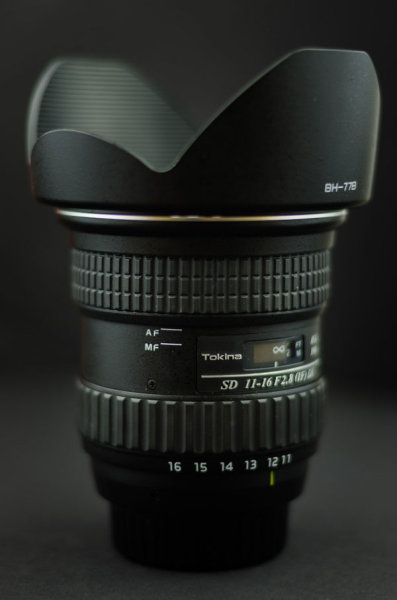
The Tokina 11-16mm f/2.8 APS-C sensor lens is without a doubt my favorite lens in my camera bag and it also has some great reviews throughout the photography community. But is this lens for you? What are its strengths and weaknesses? Ultimately, what kind of photographs can you take with it?

tokinalens

Who is the Tokina 11-16mm f/2.8 for?

On the surface this wide angle crop sensor lens is going to appeal to just about any landscape photographer using an APS-C sensor DSLR and particularly those who are on tighter budgets, as it can be found (at the time of this writing) for around $ 500 making it quite affordable for its quality.

The main strengths

The Tokina 11-16mm has been a popular lens for a few years with good reason. It is sharp throughout its focal range and has limited distortion and artifacts which can be easily corrected inside Lightroom or other post-production software.

The lens is built like a tank and can really take a beating in the wild.

The constant f/2.8 aperture is a great benefit if you plan on photographing in low light situations – for example – taking photos of the night sky.

Its weaknesses?

Of course, with every set of strengths, comes a set of weaknesses and the Tokina 11-16mm has a couple that are worth mentioning here.

The small focal length range does at times feel a bit limiting. You’re always going to be at a wide angle shot, whereas something like the Nikon 10-24 will get you closer to your subject without swapping lenses.

As I mentioned the Tokina is built like a tank, and as such, is quite large (550g) which does make it cumbersome to take with you on longer hikes. Not saying that it’s not doable, just that smaller is better when you’re packing for a trek and it’s worth considering.

Overall I haven’t noticed too many problems with the lens, but the one I have, does get a little finicky when trying to focus in low light situations. It’s not always a problem, and by no means a deal breaker for me, but it is something to be aware of.

So what kind of photographs can you take with this lens?

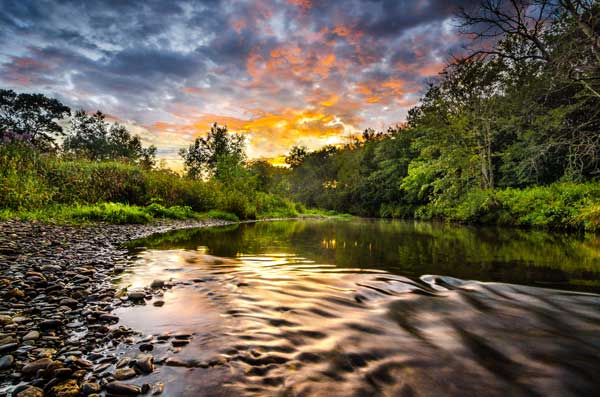
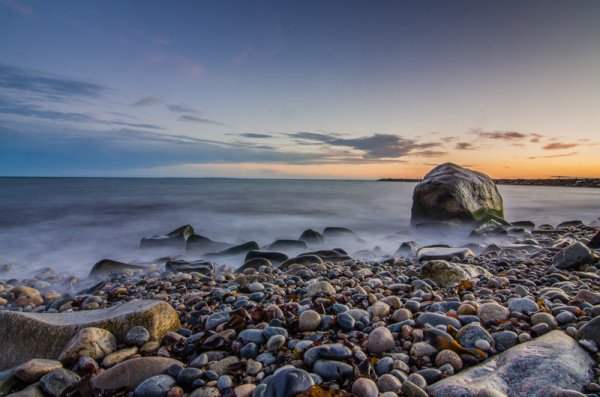
As with any lens the photographs you make are only limited by your creativity when it comes to subject matter. That said, dramatic sunset photographs, or dynamic seascape scenes are the bread and butter for this lens.

lazyphotographer

ISO 100 | f/14 | 11mm | 2.5 seconds

improve-photography-self-critic-5

ISO 100 | f/11 | 11mm | 6 seconds

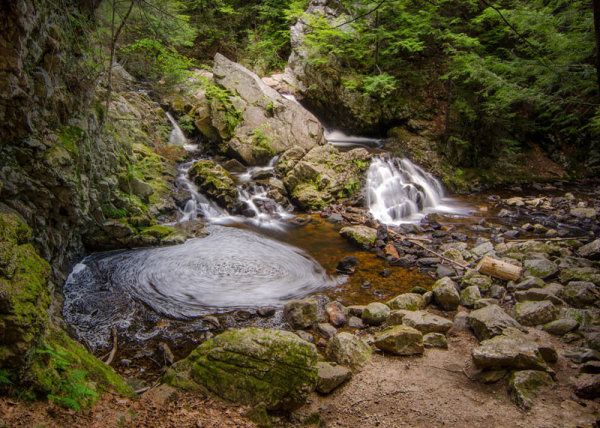
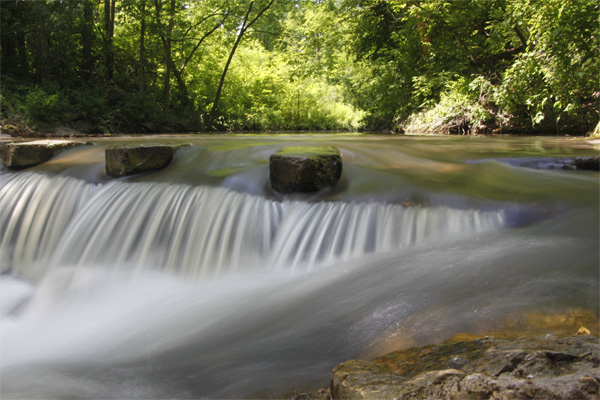
On top of these, if you’ve wanted to capture a silky smooth waterfall photograph, this lens will certainly get it done, and I’ve used it many times photographing the numerous waterfalls of New England.

show and tell-6

ISO 100 | f/14 | 16mm | 3 seconds

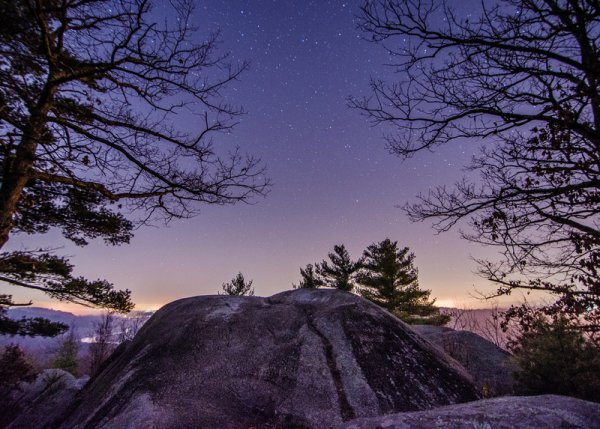
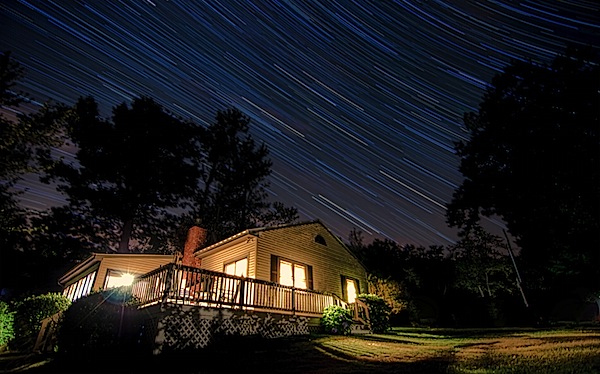
As mentioned above, having that constant f/2.8 aperture gives you the ability to capture great night sky photography. Pair it with a modern DSLR capable of shooting at relatively high ISOs and you’ll be able to capture some great shots of the stars, or create star-trails if that’s more your thing.

p2077635047-4

ISO 800 | f/2.8 | 11mm | 30 seconds

startrailphoto

ISO 800 | f/2.8 | 11mm | 30 seconds (~150 exposures)

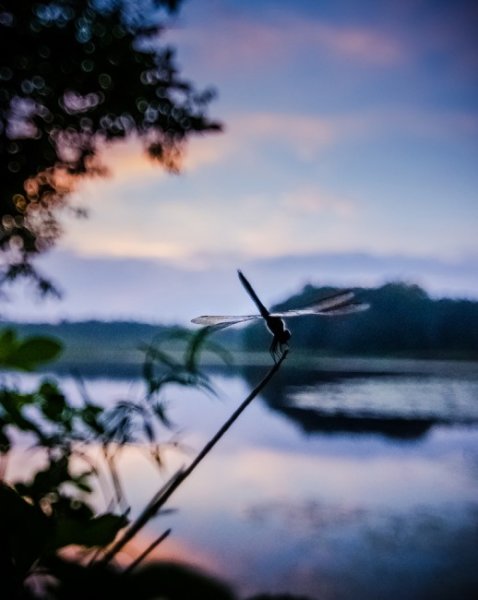
Finally, even though this is a wide angle lens, you don’t have to get caught up in capturing these massive scenes to get something out of it. Sometimes you can make it work for a subject as simple as a dragonfly watching the sunset. So it really is limited only by your creativity.

Dragonfly-Watching-Sunset-518x650

ISO 3200 | f2.8 | 16mm | 1/1250

Do you already own the Tokina 11-16mm f/2.8?

Tell us your own thoughts on the lens and share some of your favorite shots taken with it in the comments below. Do you have a different favorite lens? See what dPS writer Andrew S. Gibson considers his favorite here.

The post Going Wide With the Tokina 11-16mm f/2.8 by John Davenport appeared first on Digital Photography School.


Digital Photography School

 
Comments Off on Going Wide With the Tokina 11-16mm f/2.8

Posted in Photography


The dPS Weekly Photography Challenge – Going Buggy

12 Apr

Last week’s challenge featured landscape photography. In keeping with the theme of getting outside, this week we’re going to focus (pun intended) on the smaller creatures in Mother Nature’s world – the bugs.

Here’s a few images to inspire you for the weekly photography challenge – bugs!

Photograph The Katydid by Steve Passlow on 500px

The Katydid by Steve Passlow on 500px

Photograph Next to you... by Yvonne Späne on 500px

Next to you… by Yvonne Späne on 500px

Photograph yummy :P by bug eye :) on 500px

yummy :P by bug eye :) on 500px

Photograph Locust by Matteo Senesi on 500px

Locust by Matteo Senesi on 500px

Photograph Spider by Thomas Forysiak on 500px

Spider by Thomas Forysiak on 500px

By Rovanto

By Vinoth Chandar

Share your Going Buggy images!

Simply upload your shot into the comment field (look for the little camera icon in the Disqus comments section as pictured below) and they’ll get embedded for us all to see or if you’d prefer upload them to your favourite photo sharing site and leave the link to them.

Need help? How about some articles on macro photography like these:

  • 6 Tips for Near-Macro Photography with a Telephoto Lens
  • Reverse Lens Macro: Close Up Photography Lesson #3
  • Macro Photography for Beginners – Part 1
  • Macro Photography for Beginners – Part 2

The post The dPS Weekly Photography Challenge – Going Buggy by Darlene Hildebrandt appeared first on Digital Photography School.


Digital Photography School

 
Comments Off on The dPS Weekly Photography Challenge – Going Buggy

Posted in Photography


Travel Photography without the Travel – Going Local

07 Apr

Many photographers love to travel. They love the thrill of being in a new place, of capturing new scenes and experiences, and of coming home with quality images. But landscape and travel  photography do not need to be confined to weeks-long trips to far-flung locations. This article will explore how to get the most out of a weekend (or even weekday) local photography outing (all photographs in this article were taken within a few miles of where I live).

city, urban, night, lighttrails, reflection, traffic

Before: Planning and Packing

Making a plan or having a bucket list of photography wants is a great place to start. Always wanted to photograph a slow, silky waterfall? Looking to capture candid street photography shots of interesting people? Want to bring home that idyllic sunset shot over open water? Now is the time.

Start by spending a little time evaluating the photographic potential of what is already around you. We often become so accustomed to our day-to-day that we forget to recognize the possibilities of the familiar. Challenge yourself to find and seek out a nearby or local photography opportunity. Try browsing on Flickr for waterfalls and streams in your area or make a plan to spend some time in an older part of town watching for street photography opportunities.

waterfall, silky water

Urban waterfall

Want to catch that sunset or sunrise? Plan for the light. Look up sunrise and sunset times for your date(s) and location, and decide where you want to be shooting during the blue hour and golden hour in the morning and evening. You can even use programs like the Photographers’ Ephemeris to determine the timing and angles of sunrise, sunset, moon rise, and moon set, which can help you capture dramatic photographs of these events and their relative surroundings.

sunrise, tree, silhouette, reflection, morning

Now that you have a plan, create a packing list. Consider creating a ‘basic’ packing list for any photographic excursion that you can reuse for future trips. At a minimum, be sure to bring your camera body and any extra lenses, extra memory cards and batteries, your battery charger, a camera case, and basic cleaning supplies (blower, brush, and cloth). You may also wish to add a tripod, remote shutter release, and any additional filters or flash units, depending on your anticipated shots. Also do not forget about basic travel or emergency supplies like a flashlight or headlamp, cell phone, and snacks. Finally, I always stash a gallon sized plastic bag in my camera case or purse as well, which makes an impromptu rain or snow cover (cut out a corner to keep shooting) or just easy protection from unexpected weather.

During: Follow Your Plan, Amend Your Plan, and be Flexible

Getting the most out of a quick photography outing requires using your time wisely. This is where you will reap the benefits of your pre-trip planning and research. Give yourself extra time at each location to scope out the scene before you start photographing. Minutes spent walking around without your camera raised will help you zero in on the shots and angles you want rather than simply trying to capture it all and hoping something turns out well. Avoid the temptation to ‘lock’ yourself down once your tripod comes out. Be sure to consider alternate views of your subject. Read more about the importance of Perspective in Photography: don’t just stand there, move your feet!

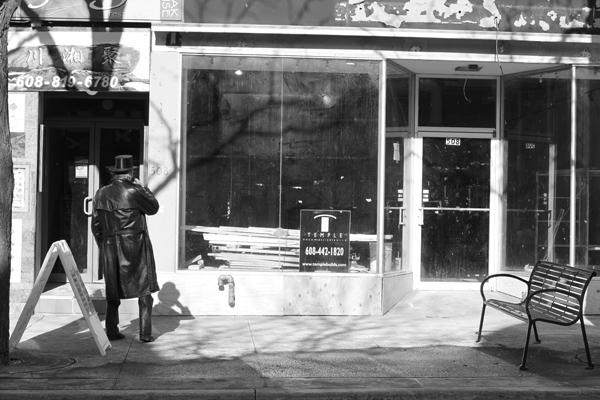
street photography, black and white, B&W, urban, city, decay

As with any photography, you should also be prepared to amend your plan as necessary. Weather, crowds, unexpected building closings, and innumerable other factors can interfere with even the best laid plans. Consider having a backup indoor plan for your outdoor day or an alternate location nearby, just in case. The benefit of exploring a nearby photography location is that it is much easier to return again if your first time does not work out the way you had planned.

After: Workflow and Reflection

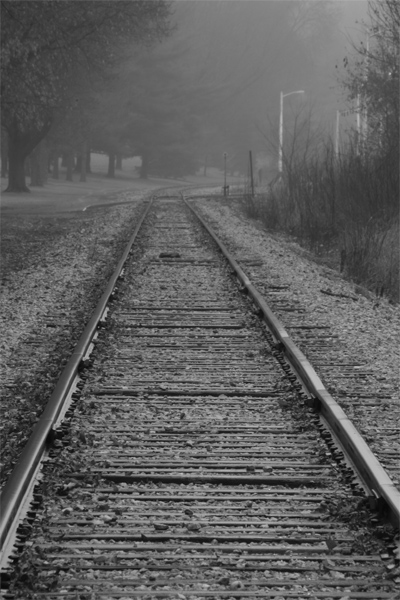
fog, foggy, morning, railroad, tracks, black and white, B&W

Once you get home, be sure to download all of your photographs immediately and back them up as well, using whatever system you have established (multiple hard drives or disks, portable hard drives, cloud backup, etc.). Establish a system for tagging and evaluating your shots so that you can find your favorites quickly and easily.

Don’t shortchange yourself after the outing either. Take some time to review the trip as well as to review your shots. Write yourself some notes about what worked well and what did not. Continue to add on to your bucket list by thinking of new ideas or missed opportunities. You may be surprised at how much photographic potential you can find around you!

Have you been able to check items off your photography bucket list by focusing on opportunities closer to home? Share your favorites in the comments below.

The post Travel Photography without the Travel – Going Local by Katie McEnaney appeared first on Digital Photography School.


Digital Photography School

 
Comments Off on Travel Photography without the Travel – Going Local

Posted in Photography