RSS
 

Posts Tagged ‘Goes’

DJI goes portable with the Mavic Pro

28 Sep

DJI just announced the release of their ultra portable consumer drone: the Mavic Pro. The Mavic offers a number of interesting features including the ability to track and follow its user, which is something that the GoPro Karma that was just released last week cannot do. It also has the same obstacle avoidance and tracking modes that can be found on the DJI Phantom 4 – features the Karma lacks.

The Mavic can fly at speeds up to 40MPH in ‘sport’ mode and can remain stable flying in winds up to 24MPH. The Mavic films in 4K/30p or 1080p at 96fps, and has a battery life of around 27 minutes of continuous flight time. On board the drone is a 12MP camera on a three-axis gimbal that can focus as close as 48cm/19in. The Mavic Pro offers DNG Raw shooting, and DJI claims that thanks to its gimbal design, it’s possible to shoot 2-second-long exposures from the air. A Tripod Mode is included that enables finer camera angle and position adjustments so you can frame your selfie just right.

Also of note is the Mavic Pro’s updated ActiveTrack mode that is trained to identify objects like people, cars and animals and can follow, circle or lead in front of its subject. 

The Mavic Pro’s controller has seen a design change from previous DJI controllers and it now sports a smaller design that features the ability to clip your phone right on the bottom of the unit. If you don’t want to use the controller, the drone can be controlled with on-screen joysticks right from your smartphone.

DJI also announced the debut of a brand new product that will allow for in flight viewing experiences called DJI Goggles. The goggles were specially designed for aerial first-person view (FPV) applications but the DJI Goggles also allow you to flick between third person view and FPV in under a second. You can comfortably wear your glasses while wearing the goggles and quit FPV mode instantly by flipping the mask up. The goggles display an 85-degree view from the drone in full 1080p for a true bird’s-eye view perspective of the world below. With built-in OcuSync, the goggles receive video directly from Mavic Pro in the air and not through the controller which reduces lag and allows you to share the in-flight view with a friend. 

The Mavic Pro’s U.S. retail price will be $ 999 with the remote controller included, and $ 749 without the remote controller. Additional Mavic Pro Intelligent Flight Batteries will cost $ 89. A Mavic Pro Fly More Combo, which includes a Mavic Pro, two extra Intelligent Flight Batteries, extra propellers, a charging hub, an adapter, a car charger and a shoulder bag, will be available for $ 1,299. It will begin shipping October 15th.

DJI Revolutionizes Personal Flight With New Mavic Pro Drone

Small Size And Folding Design Make Mavic Pro Perfect For Wherever You Go

September 27, 2016 – DJI, the world leader in unmanned aerial technology, Tuesday revolutionized personal flight by introducing Mavic Pro – a portable, powerful and easy-to-use drone featuring DJI’s most innovative flight technology in a sleek, foldable package that enables creative fun wherever you go.

Mavic Pro is DJI’s first personal drone designed to be taken just about anywhere. Small enough to toss in a bag and easy enough to launch quickly whenever the time and place are right, its unique folding design compresses the entire drone to practically the size of a water bottle.

The compact body of Mavic Pro holds a drone built for uncompromising performance. Equipped with a stabilized 4K camera and a visual navigation system, with a 4.3 mile (7 km) range and 27 minute flight time, Mavic Pro sets the new standard for compact drones.

“DJI has spent a decade making it easier for anyone to fly, and by rethinking everything about how a drones look, we have created an entirely new type of aerial platform for anyone to explore their creativity,” said Frank Wang, DJI’s CEO and founder.

“Mavic Pro is a technological triumph filled with features that once again show how DJI leads the industry. Most importantly, Mavic Pro allows you to reach the skies easily, see the world with new eyes and tell your stories like never before.”

Mavic Pro is designed to be ultra portable and quick to launch so it can take to the skies as soon as you need it. With four folding arms and propellers that tuck neatly away against its streamlined body, it can be easily carried in a purse or backpack, saving you the trouble of mounting propellers before a flight. It can be operated by the powerful long range remote controller, or simply by your smartphone at shorter range. When controlled by a smartphone, the whole system can be set up and airborne in less than a minute to capture every key moment.

Unparalleled Flight Experience

DJI’s commitment to unparalleled stability, maneuverability and safety is clear in Mavic Pro’s new FlightAutonomy system. FlightAutonomy is Mavic Pro’s brain and nervous system, a complex network of hardware and software consisting of five cameras, GPS and GLONASS navigation systems, a pair of ultrasonic range finders, redundant sensors and 24 powerful computing cores.

FlightAutonomy can position, navigate and plan routes for Mavic Pro, enabling it to avoid obstacles in various environments, with or without the help of satellite signals. FlightAutonomy provides a significant boost in working range and can cope with complex 3D environments. For navigation and obstacle avoidance, FlightAutonomy provides a superb speed-range envelope to make Mavic Pro self-navigational in various intelligent flight modes, and will avoid most obstacles at speeds up to 22 mph (36 kph).

An ultra light and aerodynamic airframe, together with DJI’s state-of-the-art propulsion and battery system, enables Mavic Pro to fly for up to 27 minutes. To experience the pure joy of flying, Mavic Pro can be switched to Sport Mode, which allows speeds of up to 40 mph (64.8 kph), increasing the drone’s agility and responsiveness. Mavic Pro flies smoothly and will remain stable in winds of up to 24 mph (38.5 kph), and uses DJI’s GEO geofencing system to help identify restricted areas, preventing flight in locations that might raise safety or security concerns automatically, and helping pilots make smarter decisions about when and where to fly.

As with all DJI drones, Mavic Pro is set to automatically return to its launch location if it ever loses contact with the controller or reaches critically low battery levels. The new Precision Landing feature records a burst of video with two stereo cameras every time Mavic Pro launches, then uses both video and satellite information when it returns to land within an inch of where it took off. If a pilot lets go of the controls, the drone will simply hover in place.

Advanced Stabilized Camera System

Mavic Pro’s small size is packed with powerful features. DJI’s advanced technology now includes our smallest-ever three-axis gimbal for shake-free photos and video. The autofocus camera features a minimum focusing distance of just 19 in (0.5 m) and can be flipped 90 degrees to portrait mode for vertical selfies and video. Mavic Pro records 4K video at 30fps and full 1080p HD at 96fps. Its 12-megapixel camera with Adobe DNG RAW support has been expertly tuned for aerial images. With the help of the high-precision gimbal, you can confidently shoot 2-second-long exposures in the air to get the most jaw-dropping aerial images.

New Remote and Live View Performance

A revolutionary new compact remote controller has been designed to provide a fully ergonomic experience with optimum comfort, and can accommodate a smartphone or control Mavic Pro on its own. Its built-in LCD screen displays essential telemetry data, while dedicated buttons for functions such as Return-to-Home and pausing during Intelligent Flight modes ensure a confident flight every single time. The video link system, OcuSync, represents new heights in DJI’s communication technology. It supports a range up to 4.3 miles (7 km) and live view resolutions up to 1080p.

The new band management algorithm makes OcuSync more robust in environments with many frequencies in operation. Mavic Pro is equipped with dual-band WiFi as a secondary link, allowing easy control via your smartphone for close range operation or for quick downloading of content from Mavic Pro straight to your device.

Most Intelligent Drone Ever

The powerful systems inside Mavic Pro are easy to use, even for beginners. Using just your phone’s touchscreen, you can use TapFly to direct Mavic Pro to go wherever you want, avoiding obstacles along the way. When you want to take a hands-free selfie, FlightAutonomy makes it possible to control the drone completely with just your gestures.

In Gesture mode, you can use gestures to have Mavic Pro locate you, center you in the frame and take the perfect shot as Mavic Pro’s flashing lights count down to the photo. Sharing your best aerial moments has never been easier with live streaming to Facebook Live, Periscope and YouTube through the DJI GO app.

An updated version of DJI’s ActiveTrack recognizes common subjects such as people, bicyclists, cars, boats and animals, which then sends Mavic Pro to follow behind, lead in front, circle above or track alongside the subject, keeping the camera focused on the subject while you concentrate on flight maneuvers. The new Terrain Follow mode means that you can race up a slope behind a subject while remaining at a constant height between 1 ft (0.3 m) and 33 ft (10 m).

At the other extreme, the new Tripod Mode is designed for indoor use, slowing and fine-tuning Mavic Pro’s position and angle based on controller movement inputs to allowing for precision framing and safe indoor flight.

Immerse Yourself

Mavic Pro also pairs with DJI’s new immersive DJI Goggles, displaying an 85-degree view from the drone in full 1080p for a true bird’s-eye view of the world below. With built-in OcuSync, the goggles receive video directly from Mavic Pro in the air and not through the controller, reducing lag to a minimum – and allowing you to share the in-flight view with a friend.

Specially designed for aerial first-person view (FPV) applications, DJI Goggles allows you to flick between third person view and FPV in under a second. You can comfortably wear your glasses while wearing the goggles and quit FPV mode instantly by flipping the mask up.

Price and Availability

Mavic Pro’s U.S. retail price will be $ 999 with the remote controller included, and $ 749 without the remote controller. Additional Mavic Pro Intelligent Flight Batteries will cost $ 89. A Mavic Pro Fly More Combo, which includes a Mavic Pro, two extra Intelligent Flight Batteries, extra propellers, a charging hub, an adapter, a car charger and a shoulder bag, will be available for $ 1,299.

Mavic Pro is immediately available for pre-order at dji.com/mavic and will begin shipping October 15. It will also be available in mid-October at DJI’s three flagship stores in Shenzhen, Seoul and Hong Kong. Mavic Pro can also be ordered on Apple.com and will be available in Apple Stores in early November.

DJI Care Refresh

A new optional protection plan, DJI Care Refresh, is available in select countries and provides peace of mind for Mavic Pro owners. DJI Care Refresh covers accidental damage to the Mavic Pro aircraft, gimbal or camera during normal use for up to 12 months, and for an additional charge will offer up to two full replacements that are new or equivalent to new. DJI Care Refresh is available for $ 99 before a new Mavic Pro is activated, or within the first 48 hours after activation.

For additional information, please contact:

Adam Najberg, DJI Global Communication Director – pr@dji.com

About DJI

DJI is a global leader in developing and manufacturing innovative drone and camera technology for commercial and recreational use. DJI was founded and is run by people with a passion for remote-controlled helicopters and experts in flight-control technology and camera stabilization. The company is dedicated to making aerial photography and filmmaking equipment and platforms more accessible, reliable and easier to use for creators and innovators around the world. DJI’s global operations currently span across the Americas, Europe and Asia, and its revolutionary products and solutions have been chosen by customers in over 100 countries for applications in filmmaking, construction, emergency response, agriculture, conservation and many other industries. 

For more information, visit our website: www.dji.com

Follow us on Facebook: www.facebook.com/DJI

Follow us on Twitter: www.twitter.com/DJIGlobal

Subscribe to our YouTube Channel: www.youtube.com/DJI

Articles: Digital Photography Review (dpreview.com)

 
Comments Off on DJI goes portable with the Mavic Pro

Posted in Uncategorized


Instax goes luxury with Michael Kors collaboration

22 Sep

Instax has been in the news in the past couple of weeks – first for the announcement of its monochrome instant mini film, and again with the announcement of a square format film and camera in the works. Now they’ve got something else cooking: a collaboration with fashion designer Michael Kors. The limited edition Kors-branded Instax Mini 70 is metallic gold with the designer’s signature printed on the back panel and the brand logo on the front. 

The Michael Kors edition Instax Mini 70 will be sold bundled with film and is expected to be available in late October through the holiday season.

Press release

FUJIFILM AND MICHAEL KORS COLLABORATE ON INSTAX AT PHOTOKINA 2016

Valhalla, N.Y., September 21, 2016 – Providing the total imaging solution for photographers, FUJIFILM North America Corporation will announce a new, one-of-a-kind collaboration with the world-renowned and award-winning fashion designer, Michael Kors. Known for luxury accessories and ready-to-wear fashion, Michael Kors produces a wide range of globally recognized products.

MICHAEL KORS x FUJIFILM INSTAX Mini 70 Revealed
FUJIFILM and Michael Kors are pleased to announce a new collaboration that captures the creativity of the fashion and photography worlds with the launch of a limited-edition INSTAX Mini 70 instant film camera.

“Fashion and photography are about giving a voice to individuals as they express themselves, and this exclusive INSTAX Mini 70 by Michael Kors is the pinnacle of style and substance,” said Mark Yamamoto, President and CEO, FUJIFILM North America Corporation, and President, FUJIFILM Holdings America Corporation. “We are seeing an explosion of excitement in instant photography today, and now consumers can make a stylish statement with the combination of INSTAX and the luxury of the Michael Kors brand.”

The new MICHAEL KORS x FUJIFILM INSTAX Mini 70 camera comes in an exclusive gold metallic color that captures the jet-set Michael Kors aesthetic. The Michael Kors brand logo is printed on the front of the case body, and to make it even more special, the designer’s signature is showcased in the same gold hue on the camera door for a stamp of approval from Michael Kors himself.

Celebrated for its ability to produce sharp, physical photos in an instant, the INSTAX Mini 70 features a sleek design, special selfie mode and high-performance flash that automatically calculates surrounding brightness and adjusts shutter speeds accordingly. As an added bonus, the camera has a smart selfie mode that automatically adjusts settings to capture picture-perfect selfies—a functionality that is sure to be a hit at parties or when hanging out with friends. Simply check your framing with the front-facing mirror next to the lens, and snap.

The exclusive MICHAEL KORS x FUJIFILM INSTAX Mini 70 camera will be conveniently sold as a bundle, including ready-to-use film, and will be available for a limited time beginning in late October and through the Holiday season.

Articles: Digital Photography Review (dpreview.com)

 
Comments Off on Instax goes luxury with Michael Kors collaboration

Posted in Uncategorized


Fujifilm goes medium format: What you need to know about the GFX 50S

20 Sep

Meet the digital medium format Fujifilm GFX 50S

Forget full-frame, Fujifilm is diving head first into the world of digital medium format and we’re frankly pretty excited. The GFX 50S will make use of a 51.4MP CMOS sensor and X-Processor Pro imaging processor. In terms of surface area, the sensor is 43.8 × 32.9mm or about 4 times the size of sensors used in the company’s APS-C cameras (and 1.7x larger than a full-frame sensor.) And if 51.4MP sounds familiar, that’s because it’s the same pixel count as the Pentax 645Z and Hasselbled X1D (though Fujifilm says their sensor is newly developed.)

Meet the digital medium format Fujifilm GFX 50S

The GFX 50S is a mirrorless camera and the body itself looks a bit like a jumbo-sized XT-2. Set to launch in early 2017, several accessories will be available including a pretty cool clip-on accessory EVF ‘prism’ that can be tilted and rotated once affixed.

Meet the digital medium format Fujifilm GFX 50S

Other accessories include a vertical battery grip, which adds an additional shutter release for use in the vertical orientation, control wheel and additional power. Like the camera, the grip is weather and dust-sealed by design. The camera is also freezeproof down to 14°F. Though we’ve yet to hold it, Fujifilm claims the GFX 50S is much lighter than traditional digital medium format cameras and also a good bit smaller. 

Meet the digital medium format Fujifilm GFX 50S

The GFX 50S’ default aspect ratio is 4:3, however the camera can be set to shoot in a variety of other aspect ratios including: 3:2, 1:1, 4:5, 6:7 and 6:17. 

Meet the digital medium format Fujifilm GFX 50S

New sensor size, new lens mount: The GFX 50S uses Fujifilm’s new G-Mount, which has a flange distance of 26.7mm. When the camera launches (sometime in early 2017), three G-Mount lenses will be available. The GF 63mm F2.8 WR, shown above, is one of them. It offers a 50mm equiv. field-of-view (due to a 0.79x crop factor). There’s a possibility Fujifilm will kit that lens with the camera body and according to Fujifilm reps, that kit should cost ‘well under $ 10,000.’

Meet the digital medium format Fujifilm GFX 50S

Also in early 2017, Fujifilm will be releasing a GF 32-64mm F4 LM WR wide to normal zoom with about a 25-50mm equiv. field-of-view. Like the 63mm F2.8 WR (and actually all G mount lenses) the 32-64mm is weather-resistant.

Meet the digital medium format Fujifilm GFX 50S

The third lens to ship around the same time as the camera is the GF 120mm F4 Macro R LM OIS WR lens (bottom, left of center). It offers a 95mm equiv. field-of-view and optical image stabilization.

It’s obviously no small task launching an entirely new system with new lens mount. But as far as glass is concerned for the GFX 50S, a normal fast prime, wide to normal zoom and a macro lens feels like a good start. And there are other lenses that will be coming later in the year, more on that on the next page…

Meet the digital medium format Fujifilm GFX 50S

In mid 2017, Fujifilm hopes to ship the GF 23mm F4 R LM WR and GF 110mm F2 R LM WR lenses. The former offers an 18mm equiv. field-of-view and the latter an 87mm equiv. Also, in late 2017, the company will release the GF 45mm F2.8 R WR lens with a 35mm equiv. field-of-view.

That’s all we’ve got for now. We’ll update this article with more information and images once available. But for now, what do you think, is the Fujifilm GFX 50S a camera you’d buy?

Articles: Digital Photography Review (dpreview.com)

 
Comments Off on Fujifilm goes medium format: What you need to know about the GFX 50S

Posted in Uncategorized


Samyang goes Premium with MF lens range

13 Sep

Korean optical manufacturer Samyang has announced a new series of upper-class lenses called Premium MF. The company has released details of a new manual focus 14mm F2.4 wide angle lens and an upgraded version of its popular 85mm lens but with an F1.2 maximum aperture. The models have a very smart-looking redesigned exterior and are finished in aluminum with narrow focusing rings in smooth rubber and an outline reminiscent of the Zeiss Milvus range.

Samyang says that the new optical construction of the lenses produces resolution suitable for 8K video and 50MP still sensors, and new coatings and special elements reduce aberrations to enhance the clarity of the pictures they create.

The 85mm F1.2 uses 10 elements in 7 groups and features a 9-bladed iris and a filter thread of 86mm. The Canon version, which is the only one mentioned at the moment, is set to weigh 1050g. The Premium MF 14mm F2.4 will have 18 elements in 14 groups, and will also have a 9-bladed iris but no filter thread. It is quoted as being available for Canon EF, Nikon F and Sony E cameras and will weigh 791g.

The company has yet to announce prices for these lenses but has said they will go on sale this year. For more information see the Samyang website.

85mm F1.2 MTF Samyang Premium MF 85mm F1.2
14mm F2.4 MTF Samyang Premium MF 14mm F2.4

Press release

Samyang introduces new Premium Lens Line-up

September 12th, 2016, Seoul, South Korea – Photokina, Global optics brand, Samyang Optics (http://www.samyanglensglobal.com) will announce its long-awaited first premium lens line-up: 85mm F1.2 and 14mm F2.4. This launch is a cornerstone for Samyang Optics to become a ‘Total Imaging Solution’ brand along with the introduction and expansion of autofocus lenses and XEEN lenses.

Founded in 1972 in South Korea, Samyang Optics has been the representative of Korean optics industry. With over 40 years of research and development in optics, Samyang integrates the essence of history and introduces a signature lens line-up of Samyang. “We believe a lens is one of the foremost elements in photography and videography”, says Haejin Lee, the head of Samyang Research Centre. He continues, “to create a signature Samyang Lens series, we have reviewed all the meetings and talks with photographers and cinematographers from past decades. They always return to one concept, the image quality. And it’s what we are after.”

85mm F1.2 and 14mm F2.4 manual focus lenses inherit and upgrade the eminent Samyang’s image quality to the next level. The new Samyang Lenses have the unprecedented resolving power, matched with 50 megapixels photo and 8K video productions. The two lenses enable you to capture life-long memories in everlasting image quality. Bokeh, out-focusing, starburst effect creates unforgettable image. Photographers can rely on the lens under various conditions. The resolving power contains abundant pixel information, allowing photographers the freedom in post-production to create unique image of own. Also, the minimised aberration enhance the clarity of image, creating more impressive image than your eyes can see.

The F1.2 of 85mm is, by far, the brightest lens in existing full frame DSLR lenses, securing the fast shutter speed. It has ten elements in seven groups, applying one aspherical lens and two high refractive lenses. The aspherical lens minimises the aberration and unnecessary light dispersion. Two high refractive lenses effectively adjust the path of light and deliver maximum amount to the sensor for clear and vibrant image.

The 14mm F2.4 is equipped with the most advanced optical technology among Samyang Lenses. It has 18 glasses in 14 groups including four different special optics: two aspherical lenses, one hybrid aspherical lens, two extra-low dispersion lenses and one high refractive lens. This optimal performance creates impressive image quality from centre to corner of image.

Also, the design itself is the statement. Aluminium alloy metal is adopted for maximum durability. With a sleek yet unprecedented design with flowing curves, this signature line-up is a one-of-a-kind lens. The usability is maximized with considerate diameter in 93~95mm.

In pursuit of image quality itself, Samyang will continue to develop premium manual focus lenses in response to the demands of professionals and will compete with world famous optics brands in quality and design. The lenses will be globally available in 2016, with suggested retail prices announced at a later date.

Samyang Premium MF 14mm F2.4 / 85mm F1.2 specifications

  Samyang Premium MF 14mm F2.4 Samyang Premium MF 85mm F1.2
Principal specifications
Lens type Prime lens
Max Format size 35mm FF
Focal length 14 mm 85 mm
Image stabilization No
Lens mount Canon EF
Aperture
Maximum aperture F2.4 F1.2
Minimum aperture F22 F16
Aperture ring No
Number of diaphragm blades 9
Optics
Elements 18 10
Groups 14 7
Special elements / coatings 2 aspherical + 1 hybrid aspherical + 2 extra-low dispersion + 1 high refractive lens + Ultra Multi Coating 1 aspherical + 2 high refractive elements + Ultra Multi Coating
Focus
Minimum focus 0.28 m (11.02) 0.80 m (31.5)
Maximum magnification 0.08× 0.13×
Autofocus No
Full time manual Yes
Distance scale Yes
Physical
Weight 791 g (1.74 lb) 1050 g (2.31 lb)
Diameter 95 mm (3.74) 93 mm (3.66)
Length 109 mm (4.29) 98 mm (3.86)
Materials Aluminum
Sealing No
Colour Black
Hood supplied Yes

Articles: Digital Photography Review (dpreview.com)

 
Comments Off on Samyang goes Premium with MF lens range

Posted in Uncategorized


1956 Stereo-Nikkor 3.5cm F3.5 lens auction goes live on eBay

16 Aug

A Stereo-Nikkor 3.5cm F3.5 lens said to be in mint condition has been put up for auction on eBay. This speciality lens was designed for the Nikon S-Mount rangefinder to produce stereoscopic 3D images on a single photograph. The lens is being offered as part of a full kit that also includes a brown Nikon leather case, a Nippon Kogaku lens cap, original silica gel, Nikon Stereo Prism, and original Nikon Stereo L 38 filter.

According to the eBay seller, there’s a chip in the prism’s glass and ‘very tiny scratches’ on the lens, but otherwise the items are said to be in excellent condition. Unfortunately, not much information about the Stereo-Nikkor exists; the product was introduced in December 1956 and discontinued in 1961 or 1962, according to Mir.com. Estimates place Stereo-Nikkor manufacturing at between 100 and 200 units during its brief production.

Though the auction currently has $ 1,125 in bids, it has not reached its minimum reserve amount. The product is located in Vienna, and has a $ 300 shipping rate.

Via: PetaPixel

Articles: Digital Photography Review (dpreview.com)

 
Comments Off on 1956 Stereo-Nikkor 3.5cm F3.5 lens auction goes live on eBay

Posted in Uncategorized


Canon EOS-1D X Mark II Field Test: DPReview goes to the rodeo

01 Aug

The Canon EOS-1D X Mark II is a professional full-frame DSLR, and Canon’s fastest, toughest and most capable camera ever. To test out its blazingly fast shooting speeds and advanced autofocus we needed a shooting situation that would really stretch the camera’s abilities.

So saddle up, ya’ll – DPReview is headed to the rodeo…


This is sponsored content, created with the support of Canon. What does this mean?

Articles: Digital Photography Review (dpreview.com)

 
Comments Off on Canon EOS-1D X Mark II Field Test: DPReview goes to the rodeo

Posted in Uncategorized


The ultimate hiking partner? Sony’s RX10 III goes the distance

10 May
Mount Rainier, captured from the trail up Mount Teneriffe, near North Bend in Washington State. ~200mm (equivalent), ISO 800. Still another 2 miles to go until lunch, and another 400mm to go before the RX10 III’s maximum telephoto setting.

Sony’s new Cyber-shot RX10 III might look a lot like the older RX10 II, but its lens is really something else. With an effective focal range of 24-600mm, the RX10 III is one of the most versatile cameras we’ve ever used. But focal range is only part of the story – it’s optical quality that impresses us most. And boy, are we impressed.

Hiking with the Sony Cyber-shot RX10 III

A very short shooting experience by Barnaby Britton

Caveat: This is not a review, nor is it sponsored content. This is a shooting experience based largely on a single day of picture-taking, during a hike. Four miles up a mountain in the sunshine, four miles down in the dark. One memory card half-filled, one battery half-emptied. All shots were processed ‘to taste’ from Raw and all are un-cropped. Your mileage (both literal and figurative) may vary.

I’ve been searching for the ideal hiking camera for years. Since I moved to the Pacific Northwest I’ve tried and rejected DSLRs, fixed-lens primes, travel zooms, super-zooms and several iPhones. Recently, I’ve been packing my Ricoh GR II for its small size and sharp lens, but the lack of a viewfinder really limits its usefulness in some conditions.

The last time I brought a DSLR on a mountain hike I almost left it tucked under a rock on the trail, rather than drag it all the way up (that was the old, famously brutal Mailbox Peak trail, for any PNW natives reading this…).

Pretty good flare performance, considering the complex lens. This shot was slightly adjusted in ACR to bring out a little detail in the shadows. 24mm equivalent, ISO 100.

It’s been a few years since I experimented with a superzoom compact camera, after a couple of bad experiences with sub-par lens performance. I’ve always liked the idea of them, but all too often I’ve been disappointed by the results in practice. These days, though, as my colleague Jeff likes to remind me, the good ones are actually pretty good.

OK, sure, but ‘pretty good’ for a super zoom is only ‘OK, ish’ by the standards of a shorter-lens compact or interchangeable lens camera, right? Well, that’s what I thought, too. Until…

We knew the sensor is good from our experience of using the RX100 IV, but the Sony Cyber-shot RX10 III’s major selling point is its lens. And the lens in the RX10 III is, as far as I can tell, made of magic. I genuinely have no idea how Sony’s engineers packed a 24-600mm equivalent lens of such high quality into a camera this small. It defies all reason. From wide-angle all the way to extreme telephoto, the RX10 III’s lens delivers impressive results. Weirdly impressive.

As well as distant details, the RX10 III is capable of capturing sharp images of tiny things, very close to the camera. Like these wildflowers. 24mm equivalent, ISO 100.

Now, obviously I could take technically better shots with a DSLR and a fast zoom, or for that matter a prime lens compact like the GR II. Portraits with shallower depth of field, landscapes with critically better edge-to-edge sharpness and all the rest. But this past weekend a DSLR was out of the question. If I’m hiking up a mountain in 80+ degree weather, I’m traveling as light as possible. Most of the weight on my back this weekend was drinking water, and although it’s a fairly chunky camera, the RX10 III was light enough to clip onto the shoulder strap of my backpack with one of these.

Mount Teneriffe on a hot day is a pretty demanding hike, but the view from the top makes it worthwhile. 40mm equivalent, at ISO 100.

The Ricoh GR II is lovely, but I knew that from Mount Teneriffe I’d be looking at three peaks – Mount Rainier, Mount Baker, and Glacier Peak, as well as Mount Si and Mailbox, a little closer at hand. So 28mm just wasn’t going to do the job. We timed our hike so that the sun would be go down shortly after we summited, and I knew that I wanted a nice, closeup (ish) shot of Mount Rainier’s famous purple glow (see the picture at the top of this page).

Exposed for the highlights, it was easy to brighten shadow areas in this shot using Adobe Camera Raw. 24mm, ISO 100.

You can’t really see here, but just where the blade of grass meets the horizon to the right of my subject, is Seattle’s distinctive skyline. See below for a shot taken from the same vantage point at 600mm.  

A lot of the prejudice about long zoom compact cameras comes from a misunderstanding of how to interpret their lens performance, especially at the long end. Atmospheric distortion and haze from moisture, pollen and pollutants will reduce the sharpness of any telephoto lens, especially on warm days.

So if your telephoto shots look like they were taken through a frosted bathroom window, the lens might not be the culprit. On the other hand, if everything in your pictures looks like someone went over the edges with a magenta highlighter pen – well, that’s the lens.

Seattle at sunset, from almost 40 miles away. 600mm equivalent, at ISO 100. Moderate ‘dehaze’ applied in Adobe Camera Raw. 

I had no such issues with the RX10 III (which was reassuring, since it costs $ 1500) but as always, I was shooting Raw, so what little fringing I did see in my images was easy to correct. Likewise, Photoshop’s ‘dehaze’ control in Camera Raw came in very useful to bring back some clarity to images taken at the telephoto end of the RX10 III’s lens. 

Mount Baker, seen through more than 90 miles of pollen-laden air, just before sunset. This shot didn’t require quite so much dehazing as the last one. 600mm equivalent, ISO 250.

During a day’s shooting during which my hiking partner and I walked a roundtrip of about 13 miles up and down a 4500ft peak, the RX10 III nailed virtually every shot. And that’s everything from a knee-level picture of some tiny wildflowers a few centimeters away from the lens, to a 600mm capture of Mount Baker, 90 miles away from my vantage point and half lost in haze (above).

We hiked about half of the trail back to the car in the dark. For the last half mile we were accompanied by an owl. This grab shot was taken at ISO 12,800, by the light of our headlamps. At 95mm equivalent, there’s no motion blur at 1/15sec.

From these sunset landscapes to ISO 12,800 snapshots of an owl that followed us back to our car at the trailhead, every time I looked at something and went ‘oooh’ and tried to take a picture of it, the RX10 III – and its insanely wide-ranging lens – got me the shot that I wanted. 

Hiking through the forest just before sunset. 50mm equivalent at ISO 6400.

We’re working on a more scientific assessment of the RX10 III’s lens right now, but in the meantime, I hope you enjoy our updated samples gallery (now with Raw files!).

I’ve only been using the RX10 III for a few days, and there are plenty of things I don’t like about it (confusing menus, clunky ergonomics, no touchscreen, laggy GUI, the aluminum lens and focus rings scratch the minute you look at them) but somehow, despite all that, I’m already planning next week’s hike.

$ (document).ready(function() { SampleGalleryV2({“containerId”:”embeddedSampleGallery_0737303360″,”galleryId”:”0737303360″,”isEmbeddedWidget”:true,”standalone”:false,”selectedImageIndex”:0,”startInCommentsView”:false,”isMobile”:false}) });
Articles: Digital Photography Review (dpreview.com)

 
Comments Off on The ultimate hiking partner? Sony’s RX10 III goes the distance

Posted in Uncategorized


11 Stages That Every Photographer Goes Through

25 Mar

Get 25% OFF James’ ebooks: Essentials of Street Photography & Street Photography Conversations eBook Bundle now for a limited time only at Snapndeals.

How the $  *#$   do I use this thing!!?!

How the $ *#$ do I use this thing!!?!

While I hope you take this article as tongue and cheek, and realize that a decent amount of this is talking to my early self – the reality is that there is a pretty consistent learning curve that many photographers go through.

While hopefully your learning curve will not be this extreme, I think that understanding it will help you to have as much fun as possible progressing through the photography learning process.

Here is my belief about the typical progression, or the 11 stages a photographer goes through:

1. Auto mode and how the $ @&# do I use this thing!?

The camera sits like a brick for a couple months, except for when you switch it to auto mode to photograph your cat, or patio furniture in the snow. You take 12 self portraits with a hat on one day, staring at yourself in the bathroom. 12 years later, you still use this self portrait.

The reality is that you have heard about 5000 photography terms that you think you need to know, and it’s overwhelming. You just don’t know where to start. While there are only five or six things that you really need to learn at this point to get started, nobody tells you that. We will cover these things in a bit.

2. GEARRRRRR

The sharpest cat eye you've ever seen in a photograph.

Do you SEE how sharp those nose hairs are??!

When you think about your camera, your heart starts racing, your blood pressure rises, your hands get clammy, and you start sweating. Your camera system begins to morph into this awesomeness of sheer technology and power, that it was always destined to become.

Four lenses, five filters, a tripod that you tell everyone about that doesn’t actually work that well, a remote shutter release, a new camera strap, a flash unit, Lightroom, Photoshop, Silver Efex, a new monitor, a hard drive, a Wacom tablet, an ugly camera backpack where your gear can survive under water for 10 minutes, a light painting kit, 5,000 forum views, an HDR tutorial, and photo collages, oh my!

Occasionally, you just take your camera out to stare at it for awhile before your wife catches you, then you get on the internet to read fondly about its dynamic range, yet you have only taken your camera out into the world a couple of times.

Bonus points if you gave your wife a black eye due to your tripod hanging off your huge ugly backpack, on the way to catch a flight to an extended family vacation.

3. OMG, everything looks so awesome!

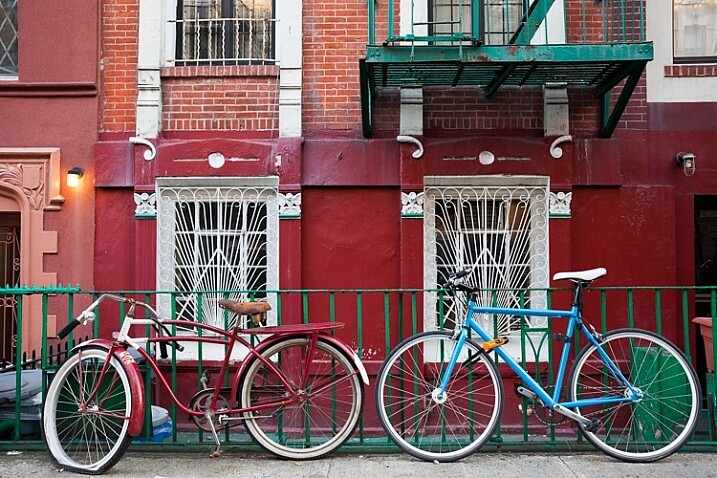
Bikes!

Bikes!

Macro, landscape, street photography, portraits, travel, wildlife, architecture, live music, sports, fashion, medical imagery and dental photography – it’s all so awesome!

Turn the saturation up to 20 baby! The world is my oyster. Colors, sunsets, old houses, doors, cobblestone, flowers, pots, bikes – definitely bikes!

4. Shutter speed, aperture, ISO, exposure compensation, white balance, and focal lengths

Shoot, I haven’t actually opened the camera manual yet. This is also known as the real step one. There are only six things that a photographer needs to learn at the very beginning (besides light, which we will cover later).

  1. Shutter speed
  2. Aperture
  3. ISO
  4. Exposure compensation
  5. White balance
  6. Focal length

You now engulf yourself in every type of training possible, and read, read, read. Keep in mind that the best photographers never stop doing this. You realize that different established photographers tell you completely different ideas about what to do, and it’s confusing. That’s actually a good thing. There are many different ways to get to the same endpoint with a camera.

5. I’m the best photographer ever

shoulders

“My knowledge of photography is unparalleled. Everyone else sucks. My neck muscles are huge because of the sheer weight of my awesomeness (and my camera bag with unnecessary equipment). I am ART. Everything is ART.”

This is a trap that can happen to some photographers. Needless to say, a small contingent get stuck on this step for longer than they should, but everyone else usually passes on to the next step a year or two later, which is…

6. OMG, everything sucks and I suck

Anarchist Barney

“I hate it all. I’m the worst photographer in the world. I’ve tried everything and I can’t take a good image. I can’t look at another flower ever again. I hate sunsets. I hate bunnies. I hate children. I hate cookies. I am a sad, depressed photographer.”

This is the point when you get past the basics, and realizes how difficult photography really can be. It goes way beyond settings. Creating interesting photography is difficult.

7. Starting to see the light

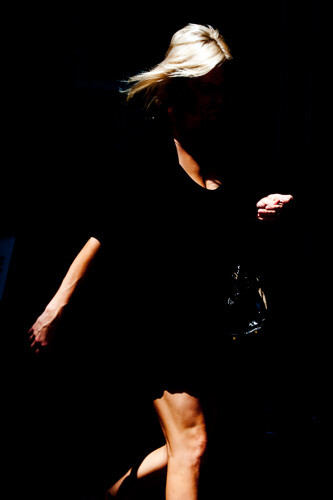
Light!

Light!

Eureka! Photography is just painting with light. Did you know, it’s all about the light? Warm light, cool light, colored light, harsh and shadowy light, indoor and artificial light.

This step is so important, and learning about light sounds simple, but it actually takes most people a long time to start to see light well. It’s shocking how long it can take sometimes, because photographers tend to focus on so many other things, and particularly equipment at first. When learning to use your camera, light is the number one factor that goes into the equation. It should be the first thing that you learn before you even think about how to set up your cameras.

8. Traveling light

“Screw all that equipment. You know, photographers are too obsessed with equipment. One camera, one prime lens, a small (beautiful) bag, and a notebook that I’m never going to write in – that’s all I need. Life is beautiful. I can feel life and the wind in my hair.”

An optional black and white period often takes place here, and the gear fetish morphs into a camera bag fetish, but in reality this is an important step. For most types of photography, you just did not need all that equipment. Simple can be a lot better, more often than not.

9. Studying other photographers

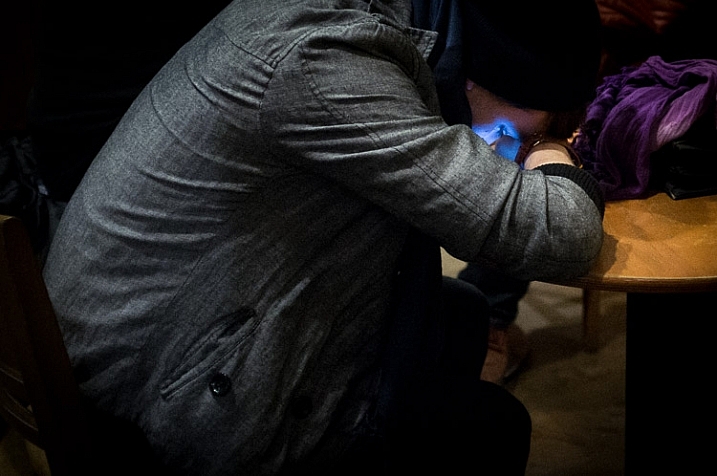
11-study

“Wow, there were a lot of wonderful photographers throughout history, in all types of subject matter and all around the world. There are a lot of great photographers shooting now and doing it much better than I am!”

You spend time in bookstores and on the internet researching. You start building your photo book collection. This is usually a big turning point for photographers in their education. This can be both inspiring and humbling.

10. Focus, consistency, and subject matter

By this point, you have photographed enough where you really have put in the hours, and are starting to improve significantly. While it’s so important to put in the hours to study photography and photographers, nothing beats time spent photographing.

You become more intuitive with the camera, to the point where you start forgetting it’s there. Your subject matter, and the look of your photos, begin to become more consistent. You start to find specific content, and places that you like photographing the most.

You start creating a portfolio with images that all fit together. It’s no longer as much about the individual photograph, but about collections and sequences of photographs. You start to realize that you can create a narrative this way, that goes beyond what the individual image can often achieve.

11. Zen and a subtle feeling of inadequacy

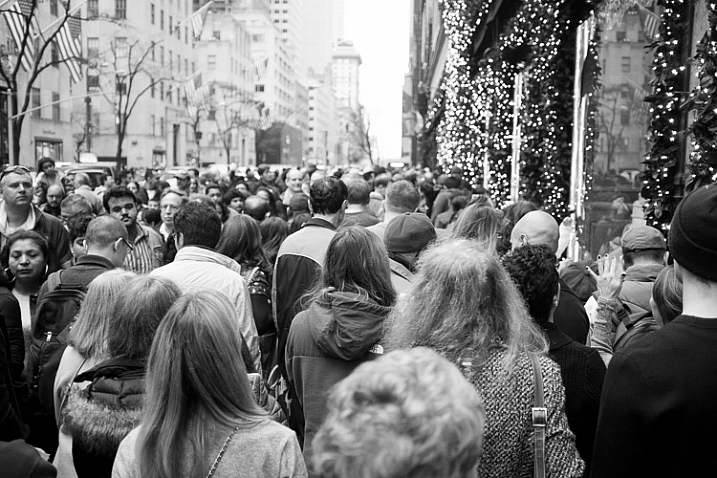
5th Avenue, New York

While the other steps might take five to 10 years to progress through, this one can stick around for the rest of your photography life. There are so many incredible photographers out there doing powerful work, it can be intimidating. It feels like there is always someone out there who knows more about a subject than you. Each day you come across another fantastic body of work, from someone you have never heard of.

But you have your own interests and unique point of view, and realizing this is what sets you apart. It’s not just about your knowledge of photography, but about the subject matter and perspective.

This is where you can gain true satisfaction from photography, and for just being a small part of all of this. There is a worldwide community of people interested in the same things as you are, but all doing it in slightly different ways. It is powerful and inspiring.

Bonus stage 12 – going to Cuba

This is the final step of any photographer’s life progress. Cuba is so hot right now. I’m not going to lie, I really do want to go to Cuba very badly, although I heard it was so much better two years ago.

Can you relate to these stages of your photography journey? What stage do you most identify with right now? Have you been through others? Please share in the comments below.

Get 25% OFF James’ ebooks: Essentials of Street Photography & Street Photography Conversations eBook Bundle now for a limited time only at Snapndeals.

googletag.cmd.push(function() {
tablet_slots.push( googletag.defineSlot( “/1005424/_dPSv4_tab-all-article-bottom_(300×250)”, [300, 250], “pb-ad-78623” ).addService( googletag.pubads() ) ); } );

googletag.cmd.push(function() {
mobile_slots.push( googletag.defineSlot( “/1005424/_dPSv4_mob-all-article-bottom_(300×250)”, [300, 250], “pb-ad-78158” ).addService( googletag.pubads() ) ); } );

The post 11 Stages That Every Photographer Goes Through by James Maher appeared first on Digital Photography School.


Digital Photography School

 
Comments Off on 11 Stages That Every Photographer Goes Through

Posted in Photography


Raw workflow goes mobile: Hands-on with Adobe Lightroom for Android 2.0

03 Mar

Unlike iOS, Android supports the capture and processing of Raw photos. Chances are that if you own a late model mobile device running either Lollipop or Marshmallow, you should now be able to use the Adobe DNG Raw format, the headline feature in the recently updated Lightroom for Android 2.0. We tried out the new Raw workflow, from mobile to desktop and back again. Read more

Articles: Digital Photography Review (dpreview.com)

 
Comments Off on Raw workflow goes mobile: Hands-on with Adobe Lightroom for Android 2.0

Posted in Uncategorized


Sigma US goes public with Black Friday lens deals

21 Nov

Sigma is getting Black Friday started early this year, offering discounts on five of its lenses online now through Monday, November 30th including the 50mm F1.4 DG HSM Art. Savings range from $ 100 up to $ 300 off individual lenses – and considering the current results of our readers’ poll, a few of you may be interested. Read more

Articles: Digital Photography Review (dpreview.com)

 
Comments Off on Sigma US goes public with Black Friday lens deals

Posted in Uncategorized