RSS
 

Posts Tagged ‘gear’

Jared Polin launches ‘MyGearVault’ app to help you keep track of your gear

24 Jan

You probably know him as that shouty man on YouTube with the big hair, but for the past few months, Jared Polin (aka ‘Fro Knows Photo’) has been working on a new app called MyGearVault. It’s designed to help photographers keep track of their gear and make sure it’s properly covered if anything goes wrong.

The app launched over the weekend, and we’ve been using it for a few days. So far, we’re impressed. MyGearVault is one of the most straightforward ways we’ve found to keep track of a collection of photo equipment, and features like .CSV file export and an option to generate insurance quotes from within the app make it a potentially very powerful tool for enthusiasts and professionals alike. 

We caught up with Jared last week to get the low-down on what MyGearVault is, and how it works.

Download MyGearVault


Why did you make an app?

Two things. We all know that photography is more than a hobby, its also an investment. Like other photographers, I have a lot of gear, and keeping it organized is essential. This free app primarily acts as a way for creatives to organize their equipment, and includes features to help them safeguard that investment.

Far too many photographers either don’t have insurance, or have the wrong kind. That’s why I created MyGearVault – to educate creatives about the proper insurance coverage so they can finally get the right protection. 

MyGearVault isn’t just me. My partner in this project is an insurance industry veteran of 15 years who has overseen the formation of multiple insurance companies.

How does MyGearVault work?

MyGearVault has three major functions – it helps you to input, organize and finally protect your gear. Adding your cameras, accessories, computers and more to your vault is an extremely easy process, and if you don’t find your item in our database you can manually enter it.

If your item is in our database an image will already be populated along with the manufacture and model name. If you would like to change the image you can load one from your phone or take a picture of your item.

One of the most important features and my favorite is the ability to take a picture of your receipt and upload it to MyGearVault from your phone. Your receipt will be safely and securely stored inside your vault. This is important if you ever need to file a claim with an insurance company or supply a copy of your receipt for a warranty repair.

As you enter gear you will see your ‘total vault value’ listed at the top. As you enter different categories you will see the total value of that particular category. This is a great way to know what you have and what it’s worth.

We’ve also built a simple way for you to organize your gear into ‘kits.’ For example you can create a wedding kit that includes everything you would take to shoot a wedding. From the bodies and lenses to memory cards, computers, flashes, stands etc. At the top of each kit you will see ‘total kit value’ so you know what you have and what it’s worth. 

Finally, there’s the protection aspect. We understand the importance of protecting your gear. That’s why we’re working with licensed professionals with access to top rated insurance companies to find a solution that fits your needs. Right now inside MyGearVault you can take a short questionnaire to receive an insurance quote. And in about one business day you can expect to have full comprehensive coverage from one of our licensed insurance partners.

What does your service offer that others don’t?

MyGearVault stands above anything else out there because it not only lets you input and organize your gear simply and elegantly but also lets you protect it. This is an interface designed for creatives by creatives, so its easy to understand and fun to use.

We are also working on features that help photographers protect their gear, such as serial number recognition in the case that gear gets stolen or misplaced. Additionally, we’re working with licensed professionals with access to top rated insurance companies to find a solution that fits a photographer / videographers needs. 

In the weeks ahead we will be rolling out videos to help creatives understand the insurance world so they make sure they have the proper coverage. Insurance my not be sexy, but understanding it and protecting your gear is very important.

$ (document).ready(function() { SampleGalleryV2({“containerId”:”embeddedSampleGallery_5812076312″,”galleryId”:”5812076312″,”isEmbeddedWidget”:true,”standalone”:false,”selectedImageIndex”:0,”startInCommentsView”:false,”isMobile”:false}) });

I’m not a pro. Why do I need MyGearVault?

Simple, MyGearVault helps you keep track of what you have and what its worth. Many of us have a significant amount invested in our photography. Whether you’re a pro or not, it makes sense to organize your investment, and protect it.

If you make any money from your photography / videography, or if it’s your livelihood, MyGear Vault is a simple way to track and protect your gear.

I am a pro, and I already have insurance – why do I need MyGearVault?

If you’re happy with your insurance by all means stick with it. But I would suggest you still download and utilize MyGearVault because it can help you keep track of what you have, what it’s worth, and organize your receipts and serial numbers. When I entered all my gear into my personal Vault the first time, I realized I had more gear than I was currently insured for. MyGearVault helped me see what I had so I knew how much coverage I needed.

With MyGearVault you’re able to export a complete listing of all your gear, with its value and serial numbers, or just the gear within a specific kit or category as a .CSV file. Simply send this to your current insurer each year when they ask for it. In the future we will include an option to export this data as a PDF, which will include your sales receipts. 

Even if you currently have insurance it might be a good idea to compare your current policy to one offered by our insurance partners. You can get a no obligation insurance quote under the insurance tab of MyGearVault.

I’m not sure I’m comfortable uploading information about my photo equipment – is the data secure?

When you use MyGearVault, data is sent to over a secure https protocol (the same thing used when you’re doing online shopping or logging in to your bank account). If you want to get technical, we’re serving API calls over https using token authentication. We will never share your data with anyone. When it comes to device security, you can secure the MyGearVault app with a touch ID or passcode, and there’s an option for Facebook login.

How are you making money from MyGearVault?

The short answer is that right now we’re not. MyGearVault is free, and in the long run, we hope that it becomes a revenue-generating service. For now though, we want photographers and video creatives to use it, tell us how it should evolve, and help us create the next version. 

How are you hoping MyGearVault will evolve in future?

Right now we’re focused on helping both enthusiast and professional photographers / videographers keep track of their gear and protect it with this free app. As the community grows, we’re looking forward to offering additional resources to help them creatively and professionally.

INPUT• ORGANIZE• PROTECT: NEW “MYGEARVAULT” APP HELPS PHOTOGRAPHERS KEEP TRACK OF AND INSURE THEIR CAMERAS AND GEAR

  • Photographer and Instructor Jared Polin of FroKnowsPhoto created this service for creative professionals and hobbyists
  • Free App available today on the App Store
  • Photographers and Videographers can organize all of their equipment in their own secure personal “Vault”
  • App educates on how to protect gear and help users find insurance options

PHILADELPHIA, PA (January 23 2017) – Announced today and now available, MyGearVault is a new app for creatives (photographers / videographers) to help organize and protect their investment in expensive equipment. Jared Polin, also known as FroKnowsPhoto, created the app to help creatives and professionals understand what gear they have and what its really worth, while educating users and offering choices for protecting their own equipment.

“I get more emails than I should with stories of how someone’s gear was stolen, and they want to crowd fund replacements, because they didn’t have insurance. The truth is, its not entirely their fault. There’s not a lot of education out there about proper insurance for creatives. That’s all about to change. Whether you’re a working professional, a beginner, or a seasoned photo enthusiast, odds are you have a significant investment in your photo / video gear, which NEEDS to be organized to be protected,” Said Jared Polin.

Input and Organize

Knowing what you have and what its worth is the first step to protecting yourself. The interface of the MyGearVault app is easy to use, and allows users to input all of their equipment into their own secure, personal “Vault.” It’s simple to store all the important information about your gear, including a verified serial number, picture of your receipt, date purchased and much more. To speed up the process, the app has an auto-populate function that recognizes what the user is typing and completes fields. Recognizing that users have a lot of gear, the app helps organize it in unique and effective ways.

Each item can be saved into a specific category, such as Cameras, Lens, Computers, Data Storage, etc. When users click on a category, the total value of items based on the gear inside will appear. users can also create custom kits of gear, such as a specific gear assortment for weddings, travel, studio, video, astro -the possibilities are endless. This is a great way to know the value of gear you’re taking with you for any given vacation, project or job. All of this data can be easily exported as a CSV file and sent as needed for insurance, repair purposes or to friends and colleagues.

Protect

MyGearVault works in a few ways to help protect you: First, your vault is a record of your purchases, receipts and serial numbers, which makes it easy to account for your gear if the unfortunate happens. Your serial number is registered, so if the item is stolen, we will let you know if it is registered within another vault. MyGearVault educates users on the best option for insuring their gear. While not an insurance company, MyGearVault has partnered with licensed insurance professionals to helps users find a solution that fits the unique needs of every type of creative professional.

We understand how important insuring gear is, but also how confusing it can be, and that’s why we’re working with licensed professionals with access to top rated insurance companies. Right now inside MyGearVault you can take a short questionnaire to receive an immediate, no obligation insurance quote. In approximately one day, you can have full comprehensive coverage from one of our licensed insurance partners. “I have seen too many times that people are denied coverage, don’t have an adequate policy, or no coverage at all,” says Polin. This is the first step users can take to protect themselves.”

Availability

The MyGearVault app is available now, free of charge in the Apple App Store®. To download the app, click here: https://itunes.apple.com/app/mygearvault/id1106860868

An Android compatible version of the app is planned for the future. Contact Jared Polin with questions regarding MyGearVault – jared@mygearvault.com

Be sure to check out https://mygearvault.com/ for more information. Please check out our YouTube playlist for “how-to” videos.
Articles: Digital Photography Review (dpreview.com)

 
Comments Off on Jared Polin launches ‘MyGearVault’ app to help you keep track of your gear

Posted in Uncategorized


When is the Right Time to Upgrade Camera Gear?

21 Jan

Knowing when to upgrade camera gear can be a little tricky. Picking the right time to upgrade is about knowing who you are as a photographer, and who you want to become.

When is the Right Time to Upgrade Your Camera Gear?

What makes upgrading tricky is the pace at which technology advances. New form factors, features, and capabilities will continue to be innovated over the years to come. It’s certainly possible that new trends could make traditional photography obsolete. For example, 360 degree photography is one new trend that has garnered a lot of interest.

If that wasn’t enough, the amount of money that companies spend on marketing their innovations is continuing to increase. This means that there are more deals, more packages, and more attempts to convince you that it is the right time to upgrade your gear.

So how do you know when you are actually ready to upgrade your photography gear?

Five Signs you’re ready to upgrade your camera gear

Your needs and wants will be different from mine and from that of your neighbor’s so it’s difficult to offer a blanket “This is when you should upgrade” statement. But, there are at least five key things to consider when upgrading your gear.

When is the Right Time to Upgrade Your Camera Gear?

1. Your current gear is struggling to keep up with your creative needs

It’s a good sign that you are ready to upgrade your gear when your current gear fails to give you the results you are looking for.

When this might be the case is if you are trying to take portraits of people with sharp focus in the foreground and creamy bokeh in the background. If you’re still using the kit lens that came with your camera, odds are the results you’re getting aren’t meeting your needs. In a case like this, buying a new lens might be worth considering.

2. If you’ve decided to go to a more professional level of work

When you decide to make the move from hobbyist to being a professional photographer, upgrading could become a viable option. Higher quality gear tends to be more durable and offers more flexibility, both of which are important in a professional setting.

As an added bonus once you start working professionally you will be able to deduct the costs of your gear from your taxes making the cost of upgrading more bearable.

3. Your gear is showing its age

While tomorrow’s technology will always make today’s look old, and upgrading to stay current is not usually the right choice – there will come a time when you gear does get so dated, that upgrading is actually your best option.

You may even be able to save some money by upgrading to generation body or lens that is a year or two old. This will still allow you to make a leap in terms of the technology that you are using, at a fraction of the cost of jumping to the current generation technologies.

When is the Right Time to Upgrade Your Camera Gear?

4. The manufacturer has dropped support

Sometimes you’ll find out that the manufacturer has dropped support for the product you own. In cases like this, it might be time to consider upgrading. (Note: this means you ignored point #3 above and kept using your aging gear until it effectively died).

5. Your current gear is “hacked” together to meet a need

Finally, let’s say that your current gear does what it needs to do to achieve the photographs that you want, but it does so in a way that requires a cumbersome process or a jerry-rigged system. If there’s a solution available that would simplify your current process in a way that saves you time and frustration it’s certainly worth considering an upgrade.

Two good reasons you are not ready to upgrade

When is the Right Time to Upgrade Your Camera Gear?

1. Upgrading when a new model is released

New model releases are always going to tempt you into upgrading. Marketing teams do a fantastic job at showcasing the new improvements, and how they will enhance your photography. However, rarely will these improvements have a substantial impact on your overall photography. It’s not about whether the new features are better than the ones that you currently have, but will they actually impact the results that you can not achieve with your current camera.

More concisely – does the new model help justify one or more of the reasons listed above? If not, then it’s probably not worth upgrading at this point in time.

2. Keeping up with your friends

As if you need another reason to upgrade – your best photography buddy just did – so now you have to as well. If the reason you’re buying something is because you’re trying to outdo, or one-up someone you know – it’s the wrong reason to upgrade your gear.

What are other valid reasons to upgrade?

Read more here:

  • 3 Valid Reasons it Might be Time to Upgrade Your Camera Equipment
  • Ready to Upgrade Your Kit Lens? Tips for Which Lens to Invest in Next
  • Do You Need to Upgrade to the Latest Camera?

When have you felt the need to upgrade your camera gear? Let us know in the comments below.

googletag.cmd.push(function() {
tablet_slots.push( googletag.defineSlot( “/1005424/_dPSv4_tab-all-article-bottom_(300×250)”, [300, 250], “pb-ad-78623” ).addService( googletag.pubads() ) ); } );

googletag.cmd.push(function() {
mobile_slots.push( googletag.defineSlot( “/1005424/_dPSv4_mob-all-article-bottom_(300×250)”, [300, 250], “pb-ad-78158” ).addService( googletag.pubads() ) ); } );

The post When is the Right Time to Upgrade Camera Gear? by John Davenport appeared first on Digital Photography School.


Digital Photography School

 
Comments Off on When is the Right Time to Upgrade Camera Gear?

Posted in Photography


GearEye is an RFID-based gear management system

30 Dec

A new Kickstarter campaign is looking to fund further development and production of the GearEye gear management system. GearEye uses inexpensive, battery-free adhesive RFID tags, which are attached to all your equipment. This enables photographers to make sure that they’ve got everything that they need in their gear bag when going to a shoot and that they don’t leave anything behind when returning home.

The GearEye RFID reader comes in two form-factors, either as a stand-alone device, which you leave in your bag, or a phone-cover that doubles as charger. Once your items have been tagged and the reader is in place everything in your bag can be accounted for via a single tap in the GearEye smartphone app. If something is missing the system also helps you locate it within its range.

Additionally you can organize your equipment into customized lists. This way you can make sure to only bring the equipment you need for a specific type of photo shoot and leave unnecessary items at home, thus minimizing the weight of your bag. For this purpose the app tells you if there is anything in your bag which you won’t need. 

GearEye has been created with photographers in mind, but of course would work with any other type of equipment or tools as well. The project has already passed its funding goal, so if all goes well the first units should be delivered in July 2017. Until tomorrow you can still secure a GearEye standard pack by pledging $ 129. This gets you a GearEye dongle or phone case and 20 RFID tags. Larger packages are available for those who need to tag more items. More information is available on the GearEye Kickstarter page and in the video below.

Articles: Digital Photography Review (dpreview.com)

 
Comments Off on GearEye is an RFID-based gear management system

Posted in Uncategorized


Gear of the year: Allison’s choice – Fujifilm Instax mini 90

28 Dec

Let’s get a few things out of the way first: yes, the Fujifilm Instax mini 90 is a three-year-old camera. No, it is not a digital camera. Yes, it was my favorite camera of the year. Now let’s proceed.

I bought the Instax mini 90 in March, but I spent almost two years up until then talking myself out of buying one. It was hard to justify the expense to myself. I have access to many nice digital cameras, and I always have a phone on hand, why buy a little plastic film camera that costs about a dollar per exposure? I put it to the back of my mind, but a little pang of jealousy struck every time I saw someone else carrying one. 

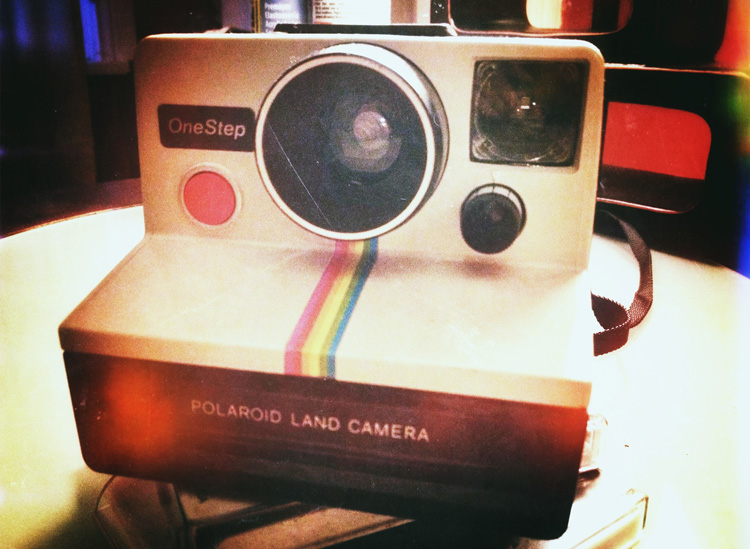
The mini 90 isn’t my first instant camera. I bought a Polaroid at Best Buy during college, which must have been during the very last days that anyone could buy a Polaroid at Best Buy. It was sort of cumbersome and it definitely wasn’t cool-looking, but there was something about it that got everyone excited about when I brought it out. I took plenty of snapshots of friends, but eventually ran out of film and didn’t buy more. Now it sits in a drawer at my parents’ house.

One of many ridiculous baseball game instant photos taken this year.

It was spring when I finally realized I should just buy the mini 90. After that, it was with me for pretty much every milestone event of the year. It was there when my sister visited and we went to one of the first baseball games of the season. I brought it to North Carolina where my boyfriend and I caught up with friends and met their babies. It came along to a tennis tournament with my family, when friends visited and to more baseball games than I want to admit to attending.

I can easily retrace my year in instant photos because they’re arranged on the wall by my desk. For every photo that made the wall, though, there were a lot of terrible photos – overexposed, underexposed, blurry, group selfies with somebody cut right out of the frame. But I guess I like the trial and error part of the process too. You work within the constraints of the system, learn what works and what doesn’t and gradually get better results. Even a bad instant photo is one that I feel like I actually made, and I learned something from the process. And when they come out looking just right, well that feels pretty good.

This goofy shot is probably my favorite photo of 2016 and I had a horrendous head cold when it was taken.

Obviously, one of the main joys of instant photography is that you get something you can hold at the end of the process. I don’t print many photos lately, so having it built into the process by the nature of the thing is kind of a treat in itself.

And I think that’s one of my favorite things about an instant photo – you can physically give the photo to someone else. You don’t get to text someone a copy, or tag them on Facebook, or email it to them later. I mean, you can snap a picture of it with your phone and do all that, but handing someone a photo that doesn’t exist anywhere else is pretty special. I gave away a lot of photos this year, and by that measure, it was a pretty good year indeed.

Articles: Digital Photography Review (dpreview.com)

 
Comments Off on Gear of the year: Allison’s choice – Fujifilm Instax mini 90

Posted in Uncategorized


Chris’ Gear of the Year part two: Canon 16-35mm F2.8L III

26 Dec

The Canon 16-35mm F2.8L II USM has been a workhorse for landscape photographers like myself for many years. Although I use this lens nearly every time I head out to shoot a location, I do have sort of a love-hate relationship with it. The corners are always fairly soft and never seem to get sharp (even after you stop the lens down) and chromatic aberration can be an issue as well (it can be removed through post processing, but at a slight cost to sharpness). Coma is also a pretty big issue with this lens, which makes it a less than desirable choice for astrophotography, but I’ve always made do and corrected those issues through post-processing.

This lens has impressive corner sharpness and amazing sunstars at very early apertures compared to its predecessor. Seattle, WA.

Photo by Chris Williams

Canon 5DSR, Canon 16-35mm F2.8L III, 16mm, F11, 1/160, ISO 100

There was always one thing that prevented me from moving on to a wide-angle that outperformed the Canon lens in terms of sharpness, vignetting and CA: the sun star. The sun star that the Canon lens produces is simply jaw-dropping and there are even Photoshop actions that you can purchase to replicate it. That’s one of the main reasons that I decided to purchase the lens in the first place and one of the main reasons that I never moved on.

This is an example of the type of sun star that the Canon 16-35mm F2.8L II produced. This lens is capable of taking some beautiful images, but it definitely did have its faults. This was taken in the Columbia Hills of Washington state.

Photo by Chris Williams

Sony a7r, Canon 16-35mm F2.8L II

When Canon released the 16-35mm F4L USM a few years back, I have to admit, I was extremely excited because I was hoping that it would lead to the release of an updated version of the 16-35mm F2.8L. Finally, after years of waiting, the Canon 16-35mm F2.8L III was announced in Fall 2016.

In this sample image you can see how well the lens handles coma at 16mm shot wide open at F2.8; this is a huge improvement over the previous iteration of the lens.

Photo by Chris Williams

Canon 5DMK IV, Canon 16-35mm F2.8L III, 16mm, 1.6sec, F2.8, ISO 100

All of the major issues that plagued the previous iteration of the lens have been largely addressed by Canon. The CA is almost non existent, the distortion was handled gracefully and the corner sharpness has improved dramatically at 16mm and beyond. In fact the best performance occurs when the lens is shot wide open at 16mm. Coma was a fairly major issue in the previous iteration of the lens and Canon has reduced it a great deal; so much so that this lens is now an excellent alternative to a fast prime lens for astrophotography. I knew Canon had the engineering to fix the issues with the optics, but one of the biggest questions that remained was; how did the sunstar fair?

Canon 16-35mm F2.8L III USM Sunstar

Canon 5D Mk IV, 35mm, 1/100, F20, ISO 100

Canon 16-35mm F2.8L II USM Sunstar

Canon 5D Mk IV, 35mm, 1/100, F20, ISO 100

I was actually pleasantly surprised by the sun stars that the new lens produces. It’s much more symmetrical and much cleaner in terms of flare than the previous iteration of the lens. The rays themselves are very clean and defined and very pleasing to the eye. Aesthetically pleasing sun stars are also achieved at much earlier apertures in the updated lens (as early as F10), which can minimize the effects of diffraction. All-in-all we see the changes as improvements, but it really comes down to personal preference. 

Sun star aside, I’ve owned the Canon 16-35mm F2.8L II for a number of years and the performance wide open has always been a major point of frustration for me, especially in terms of coma, CA and corner sharpness. The update that was made to this lens addresses all of these points and corrects the major issues seen in its predecessor, and it’s really quite impressive. The lens is a bit soft in the corners at the long end, but once it’s stopped down it does sharpen up quite nicely at focal lengths at and beyond 24mm. The bottom line is that Canon really threw down the gauntlet with this one to get it right and the results speak for themselves. This lens really is a feat of engineering. They always say the third time is the charm, and I couldn’t agree more. 

See our Canon 16-35mm F2.8L III
sample gallery

Articles: Digital Photography Review (dpreview.com)

 
Comments Off on Chris’ Gear of the Year part two: Canon 16-35mm F2.8L III

Posted in Uncategorized


Our favorite gear, rewarded: DPReview Awards 2016

26 Dec

DPReview Awards 2016

Here at DPReview we handle a lot of gear. This year, plenty of amazing cameras, lenses, accessories and other products came through our doors, and we hope you’ve enjoyed reading about them as much as we’ve enjoyed writing about and testing them.

Last year, for the first time, we decided to get together as a team and discuss what we thought was the best gear of the year in multiple categories. This year we sat down again and made a list, checked it twice, then talked about it. And then talked about it some more, and then made a shortlist. And then we talked about it again, argued a bit, and finally voted, ranking our choices by first, second and third preference.

After all that, we’re pleased to announce the results. Click through the slides above to learn which products made our list of the best gear of 2016.

If you’d like to have your say, make sure to vote in this year’s Reader’s Poll for best product of 2016, which will be running through December 31st. 

Best accessory

Shortlist:

  • DJI Osmo+
  • Domke Chronicle Bag
  • Fuji Instax Share SP-2
  • Western Digital MyPassport WD Wireless Pro

Runner up: Western Digital MyPassport WD Wireless Pro

There were a lot of new accessories released this year, but the Western Digital Wireless Pro in particular impressed us, which is why it’s the runner-up for this category. A great choice for photographers working in the field, it features its own Wi-Fi network, a built-in SD card slot, excellent battery life and dedicated Android and iOS apps.

Winner: Fuji Instax Share SP-2

It wasn’t even close, the second generation Fuji Instax Share SP-2 printer was our favorite accessory of 2016. Why? Because there’s just nothing quite like holding a physical image in your hands. Faster and sleeker than the original and with more printing options, the SP-2 can easily link up with Fujifilm cameras or print from a compatible phone or tablet.

Best mobile / VR Product

Shortlist:

  • Apple iPhone 7 Plus
  • DJI Osmo Mobile
  • Google Pixel XL
  • Panono 360 camera

Runner up: iPhone 7 Plus

This category includes a wide range of products, from smartphones to hand-held gimbals, all of which have one thing in common: they are non-traditional cameras. The Apple iPhone 7 Plus is this year’s runner-up with its innovative dual lens design. It offers photographers the choice between a 28mm F1.8 and a more portrait-appropriate 56mm F2.8 (35mm equiv.) lens.

Winner: Google Pixel XL

The Google Pixel XL won this category by a wide margin and for good reason: It has an outstanding camera – so good that it received the highest DxOMark score of any smartphone ever. And features like Raw capture, on-sensor phase detect AF and the HDR+ mode only add it to its appeal. Plus, it’s the first product compatible with Google Daydream VR headset.

Best prosumer camera drone

Shortlist:

  • Autel X-Star Premium
  • DJI Mavic Pro
  • DJI Phantom 4 Pro
  • DJI Phantom 4

Runner-up: DJI Phantom 4 Pro

The DJI Phantom 4 Pro is a tour de force of just how much modern technology can crammed into a small, prosumer drone. It stands out in its class thanks to a 20MP 1″-type sensor that captures 4K/60p video, support for h.265 recording, 20MP Raw stills, photographer-friendly features like 14fps burst shooting and exposure bracketing, and an impressive collision avoidance system.

Winner: DJI Mavic Pro

The DJI Mavic Pro sets a new standard for portability among prosumer camera drones; it’s hard to believe just how compact it is until you see it in person. In fact, you could easily fit it inside a camera pack (with plenty of room left for other gear), a purse, or even a large pocket in your cargo shorts (wearing cargo shorts is not endorsed by DPReview staff).

Don’t let the Mavic’s size fool you though – it has the same camera as the original Phantom 4, captures 4K/30p video, 12MP stills with DNG Raw support, and boasts a top speed that exceeds that of the Phantoms.

Best zoom lens

Shortlist:

  • Canon EF 16-35mm F2.8L III USM
  • Olympus M.Zuiko Digital ED 12-100mm F4 IS Pro
  • Sigma 12-24mm F4 DG HSM Art
  • Sigma 50-100mm F1.8 DC HSM Art

Runner-up: Olympus M.Zuiko Digital ED 12-100mm F4 IS Pro

Every year, more lenses are released than cameras, and this year the competition was especially tough. A lot of great zoom lenses were released in 2016 and of our shortlist of four, two belong to Sigma’s well-regarded ‘Art’ series. But the Olympus M.Zuiko Digital ED 12-100mm F4 IS Pro just pulled ahead of both of them to take the runner-up spot in this category.

Winner: Canon EF 16-35mm F2.8L III USM

Winner by a considerable margin of votes among the DPReview staff was the Canon EF 16-35mm F2.8L III USM. Canon is really on a roll with its high-end L-series, and the new version of the 16-35mm F2.8 is stunning. If you’re a Canon shooter looking for a high quality wide-angle zoom, the 16-35mm F2.8 III is as good as it gets.

Best prime lens

Shortlist:

  • Nikon AF-S Nikkor 105mm F1.4E ED
  • Olympus M.Zuiko Digital ED 25mm F1.2 Pro
  • Sigma 85mm F1.4 DG HSM Art
  • Sigma 30mm F1.4 DC DN | C

Runner-up: Nikon AF-S Nikkor 105mm F1.4E ED

If competition was fierce among zoom lenses this year, if anything it was even fiercer in the prime lenses category. New releases from several manufacturers really raised the bar, and Nikon’s excellent new 105mm F1.4 portrait lens took the runner-up spot in a very tough field.

Winner: Sigma 85mm F1.4 DG HSM Art

Realistically, as soon as we sat down to discuss which lens should win this category, there was only one serious contender. Winner by a convincing margin among DPReview staff was Sigma’s 85mm F1.4 DG HSM Art. Its big, it’s heavy, and it makes gorgeous pictures. If you’re a fan of the 85mm focal length for portraiture, the Sigma 85mm F1.4 Art is worth serious consideration. 

Best compact camera

Shortlist:

  • Canon PowerShot G7 X Mark II
  • Panasonic Lumix DMC-LX10
  • Sony Cyber-shot RX100 V
  • Sony Cyber-shot RX10 III

Runner up: Sony Cyber-shot DSC-RX100 V

There was some tough competition in this category, thanks partly to Sony, which seems set on maintaining its breakneck pace of new product announcements. The latest compact camera in Sony’s RX100-series is the best yet. We argued a lot about which camera should win in this category, and offering incredible speed, hybrid AF and excellent 4K video, the RX100 V took the runner-up spot.

Winner: Panasonic Lumix DMC-LX10

The winning position is occupied by the Panasonic Lumix DMC-LX10, thanks to its combination of small size, excellent lens and overall image quality. As well as great-looking stills, the LX10 is also capable of excellent 4K video, and hits an attractive price-point compared to the best of its competition.

Best consumer stills/video camera of the year

Shortlist:

  • Panasonic Lumix DMC-FZ2500
  • Sony a6500
  • Sony RX10 III

Runner up: Panasonic Lumix DMC-FZ2500

In this category, we’re looking for the best products for stills and video shooters who need one camera to do it all. This category spans compact, fixed-lens cameras up to 4K-capable ILCs, but our shortlist contained only the latter type of camera – testament to the advances that have been made in this category.

Panasonic’s Lumix DMC-FZ2500 takes the runner-up spot in this category this year, thanks to its impressive 4K feature set and video-friendly ergonomics, coupled with excellent still image quality.

Winner: Sony Cyber-shot RX10 III

The Sony Cyber-shot RX10 III is one of the most impressive products to come through the doors of DPReview Towers in 2016. Although bulky and costly, this 1″ sensor compact can reach places that ILCs just can’t. A stunningly sharp 24-600mm lens, coupled with a class-leading 1″-type BSI-CMOS sensor and excellent 4K and HFR video features meant that DPReview staff were unanimous in voting the RX10 III the best consumer stills / video camera of 2016.

Best entry-level ILC

Shortlist:

  • Fujifilm X-A3
  • Nikon D3400
  • Panasonic Lumix DMC-GF8
  • Yi M1

Runner-up: Nikon D3400

Although it might seem less interesting than other market segments, the entry-level ILC market is critical for manufacturers, who need to persuade new photographers to join their system, and get on the upgrade path. This year saw some excellent entry-level ILCs released, and the Nikon D3400 took the runner-up spot. Small, unflashy and easy to use, the D3400 is a great beginners’ camera and a good entry-point into the wider Nikon system.

Winner: Fujifilm X-A3

The winner of this category is the Fujifilm X-A3. While not as feature-laden as its higher-end X-series peers, the 24MP, WiFi-equipped X-A3 is a great camera for someone just starting out in photography. It offers plenty of scope for beginners to grow, without being confusing or intimidating to use.

Best mid-range ILC

Shortlist:

  • Canon EOS M5
  • Canon EOS 80D
  • Panasonic Lumix DMC-G85
  • Sony a6300

Runner Up: Sony a6300

2016 was a pretty good year for enthusiast photographers, and there was stiff competition in the mid-range ILC category this year. In the end, half of our shortlist was made up of Canon EOS products, but both the EOS M5 and EOS 80D lost out to the Sony a6300, which took runner-up spot.

Winner: Panasonic Lumix DMC- G85

I guess we just gave it away, but the winner of this year’s title of best mid-range ILC is the Panasonic Lumix DMC-G85, which narrowly pipped the a6300 to take the winning spot. There’s not much that this compact Micro Four Thirds camera can’t do, and we love it for its versatility and excellent 4K video.

Best high-end ILC

Shortlist:

  • Canon EOS 5D Mark IV
  • Fujifilm X-T2
  • Nikon D500
  • Olympus OM-D E-M1 II

Runner up: Fujifilm X-T2

It was a two-horse race in this category, with two products way out in front of the rest of the pack (do horses run in packs?). The Fujifilm X-T2 came a close second place to take the runner-up spot in this category. DPReview staff praised its portability, ergonomics and image quality.

Winner: Nikon D500

With a convincing number of votes among DPReview staff, the Nikon D500 took the winning spot in our best high-end ILC category this year, as a near unanimous first choice. The D500 is one of our favorite ever DSLRs, and in a very competitive market segment it stands as a stunningly capable all-rounder.

DPReview innovation award

Shortlist:

  • Olympus OM-D E-M1 II
  • Sigma 85mm F1.4 DG HSM Art
  • Sony Cyber-shot RX100 V
  • Sony Cyber-shot RX10 III

Runner-up: Sony Cyber-shot RX100 V

We created this category last year to recognize products that we feel raised the bar for innovation in their product class. We narrowed down our selection to a shortlist of products, all of which are either cameras or lenses. Runner-up in this category is the Sony Cyber-shot RX100 V, in recognition of the incredible amount of technology that Sony has packed into this tiny camera.

Winner: Olympus OM-D E-M1 II

Just pipping the RX100 V to the post is the Olympus OM-D E-M1 II. We’re still not entirely sure how Olympus packed as much technology into the E-M1 II as it did, but the end result is an incredibly powerful stills and video hybrid camera. As well as ultra-fast capture rates and effective in-body stabilization, the E-M1 II is also built for use in the harshest of conditions. 

DPReview product of the year, 2016

Shortlist:

  • Nikon D500
  • Olympus OM-D E-M1 II
  • Sigma 85mm F1.4 Art
  • Sony Cyber-shot RX100 V

Runner-up: Olympus OM-D E-M1 II

In our discussions about overall best product of 2016, four products kept coming up. In different ways, we were highly impressed by all of the four products in our shortlist, all of which arguably represent the state of the art in their particular market segments, and any one of which could easily have won. In the end, we had to make a final decision. You’ll be able to find out the winner in the next slide, but our runner up for this year’s DPReview Award for product of the year is the Olympus OM-D E-M1 II.

Winner: Nikon D500

What the E-M1 II is for mirrorless ILCs, the D500 is for DSLRs. Although it lacks a really credible 4K video mode, the D500 is nevertheless an impressive all-rounder, combining some of the best elements of the flagship Nikon D5 with a (relatively) compact APS-C form factor, and a 1.5X focal length increase which is extremely handy for sports and wildlife photography. If you’re looking for a versatile, pro-grade DSLR which will still be current in years to come, the Nikon D500 is about as good as it gets. The Nikon D500 is our product of the year, 2016.

As we approach the end of the year, we’d like to take this opportunity to thank all of you for your support, and your feedback. For a chance to vote for your own favorite product of 2016, our final Reader’s Poll is still open, and can be found here. Voting closes at midnight on Jan 31st (PT).

Articles: Digital Photography Review (dpreview.com)

 
Comments Off on Our favorite gear, rewarded: DPReview Awards 2016

Posted in Uncategorized


Gear of the Year 2016: Dan’s Choice – the DJI Mavic Pro (which he stinks at flying)

24 Dec
The Mavic Pro inspired me creatively and challenged me as a photographer more than any other product this year. Even if I still stink at flying it. Photo by Dan Bracaglia

I first flew the original DJI Phantom in 2013 as part of an article for Popular Science and have had drones on my mind ever since. However, my obsession with the idea of flight goes back to childhood, when I would launch into the sky anything I could get my hands on: kites, rockets, model planes, RC helicopters etc. 

When DJI announced the Mavic Pro at the end of September, I knew my years of patiently telling myself to ‘wait one more generation,’ had paid off: the Mavic Pro was the one for me. The reason? DJI is easily the most reputable maker of consumer drones and with the Mavic Pro, users get an easy-to-fly product (with years of R & D incorporated into it), good image quality, and an impressively-compact/portable package. It truly is the every-man’s drone. 

This is one of the few watchable clips I’ve shot so far.

Two months after pre-ordering, the box finally arrived at our office. And the first thing I learned upon firing it up is that despite the name, owning one certainly does not make you a ‘pro.’ The first thing I did with it was smash it into a wall in my apartment (I know, flying it inside the first time was a bad idea). 

As I’ve mentioned, I’ve been flying RC aircraft since childhood, and I like to think I’m pretty skilled behind the sticks. After all I can maneuver one of those $ 20 RC helicopters you get from Radio Shack (they do still exist, right?) like a champion. But crashing a $ 20 RC copter into a kitchen cabinet is one thing, crashing a $ 1000 drone into a kitchen cabinet is another thing entirely (video below). Note: this was the second crash. 

Photography is all about finesse and control, whether over one’s settings, light, subjects or all three. However being a good photographer does not make one a good drone operator. Despite the Mavic Pro being incredibly easy to get off the ground and fly safely (thank obstacle avoidance), there is a substantial learning curve in using it in an effective manner.

Outside of my childhood passion for controlling things as they soar through the sky, the DJI Mavic Pro is my gear of the year because it is the one piece of kit that challenges my understanding of both photography and video as mediums. Moreover, it challenges me to learn new skills that can be used to get new shots and perspectives as a content creator.

And knowing it’s in my bag and can be launched in under 10 minutes make me all the more eager to use it. Suddenly I can shoots stills and videos of friends skateboarding, or snowboarding or an outdoor concert, from both the ground and the air with relative ease. 

A sample image edited to taste in Adobe Lightroom. Photo by Dan Bracaglia

The drone industry is no longer in its infancy, in fact it’s growing up fast. And I think the Mavic Pro is a sure sign of this. High end consumer units are coming down in price, shrinking in size and offering increasingly impressive stills and video. At the same time, accident avoidance systems and other safety measure are also getting better.

It’s possible that before long we will live in a world where drones are as ubiquitous as smartphone. That’s somewhat of a terrifying thought, but all the more reason, if you are operating a drone, to try and be as safe and respectful to those around you as possible. Set a positive example for other drone fliers. Don’t ruin the fun for everyone else. 

I’ve only flown the drone on four occasions, but I can already see (modest) improvements in my skills, which is pretty exciting. With traditional photography, improvements can often only be seen retrospectively. Of course, accidents do happen and I’ll probably break the Mavic Pro in due time (perhaps even before this piece goes live). Fortunately, DJI offers one year of insurance for $ 100. That will cover you for up to two drone replacements in that time. I would certainly recommend this coverage to any first time fliers.

In conclusion, please enjoy the above scenic out-of-focus clip I shot last weekend In Seattle on one of the only clear days we’ve had this winter. Some day I hope to go back and try again. Maybe I should practice a bit more first, and not in my kitchen. 

Or instead you can watch the below clip of excellent 4K footage from the Mavic Pro, shot by Youtube user Digital Tech Reviews & Tips. #DroneGoals

Articles: Digital Photography Review (dpreview.com)

 
Comments Off on Gear of the Year 2016: Dan’s Choice – the DJI Mavic Pro (which he stinks at flying)

Posted in Uncategorized


Have Your Say: Best Gear of 2016

20 Dec

Have Your Say: Best Gear of 2016

For the past few weeks we’ve been running a series of polls to find out what you – our readers – think of the major product releases of 2016. For the first round of voting we made initial five polls covering lenses, compact cameras and interchangeable lens cameras (ILCs). Now that those polls have closed, we’re pleased to announce the winners.

In this slideshow we’re announcing the winners and runners-up in each category, and kicking off a final poll, to determine which of the ten individual poll winners from the first round should be crowned as your choice for overall best gear of 2016.

Best Prime lens – Runner-up: Sigma 85mm F1.4 Art

We’ve been waiting and hoping for Sigma to create an 85mm lens in its highly-regarded ‘Art’ lineup for some time, and 2016 saw that dream come true. Like all of the Art primes, the 85mm F1.4 is a stunning performer. We’ve heard Sigma representatives say that the Art series is the company’s ‘no compromise’ line, and the company certainly didn’t compromise with the new 85mm – it’s as big as a flower pot.

It might be a bit of a lump, but it’s beautifully constructed, and optical quality really is gorgeous. We love this 85mm for its sharpness, and the quality of its bokeh. Clearly it has impressed you, too. You voted this lens runner-up in our poll for best prime lens of 2016.

Best prime lens – winner: Nikon AF-S NIKKOR 105mm F1.4E

Winner of our readers’ poll for best prime lens of 2016 is another fast portrait lens, the Nikon AF-S Nikkor 105mm F1.4E. Like Sigma’s 85mm F1.4 Art, the Nikon 105mm F1.4 is a big, heavy lens, and it comes with a big, heavy pricetag. Optically though, we think it’s worth every penny. While armchair engineers, xenophobes, and those ignorant of modern lens design might balk at the polycarbonate exterior and ‘made in china’ label, as our friend Roger Cicala has proved, the 105mm F1.4 is a tough, well-built lens.

As far as its optics are concerned, the 105mm F1.4 represents the state of the art for fast short telephoto lens design. There’s no doubt that this lens is a relatively niche product, but with such stunning central sharpness between F2-4 and such beautiful bokeh, it’s among the best portrait lenses on the market. You voted the Nikon AF-S Nikkor 105mm F1.4E best prime lens of 2016.

Best zoom lens – runner-up: Sigma 50-100mm F1.8 Art

Sigma’s 50-100mm F1.8 DC HSM Art provides a 75-150mm focal length range on the APS-C format DSLRs for which it’s designed, and – crucially – replicates the classic F2.8 (equivalent) continuous aperture that has been a traditional feature of high-end full-frame zooms.

Offering a fast maximum aperture and standard ‘Art’-series construction quality the 50-100mm is solid, heavy and luxuriously engineered. An ideal companion to high-end DSLRs like Canon’s EOS 7D Mark II and Nikon D500, you voted the Sigma 50-100mm F1.8 Art runner-up in our poll for best zoom lens of 2016.

Best zoom lens – winner: Olympus M.Zuiko 12?100mm F4 PRO

Olympus is ending 2016 with a bang, thanks to two major new releases. The OM-D E-M1 Mark II is an extraordinarily powerful, pro-grade mirrorless camera, and a new kit lens, the 12-100mm F4 has also impressed us – and you – greatly.

The M.Zuiko Digital ED 12-100mm F4 IS Pro is a powerful carry-everywhere zoom lens. Combined with Olympus’ 5-axis IBIS in the new OM-D E-M1 II, it can offer up to 6.5 stops of image stabilization, which greatly expands the camera’s usefulness in marginal light, for both stills and video. As we’d expect for a lens in Olympus’s ‘PRO’ lineup, the 12-100mm is also splash-proof, dust-proof, and freeze-proof. We’ve been impressed by its versatility since we got our hands on a sample after Photokina, and clearly you agree.

Best high-end compact camera – Runner-up: Sony Cyber-shot RX10 III

The Sony Cyber-shot RX10 III is an expensive camera, no doubt about it, and one of the largest ‘compact’ cameras on the market. But it’s also one of the best performers. Despite boasting a fast 24-600mm (equivalent) zoom lens and a 1 inch sensor, the RX10 III produces images that beat or rival its competitors even at the very furthest ends of its zoom reach. Within a few days of shooting with it, DPReview’s staff were already talking about the RX10 III’s lens as ‘magic’, and however they managed it, Sony’s engineers should be congratulated on a significant optical achievement.

Of course it’s not all about the lens. The RX10 III also offers class-leading image quality in terms of resolution and high ISO image quality, and an impressive 4K video specification, plus the option to capture HD-quality high frame-rate footage. The RX10 might rival some DSLRs for size, but it beats them when it comes to a lot of other things.

Best high-end compact camera – Winner: Sony Cyber-shot RX100 V

As we’ve come to expect, Sony released a lot of cameras this year, and the Cyber-shot RX100 V clearly caught your attention. Although it’s not a major upgrade to the RX100 Mark IV, the new Mark V improves on its predecessor with a revamped autofocus system, which features 315 phase-detection AF points covering 65% of the frame. The other major addition is a significantly increased buffer, allowing for full-resolution 20MP capture at 24fps, with full AE and AF. This is effectively equal to shooting 5K 24p video footage, made up of up to 150 JPEGs, or ~60 Raw + JPEGs in a burst. Impressive stuff.

This kind of performance, plus an impressive 4K video specification make the RX100 V a real powerhouse. It’s one of our favorite compact cameras of 2016, and clearly a hit among our readers, too. You voted it your high-end compact camera of the year. 

Best midrange ILC – Runner-up: Panasonic Lumix DMC-G85

The Panasonic G85 (G80 outside the US) has proven to be something of a sleeper hit, this year. Although not as flashy as Olympus’s 2016 M43 offerings, the G85 is one of the most powerful and capable cameras of its type on the market. The G85 uses the same sensor as its predecessor the G7, but without an AA filter. The 2.36M dot OLED electronic viewfinder is all new, and boasts increased magnification compared to the G7.

The camera also gains in-body 5-axis image stabilization and Dual I.S. 2 as well as weather and dust-sealing. It now uses an electromagnetic shutter and features a new in-camera focus-stacking mode. Like its predecessor it is 4K-capable, has built-in Wi-Fi and utilizes Panasonic’s Depth from Defocus AF.

The G85 has become one of our go-to cameras for tradeshows and press events thanks to its small size, reliably focus and high-quality 4K video mode. Clearly it has impressed you, too, taking the runner up spot in our readers’ poll for best midrange ILC.

Best midrange ILC – Winner: Sony a6300

The G85 had tough competition this year in the shape of the Sony a6300. With an APS-C sensor and compact form factor, the a6300 is one of the most powerful cameras of its type on the market. As far as image quality is concerned the a6300 (literally) punches above its weight, offering class-leading resolution and high ISO noise performance and superb 4K video footage. Fast continuous shooting performance and an advanced hybrid AF system round out an impressive feature set.

Since it was released, we’ve reached for the a6300 more and more, for ‘run and gun’ video, especially. And the a6300 impressed you enough to beat stiff competition and win our poll for best midrange ILC. 

Best high-end / professional ILC – Runner-up: Fujifilm X-T2

The Fujifilm X-T2 is one of the most likable ILCs on the market. While the X-T1 was a lot of fun to use, it was in some respects (resolution, video and autofocus being the most obvious) a little behind its competition. The X-T2 fixes all that, without messing with the formula that made its predecessor such a great camera. 

Fujifilm’s current 24MP APS-C sensor is capable of excellent still image quality, and while not class-leading, a revamped AF system makes the X-T2 more versatile than its predecessor. The X-T2 is Fujifilm’s first camera to offer 4K video capture, and footage compares very well to other 4K-enabled competitors, not to mention older X-series models, which were notoriously weak when it came to video. We weren’t surprised to see that you think highly of the X-T2, voting it runner-up in our readers’ poll for best high-end / professional ILC. 

Best high-end / professional ILC – Winner: Nikon D500

It was a tight race in the high-end / professional ILC poll this year, but the Nikon D500 just pipped the X-T2 to the top position, by a whisker. The long-awaited successor to the D300S, the D500 is a stunning camera, and easily the most advanced APS-C DSLR that we’ve ever reviewed. Essentially the best bits of the flagship Nikon D5 but in a smaller, APS-C format body, the D500 is a powerhouse.

Capable of 10fps capture with an almost infinite buffer (when using an XQD card) the D500 is a superbly capable tool for wildlife and action photography, but is equally useful for travel, landscape work and portraiture. The D500’s 153-point autofocus system is almost uncanny in its ability to accurately track moving subjects, and the camera’s tough and weather-sealed body is designed to stand up to hard professional use. 

Aside from its somewhat half-baked 4K video mode, the D500 is practically peerless in the APS market, and also compares very favorably against the best of its full-frame competitors. It topped your list of 2016’s high-end / professional ILCs, and a very worthy winner it is, too. 

Have Your Say

You’ve seen the results from our five polls, so now’s the time to pick an overall winner. You can vote for up to three of the products in this poll, and voting closes at midnight (PT) on December 31st. We’ll announce the overall winner, and runner-up early in the new year.

Thanks for voting, and for contributing to DPReview over the past year. We couldn’t do any of this without you.

.


Have your say

$ (document).ready(function() { Poll({“pollId”:”5121852146″,”openForVoting”:true,”mainElementId”:”poll0″,”slot”:null,”isSingleChoicePoll”:false,”minNumberOfChoices”:1,”maxNumberOfChoices”:3}); })

Have Your Say: Best Product of 2016
Your answers
1. Required
2. Optional
3. Optional
You need to login to vote

Fujifilm X-T2

Nikon D500

Nikon AF-S 105mm F1.4E

Olympus M.Zuiko 12-100mm F4

Panasonic Lumix DMC-G85

Sigma 85mm F1.4 Art

Sigma 50-100mm F1.8 Art

Sony a6300

Sony Cyber-shot RX10 III

Sony Cyber-shot RX100 V

Voting is easy – you pick your favorite products by dragging and dropping. You can pick up to three, and rank them in order of priority.

Articles: Digital Photography Review (dpreview.com)

 
Comments Off on Have Your Say: Best Gear of 2016

Posted in Uncategorized


Gear of the Year 2016 – Barney’s choice: Nikon D500

19 Dec

From almost the minute it was announced, somewhat incongruously, at the Consumer Electronics Show in January (well, it does have a touchscreen, I suppose), the Nikon D500 looked like it was going to be a hit with DPReview’s readers. After so many years we had almost lost hope that Nikon would replace the D300S, which soldiered on well into its dotage, and well beyond the point where it was able to keep up with the likes of Canon’s EOS 7D II. 

But replace it Nikon did, and in impressive fashion. I won’t waste your time listing specifications (you can find all of that here) in this article, but suffice to say it’s unlikely that the D500 will look outdated any time soon.

The D500 boasts a 153-point AF system, of which 55 can be manually selected. But it doesn’t just boast a lot of autofocus points, it also offers them across most of the width of the frame.

Despite its obvious appeal, I was a little hesitant to make the D500 my choice for Gear of the Year because of all the people on the DPReview team, I’ve probably used it for the least amount of time. But my experience of shooting with it for our September Field Test, with National Geographic photographer, friend to the wolves and all-round man-crush Ronan Donovan was a definite highlight of 2016.

Most of our video shoots are organized far in advance, and planned almost down to the last detail. Camera features are carefully aligned with shooting situations, locations are scouted ahead of time, and the shoot proceeds predictably, and more or less according to plan.

Most Field Tests are like that, but some are not. The D500 shoot was not.

A combination of factors including limited availability of D500 bodies, limited availability of Ronan, an already packed pre-Photokina schedule, the vicissitudes of rural Montana’s postal system some inconveniently-positioned wildfires meant that we weren’t able to plan the shoot quite as carefully as we might have liked.

A Tight Timeframe

In fact, we ended up with a mere 24-hour window of time in which to work with Ronan, filming at a remote wildlife reserve in Montana, more than 10 hours’ drive away from DPReview’s home base of Seattle. The cameras only showed up a couple of days before we were due to head to the reserve, so it was essential that D500s didn’t fail or present any major surprises on location. If that had happened, there wouldn’t have been enough time to troubleshoot.

The broad width of the D500’s autofocus coverage, and its impressive 3D AF Tracking mode combine to offer unparalleled accuracy when it comes to tracking subjects around the frame. Even flying against a similarly-colored, cluttered background, the D500 had no trouble accurately tracking birds of prey on the Montana video shoot.

For instance, had the D500 been susceptible to dust or high temperatures, or had it simply presented too steep a learning curve for Ronan and me to pick up and use more or less straight out of the box, we would have been in trouble. Similarly, if it had been incapable of focusing on the fast-moving birds we were pinning our hopes on capturing, or if its autofocus system gave out in low light, we might have been forced to scrub the shoot for lack of coverage.

That’s the gear, but the concept itself also presented some risk. When you center a video shoot around wildlife photography, it’s a good idea to build some extra time into the schedule as insurance against the unexpected. With such a tight window, multiple extra shoot days weren’t an option. Things were further complicated by wildfire haze and a 30mph wind on the day of our shoot, which threatened to reduce both air quality and audio quality, as well as keep the birds we were hoping to photograph on the ground or tucked away in the branches of trees.

Ominously, a frequent visitor to the reserve told me when we arrived that he had seen fewer birds during his vacation this year than any previous year he could remember. Gulp.

This image is one of a sequence taken after dark. Even in such low light, the D500 accurately tracked these swans landing on a lake, and at ISO 258,032 the images are grainy, but after careful processing they still contain plenty of detail and natural color.

Fortunately despite the wind and the haze, we did find some birds, and although the wind blew out a lot of our audio, we still managed to record plenty of usable sound. Ronan was great on camera and quickly got to grips with the D500, and the D500 itself shrugged off the dust and heat and did everything that we asked of it. And we asked a lot.

In a 24-hour shoot we baked our three D500s in the sun, froze them overnight taking time-lapse shots of the stars, covered them in dust, and repeatedly asked them to focus track small, distant birds at long focal lengths. Even more challenging was shooting after dark, when we attempted 10 fps AF tracking bursts of trumpeter swans flying at night, and grabbed unplanned images of an owl, lit only by the headlamps of our truck. 

Sharp Focus

The reason we were able to get all of those images with relatively little trial and error is that the D500’s autofocus system seems to have been sent from the future by benevolent aliens, whose mission – apparently – is to help us take better photographs. 

In 3D AF tracking mode, the camera managed to accurately follow our small, erratic subjects around the frame, even in very low light. When 3D AF tracking didn’t work so well, one of the several other autofocus modes invariably delivered the results we needed. Group Area AF, for instance, proved especially useful for the smaller birds.

The D500’s 1.5X crop turns a 500mm lens into an effective 750mm. This is very handy when shooting skittish birds like this hawk. 

Once we’d wrapped the shoot and Ronan had left, I spent a couple of hours the next day on my own, getting some additional images in the bag before we left the wildlife reserve. With the film crew otherwise occupied, I posted up near a fence where we’d seen hawks the previous day, and waited to see if they’d come back. They did, and I spent a pleasant couple of hours shooting them wheeling around the sky, with the D500 accurately tracking them around the frame even as they moved in front and behind of low trees and bushes.

If you make the mistake of getting too close to one of these birds of prey, you might end up regretting it. This image is one of a sequence of shots which show a juvenile hawk diving at me, at a closing speed of roughly 100mph. This image shows the bird starting to open his wings to pull out of the dive a few feet above my head. 

Less pleasant was a diving attack from one of the juveniles, which dropped on me from a hundred feet or so, folding its wings and coming straight for the camera, like a beaked dart. I fired off a few shots before losing my nerve but remarkably, despite the incredible closing speed of the bird and my shaking hands, the D500 nailed several sharp images of the hawk before it pulled out of the dive at close to 100mph, a few feet about my head. I took the hint and moved on.

I headed to a small lake and shot an unbroken sequence of images of a pelican taking off and circling around the lake. With an XQD card installed, the D500 can maintain its 10 fps continuous shooting rate almost indefinitely, while maintaining accurate focus the entire time. I like pelicans. They’re very sedate. Less… attacky. 

Although there are higher-resolution cameras on the market, 20MP is enough resolution for high-quality landscape imaging. Raw files from the D500 also offer a wide latitude for post-capture adjustment.

With these sequences, plus Ronan’s shots from the previous day, we knew we had enough images to really show the D500 at its best. Despite the challenging shooting conditions, the D500 did everything we asked of it, and more. After more than ten years writing about digital cameras, I’m not easily seduced by impressive-sounding specifications or fancy new features. I knew the D500 was good before the Montana video shoot, but I didn’t know how good. That experience impressed me enough to make the Nikon D500 my pick for Gear of the Year 2016.

Nikon D500 real-world samples

Please do not reproduce any of these images on a website or any newsletter / magazine without prior permission (see our copyright page). We make the originals available for private users to download to their own machines for personal examination or printing (in conjunction with this review), we do so in good faith, please don’t abuse it.

Unless otherwise noted images taken with no particular settings at full resolution. Because our review images are now hosted on the ‘galleries’ section of dpreview.com, you can enjoy all of the new galleries functionality when browsing these samples.

$ (document).ready(function() { SampleGalleryGridV2({“galleryId”:”4137508448″,”isMobile”:false}) })

Nikon D500 Sample Gallery

109 images • Posted on Apr 29, 2016 • View album
Sample photoSample photoSample photoSample photoSample photoSample photoSample photoSample photoSample photoSample photoSample photoSample photoSample photoSample photoSample photoSample photoSample photoSample photoSample photoSample photoSample photoSample photoSample photoSample photoSample photoSample photoSample photoSample photoSample photoSample photoSample photoSample photoSample photoSample photoSample photoSample photoSample photoSample photoSample photoSample photoSample photoSample photoSample photoSample photoSample photoSample photoSample photoSample photoSample photo

Articles: Digital Photography Review (dpreview.com)

 
Comments Off on Gear of the Year 2016 – Barney’s choice: Nikon D500

Posted in Uncategorized


Filmmaker ScottDW trades his pro video gear for Canon EOS 80D: Watch the results

19 Dec

What happens when you swap out a video pro’s cinema-grade gear with a Canon EOS 80D?

Filmmaker ScottDW found out, when he put down his usual pro kit and picked up the 80D to shoot an installment of his High School Dance Off video series.

 ScottDW is a professional filmmaker with over 880,000 YouTube fans

ScottDW put Canon’s Video Creator Kit to use filming the short. The bundle was introduced alongside the 80D and includes a Rode directional microphone along with a power zoom adapter for the camera’s 18-135mm F3.5-5.6 kit lens. Take a look at how it all came together in the video above.

The Canon 80D offers a touch screen, handy for things like AF point selection

Though you won’t find any choreographed dance routines, you can also check out the 80D’s performance in DPReview’s video feature Barney Builds a Boat.

Articles: Digital Photography Review (dpreview.com)

 
Comments Off on Filmmaker ScottDW trades his pro video gear for Canon EOS 80D: Watch the results

Posted in Uncategorized