RSS
 

Posts Tagged ‘Future’

Rezension: Back to The Future

23 May

Ein Kind und ein Mann lachen auf den beiden Passbildern mit gleicher Pose in die Kamera. Sie tragen den gleichen Anzug, die gleiche Krawatte – ja, sogar die gleiche, etwas zu große Brille. Und sie sehen sich ähnlich. Aber es sind nicht Vater und Sohn, sondern es ist ein und dieselbe Person: Pancho aus Buenos Aires. Einmal 1983 und einmal 2010.

Er ziert das Cover des Buches „Back to The Future“* von Irina Werning. Das Projekt „Zurück in die Zukunft“ kennt Ihr vielleicht schon durch die Werbekampagne der Deutschen Bahn aus dem Jahr 2012.

© Irina Werning's Back to the Future, Pancho, Buenos Aires, Argentina, 1983 and 2010, published by teNeues, www.teneues.com. Photo © 2014 Irina Werning. All rights reserved.

Die argentinische Fotografin Irina ist neugierig und sie liebt alte Fotos. Sobald sie in einem Haus ist, geht sie auf die Suche danach. Und irgendwann begann sie, diese alten Bilder zusammen mit den darauf abgebildeten Menschen nachzustellen.

Sie analysiert die Fotos dafür nach dem Licht und der Technik und kopiert sie bis ins Detail genau. Selbst rotgeblitzte Augen und kleine Bildfehler fehlen auf den neuen Fotos nicht. Die Kleider kauft oder näht sie selbst, die Hintergründe sucht und baut sie nach.

Ihr Bildband zum Projekt ist im Verlag teNeues erschienen und es ist ein Buch, das Freude macht. Ich habe es selbst schon mehrere Male angesehen, bin immer wieder fasziniert und vergleiche voller Freude die Menschen von damals und heute. Diese Bilder sind so wunderbar komisch! Sobald ich Besuch bekomme, gebe ich es gleich in dessen Hände und es Folgt jedes Mal die gleiche Reaktion: Gelächter und Faszination.

© Irina Werning's Back to the Future, Riff Raff, London, Great Britain, 1976 and 2011, published by teNeues, www.teneues.com. Photo © 2014 Irina Werning. All rights reserved.

© Irina Werning's Back to the Future, Mechi, Buenos Aires, Argentina, 1990 and 2010, published by teNeues, www.teneues.com. Photo © 2014 Irina Werning. All rights reserved.

Das Thema Älterwerden ist an sich ja eigentlich ein eher ernstes, aber dank Irina Werning bekommt man dazu einen völlig neuen Zugang. Interessant ist auch, dass sie Kinderbilder aus aller Welt nachstellt: Argentinien, Großbritannien, USA, Frankreich, Deutschland, Indien, Island, Ghana und einige mehr. Und so ist bereits den Ausgangsbildern durch ihre kulturellen und geschichtlichen Besonderheiten meine Aufmerksamkeit sicher.

Auf jeder Doppelseite des Buches ist links das Ausgangsbild und rechts das nachgestellte Foto zu sehen. Darunter sind klein der Vorname des oder der Abgebildeten, das Land und die beiden Jahreszahlen vermerkt. Ein sehr kurzes Vorwort der Fotografin geht den 160 Seiten vorraus. Es ist überall im Handel oder direkt beim Verlag teneues.com erhältlich.

Informationen zum Buch

Back to The Future*, Irina Werning
Gebundene Ausgabe
160 Seiten
Größe: 26 x 21 x 2 cm
Verlag: teNeues
Neupreis: 39,90 €

* Das ist ein Affiliate-Link zu Amazon. Wenn Ihr darüber etwas bestellt, erhält kwerfeldein eine kleine Provision, Ihr bezahlt aber keinen Cent mehr.


kwerfeldein – Fotografie Magazin | Fotocommunity

 
Comments Off on Rezension: Back to The Future

Posted in Equipment


Light field cameras: Focusing on the future

15 May

Screen_Shot_2014-05-14_at_10.56.37_AM.png

Lytro’s new Illum camera packs in a few tricks that will appeal to some still photographers, but its aim is really to introduce a new type of imagery. Time will tell if that medium succeeds. Technology writer Liam McCabe spoke with a few players in the light field camera industry to get a sense of where this technology is headed in the next few years and beyond. Learn more

News: Digital Photography Review (dpreview.com)

 
Comments Off on Light field cameras: Focusing on the future

Posted in Uncategorized


8 March, 2014 – Phase One’s Future

10 Mar

On February 18, 2014 Silverfleet Capital announced their plans to invest in Phase One.  As happens in the photography industry this announcement sent the rumor mills into high gear.  Loyal Phase One customers were worried that Phase One may be following the path of its competitor which is now run by a VC firm.  Talk of changes and layoffs also were making the rounds.  So, we felt what better way to get the right story than to go to the source.  Kevin Raber caught up with Henrik Håkonsson CEO of Phase One, in Las Vegas last week at the WPPI show and had a chat with him on what this new investor means for Phase One.


You can win an all-expenses paid photographic expedition to Antarctica, along with air fare from anywhere in the world. The value of this prize is $ 15,000.

The Luminous Landscape wants you to try any of our more than 60 training or travel videos and our new free video player. Each purchase is an entry, and an annual subscription that includes all previous as well as new videos counts as six entries. The winner of a free lifetime subscription is also chosen from each month’s entries.


FIND OUT MORE


The Luminous Landscape – What’s New

 
Comments Off on 8 March, 2014 – Phase One’s Future

Posted in News


Walkability & Hyperdensity: 14 Concepts for Future Cities

07 Jan

[ By Steph in Architecture & Cities & Urbanism. ]

Urban Future Walkable Car-Free Cities Main

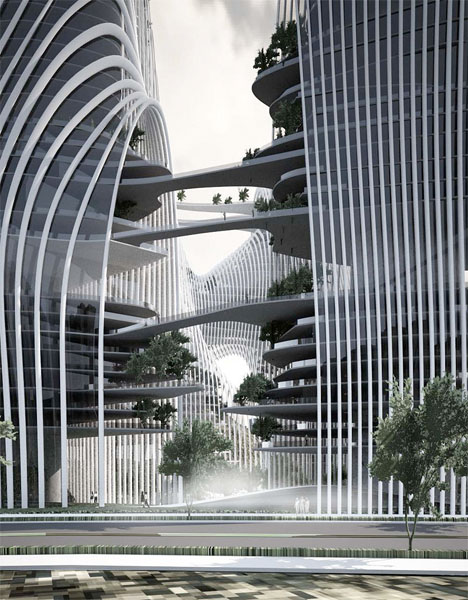
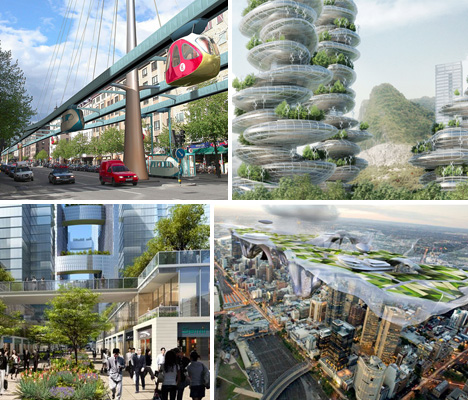
The city of the future addresses problems like overpopulation, pollution and sprawl by building high-density vertical neighborhoods that are interconnected at all levels so residents can move freely from one place to another on foot. These 14 city concepts, some of which are already under construction, emphasize walkability, sometimes going so far as to ban cars altogether.

Car-Free City in China

Urban Future Car-Free China 1

Urban Future Car-Free China 2

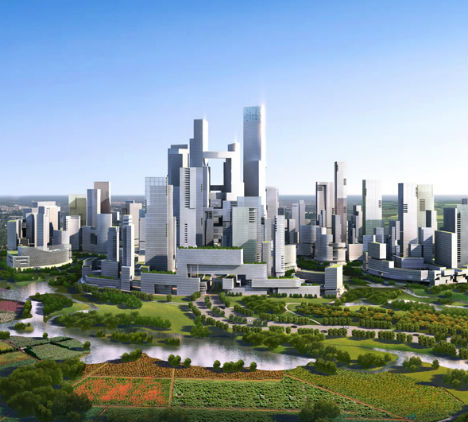
China is creating a totally car-free city from scratch, building a new urban center around a high-rise core housing 80,000 people. Great City, planned for a rural area outside Chengdu, will be entirely walkable and surrounded by green space. Getting from the center to the outer ring of parks on foot takes just ten minutes. Other nearby urban centers will be accessible via mass transit. The city will use 48% less energy and 58% less water than a more conventional city of the same size, and will produce 89% less landfill waste.

Masdar, World’s First Zero-Carbon City

Urban Future Masdar Eco City 1

Urban Future Masdar Eco City 2

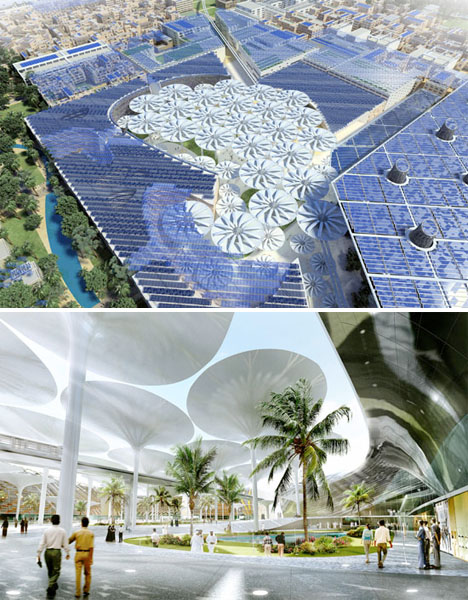
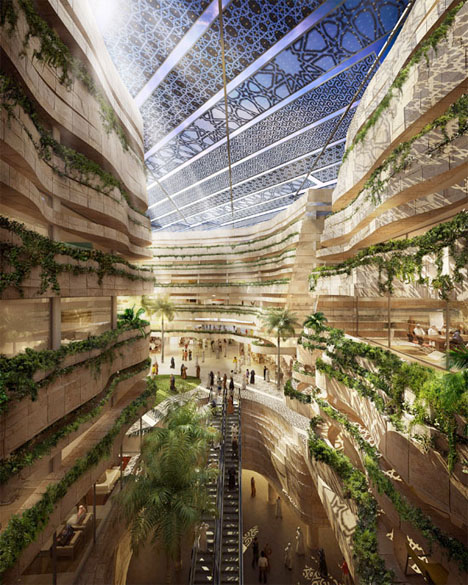
The world’s most sustainable metropolis – with no cars or skyscrapers allowed – is currently under construction in the desert outside Abu Dhabi. Masdar, the world’s first zero-carbon, zero waste city, will feature a public rapid transit system in place of personal automobiles, and will be fueled by solar, wind and geothermal power. Giant ‘sunflower umbrellas’ designed for the city center will provide movable shade during the day, store heat, and then close and release heat at night.

Shan-Shui City

Urban Future Shan Shui 1

Urban Future Shan Shui 2

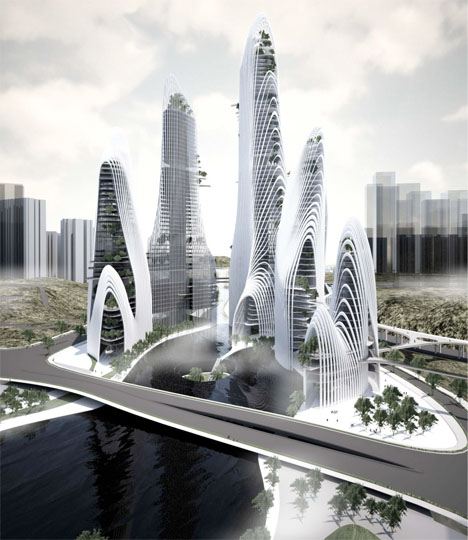
MAD Architects envisions Shan-Shui City as the city of the future. Inspired by the worship of mountains and water in China, the concept is made up of large-scale mixed-use buildings with lots of public spaces where people can gather, communicate and enjoy nature. High-density living and making all necessary resources readily available within easy walking or public transit distance is a far more sustainable way of building a city than the current trend of “boxes spreading all over,” say the architects. The concept makes access to nature just as vital as access to schools, health care and work.

Dubai Sustainable City

Urban Future Dubai Sustainable City 1

Urban Future Dubai Sustainable 2

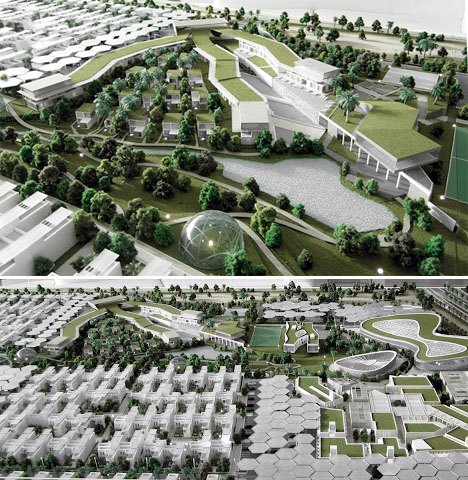
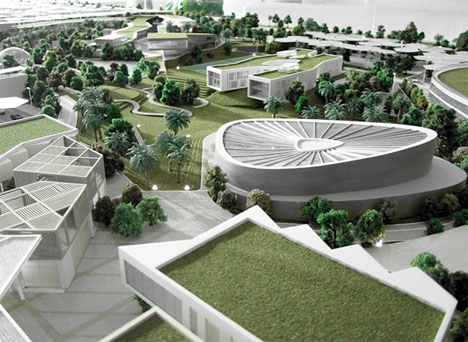
Baharash Architecture proposes a sustainable Dubai incorporating “the best practices in environmental building technologies,” with a strong focus on community connections and social interaction in green spaces. The design consists of 550 residential villas, organic farms, educational facilities and 600,000 square feet of solar panels. The city will produce 50 percent of its own energy through solar power and offset its carbon footprint via mass transit.

Next Page – Click Below to Read More:
Walkability Hyperdensity 14 Concepts For Future Cities

Share on Facebook


[ By Steph in Architecture & Cities & Urbanism. ]

[ WebUrbanist | Archives | Galleries | Privacy | TOS ]


WebUrbanist

 
Comments Off on Walkability & Hyperdensity: 14 Concepts for Future Cities

Posted in Creativity


Ghost Food: A Conceptual Taste of the Future of Eating

28 Sep

[ By Delana in Conceptual & Futuristic & Technology. ]

smell and texture analog for extinct foods

Drive around any mid-size to large city and you’re destined to find a number of food trucks. In recent years they’ve become almost as ubiquitous as traditional stationary restaurants. A truck called GhostFood is throwing a very unusual hat into the ring by offering their customers not real food, but the experience of food.

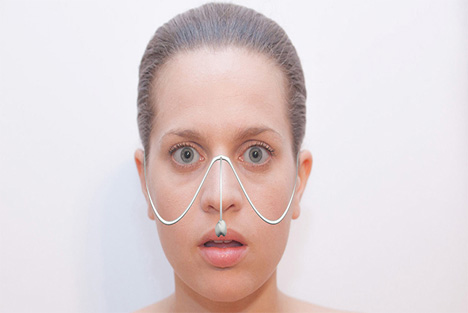
ghostfood facial apparatus

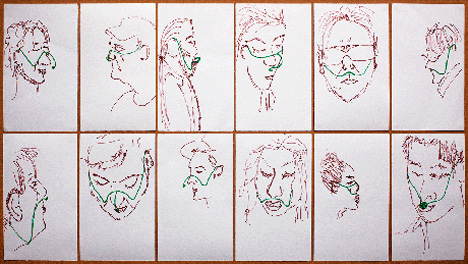
GhostFood, a “participatory performance” from Miriam Simun and Miriam Songster (yup, a double-Miriam team) is meant to simulate the experience of eating foods that could soon be extinct. A 3D printed headpiece attaches to a visitor’s face just like glasses and replicates the olfactory profile of certain foods. A substitute edible substance with a texture identical to the “ghost food” is provided. The scent and texture combined trick the mind into believing that the actual food is being consumed.

endangered foods

The project is meant to increase awareness of the possible future of food. The GhostFood truck will serve up the experiences of eating cod eggs, peanut butter, and chocolate – all of which face the possibility of disappearance due to climate change. In the case of cod eggs, changing seawater salinity is increasingly causing them to sink rather than float, making them both inaccessible to humans and unable to hatch and form the next generation of cod.

foods in danger of becoming extinct

Peanuts are affected in multiple ways by climate change. Drier growing periods mean that it’s more difficult to harvest the peanuts, and shortened winters cause a mold called aflatoxin. The mold doesn’t actually harm the peanuts themselves, but it is toxic to humans. Chocolate is in a delicate situation thanks to drought, deforestation, and changing global temperatures. Although the artists are drawing attention to the unstable futures of these foods, they aren’t trying to educate or preach a certain ideology. Their goal is simply to demonstrate what our eating experiences might be like in the future when our favorite foods are no longer available on supermarket shelves.

(via: Edible Geography)

Share on Facebook


[ By Delana in Conceptual & Futuristic & Technology. ]

[ WebUrbanist | Archives | Galleries | Privacy | TOS ]


WebUrbanist

 
Comments Off on Ghost Food: A Conceptual Taste of the Future of Eating

Posted in Creativity


Wearable Tech of the (Distant) Future: 13 Sci-Fi Suits

04 Sep

[ By Steph in Art & Drawing & Digital. ]

Imaginary Wearable Tech Sci Fi Suits Main

We’re probably a century or two away from working mechanized exoskeletons modeled on the movements of crickets, but the great thing about digital concept art is there are no limits other than those of the creators’ imaginations. These gadget-covered robotic suits and helmets for the humans of the future may not be coming to stores any time soon, but it’s easy to imagine them playing major roles in movies and video games. In fact, you might just find yourself making up stories about what each one can do as you view them.

Cricket Exo-Suit by Matthew Burke

Imaginary Wearable Tech Cricket Suit

Artist Matthew Burke envisions a combination exoskeleton/vehicle inspired by a cricket in this 3DStudio Max rendering finished in Photoshop.

Combat Mech Suit by Mike Andrew Nash

Imaginary Wearable Tech Mech Suit

Imaginary Wearable Tech Mech Suit 2

This incredibly detailed CGI rendering by Mike Andrew Nash looks so real, it’s hard to believe it’s not a physical model. It’s a combat mech warrior suit the artist calls 21-A BW, or Terran Infiltration Unit.

Diving Suit by Cat-Meff

Imaginary Wearable Tech Diving Suit

Artist Cat-Meff envisions a diving suit that would turn any human into a sort of mechanized dolphin/mer-creature. “This is probably one of the coolest ways to spend your holidays in 2025,” the artist writes.

Hazard Suit by Lucas Hardi

Imaginary Wearable Tech Hazard Suit

“The character is a high-ranking official wearing a suit equipped for hot, cold and bad air,” says artist Lucas Hardi of this 3D hardsurface modeling exercise.

Next Page:
Wearable Tech Of The Distant Future 13 Sci Fi Suits

Share on Facebook


[ By Steph in Art & Drawing & Digital. ]

[ WebUrbanist | Archives | Galleries | Privacy | TOS ]


WebUrbanist

 
Comments Off on Wearable Tech of the (Distant) Future: 13 Sci-Fi Suits

Posted in Creativity


Back to the future: ten one-of-a-kind cameras from the 21st century

03 Sep

v570-front-trans.png

At the turn of the 21st century, consumer digital cameras really took off. Technology was evolving at an incredible pace, and camera makers came up with features that we now take for granted, most notably live view on DSLRs. There were plenty of unique ideas going around, as well. Some were genuinely useful, while others may leave you scratching your head. In this article, DPReview’s Jeff Keller takes a look at ten cameras that have stood out over the last thirteen years.

News: Digital Photography Review (dpreview.com)

 
Comments Off on Back to the future: ten one-of-a-kind cameras from the 21st century

Posted in Uncategorized


Retro-styled Mini 90 takes Fujifilm’s Instax Line Back to the Future

25 Aug

instax90.png

Fujifilm has updated its venerable line of Instax instant film cameras with the new ‘Neo Classic’ Mini 90, which takes its styling cues from recent X-series digital cameras like the X100S and X-E1. As well as an updated (or rather backdated) design, the Mini 90 includes a lithium-ion battery and features several shooting modes including a macro focus mode, double exposure and bulb – where the shutter can be held open for very long exposures or creative effects. Click through for more details and a link to Fujifilm’s (Japanese) Mini 90 microsite.

News: Digital Photography Review (dpreview.com)

 
Comments Off on Retro-styled Mini 90 takes Fujifilm’s Instax Line Back to the Future

Posted in Uncategorized


Connected cameras of the future: Crossover solutions

23 Aug

galaxys4zoom.png

As camera manufacturers attempt to counter the onslaught of a smartphone-in-every-pocket mobile photography movement taking the place of point-and-shoot cameras, some solutions seek to combine the two devices. Our sister site, connect.dpreview.com has pulled together a handful of these ideas – now in production or still in development – for your interest (and, possibly, amusement). Are these technological wonders that you’ll spend your hard-earned cash for, or are they destined for the recycle bin?

News: Digital Photography Review (dpreview.com)

 
Comments Off on Connected cameras of the future: Crossover solutions

Posted in Uncategorized


Is This 3D-Printed Robot The Future of Surveillance?

15 Aug

[ By Steph in Conceptual & Futuristic & Technology. ]

Robot Surveillance 3D Printed High Speed
Mobile robotic surveillance devices are nothing new – you can purchase remote-controlled ones online, and the government has been developing spy gadgets that get smaller, faster and harder to spot with each passing year. But the  STAR V3 3D-printed robot is able to scoot 15 feet per second and flatten itself to get under doors, calling to mind the iris-scanning robots from the movie Minority Report.

Developed by a team of researchers at The University of California, Berkeley, STAR (Sprawl Tuned Autonomous Robot) V3 is clearly bio-inspired, moving around on six legs that call to mind insects and lobsters. It can overcome obstacles three times taller than its own hip height, and travel at a top speed of 5.2 meters per second. Each side of the robot body has three spoke-wheel legs with a drive distributed from a single motor.  All the components can be 3D-printed using a Project 3000 machine, and the parts can be assembled within about thirty minutes.

Robot Surveillance Spider BAE

BAE Systems developed another creepy-crawly robot (among many other sophisticated robotics) that will move in swarms to investigate caves, bunkers and other potentially dangerous places on the battlefront, theoretically reducing casualties. But it’s not hard to imagine these things being deployed in domestic situations, as well, equipped with cameras to spy on people without their knowledge. Once you see how fast the STAR V3 moves in that video, you might just get paranoid about what can fit under your door.

Share on Facebook


[ By Steph in Conceptual & Futuristic & Technology. ]

[ WebUrbanist | Archives | Galleries | Privacy | TOS ]


WebUrbanist

 
Comments Off on Is This 3D-Printed Robot The Future of Surveillance?

Posted in Creativity