RSS
 

Posts Tagged ‘Fuji’

Mitakon launches Mk ll Nikon to Fuji X Turbo adapter that maintains angle of view

17 Mar

Chinese optical manufacturer Zhong Yi Optics has announced availability of a new version of its Turbo adapter that allows full-frame Nikon lenses to be mounted on Fujifilm X series compact system cameras while retaining the intended field of view.

The Lens Turbo ll N/G-FX uses a lens construction that reduces the effective focal length of the mounted lens by 0.726x, which compensates for the crop factor encountered when full frame lenses are used in front of an APS-C sensor – such as those used in the Fujifilm X series bodies. The compensation doesn’t work out exactly though, as a 50mm lens will end up acting as a 55mm would (it’s a net 1.09x crop). The focal length reduction also has the side-effect of increasing the maximum aperture of the lens by one stop.

Mitakon says that the new 4-element version of the Nikon adapter, which is also available for Canon and M42 lens uses, has improved optics which bring better resolution and aberration correction in the corners of the frame. The adapter is 32mm deep, has a diameter of 63mm and weighs 165g/5.82oz, and costs ¥21,000 plus tax/$ 150. For more information see the Mitakon website.

Manufacturer information

The Fuji X Camera Lens Turbo Adapter (Ver II) from Mitakon allows lenses to be mounted to APS-C format Fuji cameras, increasing the angle of view by 0.726x and the maximum aperture of the lens by 1 f-stop.

The four optical elements of the Lens Turbo adapter condense light from the full frame lens and project it onto the camera’s sensor allowing the sensor to capture all of the transmitted light, negating the crop factor and effectively producing full-frame coverage on non-full-frame sensors. A corresponding increase in the maximum aperture of 1 f-stop makes the lens more effective in low-light situations.

This adapter features 4 optical elements including one extra-low dispersion (ED) element which reduces aberrations for better delineated images. The adapter offers a sturdy metal construction and stainless steel mounts, it attaches to both camera and lens with little play and includes a front and rear protective cap. The Lens Turbo is a manual adapter offering no electronic communication between lens and camera. It is not compatible with Blackmagic cinema cameras.

* Allows lens to be mounted to Fuji X camera
* Increases the angle of view by 0.726
* Increases maximum aperture by 1 stop
* 4 lens elements in 4 groups including 1 extra-low dispersion element

This lens turbo adaptor may not fit all lenses due to different extensions at the lens rear mount. Lenses with extension more than 3mm are not recommended to use this lens turbo adaptor. Vignetting may occur if using APS-C lenses.

Articles: Digital Photography Review (dpreview.com)

 
Comments Off on Mitakon launches Mk ll Nikon to Fuji X Turbo adapter that maintains angle of view

Posted in Uncategorized


The Fuji XF 18-135mm – a Versatile Travel Lens

10 Feb

From one article comes another – One plus of being a Fuji X Photographer is that Fuji will lend you gear to try. When I did an overview of the 18-55 Kit lens, a commenter asked about the difference between it and the Fuji XT 18-135mm. I don’t own that lens, but through my Fuji connection, I was able to borrow one for a short while and give it a go. So thank you to the commenter that allowed me to find out I could borrow stuff to test!
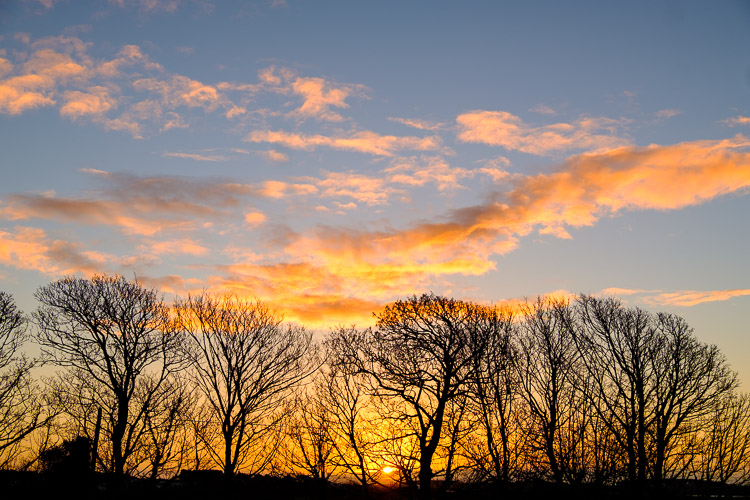
Fuji XF 18-135mm sunrise

The sunrise on New Years Day. I had no hesitation using the lens, over lenses I own already, to capture this image.

First thoughts on the Fuji XF 18-135mm lens

Straight up, I think this is a great travel lens, despite the issues with the lens that are common to most kit lenses. But, these issues are outweighed by the usefulness of this lens. The weight and size were fine in general use, and I never felt that I was being let down by the lens. When I got the lens, I did a walkabout locally where I familiarized myself with it.
Fuji XF 18-135mm

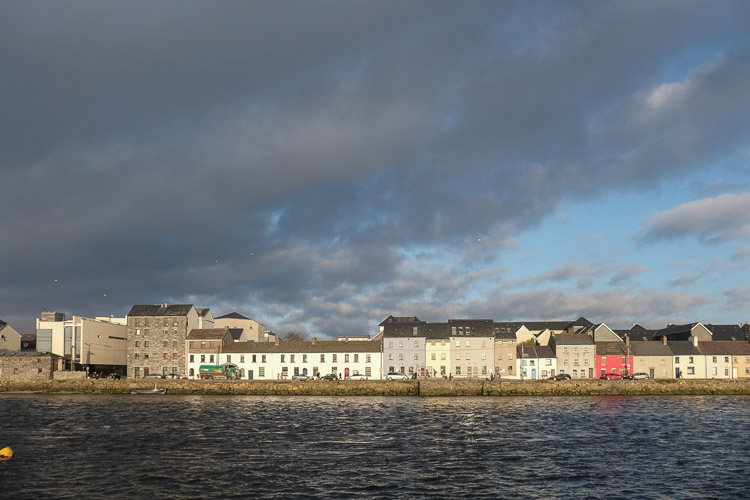
A wide shot of Long Walk in Galway. The Museum is on the left of the shot.
Fuji XF 18-135mm

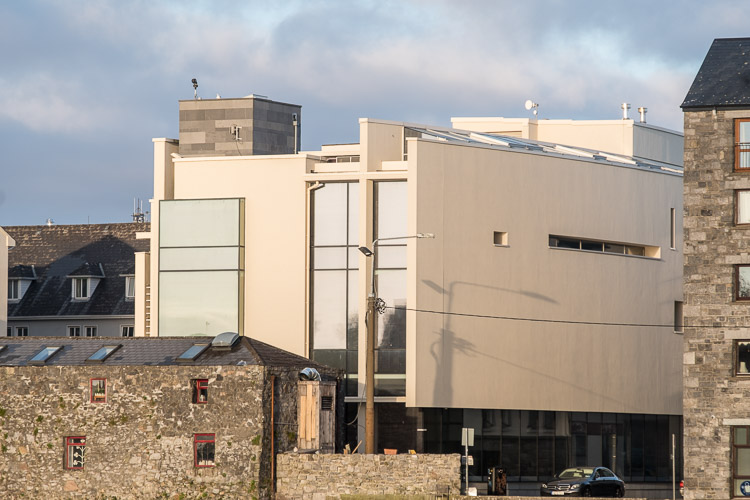
Here’s the Museum from the same position at 135mm.
Fuji XF 18-135mm

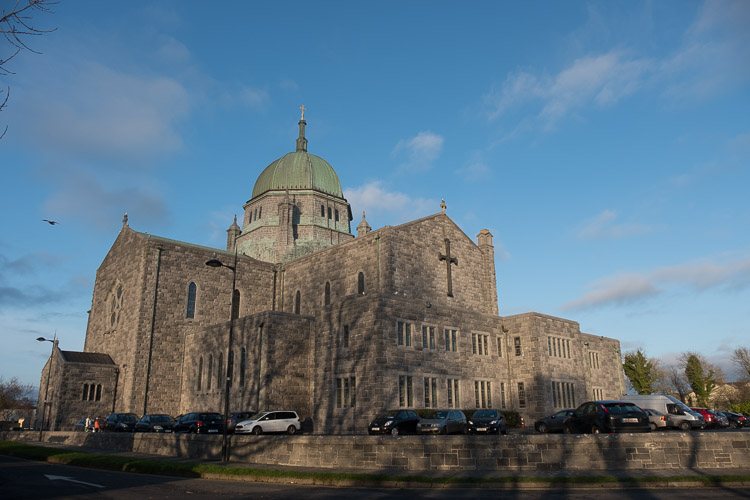
Galway Cathedral at 18mm.

Fuji XF 18-135mm

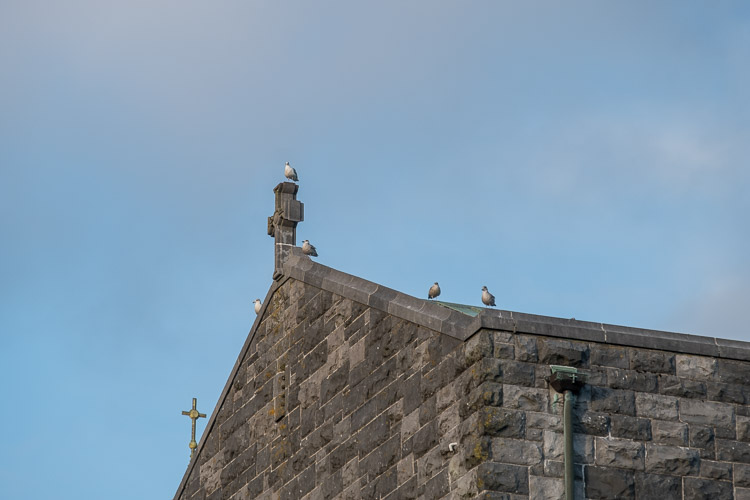
A detail shot of the roof to the left of the some at 135mm.
Fuji XF 18-135mm

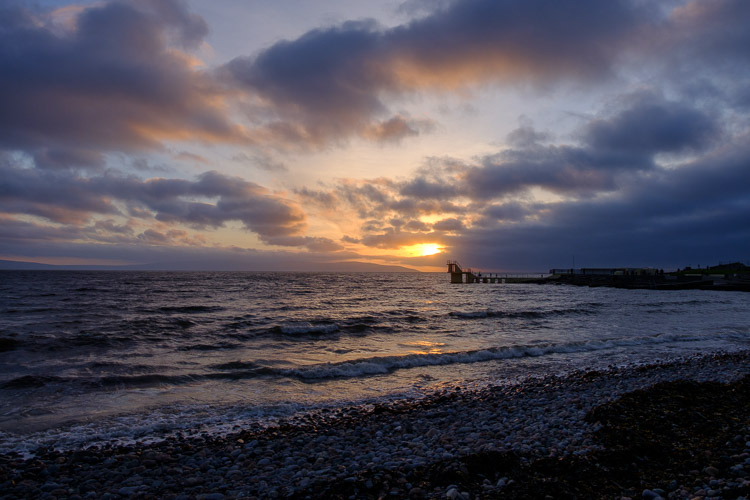
Salthill with the sun setting near Blackrock Diving Tower.
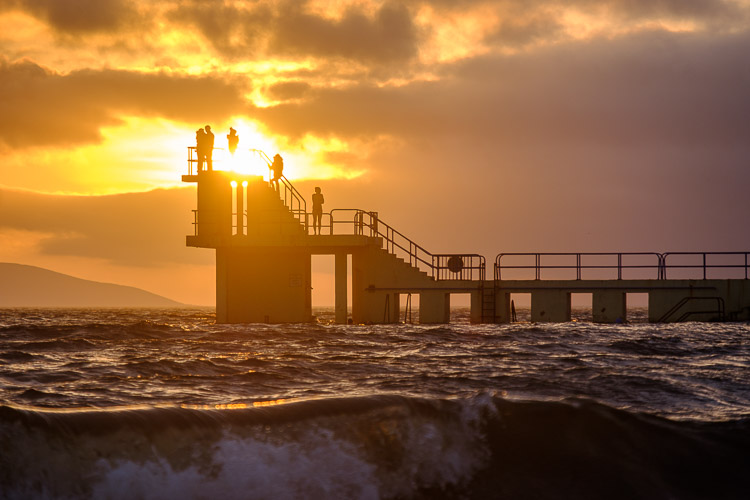
Fuji XF 18-135mm

I moved slightly to frame the sun in the tower, but still roughly the same distance away, zoomed in to 135mm.
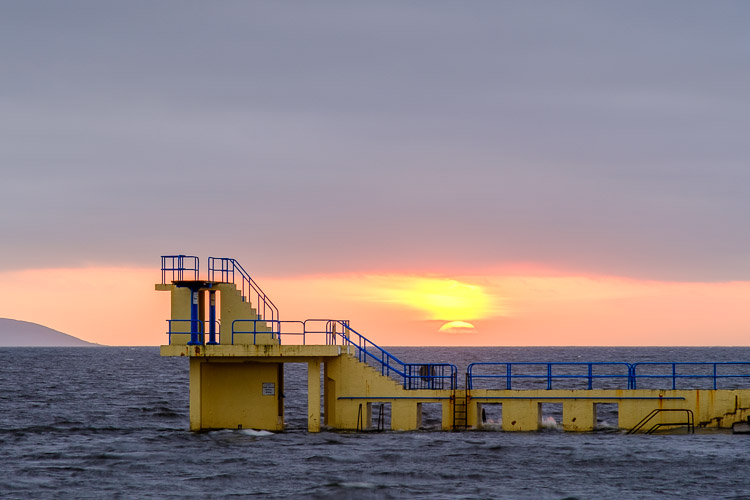
Fuji XF 18-135mm

The sunset didn’t quite pan out, but I used the 135mm end of the lens to frame it with the diving tower.

Specs of the Fuji XF 18-135mm lens

The Fuji XF 18-135mm weighs 409 grams (just shy of one pound). It’s not lightweight, but it’s not heavy compared to similar lenses in this class. Aperture runs from f/3.5 at 18mm to f/5.6 at the 135mm end. The full frame equivalent is 27-200mm. I owned the Canon 28-200mm for a while and sold it because of the softness. This Fuji 18-135mm, while not as sharp as the XF 18-55mm, is not as soft as the Canon version.

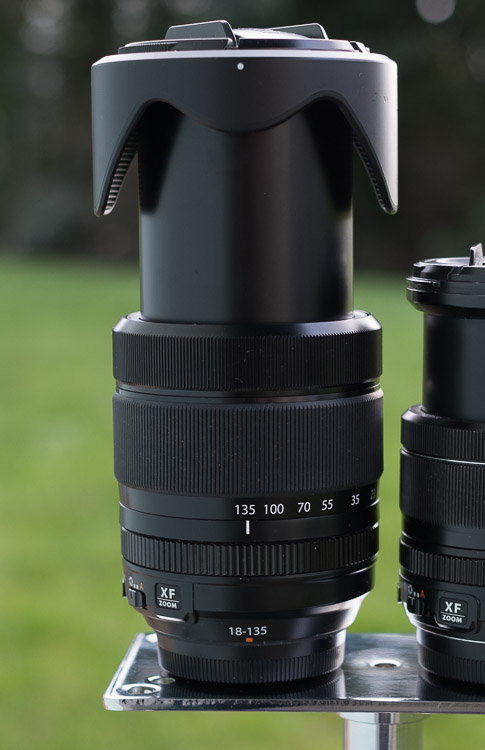
The lens extends in length as you zoom it. The lens barrel doesn’t rotate, so attached filters remain in the same relative position. It comes with a plastic lens hood, and the filter ring is 67mm. As with the 18-55mm, the lens has OIS to reduce camera shake. Fuji claims that this offers up to an impressive 5-stops of camera shake reduction. It’s in the WR (Weather Resistant) range of lenses also, meaning you can use it out in the rain, something I did when visiting London.
Fuji XF 18-135mm

Travel and the Fuji 18-135mm lens

Super zooms, by and large, make for great travel lenses. The width is usually good enough for any situation. If you need more, it’s easy to shoot two overlapping shots and create a panorama later. The longer focal length means you can easily capture street portraits or zoom in to get details. Wide shots often have to include other tourists, especially when handheld. Detail shots can give a better flavor of an attraction, and give you something not everyone else thinks to shoot. The best part? Not having to change your lens to get both shots.

The weight of the lens isn’t a cause for concern, even carrying around all day. With a small messenger bag like the Think Tank Retrospective 10, you can use the lens mounted on a Fuji X-T2, while carrying a bottle of water and all your accessories. When traveling I had this combo, a 35mm f/1.4, a flash and trigger set, along with a small shoot-through umbrella. Also in the bag were an iPad mini, a power bank, and a foldable bluetooth keyboard. I never felt like I was weighed down and was quite productive with this setup. Whenever a shot presented itself, I simply grabbed the camera and was ready to go.

London

During the time I had the lens, I was at The Societies convention in London. It was a perfect chance to use the lens as a tourist. Some of the attendees organized a night shoot down by the river Thames. We walked along South Bank to the Millennium Bridge, shooting along the way.
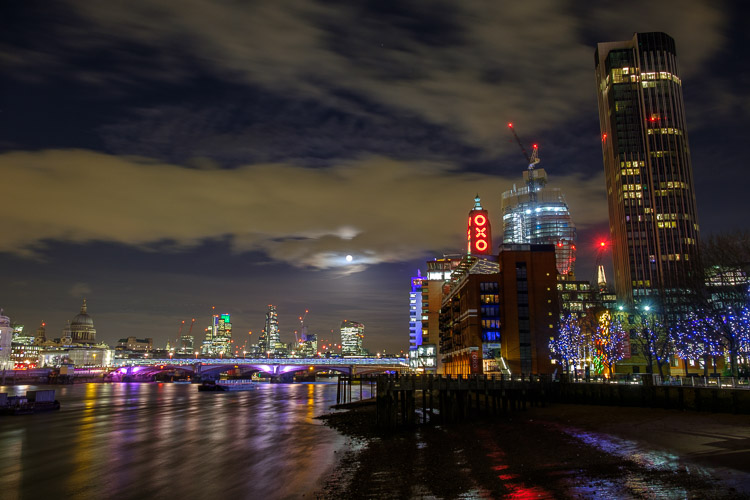
Fuji XF 18-135mm

A shot of the London night skyline showing the OXO tower and St Pauls’ Cathedral.
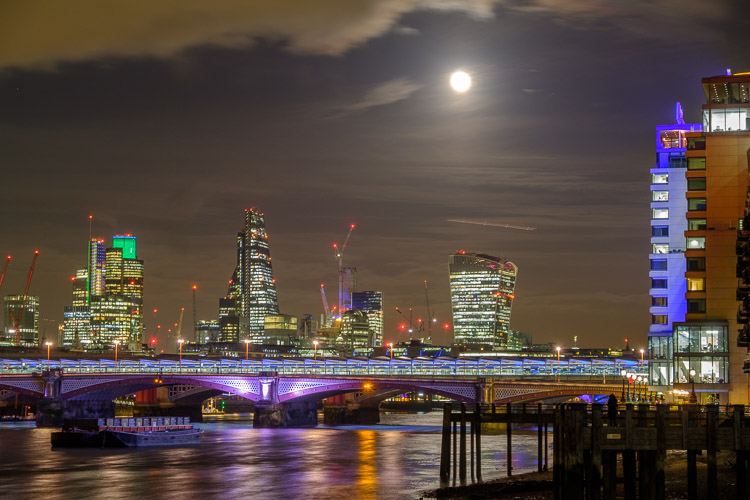
Fuji XF 18-135mm

The same view at 53mm

Fuji XF 18-135mm

And again at 70mm, longer than the 18-55mm could do.
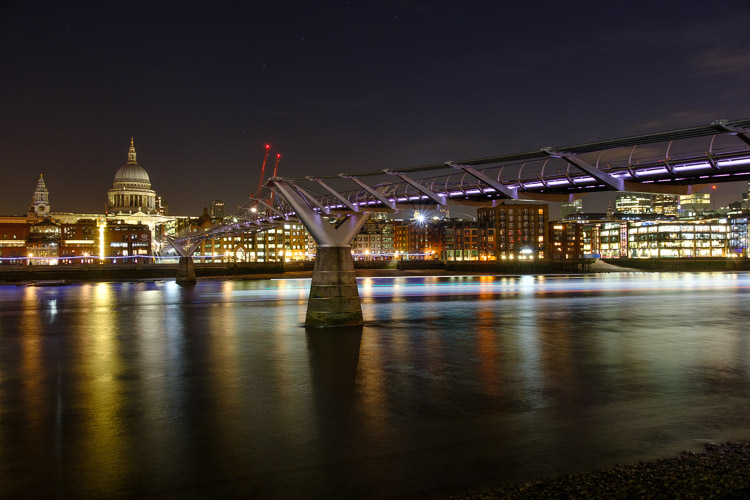
Fuji XF 18-135mm

The Millenium Bridge and St Pauls.

Fuji XF 18-135mm

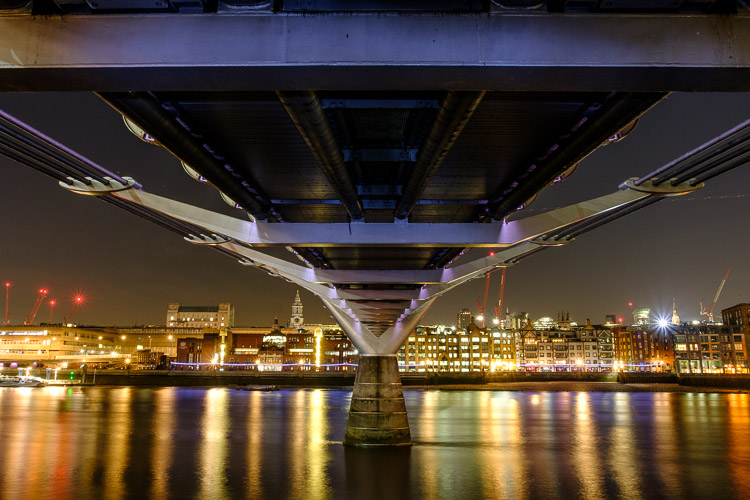
Under the Millenium Bridge I light painted the beams with a torch (flashlight) to get a little more detail into them.
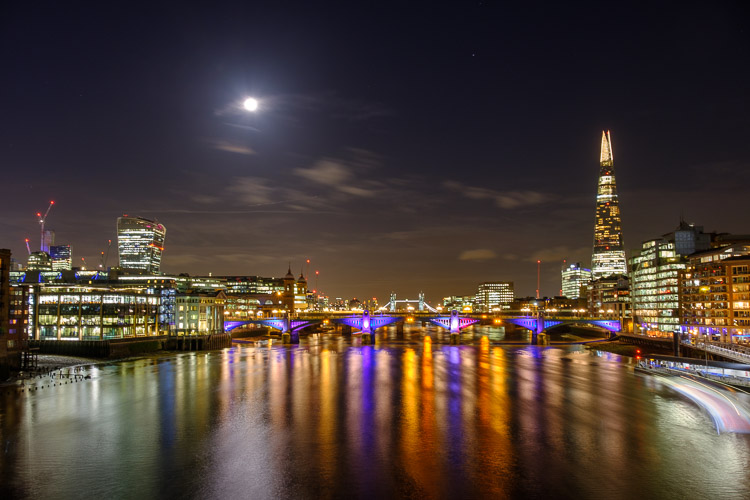
Fuji XF 18-135mm

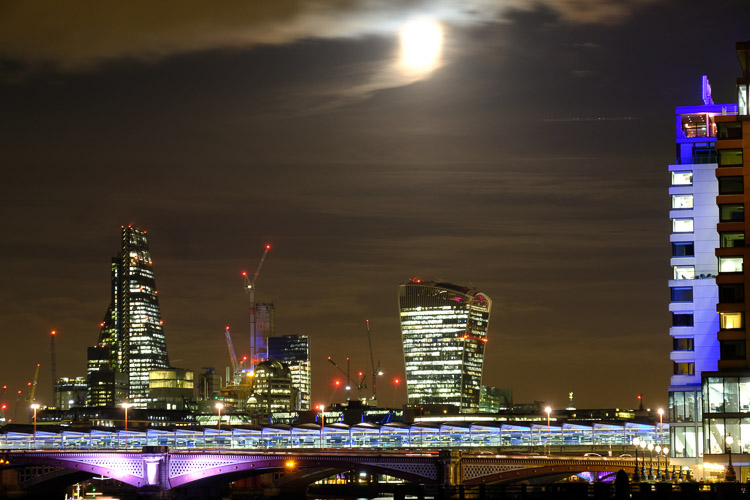
A wide view of the river showing the Moon and the Shard
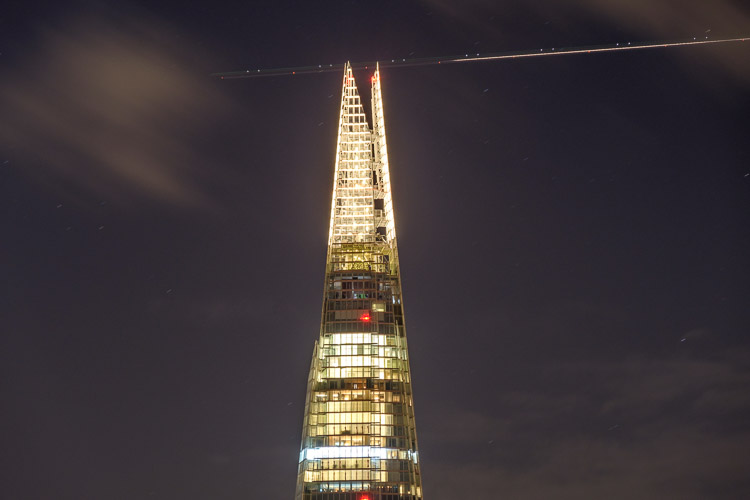
Fuji XF 18-135mm

A 135mm zoomed-in view of the Shard with a plane flying past.

I also did a little walkabout the morning I was leaving. It was raining, but I kept the lens in the bag when not in use and it performed perfectly. Knowing it was weather sealed also made me more inclined to shoot in these conditions.
Fuji XF 18-135mm

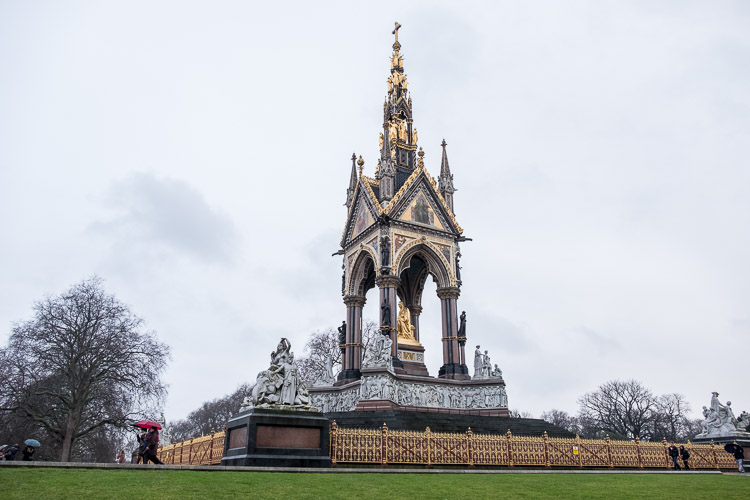
The Albert Memorial, complete with tourists.
Fuji XF 18-135mm

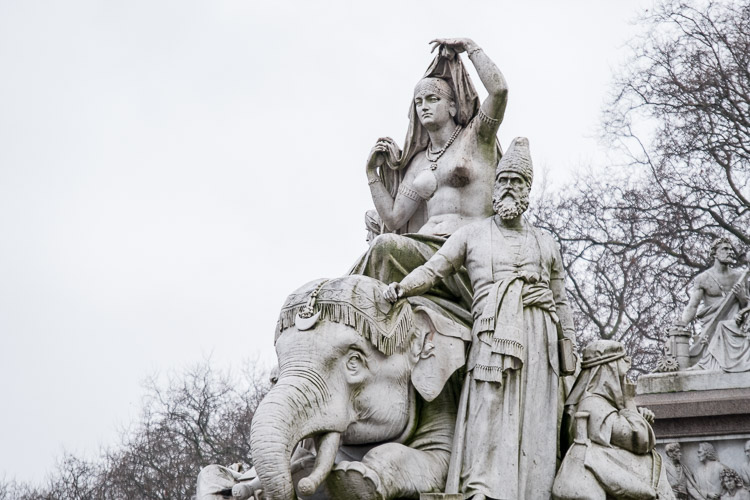
The Asia Group visible in the bottom left of the previous image at 135mm.
Fuji XF 18-135mm

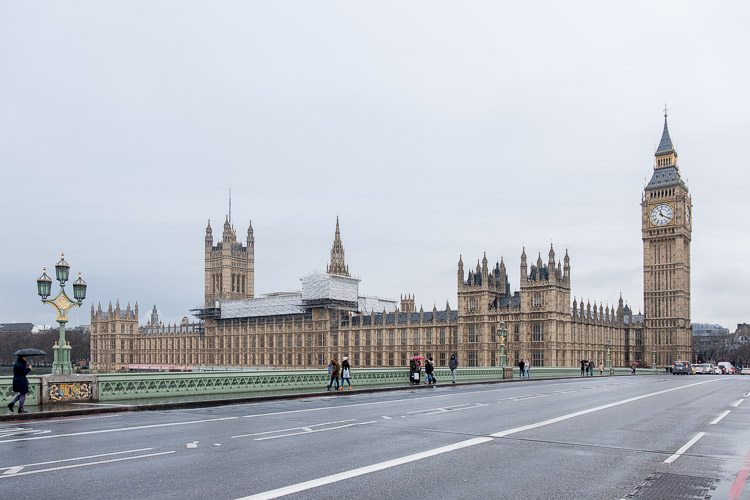
The Houses of Parliament from Westminster Bridge. Technically the bell is called Big Ben, not the clock tower.
Fuji XF 18-135mm

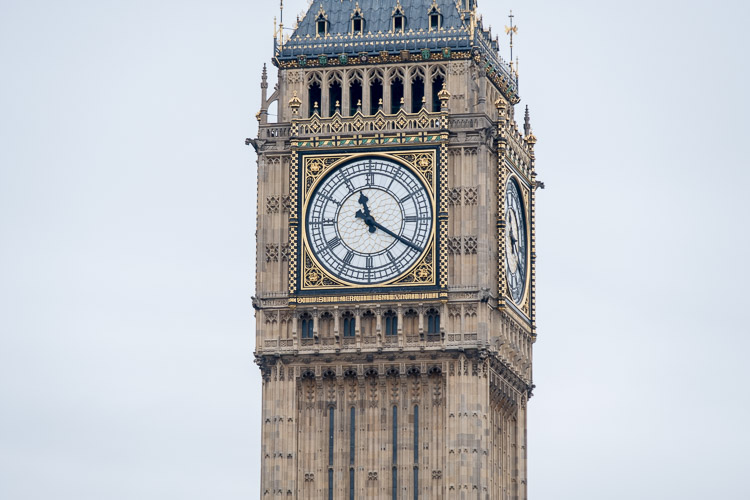
The clock tower that houses Big Ben.

People

I also made use of the lens in the studio, where it performed equally well. Shooting in studio tends to be around f/8-f/11, which is the sweet spot of most lenses. The Fuji XF 18-135mm lens didn’t disappoint.

Fuji XF 18-135mm

A model shot taken in the studio.

Issues

The main problem with the lens is that shots are a little soft. It’s simply a function of producing the zoom range to a price point. This isn’t really a problem, as the files can be sharpened in Lightroom or another raw converter as a batch process.

Versus the Fuji 18-55mm lens

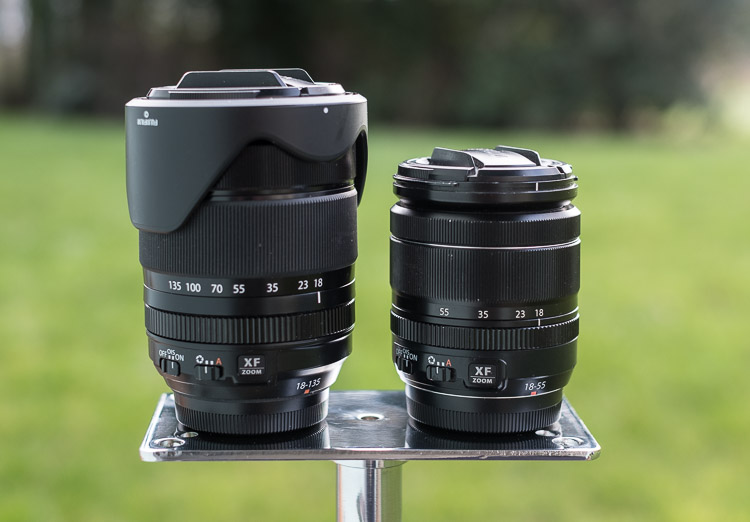
As both the 18-55mm and the 18-135mm are offered as kit lenses, you may wonder which is better for you. The 18-135mm is larger, heavier, and slower than the 18-55mm. It’s also not as sharp. If a smaller size and faster aperture are important to you, go for the 18-55mm. If you want more reach and don’t want to bring two lenses while traveling get the 18-135mm. Here’s what the two lenses look like side by side.
Fuji XF 18-135mm

The Fuji XF 18-135mm lens with the XF 18-55mm.

Here’s the full extension on both lenses. I had to tape the back of the 18-55mm to stop it from slipping (zoom creep) for this shot. The 18-135mm was solid the whole time.
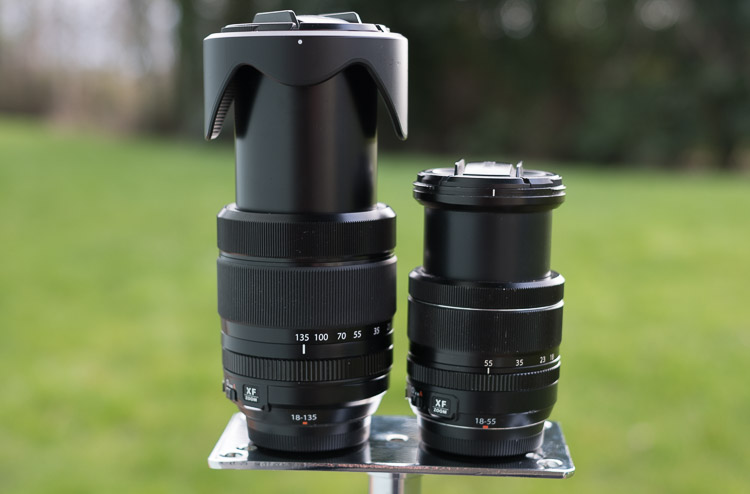
TheFuji XF 18-135mm lens with the XF 18-55mm, both at full extension.

Verdict on the Fuji XF 18-135mm lens

This is a great travel lens that needs a little post-processing to bring out its best. Despite already owing the 18-55mm, I would consider getting this lens specifically for travel

Pros

  • Great reach (zoom or focal length range).
  • You only need one lens for travel making it really convenient.
  • It’s still compact compared to full frame equivalents, like the Canon 28-200mm or 28-135mm IS.
  • The built-in OIS (stabilization) is great for handheld shots.
  • It’s Weather Resistant.

Cons

  • It’s still heavier than the 18-55mm lens.
  • This lens is a  little softer than other Fuji lenses, especially at 135mm.
  • The edges of the frame are a little softer than the centre.

Shop for this lens on Amazon.com or on B&H Photo’s website.

googletag.cmd.push(function() {
tablet_slots.push( googletag.defineSlot( “/1005424/_dPSv4_tab-all-article-bottom_(300×250)”, [300, 250], “pb-ad-78623” ).addService( googletag.pubads() ) ); } );

googletag.cmd.push(function() {
mobile_slots.push( googletag.defineSlot( “/1005424/_dPSv4_mob-all-article-bottom_(300×250)”, [300, 250], “pb-ad-78158” ).addService( googletag.pubads() ) ); } );

The post The Fuji XF 18-135mm – a Versatile Travel Lens by Sean McCormack appeared first on Digital Photography School.


Digital Photography School

 
Comments Off on The Fuji XF 18-135mm – a Versatile Travel Lens

Posted in Photography


The Fuji XF 18-135mm – a Versatile Travel Lens

08 Feb

From one article comes another – One plus of being a Fuji X Photographer is that Fuji will lend you gear to try. When I did an overview of the 18-55 Kit lens, a commenter asked about the difference between it and the Fuji XT 18-135mm. I don’t own that lens, but through my Fuji connection, I was able to borrow one for a short while and give it a go. So thank you to the commenter that allowed me to find out I could borrow stuff to test!

Fuji XF 18-135mm sunrise

The sunrise on New Years Day. I had no hesitation using the lens, over lenses I own already, to capture this image.

First thoughts on the Fuji XF 18-135mm lens

Straight up, I think this is a great travel lens, despite the issues with the lens that are common to most kit lenses. But, these issues are outweighed by the usefulness of this lens. The weight and size were fine in general use, and I never felt that I was being let down by the lens. When I got the lens, I did a walkabout locally where I familiarized myself with it.

Fuji XF 18-135mm

A wide shot of Long Walk in Galway. The Museum is on the left of the shot.

Fuji XF 18-135mm

Here’s the Museum from the same position at 135mm.

Fuji XF 18-135mm

Galway Cathedral at 18mm.

Fuji XF 18-135mm

A detail shot of the roof to the left of the some at 135mm.

Fuji XF 18-135mm

Salthill with the sun setting near Blackrock Diving Tower.

Fuji XF 18-135mm

I moved slightly to frame the sun in the tower, but still roughly the same distance away, zoomed in to 135mm.

Fuji XF 18-135mm

The sunset didn’t quite pan out, but I used the 135mm end of the lens to frame it with the diving tower.

Specs of the Fuji XF 18-135mm lens

The Fuji XF 18-135mm weighs 409 grams (just shy of one pound). It’s not lightweight, but it’s not heavy compared to similar lenses in this class. Aperture runs from f/3.5 at 18mm to f/5.6 at the 135mm end. The full frame equivalent is 27-200mm. I owned the Canon 28-200mm for a while and sold it because of the softness. This Fuji 18-135mm, while not as sharp as the XF 18-55mm, is not as soft as the Canon version.

The lens extends in length as you zoom it. The lens barrel doesn’t rotate, so attached filters remain in the same relative position. It comes with a plastic lens hood, and the filter ring is 67mm. As with the 18-55mm, the lens has OIS to reduce camera shake. Fuji claims that this offers up to an impressive 5-stops of camera shake reduction. It’s in the WR (Weather Resistant) range of lenses also, meaning you can use it out in the rain, something I did when visiting London.

Fuji XF 18-135mm

Travel and the Fuji 18-135mm lens

Super zooms, by and large, make for great travel lenses. The width is usually good enough for any situation. If you need more, it’s easy to shoot two overlapping shots and create a panorama later. The longer focal length means you can easily capture street portraits or zoom in to get details. Wide shots often have to include other tourists, especially when handheld. Detail shots can give a better flavor of an attraction, and give you something not everyone else thinks to shoot. The best part? Not having to change your lens to get both shots.

The weight of the lens isn’t a cause for concern, even carrying around all day. With a small messenger bag like the Think Tank Retrospective 10, you can use the lens mounted on a Fuji X-T2, while carrying a bottle of water and all your accessories. When traveling I had this combo, a 35mm f/1.4, a flash and trigger set, along with a small shoot-through umbrella. Also in the bag were an iPad mini, a power bank, and a foldable bluetooth keyboard. I never felt like I was weighed down and was quite productive with this setup. Whenever a shot presented itself, I simply grabbed the camera and was ready to go.

London

During the time I had the lens, I was at The Societies convention in London. It was a perfect chance to use the lens as a tourist. Some of the attendees organized a night shoot down by the river Thames. We walked along South Bank to the Millennium Bridge, shooting along the way.

Fuji XF 18-135mm

A shot of the London night skyline showing the OXO tower and St Pauls’ Cathedral.

Fuji XF 18-135mm

The same view at 53mm

Fuji XF 18-135mm

And again at 70mm, longer than the 18-55mm could do.

Fuji XF 18-135mm

The Millenium Bridge and St Pauls.

Fuji XF 18-135mm

Under the Millenium Bridge I light painted the beams with a torch (flashlight) to get a little more detail into them.

Fuji XF 18-135mm

A wide view of the river showing the Moon and the Shard

Fuji XF 18-135mm

A 135mm zoomed-in view of the Shard with a plane flying past.

I also did a little walkabout the morning I was leaving. It was raining, but I kept the lens in the bag when not in use and it performed perfectly. Knowing it was weather sealed also made me more inclined to shoot in these conditions.

Fuji XF 18-135mm

The Albert Memorial, complete with tourists.

Fuji XF 18-135mm

The Asia Group visible in the bottom left of the previous image at 135mm.

Fuji XF 18-135mm

The Houses of Parliament from Westminster Bridge. Technically the bell is called Big Ben, not the clock tower.

Fuji XF 18-135mm

The clock tower that houses Big Ben.

People

I also made use of the lens in the studio, where it performed equally well. Shooting in studio tends to be around f/8-f/11, which is the sweet spot of most lenses. The Fuji XF 18-135mm lens didn’t disappoint.

Fuji XF 18-135mm

A model shot taken in the studio.

Issues

The main problem with the lens is that shots are a little soft. It’s simply a function of producing the zoom range to a price point. This isn’t really a problem, as the files can be sharpened in Lightroom or another raw converter as a batch process.

Versus the Fuji 18-55mm lens

As both the 18-55mm and the 18-135mm are offered as kit lenses, you may wonder which is better for you. The 18-135mm is larger, heavier, and slower than the 18-55mm. It’s also not as sharp. If a smaller size and faster aperture are important to you, go for the 18-55mm. If you want more reach and don’t want to bring two lenses while traveling get the 18-135mm. Here’s what the two lenses look like side by side.

Fuji XF 18-135mm

The Fuji XF 18-135mm lens with the XF 18-55mm.

Here’s the full extension on both lenses. I had to tape the back of the 18-55mm to stop it from slipping (zoom creep) for this shot. The 18-135mm was solid the whole time.

TheFuji XF 18-135mm lens with the XF 18-55mm, both at full extension.

Verdict on the Fuji XF 18-135mm lens

This is a great travel lens that needs a little post-processing to bring out its best. Despite already owing the 18-55mm, I would consider getting this lens specifically for travel

Pros

  • Great reach (zoom or focal length range).
  • You only need one lens for travel making it really convenient.
  • It’s still compact compared to full frame equivalents, like the Canon 28-200mm or 28-135mm IS.
  • The built-in OIS (stabilization) is great for handheld shots.
  • It’s Weather Resistant.

Cons

  • It’s still heavier than the 18-55mm lens.
  • This lens is a  little softer than other Fuji lenses, especially at 135mm.
  • The edges of the frame are a little softer than the centre.

Shop for this lens on Amazon.com or on B&H Photo’s website.

googletag.cmd.push(function() {
tablet_slots.push( googletag.defineSlot( “/1005424/_dPSv4_tab-all-article-bottom_(300×250)”, [300, 250], “pb-ad-78623” ).addService( googletag.pubads() ) ); } );

googletag.cmd.push(function() {
mobile_slots.push( googletag.defineSlot( “/1005424/_dPSv4_mob-all-article-bottom_(300×250)”, [300, 250], “pb-ad-78158” ).addService( googletag.pubads() ) ); } );

The post The Fuji XF 18-135mm – a Versatile Travel Lens by Sean McCormack appeared first on Digital Photography School.


Digital Photography School
 
Comments Off on The Fuji XF 18-135mm – a Versatile Travel Lens

Posted in Photography


Overview and Hands-On Reviews of the New Fuji X-T2 Mirrorless Camera

15 Nov

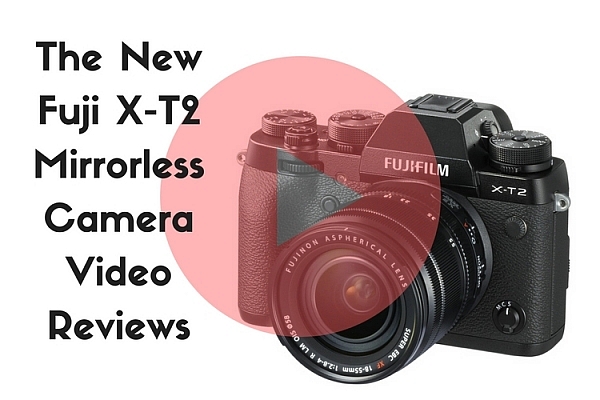
The newest Fuji camera on the market is the Fuji X-T2 mirrorless camera. It’s been available for a couple months now so there are a few reviews and tests out there already. I personally own and use the X-T1, so I am very interested to hear about its successor. Let’s see what a few sources have to say about the X-T2.

the-new-fuji-x-t2-mirrorless-camera

Check prices on the Fuji X-T2 on Amazon.com or B&H Photo. 

Tony and Chelsea Northrup thoughts

Tony and Chelsea tested out the X-T1 so they have a good comparison between it and the new Fuji X-T2 and talk about what’s new and improved in this video. They also mention a few things they would have liked to see added that weren’t.

Photography Concentrate – Lauren’s thoughts

Fuji loaned them an X-T2 to try out for a couple weeks. This is what Lauren thought of it overall. Some of the things she mentions as being “issues” I personally don’t have any problem with such as:

  • The aperture ring on the lens (I like it!)
  • That the camera gets quite warm on hot days. I have noticed that with the X-T1 also.
  • Play button in an odd place (no biggie you can program custom buttons)
  • Using the Smartphone app that you can’t see the RAW images. How I get around this with my X-T1 is that I process a few select images into JPG on the camera then pull them to my phone or iPad to play with in Snapseed. I haven’t found it an issue.

But overall she gives it a pretty good thumbs up and says she’s considering switching from Canon to use this camera for all her profession work. So that’s a pretty good endorsement.

The Camera Store guys

In this next video, the guys from the Camera Store give the Fuji X-T2 a good field test in New York City. They test both still and video which some of the other reviews don’t cover. Also mentioned in this video is the new Fuji speedlight which can handle high-speed sync.

The highly improve autofocus on the Fuji X-T2 is mentioned and that it’s a bit tricky to set up. There’s a link to the Fuji Guys channel where they’ll help you configure it if you decide to pick up this camera or already have.

Things I’m excited about:

Since I have the predecessor the X-T1, these are a few of the features that I’ve seen (and I’ve had a chance to handle the camera give it a really quick go) which I’m really excited about as improvements over the old design. They include:

  • YAY, you can open the battery compartment now without having to remove the tripod insert!! This is my biggest pet peeve of the X-T1.
  • The dial on top lock and unlock and they move a lot smoother now. Mine on the X-T1 stick and something both the top and bottom ones move together. I know I can send it back to get those fixed but I don’t want to be without the camera for several weeks so I put up with it.
  • Improved autofocus options and faster autofocus. From what I’ve seen the X-T2 is WAY better than the first generation X-T1. According to The Camera Store guys it actually rivals the Sony a6300 for fastest focus on the market currently. Impressive!!
  • Two memory card slots. I like the idea of shooting RAW on one and JPGS using the nice Fuji film profiles on the other.

Check prices on the Fuji X-T2 on Amazon.com or B&H Photo. 

Have you already ordered yours? Are you considering it? Have you had a chance to test drive one? I want to know. Tell me your thoughts in the comments below.

googletag.cmd.push(function() {
tablet_slots.push( googletag.defineSlot( “/1005424/_dPSv4_tab-all-article-bottom_(300×250)”, [300, 250], “pb-ad-78623” ).addService( googletag.pubads() ) ); } );

googletag.cmd.push(function() {
mobile_slots.push( googletag.defineSlot( “/1005424/_dPSv4_mob-all-article-bottom_(300×250)”, [300, 250], “pb-ad-78158” ).addService( googletag.pubads() ) ); } );

The post Overview and Hands-On Reviews of the New Fuji X-T2 Mirrorless Camera by Darlene Hildebrandt appeared first on Digital Photography School.


Digital Photography School
 
Comments Off on Overview and Hands-On Reviews of the New Fuji X-T2 Mirrorless Camera

Posted in Photography


Adobe ACR 9.6.1 update supports Fuji X-T2

21 Jul

Adobe has updated its Camera Raw application to make it compatible with raw files created by Fujifilm’s new X-T2 camera. The latest version, 9.6.1, also fixes some reported bugs that prevented the opening of uncompressed DNG files that had been converted from Fuji X-E2 RAF format files, and an issue that meant panoramas couldn’t be created from two HDR DNG images.

This version of Camera Raw, and the fixes that it brings, are available now to users of Photoshop CC and the Creative Cloud application.

For more information and to download the update see the Adobe Lightroom Journal blog.

Manufacturer information:

Camera Raw 9.6.1 now available

Camera Raw 9.6.1 is now available through the update mechanism in Photoshop CC and the Creative Cloud application. Our focus with this release was to fix reported customer issues.

Thank you for all your feedback and passion for Camera Raw.

Bugs Fixed in Camera Raw 9.6.1

  • Uncompressed DNGs files converted from Fuji X-E2 RAF source images were are unable to be read
  • Errors that preventing customers from creating a panorama from two HDR DNG source images.

New Camera Support in Camera Raw 9.6.1

  • Fujifilm XT-2

Installation Instructions

Please select Help>Updates to install the update. See Keeping Photoshop & Camera Raw up-to-date.

Please note – If you have trouble updating to the latest ACR update via the Creative Cloud application, please refer to the following plugin installation:

http://helpx.adobe.com/x-productkb/multi/camera-raw-plug-in-installer.html

DNG Converter Links: Win | Mac

Articles: Digital Photography Review (dpreview.com)

 
Comments Off on Adobe ACR 9.6.1 update supports Fuji X-T2

Posted in Uncategorized


Fuji Crystal Archive Deep Matte Paper is Freaking Amazing

04 Apr

That’s me, above, in 2013. I made a trip to Japan for some meetings with Fuji. It was me, three other photogs and a room of Fuji engineers for two solid days of “How can we make our cameras better?” discussions. Because that’s how they do.

One of the highlights of the trip was seeing my work displayed at Corporate HQ at Fujifilm Square in Tokyo. (Pic, above, by Zack Arias.) One of the lowlights was realizing how much better these prints were than anything I could get done in the US.

Sigh.

I just assumed it was some sort of Fuji in-house magic file tweaking or something. Or more likely, Fuji’s continuous custody of the whole vertical process, right back to the film SIM.

Then it happened again in the 5th Anniversary event in Tokyo earlier this year: Gorgeous print, followed by the instant pang of sadness that I cannot get it done to this quality in the US.

An Import You’ll Wanna Drive

Well, it turns out that you can. I found it while auditioning several labs for printing of an image of mine that is to be sold be sold at a local gallery. Short version: I have found the paper I am gonna marry, and it is Fujicolor Crystal Archive Deep Matte.

The prints are hard to describe. They are beautiful and painterly; somehow muted and saturated at the same time. If you want a mental picture, it feels like a Gregory Crewdson image. As for the paper itself, the substrate is quite substantial and the surface is beautifully non-reflective.

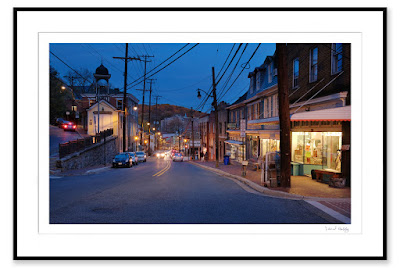
Here’s the file/framed mock-up. The thing is, the print looks significantly better than the file. And I can’t remember ever thinking that before — other than those two times in Japan.

I have not tried it with anything subtle yet as far as the files go. But on my color-drenched citiscapes, it looks phenomenal. So much so that I am getting several of my existing prints reprinted on this paper.

They tell me at the lab that it is great for B&W, too. You’d better believe I am gonna be trying that.

The paper is silver halide based, and designed for large format and Frontier laser printers, according to Fuji’s poop sheet.

It uses CP-RA (or RA-4) process, and is said to be archivally stable for 100 years on display, 200 in storage. (Okay, I’ll be dead by then. But this print will still be beautiful.)

Do yourself a favor and try this stuff. You just need two things: A really competent lab, and Fuji Deep Matte paper. I’m using AdoramaPix and letting them drive on the color correction. (New paper, new printer, what do I know, right?) And I was super happy with the result.

Pick your favorite file and go big, as in 16×20 or larger. Because the beauty of this paper is that it somehow seems to both accentuate detail and mask noise. I don’t know how it does that. But holy crap.

$ 5 to Try It

And here’s something cool: if you want to try it as a one-off, AdoramaPix has a refer-a-friend special that’ll get you $ 5 off on $ 15 or more if you are a new member. And since a 16×20 print there is $ 16.99, it qualifies and drops this little experiment to $ 11.99. Not bad.

If you give it a try at this link, the referral code should auto-populate. And a quick heads-up, some folks are saying they can’t find the “deep matte” option. Here’s how to do it:

Sign up using the code. Go to ->Photo Prints, ->Upload Photos Now (upload your image) ->#3 Paper Finish and ->”Deep Matte Finish”.

It’s only available for 16×20 and up. And these guys being a pro lab, I suggest you let them color correct for you. (If you want to marry them later, you can easily download their ICC profiles and drive the car yourself then.)

So that’s my Epiphany of The Day, if you will. Suffice to say I am done auditioning prints.

Try it and let me know what you think.

Strobist

 
Comments Off on Fuji Crystal Archive Deep Matte Paper is Freaking Amazing

Posted in Photography


Fuji X-Pro2: All Your Questions, Answered

03 Mar

After years of waiting, the Fuji X-Pro2 ships on Thursday, March 3rd. I have been shooting with a pre-production unit since October, and have a pretty good feel for its strengths and weaknesses.

Last week on Twitter I held an AMA (Ask Me Anything) about the new flagship camera. Scroll down for your questions — all of them, edited only for clarity — and my answers. If you're on the fence, hope it helps.

Cheers,
DHRead more »
Strobist

 
Comments Off on Fuji X-Pro2: All Your Questions, Answered

Posted in Photography


On Assignment: Mum for Fuji

24 Jan

For the last couple of years, I have been involved in the planning process for the Fuji X-Pro 2. I've been using a pre-production unit since October. One of the photos I did for them (the only one where I used flash, actually) is the miniature chrysanthemum seen above.

Up for a quick game of Guess the Light? Then take a moment before reading on. And I'll give you this much: it's done with a single speedlight.Read more »
Strobist

 
Comments Off on On Assignment: Mum for Fuji

Posted in Photography


Testbericht: Fuji X-T1 mit Fujinon XF 23 mm

14 Feb

© Tom Lanzrath

Ein Beitrag von: Tom Lanzrath

Letztes Jahr kam ich zur Photokina mit dem festen Entschluss, mich über die verschiedenen spiegellosen Systeme zu informieren. Schon lange geht mir das Schleppen einer kompletten DSLR-Ausrüstung auf die Nerven, auch das „Klack“ eines Spiegelschlags empfinde ich als sehr laut und störend.
kwerfeldein – Fotografie Magazin | Fotocommunity

 
Comments Off on Testbericht: Fuji X-T1 mit Fujinon XF 23 mm

Posted in Equipment


4 January, 2015 – Working With The Fuji 50-140mm Zoom Lens

05 Jan


Right before the Holiday we published an article about the Fuji X-T1 and promised in that article a follow on article to the NEW Fuji 50-140mm 2.8 Zoom Lens.  We have had a lot of fun with this lens and we are really liking the results.  Fuji has once again made a very god lens adding to their already nice line of lenses. Take a look at the article Working With The Fuji 40-150mm Lens.


The Luminous Landscape – What’s New

 
Comments Off on 4 January, 2015 – Working With The Fuji 50-140mm Zoom Lens

Posted in News