RSS
 

Posts Tagged ‘from’

Impressive Raw video sample from EOS-7D using Magic Lantern

06 Aug

7d_raw_video.jpg

Magic Lantern has been enhancing the features of Canon EOS digital SLRs for some time now, most recently giving the EOS 5D Mark III a significant increase in dynamic range. One feature found in the second alpha version of their EOS 7D software adds the ability to capture Raw video, albeit at a relatively low 1736 x 1156 resolution. A 7D owner named Florian has put this feature to the test, by combining a series of DNG files into a 33 second video which looks fantastic. See the video for yourself after the break.

News: Digital Photography Review (dpreview.com)

 
Comments Off on Impressive Raw video sample from EOS-7D using Magic Lantern

Posted in Uncategorized


100 Smashing Examples of Light Painting Photography (Get A Break From Work Already)

03 Aug

All of us has experimented with light more than once while capturing friends in the club or dark street with lanterns. Moving light creates amazing patterns in the photo, so these light properties can be effectively used by artists in order to create an image full of magic and mystery. Light painting, also known as light graffiti or light drawing, Continue Reading

The post 100 Smashing Examples of Light Painting Photography (Get A Break From Work Already) appeared first on Photodoto.


Photodoto

 
Comments Off on 100 Smashing Examples of Light Painting Photography (Get A Break From Work Already)

Posted in Photography


10 Things I Learnt from Daily Shooting

02 Aug

A Guest Post by David Powell from Shoot Tokyo 

Dave.jpegHere are a few lessons I have learnt from daily shooting… I hope you enjoy.

1. “Do or Do Not…. There is no Try”

A lot of people shoot daily as they are lucky enough to have a career in photography. Others embark on a 365 project while others just take photos all the time. I decided after I started ShootTokyo that I wanted to shoot daily as a way to try and rapidly improve my photography.  

Shooting daily isn’t hard. It does require dedication, creatively and planning. It actually gets significantly easier with time as well. When I first started I would rack my brain for something interesting to photography but now you can put me just about anywhere for 10 minutes and I can find lots of ways to photograph it.

2. Bring your Camera Everywhere

To capture great images you need to have your camera with you.  People always ask me where I find the time to shoot. Honestly I shoot whatever is in front of me where ever I am going. Most of the great shots you will take aren’t planned or set up. Events or situations unfold and you capture them.

Having my camera with me allowed me to capture the events of the March 11th Earthquake in Japan as I was experiencing it and share it with my family, friends and ultimately strangers worried about their loved ones in Tokyo. 

1.jpeg
 
Having a camera allowed me to capture this woman checking the news about the earthquakes while on a break.
 
2.jpeg
 

3. Take Pictures of People

One of the most interesting pictures you can take is of people. I’ll let you in on a secret. Most people love having their photograph taken. Many photographers are very shy about asking people if they can take their photo so they end up trying to sneak a shot. This is just something you have to get over.  While most people like having their photo taken, they also like to know it is happening. I have found that 9 out of 10 people will say sure and give you a big smile or pose of whatever you are looking for when asked. The approach I have taken that seems to work is being genuine and I simple ask ‘Do you mind if I take your photo?’. Often I will ask them to continue doing whatever they are doing and I take my shot. I also carry these business cards that I call ‘photography cards’ that I give people and let them know they can email me and I will happily send them a high resolution photo for their troubles. Probably 10% actually email me but giving them a card makes the interaction more ‘legitimate’ and puts people at ease.

3.png

I have learnt to not be shy about asking if I can take someone’s photo and I am so pleased with the results I can get now… Check out this hip chick at Shibuya’s Hachiko…

4.jpeg

This beautiful girl passing through Shibuya Station…

5.jpeg

and dogs…

6.jpeg

4. The Less Gear you Carry the More Photos you take

This is a lesson I learnt the hard way after dragging excessive amounts of camera gear across Tokyo and when I was traveling. Typically I would leave the house with my Canon 5DMKII. I wanted to ensure I would catch any shot so I will make sure to bring a good assortment of lenses; 16-35mm, 24-70mm, 50mm, 135mm and maybe my 70-200mm. I would also have an assortment of filters, a flash or two and other odds and ends. At the end of the day, I spend all of my energy lugging gear around that I didn’t spend nearly as much time shooting. The reality is you can make great photographs with whatever gear you have granted you know how to use it.

Now more often than not, I leave the house with a single prime (fixed focal length) lens. This allows me to focus on taking pictures and bringing out my creativity to capture the shot I need with the only focal length I have. I carry the most minimal of accessories; extra card, extra battery, an ND filter and a cloth to wipe the lens. That’s it.

Do I miss some shots due to my limited gear? Sure, but what I missed is easily made up by all of the other shots I get.  

7.jpeg

5. Force Yourself to Shoot one Lens for a Week

A big part of making #4 work is knowing how to use your gear. I realized I would often carry multiple lenses as I didn’t know how to get a shot or the shot I wanted with the tools I had. I would feel like I was limited with a 50mm so I would want to make sure I had a 70-200mm if it was far away, and a 24-70mm in case I needed to zoom to capture what I needed, or maybe a 16-35mm in case I needed to capture it wide. I now shoot almost exclusively prime lenses. With my Leica M9 I shoot a 21mm f/1.4 Summilux, a 35mm f/1.4 Summilux and a 50mm f/0.95 Noctilux.

8.jpeg

The reality is you can capture a great shot with probably any lens you have with you provided you understand how to use the gear you have.  What I mean by this is what shots work for a given lens. What angle or distance do you need to be at for this particular focal length to give you the perspective you want.  I was great at shooting my 50mm lens but I really struggle with my 35mm and had just purchased a 21mm and did not really understand how to get the most out of it. I forced myself into a lens rotation where I shot a single lens for a week. I’ll be honest, it was incredibly frustrating for me. At times I wanted to just switch to a different lens as it was impossible to get the shot I wanted or needed but after a few days it became much easier to get the shots I was looking for and soon I was able to pre-visualize the shots before I even lifted the camera to my eye.  Now I can walk the streets at ease with any of my prime lens and come home with a card full of shots that I am happy with.

9.jpeg

10.jpeg

11.jpeg

6. Develop a Personal Style

There is no right or wrong with photography. Some people love flashes.  Others just shooting with their iPhones. Some love to photoshop their pictures for hours. Do what you love doing.  One thing shooting daily has helped me to do is develop a personal style of shooting. When I first started I was always watching people and trying to see if I could shoot like ‘them’. This was helpful to get me to learn to use my gear but once you know how to use your camera, you need to develop a style that is yours.  I don’t have a name for my style but I like a lot of selective focus and clean, natural pictures.  I do next to no post processing on the photos. The most I will do is clean up any dust spots, crop a little, or adjust exposure but for me photoshop on my Mac is to correct little imperfections but not for making pictures.
I like to use very narrow depth of fields to tell my stories. There are no hard and fast rules to what you can and can’t do, should or shouldn’t do. Learn the basics and then decide how you choose to apply them.

12.jpeg

I love to use a narrow depth of field and throw primary colors out of focus.

13.jpeg

I’ve learnt to love photographing people once I got over the initial fear of asking people if I can take their photo.

14.jpeg

I love combining shallow depth of field with lots of contrast like in this picture of ‘Dark Shibuya’…

15.jpeg

7. Shoot out of Airplane Windows

I have never been one of those people who shoot out of airplane windows. I have flown probably close to 1,000,000 miles in my career and can’t believe all of the subjects I have missed; Alaska, Mt Fuji, the slums of Mumbai, Chicago skyline, arrivals in Boston. This is something that I started doing this year and I have been so pleased with the results.

16.jpeg

8. Try new Things

Try different types of photography as you are trying to learn what it is you like. I was surprised to find out how much I enjoyed photographing the moon, how easy it is and that I already had all of the things I needed.  If you want to learn how to photograph the moon, read THIS. (link to: http://shoottokyo.com/photograph-moon/ )

17.jpeg

I also developed a love for HDR. This is the only time I am using software to modify my images. HDR can easily be overdone so I need to be careful but I found I really enjoyed it. My inaugural post on Shoot Tokyo was on HDR. You can read it HERE.

18.jpeg

Panning is a great way to bring motion and movement to your photos to make them come alive.  If you don’t know how, read THIS.

19.jpeg

9. Shoot at Night

I do the majority of my shooting at night. I am surprised how many people stop shooting when the sun goes down. What you need is a tripod, a low ISO and some practice. There is so much to photograph when the sun goes down.

Like light trails…

20.jpeg

Evening construction sites…

21.jpeg

Cities

22.jpeg

10. Backup Everything

I can’t stress this point enough.  I had a serious run of bad luck with Macs last winter and this spring.  I actually had 5 complete hard drives failures on my Mac(s).  Each time I was able to get Apple to do a complete replacement of my machine but it kept happening.  They were never able to root cause the problem but I am running safe and sound on a Mac outfitted with Solid State Flash Drives. I am very paranoid by nature so I was fortunate enough not to lose a single photograph throughout these issues. This experience just reinforced what I already know; backup everything, often and to multiple locations. I have friends and know fellow photographers that have lost their hard drives without backup.  I can’t imagine the feeling of losing all of my photos but I am do my best to ensure this never happens to me.

23.jpeg

Currently I backup using Apple’s Time Machine to Western Digital drives connected with FireWire. I do this as I travel often and the backup drive comes with me. A lot of people stop backups while traveling is when you can run into an issue such as losing a drive, downloading a virus, or having a laptop stolen. When I pull the data off cards and onto my Mac it is backed up before I delete the data off of the cards. I also have several additional drives that I rotate copying my entire ‘pictures’ folder to once a month as an additional backup.

I hope you found this useful!

Dave Powell is a blogger and photographer based in Tokyo, Japan. He writes Shoot Tokyo photography blog. You can see more of his work at www.shoottokyo.com or follow him on Twitter and Google +.

Post originally from: Digital Photography Tips.

Check out our more Photography Tips at Photography Tips for Beginners, Portrait Photography Tips and Wedding Photography Tips.

10 Things I Learnt from Daily Shooting


Digital Photography School

 
Comments Off on 10 Things I Learnt from Daily Shooting

Posted in Photography


Make prints from your phone: Impossible Instant Lab closer to reality

01 Aug

impossible.jpg

Back in 2008 the Impossible Project took on the task of reproducing Polaroid instant film. Since then, their product line has expanded to include the Impossible Instant Lab. Similar to the analogue Daylab that Polaroid (and Fuji instant film) fans use(d) to create instant prints from 35mm and 120 film, transparencies, snapshot prints and 3D objects, the Instant Lab operates in much the same way using onscreen images from your iPhone as the source. Click through for more details. 

News: Digital Photography Review (dpreview.com)

 
Comments Off on Make prints from your phone: Impossible Instant Lab closer to reality

Posted in Uncategorized


Breathtaking images from Red Bull Illume 2013’s finalists

01 Aug

illume4.png

The finalists in the annual Red Bull Illume photo contest have been revealed, and action and extreme sports never looked so good. A total of 250 finalists have been announced with entries in 10 different categories. Come August 29th, a winner will be crowned from 50 finalists invited to the reveal in Hong Kong. Click through and take a look at some of these incredible contenders for the grand prize.

News: Digital Photography Review (dpreview.com)

 
Comments Off on Breathtaking images from Red Bull Illume 2013’s finalists

Posted in Uncategorized


Bursting the Burst Mode Myth: [What I Learned from Shooting with Film]

29 Jul

Over the next week we’ll be featuring a mini-series of posts from Rachel Devine (author of our kids photography eBook) in which she’ll be talking about five reasons learning photography on film cameras made her the digital photographer that she is today.

Here’s today’s on Busting the Burst Mode Myth.

no burst mode here

There are a few things I hear as top advice for budding children’s photographers and parents who want to take better photos of their children. I think that setting the camera to burst mode and holding the shutter down while taking photos is the one I hear most often and makes me cringe hardest. Called the “spray and pray” method, lots of digital photographers rely on taking hundreds of images (I have actually heard of thousands of frames shot for one portrait session) at a sitting to get a handful of good shots.

When keen new photographers ask for advice on how to get better photos of kids (their own or for a client) and are told, “It is digital, it will not cost you anything, just put the camera in burst mode and take as many as you can and you are bound to get a good one in there” they are being fed bad advice…or rather non-advice.

I started my photography career on film 16 years ago and when I did, those who swear by the spray and pray method may be shocked to learn that there were lots of other kid and family photographers who had to get the entire session worth of images for their clients on just a few rolls of film. And they did…every time.

Here is why shooting in burst mode not best for everyone and what I think is better advice for those really wanting to get better at taking photos of kids.

Burst Mode does actually cost something

Time:: It takes time on your end to weed through those hundreds of resulting shots. Culling images is a time sucking and soul zapping process where you will be tied to your computer for hours sorting, comparing and slitting hairs. It may be fun the first few times you go through your images, but it will wear on you over time and if you get into the habit of having to shoot this way, you will also have to allow time for sorting and editing all of those images.

Not learning to see:: If you do have to resort to shooting in burst mode, then things really are on auto. Burst mode does not allow for the photographer to make changes to the image and exposure settings while they are taking the shots. With single images taken thoughtfully, the photographer can fine tune the exposure settings and compose carefully. Learn to recognize what makes a great image and then set out to purposefully shoot that.

no burst mode here

Missing Details:: When the camera is set to burst mode, the focus is on quantity and quality tends to take a back seat. People tend to forget to scan the shot for details and end up with an entire series of cute expressions on a child who seemingly has a tree growing out of the top of their head. That photographer can now tack extra time onto their post processing routine to edit that sucker out. I have seen tags left on clothes, dirty faces, cars parked prominently in the background. Things get missed easily in the rapid fire fury.

Connection with the subject:: Finally, I have heard an argument in favor of burst mode that it helps avoid missing any special moments. Really, the wham-bam-thank you ma’am approach to photography may seem like a good idea for kids because they are fast and have short attention spans, but getting them involved in the whole experience is so much more enriching for both photographer and subject. These are not wild animals on safari, but tiny human beings who can and should bring personality to the table when they are active participants in your sessions, not just being shot at. This is especially true for people who enjoy documenting their own children over and over again. Slow down, take a moment to breathe, observe and photograph and then breathe again…it is then when you will not only be photographing the special moments, but also participating in them.

If that all does not speak to you, let’s talk cash…

Shutter actuations:: Your camera does have a shelf life and it really is not determined by when the latest and greatest new model is released, but more by how many times the shutter has actually clicked. While the total end number can vary by camera model and may seem really quite high, it will be reached faster if you are taking hundreds of images each time you go to use your camera.

Where burst mode does come in handy

no burst mode here

Shooting big group portraits :: Great for getting extra shots of the same scene (especially when mounted on a tripod) where you may need to do a head swap because someone closed their eyes.

Sports :: That is pretty much why it is called Sports Mode

Portraits with a point and shoot camera :: The shutter lag present in point and shoot cameras (the time it takes the camera to actually capture the shot from when you press the shutter button is called shutter lag and is very apparent in point and shoot cameras) can cause you to miss the moment even when you are shooting carefully and are ready for it. Setting the little compact cameras to sports mode can help overcome this technical hurdle.

Back in the days of film, we were limited by budget as we had to pay cash money for the film and processing. That made it necessary to shoot mindfully. We ended up with more images that we loved and fewer wasted frames. Today with digital, the costs are hidden, but there are still costs. Take the time to set up the sessions, meter the light, compose and be present while you are photographing your little subjects. Practice shooting digital with the discipline of film. You just may find that you enjoy the act of photographing kids even more than you thought possible.

For more on the topic of Kids Photogrpahy – Check out Rachel’s eBook Click! How to Take Gorgeous Photos of Your Kids.

kids photography tips

Post originally from: Digital Photography Tips.

Check out our more Photography Tips at Photography Tips for Beginners, Portrait Photography Tips and Wedding Photography Tips.

Bursting the Burst Mode Myth: [What I Learned from Shooting with Film]


Digital Photography School

 
Comments Off on Bursting the Burst Mode Myth: [What I Learned from Shooting with Film]

Posted in Photography


First impressions and photos from Nokia’s 41MP Lumia 1020

24 Jul

Lumia1020inhand.jpg

Nokia’s Lumia 1020 is the company’s second attempt at a 41-megapixel camera phone, and it’s been generating a lot of hype. As the follow-up to last year’s 808 PureView phone, Nokia’s latest has much to prove. The 808 remains one of the best smartphones we’ve ever looked at in terms of its photographic capabilities, so we’ve been keen to get our hands on the 1020 which melds Nokia’s innovative ‘oversampling’ technology with a more modern Windows operating system. We offer our first look at the Lumia 1020 on connect.dpreview.com.

News: Digital Photography Review (dpreview.com)

 
Comments Off on First impressions and photos from Nokia’s 41MP Lumia 1020

Posted in Uncategorized


From Abstract to Actual: Unrealistic Art Models Made Real

20 Jul

[ By Delana in Art & Drawing & Digital. ]

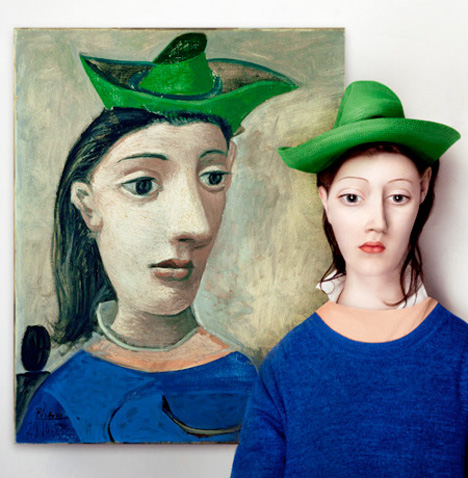
Gelber Narrenhut

Some of the world’s greatest abstract artists have created portraits of humans that, while inspired by the human form, have completely dispensed with any actual human’s natural proportions.

woman in green hat

Hungarian artist Flora Borsi decided to take some of those abstract paintings and digitally create what the models would look like if the paintings were realistic depictions of real humans.

the corn poppy

The results are equal parts entertaining and disturbing. Elongated necks, exaggerated facial features, and impossible proportions make the subjects look vaguely human but not quite what we would expect from actual human models standing next to the portraits they inspired.

bust of woman

The paintings of Modigliani, Picasso, Malevich and more are given the unusual treatment of working backwards to create something new from an already-existing piece of art.

polish woman

Entitled “The Real Life Models,” the project is one that takes you a bit by surprise. Seeing these human forms outside of their respective paintings only highlights how creative and liberal the artists were in painting the original pieces.

american gothic subjects

Borsi did include in her series one real historic photo of models next to the painting they inspired. The older couple who actually posed for Grant Wood’s “American Gothic” are pictured next to their own portrait, looking nearly as sullen as they do in the painting.

Share on Facebook


[ By Delana in Art & Drawing & Digital. ]

[ WebUrbanist | Archives | Galleries | Privacy | TOS ]


WebUrbanist

 
Comments Off on From Abstract to Actual: Unrealistic Art Models Made Real

Posted in Creativity


What The Duck (from the vaults)

20 Jul

wtdlogo_big.jpg

We’ve been fans of Aaron Johnson’s comic strip ‘What the Duck’ for years. ‘WTD’ is one of the best satirical comic strips in the world, and it’s published here every week, as well as being included in our weekly newsletter. Barbed, topical and always amusing, we hope you enjoy WTD as much as we do. Click through for one from Aaron’s archive. Appropriate this week, we think…

News: Digital Photography Review (dpreview.com)

 
Comments Off on What The Duck (from the vaults)

Posted in Uncategorized


Make Rad Abstract Photos From Milk and Food Coloring

18 Jul

Extra photos for bloggers: 1, 2, 3

Picasso had his paint brush, Michelangelo had his marble, Escher had his sketchbook, and now you have a milk carton?

Strange as it may sound, you can make twisted tie-dye swirls and churning volcanos of color by simply mixing milk, soap, and a little food coloring.

This is the stuff of dreams if you are one of those photographic Jackson Pollocks who gets their jollies from abstract snaps.

Plus, you don’t need any fancy gear and all it costs is lunch money.

Poke your head in the pantry, swing by the fridge, check under the sink, and in minutes you’ll be making your own Moona Lisa.

Make a Modern Milksterpiece

p.s. We’re hiring for an amazing opening at Photojojo. We’re looking to re-invent what/how/where we publish online, and we’re seeking one amazing somebody to lead the charge. Learn more and apply for our Editorial & Community Lead.

Why It’s Cool:

Your fifth grade baking soda volcano may not have turned out so well, but take our word for it this experiment is an easy and fun way to make abstract art!

You never know what creations will come out of this churning rainbow wonderland and it’s good times for everyone from kids to Great Aunt Edna.

And although it’s quick and easy to clean up, it won’t be short on the wow factor.

Milk swirls in Action from Photojojo loves you on Vimeo.

The Ingredients:

  • Whole or 2% milk
  • Dinner Plate
  • Food coloring (red, blue, green, yellow)
  • Dish-washing soap (Dawn seems to work well)
  • Q-tips

STEP 1: Pour the Milk

beforeSet your dinner plate somewhere level and safe from getting knocked over, and then pour in a layer of milk.

A thin coat will do, you don’t need to go overboard.

STEP 2: Add a Dash of Color

beforeGrab your droppers of food coloring and add a few drops of each color to the center of your plate of milk.

The food coloring will allow you to see the reaction that happens in the next step so feel free to experiment with the placement of your dye drops for different effects.

STEP 3: Get Soapy

beforeApply a good dollop of dish soap to one end of a clean Q-tip.

Twirl the soap around a bit to make sure the whole cotton swab is coated.

STEP 4: Dip Your Q-Tip

beforeDab your soapy swab into your milk and dye mixture and watch the colorful explosion!

You can keep dipping your Q-tip and reapplying soap to create new shapes, colors, and textures.

STEP 5: Capture the Color

beforeGrab a phone, compact, or DSLR and start snapping.

We found that increasing the saturation, contrast, and sharpening, helps to get pictures that really pop.

If you are using a phone, you can do this after the fact with an app like Photoshop Express or Pixlr.

Try using a macro lens with your phone or DSLR for super close ups.

Also, using a fast shutter speed will help prevent the moving colors from blurring.

You can experiment with new color combinations, try using a different type of milk, drop colors around at random, use two or three Q-tips at once, or anything else you can think of to spice up your pics.

Taking It Further

  • Setup your milk and dye in a glass dish and shine a bright light through the bottom for an illuminating effect.
  • See what other experiments you can turn into works of art like steel wool lightpaninting, create photos using plants, or develope film with coffee!
  • Try photographing your food coloring dropped into water for some fantasticly abstract results.

Many thanks to Casetofoane for use of their song ’90′ in our video!

Related posts:

  1. How to Create Coloring Book Pages Using Your Very Own Photos! Extra photos for bloggers: 1, 2 Imagine a world where…
  2. Coloring Pages from Your Photos in 3 Easy Steps So we were walking around Toys R Us the other…
  3. Photo Food Tags: A Thanksgiving DIY Project Extra photos for bloggers: 1, 2, 3 Thanksgiving at your…


Photojojo

 
Comments Off on Make Rad Abstract Photos From Milk and Food Coloring

Posted in Equipment