RSS
 

Posts Tagged ‘from’

Meet the Cube: A Go-Anywhere Action Cam from Polaroid

11 Aug

Extra photos for bloggers: 1, 2, 3

The folks at Polaroid (the ones who brought instant photos to the masses) are at it again!

They’ve cooked up The Cube, a go-everywhere action cam that’s as easy to use as it is easy on the wallet. An action camera for the masses (hey, that’s us … that’s YOU).

The Cube records quality HD video in 1080p with its wide angle lens. The cam’s rubber exterior is not only shock proof and water resistant, but it’s also super cute and friendly!

Attach the magnetic Cube to the bike mount to record your morning commute. Set it up on the tripod and record your morning yoga routine. Grab the waterproof shell and suction it onto your frisbee to toss around at the beach.

Learn More or Reserve Your Cube Now
$ 100 at the Photojojo Shop


© Britta for Photojojo, 2014. |
Permalink |
No comment |
Add to
del.icio.us

Post tags:


Photojojo

 
Comments Off on Meet the Cube: A Go-Anywhere Action Cam from Polaroid

Posted in Equipment


10 Lessons From Steve Jobs for Your Photography Brand

06 Aug

Steve Jobs forever will be remembered as a digital visionary – he was the one who brought poetry to the microchip. He is a legend these days. All of us can’t be Steve Jobs, but we can learn some lessons from his extraordinary life and career to parlay them into the photography business. Steve Jobs took a near-bankrupt Apple and Continue Reading

The post 10 Lessons From Steve Jobs for Your Photography Brand appeared first on Photodoto.


Photodoto

 
Comments Off on 10 Lessons From Steve Jobs for Your Photography Brand

Posted in Photography


5,000 Residents Being Evicted from World’s Tallest Vertical Slum

29 Jul

[ By WebUrbanist in Architecture & Cities & Urbanism. ]

tower david shelf wall

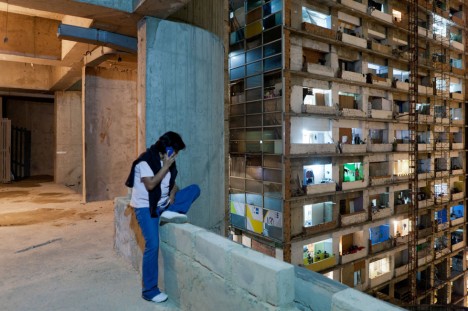
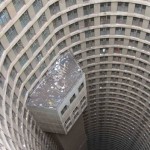
A forced relocation is underway as thousands of squatters are moved by authorities out of their homes and the city of Caracas, some of whom have called the infamous half-finished Tower of David home for as long as seven years.

tower of david view above

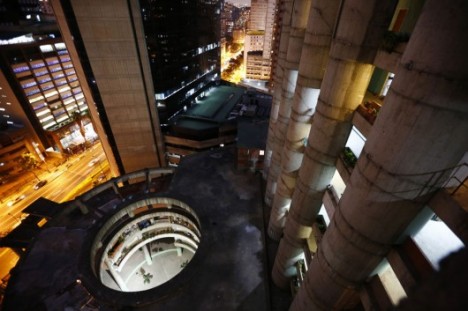
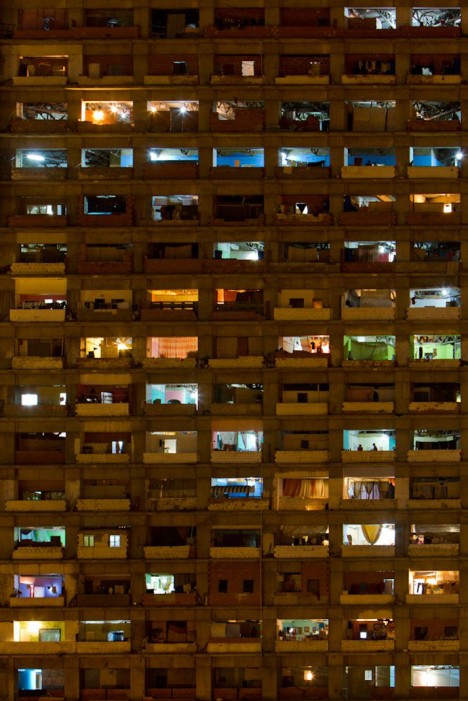
Rumors began a few weeks back as Chinese bankers expressed interest in purchasing the unfinished structure in Venezuela, with the intention of turning it back toward the (official and licensed) commercial and office uses for which it was originally intended. Currently, however, over 1,000 families live and work in the first few dozen floors of this 44-story skyscraper.

tower of david ground floor

With surprising speed over the past week, the government has already shifted over 100 of these to a settlement outside of town (three floors a time) and is set to displace everyone living in the building, primarily to Valles del Tuy in the state of Miranda.

tower david tall pic

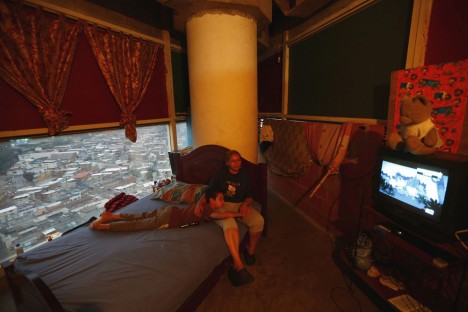
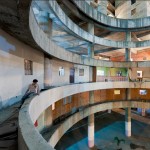
The tower was originally abandoned mid-construction in 1990 and eventually taken over by informal inhabitants who created not just homes but stores, offices, gyms, groceries, tailors, factories, churches tattoo parlors and even internet cafes within its walls.

tower of david room tv

Without an elevator (and with missing windows on the top levels), its most prized spaces for occupants have been on the lower floors, with scooter taxis that ferry people up ramps to some levels adjacent to the parking structure. Like Kowloon Walled City, the place has its own rules and informal systems of bringing in and sharing resources, including limited water and power.

tower of david exterior view

The Urban Think Tank, which spent years studying the building (and writing Torre David: Informal Vertical Communities), has weighed in on the significance of the building and its occupants as well as its sudden shift in direction: “What we found was neither a den of criminality nor a romantic utopia. Torre David is a building that has the complexity of a city. It merges formal structure and informal adaptation to provide urgently needed solutions, and shows us how bottom-up resourcefulness has the ability to address prevailing urban scarcities.”

More from UTT: “When dealing with informal settlements, infusions of money for major public works and other approaches that involve large-scale rapid change – such as the razing of slums and relocation of poor populations – have generally failed in the complex setting of the city. The commercial housing market simply does not supply enough homes. There are too few units of social housing, and the majority of these are far beyond the reach of low-income families.”

“The dire asymmetries of capital in the global south do little to help; yet various forms of structural neglect have not always diminished great entrepreneurial vigor. Shunned by governments and the formal private sector, city dwellers, like those in Torre David, have devised and employed tactics to improvise shelter and housing.” Images via The Atlantic and Torre David: Informal Vertical Communities.

Share on Facebook


[ By WebUrbanist in Architecture & Cities & Urbanism. ]

[ WebUrbanist | Archives | Galleries | Privacy | TOS ]


WebUrbanist

 
Comments Off on 5,000 Residents Being Evicted from World’s Tallest Vertical Slum

Posted in Creativity


Pelican Imaging releases light field photos from its mobile imaging array

29 Jul

Pelican Imaging has released a set of re-focusable pictures taken with its light field camera for smartphones. Instead of placing an array of microlenses between the sensor and the main lens, Pelican uses an array of main lenses – each with a sensor behind it. Pelican’s offering is more suitable for smartphones, and their sample images allow for re-focusing, changing DOF, and shifting perspective. Click through for more details and links to the images.

Articles: Digital Photography Review (dpreview.com)

 
Comments Off on Pelican Imaging releases light field photos from its mobile imaging array

Posted in Uncategorized


Archive from the world’s oldest photographic society to go on show

19 Jul

London’s Science Museum is to host a major exhibition of prints and artifacts from the collection of the Royal Photographic Society, including prints and experimental cameras made by William Fox Talbot in the 1820s. Masters of Light: Treasures from the Royal Photographic Society Collection will display over 200 items from the archives of a collection that was started in 1853, and it will be held on the site of one of the UK’s first ever photographic exhibitions. Take a look at some of the historic work that will be on display. See gallery

Articles: Digital Photography Review (dpreview.com)

 
Comments Off on Archive from the world’s oldest photographic society to go on show

Posted in Uncategorized


Reflections from Above: Mirrored Skyscraper Illusion Photos

18 Jul

[ By Steph in Art & Photography & Video. ]

Reflections from Above Skyscraper Photos 1

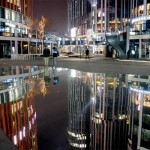
Illuminated cityscapes multiply and divide in unexpected ways when their nighttime reflections hit the mirrored facades of the skyscrapers found within them. Photographer Donna Dotan, known for her vivid and meticulously composed architectural shots, came across her project ‘Reflections from Above’ by accident while shooting an apartment for sale at the Mandarin Oriental in New York City.

Reflections from Above Skyscraper Photography 3

Holding her camera outside the window to snap a photo, Dotan captured not just the city below, but also its reflection against the building itself.

Reflections from Above Skyscraper Photography 2

Reflections from Above Skyscraper Photography 4

The results play into Dotan’s fascination with symmetry and highlight certain aspects of each scene, whether the frenetic energy of the busy streets or the comparative tranquility of the deserted rooftops.

Reflections from Above Skyscraper Photography 5

According to Dotan’s bio, her interest in the built environment began as a child when her family spent summers in Israel, the architecture speaking to her “in an intimate way.” She believes her success as a young photographer comes from “her unique ability to see spaces from the eye of a camera.”

Reflections from Above Skyscraper Photography 6

The ‘Reflections from Above’ series has only just begun – keep an eye on Dotan’s website for more.

Share on Facebook


[ By Steph in Art & Photography & Video. ]

[ WebUrbanist | Archives | Galleries | Privacy | TOS ]


WebUrbanist

 
Comments Off on Reflections from Above: Mirrored Skyscraper Illusion Photos

Posted in Creativity


5 Tips for Doing Photography from the Hip

12 Jul

Photographing from the hip is, quite literally, having your camera near or resting on your hip and pressing the shutter button. This photography method is typically used in street photography when the photographer wants to take candid, incognito photos. But, sometimes, trying this as a deliberate photography method is just as fun. It forces you to change your perspective, your vision and your creative eye. You start to look at the scene as a bigger picture rather than as a tunnel vision through your viewfinder. Plus, if your family is anything like mine, where they turn away and run the opposite direction when you bring out the camera, this technique is a great way to get candid pictures of difficult, and uncooperative subjects.

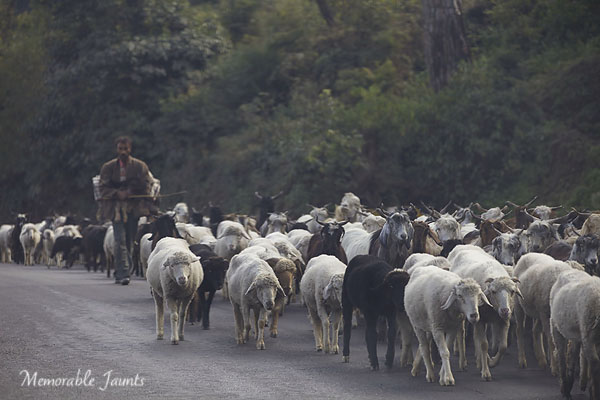
Photographing From The Hip Sheep Herder Walking With Flock of Sheep By Memorable Jaunts

When you put your eye to the viewfinder, often times you lose focus of all the other elements and entities beyond your line of vision. Photographing from the hip gives you, the artist, freedom to shift your perspective and opens up opportunities for alternative compositions for your images. Use it for personal projects or client sessions where you view the scene in front of you quite differently than what you actually capture in your camera. Travel photography is another great place to use this method of photography for an alternative perspective.

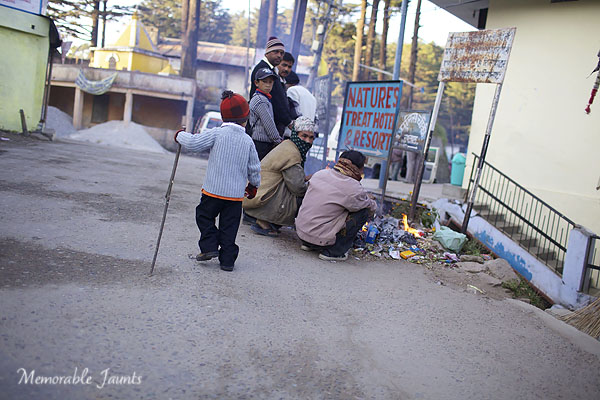
Photographing From The Hip Chilly Morning In India By Memorable Jaunts

There are some tips and tricks you may want to consider to get the best images from this angle of doing photography from the hip.

#1 Preset your settings like exposure and aperture

Since you cannot really change your settings based on what you see through the viewfinder, it is best to preset your exposure ahead of time. If you are a 100% manual shooter, this might be the one time you give yourself the luxury to go into full auto mode of your camera. Additionally, use evaluative metering instead of spot metering to assist with the exposure for this type of photography. In terms of aperture, the general rule of thumb is to have a smaller aperture for photographing from the hip (anywhere from f/8 to f/16). This improves the likelihood that more of the elements will be in focus especially if your subjects are moving. Having a larger aperture is also okay if you want to go for a more artistic image.


#2 Increase shutter speed

Having a higher shutter speed gives you a better probability that your subject will be sharp especially if you are moving or clicking in continuous mode and don’t have the luxury of a steady hand. Try to stay at least 1/250th of a second, or higher. Do not pay too much attention to ISO in this genre of photography, just embrace the noise as part of the creative element of the image. If you had to choose, give more priority to shutter speed. Things like exposure and noise (grain) can always be adjusted in post-processing as long as you have a sharp image.

#3 Preset focal point

This is probably the one time where having a back button focus might be inconvenient. Try auto focus and then throw MF switch on the lens so that the focus point is locked. You can also use center focus point and just move your camera slightly as a way to recompose with the focus locked.

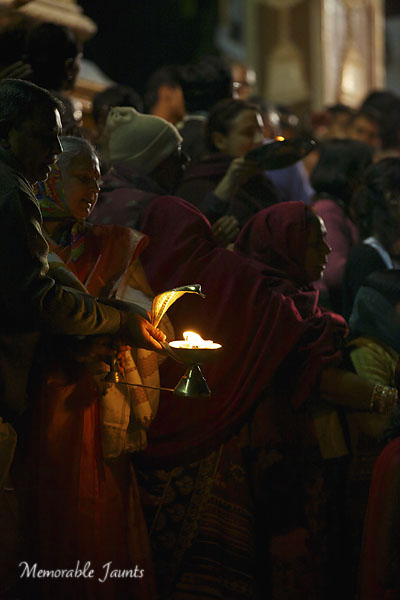
Photographing From The Hip Ganga Aarti In Rishikesh By Memorable Jaunts

#4 Use your camera’s silent mode if you have one

If you really want to go incognito, use the silent drive mode in your camera. Some of the newer DSLRs have this feature. It suppress the sound of the shutter being pressed and you can get some really candid images of the scene in front of you.

#5 Use a fixed focal length lens

Prime lenses work better for this type of photography since you really don’t want to recompose with every movement of the scene in front of you. Just move your feet instead. You can also change the angle by holding the camera at a slight upward or downward angle depending on your relative height in relation to the scene in front of you.

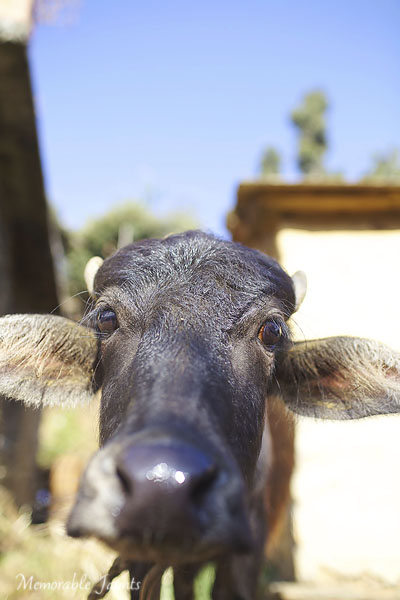
Photographing From The Hip Water Buffalo in India By Memorable Jaunts

Remember to get creative with this type of photography. You may be tempted to bring the camera to your face every once in a while to make sure you are getting some “decent” shots. That’s okay, but resist the urge to chimp every time the shutter is clicked. Try doing this for five to ten minutes at first. Once you get comfortable, take this method out for a spin for longer periods of time. Make a mental note of your settings so that you can reevaluate and reassess what worked, and what did not work, at the end of your shooting exercise.

Remember to have fun and don’t get too hung up on the technicalities. In a worse case scenario, if you take enough shots, there is a chance you will have a few good images that are artistic and technically correct. If nothing else, it gives you the opportunity to view the scene through your eyes rather than your viewfinder. So get out, put the camera around your neck using your camera strap and get clicking.

Photographing From The Hip Local Tea Shop in India By Memorable Jaunts


The post 5 Tips for Doing Photography from the Hip by Karthika Gupta appeared first on Digital Photography School.


Digital Photography School

 
Comments Off on 5 Tips for Doing Photography from the Hip

Posted in Photography


Deal Extended! Get $20,048 Worth of Top-Quality Resources – From $49

11 Jul

Do you remember the awesome design bundles from InkyDeals? We told you before that InkyDeals is one of the leading deals websites in the design community, with a devoted community of more than 300,000 design enthusiasts. Whenever an awesome deal appears on Inky Deals, we share it with the Photodoto audience, so that you never miss interesting and useful stuff. Continue Reading

The post Deal Extended! Get $ 20,048 Worth of Top-Quality Resources – From $ 49 appeared first on Photodoto.


Photodoto

 
Comments Off on Deal Extended! Get $20,048 Worth of Top-Quality Resources – From $49

Posted in Photography


Preview of the Slide and Clutch Camera Carrying System from Peak Design

10 Jul

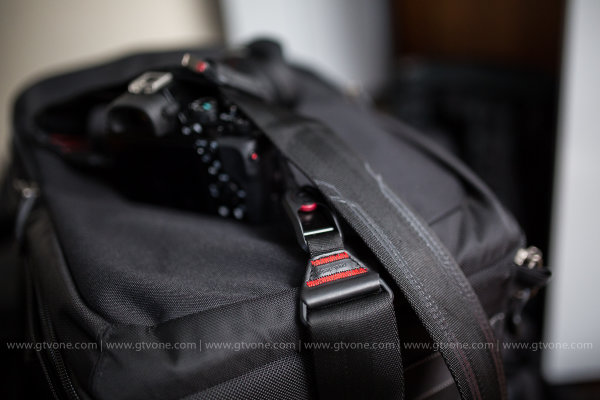
With Peak Design launching another set of products via Kickstarter, we’re very fortunate to get our hands on the new, as yet unreleased, Slide and Clutch camera carrying system prior to launch for a little dPS preview!

You can see the Kickstarter here and pre-order if that’s your thing!

As a Peak Design pro, I’ve been using “Capture” since it was released along with Leash and Cuff. The video below of Pete and Adam will give you a great idea of what the team at Peak Design are doing with this new gear and why they’re passionate about what they do – they love this stuff we do called photography.

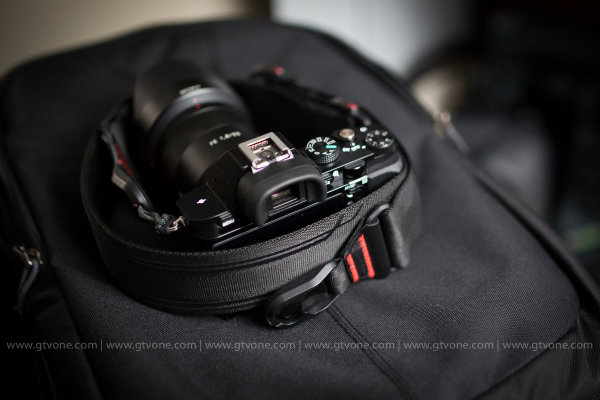
The Kickstarter is already funded, 450% funded, which says a lot about what they’ve built and the products they’ve created in the past. The new strap, Slide, is building on that, and after using it for a week (no, they don’t pay me to say this) it really is worth picking up now via the Kickstarter campaign. If you don’t, and you see it afterwards for more money, you will think to yourself “you know, Simon was right”. The strap sits really comfortably on my shoulder, it allows quick attachment to my camera through Peak Design’s unique anchor system, it literally slides around to where you want it and is so super easy when you’re wearing it, to make the strap shorter or longer as you can see in the video.

I’ve also been using Clutch, a hand strap system that keeps your camera firmly in your big greasy paw when you’re out and about shooting. I have used it with a gripped Canon 5DMK3 and without the grip – it’s quick to attach, quick to tighten and very quick to loosen off, too. When shooting portrait, I’d slide my hand out of Clutch and shoot my portrait photographs and then slide my hand back in. I didn’t really notice any loss of speed and after a few goes I was a veritable wild west camera slinger. I used Clutch on the weekend for a cycling event and loved the flexibility of being able to not worry about dropping my camera in the rain, and boy did it rain! It stayed firmly in my hand and allowed me to drop the camera into Capture to use the other body with my long lens and Slide attached – once done, I could let the long lens slide around to my hip / back and grab body number one back to continue shooting. Lots of bodies, no time to stop (over a thousand cyclists to grab a portrait of while they cycled past) and it worked perfectly (aside from when I tried to drink soup and shoot at the same time, but that’s another story).

Back in my office now and this is what the Slide strap looks like attached to a Sony A7, (granted, at f/1.4 which doesn’t show you much A7 at all, but you get the picture) to give you a vague idea of scale.

peak-design-slide-preview

peak-design-slide-kickstarter-dps-preview

In conclusion, I’m super impressed with this, the next iteration of the Peak Design strap – Slide. (Leash being my first Peak Design strap) and from me, it’s highly recommended! I give it a healthy FIVE stars.

That said, I’m sure you have questions! So, as I have the Slide with me, and I’m taking it on a quick trip to China tomorrow, please feel free to ask any questions in the comments section below, I will answer as best I can. Another great product from Peak Design. Well done guys.

–Sime

The post Preview of the Slide and Clutch Camera Carrying System from Peak Design by Sime appeared first on Digital Photography School.


Digital Photography School

 
Comments Off on Preview of the Slide and Clutch Camera Carrying System from Peak Design

Posted in Photography


Ebook Review – From Basics to Fine Art Black and White Photography

07 Jul

Ebook Review: From Basics to Fine Art

If you’re interested in black and white photography, the names Joel Tjintjelaar and Julia Anna Gospodarou will probably need no introduction. The work of both photographers has helped define, and push the boundaries of long exposure photography, a relatively new genre in the fine art world.

Julia and Joel have joined forces to write a new ebook called From Basics to Fine Art: Black and White Photography – Architecture and Beyond. It is principally aimed at photographers interested in using long exposure techniques to photograph buildings, with some chapters being more general and having a wider appeal.
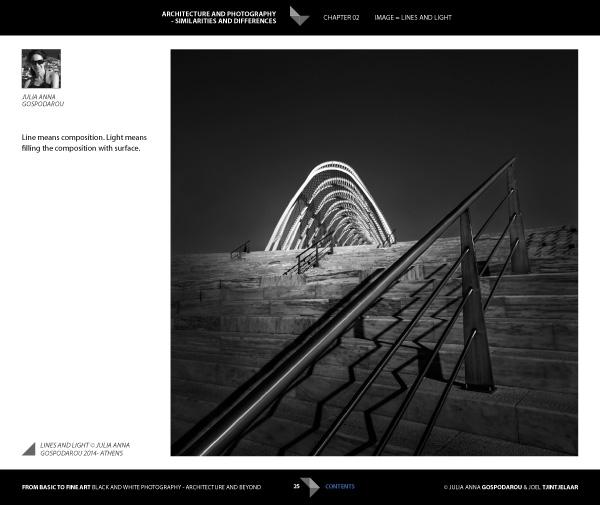
Ebook Review: From Basics to Fine Art

The contents

The ebook starts with personal statements from the authors exploring their interpretations of the word vision as it relates to architectural black and white photography. For me, the most interesting concept here is expressed by Joel. He talks about long exposure black and white photography as being several steps removed from reality. It is an interpretation, not a reproduction. The intent is not to capture the scene as it looked to the eye, but to present it in a way that represents the artist’s vision.

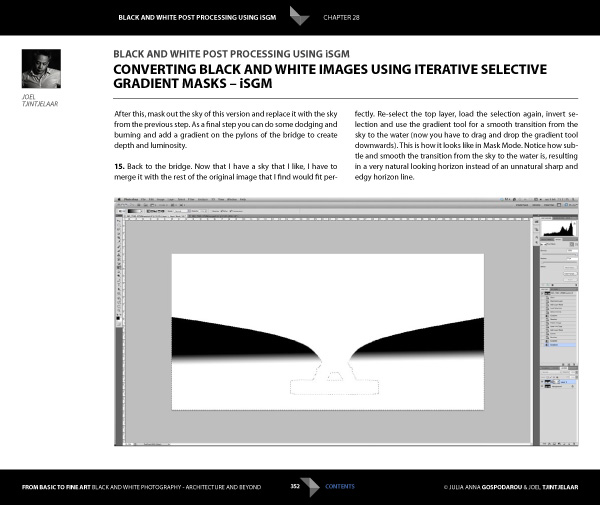
This theme is continued in the later chapters where Joel explains his post-processing techniques. Take a good look at his photos (follow the link to see some) and think about whether you could achieve similar results. The likely answer is no, because Joel has developed his processing techniques beyond the level that most photographers achieve. Be warned – Joel takes a long time to process his photos and this section of the ebook reflects that. If you’re looking for quick fixes or shortcuts you will need to look elsewhere.

Ebook Review: From Basics to Fine Art

But if you’re looking for a detailed explanation of black and white post-processing techniques that you won’t find anywhere else, then you’re in the right place. Joel explains his workflow, demonstrating how he uses Lightroom and Photoshop, along with plug-ins such as Silver Efex Pro. Most importantly, he shows you how to use what he calls Iterative Selective Gradient Masks, a technique he developed himself, to create the unique look of his black and white images.

He also explores fairly complex techniques modelled on what the calls: the 10 monochromatic commandments for good black and white photography. The idea is that you can create presence and depth in photographs by altering contrast, tonal relationships and defining edges in a way that adds volume, depth and luminosity to the subject.

Don’t be surprised if you don’t understand what this means as it’s an intricate topic that represents a fairly new way of looking at black and white photography. Joel is ahead of everybody else in this respect so you won’t find this information anywhere else. However, the examples in the ebook, and the clear presentation, makes it simple. By the way, the 10 monochromatic commandments I just mentioned are essential reading for anybody interested in black and white photography, regardless of genre.

For me, the aspects covered in the previous paragraphs are the most interesting part of the ebook. There’s more, including some interesting thoughts from Julia (a trained architect) on using light to render the form and volume of buildings. She draws on techniques used in drawing and applies them to photography to get you thinking in a new way about rendering three-dimensional objects in photography.
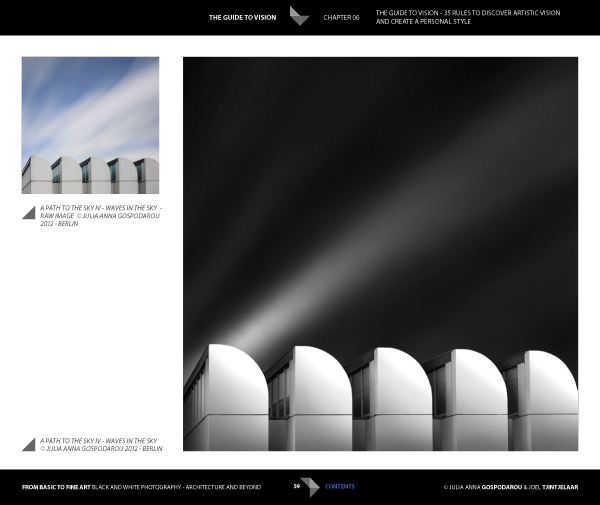
Ebook Review: From Basics to Fine Art

There’s also an extensive chapter from Joel about long exposure photography, and the equipment (including a detailed look at neutral density filters) and techniques required to get results.

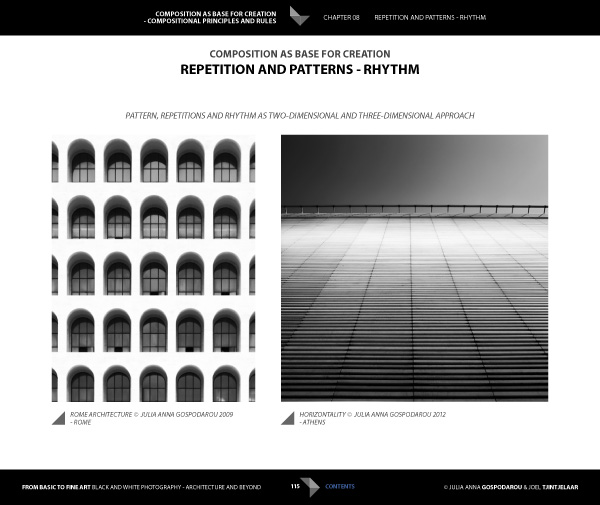
Included is more of the usual stuff that you would expect from a book about architectural photography, including composition, the practical aspects of photographing architecture and a chapter on using tilt-shift lenses. There’s also a useful chapter on pricing your work that will be of interest to professionals (or aspiring professionals).

A niggle: the discussions about composition contain a heavy emphasis on rules that continues throughout the ebook. I’m always suspicious of anybody that claims a certain way of things is a rule, and I’m certainly not convinced of the veracity of using (just to give an example) Fibonacci spirals and then stating that there’s a rule attached to it. I’m a strong believer in principles, rather than rules, and I don’t think Fibonacci spirals are going to help readers improve their composition. This minor complaint aside, there is plenty of good and practical information in this ebook.
Ebook Review: From Basics to Fine Art

Conclusion

I came away from reading this ebook with mixed feelings. On one hand, you have two photographers whose work I admire immensely explaining how they create their images, from their general philosophy to the specifics of long exposures and post-processing.

If you’re ever looked at their photos and wondered how they achieved the results they do then this ebook has the answers. It’s a tremendous act of generosity and sharing. No one else seems to be doing this stuff yet, or at least doing it and teaching it, so that makes some of the content unique. If you’re a fan of either of these authors, and want to learn the secrets behind their work, then it’s a must buy.
Ebook Review: From Basics to Fine Art

My main misgiving comes from the price. It’s an expensive ebook and it would be a shame if this information reaches a limited audience because of that. I realize that expense is a relative concept; the ebook is much cheaper than taking a workshop and you will learn things here that you wouldn’t from any other source. It’s a unique resource, and ultimately the buying audience will decide whether it has a fair value.

I have to admit that what I’d really like to see is a print version of this ebook, properly designed to give precedence to the photos of both authors. Their images would be better enjoyed on the printed page, and a book has the potential to become a lasting testament to their body of work and teachings.

From Basics to Fine Art: Black and White Photography – Architecture and Beyond

You can learn more about or buy From Basics to Fine Art: Black and White Photography – Architecture and Beyond by clicking the link. The price is €49 for those of you in the Eurozone, £39 for anybody in the UK and $ US59 for the rest of the world.

The post Ebook Review – From Basics to Fine Art Black and White Photography by Andrew S. Gibson appeared first on Digital Photography School.


Digital Photography School

 
Comments Off on Ebook Review – From Basics to Fine Art Black and White Photography

Posted in Photography