RSS
 

Posts Tagged ‘from’

Photography Workflow Tips – From Memory Card to Computer and Beyond

06 Nov

Discover the best workflow protocol for safe long-term file storage, and efficient file retrieval.

“Be willing to give that extra effort that separates the winner from the one in second place” – H. Jackson Brown Jr.
MemoryCards 1

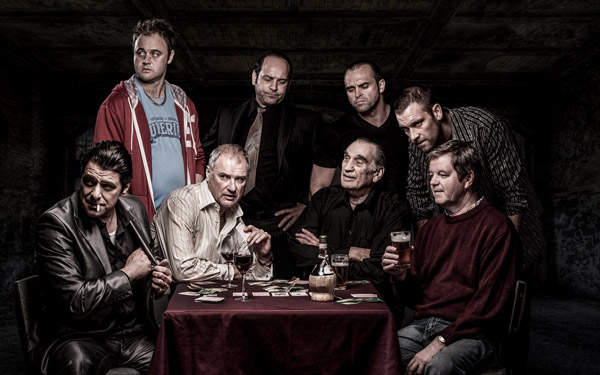
All images copyright Gina Milicia – Playing your cards right means having a consistent workflow, which leads to safer long-term file storage and efficient file retrieval. Photo credits: Promo shoot for Fat Tony and Co. Image courtesy Nine Network Australia

“Respect your efforts, respect yourself. Self-respect leads to self-discipline. When you have both firmly under your belt, that’s real power.” – Clint Eastwood

It’s very easy to become lazy and a bit sloppy with post-production workflow protocols. If you are like many people I know, then you are currently downloading your files to a folder marked “downloads” or “photos” or “John”. Inside this folder you may have hundreds, perhaps thousands of images with file names like 5U9D2496.jpeg or 5U9D2497.CR2. This is all perfectly fine if you never want to see those images again but what if in five years time you need to find those images again?

Following a constant workflow protocol will save you hours of valuable time and also prevent potential heartbreak caused from lost files.
MemoryCards 2

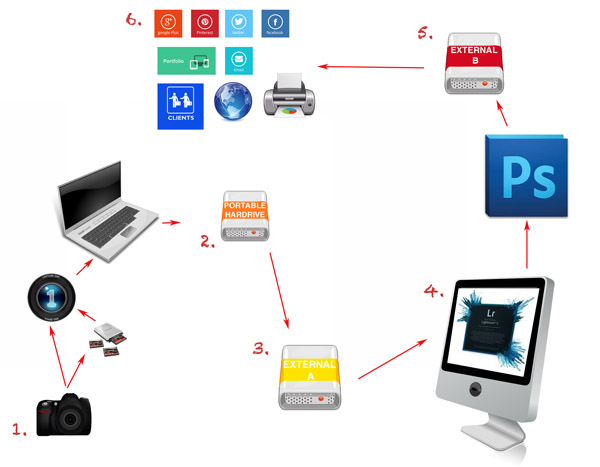
An overview of the workflow tips:

  1. Import the images from your camera (first backup)
  2. Backup to portable hard drive (second backup)
  3. Backup to external hard drive (third backup)
  4. Editing
  5. Final backup
  6. Delivery

Workflow tips – step by step

“Success is the sum of small efforts, repeated day in and day out.” – Robert Collier

Step 1: Import the images from your camera (backup #1)

You can get the images off the memory card in a few different ways. Here are the pros and cons of each method.
Memorycards 3

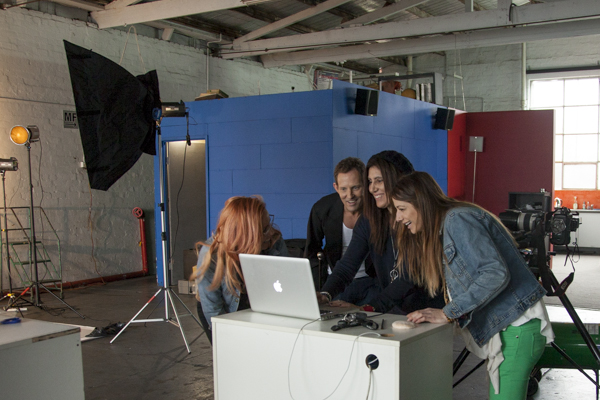
Instant gratification: In this image I’m shooting tethered on a photo shoot for Australian entertainer Todd Mckenney (pictured second from left) and makeup artist extraordinaire, Fotini Hatzis (far right) with stylist to the stars Louise Petch (far left).

Shooting tethered to your laptop

I shoot about 70 percent of my work tethered (connected to my laptop) and it’s my preferred way of shooting. I have a memory card in the camera but the images are being downloaded straight to my laptop via image capture software. The memory card is just a backup.

My preferred software for viewing images as I shoot is Phase One Capture One. I use Capture One to view my files because it’s very fast and I’ll often have several people crowded around the computer waiting to see the image. In these cases a couple of seconds can make all the difference.

Shooting straight to memory card
MemoryCards 5

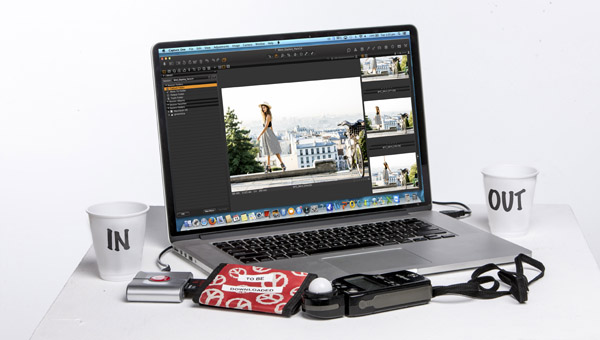
This shoot with Australian model, Mimi Elashiry was shot on location in Paris. It was photographed at dawn to avoid the crowds and I needed to work quickly in order to get all my shots done before the light became too hard and the crowds became an issue. This is a perfect situation for me to shoot straight to card.

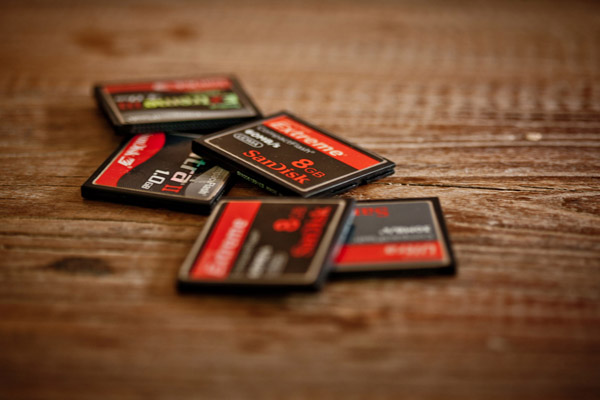
I will shoot straight to a memory card when I can’t have my laptop with me. Like, on remote locations, in extreme weather conditions, at press conferences, at events where I need to be mobile or I’m on stage photographing someone.

I carry a special cardholder that is clearly marked “To be downloaded” and stored away from my gear. This way, if my camera bag is lost or stolen (or the day gets a bit frantic) before I’ve downloaded all the memory cards, I won’t lose my files.

The images are then downloaded to my laptop using a memory card reader via Capture One.

I use RAW capture software at this stage because it’s crucial to check my exposures and expressions as I work. I’m also often working with art directors, magazine editors, fashion designers or publicists who want to view the images straight away.

All images stay as RAW files. This step is simply for checking, viewing and selecting (tagging) images.
MemoryCards 4

Some people will prefer to copy the images directly onto their computer desktop and use other software. I choose Capture One because for most of my shoots, my clients are right next to me and we’re making sure we’ve got the shot. I’ve also got an assistant double-checking the technical aspects of the shots.

Capture One lets me handle the process simply and quickly, and the software is easy enough for clients to use. Lightroom works just as well but when I’m shooting thousands of images, I don’t like the interface. It’s a personal preference, that’s all.

As long as you can organize, select and name your files at this point in the workflow – use whatever works for you.

The memory card that has just been downloaded to my laptop is then put aside and not reused that day. This works really well when I’m shooting across multiple cards as it prevents any card being wiped, accidentally.

I never leave a memory card in the camera, always removing the last card at the end of a shoot. This is another way of protecting my files and prevents me, or anyone else assistants, from accidentally deleting files.

Renaming images

Now back to all those images you have sitting in a folder marked “Photos” or “John” or they may be roaming free across your desktop and stored wherever they happen to land when you download them. I call this the “shoebox file storage system”. Everything gets stuffed in one place without any thought to ever having to retrieve the information again.

For the sake of your own sanity, I beg you to not ignore this section.

I rename images when I download the files from the camera to my laptop.

My shoots often have very fast turnaround times with art directors, publicists, or clients choosing their images during or at the end of a shoot. Having the files already in an organized and consistent structure saves everyone a lot of time and hassle.

  • Images for private clients are renamed as:
    Folder name: Client name + year
    Filename: Client surname_first initial+last 2 digits of year_4 digit counter
  • So my shoot for James Brown in July 2014 would be named:
    Folder name: James Brown 2014
    Filename: Brown_J14_0001.CR2
  • Images for companies are renamed as:
    Folder name: Company + job + year
    Filename: Company_job+last 2 digits of year_4 digit counter
  • So when I shoot the next Nutella® Winter campaign (Dear Nutella® I’m available and will work for product. Call me.) I would create the folder and files as follows:
    Folder name: Nutella Winter 2014
    Filename: Nutella_Winter14_0001.CR2

This naming system allows me to search by folder or file and find shoot quickly and efficiently.

Step 2: Backup to portable hard drive (backup #2)

I backup my RAW files onto a portable external hard drive every hour. During a full day shoot I may end up with 3000-5000 files so I need to make sure they are secure as I go.

Step 3: Backup in the office (backup #3)

When I get back to my office, I copy the images from the external portable hard drive I used at the shoot onto one of three working hard drives. In this case, I copy them on to working hard drive A.

At this point in my workflow I have the entire shoot in three locations: my laptop, an external portable hard drive and working hard drive A. The shoot stays in all three locations until the job is delivered.

I only use hard drives that are two or three terabytes in size because I don’t want everything on one single hard drive.

I don’t use cloud storage mainly because my files are just too big. My website has storage for my final processed images and I use my website to deliver images to my clients. I trust the business hosting my website but if anything should happen, I still have the files on two other hard drives.

Step 4: Editing

I edit my images using Adobe® Photoshop® or Lightroom, or a combination of both, and the edited versions are saved to working hard drive A.

Step 5: Archiving
Memory6_11

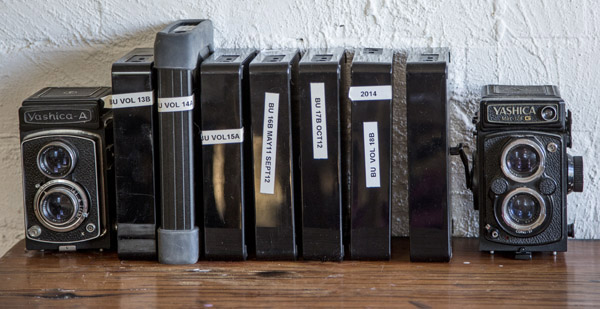
Once post-production is complete I copy all my files onto working hard drive B, which is stored in an off-site location for safety.

If you think this is overkill, remember: memory cards corrupt, laptops crash and hard drives fail. Protect your work with as many backups as you can.

As a minimum, save your images in two different locations. Keep one with you, and store the other in a safe location off site. This way if disaster strikes you will still have a backup copy of your precious files.

Step 6: Deliver

Nearly all my jobs are delivered as electronic files with the exception of a small percentage of clients (about 5%) who require prints.

The images they have selected are delivered via file transfer protocol (FTP), my website image archive (I use Photoshelter), DVD or an external hard drive.

Editor’s note: your version of “deliver” might look like sharing photos online in social media, emailing a couple to friends, or making prints for yourself.

What are some of your favorite workflow protocols? Do you have any great workflow, storage and delivery techniques you’d like to share? How do you safely store your memory cards before you download them? I’d love to hear about them.

The post Photography Workflow Tips – From Memory Card to Computer and Beyond by Gina Milicia appeared first on Digital Photography School.


Digital Photography School

 
Comments Off on Photography Workflow Tips – From Memory Card to Computer and Beyond

Posted in Photography


Mobile 3D Clay Printer: Whole Houses from Local Mud & Fiber

03 Nov

[ By WebUrbanist in Architecture & Houses & Residential. ]

3d printing dirt water

Easy to disassemble and transport on demand, this 3D-printing solution uses natural materials to build completely stable homes from readily available resources.

3d printed architecture mud

Designed by WASP (World’s Advanced Saving Project) and deployed recently at a maker fair in Rome, the Delta device itself is lightweight and can be loaded onto a truck, moved then rebuilt in a matter of hours.

3d printed architectural home

Structurally, the system employs curved walls, arches and domes to create solid buildings that can withstand the test of time. For its source material: dirt, clay and water are fed into the machine, leaving the results to dry naturally in the sun. Other substances like wool can be added to help bind the solution. Architecturally, the designs draw on regional vernaculars.

3d printer delta machine

Part of WASP’s larger goal here is to raise awareness of non-plastic building materials that can be used in 3D printers, all with the same degree of precision found when using plastics. This process has started with demo models and is leveling up to full-scale structures.

3d house printing technology

As for future endeavors: “the company is in the process of exploring 3D printing implantable ceramics, such as hydroxylapatite, bioglass and aluminium oxide, to create bone implants with the same porous structure as natural bone.”

Share on Facebook


[ By WebUrbanist in Architecture & Houses & Residential. ]

[ WebUrbanist | Archives | Galleries | Privacy | TOS ]


WebUrbanist

 
Comments Off on Mobile 3D Clay Printer: Whole Houses from Local Mud & Fiber

Posted in Creativity


2 November, 2014 – Five Brief Audio Interviews from PhotoPlus

02 Nov

The PhotoPlus 2014 show in New York in late October saw a few new products being announced, for the first time in North America at least. I had been at Photokina in Germany the month before, and frankly, with only a few exceptions, found the industry to be a bit in the doldrums, as well as in a transition state.  PhotoPlus, because it is a consumer show, was much more lively and the crowds seemed to looking at everything with enthusiasm.

Because I was at the show for only one day, I was traveling light, and so instead of the more extensive video interviews which Kevin and I did at Photokina in September, I did mostly audio interviews at PhotoPlus. I also focused my attention on some of the smaller companies exhibiting for the first time, but also with Epson who is just now announcing the SureColor P600 photo printer in North America, though it was shown at Photokina earlier.


The Luminous Landscape – What’s New

 
Comments Off on 2 November, 2014 – Five Brief Audio Interviews from PhotoPlus

Posted in News


7 Things That Keep You From Charging What You’re Worth (and how to get over them)

02 Nov

lynseymattingly6

Charging people money is scary. Having people I’ve never met ask me to produce something I have metaphorically promised the world I can do at a professional level, that may or may not meet their expectations, is terrifying. There is so much I can’t control – the weather, the mood of everyone involved, my camera suddenly deciding to jam without warning, that nerve condition I Googled last night where something snaps in your eyeball without warning and you go blind in mere seconds. Never mind that every single time I leave my house, I’m pretty sure that I am completely out of any possible creativity, creativity that will never renew itself, and it’s only a matter of time before everyone realizes I’m just a fraud that got lucky for a while.

lynseymattingly5And that’s on a good day.

I get hired repeatedly by my clients, seem to be able to pull off a shoot in most elements, and as of yet, that nerve hasn’t snapped in my eyeball. However if you look at my pricing comparatively for my area, my pricing history, or ask my mom, I am not charging enough. It’s not that I don’t want to make money of course, it’s that I feel bad taking it from people. I’m not sure I deserve what I am currently charging for what I do, never mind even more. There is no true way to measure the market rate for a photographer, but there are plenty of reasons that setting my rates – determining my true market value – is enough to make me want to go pick-up an application at McDonalds.

#1 It seems like everyone is a photographer – and even the one’s that aren’t have a fancy camera

At some point I am hoping that all of us can get together and agree that owning a fancy camera does not make someone a photographer by trade. I happen to own a really nice guitar after a gifting incident that took a wrong turn. Sometimes just for fun, I sit at my desk with it and strum like I’m a fledgling musician in a coffeehouse working for tips and free lattes. But all of the strumming in the world isn’t going to change the fact that I completely lack the coordination to have my left hand do about anything and I can’t play a single note.

Get over it

Consider every job that relies on nice equipment – a baker needs a fancy oven, an auto-mechanic requires a collection of expensive tools, a fast car alone doesn’t make anyone a race car driver (though with the right stretch of highway and a good song on the radio, we all have the potential to be a rockstar). Ownership, or even a working knowledge, of a tool does not make someone a professional anything.

lynseymattingly8

#2 You’re stuck in portfolio building mode

Chances are if you are a professional photographer, you’ve done portfolio building of some sort; maybe you did portraits for friends for free, did corporate work for cost, or photographed thousands of landscapes until you felt comfortable putting your work out there for sale. Making the step from being a budding photographer to a full-fledged “real” photographer who charges money for their work is a huge but necessary one. Once you have established that you are a photographer with a body of work to show for yourself, you are no longer building from scratch. If you’ve built the house structurally sound, you’re not going to build another house to put on top of the original that’s better. Build your business to be sturdy, flexible, and confident and instead of tearing down and starting over, you will just remodel from time to time and rearrange the furniture when you need to freshen the place up.

Get over it

Spend a day going through your entire portfolio and honestly reflect on your work. Do you have a nice representation of the type of photography you want to charge for? Can you see noticeable differences in the images you created when you first started to now? Do you have images that you are quite proud of and show what you are all about as an artist? If you answered yes, the truth is you already have a portfolio. You will continue to build on this portfolio as you have more (paying) clients, as your skills improve, and as your style becomes more defined and evolves but charging your honest market rate is what is going to help you to get there.

lynseymattingly3

#3 You’re forgetting about your overhead costs

Admittedly I spend my editing days in pyjamas at my desk. Most days I don’t commute anywhere, I eat lunch in my own kitchen, and I never have to contribute to a coworker’s birthday party fund. On the surface it appears I spend next to nothing to bring in a lot, but what I lack in dry cleaning bills, I make up for in expensive equipment, monthly subscriptions, website maintenance, business collateral, and more. Once a chunk of change has already been spent on that fancy camera, building it into your actual cost of doing business can be quickly forgotten.

Get over it

Come up with a list of every single expense you have from your electric bill to run your computer, to how much you spend in cat treats to keep your cats nearby, giving you someone to talk to all day so you don’t go crazy. Don’t forget to allow for things like wear and tear on your cameras and lenses, new software you may need, and the traveling involved with getting to a shoot. You should also include extra funds for unforeseeable repairs and expenses, increases in printing costs or other regular fees, and any classes or workshops you will attend to support your photography. Divide this total by the amount of days you can reasonably work in a year and what you have is the bare minimum day rate you need just to keep doing it. Know this budget as actual numbers, not just a vague amount and it will become very clear, very quickly, if you are not charging enough to make it worth your while no matter how much you love it.

lynseymattingly7

#4 You don’t yet have a solid work and edit flow

I don’t have a good rebuttal for this one. All I know is that if photographers couldn’t charge money for their work until they had a proven workflow in place, there would be no photographers.

Get over it

Even if you don’t subscribe to the flakey artist bit, your process is going to change often, having to constantly accommodate for seasonal fluctuation, client needs, and your own style. So long as you have a true desire to be a professional photographer and a method to getting pictures out of your head and into your camera, and then into the hands of clients, you have a workflow sufficient enough to charge a reasonable rate and work from there.

lynseymattingly1

#5 You assume you’re not good enough

Do not feed this monster! This monster will come to your door often in your career and just like my kid’s friends, the more candy you give him, the more frequently he will come around and the longer he will stay. Be realistic and competitive, but do not base your entire pricing system on a lack of confidence. Photography, like most creative occupations, is often personal and will never fit firmly in the category of just business.

Get over it

Ask an objective friend to take a thorough look at your portfolio and prices. Show them your competitors and walk them through exactly what it takes you to go from nothing to a finished image, ready for delivery.

lynseymattingly2

#6 Because you couldn’t afford yourself

Rather than being a large business that strives to be the cheapest choice for customers, you are one single person. It’s easy to get hung-up on the idea that if professional photography isn’t in your budget, then it’s not in other people’s either. I haven’t paid for photography in six years – I take pictures of my own children often and when I want family photos or any other picture that actually includes me, I trade with a photographer friend. I am not a good judge of what people are willing to, or can spend on a family photographer.

Get over it

Do you buy art? Do you support artists? This includes musicians, actors, and that guy on the corner that can fold himself into a two foot plexiglass cube and eat fire. I give that guy a dollar every time I see him and I bet you would too. People budget for what they truly want and what is important to them. If they want to invest in your time and talent, who are you to tell them no?

lynseymattingly4

#7 You’re allowing yourself to be paid in kind words and compliments

Ouch, this one stings. Everyone wants to be liked and let’s face it, kind words are better than a sharp stick in the eye. Especially a compliment that is given based on skills you have worked hard to perfect. Confidence is something every photographer needs at least a bit of, but accolades don’t pay the rent.

Get over it

If you aren’t charging them, someone else will be happy to and collect the compliments too.

Besides – I would be a terrible fry cook.

The post 7 Things That Keep You From Charging What You’re Worth (and how to get over them) by Lynsey Mattingly appeared first on Digital Photography School.


Digital Photography School

 
Comments Off on 7 Things That Keep You From Charging What You’re Worth (and how to get over them)

Posted in Photography


Photographer’s notebook from Captain Scott’s last Antarctica expedition found

29 Oct

A notebook containing recorded details of plates shot by explorer George Murray Levick during Captain Scott’s final expedition has been found and restored by the Antarctic Heritage Trust of New Zealand. Discovered in melted snow outside the hut that was Scott’s base during the British Antarctic Expedition, the notebook is said to contain pencil-written details of ‘the dates, subjects and exposure details for the photographs he took during 1911 while at Cape Adare’. Learn more

Articles: Digital Photography Review (dpreview.com)

 
Comments Off on Photographer’s notebook from Captain Scott’s last Antarctica expedition found

Posted in Uncategorized


Eye on the City: Visitors Dangle from Urban Art Installation

28 Oct

[ By Steph in Art & Installation & Sound. ]

Eye Installation 1

Take a seat, fasten your seatbelt and allow an usher to wheel you into a giant eyeball dangling outside of a building so you can take in all of the sights without anyone else present. The exhibit, entitled EYE, asks you to look first at the city, and then at yourself. Installed in five different buildings throughout the city of Den Bosch in Holland, the project by Belgian artists Pascal Leboucq and Lucas De Man features enlarged reproductions of the real pupils of local residents.

Eye Installation 2

Eye Installation 3

EYE is currently installed in a theater, a modern hospital, an old factory that’s about to be redeveloped, a monument and a corporate business. Billed as “an extraordinary audio-visual theatrical experience,” each eye seats one visitor at a time. After taking a seat and entering the eye, they’re invited to relax and take a look. Then, the guide asks them, “What do you see?”

Eye Installation 4

Eye Installation 5

“A city with eyes is a city that looks and shows itself,” says De Man. “No closed doors or shut windows, but open. We gave the city eyes so you can hang in the air above the world and look. Just look.”

Eye Installation 6

The installation will remain in place until November 1st, with tickets available online, and will tour the world in 2015.

Share on Facebook


[ By Steph in Art & Installation & Sound. ]

[ WebUrbanist | Archives | Galleries | Privacy | TOS ]


WebUrbanist

 
Comments Off on Eye on the City: Visitors Dangle from Urban Art Installation

Posted in Creativity


Micro Metros: Abstract City Models Carved from Wooden Scraps

27 Oct

[ By WebUrbanist in Art & Sculpture & Craft. ]

wood art on pavement

With the eye of an architect and hand of street artist, James McNabb blends urban inspiration with a fast-paced creation process to make these amazing sketch-like sculptures of all sizes.

wood sculpture offcut art

wood grain closeup detail

woold sculpture james mcnabb

wood art in gallery

His latest series, dubbed Metros (opening at the Robert Fontaine Gallery), follows in the footsteps of Long Nights, Big City Lights, taking exotic and beautiful wood offcuts then chipping, chiseling,, cutting and sawing them into buildings and towers to form abstract skylines.

wood art new piece

wood sculpture urban woodworking

wood sculpture table design

wood sculpture above below

The results reflect a combination of architectural and artistic sensibilities, seeming much like pieces of furniture or sculpture but intentionally crafted without the same slow detail-oriented care we normally associate with those arts.

james mcnabb various woods

jaames mcnabb closeup detail

Seen at a distance, the structural details seem to blur into skylines – up close, like trees in a forest, individual buildings take shape, highlighting differences in form, color, grain and materiality.

Share on Facebook


[ By WebUrbanist in Art & Sculpture & Craft. ]

[ WebUrbanist | Archives | Galleries | Privacy | TOS ]


WebUrbanist

 
Comments Off on Micro Metros: Abstract City Models Carved from Wooden Scraps

Posted in Creativity


Wildlife Photographer of the Year releases images from winners shortlist

11 Oct

Britain’s Natural History Museum has disclosed four of the winning images from the shortlist of the Wildlife Photographer of the Year competition. With a judging panel chaired by Jim Brandenburg, the competition attracted almost 42000 entries from 96 countries this year, and 100 of the best images will form a touring exhibition that the museum says will visit six continents. See gallery

Articles: Digital Photography Review (dpreview.com)

 
Comments Off on Wildlife Photographer of the Year releases images from winners shortlist

Posted in Uncategorized


Aerial Rugs: Images from Above Converted to Carpet Patterns

06 Oct

[ By WebUrbanist in Design & Furniture & Decor. ]

aerial dimensional carpet design

Created by an architect and landscape enthusiast, this limited edition series of custom textiles derives its geometries and colors from aerial views shot around the world.

aerial landcarpet custom series

aerial urban suburban image

Florian Pucher, an Austrian designer now based in Beijing, has long traveled by day to take in as many sights from the sky as possible. Since 2007 he has collaborated with graphic designer Sophia Liu Bo to redraw and abstract images shot from above, turning them into unusual rugs using high-quality New Zealand wool.

aerial carpet close up

aerial carpet urban center

Each LANDCARPET creation is 1 of 88, signed and numbered in the spirit of traditional artistic prints.

aerial carpet with cow

aerial carpet cow scale

The subjects cover the globe, from Europe and the USA to Africa and Asia, urban settings to rural sites.

aerial carpet signed dated

aerial rug design detail

There is a rich variety from one to the next, showcasing an array of lines, curves, organic land forms, urban topographies, and other natural and man-made patterns and features.

aerial carpet city grid

aerial carpet grid pattenr

Each edition takes approximately five weeks to produce, combining real depth and hand-tufted textures.

aerial rug topographic detail

aerial rug colorful topography

The source images range from aerial photographs and satellite images to maps and other views from above. His work as an architect exposes Pucher to all kinds of site maps, master plans and other inspirational materials.

Share on Facebook


[ By WebUrbanist in Design & Furniture & Decor. ]

[ WebUrbanist | Archives | Galleries | Privacy | TOS ]


WebUrbanist

 
Comments Off on Aerial Rugs: Images from Above Converted to Carpet Patterns

Posted in Creativity


Birthday Gifts That Will Separate Your 7 Year-Old From His Computer Games

06 Oct

Kids fondness for computer games is raising concerns among parents. The exponential growth of video game industry has made the already arduous job of parenting even tougher. Although there is nothing wrong with some video game time once in a while, but to witness billions of kids whose faces are glued to the screen, evokes doleful feelings. Watching your kid roll around on the floor dribbling to the screen completely distracted from learning anything useful, is not a very pleasant sight!

The key to fending off such an addiction is by spending more time with your kids while they play the game and gravely practicing parental guidance. Another way is by involving your kid in other activities that are worthwhile in the child’s growth and development. The best way to bring out a new activity to a child is by using his or her birthday present. Birthday presents are extremely special- they stimulate, inspire, excite kids and hey are also bound to try these gifts. Given below are some wonderful gifts that can capture your 7 year old kids imagination

Classic Board Games
Children love playing classic board games! Most of them are timeless and can be enjoyable for children of any age. Such games provide opportunities for developing positive attitudes, building self concept and alleviating the fear of error and failure. Scrabble and Monopoly are the well known ones. You must also participate with them so that they feel they always have someone to play with.

scrabble

A Music Instrument
It gives your child an opportunity for creativity and also inculcates in him or her discipline, self-esteem and passion for music. There is a plethora of such instruments, but you must help them choose the one they like. Your personal preferences will guide your child on what he or she likes.

music

Sport Equipment
Sport is fundamental to the early development of children. Many of them love playing sports at a very young age with proper guidance. Through participation, they can learn about teamwork, honesty, fair play and respect for themselves and others. As parents, you must encourage them by gifting sport equipments that they can use.

balls

A Scooter Or A Bike
Bikes and scooters are fun toys. Children love zipping around on them there are 2 main brands ezip and Razor. You must consider products such as the razor e100 electric scooter and the ezip e500 electric scooter, to check if it is a good product for your child. You can also find detailed information on the product in fan sites and reviews from parents who bought it. You can also explore buggies and other such adorable ride-on toys.

scooter

Your Child’s Health

 
Comments Off on Birthday Gifts That Will Separate Your 7 Year-Old From His Computer Games

Posted in Photography