RSS
 

Posts Tagged ‘from’

FOQUS Type-D 200 is a new 35mm black-and-white film from Russia

30 Aug

The team behind Russian company FOQUS has launched FOQUS 200, a new 35mm panchromatic black-and-white film described as having a fine grain, strong contrast, and
“pretty good tone range.” The film’s release was made possible by photography enthusiasts in Moscow, according to FOQUS, though it will ship anywhere with orders already available online.

FOQUS explains that Type-D is made entirely in Russia, and is not a repackaged product from Europe. In a blog post, the team explained that photographers may occasionally experience the presence of small ‘dots’ on their developed prints, something they don’t consider a big problem but hope to address in time. They also explain that Type-D isn’t very forgiving, and so photographers should “know what [they’re] doing” when they use it.

If you do know what you’re doing, you can get results like this:

$ (document).ready(function() { SampleGalleryV2({“containerId”:”embeddedSampleGallery_5758076413″,”galleryId”:”5758076413″,”isEmbeddedWidget”:true,”standalone”:false,”selectedImageIndex”:0,”startInCommentsView”:false,”isMobile”:false}) });

Because the film is entirely produced within Russia, the price is low for international buyers: at only 230 rubles / $ 4 USD / 3.30 Euro / 3 GBP per roll. Probably as a result, the FOQUS website currently lists the film as out of stock.

Articles: Digital Photography Review (dpreview.com)

 
Comments Off on FOQUS Type-D 200 is a new 35mm black-and-white film from Russia

Posted in Uncategorized


10 Things You Can Learn from the Pros to Help You Take Better Photos

28 Aug

As a photographer, there are so many things that you learn and do on a regular basis. Creating habits in your craft is a good approach to making it become second nature. Here are a few things that most professionals do that you can incorporate into your workflow to help you take better photos.

10 Things You Can Learn from Professional Photographers to Help You Take Better Photos

1. Blink Blink

Pros use the highlight overexposure alert. If you have this turned on in your camera, you will no doubt understand one of its more common name, “blinkies”. When this feature is turned on, it gives a preview of your image with blown out highlights slowly blinking black and white, as a warning.

Blinkies (or blown out highlights) are not always wrong, but if it is in an area you want to show detail, then this information will be useful. You can then correct the exposure as necessary and review the image again.

10 Things You Can Learn from the Pros to Help You Take Better Photos

The highlight alert (circled) blinks to show an overexposed/blown out sky.

2. Focus Focus

Knowing how to quickly move your focus point where you want it is a definite plus. On the opposite side of that is locking focus, which is another great skill to have. Both tell your camera exactly where you want to focus. Moving your focus point helps you place it exactly where you want while locking your focus enables you to grab your focus point, lock it in and recompose your image.

Knowing when to use both of these can also help you get more creative, so practice.

3. Know when to use spot metering

The in-camera light meter helps you determine how to adjust your exposure settings by measuring the brightness of the scene. The default metering mode in your camera is most likely set to Matrix mode (also called Evaluative or Pattern metering).

Evaluative metering works well in most situations but pros know that there are times when they need to switch. Spot metering evaluates only the light around your focal point and calculates exposure based on just that area. Some examples of when a pro would use spot metering include; photographing the moon, someone on a stage, or any scene with a lot of contrast.

10 Things You Can Learn from the Pros to Help You Take Better Photos

Evaluative Metering versus Spot Metering.

A good way to learn when Spot metering is the right choice is by switching to it from time to time and looking at your results.

4. Use Live View to set White Balance

A handy little trick is using the LCD monitor at the back of the camera to set your White Balance (WB). This way you get a real time preview of what your final shot will look like comparatively. This is especially handy if you are shooting jpeg and don’t have the luxury of changing the White Balance after the fact.

5. Good Memory

Simple enough is to walk with extra memory cards. A trick that you can only get from experience though is not cramming too much on any one card. If you are shooting for any paying client, split your shots into several cards because believe it or not, cards can fail on you. If your shots are spread out, you may still have enough images to salvage a shoot.

Bonus memory card tip: Invest in good card recovery software. If you take your card out and for some reason are not seeing the images on your computer, do not put it back in and shoot. Good recovery software has saved many a pro.

6. Bracket

Bracketing in short, is taking several shots of a subject using different exposure levels. It is one of the easier ways to produce images with a high dynamic range. Pros also use bracketing when they unsure about exposure or dealing with tricky lighting.

10 Things You Can Learn from the Pros to Help You Take Better Photos

Bracket images to reveal more dynamic range.

7. Sharpness – Check

By now you may have realized that everything looks sharp on a 3” screen – only to open it up on your computer and see that it is blurry. You could save yourself some heartache by zooming in and checking the image sharpness while you’re still in the field as the pros do.

8. Extra Batteries

When packing your gear, always make room for extra camera batteries. This seems obvious enough, but of note is that if you are shooting in cold weather you may even need to supplement that. Batteries are the one part of your camera that is affected the most by cold weather. A drop in temperature causes your battery to deplete faster and thus not last as long. Keep this in mind the next time you are outdoors targeting golden hour into twilight time.

10 Things You Can Learn from the Pros to Help You Take Better Photos

Pack extra batteries when shooting in the cold.

9. Use a lens hood

The main reason to use a lens hood is to prevent side light from hitting the front of the lens. A lens hood thus reduces or eliminates lens flare that can occur when shooting outdoors during daylight hours.

But, most pros keep their lens hood on even when shooting indoors for more than just blocking light. They use it as protection against scratches, cracks, fingerprints and even some impact. It’s a good habit to use a lens hood.

10. Beep Beep Beep

Backup your images. Pros will tell you that this is at the top of their list. One recommended backup strategy is twice before formatting your memory cards – once to your computer and make a secondary copy to an external drive. If you are even more paranoid, it does not hurt to back up while out in the field. There are a number of portable drives available where you can copy your cards over without a computer.

10 Things You Can Learn from the Pros to Help You Take Better Photos

Backup your images to save yourself some heartache.

Conclusion

Those were just a few of the many things you can keep in mind and add to your own routine. What are some of the things that you would suggest to help newbies take better photos? Share in the comments section below.

The post 10 Things You Can Learn from the Pros to Help You Take Better Photos by Nisha Ramroop appeared first on Digital Photography School.


Digital Photography School

 
Comments Off on 10 Things You Can Learn from the Pros to Help You Take Better Photos

Posted in Photography


These guys captured the total solar eclipse from a stratospheric balloon

26 Aug

For all of the many (many many) eclipse photos and videos that have been release, this is probably a view you haven’t seen yet: the shadow of the moon traversing Oregon, as seen from a stratospheric balloon.

The video was captured by Liem Bahneman, a self-proclaimed ‘armchair aeroscience geek’ who posted the final version to his Vimeo account alongside this description:

I launched a camera-laden balloon before totality passed over Central Oregon. There were three still cameras (one being a Ricoh Theta 360) and a GoPro recording video. This is the edited video, showing launch, the shadow of totality passing, and the last 40 seconds is the last of the footage before the battery died.

The video more or less explains itself. After reaching altitude around the 40-second mark, you begin to see the shadow of the moon creep over the landscape from the right of the frame… and keep creeping until it’s pass through and off into the distance stage-left. It might not be as awe-inspiring as watching the sun become obscured, but it’s still somehow mind-blowing to see so much of the Earth cast in darkness.

Articles: Digital Photography Review (dpreview.com)

 
Comments Off on These guys captured the total solar eclipse from a stratospheric balloon

Posted in Uncategorized


These incredibly intricate pinhole cameras are made from clay

22 Aug

$ (document).ready(function() { SampleGalleryV2({“containerId”:”embeddedSampleGallery_8966365626″,”galleryId”:”8966365626″,”isEmbeddedWidget”:true,”standalone”:false,”selectedImageIndex”:0,”startInCommentsView”:false,”isMobile”:false}) });

Steve Irvine is an incredibly talented ceramic artist, but he’s been passionate about photography for almost as long as he’s been working with clay. “It only seems natural,” he says, “that the two passions should come together.” And when they do, the ceramic pinhole cameras you see above are the result.

In the gallery above, each camera is followed by a sample photograph taken with the selfsame camera.

Most are made using a combination of throwing and hand-building techniques, glazed and fired by Irvine, and then improved upon with little antique dials, gadgets and other accents until the final product looks like something out of your favorite steampunk universe. As Irvine explains on his website, these creations are fully-functional cameras:

These are fully functional pinhole cameras. They have no lens, light meter, viewfinder, or automatic shutter, and yet they can produce gallery quality images. I use black and white photo paper in them for the negatives. The negatives are either 4 x 5 inches, or 5 x 8 inches.

You can find more examples of Irvine’s pinhole photography at this link. And if you want to see how one of these cameras is made, you can find a step-by-step tutorial on Irvine’s website here.


All photos by Steve Irvine and used with permission.

Articles: Digital Photography Review (dpreview.com)

 
Comments Off on These incredibly intricate pinhole cameras are made from clay

Posted in Uncategorized


Five Steps to Benefiting From Social Media Networks for Your Photography

21 Aug

This article is about how I think you can use social media network sites for your best benefit. I am suggesting there is one single thing which you should concentrate on that you can get there with just five steps.

As I have already suggested, I do recommend photography-centric social media networking sites. The one I have used most is Flickr, but I am not endorsing that particular site. Search “social media networks photography” (or similar), and almost any of the sites found will do the job, in largely similar ways. Play around, you might find one which better suits your style, your way of thinking.

Five Steps to Benefiting From Social Media Networks

And much more!

WHAT DO YOU WANT?

This photograph has over 14,000 views and has been added as a favorite 600 times. It is my most viewed and most faved photograph on Flickr. How can that be? Really? What are its merits which cause it to be so lauded?

Five Steps to Benefiting From Social Media Networks

Girls of Bahrain.

The truth is that its photographic merits are VERY limited. I could give you an explanation of why this image has been such a success, but that is not important. What matters is that it helps make the point that “views” and “faves” and even casual comments such as “Great capture, cool shot” mostly mean very little whatsoever.

That is an extreme way of putting it but I’ll stick with it and avoid drawing it out and giving a long justification. However, I think those numbers below mean very little. Though it might have some interest, it is not what you would call a good photograph.

Five Steps to Benefiting From Social Media Networks
THIS IS WHAT YOU WANT!

I have never properly thanked the person concerned, maybe the mention in this article will make up for that.

King of the souq.

I shared this photograph. The comment I received was:

“Another very “Richard Messenger”ish shot. Do all your subjects coincidentally make the same expression, or do you somehow force it out of them? Haha. His somewhat-there-but-still-flat-sort-of-smile looks very familiar to previous portraits you’ve taken.”

I think I knew the truth pretty much straight away, but it took a little while longer to fully accept it. At some point I linked the comment with Rick Sammon’s adage that “The camera points both ways” and realized why too many of my subjects did, indeed, have that same expression. They were simply reflecting my expression.

It is very difficult to make that sort of realization on your own. People pay thousands of dollars to gain such insights. I had received the comment, and great insight, from an honest person, with clearly good intentions, who expressed themselves kindly AND who happened to be right. What more can you ask? Good comments are priceless.

Five Steps to Benefiting From Social Media Networks

Comments please.

What I want, and what I think will move your photography forward too, is comments. Receiving AND making comments has certainly helped me. Unfortunately, it is very unlikely that you can simply post your photographs, however stunning they may be, and expect people to start commenting. You will need to do a little work.

NEED RELIGION?

Five Steps to Benefiting From Social Media Networks

Do unto others.

The Golden Rule is among the values espoused by most religions and philosophies. Of the various versions, this seemed a good, simple way of expressing how to approach making comments.

“Try to treat others as you would want them to treat you.”

Or, on a perfect day, we could turn to Lou Reed.

“You’re going to reap just what you sow.”

However, you want to put it, in terms of religion, philosophy, or pop culture, it is a good principle to hold in mind when you are making comments.

STEP ONE – JUST TAKE A LOOK

Five Steps to Benefiting From Social Media Networks for Your Photography

Just look … think …

You might want to start on the nursery slopes for the first day or two, week or two even. There is a lot to be learned by looking at photographs and keeping the following in mind.

  • Why do you like a particular photograph?
  • How do you think it was taken?
  • What is it that appeals to you?
  • When was it taken?
  • Which equipment was used?
  • Why was it taken?
  • Where?
  • … and so on

STEP TWO – COMMENT!

Here’s the thing. I am not going to burden you with long paragraphs of explanation, give real world examples, or quote academic research. I am just going to tell you that the person making a comment often learns more than the one receiving the comment.

Five Steps to Benefiting From Social Media Networks for Your Photography

Will she? Won’t she?

When you are ready to abandon all buoyancy aids, this is where you jump into the swimming pool. You now begin to sow, so try to treat others as you would want them to treat you. Keeping in mind Kipling’s six mates, you now start to comment.

Just taking the example of Flickr, there are a massive number of groups, with all sorts of specialized interests. You will probably find it productive to browse around, join them, and start making comments within the different rules of each group. Nothing ventured, nothing gained!

My personal rule is that I do not hang around. If a thought does not start to form very quickly in respect of a photograph, I move on. It is, of course, totally up to you, but I suggest that you do not spend too much time scratching your head.

Five Steps to Benefiting From Social Media Networks for Your Photography

What can I say?

As many a politician would testify, “no comment” is better than a rubbish comment.

Then, as a guideline, you might follow a Rule of Threes. Start off by simply trying to say three things (even just two) which you like about the photograph. Three positive comments stating what you think of the scene, how it makes you feel, what you think the story might be, and what compositional aspects you like. You may find it best to stick to only positive comments for a week or two. It is possible that you will start to get reciprocal responses, but you cannot guarantee it.

(To avoid all sorts of complications, but not without some mild embarrassment, I am commenting on my own photographs).

Five Steps to Benefiting From Social Media Networks for Your Photography

River bed scavenger.

  • An unusual and very appealing photograph.
  • I get the impression that the woman is almost lost in what is a much bigger space.
  • The texture is amazing, and the limited color palette really helps draw attention to that.
  • I really like the way the two patches of dry land balance and seem to point to the solitary figure.
  • It is one of those photographs where you immediately start to wonder what the story is and ask what she is doing.

STEP THREE – GETTING TECHNICAL

Then the next step is to start making a comment or two on technical aspects that you think are good, and which you think contribute to the photograph.

Five Steps to Benefiting From Social Media Networks for Your Photography

Innocence captured.

  • This is a lovely picture of innocence.
  • The contrast between her smooth skin and the textures in the shot work well.
  • The muted colors enhance a mood of loneliness, maybe even sadness.
  • It is really effective to see how you have used the bars, and the shape of the doorway in the background to suggest a frame within a frame.
  • The depth of field seems to be perfect, throwing her face into the highlight, concentrating the viewer’s focus.
  • I would be really interested to know what you did in processing this shot.
  • The subject is central, but I think there is plenty happening around the frame to make the image dynamic enough.

STEP FOUR – THEM CHANGES

Finally, you might tentatively start to suggest things that you might change, or which you think might be helpful. Remember – do unto others!

Five Steps to Benefiting From Social Media Networks for Your Photography

Hey, did you happen to see…?

  • I have never seen this view of the Taj Mahal before. It remains instantly recognizable even though it occupies a very small part of the frame. You did really well to find the shot.
  • Having seen your photographs before, I know you do limited manipulation in processing, so very well done on capturing the bird in just the right place.
  • Lovely evening (?) light, with good exposure keeping just the right amount of detail in the right places.
  • I cannot see the EXIF data and would be very interested to know what focal length you used. It looks like a wide angle to get the tree in the frame, yet the Taj Mahal seems quite close.
  • Any suggestions regarding such a good photograph will necessarily be tiny details. If you had just dipped your knees even an inch, I think it would have been even more perfect to have a gap between the top of the right-hand minaret and the tree branch.
  • I wonder of a small crop, perhaps a sixth off the top and the left side, may have concentrated the view.

STEP FIVE – RESPOND

You can always hint, or just ask directly, “Can you please comment on my photos?”. However, my experience is that once you have commented on their photographs, people tend to feel inclined to comment back. Again, this is my personal rule, but I would strongly argue that it is a good one. I try to always respond, or at least acknowledge any comment.

Admittedly, I have not always taken criticism well, but I think I’ve learned to give it more credence, to encourage it. One example of this is if the person commenting suggests something that I can change … a crop, a processing adjustment, changing to black and white … whatever, just do it and post the result. If there is a way of tagging the person, that is likely to help sustain the conversation.

Without being religious or philosophical, can I just give the same advice again, in a different, rather parental way, PLAY NICELY! and remember to say Please and Thank You.

TAKE IT FURTHER

Five Steps to Benefiting From Social Media Networks for Your Photography
There are a quite a lot of places which are specifically aimed at giving a critique of photographs. As you might have spotted, these include the Digital Photography School Facebook group.

CONCLUSION

The single thing you should concentrate on is making and receiving comments. Getting worthwhile comments is your aim. Take some gentle steps, apply The Golden Rule, and you might just develop a good community. You really can benefit hugely from making and receiving worthwhile comments when it comes to social media networks.

The post Five Steps to Benefiting From Social Media Networks for Your Photography by Richard Messsenger appeared first on Digital Photography School.


Digital Photography School

 
Comments Off on Five Steps to Benefiting From Social Media Networks for Your Photography

Posted in Photography


Happy World Photo Day: Photos from the staff of DPReview

20 Aug

Happy World Photo Day

World Photo Day is here and to celebrate we’ve decided to share a staff gallery of some of our favorite images shot over the past year (Note: we did not shot the above image, you can thank the crew of Apollo 17 for that).

The DPReview team is made up of more than just our editorial side – like any web-based publication we also have developers and a business-oriented team. But regardless of each staff members’ role, we all share a common passion for photography. And this gallery is a small representation of that passion.

To accompany each image, the photographer has written a few paragraphs describing the scenario in which it was shot as well as the gear used. Enjoy!

Wenmei Hill

I’m at heart a portrait photographer: my favorite subject is people, my favorite challenge is to capture a bit of their story. This is one of my favorite photos of the year because it shows her in the midst of childhood – she’d just turned seven years old – and her eyes carry the frank directness of a child tinged with a hint of the adult she will become.

I took this photo with the Petzval 58mm on the Nikon D750. The Petzval 58 is a manual focus lens with drop in aperture plates, so she had to wait patiently for me to pick my aperture and find my focus. The depth of the shadows and color also add a quality of stillness that I like, as stillness and patience are not easy to catch in a newly-minted seven year old. Every time I pass this photo in my collection, I stop and take a longer look, remembering and savoring this rare quiet moment.

Vladimir Bobov

This is one of those photos where a fleeting moment was captured by dumb luck. I like getting lucky with a photo because I like knowing that aside from having the right gear and dialing in the right settings, there is also an aspect of randomness to our art, and I enjoy seeing it manifested.

I took this photo at a friend’s lake house, while watching their neighbors set off Independence Day fireworks. I was concentrating on photographing the fireworks, which were coming from different directions, so I was switching around between very different exposure settings. I had taken a couple of pictures of my friends sitting on the dock, but they were sitting apart, and the photos weren’t that strong compositionally.

When a few minutes later, I saw them lean in to each other for just a few seconds, I quickly shot with whatever settings I had dialed for the fireworks, and got this photo. When I saw it on the LCD, I knew that it was going to be a keeper for me, even if it was blurry or out of focus, and I continued shooting the fireworks worry-free, knowing that I already had my shot.

Gear: Canon 5D Mark IV, EF 16-35 f/2.8L II USM at 16mm 0.5sec at f/4 ISO 800

Jeff Keller

I was lucky enough to visit the rugged but beautiful country of Iceland last October during a press event for Olympus. We hit most of the usual tourist spots: Reykjavik, Gullfoss, Skógafoss, Almannagjá and, of course, the Blue Lagoon (we need one of those here in Seattle). Being a press event, it shouldn’t be surprising that I was using an Olympus camera, which in this case was an E-M1 Mark II.

On one of the days we headed to the south coast to the famous black sand beach in Vik. On the drive there we encountered sun, rain and hail in a five minute period, which I was told wasn’t unusual for Iceland. Prior to our arrival, our guide told us to never turn our back to the dangerous ocean (always sage advice) since many have died at the beach. That was reinforced by a warning sign on the walk down and the presence of a security guard keeping people away from the water.

The scene on the beach was incredibly monochromatic. It was overcast with unbelievably rough seas, whose spray eliminated any color above the ocean. The basalt columns that shoot out of the earth give this spot an almost otherworldly feel (no pun intended). Not long after our arrival it started to hail again. The hail added some much-needed contrast to the scene and it was at the point where I took the photo above. That is indeed a color photo, but the scene on the beach was so grim and gloomy that it ended up looking black & white.

Dan Bracaglia

I shot this image in Tokyo earlier in spring on the Fujifilm GFX 50S and GF 63mm F2.8 R. I’ve always dreamed of wandering the streets of Tokyo, camera in hand but never expected the camera to be a digital medium-format. Truth is I intended on shooting the streets with my Leica M6 but a stroke of good fortune at the CP+ trade show days prior resulted in DPReview getting our hands on one of the very first GFX 50S’ available to the media. And so naturally I put my M6 on the backburner/back in my suitcase and used the Fujifilm for the duration of my trip.

Large and sluggish to focus with the 63mm, it was hardly the ideal kit for walking multiple miles a day, trying to be discreet or attempting to catch decisive moments. But having yearned to visit Tokyo much of my life, I wasn’t about to let those factors hold me back on my first visit. Plus, I’ve always enjoyed shooting with Fujifilm cameras and was pretty excited by this new one.

In the end I worked around the sluggish AF and clunky size and made a ton of images while exploring there, many of which I was pleased with, but none more than the one above. It just goes to show, the photographic tool is much less important than the will of the photographer. Also thanks to the high-res chip, I was able to crop to taste in post without any worry.

Rishi Sanyal

I showed up to this shoot with a Sony a7R II and a set of primes. I brought a Nikon D5 and 70-200 F2.8E FL ED VR. Just in case.

I chose Volunteer Park in Seattle as the backdrop, because of the lush greenery everywhere. Close to sunset, the sun shines through numerous trees, affording ample opportunity for backlit scenarios and light shining through trees. I started off shooting with the a7R II. Looking through the EVF, I was able to carefully tune my exposure on-the-fly – a huge advantage of mirrorless.

But something was missing. I didn’t like what I was seeing through the EVF. I saw a flat, dull representation of the love story in front of me. Why? Because Sony’s JPEG engine rendered lackluster colors and a flat preview that tries to pack in a bunch of scene dynamic range into the EVF preview so you can see the wide range of tones in your scene. That’s actually a good thing, in most cases. But the resulting images on the LCD were, well, meh.

Somewhat uninspired, I whipped out the D5. It hurt. Like I think a couple of bones cracked and a nerve rubbed me the wrong way. But then I took a shot. I looked at it on the back of the LCD and I was like ‘whoa’. The retina-esque resolution of the D5 LCD combined with Nikon’s improved JPEG color rendition that gets it at least part of the way to Canon (whose colors – along with Fujifilm – we unanimously love in the office) left me inspired. But not just that – seeing a scene through the optical viewfinder and concentrating on it, and only after taking the shot realizing I’d created something quite pleasing was satisfying. Satisfying like those days when I picked up my Velvia slides after a weekend getaway.

I packed away the a7R II for the rest of the shoot. Boy was I glad I brought that D5 just in case. Good thing I didn’t need to shoot any video.

Carey Rose

As has already been well-documented, I brought only a 50mm-equivalent lens on a trip to Thailand as a personal challenge. I’m used to wider focal lengths, and after a couple of days, I had accepted that most of my photos from this trip would probably suck.

But I kept on shooting anyway. I was in Thailand, after all. I gradually became somewhat more comfortable with the focal length, and didn’t constantly feel like I needed to take five steps back whenever I raised the camera to my eye.

We visited the Elephant Nature Park in northern Thailand in the final days of our trip, and I like to think of this photo as a sort of happy accident that stemmed from my personal challenge. If I had a 28mm lens, this would probably be one of those ‘here is an elephant in a field’ sorts of pictures. But because of the tighter field of view, I was able to more clearly see and frame the curves of the elephant’s back against an almost mirror-image of them in the landscape, and captured what I found to be a much more compelling image.

So despite my initial reservations, I like this image not only because, well, I like it, but also because it serves as a reminder to keep on challenging myself to ‘see’ a little differently.

Dale Baskin

The Aurora Borealis is one of Earth’s truly magical natural phenomena, and under the right conditions it can turn a nighttime landscape into an otherworldly place. A few months back I was in Canada’s Northwest Territories to photograph the aurora and caught this image almost by accident.

I had a couple other cameras shooting time-lapse sequences in a clearing when something drew me into the woods nearby. It wasn’t until I looked up through the trees of the taiga forest that I realized why. I was surrounded on all sides by aurora that dipped almost to the horizon, creating stark silhouettes of the trees. A window of stars opened straight above. I quickly mounted my camera on a tripod, pointed upward, and took a series of shots. A few minutes later the aurora had moved and the scene was gone forever.

This picture is one of my favorites from the past year because it captures the essence of what it’s like to stand alone in a remote northern forest, spellbound, as the northern lights dance around you. It’s a supernatural, spiritual experience that’s good for your soul.

Photographed with a Nikon D750 and Rokinon 14mm F2.8 lens. ISO 5000, 10 sec, F2.8.

Richard Butler

One of my favorite photos from this year is actually a composite of two images. The fourth of May this year saw a storm approach from the west. A bright afternoon became darker and darker as threatening clouds rolled in and the forecast of lightning (uncharacteristic for Seattle) began to look more likely. I grabbed the highest-res camera I could and a Tamron lens we needed to shoot samples on, and raced to the most Southerly end of the building, hoping to capture the mood without also including one of city’s many construction cranes.

The clouds looked ever more moody, and it was visibly apparent where they were raining: the mountains to the North West were still lit by sunshine, but there was no visibility at all as you turned to the South. I started snapping, immediately struck by the Tamron’s ability to stabilize 1/80th of a second and 130mm while carefully aimed between the tilted-open window and its outer frame. I kept shooting as the lightning started.

The flashes seem so long-lived, illuminating the banks and fold of cloud for an appreciable time after the initial burst of light. I wondered whether I could roughly anticipate the next flash, with a long enough shutter speed. No. Then I thought I’d see if my reaction times, combined with the lingering glow in the clouds would be enough. Sure enough, on the third bolt of lightning, I managed to catch the tail-end of the strike. It wasn’t the most dramatic lightning shot I’ve ever seen, but it felt pretty satisfying, given my complete lack of preparation.

I quickly chimped: more than acceptably sharp, considering I was trying to hand-hold a 50MP camera. Then I zoomed out and realized that, while trying to focus on getting the timing right, I’d let the camera slip slightly and inadvertently cropped the top off the Space Needle. So the end result is a composite: a fractionally sharper shot taken a few moments earlier, with the darker clouds and lightning merged in from the better-timed image. I’d like to think I’ve created a 50MP image which looks eye-catching even as a thumbnail but also allows you to zoom in on the Washington State Ferries, apparently sheltering in the harbor on Bainbridge Island. And, since it’s not photojournalism or a competition entry, why not?

Allison Johnson

This is a photo I shot almost exactly a year ago, but just under, so I think it still counts. It’s shot with the Canon M10 and EF-M 22mm, which is a nice combination, and nobody checking your bag bats an eye at it.

Mason, Ohio is a suburb north of Cincinnati best known for its amusement park and annual pro tennis tournament. This is sunset on Grandstand Court, which is the second-largest court and has a more intimate feel than the neighboring Center Court. I saw Roger Federer play here once. He hasn’t played on the second-largest court in a long, long time since then.

There are things I don’t love about this photo but so much that I do when I come back to it. It takes me back to warm August nights, the hush over the crowd, the hum from the nearby interstate during quiet moments as points are played. I like focusing on the crowd here rather than the players. We had a day of intense rainstorms and the sunset was spectacular that night. It’s kind of a Field of Dreams moment – this incredible tournament with the world’s best players pretty much in the middle of a field, in what used to be rural Ohio.

I feel like this moment captures what that week in August is like, at least to me, and that kind of thing makes me really excited about taking pictures. It’s both meaningful to me personally, and a lovely, fleeting moment captured and made still. Now that I’m on a photo book-making kick, I feel like this might end up in a tennis photo album soon.

Eugene Hsu

This is a photo of a mother bear and two cubs sharing a salmon at the Katmai National Park and Preserve at Brooks Camp in late 2016. At this remote national park, there are only a small number of people and a huge number of bears. Safety is your number one priority as you always give bears the right of way, which results in a unique wildlife experience. Viewing platforms at various points in the Brooks Falls area give photographers some great angles whether they are hauling around tens-of-thousands of dollars in lenses – or the compact super-zoom Sony RX10 III that I used in this shot.

Staff

We love ducks. They’re a staff favorite. Mainly because there are lots of them at the nearby park and they’re always around when we don’t have any other models. At some point we should probably get them to sign model releases.

We have so many photos of ducks that we couldn’t pick a single favorite, so this was a random selection to represent the multitude of duck portraits we captured last year. Quack on.

Articles: Digital Photography Review (dpreview.com)

 
Comments Off on Happy World Photo Day: Photos from the staff of DPReview

Posted in Uncategorized


NatGeo and Airbnb will send two people to view the eclipse from a private jet

08 Aug

Two lucky people will get to view the August 21st solar eclipse from a private jet above the clouds thanks to Airbnb and National Geographic, proceeded by a night in a geodesic dome in the Oregon wilderness. The experience is being offered by the two companies in the form of a contest, which you can enter now on Airbnb’s website. Those who go on the private flight will be among the first to see the solar eclipse.

According to Airbnb, the night before the eclipse will be spent in the geodesic dome located near hiking and rock-climbing destination Smith Rock in the Oregon wilderness. The duo will be accompanied by Yale University astrophysicist Dr. Jedidah Isler and National Geographic photographer and science journalist Babak Tafreshi.

An observation deck on the dome includes multiple telescopes, and as you gaze at the heavens Isler will answer questions related to astrophysics while Tafreshi teaches you how to photograph the night sky… not bad. But that’s not the best part.

On August 21st, the two winners, Isler, and a crew will take off from the Redmond Municipal Airport and fly two hours west, at which point the flight will turn around and head back toward land along the Path of Totality, giving everyone onboard an extended, unique view of the total solar eclipse.

Anyone 21 years old or older from the U.S. or Canada can enter the contest. Winners will need to travel to Seattle, Washington on August 20, and must have passports that are valid for at least six months following the date of the adventure. The full list of rules and conditions are listed on Airbnb’s website.

Articles: Digital Photography Review (dpreview.com)

 
Comments Off on NatGeo and Airbnb will send two people to view the eclipse from a private jet

Posted in Uncategorized


Lighting 103: Learning From Your Couch

04 Aug

Abstract: Don't just look to still photos for inspiration. Great inspiration also awaits you on your TV.

We may think we are getting a good feel for color as photographers. But you know who kicks still photographers' butts every day? Cinematographers, that's who.

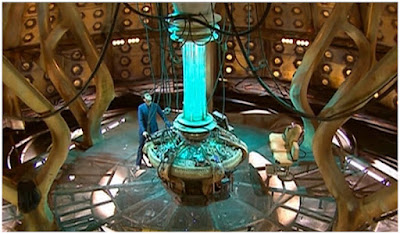
Today, a look at some examples from 2010-era Dr. Who, which we have talked about on this blog before. These guys are near and dear to my heart, because they are unabashedly fearless when it comes to using color to manipulate light—and their viewers. Read more »
Strobist

 
Comments Off on Lighting 103: Learning From Your Couch

Posted in Photography


Full-res image samples from the 16-module Light L16 camera

02 Aug

The Light L16 camera has been in the works for years now. A 16-module camera that looks like a smartphone, it uses up to 10 camera modules at once to capture 52-megapixel (minimum) photographs, and promises to “DSLR quality in the palm of your hand.” Plenty of people are skeptical of that claim, but now that the L16 is finally shipping to pre-order customers, Light has released three high-resolution image samples for you to pour over and critique.

Admittedly, none of the three photographs pits the L16 agains what you might consider a challenging lighting scenario. There’s a portrait, a landscape photo taken at the Grand Canyon’s famous Horseshoe Bend, and a photograph of the iconic shipwreck at Point Reyes.

All three are taken when there was plenty of natural light around, and while the Point Reyes shot does contain some more intense contrast between the highlights and shadows we really wish Light had shared one or two low-light shots. Still, barring that, the photos will give you a good idea of what this diminutive little computational photography camera can do:

$ (document).ready(function() { SampleGalleryV2({“containerId”:”embeddedSampleGallery_3604419316″,”galleryId”:”3604419316″,”isEmbeddedWidget”:true,”standalone”:false,”selectedImageIndex”:0,”startInCommentsView”:false,”isMobile”:false}) });

The smallest of the three photos is 53.3MP, the largest a whopping 81MP, giving you some serious cropping power. Give our gallery a second to deal with the photos, especially if you’re using the 100% zoom feature… these files are nothing to scoff at.

To see more photos taken with the L16, or if you want to download these full-res samples for yourself, head over to the Light.co gallery. And once you do pixel peep these shots your heart’s content, let us know what you think of the L16 in the comments.

Articles: Digital Photography Review (dpreview.com)

 
Comments Off on Full-res image samples from the 16-module Light L16 camera

Posted in Uncategorized


Beautiful images from the Astronomy Photographer of the Year 2017 shortlist

30 Jul

Astronomy Photographer of the Year 2017 shortlist

A Battle We Are Losing © Haitong Yu (China)

The Milky Way rises ominously above a small radio telescope from a large array at Miyun Station, National Astronomical Observatory of China, in the suburbs of Beijing. The image depicts the ever-growing light pollution we now experience, which together with electromagnetic noise has turned many optical and radio observatories near cities both blind and deaf – a battle that inspired the photographer’s title of the shot. The image used a light pollution filter (iOptron L-Pro) and multiple frame stacking to get the most of the Milky Way out of the city light.

The Royal Museums Greenwich has announced the shortlist for its ninth annual Insight Astronomy Photographer of the Year competition. Thousands of entries were received from over 90 countries; winners will be announced on September 14th.

Here are just a handful of the more than 130 images that made the shortlist – head to the Royal Museums Greenwich site to learn more about the competition.

Astronomy Photographer of the Year 2017 shortlist

A Brief Rotation of Mount Olympus © Avani Soares (Brazil)

A series photos of Mars taken between 1 June and 3 July 2016 showing Mount Olympus in three different positions. Mount Olympus also known as Olympus Mons is the tallest volcano in the Solar System. The features on the surface of Mars as seen from Earth change rapidly, as seen in the contrast between the central photo, made during the opposition (when Mars is at its closest to the Earth), and the photo on the left, taken 33 days later.

Astronomy Photographer of the Year 2017 shortlist

An Icy Moonscape © Kris Williams (UK)

A lone stargazer sits atop the peak of Castell-Y-Gwynt (Castle of the Winds) on Glyder Fach Mountain in Snowdonia, North Wales, beneath a starry night sky during freezing temperatures in mid-winter. The lunar-like landscape was formed through a process called freeze-thaw weathering: water seeps into cracks in the rock, freezing and expanding as ice forms, eventually cracking the rock over hundreds and thousands of years.

Despite the full cloud and fog on the night the photographer set up his one-man tent in the snow and began the long wait of 15 hours of darkness in -10°C temperatures but the sky clearing for a mere 20 minutes, was all the time needed to capture this shot.

Astronomy Photographer of the Year 2017 shortlist

Aurora over Svea © Agurtxane Concellon (Spain)

The purples and greens of the Northern Lights radiate over the coal mining city of Svea, in the archipelago of Svalbard. The earthy landscape below the glittering sky is illuminated by the strong lights of industry at the pier of Svea.

Astronomy Photographer of the Year 2017 shortlist

Beautiful Trømso © Derek Burdeny (USA)

The aurora activity forecast was low for this evening, so the photographer remained in Tromsø rather than driving to the fjord. The unwitting photographer captured Nature’s answer to a stunning firework display as the Northern Lights dance above a rainbow cast in the waters of the harbour in Trømso made for a spectacular display, but did not realize what he had shot until six months later when reviewing his images.

Astronomy Photographer of the Year 2017 shortlist

Crescent Moon over the Needles © Ainsley Bennett (UK)

The 7% waxing crescent Moon setting in the evening sky over the Needles Lighthouse at the western tip of the Isle of Wight. Despite the Moon being a thin crescent, the rest of its shape is defined by sunlight reflecting back from the Earth’s surface.

Astronomy Photographer of the Year 2017 shortlist

Eastern Prominence © Paul Andrew (UK)

A large, searing hedgerow prominence extends from the surface of the Sun on 29 August 2016. There are a number of different prominence types that have been observed emanating from the Sun, and the hedgerow prominence is so called due the grouping of small prominences resembling rough and wild shrubbery.

Astronomy Photographer of the Year 2017 shortlist

Fall Milk © Brandon Yoshizawa (USA)

The snow-clad mountain in the Eastern Sierras towers over the rusty aspen grove aligned perfectly in front of it, whilst our galaxy the Milky Way glistens above.

Astronomy Photographer of the Year 2017 shortlist

Ghostly Sun © Michael Wilkinson (UK)

The Sun photographed in Calcium-K light, depicting the star’s inner chromosphere. In the colour-rendering scheme used, the surface is shown as negative, with the sunspots as bright spots, but the area outside the limb is shown with increased contrast, highlighting a surge on the western limb, and several small prominences. Although the Sun is shown entering a quieter phase, a lot of activity is still taking place, illustrating just how dynamic our star is.

Astronomy Photographer of the Year 2017 shortlist

Hustle and Peaceful © Prisca Law (Hong Kong)

Taken from The Peak, the highest mountain on Hong Kong Island, the image shows the hustle and bustle of the city in contrast to the peaceful starry sky. The haze above the beautiful landscape reminds us that light pollution prevents us from enjoying an even more stunning sky view. Along the coastline the sharp, vibrant light signifies the fast-paced life of cities that many of us have become accustomed to.

Astronomy Photographer of the Year 2017 shortlist

Ignite the Lights © Nicolas Alexander Otto (Germany)

After a long hike from his small cabin to Kvalvika, Lofoten Islands in Norway, the photographer arrived at the slopes above the beach around midnight. During the hike the auroral display was relatively weak, but when he made it to the beach the sky ignited in a colourful spectacle of greens and purples framed by the mossy, green landscape. The image is stacked from six different exposures to combat high ISO and thermal noise in the foreground. The sky was added from one of these exposures.

Astronomy Photographer of the Year 2017 shortlist

ISS Daylight Transit © Dani Caxete (Spain)

The International Space Station (ISS) whizzes across the dusky face of the Earth’s natural satellite, the Moon, whilst photographed in broad daylight. Shining with a magnitude of -3.5, the ISS was illuminated by the Sun at a height of 9º on the horizon. Like the Moon, the ISS receives solar rays in a similar way during its 15 orbits of the Earth a day, making it possible to see it when the Sun is still up. This is a real shot, with no composite or clipping in the process.

Astronomy Photographer of the Year 2017 shortlist

Moon Rise Reflections © Joshua Wood (New Zealand)

An unexpected shot of the Moon rising over the glistening ocean off the Wairarapa coast, bearing a remarkable resemblance to the Sun. As the photographer was capturing the sunset over Castlepoint, he looked over his shoulder to see the Moon rising behind, reflecting off the wide expanse of the Pacific Ocean, and it became the new subject of his image.

Astronomy Photographer of the Year 2017 shortlist

Mr Big Dipper © Nicholas Roemmelt (Denmark)

A stargazer observes the constellation of the Big Dipper perfectly aligned with the window of the entrance to a large glacier cave in Engadin, Switzerland. This is a panorama of two pictures, and each is a stack of another two pictures: one for the stars and another one for the foreground, but with no composing or time blending.

Astronomy Photographer of the Year 2017 shortlist

Near Earth Object 164121 (2003 YTI) © Derek Robson (UK)

On 31 October 2016, Near Earth Asteroid 164121 (2003 YT1) made a close encounter with Earth at 3 million miles. This Apollo asteroid with an orbital period of 427 days was discovered by the Catalina Sky Survey on 18 December 2003. The photographer’s first attempt at imaging the asteroid was done with a camera on a fixed tripod, controlled by Astrophotography Tool software.

The asteroid moved so fast I could see it moving on the live screen. The negative image is a stack of 56 cropped images created using PIPP and Deep Sky Stacker software and was processed with IrfanView and Photoshop for scientific content rather than cosmetic appearance.

Astronomy Photographer of the Year 2017 shortlist

NGC 2023 © Warren Keller (USA)

Lying in the constellation of Orion, at a distance of 1467 light years from our planet is the emission and reflection nebula NGC 2023. Most often photographed next to the famous Horsehead Nebula, the photographer has instead given NGC 2023 the spotlight in order to try and bring out all of the wonderful detail seen across its diameter of 4 light years, making it one of the largest reflection nebulae ever discovered. Partner Steve Mazlin is the lead processor on this one for SSRO.

Astronomy Photographer of the Year 2017 shortlist

NGC 7331 – The Deer Lick Group © Bernard Miller (USA)

NGC 7331 is an unbarred spiral galaxy found some 40 million light years away from Earth, in the constellation Pegasus. Of the group of galaxies known as the Deer Lick Group, NGC 7331 is the largest, and can be seen dominating the image whilst the smaller galaxies NGC 7335, NGC 7336, NGC 7337, NGC 7338 and NGC 7340 drift above it.

Astronomy Photographer of the Year 2017 shortlist

Orion’s Gaseous Nebula © Sebastien Grech (UK)

Lying 1,300 light years away from Earth, the Orion Nebula is found in Orion’s Sword in the famous constellation named after the blade’s owner. The Orion Nebula is one of the most photographed and studied objects in the night sky due to the intense activity within the stellar nursery that sees thousands of new stars being created, which also makes it a relatively easy target for beginners. The nebula is thought to measure about 24 light years across and have a mass 2000 times that of our Sun.

Astronomy Photographer of the Year 2017 shortlist

Reflection © Beate Behnke (Germany)

The reflection in the wave ripples of Skagsanden beach mirrors the brilliant green whirls of the Aurora Borealis in the night sky overhead. To obtain the effect of the shiny surface, the photographer had to stand in the wave zone of the incoming flood, and only when the water receded very low did the opportunity to capture the beautiful scene occur.

Astronomy Photographer of the Year 2017 shortlist

Scintillating Sirius © Steve Brown (UK)

The seemingly pop art inspired canvas of the rainbow of colours exhibited by the brightest star in our sky, Sirius. These colours are obvious to the naked eye and more so through the eyepiece of a telescope, but are difficult to capture in an image. To do this the photographer had to somehow ‘freeze’ each colour as it happened by taking a series of videos at different levels of focus and then extracted the frames from each video to make up this composite image.

By capturing the star out of focus, the light from Sirius was spread out over a larger area, which resulted in the colours it displayed being more obvious. The image is made up of 782 different frames at different levels of focus. There is a single frame of a focused Sirius in the centre of the image.

Astronomy Photographer of the Year 2017 shortlist

Sh2-249 Jellyfish Nebula © Chris Heapy (UK)

Lying in the constellation of Gemini, IC443 is a galactic supernova remnant, a star that could have exploded as many as 30,000 years ago. Its globular appearance has earned the celestial structure the moniker of the Jellyfish Nebula. Pictured to the upper left of the Jellyfish Nebula is a much fainter background area of nebulosity, which is actually a large cloud of mostly molecular hydrogen gas and dust.. ‘The Jellyfish’ is a convoluted tangle of gaseous filaments rapidly expanding away from the initial explosion.

Professional observatory data shows that what we are actually seeing are two lobes superimposed on each other, but from this angle one appears as the head of the jellyfish (to the left) and the other lobe (to the right) as the dangling tentacles. It is illuminated by a few young blue embedded stars and criss-crossed by tendrils of dark dust clouds lying between us and the bright nebula.

Astronomy Photographer of the Year 2017 shortlist

Shooting Star and Jupiter © Rob Bowes (UK)

A shooting star flashes across the sky over the craggy landscape of Portland, Dorset, as the planet Jupiter looks on. The image is of two stacked exposures: one for the sky and one for the rocks.

Astronomy Photographer of the Year 2017 shortlist

Solar Trails above the Telescope © Maciej Zapior (Poland)

Taken with a solargraphy pinhole camera, the image charts the movement of the Sun over the Astronomical Institute of the Czech Academy of Sciences, Prague with an exposure of half a year (21 December 2015–21 June 2016). As a photosensitive material, regular black-and-white photographic paper without developing was used, and after exposure the negative was scanned and post-processed using a graphic program (colour and contrast enhancement).

The exposure time was from solstice to solstice, thus recording the solar trails above the telescope dome and the rainbow of colours of the trails are the result of the sensitivity of the paper changing as it is exposed to different temperatures and humidity.

Astronomy Photographer of the Year 2017 shortlist

Star Track in Kawakarpo © Zhong Wu (China)

The stars beam down on to the Meili Snow Mountains, also known as the Prince Snow Mountains – the highest peaks in the Yunnan Province, China. It is world-renowned for its beauty and is one of the most sacred mountains in Tibetan Buddhism. The moonlight striking the top of the mountains appears to give them an ethereal quality.

Astronomy Photographer of the Year 2017 shortlist

Starburst Galaxy M82 © Bernard Miller (USA)

The starburst galaxy M82, also known as the Cigar Galaxy, gleams five times brighter than our galaxy lies some 12 million light years away from Earth in the constellation of Ursa Major. In a show of radiant oranges and reds, the superwind bursts out from the galaxy, believed to be the closest place to our planet in which the conditions are similar to that of the early Universe, where a plethora of stars are forming.

Astronomy Photographer of the Year 2017 shortlist

Super Moon © Giorgia Hofer (Italy)

The magnificent sight of the Super Moon illuminating the night sky as it sets behind the Marmarole, in the heart of the Dolomites in Italy. On the night of 14 November 2016, the Moon was at perigee at 356.511 km away from the centre of Earth, the closest occurrence since 1948. It will not be closer again until 2034. On this night, the Moon was 30% brighter and 14% bigger than other full moons.

Astronomy Photographer of the Year 2017 shortlist

The Blue Hour © Tommy Eliassen (Norway)

The setting crescent Moon and Mars gaze over Saltfjellet, Norway as the Northern Lights appear to emanate from the snowy landsape. The Aurora Borealis were an unexpected guest in the shot as the Sun was only about ten degrees under the horizon meaning the early display came as a surprise.

Astronomy Photographer of the Year 2017 shortlist

The Lost Hour © Andrew Whyte (UK)

The radiant, concentric star trails seemingly spinning over a lone stargazer against the glowing purples and pinks of the night sky during the hour when the clocks ‘spring forward’ to begin British Summer Time. With time so intrinsically linked to celestial activity, a one-hour star trail seemed the perfect metaphor. Through the use of long exposures, the trails depict the rotation of the Earth on its axis centring on the north celestial pole, the sky moving anti-clockwise around this point.

Astronomy Photographer of the Year 2017 shortlist

The Road Back Home © Ruslan Merzlyakov (Latvia)

Noctilucent clouds stretch across the Swedish sky illuminating a motorcyclist’s ride home in this dramatic display. Noctilucent clouds are the highest clouds in the Earth’s atmosphere and form above 200,000 ft. Thought to be formed of ice crystals, the clouds occasionally become visible at twilight when the Sun is below the horizon and illuminates them.

Astronomy Photographer of the Year 2017 shortlist

Winter Ice Giant Uranus © Martin Lewis (UK)

The distant ice giant Uranus, the seventh furthest planet from the Sun, some 2.6 billion kilometres (at its closest) away from our own planet is entered into the competition for the first time. Found in the constellation of Pisces, here it can be seen surrounded by its five brightest moons: Ariel, Miranda, Umbriel, Titania and Oberon.

Taken on an exceptionally still night in late December, an infrared filter was used to further improve the viewing and to bring out the planet’s belt and cloud details. As the planet lies so far away and appears so dim to us on Earth, Uranus seems to be tiny at 3.7-arcseconds across.

Articles: Digital Photography Review (dpreview.com)

 
Comments Off on Beautiful images from the Astronomy Photographer of the Year 2017 shortlist

Posted in Uncategorized