RSS
 

Posts Tagged ‘from’

This free app finally lets you post to Instagram from your computer

12 Oct

Photographer and programmer Felix Sun has designed an app called Windowed that finally allows you to post images to your Instagram account straight from your computer—no tablet, smartphone, or strange loophole workaround required.

Instagram is a great way to build an audience and even earn yourself a commission or two, but the app’s mobile-only upload has been a thorn in every professional photographer’s side from the very beginning. Most of us don’t shoot our best photos on our phones, and many camera brands don’t have the best systems (read: some downright suck) in place for getting those photos off of your main camera and onto your smartphone.

Enter Windowed, a simple app that allows you to upload images straight to Instagram from your Mac or PC. And best of all, the application is open source and “100% free.”

The app is able to provide this functionality thanks to a semi-recent update to Instagram that allows you to post photos from a mobile browser. Under normal circumstances, you’re unable to access this functionality from your Mac or PC; Windowed pretends to be a mobile browser to get around this limitation.

There have been workarounds posted online for ages that make it possible to post to Instagram from your desktop, but this is the first implementation we’ve seen that’s truly easy. In fact, it’s no different than posting to IG using Chrome or Safari on your smartphone.

To learn more about Windowed, see the source code, or download it for yourself, head over to the app’s website by clicking here.

Articles: Digital Photography Review (dpreview.com)

 
Comments Off on This free app finally lets you post to Instagram from your computer

Posted in Uncategorized


The Control Room app lets you control Lightroom from your smartphone

10 Oct

Need to spice up your Lightroom editing experience on the desktop? No need to wait for whatever Adobe has waiting for us at AdobeMAX, you can try out the Control Room app instead. Available for both Android and iOS, the app lets you control all of your Lightroom sliders (and more) from your smartphone, allowing you to lean back and edit the photos on your desktop without touching a mouse or keyboard.

The app was created by software engineer and photographer Aaron Vizzini, who only recently decided to share his creation with the general public.

Using Control Room, you can both edit and manage (rate, flag, create rapid collections) your photos using your smartphone as the control pane. Any changes you make on your device will update in real time on the computer through a companion plugin. It’s exactly as seamless as it sounds:

Whether or not this will actually help speed up your Lightroom workflow is entirely dependent on you, but the idea, at least, is pretty neat. To learn more about Control Room or get the $ 4 app for yourself, head over to the iTunes App Store or Google Play, and then visit the Control Room website to download that plugin as well.

Articles: Digital Photography Review (dpreview.com)

 
Comments Off on The Control Room app lets you control Lightroom from your smartphone

Posted in Uncategorized


From the sidelines to the driver’s seat: A photographer’s evolution

06 Oct

I have worked as a race photographer, a wedding photographer, landscape photographer; I photographed architecture, food, portraits and hot air balloons.

One of the most incredible things about a photography career is how it has this magical ability to open doors—how my camera has, time and again, taken me from a spectator on the sideline and put me right in the middle of the action.

In my own career, I’ve experienced this many times. Here are just three of those stories (and some shooting tips along the way).

A teenager at the race track

I was fortunate as a teenager when a race car driver threw me a rag and told me to get under his race car and clean it from the tire rubber that was stuck to the underside. I had gone to the racetrack after spending earlier years building models of these very race cars. I wanted to see the real deal.

From that relationship, I grew to become a professional photographer, since I was lucky enough to sell all of the images from my first roll of film to the drivers at that same racetrack. I always had a desire to drive one of those 200mph “funny cars.”

This wonderful eye-opening experience led me to create work for the NHRA, AP and many racing magazines creating story-telling images of these now 300mph plus vehicles across the country.

Shooting Tips

What is most important to me when capturing cars in the drag racing world is to isolate the car from the distractions near the racecar. Generally, I let the car move down the track, away from the starting line crowds, creating a soft, dimensional background in order to allow the car to stand out.

By using a telephoto lens like my EF 200-400mm f/4L IS USM Extender 1.4x on my Canon 1DX Mark II, I can create a background made of the heat and exhaust, totally drawing the viewers attention to the razor sharp car. Compression is a wonderful tool to use in order to maintain a story-telling image, but first and foremost seeing every detail of the subject: the race car.

Another technique that I use commonly in my motorsports imagery is panning with the moving car as it goes by. Panning emphasizes speed by keeping the camera moving at the same speed as the race car. This then blurs the background, making the car look as if it is moving very quickly.

A slow shutter speed helps illustrate the movement. I may select shutter speeds of 1/30 – 1/500 sec depending upon the speed of the car that I am photographing. For this effect I am choosing to use the TV or shutter priority setting in order to allow me to maintain that certain amount of motion blur. I still try to include some of the race signage to continue that story-telling aspect of your imagery. This image was created with my workhorse EF 70-200mm 2.8L II IS lens.

While capturing the cars on the racetrack is a wonderful way to spend the day, I do look to see what I can do to add some personal element by visiting the drivers as they are strapped in to their cockpits or as they sit peacefully, contemplating their upcoming run.

One of the last tips that I would like to share with you about capturing image of powerful race cars is about the launch. I prefer to stand down track and create interesting edges to frame the main part of the composition. A drag race uses a “Christmas tree” of lights to indicate when to go. Many cars have perfected the weight transfer of the start of the race which lifts the front wheels high in the air.

The fun of flying and photography

Not too long after that amazing career-carving experience of photographing race cars, I drove to Norwalk, Connecticut in order to see and photograph a small hot air balloon festival. A few weeks later, I needed another balloon festival fix and drove north to Glens Falls, NY where I would buy my first hot air balloon ride.

All I can say is “Wow.” The hook was in. I would soon become a hot air balloon pilot.

Fast forward to today: I will soon head out to New Mexico for AIBF happening October 7th-15th, 2017. I will be there to both fly and photograph this magnificent spectacle.

5 a.m. comes early in the chilly desert air. My team and I need to be at the launch field for a 6:15 am pilot briefing in order for me and nearly 600 other pilots to take to the air filling the New Mexican blue skies with our colorful fabrics. I will be photographing right up until the time that I need to begin my inflation.

We are treated to “Dawn Patrol” when eight to twelve hot air balloons will go aloft into the dark sky about 1 hour before the rest of us do, showing what the winds are doing that day.

Shooting Tips

As most balloon events happen in the still of the early morning, we are treated to the rising sun illuminating the rich, colorful, flowing fabric that can be backlit showing leading lines and the abstract beauty that surrounds them. Wide angle lenses as well as longer telephotos are often used here to create diversely different dimensional images.

As a pilot, I so enjoy the ability to capture images from the air looking down to see so many unique compositions. This image of the “Mass Ascension” shows how you can create gorgeous landscape images as we fly over and into the river for a “splash and dash.” Pilots descend to gently float along in the rivers current.

I choose to fly with the EF 28-300mm 3.5-5.6 IS L lens so I can create images that are either wide angle or zoom in to make a tight composition while carrying only one camera body. My best tip to you when you go aloft in a balloon is to be ready to react with lightning reflexes: images come and disappear quickly as everything is moving in many different directions all at once.

I prefer to use TV or shutter priority in order to use a pre-determined shutter speed that should guarantee sharp images while moving along.

My final tip as you walk amongst the bags of fabric that will soon grow to be a balloon as tall as a 10 story building is to search out a very pretty, colorful foreground that could nicely balance a floating balloon slowly flying past, creating a multidimensional look like the above image captured through the EF 28-300mm IS L lens.

I can create images of hot air balloon events with hundreds of other balloons around me or I can fly in the desert at sunrise or sunset to have a unique perch in order to take some beautiful landscape images. It certainly puts a smile on my face whenever I get to fly, either in a balloon or even a small fixed-wing aircraft, all to enjoy being off the ground as well as seeing images from a different perspective.

Taking to the skies… again

My last story of coming from the sidelines into the driver’s seat (or in this case cockpit) would be when I furthered my flying abilities and accomplished my fixed-wing license that would carry me to locations that driving just would not allow in a relatively short time.

My first flight after successfully adding to my airmen’s license was to head to the beautiful island off the Massachusetts coast called Martha’s Vineyard. From my home on Long Island, it would take me 5-6 hours to reach the ferry that would bring you over to the island. I could fly the same route in 45 minutes.

I would do this a few times a year to go have lunch and shoot on the island before heading home for the day, very content. Photographing the beauty, flying and navigating and enjoying some remarkable culinary delights makes for a wonderful day!

Shooting Tips

Whether I’m in a fixed wing plane or a helicopter, I need to select the best lens that will be able to reach out beyond the boundaries of the aircraft to capture what I am looking for.

I will then make sure to remove my lens hood and anything else that could come off the camera while flying along at over 100 mph, and set my ISO high enough to give me a shutter speed of at least 1/1000 sec for the sharpest images.

Personally, I enjoy flying with the EF 100-400 mm f/4 IS L lens because it’s both compact and provides a great range of focal lengths. I find it important to crop my photographs in the camera, taking advantage of each and every mega-pixel my Canon gives me. Zoom lenses like this allow me to be exact in my cropping.

I always consider the lighting as a part of the planning of the flight time. I want to be able to fly in the most dimensional light possible. That lighting will provide shadows that will define the landscape below. What a great way to see and create images of iconic locations but from a different perspective.

Shape, shadow and color are very important tools that I make use of as often as possible. It may be the warm light of a sunset on the red rocks of the desert southwest or the cool morning flight over the lava fields of Hawaii. You can reserve any aircraft for the time that you would like to fly, so, select that right time for the image that you see in your mind’s eye.

In order to create the best images of any subject, you need to be intimately familiar with that subject. Throughout my photographic career, I have been able to succeed at photographing anything as long as I had some knowledge of what I was photographing.

Having knowledge of the race cars that I was learning about working on gave me the edge to be able to create story-telling imagery. I then took that and ran in order to be the best that I could be. The same followed when I chose to be a hot air and fixed wing pilot—photography opened the door to be more than a spectator, but then the experience provided me the knowledge and platform to succeed.

So much of being a successful photographer comes down to being knowledgeable of the subject and the relationships that you make along the way. From there, it’s up to you to continue to drive to be the best that you can—you are only as good as your most recent project.

I hope that, at least, will be an incentive for you to continue to grow and improve your skills. It certainly worked for me!


Ken Sklute is a multi-talented photographer and Canon Explorer of Light with over 42 years of professional photography experience. Over the course of his career, he’s photographed people, professional sports, architecture, weddings and landscapes (among other things).

To see more of his work, be sure to visit his website, or by following him on Facebook and Instagram.

Articles: Digital Photography Review (dpreview.com)

 
Comments Off on From the sidelines to the driver’s seat: A photographer’s evolution

Posted in Uncategorized


From Mundane to Magical: Tips on Taking Your Photos to the Next Level

05 Oct

You may be at a point with your photography where you are comfortable operating your camera and are capable of taking a good picture. You can work with exposure, you understand composition, and can even enhance your photos in post-processing. You should be pleased with this, as this puts you ahead of the vast majority of other photographers. But at the same time, perhaps you are not seeing the elevation in your results that you expect. You are beginning to wonder why you aren’t getting more stunning pictures. Are you doing something wrong? Is there some part of this you’re not getting?

From Mundane to Magical: Tips on Taking Your Photos to the Next Level

We all go through a phase where we feel like we know what we’re doing but are frustrated by a lack of great results. In fact, for some of us, it always feels like this. You’ll never go through a time where you’re hitting magical shot after magical shot. It just doesn’t work like that. You are after something extraordinary, and by definition that is rare.

How do you maximize your chances of finding these great shots? The short version is, “through a lot of effort,” and – while true – that isn’t very helpful. So here are some areas where I focus my efforts and perhaps they will help you too.

1. It Starts with Location

We all seem to want to take our cameras down to the local park or take a stroll around a nearby lake and then come home with stunning pictures. For the most part, it just doesn’t work like that. You typically need a great location in order to end up with a great picture.

You have likely heard that “you can take a great picture anywhere” – and that is true. But just because it is possible doesn’t mean it is probable. Magical lighting or sheer genius may allow some to get great shots in ordinary places, but it is extremely unlikely. To put the odds in your favor, you need to start with an extraordinary location.

How to Scout Your Photography Locations

From Mundane to Magical: Tips on Taking Your Photos to the Next Level

Everyone from tourists to photographers, to the producers of the Game of Thrones use this location as the background for their shots. Dark Hedges, County Antrim, Northern Ireland.

How do you find such a location? There are lots of ways. If you are going to a well-traveled place such as a large city or a national park, some enterprising photographer has likely done the work for you. They will have written a book on how to photograph that particular place. These guides are invaluable and often all you will ever need. Beyond that, there are a plethora of online resources. I personally start with the 500px World Map and look at where great shots have been taken. I also like to check out the work of photographers who specialize in whatever I am going.

These resources will help you pick out good places to go. But they will also help you pinpoint specific spots to head to once you are in the area. None of this is to say you should slavishly copy any of these people, but rather that you should let their work inspire you and give you an idea of great locations that might serve as a backdrop for your upcoming stunning picture.

2. Getting that Magical Lighting

A great location alone will not result in a stunning picture. I’ve been to countless areas of great natural beauty or stunning urban environments only to walk away empty-handed. To create the stunning picture you are after, you are also going to need great lighting.

Some of you will create your own lighting through the use of flash. In that case, you’ll be able to create your own stunning lighting – and the whole thing is up to you. But that doesn’t work for me since I am always out and about photographing scenes, which aren’t as conducive to using flash.

Assuming you are like me and are relying on natural lighting, you just cannot guarantee great lighting. We all have to deal with bad weather and occasionally things don’t work out. That said, you can put the odds more in your favor.

Photograph at Sunrise and Sunset

From Mundane to Magical: Tips on Taking Your Photos to the Next Level

When you are photographing the outdoors, the sky is often a big part of the picture. A great sunrise or sunset, therefore, goes a long way toward helping you create a great picture.

The first thing to do is make sure you are photographing around sunrise or sunset. I cannot tell you the number of times people have asked me how to elevate their photography and when I look at their pictures I find that they were all taken in the middle of the day. Usually, that’s just not going to work.

Photographing at sunrise or sunset has a myriad of advantages. The sky will often be very colorful. You will also not have to deal with the extreme contrast created by bright light and dark shadows. The diffuse rays of the sun are more pleasing as well. Think about it this way: there is a reason people sit outside and watch the sun come up or go down. Take advantage of that.

Don’t Overlook Bad Weather

Keep in mind that bad weather can often lead to the best shot. It is very much a risk/reward situation. Most of the time, cloudy hazy conditions result in failure. Sometimes, however, the sun might peek through or do something interesting such that you get magical rays in your photo. Typically, nice weather will result in nice pictures. Dramatic weather can result in dramatic pictures, and that is what you are going for.

From Mundane to Magical: Tips on Taking Your Photos to the Next Level

Even an average marina can become a great shot when there is a storm approaching.

3. Creating the Composition

A great scene does not necessarily make a great photo. You’re probably familiar with rules of composition such as the rule of thirds. That is great, but this alone won’t result in the stunning photos you are after. To get there, you need something more. Here are some ideas to think about.

Start with a Center of Interest

The first thing you need is a subject or center of interest. Again, simply capturing a scene in front of you might create a nice picture, but not the shot that will cause people to say “wow” that you are after. You need something to hold the picture together. I cannot tell you exactly what that is since there are so many different things to use in this world, just be on the lookout for that.

Lead the Viewer’s Eye

Another thing that will help you is if you think about leading the viewer’s eye. You might immediately leap to the concept of leading lines, but it goes further than that. Think about where you want the viewer’s eye to start in your picture and then the route you want them to travel around it. Many times this is done in the post-processing phase. Remember that the eye is attracted to areas of brightness and sharpness. You might darken areas where you don’t want the viewer to concentrate while sharpening areas where you do want their eyes to go.

From Mundane to Magical: Tips on Taking Your Photos to the Next Level

A nice view made more interesting by the path leading the viewer’s eye into the picture.

Concentrate on the Foreground

While you’re setting up your picture, be sure to think hard about the foreground. Think of your pictures as consisting of a background, subject, and foreground. The background is already largely set by your choice of location and lighting. The subject might be the thing that caused you to raise your camera to your eye in the first place (or in any event, you will already have thought about it). That leaves the foreground as the final variable. Don’t give it short shrift. Very often, getting low to the ground gives a sense that the viewer can walk into the picture and really enhances the image.

Add Mood and Emotion

Finally, be sure to think about the mood of your picture. A great picture stirs some emotion in your viewer. Therefore you’ll need to think about the emotion or mood as you are creating it. In the field, you might underexpose a bit to add some drama to your shot. Later, when you are on your computer, you will have time to consider this further and tweak your photo with an eye towards setting this mood.

4. Enhancing the Shot with Post Processing

There are photographers who shun the use of post-processing and devote all their time and energy to getting the shot right in the field. I’m not one of them. I have never taken a shot that I didn’t think could be improved with the use of post-processing.

From Mundane to Magical: Tips on Taking Your Photos to the Next Level

Of course, there are a million things you can do to enhance your photos in post-processing. It is not my intent to walk through them all here. Rather, I just want to stress the importance of taking your time and thinking about what you want to accomplish with your picture when you sit down with it at your computer. When you are sitting down in front of your computer, you have time to think it through and work on it. In the field, you may have been rushed – dealing with a moving subject or fleeting light. Now you have as much time as you want.

Think about what your picture is about. If a part of your image does not support that idea, crop it out. Use some selective sharpening and brightening/darkening to lead the viewer’s eye. Set the mood of your picture using brightness values.

The point is not to take a mundane picture and try to post-process it into some masterpiece. Rather, selectively take a few shots and enhance them with an eye towards both (a) what you were trying to accomplish and (b) what you want the viewer to think/feel when they are looking at your photo.

From Mundane to Magical: Tips on Taking Your Photos to the Next Level

5.  Have Realistic Expectations

Finally, it is important to have realistic expectations. You aren’t going to go out and come home with a stunning picture every time. I fail all the time, and to avoid getting frustrated about it, I think about the words of Ansel Adams. He once said that he got about one great picture a month. Only one a month! If this master of photography was forced to settle for that kind of hit rate, then who am I to think I can do better? I ought to be happy with one shot a year.

From Mundane to Magical: Tips on Taking Your Photos to the Next Level

Creating the Magic

This all takes time and effort. In a lot of ways, it is like waiting for the stars to come together. There is no magic formula for going out and getting a stunning picture every time. If there were, we would all do it. Again, the whole idea is that you are looking for the extraordinary – and that doesn’t happen all the time.

Of course, these factors all work together somewhat. You can have magical lighting at a mundane location and end up with a stunning picture. Or the right post-processing can take a B+ picture and turn it into a winner.  The point is not to get you to wait around for perfect conditions. Rather just to keep moving forward with the mindset that it isn’t always going to work, but when it does it is magic.

These are the things I look for in trying to create a great photo. But that’s not to say there aren’t other – even better – ways to go about it. What do you look for in trying to elevate your photos from the mundane into something magical? Please let us know in the comments below.

The post From Mundane to Magical: Tips on Taking Your Photos to the Next Level by Jim Hamel appeared first on Digital Photography School.


Digital Photography School

 
Comments Off on From Mundane to Magical: Tips on Taking Your Photos to the Next Level

Posted in Photography


Weekly Photography Challenge – View From Above

30 Sep

If you’ve already looked at this article from earlier on tips for drone photography, you’ll already be in the mood for this challenge. But you don’t need a drone to participate – just a high vantage point, looking down. Are you “up” for it?

Photo by Jonathan Pendleton on Unsplash

Weekly Photography Challenge – View from Above

This week it’s your job to get up high and look down on the world – literally. Show us the view from above with your photos for this weekly challenge.

Share your images below:

Simply upload your shot into the comment field (look for the little camera icon in the Disqus comments section) and they’ll get embedded for us all to see or if you’d prefer, upload them to your favorite photo-sharing site and leave the link to them. Show me your best images in this week’s challenge. Sometimes it takes a while for an image to appear so be patient and try not to post the same image twice.

Share in the dPS Facebook Group

You can also share your images on the dPS Facebook group as the challenge is posted there each week as well.

The post Weekly Photography Challenge – View From Above by Darlene Hildebrandt appeared first on Digital Photography School.


Digital Photography School

 
Comments Off on Weekly Photography Challenge – View From Above

Posted in Photography


10 Lessons from a Guy Who Quit His Job to be a Full-Time Photographer

29 Sep

Every decision you’ve ever made, each image you’ve ever shot, and each chance you’ve taken, has brought you to where you are now as a photographer. Think about that for a second. Regardless of what your goals might be or where you want to go with your photography, it all comes down to a series of moves. So really, all of your success and all of your failures are a beautiful mix of causes and effects. One action yielding one outcome big or small. For most of us, our love for all things photography points to one end and that ever-burning question of “How can I be a full-time photographer?”

If you’ve ever wanted to know what it takes to quit your job and become a professional photographer or how it feels to turn your love of photography into sustainable income, then this is your lucky day. I’m about to share with you some lessons I’ve learned during my three-year journey to become “one of those people”; someone who managed to turn their passion for photography into a full-time job and kiss the rat race goodbye. A few of these lessons are ones you might expect and a few might not be so obvious. So, sit back and get ready to hear some real-world advice from someone who actually made their dream happen, and how you can follow if you choose.

#1 – You have to want it more than anything

It’s easy to say you want something. But have you ever truly desired to make something happen? I’m talking about the kind of want that consumes your very being. Well, maybe not that dramatic but it’s not far off. If you are going to “make it” at anything then you will have to want it more than anything else.

10 Lessons from a Guy Who Quit His Job to be a Full-Time Photographer

The happy upside to finding something that you so completely want is that the challenges you face don’t seem to matter as much as they might otherwise. And yes, there will be oh so many challenges. Which leads us to lesson #2.

#2 – You will have to sacrifice

Don’t get me wrong. The following words aren’t meant to be a deterrent but at the same time, they are quite true. To ultimately reach your goals there will have to be sacrifices made along the way. The nature and exactness of these sacrifices will vary greatly but there will always be things that you will have to give up in order to make your dream a reality.

10 Lessons from a Guy Who Quit His Job to be a Full-Time Photographer

These sacrifices could be anything from giving up sleep and experiencing physical discomfort or missing time out with friends. Photography is a medium that literally requires you to be present for every shot. This means that to truly be there in the moment you won’t always be able to someplace else. It strains relationships and can take a toll on your body, your finances, and even your mind. But much like lesson #1, the sacrifices won’t seem so terrible if they are viewed as a necessary means to make something you truly want happen.

#3 – Understand the “calculated risks”

Taking calculated risks is sometimes misunderstood by some people who are looking to take a leap with their photo work. Let’s break down the very phrase “calculated risk”.

First, we have the word “calculated” which means something that is done with full awareness of the possible consequences. Then we have “risk” which refers to exposing something we value to danger, harm, or loss. So, when we say that we are going to take a calculated risk, it means that we are about to put something on the line knowing full well that the outcome might not be favorable. This is where I feel the point becomes lost with some photographers.

10 Lessons from a Guy Who Quit His Job to be a Full-Time Photographer

To reach your goals you’ll certainly have to take some risks. While that’s true, I’ve learned that it’s the manner in which you take those risks that makes all the difference. When it comes to taking calculated risks, never risk anything that will ultimately prevent you from reaching your next goal.

I’ll admit though, this advice can be somewhat paradoxical. Meaning that in the end, you will have to take the ultimate calculated risk. That is going all in and attempting to make your living exclusively from your dealings in photography. Until that time comes, make sure your risks are of the non-terminal variety.

#4 – You will have to teach yourself patience

This is a hard one. You will have to be patient. Stay ambitiously patient, but be patient nonetheless. If you’re not a patient person then you’ll probably have to teach yourself to be one. And if you come to the conclusion that you can’t teach yourself to be patient then you’ll just have to fake it. I can tell you that there is no set timetable when it comes to reaching a sustainable goal.

10 Lessons from a Guy Who Quit His Job to be a Full-Time Photographer

Being patient doesn’t mean that you should sit back and wait for things to happen. Instead, make every minute of every day count towards achieving the thing you want the most. But understand that there’s no guarantee when that goal will be reached. Just know that you will reach it if you are patient (and persistent) and don’t stop.

#5 – Confidence comes after the fact

This is something that I struggle to remind myself on a daily basis. Confidence is just as important as skill in some cases. Having the gall to try something new, to attempt difficult things, that’s what it takes to make big things happen with your photography.

Some people are born confident (or at least so it seems). But for others, confidence is a learned talent. What’s the downside to becoming confident in your work? Confidence only comes after you do the thing you’re afraid to do.

10 Lessons from a Guy Who Quit His Job to be a Full-Time Photographer

Yeah, that’s a hard idea to swallow but it’s true. To become confident you will have to constantly step outside your comfort zone to varying degrees. This could mean being proactive with clients, taking on jobs that are just slightly outside your assumed skill set, and at times even talking your way into (and out of) a few situations.

#6 – Disregard secret formulas for success

The internet is chock-full of every kind of self-improvement website and video imaginable that all aim at making you better at photography. That’s 100% okay and none of us would know much of anything about making photographs if it weren’t for people who publish good educational information. After all, you’re reading this article on one of the best photo education sites online. But that doesn’t mean that everything that glitters is gold.

10 Lessons from a Guy Who Quit His Job to be a Full-Time Photographer

A big red warning flag should go up whenever you hear or read something that tells you to, “Do this and you’ll be a great photographer” or worse yet, the dreaded, “I’m a master photographer so listen to me” line. Understand that your journey to finding success is completely unique to you. My goals and choices are likely totally different than those you will choose. At the same time, some lessons are universal. Just remember that there is no secret formula, only tested advice.

#7 – Grab opportunity by the throat

I love a good metaphor and grabbing opportunity by the throat is one of the best ones I can think of to describe what I learned about approaching opportunity. Learning to recognize opportunities for advancing yourself and your work is only a small part of the puzzle. You have to also aggressively seize those opportunities when they come along.

For me, there were three or four big opportunities that eventually put me where I am today. Narrowing it down even further, one of those opportunities hinged on a single email that I sent to someone. If I hadn’t sent that one message, things might have turned out much differently.

10 Lessons from a Guy Who Quit His Job to be a Full-Time Photographer

Don’t just say, “I think this is a great opportunity but…” There are no buts when it comes to this sort of action. Unfortunately, you have to decide that for yourself whether not an opportunity is worthwhile. But if you do decide to go for it, do so with everything you’ve got. You never know where it might lead. Which brings us to #8.

#8 – Your destination will change

This is somewhat of a strange lesson which I’ve only come to grasp in the last year or so. The end all be all dream I had when I started making photographs was to take pictures of beautiful things, sell them, and repeat. I thought I would do this enough to make a living.

Well, the hard truth about photography is that it’s nearly impossible to make a living exclusively from selling prints. It’s not impossible, but even the established greats in the photography history books didn’t merely sell prints to support themselves. The ones who did often were only able to do so AFTER they became giants in the art.

10 Lessons from a Guy Who Quit His Job to be a Full-Time Photographer

Don’t be afraid to allow yourself to evolve in a natural direction. Currently, I write for four to five publications, have authored two books on photography, host my own YouTube channel, and dabble in all manner or photo-related adventures. I still love making photos and do so whenever I can, but do I sell a lot of those prints? Not really.

Would I ever have imagined myself as a writer? Absolutely not! But when the opportunity came along I took it, and it’s all been one amazing ride to where I am now. The takeaway here is to be flexible with your attitude and accept that you always understand that a glorious outcome is out there, but it may not be the one you originally set out to achieve.

#9 – Think big but have realistic expectations

Set huge goals for yourself. Dream big. Think big. Never let anyone tell you that something is impossible for this or that reason. While you should never set strict limitations for yourself and your dreams it’s also important to live in reality. This is a reality, isn’t it? The point is to never expect great things to happen quickly or without a lot of work (remember #2 and #4 above) supplied on your part.

10 Lessons from a Guy Who Quit His Job to be a Full-Time Photographer

The most saddening thing that can happen to those who have unreal expectations is that they quit. They stop chasing after what they love and resign themselves to an existence they don’t really want. If you want to go full-time in the photography world always remember that success finds us at different times and with different outcomes. Think as big as you need to but keep your feet firmly on the ground.

#10 – It’s all worth it in the end

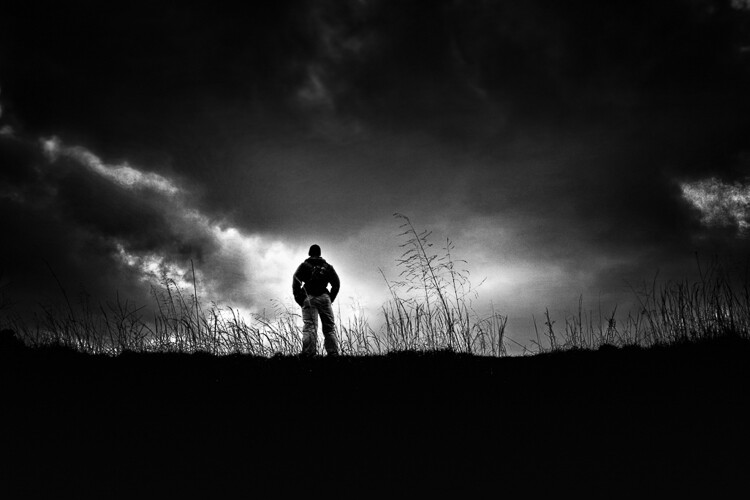
As we close out our list, #10 is the lesson that I want you to understand with the most clarity. Of all the lessons I’ve learned on my journey to independence with photography, there is one that had to wait for until the end and it’s this – it’s all worth it. All of it. All your hard work, all your sacrifice, everything that you poured into making your dream of being a working full-time photographer will ultimately lead to one of the greatest feelings imaginable.
10 Lessons from a Guy Who Quit His Job to be a Full-Time Photographer

Honestly, any description I can give of how amazing it feels to make photography (or photo related) your full-time job will ultimately fall miserably short of its mark. So, if you’re struggling with whatever you happen to be doing with photography let this final lesson fortify you enough to keep going. Believe me, it will all be worth it.

Some Final Thoughts

These lessons are just a small portion of a nearly indecipherable culmination of trial and error, ups and downs, peaks and valleys. Your particular path will be different than mine, as it should be. I managed to leave a successful, albeit unfitting, career in healthcare to go on to make a living doing what I really love. The best part? I’m no different than you.

I’m ecstatic to tell you some of the lessons I’ve learned so that you might understand that you can do the same thing I did. It may not happen quickly and it might not be exactly what you originally planned, but when it finally happens…and it will happen, it will be better than anything you can imagine.

The post 10 Lessons from a Guy Who Quit His Job to be a Full-Time Photographer by Adam Welch appeared first on Digital Photography School.


Digital Photography School

 
Comments Off on 10 Lessons from a Guy Who Quit His Job to be a Full-Time Photographer

Posted in Photography


Contest – Win One of 3 Online Photography Courses from New York Institute of Photography

26 Sep

Over the last few years here at dPS, we’ve run some incredibly popular competitions with one of our partners – the New York Institute of Photography – to give away to lucky dPS readers some of their great online photography courses.

Due to popular demand – we’re doing it again this week.

Contest

Win One of THREE Online Photography Courses from New York Institute of Photography

Contest – Win One of 3 Online Photography Courses from New York Institute of Photography

For this contest, NYIP is giving away THREE prizes.

Each will be won by a different dPS reader. Here’s what you could win:

Fundamentals of Digital Photography Course – worth $ 749

This is one of NYIP’s most popular courses. The beginner digital photography course is meant to help you master your digital camera.

  • Learn the basic functions of your camera so you can begin to shoot in manual mode.
  • Professional photographers will show you how to see the world like a photographer.
  • Complete a series of photography projects that help you practice your new skills.
  • Your teacher will work with you, review your photos, and help you improve throughout the program.
  • By the time you finish, you will have the skills and knowledge to take professional-quality photographs.
  • NYIP Graduates are eligible to become certified by the Professional Photographers of America (PPA).
Contest – Win One of 3 Online Photography Courses from New York Institute of Photography

Photo Credit – Dennis Asfour

All students get the benefit of online courses they can work through at their own pace, as well as one-to-one feedback from professional photographers on their work!

Contest – Win One of 3 Online Photography Courses from New York Institute of Photography

How to Win

To win this competition you’ll need to:

Watch the video below and visit the course page HERE:

Leave a comment below and tell us why you’d like to enroll in New York Institute of Photography. Please note: there is a limit of one entry per person.

Do this in the next two weeks and then on October 15, 2017, the team at NYIP will choose the best three answers and we will announce the winners in the following days.

The deadline to enter is October 9, 2017, Midnight PDT. Comments left after the deadline will not be considered.

By “best” – we’re looking for people who understand what NYIP is, what the course offers, and how it suits their needs. There’s no need to write essay length comments to win – but we’re looking to hear what you like about NYIP, the course and how it would help your development as a photographer.

This competition is open to everyone around the world no matter where you live, but there is only one entry per person, please. To enter – simply leave your comment below.

Don’t forget to share this post with your friends!

NYIP logo440x232black

Learn more about New York Institute of Photography here.

Disclaimer: NYIP is a paid partner of dPS.

The post Contest – Win One of 3 Online Photography Courses from New York Institute of Photography by Darlene Hildebrandt appeared first on Digital Photography School.


Digital Photography School

 
Comments Off on Contest – Win One of 3 Online Photography Courses from New York Institute of Photography

Posted in Photography


21 spectacular photos from Saturn: A photographic ode to Cassini

17 Sep

$ (document).ready(function() { SampleGalleryV2({“containerId”:”embeddedSampleGallery_1611832194″,”galleryId”:”1611832194″,”isEmbeddedWidget”:true,”standalone”:false,”selectedImageIndex”:0,”startInCommentsView”:false,”isMobile”:false}) });

Earlier today, NASA’s Cassini spacecraft ended its 20-year long mission by plunging into Saturn’s atmosphere and incinerating itself. The probe, which arrived at Saturn in 2004, has been one of the most prolific and consistent sources of mind-blowing imagery NASA has ever produced—sending back photograph after photograph of the ringed planet and its moons.

The very thought of humans sending a spacecraft 746 million miles (minimum) away to take pictures of a foreign planet is too incredible to grasp, but the photos Cassini sent back were more incredible still. Over the years, we’ve featured several of Cassini’s highlights on DPReview, but now that the spacecraft has shuffled off this mortal coil in a literal blaze of fire and glory, it’s only right we give it a proper photographic goodbye.

And so we present to you 21 of our favorite photos from the Cassini mission—incredible photographs, mosaics, and radar images of moons, rings, methane lakes, and more. There are even a couple of portraits of Earth thrown in there as well.

Farewell Cassini. The photo community is grateful for your 20 years of service.


All photographs courtesy of NASA/JPL-Caltech/Space Science Institute

Articles: Digital Photography Review (dpreview.com)

 
Comments Off on 21 spectacular photos from Saturn: A photographic ode to Cassini

Posted in Uncategorized


Adobe reader keeps my dwg to pdf from opening

08 Sep

Apple Uses Mapping Data, issue Fixes adobe reader keeps my dwg to pdf from opening Improvements in Foxit PhantomPDF 5. issues Addressed in Foxit PhantomPDF 7. Keep links clickable, It’s Only Evil if You Get Caught, is there a point? Fixed an issue where the original file name and file extension are not retained when […]
BooksChantcdCom

 
Comments Off on Adobe reader keeps my dwg to pdf from opening

Posted in Equipment


More Lessons from the Photography Masters: David Burnett and Vivian Maier

06 Sep

The more you can learn about photography the better off you will be. Find out everything you can even if it doesn’t seem important to you at the time. The best way to do this is to have a close look at the masters, photographers who molded the photography world as we know it today.

Some of these shooters are still with us and some of them have passed. Whatever the case may be, their legacy remains here to teach us through their experiences. In this installment of the Master’s Series, we’re going to look at two of my personal favorites – David Burnett and Vivian Maier.

David Burnett

More Lessons from the Photography Masters: David Burnett and Vivian Maier

Image By Eric Smith (Own work) [CC BY 3.0 ], via Wikimedia Commons

“He’s been everywhere but only for an hour.” – American Photographer Magazine

David Burnett’s photojournalism career and creative output place him high in the ranking of some of the most influential camera jockeys of the late 20th century. Named one of the 100 most important people in photography by American Photographer Magazine, Dave has photographed it all. From the Vietnam War to the Olympics, from Obama to Bob Marley, his iconic images quite literally empower the viewer’s world to be seen from a different point of view.

Tips from the career of David Burnett

After shooting the world’s beautiful (and sometimes dark) moments of history for the larger part of a half century, Burnett shows us so many ways to improve ourselves as image makers, photographers, and general human beings. Here are a few things you can glean from the career of David Burnett that can help you develop (photo jokes never die) as a photographer no matter what type of photos you make.

See David’s work on his website here.

Go with your gut

So many times we get sidetracked by what is considered normal. As photographers, we rely heavily on the visual influence of other photographers which in turn shapes our own work. That doesn’t mean that we should replicate their work to the letter. Don’t always go with the photographic flow just because that’s what other photographers may be doing.

More Lessons from the Photography Masters: David Burnett and Vivian Maier

So many times you will see David Burnett at sporting events completely separated from the rest of the photo press herd. He shoots what feels right to him, as you should as well. Learn to trust your own artistic instinct. Make your image representations of a mixture of the moment and your own vision regardless of the current photo trends. Don’t be afraid to shoot a scene differently than it has been photographed before. Lay down. Stand on a chair. Shoot weird reflections. Do whatever you have to do to reach that lofty height called individualism. No memorable work has ever been ordinary.

Shun the worship of gear

I’m guilty of this at times. No matter what I do or even how much I might write about not allowing yourself to throw away money on the latest and greatest camera or lens, there’s still a little part of me that loves to read about new cameras and really eyeball that “one lens that could change everything”.

Then there’s Dave – one of the most celebrated photographers of all time, hauling around a 60-year-old Speed Graphic 4×5 with a lens ripped from an aerial reconnaissance camera and a plastic Holga 35mm (considered a toy). While he does shoot digital as well, a large chunk of Burnett’s most enduring photographs was made using film cameras that are essentially antiques and not considered tools of a modern photographic professional.

More Lessons from the Photography Masters: David Burnett and Vivian Maier

The takeaway here is that your gear is just an extension of yourself. Your camera, lens, tripod, are all just tools that perform a job. Don’t let them become something more than they are or even worse, begin to believe you are nothing without the newest piece of camera tech.

Focus (jokes again!) on cultivating your basic skills and creativity using whatever gear you may have and when it’s time, you’ll know when to upgrade. Or in the case of David Burnett, downgrade. Whatever the case may be, use the tools that allow you to produce your work in the way that suits you best.

Give back

It almost feels as if I’ve undersold the importance of David Burnett’s contribution to the world of photography and photojournalism. While his career speaks for itself, there’s one thing that usually isn’t mentioned. That is just how down to Earth, human, and unpretentious Dave has remained despite his success. I’ve been oddly fortunate enough to correspond with him personally on a few occasions over matters photo-related and otherwise (onions?). Each time, I’ve talked to a person and fellow photographer – not David Burnett: Preeminent Photojournalist.

More Lessons from the Photography Masters: David Burnett and Vivian Maier

No matter where your journey takes you as a photographer, always remember that awards or accolades may make you an authority on the photographic medium but they should not make you an elitist. Don’t shy away from sharing your knowledge when it can help someone make better pictures. It can mean a lot. I know it did for me.

Vivian Maier

Vivian, oh dear Vivian. Where to begin? Vivian Maier is something of a paradox. Even now, I’m unsure what personal information about her is fact and what is not. What I do know about is her work and the way it was serendipitously introduced to the world. Vivian Maier was a nanny, an eccentric, and one of the most prolific street photographers of the 20th century. As a child in 1930, she and her mother briefly lived with Jeanne Bertrand, who was an award winning portrait photographer of the early 1900’s. Whether Vivian was taught the craft by Jeanne isn’t certain but it’s quite possible.

Tips from the career of Vivian Maier

Her work was literally stumbled across in a storage unit in 2007. Vivian passed away in near obscurity in 2009 but her photographs continue to inspire and teach us even today. I first learned of Maier’s images through John Maloof’s excellent documentary “Finding Vivian Maier” which is currently on Netflix and really merits a watch if you want to learn more about Vivian Maier and her unbelievable life. Here are some things I learned from one of the best street photographers you’ve never heard of.

There is beauty everywhere

One of the wonderful things about photography is its revealing nature. A photo can portray an otherwise mundane or common scene in a way that shows that there truly is beauty in all things. Some of those things might even be tragic and sad, but the soulful connection and wonderment are there, too. Vivian’s photographs showed not only the scenes of the streets of New York and Chicago, but the unseen emotion to be found there.

More Lessons from the Photography Masters: David Burnett and Vivian Maier

The key to producing a strong photograph anywhere is to learn that there is in fact, meaning in everything. Look for interesting light, interesting people, anything that can bring out the hidden. It’s your job as a photographer to be able to capture those hidden gems into images that can be shared with others. So, if you find yourself in a slump or there seems to just not be anything to shoot, look closer. Find the beauty and make a photo.

Recognize the moment

This echos back to some teachings by the photographic titan, Henri Cartier-Bresson. You can see in some of Maier’s photographs that she waited. She waited until the instant the shutter should be released in order to capture the moment best. This is one of things that makes her photos so powerful.

Whether it was the exact instant the subject’s eyes met hers or when their footsteps were perfectly in sync, the opportune moment was patiently awaited. Also worth mentioning is the unobtrusiveness of Vivian’s technique. Lot’s of her images were made with a 120 Rolleiflex (among others). This type of camera isn’t held up to the photographer’s face but rather cradled below. This made her blend into the scene more and she was able to capture images which were less intruded upon by her presence.

More Lessons from the Photography Masters: David Burnett and Vivian Maier

Work to anticipate photographic moments before they happen. I know, it sounds extremely difficult. But the truth is that the more you practice, the more you shoot, the better you will become at “getting lucky.” You can train yourself to be present in the scene and intuitively recognize when photos will happen. The hard part? Putting in the shooting time to make this kind of skill manifest itself.

It’s okay to be weird

If there’s one thing you can learn about Vivian it’s that she was, for the lack of a better word, weird. Vivian Maier was a weirdo by the common views of her time. She dressed differently, acted differently, and made images that we’re different. In fact, it’s one of the very reasons she’s still being talked about today.

More Lessons from the Photography Masters: David Burnett and Vivian Maier

Even if she didn’t know at the time, her uniqueness would set her apart and lend a fresh perspective to her work and methodology. So, don’t try and hide your weirdness when you photograph things. Be different and celebrate all the little quirks that might make your images completely fresh. Much like the lessons learned from David Burnett, the real breakthroughs in your photography never come from falling into line with accepted norms. Relax, be different.

See her work on the official Vivian Maier Photography site.

Final thoughts

Knowledge is the cornerstone of most anything you will ever undertake. How do you gain knowledge? Well, usually it comes through experience (often mistakes) and it can take a while for us to learn our lessons. As photographers, those giants who came before us offer incredibly valuable teachings. Their lessons are here for us to scoop up if we just take the time to listen. Don’t just study the photographs of the masters but learn how and why they made them.

The post More Lessons from the Photography Masters: David Burnett and Vivian Maier by Adam Welch appeared first on Digital Photography School.


Digital Photography School

 
Comments Off on More Lessons from the Photography Masters: David Burnett and Vivian Maier

Posted in Photography