RSS
 

Posts Tagged ‘first’

Rebels with a cause: Canon EOS Rebel T6s / T6i First Impressions Review

06 Feb

Canon has just refreshed the top part of its entry-level Rebel series and it’s looking more serious than ever before. The Canon EOS Rebel T6s and its Rebel T6i sibling use the same 24.2MP APS-C sensor and offer a new Hybrid CMOS AF III system with sensor-based phase detection for improved live view focusing. We’ve spent some time with both models – take a look at a comparison between the models and our impressions on handling them. Read more

Articles: Digital Photography Review (dpreview.com)

 
Comments Off on Rebels with a cause: Canon EOS Rebel T6s / T6i First Impressions Review

Posted in Uncategorized


Nifty Fifty: Canon EOS 5DS / 5DS R First Impressions Review

06 Feb

Canon’s two newest professional DSLRs, the 50 megapixel EOS 5DS and 5DS R, share the distinction of offering the highest resolution available in the full-frame class. We’ve had our hands on the new cameras – take a look at what’s new and find out our initial impressions. Read more

Articles: Digital Photography Review (dpreview.com)

 
Comments Off on Nifty Fifty: Canon EOS 5DS / 5DS R First Impressions Review

Posted in Uncategorized


World’s First Public Streetlight Network Powered by Sun & Wind

06 Feb

[ By WebUrbanist in Conceptual & Futuristic & Technology. ]

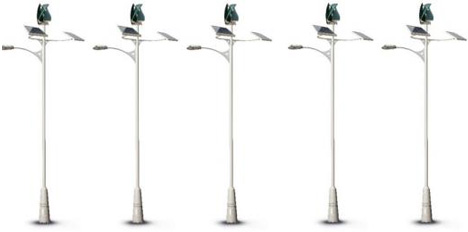
solar wind light

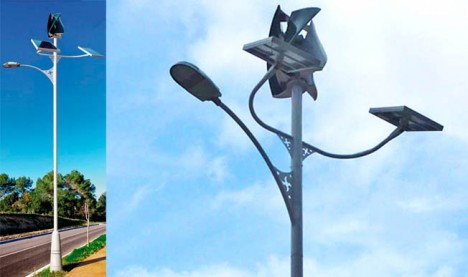
Unveiled in Spain and planned for the streets of several towns and cities, these grid-free street lighting units are completely energy-autonomous, powered by solar and wind energy without needing to be networked with primary electricity grids.

light post prototype models

While other examples of self-sufficient streetlights exist as prototypes and installation art pieces, this system is set to be the first on the planet to be installed at scale for public use.

light post real life copy

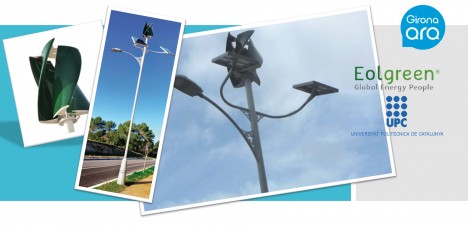
Ramon Bargalló of the Department of Electrical Engineering at the Barcelona College of Industrial Engineering (EUETIB) of the Universitat Politècnica de Catalunya (UPC) has been working with Eolgreen, a private company, to engineer the system.

light post early prototyp

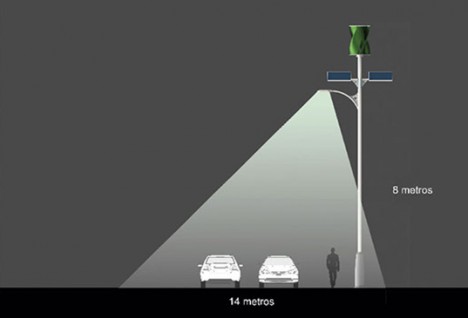
At roughly 30 feet tall, the posts feature leafy solar panels and turbines as well as built-in batteries for energy storage – relatively little wind or light are required to make the system work. Over 700 are set to be created in 2015, but the man and company behind their design are still working on increasingly efficient models for future deployment, testing and building as they proceed.

press release lamp post

From their press release: “This system, developed after four years of research, is designed for inter-urban roads, motorways, urban parks and other public areas. It is unique in the world and reduces the cost by 20% compared with conventional public lighting systems. The turbine runs at a speed of 10 to 200 revolutions per minute (rpm) and has a maximum output of 400 watts (W). An electronic control system manages the flow of energy between the solar panel, the wind turbine, the battery and the light. “

Share on Facebook


[ By WebUrbanist in Conceptual & Futuristic & Technology. ]

[ WebUrbanist | Archives | Galleries | Privacy | TOS ]


WebUrbanist

 
Comments Off on World’s First Public Streetlight Network Powered by Sun & Wind

Posted in Creativity


Olympus OM-D E-M5 II First Impressions Review posted

05 Feb

At a glance the Olympus OM-D E-M5 II appears relatively unchanged from its predecessor, so you have to look a little closer to see how much work Olympus has put into the new model. The E-M5 II uses a redesigned 16MP Four Thirds sensor and offers a 40MP high-resolution shot mode powered by its 5-axis image stabilization. See its high-resolution mode in action and learn more about the subtle improvements included in the E-M5 II in our First Impressions Review. Read more

Articles: Digital Photography Review (dpreview.com)

 
Comments Off on Olympus OM-D E-M5 II First Impressions Review posted

Posted in Uncategorized


London Approves Europe’s First City-Spanning Bike Superhighway

04 Feb

[ By WebUrbanist in Architecture & Cities & Urbanism. ]

london transit

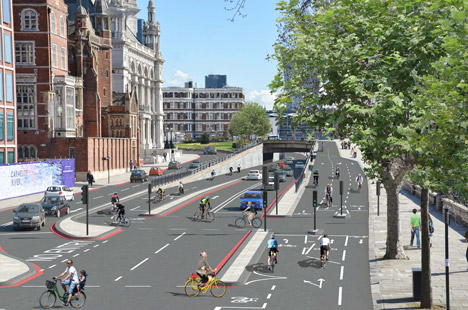
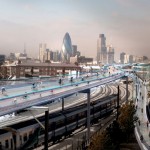
Catering to some of the 170,000 cyclists that ride across London every day, this segregated bicycle lane will stretch from west to east, pass through the heart of the city and span 18 miles when completed. Approved by mayor Boris Johnson, a second route will also eventually span perpendicular to this first one, reaching south to north and crossing the first in the middle of the city.

london separated bicycle pathway

Allocating bikers lane space on par with that given to cars and separated by safety curbs, this plan represents a huge shift in how London treats cyclists and the largest such endeavor of its kind to date. Few long bike paths on the planet can boast such separation for bikers from city traffic, a move that makes bike lanes much more accessible to bikers of all ages and abilities.

london dedicated bike paths

As The Guardian‘s Peter Walker describes, “The effect is humanizing, civilizing, relaxing, enchanting. It makes the city immediately more appealing. Beyond all that it also rebuts the perennial complaint that the push for London bike routes is the niche hobby horse of a small coterie of middle-class, male cyclists. The whole point is that if you create safer cycling you necessarily create more inclusive cycling.”

bike path lanes

Building on a series original-but-modified proposals shown directly above and below, the new path with pass along the Victoria Embankment to connect Tower Hill and Paddington, re-purposing existing lanes used by motorists and linking up with a north-south route that would connect King’s Cross with Elephant and Castle.

bike path city

While the removal of motorized vehicular space has drawn complaints from some, it fits London’s larger vision of reducing car traffic in and through the city (dovetailing with existing strategies including a hefty congestion tax).

bike path urban

Other cities will be looking to the results of this radical change, which could have significant global influence on urban design strategies around city cycling for years and decades to come.

Share on Facebook


[ By WebUrbanist in Architecture & Cities & Urbanism. ]

[ WebUrbanist | Archives | Galleries | Privacy | TOS ]


WebUrbanist

 
Comments Off on London Approves Europe’s First City-Spanning Bike Superhighway

Posted in Creativity


Samsung NX1 First Impressions Review updated with shooting experience

03 Feb

Samsung’s NX1 looks and feels like a DSLR in many ways, but don’t be fooled – it’s an ambitious 28.2MP APS-C mirrorless camera, the first to use a backside-illuminated CMOS chip of that size. It also provides hybrid AF with 205 phase-detect points, 15 fps burst shooting with continuous AF and 4K video recording. We’ve updated our first impressions of the camera with a shooting experience. Read more

Articles: Digital Photography Review (dpreview.com)

 
Comments Off on Samsung NX1 First Impressions Review updated with shooting experience

Posted in Uncategorized


Made in China: World’s First 3D-Printed Apartment Complex

21 Jan

[ By WebUrbanist in Architecture & Houses & Residential. ]

3d printed apartment complex

The same company known for printing 10 home in less than 24 hours is back with a new record-breaking construction project: a multistory apartment structure built using recycled building materials and fast-hardening cement, paired with an ornate villa assembled using the same technologies.

3d printed villa exterior

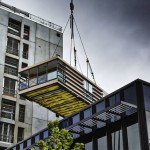
Construction waste forms the aggregate base of WinSun‘s quick-drying concrete, while a huge 3D printer array is responsible for building the large prefabricated parts that are then built on site with steel reinforcement and regulation insulation.

3d printing extrusion interior

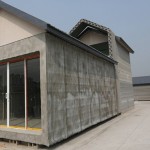
In a twist that will able to those who enjoy truth in architecture, much of the extrusion process is evident on the interior and exterior walls of the villa component as well.

3d printing apartment

Drawing on CAD files, the printer lays out the pattern like a cake decorator squeezes out frosting, creating space-frame gaps for insulating materials, plumbing and electrical – a high-tech process to quickly create a pair of low- and mid-rise buildings.

3d printed villa design

According to WinSun, “This process saves between 30 and 60 percent of construction waste, and can decrease production times by between 50 and 70 percent, and labour costs by between 50 and 80 percent. In all, the villa costs around $ 161,000 to build.”

3d printed walls demo copy

While the company has yet to reveal just how big of a structure they can build using their existing equipment, their future goals include larger buildings, perhaps even prefab skyscrapers, and possibly bridges or other infrastructure. From 3Ders, “Today’s press conference attracted more than 300 building industry experts, investment bankers as well as media reporters. Ma Yi He, CEO of WinSun explained: the company’s success is due to their unique and leading techniques. First is their exclusive 3D printing ‘ink,’ which is a mixture of recycled construction waste, glass fiber, steel, cement and special additives. According to Ma, waste from recycling construction and mine rest produces a lot of carbon emissions, but with 3D printing, the company has turned that waste into brand new building materials. This process also means that construction workers are at less risk of coming into contact with hazardous materials or work environments.”

Share on Facebook


[ By WebUrbanist in Architecture & Houses & Residential. ]

[ WebUrbanist | Archives | Galleries | Privacy | TOS ]


WebUrbanist

 
Comments Off on Made in China: World’s First 3D-Printed Apartment Complex

Posted in Creativity


Setting up Lightroom Mobile for First Time Users

11 Jan

I laughed at Lightroom Mobile the first time I saw it. “Why would I ever want to use that stripped down gadget on a small screen?” And now, here I am about help you install and use it. Why is this?

It’s because I have found how totally useful the app is in sorting through hundreds or thousands of images from the world of “any time, any where”. Most notably, in a comfy chair with good light or on a weekly airplane flight. iPads also became lighter and iPhone screens larger.

Let’s start with how to set up Lightroom Mobile on your iPad or iPhone and then give some examples of how I find it useful in managing a huge library. I will be using a Collection of mine that is a work in progress to craft black and white images of the Himalayas.

Setting up Lightroom for mobile use

Connect Lightroom to your Adobe ID

The first step is to make sure you have the right version of Lightroom on your PC or Mac. You need to have version 5.4 or later, you can download the latest version from Adobe here. You also need an Adobe ID (free) for this to all work as it is the hub in the cloud that makes this all spin. If you don’t have one, sign up here.

With Lightroom open, you will notice in the upper left corner the phrase “Get started with Lightroom mobile”

1

Click the triangle next to the words and log in with your Adobe ID

2

You will then see that the top left of the screen has changed to the name you gave to Adobe upon creating your Adobe ID.

3

Great! Now let’s set up Collections to synchronize

Setting up Collections to sync

Lightroom Mobile will currently only work with Collections. If you need help setting up a Collection, the free Adobe video here will help. To enable a Collection for syncronization, simply right click on the Collection and choose “Sync with Lightroom mobile”. Pretty easy!

4

After clicking, you will notice a double arrow appears to the left of the Collection. This indicates the Collection will be syncing when sync is turned on.

5 copy

Now, up in the top left, Lightroom will let you know it is starting the sync of those images.

6

As a first pass, we are done! Simply repeat this process for Collections you have already created. Additionally, when creating a new Collection, there is a box that can be checked to automatically sync the new Collection. It looks like this:

7

Setting up your iPad or iPhone for use

This is the easy part. First, ensure your iPad/iPhone is connected to the Internet. Go to the App Store and search for Lightroom Mobile.

Peter-West-Carey-adobe2014-1217-0225

Install (it’s free) and then start the app.

Peter-West-Carey-adobe2014-1217-0229

You will be presented with an Adobe ID screen after paging through the first time introduction.

Peter-West-Carey-adobe2014-1217-0230

After signing in you will be taken to a page showing all the Collections you have set up to sync on the desktop version of Lightroom.

Peter-West-Carey-adobe2014-1217-0232

Tap the main image and you will be taken to the Collection itself. The first time you run through Lightroom Mobile it will give you helpful contextual hints.

Peter-West-Carey-adobe2014-1217-0233

Tap on any picture to edit it.

Peter-West-Carey-adobe2014-1217-0235

Quick filtering with Lightroom mobile

While there are a lot of features in Lightroom Mobile that make it useful for photographers, this post is going to concentrate on the basics to get you started.

Now that you have a Collection synced to your iPad/iPhone (note: it might take a while to fully sync a larger Collection), you can start filtering. For me, filtering is the best use of this app, currently. I enjoy being able to filter my images from the comfort of my living room or while traveling. I also do some basic edits to images but I usually leave the major edits to my desktop. To filter images, I use both the flags and stars features. You can switch between changing those features by tapping the icons in the bottom left corner.

Peter-West-Carey-adobe2014-1217-0238-2

Peter-West-Carey-adobe2014-1217-0238

When the flag icon is highlighted, as it is here, simply move your finger up or down on the screen to pick, unpick or reject images. These settings will then sync over to your desktop within seconds as long as Lightroom is open on the desktop.

Peter-West-Carey-adobe2014-1217-0237

Peter-West-Carey-adobe2014-1217-0239

I use these two features to sort images. Flags are images I especially like and I know I want to work on back at my desktop. I then use two stars to indicate the image should be used for my stock photography work (the scale then goes up to three stars once edits are done, four stars when title and keywords are done and five stars when completely finished).

There are a lot of editing options available in Lightroom Mobile that can be accessed from tapping the icons at the bottom of the screen on an individual image.

Peter-West-Carey-adobe2014-1217-0241

All of these features are best left for a future post.

Offline use

One last thing; Lightroom Mobile usually needs to ‘see’ your desktop’s version of Lightroom in order to show previews the first time and make edits. Therefor, once I have a Collection fully sync’d, I will then turn on Offline Editing which allows me freedom from wifi to make edits, knowing they will sync the next time I am online.

To do this, click on the three little dots on the bottom of the Collection image:

Peter-West-Carey-adobe2014-1217-0232-2

This brings up a menu with many options.

Peter-West-Carey-adobe2014-1217-0243

Choose to Enable Offline Editing and Lightroom Mobile will now bring across Smart Previews of the images to your mobile device.

Peter-West-Carey-adobe2014-1217-0242

How do you use Lightroom Mobile

Lightroom Mobile has a host of other features such as automatically uploading images shot on your iPhone/iPad into Lightroom on your desktop.

What about you? What have you found useful in Adobe Lightroom Mobile?

googletag.cmd.push(function() {
tablet_slots.push( googletag.defineSlot( “/1005424/_dPSv4_tab-all-article-bottom_(300×250)”, [300, 250], “pb-ad-78623” ).addService( googletag.pubads() ) ); } );

googletag.cmd.push(function() {
mobile_slots.push( googletag.defineSlot( “/1005424/_dPSv4_mob-all-article-bottom_(300×250)”, [300, 250], “pb-ad-78158” ).addService( googletag.pubads() ) ); } );

The post Setting up Lightroom Mobile for First Time Users by Peter West Carey appeared first on Digital Photography School.


Digital Photography School

 
Comments Off on Setting up Lightroom Mobile for First Time Users

Posted in Photography


Toshiba announces world’s first SDHC card with NFC

08 Jan

Toshiba has announced an SDHC card equipped with NFC, claiming it to be the world’s first. With the corresponding ‘Memory Card Preview’ app downloaded to a mobile device, the user can tap the card to view thumbnails of 16 images and see available storage. Read more

Articles: Digital Photography Review (dpreview.com)

 
Comments Off on Toshiba announces world’s first SDHC card with NFC

Posted in Uncategorized


Gear Envy: Five Things to Consider Before Buying Your First Camera

07 Jan

GearEnvy 1

1. The Ol’ Gear versus Photographer Chestnut

What’s the best camera and lens you can buy when you’re starting out?

  • Anything by Nikon
  • Anything by Canon
  • Nikon and Canon are overrated; Pentax is what all the cool kids are using
  • Do the best you can with what you can afford right now

A photographer went to a socialite party in New York. As he entered the front door, the host said “I love your pictures – they’re wonderful; you must have a fantastic camera.” He said nothing until dinner was finished, then: “That was a wonderful dinner; you must have a terrific stove.” – Sam Haskins

Believing a great camera will make you a great photographer is like thinking Roger Federer’s tennis racquet will make you a world champion tennis player. Um, it won’t – I’ve tried. I’ve also worn the same jeans as Gisele Bundchen and they didn’t make me a supermodel. Cooking with Wolfgang Puck’s saucepans didn’t make me a master chef either.

Great gear won’t make you a great photographer. Great lenses, however, can improve the sharpness of your images, and great lights and accessories can improve their quality. But all of that can be undone with poorly executed or sloppily composed images.

Just because something’s technically perfect doesn’t necessarily make it great or even good. A good photo should inspire an emotional reaction, and no camera or lens available today can achieve that for you.

I’m blown away daily by evocative photos on Instagram, 500px, and Flickr. Eighty percent or more of these images are taken with smart phones or entry-level cameras with kit lenses. When I share my images online, I get just as big a response from images taken with my iPhone as I do from images taken with pro gear. Because of the Internet, there’s never been a greater time in history to have your work seen and loved, or to inspire a reaction.

The best first camera you can buy is the one you can afford right now.

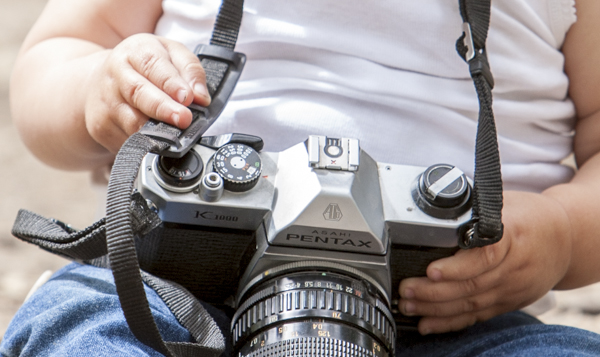
2. What are you shooting?
GearEnvy 2

Next, you should ask yourself what your your gear is for? Where will you use it and how often?

  1. I only take my camera to church on Sundays.
  2. I’m going to document my trek to the summit of Mount Everest, rodeo rides and my next Tough Mudder event.
  3. I photograph sixty weddings a year.
  4. I’m still learning, but I love to take photographs every opportunity I get.

Are you planning on taking your camera to rugged subzero locations? Will you be shooting thousands of images a day or only taking photos on special occasions? This is the first question to consider before purchasing any new gear – what will you use it for?

If your answer is #2 or similar, you may want to consider a heavy duty pro body that’s built to take rough and tumble handling and extreme weather conditions; a cheaper lightweight camera may not withstand the wear and tear or hold up to the elements.

If you plan on taking thousands of frames daily or weekly, it may be more cost effective to invest in a mid-range camera that’s built to shoot more frames. The shutter on a cheap camera usually rolls over and dies after about 100,000 frames, so spending a few hundred extra may give you more longevity.

The subject matter you’ll be shooting will also influence your choice of lens. For example, if you’re planning on shooting a lot of portraits and head shots, many fashion and portrait photographers use long fixed focal lenses or zoom lenses. If you’ll be doing a lot of weddings, professionals stock their kits with wide and long lenses and lenses that are somewhere in-between. If you’ll be shooting a lot of scenery, landscape photographers get more use out of wider lenses. And lastly, if you plan on shooting a lot of food or products, you may want to consider adding a macro lens to your kit.

3. Brand loyalty. Which brand should you buy and why?

With cameras there’s no definitive answer to this question. Nikon appears to have a slight edge over all the other SLR brands, but there are advantages and disadvantages to each.

I spent the first 15 years of my career shooting with Nikon because both my brother and my first mentor used them. I loved my Nikon and never dreamt of swapping over. I initially invested in secondhand bodies and prime lenses and after I had saved enough coin to buy new, I stayed loyal to Nikon. Later when I switched over to digital, I continued my Nikon love affair.

The decision to convert to Canon was made for me by the lack of decent Nikon upgrades on the market in 2004-2005 and by the fact that Canon’s 1DS MKII blew anything Nikon made that year out of the water. I switched to Canon and invested in two new camera bodies, new lenses, speedlights and accessories.

Fast forward 10 years and you could argue that Nikon now makes better bodies than Canon, and that Canon makes slightly better lenses. For better or worse, I’ve made a commitment to Canon, and I’m sticking to that – for now. I still suffer the occasional bout of gear envy, but hey, I’m only human.

My advice is to test out each camera on offer in your price range. You’ll find that some cameras are more comfortable to use than others. Also factor in the warranty, general after-sales service, and how easy it is to have the brand you’re looking at serviced or repaired in your area. Another good indication of quality is the camera’s resale value. If your potential camera is flooding the low-end of the secondhand market, it may be a good indication you’re about to buy a lemon. Finally, check out camera reviews and look up discussions about the model you want to buy on forums. The photography community is incredibly thorough and generous with information.

4. Holy crop! Does size matter?

GearEnvy 3

I bought my first digital Nikon 13 years ago and paid $ 17,000 AUD (approx. $ 14,000 USD) just for the body. It took 256 MB memory cards and produced raw image files that were around 6 MB. I used that camera to shoot hundreds of covers, poster shots, magazine spreads and advertising campaigns, and nobody ever questioned the file size.

Today my iPhone takes 8 MB photos. So, does that mean my iPhone camera is better? Umm – no. It’s not the quantity of the megapixels that count; it’s the quality of the megapixels and the size of the sensor. Cramming lots of megapixels onto a tiny sensor decreases image quality, making grainier looking files.

So how big are the sensors in the various cameras on the market today? A camera phone sensor is the size of a tic tac, a compact camera sensor is the size of an M&M, an entry-level SLR sensor is the size of postage stamp, and a pro level camera sensor is the size of a 35mm film frame.

So how many megapixels are enough and what’s the best size sensor for you? Well again, the answer comes down to what the output is going to be.

If you plan on shooting images that are going to end up on billboards or really large wall prints, then a full frame sensor that produces raw image files that are larger than 20 MB is ideal. An entry-level camera can produce large enough files to create billboard size images; they just won’t look anywhere near as good.

If you plan on printing midsize images — A4 (8.5×11″) or smaller — then an entry-level to mid-range camera will achieve really good results.

Finally, if you’re mostly going to share your images online, you can get away with a smart phone or compact camera, but any of the above will do the job, as well.

5. Physical size and weight
GearEnvy 4

Does this camera make my bum look big?

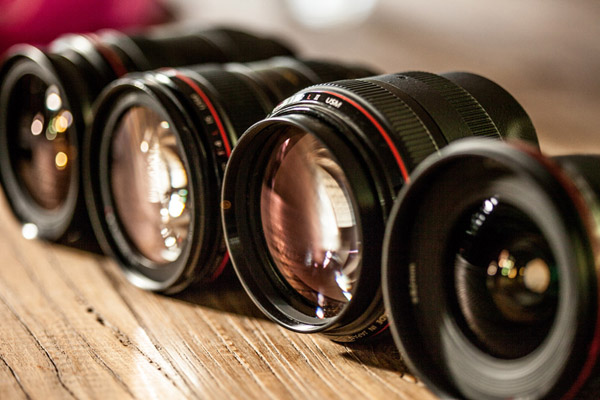
This factor is often overlooked until you get home and pull your new camera out of the box and use it a few times. You may think you want the biggest, heaviest camera and the longest lens, but four hours into an eight-hour mountain hike, you may change your mind.

I currently use two different bodies: the 1DS MKIII and the 5D MKIII. My 1DSIII weighs twice as much as my 5D and produces better quality images, but I’m prepared to take a hit in quality when I’m travelling because I know I’ll shoot more if I’m carrying a lighter camera. Having to schlepp a heavy camera around makes me think twice about bringing it out in the first place.

A good camera should feel comfortable and be like a natural extension of your body. Test out how easy it is to change settings with one hand; believe me, this will get frustrating if it’s a difficult process.

Have I missed anything you feel is worth considering? Do you have anything to add to the discussion or have any questions? I’d love to hear from you.

googletag.cmd.push(function() {
tablet_slots.push( googletag.defineSlot( “/1005424/_dPSv4_tab-all-article-bottom_(300×250)”, [300, 250], “pb-ad-78623” ).addService( googletag.pubads() ) ); } );

googletag.cmd.push(function() {
mobile_slots.push( googletag.defineSlot( “/1005424/_dPSv4_mob-all-article-bottom_(300×250)”, [300, 250], “pb-ad-78158” ).addService( googletag.pubads() ) ); } );

The post Gear Envy: Five Things to Consider Before Buying Your First Camera by Gina Milicia appeared first on Digital Photography School.


Digital Photography School

 
Comments Off on Gear Envy: Five Things to Consider Before Buying Your First Camera

Posted in Photography