RSS
 

Posts Tagged ‘Finding’

5 Secrets for Finding Great Indoor Photoshoot Locations

26 Jun

The post 5 Secrets for Finding Great Indoor Photoshoot Locations appeared first on Digital Photography School. It was authored by Melinda Smith.

secrets for finding indoor photoshoot locations

Not all photographers have a dedicated indoor studio, yet sometimes you need to shoot a session indoors. Maybe it’s freezing outside, and you don’t want to be out in that weather. Maybe you just want something fresh and a little quirky. Maybe a building has a special meaning to you or the person you are photographing.

Whatever your reasons, if you want to take indoor portraits, you’ll need to find that perfect indoor photoshoot location. And that’s what I’m going to share in this article: all my secrets for finding stunning locations (plus how to get permission to use them).

With any luck, they’ll help you find the perfect spot for your next session!

bride on a couch

1. Always be on the lookout

Wherever you go, keep your “photography eyes” open. You may be surprised by how many places transform into a great location once you really start looking.

Some unique and exciting indoor photoshoot locations might include:

  • family photos in the library
  • model portfolio shots in a city building
  • engagement session in the laundromat
  • dance group session in a hotel lobby
  • mom and toddler portraits in a grocery store
  • bridal session in a grand old house, a museum, a quaint bed and breakfast, a roller-skating rink, a university building, a furniture store, a toy store, or a candy store (the list is endless!)

Look for great lighting, open spaces, interesting backgrounds, and fun things to interact with. Consider whether there are lots of people you might end up disturbing, or whether it’s a relatively calm place where you can photograph in peace.

Use your imagination and creativity to turn the ordinary into something extraordinary.

kissing couple in a library photoshoot location

2. Always ask permission

Once you’ve found a place you’d like to use for a photoshoot, make sure you ask permission before you bring a client there.

I find that asking in person is usually best; the staff/owner can see who they’re talking to, and they’ll be much less resistant if they can see your smiling, friendly face. If you do need to ask over the phone, be professional and friendly. Remember, they need to feel comfortable with you coming in, camera setup and model/client in tow.

If you like a location but aren’t sure who owns it, check city or county records, or ask a neighboring building if they know the owner. It might take time and effort, but you should always find out who owns the property before shooting. It gives all photographers a bad name if you trespass.

In fact, I’ve had many photoshoots where I call to ask permission, and the owner thanks me profusely for bothering to ask. They usually express their frustration with other photographers who just start shooting without asking. (They allow me to photograph on their property, so obviously they don’t mind people being there, but they always appreciate being asked first.)

Also, note that some locations, like museums or theme parks, are fine with you taking photographs inside, but you’ll have to pay the entrance fee.

woman posing on stairs

Other places charge a fee for photography and some don’t allow photographers at all. If you whip your camera out in either of those types of places without asking permission first, you could be fined huge amounts. It’s not worth it. Ask, and if you get declined, just move on and find another place.

Remember: It never hurts to ask. Most of the time you’ll be granted permission – and owners are often pleased that you think their building is worthy of being an indoor photoshoot location.

child with valentine's day gift

3. Find an owner who will also benefit

I needed a place to have adorable kids come for Valentine’s Day photos, but I didn’t know who would want multiple kids and families traipsing in and out of their establishment. Then I came across an adorable little candy shop; it was was decorated perfectly, plus it was full of delicious sweets and treats.

In the end, my photography clients came in and out all day for their sessions, and they ended up buying lots of candy in the process. Many who came had never noticed the little hometown shop with homemade caramel apples and every kind of candy you can think of. They were happy to have discovered it. I ended up with a great place for my Valentine’s Day photos, and the owner got a lot of new business.

child looking in candy baskets

Look for places that might benefit from your photoshoot, and chances are the owner will be more than happy to let you use their location (free of charge).

Also, many small, locally-owned places need a couple of photos of their establishment for websites and advertising purposes, or maybe even a quick headshot, and would be thrilled to let you photograph there in exchange for a photo or two.

family looking at a dinosaur

4. Explore your connections

Do you have a friend who owns a quaint little bed and breakfast? Do they work at a museum? If you get hired to photograph that friend, you may be able to get your foot in the door and photograph at that location.

Then, if the photoshoot goes well, your friend/client may be okay with you bringing other people back to the property!

You can also think about your broader friend network. You might not be planning to photograph your best friend, but they may still have a connection to a property that you could use for your shoots.

That said, be careful not to ask for too much, and be careful not to put anyone in an uncomfortable position. If you sense that a friend is hesitant about letting you use a location, don’t push it. A little respect goes a long way, and you don’t want to be the photographer who people avoid at all costs. Relationships are more important than having a cool place to photograph, so be extra sensitive when following this advice.

family posing near a dinosaur

5. Be the best guest

Once you’ve gotten permission to use a place, never, never, ever let anything get destroyed or damaged. The whole location should be left exactly how you found it.

If you need to move something out of the way, ask if it’s okay first. Then, when you’re done, put it back.

Be mindful of what is going on around you, especially if you are photographing kids. You are responsible for what happens during your session, and you never want to pay a big repair bill or lose a friendship because you were careless.

Remember: When you use public or private property for photos, you are not only representing yourself but also all photographers. If you make it a horrible experience for the owners, you’ll destroy the opportunity for future sessions for yourself and for all other photographers who might think to ask permission.

Please don’t be a careless photographer who ruins it for everyone. Instead, leave such a great impression that all photographers are welcomed with open arms.

family sitting together indoor photoshoot locations

Secrets for finding indoor photoshoot locations: final words

Well, there you have it:

Five ways to find the perfect indoor photoshoot location. If you follow the tips I’ve given above, you’re bound to discover some gorgeous locations – and you’ll be able to use them for years to come.

Now over to you:

Do you have any other tips for finding great indoor portrait locations? Have you found any gems? Please share your comments and images of your favorite spots below!

bride posing indoors

The post 5 Secrets for Finding Great Indoor Photoshoot Locations appeared first on Digital Photography School. It was authored by Melinda Smith.


Digital Photography School

 
Comments Off on 5 Secrets for Finding Great Indoor Photoshoot Locations

Posted in Photography


Tips for Finding Beautiful Portrait Light at Home

26 May

The post Tips for Finding Beautiful Portrait Light at Home appeared first on Digital Photography School. It was authored by Charlie Moss.

dps-finding-beautiful-portrait-light-at-home

It can be tempting to think that you need lots of money, space, and equipment to shoot great portraits. But using just your camera and a reflector, you can find beautiful portrait light at home to shoot in.

Almost everyone will have at least one room in their home with natural light from a window that could make a great portrait. It’s just a case of figuring out where the best light in your home is. Sometimes this takes a little trial and error, but as long as you get a good grasp of the basics, you should be able to shoot some great portraits at home!

Open up your aperture

Shooting indoors often means less light than if you were shooting outside or with studio strobes. To get some more light into your camera, try opening up your aperture and setting it to the lowest number possible.

Opening your aperture up to let more light into your camera also has the effect of creating a shallow depth of field. A shallow depth of field has real advantages when you’re shooting at home – it can blur out the background and any unwanted clutter.

portrait light at home
ISO200, 35mm (50mm equiv.), f1.4, 1/320th sec

Alternatively, if you need to place your subject right next to a wall that isn’t as great a background as you hoped for (like above), try hanging a large sheet of paper behind them. The result would be like going to a studio with a paper backdrop. Or if you fancy something completely different, try creating a more creative backdrop!

Get your subject to turn their face towards the light to make it fall in a very flattering way that illuminates their features. If you turn their face slightly back towards you then you can create the classic “Rembrandt light” that fine art photographers love so much (just turn their face towards you enough to create a “triangle” of light on the side of their face away from the window).

By just changing the way your subject faces, you should be able to experiment with broad and short lighting with just a single window. If you have a patient subject, then a single window and a model can be a great way to learn about new kinds of lighting while finding lovely portrait light at home.

Shoot in the bathroom

I’m not even messing about. Bathrooms often have incredible light because of all the white, reflective surfaces. Even a bathroom with a small window can have lots of light bouncing about just waiting for you to photograph it.

portrait light at home
ISO800, 35mm (50mm equiv.), f1.4, 1/1100th sec

If you want to fill in some shadows, or even add a bit more directional light, you can experiment with using a reflector. You can use the silver side to add a bright, directional light in a room like this by bouncing light into the brighter side of the face. Alternatively, you could use the white side of a reflector to just gently lift any shadows that you get, to make the light more even.

Tips for Finding Beautiful Portrait Light at Home
ISO1600, 35mm (50mm equiv.), f1.4, 1/3000th sec

Don’t be afraid to push up your ISO either if you want to capture a fast-moving or unpredictable subject like a pet. Most modern digital cameras can now go quite high with the ISO without seeing any problems in the images.

I shot the images above at ISO 1600, with an extremely fast shutter speed as my cat zipped around the house from dark to light spots. I had the camera set to Aperture Priority mode, so the camera chose its shutter speeds. Aperture Priority mode is a great choice for shooting portraits indoors because it lets you make creative choices about aperture and depth of field without having to worry about shutter speed.

Experiment with the time of day

As the sun moves, the light will change in different parts of your house. Make it your mission to observe and try out the light as it changes throughout the day if you want to find the good spots for beautiful portrait light at home.

Tips for Finding Beautiful Portrait Light at Home
Left: ISO400, 35mm (50mm equiv.), f1.4, 1/280th sec
Right: ISO200, 35mm (50mm equiv.), f2.8, 1/2000th sec

I took both of the above shots in the same room, sitting in almost exactly the same place. The difference was the time of day. The shot on the right with the hard light was taken in the bright morning light. In comparison, I took the image on the left in the afternoon when the sun had stopped shining directly into the room.

portrait light at home

Patches of light and shadow can make for really interesting photographs as you let them play across the face or body of your subject. Be sure to experiment with how they create different effects both in the photographs themselves and when you post-process them afterward (increasing the contrast can work really well for light like this).

Use what you have

When I first moved into my home with its large room designated as my studio, I shot almost exclusively with strobes. I would shut out all of the natural light so that I could concentrate on just using my studio lights. I hadn’t even considered that I might have beautiful portrait light at home.

portrait light at home
ISO200, 35mm (50mm equiv.), f1.4, 1/240th sec

One day, though, I just wanted to grab a quick self-portrait. So I opened the curtains and photographed myself in the morning light.

On inspecting the files later, I discovered that this light was unexpectedly beautiful. Now I shoot regularly sat face-on to this big window in my studio with no additional lighting or reflectors because I discovered it was simply wonderful light.

Learn from my mistake – test out every window in your house for portraits, at different times of the day.

When you move into a new home, make it one of the first things that you do. Don’t wait several years to realize that you already have wonderful natural portrait light at home!

I’d love to see your portraits using the natural light in your home. Please share them with us in the comments section!

The post Tips for Finding Beautiful Portrait Light at Home appeared first on Digital Photography School. It was authored by Charlie Moss.


Digital Photography School

 
Comments Off on Tips for Finding Beautiful Portrait Light at Home

Posted in Photography


Finding Photography Inspiration in Ordinary Places

30 Mar

The post Finding Photography Inspiration in Ordinary Places appeared first on Digital Photography School. It was authored by Simon Ringsmuth.

Finding Photography Inspiration in Ordinary Places Featured image

Photography is filled with highs and lows. One week you might find yourself overflowing with ideas and see photographic opportunities all around you. The next week, you’re stuck in a vast wasteland where nothing seems to be worthy of your camera. Finding photography inspiration isn’t something that requires exotic travel destinations or even fancy camera gear. Often you can uncover extraordinary picture opportunities in the most ordinary of places.

finding photography inspiration
Nikon D7100, 50mm, f/1.8, 1/2000 second, ISO 400. This mockingbird was sitting in a bush near my office.

Inspiration is a tricky thing. While it can come when you least expect it, I have found that you often have to work for it.

If you’re expecting a brilliant photo opportunity to show up on your doorstep, it probably won’t happen. But if you purposely go out in search of photo opportunities, inspiration is usually close behind.

A quote widely attributed to Thomas Edison says that “Genius is 1 percent inspiration and 99 percent perspiration.

The same applies to photography.

Go on a photo walk. Slowly.

This might sound a bit cliché, but the hustle and hurry of everyday life can be a hindrance to photography. If you’re so busy going to and from work, school, the store, and back, it probably seems like you have no time to take pictures.

When a spare fifteen minutes does come your way, the idea of getting out your camera to take pictures can seem more exhausting than inspiring.

finding photography inspiration
Nikon D750, 50mm, f/8, 1/125 second, ISO 900. Saw this snail on the sidewalk while going from my car to my office. I used a +4 close-up filter which I got online in a four-pack for $ 30.

A local photo walk can be just the ticket to newfound photography ideas and inspiration. It doesn’t have to be expensive, fancy, or exotic. Instead of spending lots of time and money on a bipedal picture-taking excursion, try just going out your front door and walking down the block. But here’s the trick: go slowly.

The pace of my photo walks has changed over time from a steady gait to almost a crawl. Not literally of course, but you have to tell yourself that your goal isn’t to cover a lot of ground or get your steps in for the day. It’s to look for picture opportunities, often where you never thought you would find them.

Everyday locations like the mailbox, the gas station, the park down the road, or even your own kitchen become fertile ground for inspiration to take root if you keep your eyes open and go slowly.

finding photography inspiration
Nikon D7100, f/2.8, 200mm, 1/1500 second, ISO 100. This was literally in my own back yard.

Your daily locations might not seem exotic to you because you see these things every day. A visitor would see familiar objects with fresh eyes, and the trick to taking this approach is to try to emulate that perspective. Just because you see everyday objects as ordinary and unworthy of photographs, doesn’t mean they can’t lead to flashes of inspiration.

The next time you feel stuck in a photographic rut, take a short, slow walk around a familiar setting and try to see it with a fresh set of eyes. You might be surprised at how things can transform from familiar to phenomenal.

And, even everyday objects can be used for finding photography inspiration.

finding photography inspiration
Fuji X100f, 23mm, f/3.6, 1/30 second, ISO 400. This is just a washing machine still spinning after I opened the lid. I was inspired when I saw it whirling, and I really like the photo I was able to get.

Photograph like you just don’t care

One thing that prevents a lot of people from taking more photos is the thought that they might look silly doing it. I’m as guilty of this as anyone, and most times when I am out with my camera, I feel completely awkward and self-conscious. I feel like the whole world is staring at me, pointing and laughing at the weirdo with a camera taking pictures of sticks and leaves and flowers!

In truth, that is almost certainly not the case.

In all likelihood, most people don’t really care about someone minding his or her own business who just happens to be carrying a camera.

When was the last time you stopped and stared indignantly at a passer-by harmlessly taking pictures? If those types of people don’t bother you, then you probably aren’t bothering anyone when you’re the photographer.

finding photography inspiration
Fuji X100f, 23mm, f/16, 1/30 second, ISO 200. This cyclist probably didn’t even notice I was sitting next to the sidewalk.

This kind of advice is easier said than done, but if finding photography inspiration is your goal, then you have to stop worrying about what people think.

Some of my favorite pictures I’ve ever taken were in ordinary places like parks or downtown areas filled with people. And, not once has anyone ever told me I was bothering them.

Make sure you’re not being rude, obnoxious, or intrusive when taking pictures. If you’re just being a nice person and not bothering anyone, you can be almost entirely certain that no one will think twice about your presence. If they do, they probably think you’re some kind of fancy artist who clearly knows a lot about photography!

finding photography inspiration
Nikon D200, 50mm, f/1.8, 1/50 second, ISO 400. I felt incredibly awkward and self-conscious taking pictures in a library. I wasn’t harming anyone, and I ended up with a few photos I really liked. It turned into a fun and inspirational experience!

Don’t try to take good photos

This took me a long time to learn, but it’s a lesson that has repeatedly made a big difference for me.

Years ago when I started getting more involved with photography, I thought only great photos were worth taking. I constantly passed up photo opportunities because I didn’t think the results would be worth the effort, and wouldn’t lead to any sort of photography inspiration.

What I learned was that inspiration takes the exact opposite approach! The images I thought were boring, mundane, or just flat-out bad taught me how to improve my photography by leaps and bounds. By examining my bad photos, I was able to understand why they were bad. They helped me learn how to take good photos as a result.

finding photography inspiration
Nikon D200, 50mm, f/2.8, 1/1000 second, ISO 200. This is one of the most boring photos I can recall taking. It’s just not very good. But it taught me a lot about what does make a photo good.

There’s an old saying, Don’t let a perfect plan be the enemy of a good plan. It applies in a variety of situations, particularly photography.

If you’re waiting for inspiration to strike because you are seeking the perfect image, you might be waiting a very very long time. Try the opposite approach instead: take lots of pictures that aren’t great, and see what they can teach you along the way.

Another thing to consider is the sheer enjoyment of the art.

Stop thinking of your images in terms of objective quantification. Learn to value process over product! It’s the repeated practice of process that leads to superior products.

Take pictures because you enjoy it, not because you think the end result is good or bad. Enjoy the journey, take pictures just because you like it, and let that be your source of inspiration.

finding photography inspiration
Nikon D200, 50mm, f/1.8, 1/125 second, ISO 200. I shot this photo years ago just for fun, and I still think about it when I go up and down stairs in tall buildings.

Take a social media hiatus

While social media sites like Instagram can be a boon to photographers, they can also be a curse.

Finding photography inspiration online can seem like a no-brainer: just follow some accounts with brilliant photos and you’ll surely get ideas for your own!

In reality, what often ends up happening is we compare our own photos to others and conclude that we just don’t measure up. All the other pictures look so amazing, so detailed, so colorful, and so full of life! Yours, by contrast, seem dull and lifeless. Worse, your pictures (even ones that you thought were awesome) only got a handful of likes, hearts, or thumbs-up. Meanwhile, someone else’s shot of breakfast cereal got a thousand. It’s just not fair!

finding photography inspiration
Fuji X100f, 23mm, f/16, 30 seconds, ISO 200. I worked hard to get this shot, and it only got 21 likes on Instagram. If I measured my value as a photographer by social media standards, no way would I ever keep going.

Social media can be inspiring, but just as often it can be downright demoralizing.

The solution?

Get rid of social media!

Don’t delete all your accounts, but turn off notifications for photo-sharing sites and move those apps to the neglected depths of your phone screen. Log off social media sites on your computer, and stop measuring your worth by likes and upvotes.

This has consistently been one of the most effective ways of finding photography inspiration for me. Temporarily shutting out social media, removes any temptation to take photos for online accolades and attention. I start to take pictures that are interesting, challenging, or fun. Then I soon find inspiration flooding back.

finding photography inspiration
Nikon D200, 50mm, f/1.8, 1/2500 second, ISO 200. I shot this long before I was sharing photos on social media. It’s nice to return to those halcyon days sometimes.

Conclusion

Finding photography inspiration isn’t always easy, but it can be simpler than you think. It doesn’t have to involve a lot of time, money, travel, or fancy camera gear either.

Inspiration can come in ordinary ways from ordinary places, and lead to some outstanding results.

What about you? What are your favorite ways to get inspired as a photographer? Share your thoughts in the comments below.

The post Finding Photography Inspiration in Ordinary Places appeared first on Digital Photography School. It was authored by Simon Ringsmuth.


Digital Photography School

 
Comments Off on Finding Photography Inspiration in Ordinary Places

Posted in Photography


Photographer asks for help finding owners of a destroyed camera found at Zion National Park

21 Feb

Photographer Ben Horne has shared a video on his YouTube channel imploring the photography community to help him find the owner of a Fujifilm point-and-shoot camera that a friend of his found while on a hike in Zion National Park in Southwest Utah.

As explained in the three minute video, Horne’s friend Luke Riding was hiking along the base of Angels Landing — a tall rock formation with a narrow trail at the top where hikers are free to walk along — when he came across a Fujifilm camera that had clearly taken a tumble down the side of the 1,500-foot rock formation.

The camera itself is clearly battered from its treacherous journey down the side of Angels Landing, but the SD card inside remained intact, complete with a collection of date-stamped images captured before the Fujifilm’s free-fall. The images Horne has shared include a number of portraits with two younger females posing in various areas of Zion National Park in September 2015, according to the metadata.

$ (document).ready(function() { SampleGalleryV2({“containerId”:”embeddedSampleGallery_1537654159″,”galleryId”:”1537654159″,”isEmbeddedWidget”:true,”selectedImageIndex”:0,”isMobile”:false}) });

Horne has asked to help spread the word in an effort to return the camera and images back to their rightful owner(s). If you happen to know the individuals in the photos or know of anyone who happened to lose their Fujifilm camera while at the top of Angels Landing, you can contact Horne by email (listed in the YouTube video description) or via Instagram.

Articles: Digital Photography Review (dpreview.com)

 
Comments Off on Photographer asks for help finding owners of a destroyed camera found at Zion National Park

Posted in Uncategorized


Finding Your Strength in Isolation – 3 Methods to Make Your Subject Pop!

15 Jan

The post Finding Your Strength in Isolation – 3 Methods to Make Your Subject Pop! appeared first on Digital Photography School. It was authored by Kevin Landwer-Johan.

Including extraneous details in your photographs dilutes attention. Or they distract the viewer’s attention away from your main subject.

Fill the frame! This was the only composition rule I had drummed into me when I started work in the newspaper photography department. Do not include anything that does not help tell the story better. If it’s irrelevant, remove it.

In this article, I share three of my favorite methods for isolating subjects.

Masu Finding Your Strength In Isolation - 3 Methods To Make Your Subject Pop!

© Kevin Landwer-Johan

The balance of light

Finding a dark background is always pleasing. When your subject has more light on them than the background, you can often expose carefully so the background is very dark or even black. This was a great technique for newspaper photos when we were publishing in black and white. It often works particularly well for portraits.

Train your eye to look for the right situations where you can use this technique. Once you are aware of what to look for you will do it instinctively.

Fish Lady Finding Your Strength In Isolation - 3 Methods To Make Your Subject Pop!

© Kevin Landwer-Johan

Look for large areas of shade where no light is turned on, and no sunlight affects the area directly. In this portrait of the fish vendor at the market, her open storefront is perfect. The room behind her has no windows and only one or two low-powered lights. The light on her is sunshine reflecting off the building opposite her shop. It is diffused and soft and does not affect the interior of her room.

Setting my camera to expose her face correctly means the interior of the room behind her is underexposed. Use a spot meter setting to only read the light from your main subject and not the darker background. If your camera’s meter is set to take a reading from the whole frame and average it, you won’t get a satisfactory result.

The key to this method is the balance of light and shade. If you take your exposure reading from the whole scene, the camera includes all the dark area and wants that to be exposed well too. The resulting image will have an overexposed subject and visible detail in the shadows.

Pretty Chinese Woman Finding Your Strength In Isolation - 3 Methods To Make Your Subject Pop!

© Kevin Landwer-Johan

You can also use this same method with a background brighter than your subject. Doing this is often more complicated if the light is too strong or coming directly into your lens. The same principle applies when you have more light in the background than you do on your main subject. Make your exposure reading from your subject only, excluding light from the background. Your subject will be well exposed, and your background will be overexposed.

Black Background Finding Your Strength In Isolation - 3 Methods To Make Your Subject Pop!

© Kevin Landwer-Johan

I have developed an outdoor daylight portrait studio which incorporates this technique. In this studio, I have good control of the light and the background. Here, I use black and white fabric backdrops which mean I have an even exposure on the background creating a great contrast to my subject.

White Background Finding Your Strength In Isolation - 3 Methods To Make Your Subject Pop!

© Kevin Landwer-Johan

The control of Focus and Depth-of-Field

The most popular methods used to isolate subjects is carefully controlled focus and a shallow depth-of-field. My very first lens was a 50mm f/1.4. So, naturally, I grew to love using the wide aperture capability to help me knock my backgrounds out of focus.

Using a wide aperture setting is central to this method. However, there is more to it than choosing your lowest f-stop number.

Relative distances have a significant impact on how much your background blurs. The closer you are to your subject, with any lens, the more the background will blur. Likewise, the further your subject is from the background, the softer the background appears.

Lens choice influences depth-of-field too. Using a telephoto lens, you can blur a background more with any aperture setting than if you use a wide-angle-lens.

Tricycle Taxi in Chiang Mai Finding Your Strength In Isolation - 3 Methods To Make Your Subject Pop!

© Kevin Landwer-Johan

Learn to control what you focus on, as well as the other settings that affect depth-of-field. Doing this well means you can include sufficient detail without compromising attention on your main subject. In this portrait of the tricycle taxi rider, I focused on him. I chose to have enough detail in the background, without it being sharp, because the background is relevant to this photo.

Compositional choices to isolate your subject

Point-of-view (the angle you choose to take your photo from), affects what you include and exclude from your frame. Often even just a small change in your camera position can have a significant impact on what’s in your frame and what’s left out.

Move around your subject and watch what happens with the background. Having a tree looking like it’s growing out of someone’s head is going to be distracting. Changing your angle of view a little your left or right eliminates this distraction. Selecting a higher or lower position helps if there’s a strong horizontal line in the background which dissects your subject.

Buddhist Nun Finding Your Strength In Isolation - 3 Methods To Make Your Subject Pop!

© Kevin Landwer-Johan

Take your time. Pay attention to the background, not just your subject, when you are making your composition. After taking your initial photo, review it on your monitor. Study what’s in the background. Often this reveals distractions. Move around a little. One side or the other, up and down. Concentrate on the relationship between your subject and elements in the background.

Conclusion

Other methods of isolating your subject are many and varied. You can use contrasting colors, interrupted patterns, selective cropping and other techniques to help your chosen subject stand out.

Pink and Blue Finding Your Strength In Isolation - 3 Methods To Make Your Subject Pop!

© Kevin Landwer-Johan

Photographs are often stronger when your subject is clearly defined over everything else in the frame.

Experimenting with the methods I have outlined helps you build stronger compositions. Try them out. Try others. Find a few you like and this will help build up your individual photographic style as you begin to use them consistently.

The post Finding Your Strength in Isolation – 3 Methods to Make Your Subject Pop! appeared first on Digital Photography School. It was authored by Kevin Landwer-Johan.


Digital Photography School

 
Comments Off on Finding Your Strength in Isolation – 3 Methods to Make Your Subject Pop!

Posted in Photography


Researcher says he was threatened after finding major DJI security flaw

28 Nov

Drone maker DJI has been criticized roundly this weekend over its alleged response to security researcher Kevin Finisterre’s discovery of a significant security issue involving the company’s system. According to Finisterre, he began hunting for bugs in DJI’s system under its recently established bug bounty program. In the process, Finisterre says he discovered a major security issue, but rather than rewarding him for his effort, DJI accused him of hacking and threatened to report him to the authorities.

DJI announced its bug bounty program in August following a report that claimed the U.S. Army had banned use of the maker’s drones over security concerns. As part of its announcement, DJI had stated:

The DJI Threat Identification Reward Program aims to gather insights from researchers and others who discover issues that may create threats to the integrity of our users’ private data, such as their personal information or details of the photos, videos and flight logs they create.

According to a long report on the matter published by Finisterre, he spent many weeks communicating with DJI through email about the scope of its bug bounty program, which hadn’t yet been publicly defined. After receiving confirmation that it included the company’s servers, Finisterre went to work in writing up a report disclosing his discoveries. Speaking of which…

Due to multiple security issues, including publicly available AWS private keys for DJI’s photo-sharing service SkyPixel, Finisterre reports that he was able to get access to highly sensitive user data, including: identification cards and passports, flight logs, and drivers licenses. Once he found this flaw, he claims that he alerted DJI to this vulnerability, and that the company acknowledged it.

After more than 130 emails back and forth between DJI and Finisterre, he states in his report that DJI said he would be rewarded with $ 30,000 under the bug bounty program (the maximum award). However, Finisterre reports that weeks later he received an agreement for his particular bug bounty that was “literally not sign-able.” As he goes on to explain in his report:

I won’t go into too much detail, but the agreement that was put in front of me by DJI in essence did not offer researchers any sort of protection. For me personally the wording put my right to work at risk, and posed a direct conflicts of interest to many things including my freedom of speech. It almost seemed like a joke. It was pretty clear the entire ‘Bug Bounty’ program was rushed based on this alone.

Efforts to alter the agreement didn’t pan out as hoped, says Finisterre, who goes on to claim that several different lawyers advised him that DJI’s final offer was, “likely crafted in bad faith,” and that it was “extremely risky” for him to sign it. It was about this time that Finisterre also receive a legal demand from DJI ordering him to delete/destroy the data he had gathered during his investigation, while appearing to threaten Finisterre with the Computer Fraud and Abuse Act.

In a statement to Ars Technica, who was the first to cover this spat between DJI and Finisterre, the Chinese drone giant referred to Finisterre as a “hacker,” claiming that he had accessed one of the company’s servers without permission and that he had tried to claim it under the company’s bug bounty program without following “standard terms for bug bounty programs.” The statement goes on to claim that Finisterre “refused to agree to these terms, despite DJI’s continued attempts to negotiate with him, and threatened DJI if his terms were not met.”

For his part, Finisterre says that he ultimately turned down the $ 30,000 in favor of going public with what he sees as an unsettling and unacceptable experience, concluding with the following statement:

If you that are wondering if DJI even bothered to respond after I got offended over the CFAA threat, you should be happy to know it was flat out radio silence from there on out. All Twitter DM’s stopped, SMS messages went unanswered, etc. Cold blooded silence.

Articles: Digital Photography Review (dpreview.com)

 
Comments Off on Researcher says he was threatened after finding major DJI security flaw

Posted in Uncategorized


Tips for Finding Potential in the Obsolete – Photographing Trash

27 Jun

Most people like photographing the new and the fresh – a bright flower, a laughing child, a dawning day, the beginning of an era. Yet beginnings are but a small and rare part of the human experience. The persistent passage of time leaves us with ever growing piles of both literal and figurative garbage; maybe that’s why we seek out the new, for a glimpse of something different.

Finding Potential in the Obsolete - Photographing Trash

Sometimes we have no choice but to dwell in the past. Why not take the chance to explore it? There is something to be found and shared in that which is already past its due date – items that have been thrown away or left behind. Let’s open up this world of opportunity I like to call Trash Photography and see if we can find something of value!

The Left Behind

You may have heard of Urbex, or urban exploration photography, where the photographer visits and captures abandoned urban places. The photos often have a haunted feeling. The same atmosphere can be achieved on a smaller scale as well, all you need is something that seems to have been abandoned.

Tips for Finding Potential in the Obsolete - Photographing Trash

I found this old, rusty pair of scissors hanging on an old shelf at a friend’s cottage.

It doesn’t have to be something eerie. It can also be something out of place, something intriguing or different; a scene that gives a sense of a time gone by.

Tips for Finding Potential in the Obsolete - Photographing Trash

Old fuse insulators found in storage at my grandparents’ place.

Found Treasure

Trash and treasure might not be synonyms in your vocabulary, but for a photographer, they can be! Many things are thrown away because they don’t serve their original purpose anymore. That doesn’t mean that the object is useless – all it takes is a bit of inspiration and a creative mind.

Tips for Finding Potential in the Obsolete - Photographing Trash Tips for Finding Potential in the Obsolete - Photographing Trash

I found an abandoned LCD TV in the recycling room and decided to borrow it for a project. The screen was indeed broken but not completely. With the addition of some intentional camera movement I managed to create something quite abstract.

But treasure doesn’t have to be shiny. It can also be a fascinating pattern or a revelation.

Tips for Finding Potential in the Obsolete - Photographing Trash

An alien skull or an old hair clip?

Contrasts

If you’re attempting to make an interesting photograph, capturing some kind of contrast usually works surprisingly well. When focusing on garbage or trash, the most obvious thing to contrast it with would be something new.

Tips for Finding Potential in the Obsolete - Photographing Trash

Apart from the contrast between old and new in this picture, there are also contrasts between organic and metallic, and a rusty color versus the green of the leaves.

You can also create contrast by challenging expectations.

Tips for Finding Potential in the Obsolete - Photographing Trash

This broken laundry machine standing outside in the rain, surrounded by laundry, offers another kind of contrast.

Which brings us to the last topic . . .

The Story

Telling a story with just a picture is hard, but it’s a challenge worth taking on. In terms of trash, it can be a story about human nature, environmental issues, the passage of time, there really are no limits.

Tips for Finding Potential in the Obsolete - Photographing Trash

The pile of discarded water bottles with a beautiful waterfall in the back might seem significant – what does it tell you?

Try it out and see what stories you might be able to tell!

Tips for Finding Potential in the Obsolete - Photographing Trash

The abandoned fishing net begs the question of why it was abandoned. Was it lost? Thrown away? Might it pose a threat to someone or something?

Conclusion

What do you think, is there any point in photographing trash, or does this just seem like a waste of time? I would love to hear your ideas and see your creations from Trash Photography in the comments below.

The post Tips for Finding Potential in the Obsolete – Photographing Trash by Hannele Luhtasela-el Showk appeared first on Digital Photography School.


Digital Photography School

 
Comments Off on Tips for Finding Potential in the Obsolete – Photographing Trash

Posted in Photography


7 Tips for Finding Inspiration When You’re Stuck

23 Jun

Artists are funny creatures and many of us struggle with creativity. Working out what we want to do, how to stand apart from others. What is really needed is to find your muse, or in other words, finding inspiration.

It is a rare artist that doesn’t need inspiration to work. For the rest of us, we need help and we need to find what will inspire us to create our work.

7 Tips for Finding Inspiration When You're Stuck

One of my very first responses to the environment, the idea of cities becoming unlivable and animals taking them over.

1 – Movies and television

Movies are just moving images and they can provide a lot of inspiration. Think about the locations where they are shot. You can find new places in the world to take photos. Through films like Lord of the Rings, I have decided that I want to travel to other places and see them.

Look at the way they are filmed and processed. The angles they use can give you great ideas, but sometimes the processing is even better. Pay attention to what they do in the films and how color is used, and what special effects are done.

The Matrix has been a great inspiration to me and how they used color in the films. When they are in the Matrix it is different than when they are out of it. You can see that there is a lot of yellow in the highlights, while they have put blue and green into the shadows. In the other parts, there is almost no color at all. With a film like this, you don’t have to like the story to find inspiration, it is about the special effects. See what you can learn, and use in your own work.

Television shows can be just as inspirational and often it will be the least likely place that helps you. Recently I was watching, don’t judge me, Project Runway. My mind was racing after watching several series. The way they had to come up with a concept, work out how to do it, design and construct it, then finally present it. It was amazing, and throughout watching it, I started thinking about my own work. For the first time in ages, I find myself feeling incredibly inspired to do new work.

7 Tips for Finding Inspiration When You're Stuck

Dark lanes, creepy shadows, almost no color, were all inspiration from movies that have shown up in my photography.

2 – Fine Art

Painters from the past really were early image manipulators and we can learn a lot from looking at what they did. Look at the colors in their paintings and how they used them to emphasise what they saw in the scene. Find out what methods they used to add drama to their images, along with the lighting.

It doesn’t have to be just painters from the past, you can also look at modern ones as well. But also look at what other artists are doing, printmakers, drawers, and sculptors. They are potentially good sources of inspiration. It may not be specifically the work they are doing, but their motivations for doing what they do. If you find out why they work it may give you clarification for your own.

It is so important to find artists whose work you love and read about them. Make it your mission to find out where they get inspiration, why they do what they do. You don’t want to copy them, but you can get something from them. Often if there is an artist that I love I will look at their work, decide what aspect of it I like, then go away and start my own.

Painter Edward Hopper has been a big influence on my work. I think what he paints is incredible and while my work is nothing like his, what I get from his work is the sense of drama. It is like he is creating scenes everywhere. He puts people in his paintings, which I never do, but I do like to imitate that sense of drama.

7 Tips for Finding Inspiration When You're Stuck

Like movies, paintings can control the light and create moody images.

3 – World Events and History

There is a wealth of information available on what has happened in the past and is occurring now. Watching what is happening in the present can give you a lot of inspiration. You will find many artists who have used politics and world events to get ideas for expressing themselves. It is often their way of responding to what is going on around them. They will use their art to lend their voice to what is happening.

There are many artists that do this and one that I thought of first was an Australian artist, George Gittoes. His work is really raw and quite confronting, but he has created it in response to what he had seen in many war torn countries. That may not be what you are interested in doing, but he is inspirational in that he isn’t afraid to show the devastation that has happened in the places he has visited.

This website showcases The 50 Most Political Art Pieces of the Past 15 Years.

7 Tips for Finding Inspiration When You're Stuck

II created this image was in response to the world changing and how they want to put a freeway through this area.

4 – What happens in your day to day and memories

It can sound a little weird, but what you do every day can be very important in finding your muse. The trick is to be observant. Look to see what you can observe and what you could use in your work. It could be the area you live in, the architecture, you just never know until you look around.

I was going over a bridge once and one of the people I was with looked at me and said, “You’re trying to work out how to photograph that aren’t you?” She was right, that is exactly what I was thinking about. For me Melbourne is most definitely my muse. It is the base, my blank canvas for everything I want to do.

7 Tips for Finding Inspiration When You're Stuck

The bridge where I was trying to work out how to do a shot in my head. This is what I ended up creating.

5 – Environment

The environment can be more than just what you see around you. As many in the world become more concerned with what is happening environmentally, it can be political, but it doesn’t always have to be. You can help highlight what is happening in various places by photographing them.

You see a lot of photographers that photograph abandoned places. The images can show you how much a place deteriorates once no one is using them, or they can be a reflection on our society and how everything is changing.

7 Tips for Finding Inspiration When You're Stuck

The environment and the impact of coal on it is a big reason to photograph power stations. They look amazing, but they are destroying the world we live in.

6 – Social Media and Instagram

There are so many platforms for social media and they are all flooded with images. One in particular that shows a lot is Instagram. You can find images there that cover so many topics. You can pick the ones you are interested in and follow them. They will give you ideas and fill your head with inspiring images. There are many other sites that will do that, but being able to just flick or scroll through them quickly on Instagram is amazing.

You can look for images that have certain appeal by searching certain hashtags. For example, you could look for #moody, #environment, or even #inspiration.

I find it really inspiring, perhaps not for my fine art work, but as a location finder it can be brilliant. I’ve discovered a lot of places in Melbourne while scrolling through hashtags in Instagram.

7 Tips for Finding Inspiration When You're Stuck

A few months back someone had an amazing shot of Flinders Street Station at sunset, and I was inspired to see if I could do something similar. Mine isn’t the same, but I still got something interesting.

7 – Peers

There is nothing more satisfying than having a group of like-minded peers that you can talk to and go out and take photos with. Having people in your circle who have the same passion and understand what you are trying to achieve is really important. People think that artists have to work on their own, and perhaps for the most part they do, but peers are essential.

When I was studying I was surrounded by people that I could discuss ideas with and get inspiration. When I left school it was hard to get that same interaction and is something that I have really missed. Slowly over the years, I’ve found new people to hang out with. We go out and take photos together, discuss our plans and ideas, and help one another.

Another aspect of hanging out with peers is watching how they create their own work and what drives them. While you shouldn’t copy them (if you do you may find you are no longer one of their peers) you can watch and learn. See if there is anything they do that could help you with your own work.

7 Tips for Finding Inspiration When You're Stuck

I went to Craig’s Hut with a friend and we both got a very similar shot. I saw her processed image and it inspired me to do mine. In the end mine looked completely different, but that’s okay. 

In the end

These are all tips that have helped me to get to where I am in my art practice. There is no reason why they can’t help you as well. Opening yourself up to finding inspiration around you can help you create some amazing images.

Where do you find your inspiration? Has something inspired you so much that you went on to do some amazing work? Please share with us what your inspirations are, from this list or from your own.

The post 7 Tips for Finding Inspiration When You’re Stuck by Leanne Cole appeared first on Digital Photography School.


Digital Photography School

 
Comments Off on 7 Tips for Finding Inspiration When You’re Stuck

Posted in Photography


ImageRights – Finding and Pursuing Copyright Infringement of Your Images

11 Sep

PWC-Image-Rights-11Image Rights (imagerights.com) is a middleman for those of us not in tune with the various legal systems, as they pertain to unauthorized use of our images. It’s an opportunity to go after copyright infringement (entities who use your photo work without your permission) and effectively hire a lawyer in a number of countries. It’s also a discovery service to find out where you images are being used.

It’s not perfect, and does not pertain to every case of copyright infringement, but it is a useful tool for those with a lot of online images. This article is an overview of the service, as an in-depth how-to would be very lengthy.

How it Works

Getting Started

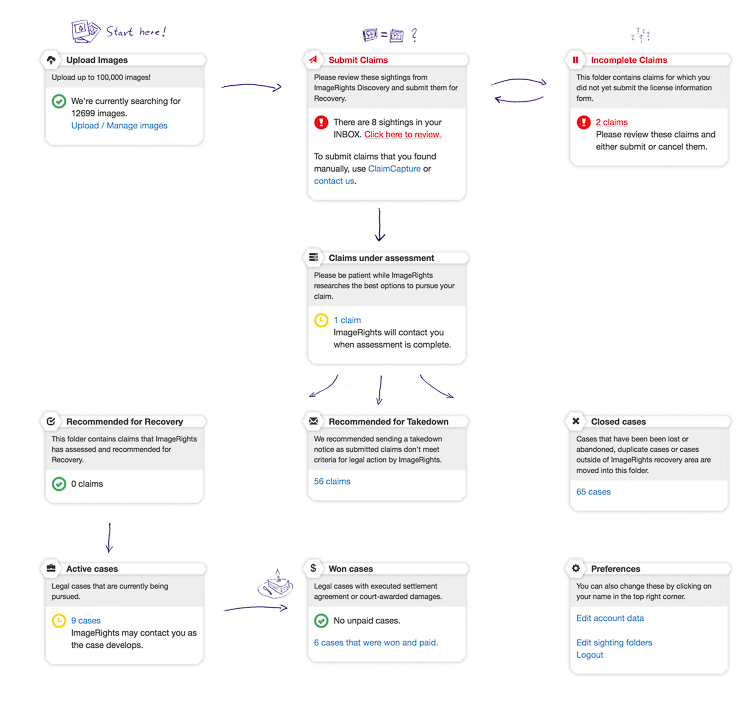
Let’s take a look at the dashboard of Image Rights.

PWC-Image-Rights-01

I like that Image Rights (IR) uses a simple flow diagram to help me visualize what goes where, and what comes next. Images are uploaded by you (upper left), then when a discovery happens (upper middle) there are some options. Starting with the Inbox, you are shown all the current matches for your images. It is then up to you to filter the noise form the signal.

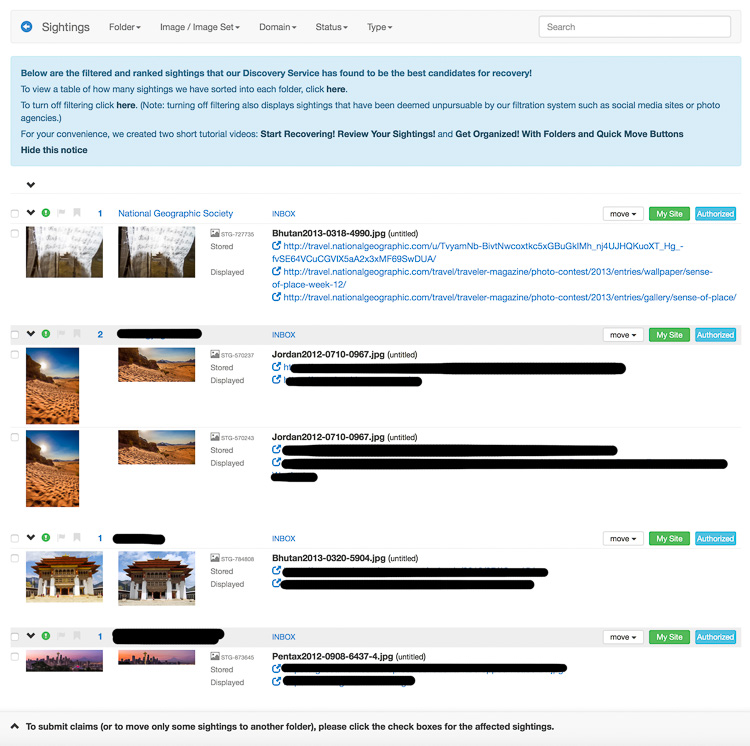
PWC-Image-Rights-02-Edit

I have redacted the names to protect the (potentially) innocent or guilty, except for National Geographic. I left them up there so you can see the details. That was a photo I entered in their contest, so I know that is an authorized use of my image.

IR gives you a link to where the image is stored (it will also show you items that are hot-linked) and where it is used. At this point, you click through the links to see if the image is actually used on the site (sometimes it no longer exists) and if it really is yours.

Opening a Case

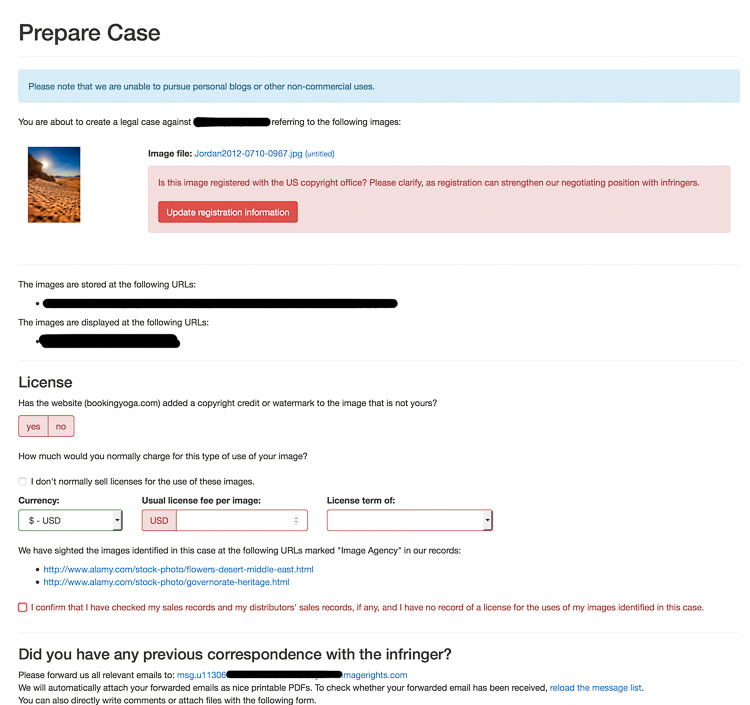
Clicking the check box next to an image means you want to open a case to start an investigation. Doing so brings up the Prepare Case screen (see below).

PWC-Image-Rights-03

Here is your chance to triple check the image use, let IR know if the image is registered with the US Copyright Office (USCO), and give them details of your normal fees.

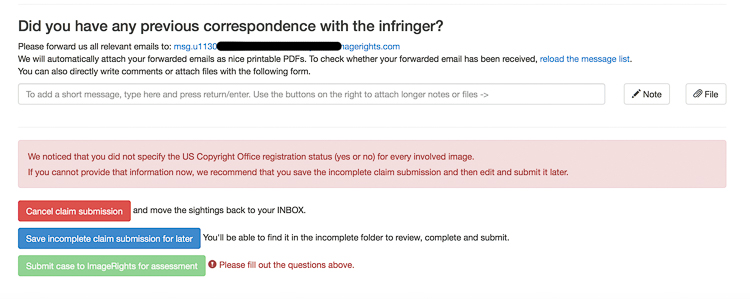
Down at the bottom is where you finish your submission and provide more details. I often have images show up from articles posted here on dPS, that are scrapped by a number of disrespectful sites. I will mention the total number of images and their use. Real people read these comments, and they help clarify all the details to prevent too much back and forth during the discovery phase.

PWC-Image-Rights-04-Edit

Once you click Submit, then poof! Away it goes to be reviewed.

Sorting the Wheat from the Chaff

Getting back to the Inbox for a moment, there are more options than just opening a case. Take a look at the drop down offered next to each item.

PWC-Image-Rights-05

The Sightings Folders explains each of these.

PWC-Image-Rights-06

Those are my real world numbers after using the service for 18 months, along with explanations that most of these things will not be followed up by IR. I use the Authorized and My Site options often, as IR will find my images here on dPS, as well as other sites where I write. This is why they have the “Power User” section at the bottom of that screen; to help you create Quick Move buttons if you find you are clicking the same things over and over again.

Where it Goes Next

Back to the dashboard:

PWC-Image-Rights-01

After submission, your claim will be assessed by real people at IR, then it will be taken on one of three paths.

  1. Case Closed: Various reasons can close a case. Often this is because the claim is outside of countries where IR has legal relationships.
  2. Takedown: The case may have merit, but recovery prospects look low, or no firm will take on the case. These items are moved to “Recommended for Takedown”. These are up to you to complete and sometimes recovery of a fee is still possible on your own.
  3. Recommended for Recovery: this is where you hope your case will end up. You will receive an email asking you what you want to do. Here, the law firm has given input to IR about how much should be asked from the infringer and you are given options to pursue or not.

If you agree to the terms, the case will move to the active stage, and the law firm will being their lawyering activities to attempt to recover a fee from the infringer. I have seen cases sit open for 6-12 months. My oldest is now 16 months. Sometimes it takes a while.

Winning, or Not

In an over-simplified view of the site, cases that are open will either be won or lost. Sometimes they are closed because of no action.

If you win, yay! IR will send you an email, and a note will be added to your case describing how much was recovered and what your cut will be. Payments can take a month or two to filter through.

What Does it Cost?

ImageRights has three basic levels of service.

PWC-Image-Rights-07

The basic level allows you to upload 1000 images, costs $ 50 each time you open a case, and allows you to keep 50% of any money recovered from infringers.

The Pro level allows you to upload 50,000 images, costs $ 495/year and gives a 55% payout. It also comes with three free USCO registrations (more on that in a minute).

The Premier level allows you to upload 125,000 images, costs $ 1295/year, pays out 60%, and comes with five USCO registrations.

How Photographers can Use ImageRights

The most obvious use of IR is to find out who is using your images, and if you choose, make them stop and/or pay for the use of your image.

As their Basic service is free and includes up to 1000 images, it’s a good way to kick the tires and see if the service is useful to you. Be prepared for a bit of noise at first as the crawlers are given your fresh files. Also, if you have some common photos of icons (e.g. The Taj Mahal) be prepared for some false positives.

In the past year I have recovered more money using IR that I have sold via Alamy, my stock photography host. That stat is also common among the my friends who use the service, and also sell stock photos.

I have also found it is a good way to build your CV and electronic tear sheets. One of my clients uses my images in their advertising and is allowed to distribute them to re-sellers of their service for advertising. I can see where the images are used and potentially find new clients who are in need of similar images.

Copyright Registration

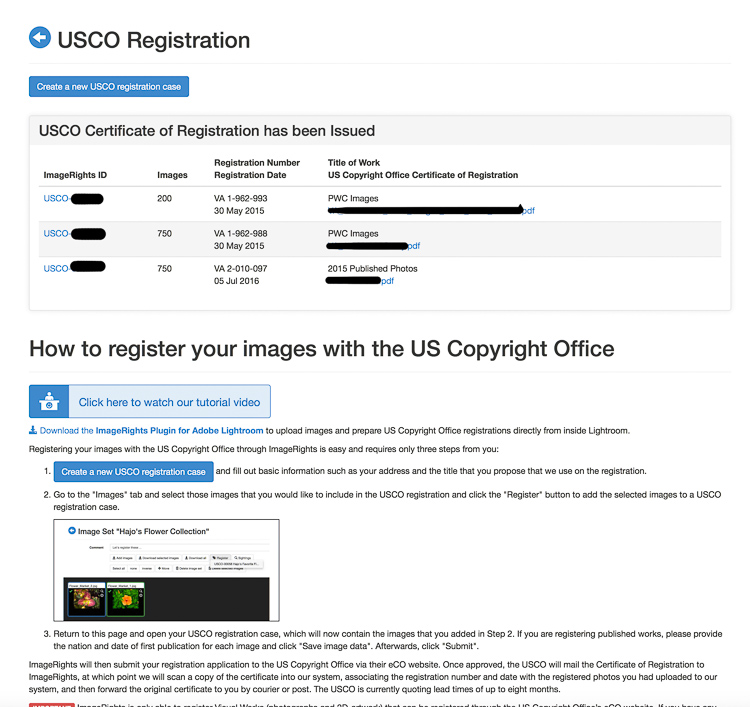
IR also has a useful USA copyright registration feature. You can register up to 750 images at a time in one process.

PWC-Image-Rights-08-Edit

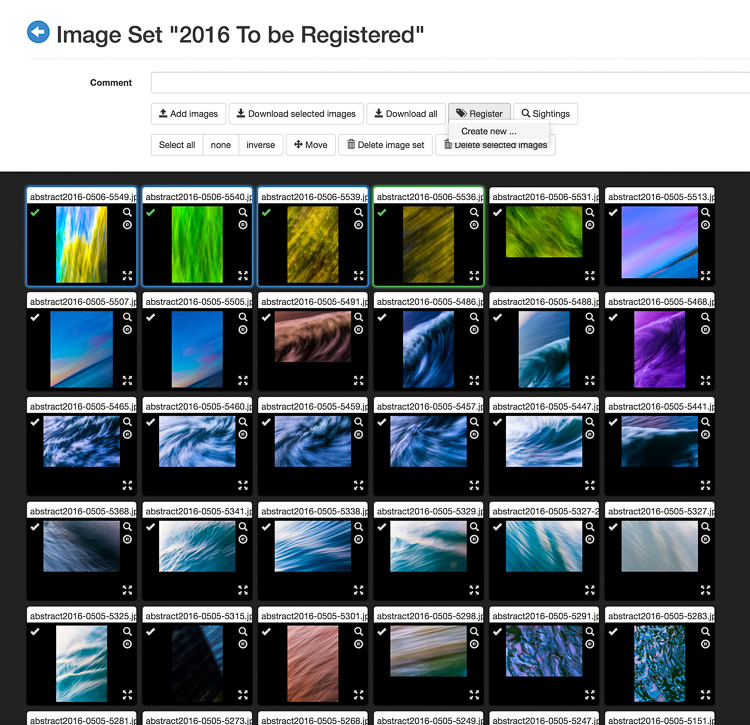
You can do this in the Images area, by selecting individual images you wish to register, then clicking “Register” at the top. Or you can start a registration from the USCO Registration tab, which will eventually loop you around to selecting individual items.

PWC-Image-Rights-09

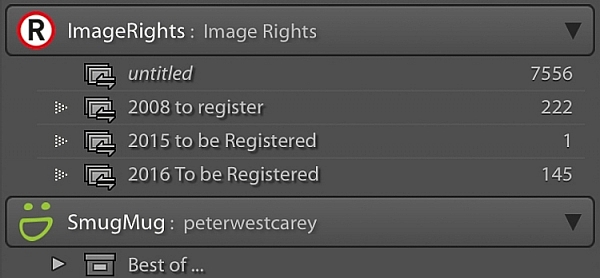
The fee is $ 89 ($ 55 of which is the USCO fee) for Basic members and the other tiers each get a number of registrations free. You will receive a certificate in the mail, and an email with all the file names listed. IR will also remember which items are in process, or have finished registration, when it comes to opening cases. They will even put this data into the metadata of your image file if you use Lightroom!

Lightroom Publishing Service

Lastly, IR has a Lightroom Publishing Service which is a godsend for those of us addicted to the Adobe world of image edits. Create folders in the service just like you would in any other service and then publish them to the site.

PWC-Image-Rights-10

IR then scours the Internet looking for new matches. Plus, if you register any images with the US Copyright Office, that information will be shown in the image metadata inside Lightroom.

Limits of the system

First, there are the countries where IR has no partner legal firm. China, Colombia, Mali; these are some of the many countries without well-defined, and fair copyright protection systems.

Second, there are many uses which just aren’t worth a lawyer’s time to pursue. Blogs, image share sites, and social media platforms are a few of the instances where the payout, or lack of a chance of payout, means no firm will take your case. You are still free to pursue action yourself though.

Also, the bots that run the checks don’t catch everything. Other services like TinEye and Google Image Search are useful in finding other cases of infringement. IR does have a feature called ClaimCapture that let’s you manually enter an infringement in order to purse, so using other search sites is helpful.

People can also simply fail to respond and often there is little you can do. I had a law firm, of all people, blatantly (website banner) use one of my images without permission. They were contacted by IR’s law firm and I noticed the image was promptly removed, but they simply ignored future requests for payment. Knowing that the cost of taking another firm to court would outweigh the benefit, this case was closed after a year of non-response.

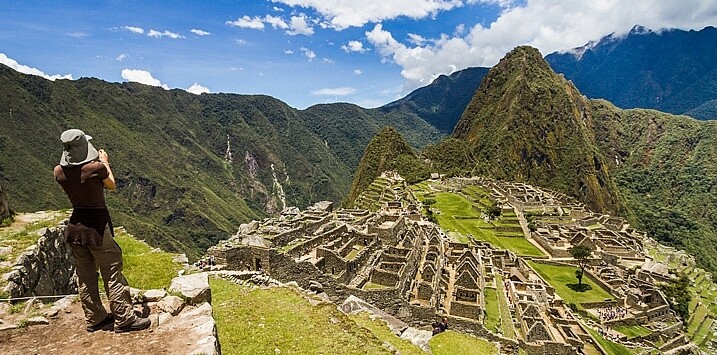
Most-stolen-image-rights

This is my most found image, it’s been taken and used on 15 sites without my permission.

How much time does it take

There is a learning curve at first, for sure. I spent maybe an hour a day at first, or after I uploaded a major amount of images. But like anything, I started seeing what was actionable and what was just not worth it. Now it is about 10 minutes a day, as things are more calm. At first it is a lot of work until you start seeing the types of sites taking your images. I notice Russian or Chinese or Nepali sites and I know I have no chance of recovery, so I put them in the “no chance for recovery” type piles instead of taking the time to submit them, only to have IR reject them. That part is just learned from doing. But it was certainly worth it for me as for pay out.

Conclusion

It’s not a perfect system. If you opt for the Pro plan there is risk of not seeing a return. So far it has worked okay for me, but it’s not like I will retire on all the illegal use of my photos. I like that it gives me some recourse when there is an obvious infringement (like Yahoo using my photo and removing my copyright). It also highlights sites where a Digital Millennium Copyright Act takedown notice is needed. Lastly, it is a relatively easy way to register your images with the US Copyright Office.

Do you do anything to protect your stock photography? What services or methods do you use? If you do photography as a hobby, it may not be worthwhile for you to go to all this trouble. But if you make a living from your images you may want to look into ImageRights.

googletag.cmd.push(function() {
tablet_slots.push( googletag.defineSlot( “/1005424/_dPSv4_tab-all-article-bottom_(300×250)”, [300, 250], “pb-ad-78623” ).addService( googletag.pubads() ) ); } );

googletag.cmd.push(function() {
mobile_slots.push( googletag.defineSlot( “/1005424/_dPSv4_mob-all-article-bottom_(300×250)”, [300, 250], “pb-ad-78158” ).addService( googletag.pubads() ) ); } );

The post ImageRights – Finding and Pursuing Copyright Infringement of Your Images by Peter West Carey appeared first on Digital Photography School.


Digital Photography School

 
Comments Off on ImageRights – Finding and Pursuing Copyright Infringement of Your Images

Posted in Photography


Finding Comfort with Off-Season Photography

24 Jul

When you are learning photography you read so much about golden hours, the right time of the day to take photos, and other rules. What about the sort of photos to take depending on the weather? People tend to think that you need good weather to get good photos.

leannecole-winter-photography-razorback-gor

What happens when all there is only rain, fog, overcast skies, and all you want to do is sit inside, keep warm, and drink coffee? However, what if you disregard all that, and decide that you like the image you get in the winter or just bad weather?

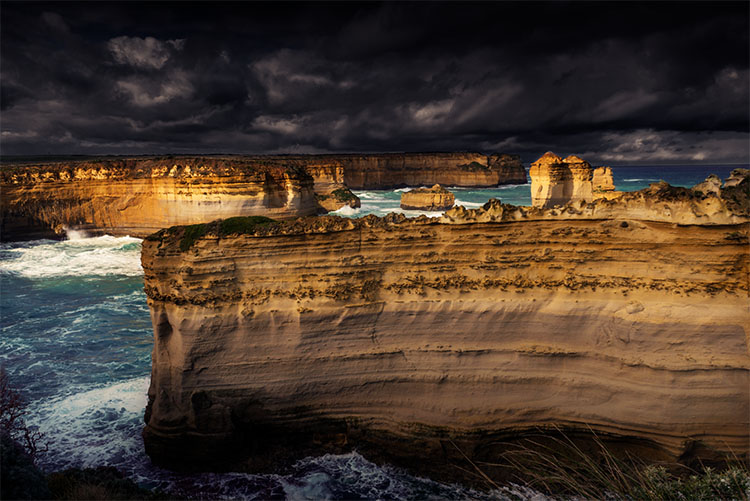
There is no question that the images you get in the off-season (that could be snow, monsoon, or heat wave depending where you live), when you would rather stay indoors, are going to be very different. It should be considered as opportunity to see nature in a different light, and a challenge to be brave, to try new types of images. It is also important to take steps to make sure you and your gear are protected from the elements.

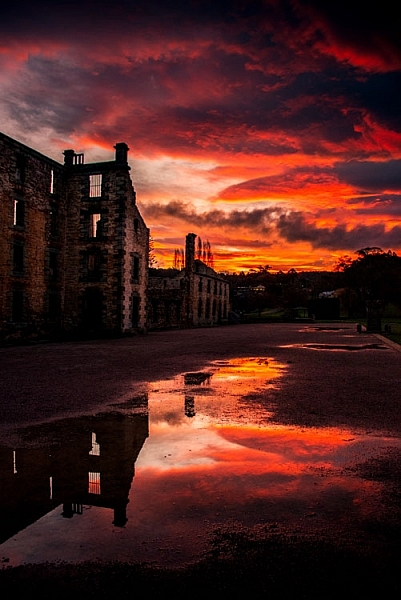
LeanneCole-winter-photography-008

A winter sunset at Port Arthur in Tasmania made even bigger by all the rain and the puddles creating fantastic reflections.

Here are a few reasons why off-season is a great time to take photos:

Not many people around

If you are anything like me, you dislike people who walk into your shot, or just won’t leave an area you want to photograph. During the popular vacation times you will be surrounded by people, and many other photographers who think that taking photos in popular places is also a good idea. It can be very crowded.

Winter (or off-season) is a time that most people decide not to travel, they don’t want the weather ruining their trip. This makes it the best time for you to go out and take photos. You may find that many spots are devoid of people, or there won’t as be many.

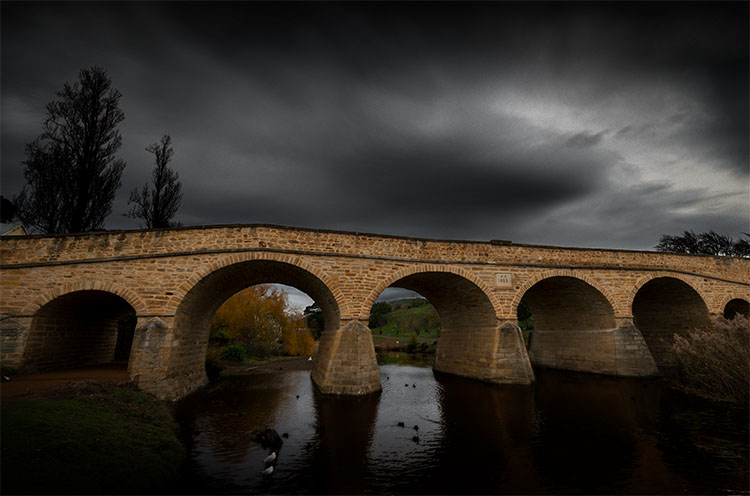
leannecole-winter-photography-richmond-bridge

It is an opportunity to take photos that others will not

As most people will stay indoors when the weather is bad, you will be able to get out and take the photos the others miss out on. Rain, fog and snow can all give you incredible images. Even overcast grey days will give you a different look. There are some of us who would go for an overcast sky any day, over a beautiful blue one with no clouds.

Making the most of breaks in bad weather

During bad weather there are going to be breaks where the rain (snow, or whatever you get there) will stop and if you are lucky the sun might even come out. In southern Australia that often happens. You might only get 10 minutes of it, or a few hours, so you have to make the most of it.

You can’t be lazy. If you see the weather improving, you need to get out there fast. Visit all the places on your list and see what you can get. In some instances, it may be the only opportunity you get to shoot some spots.

LeanneCole-winter-photography-009

A break in the rain at Strahan, Tasmania, so we spent four hours getting what we could before it started again.

Water in winter

There is something quite magical about water in the winter or off-season. When it isn’t raining, the stillness can create some magical landscapes where the water will be so calm, that everything reflects in it. Often after light rain you can get that flat reflective surface.

LeanneCole-winter-photography-003

Reflections in the water can be wonderful, especially when you get an overcast sky reflected as well.

Rain gives a natural vibrance

Have you ever noticed how a dry seashell is dull, and the vibrancy that you saw in it on the beach is gone? That is, until you wet it again! When I was a child we used to paint shells with clear nail varnish so they would keep that wet look.

The landscape is not that much different. You can’t paint it with varnish, but you can look for rainy days that make it all wet. Colours are saturated and just pop out. Grass appears a lot greener, and warm tones like red and yellow stand out a lot more. You get a landscape that is grey, but in it there are also saturated colours that are accentuated to make the image more interesting.

LeanneCole-winter-photography-010

Colours can appear saturated during and after rain.

Moody landscapes

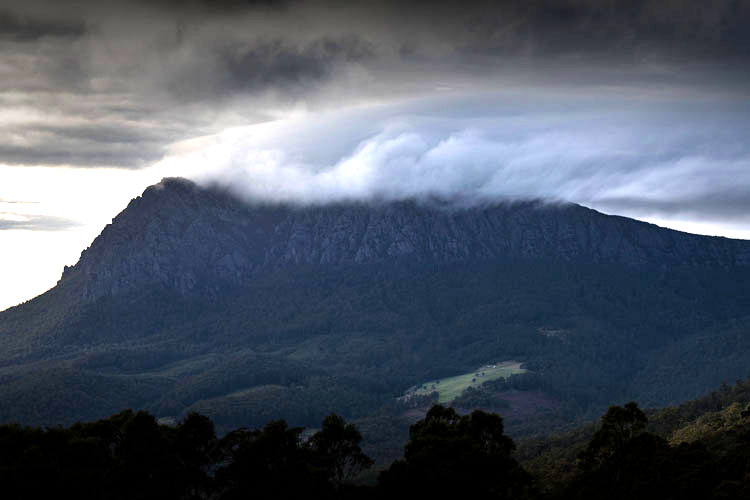
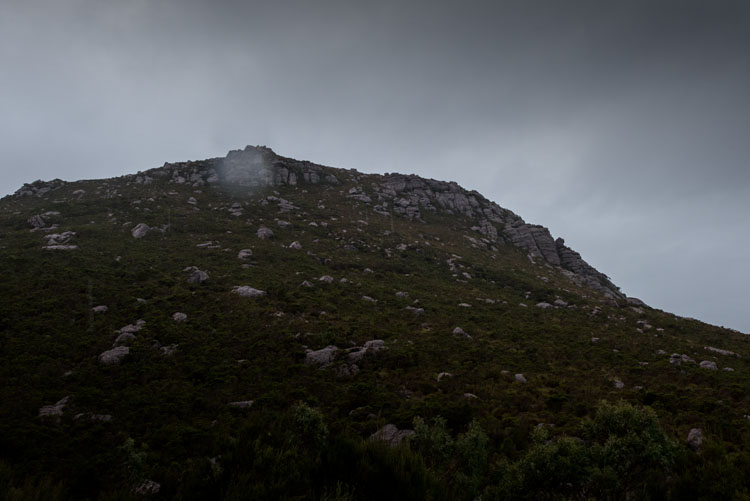
Off-season gives you so many more opportunities to get moody landscapes. Nothing says mood like a scene drenched in fog. It has a way of isolating your subject, and making it the most important thing in the image. The mist is also great for getting silhouettes of objects, especially around water.

Overcast skies can do the same. Dark foreboding clouds can create darkness in landscapes, and give a sense of dread, tinged with some scariness. The absolutely best scene is the one with a dark overcast sky, then the sun peeks through a break in the clouds, and highlights an aspect of the image. It’s like hitting the jackpot, you get the best of everything. It is one of my favourite things to capture.

If you are out and see fog, frost, or lots of clouds, try to figure out how to make them work for you in your image. See if you can get lots of different angles, and what you can do with them.

leannecole-winter-photography-hellsgate-lighthouse

LeanneCole-winter-photography-004

Fog can create moody landscapes and isolate areas.

Light

Photography is full of rules, how to take photos, when to take photos; it is said that you shouldn’t take photos between 10am and 4pm. Is this true? Perhaps in the summer, and those places that don’t really have winter, but if you live a long way from the equator this rule may not apply to you. The further you are away from it the less it applies.

leannecole-winter-photography-queenstown

Winter (off-season) light is quite beautiful. There is a softness to it that makes photographing wonderful, and you can get some incredible images. The shadows are soft, meaning the edges aren’t hard and sharp like they are in the summer. The sun doesn’t get as high in the sky so the shadows are always long.

Living in a country like Australia where the summers are hot and harsh, I look forward to winter every year. It means I can go out and take photos for as long as I like, when I like. The clock doesn’t dictate when it is a good time. Winter is my absolute favourite time for photography here.

LeanneCole-winter-photography-007

On an overcast day the sun could suddenly come out and give your landscape a spotlight effect.

Equipment you need to take with you

When you are travelling in the off-season you have to be prepared for wet and cold weather. It’s likely going to mean that you will have to take more gear with you so that you can protect your gear.

In your kit it’s good to have a plastic raincoat cover for your camera; a sleeve that will fit over your camera, but the end is open for your lens so you can still take unobstructed photos. Many cameras can take a certain amount of water, the more high end ones more so, but you don’t want to push it much. If you are out in the rain constantly, then protect it as much as you can.

LeanneCole-winter-photography-006

Riding in a boat in open water in inclement weather is a disaster waiting to happen, so make sure you protect the camera and keep it covered up.

A lens hood is one of the best ways to protect the end of your lens when it is misty and raining. The sides of it can help prevent water from ruining your photos, unless you are shooting straight into the wind.

Having a lens cloth close by is an absolute must. As much as you try to keep the lens dry if there is any breeze, you will get drops of water on the end. It is good to keep it in your pocket for quick access. Nothing spoils a photo more than water drops on the lens.

LeanneCole-winter-photography-002

Waterdrops on your lens can ruin your images, and can be very hard to remove in post-production, especially if there are lots of them.

Making the most of it

You shouldn’t think of the off-season as a time to hibernate, but make the most of weather that other photographers don’t consider. Think about how you can get the weather conditions to enhance your images, and give you a final photo that is unique. Good luck with it and remember to rug up and keep warm.

LeanneCole-winter-photography-005

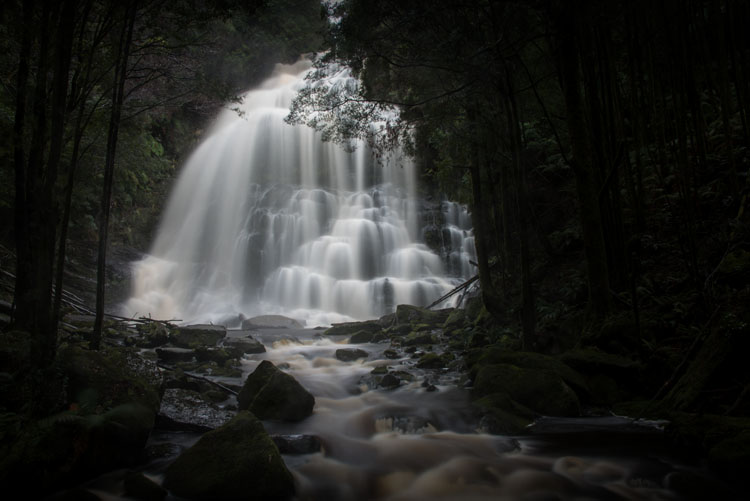
Waterfalls can be full of water from lots of rain.

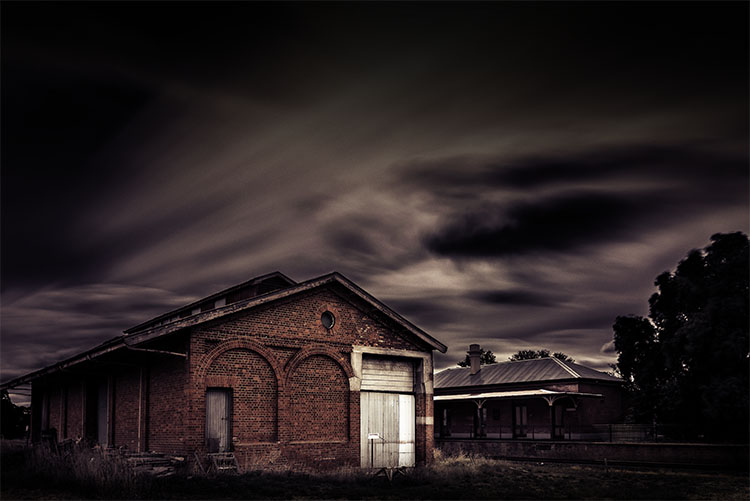
leannecole-winter-photography-newstead-railwayshed

googletag.cmd.push(function() {
tablet_slots.push( googletag.defineSlot( “/1005424/_dPSv4_tab-all-article-bottom_(300×250)”, [300, 250], “pb-ad-78623” ).addService( googletag.pubads() ) ); } );

googletag.cmd.push(function() {
mobile_slots.push( googletag.defineSlot( “/1005424/_dPSv4_mob-all-article-bottom_(300×250)”, [300, 250], “pb-ad-78158” ).addService( googletag.pubads() ) ); } );

The post Finding Comfort with Off-Season Photography by Leanne Cole appeared first on Digital Photography School.


Digital Photography School

 
Comments Off on Finding Comfort with Off-Season Photography

Posted in Photography