Not long ago, you made your stand as a ‘serious’ amateur photographer by using a medium format camera. Compacts and SLRs existed of course, but the graduation from 35mm film to 120 or 220 formats meant that you had really made it. These days, digital medium format cameras occupy a niche in the market, but the allure is still there. Damien Demolder spends a little time with Phase One’s 645DF+ and IZ250 back – see how they get along. Read more
Tag: Field
-
Super Zoom? Tamron SP 150-600mm F5.0-6.3 Di VC USD Field Test
Tamron announced the SP 150-600mm F5-6.3 Di VC USD at the end of 2013, and as one of the cheapest ways to reach past a 400mm focal length, it quickly became popular with amateur wildlife and sports photographers. We’ve previously published a lab test for this lens, but in order to get the complete impression, we wanted to spend some time with it out in the field. Read more
-
Cargo Spotting: Field Guide to 20MM Global Shipping Containers
[ By WebUrbanist in Travel & Urban Exploration. ]

Shipping containers pass by us daily on trucks, trains and ships, carrying 90% of the world’s non-bulk cargo with them, but if you have ever wondered what the mysterious colors and brands really mean, you will want to keep a copy of The Container Guide by your side. A publication of the Infrastructure Observatory, this volume contains a wealth of information on virtually all of the major companies that together own and ship the planet’s 20 million containers back and forth across the globe.

Produced by Tim Hwang and Craig Cannon of the American Container Society, this waterproof, pocket-sized book contains maps, photos, logos, guides and tips to spotting cargo containers on (or off) ships around the world, handily searchable by region, color and brand. Part of the inspiration for this publication was the relative anonymity with which so many of these semi-mysterious companies seem to operate despite their size (a mere 100 companies control 9 out of 10 containers).
Like Networks of New York, a recently-published field guide to internet infrastructure, this guide draws both conceptual and design “inspiration from classic Audubon birding guides, is a practical field guide to identifying containers and the corporations that own them. Inside you’ll find virtually every major shipping concern brought to life in full-color on durable, tear- and water-resistant paper.” More than just a resource or reference, the guide taps into our deeper shared urge to understand everyday systems and those unnoticed elements of daily life in a globalizing world.

The book also features introductions covering the history of containerized shipping, the rise of refrigerated modules and an introduction to using cargo containers as homes. The first of these three contributors recalls the instigator of this shipping revolution, Malcolm McLean “a trucker by trade, who saw that a multimodal unit that could be seamlessly shifted from ship to truck to train would do to shipping what Henry T. Ford’s production line did for the automobile manufacturer.” Indeed, the use of standard modules has revolutionized the way we ship and helped ships become the dominant form of transportation for goods around the world.

Author and researcher Tim Hwang has more than a passing interest in large systems. A initial failed attempt to gain visitor access to a power plant led him to create the Infrastructure Observatory, a more official outfit to allow him and his fellows to check out everything from factories and roadways to global ports and waste water treatment plants. Last year, the group’s efforts culminated in a fantastic event (hopefully to be soon repeated) called MacroCity. This conference featured a series of panel discussions, presentations and a set of field trips around the Bay Area, including all kinds of professionals from landscape architects and dam engineers to topical authors and niche academics.

Born in San Francisco, the BAIO has now expanded to include a New York chapter that recently took a trip to the Global Containers Terminal in New Jersey. Upcoming plans include a series of tours surrounding the birthday of Victor Gruen, founder of the modern shopping mall. Longer term, Hwang hopes to see Infrastructure Observatory chapters grow in cities around the world. Meanwhile, he wears many other hats as well, as co-founder of the Awesome Society, Director of Strategic Partnerships at Imgur and Director of the Intelligence & Autonomy Project at the Data & Society Research Institute among other past and ongoing pursuits.
Want More? Click for Great Related Content on WebUrbanist:

Crazy Cargo: 30 Steel Shipping Container Home Designs
Shipping container homes are the perfect blend of modern architecture and sensible green building. Buy your own used cargo container on sale and start building …
Click Here to Read More »»
Networks of New York: Field Guide to Internet Infrastructure
We tend to think of the internet as something akin to aether, present all around us in the void – or perhaps something traveling down a series of tubes …
Click Here to Read More »»

3-in-1 Cargo Shelters: Expandable Containers Triple in Size
Shipping container shelters combine the appeal of ultimate portability with rugged durability, but these structures add another dimension lacking in the …
Click Here to Read More »»


[ By WebUrbanist in Travel & Urban Exploration. ]
[ WebUrbanist | Archives | Galleries | Privacy | TOS ]
-
Seeing in Depth of Field: A Simple Understanding of Aperture
Photography can be simply defined as: painting with light.
When you are painting with light, you are creating a story in a split second. That’s what photography is all about. Technically, your camera is measuring the light in the scene, and you are telling it how much of that light you want to use to create a properly exposed image. This becomes your story.
There are three main settings used to control that light; Shutter Speed, ISO and my favorite, Aperture. Each of these settings has its own individual way of measuring light. When all three are balanced correctly, you create a proper exposure.

Though each of these three settings measures light, they also have unique characteristics that create artistic qualities in your photographs. By understanding them, you have control over the full story you want to tell.
Shutter speed captures movement or freezes it. ISO helps control how sensitive your camera is to the available light in a scene. Finally, the aperture creates depth of field. This is where the real story comes from; it is with aperture that you control what is in focus, and what is out of focus.
As a photographer, how do you decide what you want your viewer to focus on? How do you create a story? That’s what aperture is all about, and that’s why I love it.
WHERE IS IT AND WHAT DOES IT DO?
Aperture is located in your lens, not in the camera body. The lens opening expands and contracts to control light. By selecting a specific aperture size, you are telling the lens how much light you want to hit, and register on, the sensor.
It is very similar to how the human eye works. Your pupils expand and contract based on the available light in the scene. Like when you first walk into a dark movie theater. At first you can’t see, then your eyes adjust. Your pupils expand, allowing your eyes to see as much light as possible in the dark room.
Again, when you go outside on a sunny day, at first it’s too bright to see. Your pupils adjust by contracting, letting in less light. Your lens aperture works the same way. Changing aperture settings is like your pupils dilating or contracting.
The size of a lens aperture is measured in what we call f-stops (fractional stops). Just like all settings on a camera, there is a general range.
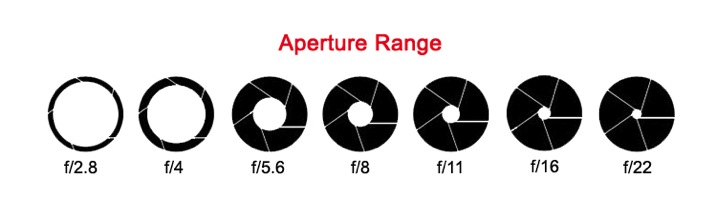
The numbers aren’t necessarily important to memorize. What’s important is to see the range in the settings. Here is the trick; the smaller the f-stop number (like f/1.8), the larger the aperture opening. This means more light will enter through your lens at once, and vice versa. The larger the f-stop number (e.g. f/22), the smaller the aperture opening, and less light will enter your lens.
Think of these f-stops as fractions. Just replace the F with the number one. 1/4 of a pie is much more than 1/16 of a pie.
A quick note: Not all lenses are built the same. Different lenses have different apertures. Some lenses have a wider range and some have less. Standard lens will range from F3.5–F22. Specialty lenses go as low as F1.2 or more. See: What the Numbers on your Lens Mean for more on this.
SEEING IN DEPTH OF FIELD
Here is where it gets fun. While measuring light, when the lens expands and contracts, it also measures depth of field. Again, your eyes do the same thing!
As you look at the screen to read this, these words are mostly in focus to your eyes. In your peripherals, you can see other things, but they aren’t in focus.
Notice, your hands on the keyboard, they are in the foreground, and perhaps a bookshelf is in background. You can see them but they are not in focus. You are seeing in depth of field.
A great photograph does just that. It captures a foreground, a mid-ground and background. By setting your aperture you are controlling which of these areas is in focus. It is all based on your intention, your story.
DEFINING DEPTH OF FIELD
With your camera’s focal point (that little square in the middle of your viewfinder), you focus on a particular part of the scene. This point becomes the sharpest part of your image. There is an area in front of that point in focus, and an area behind it in focus as well. The distance from front to back that is acceptable focus is considered your depth of field. You decide what is acceptable by choosing a specific aperture size.

This is a story about a monkey on a cliff. The bushes in the foreground and the temple on the cliff in the background are out of focus. They are out of the depth of field. This brings your attention to the focal point; the monkey in the middle (no pun intended).
Remember, the lower the f-stop number, the bigger the opening, the more light comes through the lens. This means less of your scene is in focus and you have a shallow depth of field. The opposite is also true. The larger the f-stop number, the smaller the opening, the less light comes through the lens. In this case, more of your scene is in focus and you have a greater depth of field.
Simply put, the larger the f-stop number, the more will be in focus. The smaller the f-stop number, the less well be in focus.
A DEEPER LOOK AT DEPTH OF FIELD
As you lock your camera’s focal point on a specific spot, that spot creates a focal plane. Everything that is the same distance away from the lens is on the same focal plane, and will be in focus.

At a shallow depth of field (low number), the focal plane is very thin. As your depth of field becomes greater (high number), the focal plane becomes deeper.
Here is the same scene photographed with different aperture settings. Notice that the depth of field changes how much of the image is in focus.
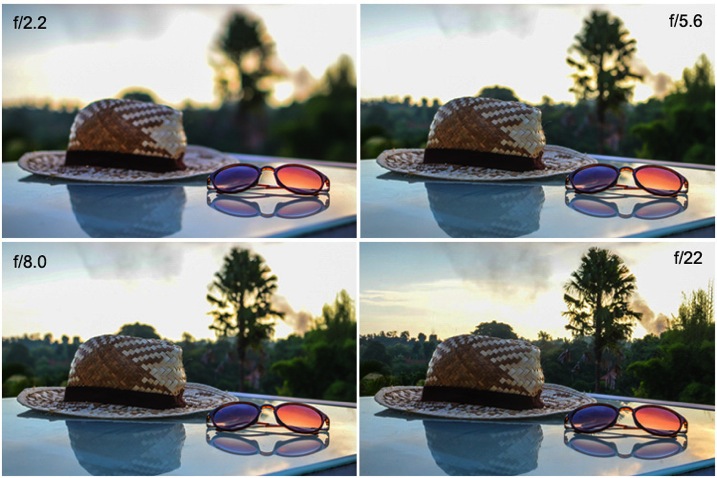
At f/2.2 only the sunglasses are in focus. At f/5.6 the hat is also in focus. By using f/8.0 you can start to make out the trees in the background. Finally, at f/22 everything in the image is in focus.
Which one tells the best story? You as the photographer, get to decide.
PRACTICE TIPS AND TRICKS
Now that you’ve got a good grasp on the basics, it’s time to play! Here are some great tips to start your practice.
Set your camera to Aperture Priority mode. You will have full control of the aperture, without having to worry about proper exposure. This way you can just focus on depth of field. It’s a great way to fully understand what your lens is doing as you change your aperture settings.
Pick a subject or scene, and stick with it. Photograph your scene from many different angles. Choose different parts of the scene to focus on using the full range of aperture settings.
Use these guidelines to capturing depth of field in different scenarios:

When shooting single subjects, like a portrait of a child, it is best to use a lower f-stop like f/1.2-f/2.8. Creating a shallower depth of field brings attention to the subject’s face, which is always most important in a portrait.

When shooting a small group of people (2-5), choose an aperture of f/4-f/8. This, being a slightly deeper depth of field, guarantees that everyone in the group will be in focus.

Any time you have a wide-open scene, for instance a landscape, and you want all of that landscape in focus, choose a setting above f/10.
These are just guidelines. Photography is a form of art. Be creative, and remember, it’s all about telling a story.
What story do you want to tell? Share your images here and show how you’ve used depth of field to create a great story.
All Images in this article are © 2015 Danielle Werner and DEW Imagery & Design
Bio
Danielle Werner is a free-spirited photographer, designer and retoucher, on an endless journey around the world. She is also a passionate writer and educator who teaches photography workshops wherever she goes. Read Danielle’s inspirational travel stories at LiveWonderful.com, and check out more of her adventure and lifestyle photography at DEW Imagery & Design. You can also connect with her via:
https://twitter.com/ImageryDEW
https://www.facebook.com/livewonderfulblog
googletag.cmd.push(function() {
tablet_slots.push( googletag.defineSlot( “/1005424/_dPSv4_tab-all-article-bottom_(300×250)”, [300, 250], “pb-ad-78623” ).addService( googletag.pubads() ) ); } );googletag.cmd.push(function() {
mobile_slots.push( googletag.defineSlot( “/1005424/_dPSv4_mob-all-article-bottom_(300×250)”, [300, 250], “pb-ad-78158” ).addService( googletag.pubads() ) ); } );The post Seeing in Depth of Field: A Simple Understanding of Aperture by Danielle Werner appeared first on Digital Photography School.
-
Field Test: Sigma 19mm, 30mm and 60mm F2.8 DN lenses
Sigma’s 19mm F2.8 DN, 30mm F2.8 DN and 60mm F2.8 DN Art lenses were launched at the CP+ show in Yokohama way back in January 2013. We’ve been using these inexpensive primes on both Sony E-mount and Micxro Four Thirds cameras for a while now, and our man in London, Damien Demolder has written up his impressions. We pooled our sample images for this field test. Read more
-
Nocturnal Field Trips: 7 World Wonders Best Explored at Night
[ By WebUrbanist in 7 Wonders Series & Travel. ]
When planning out world travel, one typically dwells on destinations more than times, but some of the best sights can only been seen at a particular point in the day or, in the case of these marvels, at night.

WebUrbanist is pleased to announce a new partnership with Google Field Trip, bringing some of our best and brightest travel articles to their mobile platform, allowing you to find hidden wonders of the world wherever (and whenever) you may be. In this article, we have teamed up to highlight seven amazing places to visit by night, each offering special surprises to the nocturnally inclined.
World’s Largest Urban Bat Colony in Austin, Texas
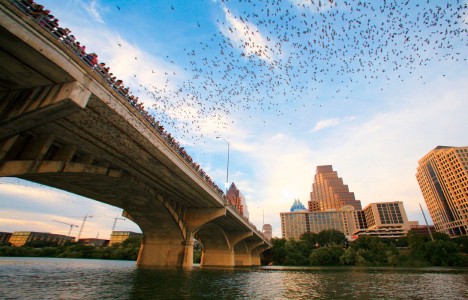
At dusk, people flock to watch the emergence of 1.5 million bats from beneath the Congress Avenue Bridge, designed and built in 1980 in a way that inadvertantly turned out to provide an ideal roost for a particular breed of flying nocturnal predators.
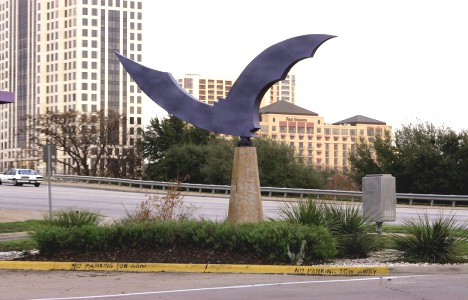
Often under-appreciated or even feared, these night flyers consume between 10,000 and 20,000 pounds of food each evening, helping them earn their keep. Today, there is even a dedicated Statesman Bat Observation Center from which visitors are encouraged to experience the spectacle.
World’s Largest Ice & Snow Festival in Harbin, China
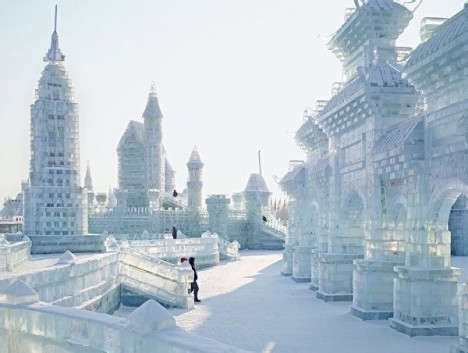
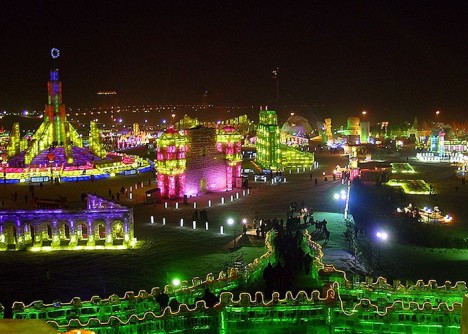
By far the biggest such event in the world, the Harbin International Ice & Snow Sculpture Festival consists of huge works of art and architecture that truly come into their own once the sun sets and glowing lights behind and within bricks of ice come to life.
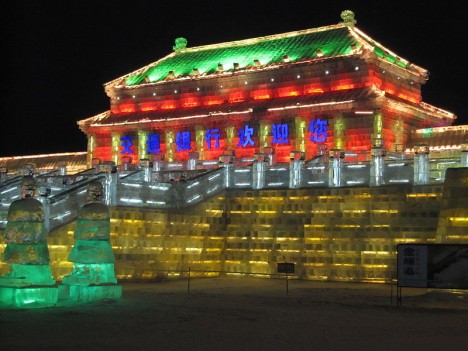
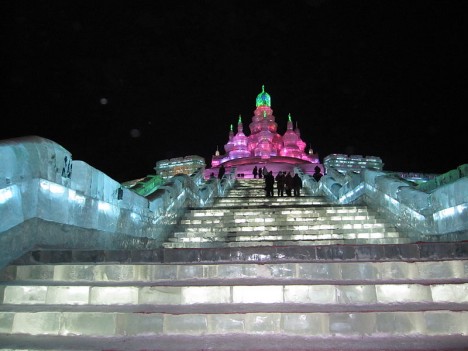
Using swing saws to cut ice directly from an adjacent river, artists then turn the frozen building blocks into human, animal and mythical figures as well as huge staircases and structures. Among other honors and awards, a snow sculpture featured at the festival holds the world’s record for size at 750 feet by 28 feet (13,000 cubic meters of snow). Other similarly-impressive global ice festivals can be found in Japan, Canada and Norway as well.
Synchronous Firefly Swarms near Knoxville, Tennessee
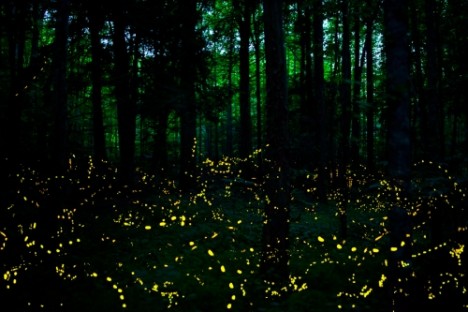
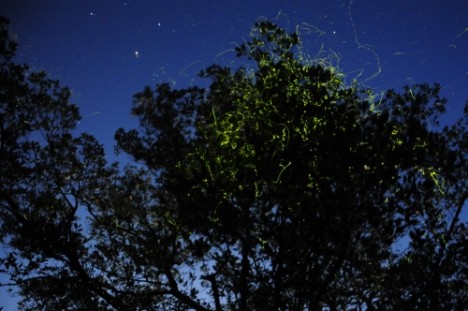
Fireflies can be a wonderful sight regardless of the species, but one rare type in particular (Photinus Carolinus), is even more special than its cousins: the so-called Synchronous Firefly swarms light up in unison, pulsing every few seconds at the exact same time.
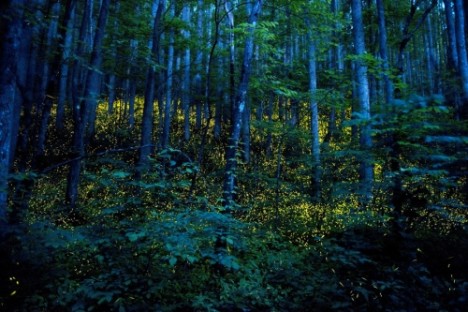
At Great Smoky Mountains National Park, viewers can buy tickets in advance and be taken by shuttle to special viewing areas from which to observe these lightning bugs. Within the park, 18 other species of firefly can also be found, but only one whose constituents almost all flash simultaneously.
Ghost Ship Water Hologram in Amsterdam, Holland
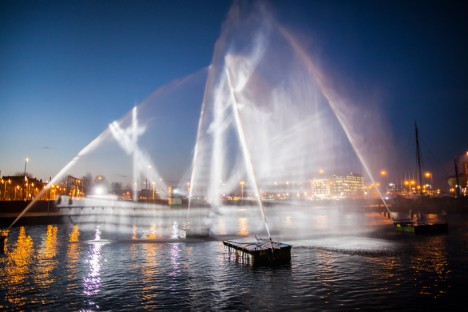
A maritime marvel in more ways than one, this 3D optical illusion involves two intersecting planar projections beamed onto perpendicular planes of vertical water.
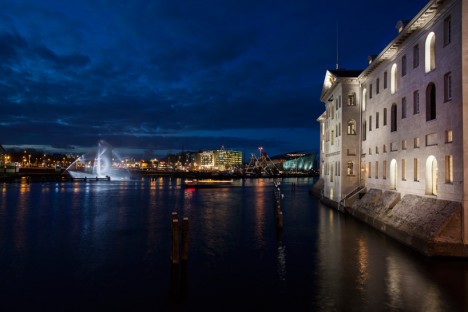
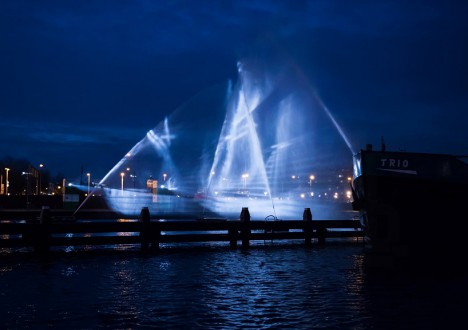
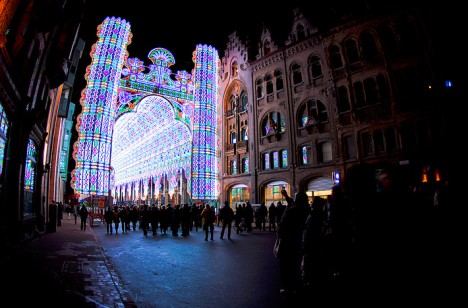
Created for the Amsterdam Light Festival by VisualSkin, the resulting real-life rendering looks like a 17th-century seafaring vessel seemingly held in stasis and composed of water and light. The effect, naturally, works best at night, turning a fountain by day into a marvelously surprising evening display.
Next Page – Click Below to Read More:
Nocturnal Field Trips 7 World Wonders Best Explored At Night
Want More? Click for Great Related Content on WebUrbanist:
Record-Setting Cities: 7 Urban Wonders of the Modern World
Unbelievable as it may sound, there are those who track urban wonders of all kinds – from the narrowest to the most windy streets of the world and more.
Click Here to Read More »»
Buried Cities: 7 (More!) Underground Wonders of the World
Humans burrow into the Earth out of anything from necessity to superstition, driven by coincidence or coerced by circumstance.
Click Here to Read More »»
Abandoned Cities: 7 Deserted Wonders of the Modern World
From small towns to entire cities, here are some of the most amazing, strange and surreal urban abandonments of the post-modern world.
Click Here to Read More »»
[ By WebUrbanist in 7 Wonders Series & Travel. ]
[ WebUrbanist | Archives | Galleries | Privacy | TOS ]
-
Video Field Test: Tamron SP 15-30mm F2.8 Di VC USD
Tamron claims that its new SP 15-30mm F2.8 Di VC USD offers prime lens quality across its focal length range, paired with a fast maximum aperture and – uniquely in its class – an optical vibration compensation system. We’ve been impressed by how this wideangle zoom performs in our studio, but that’s only half the story. Our latest video field test follows DPReview technical editor Rishi Sanyal as he uses the Tamron 15-30mm to shoot architecture, cityscapes and waterfalls. Watch the video
-
Field test: Shooting Roller Derby with the Olympus OM-D E-M5 II
James McDaniel is a self-taught photographer with a special interest in roller derby. He’s also a Micro Four Thirds shooter, so when we were looking for someone to test out the E-M5 II in the real world with us, we immediately thought of James. Watch our latest video field test to see how how the camera performed on game day, and don’t miss an opportunity to see Barney on roller skates. See video
-
24 Uber Sharp Images with Huge Depth of Field to Focus Your Attention
Over the last few weeks on dPS we’ve had some collections of images that demonstrate some of the basic photography principals. Last week it was using a large aperture for shallow depth of field. This time we’re going the other way and looking for images with a lot of depth of field, ones that utilize small apertures like f/16 or even smaller.
These are usually images with a lot of depth and focus from near to far. Landscape photographers use this technique often as do, surprisingly, macro shooters. When you get up close the depth of field is really slim so you need that added focus from the smaller apertures (if not using focus stacking techniques).
As a neat side effect if you include a light source like direct sunlight – smaller apertures will turn those into starbursts – a telltale sign you know a small aperture was used.
So here are some images that exemplify maximum sharpness and large depth of field:
True Grit by Sean Bagshaw on 500px
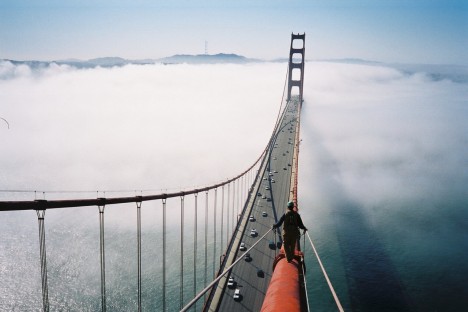
Golden Gate In Chains by Robert Schmalle on 500px
From Above by Dylan Gehlken on 500px
Taillante by Gabriele Mannelli on 500px
Exuberance I by Julia Anna Gospodarou on 500px
Happy Holidays from the Bay Bridge by Aaron M on 500px
Darkroot Grotto by Alex Noriega on 500px
Arch Angel Falls, Zion National Park by Don Smith on 500px
Under the Bridge by Dariusz Klimczak on 500px
Mr. Robber & Prey by Donald Jusa on 500px
f by Martin Brown on 500px
Macro Snail by Enrico Salvati on 500px
rose by Guido Schulze on 500px
Pipevine Swallowtail Butterfly Eggs by Douglass Moody on 500px
canon 5d mark 2 by maxime nadeau on 500px
Gdansk by ?ukasz Derangowski on 500px
Portland Head Light by Joseph Rossbach on 500px
Only Three Left in Our Care… by Dana Allen on 500px
Crystalline Chamber by Justin Grimm on 500px
Keizersgracht – Amsterdam by Iván Maigua on 500px
Winter Chapel Dobratsch 2159m by Reinhold Samonigg on 500px
BMW 2002 by Ivan Barinov on 500px
Echoes of Light by Adrian Borda on 500px
Highest Mountain In Indochina by Por Pathompat on 500px
googletag.cmd.push(function() {
tablet_slots.push( googletag.defineSlot( “/1005424/_dPSv4_tab-all-article-bottom_(300×250)”, [300, 250], “pb-ad-78623” ).addService( googletag.pubads() ) ); } );googletag.cmd.push(function() {
mobile_slots.push( googletag.defineSlot( “/1005424/_dPSv4_mob-all-article-bottom_(300×250)”, [300, 250], “pb-ad-78158” ).addService( googletag.pubads() ) ); } );The post 24 Uber Sharp Images with Huge Depth of Field to Focus Your Attention by Darlene Hildebrandt appeared first on Digital Photography School.
-
Networks of New York: Field Guide to Internet Infrastructure
[ By WebUrbanist in Travel & Urban Exploration. ]
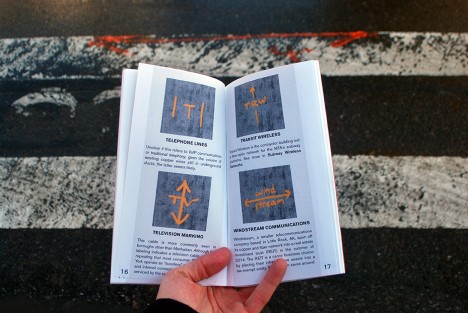
We tend to think of the internet as something akin to aether, present all around us in the void – or perhaps something traveling down a series of tubes – the reality is much more complex, rich and intriguing.
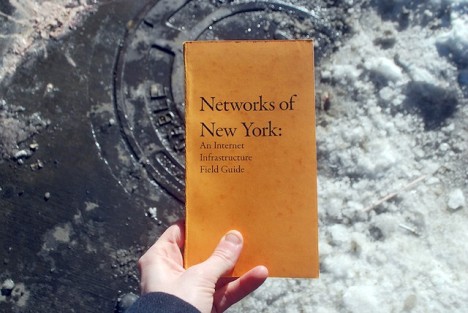
In an upcoming book titled Networks of New York: An Internet Infrastructure Field Guide, Ingrid Burrington presents an urban variation on a naturalist’s handbook, giving you the tools to tour the real-life objects that are often obscured or simply hidden in plain sight all around cities.

From the author, “New York’s network infrastructure is a lot like the city itself: messy, sprawling, and at times near-incomprehensible. However, the city’s tendency toward flux is a strange blessing for the infrastructure sightseer: markings and remnants of the network are almost everywhere, once you know how to look for them.”
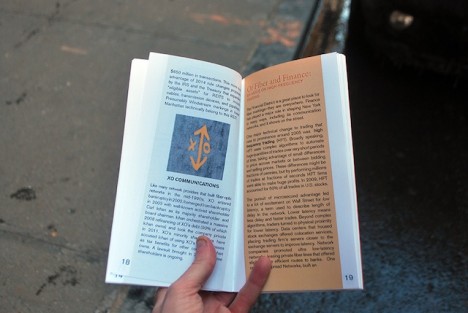
The story starts with manhole covers and progresses through street markings, which follow a federal color-coding standard: “Orange refers to the broad catch-all of ‘Communications, alarm, signal lines, cables and conduit.’ This means that orange lines can be internet cables, television cables, telephone lines, or other kinds of conduits.”
“The markings are sometimes really sloppy, and often in fragments. Sometimes you’ll see several different labels in the same place. A lot of these cables are bundled up together running through ducts under the city.” Suddenly all of the strange acronyms are comprehensible, including but not limited to: CATV, NXTG, T, ECS, RCN, MCI, L3, XO and FO.
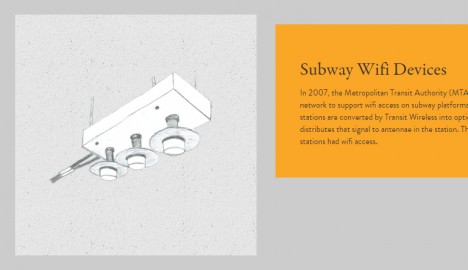
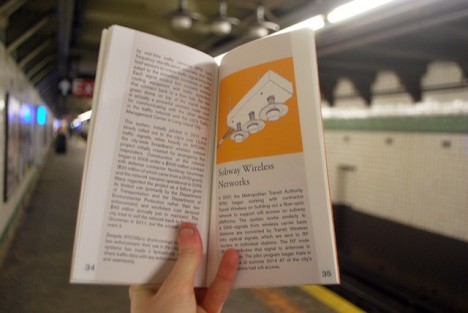
The book also branches out to cover different kinds of antennas security cameras we are so used to seeing but many of which we do not understand the purpose of at a glance, from subway wifi devices and distributed antenna systems to CrimeEye, MTA and NYPD surveillance camers.

Finally, the authors builds up to the biggest elements of the built environment: architectural structures housing various large-scale elements of internet infrastructure along the city. Some of these are well-known, but the book brings to light a series of buildings less frequently visited, and provides tips on how to identify others.

Recognizing “these buildings when looking on the street is not always easy, but one telltale sign is to look for signs of ventilation and cooling systems. Alternatively, look for windows, or more accurately, the absence of them. (Note: on much larger buildings, in particular skyscrapers, vents also could just be a sign of a mechanical floor, the centralized space dedicated to maintaining utility needs for the entire building).”
Want More? Click for Great Related Content on WebUrbanist:
Decoding Streets: Secret Symbols of the Urban Underground
Somewhere between city signs and street graffiti lies a surprisingly rich and colorful language of secret messages, all hidden in plain sight on roads and …
Click Here to Read More »»
Windows Zero: 9 Telecom Infrastructure Buildings
They may not have windows, workers or office space yet blankly mysterious telecom infrastructure buildings are an essential part of the urban megalopolis.
Click Here to Read More »»

Free T-Shirt & Final Tag: Banksy’s Goodbye to New York City
After an intensive month-long residency in America’s biggest city with daily updates, street artist Banksy is leaving behind a strangely mixed legacy of …
Click Here to Read More »»
[ By WebUrbanist in Travel & Urban Exploration. ]
[ WebUrbanist | Archives | Galleries | Privacy | TOS ]


