RSS
 

Posts Tagged ‘favorite’

Photographer Edin Chavez shares his favorite Miami Beach photo spots

26 Feb

$ (document).ready(function() { SampleGalleryV2({“containerId”:”embeddedSampleGallery_6758783119″,”galleryId”:”6758783119″,”isEmbeddedWidget”:true,”standalone”:false,”selectedImageIndex”:0,”startInCommentsView”:false,”isMobile”:false}) });

When a nagging desire to unleash his creative juices wouldn’t leave him alone, Edin Chavez left a successful self-made painting business to pursue photography. He’s now a Miami-based commercial photographer with clients like Nikon, National Geographic and Corona on his resume. Photography has brought him all over the world, but it’s Miami where he honed his skills and found his first go-to photo spots.

He recently shared ten of his favorites with Resource Travel, where you’ll helpfully find embedded Google Map widgets so you can hone in on exactly the right spots. Head over to the full post – after all, it takes an insider to tell you that the Best Buy parking garage is one of the best places for a sunset view of the city.

Read ’10 Best Photography Spots in Miami Beach’ at Resource Travel

Articles: Digital Photography Review (dpreview.com)

 
Comments Off on Photographer Edin Chavez shares his favorite Miami Beach photo spots

Posted in Uncategorized


dPS Writer’s Favorite Lens – the Canon 100-400mm f/4.5-5.6 L-Series Lens

13 Feb

Last August I bought the Canon 100-400mm f/4.5-5.6L IS II USM L-series lens for myself as a birthday gift. Since then it’s been in almost constant use as I’ve photographed horses and wildlife in Arizona, Florida, Georgia, Illinois, Nevada, and Utah. I’ve made more than 14,000 images with it in the last five months! Read on to learn more about why I love this lens so much.
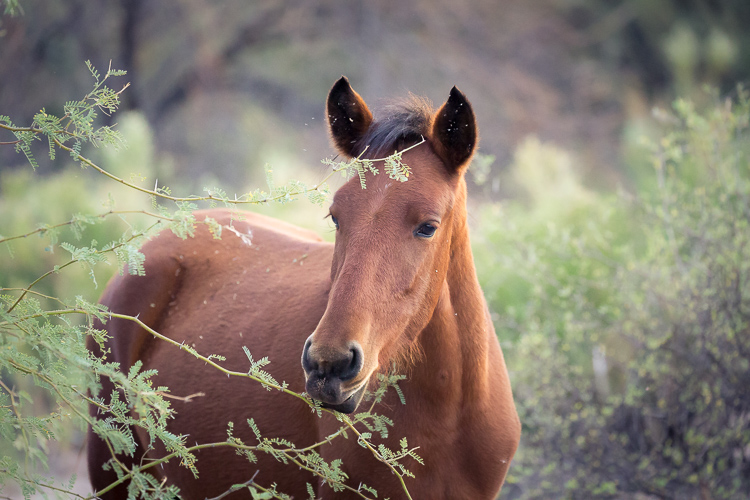
Favorite Lens Canon 100-400mm

Salt River wild horse yearling with ferns – 5D Mark III, Canon 100-400mm @ 248mm, 1/350th, f/5.6, ISO 8000.

Canon 100-400mm f/4.5-5.6L IS II USM technical specs:
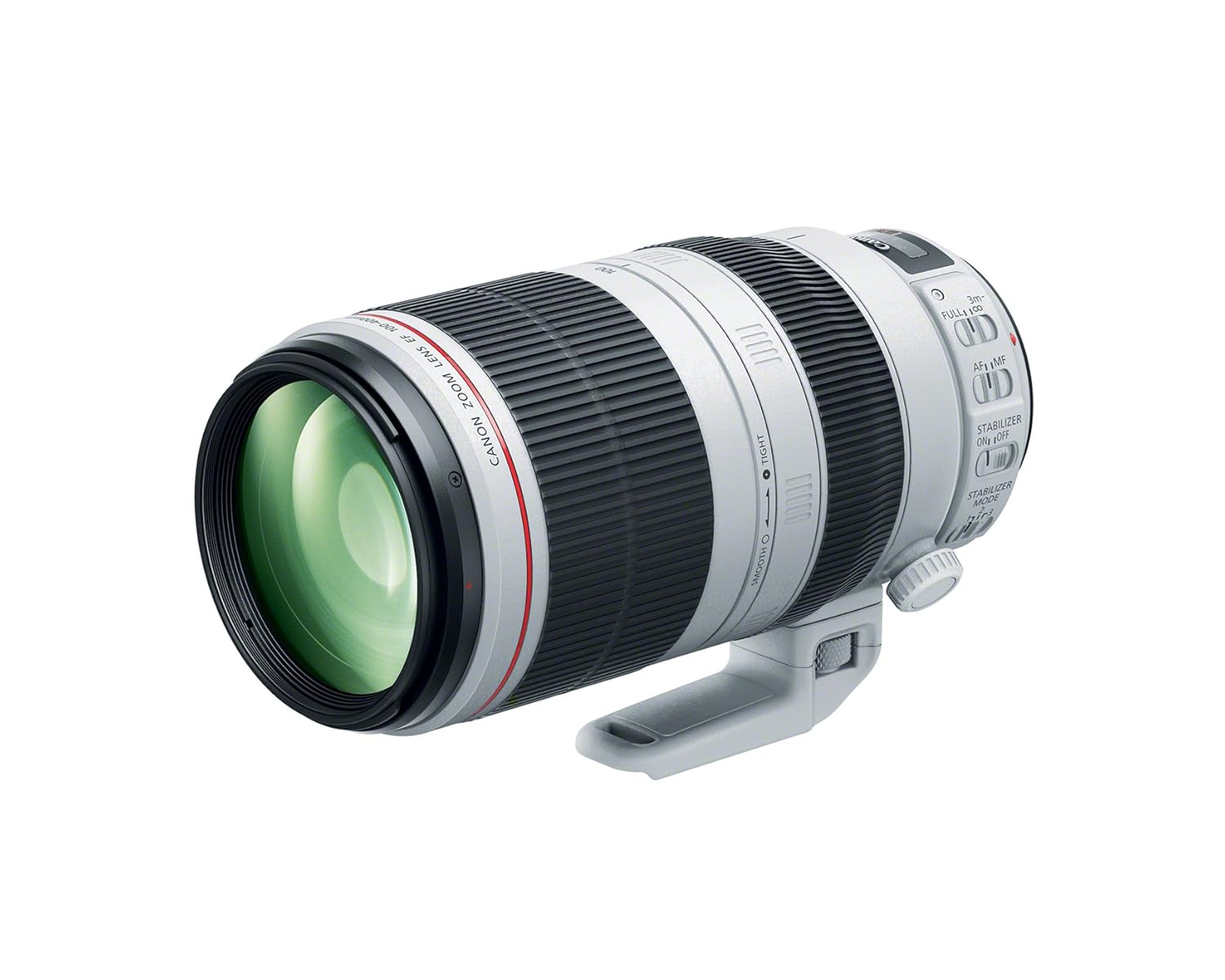
  • Focal Length: 100-400mm
  • Maximum Aperture: f/4.5-5.6, variable
  • Minimum Focusing Distance: 3.2 feet (0.98m)
  • Zoom: Rotation
  • Filter Size: 77mm
  • Weight: 3.62 pounds (1.64kg)
  • Price: $ 2,049.00 USD (at the time of writing this article)

Compared to the Canon 200-400mm

Compared to other lenses of similar focal length the Canon 100-400mm is a bargain, especially since there’s no sacrifice to image quality. Compare it to the Canon flagship telephoto lens, the 200-400mm f/4 which is a whopping $ 10,999. The 100-400mm lens is a moderate $ 2,049. Of course, the 100-400mm is one to two stops slower than the 200-400mm but for an $ 8,800 price reduction, I can handle the loss. I think you probably can too.
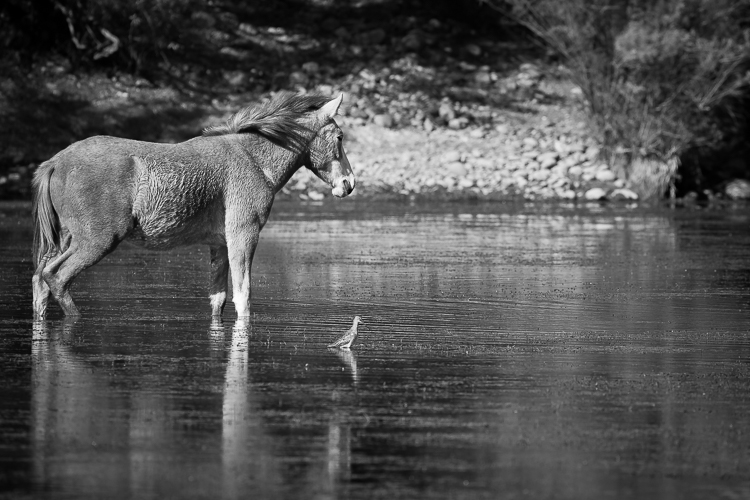
Favorite Lens Canon 100-400mm

Salt River wild horse with bird, monochrome – Canon 5D Mark III, 100-400mm lens @ 400mm, 1/1000th, f/8, ISO 500.

Those of you who know long lenses also know that the 200-400mm has a built-in 1.4x extender. Sold separately, those are about $ 500 so if you invest in one (and you should) your savings between the two lenses is now $ 8,300. In other words, you still save a small fortune by shooting with the 100-400mm lens instead of the 200-400mm.

Lastly, the 200-400mm weighs in at almost 8 pounds (3.63 kg). By shooting with the 100-400mm, you also save your back, neck, hands, and shoulders from a lot of wear and tear. I personally can’t hand hold an 8-pound lens, which means to use the 200-400mm I’d also have to carry a heavy monopod with a gimbal head. My always-aching upper body thanked me for buying the 100-400mm instead.
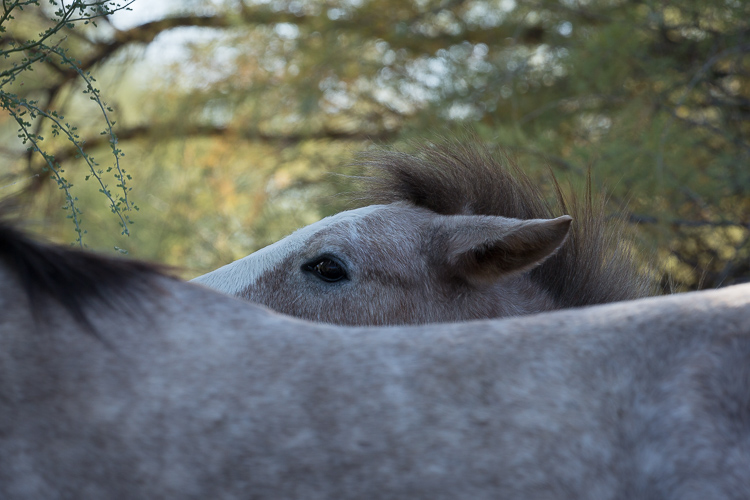
Favorite Lens Canon 100-400mm

Peeking Salt River wild foal – Canon 5D Mark III, 100-400mm lens @ 340mm, 1/350th, f/8, ISO 500.

Practical size

For a telephoto lens of its focal length, the 100-400mm is a relatively compact, hand-holdable, and practical lens. I can attach it to my Canon 7DII or Canon 5DIII camera bodies and shoot with it all day long without using a monopod or tripod. The combination with either camera weighs in at about 6 pounds (2.72 kg). Note that that’s a whole 2 pounds (907g) less than just the weight alone of the 200-400mm lens. It’s a lot of focal length, in a fairly small package.
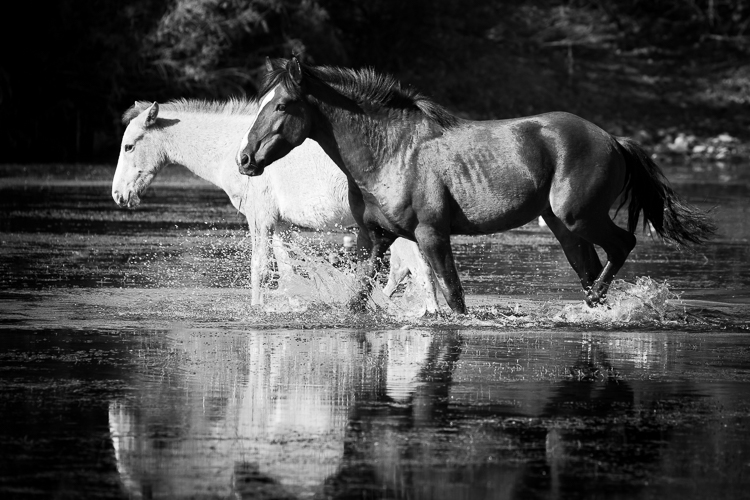
Favorite Lens Canon 100-400mm

Splashing Salt River wild stallion, monochrome – Canon 5D Mark III, 100-400mm lens @ 278mm, 1/750th, f/6.7, ISO 500.

The 100-400mm lens also easily fits into my Kata backpack (now manufactured by Manfrotto). When I pack for an equine and wildlife photography trip, I cram the 100-400mm, 70-200mm, 24-105mm, extender, both my camera bodies, laptop, hard drives and a slew of accessories into this bag. Yes, it’s a great bag and holds a lot for its size but the point is, the 100-400mm fits in it. Larger lenses like the 200-400mm would not.
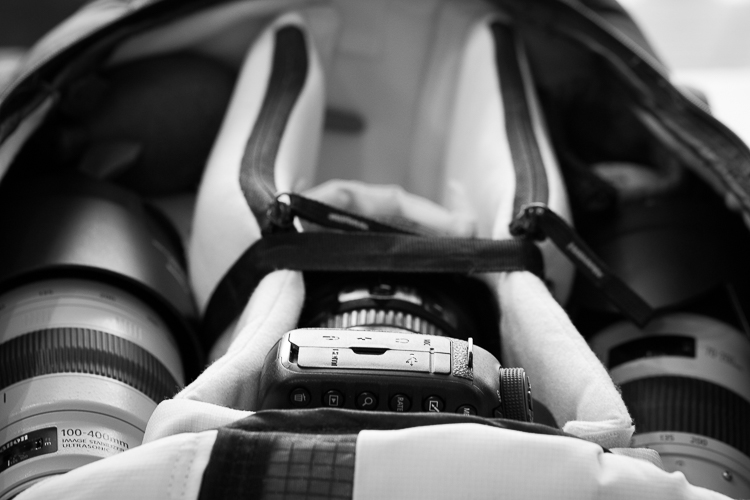
The 100-400mm is on the left; accessories like batteries, cards, and a rocket blower fit in the same divider, tucked in at the top of the bag. 7DII is in the middle with 24-105mm attached, the open divider is for the 5DIII camera body (which I used to take the pic). 70-200mm lens is on the right; 1.4x extender fits in the same divider in its own little case, tucked in at the top of the bag.
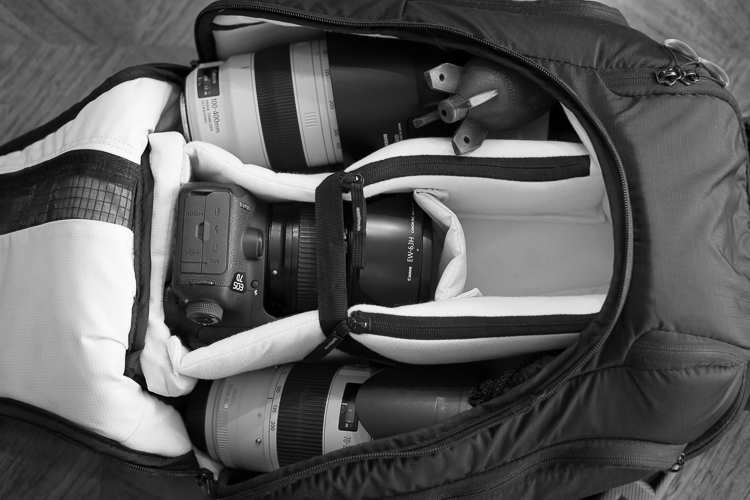
Same arrangement, top view.
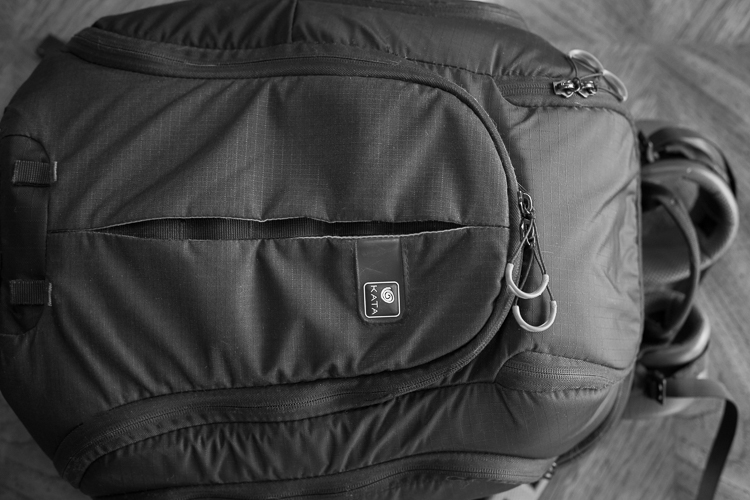
Bag zips!

Features of the Mark II version

If you’ve shot with the original 100-400mm lens, the Mark II has some great new features and I’d recommend upgrading. The original was more of a pumping action when you extended it. The Mark II extends with a twisting action. Twisting to extend is faster and easier to use than the original mechanism. There’s also a ring that you can tighten or loosen, increasing or decreasing the torque on the twisting mechanism. In other words, if you want to rapidly zoom in and out, you loosen the ring to reduce the torque. If you want to keep the lens zoomed at a specific focal length, or locked into its most compact position, you can tighten the ring and increase the torque.

It’s a very intuitive motion. As you use the lens, you’ll find your hand easily moves from the rubber grip used to adjust the focus to the grip used to extend the focal length and to the adjustment ring.
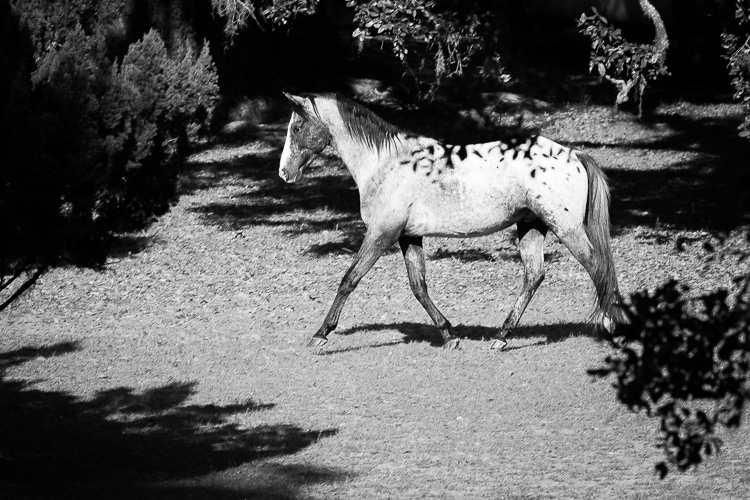
Favorite Lens Canon 100-400mm

Cumberland Island wild horse in the live oak shadows, monochrome – Canon 5D Mark III, 100-400mm lens @ 400mm, 1/350th, f/9.5, ISO 320.

Built to last

The Canon 100-400mm lens is also built to last. The metal, weather-sealed build is why I always invest in original, L-series Canon lenses. I trip, I fall, I drop things. It’s just part of who I am. When I invest in a lens that I plan to use all the time, it can’t be a fragile little thing that needs to be babied. It has to be able to withstand my clumsiness plus dusty, desert winds, and driving snowstorms.
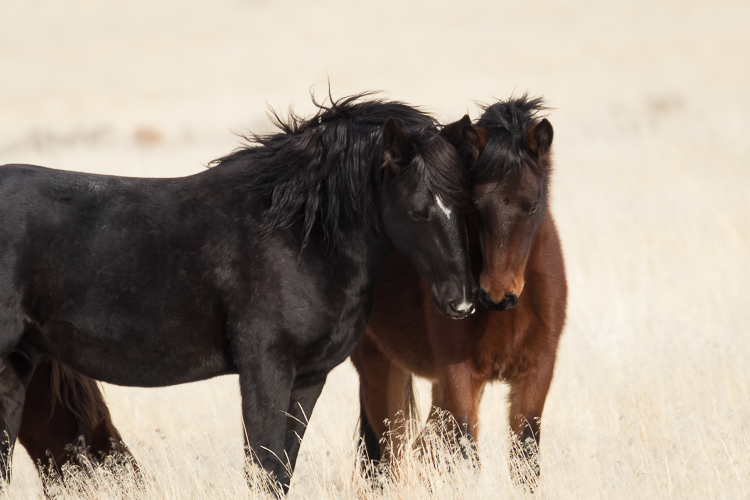
Favorite Lens Canon 100-400mm

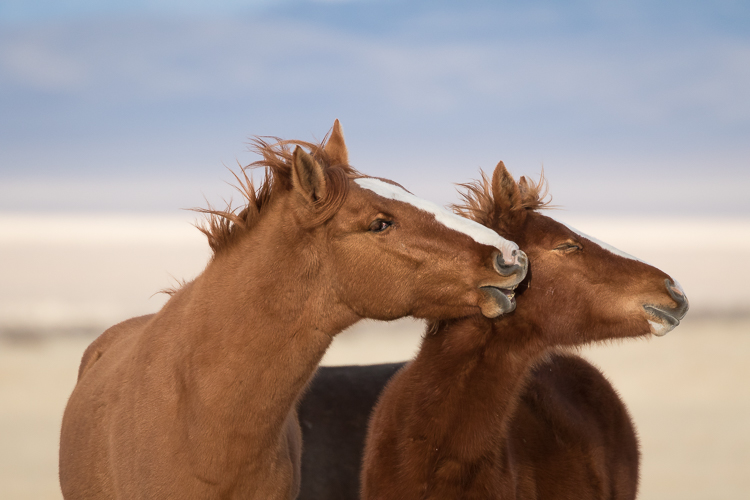
Antelope Valley wild horse snuggles – Canon 7D Mark II, 100-400mm lens with 1.4x III extender @ 560mm, 1/200th, f/8, ISO 200.

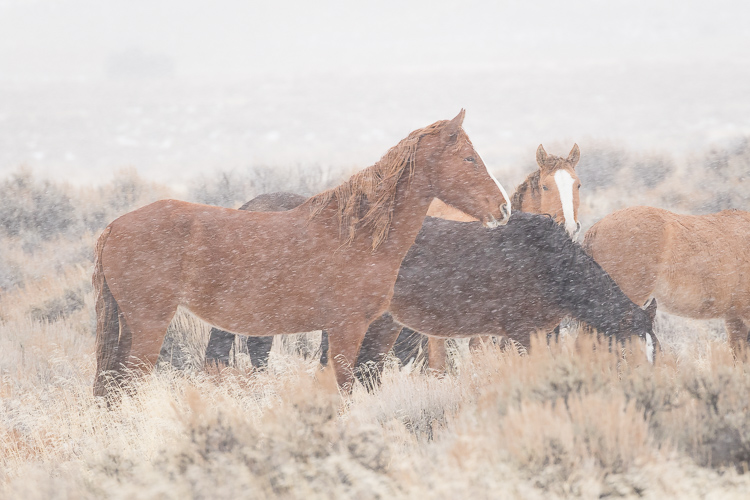
Just a few weeks ago I was shooting in very snowy, wet, conditions in Nevada. When I made it back to the car, I was soaked. My camera and lens were also dripping with melting snow. I toweled everything off and had a moment of panic when the inside of the lens fogged just a tiny bit. Happily, 15 minutes later, the slight condensation dissipated. If the lens hadn’t had such excellent weather sealing, that snow storm might have ended my shoot. A lens with a cheaper build may have been out of commission for days.
Favorite Lens Canon 100-400mm

Wild horse blizzard in Antelope Valley – Canon 7D Mark II, 100-400 @ 400mm, 1/250th, f/9, ISO 800.

Superfast autofocus

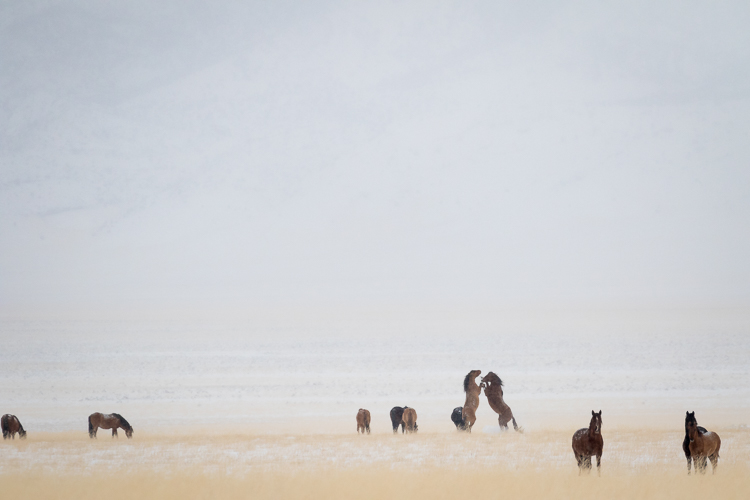
This lens focuses quickly, especially on my 7DII. I rarely miss a fleeting moment. I’ve actually captured images other people in my group are surprised to see. I credit that both to the fast focusing ability and the maneuverability of the 100-400mm lens.
Favorite Lens Canon 100-400mm

Antelope Valley wild horses snow globe – Canon 7D Mark II, 100-400mm with 1.4x III extender @ 560mm, 1/4000th, f/8, ISO 1000.

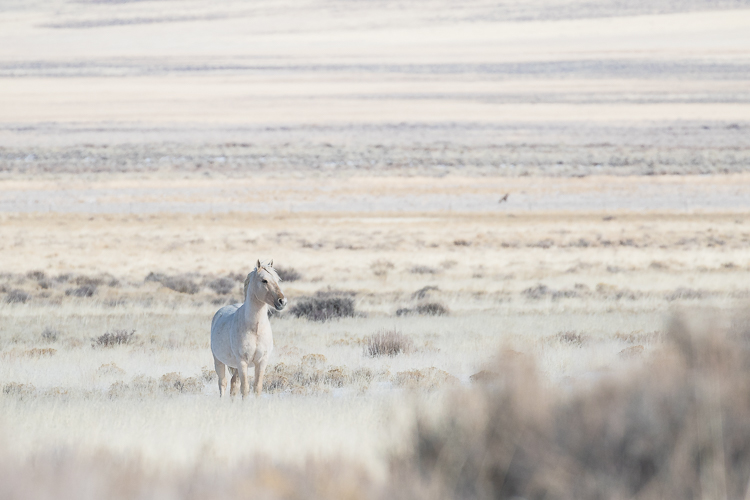
On occasion, I do have trouble focusing due to low contrast. Let’s face it, that happens to all of us. With this lens, I pull back a bit to 200mm or 300mm, grab the manual focus ring and dial in until I start to feel like I have an edge. Once I do, I use back-button focus to lock in sharpness. Once I’m focused, I zoom back to 400mm. The focus holds through this transition and I grab the shot. It’s quick and magical. None of the other long lenses I’ve used have quite the same intuitive feel for focusing.
Favorite Lens Canon 100-400mm

Antelope Valley winter white wild stallion – Canon 7D Mark II, 100-400 @ 400mm, 1/4000th, f/5.6, ISO 500.

Flexibility

One of my favorite aspects of this lens is its flexibility. I use all focal lengths and apertures of this lens without hesitation. For a standard 100-400mm, I attach it to my full frame 5DIII. For a little extra reach, I attach it to my crop sensor 7DII.

On a crop sensor, the effective focal length of the 100-400mm increases to 160-640mm (1.6x). If I need even more reach, I add the Canon 1.4x Extender and the effective focal length on my 7DII increases to 224-896mm. The extender also increases the total weight by about 8 ounces, but I don’t even notice it.

Note: For Canon crop sensor cameras, multiply the focal length by the 1.6x crop factor to determine the effective focal length. Read more here: Crop Factor Explained.

With the Canon 1.4x Extender
Favorite Lens Canon 100-400mm

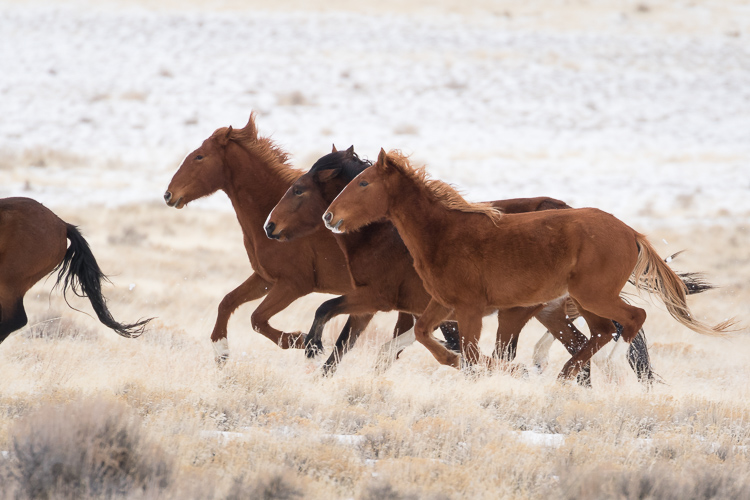
Antelope Valley band of wild horses running in the snow – Canon 7D Mark II, 100-400mm with 1.4x III extender @ 560mm, 1/1000th, f/8, ISO 1000.

I love using an extender with this lens. At 400mm, the minimum aperture is f/8, which is my preferred wildlife setting anyway. Autofocus is still blazing fast, although it is limited to the center focus point when the extender is attached. I haven’t seen a significant loss of quality or sharpness with the extender. Since I can still handhold this combination, even if there was a slight loss, I’d be more than okay with it. A slight loss of sharpness is always preferred (in my book at least) to missing a shot because you were fiddling with your tripod or just didn’t have the reach you needed.

Note: Read more about extenders here: The Pros and Cons of Using Teleconverters (Extenders) on your DSLR.

Stability
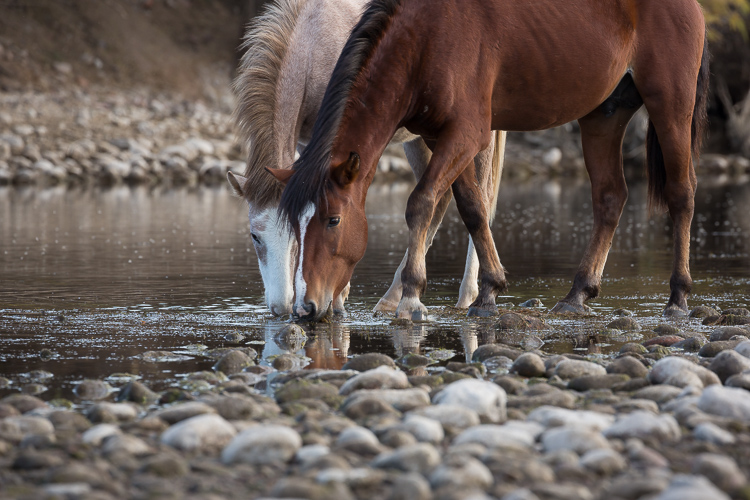
Favorite Lens Canon 100-400mm

Salt River stallion and son eating eel grass in the river – Canon 5D Mark III, 100-400mm @ 400mm, f/9.5, 1/125th, ISO 320.

My job as a photographer is to put myself in the right place at the right time, to find the beauty once I’ve put myself in that place, and to understand the light and compose my image. My gear gives me the technical boost I need to pull all that off.

I’m going to be honest here, I’ve rarely shot with third-party lenses. I can’t compare Canon lens IS (Image Stabilization) to other brands. But, what I can tell you is that when I find myself shooting at 400mm with a 1.4 extender at a relatively slow shutter speed of 1/250th, it’s not my steady hands ensuring that my shot is in focus – it’s Canon’s. Their IS in this lens is like a super power. It is exactly the technical boost I need to make the images I want to make.

Even works for panoramas
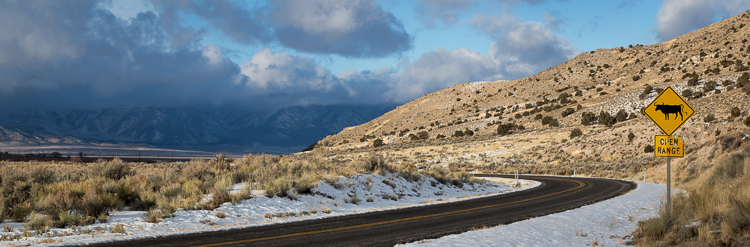
Favorite Lens Canon 100-400mm

Ely County Nevada Open Range, panorama – Canon 7D Mark II, 100-400mm @ 100, 1/320th, f/11, ISO 250.

I’ve even used this lens to create panoramas – handheld, no less. If I’m using the 100-400mm and I see a gorgeous vista, I set the lens to 100mm. I create a very secure hold by pressing together my elbows and locking them into my chest. Then I slowly click my way through the scene. Lightroom or Photoshop both do an amazing job of stitching and correcting perspective issues. If you’re a landscape photographer you might be horrified at this method but if you’re a wildlife photographer, it’s truly another practical tool in your photographic arsenal.

Image quality
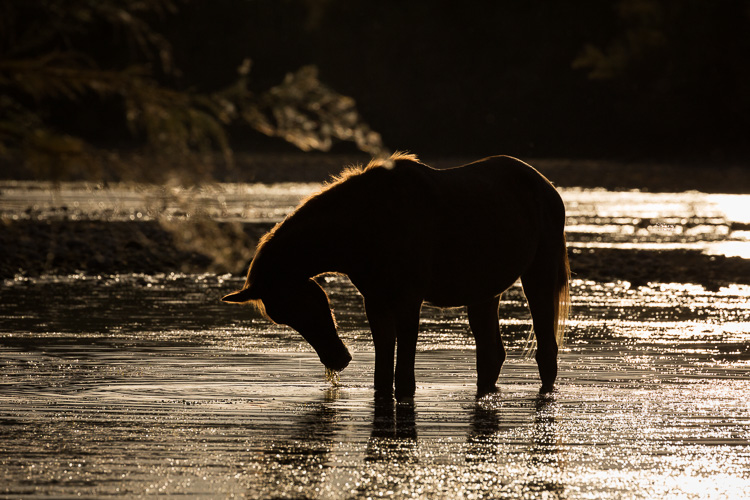
Favorite Lens Canon 100-400mm

Salt River wild mare silhouette at sunset – Canon 5D Mark III, 100-400mm lens @ 400mm, 1/8000th, f/11, ISO 600.

With all this technical talk, you might be wondering why I haven’t said all that much about image quality. I’ve included over a dozen images here and I hope that speaks for itself. Details render crisply. I haven’t discovered any artifacts or unusual aberration in any of the 14,000+ images I’ve shot with this lens.

In wildlife images, I prefer a creamy blurred background rather than a bubbly bokeh background since I find that big, bokeh circles detract from my subject. This lens renders the sort of backgrounds that I prefer.
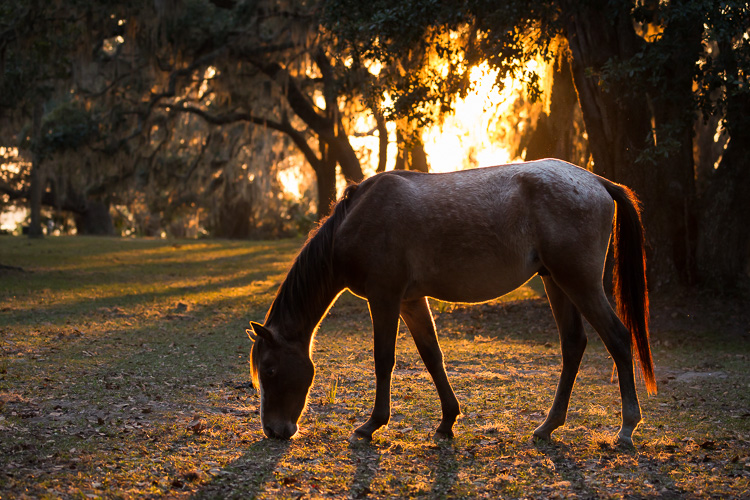
Favorite Lens Canon 100-400mm

Backlit Cumberland Island wild horse at sunset – Canon 5D Mark III, 100-400mm lens @ 100mm, 1/500th, f/4.5, ISO 2000.

Shooting into the sun for a backlit image produces just the right amount of lens flair. Shooting with the sun at my back or off to my side produces just the right amount of contrast. With bright overcast skies, the lens still shapes the light beautifully.

The Canon 100-400mm lens renders color in a very neutral way. While it’s fun that some lenses render brighter or more vivid colors, I prefer to have a more neutral starting point when I begin to edit my RAW images.

Over to you

In all, this is the absolute best birthday gift I’ve ever given myself. I even wish I’d bought it before I upgraded my 70-200mm.

What about you? Have you used either the original or Mark II version of the Canon 100-400mm lens? Or do you have another favorite telephoto zoom lens? Share your feedback on your favorite lens with the dPS community in the comments below.

Shop for the Canon 100-400mm lens here:
  • Amazon.com
  • B&H photo.com
Favorite Lens Canon 100-400mm

Mom!! – Canon 7D Mark II, 100-400mm lens with 1.4x III extender @ 560mm, 1/1250th, f/8 ISO 800.

googletag.cmd.push(function() {
tablet_slots.push( googletag.defineSlot( “/1005424/_dPSv4_tab-all-article-bottom_(300×250)”, [300, 250], “pb-ad-78623” ).addService( googletag.pubads() ) ); } );

googletag.cmd.push(function() {
mobile_slots.push( googletag.defineSlot( “/1005424/_dPSv4_mob-all-article-bottom_(300×250)”, [300, 250], “pb-ad-78158” ).addService( googletag.pubads() ) ); } );

The post dPS Writer’s Favorite Lens – the Canon 100-400mm f/4.5-5.6 L-Series Lens by Lara Joy Brynildssen appeared first on Digital Photography School.


Digital Photography School

 
Comments Off on dPS Writer’s Favorite Lens – the Canon 100-400mm f/4.5-5.6 L-Series Lens

Posted in Photography


Challenge of Challenges 2016: pick your favorite DPR challenge winner

05 Feb

We’ve picked some of our favorite images from last year’s DPReview challenge winners – and now it’s your turn. Nearly 1000 images won challenges last year, so we’ve whittled it down to a manageable 25. Pick your top 5 and check back soon to see which images win the ultimate challenge! Voting is open through Friday, February 17th.

If you’re feeling inspired, take a look at challenges running now for your own shot at a little fame and glory. 

Explore and vote for the best
challenge-winning images of 2016

Articles: Digital Photography Review (dpreview.com)

 
Comments Off on Challenge of Challenges 2016: pick your favorite DPR challenge winner

Posted in Uncategorized


Our favorite gear, rewarded: DPReview Awards 2016

26 Dec

DPReview Awards 2016

Here at DPReview we handle a lot of gear. This year, plenty of amazing cameras, lenses, accessories and other products came through our doors, and we hope you’ve enjoyed reading about them as much as we’ve enjoyed writing about and testing them.

Last year, for the first time, we decided to get together as a team and discuss what we thought was the best gear of the year in multiple categories. This year we sat down again and made a list, checked it twice, then talked about it. And then talked about it some more, and then made a shortlist. And then we talked about it again, argued a bit, and finally voted, ranking our choices by first, second and third preference.

After all that, we’re pleased to announce the results. Click through the slides above to learn which products made our list of the best gear of 2016.

If you’d like to have your say, make sure to vote in this year’s Reader’s Poll for best product of 2016, which will be running through December 31st. 

Best accessory

Shortlist:

  • DJI Osmo+
  • Domke Chronicle Bag
  • Fuji Instax Share SP-2
  • Western Digital MyPassport WD Wireless Pro

Runner up: Western Digital MyPassport WD Wireless Pro

There were a lot of new accessories released this year, but the Western Digital Wireless Pro in particular impressed us, which is why it’s the runner-up for this category. A great choice for photographers working in the field, it features its own Wi-Fi network, a built-in SD card slot, excellent battery life and dedicated Android and iOS apps.

Winner: Fuji Instax Share SP-2

It wasn’t even close, the second generation Fuji Instax Share SP-2 printer was our favorite accessory of 2016. Why? Because there’s just nothing quite like holding a physical image in your hands. Faster and sleeker than the original and with more printing options, the SP-2 can easily link up with Fujifilm cameras or print from a compatible phone or tablet.

Best mobile / VR Product

Shortlist:

  • Apple iPhone 7 Plus
  • DJI Osmo Mobile
  • Google Pixel XL
  • Panono 360 camera

Runner up: iPhone 7 Plus

This category includes a wide range of products, from smartphones to hand-held gimbals, all of which have one thing in common: they are non-traditional cameras. The Apple iPhone 7 Plus is this year’s runner-up with its innovative dual lens design. It offers photographers the choice between a 28mm F1.8 and a more portrait-appropriate 56mm F2.8 (35mm equiv.) lens.

Winner: Google Pixel XL

The Google Pixel XL won this category by a wide margin and for good reason: It has an outstanding camera – so good that it received the highest DxOMark score of any smartphone ever. And features like Raw capture, on-sensor phase detect AF and the HDR+ mode only add it to its appeal. Plus, it’s the first product compatible with Google Daydream VR headset.

Best prosumer camera drone

Shortlist:

  • Autel X-Star Premium
  • DJI Mavic Pro
  • DJI Phantom 4 Pro
  • DJI Phantom 4

Runner-up: DJI Phantom 4 Pro

The DJI Phantom 4 Pro is a tour de force of just how much modern technology can crammed into a small, prosumer drone. It stands out in its class thanks to a 20MP 1″-type sensor that captures 4K/60p video, support for h.265 recording, 20MP Raw stills, photographer-friendly features like 14fps burst shooting and exposure bracketing, and an impressive collision avoidance system.

Winner: DJI Mavic Pro

The DJI Mavic Pro sets a new standard for portability among prosumer camera drones; it’s hard to believe just how compact it is until you see it in person. In fact, you could easily fit it inside a camera pack (with plenty of room left for other gear), a purse, or even a large pocket in your cargo shorts (wearing cargo shorts is not endorsed by DPReview staff).

Don’t let the Mavic’s size fool you though – it has the same camera as the original Phantom 4, captures 4K/30p video, 12MP stills with DNG Raw support, and boasts a top speed that exceeds that of the Phantoms.

Best zoom lens

Shortlist:

  • Canon EF 16-35mm F2.8L III USM
  • Olympus M.Zuiko Digital ED 12-100mm F4 IS Pro
  • Sigma 12-24mm F4 DG HSM Art
  • Sigma 50-100mm F1.8 DC HSM Art

Runner-up: Olympus M.Zuiko Digital ED 12-100mm F4 IS Pro

Every year, more lenses are released than cameras, and this year the competition was especially tough. A lot of great zoom lenses were released in 2016 and of our shortlist of four, two belong to Sigma’s well-regarded ‘Art’ series. But the Olympus M.Zuiko Digital ED 12-100mm F4 IS Pro just pulled ahead of both of them to take the runner-up spot in this category.

Winner: Canon EF 16-35mm F2.8L III USM

Winner by a considerable margin of votes among the DPReview staff was the Canon EF 16-35mm F2.8L III USM. Canon is really on a roll with its high-end L-series, and the new version of the 16-35mm F2.8 is stunning. If you’re a Canon shooter looking for a high quality wide-angle zoom, the 16-35mm F2.8 III is as good as it gets.

Best prime lens

Shortlist:

  • Nikon AF-S Nikkor 105mm F1.4E ED
  • Olympus M.Zuiko Digital ED 25mm F1.2 Pro
  • Sigma 85mm F1.4 DG HSM Art
  • Sigma 30mm F1.4 DC DN | C

Runner-up: Nikon AF-S Nikkor 105mm F1.4E ED

If competition was fierce among zoom lenses this year, if anything it was even fiercer in the prime lenses category. New releases from several manufacturers really raised the bar, and Nikon’s excellent new 105mm F1.4 portrait lens took the runner-up spot in a very tough field.

Winner: Sigma 85mm F1.4 DG HSM Art

Realistically, as soon as we sat down to discuss which lens should win this category, there was only one serious contender. Winner by a convincing margin among DPReview staff was Sigma’s 85mm F1.4 DG HSM Art. Its big, it’s heavy, and it makes gorgeous pictures. If you’re a fan of the 85mm focal length for portraiture, the Sigma 85mm F1.4 Art is worth serious consideration. 

Best compact camera

Shortlist:

  • Canon PowerShot G7 X Mark II
  • Panasonic Lumix DMC-LX10
  • Sony Cyber-shot RX100 V
  • Sony Cyber-shot RX10 III

Runner up: Sony Cyber-shot DSC-RX100 V

There was some tough competition in this category, thanks partly to Sony, which seems set on maintaining its breakneck pace of new product announcements. The latest compact camera in Sony’s RX100-series is the best yet. We argued a lot about which camera should win in this category, and offering incredible speed, hybrid AF and excellent 4K video, the RX100 V took the runner-up spot.

Winner: Panasonic Lumix DMC-LX10

The winning position is occupied by the Panasonic Lumix DMC-LX10, thanks to its combination of small size, excellent lens and overall image quality. As well as great-looking stills, the LX10 is also capable of excellent 4K video, and hits an attractive price-point compared to the best of its competition.

Best consumer stills/video camera of the year

Shortlist:

  • Panasonic Lumix DMC-FZ2500
  • Sony a6500
  • Sony RX10 III

Runner up: Panasonic Lumix DMC-FZ2500

In this category, we’re looking for the best products for stills and video shooters who need one camera to do it all. This category spans compact, fixed-lens cameras up to 4K-capable ILCs, but our shortlist contained only the latter type of camera – testament to the advances that have been made in this category.

Panasonic’s Lumix DMC-FZ2500 takes the runner-up spot in this category this year, thanks to its impressive 4K feature set and video-friendly ergonomics, coupled with excellent still image quality.

Winner: Sony Cyber-shot RX10 III

The Sony Cyber-shot RX10 III is one of the most impressive products to come through the doors of DPReview Towers in 2016. Although bulky and costly, this 1″ sensor compact can reach places that ILCs just can’t. A stunningly sharp 24-600mm lens, coupled with a class-leading 1″-type BSI-CMOS sensor and excellent 4K and HFR video features meant that DPReview staff were unanimous in voting the RX10 III the best consumer stills / video camera of 2016.

Best entry-level ILC

Shortlist:

  • Fujifilm X-A3
  • Nikon D3400
  • Panasonic Lumix DMC-GF8
  • Yi M1

Runner-up: Nikon D3400

Although it might seem less interesting than other market segments, the entry-level ILC market is critical for manufacturers, who need to persuade new photographers to join their system, and get on the upgrade path. This year saw some excellent entry-level ILCs released, and the Nikon D3400 took the runner-up spot. Small, unflashy and easy to use, the D3400 is a great beginners’ camera and a good entry-point into the wider Nikon system.

Winner: Fujifilm X-A3

The winner of this category is the Fujifilm X-A3. While not as feature-laden as its higher-end X-series peers, the 24MP, WiFi-equipped X-A3 is a great camera for someone just starting out in photography. It offers plenty of scope for beginners to grow, without being confusing or intimidating to use.

Best mid-range ILC

Shortlist:

  • Canon EOS M5
  • Canon EOS 80D
  • Panasonic Lumix DMC-G85
  • Sony a6300

Runner Up: Sony a6300

2016 was a pretty good year for enthusiast photographers, and there was stiff competition in the mid-range ILC category this year. In the end, half of our shortlist was made up of Canon EOS products, but both the EOS M5 and EOS 80D lost out to the Sony a6300, which took runner-up spot.

Winner: Panasonic Lumix DMC- G85

I guess we just gave it away, but the winner of this year’s title of best mid-range ILC is the Panasonic Lumix DMC-G85, which narrowly pipped the a6300 to take the winning spot. There’s not much that this compact Micro Four Thirds camera can’t do, and we love it for its versatility and excellent 4K video.

Best high-end ILC

Shortlist:

  • Canon EOS 5D Mark IV
  • Fujifilm X-T2
  • Nikon D500
  • Olympus OM-D E-M1 II

Runner up: Fujifilm X-T2

It was a two-horse race in this category, with two products way out in front of the rest of the pack (do horses run in packs?). The Fujifilm X-T2 came a close second place to take the runner-up spot in this category. DPReview staff praised its portability, ergonomics and image quality.

Winner: Nikon D500

With a convincing number of votes among DPReview staff, the Nikon D500 took the winning spot in our best high-end ILC category this year, as a near unanimous first choice. The D500 is one of our favorite ever DSLRs, and in a very competitive market segment it stands as a stunningly capable all-rounder.

DPReview innovation award

Shortlist:

  • Olympus OM-D E-M1 II
  • Sigma 85mm F1.4 DG HSM Art
  • Sony Cyber-shot RX100 V
  • Sony Cyber-shot RX10 III

Runner-up: Sony Cyber-shot RX100 V

We created this category last year to recognize products that we feel raised the bar for innovation in their product class. We narrowed down our selection to a shortlist of products, all of which are either cameras or lenses. Runner-up in this category is the Sony Cyber-shot RX100 V, in recognition of the incredible amount of technology that Sony has packed into this tiny camera.

Winner: Olympus OM-D E-M1 II

Just pipping the RX100 V to the post is the Olympus OM-D E-M1 II. We’re still not entirely sure how Olympus packed as much technology into the E-M1 II as it did, but the end result is an incredibly powerful stills and video hybrid camera. As well as ultra-fast capture rates and effective in-body stabilization, the E-M1 II is also built for use in the harshest of conditions. 

DPReview product of the year, 2016

Shortlist:

  • Nikon D500
  • Olympus OM-D E-M1 II
  • Sigma 85mm F1.4 Art
  • Sony Cyber-shot RX100 V

Runner-up: Olympus OM-D E-M1 II

In our discussions about overall best product of 2016, four products kept coming up. In different ways, we were highly impressed by all of the four products in our shortlist, all of which arguably represent the state of the art in their particular market segments, and any one of which could easily have won. In the end, we had to make a final decision. You’ll be able to find out the winner in the next slide, but our runner up for this year’s DPReview Award for product of the year is the Olympus OM-D E-M1 II.

Winner: Nikon D500

What the E-M1 II is for mirrorless ILCs, the D500 is for DSLRs. Although it lacks a really credible 4K video mode, the D500 is nevertheless an impressive all-rounder, combining some of the best elements of the flagship Nikon D5 with a (relatively) compact APS-C form factor, and a 1.5X focal length increase which is extremely handy for sports and wildlife photography. If you’re looking for a versatile, pro-grade DSLR which will still be current in years to come, the Nikon D500 is about as good as it gets. The Nikon D500 is our product of the year, 2016.

As we approach the end of the year, we’d like to take this opportunity to thank all of you for your support, and your feedback. For a chance to vote for your own favorite product of 2016, our final Reader’s Poll is still open, and can be found here. Voting closes at midnight on Jan 31st (PT).

Articles: Digital Photography Review (dpreview.com)

 
Comments Off on Our favorite gear, rewarded: DPReview Awards 2016

Posted in Uncategorized


Vote now for your favorite Nikon Small World 2016 entries

15 Oct

Nikon Small World 2016 Finalists

Mouse retinal ganglion cells. Photo by Dr. Keunyoung Kim

Nikon’s Small World Microphotography competition continues to celebrate all things tiny, fanged and gross. This year they’re inviting you to participate in the judging by picking your favorite finalists in the Popular Vote competition. Head over to the Popular Vote page to cast your ballot, and flip through the slides above to see some of our favorite entries.

Nikon Small World 2016 Finalists

Leg of a water boatman (Corixidae). Photo by Marek Mis

Nikon Small World 2016 Finalists

Actin (pink), mitochondria (black), and DNA (red) in a bovine pulmonary artery endothelial cell. Photo by Talley Lambert

Nikon Small World 2016 Finalists

Parts of wing-cover (elytron), abdominal segments and hind leg of a broad-shouldered leaf beetle (Oreina cacaliae). By Pia Scanlon

Nikon Small World 2016 Finalists

Egg of a Gulf Fritillary butterfly, Agraulis vanillae. Photo by David Millard

Nikon Small World 2016 Finalists

Wildflower stamens. Photo by Samuel Silberman

Nikon Small World 2016 Finalists

Scales of a butterfly wing underside (Vanessa atalanta). Photo by Francis Sneyers

Nikon Small World 2016 Finalists

Slime mold (Mixomicete). Photo by Jose Almodovar

Nikon Small World 2016 Finalists

Beta-alanine and taurine crystals. Photo by Matt Inman

Nikon Small World 2016 Finalists

Poison fangs of a centipede (Lithobius erythrocephalus). Photo by Walter Piorkowski

We told you there were fangs.

Articles: Digital Photography Review (dpreview.com)

 
Comments Off on Vote now for your favorite Nikon Small World 2016 entries

Posted in Uncategorized


dPS Writer’s Favorite Lens: Nikon 35mm f/1.8G

14 Sep

A few years ago Nikon started revamping their lens lineup to include faster focusing, better coatings on the glass elements, and for the first time, no manual control over the size of the aperture. This series of lenses was given the “G” moniker, and one of the earliest that went into production is still one of the best: the 35mm f/1.8G.

This inexpensive little workhorse is not only supremely versatile but performs well beyond its price range in almost any shooting situation. It was designed to work for crop-sensor cameras, which Nikon refers to as DX models, but in many circumstances, it works just fine on full-frame FX cameras as well. I enjoy shooting mostly portraits and nature photography and there’s hardly a situation in which this 35mm lens doesn’t give me good results. It’s by far my favorite lens, and I’d like to share a little bit more to let you know why.

favorite-lens-nikon-35mm-seattle-skyline

Seattle skyline, photographed with the 35mm f/1.8G DX on a Nikon D7100.

One of the best features of the 35mm 1.8G lens is something that could also be seen as a significant limitation: it does not zoom in and out. It’s a prime lens which means it has a fixed focal length. So if you are used to twisting your lens to get a close-up view of your subject, you will have to train your mind to think about things a bit differently when using this lens. Since it is permanently stuck at 35mm you have to use your feet and get creative when shooting pictures. But once you get past this limitation you will start to notice that it pales in comparison to one of its most important strengths: a super wide aperture.

Fixed focal length, amazing results

If you’re not entirely familiar with what the term aperture means, it’s basically the opening in your lens that lets light pass through. This is an f/1.8 lens which means it has a huge maximum aperture, or opening, compared to some other lenses, especially most zooms. This feature allows the lens to capture much more light so you rarely have to use the flash, and also helps you get the kind of smooth blurry backgrounds you see in professional-style portraits. The f/1.8 aperture is the one key factor that makes this lens so incredibly useful and versatile. Even though it lacks the ability to zoom in and out it’s a tradeoff well worth making, in my opinion.

I took this quick snapshot of my niece while she was playing with her cousins, but the wide f/1.8 aperture on the 35mm lens gave me a nice blurry background.

I took this quick snapshot of my niece while she was playing with her cousins. The wide f/1.8 aperture on the 35mm lens gave me a nice blurry background.

Avoid dreaded pop-up flash issues

Before I got into more advanced photography several years ago I owned a decent pocket camera. While it did take good pictures in broad daylight, any time the sun even started to get low on the horizon it would fire the flash and bathe everything in a weird artificial light. I noticed the same thing happening to my friends with DSLR cameras too, and couldn’t figure out why even the more expensive cameras were always turning on the pop-up flash when the lighting was dim.

If you have wondered about this yourself, the answer almost certainly relates to the aperture of your lens. Smaller apertures let in less light, which therefore require the use of an additional light source like a flash in order to take a picture. The 35mm f/1.8 lens almost never has that problem because it lets in so much light (when you shoot at f/1.8), which can seem like a miracle from heaven if you are tired of shooting so many of your photos with the flash turned on.

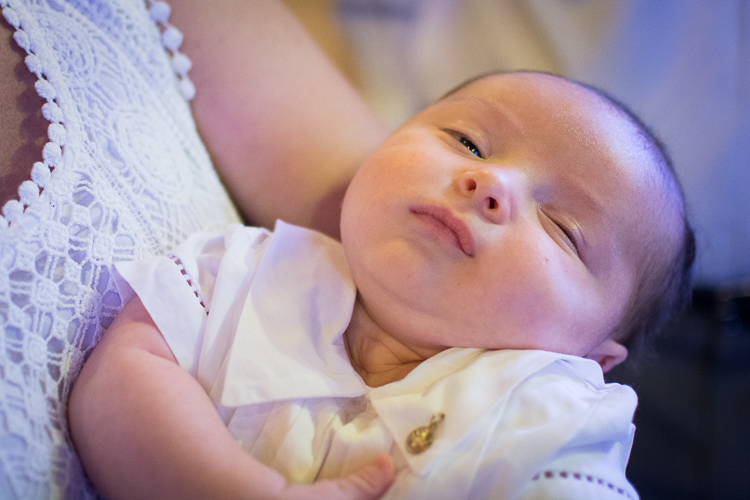
The lighting in this church was very poor, but thanks to the f/1.8 aperture I got several photos of this baby at his baptism without using the a flash.

The lighting in this church was very poor, but thanks to the wide f/1.8 aperture I got several photos of this baby at his baptism without using the flash.

Whether you are out taking photos of nature and wildlife, doing paid portrait sessions, or just snapping photos of your kids playing around the house, the f/1.8 aperture is going to give you outstanding results if you are used to a lens with a smaller aperture. I was blown away when I first started shooting with this and other prime lenses and began realizing that I could use the natural light all around me to get the photos I was really trying to shoot. That, instead of constantly relying on a tiny little pop-up flash.

No zoom, no problem

Many years ago when some of my photographer friends first recommended a prime lens to me I thought they were joking. Why on earth would anyone want a lens that doesn’t zoom in and out? The fixed focal length of a prime lens, I soon realized, forces you to be more creative and puts you in a different frame of mind than a zooming lens by making you work around a limitation. In the years since, as my collection of lenses has grown to include several prime lenses, I keep coming back to this specific 35mm f/1.8 lens as a workhorse not just for daily pictures of my family but for professional photo sessions too. 35mm is somewhere between a wide angle and telephoto lens, which makes it ideally suited for a variety of types of photography. It’s not too zoomed out and not too zoomed in, so it’s kind of like the Goldilocks of camera lenses. It’s just right.

In the years since, as my collection of lenses has grown to include several prime lenses, I keep coming back to this specific 35mm f/1.8 lens as a workhorse. It’s not just for daily pictures of my family but for professional photo sessions too. 35mm is somewhere between a wide angle and telephoto lens, which makes it ideally suited for a variety of genres of photography. It’s not too zoomed out and not too zoomed in, so it’s kind of like the Goldilocks of camera lenses. It’s just right.

favorite-lens-nikon-35mm-olympic-mountains

The Cascade Mountains: shot with the 35mm 1.8G DX on a Nikon D7100

Is like “normal”

On a crop-sensor camera like the Nikon D3300 or D7200 the focal length of this lens is multiplied 1.5x which puts it right about 50mm, or very close to what the human eye naturally perceives. This means that the image you see when you hold your camera up to compose a shot is very similar to that which you would see without any camera at all. There is very little distortion, and everything just tends to look…well…

There is very little distortion, and everything just tends to look…well…normal. I know some people are put off by this type of lens because it’s so pedestrian that it borders on boring, and because it does so many things well it also excels at nothing in particular. However I happen to like the 35mm focal length precisely because of the photos I can get with it, and also because it’s wide enough that I can take pictures at relatively slow shutter speeds like 1/45 second and not worry too much about motion blur.

favorite-lens-nikon-35mm-kansas

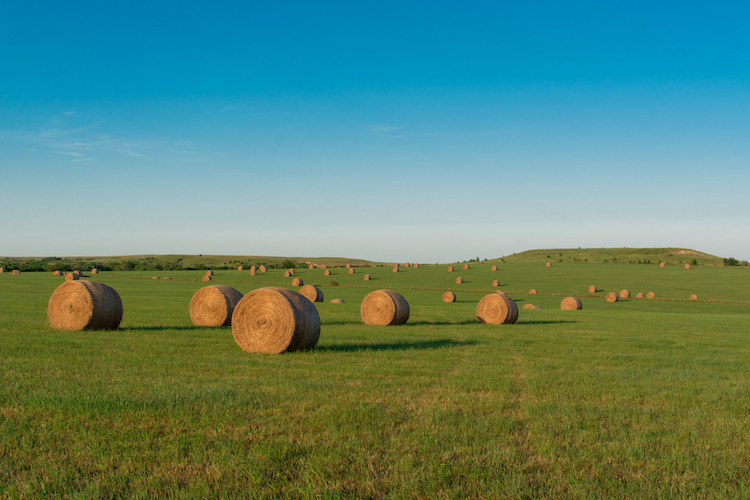
Hay bales in Kansas: shot with the 35mm 1.8G DX on a Nikon D7100

Works on full frame too

One bonus feature, of this lens in particular, is that, unlike some other lenses that are designed for crop-sensor cameras, this one performs quite well on full-frame models too. If I put it on my D750 I can get outstanding results provided I shoot around f/4. If I use an aperture much smaller than that, however, it starts to exhibit some pretty bad vignetting on the corners.

This makes the lens ideal for situations where you want to get a little closer to your subjects for pictures that are a little more personal and intimate, and also for landscapes where you want to take in a much broader view of the scene. All this for a lens that costs about $ 200 and you can hopefully see why it is, without question, my favorite lens.

favorite-lens-nikon-35mm-hairless-cat

Even though this lens is designed for crop-sensor cameras, it works fine on full-frame cameras like the D750 if you can put up with some vignetting around the corners. This allowed me to get right in the middle of the action while having a wide enough angle to get several people in the shot.

I recommend this lens often

I often have people ask me for recommendations when it comes to camera lenses, and if they are Nikon shooters my advice is always the same: The 35mm f/1.8G DX. I recently followed up with about a dozen friends and family members to see if my recommendation was to their liking after using the lens for several months. Every single one of them said that yes, the lens was great and did just what they were hoping it would do. Some said that it helped them explore new aspects of photography and while a few had since augmented their collection with zoom lenses or other primes, they all agreed that this particular lens worked like a charm.

favorite-lens-nikon-35mm-fountains

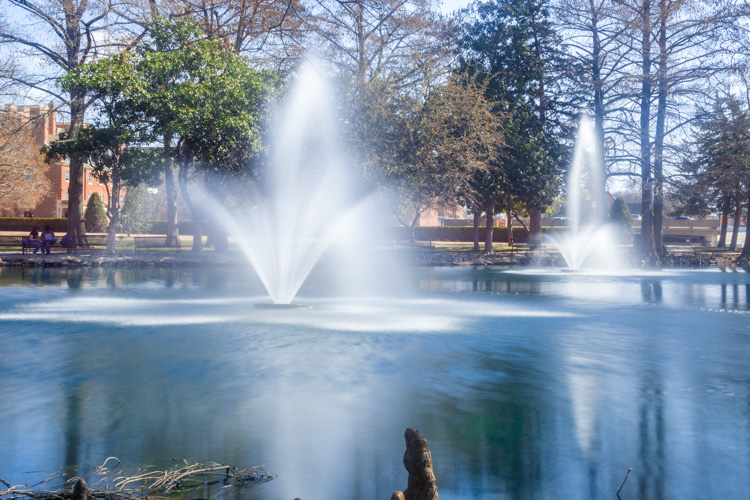
Theta Pond: shot with the 35mm 1.8G DX lens on a Nikon D7100

At this point, it probably sounds like I’m some kind of paid shill for Nikon, but I promise you that is not the case. I buy all my gear the same as anyone else and have never gotten any lenses, cameras, or other gear from Nikon or any other company. I just like this lens so much, and I think you would too, that I can’t help but gush about how it’s by far the favorite one in my kit and the one that gets used more often than anything else. But what about you? Do you have this lens and if so, what do you think of it? What other lenses do you like that you wish other people would learn about? Leave your thoughts in the comments below!

But what about you? Do you have the Nikon 35mm f/1.8G lens? If so, what do you think of it? What other lenses do you like that you wish other people would learn about? Please leave your thoughts in the comments below!

googletag.cmd.push(function() {
tablet_slots.push( googletag.defineSlot( “/1005424/_dPSv4_tab-all-article-bottom_(300×250)”, [300, 250], “pb-ad-78623” ).addService( googletag.pubads() ) ); } );

googletag.cmd.push(function() {
mobile_slots.push( googletag.defineSlot( “/1005424/_dPSv4_mob-all-article-bottom_(300×250)”, [300, 250], “pb-ad-78158” ).addService( googletag.pubads() ) ); } );

The post dPS Writer’s Favorite Lens: Nikon 35mm f/1.8G by Simon Ringsmuth appeared first on Digital Photography School.


Digital Photography School

 
Comments Off on dPS Writer’s Favorite Lens: Nikon 35mm f/1.8G

Posted in Photography


DPReview celebrates World Photo Day with our favorite shots of 2016

20 Aug

World Photo Day celebrates the Daguerreotype process, which the French government released to the public on August 19th, 1839. The World Photo Day project started in 2009 and encourages users all over the world to share their pictures online.

To celebrate, we took a look back at all our sample galleries from 2016 and cherry-picked some of our favorite shots. Within this gallery you’ll find a wide range of gear represented as well as images from everyone on staff. And when your done looking through be sure to grab your camera and spend some time out shooting, because World Photo Day only comes along once a year.

Articles: Digital Photography Review (dpreview.com)

 
Comments Off on DPReview celebrates World Photo Day with our favorite shots of 2016

Posted in Uncategorized


LensRentals details its top ten favorite products from the past decade

30 Jul

Ten years have passed since our friends at LensRentals first launched as a small business operating out of a garage. The company has seen many changes over those years, both in its own operation and in the spheres of photography and videography, and it has highlighted some of those changes in a new blog post. The LensRentals team has detailed their top ten favorite products from the last decade.

‘What we’ve found, is that there is no right piece of gear for everyone,’ they say, ‘and we all have varying tastes and expectations when it comes to gear.’

The products, which aren’t listed in any particular order, run the gamut from cameras to lenses and a few different accessories. Most notably, Canon products took four of the ten slots, with both the 5D Mark II and 5D Mark III making the list, as well as its EF 400mm F4 DO IS II and 11-24mm F4L lenses. 

Pentax, Leica, Freefly, Profoto, Sony, and Sigma products fill out the remaining six slots, though as LensRentals notes: ‘the photography and videography industries have changed faster than ever before, so some pieces of gear had to be left out on our list.’ It’s a somewhat long read, but the LensRentals team takes the time to explain why each product earned it place on the list, and it’s well worth giving it a look.

Articles: Digital Photography Review (dpreview.com)

 
Comments Off on LensRentals details its top ten favorite products from the past decade

Posted in Uncategorized


Writer’s Favorite Lens – the Canon 400mm f/2.8

20 Mar

Being a sports photographer, covering things ranging from soccer (football) and rugby, to horse racing, I often have the Canon 400mm f/2.8L IS II USM on one of my camera bodies. It’s this lens’ focal length and fast aperture that is most helpful. I love this lens for its image quality and performance, but also its versatility.

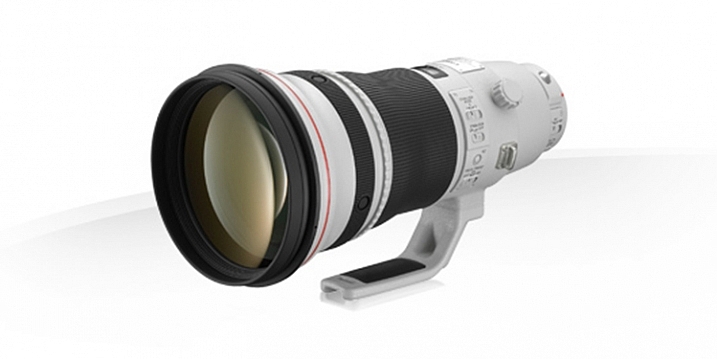
Fig 12

Image courtesy of Canon.

So let’s have a look at the specs of this lens:

  • Focal length: 400mm (560mm APS-C approximate)
  • Maximum aperture: f/2.8
  • Maximum diameter x length: 163mm x 343mm (6.41 x 13.50″)
  • Weight: 3.85 kg (8.48 lbs)
  • Image stabilized? Yes, four stops
  • Minimum focusing distance: 2.7m (8.85′)
  • Weather sealed: Yes

PROS

Ideal Sports Lens

The 400mm focal length of this lens is ideal for many field based sports such as soccer (football) and rugby as it’s not too long, such as a 500mm for example, but at the same time it’s gives more pull than a 300mm. Its fast f/2.8 aperture is very handy when photographing in low-light situations, such as at night matches where the light is often quite low, as it allows me to use a lower ISO and still be able to maintain a shutter speed that is fast enough to freeze the action. This maximum aperture is also ideal to nicely isolate the subject from a busy background and make them pop more. Although I don’t always shoot at f/2.8 (generally hovering around f/3.5-f/4) having the ability to use f/2.8 is quite handy.

As far as focussing speed goes, this lens is blazingly quick and spot-on accurate, especially when coupled to a 1D X, for example. It easily locks on to a subject without any search or lag whatsoever.

In the following images, the 400mm focal length has been fantastic at pulling the subject in closer than what a 70-200 or 300mm for example, would be able to offer. These images have still been cropped, but not as much as would be needed if I had used a shorter focal length.

© Daniel Smith / Getty Images.

© Daniel Smith / Getty Images.

© Daniel Smith / Getty Images.

© Daniel Smith / Getty Images.

Versatility

Being quite heavy and long, with no zoom, you may think that this lens would only be suited to use on the sidelines of a sports field, attached to a monopod. However, this lens is much more versatile than that. Being the series two version of this lens, it is significantly lighter than its predecessor. This reduction in weight means that I am now able to use this lens hand-held (if I’m using it for extended period of time, I do use a monopod; it’s not that light!) which opens up more options. For example, I have photographed live concerts with this lens; a lens that is rarely used because of its long focal length. But it’s this focal length, coupled with an f/2.8 aperture, that I love. Photographing through the crowd is fantastic, as I am able to create abstract shapes through the silhouettes created by the audience, and use them to frame my subject.

The longer focal length can also be great when covering conferences, as I am able to photograph further back. This is especially helpful if the speakers are on a stage, as standing further back will reduce the angle in which you look up, and enable you to reduce the distortion that looking up can cause.

Fig 3

This was taken from further back. The speaker was on a stage. By standing back I was able to photograph the speaker and be closer to his level. The aperture also provided some great bokeh with the lights in the background.

Fig 1

400mm, 1/500sec, f/3.2 ISO 6400. The singer raising her hand is made stronger by the abstract hand being raised by the fans.

Fig 2

400mm, 1/500sec, f/3.5 ISO 6400. Shooting through the fans with their hands in the air adds some great foreground interest to this image.

In addition, its fast f/2.8 aperture lends itself to use with teleconverters if extra reach is needed. When adding one, you multiply the aperture and focal length by the strength of the teleconverter; so if you are using a 2x, it would make this lens an 800mm f/5.6. And because its image quality is so good, the degradation to image quality when using converters isn’t really noticeable with this lens. Its AF also does not really take much of a hit, either. So for the price of a couple of teleconverters, I potentially have three lenses in one:

  • A 400mm f/2.8 as it is
  • A 560 f/4 with a 1.4x teleconverter
  • a 800 f/5.6 with a 2x teleconverter

CONS

Cost

This lens is not the cheapest lens on the market; Amazon has it listed at $ 9,999 USD, so this lens is definitely not something many photographers would consider purchasing.

An alternative to this would be the Canon 400mm f/5.6L USM which sells for a much more affordable $ 1,199 USD. The biggest drawback with that lens, however, is its maximum aperture of f/5.6, which would not be very useful in low-light situations, where a wider aperture is much more beneficial.

Image courtesy of Canon.

Image courtesy of Canon.

Size

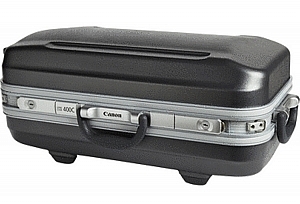
This isn’t the smallest lens either, and you will generally be very noticeable with it. Using this as a street photography lens would not be ideal, and would make you quite a target! You will also need quite a large bag to carry this in, although it does come with its own hard-case as seen here.

Weight

Even though this is the series two, and much lighter that its predecessor, at nearly 4kg (almost 8.5 pounds) this is definitely not a light lens! You will need a monopod with this lens if you intend to use if for long periods of time. Transporting it also requires quite a large bag; a roller bag being ideal as you don’t have to carry it. I transport all of my equipment in the one bag generally – a ThinkTank Photo Airport Security V2.0 roller bag. This makes carrying not only this lens, but all of my equipment much easier, and saves injuring my back.

ALTERNATIVES

This lens is not for everyone, primarily because of its high cost. If you would love to have one of these in your kit but don’t have the finances available, going second hand is an option. A used 400mm f/2.8L IS USM (non-Series II) is still a fantastic lens and can be found relatively (compared to the new version) cheaply at around $ 4,000-$ 5,000 USD.

If that’s still pushing the financial friendship a little consider these:

  • Canon 100-400mm f/4.5-5.6L IS II USM at $ 2,099 USD (or the original for $ 1389)
  • Canon 400mm f/5.6L USM at $ 1,149 USD
  • Or the many offerings from Sigma, Tamron and Tokina which have the 400mm focal length covered

CONCLUSION

While this is the heaviest lens it my kit, the image quality and performance from it is unmatched, and definitely make it worthwhile carting around. With a little practice using a prime super-telephoto, you can create some striking images that you just cannot achieve with shorter focal lengths. The large aperture and the bokeh it produces at 400mm is dreamy, too!

I really enjoy using this lens in areas that it typically would not be used. It doesn’t always work in those situations, but is a lot of fun nonetheless. Do you have a long telephoto lens? What do you shoot with it? Please share your thoughts in the comments below.

amzn_assoc_placement = “adunit0”;
amzn_assoc_enable_interest_ads = “true”;
amzn_assoc_tracking_id = “dpsgeneral-20”;
amzn_assoc_ad_mode = “auto”;
amzn_assoc_ad_type = “smart”;
amzn_assoc_marketplace = “amazon”;
amzn_assoc_region = “US”;
amzn_assoc_linkid = “59b2c6e145b8854217845ac445c9a2b8”;
amzn_assoc_emphasize_categories = “13900861”;
amzn_assoc_fallback_mode = {“type”:”search”,”value”:”Digital Cameras”};
amzn_assoc_default_category = “Photo”;

googletag.cmd.push(function() {
tablet_slots.push( googletag.defineSlot( “/1005424/_dPSv4_tab-all-article-bottom_(300×250)”, [300, 250], “pb-ad-78623” ).addService( googletag.pubads() ) ); } );

googletag.cmd.push(function() {
mobile_slots.push( googletag.defineSlot( “/1005424/_dPSv4_mob-all-article-bottom_(300×250)”, [300, 250], “pb-ad-78158” ).addService( googletag.pubads() ) ); } );

The post Writer’s Favorite Lens – the Canon 400mm f/2.8 by Daniel Smith appeared first on Digital Photography School.


Digital Photography School

 
Comments Off on Writer’s Favorite Lens – the Canon 400mm f/2.8

Posted in Photography


My New Favorite Lens: The Fujinon 35mm F1.4 R

01 Mar

Before I switched to Fujifilm I was a Canon EOS user. My favorite camera was the EOS 5D Mark II and my favorite lens the 85mm f/1.8. I liked that lens because it was ideal for portraits, and for close-ups revealing details.

When I switched to Fujifilm I expected the Fujinon 56mm f/1.2 lens, the closest equivalent (on an APS-C crop sensor camera) to the 85mm, to become my new favorite. It’s a great lens, especially for portraiture. But, to my surprise, the humble 35mm f/1.4 lens, bundled with the X-Pro 1, has become my new favorite.

Favorite lens 35mm Fujinon f1.4

At first I was a little puzzled as to why. With Canon I owned a 50mm lens, and while I tried to use it in practice, it didn’t get used much. It was more of an experimental lens – I used it with extension tubes, and reversed for experimental close-up and macro photography. Occasionally I used it while out shooting, but always ended up preferring either the 85mm (short telephoto) or a wide-angle.

So what happened with the 35mm f/1.4 lens (which has the same angle-of-view, and is a normal lens for an APS-C camera)? I think, a number of things happened.

  • The 35mm suits the X-T1, the camera I use most of the time, very well. The camera feels well balanced, and is light enough to carry around all day.
  • This camera and lens combination is ideal for taking candid photos of people, without being too far away (losing the sense of intimacy and closeness) or having to get too close to fill the frame (where I would be getting close enough to bother people). People may notice me with it, but they don’t seem to be worried by it.
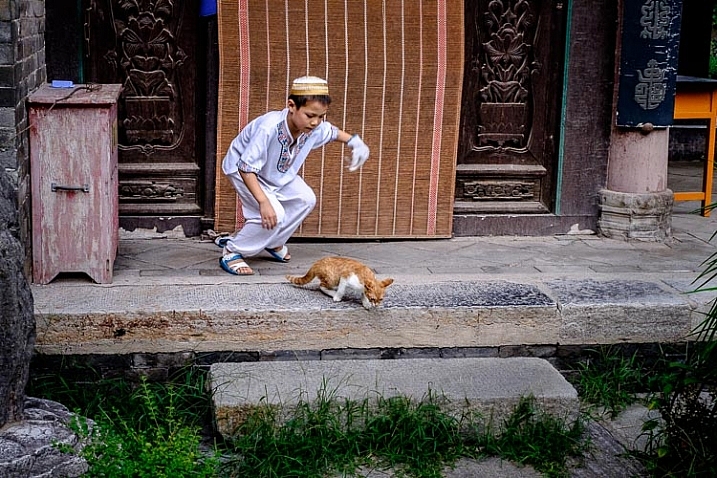
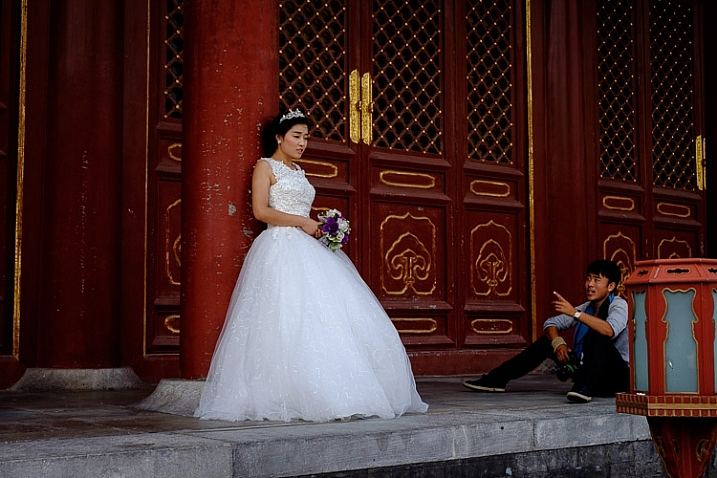
  • It’s an ideal focal length for environmental portraiture. I used it the 35mm lens a lot during a recent trip to China, where I had a lot of fun photographing people. It allows me to capture a scene with people in it, without revealing too much (always a danger with wide-angle lenses) or too little (as can happen with short telephotos).

These two photos are great examples.

Favorite lens 35mm Fujinon f1.4

Favorite lens 35mm Fujinon f1.4

Another thing I like about the 35mm lens, is that it focuses quite close to the subject, allowing me to move in close for detail shots without having to use a close-up lens or extension rings. The 85mm lens that I used with my Canon camera didn’t focus quite so closely, and I had to use a 500D close-up lens (filter) with it for close-up photography. Here’s an example.

Favorite lens 35mm Fujinon f1.4

One of the benefits of a mirrorless camera system, with an APS-C sensor, is that the lenses are smaller and lighter than those made for camera systems with full-frame models. The 35mm lens is small (it’s only 55 mm long) and light (it only weighs 187 grams, 6.5 ounces). Compare those dimensions to a 35mm f/1.4 lens made for a full-frame camera and you’ll see what I mean (Canon’s 35mm f/1.4 is 20.46 oz., or 580 grams).

That wide aperture comes in very useful when shooting in low light, or if you want to use a wide aperture for creative effect. This lens gives me the best of two worlds – small size and wide aperture. This photo, taken at f/1.4, ISO 6400, shows how useful a wide aperture is in low light.

Favorite lens 35mm Fujinon f1.4

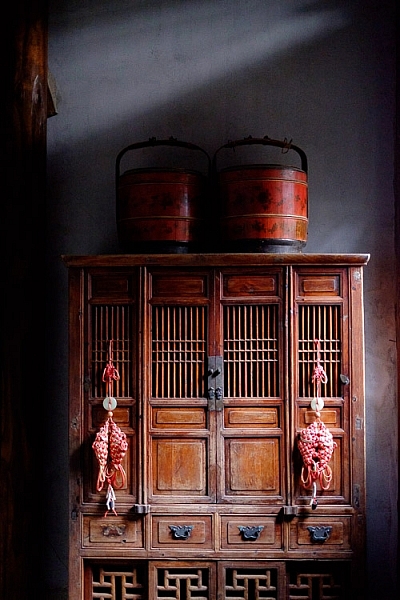
Another benefit of this lens is that I can take photos that aren’t affected by converging verticals. With wide-angles, even moderate ones, any slight tilt of the camera results in converging verticals. Vertical lines are crooked rather than straight. It’s not necessarily a bad thing, but sometimes I prefer the straightness and order, imposed by the 35mm lens. This candid photo shows the point – with a 35mm lens it was easy to frame the photo and make sure the pillar (and the other verticals) were straight.

Favorite lens 35mm Fujinon f1.4

The focal length also works very well when I shoot in the square format. There is something a little magical about the results, and I have been using it a lot for that lately. Here is a photo I took recently in Spain.

Favorite lens 35mm Fujinon f1.4

Your turn

Have you used the Fujinon 35mm f/1.4 lens? Or indeed any other normal or standard lens? Let us know what you like, or dislike, about these lenses in the comments. It will be interesting to hear what you think.


Mastering Lenses photography ebookMastering Lenses

My new ebook Mastering Lenses: A Photographer’s Guide to Creating Beautiful Photos With Any Lens shows you how to get the best from the lenses you own already. A comprehensive guide to exploring the creative potential potential of wide-angle, normal and telephoto lenses, it’s also the ultimate buying guide for readers thinking about purchasing a new lens for their camera. Please click the link to learn more or buy.

googletag.cmd.push(function() {
tablet_slots.push( googletag.defineSlot( “/1005424/_dPSv4_tab-all-article-bottom_(300×250)”, [300, 250], “pb-ad-78623” ).addService( googletag.pubads() ) ); } );

googletag.cmd.push(function() {
mobile_slots.push( googletag.defineSlot( “/1005424/_dPSv4_mob-all-article-bottom_(300×250)”, [300, 250], “pb-ad-78158” ).addService( googletag.pubads() ) ); } );

The post My New Favorite Lens: The Fujinon 35mm F1.4 R by Andrew S. Gibson appeared first on Digital Photography School.


Digital Photography School

 
Comments Off on My New Favorite Lens: The Fujinon 35mm F1.4 R

Posted in Photography