RSS
 

Posts Tagged ‘fall’

Alien Skin unveils Exposure X3 raw editor and organizer, available this fall

14 Sep

Alien Skin is gearing up to launch Exposure X3, the next installment in its Exposure software line. Exposure X3 is a non-destructive raw image organizer and editor, and it will bring multiple improvements and new features over the previous version. Among the changes will be new “toning enhancements” for B&W and color images, as well as a side-by-side view that allows you to compare two images.

Though the product hasn’t yet been fully fleshed out for the public, Alien Skin has revealed that X3 users will have the option of creating virtual copies of images so that the same photo can be edited in different ways without using up extra hard drive space. The company also shared that X3 will bring radial and linear brush shapes, plus adjustable borders.

Alien Skin plans to launch Exposure X3 on both macOS and Windows this fall for $ 150, though existing Exposure users will have access to a $ 100 upgrade option. Alien Skin will also offer a $ 200 bundle that includes X3, Snap Art and Blow Up, and anyone who owns at least one of these apps can get the bundle for $ 120.

Articles: Digital Photography Review (dpreview.com)

 
Comments Off on Alien Skin unveils Exposure X3 raw editor and organizer, available this fall

Posted in Uncategorized


This interactive fall foliage prediction map helps photographers plan for the season

06 Sep

Believe it or not, it’s already September. In 16 short days and some change, autumn will officially begin in the Northern Hemisphere, and photographers across the US (and the world) will go hunting for the perfect orange-and-red peppered photograph of the season. Well, if you’re in the United States, you’re in luck: there’s an interactive map available that will help you plan your trip to capture the best possible colors.

It’s called the Fall Foliage Prediction Map, and the 2017 version is officially live on SmokyMountains.com.

Using the map is straightforward: simply go to this link, drag the slider to your desired date and watch as the interactive map of the United States changes color to reveal when any particular area will be at No Change, Minimal, Patchy, Partial, Near Peak, Peak, and Past Peak fall foliage conditions.

The map isn’t perfect, of course, but SmokyMountains.com has been putting this resource together for several years now and many photographers swear by it. To check it out for yourself, click here.

Articles: Digital Photography Review (dpreview.com)

 
Comments Off on This interactive fall foliage prediction map helps photographers plan for the season

Posted in Uncategorized


MUJI Huts: $27,000 Japanese Timber Micro-Homes Finally for Sale this Fall

11 May

[ By WebUrbanist in Architecture & Houses & Residential. ]

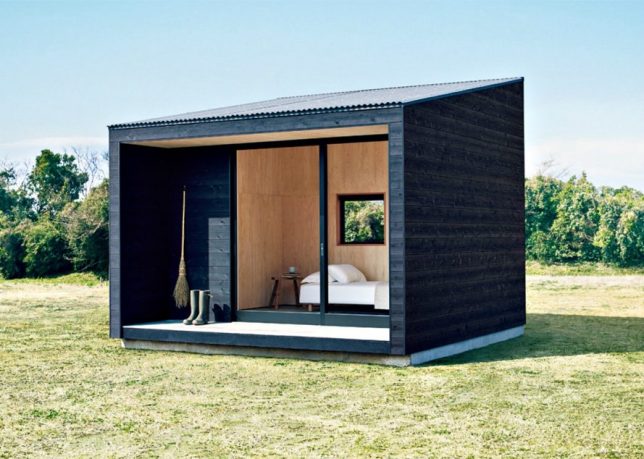
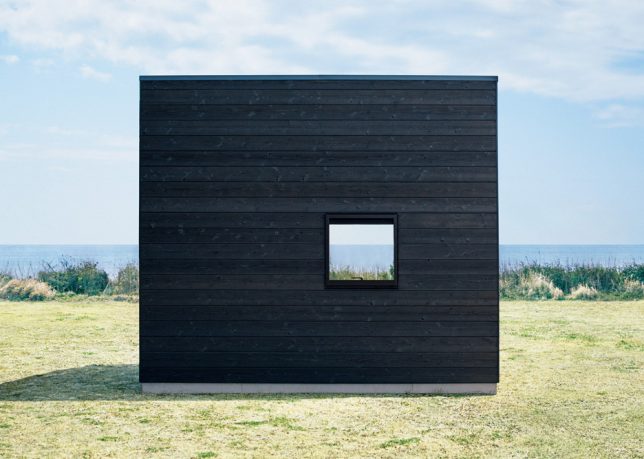
Japanese makers of minimalist household goods and apparel at MUJI began designing and developing a series of small prefab homes a few years back, one of which is now slated to hit the market later this year.

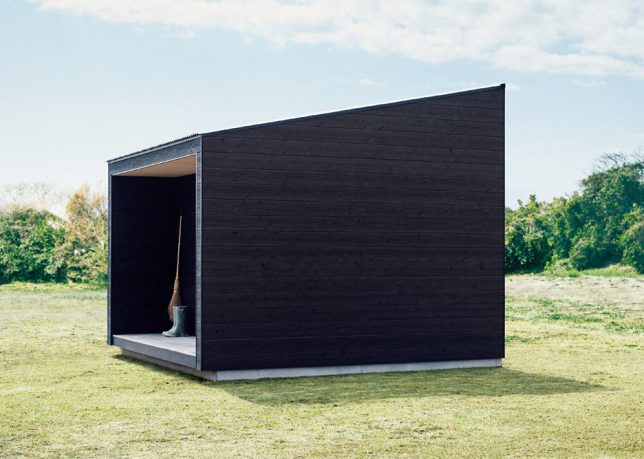
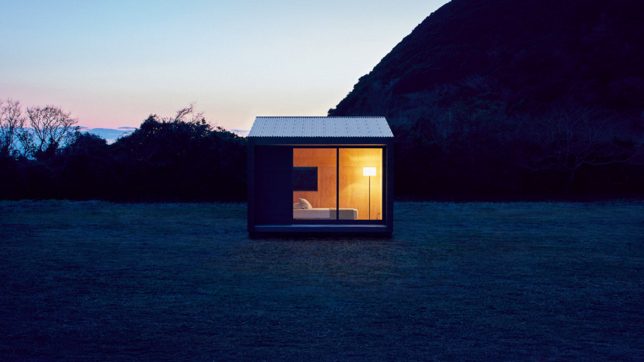
At just under 100 square feet, the first model to hit the sales floor is a simple but elegant module wrapped in charred timber with floor-to-ceiling fenestration on one side. This traditional blackened-wood cladding technique helps finish the wood, protecting it from fire and decay.

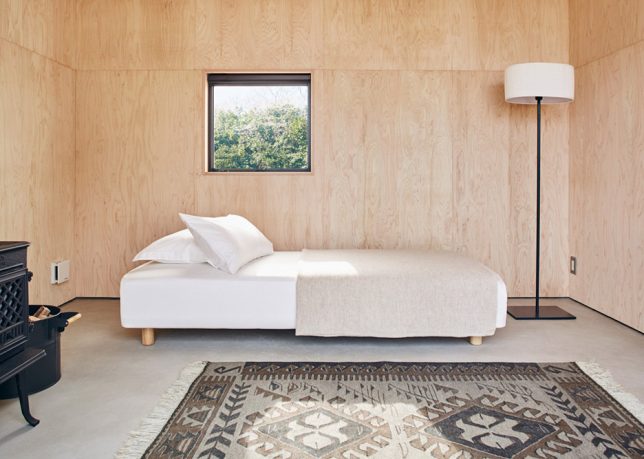
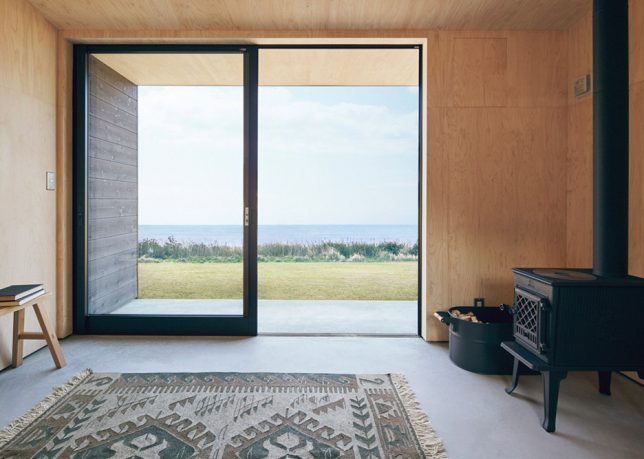
Inside, bright wood paneling and solid walls on three sides make for a cozy interior and flexibility to situate the structure facing choice scenery. The smooth floor is designed to be easily cleaned for those trekking in and out. Outside, a small covered deck extends the space.

The relatively low cost (around $ 27K USD) includes both materials and labor (construction) costs. The structure is intended to serve any function needed, from weekend getaway or supplemental room to autonomous housing unit for fans of simple homes and small-space living.

“It’s not as dramatic as owning a house or a vacation home, but it’s not as basic as going on a trip,” explains MUJI. “Put it in the mountains, near the ocean, or in a garden, and it immediately blends in with the surroundings, inviting you to a whole new life.”

Share on Facebook


[ By WebUrbanist in Architecture & Houses & Residential. ]

[ WebUrbanist | Archives | Galleries | Privacy | TOS ]


WebUrbanist

 
Comments Off on MUJI Huts: $27,000 Japanese Timber Micro-Homes Finally for Sale this Fall

Posted in Creativity


Evolution of Decay: Watch American Buildings Fall Into Ruin Over 40+ Years

19 Nov

[ By SA Rogers in Abandoned Places & Architecture. ]

detroit-time-lapse-2

Architecture that was at its prime in the 1970s has slowly fallen into decline and often ruin thanks to decades of neglect, especially in America’s poorest and most racially segregated communities, including Gary, Detroit, Camden and Harlem. Many of these structures were historically significant, built between the late 1880s and the 1920s, but when no budget exists to care for them and entire cities are left behind by economic progress, the forces of nature and decay take over.

screen-shot-2016-11-18-at-10-01-16-am

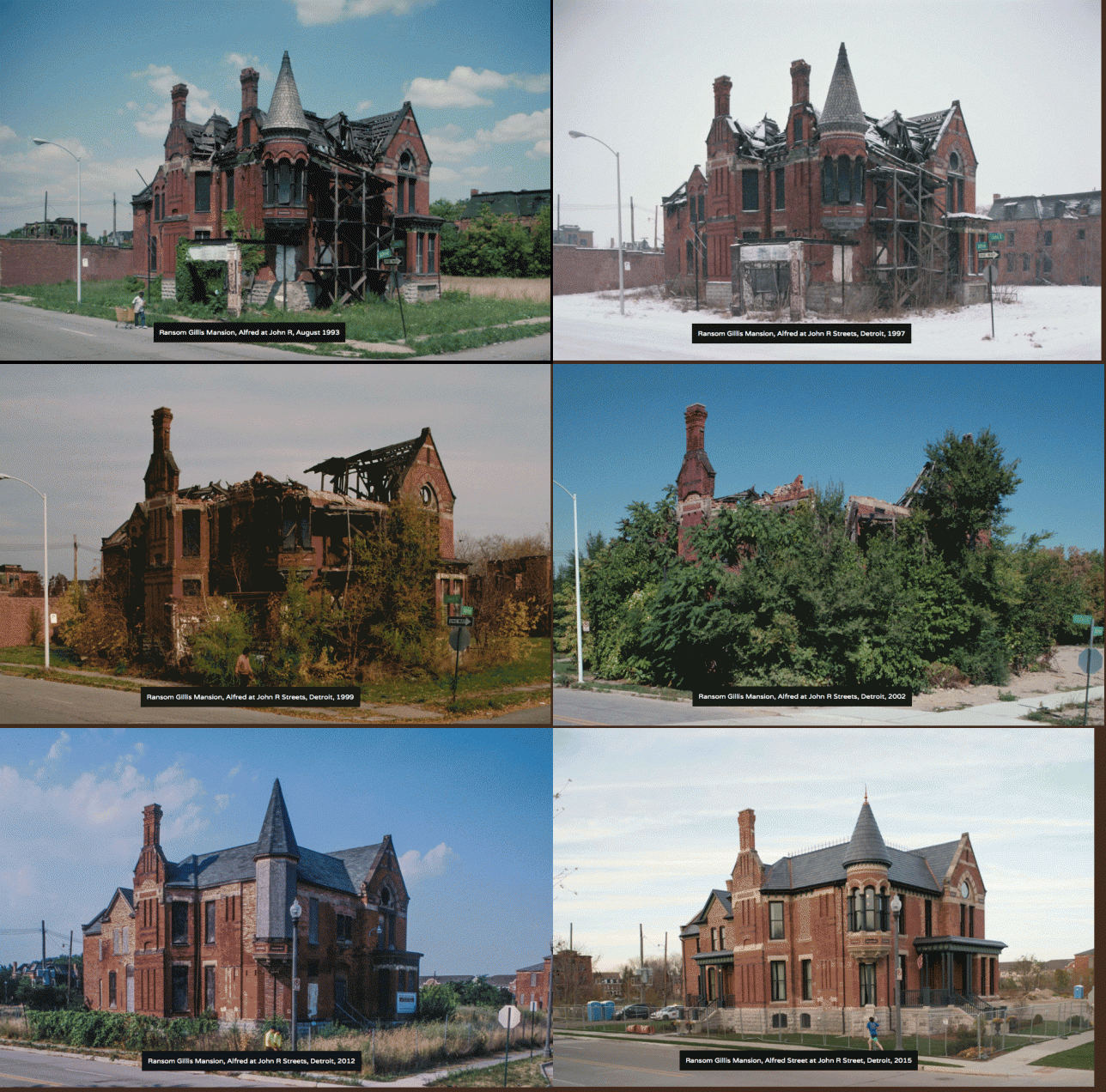
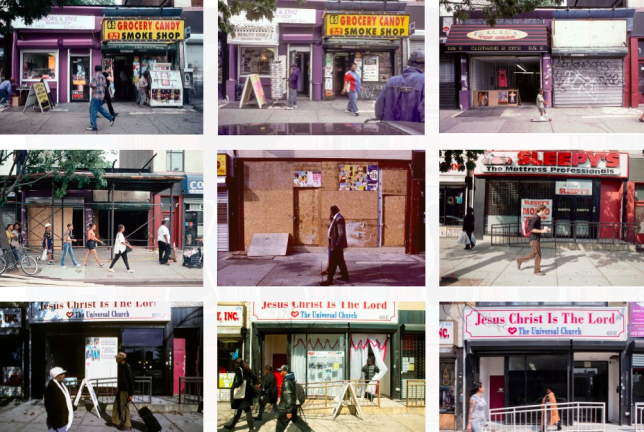
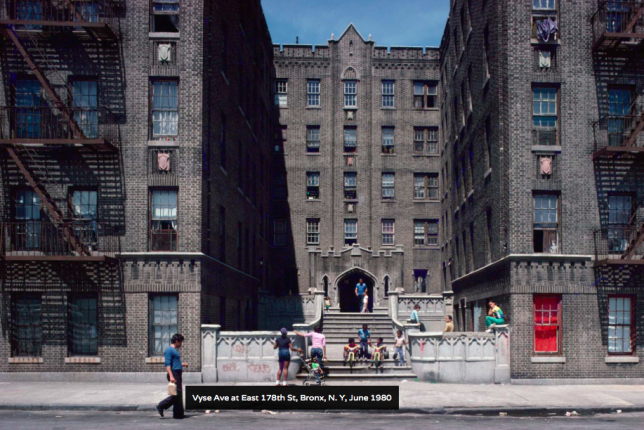
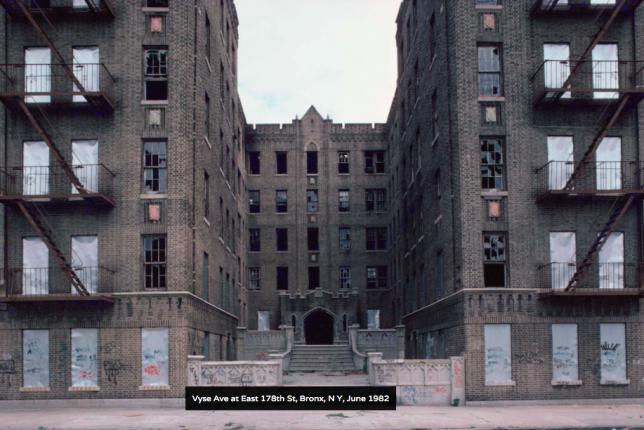
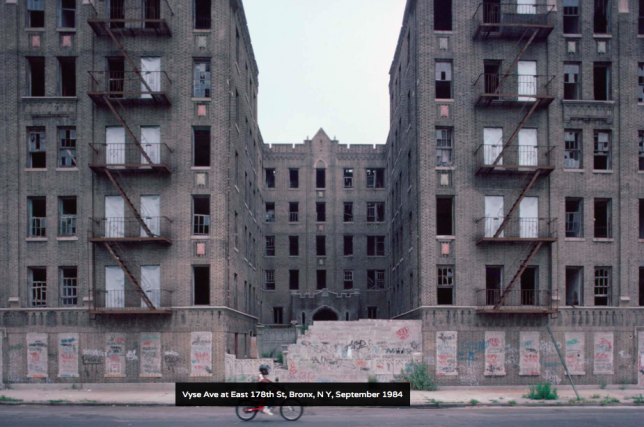
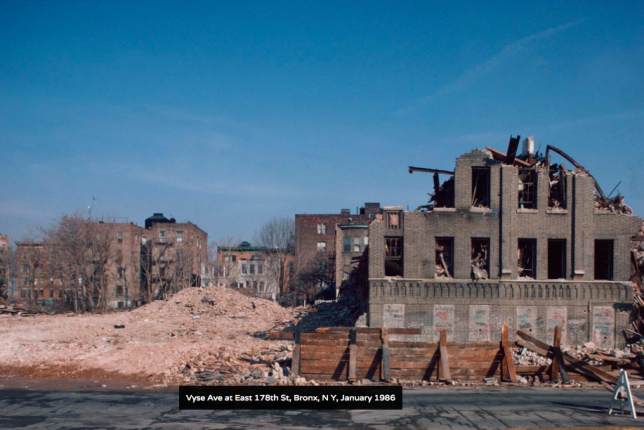
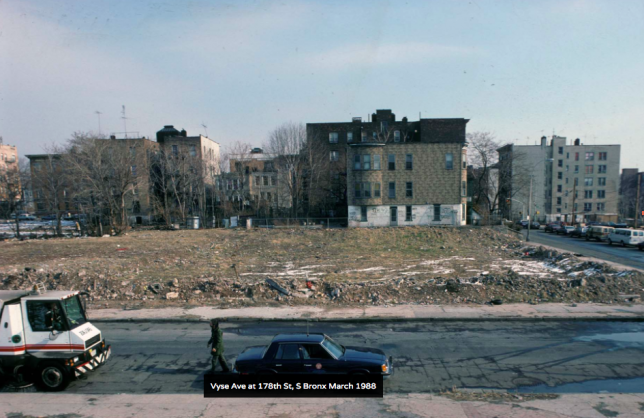
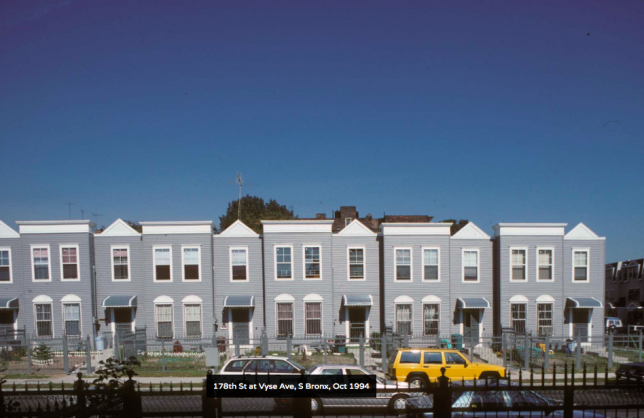
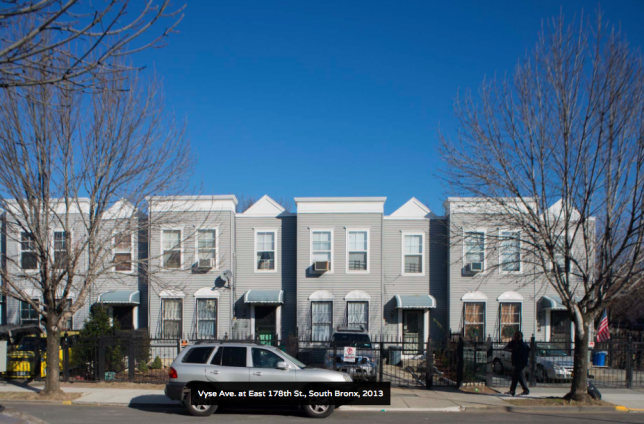
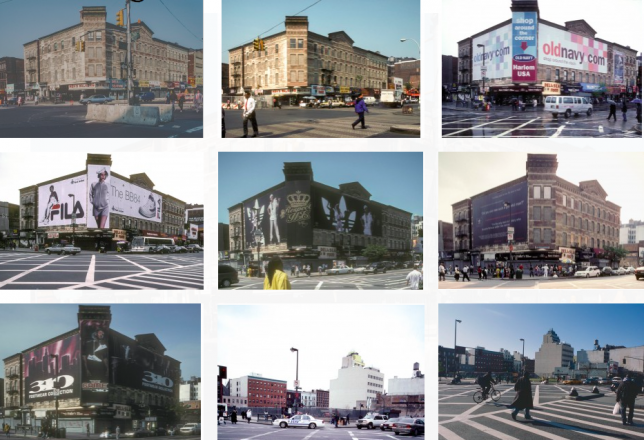
In a potent visual representation of poverty in America’s urban centers and the loss of historic architectural character via demolition, Chilean-born photographer Camilo José Vergara has spent the last 40+ years documenting the downfall of dozens of structures and city streets. The resulting series, ‘Tracking Time,’ is a time-lapse in slow motion, photographing the same buildings once every few years.

screen-shot-2016-11-18-at-10-01-52-am

screen-shot-2016-11-18-at-10-02-16-am

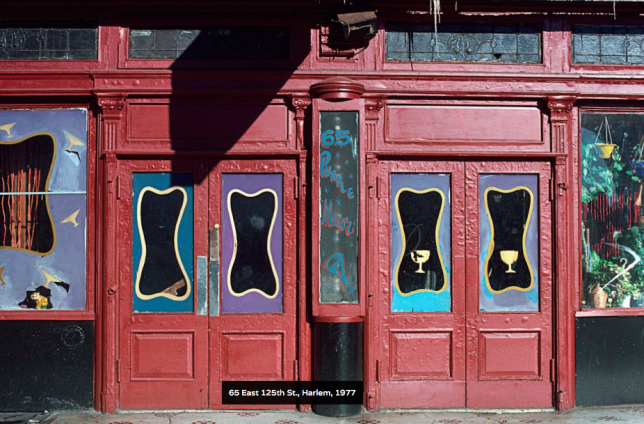
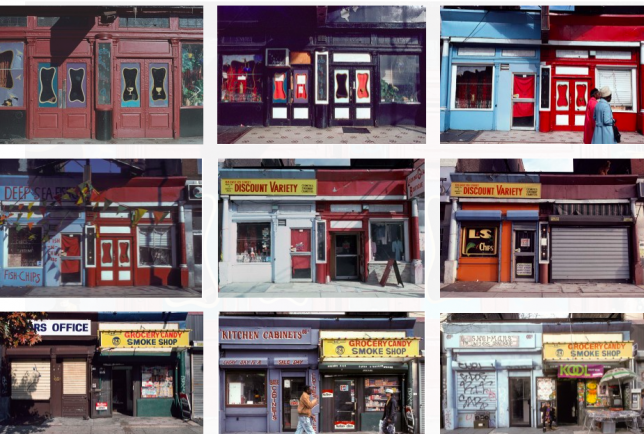
One old shop in Harlem gets painted several times over, has its stained glass windows knocked out, loses a facade to an ugly garage door and is split up into multiple smaller businesses before finally being boarded over and transformed into a mini-mall-style church in 2014.

screen-shot-2016-11-18-at-10-21-00-am

screen-shot-2016-11-18-at-10-21-08-am \

screen-shot-2016-11-18-at-10-21-22-am

screen-shot-2016-11-18-at-10-21-30-am

screen-shot-2016-11-18-at-10-21-38-am

screen-shot-2016-11-18-at-10-21-50-am

screen-shot-2016-11-18-at-10-22-01-am

A massive brick building in South Bronx becomes modest row houses, while The Ransom Gillis House in Detroit (top) sinks into the ground, its bricks falling in clumps, the roof caving in, ivy and trees taking over. It’s almost completely obscured by greenery before a restoration brings it back to its former glory.

screen-shot-2016-11-18-at-10-00-54-am

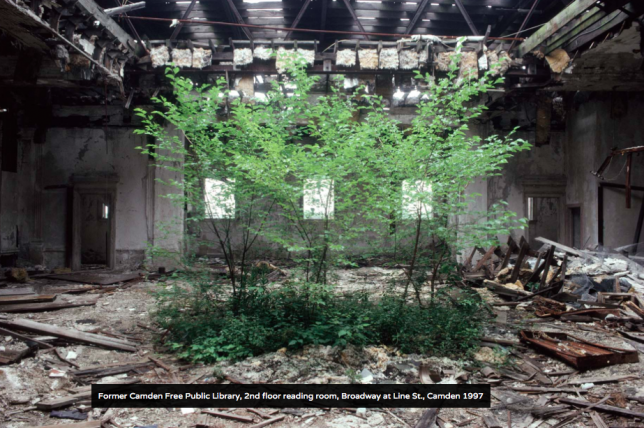
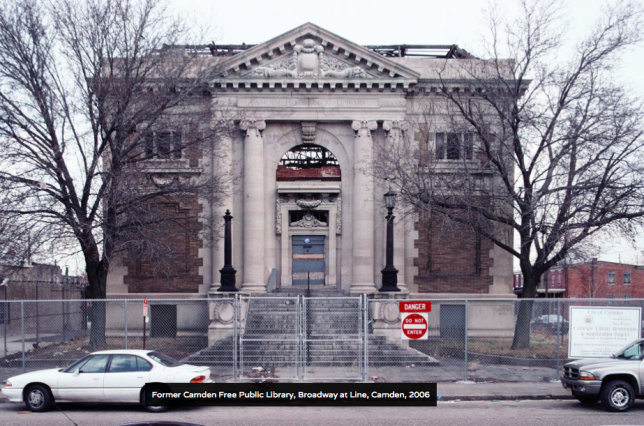
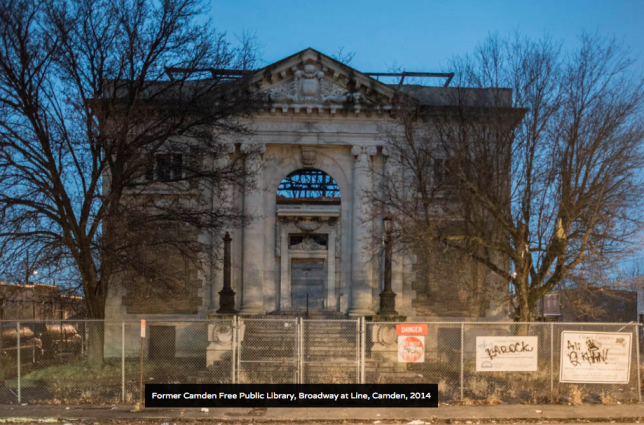
But other stories aren’t so positive, since people care more about mansions than they do about public housing projects, row houses, and modest residential neighborhoods. Occasionally, Vergara ventures inside to show us that even though the facades still look beautiful, like that of the former Camden Free Public Library, the interiors are utterly destroyed.

screen-shot-2016-11-18-at-10-10-30-am

screen-shot-2016-11-18-at-10-10-40-am

screen-shot-2016-11-18-at-10-11-08-am

screen-shot-2016-11-18-at-10-11-24-am

screen-shot-2016-11-18-at-10-11-54-am

It can be a heartbreaking journey but also a fascinating one, watching some of these structures remain the same for many years while the world changes around them before transforming into something new. And some do manage to endure.

Share on Facebook


[ By SA Rogers in Abandoned Places & Architecture. ]

[ WebUrbanist | Archives | Galleries | Privacy | TOS ]


WebUrbanist

 
Comments Off on Evolution of Decay: Watch American Buildings Fall Into Ruin Over 40+ Years

Posted in Creativity


Add Motion to Your Fall Photography to Help it Stand Out

30 Sep

This tutorial brought to you by The New York Institute of Photography. NYIP is the largest and longest running online photography school in the world. Offering ten online photography classes to choose from, the school makes learning photography fun and accessible to aspiring artists on a global scale. Whether you are interested in a new career or are in pursuit of a hobby, NYIP students get the personal attention they need to achieve their goals. They have access to professional photographers as their teachers and mentors to guide them through the course and help them improve.

NYIP is a paid partner of dPS.
Motion fall photography01

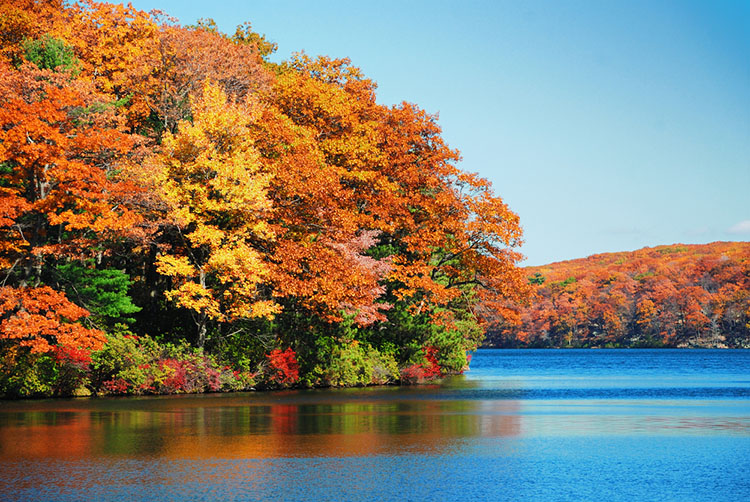
If you are gearing up to capture foliage photos this fall, you may want to brainstorm some ways to adjust your typical compositional style in an effort to produce more unique shots within such a commonly photographed category. How to add some motion to your fall photography will help it stand out.

Add motion to fall photography

One interesting way to update a lackluster landscape is to display some motion in your image. People are more likely to be drawn to your pictures if you can effectively incite some feeling that may be attached to the subject you are shooting. Considering the topic of the changing seasons, including some motion is a fun way to invoke that feelings associate with a shift from summer to fall.
Motion fall photography02

Bulb

Many photographers, new and experienced alike, overlook the BULB mode feature on their cameras. Some aren’t entirely sure what it does and therefore tend to skip past it altogether while adjusting their shutter speeds. This year, take a closer look at this functionality and explore its potential for adding some spark to your seasonal shots.

When working in BULB mode, you will be able to use shutter speeds that are several minutes long. For example, by keeping the shutter open for a mere few seconds, you will have just the right amount of time to move your camera during the actual exposure, allowing you to create a dreamy effect many others are only able to achieve on a computer with the help of post-production tools.
Motion fall photography03

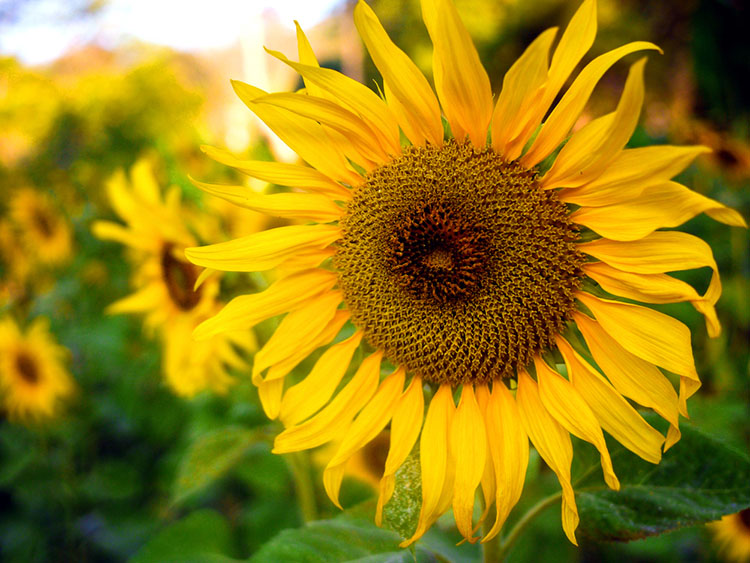
In practice, let’s say you are trying to capture a shot of two different sunflowers growing several feet away from each other in a field. Rather than stepping back to include both flowers in a static, motionless frame, this is a great opportunity to slow your shutter speed and get creative with some movement. To capture a fluid, wistful effect while including both plants in the shot, simply focus on one flower first, start your exposure, and then quickly move the camera to the second flower while the shutter is still open.
Motion fall photography04

Capture falling leaves

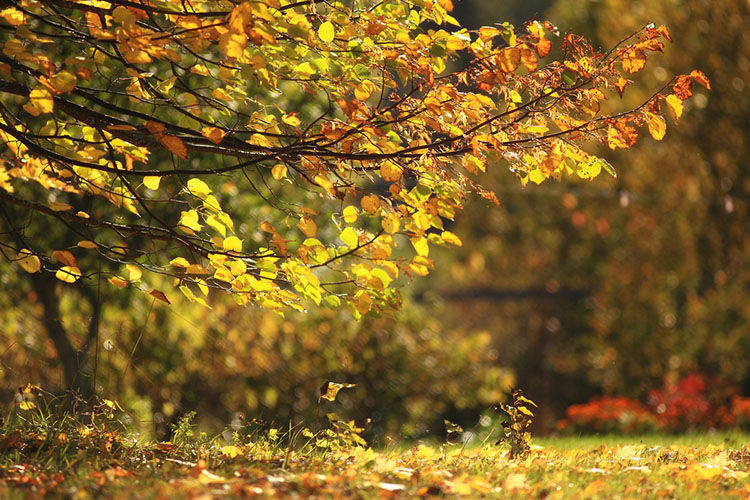
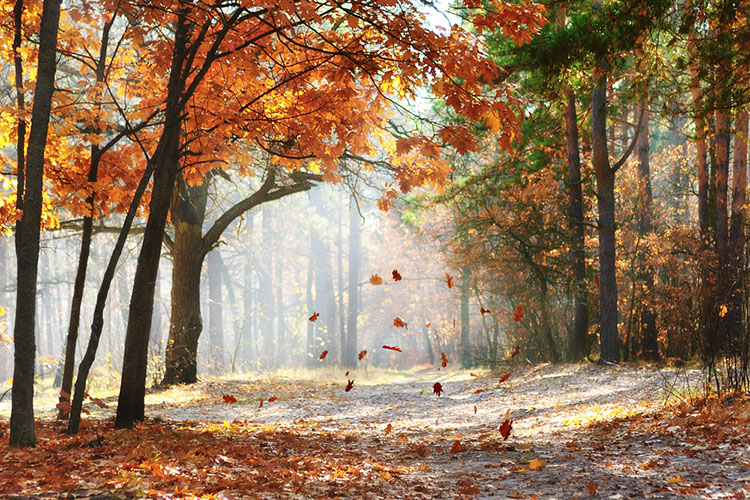
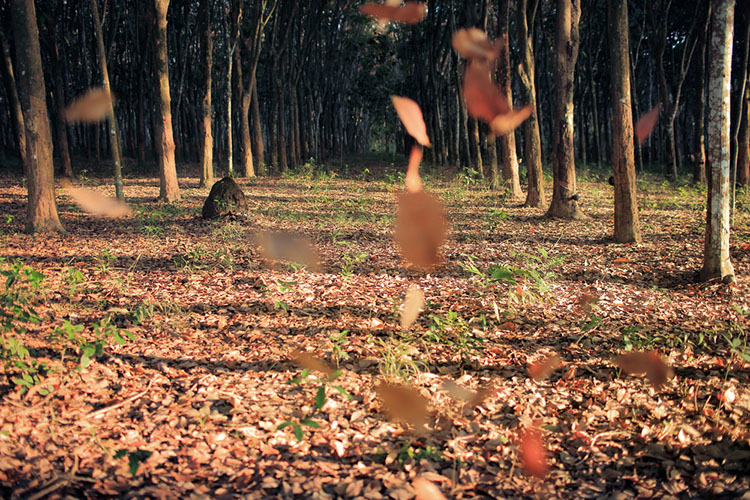
Falling leaves are another perfect subject to explore when experimenting with slower shutter speeds. This autumn, try heading to a local park or hiking trail on a windy day to try out these new techniques. Find a tree with some pretty foliage that you’d like to use as your subject. Set up your gear and wait for the right moment to capture the natural motion of the outdoors.

As a gust of wind blows a handful of leaves from the nearby tree, get creative with the ways in which you can capture that windy motion. One method could be to try zooming in and out mid-exposure. Another could be to get into manual focus mode. Start capturing your shot in focus, then abruptly twist out of focus at the end of the exposure. You could even physically start moving your camera while the shutter is still open.
Motion fall photography05

Fall décor

If you’re interested in capturing some similarly unique shots of Halloween decorations, you can employ the same aforementioned techniques in an effort to add a dragging, spooky motion effect to candles or outdoor lights. Again, with open shutter exposure of a few seconds, you can create a look much more compelling than an otherwise stationary image of a home’s exterior décor. When experimenting with creative compositions such as these, you can toss the typical rulebook aside and just focus on trying to produce something innovative and exciting.

Motion fall photography06

Moving water

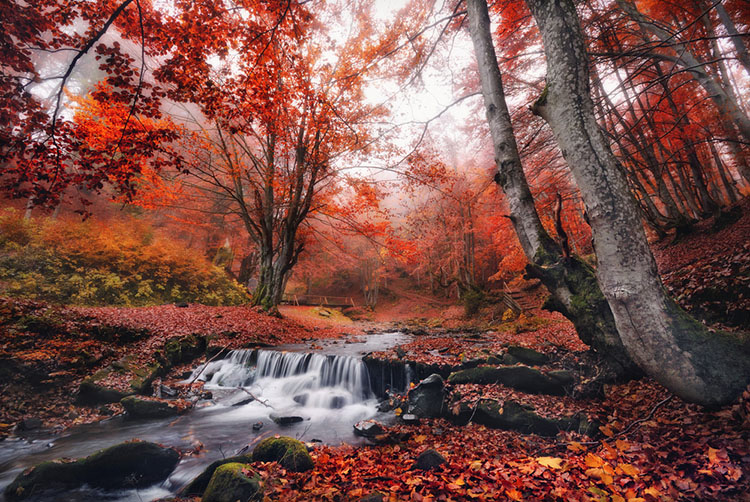
If you’re traveling to a hiking trail in search of captivating foliage shots, make sure to keep your eye out for any opportunity to capture images of water as well. At a speed like 1/30th of a second, you can transform an ordinary waterfall shot into a compelling silky cascade with a flourishing fall backdrop. If you can’t locate a waterfall and are instead working with a more slower-moving subject like a stream or brook, you might want to try a speed a bit slower, such as 1/15th or 1/4th. In general, we recommend you try fluctuating between speeds of around ¼ and 1/60 until you find one that you’re comfortable with. Make sure to experiment with the exposure time to find your favorite water effects.
Motion fall photography07

Getting Started

Before you head out to try these new techniques this year, here’s a checklist of some last minute tips you might want to keep in mind.

Keep the camera steady

When you’re working with such slow exposure times, your shot is prone to be affected by even the slightest jostle of your camera. You might want to consider packing a tripod. If you don’t own one (or lugging one along isn’t practical for your excursion) try to find something outdoors like a boulder as a means for stabilizing your camera before you get started. If you can’t locate a helpful natural prop, you could also try using the 2-second timer and propping the camera up on your gear bag.

Waterfalls

When shooting waterfalls, if you want to capture a more even exposure without the often inevitable inclusion of heavy, distracting shadows, try to head out very early in the morning. If this doesn’t work with your schedule, a cloudy day is your next best option for avoiding this.

Raise the ISO

If you’re trying to photograph fall décor indoors but the exposure is repeatedly too dark, try cranking your ISO (and using a simple noise reduction software).

Blur the background

If you’re trying to focus on a foreground subject but struggling to effectively blur the background, try using the widest possible aperture, and the longest focal length of your lens. Slowly move your subject further and further away from the background as you capture your shot.

Motion fall photography08

By effectively employing these tips and displaying the motion of your subjects, you’ll be able to capture the essence of autumn in a uniquely captivating way.

This tutorial has been brought to you by The New York Institute of Photography. NYIP is the largest and longest running online photography school in the world. Offering ten online photography classes to choose from, the school makes learning photography fun and accessible to aspiring artists on a global scale. Whether you are interested in a new career or are in pursuit of a hobby, NYIP students get the personal attention they need to achieve their goals. They have access to professional photographers as their teachers and mentors to guide them through the course and help them improve.

NYIP is a paid partner of dPS.

Jacob Boller is the School Director at The New York Institute of Photography and has been in his role for the past decade. Jacob first fell in love with photography taking wildlife photos with his Grandfather and still uses that same Olympus 35mm from time to time. Jacob is honored to be the Director at NYIP, the largest and longest running online photography school in the world, and is proud that via the NYIP Online Learning Center, course updates are made as fast as the camera technology develops.

googletag.cmd.push(function() {
tablet_slots.push( googletag.defineSlot( “/1005424/_dPSv4_tab-all-article-bottom_(300×250)”, [300, 250], “pb-ad-78623” ).addService( googletag.pubads() ) ); } );

googletag.cmd.push(function() {
mobile_slots.push( googletag.defineSlot( “/1005424/_dPSv4_mob-all-article-bottom_(300×250)”, [300, 250], “pb-ad-78158” ).addService( googletag.pubads() ) ); } );

The post Add Motion to Your Fall Photography to Help it Stand Out by Jacob Boller appeared first on Digital Photography School.


Digital Photography School

 
Comments Off on Add Motion to Your Fall Photography to Help it Stand Out

Posted in Photography


Weekly Photography Challenge – Fall Leaves

17 Sep

Earlier I rounded up several images of fall leaves to get you thinking about shooting the autumn colors.

Now it’s your turn to get shooting.

Pedro Fernandes

By Pedro Fernandes

Randi Hausken

By Randi Hausken

Weekly Photography – Fall Leaves

If it is autumn or fall in your area the leaves may be changing color soon. So now is the perfect time to go shoot some great colorful images of leaves, landscapes, or even fall portraits. Even if it is not autumn where you live (southern hemisphere) try finding some interesting leaves, do a macro shot, or get creative with processing or composition.

Here are some articles that may give you ideas how to approach this subject:

  • Guide to Creative White Balance for Landscape Photography
  • Tips for Abstract Macro Photography; Using Texture and Light
  • 12 Tips to Help You Capture Stunning Landscape Photos
  • Backyard Macro Photography Safari
  • How to Create Strong Compositions Using Color Contrast
  • Add Contrast to Your Images by Using Complementary Colors
David Ohmer

By David Ohmer

Umberto Nicoletti

By Umberto Nicoletti

Stuart Williams

By Stuart Williams

--IZA--

By –IZA–

Vincent Brassinne

By Vincent Brassinne

Share your images below:

Simply upload your shot into the comment field (look for the little camera icon in the Disqus comments section) and they’ll get embedded for us all to see or if you’d prefer, upload them to your favourite photo sharing site and leave the link to them. Show me your best images in this week’s challenge. Sometimes it takes a while for an image to appear so be patient and try not to post the same image twice.

Share in the dPS Facebook Group

You can also share your images on the dPS Facebook group as the challenge is posted there each week as well.

Michael Salvato

By Michael Salvato

Elisa Greco

By elisa greco

Olli Henze

By Olli Henze

googletag.cmd.push(function() {
tablet_slots.push( googletag.defineSlot( “/1005424/_dPSv4_tab-all-article-bottom_(300×250)”, [300, 250], “pb-ad-78623” ).addService( googletag.pubads() ) ); } );

googletag.cmd.push(function() {
mobile_slots.push( googletag.defineSlot( “/1005424/_dPSv4_mob-all-article-bottom_(300×250)”, [300, 250], “pb-ad-78158” ).addService( googletag.pubads() ) ); } );

The post Weekly Photography Challenge – Fall Leaves by Darlene Hildebrandt appeared first on Digital Photography School.


Digital Photography School

 
Comments Off on Weekly Photography Challenge – Fall Leaves

Posted in Photography


21 Technicolor Images of Fall Leaves

16 Sep

Here in the Northern Hemisphere fall is upon us and the leaves are already changing color. What better time to get out and photograph them!

Let’s see what these photographers captured in this colorful images of fall leaves:

Louise Leclerc

By Louise Leclerc

Ram Yoga

By Ram Yoga

Darlene Hildebrandt

By Darlene Hildebrandt

Chechi Peinado

By Chechi Peinado

Stanley Zimny (Thank You For 19 Million Views)

By Stanley Zimny (Thank You for 19 Million views)

Jacki-dee

By jacki-dee

*Psyche Delia*

By *Psyche Delia*

Nicole Nicky

By Nicole Nicky

Greg Johnston

By Greg Johnston

Peaceful-jp-scenery

By peaceful-jp-scenery

Anne Worner

By Anne Worner

Susana Fernandez

By Susana Fernandez

Gisella Klein

By Gisella Klein

Stanley Zimny (Thank You For 19 Million Views)

By Stanley Zimny (Thank You for 19 Million views)

Paulo Valdivieso

By Paulo Valdivieso

Crifo

By crifo

Mike Monaghan

By Mike Monaghan

J J

By J J

Ms.Kimberly_B

By Ms.Kimberly_B

Susanne Nilsson

By Susanne Nilsson

Mirai Takahashi

By Mirai Takahashi

googletag.cmd.push(function() {
tablet_slots.push( googletag.defineSlot( “/1005424/_dPSv4_tab-all-article-bottom_(300×250)”, [300, 250], “pb-ad-78623” ).addService( googletag.pubads() ) ); } );

googletag.cmd.push(function() {
mobile_slots.push( googletag.defineSlot( “/1005424/_dPSv4_mob-all-article-bottom_(300×250)”, [300, 250], “pb-ad-78158” ).addService( googletag.pubads() ) ); } );

The post 21 Technicolor Images of Fall Leaves by Darlene Hildebrandt appeared first on Digital Photography School.


Digital Photography School
 
Comments Off on 21 Technicolor Images of Fall Leaves

Posted in Photography


6 tips for shooting fall color

04 Sep

6 tips for shooting fall color

The leaves are already starting to turn and the pumpkin beer is already flowing up here in the Pacific Northwest. Fall is just around the corner and photographing fall color is one of our favorite things to do when that autumn chill starts to take hold. Here are some fun and helpful tips to make shooting fall color that much more enjoyable!

Check the fall color reports

One of the first things that I always do prior to planning a trip to photograph fall color is to check the trip reports and the fall color or fall foliage reports.

  • The Weather Channel is a great place to get a broad feel for how the fall color season is shaping up. They have a variety of useful maps and tools to give users a good sense of when their region will have peak color.
  • The Smoky Mountain parks guide also has a unique predictive map that offers a bit of insight into how the current years foliage is developing and what it looks like two months out.
  • I also consult local hiking forums and other photographers through social media to get a good sense of how things are coming along. 

Visit your local Japanese Garden

One trip that I seem to make on an annual basis is to one of our local Japanese Gardens up here in Seattle. Here are a few tips for catching and shooting the gardens in their prime.

  • Call ahead to get a fall color report and to see if tripods are allowed. A number of the gardens in Seattle (and other cities) don’t allow tripods inside of their gates. 
  • Look for the Japanese Maples! Shooting up ‘inside’ of these gorgeous trees can give them a whole new perspective and can offer up some amazing possibilities in terms of composition.
  • Include the architecture- don’t be afraid to photograph the bridges, pagodas and other structures in the garden- let the fall color become a gorgeous backdrop to the architecture.
  • Go early or late- these gardens tend to get very crowded, so go around sunset or sunrise (depending upon the garden’s hours) to avoid the people and other photographers.
  • Look for abstract and macro possibilities in the garden- colors, patterns and structures can offer a seemingly endless amount of compositional choices.
  • Bring a wide selection of lenses and your circular polarizer- a CPL can really increase the vibrancy of the foliage and having a good selection of focal lengths can help you to expand your creativity.

Use fall color to add layers

Fall color can also add layers to a already interesting composition. Finding a way to incorporate fall color into a forest scene or a mountainous landscape can really add depth, character and interesting colors to your image.

  • Use a telephoto lens to minimize the scene and add depth through layers.
  • Look for patterns and textures – a mixture of fall foliage and evergreen trees can offer a nice variety of colors and textures to the scene.
  • Shoot panoramic images – scenes with fall foliage and layers tend to lend themselves very well to a panoramic treatment.
  • Utilize light at different times during the day to emphasize the fall color – the colors in the scene will change drastically throughout the day depending upon the direction and amount of light present in scene, so experiment and take lots of images throughout the day.

Shoot falling leaves

Fall foliage doesn’t last forever, but even the falling leaves can add interest and color to your images.

  • One of my favorite things to shoot just after the fall color has peaked are the leaf-covered driveways, streams and trails that seem to be everywhere after the leaves have begun to fall.
  • The fallen leaves can not only add texture and color to your images, but they can also convey motion and help to form leading lines in your composition.
  • If the colors have already peaked in your area, fear not! There are still a number of great shooting opportunities at your fingertips.    

Go abstract

Fall foliage offers a unique opportunity to try techniques such as motion blur while your out in the field:

  • Mount your camera on a tripod and adjust your settings to enable your camera to shoot for around 0.5″ to 2″ seconds with proper exposure.
  • You may need to use an ND filter to achieve the longer exposure depending upon the lighting conditions.
  • Press the shutter and while the camera is taking the longer exposure pan the camera vertically to achieve a vertical motion blur in your photo.
  • Experiment with different shutter speeds and varying amounts of movement to achieve your desired result.
  • Blend your motion blur shot with a tack sharp shot in your favorite photo editing program to give your abstract a nice sense of depth and a varying amount of texture.
  • If you’re shooting in windy conditions try taking a longer exposure to blur the leaves while leaving the tree trunks tack sharp.

Shoot in all types of weather

One of my biggest pet peeves in photography is the idea that you absolutely have to shoot in specific lighting and weather conditions and at specific times of day. Sure, sunrise and sunset are ideal but I honestly love shooting in anything from blue bird to adverse and frankly bad weather conditions at any time of day. 

  • Don’t get discouraged by the forecasts- fall color offers up some unique opportunities to photograph brilliant colors in snow, rain, sleet and wind. I often find those types of images even more appealing because they tell a story and are very unique.
  • Before you head out to shoot always check your local weather forecasts- fall is a time of year that tends to catch many people off guard, especially while venturing into the mountains, so it’s best to look ahead and plan accordingly.
  • Be prepared for anything – fall is one of the those seasons that can throw rain, sun and snow at you all on the same day.

Articles: Digital Photography Review (dpreview.com)

 
Comments Off on 6 tips for shooting fall color

Posted in Uncategorized


Photo business: the rise and impending fall of social media ‘influencers’

24 May

With so-called ‘influencers’ in the news recently, an anonymous social media executive confesses to Digiday just what contributed to the rise of the phenomenon and the somewhat startling realities of the new ecosystem.

While it may come as no surprise to the general public that the ‘influencer’ ecosystem is going through some turmoil as of late, it is somewhat surprising that it came about in the first place. According to the interview, it took brands until 2014 to realize what most of us saw much earlier – social media is addictive and engrossing for much of the general public, and it’s here to stay.

Instead of a handful of TV commercials to make each year, brands and agencies realized that they needed to greatly increase the sheer volume of their content creation in a never-ending quest for ever more ‘impressions’ via their social media channels. So, what easier way to get your product out there than to simply pay someone to post your product in front of their hundreds of thousands of followers? Thus, the influencer was born.

‘We have no idea what to pay them.’

What started as a simple $ 500 investment for someone to ‘show up and take some photos’ has ballooned into paying ‘$ 300,000 for a few photographs because the CEO’s kid liked someone.’ It’s pretty absurd, with the executive going on to admit ‘we have no idea what to pay them.’ Although it appears there’s more of a vetting process being developed at some agencies, you still get influencers whose entire pitch is ‘I want to take a car and pick it up in London and drive it around Europe, so give me $ 100,000.’

So it’s no surprise that the interview concludes on a bleak note regarding the future for Instagram superstars. The unnamed executive predicts influencers will start to disappear as brands recognize that the value isn’t there. ‘Just because photos look good and have 200,000 followers means nothing.’ While it lasts, it sure seems like a pretty sweet gig.

Via: digiday.com

Articles: Digital Photography Review (dpreview.com)

 
Comments Off on Photo business: the rise and impending fall of social media ‘influencers’

Posted in Uncategorized


ON1 Photo RAW, a new non-destructive Raw processor, launches this fall

29 Apr

ON1, an Oregon-based photography software developer, has announced a combination non-destructive photo editor and Raw processor: ON1 Photo RAW. The application has been built from the ground up to work with modern computers and high-resolution camera systems. The software can open 50MP images ‘in a fraction of a second on a standard PC or Mac’ according to its maker and performs edits without lag.

ON1 has been developing Photo RAW for the past several years, doing so around its ON1 Browse photo browser to eliminate the need for cataloging and importing photos. Along with lag-free processing, it offers features like tagging, rating, adjustments and photo effects. The photo editor includes integrated masking tools, layers, and brushes; effects and adjustments are applied in a non-destructive manner, says ON1. 

Several usage options are available with ON1 — it can be used as a plugin for Adobe Photoshop and Lightroom, Corel, as a host app for Google Nik Collection, and as an extension for Apple Photos. ON1 says Photo RAW will support PSD, PSB, PND, DNG, TIF, and JPEG file formats.

ON1 Photo RAW is available to pre-order now for ON1 Plus Pro Members; a membership costs $ 149.99/year, and provides a perpetual license for ON1 applications. Members will receive ON1 Photo RAW first when it launches this fall. A non-membership ON1 Photo RAW purchase option will also be available.

Source: ON1


Press release:

Announcing the First New RAW Processor in Years, ON1 Photo RAW

The Future of RAW Photo Editing – Coming this fall – Includes support for over 800 cameras

Portland, OR – April 26, 2016 – ON1, Inc. today announced ON1 Photo RAW, the first all-new RAW processor and non-destructive photo editor to be released in more than a decade. With modern code optimized for today’s super-megapixel cameras and high-performance computer graphics systems, Photo RAW will be the world’s fastest, most flexible, and easiest-to-use RAW processor and photo editor on the market when it is released this fall.

The current class of RAW-based photo editors all have their heritage from the early days of digital photography, when most digital cameras had less than 10 megapixels, and computer processing power was a fraction of that found in modern PCs. When used with today’s popular 42- and 50-megapixel cameras, existing programs can often take seconds to render small portions of a RAW image and perform adjustments. Several years in the making, Photo RAW, with its modern RAW processing engine, is tuned for today’s sensors and graphics chips. It will open 50-megapixel images in a fraction of a second on a standard PC or Mac, and perform edits in real-time, without slider lag or frustrating waits for redraw.

Developed over the last several years, ON1 Photo RAW is built around ON1 Browse, the company’s lightning-fast photo browser, and will not require photographers to import and catalog their photos; an often painful and time-consuming process required before editing can begin. ON1 Browse is an integral part of Photo RAW, offering quick and easy ways to tag, rate, make color and tone adjustments, or add effects to their photos. Without catalogs, professionals will be able to make adjustments to photos and fellow colleagues can access and edit where they left off. This combination of a fast photo browser with instantaneous RAW processing will deliver a fluid, streamlined workflow to process any amount of photos all at once. Select one or 101 photos, make a few develop adjustments and all of the photos update automatically in real time.

ON1 Photo RAW’s instruction-based, non-destructive workflow will also surpass today’s RAW processors in other key ways. In addition to customary re-editable adjustments such as exposure, contrast, color, shadows and highlights, Photo RAW will also offer non-destructive effects and portrait retouching, something not present in any photo editor on the market. The complex filters found in ON1 Effects and ON1 Portrait—including Lens Blur, Skin Retouching, Dynamic Contrast, HDR Look and many more—are all available in Photo RAW’s non-destructive workflow. The controls found throughout ON1 Photo RAW will also respond in real-time by leveraging modern video cards, using the latest versions of OpenGL and OpenCL.

ON1 Photo RAW will include built-in layers, brushes, and advanced masking tools, making it a full RAW processor and complete photo editor in a single app. And, unlike any other photo app, Photo RAW will work the way you want, and where you want. For photographers with established workflows, Photo RAW will work seamlessly as a plug-in for Adobe Lightroom®, Photoshop®, and Corel®; a standalone host app for Google® Nik Collection and other photo editors; or as an extension to Apple® Photos. Common file formats—including JPEG, TIF, PSD, PSB, PND, and DNG—will be supported and will benefit from the speed and performance of the app.

Price and Availability

ON1 Photo RAW will be available this fall. You can pre-order ON1 Photo RAW today by becoming an ON1 Plus Pro Member at $ 149.99/yr. Plus Pro members receive a perpetual license for all ON1 apps (not a subscription) and will be the first to receive the app once it becomes available. If you want to purchase ON1 Photo RAW without becoming an ON1 Plus Pro Member, you can submit your email address on the ON1 Photo RAW web page to get the latest news, videos, beta, and pre-order announcements.

Owners of previous versions of ON1 Photo will have the option to upgrade to ON1 Photo RAW. The upgrade price will be determined at a later date. There will be special pricing for Photo 10 purchasers. Customers will be notified over the course of the next several months providing their upgrade information.

Articles: Digital Photography Review (dpreview.com)

 
Comments Off on ON1 Photo RAW, a new non-destructive Raw processor, launches this fall

Posted in Uncategorized