RSS
 

Posts Tagged ‘f1.4’

Sigma 30mm F1.4 DC DN Contemporary Micro Four Thirds Lens Review

11 Oct

The Sigma 30mm F1.4 DN DC Contemporary was announced February 2016, and sits atop Sigma’s line of DN mirrorless lenses, with a two-stop advantage over their previous 30mm F2.8 offering.

As a Micro Four Thirds lens, it is one of only several current autofocus F1.4 prime lenses available, with its closest competitor being the Panasonic Leica Summilux DG 25mm F1.4. While the Panasonic offers a field-of-view equivalent to a ‘classic’ 50mm lens, the Sigma ends up around 60mm. While that makes its focal length possibly a bit long for street shooting, it helps a little when it comes to portraiture and close-up work.

Let’s see how the basic specifications between the Panasonic Leica 25 and Sigma 30 compare:

  Panasonic Leica Summilux DG 25mm F1.4 Sigma 30mm F1.4 DC DN | C
Price $ 598 $ 339
Image Stabilization No No
Max Aperture F1.4 F1.4
Minimum Aperture F16 F16
Aperture Ring No No
Diaphragm Blades 7 9
Minimum Focus 0.30 m (11.81?) 0.30 m (11.81?)
Maximum Magnification 0.11x 0.14x
Motor Type Micromotor Stepper motor
Full Time Manual Yes No
Weight 200 g (0.34 lb) 265 g (0.58 lb)
Dimensions (DxL) 63 mm (2.48?)  X 55 mm (2.15?) 65 mm (2.56?) X 73 mm (2.87?)
Sealing None None
Filter Thread 46mm 52mm

Regardless of where it sits in terms of focal length and usability, the Sigma enters the opposite of a crowded marketplace as an autofocus F1.4 Micro Four Thirds prime. It also gets the advantage of being the cheapest autofocus F1.4 Micro Four Thirds prime available, even undercutting the price of some F1.8 options as well. 

Thankfully, the Sigma doesn’t feel entirely cheap. The barrel is well made with a satin black finish and ridges for grip when mounting or removing the lens. Sadly, the plastic hood feels a little inexpensive, and doesn’t feel like it clicks in to position with much confidence. Build quality of the lens itself is on par with the Pana-Leica, with both having smooth, sturdy focus rings with rubberized ridged grips.

The extra bit of diameter and length on the Sigma make it a bit bulky and unbalanced when mounted to some of slimmer Micro Four Thirds cameras, like the Olympus PEN series, or the E-M5 II. When mounted to a larger SLR shaped body, like the GH4, the Sigma fits nicely.

We’re assuming the extra size, relative to the Panasonic stems from it needing to be large enough to cover an APS-C sized sensor, in its E-mount incarnation.

Does the discounted price mean the Sigma comes with discount performance? Can it shake off past stigmas about third party lenses and go toe-to-toe with a lens touting one of the most revered names in the business? Let’s take a closer look at the numbers.

Articles: Digital Photography Review (dpreview.com)

 
Comments Off on Sigma 30mm F1.4 DC DN Contemporary Micro Four Thirds Lens Review

Posted in Uncategorized


Sigma adds the 85mm F1.4 Art, 12-24mm Art, 500mm F4 Sport lenses to its Global Vision line

20 Sep

$ (document).ready(function() { SampleGalleryV2({“containerId”:”embeddedSampleGallery_4713538649″,”galleryId”:”4713538649″,”isEmbeddedWidget”:true,”standalone”:false,”selectedImageIndex”:0,”startInCommentsView”:false,”isMobile”:false}) });

Sigma has announced three new full-frame lenses for its Global Vision Line. The long-rumored and long-awaited 85mm F1.4 Art, the 12-24mm F4 Art, and the 500 F4 DG OS HSM Sport.

The 85mm F1.4 Art has been designed with resolution and bokeh in mind. A stronger HSM AF motor produces 1.3x the torque of the previous setup hopes to improve autofocus speed as well. The lens will be available in late October at a price $ 1199.

The Sigma 12-24mm F4 DG HSM Art is a new ultra-wide-angle zoom. It too features the stronger AF module, and also features the largest aspherical glass mold in the industry, which helps produce minimal distortion, flare and ghosting. The lens will be available in late October for $ 1599.

The Sigma 500mm F4 DG OS HSM Sport uses lightweight materials like carbon fiber and magnesium alloy and features a dust and splash resistant construction. In Nikon mount it features a brand-new electronic diaphragm. The Sigma 500mm F4 Sport lens, in Canon and Sigma mounts, will be available in late October. The Nikon mount will be available in late November. The 500mm F4 will retail for $ 5999.

Press Release:

Sigma Adds the 85mm F1.4 DG HSM Art, 12-24mm F4 DG HSM Art, and 500mm F4 DG OS HSM Sport Lenses to Its Global Vision Line

Outstanding optical performance, ultra-wide zoom range, and versatile flagship sports lens headline the Sigma line-up at Photokina 2016

Cologne, Germany – September 19, 2016 – Sigma Corporation of America, a leading camera, DSLR lens, flash and accessories manufacturer, unveiled its new 85mm F1.4 DG HSM Art, 12-24mm F4 DG HSM Art and 500mm F4 DG OS HSM Sport Global Vision lenses at the Photokina 2016 event (hall 4.2, stands B020, B028 and C029).

“We are thrilled to announce three state-of-the-art additions to the Global Vision line. The Sigma 85mm 1.4 Art has been a highly requested lens and we are very confident those customers who have been waiting for us to deliver this lens will be more than pleased with the superior optical performance and zero compromise,” states Mark Amir-Hamzeh, president of Sigma Corporation of America. “In addition, the re-engineered 12-24mm F4 and highly competitive 500mm F4 Sport lens both embody the world-class performance our Global Vision lenses are known for. We look forward to seeing the incredible images our customers will create using these new Sigma lenses.”

Sigma 85mm F1.4 DG HSM Art – The Ultimate Portrait Lens
Delivering the ultimate in creative expression, the new Sigma 85mm F1.4 Art lens is engineered to support the highest resolution sensors on the market with an exceptional degree of sharpness. The high-performance optical system is purpose-built by Sigma R&D to produce the attractive bokeh effect sought after by discerning photographers. The lens’ advanced architecture features two SLD (special low dispersion) glass elements and one glass element with a high rate of anomalous partial dispersion and refraction. A re-engineered AF system brings 1.3X the torque of its predecessor, while other features such as a full-time manual focus override have been added, which can be controlled when the focus ring is rotated, even during continuous AF.

The Sigma 85mm F1.4 DG HSM Art lens supports Canon, Nikon and Sigma mounts. The Nikon mounts feature a brand new electromagnetic diaphragm.

The Sigma 85mm F1.4 Art lens will be available in late October and retails for a recommended street price of $ 1199.00 USD.

Sigma 12-24mm F4 DG HSM Art Ultra-Wide Angle Zoom for the Era of Ultra-High Resolution Digital Cameras
Boasting the renowned Global Vision image quality from center to edge, the new Sigma 12-24mm F4 features the largest aspherical glass mold in the industry, offering photographers an ultra-wide angle zoom with virtually no distortion, flare or ghosting. Encompassing the long history of Sigma wide angle lens development expertise, the new 12-24mm F4 performance highlights include constant F4 brightness and the brand new Sigma AF system with 1.3X torque boost. The 12-24mm F4 features lens elements made with FLD (“F” Low Dispersion) glass, which is equivalent to calcium fluorite in performance. Combined with an optimized power distribution, the result is outstanding image quality from center to edges. With a minimum focus distance of 9.4 inches at 24mm, photographers can compose incredible close-up shots with expansive backgrounds.

The all new Sigma 12-24mm F4 DG HSM Art lens supports Canon, Nikon and Sigma mounts. The Nikon mounts feature the brand new electromagnetic diaphragm.

The Sigma 12-24mm F4 Art lens will be available in late October and retails for a recommended street price of $ 1599.00 USD.

Sigma 500mm F4 DG OS HSM Sport Lens – Pro Fast-Aperture Prime Super Telephoto
The flagship Sigma super telephoto 500mm F4 Sport lens incorporates the very latest in Sigma optical technology and innovation. Designed for the professional sports and wildlife shooter, the ultra-durable lens features magnesium alloy components, a carbon fiber hood, a water and oil resistant front element, and is dust and splash proof. The 500mm F4 features a drop-in rear filter slot for polarizers, UV and other critical filters. To help prevent damage during shooting and maintenance, the lens is also compatible with the exclusive SIGMA Protector LPT-11 (sold separately).

The lens incorporates two FLD and one SLD glass elements, while the optimized power distribution helps minimize spherical aberration and axial chromatic aberration. The optical system also effectively minimizes transverse chromatic aberration, which can affect the edges of the shots taken in the telephoto range. In addition, image quality remains exceptional when the lens is used with a Sigma Telephoto Converter (sold separately).

Other key performance features include Sigma’s two-mode Optical Stabilizer for enhanced performance when shooting handheld for still subjects or panning and tracking for moving subjects. There is also a customizable AF “return” function for setting the focus position of one’s choice and returning to that preset distance.

The all new Sigma 500mm F4 supports Canon, Nikon and Sigma mounts. The Nikon mounts feature the brand new electromagnetic diaphragm.

The Sigma 500mm F4 Sport lens, in Canon and Sigma mounts, will be available in late October. The Nikon mount will be available in late November. The 500mm F4 will retail for a recommended street price of $ 5999.00 USD.

All Sigma Global Vision lenses, including the new 85mm F1.4 DG HSM Art, 12-24mm F4 DG HSM Art, and 500mm F4 DG OS HSM Global Vision lenses, can be updated with the latest lens firmware from a workstation or laptop using the Sigma Optimization Pro software and Sigma USB Dock (sold separately).

Tested for Optimum Performance

Sigma lenses are born of well thought-out design concepts, exceptional Japanese craftsmanship and manufacturing, and advanced lens performance testing and evaluation. To this end, Sigma has developed its own A1 proprietary MTF (modulation transfer function) measuring system using 46-megapixel Foveon direct image sensors. Even the most elusive high-frequency details are within the scope of Sigma’s quality control inspections. Every Global Vision lens is A1 tested, analyzed and approved before leaving the factory, ensuring maximum performance out of the box.

For more information on Sigma’s industry leading testing, please visit http://blog.sigmaphoto.com/2012/a1-mtf-testing-for-new-sigma-lenses/.

About Sigma Corporation
Craftsmanship. Precision. Dedication. Since 1961, Sigma has been devoted the pursuit of advancing photographic technology. Unique to the industry, the family-owned business produces its high-quality, award-winning camera lenses, DSLR cameras, flashes, filters and accessories from its state-of-the-art manufacturing facility located in Aizu, Japan.

In 2012, the company introduced the Sigma Global Vision with three distinct lens lines: Art, Contemporary and Sport. Designed for industry camera mount systems including Canon, Nikon, Olympus, Pentax, Sony and Sigma, each lens is handcrafted and tested in Japan to ensure a high-performance, premium product that is purpose-built to last.

Sigma continues its tradition of imaging excellence with the mirrorless sd Quattro, sd Quattro H and the compact dp Quattro camera line. Leveraging the ultra-high resolution Foveon sensor, the Sigma Quattro cameras are designed to produce the highest quality image with every shot.

For information about Sigma, please visit www.sigmaphoto.com or follow the company on Twitter, Instagram and Facebook.

Articles: Digital Photography Review (dpreview.com)

 
Comments Off on Sigma adds the 85mm F1.4 Art, 12-24mm Art, 500mm F4 Sport lenses to its Global Vision line

Posted in Uncategorized


Sigma 30mm F1.4 DC DN Contemporary for Sony E-mount lens review

13 Sep

The Sigma 30mm F1.4 DN DC Contemporary was announced in February 2016, and sits atop Sigma’s line of DN mirrorless lenses, with a two-stop advantage over their previous 30mm F2.8 offering. It’s currently the only APS-C F1.4 autofocus lens currently available for the Sony E-mount and has an MSRP of $ 339.00.

With F1.4 and a 45mm equivalent field of view, this lens on paper appears to be a good choice for a ‘walkaround’ normal prime lens. The bright aperture will satisfy low light shooters and bokeh fanatics, and the near 50mm field of view puts it right inside the versatile ‘normal’ lens range. While it won’t replace a dedicated macro lens with its magnification ratio of 1:7, it still is able to focus down to a working distance of 30cm (less than a foot).

The relatively low price, especially for an E-mount lens, means it’s also accessible to beginners and enthusiasts alike, making it sound like an ideal prime lens that may never leave the front of the camera once it’s mounted.

Within the E-mount system this lens has one natural competitor: the Sony 35mm F1.8 OSS. Let’s look at how the two stack up on paper:

  Sony E 35mm F1.8 OSS Sigma 30mm F1.4 DC DN | C
MSRP $ 448 $ 339
Image Stabilization Yes No
Max Aperture F1.8 F1.4
Minimum Aperture F22 F16
Aperture Ring No No
Diaphragm Blades 7 9
Number of elements 8 9
Number of groups 6 7
Special elements/coatings 2 aspherical elements 1 aspherical and 1 double-sided aspherical
Minimum Focus 0.30 m (11.81?) 0.30 m (11.81?)
Maximum Magnification 0.15x 0.14x
Motor Type Stepper motor Stepper motor
Full Time Manual No No
Weight 155 g (0.34 lb) 265 g (0.58 lb)
Dimensions (DxL) 63 x 45 mm (2.5 x 1.8 in.) 65 x 73mm (2.6 x 2.9 in.)
Sealing None None
Filter Thread 49mm 52mm

In terms of just spec we see a couple of major differences. First, while the Sony is 2/3 of a stop slower than the Sigma, it does include optical image stabilization. That alone gives it a better chance at being the preferred lens for video, although when shooting 4K the slightly wider FOV of the Sigma might fare better on any body that gives an additional crop.

In stills terms, though, there’s little real-world difference between the Sigma’s 45mm equivalent view and the 52.5mm equivalent of the Sony. The difference between them doesn’t suddenly open one up to a type of photography that couldn’t be achieved with the other.

Build quality between the Sigma and the Sony is fairly similar. They both use a machined metal chassis with plastic internals. Compared to older Sigma DN lenses, the 30mm F1.4 doesn’t let its focus elements rattle about when unmounted, which is a very welcome change. The focus ring is also an improvement, and a step above the Sony. The rubber grip turns smoothly and easily with minimal effort, making the Sony feel a bit stiff. The only downfall in terms of build is the Sigma’s lens hood, which doesn’t seem to confidently click in to place, and is made of rather fragile feeling plastic.

The long barrel of the Sigma, and even longer overall dimensions do make it quite large in comparison to APS-C Sony Alpha cameras, but the weight isn’t entirely off-balance. While heavier and much bigger, it is less expensive and brighter than the Sony 35 F1.8. The question is, does the extra weight and lack of OSS keep it from topping the Sony as the ideal ‘normal’ for APS-C E-mount shooters?

Articles: Digital Photography Review (dpreview.com)

 
Comments Off on Sigma 30mm F1.4 DC DN Contemporary for Sony E-mount lens review

Posted in Uncategorized


Tamron files patent for 115mm F1.4 VC lens

25 Aug

Lens manufacturer Tamron has filed a patent for what looks like an interesting portrait lens to add to its growing collection of fixed focal length lenses. The company appears to be developing a 115mm F1.4 moderate telephoto lens that will come with Tamron’s Vibration Compensation system built in. The focal length is very unusual, as is the 45mm that the company chose for its F1.8 standard lens, but that will only make it stand out from the crowd of 90mm, 100mm, 105mm and 135mm lenses. The 115mm focal length isn’t unheard of though as Carl Zeiss produced Tessar 115mm F3.5 and Pro Tessar 115mm F4 lenses for SLR and rangefinder film cameras. 

The patent application was spotted by Japanese website egami.

* Patent Publication No. 2016-151661
* Published 2016.8.22
* Filing date 2015.2.17

* Example
* f = 113.000
* Fno = 1.456
* ? = 10.632

* Tamron patent
* Positive and negative positive
* Inner focus (the second group)
* Vibration proof group (one of the group)

Articles: Digital Photography Review (dpreview.com)

 
Comments Off on Tamron files patent for 115mm F1.4 VC lens

Posted in Uncategorized


Lens Review: Sigma 20mm F1.4 DG HSM Art Lens

10 Aug

In my opinion, one of the best developments to happen in photography recently is the stepped-up offerings of third party lens manufacturers. Early in my photography career, third party lenses were decent alternatives for a lower cost option, but my own experience was that the cost savings also came at a cost in performance. Those lenses weren’t as sharp, focused slower, and weren’t built to the same quality of similar lenses by Nikon and Canon (and other camera brands).

Sample image from Sigma 20mm f/1.4 DG HSM Art

The Sigma 20mm lens allows for capturing expansive views when photographing landscapes.

Enter Sigma’s Art lineup of lenses. When the Sigma 35mm f/1.4 Art lens was introduced in 2012, it ushered in a new era of third party lenses, giving users lower cost options while maintaining high image quality and performance. As Sigma has continued to build out their Art lineup, adding a 50mm f/1.4, a mind-boggling 50-100mm f/1.8 zoom for APS-C cameras, and others – photographers are gaining new respect for Sigma as a lens maker. Recently, Sigma announced a new entry, the 20mm f/1.4 DG HSM Art lens, and I was thrilled to have an opportunity to try it out.

First Impressions: Sigma 20mm f/1.4 Art Lens
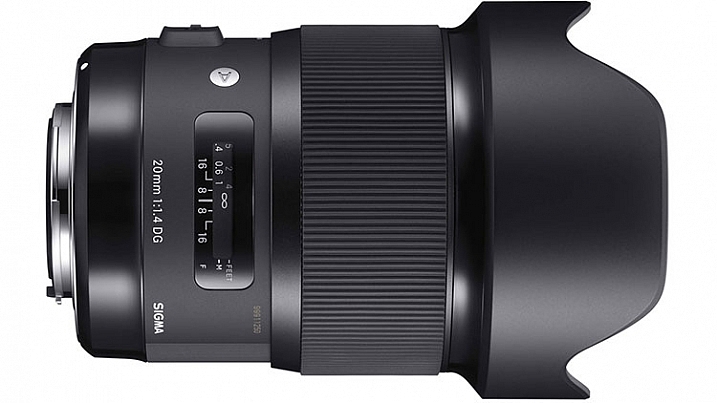
Sigma 20mm f/1.4 DG HSM Art

Image courtesy of Sigma

When the lens first showed up on my doorstep, I immediately unpacked it to see what Sigma has done.  It is impressive. An ultra-wide angle lens with an ultra-fast maximum aperture, the 20mm f/1.4 Art lens is one with quite a few applications including; photojournalism, wedding photography, street photography, and landscapes, to name a few. If the image quality for this lens lives up to the reputation of previous Art lenses, it’s going to be an incredible lens to work with.

A quick glance at the major manufacturers’ websites reveals that no other lens maker builds a 20mm lens with a maximum aperture as large as the Sigma 20mm f/1.4 Art lens. That fast aperture allows a lot of room for use of shallow depth of field, or for working in low light conditions. It also makes applications such as astrophotography a bit easier as well. The minimum aperture is only f/16, as opposed to f/22 on lenses such as the Canon Ef 24mm f/1.4. While that is not a huge issue, it does mean that when you’re trying to use slow shutter speeds on sunny days, a filter may be necessary.
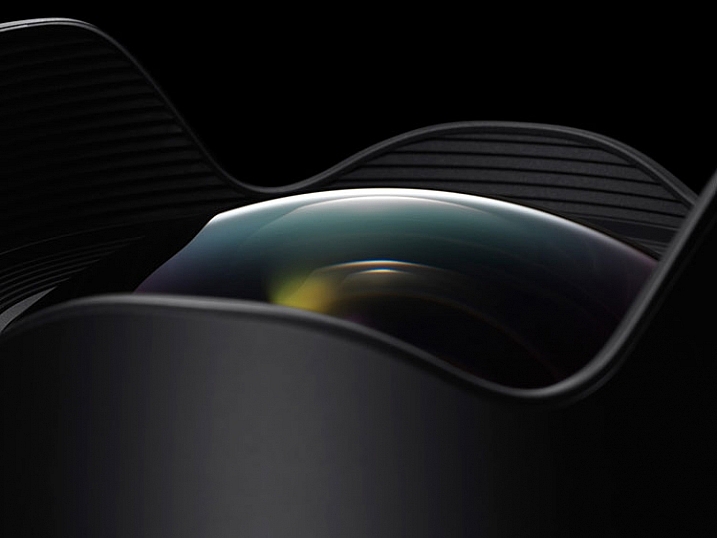
Detail image of Sigma 20mm f/1.4 DG HSm Art

The bulbous front element of the Sigma 20mm f/1.4 DG HSM Art lens. Photo courtesy of Sigma.

Out of the box, the lens is fairly sizable (90.7mm x 129.8mm / 3.6  x 5.1 inches) and is a bit heavy (950 g / 33.5 oz.). It is considerably larger than my Nikon 24mm f/1.4 G or the Canon EF 24mm f/1.4L II. The outer barrel does have a bit of plastic feel to it, but the brass mount and considerable heft, assuage any fears of cheap build quality. Constructed of 15 elements in 11 groups, including F Low Dispersion, Special Low Dispersion, and aspherical elements, Sigma claimed class-leading image quality. I found minimal distortion and chromatic aberration in images I shot with this lens, and what I did find was easily corrected in Lightroom or Photoshop. The lens features a 9-blade rounded diaphragm aperture, excellent for soft rounded bokeh in out of focus areas of the image. Minimum focusing distance is 27.6 cm or 10.9 in.

My one disappointment with the lens is the bulbous front element, which eliminates the ability to use either screw-in filters such as polarizers, or the smaller 100mm drop-in filters. While I have a set of 150mm filters, my adapter would not fit the lens, and other manufacturers had yet to build an adapter that works. I am told by several filter manufacturers that they are working on a suitable adapter for the 150mm filter kits on the market.

The Sigma 20mm in the field

Sample image from Sigma 20mm f/1.4 DG HSm Art

Being a landscape photographer, the first thing I wanted to do was take this lens for a spin at one or two of my favorite local spots. While the lack of filters meant I had some difficult choices to make when photographing the sunset, I was anxious to use the wide angle lens to accentuate the foreground and the sky.

The Sigma 20mm f/1.4 Art gave me no issues and focused smoothly on my subject. The 94.5° field of view on a full frame sensor provides a nice panoramic image, allowing you to emphasize the immediate foreground while creating context in showing the background. The necessity of filters will be more dictated by your camera sensor’s dynamic range, but I found on my Nikon D810, I was able to expose for the highlights and recover the shadows in post-production. Sharpness throughout the scene was excellent, with minimal distortion and loss of resolution at the corners. Color and contrast are excellent as well.

20160624_Maureen-Chuck_0611b

My next test was to try the lens at a wedding. I will often employ a wide angle lens for capturing action on the dance floor, and occasionally for environmental portraits of the bride and groom like the image above. I found the Sigma 20mm f/1.4 Art lens excelled in both instances.

On the dance floor, even in low light, I found the lens to focus quickly and accurately. The fast aperture allowed me to minimize my use of flash in the reception hall (below), and use the ambient lighting for a more natural, festive look. In addition, for the formal portraits I used the lens outdoors at sunset for some bridal portraits, and was impressed with the image quality in a high contrast situation. I used an external strobe to light the bride and groom (image above), with the sunset in the background, and stopped all the way down to f/16 for a starburst effect on the sun.

Sample wedding image from Sigma 20mm f/1.4 DG HSM Art lens

My final test was to do some astrophotography with the lens. In the past, I’ve used both the Nikon 24mm f/1.4 and the Canon EF 24mm f/1.4L II lenses, and while both were satisfactory, each has a tendency to produce some comatic aberration, especially in the corners.

While I did find some coma using the Sigma 20mm f/1.4 Art, I found it to be less noticeable than either the Nikon or the Canon. The fast f/1.4 aperture allowed me to capture the stars, while using an ISO of 800 and a 15 second exposure time. If nothing else, this lens is an astrophotographer’s dream, being wider than any other f/1.4 lens currently on the market, which allows for capturing expansive sections of the night sky.

Sample images from Sigma 20mm f/1.4 Dg HSM Art lens.

Summary

In the 20mm f/1.4 Art lens, Sigma has managed to build an exceptional, wide aperture, wide angle lens that will suit a variety of photographers, from photojournalists, to landscape artists, street photographers and wedding photographers. Priced at $ 899, it’s less than half the price of the equivalent Nikon or Canon 24mm lenses, and provides a wider angle. Nikon’s 20mm f/1.8G is as close as the major manufacturers get to this lens, at a cost of $ 100 less than the Sigma. The Sigma 20mm f/1.4 DG HSM Art is available in Canon, Nikon, and Sigma mounts.

I highly recommend this lens to anyone in the market for an ultra-wide, ultra-fast lens. My one caveat is that if you’re not already invested in a 150mm filter system, you will need to do so if you want to use filters with this beast.

googletag.cmd.push(function() {
tablet_slots.push( googletag.defineSlot( “/1005424/_dPSv4_tab-all-article-bottom_(300×250)”, [300, 250], “pb-ad-78623” ).addService( googletag.pubads() ) ); } );

googletag.cmd.push(function() {
mobile_slots.push( googletag.defineSlot( “/1005424/_dPSv4_mob-all-article-bottom_(300×250)”, [300, 250], “pb-ad-78158” ).addService( googletag.pubads() ) ); } );

The post Lens Review: Sigma 20mm F1.4 DG HSM Art Lens by Rick Berk appeared first on Digital Photography School.


Digital Photography School

 
Comments Off on Lens Review: Sigma 20mm F1.4 DG HSM Art Lens

Posted in Photography


Nikon releases first AF-S Nikkor 105mm F1.4 E ED samples

29 Jul

$ (document).ready(function() { SampleGalleryV2({“containerId”:”embeddedSampleGallery_8850932617″,”galleryId”:”8850932617″,”isEmbeddedWidget”:true,”standalone”:false,”selectedImageIndex”:0,”startInCommentsView”:false,”isMobile”:false}) });

Nikon has released some of the first sample images from its newly announced AF-S Nikkor 105mm F1.4E ED. The samples are unfortunately somewhat low in resolution, and we always take officially sanctioned manufacturer sample images with a grain of salt, but we have to say we’re impressed with what we’re seeing. When it ships in August, the 105mm F1.4 will be one of the fastest autofocus primes of its kind on the market. 

Articles: Digital Photography Review (dpreview.com)

 
Comments Off on Nikon releases first AF-S Nikkor 105mm F1.4 E ED samples

Posted in Uncategorized


Comparison Review: Sony FE 50mm F1.4 ZA vs 55mm F1.8 ZA

20 Jul

Sony has announced a high-end ‘normal’ prime for its Alpha E-mount line of cameras: the Planar T* 50mm F1.4 ZA lens. As the third normal prime for the system, we wanted to know what it offers over the already excellent FE 55mm F1.8 ZA, so we set about performing some benchmark tests.

We’ll take a look at sharpness on this page, and bokeh, coma, and longitudinal chromatic aberration on the next.

Sharpness

Below, you’ll see a series of aperture progressions for the 50mm F1.4 ZA and 55mm F1.8 ZA. Have a look around the scene at various apertures to get an idea of the capabilities of these two lenses – with the caveat that this performance is only representative of our single copy of each lens.

$ (document).ready(function() { ImageComparisonWidget({“containerId”:”reviewImageComparisonWidget-27965628″,”widgetId”:381,”initialStateId”:null}) })

Wide-open, the 55/1.8 is slightly sharper than the 50/1.4, both centrally$ (document).ready(function() { $ (“#imageComparisonLink2690”).click(function() { ImageComparisonWidgetLink(2690); }); }) and peripherally$ (document).ready(function() { $ (“#imageComparisonLink2691”).click(function() { ImageComparisonWidgetLink(2691); }); }) (the advantage is retained on the left side$ (document).ready(function() { $ (“#imageComparisonLink2692”).click(function() { ImageComparisonWidgetLink(2692); }); }) of the frame as well, despite the fact that our 55/1.8 is slightly decentered and has poorer left side performance). But none of this should be too surprising, since sharpness at F1.4 is far more challenging than at F1.8. In fact, the 50/1.4 holds up very well considering the 2/3 EV disparity in f-stop.

Comparing both lenses at F1.8 (a more level playing field), the 50/1.4 catches up to the 55/1.8 in terms of center sharpness$ (document).ready(function() { $ (“#imageComparisonLink2695”).click(function() { ImageComparisonWidgetLink(2695); }); }), but still lags in peripheral sharpness on the left$ (document).ready(function() { $ (“#imageComparisonLink2693”).click(function() { ImageComparisonWidgetLink(2693); }); }) and right$ (document).ready(function() { $ (“#imageComparisonLink2694”).click(function() { ImageComparisonWidgetLink(2694); }); }) sides of the frame. By F2, though, the 50/1.4 just surpasses$ (document).ready(function() { $ (“#imageComparisonLink2701”).click(function() { ImageComparisonWidgetLink(2701); }); }) the 55/1.8 in central sharpness, though off-center it still lags a bit$ (document).ready(function() { $ (“#imageComparisonLink2702”).click(function() { ImageComparisonWidgetLink(2702); }); }). By F2.8 though, the 50/1.4 pulls ahead$ (document).ready(function() { $ (“#imageComparisonLink2703”).click(function() { ImageComparisonWidgetLink(2703); }); }) of the 55/1.8 even here off-center, and particularly at center$ (document).ready(function() { $ (“#imageComparisonLink2696”).click(function() { ImageComparisonWidgetLink(2696); }); }) where it pulls and stays ahead at higher F- numbers. Peripherally, though, the 50/1.4 never quite catches up to the 55/1.8, not at F2.8$ (document).ready(function() { $ (“#imageComparisonLink2697”).click(function() { ImageComparisonWidgetLink(2697); }); }), and not even by F5.6$ (document).ready(function() { $ (“#imageComparisonLink2698”).click(function() { ImageComparisonWidgetLink(2698); }); }) (the lenses are a bit more even on the left side at F2.8$ (document).ready(function() { $ (“#imageComparisonLink2699”).click(function() { ImageComparisonWidgetLink(2699); }); }) and F5.6$ (document).ready(function() { $ (“#imageComparisonLink2700”).click(function() { ImageComparisonWidgetLink(2700); }); }) due to the weaker performance of our 55/1.8 on the left but, technically, the F1.4 is still a little bit behind).

What does this mean?

The new 50/1.4 ZA displays impressive sharpness and contrast at F1.4. Not quite as much as the venerable 55/1.8 wide open, but a respectable amount considering the 2/3 stop light and depth-of-field advantage. These new lens designs deliver sharp and punchy images wide open, instead of the soft and hazy images you may be used to getting if you slap on old F1.4 designs on such high resolution sensors (remember that we’re using the unforgiving 42MP a7R II for this test).

That said, the new 50/1.4 does not retain this sharpness across the field as well as the 55/1.8, which offers better field uniformity at all apertures. By F2, though, the new 50/1.4 ZA matches the 55/1.8 in central sharpness, and surpasses it at all smaller apertures. Considering the high bar set by the 55/1.8 ZA, this is very impressive. However, you give up off-center sharpness at the widest apertures. If we were forced to pick an overall winner here in terms of sharpness, we’d probably go with the 55/1.8, but really there isn’t a huge difference between the two.

Roger Cicala over at LensRentals found the Sony 50mm F1.4 lens to be the sharpest centrally of any 50mm prime, outperforming the 55mm F1.8 ZA. However, peripherally, the 50/1.4 takes a plunge in terms of resolution, and the 55mm F1.8 pulls ahead. In fact, just 4mm out from center in the image circle, tangential resolution (which we assess by considering the highest frequency MTF trace: 50 lp/mm) drops below that of the 55/1.8 (solid purple line). Source: LensRentals Blog

It’s worth noting that Roger Cicala at LensRentals found the central sharpness wide open of the 50/1.4 to exceed the 55/1.8 (see MTF traces above), while our visual results don’t show the 50/1.4 to exceed the 55/1.8 until F2.8. We can’t rule out the possibility that our copy of the 50/1.4 slightly under-performed relative to the average, perhaps due to decentering; however, it’s reassuring that he found the 55/1.8 to offer greater uniformity. This difference in peripheral sharpness may be the reason for the apparent discrepancy in our results.

Below, we show our infinity scene overlaid with red and blue rings representing image heights of 4mm and 16mm, respectively: the two points where the 50 lp/mm MTF traces of the two lenses intersect. Between these rings, Roger’s 50/1.4 sagittal 50 lp/mm trace falls well below the 55/1.8. Hence, our visual shootout seems to agree with Roger’s results: aside from a very small region in the center, the 55/1.8 does outperform the 50/1.4 wide open (though we don’t see the improvement towards the edges of the 50/1.4: our 55/1.8 remains better). 

Our infinity scene with red and blue rings that represent 4mm and 16mm image heights (distance from center in the image circle). Between these regions, Roger’s own MTF data indicate a dip in sagittal resolution. It’s likely only the small region in the center (within the red circle) where the 50/1.4 resolves more than the 55/1.8 wide open, which would explain the apparent discrepancy between Roger’s results and ours. 

All that said, sharpness isn’t everything. How does the new 50/1.4 fare in terms of bokeh, coma, and purple/green fringing? Let’s take a look on the next page.

Articles: Digital Photography Review (dpreview.com)

 
Comments Off on Comparison Review: Sony FE 50mm F1.4 ZA vs 55mm F1.8 ZA

Posted in Uncategorized


Sony announces FE 50mm F1.4 ZA prime lens

11 Jul

$ (document).ready(function() { SampleGalleryV2({“containerId”:”embeddedSampleGallery_0676890121″,”galleryId”:”0676890121″,”isEmbeddedWidget”:true,”standalone”:false,”selectedImageIndex”:0,”startInCommentsView”:false,”isMobile”:false}) });

Sony has announced its new Planar T* FE 50mm F1.4 ZA lens. This full-frame fast prime features an 11-blade aperture for circular out-of-focus highlights even as you stop down, ‘Advanced Aspheric’ and ED lens elements and Zeiss’ T* coating. Sony says that the lens’ Planar design minimizes distortion. 

The lens is similar in construction to the FE 35mm F1.4. It’s weather-sealed and uses Sony’s Super Sonic Wave Motor for quick and quiet autofocus. A clicked aperture ring can be de-clicked if desired for smooth aperture control in video.

At a recent shooting event in San Diego, we had a chance to go hands with this fast prime (view our gallery here). Despite being a bit heavy, the lens handles beautifully. We were very impressed by sharpness: subjects placed far off-center remained sharp even wide open, despite the 42MP Sony a7R II sensor resolution. Indeed, MTF curves indicate an impressive 60% response is maintained across the frame wide open even at 40 line pairs / mm. Our initial shots also indicate that axial chromatic aberration (green and purple fringing) are very well controlled, and bokeh appears very smooth, both of which add to this lens’ appeal over options like the Sony FE 55mm F1.8 ZA.

The FE 50mm F1.4 ZA lens will be available this month at a price of $ 1500.

Sony Planar T* FE 50mm F1.4 ZA specifications

Principal specifications
Lens type Prime lens
Max Format size 35mm FF
Image stabilisation No
Lens mount Sony FE
Aperture
Aperture ring Yes
Number of diaphragm blades 11
Optics
Elements 12
Groups 9
Special elements / coatings 2 aspherical + 1 ED element + Zeiss T* coating
Focus
Minimum focus 0.45 m (17.72)
Maximum magnification 0.15×
Autofocus Yes
Motor type Ring-type ultrasonic
Full time manual Yes
Focus method Internal
Distance scale No
DoF scale No
Physical
Weight 778 g (1.72 lb)
Diameter 84 mm (3.29)
Length 108 mm (4.25)
Sealing Yes
Colour Black
Filter thread 72.0 mm
Hood supplied Yes
Hood product code ALC-SH143

Press Release:

Sony Releases Full-Frame FE 50mm F1.4 ZA Prime Lens

A quintessential wide-aperture 50mm “normal” lens, the new ZEISS® Planar F1.4 offers high resolution, high-contrast and overall exceptional performance

SAN DIEGO, July 11, 2016 – Sony Electronics, a worldwide leader in digital imaging and the world’s largest image sensor manufacturer, has today introduced a new full-frame lens for their E-mount camera system, the Planar T* FE 50mm F1.4 ZA (model SEL50F14Z).

This 50mm prime lens features a large F1.4 maximum aperture that offers impressive contrast and outstanding resolution that are hallmarks of the ZEISS® brand. It produces these consistently strong qualities throughout the entirety of the frame – from center to corner – and at all aperture settings, even while shooting wide open at F1.4. The cutting edge optical structure includes high-precision AA (Advanced Aspherical) and ED (Extra-low Dispersion) glass elements that reduce spherical and chromatic aberration, as well as a ZEISS® T* Coating that minimizes flare and ghosting creating the classic ZEISS® clarity. Additionally, its Planar design ensures minimal distortion.

The large F1.4 maximum aperture of the FE 50mm F1.4ZA lens provides a level of brightness and speed that are advantageous for dimly lit indoor shots, night scenes, and portraits, while its 11-bladed circular aperture allows for stunning “bokeh”, or background defocus, in images. The lens also features an aperture ring with an adjustable ON/OFF switch, an AF/MF focus mode switch, and a dust and moisture resistant design¹, further increasing its functionality.

The new lens is also equipped with a ring drive SSM (Super Sonic wave Motor) system, which allows it to efficiently lock focus with speed, precision and in near silence, making it particularly useful for shooting movies.

Pricing and Availability – FE 50mm F1.4 ZA Lens

The new FE 50mm F1.4 ZA lens will ship this July for a retail price of $ 1,500 US and $ 1,950 CA. The new FE interchangeable lens will be sold at a variety of Sony authorized dealers throughout North America.

Articles: Digital Photography Review (dpreview.com)

 
Comments Off on Sony announces FE 50mm F1.4 ZA prime lens

Posted in Uncategorized


Sony Planar T* FE 50mm F1.4 ZA Sample Gallery

11 Jul

Sony has just announced its Planar T* FE 50mm F1.4 ZA lens, a high quality normal for its E-mount Alpha line of cameras. At a shooting event in San Diego, we had a chance to go hands-on. It’s a formidable lens, smaller than the 85mm GM with its 72mm filter thread, but significantly larger than the FE 55mm F1.8 ZA already available for the system.

So what does that extra heft and glass get you besides top notch build quality and ergonomics? Have a look at our gallery where we’ve posted a smattering of real-world portraits at fast apertures shot using Eye AF on the 42MP Alpha 7R II, some shallow focus shots at various apertures to get an idea of axial CA, as well as some infinity horizons at various apertures for the assessment of sharpness (day scene) and coma (night scene).

We’re duly impressed by the lens’ sharpness across the field wide open, lack of axial CA (green/purple fringing just outside the focal plane), and pleasing bokeh, but to keep things objective, we’ll be following up soon with a brief comparison of these attributes against the already stellar FE 55/1.8 ZA. Look for updates to this gallery as well in the coming days.

Articles: Digital Photography Review (dpreview.com)

 
Comments Off on Sony Planar T* FE 50mm F1.4 ZA Sample Gallery

Posted in Uncategorized


Panasonic Lumix G Leica 12mm F1.4 real-world sample gallery

21 Jun

Introduced last week, Panasonic’s 12mm F1.4 brings a weather-resistant, fast 24mm equivalent prime to the Micro Four Thirds system. The Leica name on the lens is reflected in its sturdy metal build, its aperture control ring and its $ 1300 price tag. We intend to do much more shooting with the 12mm F1.4, including some architectural work, but for now here are some initial samples.

Articles: Digital Photography Review (dpreview.com)

 
Comments Off on Panasonic Lumix G Leica 12mm F1.4 real-world sample gallery

Posted in Uncategorized