RSS
 

Posts Tagged ‘Equipment’

Katjas Equipment

12 Jun

Ich und Technik, wir sind nicht so nah und ich habe nicht das Beste, Neueste und Gefragteste. Also erwartet jetzt nicht zu viel. Warum ich dennoch schreibe, mit was ich fotografiere, liegt vor allem an der Tatsache, dass mir so ein Artikel früher sehr geholfen hätte, mit meinem geringen Budget die richtigen Prioritäten für mich zu setzen.

Diese techniklastigen Artikel in den Magazinen mit ihren Vergleichen haben mich immer eher abgeschreckt und ich habe teilweise gar nicht verstanden, warum das, was da so hochgelobt wird, wichtig sein soll.

Gestartet habe ich nach meinen ersten analogen Versuchen mit einer Olympus E400. Meine Wahl fiel auf sie, da sie im Starterpaket mit zwei Objektiven erhältlich war und sie damals als eine der kleinsten Spiegelreflexkameras galt. Die anderen im Vergleich schienen mir einfach zu groß und schwer. Schnell ärgerte ich mich jedoch über die geringe Lichtempfindlichkeit. In der Wohnung konnte ich kaum damit fotografieren, denn bei ISO 400 rauschte es schon so heftig, dass mir die Bilder nicht gefielen.

Da ich die Kamera jedoch noch ein Jahr lang abzuzahlen hatte, machte ich das Beste daraus und fotografierte viel draußen. Zudem entdeckte ich die Möglichkeiten meines großartiges Terassenfensters, das genügend Licht auf die Schlafzimmerwand warf.

Eine Frau steht unter Kirschblüten mit geschlossenen Augen.

Als ich den Entschluss fasste, mich mit der Fotografie selbstständig zu machen, wusste ich jedoch auch, dass ich so nicht mehr arbeiten konnte und eine bessere Kamera benötigen würde. Ich verabschiedete mich von Olympus und wechselte zu Canon. Der Gedanke dahinter war vor allem, dass viele Freunde Canon nutzten und mich gut beraten konnten. Zudem war das Angebot an Objektiven einfach viel größer. So kaufte ich meine Canon 60D*, die ich auch jetzt noch nutze.

Und was war das für eine Neuerung: Auf einmal konnte ich in relativ dunklen Zimmern fotografieren. Ohne Blitz. Ab ISO 1200 begann erst das Rauschen in der Stärke, die ich von meiner Olympus bei ISO 400 kannte. Bei meinem ersten Objektiv entschied ich mich für eine 50 mm Festbrennweite mit 1.4er Blende*. Zum einen, weil ich durch meine Erfahrungen auf Lichstärke setzte und zum anderen, weil ich die Festbrennweiten von meinen analogen Kameras sehr schätzte und bereits bei meiner alten Olympus selten gezoomt habe.

Meine alte Kamera verkaufte ich für 100 € an einen ortsansässigen Händler. Ein kleiner Stich ins Herz, denn ich hing doch noch an ihr und den gemeinsamen Erfahrungen. Aber schnell schloss ich meine Canon ins Herz. Ich entdeckte die Vorteile des schwenkbaren Displays vor allem für meine Selbstportraits. Im Liveview-Modus kann ich mich so selbst sehen und perfekt positionieren.

Eine Frau im weißen Kleid ruht auf Felsen vor einer alten Mauer.

Für die Selbstportraits nutze ich zudem einen Funkfernauslöser von Bilora, der mir schon einige graue Haare beschert hat. Die Batterie entläd sich furchtbar schnell und ist mit etwa 7 € nicht billig. Deshalb nehme ich sie immer, wenn ich den Auslöser nicht nutze, heraus. Vergesse ich es, stehe ich wahrscheinlich das fünfte Mal im Wald und ärgere mich, weil nichts funktioniert.

Dann muss ich auf die 10-Sekunden-Auslöseverzögerung meiner Kamera zurückgreifen, was wirklich kein Spaß ist. Auslösen und barfuß im Prinzessinnenkleid innerhalb von 10 Sekunden über den Waldboden rennen und die perfekte Pose einnehmen, ist ein Abenteuer, das ich keinem wünsche. Ein neuer Auslöser ist also das nächste, was ich mir anschaffen werde.

Auch mein Stativ* ist keine Empfehlung wert, obwohl ich es seit etwa sechs Jahren nutze. Es war einfach das günstigste, das sie im Laden hatten. Im Wald ramme ich es immer etwas in den Boden, damit es sicherer steht oder ich beschwere es etwas. Warum ich noch kein neues habe, liegt wahrscheinlich daran, dass es wunderbar leicht und klein ist. Gerade für längere Ausflüge ideal für mich.

Frau mit aera in der Hand steht auf einem Hocker.Baby lacht in die Kamera.

Mittlerweile habe ich noch ein Zweitobjektiv, denn ein Weitwinkel war für Familienportraits unumgänglich. Ich entschied mich der Gewohnheit nach wieder für eine lichtstarke Festbrennweite: Das Canon EF 28 mm f/1.8*, mit dem ich sehr zufrieden bin.

Das ist mein essentielles Equipment, mehr habe ich nicht: Eine Kamera, zwei Objektive, ein billiges Stativ und einen unzuverlässigen Selbstauslöser. Das alles transportiere ich in einer meiner Meinung nach sehr hässlichen, kleinen Kameratasche von Lowepro*, die ich bald gegen ein viel schöneres Model austauschen möchte.

Klar gibt es Besseres, aber gerade mit meiner Kamera und den Objektiven bin ich noch nicht an Grenzen gestoßen und vollkommen zufrieden. Vielleicht würde es sich ändern, wenn ich z. B. einmal mit der Canon EOS 5D Mark III fotografieren würde und einen Vergleich hätte. Aber solange ich lieber auf eine neue Kameratasche oder einen Selbstauslöser spare, ist es offensichtlich, dass neue Technik nicht zu meinen großen Wünschen gehört.
kwerfeldein – Fotografie Magazin | Fotocommunity

 
Comments Off on Katjas Equipment

Posted in Equipment


Michaels Equipment für Landschaftsfotos

06 Jun

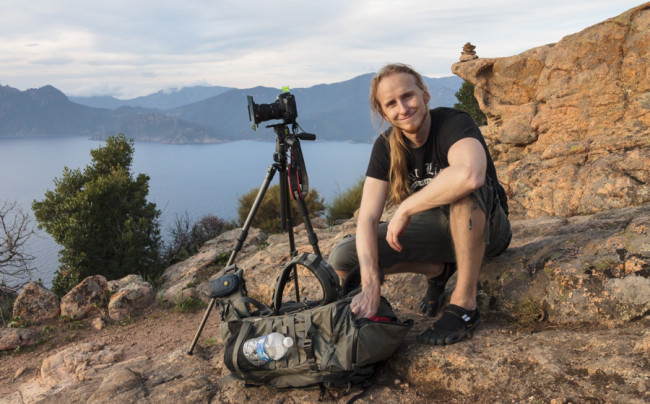
Ich fotografiere nun schon seit über fünf Jahren Landschaften und mit der Zeit hat sich einiges an Equipment angesammelt. Um meine Fotoideen so wie im Titelbild umzusetzten, sind für mich neben Kamera und Objektiven einige weitere Dinge essentiell.

Doch fangen wir mit der Kamera an: Seit zwei Jahren fotografiere ich mit einer Canon EOS 5D Mark II*. Obwohl schon etwas in die Jahre gekommen, macht sie immer noch tolle Fotos, die ich locker auf 150 x 100 cm Fineart-Papier entwickeln lassen kann, wenn ich sauber arbeite. Außerdem mag ich die Bedienung. Alle mir wichtigen Einstellungen lassen sich in Sekunden erledigen.

Foto von Michael Breitung und seinem Equipment auf Korsika

Um vom Weitwinkel bis Telebereich alles abzudeken, trage ich drei Objektive auf Fototouren ständig bei mir: Das Canon EF 16-35mm 1:2,8L II*, das ich vor allem wegen der einzigartigen Sonnensterne, die es fabriziert, so liebe. Von Tamron das 24-70mm 1:2.8 Objektiv*, das eine sehr gute Schärfe liefert. Und wiederum von Canon das 70-200mm 1:4 L IS*, das ich für Detailarbeit nutze.

Mindestens genauso wichtig wie Kamera und Objektive ist für mich das Stativ geworden. Für 95 % meiner Fotos nutze ich ein Stativ. Da ich fast all meine Fotos in irgendeiner Form überblende, fotografiere ich selbst bei Sonnenschein mit Stativ, auch wenn die Belichtungszeiten Aufnahmen freihand zulassen würden.

Bewärt hat sich als Stativ das Benro C-298 M8, das ich drei Jahre in Verwendung hatte. Mittlerweile ist es auf der Ersatzbank, weil ich etwas Kompakteres wollte. Das Induro CT114* habe ich seit einem halben Jahr im Einsatz. Ebenfalls von Induro stammt der Stativkopf, den ich verwende. Da ich Kugelköpfe zu fummelig finde, nutze ich den PHQ-1 5-Wege-Neiger*. Damit lassen sich Landschaftsfotos präzise komponieren und zusammen mit einer Kirk LRP-1 Schiene auch einreihige Panoramen anfertigen.

Was ich auch nicht mehr missen möchte, ist das L-Winkel von RRS. So kann ich blitzschnell zwischen Quer- und Hochformat wechseln.

Obwohl ich viel mit Belichtungsreihen arbeite, sind für mich Verlaufsfilter unverzichtbar geworden. Von Lee nutze ich einen 0.6 hard GND und einen 0.6 soft GND, die ich einzeln oder in Kombination vors Objektiv schiebe. Wenn ich am Meer fotografiere oder einen ebenen Horizont habe, verwende ich gelegentlich einen Singh-Ray 2-Stop Reverse Grad.

Aber wie schon angesprochen, reichen mir Filter allein nicht aus. Ich nutze Verlaufsfilter immer in Kombination mit Belichtungsreihen, um alle Details einzufangen. Durch die Filter erhalte ich ein gutes Ausgangsfoto, in dem ich dann nur noch kleine Bereiche aus den anderen Belichtungen einblenden muss.

Wo wir gerade bei Filtern sind, darf ich den Polfilter natürlich nicht vergessen. Besonders im Wald oder am Wasser nutze ich einen Hoya HD Polfilter*, um Reflexionen zu minimieren.

Am Wasser und vor allem am Meer wäre ich außerdem ohne Objektivreinigungstücher aufgeschmissen. Diese gibt es in unzähligen Ausführungen von zahlreichen Herstellern. Ich setzte seit einiger Zeit auf Bambus-Tücher* in verschiedenen Größen. Damit bekomme ich selbst die salzhaltige Gischt am Meer wieder schlierenfrei von meinen Filtern. Die Reinigungstücher zu vergessen, wäre für mich eine Katastrophe.

Die Liste an Zubehör geht noch weiter. Jedoch habe ich die wichtigsten Bestandteile meiner Aurüstung genannt. Bleibt noch die Frage nach der richtigen Verpackung. Der perfekte Kamerarucksack ist für mich der F-Stop Satori. Er ist bequem, öffnet am Rücken, hat viele Fächer, ist gut konfigurierbar und passt ins Handgepäck.

Damit habe ich, denke ich, genug über Equipment geredet. In meinen nächsten Artikeln liegt dann der Fokus wieder darauf, was ich damit mache.

* Das ist ein Affiliate-Link zu Amazon. Wenn Ihr darüber etwas kauft, erhält kwerfeldein eine kleine Provision, Ihr zahlt aber keinen Cent mehr.


kwerfeldein – Fotografie Magazin | Fotocommunity

 
Comments Off on Michaels Equipment für Landschaftsfotos

Posted in Equipment


Equipment for Macro Photography – Video Tips

11 May

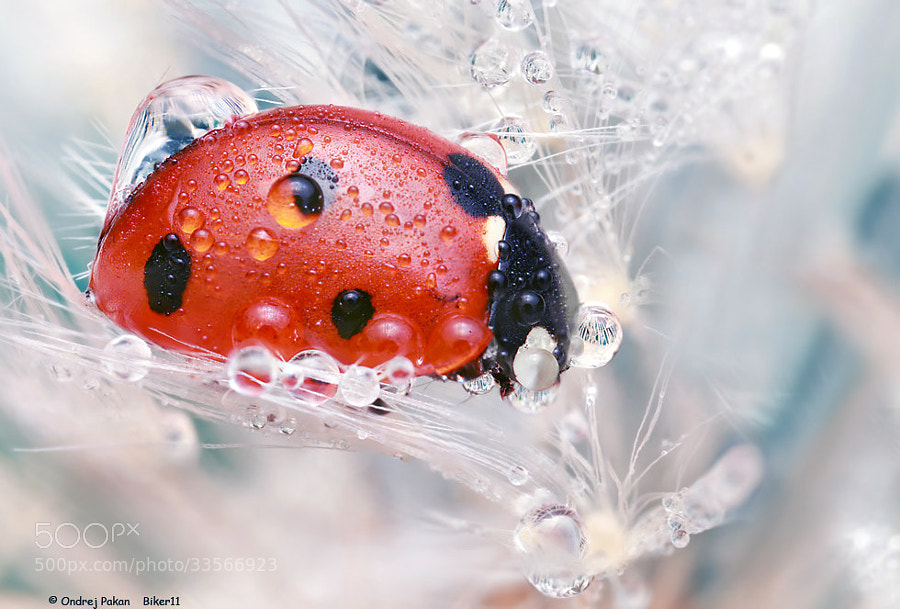
Photograph Dreaming by Ondrej Pakan on 500px

Dreaming by Ondrej Pakan on 500px

Macro photography has become really popular lately and there are many tutorials available on how to do it, including these on dPS:

  • How to Focus-Stack Macro Images using Photoshop
  • 6 Tips for Near-Macro Photography with a Telephoto Lens
  • The Wonderful World of Macro Lenses: Close-Up Photography Lesson #4

But let’s talk a little about the gear needed to do macro photography. Here’s a couple video that walk through some of the options to help you get started. In this video from Tamron see: How-To Macro Photography: Equipment, Lighting Tips and More

In this second video by Anthony Morganti you can learn: What You Need To Get Started In Macro Photography

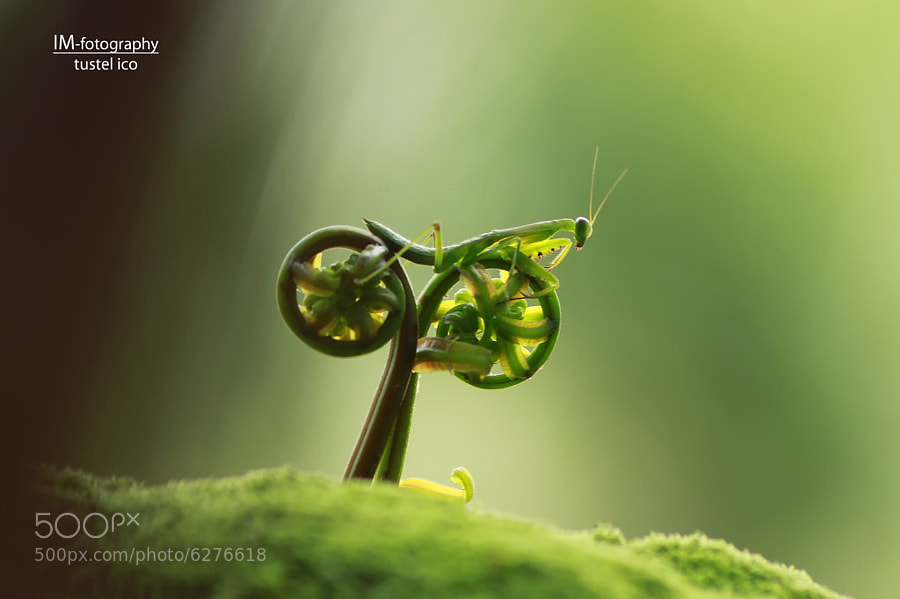
Photograph rate my bike by tustel  ico on 500px

rate my bike by tustel ico on 500px

By Jagadeesh SJ

By Alexey Kljatov

By Julien REBOULET

The post Equipment for Macro Photography – Video Tips by Darlene Hildebrandt appeared first on Digital Photography School.


Digital Photography School

 
Comments Off on Equipment for Macro Photography – Video Tips

Posted in Photography


Time-Lapse Photography Equipment Guide to Getting Started

04 May

Currently for a limited time only get the Stage R Versatile Motion Control for Timelapse and Film and get FREE eBook – on now at SnapnDeals!

“Never forget that all the great photographs in history were made with more primitive camera equipment than you currently own.” – Brooks Jensen

No doubt that first time you said “Hey, wouldn’t it be fun to dabble in DSLR photography? You know, just as a hobby.” Your financial counsellors, or your spouse for that matter, broke out in budget busting hives.

There probably isn’t a more gear focused group of enthusiasts out there, but don’t worry, taking that step into time-lapse photography doesn’t require much gear to begin – and the extra gear that can really take your time-lapse to the next level is more affordable and easier to use than ever before.

Whether you are a brand new time-lapse photographer or an experienced shooter looking to unleash full creativity with time-lapse motion control, this article will provide a launch pad for your next steps into one of the most emotionally connecting, and at the same time freeing, creative photographic endeavours.

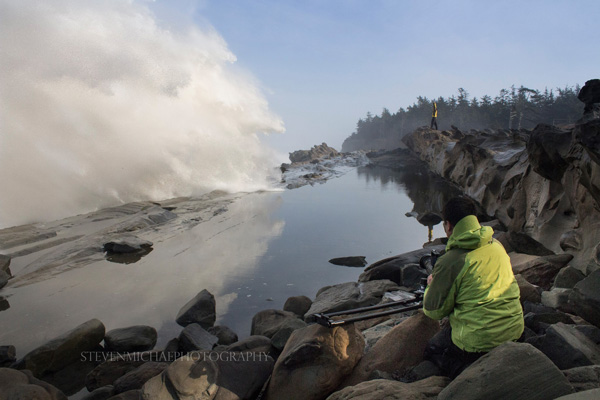
Steven Michael Photography 600

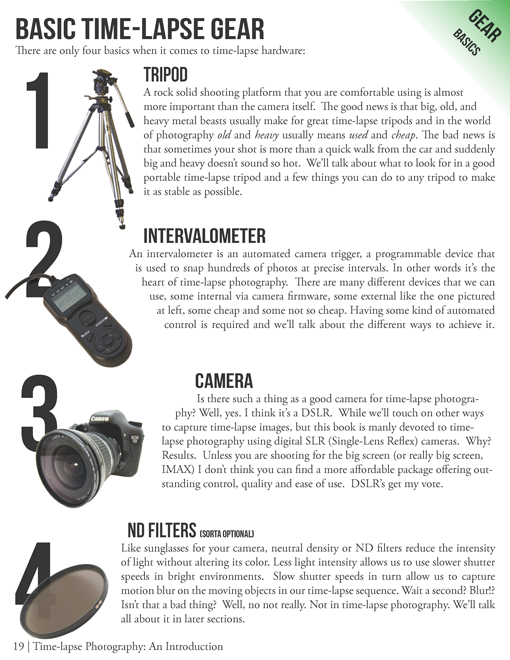
Your minimum gear checklist for time-lapse photography

Chances are good if you’re already a DSLR shooter you almost have everything you need to get started. These four things are essential.

  1. A tripod
  2. An intervalometer
  3. A Camera
  4. An ND filter

timelapse-gear.png

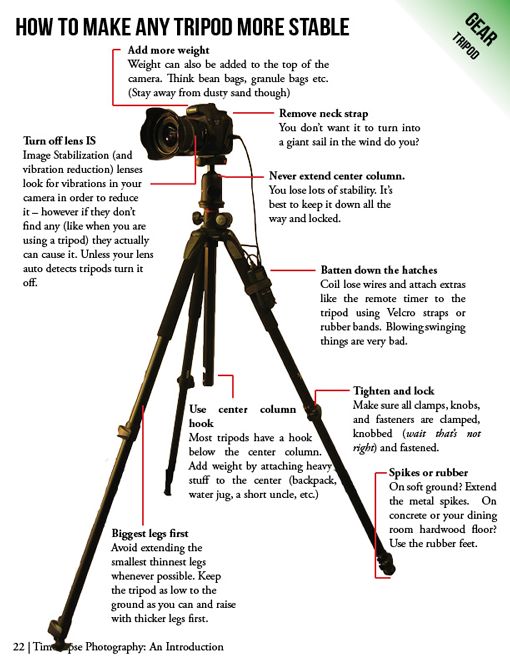
A closer look at a good time-lapse support system

Rock solid stability (or precise controlled movement) is just about the most important and most essential component for good time-lapse photography. Keep in mind a good tripod that meets your needs will outlast several cameras so consider budgeting a little more time and possibly cash to this category.

  • Consider the materials used – weight and strength
  • Check the load weight – avoid sagging and flexing
  • Height – eye level without using the centre column
  • The right tripod head for your work – ball heads versus pan and tilt

timelapse-tripods.png

Unleashing your creativity with advanced time-lapse equipment

Time-lapse photography is benefiting from a dramatic flow of new ideas. The level of innovation, especially over the last few years, is incredible. Not only are we quickly fixing problems that have plagued photographers for years, but advanced camera controls and processing tools that used to be cost prohibitive, are now becoming affordable for the most basic hobbyist.

Advanced camera exposure control

The Timelapse+ can operate as a universal intervalometer for nearly any camera that supports a remote shutter release, and IR remote, or USB tethering. Bulb-ramping is its claim to fame. The Timelapse+ can perform keyframe-based, guided, or fully automatic bulb ramping – and for cameras supported by USB control, the Timelapse+ can also seamlessly integrate ISO control to smoothly ramp across a wide exposure range, making the “holy-grail” transition from day-to-night or night-to-day easier to achieve. Extended and long-exposure HDR sequences are also made easy with the Timelapse+.

Simple and powerful advanced time-lapse sequence rendering with LRTimelapse:

In a nutshell LRTimelapse takes changes and corrections you make in Lightroom and then smoothly applies them throughout the entire time-lapse sequence. By altering either the first and last image, or several images throughout the sequence, LRTimelapse can quickly fade the changes we need to only the parts we want. Deflickering can also easily be accomplished in the exact same way by flattening out big exposure jumps.

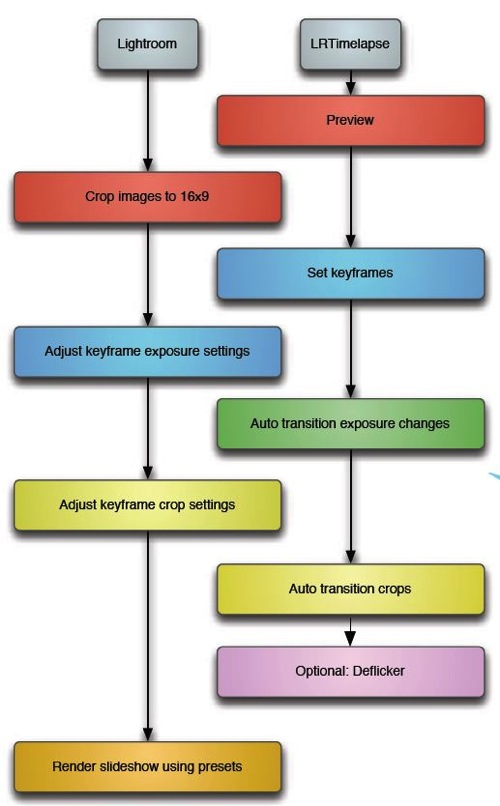
Here’s a simple workflow for editing timelapse images and rendering a movie using Adobe Lightroom and LRTimelapse.

Lrtimelapseworkflow

Advanced motion control

The last few years have shown incredible advances in the field of manual and controlled camera movement, so much so that the
average photographer can now afford motion control devices that were once only available to big budget productions. We’re talking precise, rugged and lightweight panning (left and right), tilting (up and down), and dolly movements with simple controls, such as a smartphone app, that make setup easy and intuitive. Control over motion and time combined with an interesting subject can produce what I believe to be an awesome trifecta of emotion eliciting imagery – some of the most engaging and lasting photography you’ve seen.

Yosemite HD II, an incredible example of time-lapse and motion:

Dolly motion shots can add multiple points of interest by highlighting components of a scene’s unchanging foreground and the larger time-altered background. The movement shots in the wave video move the camera along the jagged rocks, while the waves are slowed in the background. Some of the most popular time-lapse clips feature this kind of extreme moving contrast in many shots too. By moving the camera slowly from left to right on a horizontal track, or flipping the track system almost vertically to instead change the elevation of the camera, we can highlight stationary foreground objects in incredible ways.

The next two axes of movement can be accomplished by camera rotation – aptly named a motorized panning and tilting head. Then combining panning and tilting on a camera slider to achieve 2, or 3 axis of movement simultaneously can dramatically elevate the interest level in a shot.

zion 3axis motion control

2 axis motion control

Do you think advanced time-lapse work should be left to the pros?

Eric Warren of Matadornetwork.com posed a related question:

“Pros are the guys you call when you want to put a time-lapse in your car commercial. And while we tend to put pros up on a pedestal, they are often bogged down by their clients’ needs. Most commercial advertising doesn’t push the envelope of an art form.

That job often falls to the independent artists, building their own equipment, and often not [caring] about whether their work is going to sell. Not that I want to be too demanding here, but I want to see something mind-blowing. Either something I’ve never seen before or something familiar, shown in a new way (one thing time-lapse excels at.) ….

Consider this a call to all you independent filmmakers out there ready to push the limits of one of the most striking visual art forms.”

Time-lapse has a way of slowing the world for the photographer while at the same time accelerating it for everyone else. Shooting time-lapse alters the way you think, it challenges your view of the world and teaches you things about our world you can bring back and share with everybody else.

Get out and start shooting. Render some footage and break some rules. Most importantly know that you are not alone. The time-lapse community is more connected today than ever before. You have friends all over the world ready to help you get the shots you imagine.

Currently for a limited time only get the Stage R Versatile Motion Control for Timelapse and Film and get FREE eBook – on now at SnapnDeals!

The post Time-Lapse Photography Equipment Guide to Getting Started by Ryan Chylinski appeared first on Digital Photography School.


Digital Photography School

 
Comments Off on Time-Lapse Photography Equipment Guide to Getting Started

Posted in Photography


Tenba Air Cases: The safest way to move your equipment from location to location

19 Jan

Learn more: www.mac-on-campus.com Tenba Air Cases are an ever-growing family of maximum-protection cases for everything from cameras to computers, light stands to laptops, and much more. A unique assortment of problem solving products with exceptional, exclusive features, and the best protection available. All Transport products are hand made in our Brooklyn, New York factory.

Music: — Angel Beats! – desperation Metal Slug 4 – Secret Place To Aru Majutsu no Index II – Shorthand Original Shakugan no Shana III – Champ de bataille Shinryaku! Ika Musume – Gekitotsu! Ika Musume Part 4 of the High Level Boss Solo series (non-EoC 2012 edition) featuring Nomad from Nomad’s Requiem in the Dominion Tower. Instead of fighting Nomad once, why not fight him twice without banking? or better yet, using all three combat styles! 😀 It is unorthodox but it is a creative way to go all out on your combat stats. Notes about the video: Nomad has a damage cap to how much he can take, which is 750, meaning you cannot hit more than 750 with any attack style, including AGS spec. RuneScape is a trademark to Jagex Ltd. I do not own any of the contents used for this video, but used for the sole purpose of entertainment without profit. All music used in this video is copyrighted to the respective owners.


All my camera equipment

13 Jan

As of january 2009 ps im making the d70 vid right after this vid is uploaded thank you!


Best Equipment Setup for Beginner Photographers

19 Dec

www.snapchick.com SnapChick talks about the best DSLR setup for beginner photographers.


Get Your Photo Equipment Ready for Winter

08 Dec

Winter is coming, and unlike normal people, who rush to get new coats, sweaters and winter tires, geeky guys with photo cameras have some extra things to remember. Winter is, just like all other times of year, is great for photography. Even if it seems that the whole season is a dark eternal night, I think in every country and Continue Reading

The post Get Your Photo Equipment Ready for Winter appeared first on Photodoto.


Photodoto

 
Comments Off on Get Your Photo Equipment Ready for Winter

Posted in Photography


My Camera Equipment (Review)

24 Nov

hey guys ithree6mafia here doing a review on: my camera equipement and what i use thanks for watching subscribe. any questions?? just comment below or message me i give immediate responses.
Video Rating: 4 / 5

 
Comments Off on My Camera Equipment (Review)

Posted in Nikon Videos


Cheap Strobist Photography Equipment – Off Camera Flash Tutorial

23 Nov

This is a little tutorial on the equipment that you need to get started with strobist or off camera flash work. All of the equipment is very affordable, especially when you consider how much it can affect your photography. A small investment for priceless images. Lightstand – .00 goo.gl Umbrella Bracket – .00 goo.gl Yongnuo RF602/603 Flash Triggers – .00 goo.gl Yongnuo YN560 Flash – .00 goo.gl Umbrella – .00 goo.gl Light stand, Bracket and Umbrella for .00 – goo.gl Subscribe for more, thanks! LINKS: TWITTER: www.twitter.com FACEBOOK: www.facebook.com FLICKR:www.flickr.com CAMCRUNCH: www.camcrunch.com CAMCRUNCH videos are filmed and editted with Canon EOS 5D Mark II DSLR Canon EF 24-105 f/4 IS L Canon EF 50 f/1.8 Canon EF 17-40 F/4 L Zoom H1 Recorder CamerCanon PowerShot ELPH 300 HS Apple MacBook Pro 15 inch Adobe Premier Pro Budget Strobist Photography Equipment – Off Camera Flash Tutorial Budget Strobist Photography Equipment – Off Camera Flash Tutorial Budget Strobist Photography Equipment – Off Camera Flash Tutorial Budget Strobist Photography Equipment – Off Camera Flash Tutorial

 
Comments Off on Cheap Strobist Photography Equipment – Off Camera Flash Tutorial

Posted in Photography Videos