RSS
 

Posts Tagged ‘dSLR’

DSLR Lens Reviews 2014: Which Lens To Buy?

01 Oct

For many photographers, a beautiful portrait shot combines two essential elements: a flattering view of the subject set against a blurred background. This is easy to achieve if you have the correct lens. If you want to zoom up to a subject that is rather far away you’ll need a telephoto lens. These lenses are also ideal for sports and Continue Reading

The post DSLR Lens Reviews 2014: Which Lens To Buy? appeared first on Photodoto.


Photodoto

 
Comments Off on DSLR Lens Reviews 2014: Which Lens To Buy?

Posted in Photography


Fine Tuning Autofocus on your DSLR

08 Sep

Have you ever used a nice big aperture and got home only to find out the focus isn’t on the part you wanted? Or done a portrait and their ears are nice and sharp not their eyes?

If so, you might have a lens focusing issue. There are ways to test for that and depending on your camera model you may be able to adjust it.

I found a video where the host walks you through the process of fine tuning autofocus for your DSLR. I think her accent is great and I love knowing that people around the world have the same issues and there are great photographers and educators everywhere.

Hopefully that solved your issues and everything is tack sharp now, exactly where you want it.

The post Fine Tuning Autofocus on your DSLR by Darlene Hildebrandt appeared first on Digital Photography School.


Digital Photography School

 
Comments Off on Fine Tuning Autofocus on your DSLR

Posted in Photography


Very flashy: Ricoh unveils Pentax K-S1 DSLR

28 Aug

Ricoh and its Pentax brand have never been afraid of a little color, and the introduction of the K-S1 DSLR reaffirms that. The K-S1 offers a 20.1MP APS-C sensor, an AA filter simulator (as seen on the Pentax K-3) and burst shooting at 5.4 fps, but none of that is quite as attention-grabbing as its headline body specification – a set of green LEDs on the front of the camera’s grip and around the power switch. Read more

Articles: Digital Photography Review (dpreview.com)

 
Comments Off on Very flashy: Ricoh unveils Pentax K-S1 DSLR

Posted in Uncategorized


CASE Remote is a smartphone remote for your DSLR

25 Jul

Many modern digital cameras can be remote controlled via dedicated apps on your smartphone and a Wi-Fi link. Unfortunately this option is not available on older or lower spec models that come without a built-in Wi-Fi module. CASE Remote, currently available for pre-order on indiegogo.com, is compatible with a large number of Nikon and Canon models and slots into your camera’s hotshoe. Click through to read more at connect.dpreview.com.

Articles: Digital Photography Review (dpreview.com)

 
Comments Off on CASE Remote is a smartphone remote for your DSLR

Posted in Uncategorized


Taking your DSLR into the Backcountry Safely

23 Jul

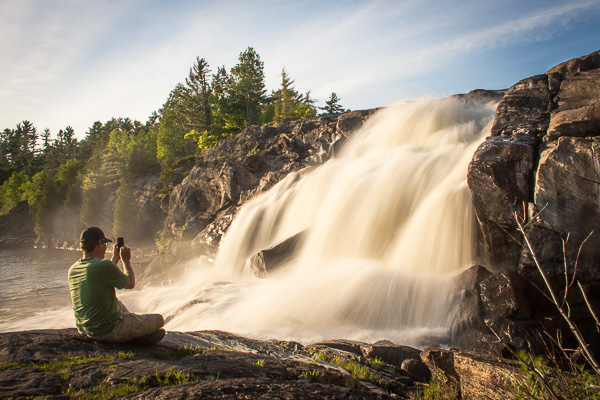
In the Northern Hemisphere summer is finally here and that means it’s the beginning of camping season. It’s time to haul out the tent, the propane stove, the canoe, the bug hat and the DSLR. You visit all these beautiful places, gain a sense of peace and respect for Mother Nature, then come home and wish you were still there. Having beautiful, sharp images of the brutal trail you faced, the noisy bird that woke you at dawn, or the incredible sunset you experienced can make the experience all the more rich. The added bonus is you have some fantastic images you can hang on the wall and gaze at as you plan your next trip.
Back country photography5

Taking a DSLR into the back country isn’t as costly or as expensive as you would think. You don’t need the super high end gear. Your DSLR is fairly rugged, it can handle rain, heat, a few bumps, water, dust, campfire smoke, etc. It’s not as breakable as you might think. Whether you are hiking or canoeing/kayaking, taking your gear into backcountry is easy. I’ve been taking my DSLR into the backwoods of Northern Ontario for years and have never regretted the decision. It’s taken practice, but through trial and error, you too can find a system that lets you take your DSLR into the woods. When packing for a backcountry trip remember to consider the following.

How will you pack and protect your gear but make it easily accessible?

OPTION 1: A hard case

These are easy to access, and when closed properly are airtight. Your camera and lenses will be completely safe using this method. They are easy to access on the trail, just lift the lid. Hard cases can be adapted to fit a camera and a lens by removing some of the foam padding from within. You customize the case to your gear. The drawback is the added weight you will have to lug and the cases are awkward. Picture yourself dragging a tired body, a backpack containing a tent, food, clothing and a suitcase like object through the bush. It’s not easy. But if you want the 100% protected guarantee then this type of case is for you.

OPTION 2: A dry bag

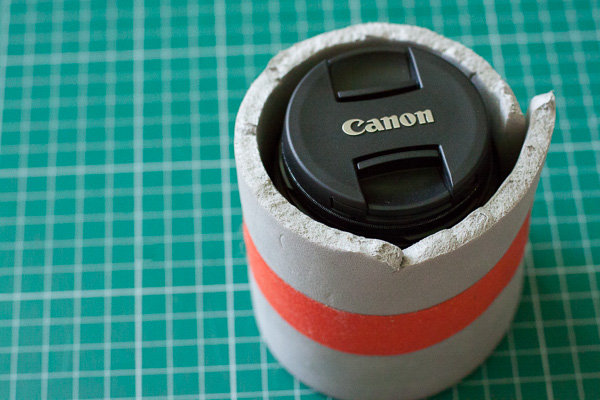
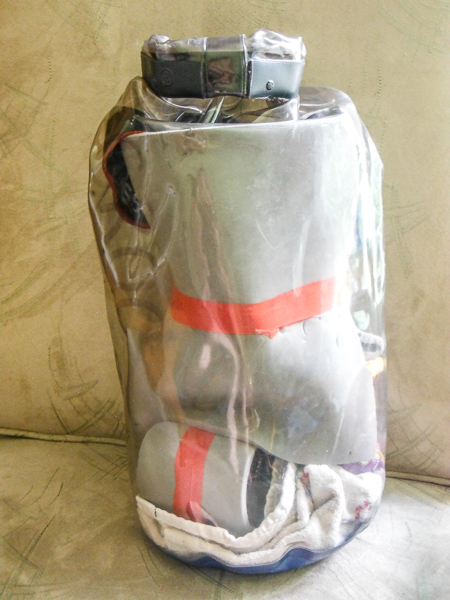
This method doesn’t guarantee complete protection. If you capsize in a canoe or drop the gear into a river, dry bags don’t promise watertight protection. However, a dry bag is easy to strap to the canoe or kayak and can be packed into a standard tripping pack quite easily. The dry bag keeps it safe from the elements. The handle at the top makes it easy to carry. The trick is to create a padding system within the dry bag. I use an old foam mattress to pad my gear.
Back country photography1

Back country photography7

Basically, cut up the mattress to fit your camera and bag. You can wrap spare lenses in the same foam and place them in the bottom of the bag. Dry bags can be purchased in varying sizes so you don’t have to buy a new bag for each combination of gear. This method is the cheapest, it’s fairly accessible and it’s certainly the easiest to carry.

OPTION 3: A tripping pack designed for carrying camera gear

There are several tripping packs that are designed to carry your tent, clothes, food and camera gear. These are excellent at protecting your gear and are designed for just such an outing. The problem is they aren’t very waterproof. They do come with a rain cover, but let’s face it, the gear is ruined if you drop the bag in a lake. If you are just hiking, then this is a fantastic option, these bags are designed for this job.

The drawbacks come for those of us who are smaller in stature or female. Most of the overnight backpacking bags are huge and become difficult to carry, especially for women. Sometimes chest straps don’t sit where they should and can be very uncomfortable. Comfort on the trail is extremely important: you don’t want to be in agony. Whatever you choose, make sure the pack fits properly. The comfort factor is the key to an enjoyable hiking trip.

How far will you travel? Can you really carry all that gear?

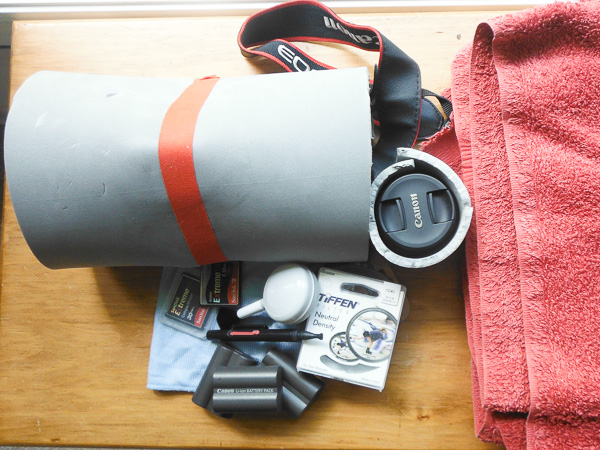
Tripping in the back country is hard work. You have to carry everything you need. You want to make sure enjoy your trip. If you are crippled under the weight of carrying, or portaging your camera gear, it isn’t going to be fun. Pack light and smart. Try to limit yourself to a few lenses, a filter or two, a few batteries and memory cards.
Back country photography6

Make it a fun challenge, take along one lens. Do you really need your 85mm lens if your 70-200 range zoom will cover this focal length? Be frugal with what you carry. This will push you to be creative in the types of shots you take. Also, it’s important to take a tripod for super sharp shots. Investing in a lightweight model is a good idea. The lightweight versions are pricier but worth it.

Use Common Sense

If you are going on a trip and serious about taking some great photos then make sure you plan for it.

  1. Cut down the number of kilometres (miles) you cover in a day in order to build in some time for photography.
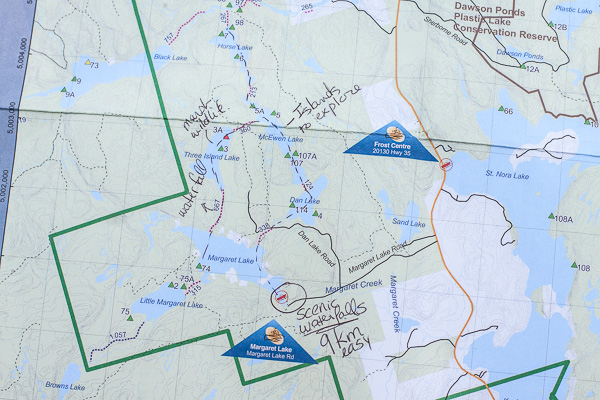
  2. Choose a route that has some beautiful photographic locations. Plan in advance and do your homework.Back country photography2
  3. If canoeing or kayaking plan a route that doesn’t contain huge multi-kilometre portages that will drain you of energy.
  4. Make sure you tie your camera gear to your canoe/kayak for added safety in the event you dump.
  5. Portage through challenging rapids to avoid soaking gear.
  6. If the weather is challenging, stay undercover. You can get moving tomorrow.
  7. Don’t take your gear out of its protective bag if the water is really rough, especially if you’re a novice paddler.

    Back country photography4

Finally, there’s one essential piece of gear that weighs almost nothing but you are guaranteed to regret it if you don’t take it. Always take a lens pen, and a couple of microfiber cloths, they are a must. Your gear will get dirty. Accept this fact now and simply remember to book your camera in for a thorough cleaning after you return. It will feel like a new camera afterwards, that’s a bonus.

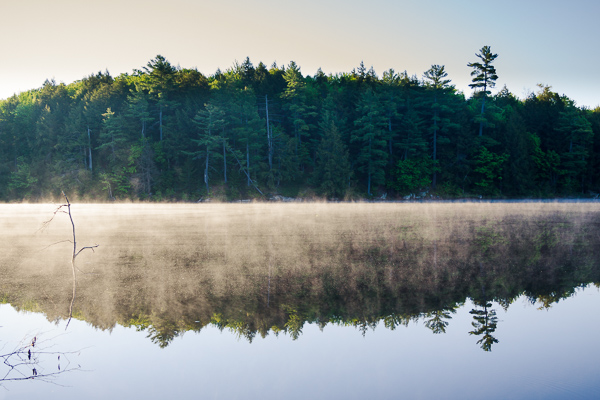
It’s a little more work but it will be worth it. People will “oooh” and “ahhhh” at your photos, and who knows maybe you will inspire a friend to take same trip because they just have to visit the place they’ve seen in your photographs.
Back country photography3

The post Taking your DSLR into the Backcountry Safely by Erin Fitzgibbon appeared first on Digital Photography School.


Digital Photography School

 
Comments Off on Taking your DSLR into the Backcountry Safely

Posted in Photography


5 Steps to Shoot a Simple-ish Time-Lapse Video With Your DSLR

30 Jun

If you have a new-ish DSLR, then you can probably “train” your camera to make a little movie for you. I’m talking about a time-lapse video, and while it might not be the next Hollywood blockbuster…it could spread like a virus on the Youtubez. 🙂 Read on to get started, and if I’ve done my job well (and you have the Continue Reading

The post 5 Steps to Shoot a Simple-ish Time-Lapse Video With Your DSLR appeared first on Photodoto.


Photodoto

 
Comments Off on 5 Steps to Shoot a Simple-ish Time-Lapse Video With Your DSLR

Posted in Photography


Why the First DSLR You Buy Doesn’t Really Matter

23 May

It’s about time! You finally made the decision to buy your first DSLR camera, you have saved a couple of bucks and started browsing around. Quickly, you realize the market is full of good (really good) cameras, and you start to feel overwhelmed. You ask your photographer friend or, even worse, a camera store salesman and end up feeling even Continue Reading

The post Why the First DSLR You Buy Doesn’t Really Matter appeared first on Photodoto.


Photodoto

 
Comments Off on Why the First DSLR You Buy Doesn’t Really Matter

Posted in Photography


Google+ now converts DSLR panoramas into Photo Spheres

16 May

photosphere.png

The Google Photo Sphere 360-degree panorama feature was introduced in November 2012. However, until now, viewing 360-degree panoramas not created with Google Camera or a compatible app was a slightly cumbersome process. Google has now changed that with an update to Google+. Learn more

News: Digital Photography Review (dpreview.com)

 
Comments Off on Google+ now converts DSLR panoramas into Photo Spheres

Posted in Uncategorized


Create your own DSLR external battery pack

02 May

Screen_Shot_2014-04-30_at_12.07.51_PM.png

Anyone shooting HD video on a DSLR knows how quickly the battery can drain. You can get AC power adapters for some cameras, but where there’s video, there’s not always an outlet. In this tutorial on DIYPhotography.com, camera hacker Chris Winter shows you how to make an external battery pack system with about nine times the runtime using a $ 40 battery pack, DC coupler, hot-shoe plate and some Velcro. Learn more

News: Digital Photography Review (dpreview.com)

 
Comments Off on Create your own DSLR external battery pack

Posted in Uncategorized


Sony announces SLT-A77 II high-end APS-C A-mount fixed-mirror DSLR

01 May

a77-II_w1650_front-1200.png

Sony has announced the SLT-A77 II – its latest enthusiast-grade, APS-C fixed-mirror DSLR. The Mark II features the same pixel count as its three-year-old forebear, but delivers it using a new 24MP sensor. The camera also gains a 79-point autofocus sensor, which it combines with the most sophisticated autofocus system on a Sony camera yet. Other upgrades include the customizable ‘Quick Navi Pro’ function menu but the biggest change is the improved autofocus, which combines with the ability to shoot up to 60 JPEGs at 12 frames per second. The SLT-A77 II will be available this June for $ 1199 body only.

News: Digital Photography Review (dpreview.com)

 
Comments Off on Sony announces SLT-A77 II high-end APS-C A-mount fixed-mirror DSLR

Posted in Uncategorized