RSS
 

Posts Tagged ‘dSLR’

The 20 Most Popular DSLR Lenses Among our Readers

26 Nov

Over the last few days we’ve published a post revealing the most popular DSLRs among our readers (based upon what they’ve been buying in the last few months).

Today we’re looking at the best selling and most popular DSLR Lenses*.
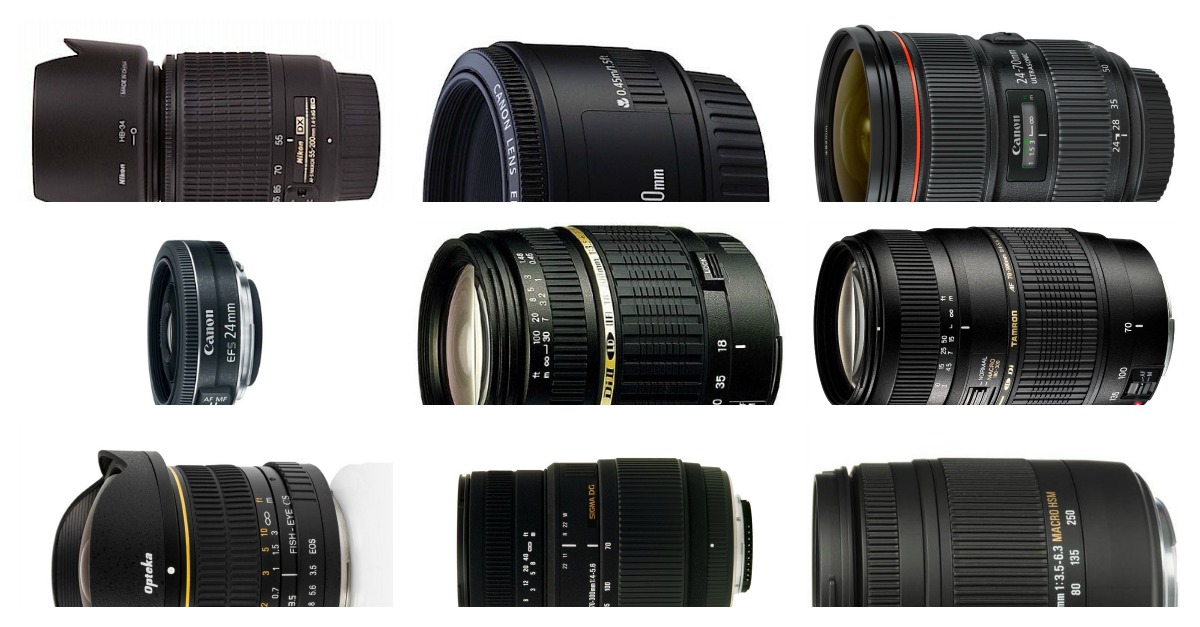
popular lenses

This list is completely dominated by Canon and Nikon lenses so we’ve decided to break them out separately into two lists and then have put the 6 other lenses (from a variety of manufacturers) into a third list.

Note: at this stage we didn’t see any major trends in lenses for compact camera systems which is why we’ve not featured any hear. We expect this market to grow as the mirroless/compact system cameras continue to grow in popularity.

Lastly: Amazon currently have some great specials at the moment on cameras and gear as part of their Holiday Promotions.

Canon DSLR Lenses

1. Canon EF 50mm f/1.8 II Camera Lens
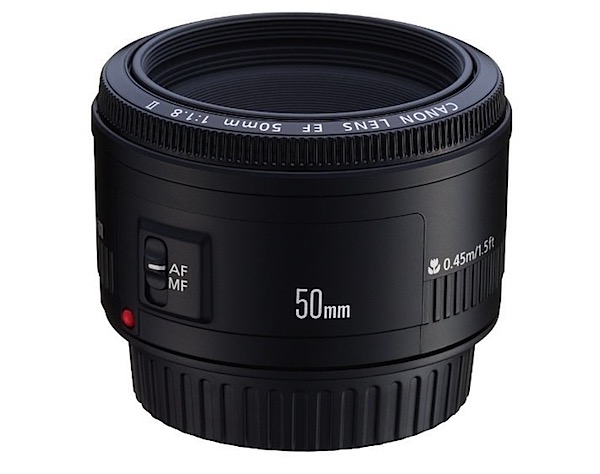
71BuU2ZyOeL._SL1500_.jpg

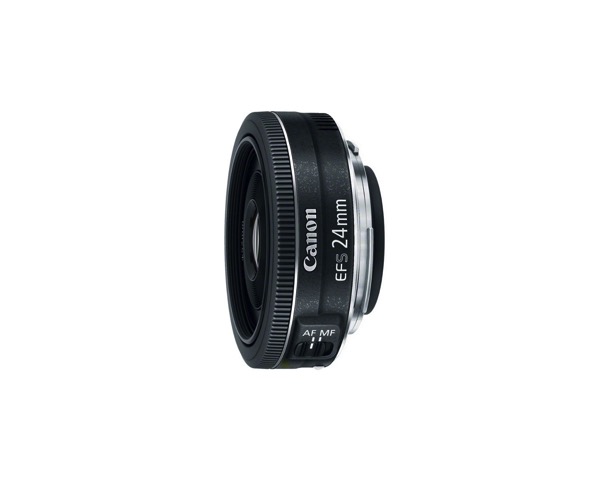
2. Canon EF-S 24mm f/2.8 STM Lens

61 egfIh2BL SL1500

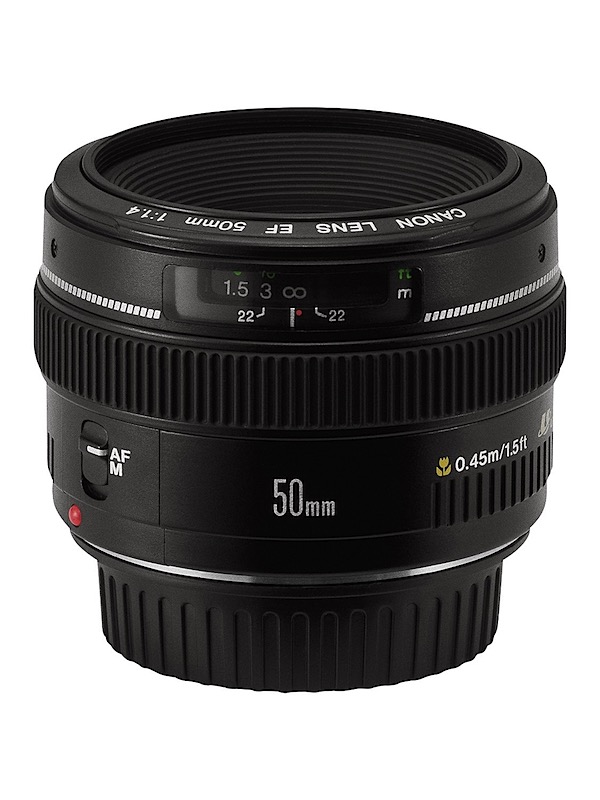
3. Canon EF 50mm f/1.4 USM

91fYqb6yGBL._SL1500_.jpg

4. Canon EF-S 10-18mm f/4.5-5.6 IS STM
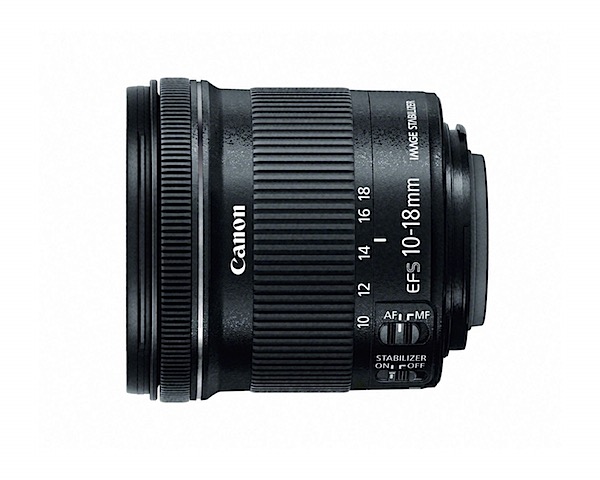
81bWpDA6EyL._SL1500_.jpg

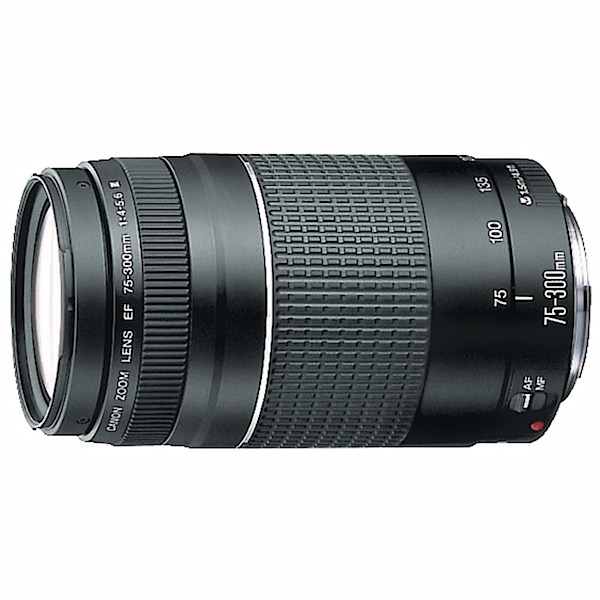
5. Canon EF 75-300mm f/4-5.6 III

71qY4hAxpoL._SL1500_.jpg

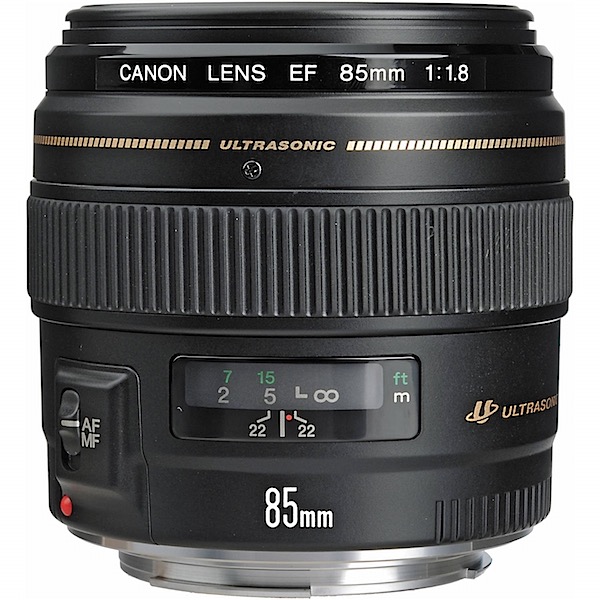
6. Canon EF 85mm f/1.8 USM

81XPZ7sQqsL._SL1500_.jpg

  1. Canon EF-S 55-250mm f/4.0-5.6 IS II Telephoto Zoom Lens
  2. Canon EF 40mm f/2.8 STM Lens
  3. Canon EF 24-70mm f/2.8L II USM Standard Zoom Lens
  4. Canon EF 70-200mm f/2.8L IS II USM Telephoto Zoom Lens
  5. Canon EF 100mm f/2.8L IS USM Macro
  6. Canon EF-S 18-55mm f/3.5-5.6 IS II SLR Lens
  7. Canon EF 16-35mm f/2.8L ll USM Zoom Lens
  8. Canon EF-S 17-55mm f/2.8 IS USM
  9. Canon EF 24-105mm f/4 L IS USM
  10. Canon EF 50mm f/1.2 L USM

Nikon DSLR Lenses

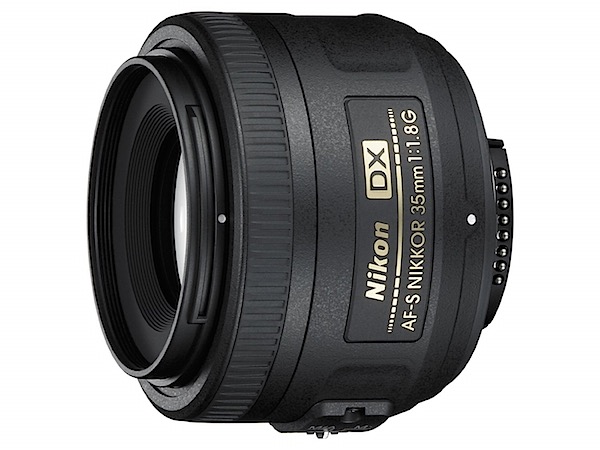
1. Nikon 35mm f/1.8G AF-S DX
71dJUbFOcEL._SL1500_.jpg

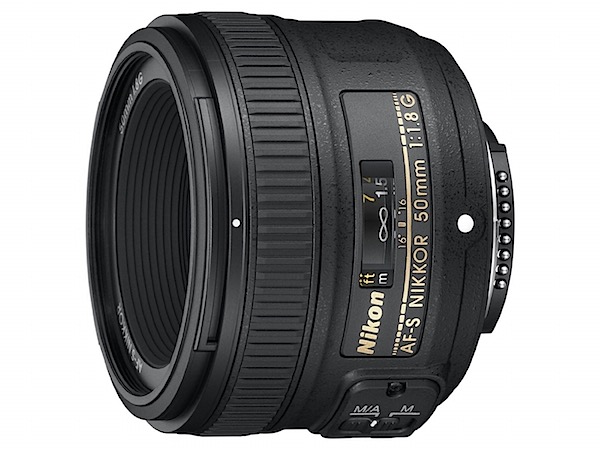
2. Nikon 50mm f/1.8G AF-S NIKKOR FX

712T0jBdPhL._SL1500_.jpg

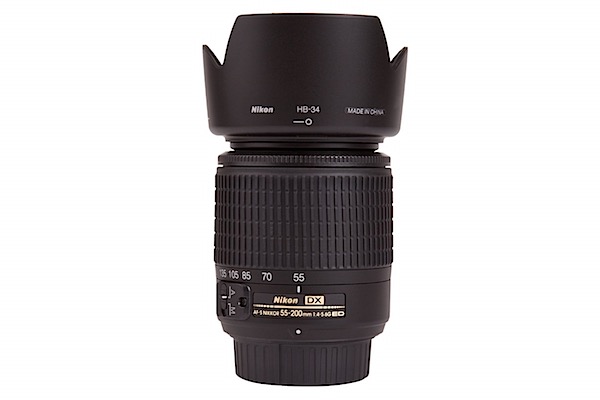
3. Nikon 55-200mm f/4-5.6G ED IF AF-S DX
71Ehi1XZoxL._SL1500_.jpg

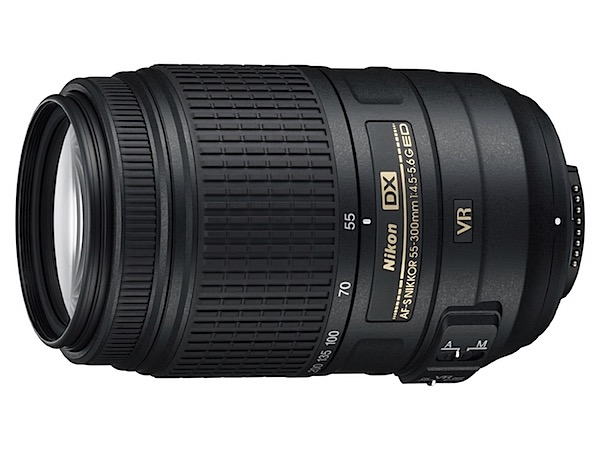
4. Nikon 55-300mm f/4.5-5.6G ED VR

71dAI8JvOTL._SL1500_.jpg

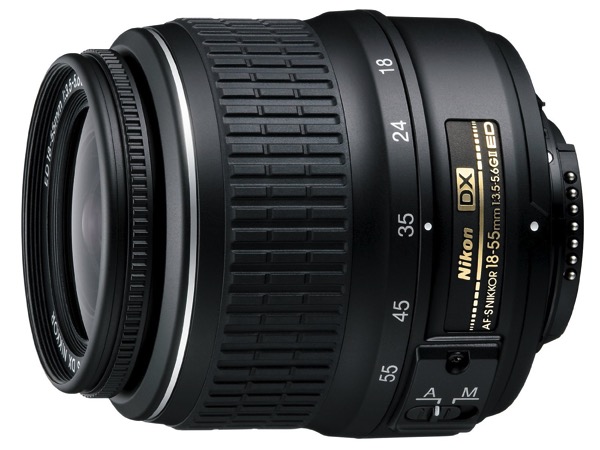
5. Nikon 18-55mm f/3.5-5.6G VR II AF-S
81WvLB071IL SL1500

  1. Nikon AF-S FX NIKKOR 200-500mm f/5.6E ED Vibration Reduction Zoom Lens
  2. Nikon 70-300mm f/4-5.6G AF
  3. Nikon AF-S FX NIKKOR 200-500mm f/5.6E ED Vibration Reduction Zoom Lens
  4. Nikon 50mm f/1.4G SIC SW Prime AF-S
  5. Nikon 18-300mm f/3.5-6.3G ED VR AF-S DX
  6. Nikon 85mm f/1.8G AF-S
  7. Nikon AF-S DX NIKKOR 18-55mm f/3.5-5.6G Vibration Reduction Zoom Lens
  8. Nikon 18-200mm f/3.5-5.6G AF-S ED VR II
  9. Nikon 28-300mm f/3.5-5.6G ED VR AF-S
  10. Nikon 40mm f/2.8G AF-S DX Micro

And also worth noting are the following other lenses made by other manufacturers.

Other DSLR Lenses

  1. Sigma 70-300mm f/4-5.6 SLD DG Macro. (for Nikon DSLRs) Also available for Canon,Minolta and Sony and Pentax cameras.
  2. Sigma 18-250mm f3.5-6.3 DC MACRO (For Canon DSLRs). Also available for Nikon and Sony cameras.
  3. Opteka 6.5mm f/3.5 HD Aspherical Fisheye for Canon DSLRs.
  4. Tamron AF 70-300mm f/4.0-5.6 Di LD Macro (for Canon DSLRs). Also available for Nikons, Konica Minolta and Sony and Pentax cameras.
  5. Tokina 11-16mm f/2.8 AT-X116 Pro DX II (for Nikon DSLRs). Also available for Canon and Sony and Minolta cameras.
  6. Tamron AF 18-200mm f/3.5-6.3 XR Di II (for Canon DSLRs), Nikon, Konica Minolta and Sony and Pentax.

*Note: as with our previous best seller lists this list was compiled from reports supplied to us from Amazon.com where we are affiliates. One of the ways dPS is able to cover its costs and be a sustainable business is that we earn a small commission when readers make a purchase from Amazon after clicking on our links (including those above). While no personal details are passed on we do get an overall report from Amazon about what was bought and are able to create this list.

googletag.cmd.push(function() {
tablet_slots.push( googletag.defineSlot( “/1005424/_dPSv4_tab-all-article-bottom_(300×250)”, [300, 250], “pb-ad-78623” ).addService( googletag.pubads() ) ); } );

googletag.cmd.push(function() {
mobile_slots.push( googletag.defineSlot( “/1005424/_dPSv4_mob-all-article-bottom_(300×250)”, [300, 250], “pb-ad-78158” ).addService( googletag.pubads() ) ); } );

The post The 20 Most Popular DSLR Lenses Among our Readers by Darren Rowse appeared first on Digital Photography School.


Digital Photography School

 
Comments Off on The 20 Most Popular DSLR Lenses Among our Readers

Posted in Photography


Nikon announces development of flagship D5 DSLR

18 Nov

In a brief press release, Nikon announced the development of its D5 digital SLR, which will be the company’s next flagship camera. There aren’t any real details in the release, other than the expected promise of better performance and image quality. A new SB-5000 Speedlight and WT-6 Wireless Transmitter are also on the roadmap. Read more

Articles: Digital Photography Review (dpreview.com)

 
Comments Off on Nikon announces development of flagship D5 DSLR

Posted in Uncategorized


Life in a glass case… we peer at new Pentax full-frame DSLR

24 Oct

Ricoh’s upcoming full-frame Pentax DSLR is getting more real! The last time we saw it, the as yet unnamed camera was barely more than a chunk of carved plastic, but at this week’s Photo Plus Expo in New York, a much more advanced mockup was on display at the Ricoh booth. Briefly. Shortly after we asked for a closer look it was removed permanently from display and locked in a cupboard. Oh well. Click through for some closeups

Articles: Digital Photography Review (dpreview.com)

 
Comments Off on Life in a glass case… we peer at new Pentax full-frame DSLR

Posted in Uncategorized


How to do Autofocus Fine Tuning on Your Nikon DSLR

22 Oct

Most of the time your equipment does a great job, but every once in a while you may find that under certain circumstances, your photos may seem a little soft. Although there are no less than a million reasons why this might be, it may simply be that your lens isn’t focusing where it’s supposed to.

You may be thinking that if this is the case, isn’t something seriously wrong? Not necessarily.

Some cameras are equipped with a feature to tweak the accuracy of its autofocus – Nikon calls this autofocus fine tuning.

Depth of field

Autofocus fine tuning allows you to dial in the autofocus accuracy of a camera/lens combination.

What is autofocus fine tuning?

Camera lenses are built, and tuned, to fairly exacting standards and do what they are supposed to pretty well, even lower-end lenses. However, there is a window, albeit fairly minute, that focus tuning parameters fit into. If the lens’ tuning falls right in the middle of that window, the focus will be spot on, but it’s not uncommon for the focus to be at either end of that window while still meeting quality control standards.

What this means is that in the majority of shooting situations you are going to end up with sharp results. In some situations when you are pushing the accuracy limits of the lens, such as macro photography or shooting at wide apertures, you may discover that the lens focuses a little in front or behind the focus point you’ve chosen. Maybe you’ve seen this shooting a close-up portrait at a wide aperture – although you are trying to get the subject’s eyes in the focus plane, you keep getting their eyebrows or ears sharp instead.

Why use it?

This is where lens fine tuning comes into play. What this feature does is allow you to dial in the accuracy of the lens/camera focus point even more precisely than it already is. If you haven’t noticed any problems with your setup, or mostly shoot at smaller apertures, going through this process may be unnecessary.

This feature can be found on Nikon bodies from the D7000 up and Canon bodies from the 50D and up, as well as several Sony, Olympus, and Pentax cameras.

Fine tuning settings are specific to the lens/camera combination and once you tune a lens, the camera saves the setting, which it reverts to anytime you mount that lens. Although you need to use a CPU lens to reap the full benefits of autofocus fine tuning, older analog or third party lenses can be fine tuned, and the settings saved manually on Nikon DSLRs.

What you need

  • A tripod
  • A newspaper or magazine printed with a small font
  • A table
  • A well lit room

How to do it

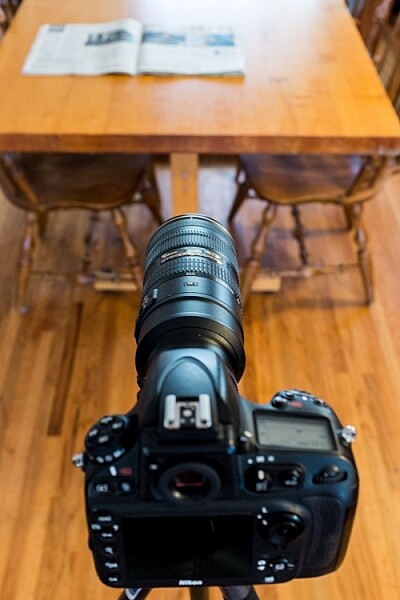
Step 1 – Mount your camera on the tripod and adjust it so the lens is about two feet above table level. The idea is to have the lens pointed at the newspaper at about a 30-degree angle.

Set up for autofocus fine tuning.

The setup to adjust autofocus fine tuning is fairly simple.

Step 2 – It is recommended to set the zoom (if using a zoom lens) to the focal length and distance which you use most often.

Step 3 – Set the camera to single-point, single-servo autofocus (AF-S for Nikon, One-Shot for Canon)

Step 4 – Open the lens to one stop down from its widest aperture (e.g. set an f/2.8 lens to f/4) and the middle of its zoom range (if it’s a zoom lens).

Step 5 – Place the focus point in the middle of the frame (center dot). I prefer to align the focus point with something recognizable like a letter of bold text among normal text.

Focus point in the center of the frame

With autofocus set to AF-S (one-shot), single-point, place the focus point in the center of the frame.

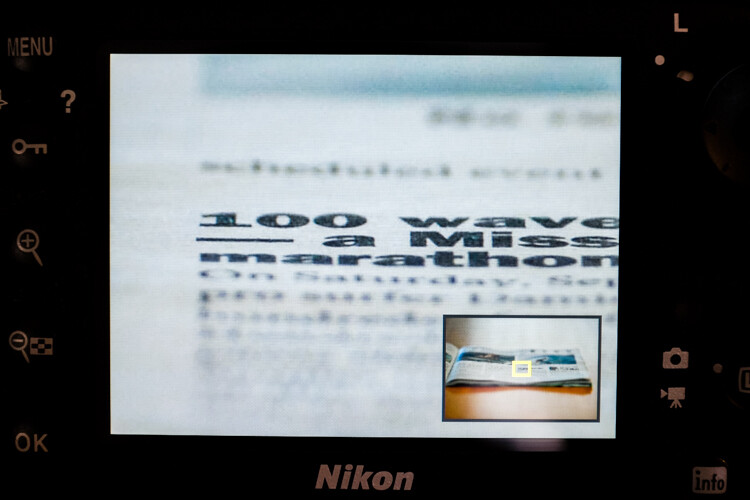
TIP: A helpful method is to turn on Live View and place the small dot in the middle of the focus box on a letter of text. Zoom in the view (NOT the lens) which gives you a more precise center point than the small box seen through the view finder. Turn off Live View to continue.

Using live view to align focus point

Using Live View helps to line up your focus point more precisely.

Step 6 – Set the self-timer on the camera to at least five seconds to allow the camera to stabilize after pressing the shutter button.

Step 7 – Turn off any stabilization either in-lens or in-camera.

Step 8 – Make sure focus points are enabled on playback: Menu>Playback Menu>Playback display options>Focus point>Done>OK

Focus point on preview

Enabling focus point on image preview allows you to see where the focus was set when the picture was taken.

Step 9 – Defocus the lens manually and then engage autofocus until it locks onto the focus point and press the shutter button.

Step 10 – Review the image and zoom in to check the accuracy of the focus point. Do this a few times for verification.

Checking focus point accuracy

Preview the image and zoom in to check the accuracy of the focus point.

If it appears that sharpness is centered on the focus point, great, your lens’ focus is accurate and you’re good to go. If not, continue reading.

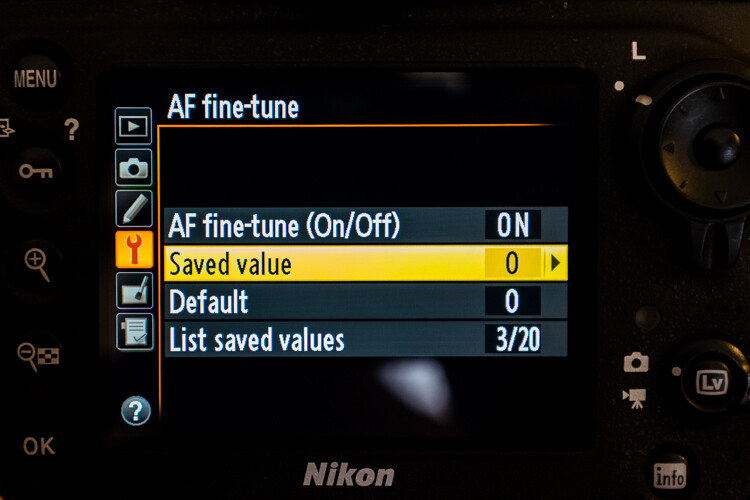
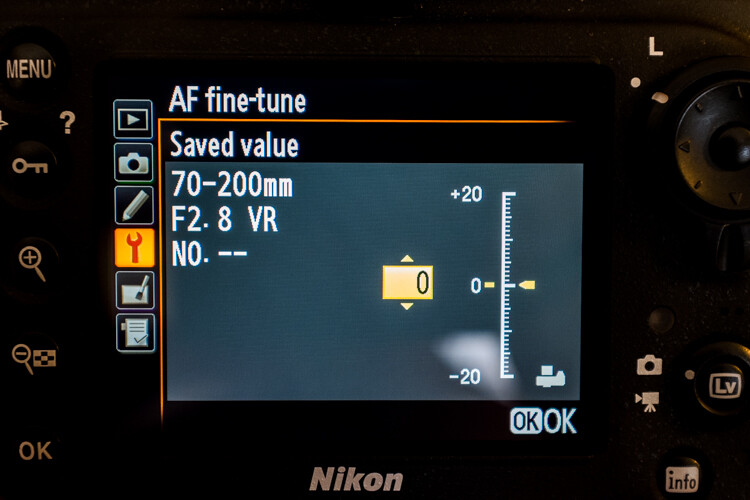
Step 11 – To adjust the autofocus fine tune go to: Menu>Setup menu>AF fine-tune>AF fine-tune (On/Off) and turn it on. Go back and select Saved value.

Fine tuning autofocus

The menu location of autofocus fine tuning.

Your lens’ information should be displayed in the upper left corner and the fine-tune adjust on the right.

Step 12 – Positive numbers correct for back-focusing (focusing behind the focus point) and negative numbers correct for front-focusing.

Adjusting autofocus fine tuning

Positive values adjust the focus point away from the camera while negative values move it closer.

Remember, this is called “fine-tuning” so the increments are pretty small – a +1 is hardly noticeable.

Step 13 – After each adjustment, defocus the lens manually and repeat the steps above until you hit the sweet spot.

The settings you have applied to a specific CPU lens are saved, and are loaded automatically anytime that lens is mounted to your camera. With non-CPU lenses, you can create a profile for that lens which you can then save and revert to manually when that lens is used.

If your lens’ focus still fails to hit the mark after attempting autofocus fine-tuning, either go old-school and use manual focus if it’s practical, or you will need to send your lens in to have it calibrated with a special machine.

If you use a brand other than Nikon check your camera manual to see if your model has this feature and how to use it.

Good luck and may your images be as sharp as my witticisms – hopefully much sharper.

googletag.cmd.push(function() {
tablet_slots.push( googletag.defineSlot( “/1005424/_dPSv4_tab-all-article-bottom_(300×250)”, [300, 250], “pb-ad-78623” ).addService( googletag.pubads() ) ); } );

googletag.cmd.push(function() {
mobile_slots.push( googletag.defineSlot( “/1005424/_dPSv4_mob-all-article-bottom_(300×250)”, [300, 250], “pb-ad-78158” ).addService( googletag.pubads() ) ); } );

The post How to do Autofocus Fine Tuning on Your Nikon DSLR by Jeremie Schatz appeared first on Digital Photography School.


Digital Photography School

 
Comments Off on How to do Autofocus Fine Tuning on Your Nikon DSLR

Posted in Photography


Samsung brings Ditch the DSLR camera-swap to Seattle at PIX 2015

29 Sep

Samsung is bringing its Ditch the DSLR event to Seattle on October 7th, giving PIX 2015 attendees the opportunity to swap out an old DSLR for a new Samsung NX500. Read more

Articles: Digital Photography Review (dpreview.com)

 
Comments Off on Samsung brings Ditch the DSLR camera-swap to Seattle at PIX 2015

Posted in Uncategorized


Ricoh announces 24-70mm F2.8 for upcoming full-frame Pentax DSLR

25 Sep

We’re still waiting for the much-teased full-frame DSLR, but Ricoh has today announced another full-frame zoom lens – the HD PENTAX-D FA 24-70mm F2.8 ED SDM WR, which features a weatherproof design and bright, constant maximum aperture. Read more

Articles: Digital Photography Review (dpreview.com)

 
Comments Off on Ricoh announces 24-70mm F2.8 for upcoming full-frame Pentax DSLR

Posted in Uncategorized


Ricoh teases spring 2016 full-frame Pentax DSLR debut

19 Sep

Ricoh has launched a teaser website promoting the introduction of its Pentax full-frame DSLR in spring of 2016. The news of a full-frame K-mount camera came in February when we also got a glimpse of an early mockup at CP+. Read more

Articles: Digital Photography Review (dpreview.com)

 
Comments Off on Ricoh teases spring 2016 full-frame Pentax DSLR debut

Posted in Uncategorized


Canon plans high-res future with 120MP DSLR and 8K Cinema EOS in development

10 Sep

Canon is clearly in a forward-looking frame of mind: announcing more development projects that it has under way. These include a 120MP DSLR and a Cinema EOS camera that can shoot 8K video. Although it adds caveats that specifications can change, the press release suggest both projects are planned for commercial, rather than research purposes. Read more

Articles: Digital Photography Review (dpreview.com)

 
Comments Off on Canon plans high-res future with 120MP DSLR and 8K Cinema EOS in development

Posted in Uncategorized


Sony Alpha 7R II can match or beat DSLR low light AF performance

20 Aug

When the Sony Alpha 7R II was announced, it promised a lot of game-changing features, but its low light AF capability was an unknown. We’ve already seen some of the incredible continuous AF abilities of the a7R II, including pinpoint eye AF for even moving subjects, but a lot of pros may be wondering: ‘if I ditch my DSLR for some of the advanced AF features the a7R II offers, will I be sacrificing low-light AF performance?’ Find out in our video

Articles: Digital Photography Review (dpreview.com)

 
Comments Off on Sony Alpha 7R II can match or beat DSLR low light AF performance

Posted in Uncategorized


Canon sweeps DSLR categories as EISA announces awards for cameras and lenses

18 Aug

Canon has taken the main DSLR awards for the best products of the year as voted by the prestigious European Imaging and Sound Association. The EOS 7D Mark ll won ‘European Prosumer DSLR Camera’ while the EOS 5DS/5DS R won the award for ‘European Professional DSLR Camera’. Read more

Articles: Digital Photography Review (dpreview.com)

 
Comments Off on Canon sweeps DSLR categories as EISA announces awards for cameras and lenses

Posted in Uncategorized