RSS
 

Posts Tagged ‘down’

Google Panoramio to shut down on November 4

11 Oct

Google will be shutting down Panoramio, its website for sharing photos of the world, on November 4. Now that Google Maps and Local Guides both have a photo-uploading feature, says Google, ‘we’ve decided to move forward with closing down Panoramio,’ something the company first announced plans for back in 2014. Many users were unhappy with the original announcement, and little has changed now that the shutdown is weeks away.

Panoramio was an early Web destination for photographers and travelers to share location-specific photos, enabling anyone to pull up a location on a world map and view any available images of it. That same feature is now available on Google Maps; in fact, Panoramio users who have shared content will Google Maps will still have their photos appear on the latter service after Panoramio shuts down.

Panoramio accounts linked to a Google account will automatically have their photographs uploaded to Google Album Archive at full resolution, the company says. In addition, Panoramio users will retain access to their account photos (within Panoramio) until November 2017, though new uploads and interactions with photos will be restricted. Google is encouraging Panoramio users to sign up under its Local Guides program.

Users who want to abandon Google entirely can export their Panoramio photos via Google Takeout if they have a Google account. The only exception are legacy Panoramio accounts; in this case, photos can be exported as a zip file via account settings > ‘Data Liberation’ > ‘Get photos’.

Via: CNET

Articles: Digital Photography Review (dpreview.com)

 
Comments Off on Google Panoramio to shut down on November 4

Posted in Uncategorized


Unfold Your Getaway: Canoe for City Dwellers Packs Down to a Suitcase

30 Jul

[ By SA Rogers in Design & Products & Packaging. ]

onak fold up canoe 4

You can’t exactly fit a canoe through a narrow staircase in an apartment building, let alone take it on the metro, so for many sporty city dwellers, owning one may seem out of reach. Many canoes are so bulky, you can barely find enough space for them in a suburban garage. Playing with an origami canoe made of paper one day, Ghent-based designer Otto Van De Steene wondered whether a similar folding method translated to a sturdy, seaworthy material could help him get out onto the water more often. The result is ‘ONAK,’ a portable canoe that folds down to the size of a suitcase.

fold up canoe 1

Working at an outdoor recreation store, Van De Steene had seen plenty of other portable canoe designs that he found lacking. “You have the canoes that have really good performance on the water – they’re fast, but they’re quite heavy and take an hour to assemble. Nothing to do in an evening after work.”

onak fold up canoe 5

The Oru folding kayak had recently debuted, offering an intriguing possible solution, but Van De Steene thought its corrugated plastic construction could use an upgrade, and chose a custom-made polypropylene for his own design, explaining that it’s lighter and stiffer, improving the boat’s performance. About ten times as strong as standard polypropylene, the honeycomb-core composite material is also highly durable and fully recyclable.

onak fold up canoe 2

onak fold up canoe 3

“By making hundreds of paper models and fifteen real prototypes, we also refined the design of our patent pending hull. This was a huge challenge due to the limitations of origami. We opted for a narrow and fast canoe design that keeps its momentum very well, while still being delightfully easy and stable to maneuver for beginners.”

onak fold up canoe 6

The Onak may not fold down quite as small as Oru, but putting it on wheels makes it easier to haul around. From its compact 47”x15.7”x10” roller case, it expands to 183” long by 33.5” wide, and can carry about 440 pounds. There’s enough room inside for two adults, a child and gear. The process of assembling or packing up the portable canoe takes about ten minutes.

onak fold up canoe 8

With just a couple days left on its Kickstarter campaign, the Onak has met its goal, but you can still snag one for significantly less than retail cost if you back the project in time. It’ll sell for about $ 1450 with two paddles once it hits the market.

Share on Facebook


[ By SA Rogers in Design & Products & Packaging. ]

[ WebUrbanist | Archives | Galleries | Privacy | TOS ]


WebUrbanist

 
Comments Off on Unfold Your Getaway: Canoe for City Dwellers Packs Down to a Suitcase

Posted in Creativity


Trippy mirrored timelapse turns Hong Kong upside down

19 Jul

Skill, dedication, vision: a good timelapse requires all of these things. A really cool subject helps too. ‘The Allegory of the Cave,’ a new timelapse from Visual Suspect, checks all of those boxes. By mirroring Hong Kong’s vibrant cityscapes, its creators aim to play with themes of ‘perception and knowledge as reflection of our reality.’ 

Familiar images of skyscrapers in clouds or boats in a harbor become abstract shapes – where does one image stop and its reflection begin? Is anything real?

See? We told you it was trippy. 

Articles: Digital Photography Review (dpreview.com)

 
Comments Off on Trippy mirrored timelapse turns Hong Kong upside down

Posted in Uncategorized


Down to the wire: iFixit Fujifilm X30 disassembly guide

23 Apr

iFixit Fujifilm X30 disassembly guide

Few of us will ever be so bold as to take a screwdriver and a spudger to a beloved camera. But how do we satisfy the urge to know what’s going on inside of it? For curious types with a weak constitution for taking things apart, there’s iFixit. The good people at iFixit publish product-specific disassembly guides, written to help common folk make simple repairs to their own electronic devices. They’re also an easy way to peek inside a modern digital camera without voiding your warranty. This week, we look inside the Fujifilm FinePix X30.

iFixit Fujifilm X30 disassembly guide

Like so many other things, it’s best to start this project at the bottom. After removing the battery, you’ll go about removing screws from the camera’s chassis, including these three on the bottom plate.

Image courtesy of iFixit

iFixit Fujifilm X30 disassembly guide

Once you’ve removed enough screws, the bottom and back panels can be pulled back. So what’s underneath? A whole mess of ribbon cables. 

Image courtesy of iFixit

iFixit Fujifilm X30 disassembly guide

For starters you’ll have to detach these five ribbons that are connected to the motherboard. 

Image courtesy of iFixit

iFixit Fujifilm X30 disassembly guide

After a little spudger action and disconnection of cables from the surrounding circuitry, the copper plate underneath it all is revealed. The copper plate is likely for heat dissipation.

Image courtesy of iFixit

iFixit Fujifilm X30 disassembly guide

Attached to the other side of the copper plate is the X30’s 12MP, 2/3″-type sensor. Lifting it out of the way reveals the lens.

Image courtesy of iFixit

iFixit Fujifilm X30 disassembly guide

With a few screws removed the motherboard can be tilted upward. To completely remove it you’ll need to desolder the black, grey and red wires seen here.

Image courtesy of iFixit

iFixit Fujifilm X30 disassembly guide

And now we come face-to-face with the lens assembly. Remove a few screws… 

Image courtesy of iFixit

iFixit Fujifilm X30 disassembly guide

…and the lens is free for removal. It’s a 28-112mm equiv. F2-2.8 zoom, by the way.

Image courtesy of iFixit

iFixit Fujifilm X30 disassembly guide

Working with the flash capacitor requires some careful maneuvering. As the circuits store charge to power the flash unit, touching the leads at the bottom of the circuit could result in a nasty shock. More desoldering is required here to get this board free.

Image courtesy of iFixit

iFixit Fujifilm X30 disassembly guide

With the eyepiece removed and just a couple more screws taken out of the LCD panel, you’ll have successfully disassembled your Fujifilm Finepix X30. Congratulations, you’re a monster.

Image courtesy of iFixit

Articles: Digital Photography Review (dpreview.com)

 
Comments Off on Down to the wire: iFixit Fujifilm X30 disassembly guide

Posted in Uncategorized


Pinned Down: 10 More Abandoned Bowling Alleys

11 Apr

[ By Steve in Abandoned Places & Architecture. ]

abandoned-bowling-alleys-1a
Abandoned bowling alleys lie scattered across the landscape as if the gods of recreational sports had laid ’em low with a single thunderous strike.

abandoned-bowling-alleys-1c

abandoned-bowling-alleys-1b

Shoeless Hoes? You’ll find neither shoes nor hoes (a type of gardening tool, for the uninformed) at the long-abandoned and unfortunately named Hoe Bowl in Hyde Park, New York. Flickr user Edward Blake (edwardhblake) snapped the stricken state of the once-stylish bowling alley in November of 2014.

abandoned-bowling-alleys-1e

abandoned-bowling-alleys-1f

HoeBowl Family Recreation Centers, founded in 1958 and led by current CEO Diane Hoe, is a chain of bowling alleys centered in New York’s Hudson Valley. The Hyde Park location closed just after the turn of the millennium. In September of 2013, the property was sold to James Rogers, who received approval to build a 76-resident assisted living center at the site. Recent images, however, show no sign of impending demolition. One might say… the Hoe must go on!

Gutter Check

abandoned-bowling-alleys-2a

abandoned-bowling-alleys-2b

Flickr user Corrine Klug checked out the abandoned bowling alley hidden deep within the deserted Scranton Lace Company’s factory in January of 2012. A decade earlier, the company’s vice president infamously told employees, in the middle of a working shift, that the facility was closing “effective immediately.” One presumes the stunned workers dropped everything – bowling balls included (ouch!) – and trudged out the doors, never to return.

Vicious Circle

abandoned-bowling-alleys-5

Remember those funky circular-ball-returns? This one’s funkier than most and the cheese-tastic carpeting only adds to the scene’s essential mustiness. Flickr user b lowe (vittelsandjuice) brings us this abandoned bowling alley still life dating from late 2011.

Next Page – Click Below to Read More:
Pinned Down 10 More Abandoned Bowling Alleys

Share on Facebook


[ By Steve in Abandoned Places & Architecture. ]

[ WebUrbanist | Archives | Galleries | Privacy | TOS ]


WebUrbanist

 
Comments Off on Pinned Down: 10 More Abandoned Bowling Alleys

Posted in Creativity


Break it down: iFixit disassembles the Canon PowerShot G1 X Mark II

02 Apr

iFixit disassembles the Canon PowerShot G1 X Mark II

Taking apart a camera isn’t for the faint of heart, but if you’ve chosen to do so you don’t have to go alone. Our friends at iFixit publish disassembly guides to empower owners of electronic devices to make some fixes themselves. And who hasn’t wanted to see what’s underneath the plastic shell of Canon’s top-of-the-line compact camera? Take a look at what lies beneath the surface of the Canon PowerShot G1 X Mark II.

iFixit disassembles the Canon PowerShot G1 X Mark II

As always, the first and most important step – remove the battery from the camera. 


All images courtesy of iFixit

iFixit disassembles the Canon PowerShot G1 X Mark II

With the battery safely set aside, you’re free to go about the business of taking your camera apart. 


All images courtesy of iFixit

iFixit disassembles the Canon PowerShot G1 X Mark II

After removing the screws on the left, right and bottom of the camera, there are four more to remove under the flip-up LCD.


All images courtesy of iFixit

iFixit disassembles the Canon PowerShot G1 X Mark II

Now that those pesky screws are out of the way, the back panel comes right off, though be sure to disconnect the ribbon cable attaching it to the body before pulling too hard.


All images courtesy of iFixit

iFixit disassembles the Canon PowerShot G1 X Mark II

Unsurprisingly there are additional screws to remove, this time for this copper plate (possibly used to dissipate heat). Underneath that there’s yet another plate, this one silver.


All images courtesy of iFixit

iFixit disassembles the Canon PowerShot G1 X Mark II

With those plates off there are three ribbon cables to remove with your trusty spudger.


All images courtesy of iFixit

iFixit disassembles the Canon PowerShot G1 X Mark II

After removing a screw behind the pop-up flash and another on the front just below the Canon logo, you can ‘pop the top’ on the G1 X Mark II.


All images courtesy of iFixit

iFixit disassembles the Canon PowerShot G1 X Mark II

Once you’re removed even more screws, you can spudge the left side of the camera right off.


All images courtesy of iFixit

iFixit disassembles the Canon PowerShot G1 X Mark II

Finally, after much spudging of ribbon cables, you can remove the front panel of the camera. The round thing toward the right is the G1 X II’s speaker.


All images courtesy of iFixit

iFixit disassembles the Canon PowerShot G1 X Mark II

Two screws must go in order to remove the metal plate surrounding the I/O ports. There are ports for HDMI and USB output as well as a wired remote.


All images courtesy of iFixit

iFixit disassembles the Canon PowerShot G1 X Mark II

With the back and side plates of the camera removed, the time has come to take off the front panel…


All images courtesy of iFixit

iFixit disassembles the Canon PowerShot G1 X Mark II

… and the lens has been liberated from the rest of the camera. That’s the capacitor for the flash on the right – definitely not something you want to handle.


All images courtesy of iFixit

iFixit disassembles the Canon PowerShot G1 X Mark II

After the removal of countless screws and ribbon cables, here’s Canon’s flaghsip compact camera, the PowerShot G1 X Mark II, in pieces.


All images courtesy of iFixit

Articles: Digital Photography Review (dpreview.com)

 
Comments Off on Break it down: iFixit disassembles the Canon PowerShot G1 X Mark II

Posted in Uncategorized


Halfway House: Townhouse Duplex Split Straight Down the Middle

23 Jan

[ By WebUrbanist in Architecture & Houses & Residential. ]

halfway house real

It looks more like an optical illusion or photo edit than a real dwelling, but this hundred-year-old halved townhouse really stands (out) on the streets of Toronto.

half house side view

half house toronto

54 1/2 St. Patrick was built in the early 1890s as part of a set of six homes with shared walls. Starting in the 1950s, owners of the neighboring units started to crumble under pressure from a developer, slowly selling their domiciles one at a time.

half rowhouse remaining plan

As a result, each of the other structures was torn down with surgical precision. When the occupant of the final house in the row refused to sell at any price, they cleaved off the other half of the building and the shared structural wall running down the middle was reinforced and covered in concrete.

halfway house up

halfway house front

The neighboring Village by the Grange opened in the mid-1970s. According to author and photographer Chris Bateman, “54 1/2 St. Patrick is currently vacant. No-one answered when I knocked at the door and the front room has been stripped to the floorboards. Perhaps it’s being spruced up, it would surely be worth it. The current assessment on file with the city lists the value at $ 648,000.”

Share on Facebook


[ By WebUrbanist in Architecture & Houses & Residential. ]

[ WebUrbanist | Archives | Galleries | Privacy | TOS ]


WebUrbanist

 
Comments Off on Halfway House: Townhouse Duplex Split Straight Down the Middle

Posted in Creativity


‘Built like a tank where it counts’ – LensRentals tears down Canon EF 35mm F1.4 L II

10 Dec

‘Built like a tank where it counts’ – LensRentals Canon EF 35mm F1.4 L II teardown

Roger Cicala at LensRentals has a great job – he gets to take things apart whenever he wants, and get paid to do it. And even better, he gets to pay himself to do it. Roger just got his hands on Canon’s new EF 35mm F1.4 L II, and just like us, he’s been very impressed. But, it must be said, for very different reasons. Click through this slideshow for a quick look at what he found behind the red ring, and if this whets your appetite, read Roger’s full tear-down at lensrentals.com.

‘Built like a tank where it counts’ – LensRentals Canon EF 35mm F1.4 L II teardown

This is the plastic ring which sits at the front of the all of the elements of the 35mm, underneath the cosmetic nameplate.

According to Roger, ‘In most lenses rings like this hold the front element in place, but in this case, it seems the entire purpose of this ring is to improve weather resistance […] It fits tightly around the glass and into the front barrel of the lens, and it has a rubber gasket for further sealing internally.’

‘Built like a tank where it counts’ – LensRentals Canon EF 35mm F1.4 L II teardown

Where most lenses use only three lightweight screws to attach the filter barrel, the Canon EF 35mm F1.4 L II uses six ‘long, strong and deeply threaded’ ones. 

Behind the screws, Roger’s team found that ‘each hole contained a brass reinforcing spacer with a spring around it. So basically each of the 6 screws passes through the brass spacer and screws into the front barrel, with a spring maintaining tension. This is an expensive way to do things and obviously serves a purpose.’

‘Built like a tank where it counts’ – LensRentals Canon EF 35mm F1.4 L II teardown

With the rear barrel removed, two more layers of rubber felt sealing gaskets were revealed and a ‘a very, very robust eccentric collar set […] used to optically adjust the rear group.’ (that’s the notched, circular thing towards the top of the rear group in this image, surrounded by red gunk to lock it in place).

In Roger’s words. ‘we consider thick nylon collars robust, brass collars very robust, but these massive heavy collars with a center locking screw are beyond anything we’ve seen outside of super telephoto lenses and the 70-200 f/2.8 IS II’.

‘Built like a tank where it counts’ – LensRentals Canon EF 35mm F1.4 L II teardown

Unusually, even for weather-resistant lenses, the EF 35mm F1.4 L II features tough, moisture-resistant tape underneath the rubber focusing ring, to prevent water getting underneath and into the main body of the lens (the tape has been removed in this image).

‘Built like a tank where it counts’ – LensRentals Canon EF 35mm F1.4 L II teardown

‘With the focus ring off, we can see another set of robust optical adjustment collars that adjust group 2. (Later experimentation hinted that these were primarily centering collars, with the rear collars primarily adjusting tilt.)’

‘Built like a tank where it counts’ – LensRentals Canon EF 35mm F1.4 L II teardown

As the disassembly progresses, the EF 35mm F1.4 L II seems to get more and more robust – ‘With the USM motor and barrel off we can see the focusing helicoids and the heavy metal rollers that move the focusing elements within the helicoid. In almost every lens, these would be small nylon washers over a screw, not the relatively huge metal rollers we see in this lens.’

‘Built like a tank where it counts’ – LensRentals Canon EF 35mm F1.4 L II teardown

Roger’s team took a closer look at those helicoid rollers.

‘When you look close up you see these aren’t just sliding posts, there are actually tiny ball bearings inside them. There’s also a spring tensioning system around one of the rollers. […] By this point I was really rather awestruck by the amount of careful over-engineering that went into making this lens. Nobody, and I do mean nobody, else is engineering lens mechanics like the newer Canon lenses.’

Roger’s final analysis: 

‘[The EF 35mm F1.4 L II is] designed thoughtfully and logically. Things that will inevitably get damaged on any lens, like the front element and filter ring, are designed to be replaced easily. There are some things inside, particularly with the tensioning screws and springs, that I’m not certain I understand the purpose of, but I am certain there is a purpose. If I had to summarize the mechanical design of this lens, I would say simply that no expense was spared, no corner was cut.’

Articles: Digital Photography Review (dpreview.com)

 
Comments Off on ‘Built like a tank where it counts’ – LensRentals tears down Canon EF 35mm F1.4 L II

Posted in Uncategorized


Cut It Art! Paper Cut-Outs Cut Landmarks Down To Size

02 Nov

[ By Steve in Art & Photography & Video. ]

paperboyo-paper-cut-outs-6
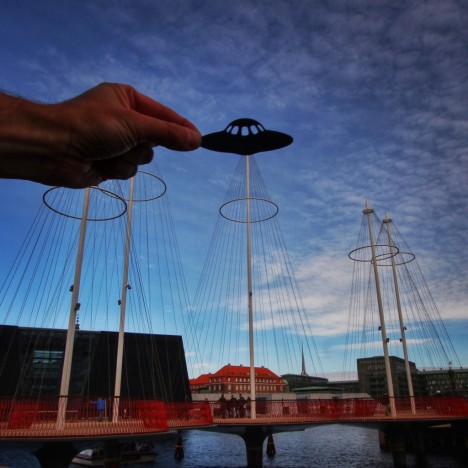
An imaginative Instagram user’s unique way of capturing the world’s most famous landmarks for posterity involves a scissors, paper and a camera.

Instagrammer transforms famous landmarks using paper cut-outs

paperboyo-paper-cut-outs-10

“I take photos with paper & sometimes without”, states Instagram user @paperboyo, but it’s safe to say those “with paper” have garnered him most of his nearly 70,000 followers. London-based Rich McCor (to use his given name) came up with his intriguing take on travel photography while brainstorming on how to make his photos more original and memorable.

paperboyo-paper-cut-outs-11a

paperboyo-paper-cut-outs-16

Changing his POV was McCor’s number one priority. “I decided I would become a tourist in my own city,” he explained. “I wanted to see the London that I ignored, to explore the landmarks and the quirky history.” His first efforts depicted Big Ben transformed into a wristwatch (or vice-versa) and some graphic teasing of a lion outside St. Paul’s Cathedral. Nice kitty!

Instagrammer transforms famous landmarks using paper cut-outs

paperboyo-paper-cut-outs-2

Positioning the various paper cut-outs takes much precision and no doubt McCor attracts a certain amount of attention during the process. No doubt there’s a certain degree of trail-and-error as well: what works well in one’s imagination doesn’t always pan out in reality. When everything goes right, well, that’s just the cherry on the sundae!

Next Page – Click Below to Read More:
Cut It Art Paper Cut Outs Cut Landmarks Down To Size

Share on Facebook


[ By Steve in Art & Photography & Video. ]

[ WebUrbanist | Archives | Galleries | Privacy | TOS ]


WebUrbanist

 
Comments Off on Cut It Art! Paper Cut-Outs Cut Landmarks Down To Size

Posted in Creativity


Sony’s latest financial results show camera unit sales down, operating income up

30 Oct

Sony has released its Q2 2015 financial results, posting a 3% decline year-on-year in imaging product sales on a constant currency basis. However, demand for high-value added models, favorable exchange rates and internal cost reductions led to a bump in that group’s operating income – up to 25.9 billion yen compared to 20.1 billion this time last year. Read more

Articles: Digital Photography Review (dpreview.com)

 
Comments Off on Sony’s latest financial results show camera unit sales down, operating income up

Posted in Uncategorized