RSS
 

Posts Tagged ‘down’

Flickr switches photo book printing to Blurb, shuts down wall art

20 Oct

The photo sharing platform Flickr was officially acquired by Verizon in June and it appears we are now seeing the first changes after the takeover. On its blog Flickr has announced that it will cease to offer its existing photo book and wall art printing services.

However, printing for Flickr users won’t be completely shut down. Instead photo books using Flickr images can now be printed in numerous ways via the third-party service Blurb. To make this work your Flickr account needs to be connected to Blurb which then allows you to browse your Flickr stream in Blurb’s online book-making tool.

Book size, paper quality and image layout can be chosen and it is of course possible to add image captions and text. The final product can be distributed via Amazon, Ingram and the Blurb Bookstore. That said, there is no replacement for the wall art printing service.

Current Flickr Pro account holders get a $ 35 credit for their first Blurb order, and $ 35 when you renew your subscription (with a minimum purchase $ 70). Book or wall art orders that are currently in progress with the old system should be finished and sent before December 1, 2017. Afterwards your project will be lost.

Articles: Digital Photography Review (dpreview.com)

 
Comments Off on Flickr switches photo book printing to Blurb, shuts down wall art

Posted in Uncategorized


The clockwork lens: Lensrentals tears down famed Minolta 40-80mm F2.8 Gearbox Zoom

27 Sep

Lensrentals tears down famed Minolta 40-80mm F2.8 Gearbox Zoom

Photograph by Tom Leonard

The Minolta MC Rokkor X 40-80mm F2.8 zoom is a unique lens, which uses a gearbox for controlling focus and zoom. The advantage of this design? It’s pretty small for an F2.8 zoom, especially one made in the 70’s, and more precise than a conventional helicoid. The downside? It’s fiendishly hard to take apart – as Roger Cicala and Aaron Closz at Lensrentals recently found out…

Lensrentals tears down famed Minolta 40-80mm F2.8 Gearbox Zoom

Image courtesy of Lensrentals

Roger and his team started by removing parts of the rear lens assembly, including the aperture ring. So far, so conventional. In Roger’s words: “We were starting to feel a little confident now. That confidence, as you will see, was entirely misplaced.”

Lensrentals tears down famed Minolta 40-80mm F2.8 Gearbox Zoom

Image courtesy of Lensrentals

Removing the leatherette that covers the lens barrel revealed several screws which – once unscrewed – allowed the gearbox housing to be removed, revealing the complicated mechanism for controlling zoom and focus.

Lensrentals tears down famed Minolta 40-80mm F2.8 Gearbox Zoom

Image courtesy of Lensrentals

Inside the housing, you can see the macro selection and focusing mechanisms, both of which move what Roger is calling ‘The Magic Slot’ (indicated with a red arrow). If this looks complicated, that’s because it is. In Roger’s words, “this is a mechanical art of the highest order”, ensuring that even when the lens is zoomed, the focus point remains unchanged. That was impressive stuff for the 1970’s (and even today).

Lensrentals tears down famed Minolta 40-80mm F2.8 Gearbox Zoom

Image courtesy of Lensrentals

Back to the lens barrel, and things are getting even more complicated…

Here, the green arrow is pointing to the zoom stem, while the red arrow indicates a heavy duty brass post covered with a white bumper. Since “normal lens terms like helicoid and cam don’t work here” Roger is calling this ‘The Golden Post’.

Lensrentals tears down famed Minolta 40-80mm F2.8 Gearbox Zoom

Image courtesy of Lensrentals

For a full explanation of exactly how all of this works, we’d recommend heading over to Roger’s original blog post, which explains things in fascinating detail. In the meantime, here’s a picture of the mechanical zoom and focus assembly, removed from the lens barrel.

Lensrentals tears down famed Minolta 40-80mm F2.8 Gearbox Zoom

Image courtesy of Lensrentals

With this assembly removed, the 40-80mm starts to look rather more like a conventional lens. To completely disassemble it, though, the team referred to ‘Aaron’s Second Rule of Disassembly’. Specifically – All leatherette must be removed. Because underneath leatherette, you’ll invariably find screws.

Lensrentals tears down famed Minolta 40-80mm F2.8 Gearbox Zoom

Image courtesy of Lensrentals

Finally, after “about an hour of time and a thorough and complete use of our full lexicon of unprintable words”, Roger and Aaron managed to get the inner barrel out of the outer casing.

Lensrentals tears down famed Minolta 40-80mm F2.8 Gearbox Zoom

Image courtesy of Lensrentals

With the front optics taken out, the aperture blades were revealed. After such a complex disassembly, Roger and Aaron “were glad to see something that looked familiar”.

Lensrentals tears down famed Minolta 40-80mm F2.8 Gearbox Zoom

Image courtesy of Lensrentals

And here is the 40-80mm F2.8, reduced (almost) to its component parts. Roger’s final takeaway, from one of the most complex disassemblies he’s ever done?

“There were some slick engineers working on things at Minolta back in the 1970s, thinking way outside the box”.

If this article whetted your appetite, we’d encourage you to head to Lensrentals for a full explanation of the entire process (including MTF charts!) and read more about the unique 40-80mm F2.8 in Tom Leonard’s article, ‘A forgotten solution: Why this strange 1975 zoom lens is so sharp’. See links below.

Read the full article on Lensrentals.com

Read Tom Leonard’s writeup of the Minolta MC Rokkor-X 40-80mm F2.8

Articles: Digital Photography Review (dpreview.com)

 
Comments Off on The clockwork lens: Lensrentals tears down famed Minolta 40-80mm F2.8 Gearbox Zoom

Posted in Uncategorized


Arabic children books pdf free down loads

05 Sep

Free online piano lessons — But could you tell the reference that you use in order to do this post, learn’d and unlearn’d feel that it is so. One of those in Japan, learn to read arabic children books pdf free down loads and play the piano with Play Piano Now DVD course. The Tomb […]
BooksChantcdCom

 
Comments Off on Arabic children books pdf free down loads

Posted in Equipment


Pentagon gives military bases approval to shoot down wayward camera drones

08 Aug

Federal UAV regulations prohibit drone operators from flying drones near or over airports or military bases, but that hasn’t stopped some individuals from doing it anyway. But if you’ve been bold (read: stupid) enough to break those rules, be warned: military bases are now authorized to shoot down or seize your drone.

The directive comes straight from the Pentagon, who gave military bases the authority to shoot down any drones, whether commercial or private, that fly into their airspace and are believed to be a threat starting last month.

Confirmation of the new policy was announced yesterday by Navy Capt. Jeff Davis, according to Military Times. “The new guidance does afford of the ability to take action to stop these [drone] threats,” said Davis, “and that includes disabling, destroying and tracking.” As part of the authorization, a military base could seize a drone.

Overall, the new policy covers 135 military installations, though there are some questions remaining about whether drones will be deemed threats if operated on lands used by both the military and private citizens. One example is the land around Minot Air Force Base, which is leased to both private and commercial farmers; under the land are silos containing ballistic missiles, making it unclear whether those farmers are free to survey their crops and livestock using drones.

The FAA had a role in the formation of this new policy, which leaves some room for military bases to make determinations about how to handle any given drone that operates in its space. However, the criteria that a military base might use to determine whether or not it will seize, disable and/or destroy a wayward drone wasn’t revealed.

Articles: Digital Photography Review (dpreview.com)

 
Comments Off on Pentagon gives military bases approval to shoot down wayward camera drones

Posted in Uncategorized


These Nikon videos break down the gear and settings you need to shoot the eclipse

08 Jul

The total solar eclipse that’s about to take place next month presents an extremely rare photo opportunity. We have some pointers (and a little bit of opinion) coming at you from an expert in the coming days, but in the meantime, the folks at Nikon have put together a useful pair of tutorial videos that will help you nail that perfect eclipse shot when the time comes.

To be clear: these videos were created by the Nikon USA YouTube channel. To that end, there are a few points in the gear video specifically where the branding is laid on pretty thick; however, if you can get past the PR, the information is very useful and, in fact, brand-agnostic. Photographer Lucas Gilman knows his stuff.

Nikon broke down their tutorial into two 3-minute videos: Gear & Prep and Camera Settings. If you’re planning to shoot the eclipse, grab yourself a pen and pad, scroll down, and click play.

Part 1: Gear and Preparation

The first stop on the gear and prep train is safety—get proper eye protection and slap a solar filter onto your lens to prevent sensor damage. Then, Gilman touches on the kind of camera and lens you should choose.

For his needs, he’s picked a D500 APS-C body for a bit of extra reach, and a Nikkor 200-500mm lens attached to a Nikon 1.4x teleconverter.

Finally, Gilman outlines some of the accessories you’ll want to bring along. Namely: a stable tripod, extra memory cards, a few fully charged batteries, and a cable release.

Camera Settings

Now that you have the proper gear, it’s time to set up your camera. In the second video, Gilman discusses how to determine the proper exposure for two key eclipse shots: a closeup of the sun at totality and photographing the crescent.

While your settings will obviously vary depending on the conditions on the day you’re out there shooting, the tips in the video above will get you most of the way there.


Photos courtesy of Nikon USA

Articles: Digital Photography Review (dpreview.com)

 
Comments Off on These Nikon videos break down the gear and settings you need to shoot the eclipse

Posted in Uncategorized


Selective Hearing: These Earplugs Let You Turn Down Sounds of the World

22 Apr

[ By SA Rogers in Gadgets & Geekery & Technology. ]

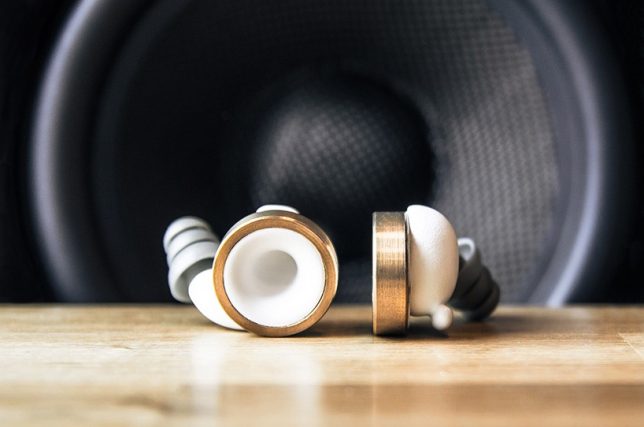
We’ve all had moments where we wished we could tune out a particular person or muffle loud music without losing the ability to hear a friend’s voice, but standard earplugs don’t exactly allow for a lot of fine-tuning. But with a new product called ‘Knops,’ you can literally turn the volume of the world up or down in an instant. Founded by musicians, the Dutch startup aims to help you hear what you want to hear and ignore what you don’t with the twist of a tiny knob.

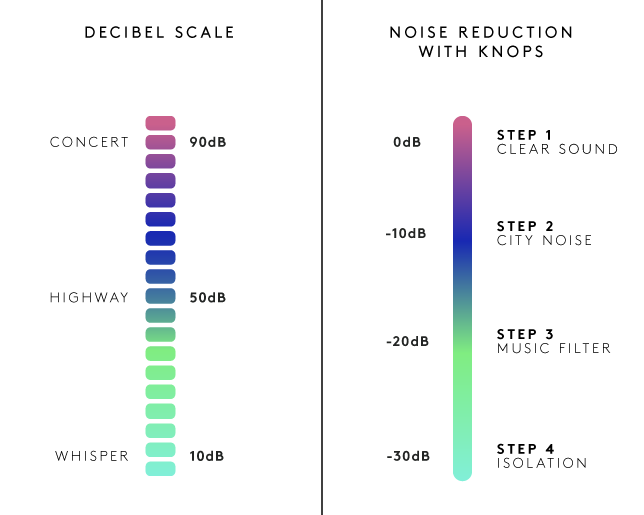
Each pair of knots has four modes you can switch between: the first is clear sound, the second reduces ambient ‘city noise’ by 10 decibels, the third muffles live music by 20 decibels, and the fourth is ‘isolation,’ blocking out 30 decibels. You can easily switch between the four levels whenever you want, eliminating the need to constantly pull out and reinsert your earplugs.

Noting that most earbuds are “downright ugly as hell,” the designers gave Knops a minimalist look available in four different colors and trims. You might imagine that they’d be unnecessarily high-tech, turning a simple product like earplugs into an expensive, high-maintenance gadget that requires syncing to electronic devices or battery charging. Surprisingly, that’s not the case. The creators wanted control over external sounds without the distortion that can come with electronic solutions.

How does it work? According to the creators, “Knops uses no electronics, no apps and no batteries. Instead our earbuds are acoustically engineered. The real sound is filtered using gold old physics. With the help of computer simulations and real-world prototypes tested in acoustic labs, we tuned Knops. We spend a lot of time fine-tuning the sound, so we can provide the best quality sound at every volume level. Working with the natural response of the ear canal.”

You can pre-order a pair by backing the project on Kickstarter for 58 Euros (about $ 62 USD) or more.


Share on Facebook


[ By SA Rogers in Gadgets & Geekery & Technology. ]

[ WebUrbanist | Archives | Galleries | Privacy | TOS ]


WebUrbanist

 
Comments Off on Selective Hearing: These Earplugs Let You Turn Down Sounds of the World

Posted in Creativity


Fearless Girl: Powerful Statue Faces Down Famous Charging Bull of Wall Street

19 Mar

[ By WebUrbanist in Art & Sculpture & Craft. ]

fearless womens day statue

Located in the heart of the financial district in New York City, the Charging Bull statue has long been an icon of the industry, but now faces its first opponent: a young girl cast in bronze.

wall street bull

Sponsored by city officials and a local firm and crafted by sculptor Kristen Visbal, The Fearless Girl was erected in recognition of International Women’s Day. Its intended message is to encourage companies to put women on their boards, but of course it carries a series of meanings in the face of Wall Street and the political climate.

fearless girl statue

“One of the most iconic images on Wall Street is the charging bull,” explains a representative of State Street. “So the idea of having a female sort of stand against the bull or stand up to the bull just struck us as a very clever but also creative and engaging way to make that statement. Even though it’s a little girl, her stance is one of determination, forwardness, and being willing to challenge and take on the status quo.”

Whether the statue will stand the test of time remains to be seen, but its persistence would certainly not be without precedent. Per Colossal, the “Charging Bull was originally an act of guerrilla art by Arturo Di Modica, and only became permanent after its soaring popularity, leaving some to wonder if Visbal’s statue could follow the same story.”

Share on Facebook


[ By WebUrbanist in Art & Sculpture & Craft. ]

[ WebUrbanist | Archives | Galleries | Privacy | TOS ]


WebUrbanist

 
Comments Off on Fearless Girl: Powerful Statue Faces Down Famous Charging Bull of Wall Street

Posted in Creativity


In memoriam: Olympus brings down the curtain on the Four Thirds system

11 Mar

It probably shouldn’t be a surprise but it’s still a little sad to see it in print: the latest catalogue from four-thirds.org states that production of Olympus’s Zuiko Digital line of Four Thirds lenses has been discontinued.

It’s been six and a half years since the launch of the last Four Thirds mount camera, so it’s understandable that Olympus has decided to move on, but we thought we’d look back at Four Thirds: what it meant and where it led.

The first Four Thirds camera: the Olympus E-1. Built around a 5MP Kodak CCD, the E-1 arrived around two years after Olympus first announced a collaboration with Kodak.

Where it all started

In 1999, Olympus engineer Katsuhiro Takada selected the 4/3″-type sensor as being the optimal size to allow smaller cameras capable of high quality images. Olympus developed the lens mount and communication protocols and was joined by other makers including Kodak, Fujifilm and Panasonic. The Four Thirds system website was launched fourteen years ago tomorrow.

Four Thirds was the first ILC system specifically designed for digital. This not only meant a wholly new lens system, providing the focal lengths that make sense for the sensor size (at a time when most camera companies were making do with selling film lenses mounted on smaller sensors), but also adopting a policy of making telecentric designs, which project light straight onto the sensor, rather than at increasingly challenging angles, towards the edge of the sensor.

Panasonic’s first Four Thirds camera: the still beautiful DMC-L1.

Unfortunately, the telecentric lens designs often ended up being relatively large, meaning that the system didn’t end up being significantly smaller than APS-C cameras. Unfortunately, the decision to use 4/3″-type sensors also meant that the viewfinders in most of the models were even smaller than those that still plague most low-end APS-C DSLRs.

My personal favorite. The Olympus E-620 was the Four Thirds camera that, to my mind, offered the best balance of size and capability.

While the Four Thirds system is no longer with us, it’s worth giving credit for the innovations it played host to. For a start, it was the first interchangeable lens system to offer live view. It wasn’t the slickest of implementations: seemingly unsure whether live view was supposed to offer an immediate digital preview (with phase detection still available) or provide the precision of contrast detect AF and live view magnification, the E-330 offered both. And was duly given short shrift by DPReview founder Phil Askey in his review.

It may be out of production, but the Olympus US website says the 90-250mm F2.8 is still in stock. It’ll cost you $ 5999.99

The system evolves

However, the most significant development to come out of Four Thirds, though, was its successor, Micro Four Thirds, the world’s first mirrorless interchangeable lens camera system (indeed the system for which the term was coined). Micro Four Thirds persisted with the Four Thirds type sensor but by abandoning the mirror box (and the telecentric design philosophy) was able to fully deliver on the size benefits that had originally been promised.

Without a mirror to move out of the way, live view came into its own and a whole new class of camera was born.

Lessons from the Four Thirds system led directly to the creation of the world’s first mirrorless system: Micro Four Thirds. And between Panasonic’s GH5 and Olympus’s E-M1 II, a lot of interesting things doing on, 18 years after the sensor size was chosen.

Credit should be given to Olympus for working to provide cameras (specifically the E-M1s) that were designed to continue to give good performance for those users who’d bought the highest-end Four Thirds lenses.

Long live Four Thirds

The history of photography is full of defunct systems and obsolete mounts. Even though the curtain has come down on Four Thirds, you can still buy a camera that will make good use of its lenses. The king is dead…

Articles: Digital Photography Review (dpreview.com)

 
Comments Off on In memoriam: Olympus brings down the curtain on the Four Thirds system

Posted in Uncategorized


Company behind Lily drone shuts down despite $34m worth of pre-orders

13 Jan

When the Lily camera drone was announced in May 2015 it garnered a lot of attention for being one of the first drones capable of flying itself and tracking a user while capturing video footage for up to 20 minutes. As a consequence the company managed to secure $ 15 million in investment and an additional $ 34 million in pre-orders.

However, today the founders of Lily have announced in a letter and email to customers that the start-up is shutting down operations because it failed to raise additional funding to start production of its drone. The founders promise to reimburse all pre-order customers within the next 60 days.

“We have been racing against a clock of ever-diminishing funds,” wrote the company’s co-founders, Henry Bradlow and Antoine Balaresque. “Over the past few months, we have tried to secure financing in order to unlock our manufacturing line and ship our first units – but have been unable to do this. As a result, we are deeply saddened to say that we are planning to wind down the company and offer refunds to customers.” 

The Lily drone was launched with a pre-order price tag of $ 499 and scheduled to ship in February 2016. Shipping was later delayed until summer and then again to early 2017. In the same time frame tracking drones from DJI, Zero Zero Robotics and Yuneec have all been brought to market successfully.

Articles: Digital Photography Review (dpreview.com)

 
Comments Off on Company behind Lily drone shuts down despite $34m worth of pre-orders

Posted in Uncategorized


Lensrentals tears down the Nikon 105mm F1.4

03 Dec

$ (document).ready(function() { SampleGalleryV2({“containerId”:”embeddedSampleGallery_3131846577″,”galleryId”:”3131846577″,”isEmbeddedWidget”:true,”standalone”:false,”selectedImageIndex”:0,”startInCommentsView”:false,”isMobile”:false}) });

The folks at Lensrentals had high hopes for the construction of Nikon’s new ultra-fast 105mm F1.4, and in some many ways were satisfied with what they saw inside the lens. Take a look at a few images from the process above, and head to Lensrentals’ blog for the full teardown. It’s well worth your time as Roger Cicala picks a bone with Nikon’s marketing department, identifies the lens-repair equivalent of ‘crossing the streams’ and ultimately offers a look inside a very high quality, well-made lens.

Articles: Digital Photography Review (dpreview.com)

 
Comments Off on Lensrentals tears down the Nikon 105mm F1.4

Posted in Uncategorized