RSS
 

Posts Tagged ‘doing’

5 Tips for Doing Photography from the Hip

12 Jul

Photographing from the hip is, quite literally, having your camera near or resting on your hip and pressing the shutter button. This photography method is typically used in street photography when the photographer wants to take candid, incognito photos. But, sometimes, trying this as a deliberate photography method is just as fun. It forces you to change your perspective, your vision and your creative eye. You start to look at the scene as a bigger picture rather than as a tunnel vision through your viewfinder. Plus, if your family is anything like mine, where they turn away and run the opposite direction when you bring out the camera, this technique is a great way to get candid pictures of difficult, and uncooperative subjects.

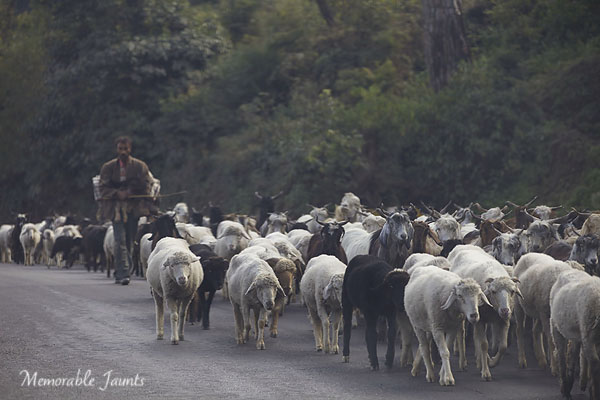
Photographing From The Hip Sheep Herder Walking With Flock of Sheep By Memorable Jaunts

When you put your eye to the viewfinder, often times you lose focus of all the other elements and entities beyond your line of vision. Photographing from the hip gives you, the artist, freedom to shift your perspective and opens up opportunities for alternative compositions for your images. Use it for personal projects or client sessions where you view the scene in front of you quite differently than what you actually capture in your camera. Travel photography is another great place to use this method of photography for an alternative perspective.

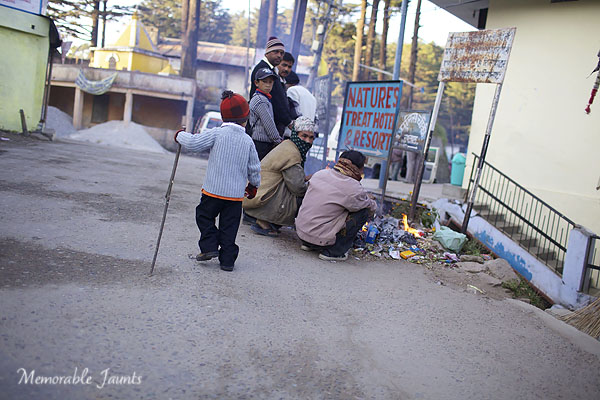
Photographing From The Hip Chilly Morning In India By Memorable Jaunts

There are some tips and tricks you may want to consider to get the best images from this angle of doing photography from the hip.

#1 Preset your settings like exposure and aperture

Since you cannot really change your settings based on what you see through the viewfinder, it is best to preset your exposure ahead of time. If you are a 100% manual shooter, this might be the one time you give yourself the luxury to go into full auto mode of your camera. Additionally, use evaluative metering instead of spot metering to assist with the exposure for this type of photography. In terms of aperture, the general rule of thumb is to have a smaller aperture for photographing from the hip (anywhere from f/8 to f/16). This improves the likelihood that more of the elements will be in focus especially if your subjects are moving. Having a larger aperture is also okay if you want to go for a more artistic image.


#2 Increase shutter speed

Having a higher shutter speed gives you a better probability that your subject will be sharp especially if you are moving or clicking in continuous mode and don’t have the luxury of a steady hand. Try to stay at least 1/250th of a second, or higher. Do not pay too much attention to ISO in this genre of photography, just embrace the noise as part of the creative element of the image. If you had to choose, give more priority to shutter speed. Things like exposure and noise (grain) can always be adjusted in post-processing as long as you have a sharp image.

#3 Preset focal point

This is probably the one time where having a back button focus might be inconvenient. Try auto focus and then throw MF switch on the lens so that the focus point is locked. You can also use center focus point and just move your camera slightly as a way to recompose with the focus locked.

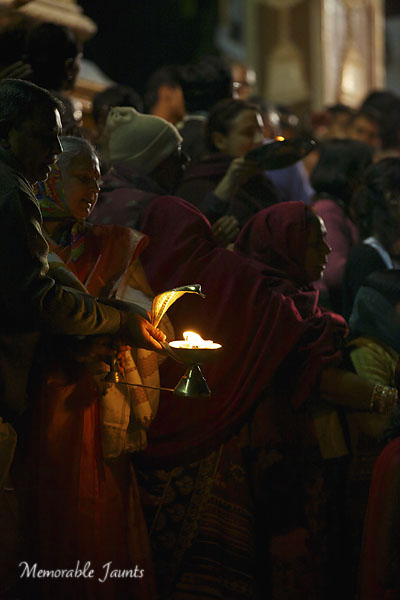
Photographing From The Hip Ganga Aarti In Rishikesh By Memorable Jaunts

#4 Use your camera’s silent mode if you have one

If you really want to go incognito, use the silent drive mode in your camera. Some of the newer DSLRs have this feature. It suppress the sound of the shutter being pressed and you can get some really candid images of the scene in front of you.

#5 Use a fixed focal length lens

Prime lenses work better for this type of photography since you really don’t want to recompose with every movement of the scene in front of you. Just move your feet instead. You can also change the angle by holding the camera at a slight upward or downward angle depending on your relative height in relation to the scene in front of you.

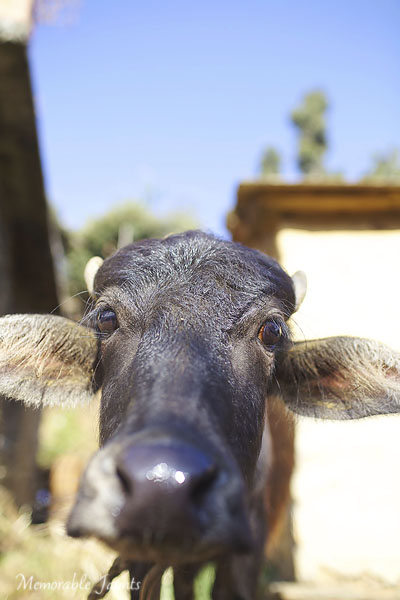
Photographing From The Hip Water Buffalo in India By Memorable Jaunts

Remember to get creative with this type of photography. You may be tempted to bring the camera to your face every once in a while to make sure you are getting some “decent” shots. That’s okay, but resist the urge to chimp every time the shutter is clicked. Try doing this for five to ten minutes at first. Once you get comfortable, take this method out for a spin for longer periods of time. Make a mental note of your settings so that you can reevaluate and reassess what worked, and what did not work, at the end of your shooting exercise.

Remember to have fun and don’t get too hung up on the technicalities. In a worse case scenario, if you take enough shots, there is a chance you will have a few good images that are artistic and technically correct. If nothing else, it gives you the opportunity to view the scene through your eyes rather than your viewfinder. So get out, put the camera around your neck using your camera strap and get clicking.

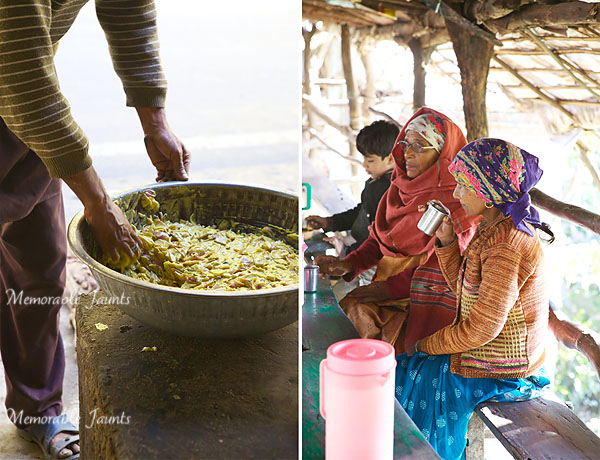
Photographing From The Hip Local Tea Shop in India By Memorable Jaunts


The post 5 Tips for Doing Photography from the Hip by Karthika Gupta appeared first on Digital Photography School.


Digital Photography School

 
Comments Off on 5 Tips for Doing Photography from the Hip

Posted in Photography


5 Bad Photography Habits You Need To Keep Doing

10 Jul

I don’t floss every day. I still use the word “rad” as an adjective and not in the cool retro way, but in the I-don’t-have-another-word-for-it way. The driving speed limit and I have a love/hate relationship. And I have been known, on particularly hard days, to let my kids eat cookies for breakfast and ice cream for dinner. These are all terrible habits that I need to work on. My “bad” photography habits though, the ones that people say you shouldn’t do or should just get over already, those are actually helping me. They might be helping you too. Here are five habits, that most people would say are things we should move past, and why I think you shouldn’t.

lmattingly6

#1 Not pushing for the shot

By day, I’m a photographer. By night, I’m a psychotherapist. Well, sometimes it’s opposite. Point is: there are a few basic lessons that work in both of my jobs. One of them is not trying to own someone else’s reaction. If I tell you that it’s sunny out and that upsets you, there is nothing I can do about that. I could have told you different, but providing it was actually sunny, I would have been lying. Your reaction is yours. Just like if I try to have a portrait client do something the way I would do it and it doesn’t work, they are not to blame. If I tell them a joke to make them relax and smile that they don’t think it is funny, I can’t force them have to have an authentically positive reaction.

One of the most valuable lessons I’ve learned as a photographer is to know when to let something go. If you are fussing with a shot, be it portrait, landscape, food, whatever, and it’s just not working out like you want it to, let it go. Chances are if you are struggling that hard to get the shot, even if you do get it, you won’t like it. Patience is one thing, but pestering is another; by grasping so tightly to a specific concept, you are setting your expectations far beyond what is logically possible. In life and in photography.

lmattingly2

#2 Taking your time

Ask any one of my clients and they will tell you that I’m fun, but I take a while to return finished images. They will also tell you that I’m flaky about emails, never answer my phone, and happily scream and yell and laugh way more than needed on a photo shoot. There’s not a lot a I can do about being a loud talker and easily excitable, and so long as there is text I’m just not going to answer my phone unless I have to. But I make no apologizes for taking a while to edit shoots. I mean, I do apologize every single time to my clients, but I know it will never get better. I am not able to force editing.

Unlike data entry for example, I am just not able to just sit at my desk and do it nonstop until it’s done. I need to be in the mindset to do it, and once I start I’m really only good for an hour or two before I realize I’m just not producing quality work anymore. Being the extremely flakey artist that I am, this mindset sometimes comes at 10 a.m. in the morning and sometimes at three, in the morning. When my insomnia truly kicks in, and my husband isn’t all that interested in talking about our feelings and hopes and dreams. The flip side of this coin: I have never given a portrait client images that I’m not completely proud of. When I deliver images to a client (extremely later than I said I would), I feel that they are truly the best of my abilities and completely indicative of my style. I feel my photography is worth the wait and I’m proud of that. Don’t push it just to be timely. No one recommends a photographer because they turn-around images really fast – they recommend the photographer that produces the best work.

lmattingly5

#3 Chimping

“Chimping” is the fine art of checking the back of your digital camera after every shot. It’s obnoxious and time-consuming and what it will show you is the difference between a dream shoot and having to redo the whole thing. Don’t check every time, but do check – often. You can’t count on chimping to give you amazingly accurate results – a screen that small is showing you much too sharp of an image than it will actually end up being. But it will show you  is if your settings are off. It will show you if you are not in as good of a spot as you think. There is no embarrassment in it and there is nothing wrong with taking a minute to readjust.

I have to assume that when NASA puts astronauts in a space shuttle, they give them a few minutes to get everything adjusted how they want. Most photography situations are in constant motion – the sun is always going up or down, the people are always moving, the food is always – slipping? (I’m not sure. I don’t do food photography. But I would assume there are struggles.) The world moves, and as photographers we have to constantly double check to see that we are moving with it. When you are viewing the world from a lens, it’s a good idea to make sure the lens is seeing it the way your eyeballs are.

lmattingly1

#4 Being nervous

The first time I ever photographed a child (for portfolio building), I didn’t have a memory card in. I shot for 30 minutes, thinking I was getting cute stuff and I happened to try and chimp and it said “no CF card” because at that point, I hadn’t learned the setting where my camera doesn’t shoot without a card (learn this setting!). I was mortified but didn’t want the clients to think I had just wasted their time so I just wrapped it up and went home. To this day, they don’t know as I just told them I was unhappy with the shots and gave them a new session. Ten years later and I still check to make sure that I have cards, an extra battery, lollipops and my camera a solid 20 times before I leave my house. I have been known to use the opportunity of a red stoplight to check my bag a 21st time. You know, just in case. I have never forgotten anything I couldn’t shoot without. But I have also never gotten past being nervous before every shoot. It doesn’t matter if I am photographing one of my dearest clients that I have photographed ten times before or if I have been hired by a national publication to shoot a celebrity – I arrive nervous as all get out. Eventually I forget to be nervous and I start being myself and it works out. But being nervous is good. Nerves mean you want to do a good job and you are humble about your talent. Don’t ever stop being nervous.

lmattingly4

#5 Being a one trick pony

I’ve written before about my various attempts at real estate photography, product photography, and landscape photography. I’m terrible at all of them. Not only do I not have the right equipment for any of those, I don’t have the right eyeballs, the right personality, or the right style. A few years ago I decided to only photograph people, no matter what money I was offered to shoot something else, or what friend needed a favor. Earlier this year, I specified even more that I don’t do weddings, though those generally involve people, they just aren’t for me at this time in my life (I’m still holding on to the dream that a dog wedding job is in my future though). I am a portrait photographer. It’s where I shine and it’s how my clients know me. It’s my one trick.

There is nothing to be ashamed about when not being the jack of all trades. If you love shooting landscape and that is your true passion, you are a landscape photographer. You may moonlight, by taking the occasional family portrait for a friend, and that’s fine. However sticking with your passion will keep photography interesting, fun, and your spirits high. There is no worse feeling than having done a poor job and when you take on jobs that are out of your wheelhouse, you bash your own confidence. Challenge yourself, but stay true to your passion as well.

lmattingly3

A photograph is more art and intuition than process and procedure. Above all else, make the images you take your own. You can read a thousand different articles offering ideas and information, but take those only as suggestions in the hope of beginning and strengthening your own creative process. Photography is a form of expression and as such, is only interesting when you are exploring your own personal style and challenging yourself with your natural skills and ability. If your bad habits are working for you, don’t give them up.

The post 5 Bad Photography Habits You Need To Keep Doing by Lynsey Mattingly appeared first on Digital Photography School.


Digital Photography School

 
Comments Off on 5 Bad Photography Habits You Need To Keep Doing

Posted in Photography


5 Reasons for Doing Natural Light Portraits

15 Apr

Natural light portrait

With all the attention given to the art and craft of shooting portraits using flash, you could be forgiven for thinking that this is the only way to take a portrait. The truth is that while fashionable Speedlites get all the attention, there are photographers working almost entirely in natural light and creating beautiful portraits without a softbox or light stand in sight.

One of the most prolific is Eduardo Izq, a photographer based in the United States who has built an impressive portfolio of natural light portraits taken using local models and dancers. Eduardo takes natural light portraiture to an extreme, often photographing his models without make-up. He may not be creating beauty portraits in the conventional sense, but by concentrating on character he is capturing portraits that are beautiful in a deeper, more fundamental way.

Please take some time to look at Eduardo’s website, you will learn a lot from it. For another insight into his work you can also read my interview with Eduardo about his ballerina portraits.

Intrigued? Here are five more reasons why you should take some natural light portraits:

1. It teaches you about light

To get the best out of natural light you need to become an observer of light. How does the quality, and quantity, of light change where you live from hour to hour, and season to season? How is the light affected by weather and the location? To take good natural light portraits you need to work in the most flattering light, and that usually means finding the shade or going out and taking portraits at the end of the day during the golden hour and twilight (my article The Magic of Natural Light: Twilight will help). Doing so will help you appreciate the quality of light in your area. This knowledge will also help you in other areas of photography.

2. Light is linked to location

As you become more aware of light you will come to see that the quality of light is linked to location and season. When you take a portrait of somebody outside, the light provides a link between the subject and the place they are in, tying the two together. Light, location and subject are entwined: it was only possible to take a photo of that person in that place with that type of light at one particular time. It’s almost impossible to reproduce the effect afterwards – the uniqueness of the light becomes part of the image. That is something different (not necessarily better, just different) from the effect of using flash, which is easily reproduced.

Natural light portrait

The soft light of the setting sun links the portrait of the woman with her horse to the location. Both are lit by the same light, a type of light that occurs naturally in this location in certain conditions at the right time of year.

3. Natural light is simple

Natural light portrait

Natural light is also ideal for black and white portraits. Here the light is shaped by the archways on the right.

Flash is not complicated for everybody, but it takes time to master and that can get in the way when you are starting out. One of my friends told me a story about a portrait shoot that went wrong. She modelled for a photographer who was working outdoors, and he spent so long setting his lights up and measuring the light that the shoot never really got going. She wasn’t happy with the results and I guess neither was the photographer.

Natural light is different because it is simple. In fact, I often go on a portrait shoot with just one camera and a single lens. This simple approach to equipment lets you concentrate on composition, lighting, and building rapport with your subject. Another benefit is that it is quick and easy to move from one place to another if you don’t have much gear. It is much more difficult if you have flash because you also need to move the extra equipment.

4. Your relationship with the model is critical

The number one thing that determines the success of your portraits is your relation with your subjects. Building rapport is essential, especially if you’ve never worked with your model before. Simplifying your approach means that you have more time to concentrate on building the relationship. This is essential. Your model’s pose and expression are the prime factors that determine the success of the portrait.

A portrait shoot is a collaboration, two people working together to create a beautiful image. If you ignore your model at the expense of setting up lights, the results will suffer. It takes real skill to be able to set up your lights quickly and effectively, while building a relationship with your subject. That can come later. If you start off with natural light, it gives you time to learn how to build rapport, and you can introduce flash at a later stage. Master one skill at a time.

5. Natural light is beautiful

Natural light portrait

The subject of this portrait is lit by the extremely soft red light that appears briefly after the sun has set.

It’s hard to beat the beauty of natural light at its best. The photo to the right is a good example. We were taking portraits at the beach at the end of the day and the light became more and more magical as the sun disappeared over the horizon. For a few short minutes we experienced the beautiful red afterglow of the sunset, and I used it to take the last few portraits of the session. Moments like this don’t come often, but the results are worth it. Shooting in light that is beautiful, yet fleeting and difficult to find, elevates your portraits to another level.

Your turn

What is your experience of shooting portraits in natural light? Do you prefer to take the simple approach to equipment and lighting? Can you recommend any portrait photographers who work in natural light? Let us know in the comments.


The Natural Portrait ebookThe Natural Portrait

My ebook The Natural Portrait teaches you how to take beautiful portraits in natural light. This 240 page ebook, published by Craft & Vision, takes you through the entire process of natural light portrait photography through from finding a model, deciding where to shoot, working with natural light and post-processing your images. Click the link to learn more or buy.

The post 5 Reasons for Doing Natural Light Portraits by Andrew S. Gibson appeared first on Digital Photography School.


Digital Photography School

 
Comments Off on 5 Reasons for Doing Natural Light Portraits

Posted in Photography


Tips for Boosting Your Confidence Doing People Photography

03 Apr

Feelings follow actions

We all know most people aren’t comfortable being photographed. What’s less well documented is many photographers actually feel nervous about photographing people.

It’s understandable when you think about it. Since we know that the people we’re photographing don’t want to be photographed, we feel we’re invading their space. We also feel just as ‘on show’ as the subject. We have to perform, be charming, build rapport, make people smile, effortlessly change the settings on our camera and ultimately show them how great they look in the photo. It’s a lot of pressure!

But hey, there’s never going to be a big sympathy movement for photographers, so we have to overcome our confidence demons on our own. I know how you feel. I used to quiver with fear when photographing people, too. Over the years I’ve picked up many helpful tricks and now I can actually enjoy the spotlight and hectic pressures of a large wedding. Here are a few for you:

Tips for boosting your confidence doing people photography

Plan the photo before you speak to them

Plan the photo Plan the photo3

Once someone has agreed to be photographed you don’t want to be standing there flapping about wondering what you’re going to do with them. Have a clear image in your head that’s based on the available light, backgrounds, and the message you want to convey through the environment and their pose.

Think about why you wanted to photograph them in the first place and then use your composition, posing and photographic skills to tell the story. The better prepared you are the more confident you’ll feel. You’ll be able to give your subject instructions and explain why you’re doing what you’re doing.

For example, you could say “Your hair looks fantastic and if we take the photo over here then the sun will create a beautiful halo as it shines through it.” The model will feel great, you’ll feel in control and you’ll really sound like you know what you’re doing.

Help your model feel confident

Help model feel confident 2 Help model feel confident

The more relaxed your model is, the easier the process will feel for you too. Stay positive. Even if you can see you’ve screwed up a photo just keep sounding positive. Tell them how well they’re doing and never let silence descend. As soon as you stop talking, your model will instantly tense up. Imagine someone staring at you without talking and you’ll know how the model feels.

Often when we’ve just gotten started I’ll say, “Right, I’m just going to take a couple of practice photos to make sure I’ve got the exposure perfect, so you can pull funny faces at me if you like.”. Whether they pull a face or not they’ll often be more relaxed or even smiling naturally at this point. Because of this, some of the best images in a session can be your first.

How to keep the conversation going

Keep conversation going

We’ve already established that silence is kryptonite for a photography session, but what do you say to help take the model’s mind off the photography? As a portrait and wedding photographer I prepare what I’m going to say during the session almost as much as I plan the photos.

Here is a selection of the techniques I use in different circumstances:

  • When photographing a group I might ask everyone to look at the person with the smelliest feet, or who spends the most time in the shower, etc.
  • I ask them to keep their eyes open for as long as possible. You start with a glazed expression but as their eyes begin to dry out they start to smile and then laugh. I turn it into a competition if there are several people.
  • Do you have any nicknames for each other?
  • For group photos I have a method for avoiding people blinking. I ask everyone to shut their eyes and then open them on the count of three. Just after I say ‘three’ I tell them to remember where I’m standing!
  • I ask them to guess the two people I get told I look like (it’s the comedian Harry Hill and the TV chef Heston Blumenthal, by the way)

Keep conversation going2

For travel portraits some of the above ideas might work, but you can also just ask simple questions like:

  • What do you love most about this place?
  • Is there anywhere you recommend I go?
  • Where’s the best place to eat?
  • Do you have any hobbies?
  • Don’t forget to tell them how beautiful their country and food is!

To help make the conversation even more natural I sometimes use a tripod and remote shutter button once I have the photo composed. This means I can maintain eye contact and build rapport more effectively. It helps the model feel like they’re in a proper conversation rather than staring at a piece of machinery.

Talk with them first

For a posed photo you should speak with the model first, whether you’re photographing a stranger or an old friend. Tell them why you want to take their photograph (I love your hair, you look cool, etc.) so the model isn’t left wondering.

When I’m on holiday I like to chat with the locals before I ask for the photo. Maybe I’ll buy something from their shop or pretend I need directions to get the conversation going. Once you start chatting and build rapport it feels much easier and more natural to ask for the photo.

*Note: for more read:  Practical Tips To Build Your Street Photography Confidence  for Tips for Photography People when Travelling. 

Talk with model first Talk with model first3

Camera tricks for the super-nervous

If you’re really too shy to speak with people, or want a reportage style – then the obvious solution is to use a long lens. However, it can feel a bit creepy doing this and it’s even more embarrassing when you get caught!

An alternative is to put your camera on a tripod and use a remote shutter. This way people don’t realize you’re taking a photo at that exact moment because you’re not looking through the viewfinder. You then wait for people to walk into your composition and fire the shutter at the right moment. You’ll have to pre-focus the camera and use a deep depth of field to increase your chances of a sharp image.

Another method is to use a wide angle lens and place the person you want to photograph at the edge of the photo. The camera won’t be pointing at them so your motive is less obvious.

Camera tricks for the nervous

Feelings follow actions

When talking about building confidence most people talk about ‘positive thinking’. Psychological tests have shown that in reality feelings follow actions. What this means is that if you act like you feel confident then you’ll actually become confident.

If you smile, project your voice, dress sharp and stand up tall you’ll actually start to feel more assured.

Do you have any techniques, games or phrases you use when photographing people? Write them in the comments box below – we’d love to hear them. If you really want to step out of your comfort zone try How to Photograph Strangers: the 100 Strangers Project.

The post Tips for Boosting Your Confidence Doing People Photography by Dan Waters appeared first on Digital Photography School.


Digital Photography School

 
Comments Off on Tips for Boosting Your Confidence Doing People Photography

Posted in Photography


How to Calculate Your Cost of Doing Business – And Other Necessary Numbers

21 Nov

Cards on the table time. Math and I are not friends. Never have been. From those dreaded flash cards in elementary school to my scary geometry tutor in high school, math and I have always been at odds with each other. In college, when it was suddenly optional, I avoided the subject like the plague. Even in my professional life, I’ve managed to get a handle on what I need to know and not much else. Thankfully, this mutual disdain that the mathematical arts and I share, seems to have skipped a generation. My 12-year-old son is doing high school algebra this year, and has been instructed by my wife to never, EVER, ask me for help. Ever.

Into every life, however, some math must fall, even those of professional creative types like photographers. Most of us don’t have the resources to hire business managers or year-round accountants to crunch the numbers, tell us what they mean, and how they need to change (although hiring such an individual is top priority when I win the lottery this weekend). Since we are left to our own mathematical devices, it is crucial for us, as photographers, to have a solid grasp on the numbers and how to calculate them. A common mistake among photographers is that they don’t take a methodical approach to calculating things like their creative fees, licensing fees, or even just the photography itself. Many seem to just pluck a number out of thin air. The difference between knowing, and not knowing, how to do this properly can be the difference between staying in professional photography or going to work at Starbucks, and I don’t drink coffee.

cost-of-doing-business-digital-photography-school1

Cost of Doing Business – What it Is and How to Figure it Out

Before you can even think of  putting a number on any of your services, you need to have a solid grasp and understanding of your cost of doing business (may be referred to as CODB). By the name alone, you’d think this would be an easy calculation. It certainly can be, but only if you take a logical, comprehensive approach.  Your cost of doing business is the result of an equation. Non-reimbursable expenses, plus your desired salary, equals your total annual costs. Your total annual costs divided by your number of billable days equals your cost of doing business.

I can practically see your eyes glassing over right in front of me. Stick with me, all will be made clear.

What are “non-reimbursable” expenses? These are the costs associated with keeping the lights on and the doors open. Rent, computers, phones, internet, insurance, gear, office supplies, etc., fall into this category. The American Society of Media Photographers has a great online calculator to help you with this, as does the National Press Photographers Association.

Obviously, we all want our salaries to be as high as possible. But, as with all things, you need to be realistic. Would you rather have the occasional, higher-paying assignment and sit around worrying the rest of the time, or maybe price yourself a little lower and work more consistently? Be realistic.

Billable days is exactly what it sounds like. As photographers, we don’t really work a “normal” week. We work early in the morning, late at night, on weekends, and everything in between. That doesn’t mean, though, that we don’t need time off. I know that I keep throwing the word “realistic” around, but it’s crucial for coming up with accurate numbers. There’s no way you can profitably work seven days a week, 52 weeks a year. Sick kids, your wife’s birthday, your anniversary, vacations, emergencies, car repairs, stopping to smell the roses and not just photograph them – there are going to be plenty of days where you can’t work or simply don’t want to. Being able to set a number of billable days is important to setting your fees (and maintaining your sanity).

Instead of thinking in terms of “billable days,” you may find it easier to think in terms of your number of shoots per month. You can download a basic Monthly Cost of Doing Business Worksheet here. As you can see, it requires taking a long, detailed look at your monthly expenses, both professional and personal, and it is by no means an exhaustive list. Everybody’s list will be different. You may find it useful to spend one full month accounting for each and every expenditure and seeing where it falls on the worksheet. Once you have a handle on your expenses, dividing that number by the total number of photo shoots you can do each month determines your monthly cost of doing business.

Once you’ve properly calculated your CODB, you are in a must better position to do the same for your creative and photography fees.

Setting Creative Fees

Unfortunately, this is not a fee that you can charge just for sitting around and thinking creatively. If it was, I’d be a multi-billionaire living in a medieval castle on my own private island. Instead, the creative fee is charged by the photographer for his or her efforts in bringing a project to a successful completion. In addition to time spent, the creative fee may be calculated to include factors like the photographer’s experience, special expertise, or anything that contributes to the overall creative effort. While this is where some of the intangibles like reputation, etc., can come into play, this is no place for your ego. You still have to start with your CODB. It is the foundation of your house. If it’s weak, everything else is going to crumble around you. You may be left with some nice stuff, but without the walls and the roof, you won’t have it for long.

cost-of-doing-business-dPS2

Pricing Your Photography

KNOW YOUR MARKET

Just as with the salary variable in calculating CODB, we all want to be able to price our photography as high as possible, but if you are going to succeed over a sustained period of time, you also have to be realistic (there’s that cursed word again!). For starters, you need to know what the market will bear.

A photographer in Manhattan is likely to have much higher expenses and overhead than a photographer in Detroit. On the other hand, a photographer in a more remote area might be able to charge similar rates to the New York photographer because the client may have fewer local options. Photography is a service industry and is subject to the same prevailing economic factors as any other. This is where research, networking, and relationships come into play. If you aren’t sure what your market will bear or why, you absolutely need to find out. Talk with other photographers, not only within your market, but within your specialty as well. If you are a commercial portrait photographer, knowing the value of wedding photography isn’t going to do you a whole lot of good.

KNOW YOUR CLIENT

You should also remember that you can (and should) charge different amounts for the same photograph under different circumstances. I may photograph a cup of coffee for a local coffee house identically to how I would photograph it for Starbucks, but guess who’s paying more for it?

KNOW YOUR PRODUCTION COSTS

Another factor in pricing your photography has to be your production costs for the specific assignment. Recurring production costs will show up in your cost of doing business analysis, but individual shoots can, and often do, require job-specific expenses. Will you have to rent equipment or studio space? Will you have to cater meals for your models and crew? Will you need to secure permits in order to shoot at your preferred location? These are just a few of the questions you need to ask yourself in order to evaluate your own investment in the shoot. How much do you have to make on this particular shoot in order to cover not only your CODB, but any additional expenses that it requires?

Convincing the Client

You already know you’re good. Now it’s time to make sure the client knows. You can have your Monthly CODB Worksheet all filled out. You can know everything about your market and specialty. You can even know how much your time is worth down to the penny. To the uneducated client, though, the biggest question they want answered is, “Why does this cost so much?” You need to be ready with an answer and it had better be a good one.

Now is the time for confident, not cocky. You need to be ready to explain exactly why your quote is what it is. Remember that old line, “Never let them see you sweat”? The moment a prospective client senses a lack of confidence, you’ve lost them. You already know the question is coming, so be prepared with a good answer. As with all things client-related, you have to listen to them and be ready to lay their objections and concerns to rest. Yes, I am an artist, but I’m also a businessman (I’m sure much to the chagrin of my high school geometry tutor). I have a family to feed and I can’t always be drawing lines in the sand around my artistic principles. If that means looking for compromises, so be it. If I know my CODB, though, I’m in a much better position to negotiate those compromises and create added value for the client.

Knowing When to Walk Away

Your cost of doing business is not just a number. It’s a ruler, against which you can measure many things, including the potential success or failure of a project. Remember that this number is a minimum. The rock bottom number that you need to meet on every job just to make sure your business survives another month. If this client isn’t going to let you do that, you have to be prepared to walk away. Do it nicely. Do it respectfully. Agencies, art directors, publishers all talk to each other. What do you want them to say about you?

Despite our differences, math and I have reached a sort of detente. I’d describe our relationship as being more of cautious respect than admiration, but we work well enough together to get the job done.  Now if my 12-year-old could just graduate college already, and become my bookkeeper, I’d be all set.


Post originally from: Digital Photography Tips.

Check out our more Photography Tips at Photography Tips for Beginners, Portrait Photography Tips and Wedding Photography Tips.

How to Calculate Your Cost of Doing Business – And Other Necessary Numbers

The post How to Calculate Your Cost of Doing Business – And Other Necessary Numbers by Jeff Guyer appeared first on Digital Photography School.


Digital Photography School
 
Comments Off on How to Calculate Your Cost of Doing Business – And Other Necessary Numbers

Posted in Photography


The Worst Forms of Abuse Your Camera Wants You to Stop Doing

10 Jun

All photographers are some of the most well-intentioned people on the face of the entire planet. They like to think of themselves as never, ever doing anything to their precious cameras that would ever result in damage coming to them or in their misuse. However, in spite of their sense of being well-intentioned, the reality paints quite a different story. Continue Reading

The post The Worst Forms of Abuse Your Camera Wants You to Stop Doing appeared first on Photodoto.


Photodoto

 
Comments Off on The Worst Forms of Abuse Your Camera Wants You to Stop Doing

Posted in Photography


Doing it Wrong: Funny Photo-Edited Urban Improbabilities

21 Mar

[ By WebUrbanist in Art & Photography & Video. ]

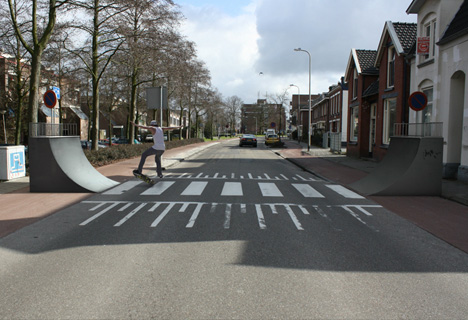
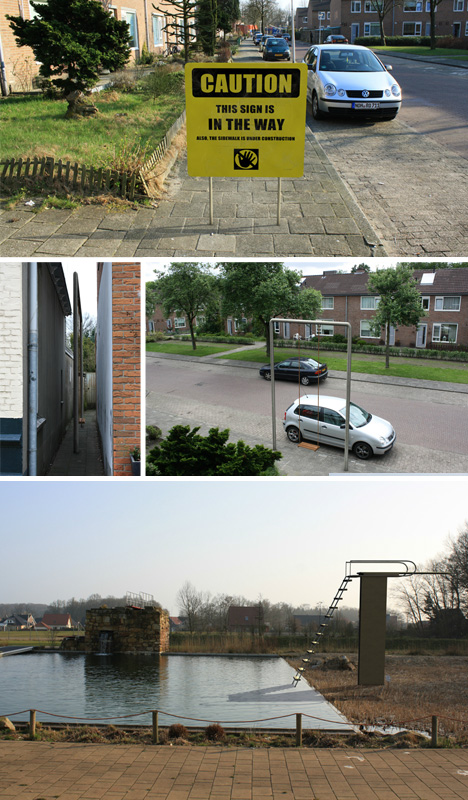
improbable crosswalk

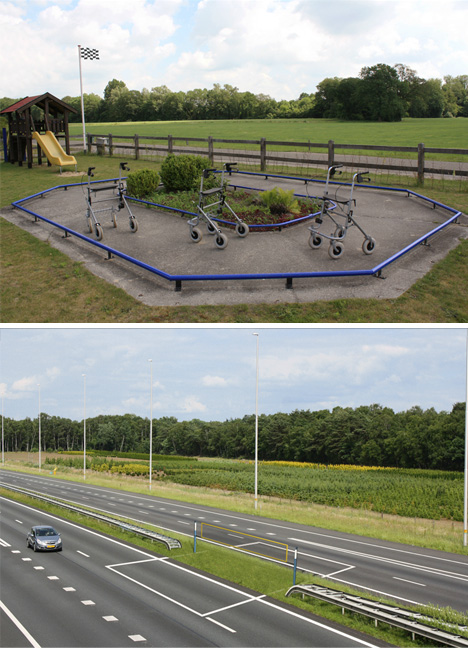
It would be entirely right and wrong at the same time to call this body of work realistic. On the one hand, the results look like pictures (which form the basis of these manipulations) – on the other hand, while not impossible, the reality they present is dramatically improbable.

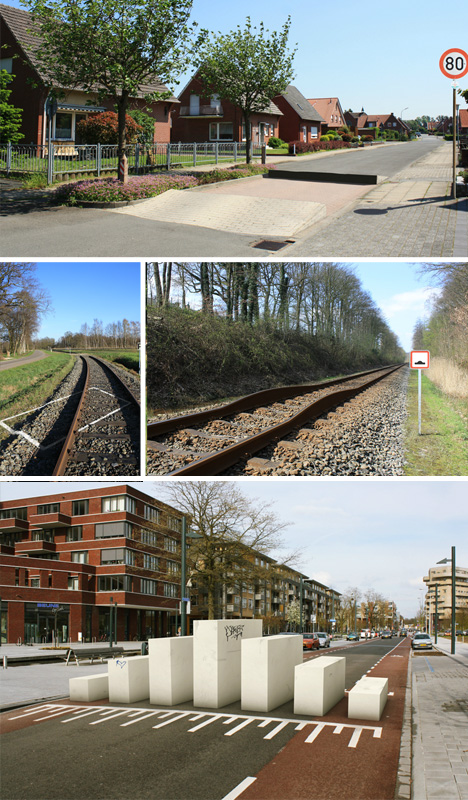
improbable urban landscape photos

This series by Robert Rickhoff is titled Out of Place and features all kinds of ordinary spaces and situations, from swing sets, crosswalks and roundabouts to railroad tracks, swimming pools and public bathrooms.

improbable swing sets pool

Yet in (almost) each case, there is something not quite right … or drastically wrong. It takes a little while to notice in each case, though, until you get the hang of it and start looking for the odd-man-out element right away.

improbable urban speed bumps

Still, it is fun to imagine what would happen to people taking a speed-bump ramp, or encountering a raised crosswalk – certainly a surreal experience in reality, and at least something to trigger the urban imagination in photographic form.

Share on Facebook


[ By WebUrbanist in Art & Photography & Video. ]

[ WebUrbanist | Archives | Galleries | Privacy | TOS ]


WebUrbanist

 
Comments Off on Doing it Wrong: Funny Photo-Edited Urban Improbabilities

Posted in Creativity


CHINTELLIGENS “Asians doing Finnish Rap”

07 Feb

Chintelligens began as a way to pay tribute to the great country of Finland. Drawing strongly from pop media influences from within the culture, Sir Ender and Conductor Conductor found particular merit with the Finnish hip-hop group Fintelligens; particularly the song entitled “Mikä Boogie”, though nobody can pinpoint the exact reason. It might have been the funky-ass beats, dank rhythm, or straight ill vibe — possibly a combination of all three. Regardless, the music pulsed through the normally mundane activities of country living, and brought a new energy to each day’s discoveries of Finnish culture. Visit us for more info: www.chintelligens.com The original song is by the Finnish group Fintelligens www.youtube.com Musical tribute distributed under Fair Use Copyright for non-commercial purposes only.


DSLR Tutorial: How to get the Filmlook & what you’re doing wrong!

28 Jan

Facebook: facebook.com Our new YouTube channel: youtube.com Fenchel & Janisch DSLR Tutorial Series: How to get a cinematic look and what you’re doing wrong! In this “how to” video we’re going to show you that you must plan your film look before you start shooting. Picture styles (especially the flat image) and the color correction will be discussed in this DSLR tutorial. Voice Over: Moritz Janisch Copyright 2011 by Fenchel & Janisch Filmproduktion GbR Twitter: twitter.com More DSLR videos on our channel: www.youtube.com Official website: www.fenchel-janisch.com

AdoramaTV Presents Digital Photography One on One. In this week’s episode Mark answers a viewer’s question about broad and short light with regard to studio lighting. Join Mark in the studio as he walks through six traditional lighting setups. Learn the techniques used to create butterfly lighting and loop lighting, among others. Visit www.adorama.com for more photography videos! Products used in this week’s episode: Westcott 32″ White Satin Umbrella with Removable Black Cover www.adorama.com Profoto Acute2 1200ws ProValue Pack with Acute2 Power Pack 2 Flash Heads www.adorama.com Photoflex Litedome Platinum, Small 16″ x 22″ x 13″ Softbox www.adorama.com Photoflex Litedome Platinum, Large 36″ x 48″ Softbox www.adorama.com Nikon D3S Digital SLR Camera Body, 12.1 Megapixel, HD D-Movie Mode www.adorama.com Send your questions to: AskMark@Adorama.com
Video Rating: 4 / 5


BoB – “What Are We Doing” captured in The Live Room

27 Oct

BoB performs his song “What Are We Doing” in an exclusive recording session live at Tree Sound Studios in Atlanta, GA for The Live Room on The Warner Sound. Executive Producer Phil Botti Director Michael Thelin Director of Photography Mikko Timonen Mixed by Brett Eliason Recording Engineer Miguel Scott Recorded live at Tree Sound Studios Atlanta, GA The Live Room with BoB was captured exclusively with Nikon D4 HD-SLRs camera and NIKKOR lenses. The Live Room is an exclusive Warner Sound original series that captures today’s most innovative artists performing live recording sessions in the most iconic recording studios across America. Subscribe to The Warner Sound: goo.gl The Warner Sound on the Web: youtube.com thewarnersound.com http twitter.com
Video Rating: 4 / 5

 
Comments Off on BoB – “What Are We Doing” captured in The Live Room

Posted in Nikon Videos