RSS
 

Posts Tagged ‘designed’

Gitzo teams up with Sony to launch tripod and L-bracket designed for ?-series cameras

18 Jul

As part of a collaboration between Vitec Group and Sony, Gitzo has introduced a new pair of products designed specifically for Sony ?7 and ?9 cameras: the Traveler ? Tripod and the L-Bracket ?.

The new products ‘feature a tailored design to perfectly fit Sony ?7 and ?9 camera models, helping to increase grip and stability for precise framing and extraordinary composition,’ according to Vitec Group.

Gitzo’s new Traveler ? is a ‘premium travel tripod’ featuring a new design and monochromatic color scheme to match the appearance of Sony ?-series cameras. It weighs just 1.43kg/3.15lbs, opens to 165cm/64.96in and holds up to 10kg/22lbs of gear. Like Gitzo’s other travel tripods, the Traveler ? folds down to just 43cm/16.93in when using the 180-degree leg-folding system.

The legs themselves are constructed of Carbon eXact tubing and use the Traveler G-lock system for securing the proper height. The Traveler ? is paired with Gitzo’s ‘most compact professional carbon fiber tripod head […] engineered to provide the ultimate smoothness and precision of movement and secure locking with independent pan/tilt lock.’ To wrap it all up, the special-edition tripod includes a genuine Italian leather carry strap designed to mimic the aesthetic of carbon fiber.

The second new product is the L-Bracket ?, which Gitzo calls ‘the lightest of its kind on the market,’ weighing in at just 77g/2.7oz. The bracket is milled from a single piece of aluminum ‘to become one with the most high-level professional mirrorless cameras on the market.’ Its design includes four attachment points for camera straps, an open design for easy access to ports and cables. There’s also a dedicated spot for the hex keys and accessories so you don’t need to carry another bag of tools around.

The Gitzo Traveler ? costs $ 999.99, while the Gitzo L-Bracket ? will set you back $ 199.99. They are available now on Gitzo’s online shop and authorized dealers.

Articles: Digital Photography Review (dpreview.com)

 
Comments Off on Gitzo teams up with Sony to launch tripod and L-bracket designed for ?-series cameras

Posted in Uncategorized


Fujifilm GetPix DASH photo kiosk is designed for mobile devices

06 Jun

Fujifilm has unveiled GetPix DASH, an inexpensive photo kiosk platform for printing images from a mobile device. The GetPix DASH, which resembles a tablet on a pole, doesn’t require a mobile app or cable, instead using a companion website where customers upload their images.

According to Fujifilm, anyone can use the GetPix DASH photo kiosk by uploading images to mygetpix.com and then retrieving them at the kiosk using a unique code. Fuji chose the ASK-300 dye-sublimation printer for the platform, which it says offers lab-quality prints in seconds while keeping costs low.

Fujifilm will begin selling the GetPix DASH photo kiosk on July 2 for $ 1,999 USD.

Via: Fujifilm

Articles: Digital Photography Review (dpreview.com)

 
Comments Off on Fujifilm GetPix DASH photo kiosk is designed for mobile devices

Posted in Uncategorized


A photographer has designed and built the first E-Mount film camera

26 Apr

Photographer Alexander Gee has created something pretty cool: the first (to our knowledge) Sony E-Mount 35mm film camera. It’s called LEX, and when it’s finally finished, Gee intends to make the camera’s design files open source so that anybody with a little bit of interest, soldering skill, and access to a 3D printer can built their own from scratch.

The LEX is the result of more than a year of design work, 3D printing, and trial & error, which Gee actually documented on the LEX Optical website. Development began around the shutter mechanism from a Sony a7, and continued from there until he had achieved a working prototype that has been improved upon and tidied up to create the version you see below:

$ (document).ready(function() { SampleGalleryV2({“containerId”:”embeddedSampleGallery_3532342693″,”galleryId”:”3532342693″,”isEmbeddedWidget”:true,”selectedImageIndex”:0,”isMobile”:false}) });

The current prototype isn’t quite as pretty as the mockups, but it’s not far off either. And more importantly: it works. There are already sample photos posted on the LEX Optical website and more (we assume) to come as development continues. The website doesn’t offer any specific timetable, but Gee does say that he might crowdfund “a small batch of devices before opening the design files up.”

To see sample images, keep an eye on the project’s status, or jump onboard if and when Gee crowdfunds that batch of pre-built LEX cameras mentioned above, head over to the LEX Optical website or follow the project on Facebook and Instagram.

Articles: Digital Photography Review (dpreview.com)

 
Comments Off on A photographer has designed and built the first E-Mount film camera

Posted in Uncategorized


Fotopro Mogo flexible monopod kits are designed for various photography needs

31 Mar

Photo gear company Fotopro has launched a crowdfunding campaign for a series of photography kits centered around Mogo, a flexible monopod based on the Fotopro UFO. Mogo features flexible legs that can be wrapped around a rail or post, used on uneven surfaces and more. The monopod has a universal screw-head and removable mount for use with mobile devices, action, mirrorless and any other type of camera.

“Our aim in delivering Mogo with additional gear was to ensure each gear kit was mobile, lightweight and easy to put together and apart for anyone,” Fotopro explains on Indiegogo, where the campaign is live.

The company is offering a total of four kits (detailed below), each designed for a different usage scenario. The Mogo monopod itself has an 800g / 1.7lbs maximum capacity, can be used underwater and features a metallic wire core covered by a rubber skin. Fotopro expects to ship the kits to Indiegogo backers starting in June; the prices listed below are discounts from the planned eventual MSRPs.

Mogo Starter Kit ($ 39):

– Mogo Monopod
– Bluetooth Remote Trigger
– Small Metal Tripod Stand
– Smartphone Clamp (x2)
– GoPro Screw

Mogo Tablet Kit ($ 49):

– Mogo Monopod
– Bluetooth Remote Trigger
– Metal Tripod Stand
– Smartphone Clamp (x2)
– Large Tablet Clamp
– GoPro Screw

Mogo Mobility Kit ($ 59):

– Mogo Monopod
– Bluetooth Remote Trigger
– UGO2 Flexible Tripod
– Smart Metal Tripod
– Smartphone Clamp (x2)
– GoPro Screw

Influence Kit ($ 99):

– Mogo Monopod
– Bluetooth Remote Trigger
– Smartphone Clamp (x2)
– Large Tablet Clamp
– Sliding Metal Bar
– Metal Tripod Stand
– Mic Clamp
– Mic Dampender
– LED Light
– GoPro Screw

Via: Indiegogo

Articles: Digital Photography Review (dpreview.com)

 
Comments Off on Fotopro Mogo flexible monopod kits are designed for various photography needs

Posted in Uncategorized


WD launches two new portable SSDs designed for photographers and drone users

10 Jan

In addition to revealing the world’s smallest 1TB USB-C flash drive, Western Digital has launched two new portable SSDs specifically designed for “avid photographers and drone enthusiasts” at this year’s Consumer Electronics Show (CES) in Las Vegas.

The SanDisk Extreme Portable SSD offers both high performance and durability in an extremely portable package, while the My Passport Wireless SSD gives photographers a solid state version of WD’s popular My Wireless Pro, which features built-in WiFi, an SD card slot, and other convenient features for photographers on-the-go.

SanDisk Extreme Portable SSD

The SanDisk Extreme Portable SSD is a lightweight (79g / .17lbs) pocket-sized USB-C drive encased in a durable housing with an IP55 dust- and water-resistant rating. Thanks to the housing, the drive can withstand operating temperatures ranging from 0°C to 45°C (32°F to 113°F), as well as storage temperatures ranging from -20°C to 70°C (-4°F to 158°F).

The Extreme Portable SSD drive has a USB 3.1 Gen 2 interface, read speeds up to 550MB/s, and out-of-the-box compatibility with Windows and macOS.

The drives are currently listed on SanDisk’s website as “not in stock” at the following capacities and price points: 250GB for $ 100, 500GB for $ 170, 1TB for $ 350, and 2TB for $ 700.

WD My Passport Wireless SSD

The My Passport Wireless SSD, as the name suggests, is a solid state version/update to the original My Passport Wireless Pro that we reviewed and actually quite liked.

Housed in an enclosure with an integrated 802.11ac wireless connection, this drive allows users to access content on the drive over WiFi, including streaming 4K videos to a computer or mobile device. The wireless feature works with the My Cloud mobile app, as well as some third-party apps including LumaFusion and FiLMiC Pro.

In addition to wireless access, this My Passport product also has an integrated SD card reader so that photos and videos can be copied onto the SSD directly from the media card at speeds up to 65MB/s. For other types of media cards, the Wireless SSD supports direct transfers via a cable and connected media card adapter. Finally, the drive also features a USB port for transferring content to a computer via USB 3.0 at speeds up to 390MB/s.

Because this model has built-in wireless, Western Digital has packed a 6700mAh battery into the drive case, enabling the WiFi feature to be used for up to 10 hours before it needs to be recharged. And for convenience’ sake, the device’s built-in battery doubles as a power bank for charging other USB devices, such as a smartphone.

The My Passport Wireless SSD will be available in 250GB ($ 230), 500GB ($ 300), 1TB ($ 500), and 2TB ($ 800) capacities. Pre-orders are available now, with shipping estimated to start on February 15th.

Articles: Digital Photography Review (dpreview.com)

 
Comments Off on WD launches two new portable SSDs designed for photographers and drone users

Posted in Uncategorized


RAW Power: An iOS raw editor designed by the former Apple Aperture lead

17 Nov

Apple’s mobile operating system has been able to shoot RAW images for a while now, but iOS 11 added broad support for raw formats from other cameras, opening up the door for new apps to leverage this ability and let you edit your professional camera’s RAW photos on your phone or tablet. Enter RAW Power, an iOS app designed by Nik Bhatt, founder of Gentlemen Coders, who was a lead developer for Apple’s Aperture and iPhoto.

With RAW Power, iPhone and iPad owners can use their devices to edit any raw file supported by iOS 11… and that list is long and comprehensive.

As Apple details on its support site, iOS 11 and macOS High Sierra both support raw image formats from dozens of cameras from multiple makers including Canon, Nikon, Olympus, Panasonic, Fujifilm, Hasselblad, and others. RAW Power presents a way to edit those images via iOS 11, offering features like white balance, sharpen, curves, and others that can’t be found in Apple’s own Photos app.

Plus, since it’s hooked up to iCloud, edits can be synced across devices so you can start editing on mobile and pick that up later on your desktop, or visa versa—as long as you have iCloud photo library enabled, that is.

According to the app’s devs, RAW Power also offers a Depth Effect feature designed specifically for photos taken with a dual-camera iPhone model. And Apple users who also have a Mac can edit the same image between both platforms via the RAW Power macOS extension.

RAW Power is currently available through iTunes for free, though users who want access to the depth, advanced curves and white balance tools will need to unlock them with a $ 10 payment. To find out more about the RAW Power app, head over to the Gentlemen Coders website or download it from the iTunes App Store.

Articles: Digital Photography Review (dpreview.com)

 
Comments Off on RAW Power: An iOS raw editor designed by the former Apple Aperture lead

Posted in Uncategorized


Halide 1.5 camera app is designed specifically for the iPhone X

04 Nov

Lucky owners of the new iPhone X have a tempting new camera app option. The newest update to Halide (v1.5) features a new interface designed from scratch for the iPhone X—one that positions all of the controls near the bottom where they’re within thumb’s reach. Additionally, Halide leverages the iPhone X display’s ‘ears’ on either side of the top notch, using that space to display a histogram and exposure values.

Halide 1.5 is designed to optimally use the phone’s long OLED display, as well as its rear cameras, offering support for depth capture as well as a clean interface that provides an unobstructed viewfinder. The new interface is designed to be used with one hand on the iPhone X, though the update does bring ‘a more ergonomic experience’ to older iPhones as well.

Existing Halide users can download the 1.5 update for free, while new users can buy the app for a discounted $ 3 rate through the iPhone X launch weekend, after which the price will revert to the usual $ 5.

Articles: Digital Photography Review (dpreview.com)

 
Comments Off on Halide 1.5 camera app is designed specifically for the iPhone X

Posted in Uncategorized


Huge Color-Coded ‘LEGO House’ Designed by BIG Now Open in Denmark

11 Oct

[ By WebUrbanist in Architecture & Offices & Commercial. ]

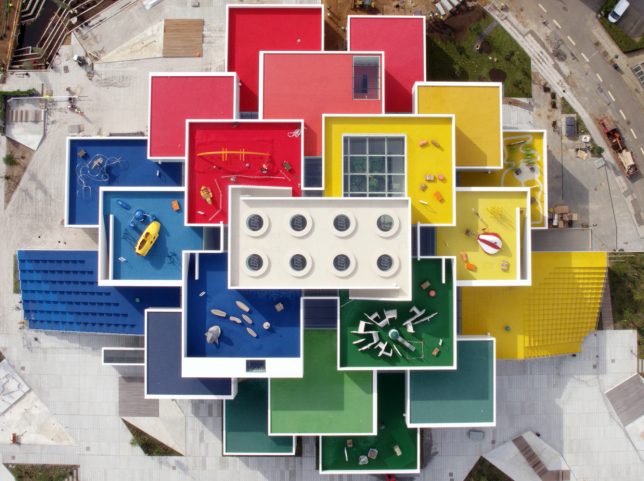
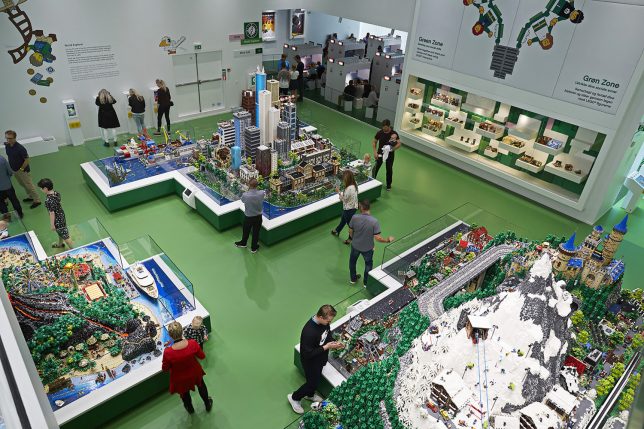
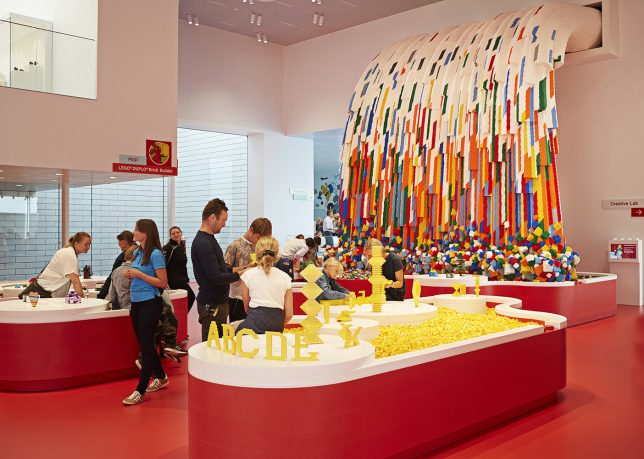
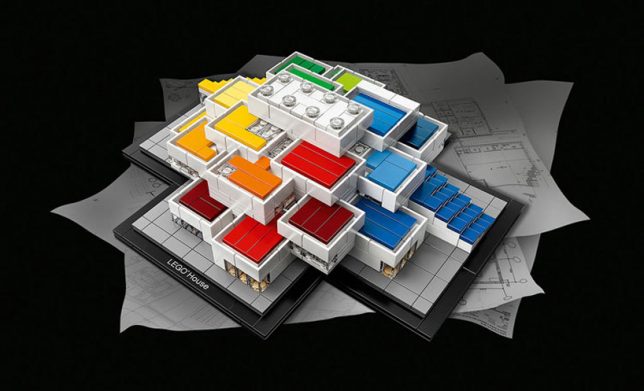
Designed by architects from BIG, the new LEGO House is itself huge: a 130,000-square-foot ‘experience center’ welcoming people of all ages to play with and appreciate this ubiquitous toy.

“It has been a dream for me for many years to create a place that will give our visitors the ultimate LEGO experience,” said former president and CEO of LEGO, Kjeld Kirk Kristiansen. A mesmerizing set of drone videos below show the building under construction and upon completion.

“With LEGO House, we celebrate creativity and the strength of learning through play. When they play, children learn the basic skills that they need, such as creativity, collaboration and problem-solving abilities.”

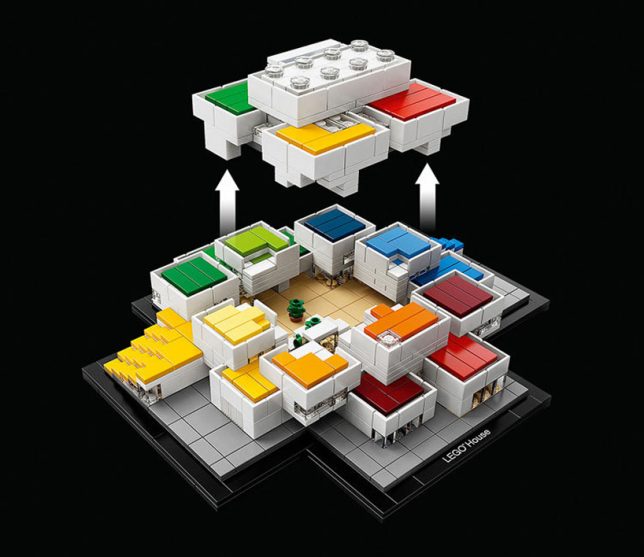
Located on the company’s main campus in Billund, Denmark, the building looks like it was made of 21 supersized blocks. Inside, differently colored zones denote different functions — red areas are for creative skills, blue for cognitive skills, green for social skills and yellow for emotional skills.

The venue includes paid attractions as well as experiences that are free and open to the public. Approximately 250,000 guests are expected annually, with around 2,500 visitors on peak days. Fans of their visit can take home something tangible from the experience as well:

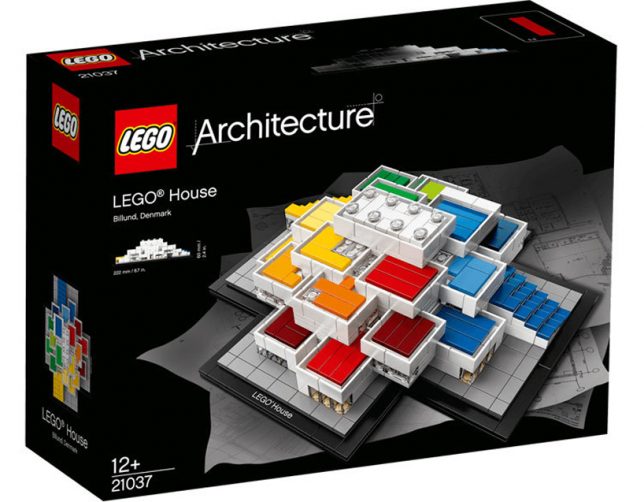
The LEGO House opened its doors to the public in late September, coinciding with the release of a 744-piece kit of the building itself.

Share on Facebook


[ By WebUrbanist in Architecture & Offices & Commercial. ]

[ WebUrbanist | Archives | Galleries | Privacy | TOS ]


WebUrbanist

 
Comments Off on Huge Color-Coded ‘LEGO House’ Designed by BIG Now Open in Denmark

Posted in Creativity


Architecture for Animals: 13 Structures Designed with Non-Human Use in Mind

29 Jun

[ By SA Rogers in Architecture & Public & Institutional. ]

If we’re going to keep animals in artificial environments to make money off gawking at them, you’d hope we’d at least design these structures sensitively, hiring top architects to give them the kind of loving care we’d give to our own homes. Whether building spacious zoo enclosures mimicking natural environments, bat-friendly bridges, stables to house horses in ultimate comfort or wildlife crossings over highways, this collection of animal-centric architecture aims to be the next best thing to leaving animals in the wild where they belong, and giving them plenty of space from human activity.

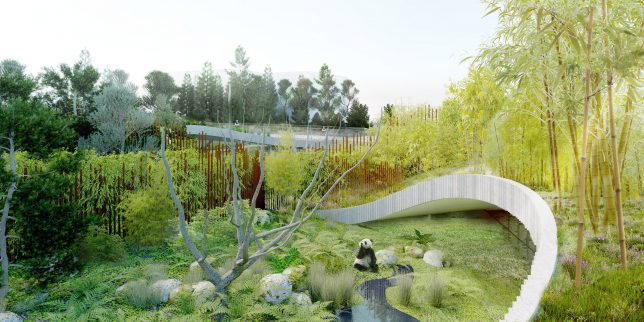
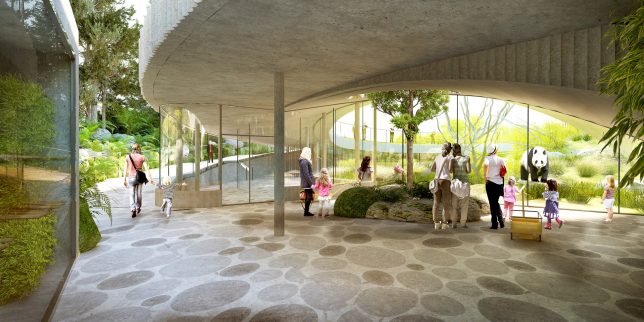
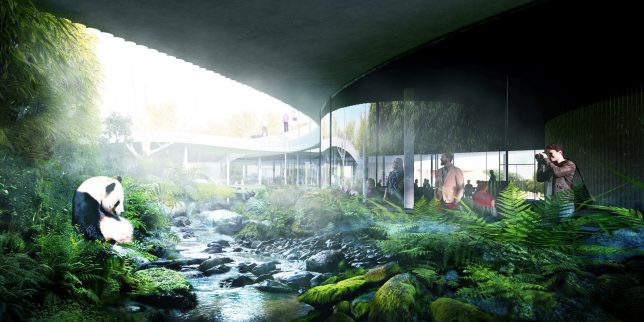
Panda House by Bjarke Ingels Group / BIG

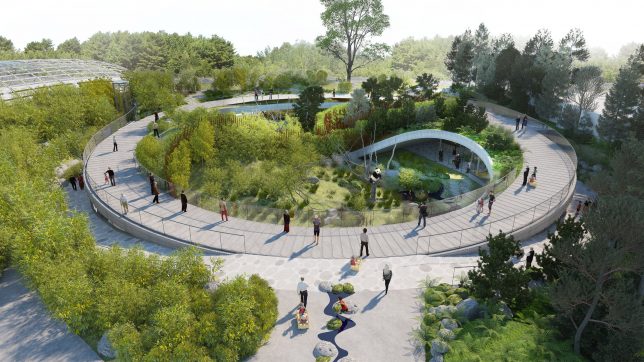
BIG designed a circular indoor/outdoor enclosure for giant pandas at the Copenhagen Zoo, set to open in 2018. The spacious and lushly planted structure will house two pandas relocated from Chengdu, China in a layout inspired by the Chinese yin-yang symbol, with each half tilting up at either end. There’s a bamboo forest on one side and a denser ‘misty’ forest on the other to represent the panda’s habitats in the wild.

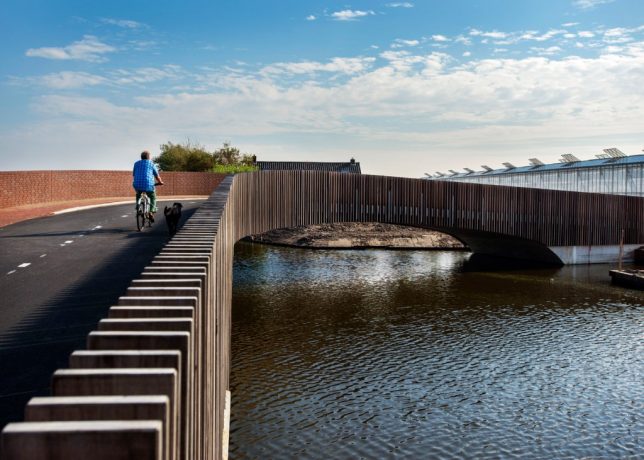
Bat-Friendly Bridge by NEXT Architecture

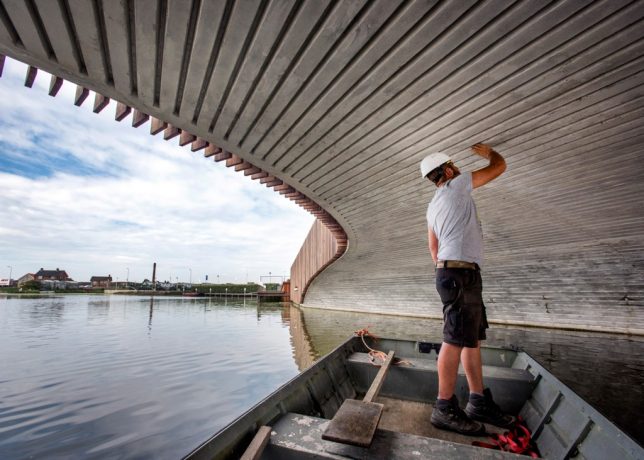
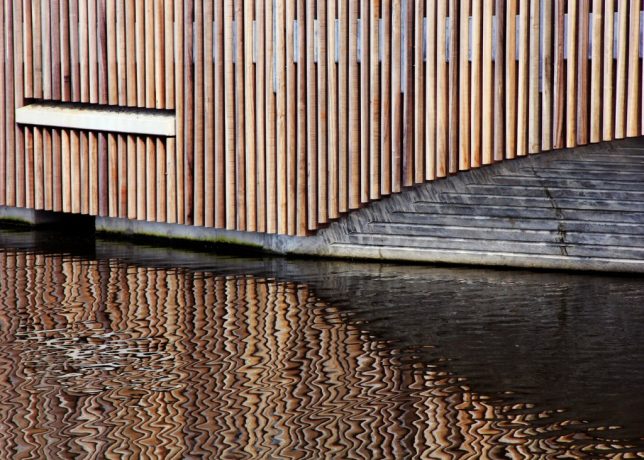
This bridge by Next Level Architecture in South Holland doubles as a bat habitat, with just a few modifications to a conventional bridge design, providing an example that could be replicated all over the world. Spanning a river that’s an important natural pathway for the local bat population, the bridge features extra-thick concrete to increase its thermal mass, making it warm for winter hibernation and a cool summer nesting spot.

Raven Enclosure at the Tower of London by Llowarch Llowarch Architects

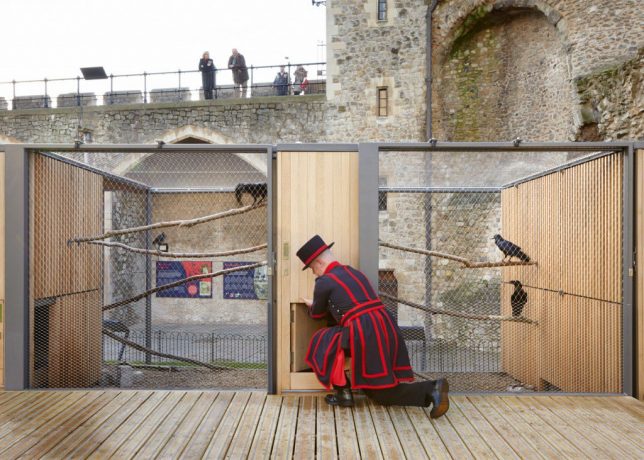
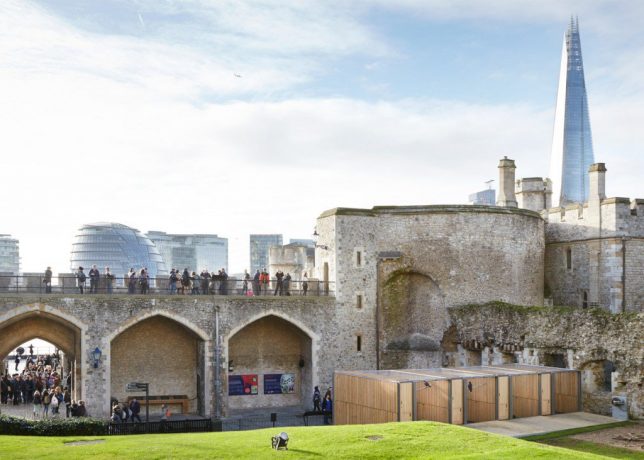
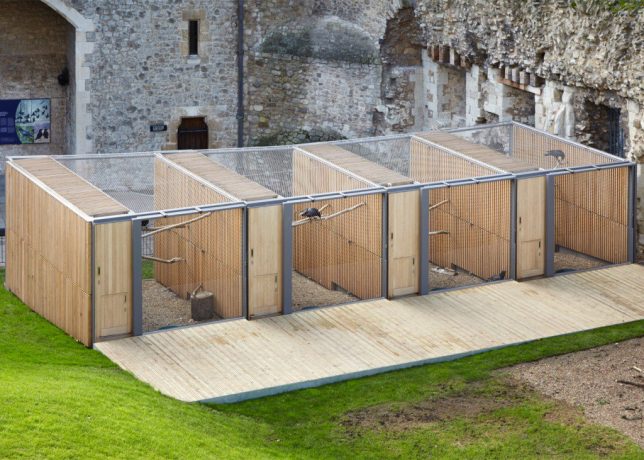
Five oak and mesh aviaries by Llowarch Llowarch Architects contrast with the ancient forms of the Tower of London, replacing the ‘ad hoc collection of sheds’ once used to house the complex’s famous resident ravens. According to English legend, if the ravens ever leave the Tower of London, the kingdom will fall – so the birds have been protected inhabitants of the historic palace, fortress and prison since the 17th century. Of course, different ravens have come and gone over the years.

Finnish Stables by Pook

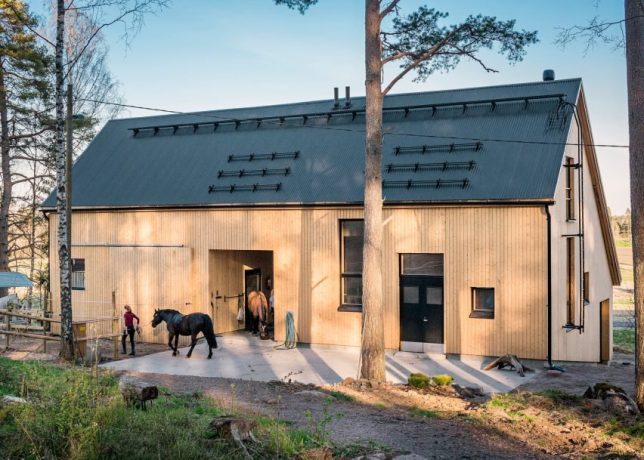
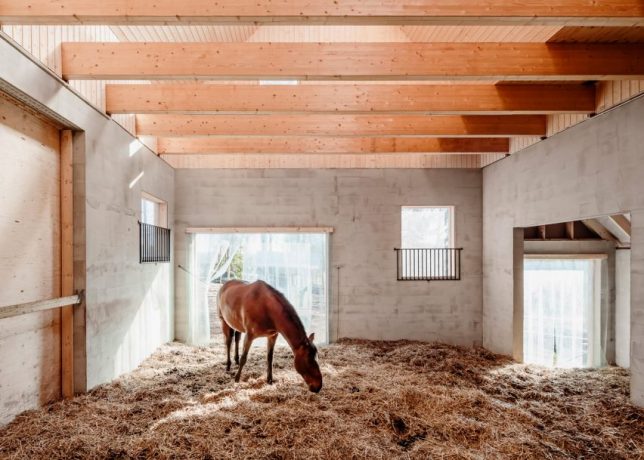
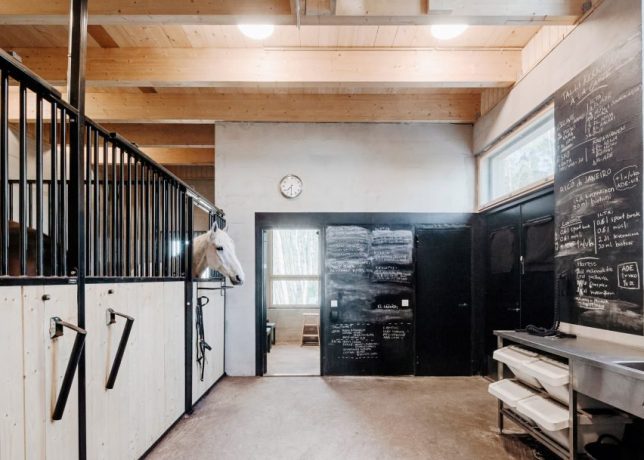
Local architecture studio Pook designed this stylish stable on the edge of a Finnish forest to blend in with the rural setting and complement the local architectural vernacular. The layout creates wind shelters in outdoor spaces to protect the horses against the southwestern winds. Inside, there’s an open room for feeding and walking the horses, storage for equipment and a barn for manure. The use of untreated pine in the cladding helps naturally control the humidity of the environment for the horses’ health.

Kangaroo Enclosure by White Arkitekter

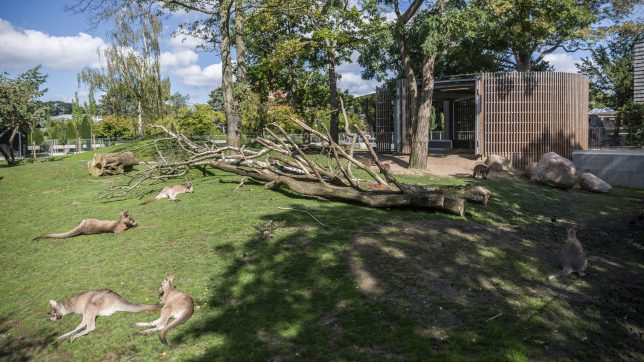
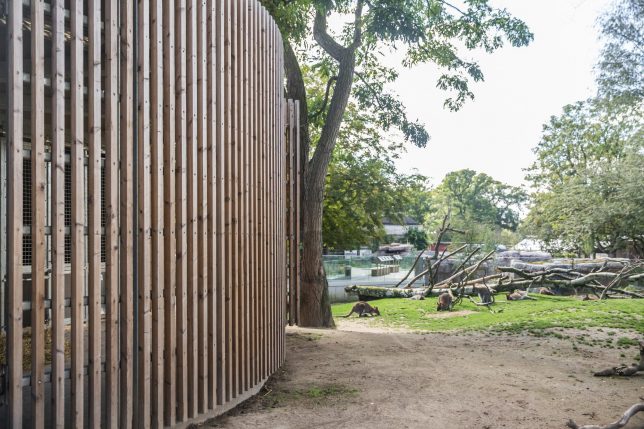
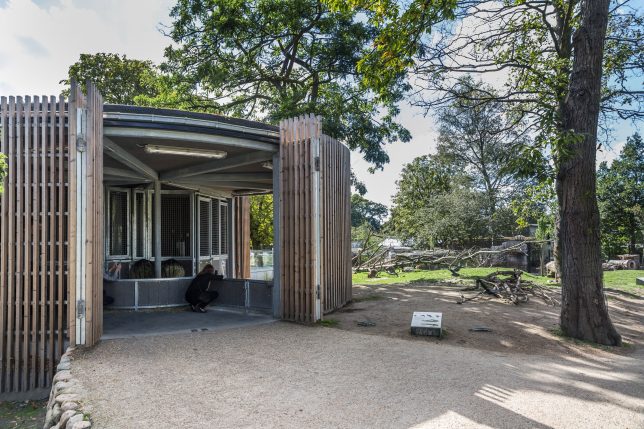
Another modern addition to the Copenhagen Zoo is this cylindrical house for Tasmanian kangaroos by White Arkitekter, which allows visitors to enter the kangaroos’ enclosure without stressing the animals. Part of the enclosure is for the kangaroos themselves, with a heated concrete floor to keep them warm in winter. The slatted timber doors can be folded back to open parts of the space to the wider enclosure, while others remain closed so shy kangaroos can have their privacy.

Next Page – Click Below to Read More:
Architecture For Animals 13 Structures Designed With Non Human Use In Mind

Share on Facebook


[ By SA Rogers in Architecture & Public & Institutional. ]

[ WebUrbanist | Archives | Galleries | Privacy | TOS ]


WebUrbanist

 
Comments Off on Architecture for Animals: 13 Structures Designed with Non-Human Use in Mind

Posted in Creativity


This camera is designed to keep only the best photos

10 May

A new device called Trophy Camera uses artificial intelligence to compare its own photographs with the world’s most iconic images. During the comparison, Trophy Camera’s AI looks for specific characteristics common in photographs that have won World Press Photo yearly since 1955. Photos that show at least a 90-percent positive correlation with these notable characteristics are then uploaded to the camera’s own automated website. It’s a bit similar in spirit to Camera Restricta, a concept camera that uses GPS to prevent its user from taking clichéd photos.

Trophy Camera was created by media artist Dries Depoorter and PhD student/photographer Max Pinckers. Speaking to Co.design, Depoorter and Pinckers explain that their camera is a sort of commentary on what they see as the redundant photography produced by the ‘more automatized’ cameras that are becoming increasingly popular.

Elaborating on that, Pinckers said:

Press photography appears to be becoming a self-referential medium dominated by tropes, archetypes, and pop-culture references. What implications does this have on how we learn about the world through the images we are being shown? …By making this camera, we try to implicitly comment on the current status of photojournalism–which seems to be becoming more questionable in today’s visual landscape–along with the incredibly fast development of computer vision and the relevance of artificial intelligence in our time.

The camera itself is made from a Raspberry Pi Zero W, the computer’s Full HD camera module, a 128 x 32 monochrome OLED display, and a 5000mAh powerbank. Trophy Camera is currently part of an exhibition where photographs are taken; most of them are blurry and less than ‘notable,’ as shown on the camera’s automated website.

Via: Co.design

Articles: Digital Photography Review (dpreview.com)

 
Comments Off on This camera is designed to keep only the best photos

Posted in Uncategorized