RSS
 

Posts Tagged ‘Data’

Collecting Inspiration: 3 Must-See Data Artists & Designers at Eyeo 2017

20 Apr

[ By WebUrbanist in Art & Drawing & Digital. ]

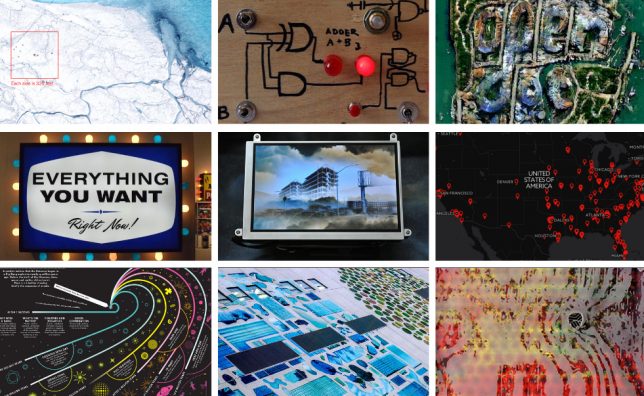
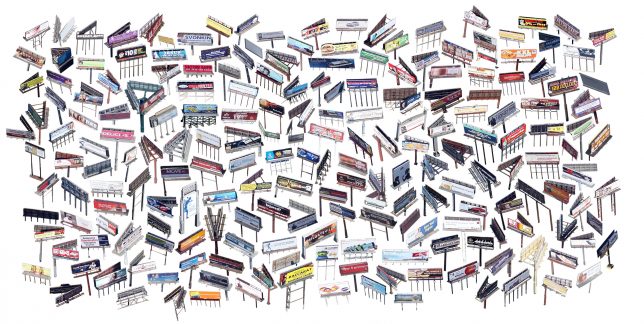
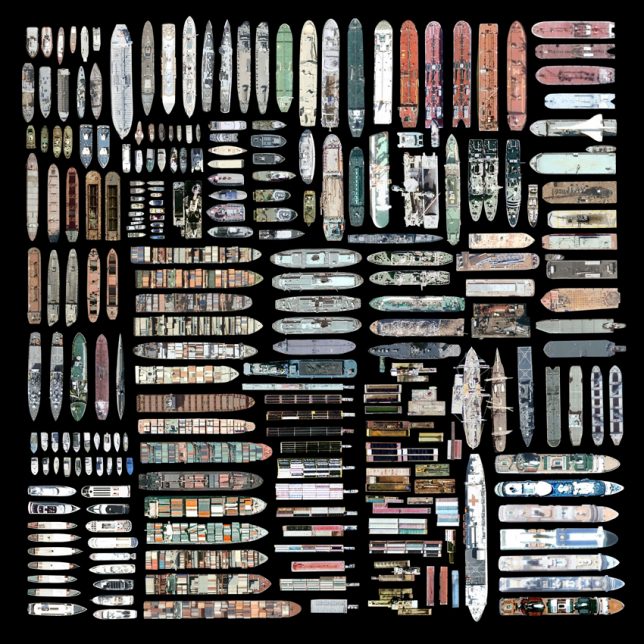
Jenny Odell collects and organizes all kinds of things, from meticulously sorting digital finds on Google Maps to tracing the origins of everything she used, wore, ate or bought on one particular day in 2013.

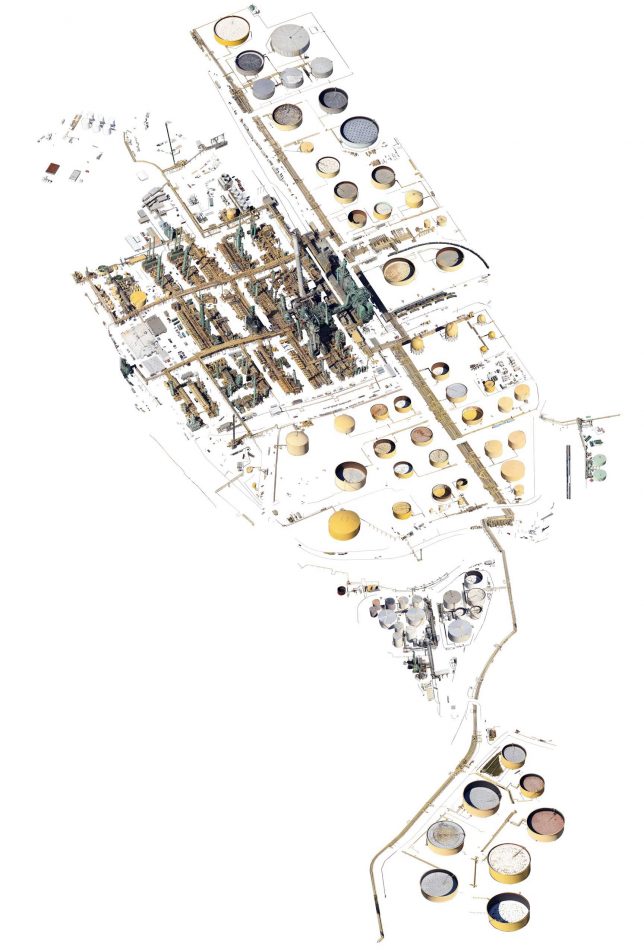
Her work often pulls objects out of context, aggregating and arranging something like a set of pools against a neutral backdrop (as seen above) or taking an entire industrial complex and carefully stripping it of its surroundings (like the facility below).

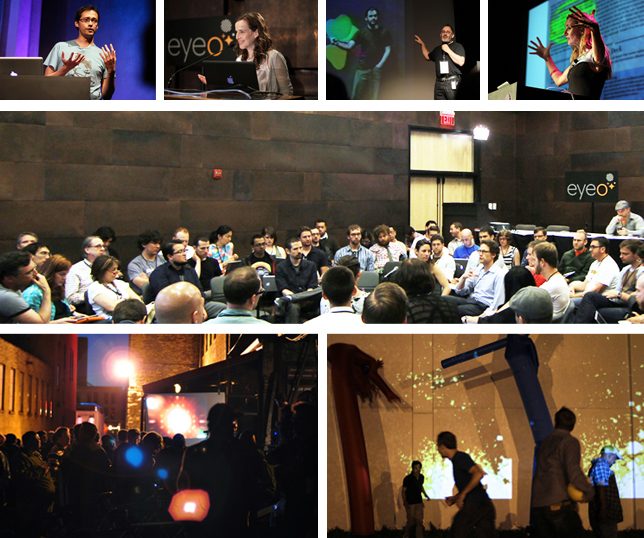
On June 26th, she will join an assortment of other unusual, curious and brilliant creatives — experts in the realms of art, design, interaction and information — as a speaker at the annual Eyeo Festival in Minneapolis, MN.

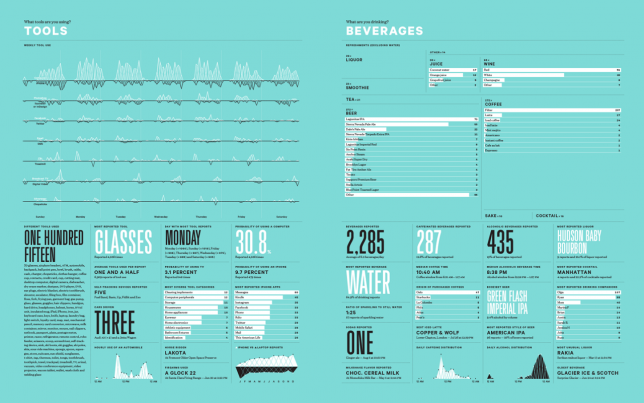
Designer, entrepreneur and artist Nicholas Felton, creator of the famously detailed and introspective data visualizations, will be back this year as well to talk about his recent work. His numerous personal annual reports condense the events of a year into a tapestry of maps, graphs and statistics.

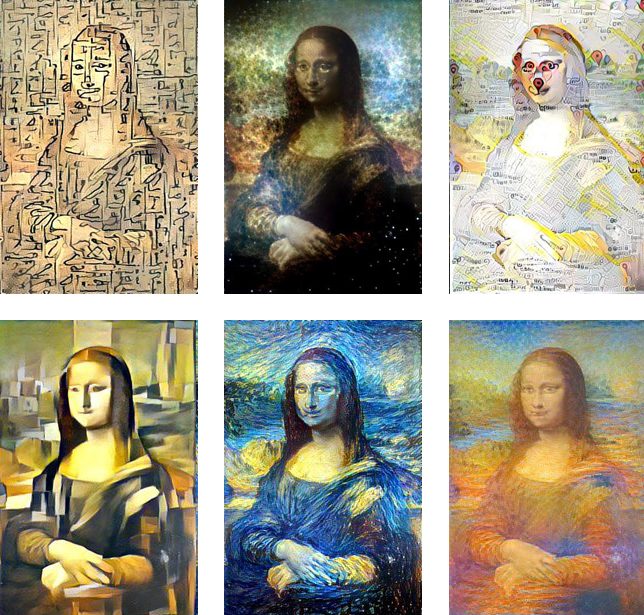
Artist and programmer Gene Kogan will bring his interest in “generative systems, artificial intelligence, and software for creativity and self-expression.” He has collaborated on various open-source software projects, working at the “intersection of code, art, and technology activism.”

Others include: a smell researcher and artist with a collection of over 7,000 scents, a designer and software designer pursuing machine learning and news automation, and dozens of other fascinating folks from all over the world.

Eyeo asks: “What data is, where it comes from, and how we utilize it, looks different than ever before. What can we do with it all? What can’t we do? Artists, designers and coders build and bend technology to see what’s possible. What’s next with interaction, what’s revealed by the data. Eyeo brings together the most intriguing and exciting people in these arenas today.” If you haven’t been, this is as good a year as any to go for the first time — it is a wonderful and unique experience. Get tickets here.

Share on Facebook


[ By WebUrbanist in Art & Drawing & Digital. ]

[ WebUrbanist | Archives | Galleries | Privacy | TOS ]


WebUrbanist

 
Comments Off on Collecting Inspiration: 3 Must-See Data Artists & Designers at Eyeo 2017

Posted in Creativity


Geotagger World Atlas: Most Scenic City Routes Mapped Using Photo Data

16 Mar

[ By WebUrbanist in Destinations & Sights & Travel. ]

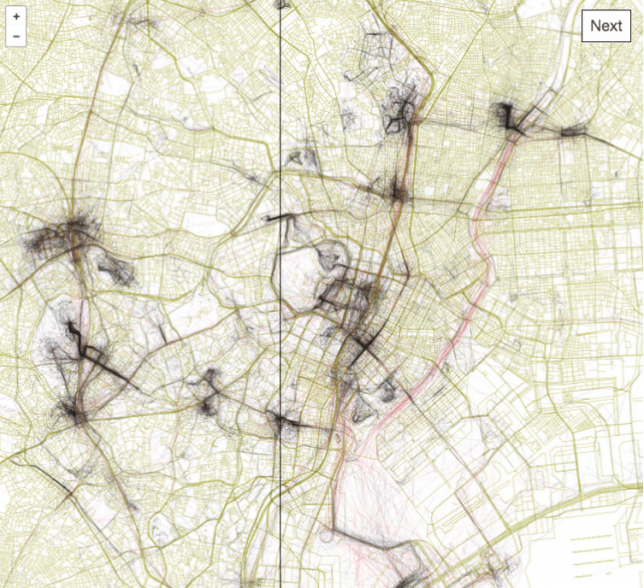
tokyo

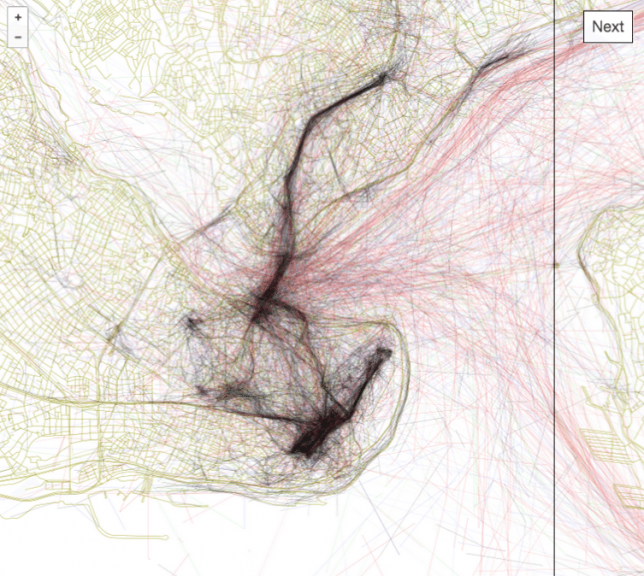
Tapping into geo-tagging data and the collective wisdom of photographers, you can use this interactive tool to follow in the footsteps of those who have mapped out the most beautiful routes through cities. Click to pan and zoom through London below:

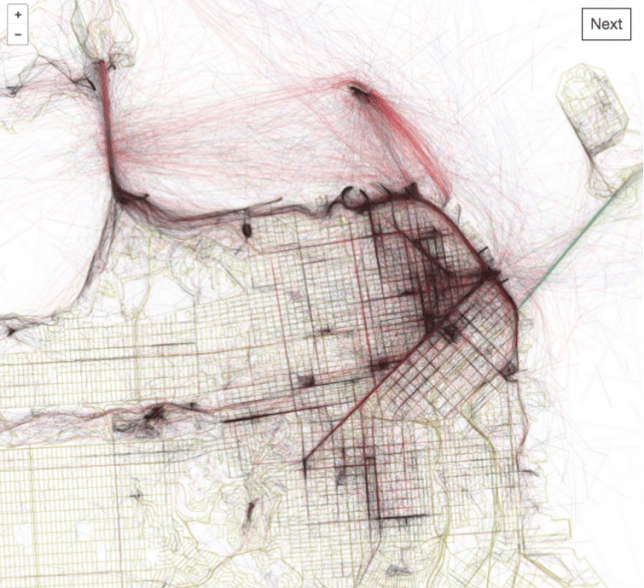
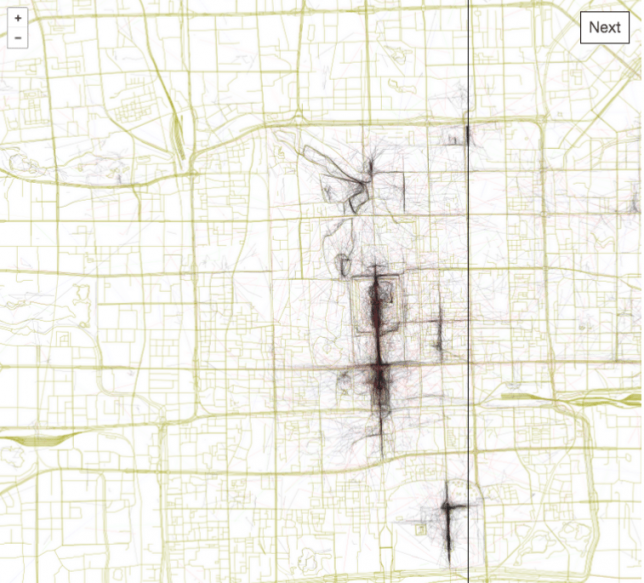
Eric Fisher of Mapbox has spent years compiling data from Flickr users, turning their sequential geo-located uploads into paths through urban environments including San Francisco, Beijing, Istanbul and Tokyo.

san francisco

The result is the Geotaggers’ World Atlas, a data-driven compendium of paths to take through cities. It is more than just a connection of dots — Fisher’s interactive guides specifically highlight trajectories from one image to the next.

beijing

“It signifies that people went there in the first place,” he says, and “saw something worth taking a picture of, and put the extra effort into posting it online for others to appreciate. And a sequence of photos along a route is even more significant, because it indicates that someone sustained their interest over distance and time rather than taking one picture and turning back.”

istanbul

The results are predictable in some cases, tracing lines between major landmarks, but often show side routes off of beaten tourist paths where keen photographers have found fascinating architecture and landscapes worth documenting along their way.

Share on Facebook


[ By WebUrbanist in Destinations & Sights & Travel. ]

[ WebUrbanist | Archives | Galleries | Privacy | TOS ]


WebUrbanist

 
Comments Off on Geotagger World Atlas: Most Scenic City Routes Mapped Using Photo Data

Posted in Creativity


2016 CIPA data shows compact digital camera sales lower than ever

08 Mar

Last month, the Camera & Imaging Products Association (CIPA) released its 2016 report detailing yearly trends in camera shipments. Using that data, photographer Sven Skafisk has created a graph that makes it easy to visualize the data, namely the major growth in smartphone sales over the past few years and the apparent impact it has had on dedicated camera sales.

The chart shows smartphone sales achieving a big spike around 2010, the same time range in which dedicated camera sales reached its peak. Each following year has represented substantial growth in smartphone sales and significant decreases in dedicated camera sales, particularly in the compact digital cameras category. 

Per the CIPA report, total digital camera shipments last year fell by 31.7% over the previous year. The report cites multiple factors affecting digital camera sales overall, with smartphones proving the biggest factor affecting the sales of digital cameras with built-in lenses. The Association’s 2017 outlook includes a forecast that compact digital cameras will see another 16.7-percent year-on-year sales decrease this year.

Skafisk’s graph below shows the massive divide between smartphone sales and camera sales – be prepared to do some scrolling.

Via: PetaPixel, CIPA

Articles: Digital Photography Review (dpreview.com)

 
Comments Off on 2016 CIPA data shows compact digital camera sales lower than ever

Posted in Uncategorized


Meitu: harmless selfie app du jour or data mining scheme?

21 Jan

Meitu is an Android and iOS app made by China-based developer Xiamen Meitu Technology Co., Ltd. The app adds cartoonish embellishments and facial feature distortion reminiscent of Japanese anime to selfies, and for some reason, became widely popular with Western users this week. Meitu is by no means new – it’s been around since 2008. But if you went to sleep last night blissfully unaware of its existence, chances are you saw someone’s Meitu selfie somewhere on the internet when you woke up.

Meitu brings a couple of things to the table. First, you can use the app as it’s intended and apply effects to your own selfies. Take a selfie, add a silly filter, post to Facebook and everyone has a good laugh about it. But Meitu’s effects can also be applied to other photos – cue much merriment and silliness on the internet. You can even keep feeding it the same image and re-applying filters until it no longer recognizes a human in the picture, which raises all sorts of existential questions.

But as quickly as it came into the spotlight, spoil sports put the brakes on when they looked closely at the app’s code. CNET published an article cautioning users against downloading the app, citing privacy concerns. Twitter user and self-described ‘security pessimist’ @FourOctets posted an alarming message that the app was sending each user’s unique phone identification number to a server in China. Jonathan Zdziarski, a security researcher, also tweeted some of his findings after combing through the iOS version of the app.

It all sounds pretty alarming, but Zdziarski doesn’t actually see anything particularly malicious about Meitu. Or at least, nothing unique.

Another Twitter user theorizes that the app’s maker is just complying with new Chinese laws.

So what do you think? Is Meitu nothing more than a data-mining scam? Or are you comforted by the fact that all of your other apps are spying on you anyway, so what’s the difference? Let us know in the comments.

Articles: Digital Photography Review (dpreview.com)

 
Comments Off on Meitu: harmless selfie app du jour or data mining scheme?

Posted in Uncategorized


Yahoo discloses new data breach affecting 1 billion user accounts

16 Dec

Yahoo has disclosed a new data breach affecting more than 1 billion user accounts. According to the company, this data breach – which is different than and unrelated to the one disclosed this past September – involved an unknown third party stealing user account data in August 2013. The stolen data includes names, email addresses, birth dates, phone numbers, MD5 hashed passwords and both encrypted and unencrypted security Q&As.

Yahoo detailed the news yesterday evening in a Tumblr post. According to that statement, Yahoo was made aware of a possible data breach via an alert from law enforcement. A company investigation into the matter revealed the August 2013 data theft, though the company states it hasn’t figured out how the intrusion took place.

Affected Yahoo users are being notified of the data theft. The company has invalidated unencrypted security questions and answers, and is requiring users to reset their account passwords. The company further advises its users to monitor their accounts for suspicious activity and messages, and to avoid providing personal info or clicking links/downloads within suspicious emails. This security breach, of course, potentially affects users across all Yahoo properties that require a Yahoo account for access, including Flickr.

Via: Yahoo

Articles: Digital Photography Review (dpreview.com)

 
Comments Off on Yahoo discloses new data breach affecting 1 billion user accounts

Posted in Uncategorized


Google updates Earth Timelapse with petabytes of new data

30 Nov

Google has updated its interactive Earth Timelapse feature with better imagery and several years of new data. The massive update added petabytes of new data and brings it up to the current year. 

Detailing the update in a blog post, Google says updated images are sharper ‘with truer colors and fewer distracting artifacts.’ Earth Timelapse was introduced in 2013 and includes images recorded as early as 1984.

Basically, Google’s Earth Timelapse presents users with 33 interactive images of the entire planet, but creating those images was a feat – Google says it sifted through 3 quadrillion pixels to maximize image quality. The final product represents 25,000,000 overlapping global image tiles that users can zoom in, zoom out, play and replay to their heart’s content.

Check it out for yourself and see how the world has changed over the past three decades.

Articles: Digital Photography Review (dpreview.com)

 
Comments Off on Google updates Earth Timelapse with petabytes of new data

Posted in Uncategorized


How fast were you going? GoPro HERO5 Black videos can now include GPS and telemetry data overlays

19 Nov

GoPro has updated its Quik desktop software with a new feature that enables HERO5 Black camera owners to overlay GPS and telemetry data onto their videos. This data is gathered by the camera’s various sensors during recording, and provides an extra layer of information for viewers, including things like the date and time the video was recorded, the altitude, elevation gain, and distance in miles or kilometers. 

The data overlays are customizable, and include resizable graphs and the ability to choose which data is included in the video. In addition to the aforementioned data, the overlays can also include a compass to show the camera’s orientation, speed, a speed graph with activity spikes, the GPS path and position pinpoints, and G-Force levels.

The Quik desktop editing software is available for 64-bit PCs running Windows 7 or newer and Macs running macOS 10.10.X or later. PCs are advised to have at least an Intel Core i3 processor and Macs should have at least an Intel Dual Core, though Core i7 processors are recommended for both.

Via: GoPro

Articles: Digital Photography Review (dpreview.com)

 
Comments Off on How fast were you going? GoPro HERO5 Black videos can now include GPS and telemetry data overlays

Posted in Uncategorized


CFexpress cards with 8GB/s data rate on the way according to the CompactFlash Association

15 Oct

The CompactFlash Association has announced that it is working on a new series of memory cards that will offer theoretical data rates of up to 8GB per second. Still very much in development, the CFexpress family of media storage will be available in a range of form factors to suit multiple kinds of device, but will all have the same physical interface and memory protocol. The Association says the cards will be good for professional photographers and videographers as well as for personal computing, servers and for industrial applications.

The cards will have varying numbers of lanes that will govern their ultimate speed of communication. Those lanes will be based on the PCIE generation 3 interface which can deliver a theoretical 1GB/s per lane and cards will be supplied eventually that have up to eight lanes.

The Association suggests that the need for such data rates is being driven by the increasing numbers of 4K cameras and that slow motion 4K footage recorded in raw format needs better communication speeds than currently exist.

There is no indication of when these new cards will come to market, but you can read more information about the CompactFlash Association on its website.

Press release

THE COMPACTFLASH ASSOCIATION ANNOUNCES CFexpress FAMILY

CFexpress Introduces a New Family of High-Performance Removable Media Based on PCIE® and NVM Express®

Cupertino, California – The CompactFlash Association (CFA) announces the CFexpress Family of high-performance removable storage based on PCIE® and NVM Express®

CFA has developed high-performance removable cards standards for the last 21 years with the popular CompactFlash®, CFast®, and XQD® formats. The CompactFlash Association was formed in 1995 as the initial digital film format and continues to serve professional imaging and industrial markets where high performance and high-quality recording media is essential for high-speed capture and high-speed transfer into the workflow.

CFexpress is the next evolution in an open standard format for a broader set of applications, such as professional imaging, personal computing, servers, IoT and industrial. CFexpress differs from prior CFA standards in that CFexpress is a specification spanning multiple form factors and performance levels to match various market requirements while maintaining the same electrical/physical interface and memory/storage protocol. The new CFexpress specification is under development within the CFA CFexpress Working Group.

CFA’s goals for the CFexpress family are:
1) Unify the ecosystem around a removable storage specification that has longevity in the market
2) Provide a platform that scales with performance increases in the PCIE® interface
3) Leverages the technologies and skillsets of the larger volume compute markets
4) Seamless compatibility with the capture ecosystem and workflow tools.

CFexpress leverages the PCIE® physical interface for higher performance based on the high-volume compute industry. PCIE® CFA’s objective is to specify multiple removable storage devices that spans from two lanes architecture all the way up to eight lanes. With the current PCIE® Gen 3 delivering maximum theoretical interface speeds of 1.0GB/sec per lane, CFexpress would enable theoretical sequential speed of up to 8GB/s.

CFexpress also utilizes the low latency NVM Express® memory/storage protocol across all of the form factors. This enables compatibility with a broader set of ecosystem components, such as controllers, OS, capture devices and workflow modules. In imaging, compute and industrial applications, the use of PCIE® /NVM Express® enables access to wide range of open standard platforms consisting of mature and proven drivers. In addition, the new CFexpress format also enable easy compatibility with the Thunderbolt® interface which is also based on PCIE®. Actual CFexpress products will vary in performance based on market requirements and protocol overheads.

Professional video data rate requirements are growing at an exponential rate exceeding the capabilities of existing open standard formats. 4K RAW video at 30fps requires 400-500MB/sec of sustained performance not including any overhead to guarantee performance over the entire recording media. 4K RAW video at 120fps requires 1,600-2,000MB/sec. 4K RAW video at 240fps requires 3,200-4,000MB/sec. Even in High-Quality I-Frame compression formats, the data rates quickly exceed 1.0GB/Sec at high frame rates.

Key Feature Benefits

PCIE® Gen 3 Interface
Provides a max theoretical interface speed of 1.0GB/sec per lane of PCIE®. This speed enhancement enables a new generation of higher performance cards to meet requirements for professional video recording.

Family of Form Factors
Provides multiple form factors to address multiple market segments with a unified physical interface and memory/storage protocol. 2 lane and 4 lane form factors will be the initial focus but anything from 1 lane to 8 lanes is possible. This provides a range of up to 8GB/Sec with PCIE® Gen3.

NVM Express®
A storage interface designed from the ground up for NVM storage. The NVM Express protocol features fixed length commands, an efficient queuing model, and very low non-cacheable PCIe accesses per command, delivering reduced I/O overhead and performance improvements in comparison to legacy storage device interfaces. NVM Express® is gaining popularity across various flash-based storage solutions and has driver support on all leading OSs.

Mr. Tom Ando of Canon and CFA Co-Chairman of the board said; “As the Co-Chairman of the CompactFlash Association I am pleased and excited to introduce CFexpress as CFA’s continues the tradition of performance leadership. The higher performance provided by CFexpress formats will further increase the capabilities and value for photographers, videographers, cinematographers, industrial, and compute applications. I am very pleased and proud to see the CFA creating standards that address new market requirements.”

Host and card manufacturers will be able to leverage the compute industry’s investment in PCIE® and NVM Express®. Media manufacturers will be able to leverage high volume solid state disk (SSD) controller technology to serve the high performance requirements of this market. The new format will have VPG (Video Performance Guarantee) capability with new VPG profiles at every increases performance levels. CFA’s goal for CFexpress is the development of a standard that can span many market segments and provide a stable and consistent format to fully leverage the industry’s R&D investments and less churn in the market of standardized and proprietary recording media formats.

Mr. Koichiro Kawamura of Nikon and CFA Co-Chairman of the board said; “As the Co-Chairman of the CompactFlash Association I am also pleased and excited to introduce CFexpress. The specification is a family of form factors that can serve many market segments with a unified physical interface and unified memory/storage protocol. We are excited with the vision that CFexpress will unify the imaging and industrial ecosystems around formats that are easily compatible with the computing markets. CFexpress represents a unique opportunity to unify the market around truly open standard formats.”

CFA invites host and media companies interested in supporting the new CFA specifications to also join CFA as members. Membership in the CompactFlash Association enables participation in CFA CFExpress Working Group and access to new specification before they are available for purchase by non-members. More information can be found at http://www.compactflash.org.
Articles: Digital Photography Review (dpreview.com)

 
Comments Off on CFexpress cards with 8GB/s data rate on the way according to the CompactFlash Association

Posted in Uncategorized


Nemesis Machine: Cybernetic Cityscape Visualizes Surveillance Data

15 Jul

[ By SA Rogers in Art & Sculpture & Craft. ]

Screen Shot 2016-07-15 at 9.41.23 AM


Activated by unspecified data transmissions, spinners whir and lights blink atop skyscrapers of computer parts arranged like a miniature city, visualizing information in real time as it’s collected – including your own movements as an observer. Your own face blinks back at you from a video monitor as you gaze at the many electronic parts cobbled together into a strange dystopian vision of a modern metropolis. ‘The Nemesis Machine’ by Stanza makes use of data that’s already being collected in London, including environmental monitoring and security-based technologies, representing “the complexities of the real time city as a shifting morphing complex system.”

Screen Shot 2016-07-15 at 9.40.32 AM

nemesis machine 2

In that way, the machine becomes a sort of physical avatar of the city, reflecting its activity even when it’s assembled in another country altogether. The viewer becomes almost like a drone hovering over the miniature cityscape, observing all of those beeps, blinks, clicks and movements as they’re sent from the sensors in London, including temperature, humidity and motion. The installation asks the question, what will future cities look like as we move even further into the era of constant surveillance?

nemesis gif

Screen Shot 2016-07-15 at 9.38.24 AM

nemesis machine 3

“The Nemesis Machine is a mini, mechanical metropolis that monitors the behaviors,a activities, and changing information, of the world around us using networked devices and electronically transmitted information across the internet. The artwork reforms this information and data creating parallel realities. At the heart of this work lies an interest in the urban environment, the network of cameras and sensors to be found there, and the associated issue of privacy and alienation.”

Screen Shot 2016-07-15 at 9.38.53 AM

Screen Shot 2016-07-15 at 9.39.27 AM

“The installation poses the question of who owns the data and speculates that virtual borders will soon create more systems of control. What I’m doing, which is sort of new ground, is that I’m hacking access to a network and re-appropriating the data and information, and I’m re-contextualizing it to give it a wider meaning. I want to show that you can do something positive with this data. And as I say data is the medium of the age. The real world is made virtual and then real again.”


Share on Facebook


[ By SA Rogers in Art & Sculpture & Craft. ]

[ WebUrbanist | Archives | Galleries | Privacy | TOS ]


WebUrbanist

 
Comments Off on Nemesis Machine: Cybernetic Cityscape Visualizes Surveillance Data

Posted in Creativity


Western Digital acquires SanDisk as more data moves to solid state memory

27 May

Hard disk drive giant Western Digital has completed its acquisition of flash manufacturer SanDisk in a deal that will create a partnership that WD hopes will help it leap into the future of computer memory. The company announced plans to buy SanDisk last fall.

Western Digital’s reliance on spinning disk technology in a world that is swiftly moving towards solid state drives has been a cause for concern for the company that currently claims 44% market share for HDDs. Acquiring the world’s largest producer of NAND flash memory should settle some nerves.

Western Digital is said to be interested in cloud storage and computing solutions as PC sales continue to decline, so SanDisk’s know-how in flash data center technologies that provide more capacity in a smaller space, with less heat and faster communication have proven attractive. 

All told, the deal cost Western Digital $ 17 billion in cash and shares, $ 2 billion short of initial estimates. The company expects to be able to make significant savings through economies of scale, expecting combined revenue of almost $ 20 billion with a better position to compete against Samsung and Micron.

For more information visit the SanDisk and Western Digital websites.


Press release:

WESTERN DIGITAL COMPLETES ACQUISITION OF SANDISK, CREATING A GLOBAL LEADER IN STORAGE TECHNOLOGY

Western Digital® Corporation (NASDAQ: WDC) today announced that its wholly-owned subsidiary Western Digital Technologies, Inc. has completed the acquisition of SanDisk Corporation (NASDAQ: SNDK). The addition of SanDisk makes Western Digital Corporation a comprehensive storage solutions provider with global reach, and an extensive product and technology platform that includes deep expertise in both rotating magnetic storage and non-volatile memory (NVM).
The Company also indicated that the debt financing associated with this transaction has been consummated and that the previously obtained funds from this financing have been released from escrow to Western Digital Technologies, Inc.

“Today is a significant day in the history of Western Digital,” said Steve Milligan, chief executive officer of Western Digital. “We are delighted to welcome SanDisk into the Western Digital family. This transformational combination creates a media-agnostic leader in storage technology with a robust portfolio of products and solutions that will address a wide range of applications in almost all of the world’s computing and mobile devices. We are excited to now begin focusing on the many opportunities before us, from leading innovation to bringing the best of what we can offer as a combined company to our customers. In addition, we will begin the work to fully realize the value of this combination through executing on our synergies, generating significant cash flow, as well as rapidly deleveraging our balance sheet, and creating significant long-term value for our shareholders.”

The integration process will begin immediately through the joint efforts of teams from both companies. As previously announced, Steve Milligan will continue to serve as chief executive officer of Western Digital, which will remain headquartered in Irvine, California. Sanjay Mehrotra, co-founder, president and chief executive officer of SanDisk, will serve as a member of the Western Digital Board of Directors, effective immediately.

“As a combined company, we will be best positioned to address the demands for data storage, which is growing exponentially every year,” said Sanjay Mehrotra. “Growth and change go hand in hand, and we couldn’t be happier to grow and change together with Western Digital. I look forward to contributing to realizing the potential of this combination as a member of the board.”
Under the terms of the transaction, each outstanding share of SanDisk common stock was converted into the right to receive $ 67.50 per share in cash and 0.2387 shares of Western Digital common stock.

SanDisk shareholders looking for information with regard to the payment of the merger consideration should review the Public FAQ available in the Investor Relations section of our website at investor.wdc.com or click here.

Articles: Digital Photography Review (dpreview.com)

 
Comments Off on Western Digital acquires SanDisk as more data moves to solid state memory

Posted in Uncategorized