RSS
 

Posts Tagged ‘Creating’

50K Creative Profesisonals Creating Their Websites Code-Free in a Flash with Webydo, See Why

24 Feb

Some of you may have already heard about Webydo, and some of you may have not, but that’s alright. You’ll probably be hearing plenty more about it in the future. Webydo’s a web-design platform that lets people create pretty rad-looking HTML websites that have a built-in CMS, too. And they’re able to do all of this without even knowing the Continue Reading

The post 50K Creative Profesisonals Creating Their Websites Code-Free in a Flash with Webydo, See Why appeared first on Photodoto.


Photodoto

 
Comments Off on 50K Creative Profesisonals Creating Their Websites Code-Free in a Flash with Webydo, See Why

Posted in Photography


The Smart Guide to Creating Your Portfolio the Right Way

15 Jan

Your photography portfolio should be a collection of your work that will encompass your entire career, or it can focus on a single theme or medium. Most photographers who have been at it a while tend to have multiple portfolios that cover a myriad of compositions, mediums and client need aspects. Many of the best will have tens of portfolios, Continue Reading

The post The Smart Guide to Creating Your Portfolio the Right Way appeared first on Photodoto.


Photodoto

 
Comments Off on The Smart Guide to Creating Your Portfolio the Right Way

Posted in Photography


A Turn of the Head – Creating More Compelling Bird Portraits

09 Dec

The last time I counted, there were about seventy two quadrillion photos of birds on the internet. Therefore, if you’re dedicating your time to try to stand out as a bird photographer, there is a ton of competition out there. However, there is one thing that you can try to incorporate in your photos that will at least have them stand out a little bit.

Creating More Compelling Bird Portraits

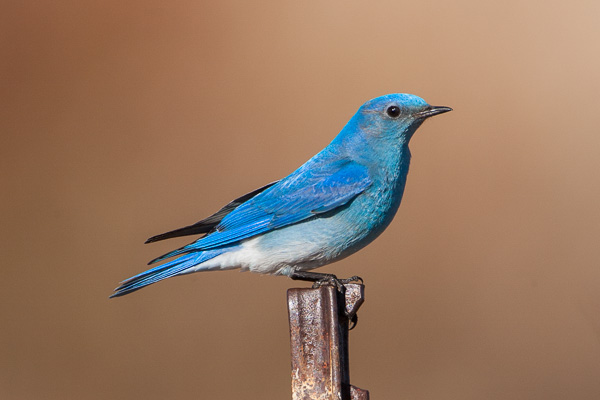
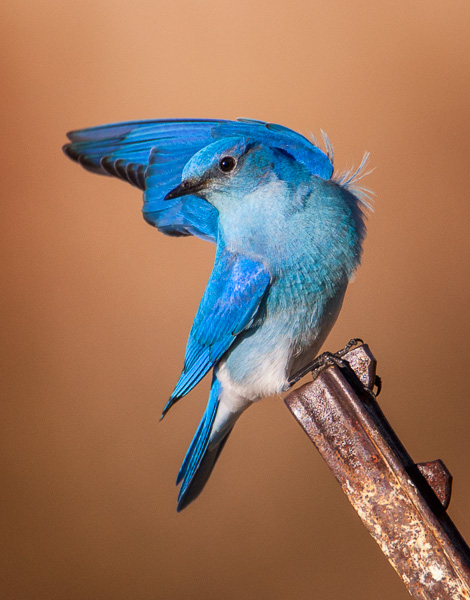
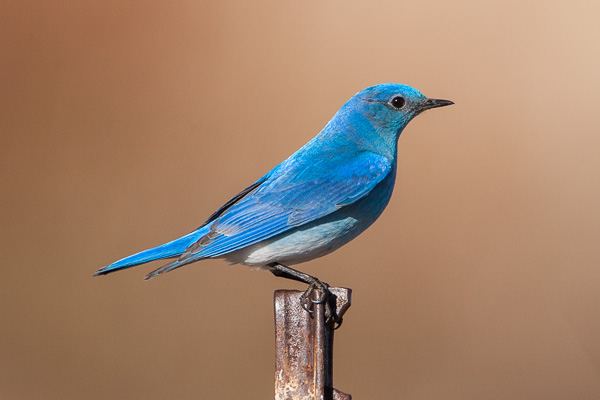
Wait for the turn of the head. Sounds pretty simple doesn’t it? It sounds simple, but achieving it is often a bit trickier. Many bird species have their eyes placed on opposite sides of their heads. When photographing birds without their heads slightly angled towards the viewer, the images tend to lack a bit of intimacy. Consider the following two images of a Mountain Bluebird. In the first image, the bird’s head is angled away from the viewer, while the second image features the bird’s head angled just slightly towards the viewer.

Mountain Bluebird looking away from the viewer

Mountain Bluebird looking away from the viewer

Mountain Bluebird looking toward the viewer

Mountain Bluebird looking toward the viewer

I’ll bet that for most of you, the second image is more compelling just because of that eye contact. Sure the perch is somewhat ugly (it’s the post used to mount the bird box above the ground), but even with an ugly perch, the second image is more compelling. Then if you’re patient, even with an ugly perch, you can still get a compelling image out of it, slight head turn included.

Mountain Bluebird posing pretty

Mountain Bluebird posing pretty

What to look for – subtle differences are huge

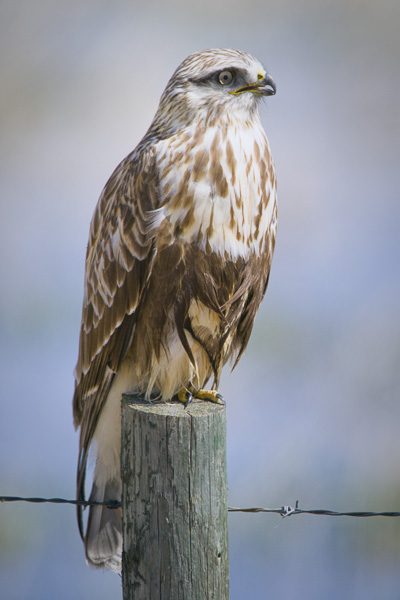
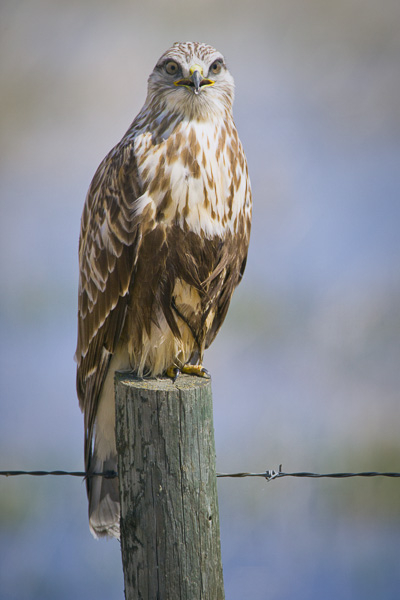
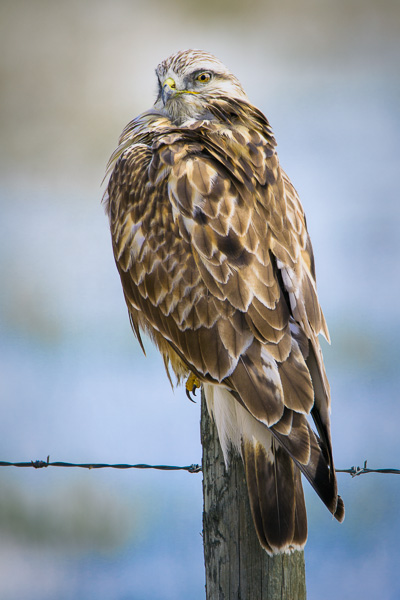
Consider the following three photos of a Rough-legged Hawk.

Rough-legged Hawk looking away from the viewer

Rough-legged Hawk looking away from the viewer

© Paul Burwell Photography - Rough-legged Hawk looking directly at the viewer

Rough-legged Hawk looking directly at the viewer

© Paul Burwell Photography - Rough-legged Hawk with the sexy over the shoulder look towards the viewer

Rough-legged Hawk with the sexy over the shoulder look towards the viewer

In the first image, the bird is looking away from the viewer. In the second, he is looking straight on to the viewer, while the third image has my preferred head-turn. In my opinion, in terms of a compelling image, it isn’t even a close comparison. The perch still isn’t ideal (although this is the typical place we find these birds where I live), but the third pose with the head-turn makes that image into a keeper for me.

Patience or initiative gets the head turn

So, is it just a matter of patience and waiting for the preferred head-turn? Sometimes that is true. Other times I try to “encourage” my subject to look my way. How do I accomplish this? I imitate the squeak of a mouse. I purse my lips together and suck in air through my teeth to produce an irritating squeaking sound. Sometimes, not always, but some times, the bird is curious enough to look my direction.

I know of some photographers who prefer to use the “machine gun” approach where they just hammer-down on the shutter button, essentially shooting a slow frame-rate movie.  Occasionally they’ll catch the bird with its head in the preferred position.  I personally don’t favour that approach, but would rather just wait for the appropriate moment and cut down on my post-processing work once I get home.

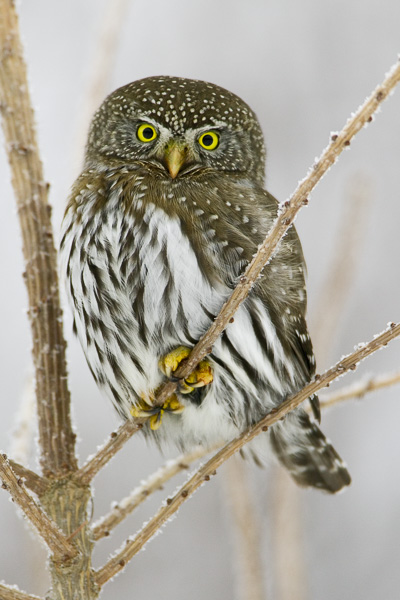
In terms of the bird looking head-on into the camera, that can occasionally work, but for most birds it just isn’t their best angle. There are definitely exceptions to that and owls are the first bird that springs to mind. Consider this image of the tiny Northern Pygmy Owl for example.

© Paul Burwell Photography - Northern-Pygmy Owl looking frosty

Northern-Pygmy Owl looking frosty

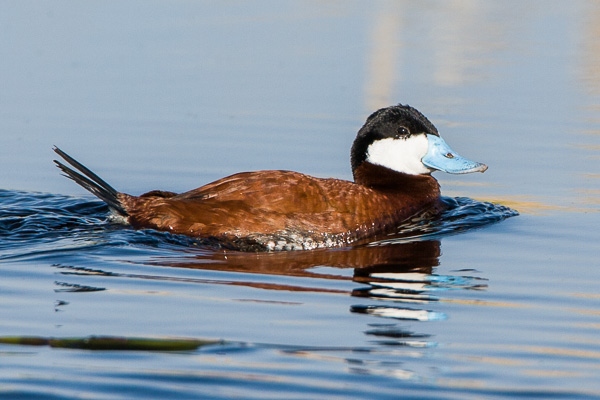
Here are a couple more images to consider:

© Paul Burwell Photography - www.bsop.ca

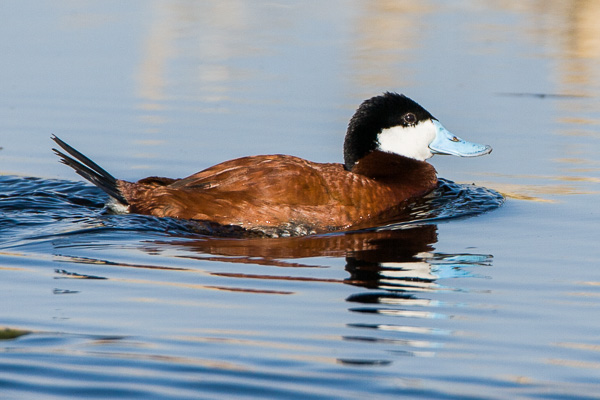
Ruddy Duck Drake looking towards the viewer

© Paul Burwell Photography - www.bsop.ca

Ruddy Duck Drake looking away from the viewer

I made these two images of the Ruddy Duck just seconds apart. In the first image, the bird looked my way due to my incredible squeaking ability, while in the second, his patience expired and he was off to find his girl friend.

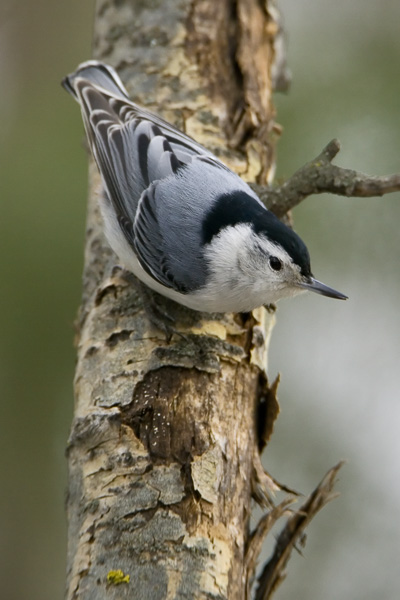
The following two images of a White Breasted Nuthatch also illustrate the point. In both images, the birds are in their traditional upside-down pose on the side of a tree. The difference between the images is that in the first the bird is looking slightly away from the viewer while in the second exhibits that classic slight head-turn towards the viewer that I strongly favour.

© Paul Burwell Photography - www.bsop.ca

White-breasted Nuthatch looking away from the viewer

© Paul Burwell Photography - www.bsop.ca

White-breasted Nuthatch looking towards the viewer

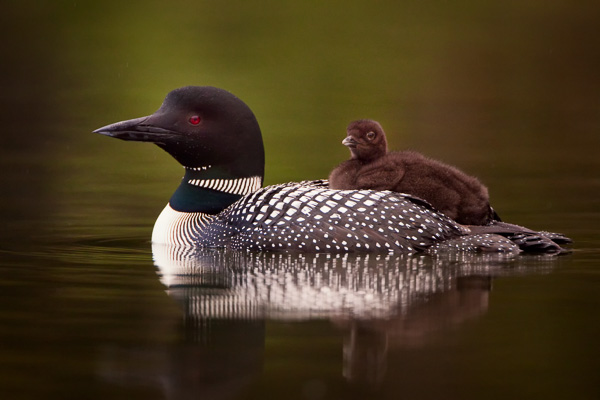
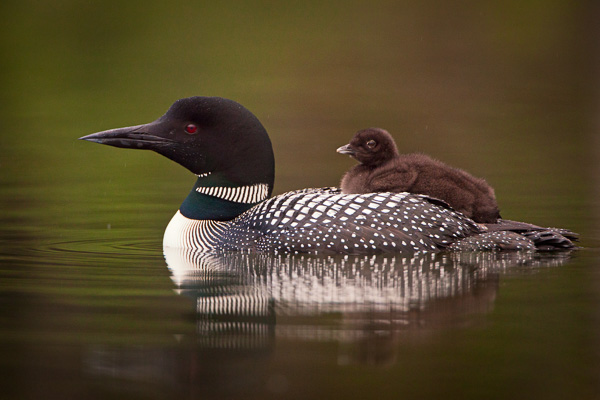
The last two images I present for your consideration are these two images of a Common Loon carrying a chick on its back.

© Paul Burwell Photography - www.bsop.ca

Common Loon carrying a chick on its back with both birds looking away from the viewer

© Paul Burwell Photography - www.bsop.ca

Common Loon carrying a chick on its back with both birds looking towards the viewer

In the first image, both adult and baby are looking away from the viewer. It’s a nice image but lacks a bit of intimacy.  Whereas the second image features both birds looking towards the viewer. The second image is a result of the large goofy photographer, with his lens perilously positioned inches above the water, from an unstable boat squeaking his heart out. For me, there is no comparison between the two images; the second wins easily.

Therefore, the next time you’re out in pursuit of some bird images that might rank in the top thirty-six quadrillion instead of the bottom, look for the opportunity to capture those birds with their heads slightly turned towards you. Whether you achieve it through patience or “the squeak”, I’ll bet you’ll find your images a bit more compelling.

Post originally from: Digital Photography Tips.

Check out our more Photography Tips at Photography Tips for Beginners, Portrait Photography Tips and Wedding Photography Tips.

A Turn of the Head – Creating More Compelling Bird Portraits

The post A Turn of the Head – Creating More Compelling Bird Portraits by Paul Burwell appeared first on Digital Photography School.


Digital Photography School

 
Comments Off on A Turn of the Head – Creating More Compelling Bird Portraits

Posted in Photography


Creating a Black and White High Contrast Portrait Edit in Lightroom

17 Nov

Introduction

The Following is an excerpt from the SLR Lounge Lightroom Preset System v5 and accompanying workshop from the Lightroom Workshop Collection v5.  The Lightroom Preset System is designed to take you from Ordinary to Extraordinary photos in just a few seconds and clicks within Lightroom 4 and Lightroom 5.

Overview

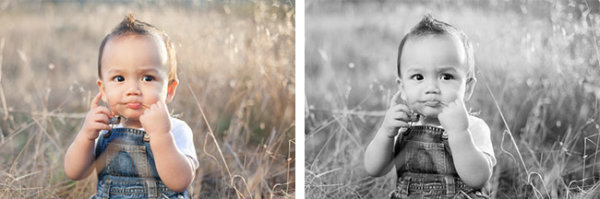
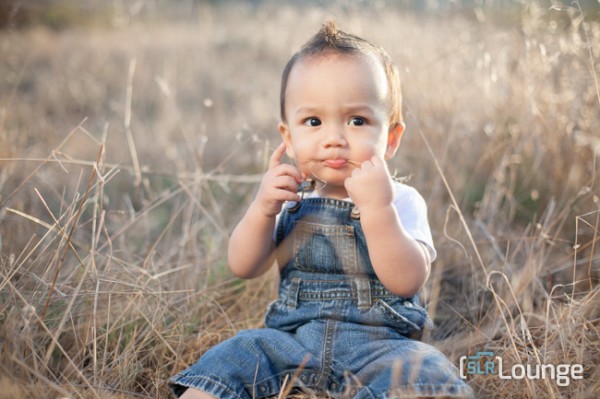
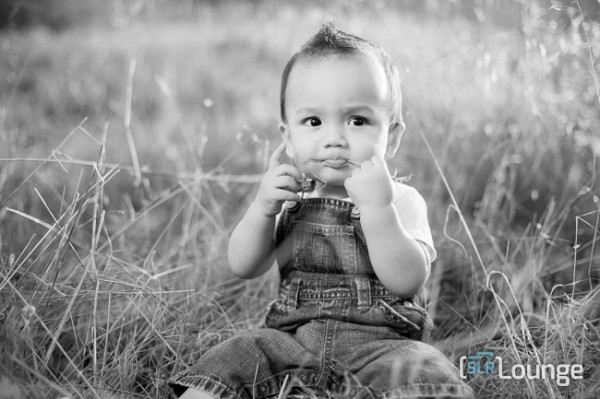
In this tutorial we’re going to go over how to turn a regular color portrait into a nice high contrast black and white image. For this tutorial we have a portrait of a baby out in a field. The overalls, details in the field, and overall background blur will be complimented by a high contrast black and white edit. The SLR Lounge Lightroom Preset System v5 has presets specifically for high contrast black and white portraits which we are going to apply to this photo. If you don’t have the preset system, we’ll list all of our Develop settings so you can achieve the same look.

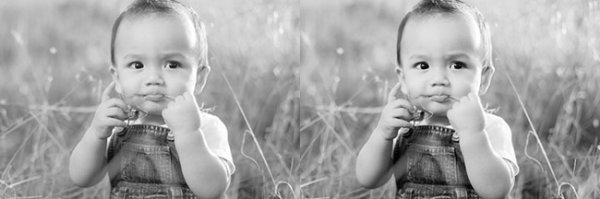
Here’s what our photo will look like before and after we’re done with the edit.

beforeafter

Unedited Photo on Left | High Contrast Black and White on Right

Lightroom Preset System v5 Mixology

For those who have the Preset System, you can follow the Mixology Recipe below to get to the same results. If you don’t have the Preset System, please read the article or watch the video below to see exactly how this look was achieved.

Develop Mixology

  • 01-10 BASE – SOFT: 13b. Light Crush – B&W
  • 03-70 ADJUST – VIGNETTING: 71c. Neutral – Zeroed

Written Tutorial

Step 1: Checking The EXIF Data

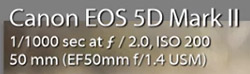
exifdata

We press “i” to pull up our EXIF data so we can see exactly how this image was shot. This image was shot with a 50mm lens at f/2. We want to keep in mind that the depth of field is shallow, and we may have to add sharpening to this image.

Step 2: Apply Preset

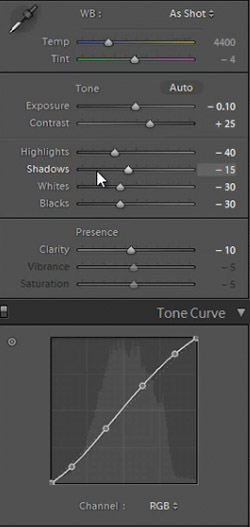
We’re starting with our “01-10 BASE – SOFT: 13b. Light Crush – B&W” preset, and after we lower the Exposure to -0.10 we have a nice high contrast black and white look. Then we apply a “03-70 ADJUST – VIGNETTING: 71c. Neutral – Zeroed” vignette preset so we can get a subtle edge darkening.

In the develop settings the Contrast was raised and the Shadows and Blacks have been dropped. This is giving our nice deep shadows and blacks, and adding to the high contrast look we’re editing for. The Highlights and Whites have also been dropped in order to bring the highlights in the skin closer to the mid tones.

developpanel1

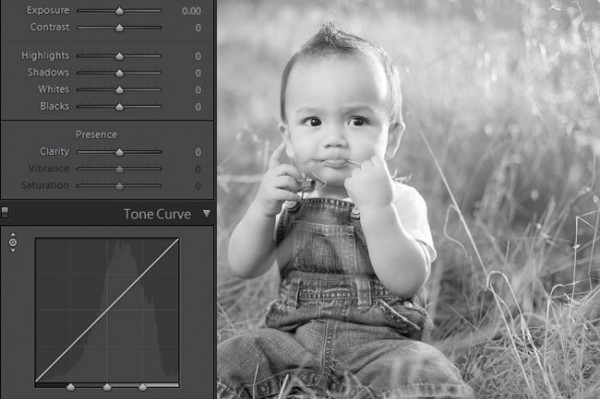
With Settings Zeroed Out

Here’s what our image looks like with a simple black and white conversion (convert by hitting “V”), without the adjustments in Contrast, Highlights, Shadows, Whites, Blacks, and Tone Curve.

Before High Contrast Settings

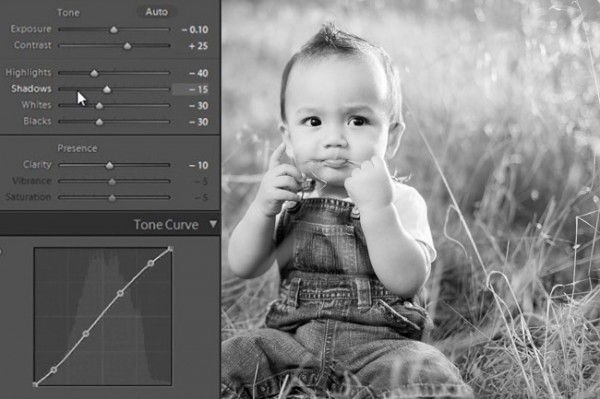
With High Contrast Settings

Here’s our image with Contrast, Highlights, Shadows, Whites, Blacks, and Tone Curve adjustments applied.

High Contrast Develop Settings

In the image below you can see a huge difference that the adjustments make. The eyes stand out, there’s more details in the hair and grass, and there’s more texture in the clothes.  All these subtle details combined add quality to an otherwise flat black and white image.

beforeandafter

All Settings Zeroed On Left. High Contrast Adjustments on Right


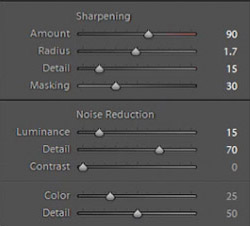
In our Sharpening settings our preset applied our standard amount, but the image is still a bit soft because of the shallow depth of field caused by shooting this image at f/2.0. To get a nice sharp portrait we raise the Amount, Radius, and Detail. The preset also adjusted our Noise Reduction settings, giving the subject in our portrait nice soft skin. All of the “SOFT” presets have this standard amount of Noise Reduction applied in order to soften and smooth out skin without going so far to kill fine details.

sharpening settings

Here’s what our image looks like before and after our presets are applied.

Before

lightroom-5-tutorial-high-contrast-b&w-newborn-0001

After

lightroom-5-tutorial-high-contrast-b&w-newborn-0002

Watch the Video Tutorial

If you would like to see exactly how all of the settings and adjustments were applied, please watch the video from the SLRLounge YouTube Channel.

Conclusion and Learn More

We hope you all enjoyed this tutorial. If you are interested in learning more or purchasing the SLR Lounge Lightroom Preset System v5 or the newly released Lightroom Workshop Collection v5, please click any of the links in this article.

Post originally from: Digital Photography Tips.

Check out our more Photography Tips at Photography Tips for Beginners, Portrait Photography Tips and Wedding Photography Tips.

Creating a Black and White High Contrast Portrait Edit in Lightroom

The post Creating a Black and White High Contrast Portrait Edit in Lightroom by Post Production Pye appeared first on Digital Photography School.


Digital Photography School

 
Comments Off on Creating a Black and White High Contrast Portrait Edit in Lightroom

Posted in Photography


3 Tips for Creating Dramatic Images using Motion

18 Oct

motion-dps-09

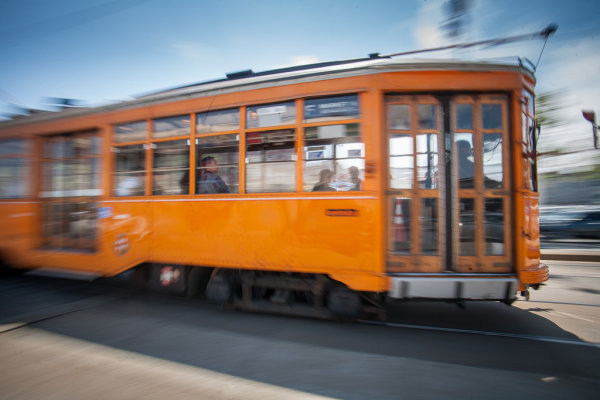
There is a common misconception that if your image isn’t tack sharp and free of motion blur then it isn’t a good image. I’d like to show you three ways you can use motion blur to add drama and interest to your photography.

Misconception: motion blur in photography = a bad image

I would disagree and say, not necessarily so! It really depends on the subject you are shooting and your intention as the photographer and artist. Using blur can add interest and show implied movement in the image. It can help add a feeling of speed. If your are shooting a subject like sports, for example, you have use a fast lens and fast shutter speed to freeze motion at the peak of the action. OR you can introduce intentional motion blur by using a slower shutter speed to add a sense of speed. Neither is right or wrong, they’re just different. You get to choose and if you aren’t sure, do both!

Three tips for adding motion to your images

  • panning a moving subject
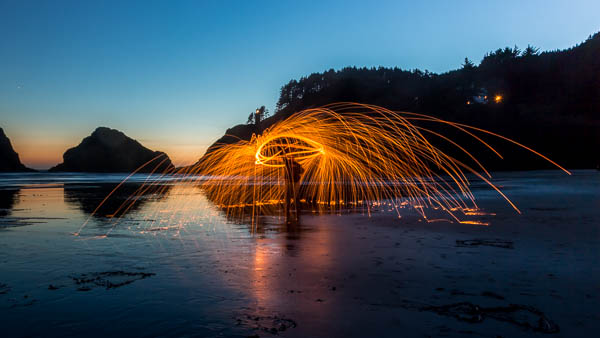
  • long exposures for affect
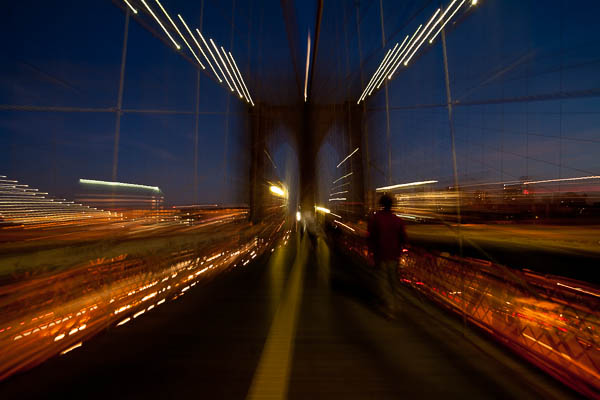
  • zooming or moving the camera during the exposure

Let’s look at each in more detail.

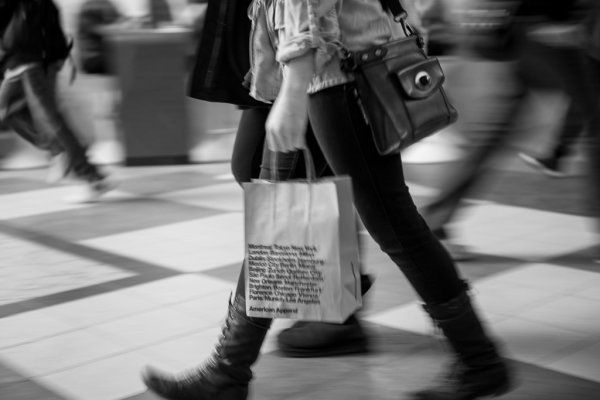
PANNING

DandC-Feb2013-0011-PPT

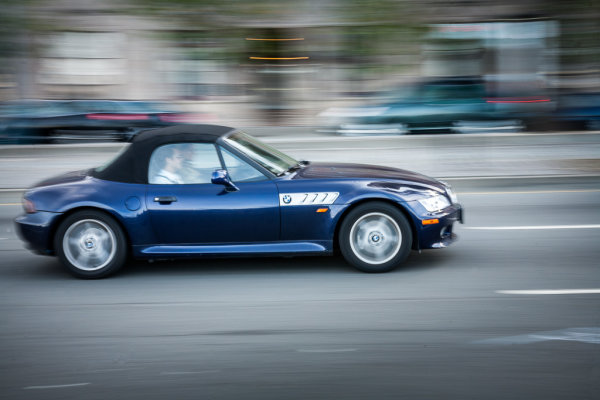
Panning is a technique for photographing moving subjects which allows you to get the subject relatively sharp, and blur the background. This adds a sense of speed and works particularly well when you have a background that is unattractive or distracting. The basics behind panning is you choose a slow shutter speed, and move your camera to follow the subject. Here are some tips on setting your camera for panning and giving it a try.

  • use high speed or “burst” shooting mode to take multiple images while holding down the shutter button
  • select Shutter Priority on your mode dial
  • start with 1/30th of a second and adjust slower and faster as necessary
  • practice following the moving object after it passes by
  • just like in golf, follow through is the key. Point your camera towards the approaching subject, shoot and follow them as they move through your field of view, and keep following their motion even after you stop shooting.

It takes a little bit of practice and a lot of trial and error but can result in some really stunning and creative images. Try shooting the same subject using a fast shutter speed and freezing the motion, then try panning and compare. It’s not something you will use for every subject, but it’s a good technique to have in your bag of tricks!

Here are a few examples of panning.

SanFran-2012-1090-PPT

1/25th of a second panned

DandC-June13-0092-PPT

1/30th of a second, panned

SanFran-2012-0893-PPT

1/25th of a second, panned

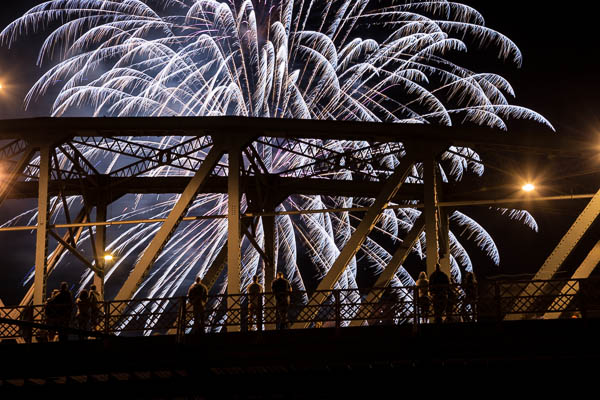
LONG EXPOSURES

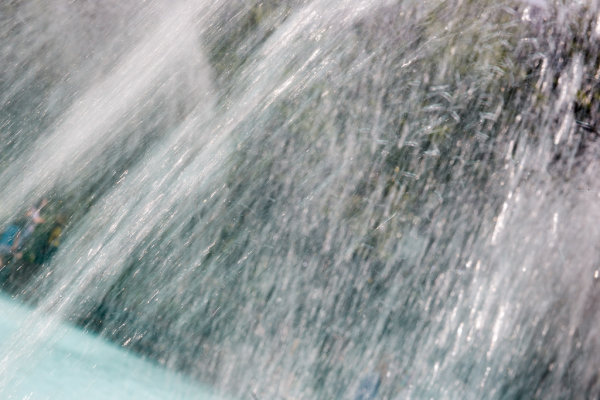
By long exposures I’m taking about a shutter speed slower than you would usually be able to hand hold the camera. There are many reasons to use long exposures including: moving water, capturing star trails at night, car headlights moving through your scene, and night photography in general. You will need a sturdy tripod, a remote trigger to fire your camera and time. I say time for two reasons: one you will have to wait for some really long exposures sometimes, especially star trails; and two because you will need time to shoot, adjust and correct. A lot of photography is trial and error and in this age of digital photography we have the huge benefit of being able to have instant feedback so we can correct or adjust in the field and continue shooting.

Here’s an example of the same subject photographed at different shutter speeds. Which do you prefer?

1/5000th of a second

1/5000th of a second

1/40th of a second

1/40th of a second

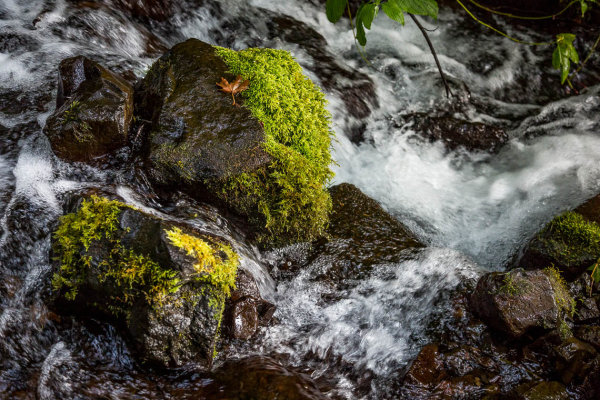
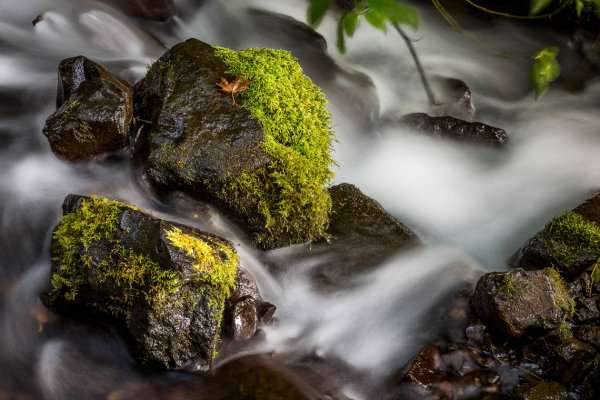
Besides night photography another common reason to use long exposures during the day is to photograph waterfalls and moving water. Keep in mind neither approach is right or wrong, you just yield different results based on the choice you make. A faster shutter speed will freeze the water in mid air (like the first image above). A long exposure will blur the water, and if you use a long enough exposure it can even disappear or become misty looking. Here’s a comparison:

1/100th of a second

1/100th of a second

2.5 seconds

2.5 seconds

With moving water, there also comes a point where doing a longer exposure doesn’t look any different. Compare the image below a 5 seconds, to the one above at 2.5 seconds. The water looks pretty similar, but what did happen was the tree above was blurrier in the 5 second one, so I chose to use the 2.5 exposure.

5 seconds

5 seconds

Here are a few more examples of long exposures.

Do you see the motion in the images below? What is moving in each?

motion-dps-01 motion-dps-02 motion-dps-03 motion-dps-04 motion-dps-05

For more information on how to shoot these types of scenes read:

  • 15 Tips for Successful Fireworks Photography
  • Three Special Effects for Night Photography

ZOOMING

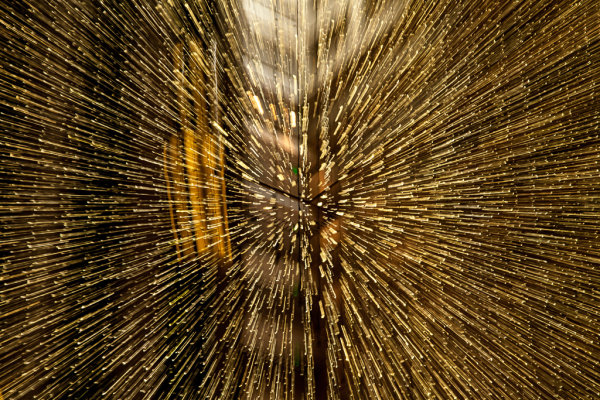
Last but not least, you can add motion by zooming your lens during the exposure. Basically what you do is physically rotate your zoom lens to change the focal length during a long exposure. This works really well and gives some really neat affects on night scenes with lights, neon signs, and even fireworks. But try it during the day too and see what you can create. It often results in a rather abstract image, sometimes completely obscuring the subject to make it unidentifiable. But that’s okay! Experiment and play with this idea. Have fun with it and get creative.

Some tips for zooming during your exposure:

  • Zoom in first to focus and lock it there so it doesn’t shift when you press the shutter button. You can use focus lock (a bit cumbersome), use autofocus and then turn it off, or use your camera’s back button focus capability. Whichever you choose just make sure you’ve focused with the lens at the longest focal length where it’s more critical than a wide one
  • Practice rotating the zoom mechanism on your lens. Get comfortable with which way to turn it, and how to turn it smoothly without making a bumpy mess.
  • Use an exposure of one second or longer. It’s pretty hard to do this a a/100th of a second!
  • Experiment with different zoom speeds (how fast you rotate the lens) and timing. The image will look different if you pause at the beginning and then zoom quickly, versus zoom slowly at the beginning and pause at the end of the exposure.

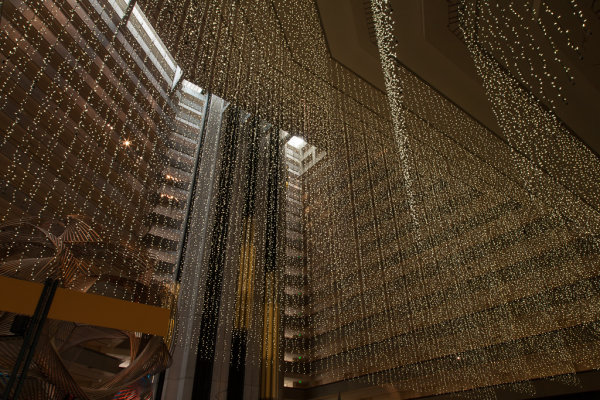
Here are a few examples of zoomed exposures

No zoom

No zoom. Notice all the small lights in this hotel lobby.

2 seconds

2 seconds

Also 2 seconds, notice how different they are? That's the zoom timing.

Also 2 seconds, notice how different they are? That’s the zoom timing.

2.5 seconds. Abstracted image of the sculpture in the first non-zoomed image (bottom left corner)

2.5 seconds. Abstracted image of the sculpture in the first non-zoomed image (bottom left corner)

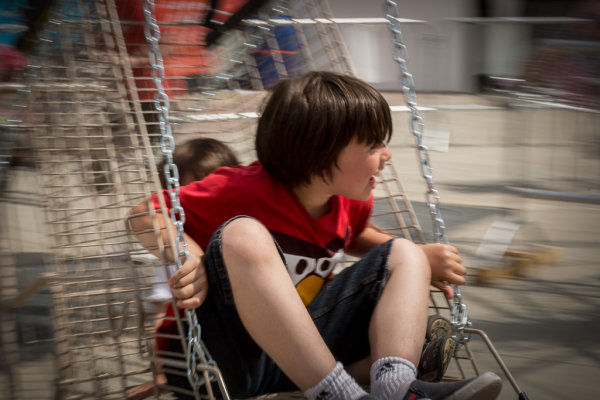
motion-dps-06

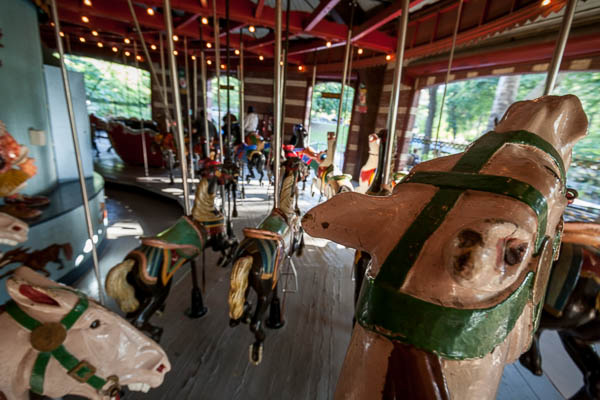
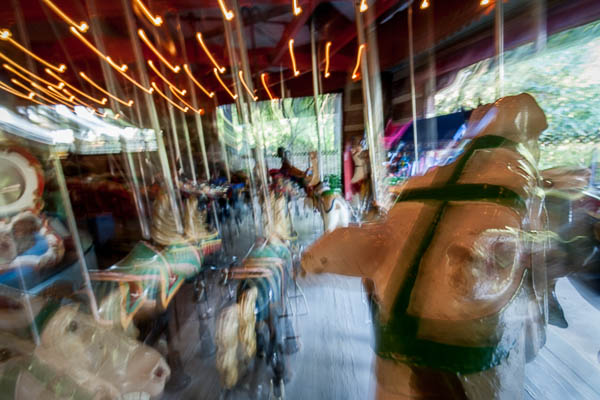
No zoom, I thought it was boring so I played with panning and zooming while on the carousel. Parents were looking at me funny after my 4th time around.

No zoom, I thought it was boring so I played with panning and zooming while on the carousel. Parents were looking at me funny after my 4th time around.

motion-dps-08

Zoomed version. Is it better? Debatable but it’s the process of playing that leads to creating great images. Always continue to play.

ACTION PLAN

If you haven’t really played with long exposures much, I challenge you to try some of these techniques. Find some moving subjects and blur them on purpose. Or find something that will make an interesting abstract and blur it by zooming.

The point is that not every image has to be tack sharp and some have absolutely nothing in focus and they’re still great images. Don’t get stuck on technical things like sharpness and try experimenting with out of focus for a while. Add some motion using these tips, or maybe even shoot completely out of focus on purpose. Come back and share your images and experience with us.

Have you got some great motion blur images? Do share those as well in the comments below.

Got another tip you want to add to the list?  Please do!

Cheers,

Darlene-1-250x130


Post originally from: Digital Photography Tips.

Check out our more Photography Tips at Photography Tips for Beginners, Portrait Photography Tips and Wedding Photography Tips.

3 Tips for Creating Dramatic Images using Motion

The post 3 Tips for Creating Dramatic Images using Motion by Darlene Hildebrandt appeared first on Digital Photography School.


Digital Photography School

 
Comments Off on 3 Tips for Creating Dramatic Images using Motion

Posted in Photography


Documentary Photography – Six Tips for Creating a Legacy

21 Sep

documenting-dps-02

We’ve all gone through times in our lives where we’ve lost loved ones. As a portrait photographer I would get calls all the time for “Urgent” family photos where one family member was terminally ill, and yet others that have photos done after the loss of a loved one.

Why do we wait until it’s too late, or almost too late to capture the lives of those most important to us?

As photographers (and before you argue that you aren’t a “professional” or you aren’t a photographer, I’m here to tell you that you are! If you take photographs you are a photographer, and this applies to you!) it is almost our duty to record the lives and times of those closest to us, family and friends. I’m not just talking about birthday parties and weddings, which are both important, but how about everyday life?

Last fall/winter my husband and I lost our two cats who were 18 and 19. He had them for 18 years, they lived with me for five. It hit me hard and I wrote this: “Do What’s Important Photograph Your Loved Ones”.  I vowed to go and photograph my grandmother who is now 92. I finally did that and I have some tips for you on how to go and photograph, and document the lives of your loves ones both young and old.

So this article comes with both tips AND a challenge, for you to go do the same.

  1. Documentary means as it happens naturally, in their environment.
  2. Capture the person’s essence, their real personality
  3. Remember to capture the details and scene setters
  4. Think big picture, take shots for the background of a collage or potential photobook or album
  5. Not every photo needs to show their face. Facing away from camera, hands and body are important too.
  6. Create a story with images, leave a legacy
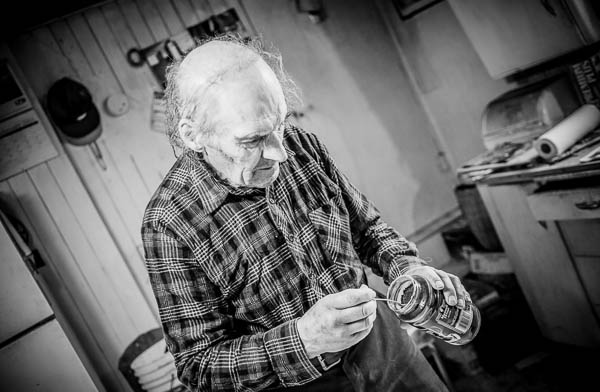
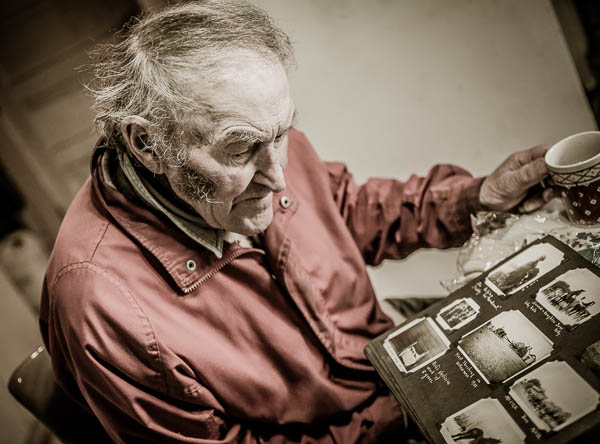
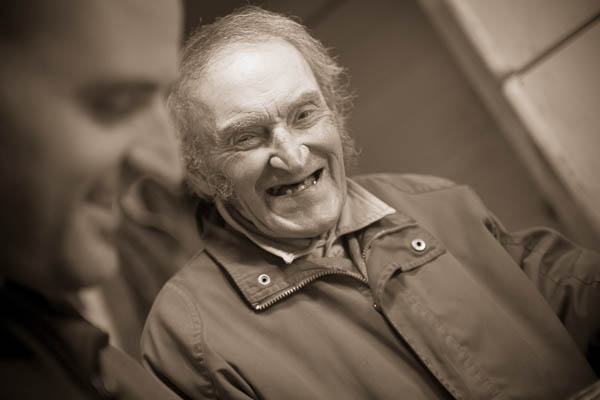
Unfortunately Uncle Ward has now passed on, but his legacy does live on in these images, now treasured by family.

Unfortunately Uncle Ward has now passed on, but his legacy does live on in these images, now treasured by family. They sure did love their instant coffee. He even took a spoonful of the grounds and ate it!

#1 DOCUMENTARY MEANS IT OCCURS NATURALLY

Documentary photography usually refers to a popular form of photography used to chronicle significant and historical events. It is typically covered in professional photojournalism, or real life reportage, but it may also be an amateur, artistic, or academic pursuit. The photographer attempts to produce truthful, objective, and usually candid photography of a particular subject, most often pictures of people. – Wikipedia

Get into their day to day life. Plan to go spend a few hours chatting with the person, listen to their stories, capture what comes naturally and what just happens. Don’t create something that isn’t part of them, just be there to grab moments in time that will mean so much down the road.

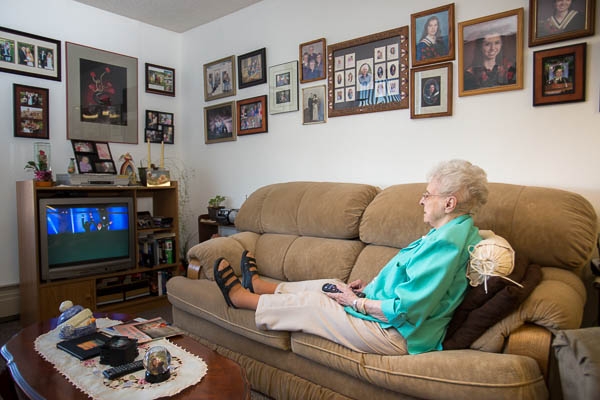
The afternoon "soaps"

The afternoon “soaps” among all her family photos that plaster the walls.

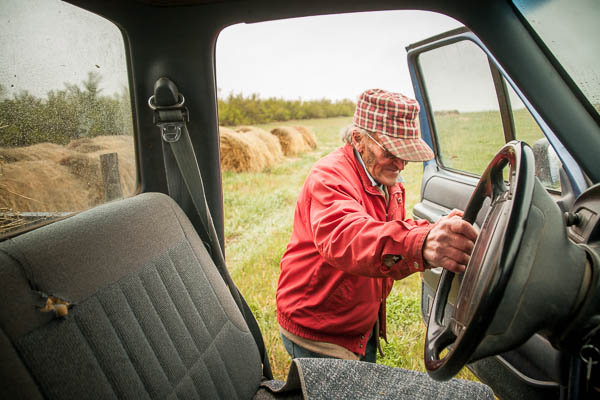
Neil going to feed the cattle

Neil going to feed the cattle

#2 CAPTURE THEIR TRUE ESSENCE

This is not too far off from #1 but let’s take it a bit deeper. Just being in their home, using their environment doesn’t guarantee you’re getting into their heart and soul. If this is someone close to you, as in my grandmother, what is it about them you want to capture? What part of their personality do you want to shine through in the photos:  wisdom,  a gentleness; intelligence, caring, a sense of fun, or all of the above? Is there something quirky about them that makes them unique, how can you show that in your images?documenting-dps-14

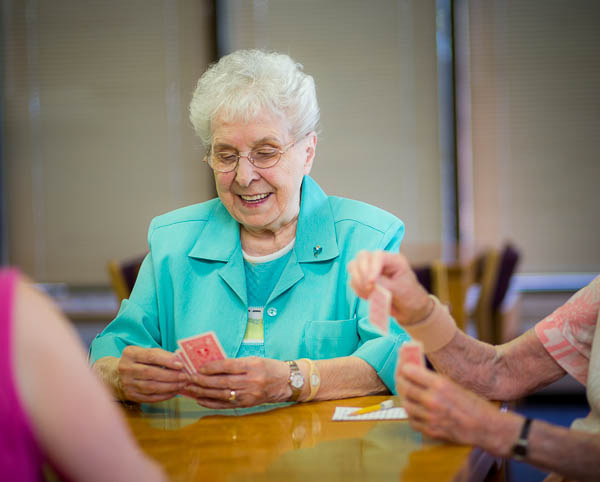
For my grandmother she is a social butterfly so I photographed her with some friends and playing cards (see above).  My husband’s uncles are farmers and storytellers. We got out the old family photo albums and listened to them for hours while they showed us old photos from the 1940′s. They came alive as they recounted tales of their younger days and when they had a TV delivered “a couple years ago” which we later learned to be around 1975!

documenting-dps-06

We found out my husband’s grandmother was a hobby photographer during the 20′s and she had some really great images and albums!

documenting-dps-17

The key here is to get emotional. I don’t want to see a studio portrait, or even a lovely window light portrait for this type of project, I go for real, raw, emotion.

#3 REMEMBER TO CAPTURE THE DETAILS

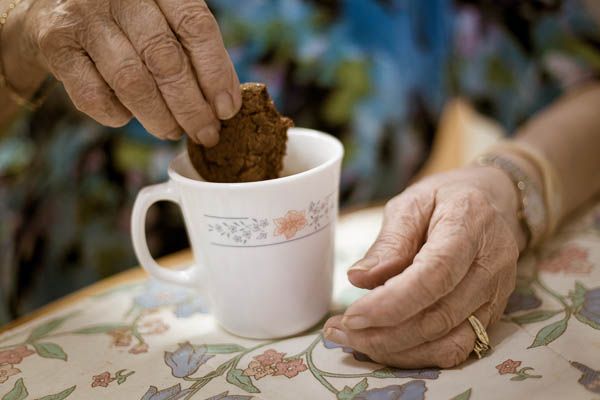
When photographing a person with the intent of documenting, make sure you think in terms of these three views: overall, medium range, and close-up or details. What that means is don’t forget to get in close on some things, and not just have the whole face or person in every image. Details like how they hold their spoon as they stir their tea (so get in close on the hands or maybe even just the tea cup) can add a lot of impact.

Tea and cookies at Grammy's. For as long as I can remember she's been feeding us. "Do you want a cookie dear?"

Tea and cookies at Grammy’s. For as long as I can remember she’s been feeding us. “Do you want a cookie dear?”

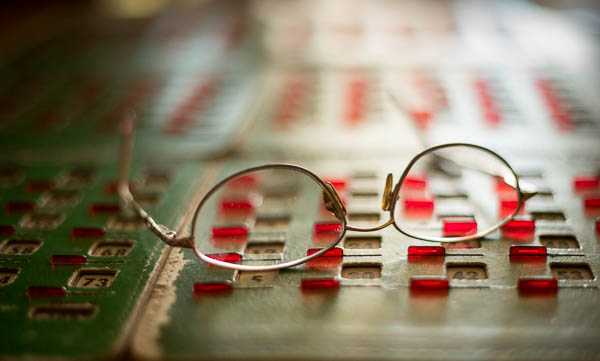
She does love her Bingo

She does love her Bingo

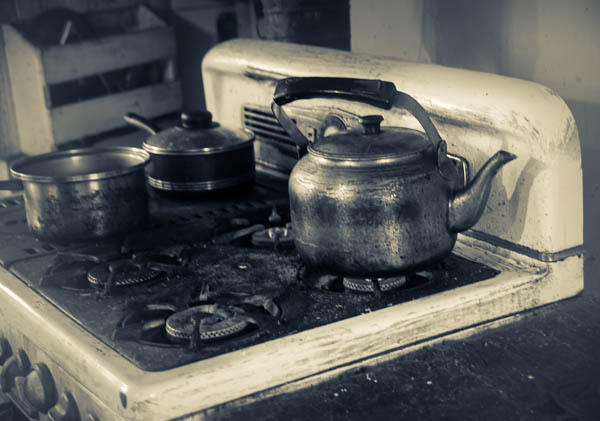
Tea at the Uncles'

Tea at the Uncles’

#4 THINK BIG PICTURE AND SET THE SCENE

Things around them in their daily life set the scene, so remember to capture some of those things too. If they live in a house make sure to get an exterior shot, some of the garden, and maybe even a close-up of the wall you can use later as a textured background. Does she has a favorite dress, one you always think of when you think of her – if so they photograph it, or a section of the material. Is he a craftsman, then by all means photograph his tools.

The most important thing in my grandmother’s life is her family and in her small living room the walls are literally plastered corner to corner with family photos. Weddings, graduations, new great grandchildren, and even the pets are all there. Every shelf and horizontal surface has photos on it. You can bet I captured that (even though I’d taken make of those photos over the years, seeing them all up in one places speaks volumes to anyone that enters that room and you instantly know what she’s all about. She also collects angels and always has one pinned on her blouse. She has hundreds of them in her house everywhere.

documenting-dps-19

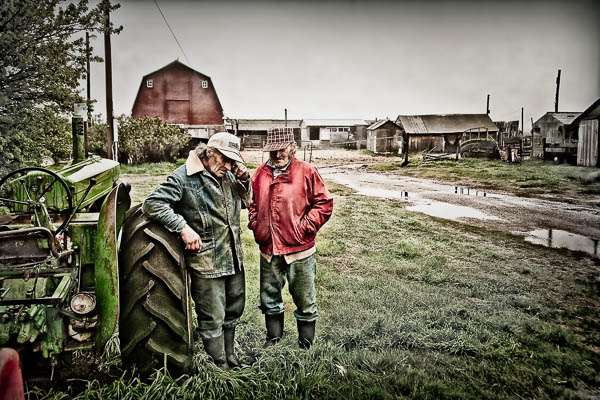
For the uncles that all consuming thing for them was farming and their animals. So I got lots of images of the barn, farm buildings and old retired machinery. Do all that without their assistance, let them go about their day while you just shoot background stuff. Think about how those images may work together making a photo album or even a digital book.

documenting-dps-18

The Cooper Homestead farmhouse

The Cooper Homestead farmhouse

#5 NOT EVERY SHOT NEEDS TO SHOW THE FACE

Similar to get in and show the details, think outside the box. Not every image needs to show the face or even hands. How about feet? Use a slower shutter speed and add some motion if applicable. Shoot for something different here that the “norm”. Think about how to represent them, and their life without showing their face.

documenting-dps-16

With her youngest great grandchild, young and old.

Unfortunately Uncle Ward has now passed on, but his legacy does live on in these images, now treasured by family.

#6 CREATE A STORY WITH IMAGES

Every other point in this article leads directly into this one, telling a story. By following all the tips above you pretty much can’t help but create images that do just that so the only thing I will add here is to do it consciously. Go in knowing you’rl./e creating a story. Intention is a powerful thing. When you show up planning to create a story, your subconscious will naturally kick in and go to work for you, if you aren’t aware (hint:  that’s why it’s your subconscious).

documenting-dps-12 documenting-dps-08 documenting-dps-09

One other thing you can do it go look at other photo stories, specifically some of the great photographers, masters of the photo essay. W. Eugene Smith comes to my mind, go study some of his stories for LIFE magazine. Anything by Cartier-Bresson but especially The Decisive Moment. Or some of my favorites Dorothea Lange, Margaret-Bourke White and Walkers Evans who all documented the Great Depression. Find out what draws you in to their images. How do they use scene setters and detail shots? Learn from the masters.

ACTION PLAN

If you read my articles regularly you’ll know what I’m going to say – get out there and go photograph someone important to you. That’s the first step! Then DO something with the images that will create a family heirloom. A book is ideal as you can make copies for the whole family.

To see the full book I made of The Uncles for an example of how to put it all together. Blurb.com is a great way to make books that are high quality that don’t break the bank. I’ve made several copies of this one for family and have done other volumes for special occasions and family events as well as clients. 

Cheers, Darlene

Post originally from: Digital Photography Tips.

Check out our more Photography Tips at Photography Tips for Beginners, Portrait Photography Tips and Wedding Photography Tips.

Documentary Photography – Six Tips for Creating a Legacy


Digital Photography School

 
Comments Off on Documentary Photography – Six Tips for Creating a Legacy

Posted in Photography


6 Tips for Creating Unique and Emotion Filled Wedding Photos

15 Sep

A post by wedding photographer Susan Stripling – one of the course presenters in this weeks Creative Live Photo Week – an event that showcases teaching by 50 photographers across 3 tracks including Weddings and Family.

The best wedding photographers know how to create not only beautifully composed images, but also the moments of emotion and connection at the core of every dynamic wedding story. Focusing on capturing these unique, organic moments allows you to tell a story that’s true to the couple you’re working with. Here are some tips for finding and capturing the images that keep a wedding story dynamic and fresh.

Wedding photography emotion

1. Build the Right Relationship with the Right Client

It’s important to assess whether a client is the right match for your photography style and the stories you’re good at capturing. When you’re consulting with clients, ask questions about what exactly they want, and consider whether you’re prepared to offer the services they want. Once you’ve decided to work with a couple, cultivate a positive, communicative relationship. You don’t have to be best friends with every couple that you shoot, but a basic level of trust helps clients to be themselves on the wedding day. The more comfortable they feel with you, the more moments you’ll be invited to shoot.

2. Be Prepared

To capture unique moments, preparation is essential. Before you show up to shoot a wedding, think through the choices you’ll make about gear, lenses, equipment, and lighting. It’s inevitable that plans will change on the day of the wedding, and that’s okay. Being prepared doesn’t mean you have to be inflexible.

Wedding photography emotion 1

3. Check your Composition

If an image is too soft or technically imperfect, you can’t share it with clients. A poor image of a great moment is essentially the same thing as no image at all. Remind yourself of the basics both before and during a shoot. Be mindful of focusing and recomposing with the f-stops you choose, and make sure your shutter speed correlates with the lens you’re using.

4. Be aware of the Background

Nothing spoils a dynamic image more than a random person wandering through the background or an angle that makes everyone in the room look like they have lampshade hats on. Don’t just focus on the subjects of each image – focus on the entire frame.

Choose backgrounds that either enhance an image or that are clean and simple. For example, you might decide to photograph rings against the background of other sparkly jewellery the bride plans to wear. Or you might decide that it’s better to have a clean, simple background instead.

Wedding photography emotion 2

5. Challenge Yourself

When I’m photographing a wedding, I like to challenge myself to see how many unique moments I can capture in one single frame. This allows me to tell stories that are more complex. I might be able to catch the mother of the bride’s reaction as the bridesmaids help her daughter into her dress, or I might capture the flower girls dancing along to a couple’s first dance.

If you’re telling multiple stories in a single frame, each aspect of the story has to be dynamic and engaged. Make sure everyone in the frame is doing something interesting; no couple wants an image from their wedding day where half the people look bored. Know when to focus on a single, super-impactful image instead.

6. Watch and Wait

Watch for shots that both capture a unique moment and help advance the overall wedding story you’re telling. The balance between patient and proactive can be hard to strike, but it’s important.

Create a calm atmosphere and be a chilled presence – don’t constantly have cameras in people’s faces and shutters consistently going off. When a moment starts developing, be assertive about getting the shot you need, but find a way to do so without being intrusive.

Give the couple space to emote, but also be aware that some people might not be outwardly emotional, and that’s okay too. Capture the couple as they are, without trying to force specific moments, reactions, or feelings.

For more wedding photography tips, check out Susan’s upcoming creativeLIVE course during Photo Week which starts on Monday.

Photoweek logo

Susan Stripling is a world-renowned wedding photographer. She has won some of the photography industry’s most prestigious honors including 1st place in WPPI’s Wedding Photojournalism category and the Grand Award for Photojournalism. Susan has photographed weddings all throughout the US, the Caribbean, South America, Finland, France, and the Bahamas.

Post originally from: Digital Photography Tips.

Check out our more Photography Tips at Photography Tips for Beginners, Portrait Photography Tips and Wedding Photography Tips.

6 Tips for Creating Unique and Emotion Filled Wedding Photos


Digital Photography School

 
Comments Off on 6 Tips for Creating Unique and Emotion Filled Wedding Photos

Posted in Photography


10 Tips for Creating Great Family Portraits

19 Aug

Hood-August2013-0212-Google

With my background being in classic style studio portraiture (aka “boring”), and 25 years experience photographing portraits and weddings, I have a few tips up my sleeve for you. If you’ve never done a family or group portrait before don’t be intimidated. Be honest with the family and tell they you’re just learning, I bet they’ll be willing participants to help you out and they get some nice photos in exchange.

With a little planning, doing a family portrait should be fun for both you, and the family you’re photographing. Here are 10 quick tips to help you have a successful and fun photo session.

SUMMARY – 10 TIPS FOR BETTER FAMILY PORTRAITS

  1. Use a tripod when possible
  2. Shoot in Manual exposure mode
  3. Lock the focus or use manual focus
  4. Arrange people with heads staggered
  5. Allow kids to be kids and get goofy with them
  6. If it bends, bend it – how to help people pose
  7. Pose people to flatter them
  8. Lighting is key – get some in their eyes
  9. Expression is everything!
  10. Have a little fun with it and let go

Let’s take a look at each in more detail.

Heise-0005fsm

#1 USE A TRIPOD WHENEVER POSSIBLE

“Ugh”, I already know what you’re thinking. A tripod cramps your style. It’s too heavy and cumbersome. Your style is more free flowing. That all may be true and in some cases (like photographing kids running or doing more documentary style photography) it may be better to shoot hand held.  However, just consider another side of the coin.

When being photographed  most, if not all, people are nervous. Yes nervous! Some are down right scared, and some would even go as far to say that they “hate it”. So it is part of your job to help your subjects feel more comfortable and relaxed. That can be hard to do when you’re also nervous, especially if you’re new to portraits. But there’s a big advantage of putting that camera on the tripod.  Two actually.

#1 – it automatically forces you to slow down. That’s a good thing. You can check your settings, review the composition, and exposure to make sure you’ve got everything right. All to often it’s easy to get carried away once you put the camera up to your eye and forget to check something only to see later you had the wrong White Balance, or ISO was 6400, or you accidentally shot Small JPG. Slow down, avoid an “oops”.

#2 – it allows you to get your eye away from the camera so you can actually make eye contact with your subjects. They are very real people and they feel even more uncomfortable staring straight into your lens than they do looking at you. You can make gestures to get kids attention, or make faces. But you’ll get way better expressions by interacting with them than you will looking through the viewfinder. Try it!

Hood07-034f

#2 SHOOT IN MANUAL EXPOSURE MODE

Assuming that you are setting something up, choosing the time of day and the location carefully, you have control of all the elements. Meaning, once you get set up the exposure should not need to change. But if you put it in Aperture or Shutter priority, depending in the metering mode selected, the camera could choose a slightly different exposure for each frame. You do NOT want that! Consistency is very important.This post is sponsored by our partners Wigs

Inconsistent exposures create more work in post processing, as you have to even them all out. It also can cause a slight color shift, increase noise (if underexposed) and other undesirable things. To keep your exposures consistent through the whole shoot, use Manual Mode. Just remember that each time you change the pose, location, etc, you need to check exposure again. I just fire off a quick test shot, review the histogram, adjust if necessary and continue.

#3 LOCK THE FOCUS

Just as you do not want the exposure to change from frame to frame, neither do you want the focus to be adjusted. Assuming you’ve taken #1 to heart and are using a tripod, you will not be moving. Likely if you’ve posed your group in a relatively static position, they will not be moving. Not much anyway. We are only concerned with moving closer to, or further away from the camera. So . . .

Set your camera up to do one of the following: use focus lock, back button focus, or use manual focus. With any of those options the focus will not change from shot to shot. If you use the shutter button to focus and someone moves a little bit so that the focus dot hits the background, you got another “oops”. If you aren’t sure how to do this, consult your camera manual.

Bonus tip: If your camera has video capabilities you have a neat way of doing manual focus. Turn on the Live View so you can see the image on your screen. Hit your “zoom” button (it may have a magnifying glass or a “+” sign on it) once or twice. The image on the screen will zoom in (your lens doesn’t) so you can see what is in focus which allows for much most precise manual focusing. Press zoom again to return to normal view and turn off Live View.
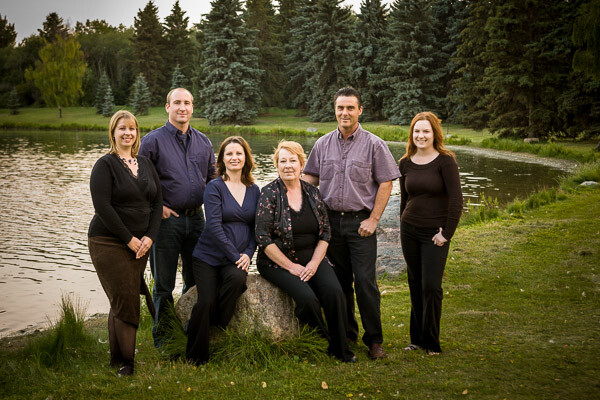
Liebel-002-600px

#4 STAGGER THE HEADS

You may or may not have heard this one before, or perhaps you weren’t 100% what it meant. What you want to avoid is a boring straight line, row, or column of heads. Diagonal lines are more dynamic and add interest to an image, so try to do that with the people in your grouping.

Imagine there is a line drawn from each face to the next. Try and position them so that no head is directly on top of, or beside (same level) another. Make diagonal lines not totem poles. Use props to seat some people or bring some small folding stools. Have some people sit down, or stand up on something. Use what is naturally in the environment to pose them, or if you have nothing available just arrange them so the heights are staggered.

Stevens-017

#5 IF IT BENDS, BEND IT

This is a general rule when photographing any people and it’s a good one. People tend to stand stiff and rigged when you position them, so you need to get them to bend a few body parts to look more natural. Nobody naturally stands stiff as a board. Here are a few starters

  • get them to shift their weight to one foot and stick out one hip, away from the camera
  • get them to put a hand in a pocket, I usually recommend thumb out otherwise they have a tendancy to shove their hand to the bottom of the pocket also not looking natural
  • OR hook a finger on their belt or a belt loop
  • if they are sitting lean forward a bit and put weight on one hip
  • if standing against something have them cross one foot over the other, toe down
  • if sitting (males) put one knee up, foot flat on the ground (make sure they rotate so you aren’t looking straight into their crotch

You get the idea. The best way to get someone to do any of this is to do it yourself and have them mirror you. Face them, do the pose you want them to do, and have them mimic it exactly.
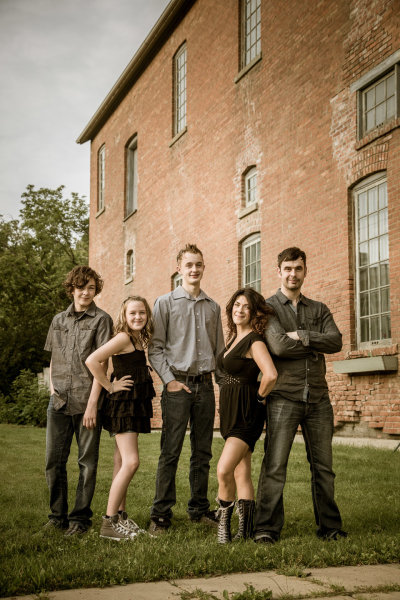
Hood-August2013-0129-Google

Example of bending body parts. The girls did a much better job here than the guys but even the arms bent at the elbow helps. Some people are stiff and you may have  a challenge with them. Just do your best.

#6 LET KIDS BE KIDS

I’ve found that often parents will tell their kids “you need to be good and smile” before a photo session. For many kids that puts too much pressure on them to “perform”. I usually prepare my parents by getting them to tell their kids this instead:

We’re doing to the park to take some photos. It will be a lot of fun.

That’s it! No expectations other than fun. Then prepare yourself. Bring along props, get mom to bring one of their favourite toys or books. I usually have a hand puppet and bubbles in my camera bag along with my gear. If the kids don’t want to sit and smile don’t force them. Then them run around and be kids for a while and shoot that. Play with them, make it fun. Then they may cooperate and sit for a bit a few minutes later.

When I’m photographing kids I make a total idiot of myself. I make funny noises, I sing songs (I’m really bad but they don’t care), I make fish faces, I play peek-a-boo behind the camera.  I run back and forth to the camera with the puppet. I lie on the ground, I stick my butt out. Kids are the ones that have life the right way around, it’s us adults that ruin it. Let them be kids, let them have fun. Then be ready to capture it when it happens.
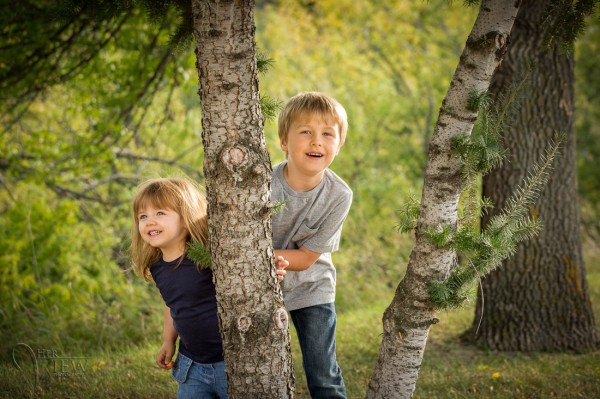
This was a game of peek-a-boo around the tree.

This was a game of peek-a-boo around the tree. Look at those genuine smiles! You can’t force those.

#7 POSE PEOPLE TO FLATTER THEM

Here’s the bottom line – if mom thinks she looks fat she isn’t going to like them no matter how great the lighting and expressions (see #8 and #9 below). So get this one right.

Be aware of people’s perceived “flaws” and work with them. A list of some quick tips.

  • If someone has a bigger bottom half, don’t pose them walking away from the camera using a wide angle lens.
  • For double chins take a slightly higher camera angle, above their eye level. Making them look up stretches it out and minimizes the chin/neck area
  • A bump on a nose will show up when they face one way and not the other (usually) study their face to find out which way to shoot them
  • When you have a couple that has a huge height difference get the man (usually the taller one) to stand with his feet further apart. That will make him slightly shorter, closing the gap a bit.
  • For really heavy people (or those overly self-conscious of their weight) use the lying down in the grass pose and pile the kids on top. Works great every time. Hides tummies, stretches out chins and makes the kids closer in size because it’s just faces.
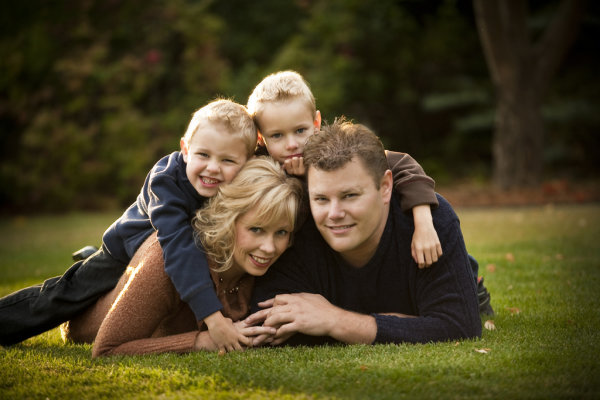
The lying in the grass, pile on top pose. Great for families with small children.

The lying in the grass, pile on top pose. Great for families with small children. This family didn’t need the pose to correct anything, it’s also just fun having the kids jump on top and squish mom and dad.

#8 LIGHTING IS KING – GET SOME IN THEIR EYES

Light can make or break any photograph, portraits are no different. The very derivative of the word photography is “drawing with light”. The biggest thing you want to make sure you do for portraits is get light into your subjects’ eyes. There are many ways to do that and that’s a whole huge topic but there are a few things you can do to set yourself up to start off with good light.

  • Choose the time of day to do the portrait! Ideally late evening about an hour before dusk is the best time for portraits. Why because the sun is lower on the horizon and you don’t get the harsh overhead light you do at midday. It’s more directional and usually a bit diffused if there’s haze on the horizon.
  • If you can’t shoot at dusk, find some shade. Get your family out of the sun, BUT make sure you don’t get the background lit up. Bright areas in the background will draw attention away from the subjects. Look for areas in the shade of large buildings, or under large trees.
  • Avoid using an overcast day simply because the lighting is even and less harsh than bright sunlight. While it is true the light is softer and less harsh, the direction isn’t great. Overcast days give you direct overhead lighting and dark eyes, especially anyone with deep eye sockets.
  • Add some light using a reflector or a flash if need be. Again this is a whole other class on lighting but learn to know when you need more light on their faces. If you cannot see a catchlight (the lightsource reflected in their eyes) then there isn’t enough light in their faces.

Just as important as getting some light in the eyes is having it come from a good direction. We’ve established overhead isn’t good direction, neither is straight from camera. So turning on your built-in pop flash isn’t going to give you good light. Neither is sticking a speedlight on top. Light direct from the camera angle flattens the subject, that is not what you want. You want the light to come from the side more, 30-45 degrees from camera is a good starting point. To learn more about this read my article on the 6 Lighting Patterns Every Photographer Should Know.
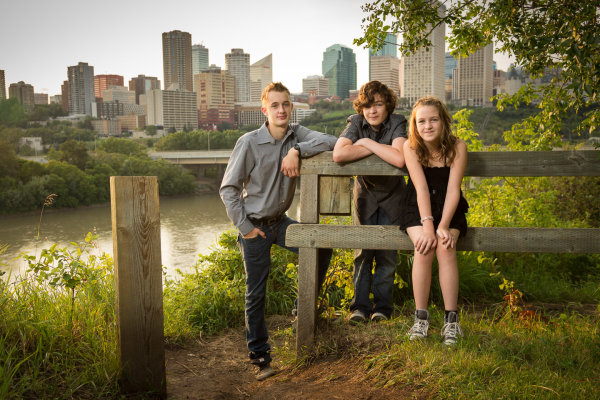
This was done just before sunset. The sun is coming just over their shoulders on the left. I used a flash in an umbrella also to the left to add light to their faces, without it they'd be in shadow.

This was done just before sunset. The sun is coming just over their shoulders on the left, behind them. I used a flash, bounced into an umbrella also to the left to add light to their faces, without it they’d be in shadow.

#9 EXPRESSION IS EVERYTHING

So if lighting is king, getting the right expressions is everything! You can totally screw up the lighting, and the pose, but if you get them laughing or making “that” face – it’ll be a big hit!  So how do you do that?

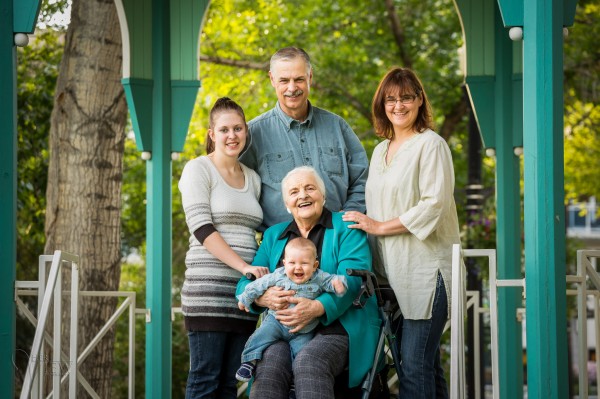
See #1 first of all. Then look at #6. Being a photographer means that sometimes you have to also become a comedian, or a clown. Knowing the right thing to say or do to make people smile is mostly experience. Sometimes you’ll get tough adults too. The dad in the photo above by the brick wall pretty much has the same expression all the time. I’ve known this family and photographed them for 13 years, they’re friends too. So I know I can bug him a little bit or get out the ducky to have some fun at his expense.

If there are small children or babies involved make sure to get their attention. It even helps to have an assistant, tell them to bring Grandma along or a friend to help out. But what always happens is you get the kids all looking and smiling, and what are the parents doing? Looking at the kids!  Oops again! I always tell the parents, “no matter what keep looking at me as I make a total fool of myself, do NOT look at your child”.
Stamhuis-0038-Google

Baby laughing, everyone else followed instructions and looked at me, success!

#10 HAVE A LITLE FUN WITH IT

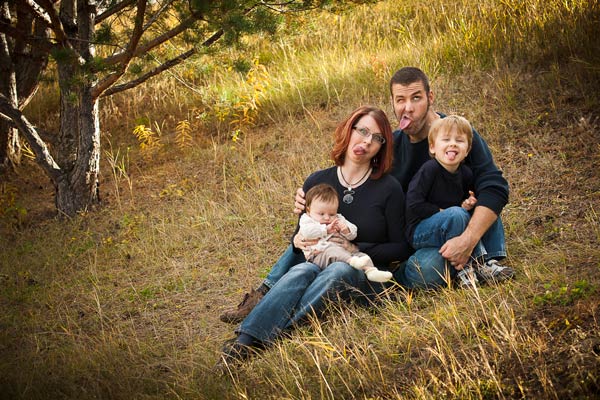
Last tip is to no take yourself so seriously. Create a few really whacky shots at the end of the session (or even in the middle if the energy seems to be fading). Tell them to do a group squish and really get them to squish. Often they will start laughing and as they pull apart you grab the shot. Do a pile on down in the grass. Ask them to jump in the air or make goofy faces (you make one too). It breaks the tension and lightens up the mood.

I volunteered my time at an event called Help Portrait last year that has photographers, make up artists and organizers giving their time to create portraits for people that otherwise couldn’t afford a professional one. They ended up sending most of the families to me, initially because I had the biggest area to do the group photo and later because the other photographers said I was the best with the kids.  To see some of my photos from that event go to Help Portrait, Edmonton  2012. 
Dino-Park-0131-600

I was making a similar face!

Hood-August2013-0263-Google

My off camera flash stopped working so this is direct from camera, not my first choice. But we were all tired and I thought this would be fun so we just went for it. Notice dad has a new expression!

BONUS TIP

Get the family to think about what they are going to wear. Some people disagree with my point of view on that, which is totally fine. But if you want to read more about it go to Clothing for Portraits.

Get out there and photograph some families and have fun!


Post originally from: Digital Photography Tips.

Check out our more Photography Tips at Photography Tips for Beginners, Portrait Photography Tips and Wedding Photography Tips.

10 Tips for Creating Great Family Portraits


Digital Photography School
 
Comments Off on 10 Tips for Creating Great Family Portraits

Posted in Photography


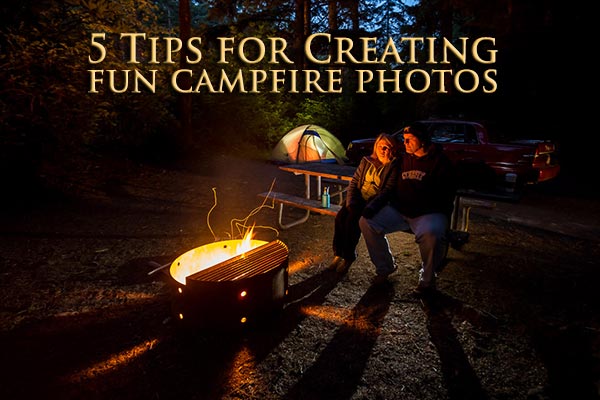
5 Tips for Creating fun Campfire Photos

28 Jul

night-campfire-photography-featured

A couple of weeks ago I had the pleasure of meeting the Digital Photography School headmaster, Darren Rowse, in person at a conference we both attended called the World Domination Summit in Portland, OR. The message of the conference (yes, the name invokes much curiosity) is simple: community, adventure, and service. It’s a large group of people that enjoy life, live adventures constantly and give back in service of others. That’s one of the reasons why I love writing on this site so much, I get to share my experience and knowledge and help you!

Me and Darren Rowse

Me and Darren Rowse

Darren was one of the keynote speakers and he most of the attendees (3000+) inspired to move forward and live our dreams. He even fulfilled one of his childhood dreams on stage, but I’ll leave that for Darren to share with you!

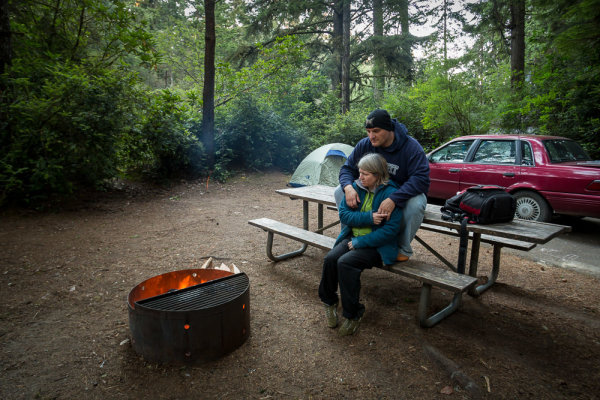
One thing I’ve always wanted to do is visit the Sea Lion Caves in Oregon. So after the conference my husband and I headed to the coast for a few days. We camped in one of the state parks, in the middle of the woods and sand dunes, it was awesome being in nature. But, being a photographer I couldn’t just sit around the campfire and do nothing, so out came the camera!

It’s really not that hard to create some really cool images that will impress your friends. I’m going to walk you through my process for creating the image above and how I adjusted as I went to get the desired result. Remember photography is a journey, not a destination, don’t expect to get it perfect on the first shot – I never do!

Here are my 5 tips for you on creating some fun campfire images.

#1 USE A TRIPOD & SELF TIMER OR REMOTE TRIGGER

A tripod is essential for doing this type of photography as you’ll be dealing with some really long exposures, mine ranged from two to ten full seconds. Make sure you have a sturdy tripod and if you want to get in some of the photos you can either use the self timer, as I did and run into the scene, or get yourself a handy wireless remote you can put in your pocket and fire the camera from your spot in the image.

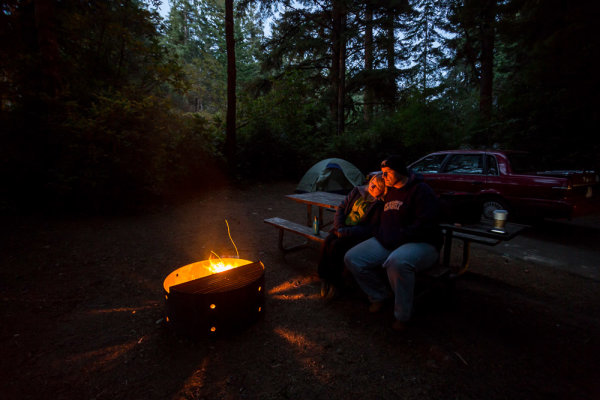
#2 WAIT UNTIL IT’S DARK ENOUGH OUTSIDE

night-campfire-photography-002

ISO 400, f/4, 1/8th of a second

The image above is the first one I made and I wasn’t happy with it. It didn’t have the mood I wanted and the sky was too light. So I had a snack and waited about an hour then made the following image. I’ve given the exposure data for each shot so you can see how I adjusted it as the sun went down and the amount of light diminished.

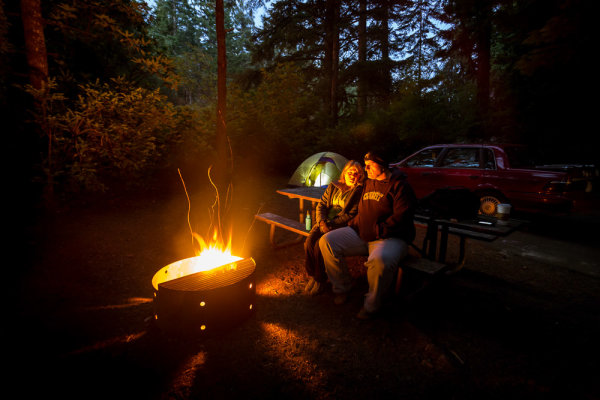
#3 EXPOSE FOR THE BACKGROUND, KEEP IT DARK

night-campfire-photography-003

ISO 1600, f/4, 2 seconds

Okay, so that’s way better but I felt it was still missing something. I really liked how the light was streaming out of the holes in the rim of the fire pit. The exposure is just right on the background but it seemed a bit boring.

Notice also that I increased the ISO to 1600. If I hadn’t my exposure at ISO 400 would have been 8 seconds. It’s pretty hard to keep perfectly still for 8 seconds so I sacrificed gaining a little bit of noise to get what I felt was a more reasonable 2 second exposure time.

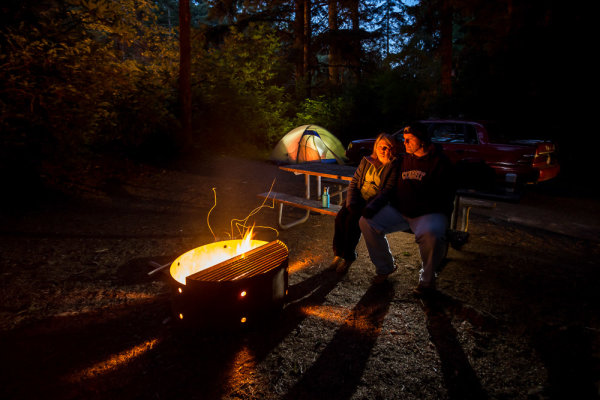
#4 ADD SOME ADDITIONAL LIGHT INTO THE SCENE

Going from the last image, I knew wanted to add a bit of a light to to the tent, to make it look like it was glowing. So I took my headlamp (get one at a camping supply store or use a flashlight) and turned it on inside the tent. I aimed it at the back wall facing away from the camera so I didn’t get a hot spot, and it lit up the whole tent quite evenly. If you have a larger tent you may need more than one light inside.

**NOTE:  do NOT put fire or a gas lantern inside your tent! Please practice good fire safety habits at all times.**

night-campfire-photography-005

ISO 1600, f/4, 2 seconds

Okay almost perfect, except for a couple of little things. As we had just put a log on the fire it was pretty intense and bright. That brings me to the last tip.

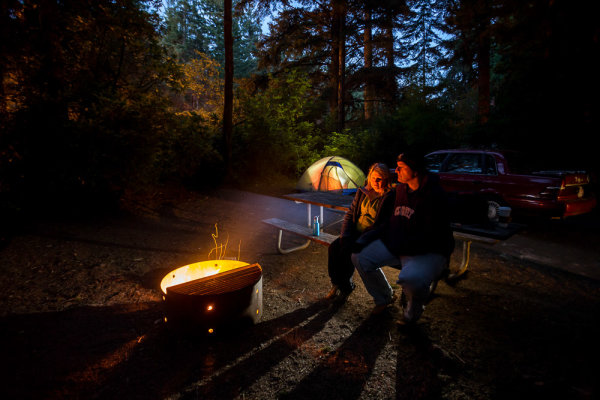
#5 SHOOT WHEN THE FIRE BURNS DOWN IF IT’S TOO BRIGHT

There’s no way to control the intensity of the fire except by darkening the whole image, but if I do that then my background will basically disappear into a black abyss. So we waited a while before doing the next image. I also added a second head lamp, this time on the picnic table seat behind us. It is pointed back towards us and I placed it careful so we’d be in front of it and the light itself wasn’t hitting the lens directly.

Here’s a couple of the final shots, with which I was quite pleased. I changed my camera angle a bit and re-cropped but otherwise they are very similar. Notice these last exposures were a bit longer. The light in the sky was almost completely gone so in order to get any detail in the background I had to increase the overall exposure, taking care to not overexpose the fire.

night-campfire-photography-010

ISO 1600, f/4, 5 seconds

night-campfire-photography-009

ISO 1600, f/4, 5 seconds

#6 BONUS TIP – MAKE SURE TO FOCUS THEN TURN IT OFF

Focusing at night is very tricky because your camera can’t see in the dark, neither can you! The best way to focus is to have your friend hold a light where you’re going to sit (or put it on a chair). Aim the light directly at the lens, which will allow the camera to “see” it and lock focus on that spot. Once it’s locked, just switch to manual focus, taking care not to bump the camera or accidentally turn the focusing ring. If you move the camera or recompose the scene, just do the same procedure over again.

ADDITIONAL READING

If you want to read more about other night photography techniques I’ve done a couple of article on Light Painting and some special effects. Links to them below:

  • Light Painting Part one – the photography
  • Light Painting Part two – photoshop
  • Three Special Effects for Night Photography

ACTION PLAN

Since we still have a little bit of summer left in the Northern Hemisphere, if you plan on doing a little camping take the camera gear along and give this a try! You may find your travel companions get into it and have a little fun with it as well. Also gives you a great way to do some fun group photos. You can also use flash if you’re so inclined and skilled. Please do share your images with us and any other tips you want to add that I may have missed.

Cheers, Darlene

Post originally from: Digital Photography Tips.

Check out our more Photography Tips at Photography Tips for Beginners, Portrait Photography Tips and Wedding Photography Tips.

5 Tips for Creating fun Campfire Photos


Digital Photography School

 
Comments Off on 5 Tips for Creating fun Campfire Photos

Posted in Photography


3 Tips for Creating Outstanding Portraits, Inspired by the work of Dutch Artist Van Gogh

17 Jul

A Guest Post by Oded Wagenstein

Few months ago I visited the Metropolitan Museum of Art in NYC. Upon arriving there, I immediately ran to see the work of the artist who influenced me the most: Vincent Van Gogh; the artist who changed the way we look at color as a tool for telling stories; an artist who had nothing in his pockets but had a never-ending passion for creativity and innovation.

In this post I decided to share some work methods and tips that I have learned from the portraits of this great artist. Methods I TRY, just try, to apply in my work as well.

3 Things I learned about Portrait Photography from Vincent Van Gogh’s Work

Tip 1: Use Light as a Tool for Telling Stories in Your Portraits:

You can treat “light” in one of the two ways below:

  • Something that just illuminate your subjects. An existing fact, which you cannot control
  • A creative tool. Something to be aware of, as being aware of the lens or the camera you are using

Source of Inspiration

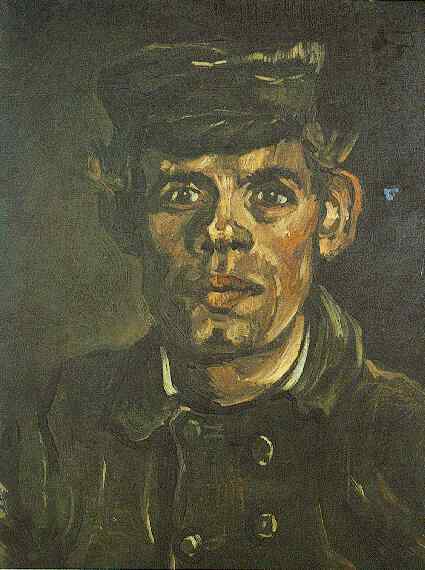
Notice how the light affects the story in this drawing of a Peasant from Nuenen.

Vincent van Gogh Head of a Young Peasant in a Peaked Cap

The choice to create the peasant’s portrait at night (or a dark room) under the pale light of a single bulb, which forms many shadows on his face, strengthens the dark feeling coming from this image- a feeling of a hard working man. You can imagine that creating the portrait of the same guy, in daylight, in an open space, would create a completely different story.

My Interpretation:

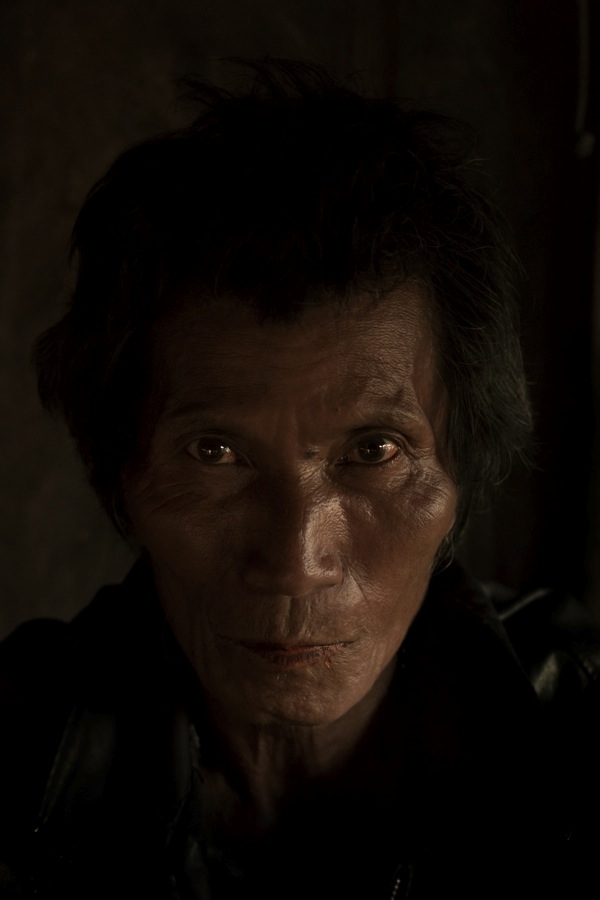
F11A3438
In this image of Apollo-mo, a 61 years old farmer and village shaman from the Akha community in Laos, I tried to create the same “hard working” feel as in the “Peasant from Nuenen”. I chose to capture Apollo indoor (keeping him also very compressed inside the frame) with this dark background and dramatic, single source light coming from his right side, creating very deep shadows on his face. Of course I could photograph Apollo at any other time: Laughing with his family and grandchildren, working under the soft light of the sunset and so on. Yet,I chose to show him as I perceived him – as a hard working man with a difficult life story.That’s exactly what I wanted the viewer to feel.

Tip 2: Harnessing the Power of Complementary Colors

Van Gogh’s use of color was groundbreaking and many books and theses already examined the issue in depth. What I would like to present here is a small fraction of his approach on color: Understanding the power of complementary colors.

You can think of the complementary colors (and this is going to be a very shallow way of putting it) as two colors, sitting side by side, and by doing so, creating a great impact on the viewers.

Color star en svg

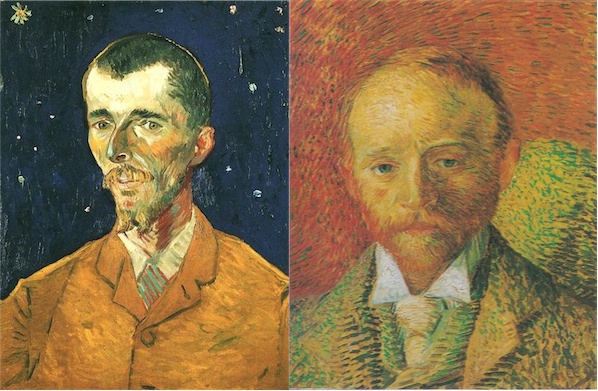
Van Gogh often used complementary colors in his works. Green and red, orange and blue, purple and yellow – he’s done it all.

In my work, I try to keep this principle of complementary colors in mind.

Source of inspiration:

Van gogh

My interpretation:
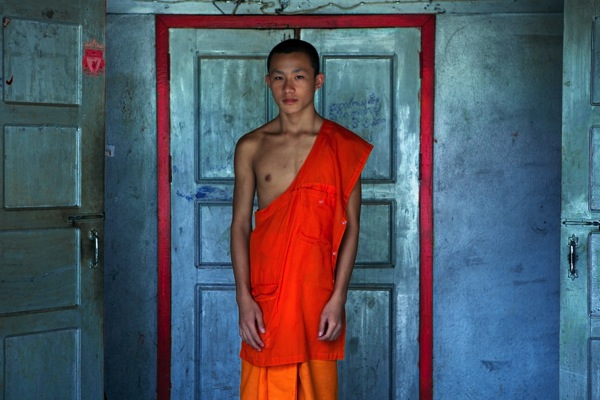
Red and green or orange and blue are working together to create a stronger portrait.

Monk

Tip 3: The Power of the “Off Camera” Gaze

In Most portraits, either photographs or paintings, the person looks straight at the viewer. Van Gogh’s work taught me that sometimes, when a person is looking “off camera”, it can give my image some sort of natural feeling, sometimes melancholic, yet always powerful.

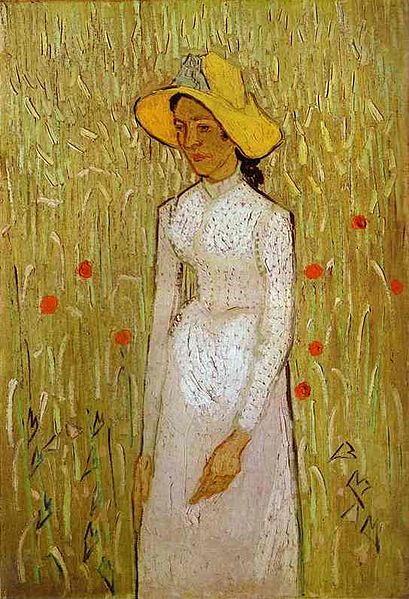
Source of inspiration:

409px Van Gogh 2

The artist made this painting during the last months of his life. And although the situation appears seemingly nice (woman standing in a field) the sadness and hardship is certainly present, mainly due to the off camera gaze.

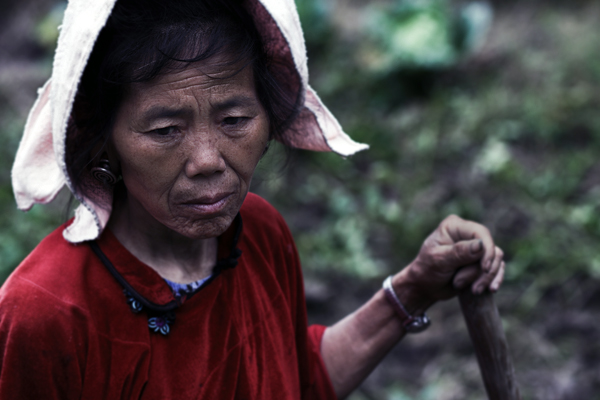
My interpretation:
So when I want to convey a feeling of hardship or sadness I will try to capture my subject in an unguarded moment, looking off camera.

Woman in field A

This off course can be done only if you get a good relationship with your subject, enabling you to work in a close distance and still be “transparent”.

I will not tell the subject what to do (“now, look off-camera and act sexy”). I will just wait for the right time to click the shutter.

Conclusions

Using light as a creative tool: Try to match the story you want to tell to the light being used. One possibility is to control the light: flash, reflectors, etc. the more simple option is to just choose the right time to shoot. Dramatic story? Choose a time when there is a harsh or dramatic lighting situation. A story about the happy moments in life? Let your light to convey this feeling by working in a soft, full of color light, like in the golden time (before sunset or right after sunrise)

Watch for complementary colors: in order to create powerful portraits.

Think about the subject’s looking direction as a creative tool: Sometimes an off camera gaze can give your story outstanding emotional impact.

The story of Vincent van Gogh Is sour – sweet. On one hand, an artist whose paintings are known by everyone and sold today for millions of dollars. On the other hand, an artist who had a great financial and emotional struggle over his life-time.

Oded Wagenstein is a Travel photographer and writer. He is a regular contributor to the National Geographic Traveler magazine (Israeli Edition) and he is known for his intimate culture portraits. You can join his Portrait & Travel Photography blog and continue to discuss on travel and people photography and get more amazing tips!

Post originally from: Digital Photography Tips.

Check out our more Photography Tips at Photography Tips for Beginners, Portrait Photography Tips and Wedding Photography Tips.

3 Tips for Creating Outstanding Portraits, Inspired by the work of Dutch Artist Van Gogh


Digital Photography School
 
Comments Off on 3 Tips for Creating Outstanding Portraits, Inspired by the work of Dutch Artist Van Gogh

Posted in Photography