A few nice visual art images I found:
VSP Visual Street Performance 2007 @ Fabrica Braco de Prata, Lisbon, Portugal

Image by Graffiti Land
A few nice visual art images I found:
VSP Visual Street Performance 2007 @ Fabrica Braco de Prata, Lisbon, Portugal
Image by Graffiti Land
Some cool visual art images:
VSP Visual Street Performance 2007 @ Fabrica Braco de Prata, Lisbon, Portugal

Image by Graffiti Land
VSP Visual Street Performance 2007 @ Fabrica Braco de Prata, Lisbon, Portugal

Image by Graffiti Land
Some cool visual art images:
VSP Visual Street Performance 2007 @ Fabrica Braco de Prata, Lisbon, Portugal

Image by Graffiti Land
VSP Visual Street Performance 2007 @ Fabrica Braco de Prata, Lisbon, Portugal
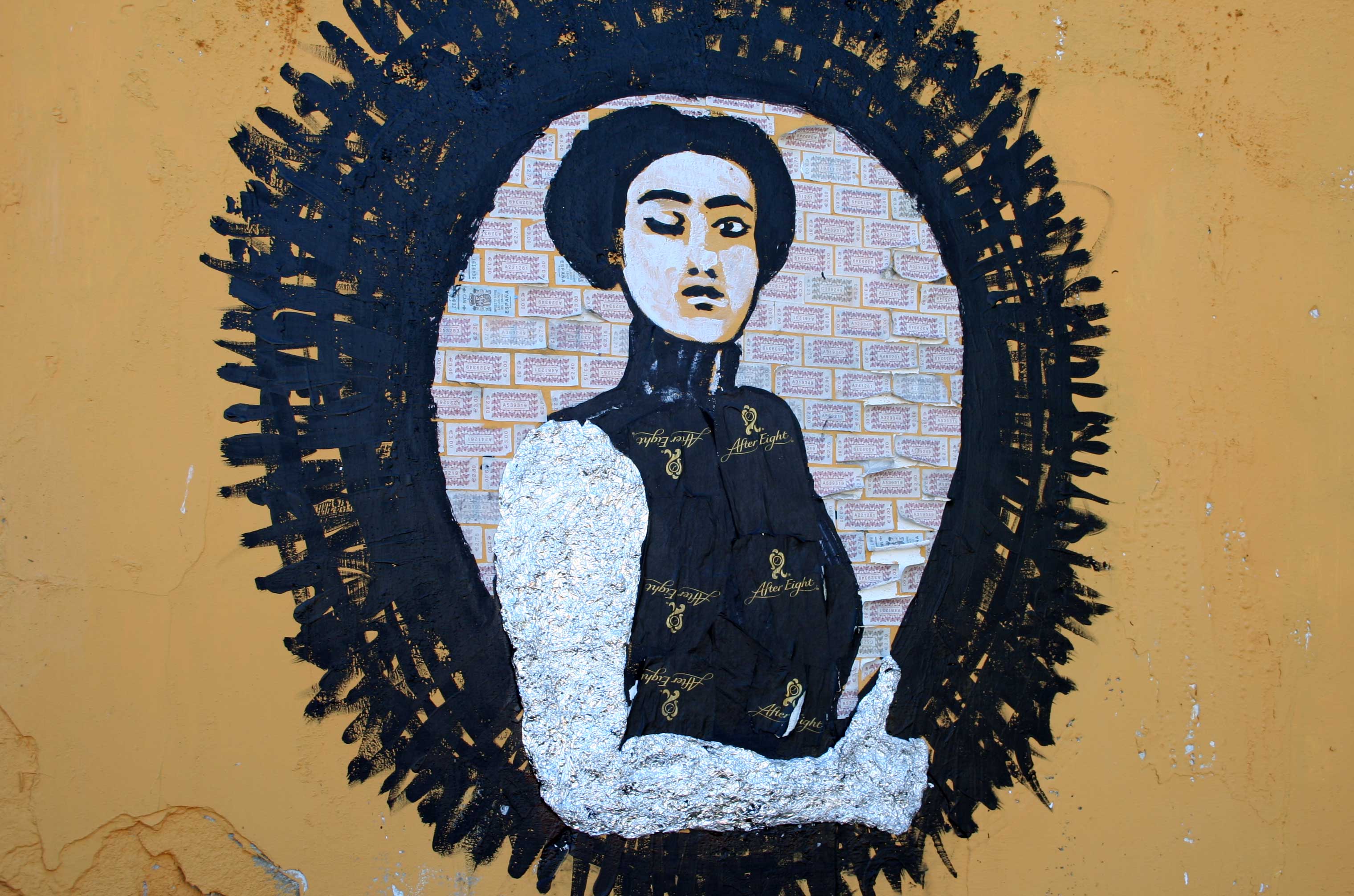
Image by Graffiti Land
Some cool visual art images:
VSP Visual Street Performance 2007 @ Fabrica Braco de Prata, Lisbon, Portugal
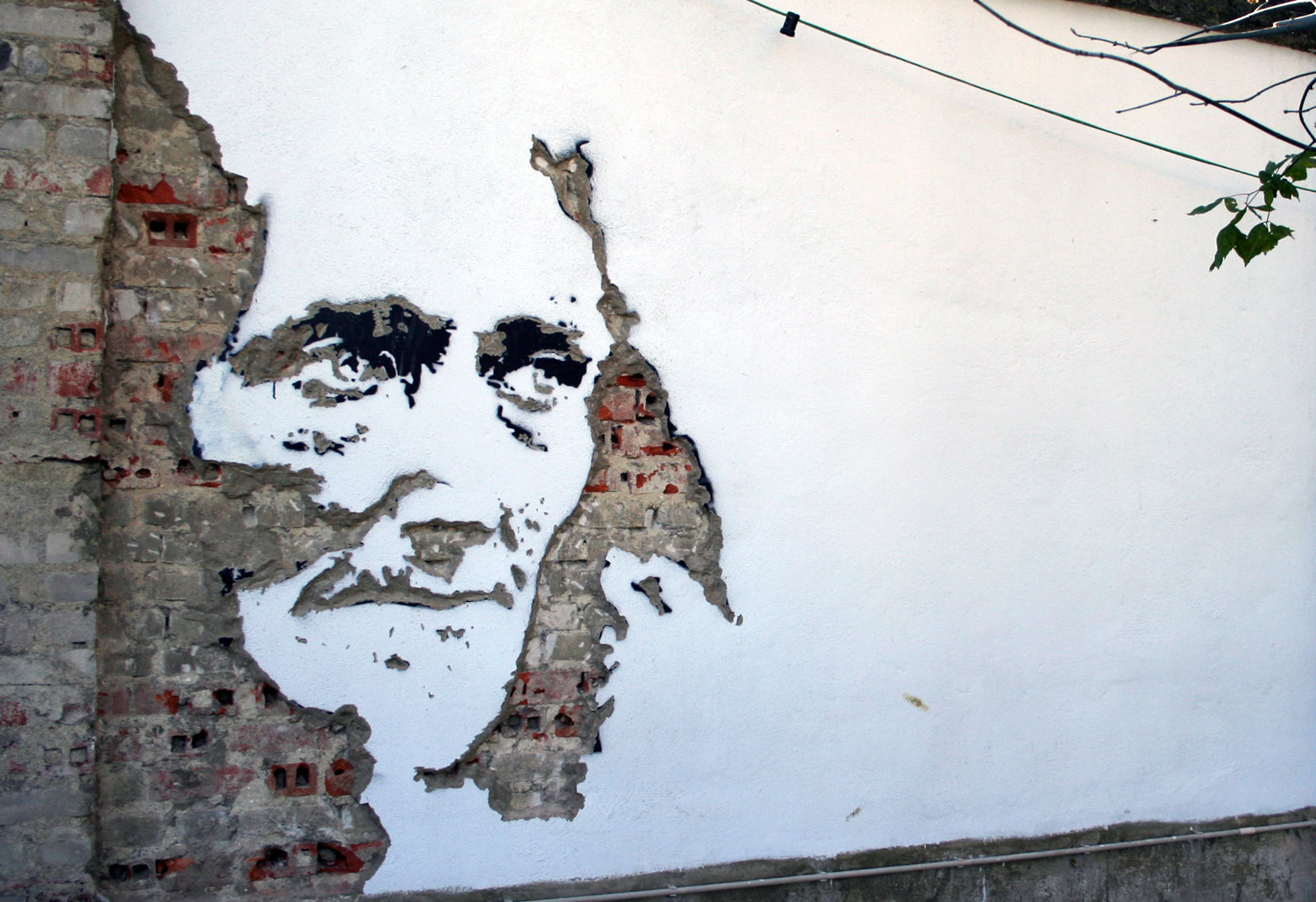
Image by Graffiti Land
VSP Visual Street Performance 2007 @ Fabrica Braco de Prata, Lisbon, Portugal
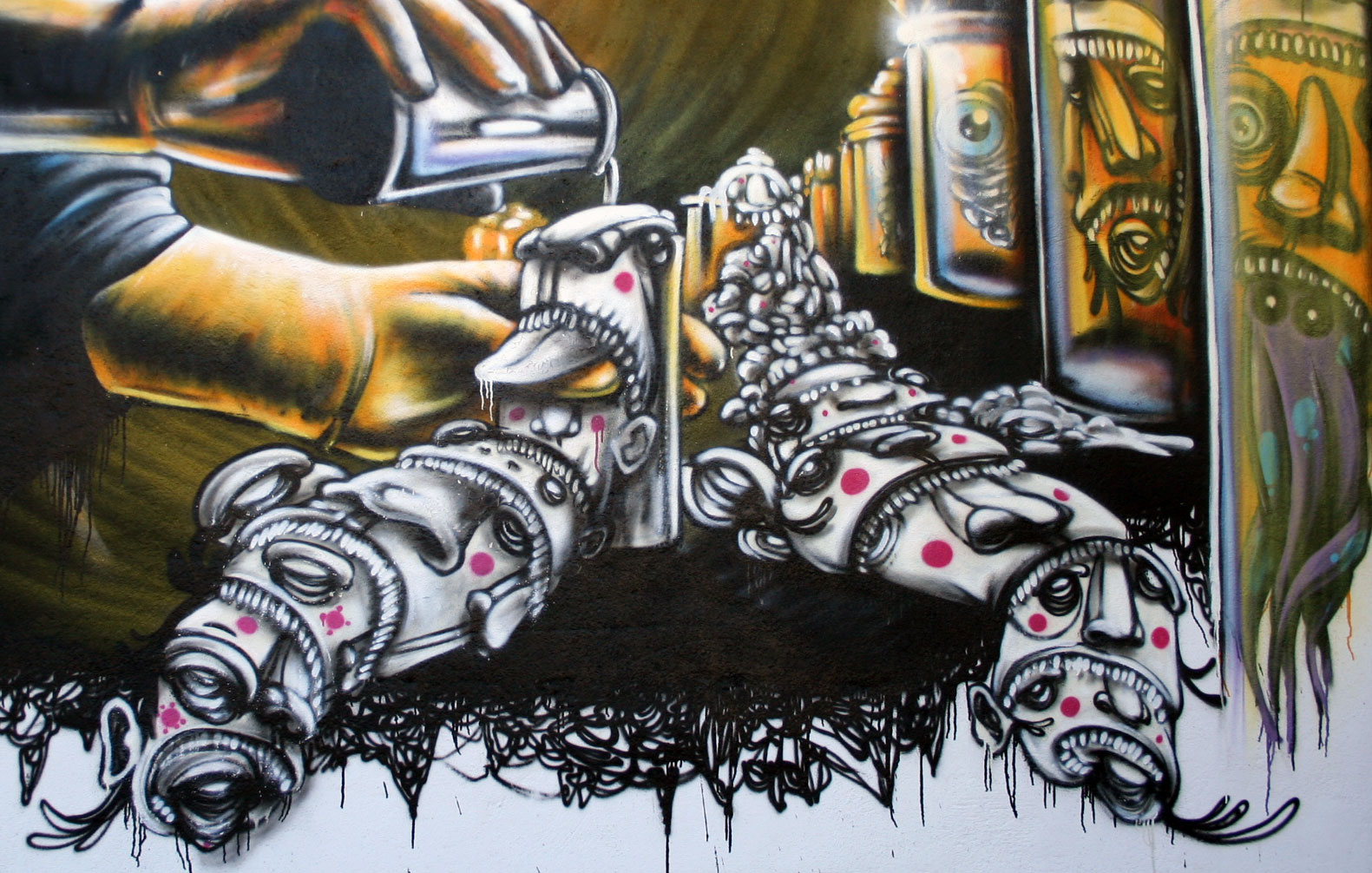
Image by Graffiti Land
VSP Visual Street Performance 2007 @ Fabrica Braco de Prata, Lisbon, Portugal
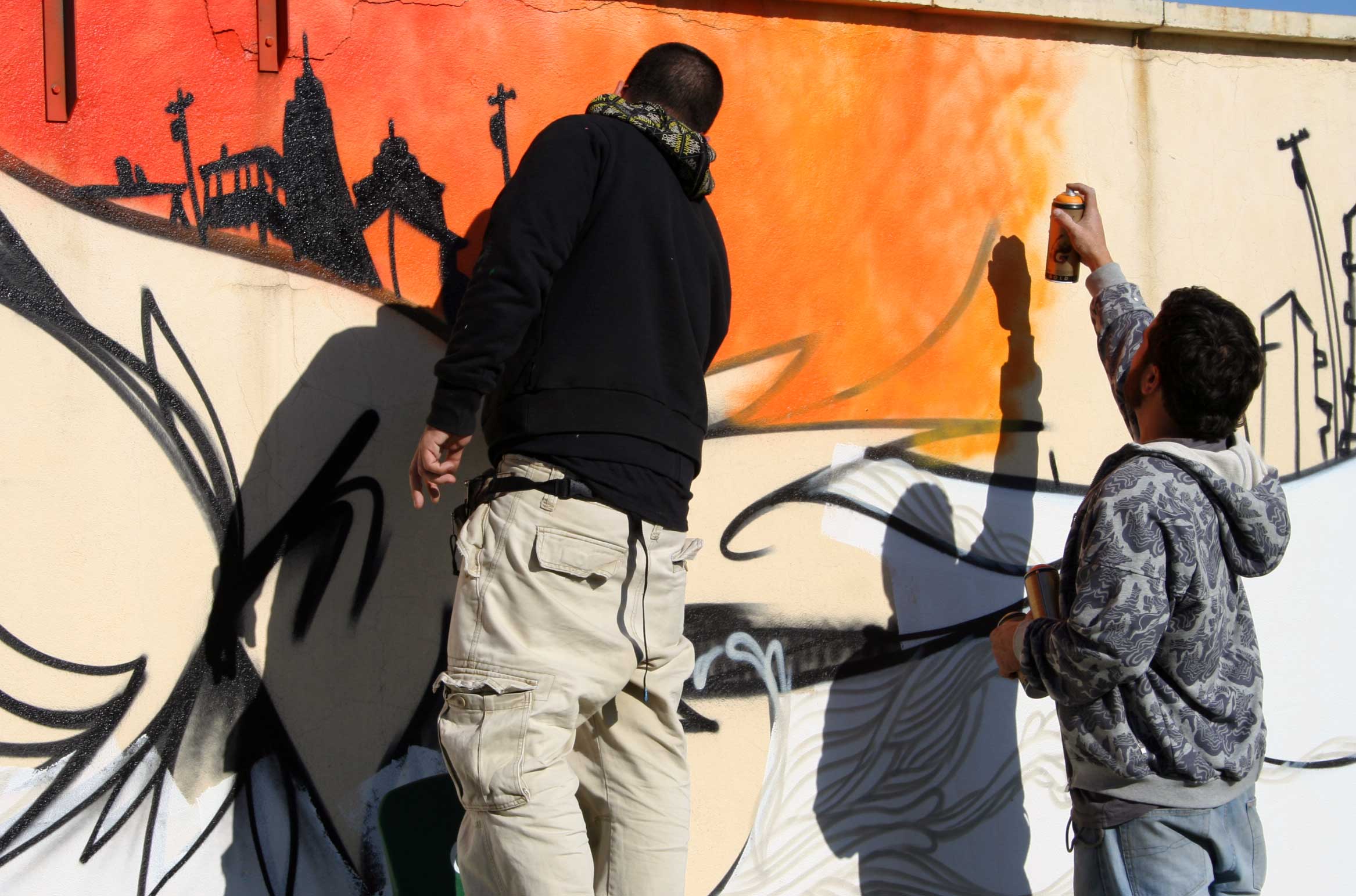
Image by Graffiti Land
Check out these visual art images:
VSP Visual Street Performance 2007 @ Fabrica Braco de Prata, Lisbon, Portugal
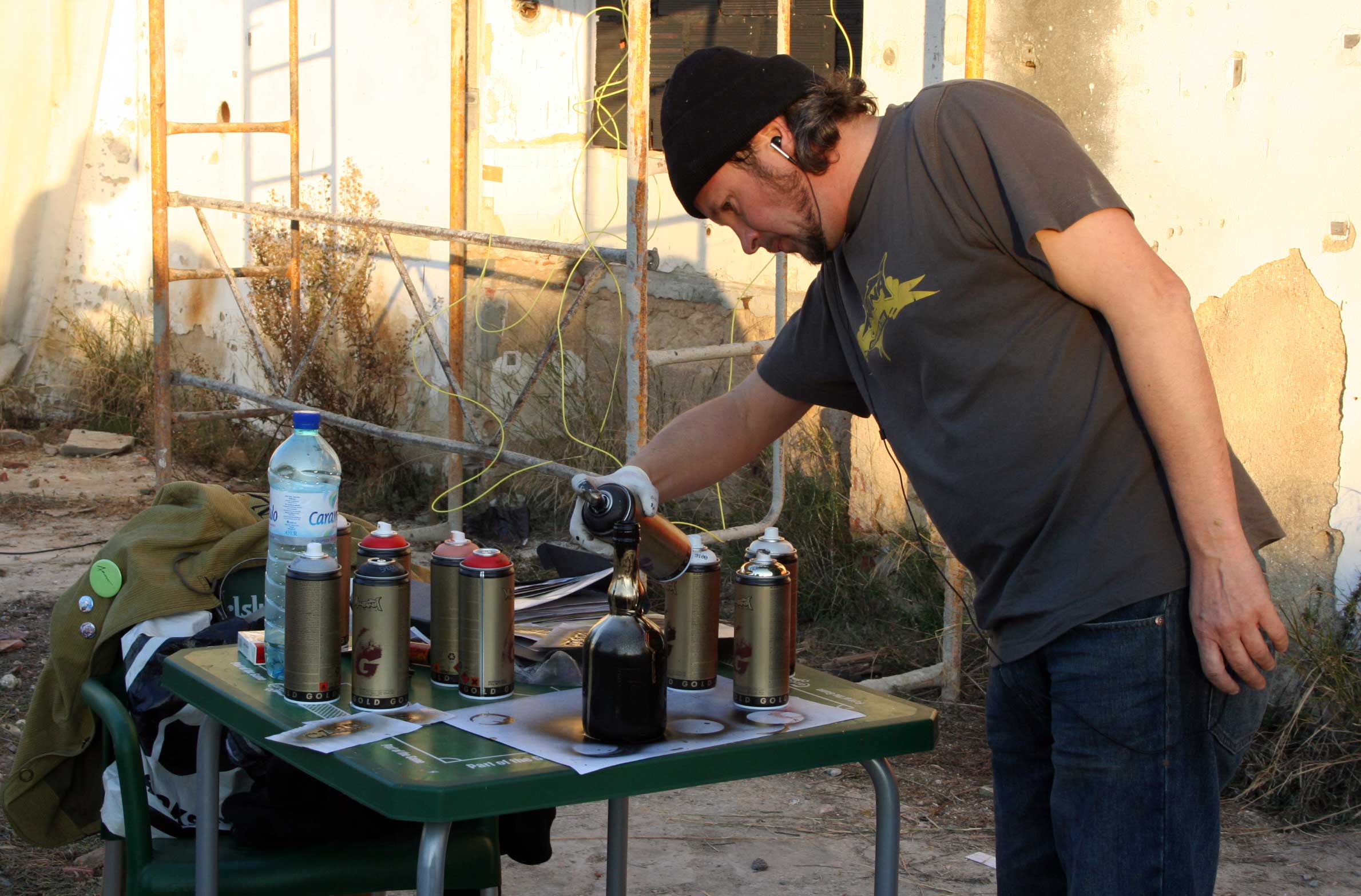
Image by Graffiti Land
[ By WebUrbanist in Design & Fixtures & Interiors. ]
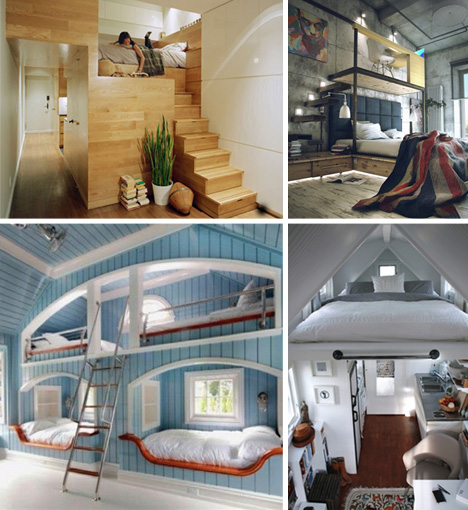
Sometimes you have nowhere to build … but up. And really, there is something nice and relaxing about removing oneself from the main floor of a home – which can be done at times even in a one-story dwelling, as these lovely lofts illustrate.
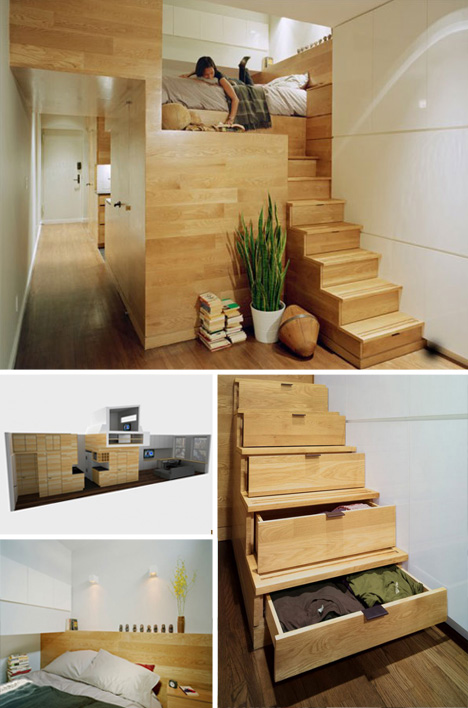
Long and narrow is the name of the game in most of Manhattan, including the East Village where this condo by JPDA Architects is located. Taking advantage of a unique pop-up opportunity at the roof level, this stellar little bedroom manages to be bright and spacious while being tucked away at the top of a slim staircase (which doubles as drawers).
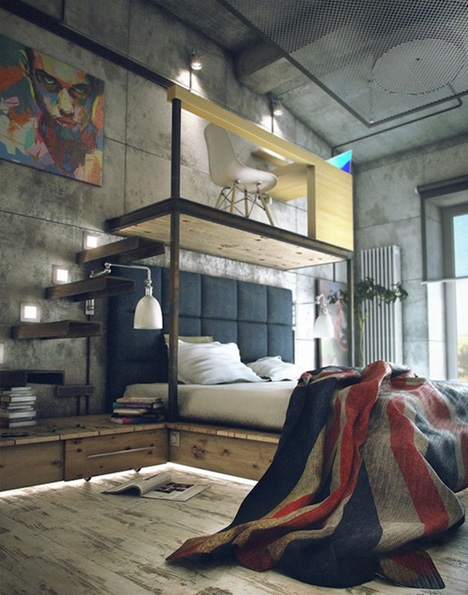
Switching styles and approaches for a moment, consider this lofted space by Maxim Zhukov. Instead of lofting the bed, this industrial space lofts a little study above the bed instead, taking advantage of the vertical opportunity in a totally unexpected way.
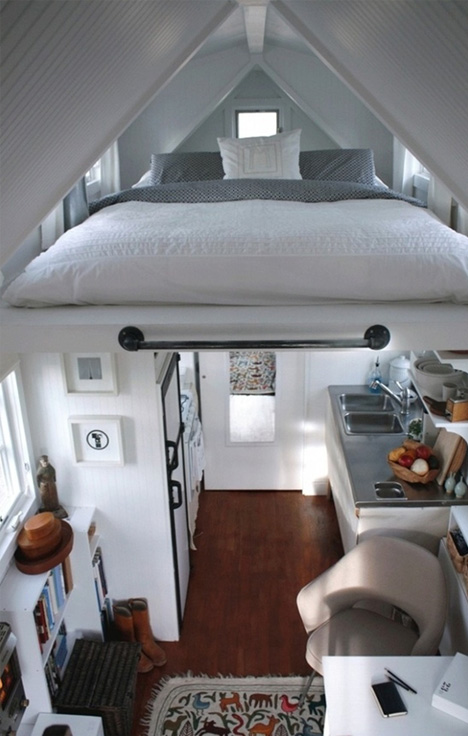

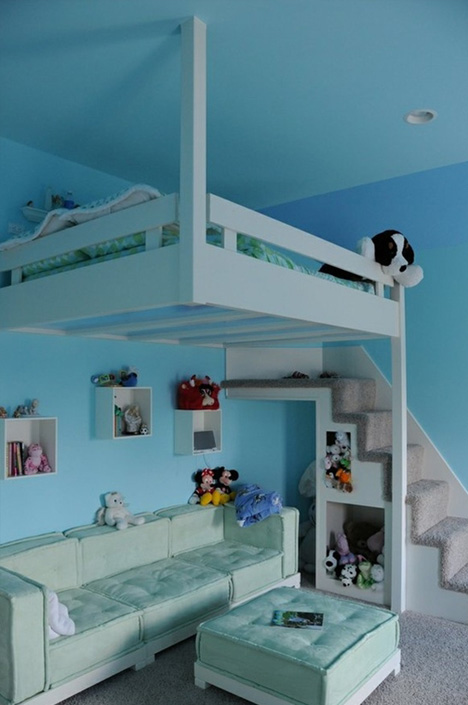
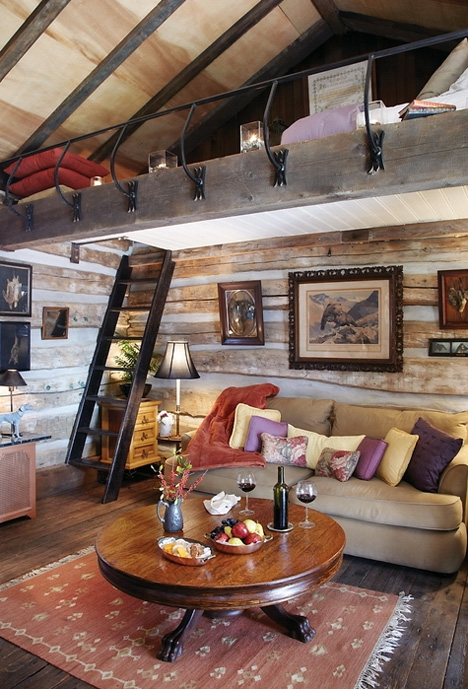
For some greater stylistic variety, here is some (P)inspiration – a few Pinterest finds to pique your interest in other built-in and add-on ways to use existing or create new upper-level spaces for everyday occupation by kids or adults.


[ WebUrbanist | Archives | Galleries | Privacy | TOS ]

 |
 |
[ By Steph in Design & Fixtures & Interiors. ]
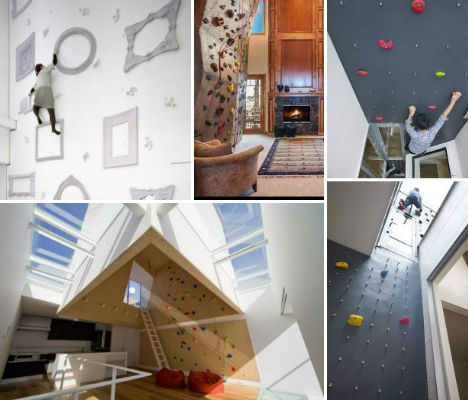
When the mountains are too far away and you don’t feel like going to the gym, you can always scale the walls of your living room or bedroom – if you’ve got one of these 12 amazing indoor climbing walls installed in your home. Ranging from the modest and colorfully modern to 36-foot rugged rock walls mimicking natural boulders, these residential climbing walls will give you something to do when you’re tired of watching television.
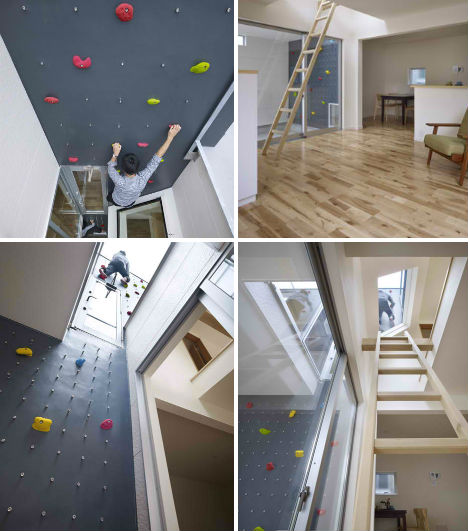
A climbing wall offers alternative access to the roof terrace from the first floor, for athletic people who are tired of taking the stairs. Designed by Japanese studio Naf Architect & Design, the 3 Way House in Tokyo turns the climbing wall into a main visual component of the home by placing it in a glassed interior courtyard visible from many rooms.
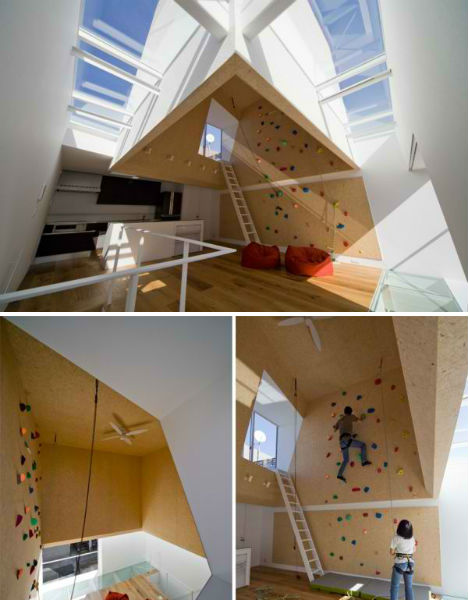
The ‘Outdoors Indoors’ house by Be-Fun design + EANA in Tokyo features a large indoor climbing wall that hovers over the communal area of the home, ascending into a wood-lined ‘cavern.’
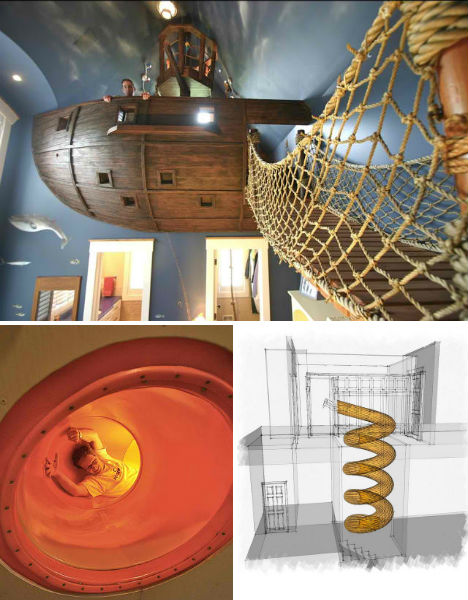
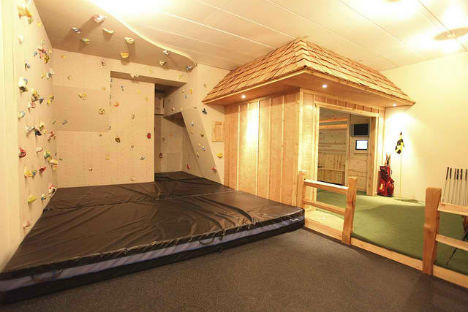
Climb down from an elevated pirate ship replica via drawbridge and head to the mudroom to plunge yourself down a secret spiral slide that will take you all the way down to the ‘climbing cave’ adjacent to a golf simulator room. This house looks insanely fun for kids of all ages.
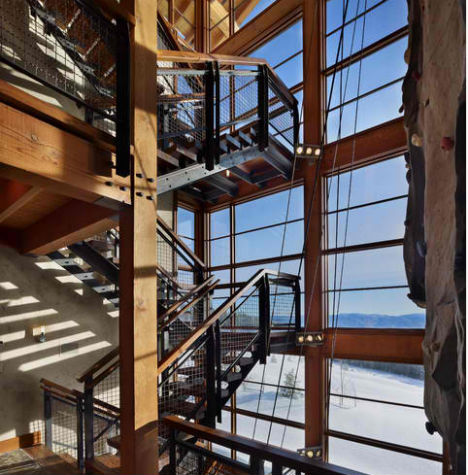
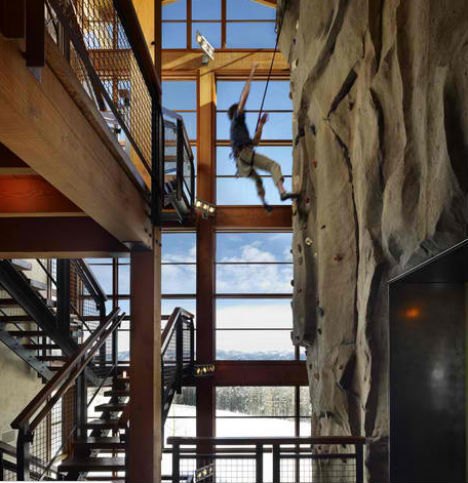
Paying tribute both to the rustic traditional cabins of Montana and the state’s rugged beauty, the Yellowstone Club Residence by Krannitz Gehl features a large glass window to maximize views and sun exposure, right next to a large climbing wall. The arrangement almost gives climbers a sense of being outside.
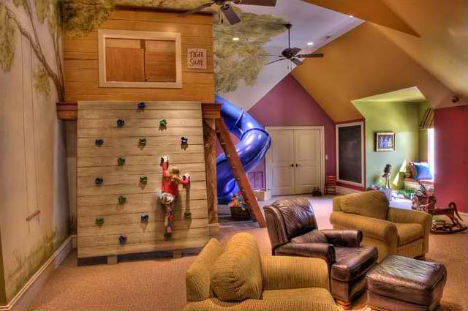
Some lucky little kids got an indoor treehouse with their own private miniature climbing wall in this residential project by Gabriel Builders.
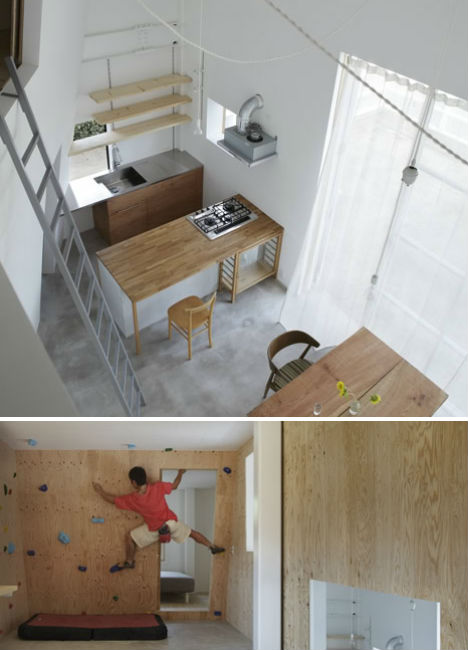
A converted warehouse in Osaka by Tato Architects features a double-height living and dining rom with a ladder providing a shortcut to and from the master bedroom. Designed for an active young couple who like ‘bouldering’, a kind of free climbing, the home also features a small climbing wall.
[ WebUrbanist | Archives | Galleries | Privacy | TOS ]

|
|
[ By WebUrbanist in Art & Installation & Sound. ]
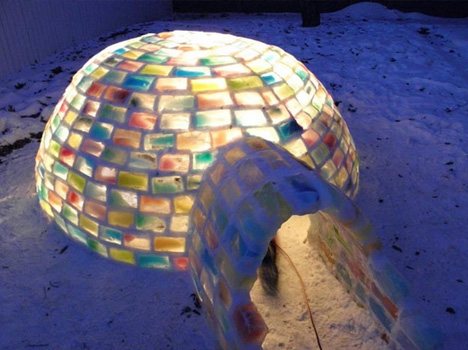
When your prospective future mother-in-law takes the time to fill hundreds of cartons with colored water before your visit, it would behoove you to do something with them. And thus this unexpected collaboration was born.
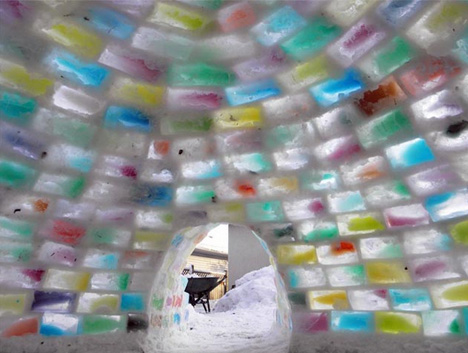
Braving temperatures down to negative 25 degrees (both Fahrenheit and Celcius), engineering student Daniel Gray and his girlfriend Kathleen Starrie took these frozen ice bricked (formed by Brigid Burton) and constructed an incredible structure.
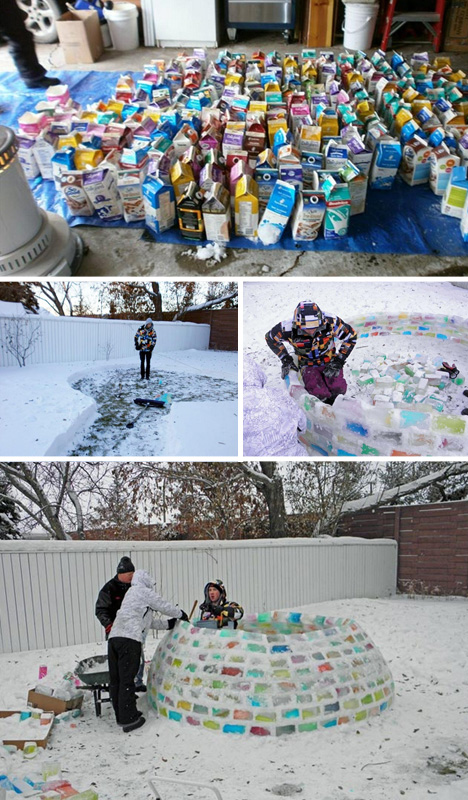
Instead of carving each block, Gray developed a kind of ‘snowcrete’, using flexible layers of snow as mortar to create the hemispherical shape required (after extensive calculations to make sure it was of a size that would not run them out of building materials).
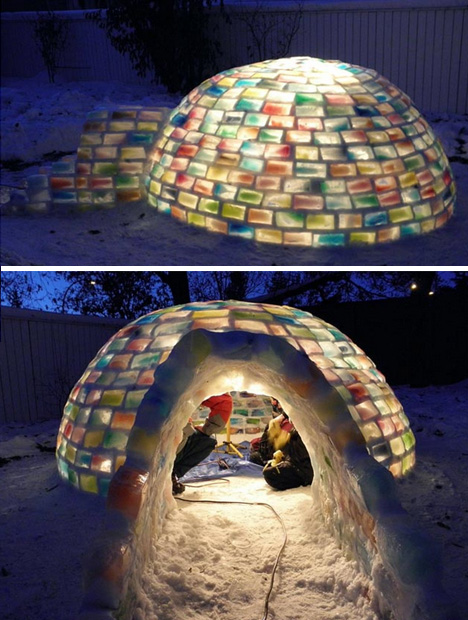
150 combined work-hours and 5 days later, the result is nothing short of stunning – the semi-spontaneous igloo is colorful by day, but even more dazzling by night when lit from the inside. If this was a pre-marital tes, one can only hope he passed with flying (or frozen) colors.
[ WebUrbanist | Archives | Galleries | Privacy | TOS ]

|
|
A few nice visual art images I found:
The Mango Tree of Psychedelic Terror
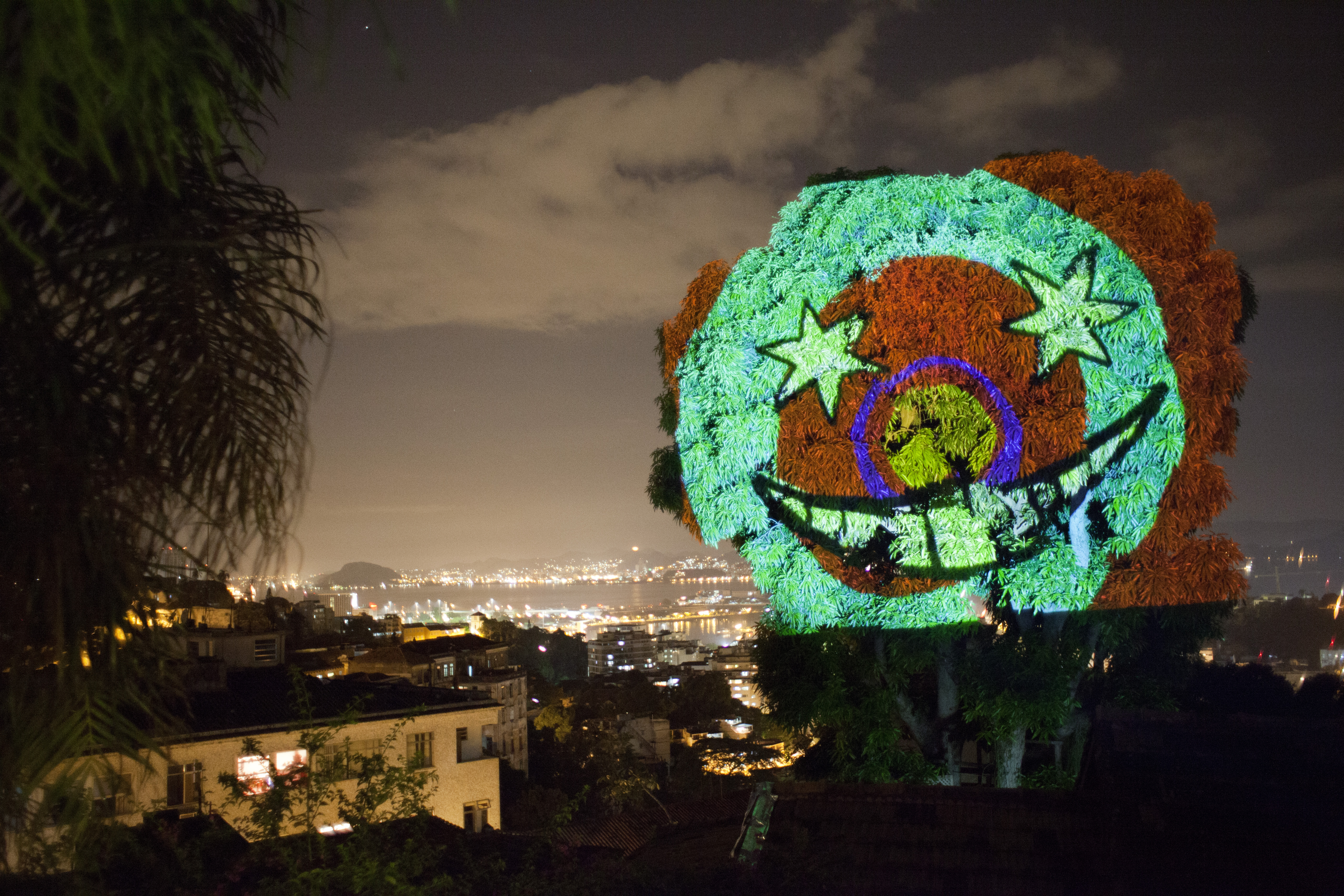
Image by Maki79
Visuals at a party in Santa Teresa, Rio de Janeiro. Made with Tagtool for iPad – www.tagtool.at
The Mango Tree of Psychedelic Terror
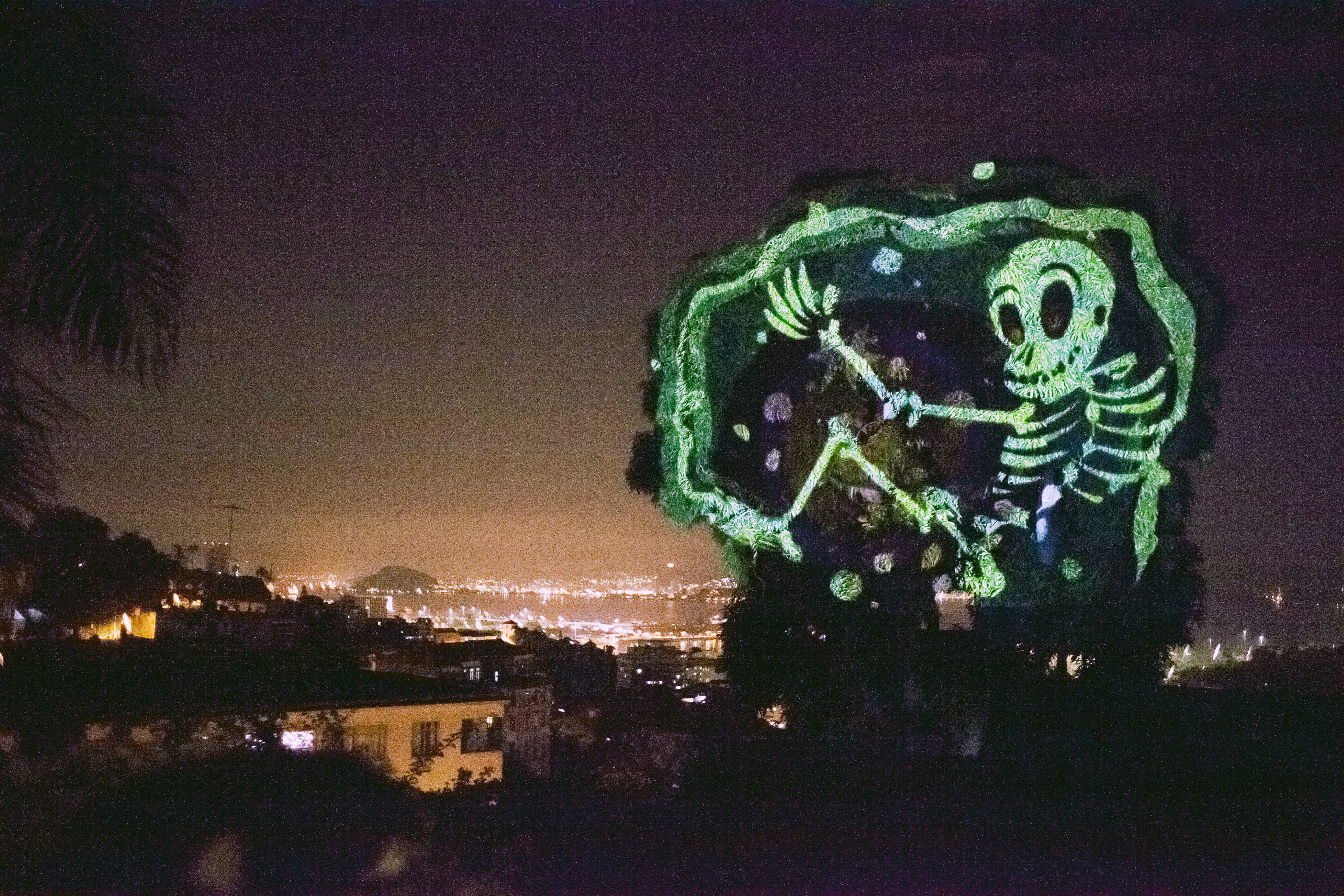
Image by Maki79
Visuals at a party in Santa Teresa, Rio de Janeiro. Made with Tagtool for iPad – www.tagtool.at
The Mango Tree of Psychedelic Terror
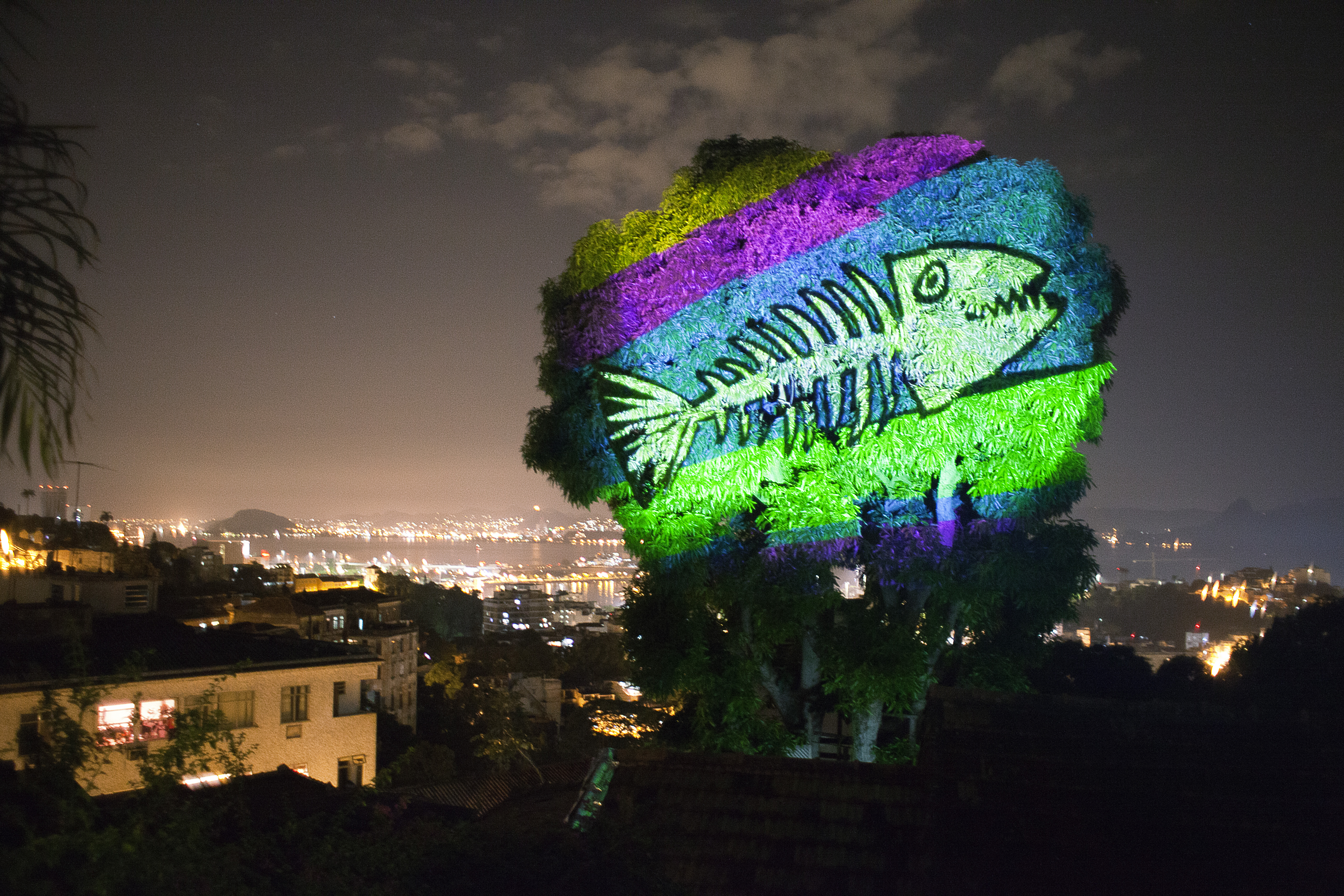
Image by Maki79
Visuals at a party in Santa Teresa, Rio de Janeiro. Made with Tagtool for iPad – www.tagtool.at
Some cool visual art images:
Lucile Blanch, American painter, 1895-1981

Image by Smithsonian Institution
Description: Lucile Blanch was a recipient of a Guggenheim Fellowship as well as a WPA (Public Works of Art Program) artist commission. She was a key part of the revitalization of the Woodstock Art Colony in the 1920s as well. By the mid-1940s her style evolved from realism into abstraction.
Creator/Photographer: Peter A. Juley & Son
Medium: Black and white photographic print
Dimensions: 8 in x 10 in
Culture: American
Date: 1930
Persistent URL: http://photography.si.edu/SearchImage.aspx?id=5813
Repository: Smithsonian American Art Museum, Photograph Archives
Collection: Peter A. Juley & Son Collection – The Peter A. Juley & Son Collection is comprised of 127,000 black-and-white photographic negatives documenting the works of more than 11,000 American artists. Throughout its long history, from 1896 to 1975, the Juley firm served as the largest and most respected fine arts photography firm in New York. The Juley Collection, acquired by the Smithsonian American Art Museum in 1975, constitutes a unique visual record of American art sometimes providing the only photographic documentation of altered, damaged, or lost works. Included in the collection are over 4,700 photographic portraits of artists.
Accession number: J0001215
Tim Durfee, Bruce Sterling, Fiona Raby, Anne Burdick

Image by G A R N E T
Art Center (Pasadena, California)
Exhibition: www.artcenter.edu/mdp/madeup/exhibition.html
Tim Durfee is organizer-curator-director of the events that comprise the MADE UP series. Tim became part of the core faculty at the MDP in 2009, after a two-year visiting Associate Professorship at Woodbury University. Before that, he taught for twelve years at SCI-Arc (The Southern California Institute of Architecture), where we was Director of Visual Studies. Tim’s independent and collaborative practices are diverse, but — resisting the term ‘multi-disciplinary’— attempt to operate in a way where the appropriate mode and medium for a given project emerges from a process of research and inquiry. Some of this work includes award-winning buildings, exhibitions, online exhibitions, sign systems, motion and sound.
Bruce Sterling is an Austin-based science fiction writer and Net critic, internationally recognized as a cyberspace theorist. He currently blogs at Beyond the Beyond for Wired Magazine.
Bruce’s most recent book-length essays question and promote how the future is shaping our concepts of self, time and space, including Shaping Things (2005), and Tomorrow Now: Envisioning the Next Fifty Years (2002). Bruce was the founder of the Dead Media Project, an on-line reliquary of forgotten media technologies. He founded the Viridian Design Movement, an environmental aesthetic movement founded on the ideas of global citizenship, environmental design and techno-progressiveness. His writings have been very influential in the cyberpunk movement in literature, specifically the novels Heavy Weather (1994), Islands in the Net (1988), Schismatrix (1985), The Artificial Kid (1980), and Involution Ocean (1977). He co-authored, with William Gibson, The Difference Engine (1990), a novel that is part of the steampunk sub-genre.
Fiona Raby studied Architecture at the RCA before working for Kei’ichi Irie Architects in Tokyo. She also holds an MPhil in Computer Related Design from the RCA. She was a founding member of the CRD Research Studio where she worked as a Senior Research Fellow leading externally funded research projects. She taught in Architecture for over 10 years before teaching in Design Interactions. Fiona is also a partner in Dunne + Raby, a creative design partnership that use design as a medium to stimulate discussion and debate amongst designers, industry and the public about the social, cultural and ethical implications of existing and emerging technologies. She is co-author, with Anthony Dunne, of Design Noir: The Secret Life of Electronic Objects.
Anne Burdick is a regular participant in the international dialogue regarding the future of graduate education and research in design. In addition, she designs experimental text projects in diverse media, for which she has garnered recognition, from the prestigious Leipzig Award for book design to I.D. Magazine’s Interactive Design Review for her work with interactive texts. Burdick has designed books of literary/media criticism by authors such as Marshall McLuhan and N. Katherine Hayles and she is currently developing electronic corpora with the Austrian Academy of Sciences. Burdick’s writing and design can be found in the Los Angeles Times, Eye Magazine and Electronic Book Review, among others, and her work is held in the permanent collections of both SFMOMA and MoMA. Burdick studied graphic design at both Art Center College of Design and San Diego State University prior to receiving a B.F.A. and M.F.A. in graphic design at California Institute of the Arts.