RSS
 

Posts Tagged ‘Conditions’

5 Tips for Photographing Wildlife in Low Light Conditions

08 Nov

The post 5 Tips for Photographing Wildlife in Low Light Conditions appeared first on Digital Photography School. It was authored by Will Nicholls.

NOTE: Check out our Ultimate Guide to Nature and Outdoor Photography.

Most wildlife is active during dawn or dusk, and photographing animals in low light can be frustrating when you’re pushing your equipment to the limit. Even if you’re shooting on the latest and greatest DSLR camera, you’re still going to reach a point where the light is too low to use the ideal settings. It’s at this point that you need to start calling on your skill and technique to improve your success rate.

Here are a few tricks that I use in my own wildlife photography to get better, more usable images in low light.

roe deer in low light

1. Choose the perfect aperture and shutter speed for low light

When shooting in low light, you should use the widest aperture you can (i.e., the lowest f-number) to let in the most light possible.

If you’re using expensive telephoto lenses, then you’ll probably have a maximum aperture of f/4 or even f/2.8. However, the majority of midrange and budget telephoto lenses have a maximum aperture of about f/5.6 or f/6.3. Still, keep the aperture as wide as possible to give yourself the optimum baseline.

With regard to the shutter speed, the rule most people learn is to use a speed of at least 1 over the focal length of your lens. For example, a 400mm lens would need a shutter speed of at least 1/400s to eliminate camera shake effectively. However, this rule often isn’t possible in low light conditions. So you’re going to need to break it!

Drop your shutter speed as much as you can while still keeping the image sharp. You can go much slower than you think. 1/100s is totally plausible.

To prevent camera shake, enable any image stabilization technology offered by your lens. It’s important to use a tripod, too, as it’ll keep things steady.

wildlife low light
This bear photo was taken at 1/30s, f/4, and ISO 8000.

Try panning

Once your shutter speed starts to get really slow, then you’ll almost definitely introduce motion blur from the subject moving. But if your subject is walking or running along, you can pan your camera along with it.

With practice, you can move your camera at the same rate as the animal and freeze its body – even with a slow shutter speed. You will get a blurred background, but it’s actually a rather cool effect (see the bear photo above!).

2. Don’t be afraid to boost your ISO

ISO might be the most feared setting among photographers. However, it shouldn’t make you tremble! I meet many photographers who don’t move the ISO above 400, even if their cameras are more than capable of handling the increase.

Sure, higher ISOs introduce noise into your photo, but a noisy image is better than a blurred one.

Test out your camera and see how far you can feasibly increase the ISO before shots become unusable. You can also remove noise in post-production, so you can sometimes salvage a too-noisy image.

The image below was taken at ISO 5000, but you’d be forgiven for thinking the value was much, much lower. The camera in question was a Nikon D4, which has notoriously good ISO capabilities. But this is an extreme example, and at ISO 5000 there was still noise. Even lower-level DSLR cameras can still be pushed to ISO 1600 or so while achieving fairly good quality images.

eagle in low light
An eagle photo taken at 1/100s, f/4, and ISO 5000.

Be brave and increase your ISO when you need a faster shutter speed. It’ll help you keep shooting as the light gets lower, meaning you’ll have more time to wait for wildlife!

3. Be careful when using a zoom lens

Zoom lenses sometimes use a variable maximum aperture.

What does this mean?

Zoomed out, you may have an aperture of f/4 – but as you zoom in, this can increase to something like f/6.3. If your lens has a constant aperture throughout, then you don’t need to worry. But if it doesn’t, then be conscious of the fact that you’ll have less light reaching the sensor when you’re zoomed in.

When your lens is limited by a variable maximum aperture, think about zooming out and taking a more atmospheric or environmental image. You’ll have a larger aperture to play with, and you may be able to achieve a more usable shot than if you zoom in all the way with less light.

bear in environment
If your lens has a variable aperture, try zooming out to utilize the widest option and take environmental images that don’t focus only on the animal.

4. Utilize burst mode

Don’t forget that you have a burst mode. If you’re worried about blurry images, fire off as many frames as possible. This will increase your chances of ending up with a usable shot.

You see, slower shutter speeds mean more chance for both camera blur and motion blur. If an animal moves its head, your shot may well be ruined. But if you’ve been shooting multiple images at once (via burst mode!), then chances are that you’ll get another shot, taken a fraction of a second later, that isn’t blurred.

Burst mode is honestly one of the most useful things you can do when photographing wildlife in low light. It really helps to get usable photos and works like magic alongside the other techniques in this article.

5. Don’t underexpose

It can be tempting to underexpose your photo, knowing that you can brighten it later. While this may give you a quicker shutter speed, the photo will likely need significant brightening in post-production. And lightening an already-dark scene will introduce a lot of digital noise.

low light wildlife photography
This photo was taken at 1/60s, f/4, and ISO 5000.

Instead, try to keep your exposure as balanced as possible. If you can keep your histogram happy, then you’ll have a smoother ride through the editing process. The worst thing would be to take an underexposed shot, only to find out later that it’s unusable because brightening it up ruins it.

I prefer to risk blur but fire multiple frames than to take an underexposed, sharp shot. Maybe that’s just me, but the technique frequently works in my favor.

Photographing wildlife in low light: conclusion

No matter how good you are at photography or how good your gear is, you’re going to have times when your shots are ruined by low light. That’s just part of the game – but, with luck, you will manage to capture strong low light shots some of the time.

With practice, you’ll learn when there’s no point battling against depleting light levels. And a combination of the techniques I’ve shared here should keep you in action for longer.

Do you have any other low light tips to add? Please share them in the comments below!

FURTHER READING: Check out our new Ultimate Guide to Nature and Outdoor Photography.

The post 5 Tips for Photographing Wildlife in Low Light Conditions appeared first on Digital Photography School. It was authored by Will Nicholls.


Digital Photography School

 
Comments Off on 5 Tips for Photographing Wildlife in Low Light Conditions

Posted in Photography


Visual Flow’s new presets are custom made based on lighting conditions in an image

31 Oct

Visual Flow, the company launched by DVLP and SLR Lounge, has introduced ‘The Modern Pack,’ a series of 10 presets for Lightroom and Adobe Camera Raw. The Modern Pack stands out from competitors, according to Visual Flow, because it is ‘lighting condition-based,’ meaning that it does not require the ‘perfect lighting and weather conditions’ for which other presets are designed.

According to Visual Flow, its new lighting condition-based presets use a Color Engine and camera profile technology to unify the color variations between camera manufacturers and to create the look of the selected preset regardless of the lighting conditions in the input image.

The Modern Pack presets include Black & White, Hard Light, Soft Light, Backlit, HDR Natural, Over Saturated, Tungsten, Tungsten Mix and Green Tint; further comparison examples of each preset can be found on the Visual Flow website here. According to the company, the work it put into its Color Engine means users will enjoy 1-click presets without the need for extensive manual tweaking.

Joining The Modern Pack is the non-destructive Retouching Toolkit for Lightroom and ACR, which features 26 tools and 47 retouching brushes for dodging and burning, retouching, scene enhancements,and more.

The Modern Preset Pack and the Retouching Kit are available for $ 95 each; there’s also a bundle of the two for $ 165.

Articles: Digital Photography Review (dpreview.com)

 
Comments Off on Visual Flow’s new presets are custom made based on lighting conditions in an image

Posted in Uncategorized


Desert Oddity: Shooting Under Rare Conditions in Namibia

04 Aug

Earlier this year I guided a group of photographers in Namibia. It had been some time since my last visit and I was very keen to return, but little did I know that this beautiful African country would see some very rare weather conditions during my visit. In this article I’ll describe what happened.

It was a peculiar time in Namibia, with some very weird weather. A massive thunderstorm hit about 1500 km north of where that kind of thing normally happens, and bizarrely enough, it happened exactly when we were there. We were rained on during our entire visit to the ghost town of Kolmanskop, which my participants weren’t too happy about, since it meant they were missing the famous light coming out of the windows of the buildings.
Kolmanskop on a normal sunny day. The light plays a significant role in the images usually produced here.
The same room on a rainy day. The pockmarked dune was unique and visually quite interesting, but there was no light.

Locals said the last time it had rained that hard was 12 years ago, and small children were panicking, having never experienced such a storm in their lifetimes! Several 100-year-old roofs collapsed, further restricting access.

I, for one, enjoyed the rainy conditions. The dunes inside the rooms were all pocked with raindrops, which contributed a great deal to the uniqueness factor.

But Kolmanskop was just the forerunner. After wrapping things up there, we headed to what was planned to be the highlight of the trip: Sossusvlei Desert. A local friend told me to watch the dunes upon arrival: if there were lines on the dunes, it meant that there was heavy rain in the desert. I have to admit I didn’t really understand what he was talking about – lines on the dunes? But upon seeing the dunes, I immediately got it.

The rain had painted the dunes with wonderful dark brush strokes. Note how high the dunes are in comparison with the full size camel thorn trees!
The dark lines completely transformed the red dunes.
Flame-like patterns accentuated by the dark lines. Note that the blurred tree is due to heat-haze, not misfocusing.

I could barely contain my excitement for the next morning shoot. We were scheduled to shoot in Deadvlei, and heavy rain over the Sossusvlei dunes meant a chance for water in the pan. Unfortunately the Namibian sun is hot, and most of the water had evaporated before our arrival. A very small number of tiny puddles remained, and my group and I took advantage and produced some unique shots.

The dead camel thorn trees of Deadvlei reflecting in rainwater. The puddle was actually tiny, and to get the image to look like this I had to shoot at water level, getting mud all over the bottom of my camera.

I returned to the lodge quite happy with my results, but I knew that by the next day there would be no water left. In the morning I woke up expecting a standard Deadvlei shoot. But when we reached the end of the short hike, something marvelous appeared before us. The pan was absolutely full of mist!

I quickly pulled myself together and informed my participants that we needed to make very good use of the mist. It could dissipate before sunrise or even in a few minutes, and so deep focus and efficiency was needed to capture as many good images as possible.

We kept shooting, and the mist was moving back and forth in the pan, but it was still there. In fact, at times it seemed to be getting thicker! When the sun started hitting the dunes, I knew it was money time.

This isn’t a unique composition by any means, but the heavy mist made it exceptional. Note the figures being lit by early sunlight on top of the dune to the left.

As the sunrise progressed, I tried to utilize the mist to my advantage, and used it to create depth in my images but including trees in different distances. The further trees were deeper in the mist.

Many more compositions presented themselves, some more unusual, some less so. But all were beautifully enhanced by the mist.

A misty twist on a well known composition. Note the dark lines on the background dune.

As the sunlight began moving across the pan, I could incorporate the lines it created in the images, to create even more interest.

When the mist finally dissipated, we could all take a breath and digest what had happened. That once-per-decade storm that left enough water to allow reflections had also left a large amount of moisture in the air, creating the mist. We couldn’t help feeling incredibly fortunate to have witnessed this special combination of circumstances.

Luck is a major factor in nature photography. While a good photographer can create good imagery in sub-optimal conditions, there are times when it all comes together, and the photographer who is ready – and focused – will reap the rewards.


Erez Marom is a professional nature photographer, photography guide and traveler based in Israel. You can follow Erez’s work on Instagram and Facebook, and subscribe to his mailing list for updates.

If you’d like to experience and shoot some of the most fascinating landscapes on earth with Erez as your guide, take a look at his unique photography workshops in Southern Iceland, Northern Iceland, The Lofoten Islands, Patagonia, Greenland, Namibia the Faroe Islands and Ethiopia.

Erez offers video tutorials discussing his images and explaining how he achieved them.

More Namibia:

  • Behind the Shot: Dali’s Dream

Selected Articles by Erez Marom:

  • Parallelism in Landscape Photography
  • Winds of Change: Shooting changing landscapes
  • Behind the Shot: Dark Matter
  • On the Importance of Naming Images
  • On Causality in Landscape Photography
  • Behind the Shot: Lost in Space
  • The Art of the Unforeground
  • Whatever it Doesn’t Take

Articles: Digital Photography Review (dpreview.com)

 
Comments Off on Desert Oddity: Shooting Under Rare Conditions in Namibia

Posted in Uncategorized


Tips for Better Results When Shooting in Low Light Conditions

23 Jul

Shooting in low light conditions can result in beautiful photographs. But it also presents plenty of technical challenges for you as a photographer to overcome.

noodles in a person's hands - Tips for Better Results When Shooting in Low Light Conditions

The main issues with doing low light photography are:

  • You may not be able to use a shutter speed fast enough to hand hold your camera without creating camera shake.
  • If you use a high ISO, your photos can be very noisy.
  • Shooting at a wider aperture might not give you the depth-of-field you need to get enough of the subject in focus.
  • Your pictures can be underexposed and lack shadow detail.
  • It may be difficult for your lens to focus in low light.

Working with a tripod can greatly reduce some of these technical difficulties, but what about situations where shooting handheld is usually a necessity, like street photography? Or in places where a tripod may be prohibited, like a restaurant or museum?

There are ways to take control of your camera to ensure you get the most out of these challenging situations.

urban street scene high viewpoint - Tips for Better Results When Shooting in Low Light Conditions

Tip #1 – Use a Prime Lens

There is no denying that zoom lenses are convenient, but choosing a prime over a zoom lens can ensure that your images will be that much sharper.

Zoom lenses are constructed with extra glass elements that move in order to zoom. More elements within the lens contribute to lens diffraction, a phenomenon of optical physics that degrades the quality of an image. Lens diffraction is why a generic prime lens can often be sharper than a much pricier zoom counterpart.

2 images of a tree and leaves - Tips for Better Results When Shooting in Low Light Conditions

Shot with an 85mm prime lens.

Tip #2 – Use Shutter Priority

We’re taught that the best way to get great photos is to always shoot in Manual Mode, but sometimes this isn’t the case. In low light photography, shooting in shutter priority mode will help you take better control of your camera.

Shutter Priority mode lets you set the ISO and shutter speed, while the camera will calculate the best aperture for the lighting conditions in which you’re working.

The shutter speed needs to be fast enough to prevent camera shake. Your settings will vary, depending on your focal length and the size of your camera’s sensor. A good approach is to start with the same number (as a fraction) as your focal length for a full frame camera, and then add a stop (double it).

For example, if you are shooting with a 50mm on a full frame camera, try 1/100th of a second and check your results. For a cropped sensor, double your focal length number and add a stop (so 50mm x 2 = 100 x 2 = 200 so 1/200th).

Keep in mind that this is only a guideline. It’s to be used as a quick baseline from which to start. Your camera, the lens you’re using, and the environment you’re shooting in are all factors that will influence your end result.

Tip #3 – Use a High ISO

Tips for Better Results When Shooting in Low Light Conditions - tree with pink lights in it

Your images can be very noisy at a high ISO. Some cameras handle high ISO settings better than others, but the vast majority of DSLRs (and mirrorless cameras) these days have good ISO capabilities. At least good enough to give you a decent base file for post-processing.

Lightroom and Photoshop can fix noise effectively, but the best results can be had with a program called Dfine from DxO’s Nik Collection. (Note: Once available for free, this plug-in can now be purchased with the entire Nik Collection from DxO).

The software measures select areas of your image for noise and adjusts it automatically. You can also take control and selectively increase and decrease noise reduction intensity and type in different parts of the image.

Before beginning to shoot in low light, I recommend doing an ISO test to determine how far you can push it with your camera. Run a few images through your post-processing program of choice and analyze the results. If you need to do a lot of noise reduction, your images might end up looking too plastic.

Tip #4 – Use Back Button Focus

Many of us rely on autofocus these days, especially if we have less than 20/20 vision. Both autofocus and manual focus have their pros and cons.

For example, when using autofocus, it’s very easy for the camera to miss focus at wider apertures. Also, when a scene lacks contrast, which is often the case in low lighting scenarios, the lens may struggle to find focus. You can remedy this by focusing on the edge of a brighter spot in your frame and then recomposing.

Tips for Better Results When Shooting in Low Light Conditions - images show in low light with back button focus

You’ll need to use focus lock, or back button focus so your camera doesn’t attempt to refocus once you try to recompose. Back button focus moves the trigger for focusing from the shutter button to the back of your camera. When your focus is not set with the shutter button, your camera will not attempt to refocus when you take a shot.

I always have my camera set to back button focusing, whether I am shooting in low light or not.

Low Light Portraits

If you need to shoot portraits in low light without a tripod, try image stabilization if your lens offers this technology. Image stabilization counteracts any minor vibration due to shaky hands.

An image stabilizer can help you shoot at a slower shutter speed that you ordinarily would with a lens that doesn’t have this function.

When shooting portraits, shoot at the lowest (widest) aperture possible. It will give you a narrower depth of field, which will help you blur out a busy background by letting it fall out of focus. If possible, use a reflector to bounce some light onto your subject’s face.

Tips for Better Results When Shooting in Low Light Conditions - portrait in low light

This child portrait above was shot handheld, very late in the day, without a reflector. Despite using some of the tips outlined here, it still was underexposed. I was able to bring some brightness back by using Curves in Photoshop and lightened the right side of her face a bit to counter some of the dreaded raccoon-eyes you often get with low light portraits.

Post-processing can go along way toward counteracting some of the problems encountered in low light photography, but trying to get things as perfect as you can in-camera, will save you a lot of time and headaches later.

Low Light Landscapes

Shooting at the golden hour or blue hour, when the light is low, is an ideal time to shoot landscapes. But it also presents the same challenges. In this case, a good, sturdy tripod is essential.

Also, you’ll need a shutter release. Manually depressing the shutter button will cause a vibration that will introduce camera shake and cause your images to be less than sharp.

When shooting landscapes in low light conditions, use Manual or Aperture Priority mode and be careful not to underexpose, or you’ll end up with too little shadow detail.

Your aperture should be fairly narrow, such as f/8 or f/11. Stopping down to apertures such as f/16 or f/22 can cause lens diffraction, in either prime or zoom lenses, no matter the quality. Shooting at f/8 will give you a good depth of field and enough sharpness. Not to mention, most lenses function at their best around this aperture.

Tips for Better Results When Shooting in Low Light Conditions - marina at night shot

Bulb mode is also a great way to shoot landscape photography. This mode is mostly used for long exposures at night or in dark conditions and allows you to do an exposure longer than 30 seconds. You can keep the shutter open as long as required to get the shot in this mode.

If image sharpness continues to be an issue, taking three identical images with different focus points and blending them together using the focus stacking function in Photoshop is an excellent remedy.

Low Light Indoors

Sometimes you’ll need to shoot indoors in low light where you can’t use a flash, such as in a museum or a restaurant. You can choose to crank up your ISO and try Shutter Priority, as mentioned above.

For shooting subjects like food or still life indoors in natural light, shoot by a window and do a long exposure with the camera on your tripod. As long as you have some light, you can still shoot. Use reflectors to bounce some of the light back onto your subject.

Long exposures can be used for still life indoors pomegranate - Tips for Better Results When Shooting in Low Light Conditions

In Summary

The key to getting consistently great results shooting in low light is understanding the principles as outlined above. Take some time to practice and take notes on what you observe while trying to get a well-exposed image.

After a while, it will become second nature for you to know what to do in any given low light situation.

The post Tips for Better Results When Shooting in Low Light Conditions appeared first on Digital Photography School.


Digital Photography School

 
Comments Off on Tips for Better Results When Shooting in Low Light Conditions

Posted in Photography


5 Tips for Better Concert Photography in Low Light Conditions

04 Aug

Concert photography is one of the hardest subjects to nail down for one main reason: the conditions almost always have low lighting and you aren’t allowed to use flash. With that said, there are some tips for optimizing your concert photography experience. Whether you’re equipped with a DSLR and a photo pass for a big arena show or simply shooting a local band in a pub or a school performance, use these tips to enhance your low lighting photography.

1. Choose a Low Lighting Lens

5 Tips for Better Concert Photography in Low Light Conditions - use a fast lens

One of my first concert photos snapped with an old Nikon D90 and a 24-70mm f/2.8 lens.

Generally speaking, the gear you shoot with doesn’t really matter, except when it comes to low lighting photography. In this case, you’ll want to have a fast lens with the lowest f-stop possible. For most concert photographers, this equates to a 24-70mm f/2.8 and/or a 70-200mm f/2.8. These are two of the most popular concert and event photography lenses thanks to their low f-stops and vast focal length coverage.

However, fast lenses like these two can be very expensive. If you’re on a budget, consider an affordable prime lens such as the 50mm f/1.8 or 85mm f/1.8. While you sacrifice the ability to zoom, you gain an extra stop or two of light while also saving money.

2. Adjust Your Aperture to Shoot Wide Open

Now that you have a large aperture lens, switch your camera over to Aperture Priority or Manual mode and shoot “wide opened” at the lowest f-stop number your lens allows. This will let the most amount of light get to your camera’s sensor.

As a tradeoff, the lower f-stop number means a smaller depth of field, meaning your images may not be as sharp as if you were shooting at a higher f-stop. So if you happen to be shooting in ultra bright lighting conditions, consider bumping your f-stop up to get more of the scene in focus.

5 Tips for Better Concert Photography in Low Light Conditions

Sometimes you are blessed with ample venue lighting that gives you more flexibility with your camera settings. Shot at f/4 at 1/125 at ISO 640.

3. Watch Your Shutter Speed

If you shoot in Aperture Priority mode like I do, then you won’t have to worry about setting your shutter speed. However, you should always take note of it while shooting and understand how it may affect your image.

As a baseline, your shutter speed should be at least 1/250th to freeze motion while shooting concerts. But this is a luxury often reserved for shooting well-lit shows or outdoor concerts. In low lighting conditions, your shutter speed will probably be much lower than 1/250th. I can usually push my camera to go as low as 1/60th and still pull off decent concert photos, but it’s best to not go any slower than 1/100th.

5 Tips for Better Concert Photography in Low Light Conditions

4. Increase the ISO

Increase the ISO until you are able to shoot at your desired aperture and shutter speed. For most conditions, this means cranking the ISO up to 3200 or even as high as 6400. The exact ISO limitations will vary according to your camera. And just because your camera can shoot at ISO 10,000 doesn’t mean that you should. Experiment with your camera until you find the highest ISO that you are comfortable using (based on the noise level, etc.).

As a tradeoff, a higher ISO means you’ll have more noise or grain in your images. However, many digital cameras today produce very good quality images even at high ISOs. Also, there is noise reduction software available that will help you reduce noise in post-production. The bottom line is that more digital noise or grain in an image is better than having it be blurry due to a slow shutter speed. Don’t hesitate to increase the ISO.

5 Tips for Better Concert Photography in Low Light Conditions

Shot at f/2.8 at 1/100 at ISO 5000. Not the sharpest photo, but it captured a key moment in a venue with horrible lighting.

5. Shoot in RAW

If your camera allows for it, shoot your images in RAW format, rather than JPG. Concert photography is notorious for having inconsistent lighting with red or blue lights that can flicker or change throughout a concert, making it hard to adjust the in-camera white balance. If you shoot in RAW, you’ll have more flexibility to fix and edit those photos in post-production.

concert photography tips

Over to You

What are some of your best tips for photographing concerts in low lighting without flash? Please share them in the comments below.

The post 5 Tips for Better Concert Photography in Low Light Conditions by Suzi Pratt appeared first on Digital Photography School.


Digital Photography School

 
Comments Off on 5 Tips for Better Concert Photography in Low Light Conditions

Posted in Photography


Instagram terms and conditions rewritten in simple language for teens

10 Jan

Law firm Schillings was recently tapped by the UK’s Children’s Commission to rewrite Instagram’s Terms and Conditions in simplified, child-friendly language. The simplified terms of service were included in the Commission’s newly published ‘Growing Up Digital’ report detailing, among other things, ways in which the Internet can help young users become better informed about the websites and apps they use.

At the heart of the report is a concern that children (and many adults) are unable to make informed decisions about the digital services they use due to the difficulty of understanding a service’s terms and conditions. The report cites Instagram’s Terms and Conditions as one example, finding that it contains 5,000 words across 17 pages ‘with language and sentence structure only a postgraduate could be expected to understand.’

Teenagers tasked with reading original Instagram Terms and Conditions report trouble understanding the information and frustration at its length. When given the rewritten TAC, however, which are condensed down to only a couple pages, the teenagers are able to explain the rules, what rights they have, and what rights Instagram reserves.

The full rewritten Instagram Terms and Conditions can be found on page 10 of the Commission’s report.

Via: PetaPixel

Articles: Digital Photography Review (dpreview.com)

 
Comments Off on Instagram terms and conditions rewritten in simple language for teens

Posted in Uncategorized


Magnum’s ‘Conditions of the Heart’ square print sale underway

02 Nov

Magnum ‘Conditions of the Heart’ square print sale 

Kochi, India, 2014 © Alex Webb / Magnum Photos

Magnum Photos recently tasked its photographers with capturing photographs related to the theme ‘Conditions of the Heart,’ doing so for the organization’s Square Print Project. This project was inspired by David ‘Chim’ Seymour’s work, and is itself part of a larger series that examines the work of Magnum’s four co-founders. A new square print sale is now offering these photos as museum-quality 6×6 prints for a short duration.

The square print sale started yesterday, October 31, and is running through November 4 at 6PM EST. During this time, the public can purchase high-quality 6×6 prints that are signed and estate stamped for $ 100 each. These square prints are printed onto archival paper and will not be available for purchase beyond this sale. Photographers featured in the square print sale include Steve McCurry, Alex Webb, David Alan Harvey, Matt Black, and others.

Purchases can be made through Magnum Photos’ online shop.

Magnum ‘Conditions of the Heart’ square print sale

Kochi, India, 2014 © Alex Webb / Magnum Photos

“Connection in photography can take many forms. While one typically thinks of the connection in photographing people one knows, there can also be a kind of intimacy with a place or a culture itself. As a street photographer, it is this latter connection that intrigues me. Over the years, I’ve learned that each culture demands its own unique and complicated approach—often with many nuanced variations—in order to photograph the life of its streets. For instance in Mumbai, people sometimes seem so interested in strangers, one may later discover smiling faces peering into the edges of one’s photographs. However, in a city such as Kochi in southern India where I took this photograph, one may also encounter unexpected quieter moments. Ultimately, no matter how gently and respectfully one tries to photograph in a culture other than one’s own, how long a street photographer can linger is largely thanks to the grace of others.”

– Alex Webb

Magnum ‘Conditions of the Heart’ square print sale

Chiang Mai, Thailand © Steve McCurry / Magnum Photos

“I photographed these elephants and their mahouts at a rescue sanctuary in Chiang Mai, Thailand. The mahouts dedicate their lives to caring for a specific elephant, spending their days and nights tending to all of the elephant’s needs.”

– McCurry, Steve

Magnum ‘Conditions of the Heart’ square print sale

Savoy Ballroom. Harlem, New York City. 1939 . © Cornell Capa / International Center of Photography / Magnum Photos

“The Concerned Photographer produces images in which genuine human feeling predominates over commercial cynicism or disinterested formalism.”

– Cornell Capa

Magnum ‘Conditions of the Heart’ square print sale

Sheepherder with Mount Mikeno. North Kivu, Democratic Republic of the Congo. 2016 © Michael Christopher Brown/ Magnum Photos

“Though much of my work in the Democratic Republic of the Congo depicts dire circumstances, I remain optimistic for the country; it is not only one of the most beautiful places, but also filled with incredible people.”

– Michael Christopher Brown

Magnum ‘Conditions of the Heart’ square print sale

Fisherman and family. Bahía Honda, Cuba. 1954.© Eve Arnold/ Magnum Photos

“Magnum dispatched [Eve Arnold] to Cuba and Haiti to take pictures for magazine projects that [Robert] Capa had arranged. In both countries, she was confronted with destitution on a level she had never seen, beyond even the migrant farm workers. A Cuban family she was photographing begged her to adopt their nine-year-old daughter, Juana, to save her from a life of poverty and prostitution, and she was so moved by them that she cried when she left.”

– Janine di Giovanni, Magnum Legacy: Lives Behind Photographs – Eve Arnold, Prestel, 2015

Articles: Digital Photography Review (dpreview.com)

 
Comments Off on Magnum’s ‘Conditions of the Heart’ square print sale underway

Posted in Uncategorized


4 Tips on How to Be Creative in Undesirable Photography Conditions

27 Jul

How many times have you arrived at a place and it just is not up to your expectations? There is nothing worse than wasting your time, especially when it was all planned out to be a good day. What a letdown. But, what if you could turn that around and produce something amazing? What if you can do it, and make a great photographic experience out of it? Well you can and it doesn’t take a lot of work, or a lot of camera equipment.

When We Were Young 717px

There are likely many times as a photographer where you have prepared all your gear and scouted your location, only to arrive at your destination and find that it was not all what you thought it was going to be. Maybe the light is not what you imagined, maybe the building was demolished, or maybe there are numerous people when you thought you would be the only photographer there. Many scenarios could come up, and that is why as a photographer you need to think on your toes and improvise.

So, how do you make a bad day of photography, turn into something meaningful that you can still be proud of? Unless you are in a studio, photography is a balance between action and inaction. What are the things you can control and what are the things out of your control? And in the moment of interaction between the two, how do you see and create your vision? The best photographers in the world don’t control more in the situation, they SEE more. So how do you see more in a bad situation?

1. Flip the script

Be flexible in your photographic visions. You may have a favorite type of photography like landscapes or portraiture, but that shouldn’t prohibit you from enjoying other aspects as well. If you expected to shoot people and the streets are empty, then shoot the buildings. If you expected sun and it rains, then shoot the boy playing in the puddles. Don’t struggle to create what the place or situation is not. Change your own narrative to fit the situation. This mindset means you are not always reacting, rather that you can be proactive in a new direction and creative in your story.

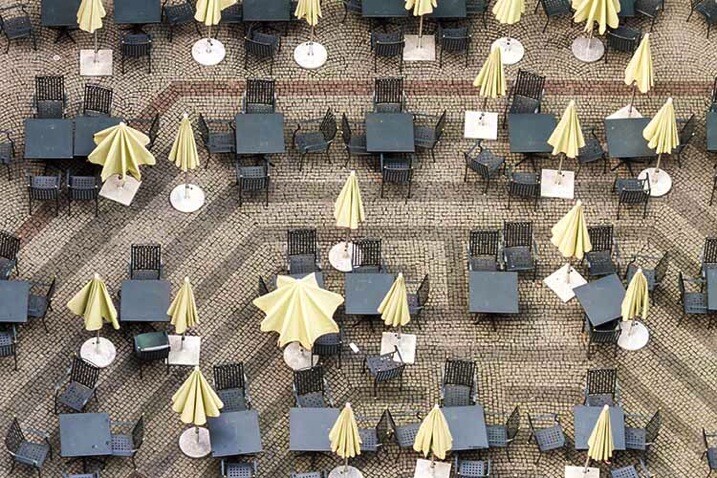
001 IBQ 3729 RESIZED

A rainy day in the famous Glockenspiel square of Munich. From the tower above you get a very different feel of the space.

2. Get up close

When you change your perspective there is a new world to be discovered. The easiest way to do this is by getting close, and that means to get down on your knees and elbows. There are always amazing creatures, delicate flowers, and wildly uncommon structures in tiny forms below our feet. So, when heading into unfamiliar environments bring your macro lens. In cases where the scenery or situation is really unappealing, something on the micro level will surely amaze you. The opposite of this would be to get further away to obscure the subject and give it a new setting. The point is to change the perspective.

002 When We Were Young  6 RESIZED

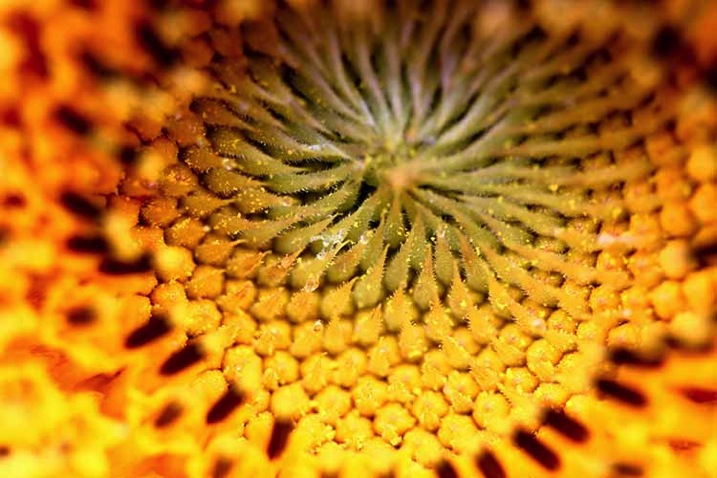
Macro photo of a sunflower in the mountains of NE China. You would never know how awful the weather was for the whole week.

3. Get in touch with your reaction

Allow yourself to feel the letdown or disappointment between what you originally hoped to find and what you are actually presented with. But, don’t let it decide your photographic destiny. This means do find creativity in the presented emotions. What are the emotions that are being portrayed in the scene? This could actually be done figuratively in an abstract way by photographing negative space to define your images. Or it could be done by finding images that literally match your mood. What is most important is that you are open to opportunity, not confined or limited by what your expectations were. By getting in touch with your photographic feelings you are freeing your photographic expressions.

003 IMG 3087 RESIZED

A splendid view of the Taj Mahal from Fort Agra was closed for cleaning. A real disappointment or an opportunity for a new story to be told?

4. Experiment

If you are not working professionally, and don’t need to get a specific shot that your customer has commissioned you to do, then you are free to experiment. When doing so, will you come home with some images that are going straight to the recycle bin? Yes. But, you will also learn something in the process. Thus, you will be increasing your photographic experience, discovering new techniques, and pushing your creative self.

Experimenting might mean going from Aperture Priority mode to fully Manual. Or it may mean that you will take some bracketed exposures even though you really don’t know how to combine them in an HDR software (yet). Or how about focus stacking? It could mean that you are adding light by using a flash. Whatever level you are at, or whatever gear you have purchased, think about how it could be used. When conditions don’t present themselves perfectly, it is a perfect situation to experiment.

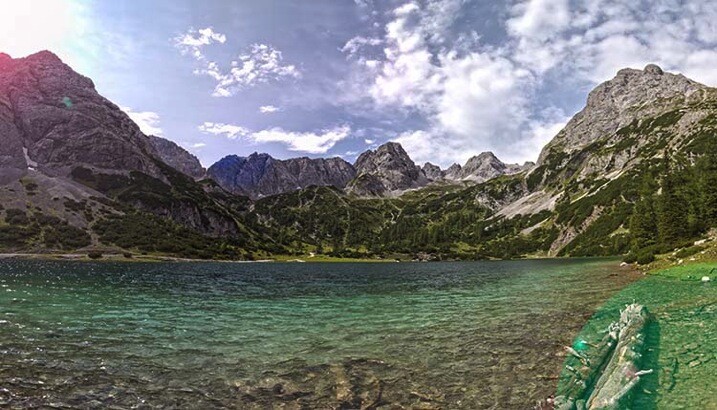
004 IBQ 4683 Edit Edit 2 RESIZED

An HDR panoramic in the midday sun in the Austrian Alps. The sun was behind the mountains and high noon is not the best time for landscapes, so HDR was a possibility. A sun flare was also added in post-processing to experiment more with the image.

IMG 3836 Edit 2 Double Dip 717px

Double exposure experimentation

The grass is always greener on the other side of the fence. But that doesn’t mean you must be in the green pasture to get great results. There will always be conditions that are not ideal, and as alluded to above, great photographers don’t see constraints in difficult situations they see creative opportunity. So can you. Creativity is not spontaneous; it is habitual. Any creative person will tell you that their successes are predicated upon effort; so too, is much of photography. There are so many variables, that each time you go out with your camera, you really never know what you will get.

Stop thinking about how lucky you are if you get a perfect sunset, but how incredibly lucky you are when you need to be a constructively creative photographer and how you can turn a bad day of photography into a great series of images. So, no more excuses — go out and be the great photographer you are.

googletag.cmd.push(function() {
tablet_slots.push( googletag.defineSlot( “/1005424/_dPSv4_tab-all-article-bottom_(300×250)”, [300, 250], “pb-ad-78623” ).addService( googletag.pubads() ) ); } );

googletag.cmd.push(function() {
mobile_slots.push( googletag.defineSlot( “/1005424/_dPSv4_mob-all-article-bottom_(300×250)”, [300, 250], “pb-ad-78158” ).addService( googletag.pubads() ) ); } );

The post 4 Tips on How to Be Creative in Undesirable Photography Conditions by Branson Quenzer appeared first on Digital Photography School.


Digital Photography School

 
Comments Off on 4 Tips on How to Be Creative in Undesirable Photography Conditions

Posted in Photography


How to Shoot in Low-Light Conditions Without Using Flash

07 May

Photography is all about capturing the subject beautifully in the available light. Sometimes as the photographer you have more than optimum light (e.g., bright sunlight, halogens, etc.) to work with while some other times you have to work in suboptimal or low-light conditions. If you are not a pro photographer then it is always a great challenge, and sometimes it’s a nightmare, to capture great shots in low-light conditions.

Aperture 1

Exposure info: f/1.8, 1/50th at ISO 3200

In order to face the challenges that low-light conditions come with, I will be sharing five techniques that you can use to capture your subjects, effectively. For better understanding, I have divided these techniques into two categories: technical and non-technical considerations.

Technical considerations

  • Use of high ISO
  • Use of large aperture
  • Use of slow shutter speed

Non-technical considerations

  • Capture image(s) in raw format
  • Use of remote shutter and a tripod

Use of high ISO

ISO is the sensitivity of your camera (sensor) towards available light. It is measured in numbers (for example 80, 100, 200, 400 etc.) The higher the number, the greater the sensitivity of your camera is towards light and thus, more light can be captured.

The amount of light captured is directly proportional to the selected ISO. In other words, at ISO 200 you can capture double the light than you can at ISO 100. Similarly, at ISO 800 you can capture 8 times more light than at ISO 100. Thus, in low-light conditions, you should use a higher ISO in order to capture your subject effectively.

Iso 2

Exposure info: f/3.2, 1/5th at ISO 1600

Limitations of using a high ISO

As it also impacts the image quality that your camera (sensor) produces, ISO comes with its own limitations. By image quality, I mean, the ability of your camera to produce noise (grain). At a higher ISO your camera will always produce more noise (grain) than at a lower ISO. So, you will have to test and check what the ideal ISO setting is (for your camera) at which you can capture your subject with optimum light, along with maintaining good image quality.

NOTE: ISO is a feature of the camera and not the lens that you are using.

Iso 1

Exposure info: f/5, 1/125th at ISO 2500

Use of large aperture

Aperture is the opening (eye or hole) in the lens, through which light enters into the camera. Aperture size is also represented in numbers (for e.g., f/1.4, f/1.8, f/2.2, f/2.8, etc). The smaller the number, the wider the opening is and thus, more light can be captured.

The amount of light captured is inversely proportional to the selected aperture. Say, for a lens with aperture values of f/1.4, f/1.8, f/2.2, f/2.8, f/3.3, f/4.0 etc., the amount of light captured at f/1.4 will be double the light than at aperture f/1.8. Similarly, at f/1.4 you can capture 8 times more light than at f/2.8. Thus, in low-light conditions, you should use a larger aperture (smaller value) in order to capture your subject effectively.

Aperture 2

Exposure info: f/1.8, 1/5th at ISO 400

Limitations of using a large aperture

As it also impacts the depth of field (sharpness or clear visibility) of the subject in your image, aperture comes with its own limitations. By depth of field, I mean, the ability of your lens to keep the subject in focus.

Generally, using a small aperture (higher f/number) you will be able to keep your entire subject in focus which is not possible using a large aperture (lower f/number). Again, you will have to test and check what the ideal aperture size is at which you can capture your subject with optimum light, keeping it in focus.

NOTE: Aperture is a feature of the lens and not the camera that you are using.

Use of slow shutter speed

Shutter speed, also known as camera exposure, is the length of time a camera shutter remains open in order to capture the light. Shutter speed is also represented in numbers (for e.g. 1/2, 1/4, 1/8, 1/16, 1/32, 1/64, 1/125, 1/250, etc.) The higher the number, the longer the camera shutter remains open and thus, more light can be captured.

The amount of light captured is directly proportional to the selected shutter speed. For a camera with shutter speed values of 1/4, 1/8, 1/16, 1/32, 1/64, 1/125 etc., the light captured at 1/2 second is double the amount of light than that at a speed of 1/4 second. Similarly, at a shutter speed of 1/2 you can capture 8 times more light than at a shutter speed of 1/16th. Thus, in low-light conditions, you should use a slower shutter speed in order to capture your subject effectively.

Shutter speed 2

Exposure info: f/3.2, 1 second at ISO 400

Limitations of using a slow shutter speed

As it also impacts the motion or movement of your subject, shutter speed comes with limitations. If you want to freeze the motion of your subject then you should use a higher shutter speed (e.g., 1/250, 1/500, 1/1000, etc.) While if you want to capture your subject with a motion blur then you should use a slower shutter speed (e.g., 1/8, 1/4, ½, etc.) Once again, you will have to test and check what the ideal shutter speed is at which you can capture your subject with optimum light, freezing or blurring its motion.

Shutter speed 1

Exposure info: f/10, for 8 seconds at ISO 200

NOTE: Shutter speed is a feature of the camera and not the lens that you are using.

Capture images in Raw format

A Raw image captures much more detail and information about the subject that you are shooting than a JPEG file. You get the luxury of improving the exposure, color, sharpness, etc., of the subject (using an editing software like Adobe Photoshop or Lightroom) while still preserving all the detail of the subject which is usually not possible while editing a JPEG file.

Raw 1 1

Exposure: f/3.2, 1/5th at ISO 400, before editing

Raw 2

Exposure: f/3.2, 1/5th at ISO 400, after editing

Note: the editing has been taken overly far just to show you the amount of detail in the Raw file.

Limitations of capturing images in raw format

  • Not all cameras can produce images in Raw format. Only selected higher-end cameras can. Most SLRs and Mirrorless camera can shoot Raw format as well as a few point and shoot models (check your manual if you are unsure, look for file formats)
  • Size of a Raw image is usually 4-5 times larger than the JPEG file that the camera produces. Thus, you will need more space for storing these images.
  • Only a handful of software can read and recognize Raw format files. Thus, you need specialized software (like Adobe Photoshop, Lightroom, etc.) to edit these images.
Raw 1

Exposure: f/2, 160th at ISO 2200

NOTE: I believe that capturing images in raw format comes with more advantages than disadvantages and that it is always better to shoot in Raw format.

Use of remote shutter release and a tripod

If you want to capture a stationary or slow moving subject in low-light conditions then it is always better to do so using a remote shutter release and a tripod. This will help you avoid possible camera shake and you will have a greater chance of capturing your subject, effectively.

NOTE: While most of the cameras can be mounted on a tripod, a smaller fraction of them can be used syncing with a remote shutter.

Conclusion

I have discussed in this article five techniques which you can use in order to take great photographs in low-light conditions. These techniques are: use of higher ISO, use of larger aperture, use of slower shutter speed, capturing images in Raw format and use of a remote shutter and a tripod. Almost all these techniques come with limitations, but they are also very effective, if tested properly for the camera and lens combination that you are using.

Which particular technique do you use for taking those challenging shots in low-light conditions? Did I miss any other technique which can be equally effective? I would love to have your thoughts regarding this issue.

googletag.cmd.push(function() {
tablet_slots.push( googletag.defineSlot( “/1005424/_dPSv4_tab-all-article-bottom_(300×250)”, [300, 250], “pb-ad-78623” ).addService( googletag.pubads() ) ); } );

googletag.cmd.push(function() {
mobile_slots.push( googletag.defineSlot( “/1005424/_dPSv4_mob-all-article-bottom_(300×250)”, [300, 250], “pb-ad-78158” ).addService( googletag.pubads() ) ); } );

The post How to Shoot in Low-Light Conditions Without Using Flash by Anshul Sukhwal appeared first on Digital Photography School.


Digital Photography School

 
Comments Off on How to Shoot in Low-Light Conditions Without Using Flash

Posted in Photography


Tips for Photographing in Different Weather Conditions

31 Jul

You’ve figured out that photography is awesome. You have your equipment. You’ve got the basics down. You know all about the “triangle” of ISO, shutter speed, and aperture. Now, you’re ready to put them to use. You’re ready to go outside and experiment. But wait. You haven’t yet considered the weather. This is a little side note to photography that we often forget about. If you’re not shooting in a studio, then the weather will definitely be a factor to consider when going out on a shoot.

MDWeather 01

There are a few basic weather scenarios that you will surely encounter as a photographer: cloudy or overcast, rain, bright sun, high temperatures, and snow to name a few. Each of these conditions has its benefits and limits. I’ll cover a few of those here as well as tips for photographing in different weather conditions.

Cloudy or overcast

These are some of my favorite conditions to shoot in for portraits. An overcast day brings about an amazing amount of diffused light. You can shoot in the middle of the day with little worry about harsh lighting or unwanted shadows. You do want to pay close attention to lighting the face. It’s great to have a reflector to bounce light into the face of your subject(s). Make sure you’re taking a look at the images, as this will help you know if you’re underexposing or overexposing. You’ll also be able to tell if you need to reflect more light on them. See portrait above.

Shooting landscapes in overcast conditions can also be challenging. Overcast skies are gray and don’t usually add a lot of interest to that mountainscape, or field of cows you want to photograph. Look for stormy weather clouds, that add a sense of place and dimension. You can also crop your shot so that you don’t get those unwanted gray skies, but still get great lighting.

Benefit: beautifully diffused lighting
Limit: ugly gray skies

MDWeather 02

Rain

So what happens when your cloudy day turns into a rainy shoot? Well, you make the most of it. A little rain never hurt anybody. One of the best ways to work with rain is to bring an umbrella. Try to keep a nice umbrella in your arsenal of supplies for shoots. Look for one of those clear umbrellas that comes down over your head. It looks amazing in photos. You can also get one that has a nice little pop of color. Try polka dots even. Make the umbrella part of the shoot. You don’t have to use it in every photo but don’t be afraid to incorporate it.

Also look for areas that are shielded from the rain. Overhangs, alleys, even coffee shops can provide you with great areas for your photos. The rain can help you tell a story if you let it. At the end of the shoot, ask your subject if they’re okay getting wet. Work with that and see what you get. Try out different things as you’re learning to work in this condition.

Of course the rain can work against you. You’ll want to make sure your equipment is protected. You don’t have to get fancy coverings if they’re not in the budget. Get a grocery bag and some tape and protect the main body of your camera. If the weather is horribly bad, reschedule your shoot for a less harsh day. Again, safety is key here.

MDWeather 03

Rainy landscapes tell an amazing story. Make sure you’re careful with setting focal points. Your camera will often try to focus on the rain drops and will blur out your landscape. This can be nice if it’s what you intended, if not, you’ll end up with a bunch of blurry photos.

Benefit: added dimension and sense of story and place
Limit: harsh on equipment and uncomfortable for subjects

Bright sun

Many people think that bright sun is the photographer’s worst nightmare for portraits. I beg to differ. Bright sun can create beautiful light and you can play with shadows if you wish. (Read Dispelling the Myth of Good Light and Bad Light for more on this topic.)

When shooting in bright sun, you will find that your camera meter will want to expose for the super bright background or the subject that’s in front of you. This causes your subject to be super dark or your background to be blown out. Try shooting in “open shade”. This means that you’ll place your subject in the shady part close to the light, and bounce light with a reflector back at them. You can also use a flash to make sure your subject is lit without blowing out the background. A flash in the sun? I know it sounds weird but it works. Use your flash to light your subject while exposing for the background. You can also look for natural reflectors around you. Look for a white building or even a white sandy beach. These help reflect light on your subject without blowing out the background too much.

Landscapes in bright sun are absolutely beautiful. Try shooting the beach in the full sun of the day. Practice exposing for the beautiful blue skies as well as the sand.

Benefit: tons of light and the ability to play with shadows
Limit: can create harsh lighting on your subject

MDWeather 04 MDWeather 05

High temperatures

A lot of us shoot in the summer months. This can be beautiful for the late sunsets and beautiful skies, but the temperature can be brutal. It’s great to shed the coats and heavy clothing but the heat isn’t always fun. You want to make sure that you and your subjects will be comfortable and safe. The most important thing is safety. I like to limit my shoots to when the temperature or heat index is below 90f (32c). This may vary depending on where you are shooting. In Puerto Rico, 90 on the beach feels great. In Boston, 90 in the city feels miserable.

Take note of how your subject is feeling on the shoot. If you notice that they’re becoming uncomfortable, ask them and schedule a reshoot if necessary.

Benefit: you and your subjects can come out of limiting coats and clothing
Limit: high temperatures can be draining and uncomfortable

Snow

Shooting in the snow is magical. It’s beautiful and the white stuff reflects light amazingly! Shooting in a blizzard, not so much. Shooting in 10f (-12c) degree weather, even worse. When shooting in the snow, pay special attention to ice and hazards under the fluffy stuff.

MDWeather 06

You can shoot while it’s snowing or once the snow has stopped falling. If you shoot while it’s snowing, treat your camera as if it is raining. The snow melts and water can get into the inner workings of your camera body and lens.

Don’t be afraid to ask your subject to shed that coat. If you’re in an area that gets a lot snow then you know that snow doesn’t necessarily mean unbearable cold. Have your subject shed the coat and shoot for a few frames and then warm up a bit.

Also, play around with capturing the falling snow. When it’s snowing, the sky is generally overcast. The white snow acts as a bit of a reflector so you’ll most likely be able to forgo that. Just go out and practice shooting and see what you’ll need. You probably don’t want to venture into a blizzard though.

If the snow has stopped you’ll need to watch out for ice and hazards under the snow. It doesn’t hurt to protect your camera just in case you take a little tumble. Again, the snow reflects beautifully. Make sure you’re metering for your subject and paying special attention to not blow out the white snow.

Benefit: it’s beautiful and shows a sense of time
Limit: it’s cold and damaging to your equipment

MDWeather 07

Remember, take special care to insure safety at all times. Safety of you, your subjects, and your equipment are all important. Use the weather to your advantage and work with the lighting you have. Don’t be afraid to bring in flash or reflectors. Finally, just have fun with whatever condition you’re shooting in.

The post Tips for Photographing in Different Weather Conditions by Monica Day appeared first on Digital Photography School.


Digital Photography School

 
Comments Off on Tips for Photographing in Different Weather Conditions

Posted in Photography