RSS
 

Posts Tagged ‘compact’

SLC-OE-02: The Best Compact Lighting Bag Is Not a Photography Bag

13 Jul

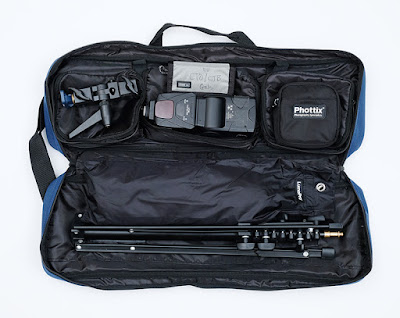
Call me crazy, but I love the idea of finding a great piece of photo gear by going off-label. In this case, a lighting bag that is not technically a lighting bag.

It's perfectly sized, comes in a ridiculous array of colors and is $ 22.99 shipped. Read more »
Strobist

 
Comments Off on SLC-OE-02: The Best Compact Lighting Bag Is Not a Photography Bag

Posted in Photography


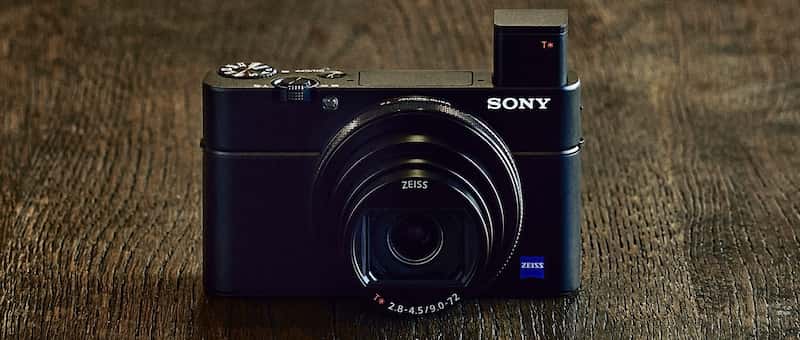
Hands-On with the new Sony RX100 VI Compact Camera

23 Jun

Sony continues to innovate and release new versions of their popular line of mirrorless and compact cameras. Just release is the newest Sony RX100 VI, the sixth version in just six years. But at just under $ 1200 USD is it worth the price? Let’s see.

There are quite a few new things and upgrades from the Mark V. Let’s see what a few different testers had to say about it in Venice recently where Sony handed out some cameras to put through the paces. Here’s a small list of features:

Image courtesy of Sony.

  • New 24-200mm lens (with the 2.73 crop factor) but with an f/2.8 maximum aperture.
  • 24 frames per second burst mode.
  • Buffer 233 JPEGs standard.
  • 315 phase detection autofocus points.
  • 90-degree tilting LCD screen.
  • New touchscreen capabilities.
  • Easier popup electronic viewfinder.
  • Does 4K video.
  • New Vlogging stick available for easier video creation.

Photo Gear News

Richard Sibley from Photo Gear News gives the Sony RX100 VI some good tests as he walks around Venice. See what he has to say about shooting video, slow-motion, and other things. He talks about the aperture range limitations and the menu system.

?

Camera Labs

See what Gordon Laing, prolific camera reviewer, had to say about the Sony RX100 VI. His test of the tracking autofocus shows impressive results on moving subjects with the phase detect autofocus of this camera.

So what does he like, and what does he miss from the Mark V? Watch to find out.

?

Things missing on the RX100M6 he’s noted are:

  • No microphone jack or Bluetooth audio connection
  • The wider aperture of f/1.8 that was available on the Mark V
  • No built-in Neutral Density filter that was on earlier models

For a little humor

Finally, to inject a little humor into things is Kai (former of DigitalRevTV). His point of view and way of approaching things is unique and adds a bit of spice to reviews that can otherwise get a little dull.

?

The official word from Sony

Lastly, here is Michael Bubolo from Sony to give us the low-down on some of the official specs and features of this new camera.

?

Is this camera for you?

I have to admit when I heard about the 24-200 equivalent zoom lens I was a bit jealous as compared to my Fuji X100F with a fixed 23mm (35mm equivalent) lens. But the 1″ sensor (2.73x crop factor) on the Sony is a lot smaller, so I’ll stick with my Fuji!

So who is this camera for? At the price of around $ 1200, it’s not for everyone. Perhaps it’s good as a backup to their DSLR for pros, or for bloggers (and vloggers) who do video and want something portable. The zoom range certainly is attractive and it does a nice job on video for sure. But would you spend this much on a compact camera?

Note: currently the Sony RX100 VI is only available for pre-order from Amazon and other retailers.

Let’s discuss in the comments section below.

The post Hands-On with the new Sony RX100 VI Compact Camera appeared first on Digital Photography School.


Digital Photography School

 
Comments Off on Hands-On with the new Sony RX100 VI Compact Camera

Posted in Photography


Rugged compact, GoPro, or smartphone: Which should I take on vacation?

18 Jun
My family hikes, we camp, we fish, we snowboard. As a photographer, that leaves me with some choices to make if I want to take pictures or video of our adventures.

Vacations, particularly outdoor, active ones, can provide some of the most vivid family memories, but can also be some of the most difficult to photograph. Several different types of device try to fit the bill but which is best for you?

Your mirrorless camera may be pretty compact to travel with, but can it film your kid’s first trip down a waterslide? Your DSLR may claim to be weather sealed but are you willing to risk pulling your $ 3000 camera+lens combo out to take a ski chairlift photo? Even if you are willing to trust it, are you willing to carry that kit with you all day?

In 2018, there’s no reason to let that keep you from being able to record those moments in your life. There are more options than ever for water, shockproof / freezeproof cameras that can survive life’s more demanding adventures. I’m talking about cameras that can survive a rainstorm or a day at the beach or sledding hill. Something compact and easy to travel with that you don’t have to worry about (and won’t cost thousands to replace) if clumsy Uncle Fred drops it into the hotel pool. Let’s look at the options:

Action cameras

Small, tough and able to capture wide-angle video, Action cameras are especially good for capturing the spirit and experience of action activities.

Since the introduction of the GoPro HD in 2009, action cameras have become almost a required accessory for outdoor adventures. Once the sole domain of those who jumped off of cliffs or surfed on 20 foot waves, these days GoPros are used for everything from ‘Hot Wheels’ tracks in the backyard to Formula 1 races across the globe. From a child’s first wobbly bike ride to mountain bikers who throw themselves down cliffs. If you are on Instagram, Facebook, or Twitter, It’s highly likely that you see video from these cameras virtually every time you look at your feed.

While not expressly listed as shockproof or freezeproof, action cameras have a pretty proven track record.

It’s easy to see why action cameras have become so popular. They are tough, small, offer very good video quality, and can be mounted literally anywhere. Their super wide lenses give them a unique field-of-view that both suits, and has become de-rigueur for, recording ‘cool’ adventures. 4K video, image stabilization, and even Raw image shooting options are common. The newer camera designs from GoPro (Hero6, Hero5, Session) offer 10 meters / 33 feet of waterproofing while still offering clear audio out of the water and an optional external case extends this depth to 60m / 196ft.

These cameras are far better when mounted on a helmet, handlebar, or selfie stick than they are used handheld.

While not expressly listed as shockproof or freezeproof, action cameras have a pretty proven track record. Googling ‘GoPro survives fall’ or ‘GoPro Everest’ should give more than enough examples to convince most skeptics. Most offer Bluetooth or Wi-Fi connectivity and many have apps that allow for remote control via smartphone. Finally, it is hard to deny just how much kids love these cameras. The days of youngsters being thrilled by the apparent magic of a smartphone or a digital camera are probably over. But for whatever reason, when you hand a kid a GoPro, they just go nuts with it. You’ll get some of the most fascinating and genuine footage of children you’ve ever seen. It is both unique and heartwarming.

There’s something unobtrusive about an action camera that can help candidly capture natural behavior.

However, it can be frustrating trying to use an action camera for still images. JPEG quality, color science, and even operational speed can feel like they lag behind dedicated still camera makers. Manual controls are near non-existent, and those that do exist are frequently hidden behind screen/button taps and menus. With no zoom or interchangeable lenses, your field-of-view is limited to super-wide or cropped ‘medium’ and ‘narrow’ options, limiting both flexibility and quality. And as cool as that super-wide view is, you probably won’t be surprised to hear how easy it is to get your fingers in the way if you are shooting handheld.

These cameras are far better when mounted on a helmet, handlebar, or selfie stick than they are used handheld, particularly given their size and lack of physical controls.

Waterproof P&S cameras

There are times when those ‘freezeproof’ ratings start to seem pertinent.

The waterproof point-and-shoot camera has been around for many years, as 1994’s film-based Canon Sure Shot A1 can attest. But as with most P&S cameras, the digital revolution brought a whole new level of usefulness to these tough little cameras. However, unlike most P&S cameras, the waterproof segment continues to thrive and evolve even in the age of smartphones.

Many of these cameras are not only waterproof, but are rated to be freeze, dust and shockproof. For example, typical specs might be waterproof to 15-30 meters / 50-100 ft, dustproof, crushproof to 100 kgf / 220 lbf, shockproof from 2.1 meters / 7 ft, and freezeproof to -10° / +14° F. While lenses in these cameras are the typical variable aperture midrange zoom that most P&S cameras have, the waterproof versions tend to be a bit faster on the wide end, apertures of F2 or F2.8 aren’t uncommon. And unlike action cameras or smartphones with their fixed lenses and digital zooms, these are true optical zooms that typically offer a 4x-6x range. RAW shooting, 4K video, optical image stabilization and Wi-Fi/bluetooth connectivity are showing up on recent models.

Even if you’re not shooting underwater, there are times it’s nice to know your camera will withstand a drop.

But perhaps most importantly, these cameras blow the other options out of the water in terms of ergonomics. While their physical controls, shutter buttons, and handgrips won’t win any awards when compared to DSLR or mirrorless cameras, they are miles ahead of a GoPro or iPhone. You can successfully use these cameras with gloves on, with wet hands, or in a location where a fumble would mean losing the camera. Along similar lines, these cameras all have one small feature that is difficult or impossible to find on action cameras or smartphones: a strap loop. While a full neckstrap may be a bit much for a camera like this, a small wrist strap is a worthwhile and compact safety measure. Buoyancy floats can even be attached if you do find yourself out on the water.

These cameras blow the other options out of the water in terms of ergonomics

While these cameras often have more physical controls than other options on this list, they still don’t tend to have very many of them compared to more serious cameras. Camera and shooting settings are still commonly accessed via pressing buttons to scroll through menus. On the other hand, this may not matter because there just aren’t that many manual control options on most point-and-shoot cameras, waterproof or otherwise. Shooting and ‘art’ modes of limited usefulness are far more likely than shutter or aperture priority options.

Autofocus is improved from the cheap P&S your parents might have had at one point, but it still is going to lag behind any DSLR or mirrorless you are used to. They are also absolutely an additional device to carry with you. Unlike a tiny GoPro or the smartphone that you probably ready have with you, a waterproof compact can feel bulky/heavy enough that you know you are having to carry it around.

Smartphones

But a dedicated camera isn’t necessarily your only option. What if there was a surprisingly powerful camera that you probably already owned and it was almost always in your pocket or purse? What if this camera also had powerful photo and video editing capabilities and could instantly upload the finished product to the internet and social media? As you’ve probably already guessed, this camera already exists and you probably already own one, a smartphone.

It is becoming more and more common for higher end smartphones to have some level of Ingress Protection rating

It is becoming more and more common for higher end smartphones to have at least some level of IP (Ingress Protection) rating. Typically, they are dustproof and water resistant for up to 30 minutes in water around 1 m / 3.3 ft deep. This means you shouldn’t go snorkeling with any of them, but they will survive dunkings and splashes easily, even without one of the great many ‘protector’ cases that are available for the flagship handsets. High-resolution 4k video, dual (or even triple) lens options, optical image stabilization, and front/back cameras are all regularly seen on expensive and budget smartphones alike.

Default camera apps are decent, but the real power is using some of the 3rd party apps that give you additional shooting modes, full manual control and the ability to shoot in Raw. Not only can you capture images, but editing programs give you the ability to crop, sharpen, adjust and enhance your photos/video right on your phone. Cellular and Wi-Fi connectivity allow instant uploading to social media or text / email to friends and family.

With an IP-rated smartphone, the selfies don’t have to stop when the conditions get more challenging.

Perhaps most importantly, you are almost assuredly going to have a smartphone with you anyway. Whether for communication, navigation, entertainment, and even emergencies, you’ll want your smartphone for all of them while traveling. There is a reason that these days, hardcore outdoor folks often call a mobile phone the ‘eleventh essential’ on the classic ‘ten essentials’ survival item list.

The convenience factor of using a smartphone as your vacation/adventure camera is high, but the drawbacks may be even higher. There is simply no getting around the fact that the ergonomics of these devices as cameras are simply awful. They are thin, slippery, and without any sort of handgrip or strap options. A shattered screen from a two foot drop on the pool deck or a tumble down a thousand foot cliff is just one small stumble away. Almost everyone you know has dropped their phone with dry hands, so how much worse is that likely to be with wet hands or gloves? And, as most of us know, using a touchscreen with gloves or wet hands can be impossible, which just exacerbates the ergonomics issue.

A lack of zoom may be a drawback but chances are you’ll have a smartphone with you at key moments.

Battery life is frequently a problem with phones, and constantly filming and photographing will only make this worse, which may leave you without communication or data capabilities at a crucial moment. Most important of all is the fact that if something happens to your phone, you are likely losing a lot more personal data than just a few images. Dropping and breaking your GoPro is a good way to have a bad day, but dropping and breaking your iPhone X could leave you stranded in the middle of nowhere if you were relying on its GPS to get you home. Not to mention the fact that you’d be out over $ 1000: that’s going to hurt no matter who you are.

If you are going the smartphone route, it might be worth looking into some of the extreme protection cases form companies such as LifeProof or OtterBox.

Conclusion

So, which to choose? That depends on what sort of vacation/adventure you see yourself taking.

If you are looking for still image capability, a waterproof point and shoot camera will probably prove the most versatile. With their optical zooms and physical controls, they easily best the other options for still images. 4k video and image stabilization means that they’re not slouches in the video department as well. Equally at home capturing everything from a flower in a tropical rainstorm to rock climbing in a national park, they really are a jack of all trades. I take mine anytime I want to shoot still images, might want the option for video, and require protection from water/drops/freezing/etc.

Rugged, waterproof cameras aren’t only useful for underwater shooting.

More action-orientated adventures are probably better suited to the video and perspective that action cams offer. Will you be skiing, sailing, paragliding, mountain biking or anything like that? For me, I’m mostly likely to pull out the GoPro when I’m snowboarding. A video with that wide field-of-view just does the best job of capturing that memory for me. Additionally, any trip that includes children is a strong point for these cameras as well. As you can see from the waterslide video above, even a day poolside with a GoPro can capture some pretty fun kid moments.

Finally, let’s face it, you’ll likely have your cell phone in your pocket no matter where you go. In 2018, most of us are so addicted to the connectivity that these devices offer, we’re unlikely to leave them home. But can they be a vacation camera for you? If you are going to be somewhere with good cell coverage and with a low level of risk, then yes. Seeing the Smithsonian, visiting the beach, taking a train across Europe or dropping into an oyster shack for lunch? The still and video options of today’s smartphones will serve you well. Pick up a model with a decent IP rating and you can even enjoy some protection from splashes and sand. Just make sure you don’t drop it and leave yourself stranded somewhere!

The Olympus Tough TG-5 is one of the few rugged cameras that lets you shoot Raw, which is useful for making the most of those images shot in difficult conditions.

But if I was only going to carry one on a vacation or adventure, I would still choose the waterproof P&S option (probably the Olympus Tough TG-5 in my case). It is the best of the bunch as far ease/quality of still photos, has the ability to shoot Raw, does a great job with video, offers a few physical controls, has a usable and reasonably fast zoom lens, is freeze/drop/waterproof, includes Wi-Fi connectivity, and can be found for under $ 400.

I’ve gone fishing, snowboarding, snorkeling, camping, traveling, and splashing at the local pool with mine. It’s survived, kids, grandfathers, drops, kicks, falls, bouncing across river rocks, careening down waterslides and generally being ridden hard and put away (literally) wet. It’s yet to let me down.

The Olympus Tough TG-5 is the camera we recommend as best camera in our Waterproof Camera buying guide.

Articles: Digital Photography Review (dpreview.com)

 
Comments Off on Rugged compact, GoPro, or smartphone: Which should I take on vacation?

Posted in Uncategorized


Leica launches 15x zoom C-Lux compact with 20MP 1″ sensor

15 Jun

Leica Camera has announced a new compact camera that will feature a 24-360mm f/3.3-6.4 zoom lens and which will be fitted with a 20MP 1” MOS sensor. Essentially a re-badged Panasonic Lumix TZ200, the Leica C-Lux will save raw and JPEG files, will offer 4K video and has a viewfinder with a 2.33-dot resolution.

Video users will be able to extract 8MP JPEGs from the camera’s 4K video feature, which will have a fastest frame rate 30fps and a best bit-rate of 100mbps. Focus and the shutter can be activated via the 3in touch-screen and the camera will have a Wi-Fi function to allow images to be sent to a smartphone or the camera to be controlled remotely.

Using a combination of electronic and mechanical shutter mechanisms a maximum exposure time of 120 seconds can be achieved via the camera’s T setting, and a longest timed shutter opening of 60 seconds will be available via mechanical operation. The electronic shutter will run from 1 second to 1/16,000sec.

The Leica C-Lux will go on sale from mid-July priced £875, and a range of accessories, including straps, jackets and pouches will follow. For more information see the Leica Camera website.

Press release

New: Leica C-Lux

The versatile compact camera with a 15x zoom, a practical touchscreen and exceptional design

Wetzlar, 15 June 2018. With the launch of the Leica C-Lux, Leica Camera AG expands its product portfolio with a versatile compact camera that unites speed, an intuitive handling concept and stylish design. Featuring a Leica DC Vario-Elmar 8.8–132 mm f/3.3–6.4 ASPH. lens and a high-performance, 20-megapixel sensor for continuous shooting at a rate of up to 10 frames per second, the Leica C-Lux adapts quickly and flexibly to every situation and effortlessly delivers high-quality pictures of subjects at any distance. Its 15-fold optical zoom with focal lengths from 24 to 360mm (35mm equivalent) offers enormous creative scope that is further expanded by 4K video recording capability. Thanks to an integrated connectivity concept, still pictures and videos can be quickly and easily shared with family and friends by a simple tap of a finger on the touchscreen display. Available in the two colours, Light Gold and Midnight Blue, the Leica C-Lux impresses not only with its precision, but also with its exceptional design and range of stylish accessories.

From the lens to the 1-inch image sensor, all components of the Leica C-Lux are precisely matched to one another and deliver brilliant pictures in RAW or JPEG format in a quality that remains equally impressive in large-format prints. With an impressive maximum ISO sensitivity of 25600, the C-Lux guarantees pictures with natural colours

and exceptional quality, especially when used for available-light photography. Thanks to its versatile zoom lens, fast autofocus and face detection, the camera also offers enormous flexibility in almost all areas of photography, and especially in spontaneous situations. The C-Lux’s fast autofocus with 49 metering points, ensures that subjects are sharply focused on in an instant, and a continuous shooting rate of 10 frames per second ensures that even the most fleeting moments will never be missed. Intuitively selectable scene modes provide valuable assistance when shooting landscapes, portraits or at night and enable users to concentrate exclusively on their subjects.

Thanks to the viewfinder’s high resolution of 2.33 megapixels, the clarity and contrast of the viewing image is outstanding at all times – even in particularly bright, ambient light. As the viewfinder covers 100% of the image field, framing of subjects is extremely precise and users have complete control of composition. The camera also offers dioptre compensation settings that allow spectacle wearers to use the viewfinder without any problems.

The 3-inch touchscreen display ensures particularly easy handling in all shooting situations. As with a smartphone, many of the camera’s functions can be controlled by simply touching the monitor screen, for instance the transfer of still pictures and videos via Wi-Fi or Bluetooth. The ‘Leica C-Lux’ app that supports this function can be downloaded free of charge and installed on iOS or Android devices. The display screen features a special repellent coating that prevents annoying marks and protects it against fingerprints.

The high-definition, 4K-resolution, digital video recording function expands the spectrum of features offered by the Leica C-Lux. Thanks to exceptional resolution – four-times higher than full-HD – and up to 30p & 100 Mbit in MP4 format, the C-Lux

delivers all the technical prerequisites for shooting your own, personal short film. What’s more, still pictures can be extracted and saved from video footage at a resolution of up to 8 megapixels.

The compact Leica C-Lux impresses not only with its technical features, but also with elegant design and a portfolio of stylish accessories. An extensive range of accessories in matching and complimentary colours is available for both versions of the camera. These include, for example, carrying straps and wrist straps for the camera in the colours taupe, blue and red. The portfolio also offers an extensive collection of premium quality camera cases, protectors and soft pouches that make the C-Lux an elegant companion for every occasion. Particularly eye-catching are the two vintage models in finely polished brown leather: a cleverly designed wrap- around vintage pouch and a vintage case with a concealed snap fastener. Also available is an outdoor bag in hardwearing, water-repellent fabric. A range of elegant cases in various styles, colours and types of cowhide completes the portfolio. Thanks to a detachable, adjustable carrying strap, two of these models can be used not only as a shoulder bag, but also as a handbag or for stowing things away in a day bag.

The Leica C-Lux will be on sale in the colour options Light Gold and Midnight Blue from mid-July 2018 at RRP £875 including VAT. The range of accessories will also be available when sales of the camera begin.

Articles: Digital Photography Review (dpreview.com)

 
Comments Off on Leica launches 15x zoom C-Lux compact with 20MP 1″ sensor

Posted in Uncategorized


Nikon developing compact and lightweight 500mm F5.6 lens

14 Jun

Nikon has announced the development of the FX-format AF-S NIKKOR 500mm F5.6E PF ED VR lens. It uses the same type of phase fresnel element as the company’s AF-S 300mm F4E PF ED VR, which is 30% shorter and more than 50% lighter than its predecessor. By design, a Phase Fresnel element reduces chromatic aberration introduced by traditional refractive elements, while also reducing the overall length required to achieve high focal length magnification. This usually results in a decrease in total number of lens elements, as well as in overall size and weight.

Nikon hasn’t divulged any specifics, and more details, pricing and availability will be announced later this year.

Press Release

NIKON ANNOUNCES DEVELOPMENT OF AF-S NIKKOR 500mm f/5.6E PF ED VR, A PORTABLE SUPER-TELEPHOTO FX-FORMAT LENS

The AF-S NIKKOR 500mm f/5.6E PF ED VR Will Deliver Exceptional Agility and Optical Performance in an Incredibly Compact and Lightweight Package

MELVILLE, NY (JUNE 14, 2018 at 12:01 A.M. EDT) – Today, Nikon Inc. announces the development of the AF-S NIKKOR 500mm f/5.6E PF ED VR, an FX-format fixed focal length super-telephoto lens, which will offer a compelling combination of portability and performance.

The AF-S NIKKOR 500mm f/5.6E PF ED VR will be a high-performance super-telephoto lens that is significantly smaller and lighter than comparable predecessors due to the adoption of the same type of Phase Fresnel (PF) lens element found in the AF-S NIKKOR 300mm f/4E PF ED VR lens, introduced in January 2015. Despite its 500mm focal length, the lens is small and light enough to use hand-held in a wide variety of situations where a photographer must capture unpredictable and fast-moving subjects, including sporting events and wildlife photography.

Phase Fresnel Lens Elements

The Phase Fresnel (PF) lens element developed by Nikon effectively compensates for chromatic aberration utilizing the photo diffraction phenomenon*. Compared to many general camera lenses that employ an optical system using the photorefractive phenomenon, a remarkably compact and lightweight body can be attained with fewer lens elements.

Price and Availability

Information regarding the release of the AF-S NIKKOR 500mm f/5.6E PF ED VR lens, including final specifications and pricing, will be announced later this year. For more information on the latest Nikon products, please visit www.nikonusa.com.

*Diffraction phenomenon: Light has characteristics as a waveform. When a waveform faces an obstacle, it attempts to go around and behind it, and this characteristic is referred to as diffraction. Diffraction causes chromatic dispersion in the reverse order of refraction.

Articles: Digital Photography Review (dpreview.com)

 
Comments Off on Nikon developing compact and lightweight 500mm F5.6 lens

Posted in Uncategorized


REVIEW and Thoughts on the Sony RX100 V Compact Camera

11 Jun

Sony’s RX100 is a storied line of compact cameras that have always packed a powerhouse of features into small but sturdy frames. This fifth iteration (the Sony RX100 V also know as the DSC-RX100M5) builds on that history with a wealth of features for a modern photographer’s needs.

REVIEW: Sony RX100 V Compact Camera

Who the Sony RX100V is for

The RX100 Mark 5 is, in my mind, the perfect camera for family travel, street shooting, and as a secondary landscape camera when your main camera is occupied. The 24-70mm equivalent zoom lens lends enough useful range while the 24mm end of the lens works well for landscapes, group shots, and even the occasional selfie.

I bought the RX100 V specifically for its high frame rate for video but have grown to love the high-quality 4K video in such a compact body. With a frame rate up to 1000 frames per second (fps), it is amazing what can be captured with this small package. The 20MP sensor makes for excellent image quality with some room to crop to your liking.

This camera will appeal to landscape photographers who might want some freedom for unique compositions while their heavy DSLR is stuck to a tripod. Street photographers will love its compactness and flip out screen. I don’t see it getting a lot of use as a portrait camera, although it does have a nice f/1.8 – f/2.8 starting aperture range.

Small Package – Big Stats

Let’s take a look at some key stats from Sony’s website:

  • 20.1MP 1″ sensor
  • 2.9X optical zoom – 24-70mm equivalent
  • 11 – 44x at digital zoom
  • 2.95″ 1.2MP rear screen with 100% coverage
  • Active Optical SteadyShot
  • Four focus modes including Manual
  • 315 point wide phase detection autofocus, 25 point contrast detection plus four other modes
  • Exposure Compensation from -3EV to +3 EV in 1/3 stop increments
  • Full expanded ISO range from 80-25,600 for stills and 125-12,800 for video
  • Shutter Speeds from Bulb/30 seconds to 1/2000th maximum
  • Auto High Dynamic Range and ND Filter capabilities
  • Exposure and White Balance Auto Bracketing feature
  • 4 x 2 3/8 × 1 5/8 inch (101.6 x 58.1 x 41.0 mm) physical size
  • Approximate weight of 10.5 oz (299 g)
  • All kinds of picture effects, creative styles, and picture profiles
  • US $ 999 suggested retail price

Camera Controls

The controls are a mixed bag. On the one hand, there are few of them and most photographers will be familiar with how to change ISO, adjust the Exposure Compensation and zoom the lens. On the other hand, after a year of testing, I have found the main rotating dial for mode selection is getting a little sticky. It’s not as smooth as it was when new.

REVIEW: Sony RX100 V Compact Camera

I do like the ease with which you can shoot 4K video (see 4K video section later in this article for my impressions on that). The video button is right by your thumb when holding the camera and makes for ease of use. I would say it’s even easier to use than most smartphones. You use your pointer finger for shooting still images and your thumb for shooting video.

As is typical with Sony cameras, the menu screens are arranged over and then down and there are a lot of them. As I mention later in the Apps section below, this can make things a little cumbersome, but with all the features manufacturers pack into their software these days, it’s to be expected.

The flash is activated with a manual catch release and must be manually pushed down, leaving it a bit exposed for possible damage.

Flip Screen

The flip screen is a handy feature which I love. If you take anything off-angle, especially low shots, this feature will save your back and help you better compose your images. It flips both up and down as well as options in between.

REVIEW: Sony RX100 V Compact Camera - flip screen

It’s not a touchscreen, which is a little disappointing, and it doesn’t rotate to the side and front like some screens. But the simple versatility of flipping up and down is a bonus. Those looking for help composing selfies need only flip the screen all the way up and the image will correct for front viewing and composition.

Focus/Aperture Ring

For those of us who learned manual focus and are familiar with the use of a manual aperture ring, this feature is a great throwback which feels natural to me. Using the big ring around the lens feels like a natural way to change the aperture and it is a lot smoother than lenses from the 80s and earlier.

REVIEW: Sony RX100 V Compact Camera - aperture and focus ring

It’s also a great way to tighten focus when getting in close or shooting video. While not perfect, it can be used to rack and control focus on video shoots to a finer, smoother degree than with buttons or knobs. I find myself using this feature often.

ISO Performance

DXOMark gave the sensor a rating of 70 on its 0-100 (or 102 if you count the Hasselblad X1D-50c) scale. This puts the Sony RX100 V in the middle of the pack for its peer group and I tend to agree. You can comfortably shoot up to ISO 1000 without much noise encroaching on image quality, but after that, you’ll start to notice a difference.

The ability to shoot as low as ISO 80 is a nice touch for landscape photographers. While it is an expanded option (meaning it is not true ISO 80 according to the standard) the smoothness is a delight.

REVIEW: Sony RX100 V Compact Camera - Landscape ISO 80

100% crop - REVIEW: Sony RX100 V Compact Camera

A 100% crop of the ISO 80 image above.

Going to the other extreme, ISO 6400 will show a lot of noise but can be cleaned to an acceptable degree in post-processing. Below are images with no noise reduction applied, shot at ISO 6400.

REVIEW: Sony RX100 V Compact Camera - ISO 6400

Viewfinder

I’m not too sure why the Sony RX100 V has a viewfinder. Maybe I’m an old curmudgeon, but looking through a viewfinder only to find a smaller screen always seems weird to me. Also, accssing it requires the flick of a small catch on the side of the camera and then you have to manually pull out the viewfinder.

REVIEW: Sony RX100 V Compact Camera

This is clunky and more than once I have pulled that eyepiece all the way off.

REVIEW: Sony RX100 V Compact Camera

Oops!

It does have a diopter for those who need that. But the viewfinder requires manual pushing to put it back in place. It seems antiquated.

Autofocus Speed

Sony’s hybrid phase/contrast-detection autofocus system will delight most parents. It’s not DLSR super-fast, but with 315 focus points and quality action tracking, the camera can keep up with most children. What does that mean for people without kids?

REVIEW: Sony RX100 V Compact Camera

While the maximum focal length of 70mm won’t make this camera a secondary in sports photographers’ camera bags, the autofocus speed and lock-on capabilities make it no slouch for everyday action. I found the camera quick to latch on to main subjects and tracking was accurate while following things like swinging pocket watches that were on fire.

One downside I found was having to use the four-way directional controller (via your thumb) to slowly move the focus point while in Flexible Spot mode. It’s slow, but there isn’t another option. Having the flexibility is great, but don’t expect to use it for fast moving subjects.

REVIEW: Sony RX100 V Compact Camera

One note on manual focus: Having the zoom assist for manual focus is awesome when shooting the small things in life and for checking to ensure what you want really is in focus.

Burst Mode – High-Speed Stills

The high-speed continuous shooting mode is awesome. It shoots up to 24fps while autofocusing and can shoot in either JPEG or RAW, which is impressive. It takes a while for the memory to dump to your card but this feature is superior to most DSLRs.

The burst mode is great for any kind of close (remember the 70mm limit) action. It is especially useful when the camera is coupled with an underwater housing and you are trying to snap photos of turtles or fish that are much agiler than you.

REVIEW: Sony RX100 V Compact Camera - seat turtle

REVIEW: Sony RX100 V Compact Camera - b/w sea turtle

It does, however, mean you will have a lot more images to delete. 30 minutes of shooting various subjects at 24fps can easily lead to over 1000 images to cull.

Flash Performance

Average. Let’s just put that out there.

A flash this big, with an index rating of 1.31 ft to 33.46 ft (0.4 m to 10.2 m) in Auto shouldn’t be expected to outperform a dedicated strobe with its own battery pack. It’s good up to about 10 feet in/3m in real-world use and does the job.

But you don’t buy this camera to use the flash all the time. The is no dedicated hotshoe either, so adding a speedlight isn’t an option.

REVIEW: Sony RX100 V Compact Camera

High-Speed Video

This is one area I find the RX-100 V stands above its competition. I love the high frame rate shooting, with speeds up to 1000 frames per second (FPS). The video is shot in a maximum size of 1040p, or standard HD, so don’t expect 4K at 1000 fps (that will run you maybe $ 50,000).

The clips are at a maximum of 2 seconds long, but with NTSC rate of 960 fps, that’s 80 seconds of video when played at 24 fps. Using the high-frame-rate is fairly easy and you can choose to activate recording either before or after pressing the record button. Meaning, it will buffer video once activated so you can move through the action and then stop recording when finished. Or, hit record and then move through the action.

For instance, I shot some burning hourglasses for Andy Suzuki and the Method for a music video of theirs called Overtime. Not knowing how long it would actually take to (quickly) move with and through the flames and capture the hourglass on fire, I chose to freely buffer and stop recording after I knew I tracked through the shot. It worked quite well as you can see below.

4K Video

To be sure, not all 4K videos are equal. Comparing the Sony RX100 V to a $ 5000 video camera would not be fair, so I chose to grade the Sony against expectations for a dual-purpose camera. Most importantly, I wanted to see good video quality (great was not required at this price point and form factor) and decent audio.

With those parameters, the Sony did not disappoint and did better than expected. I would label it a quality 4K video that fits into the middle ground between consumer grade and semi-pro grade. It’s already blissfully far ahead of my other Canon gear (which sadly lack 4K in cameras that cost five times the Sony).

The SteadyShot capabilities should be taken with a grain of salt, in my opinion. While it does help, the camera’s small size makes it difficult to get truly steady shots while shooting handheld at 4K.

?

Panorama Mode

I was first introduced to Sony’s panoramic mode while teaching a student. It was intriguing then and still works today. It’s a lot like most smartphones now, in that you pan the camera over a limited range (about 180 degrees) and the camera will work its magic for you.

panoramic shot - REVIEW: Sony RX100 V Compact Camera

pano shot - REVIEW: Sony RX100 V Compact Camera

REVIEW: Sony RX100 V Compact Camera

REVIEW: Sony RX100 V Compact Camera

I had some trouble recently after not using the camera for a while.

My family was visiting Grand Canyon National Park, which just begs for panoramas. It had been about 5 months since I used the feature and it took me five tries before I was successful. When you fail, the camera usually doesn’t tell you what you did wrong, just that things didn’t work (sometimes it will tell you to move faster or slower, but other than that, you’re in the dark).

This frustration took away from the enjoyment of the scene in front of me.

I’ve been shooting panoramas since the days of masking 35mm film and feel I understand how it works in smartphones and other digital devices. Why the camera was not cooperating with me that day is still unknown to me. My advice is to practice before you need to use it.

Apps

I’m not used to a camera that has additional apps available and it looked like a cool idea at first. Then I realized I needed to pay to upgrade the camera to do things others already do, like time-lapse shooting.

REVIEW: Sony RX100 V Compact Camera

The apps are a little clunky to get into, requiring navigation through the directory of menus just to switch mode, essentially. I wish there was an easier way to access them.

That being said, the time-lapse app is very useful and has some pre-baked settings to help with sunrise, sunset, passing clouds and other common situations. That helps a lot.

REVIEW: Sony RX100 V Compact Camera

Connectivity

This camera comes packed with the modern convenience of wifi. It can connect to your phone if you have the Sony PlayMemories Mobile app. For those that love the instantness of transferring images to their phone, you’ll enjoy it. It’s not the simplest setup, but once activated, transfers are pretty easy (but buried in the menus).

REVIEW: Sony RX100 V Compact Camera - Sony PlayMemories app

REVIEW: Sony RX100 V Compact Camera

After a year of use, I eventually removed the app from my phone. I wasn’t using it that often as I found it just as easy to wait and plop the SD card into my laptop when back at home. The zoom on the camera wasn’t much more than simple zooms with my phone and considering my viewer would see the image on a phone, most likely, the 20MP were wasted for this.

In the Field

I remember buying the Canon Powershot G-1 back when it first came out in 2001, just before my daughter was born. I was frustrated then with the startup speed and those memories came flashing back when I start the RX100 M5. It’s just not quick to come into play. I ran some tests to find that it takes 2-3 seconds realistically to start up. It seems like an odd slowness and I had to adjust or be disappointed about missing quick shots.

The weight of the camera is just right in the hand. It feels solid, even though I worry about breaking the flash and viewfinder because they are a little less robust.

It’s not truly compact enough to fit in your pocket comfortably unless you have tight pants, but it’s also comfortable enough to carry in your hand most of the time when exploring a new city. It also fits perfectly in a coat pocket or purse.

Westminster Abby – Great Britain ISO 125, f/5.6, 1/50th.

What Could Be Improved

First, it seems everyone expects a touchscreen on a camera of this size these days. They even want them on DLSRs. It’s helpful when focusing and choosing exposure settings and it would be a huge help the Sony RX100 series.

Second, battery life is not that great. Sony says it’s good for 220 shots or 110 minutes of video. While shooting 4K video out the plane window from LA to Seattle, I changed the battery three times during a two-hour flight. No flash, not a lot of focus adjusting, just video shots out the window and about 40 stills. It seemed subpar.

Lastly, they need to add or assign some programmable hot-keys so photographers can pick and choose the features to have at hand. Having to go into and out of an app to shoot time-lapse is cumbersome (after I paid $ 9.99 for it as well). Maybe they could make it assignable to one of the Scene modes available from the top dial.

Wait! One more pet peeve about cameras of this size – no external charger. Charging is in-camera via micro-USB, which is easy enough, but shipping the unit with a charger would be much appreciated considering how quickly it can go through batteries while shooting video.

Two Great Accessories

REVIEW: Sony RX100 V Compact Camera

This camera is thankfully small enough to hide in most coat pockets (not so much with jeans, unless you have fairly loose ones) but I eventually wanted to take the camera backpacking. Worried about the danger of scratches and dents (or worse), I looked around and found that Lowepro makes a perfectly sized case for it.

It’s called the Tahoe 25 II and has room for the camera plus a memory card or two in the zippered pouch in front. A belt loop makes it ideal for hiking and I used it often during an attempted climb of Mt. Whitney.

The second accessory is an underwater case from Ikelite. There is a more expensive version of this case and it offers full control of the camera. But I found the action case to cover what I needed without shelling out too much (it retails for about $ 300 US).

Conclusion

My conclusion is the Sony RX100 V is a winner of a compact camera. It’s packed full of feature and has the ability, with apps, to expand as new software is created. The 4K video is excellent and the high-speed video is a lot of fun.

This camera is perfect for family trips (while reviewing images for this article, I noted I had previously rented the Sony RX100 IV for a family trip to Europe and enjoyed that version as well). It can fit the family in for a group selfie while not breaking your shoulder carrying it around all day. Compact enough for a purse or coat pocket, it is always at hand when your phone just won’t give you a quality image.

With a dynamic range around 12 stops, it can already deliver a wide range exposure latitude. Couple that with the user-adjustable bracketing and there is almost no scene you can’t capture.

Lastly, this camera is slowly but surely turning me into a Sony convert.

Sample Photos

Skógafoss – Iceland ISO 80, f/6.3, 1/80th.

Seljalandsfoss – Iceland ISO 125, f/8, 1/200th.

Underwater sea urchin – Costa Rica ISO 125, f/4, 1/60th high-speed burst mode was used

Panama canal locomotive and the moon – Panama ISO 6400, f/4, 1/13th.

Ground cover – Costa Rica ISO 80, f/5.6, 1/40th.

Mt. Whitney and The Milky Way – California, USA ISO 1000, f/2.2, 25 seconds.

Mt. Whitney – USA ISO 80, f/2.2, 1/1000th.

Mt. Dickerman – Washington, USA ISO 80, f/3.5, 1/400th.

San Gabriel Mountains – California, USA ISO 80, f/5, 1/800th.

Downtown Juneau – Alaska, USA ISO 12,5 f/6.3, 1/250th.

Ducati ISO 640, f/1.8, 1/1000th.

Seattle and Elliot Bay – USA ISO 80, f/5, 1/320th.

Tide Flats – Alaska, USA ISO 125, f/18, 1/400th.

The post REVIEW and Thoughts on the Sony RX100 V Compact Camera appeared first on Digital Photography School.


Digital Photography School
 
Comments Off on REVIEW and Thoughts on the Sony RX100 V Compact Camera

Posted in Photography


Zeiss launches new lineup of lightweight and compact ‘Supreme Prime’ lenses

26 May

Zeiss has announced a new lineup of 13 ‘Supreme Prime’ lenses for large format cinematographers who want smaller and lighter glass that still produces top-quality results. The kind of lenses that’ll make your salivary glands work… and your wallet groan.

The Supreme Prime range will comprise focal lengths from 15mm to 200mm, and Zeiss says that most of those lenses will have a maximum aperture of T1.5. In fact, ten of the focal lengths will offer a maximum aperture of T1.5, while the 15mm and 150mm will be T1.8, and the 200mm will be a T2.1.

Despite their diminutive size, Zeiss stresses that the Supreme Primes are designed for high-end advertising work and movie production; consequently, they will be compatible with large format (full-frame) movie cameras such as the Sony Venice, ARRI Alexa LF, and the RED Monstro. Zeiss says the lenses will be versatile and able to create different looks because of their “gentle sharpness, the aesthetic focus fall-off, and elegant bokeh” which the company claims makes them suitable for a wide range of production styles.

Communication between the lenses and the camera will be performed via the Zeiss eXtended Data and Cooke’s /i metadata protocols. These record optical characteristics and lens settings to every frame recorded to assist post-production processes, especially when visual effects need to be added to the footage.

The 25mm, 29mm, 35mm, 50mm, and 85mm lenses will be released in August 2018 and the 100mm will be ready in December. All six can be purchased together as a set for $ 108,000, but you’ll have to wait until 2019 for the 15mm, 18mm, 21mm, 65mm, 135mm and 150mm focal lengths to finish drip-feeding into the range. The 200mm T2.1, meanwhile, will arrive in 2020.

To see the new Zeiss Supreme Prime lenses in action, check out the sample film below shot with these lenses on the Sony Venice, Phantom 4K, and RED Monstro VV. And if you want to learn more about the lenses, head over to the Zeiss website.

Press Release

New High-End Cinema Lens Family ZEISS Supreme Primes

With its 13 high-speed, full-frame, prime lenses for high-quality film productions, ZEISS is focusing on maximum quality, low weight, and significant versatility when it comes to creating superb visual imagery.

ZEISS has introduced a new family of high-speed lenses for high-end film production: The ZEISS Supreme Prime family consists of 13 lenses with fixed focal lengths between 15 and 200 millimeters, the majority with a maximum aperture of T1.5. “The lenses are designed for film productions of an extremely high quality,” says Christophe Casenave from ZEISS. “They are perfect for high-budget advertising or feature films, for example.” ZEISS Supreme Primes are designed to cover cinematic large format camera sensors and are compatible with all of the latest camera models, such as the Sony Venice, ARRI Alexa LF, and RED Monstro. According to Casenave, the versatility of the Supreme Prime lenses to create different visual looks is due to the gentle sharpness, the aesthetic focus fall-off and elegant bokeh. The lenses are extremely flexible and can be used equally well for science fiction thrillers as well as for dramas.

Compact and Lightweight

“Weighing an average of 1600 grams (3.5 pounds), ZEISS Supreme Primes are significantly lighter and smaller than comparable lenses on the market,” says Casenave. With these compact and lightweight lenses, ZEISS is responding to many camera operators’ desire for compact equipment that still meets the highest standards of quality. “ZEISS Supreme Primes are unbelievably rugged and reliable. Regardless of whether filming in the desert or in the Arctic, the lenses perform flawlessly. And in the event that something should ever break, our worldwide service network provides fast and professional help.”

ZEISS eXtended Data Metadata Technology

The ZEISS Supreme Primes are equipped with the ZEISS eXtended Data metadata technology. Introduced in 2017, ZEISS eXtended Data provides frame by frame data on lens vignetting and distortion in addition to the standard lens metadata provided using Cooke’s /i technology1 protocol. This greatly speeds up the entire film production’s workflow. When using visual effects for example, with only a few clicks, the lens properties can be removed so that computer-generated effects imagery can be accurately applied to the captured imagery. The lens properties can then be reapplied with the same click of a button and combined with the film material to create a realistic image. Previously, all of the data had to be measured manually so that it could be corrected in post-production. But ZEISS eXtended Data eliminates this time-consuming job.

Price and Availability

The first ZEISS Supreme Primes lenses with focal lengths of 25, 29, 35, 50, and 85 millimeters will be available starting on August 1, 2018. The ZEISS Supreme Prime 100 millimeter will be available in December 2018. The set of six lenses, consisting of the focal lengths mentioned above, is available from ZEISS Cinema lens dealers for 108,000 USD. The remaining focal lengths will be released successively until 2020.

Articles: Digital Photography Review (dpreview.com)

 
Comments Off on Zeiss launches new lineup of lightweight and compact ‘Supreme Prime’ lenses

Posted in Uncategorized


Panasonic Lumix TS7/FT7 is first rugged compact camera to have built-in EVF

11 May

$ (document).ready(function() { SampleGalleryV2({“containerId”:”embeddedSampleGallery_0922490703″,”galleryId”:”0922490703″,”isEmbeddedWidget”:true,”selectedImageIndex”:0,”isMobile”:false}) });

Panasonic has announced its Lumix DC-TS7 (FT7 outside of North America) which is the first waterproof/rugged compact to have an electronic viewfinder. The viewfinder is 0.2″ in size and has an resolution equivalent to 1.17 million dots and a magnification of 0.45x equivalent. Obviously, you won’t be able to use the EVF if you have a scuba mask on, but for shooting in bright light on land it could come in handy. There’s also a 3″ non-touch LCD available for composing and reviewing your photos.

The TS7 has a 20.4MP, 1/2.3″ BSI CMOS sensor and an F3.3-5.9, 28-128mm equiv. lens. It’s able to go 31m/102ft underwater, can take a fall from 2m/6.6ft and can withstand 100kg / 220lb of crushing force. It’s also freezeproof to -10C / +14F.

You’ll find a 49-point contrast-detect AF system on the TS7, and Panasonic claims that it can track a moving subject at 5 fps. The camera can capture UHD 4K video at 24p and 30p as well as 1080/60p. There’s a 120 fps mode, but only at 720p resolution. Naturally, the TS7 supports Panasonic’s 4K Photo feature, which allows for ‘Post Focus’ and 8MP still extraction. Wi-Fi (but not Bluetooth) is built in, and battery life is CIPA-rated at 30 shots per charge.

The TS7 will be available this summer for $ 449. Available colors include blue, orange and black.

Press Release:

New LUMIX TS7 with LVF, Wi-Fi® and 4K Video and 4K Photo

Featuring Waterproof, Rugged Design Camera for Outdoor Imaging

Newark, NJ (May 11, 2018) – Panasonic is pleased to introduce the 20.4-megapixel LUMIX TS7, the rugged new LUMIX TS Series camera geared exclusively for outdoor use. This tough, lightweight camera is waterproof to 102ft., dustproof, shockproof to 6.6ft., freeze proof to 14 degrees F and pressure resistant to 220lbf for exceptional imaging in virtually any and all locations and conditions.

The LUMIX TS7 features a 28mm wide angle 4.6x optical zoom lens (35mm equivalent: 28-128mm) and includes a new 0.2-in, 1,170K-dot equivalent LVF (Live View Finder) to easily capture subjects even under strong sunlight or with backlighting. A 3.0-in rear LCD monitor delivers highest-in-class 1,040K-dot resolution for approximately 100% field of view.

For video, the LUMIX TS7 records smooth, high-resolution QFHD 4K video in 3840×2160 at 30p/ 24p in MP4. Taking full advantage of 4K technology, outdoor photographers will enjoy 4K PHOTO to capture perfect moments at 30 fps and save 8-megapixel, high-resolution photos. The LUMIX TS7 also includes the LUMIX Post Focus feature, which enables users to modify focus after capturing the image.

A newly integrated 20.4-megapixel High Sensitivity MOS sensor and the camera’s advanced imaging engine enables high-speed, high-sensitivity image recording to generate high-speed burst shooting at 10 fps* in high picture quality. The LUMIX TS7 also provides Light Speed AF to capture the most fleeting shooting opportunities, ideal for outdoor adventures like diving, snorkeling, surfing, climbing, skiing and snowboarding.

The LUMIX TS7 ensures flexible shooting with built-in Wi-Fi® connectivity for fast, easy image sharing, also integrating a variety of special effects’ options — Creative Control, Creative Panorama, Time Lapse Shot and High-Speed Video —adding creativity and fun to outdoor imaging. Beginning photographers will like the popular LUMIX Shooting Assist function iA (Intelligent Auto) mode to help shoot sharp, memorable photos and video. Plus, the camera’s built-in LED Photo Light function illuminates the subject to help compose the shot even if the camera function is not activated.

Other new LUMIX TS7 features include:

1. Airtight, all-seasons design
Thanks to a minimum aperture area, rubber padding and reinforced glass inside the camera, the LUMIX TS7 features an airtight body to withstand water immersion, dust and sand. A reinforced body case performs flawlessly at depths up to 102 ft with water pressure resistance up to 220lbf. The durable TS7 can absorb drops to hard surfaces from up to 6.6ft in accordance with the “MIL-STD 810F Method 516.5-Shock” test standard. And in cold weather, all components including the lens unit can endure temperatures up to 14 degrees F. Specifically designed for active outdoor imaging, the LUMIX TS7 includes a compass and altimeter, all of which makes the all-seasons LUMIX TS7 the perfect camera for photos and video when fishing and camping in the spring; diving, snorkeling and surfing in summer; traversing mountains in autumn; and skiing and snowshoeing in winter.

2. New LVF (Live View Finder) and high-resolution rear monitor
The LUMIX TS7 integrates a new 0.2-inch, 1,170K-dot equivalent LVF (Live View Finder) to make it easier to capture subjects under strong sunlight or in backlighting and reduce power consumption in harsh conditions. Both the sensor and LVF are in a 4:3 aspect ratio, and the 3.0-in tempered-glass rear LCD monitor in a 3:2 aspect ratio, delivers highest-in-class 1,040K-dot resolution for an approximately 100% field of view. Image output between the LVF and the rear monitor is instantly switched with a dedicated button.

3. 4K imaging with 4K video and 4K PHOTO
The LUMIX TS7 records smooth, high-resolution QFHD 4K videos in 3840×2160 at 30p or 24p in MP4* in addition to Full-HD 1,920 x 1,080 60p videos in MP4 (MPEG-4 / H.264) format with practical full-time AF.

With 4K video and 4K PHOTO, photographers can choose and extract single images from 30 fps video frames to save as 8-megapixel equivalent resolution photos. Three exclusive LUMIX functions integrated into the TS7 make it easy; 4K Burst Shooting, 4K Burst (Start/Stop) and 4K Pre-burst. 4K Burst Shooting provides consecutive shooting at 30 fps,** which can be used like photo burst shooting. The LUMIX TS7 includes the LUMIX Post Focus function to select in-focus areas after shooting — a helpful feature in situations like macro shooting where severe focusing is required, or for changing expression by changing the subject in focus.

The camera’s 4.6x optical zoom with POWER O.I.S. is also available in video recording to suppress hand shake, and an Auto Wind Cut function blocks most of the noise created by background wind. High Speed Video feature enables recording in HD (1280×720) at 120 fps/100 fps, and Time Lapse /Stop Motion Animation functions are also available.

4. 20.4-megapixel High Sensitivity MOS Sensor
The 20.4-megapixel LUMIX TS7 integrates a High Sensitivity MOS sensor to deliver highest-in-class resolution. And its high-speed response achieves burst shooting at 10 fps* in full resolution with a mechanical shutter, 5 fps with continuous AF. Auto focusing is quick and accurate with its Light Speed AF. The LUMIX TS7 incorporates a high-quality 28mm wide-angle LUMIX lens with a 4.6x optical zoom (35mm equivalent: 28-128mm) in folded optics. Thanks to LUMIX Intelligent Resolution technology, the Intelligent Zoom is included in the LUMIX TS7, which virtually extends the zoom ratio to 9.1x equivalent, maintaining picture quality even when combined with the digital zoom.

5. Other
• Wi-Fi 2.4GHz (IEEE802.11b/g/n) Connectivity
The LUMIX TS7 integrates Wi-Fi® connectivity for flexible shooting and instant image sharing with easy operation. Once the camera is connected to a smartphone or tablet installed with Panasonic Image App for iOS/Android, users can shoot, browse and share images remotely. GPS geotag can also be added on the photos after shooting.

• AC/USB Charging
The camera’s rechargeable battery can be charged via AC or USB.

• Creative Control
The LUMIX TS7 is equipped with Creative Controls for 22 filter effects – Expressive, Retro, Old Days, High Key, Low Key, Sepia, Monochrome, Dynamic Monochrome, Rough Monochrome, Silky Monochrome, Impressive Art, High Dynamic, Cross Process, Toy Effect, Toy Pop, Bleach Bypass, Miniature Effect, Soft Focus, Fantasy, Star Filter, One Point Color and Sunshine. Creative Controls let users shoot and review filter effects, which can also be used for video recording.***

With the Creative Panorama, users can shoot a horizontal/vertical panoramic image by overlaying consecutive shots with filter effects like Expressive, Retro, Old Days, High Key, Low Key, Sepia, Monochrome, Dynamic Monochrome, Rough Monochrome, Silky Monochrome, Impressive Art, High Dynamic, Cross Process, Bleach Bypass, Soft Focus, Fantasy, Star Filter and One Point Color.

• LED Photo Light illuminates the subject even while the camera function is not activated.

• SDXC UHS-I Memory Card Compatibility
The LUMIX TS7 complies with SDXC UHS-I Memory Card for high-speed 4K video.

*Max.11 images.
**Max.29 min 59 sec.
***Not all filters can be used in video recording.

•Design and specifications are subject to change without notice.

The LUMIX TS7 will be available in early summer 2018 in blue, orange and black with an MSRP of $ 449.99.

Panasonic Lumix DC-TS7/FT7 specifications

Price
MSRP $ 449
Body type
Body type Compact
Body material Metal/composite
Sensor
Max resolution 5184 x 3888
Image ratio w:h 1:1, 4:3, 3:2, 16:9
Effective pixels 20 megapixels
Sensor photo detectors 21 megapixels
Sensor size 1/2.3" (6.17 x 4.55 mm)
Sensor type BSI-CMOS
Processor Venus Engine
Color space sRGB
Color filter array Primary color filter
Image
ISO Auto, 80-3200 (expands to 6400)
Boosted ISO (maximum) 6400
White balance presets 5
Custom white balance Yes
Image stabilization Optical
Uncompressed format No
JPEG quality levels Fine, standard
File format
  • JPEG (Exif v2.31)
Optics & Focus
Focal length (equiv.) 28–128 mm
Optical zoom 4.6×
Maximum aperture F3.3–5.9
Autofocus
  • Contrast Detect (sensor)
  • Multi-area
  • Center
  • Selective single-point
  • Tracking
  • Single
  • Continuous
  • Face Detection
  • Live View
Autofocus assist lamp Yes
Digital zoom Yes (4x)
Manual focus Yes
Normal focus range 30 cm (11.81)
Macro focus range 5 cm (1.97)
Number of focus points 49
Screen / viewfinder
Articulated LCD Fully articulated
Screen size 3
Screen dots 1,040,000
Touch screen No
Screen type TFT LCD
Live view Yes
Viewfinder type Electronic
Viewfinder coverage 100%
Viewfinder magnification 2.53×
Viewfinder resolution 1,170,000
Photography features
Minimum shutter speed 4 sec
Maximum shutter speed 1/1300 sec
Maximum shutter speed (electronic) 1/16000 sec
Exposure modes
  • Intelligent Auto
  • Program
  • Manual
Scene modes
  • Clear Portrait
  • Silky Skin
  • Backlit Softness
  • Clear in Backlight
  • Relaxing Tone
  • Distinct Scenery
  • Bright Blue Sky
  • Romantic Sunset Glow
  • Vivid Sunset Glow
  • Glistening Water
  • Clear Nightscape
  • Cool Night Sky
  • Warm Glowing Nightscape
  • Glittering Illuminations
  • Handheld Night Shot
  • Clear Night Portrait
  • Soft Image of a Flower
  • Appetizing Food
  • Cute Dessert
  • Freeze Animal Motion
  • Monochrome
Built-in flash Yes
Flash range 5.60 m (with Auto ISO)
External flash No
Flash modes Auto, Auto/Red-eye Reduction, Forced On, Forced On/Red-eye Reduction, Slow Sync., Slow Sync./Red-eye Reduction, Forced Off
Continuous drive 10.0 fps
Self-timer Yes (2 or 10 secs, 10 secs x 3 images)
Metering modes
  • Multi
  • Center-weighted
  • Spot
Exposure compensation ±5 (at 1/3 EV steps)
AE Bracketing ±3 (3, 5, 7 frames at 1/3 EV, 1/2 EV, 1 EV steps)
WB Bracketing No
Videography features
Format MPEG-4, H.264
Modes
  • 3840 x 2160 @ 30p / 100 Mbps, MP4, H.264, AAC
  • 3840 x 2160 @ 24p / 100 Mbps, MP4, H.264, AAC
  • 1920 x 1080 @ 60p / 28 Mbps, MP4, H.264, AAC
  • 1920 x 1080 @ 30p / 20 Mbps, MP4, H.264, AAC
Microphone Mono
Speaker Stereo
Storage
Storage types SD/SDHC/SDXC (UHS-I supported)
Connectivity
USB USB 2.0 (480 Mbit/sec)
USB charging Yes
HDMI Yes (microHDMI)
Microphone port No
Headphone port No
Wireless Built-In
Wireless notes 802.11b/g/n
Remote control Yes (via smartphone)
Physical
Environmentally sealed Yes
Durability Waterproof, Shockproof
Battery Built-in
Battery description DMW-BCM13PP lithium-ion battery and charger
Battery Life (CIPA) 300
Weight (inc. batteries) 319 g (0.70 lb / 11.25 oz)
Dimensions 117 x 76 x 37 mm (4.61 x 2.99 x 1.46)
Other features
Orientation sensor Yes
Timelapse recording Yes
GPS None

Articles: Digital Photography Review (dpreview.com)

 
Comments Off on Panasonic Lumix TS7/FT7 is first rugged compact camera to have built-in EVF

Posted in Uncategorized


Report: Casio is pulling out of digital compact camera market

26 Apr

According to a report on the Japanese Nikkei website, electronics manufacturer Casio—one of the pioneers in the digital camera segment—is exiting the digital compact camera market. The company generated a loss of 500 million Yen (approximately $ 4.6 million USD) in the fiscal year that ended March 2017, and has come to the conclusion that no market growth or increase in market share can be expected for the future.

Casio had already silently withdrawn compact cameras from markets outside Japan (the last model in our database is the 12MP ZR5000 from 2016) but was still selling digital compacts in its home country until now.

Casio EX-F1 from 2008

The first Casio model in our camera database is the 1996 QV300, which offered a whopping 640 x 380 pixel resolution and a 47-106mm equivalent zoom range. Many of the company’s later models did not particularly stand out from the competition, however. The EX-F1 superzoom (pictured above) was the most notable exception. Its ability to shoot 60 frames per second still images and 1200 fps videos (at a tiny resolution) were unheard of at the time of launch.

Have you owned a Casio digital camera, or do you still own one? Let us know in the comments.

Articles: Digital Photography Review (dpreview.com)

 
Comments Off on Report: Casio is pulling out of digital compact camera market

Posted in Uncategorized


Canon unveils compact, rechargeable IVY Mini Photo Printer

19 Apr
Credit: Canon

Canon has just released its smallest and lightest printer yet. The IVY Mini Photo Printer is a rechargeable battery-powered portable printer that uses ZINK Zero-Ink technology to create 2×3 prints and stickers of your smartphone photos from anywhere. The printer launches today, and offers some stiff competition to similar instant printers from Polaroid and Fujifilm.

Like all the other portable printers on the market, the IVY uses an app to sync with your smartphone. In this case it’s the Canon Mini Print App, which has been tricked out with a lot more than just a “print this photo” button. The app allows you to apply filters, frames, AR face distortion, and other photo-editing tools “including added text […] and the option to draw.”

If 2×3 is too small for you, the app also allows you to “tile print” images using either four or nine frames to create one larger collage. Alternatively, there are “over ten unique collage templates” you can print onto a single 2×3 sheet.

Here’s a closer look at the printer:

$ (document).ready(function() { SampleGalleryV2({“containerId”:”embeddedSampleGallery_1450176132″,”galleryId”:”1450176132″,”isEmbeddedWidget”:true,”selectedImageIndex”:0,”isMobile”:false}) });

The IVY Mini Photo Printer is available starting today in Rose Gold, Mint Green and Slate Gray for $ 130. The printer comes with a 10-photo starter pack of ZINK paper, with refills costing $ 10 and $ 25 for the twenty- and fifty-sheet packs, respectively.

The Canon Mini Print App is available for free for both iOS and Android.

Press Release

#LiveIRL With Canon U.S.A.’s New IVY Mini Photo Printer

With the Push of a Smartphone Button through the Canon Mini Print App, Print Creative 2×3 Photos and Stickers in Seconds

MELVILLE, N.Y., April 19, 2018 – Today’s consumers are increasingly looking for unique ways to seamlessly blend their personal online brand and real life persona. With internet users having an average of seven social media accounts, products that support connections between people and technology have become ever more important. In that spirit,Canon U.S.A., Inc., a leader in digital imaging solutions, is excited to announce the IVY Mini Photo Printer. Available in Rose Gold, Mint Green and Slate Gray, the IVY Mini Photo Printer empowers the next generation of creators to tell and share their story in real life (IRL) through the power of print in the digital age.

“The proverb ‘good things come in small packages’ couldn’t be more true for the first 2×3 photo printer from Canon U.S.A.” said Kazuto Ogawa, president and chief operating officer, Canon U.S.A., Inc. “It’s our smallest and lightest printer yet, and the company is excited about giving customers more access to creatively connect and instantly share memories than ever before from the palm of their hand.”

BE CREATIVE IRL

For smartphone photographers seeking to stay portable and on the go with their devices, this sleek and compact portable printer has an extensive list of standout, user-friendly features through the Canon Mini Print app. The app includes creative filters, such as photo frames and stickers, augmented reality (AR) face distortion, as well as additional photo-editing tools including added text, fun frames and the option to draw. These features encourage users to creatively add fun enhancements and share those distinctive memories in real time in either a 2×3 print or sticker output option.

BE UNIQUE IRL

With customization at the foundation, this printer, through the Canon Mini Printer App, offers the option to print not only individual smudge-free and water-resistant 2×3 prints or stickers, but also a tile print that is made up of four or nine prints, as well as over ten unique collage templates that print on one 2×3 photo. From selfies to sunsets, this output option offers the freedom of expression for a wide variety of consumers.

BE TECH-SAVVY IRL

The IVY printer utilizes ZINK Zero Ink™ Technology from ZINK™, an amazing way to print in full color without the need of ink cartridges. Additionally, each pack of paper comes with one blue ZINK SMART SHEET™; calibrating your IVY printer to the photo paper in that pack to produce an image that meets Canon’s high-quality image standards.

The Canon IVY Mini Photo Printer is currently available for an estimated retail price of $ 129.99, which includes the printer body and a starter pack of ten sheets of photo paper. Twenty-sheet and fifty-sheet packs of photo paper will also be available for an estimated retail price of $ 9.99 and $ 24.99, respectively.

For more information, please visit shop.usa.canon.com.

Articles: Digital Photography Review (dpreview.com)

 
Comments Off on Canon unveils compact, rechargeable IVY Mini Photo Printer

Posted in Uncategorized