RSS
 

Posts Tagged ‘Cities’

Abandoned Underground: 10 Long-Lost Subterranean Cities

25 Mar

[ By Steph in Travel & Urban Exploration. ]

Secret Subterranean Cities Main

Subterranean spaces now silent, dank and cobwebbed once bustled with activity – often of the illicit variety – housing secret speakeasies, opium dens, bootlegging operations and hubs for human trafficking. Others were literally entire cities unto themselves, complete with roller skating rinks. Some are still a mystery, decades after their discovery. These 10 once-thriving underground complexes were abandoned for many years and nearly forgotten as the cities above them evolved.

Ancient Underground Tunnels of Germany

Abandoned Underground Germany 1

Abandoned Underground Germany 2

Abandoned Underground Germany 3

Nobody has any clue why a network of claustrophobic stone tunnels emerge into the kitchens of farmhouses, the aisles of churches and the center of cemeteries in a small town near Munich. The German state of Bavaria is packed with at least 700 such tunnel systems but perhaps none are so mysterious as the Erdstall, which was discovered when a grazing dairy cow suddenly fell into the earth, revealing an opening. The tunnels are uncomfortably cramped, leading to local legends that they were constructed by elves. Archaeologists have ruled out their use as storage space or livestock housing and have found very few artifacts inside, deepening the mystery. It’s believed that only about 10% of the total tunnel system has been explored.

Burlington Bunker, England

Abandoned Underground Burlington 1

Abandoned Underground Burlington 2

A secret rail line leads from London’s royal palaces directly to a nuclear blast-proof bunker with sixty miles of roadways and its own underground lake, about 100 feet below the small town of Corsham. Built in the ’50s to house 4,000 central Government employees during a nuclear strike, the Burlington Bunker is truly a city unto itself with kitchens, laundry facilities, its own pub and a communications hub from which the Prime Minister would have addressed the nation in the event of an attack. Capable of withstanding bombs, radiation and poison gas, it was designed to keep its inhabitants safe and healthy for a three-month stretch. But nobody outside those with the right level of clearance even knew this facility existed until 2004, when it was decommissioned. The walls are covered in murals, the kitchen equipment still seemingly ready to churn out food for hundreds at any moment, the beds dressed in white sheets and red pillows. Read more and see hundreds of photos at BBC.

Shanghai Tunnels: Portland, Oregon

Abandoned Underground Portland Shanghai

Unconscious men and women who had been drugged with opiates, knocked out or otherwise incapacitated were once carried through the dank tunnels leading from Portland, Oregon’s hotel and business basements out to the Willamette River at a rate of up to ten per day. The ‘Shanghai Tunnels‘ were initially built to keep ship equipment out of the rain and transport supplies to the city, but between 1850 and 1941, they were the shadowy setting for a booming slave trade. Portland became known as the “Forbidden City of the West” thanks to the ‘Shanghaiing’ trade, in which men were captured and sold to ship captains as slaves. But of course, women weren’t safe from the dangers, either: they were often kidnapped, sold and sent off to faraway cities to be held as sex slaves.

Most of these subterranean spaces have since been filled in as Portland has grown over the decades, and as far as anyone knows, there aren’t any that still lead to the waterfront. But the Cascade Geographic Society conducts tours of the parts that are still accessible, and is currently digging out new tunnels.

The Speakeasy Tunnels of Moose Jaw, Canada

Abandoned Underground Moose Jaw

On the surface, the town of Moose Jaw doesn’t seem much different from many other historic small towns in Saskatchewan, Canada. But just beneath the pavement is a labyrinth of tunnels constructed during the late 19th century that ultimately became known as ‘Al Capone’s Hangout.’ They were originally built so building staff could move from one building to the next to keep the furnaces going in the frigid winters, but Chinese migrants escaping persecution during the Yellow Peril eventually moved into them and started their own little subterranean society. Sleeping three to a bed, they worked long hard hours for little money and soothed themselves with opium. Then, once prohibition hit, the town became a hub for rum-running, gambling and prostitution. The Al Capone reference comes from a legend that the mobster had interests in the bootlegging operations, but no written or photographic proof exists that he ever visited.

Today, the tunnels are open for tours year-round, though the living inhabitants have long since been replaced with animatronics, and the barrels of contraband booze with empty containers.

Next Page – Click Below to Read More:
Abandoned Underground 10 Long Lost Subterranean Cities

Share on Facebook


[ By Steph in Travel & Urban Exploration. ]

[ WebUrbanist | Archives | Galleries | Privacy | TOS ]

WebUrbanist

 
Comments Off on Abandoned Underground: 10 Long-Lost Subterranean Cities

Posted in Creativity


Sand Cities: Geometric Architecture Sculpted from Beaches

19 Mar

[ By WebUrbanist in Art & Sculpture & Craft. ]

geometric micro city structures

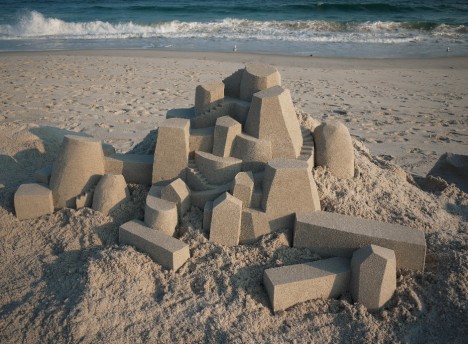
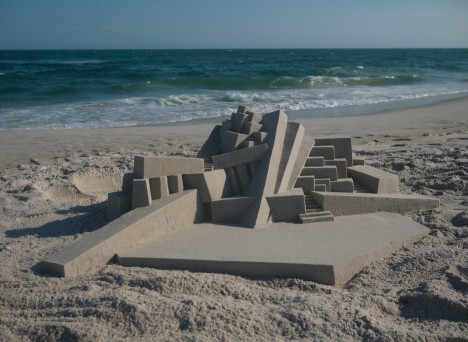
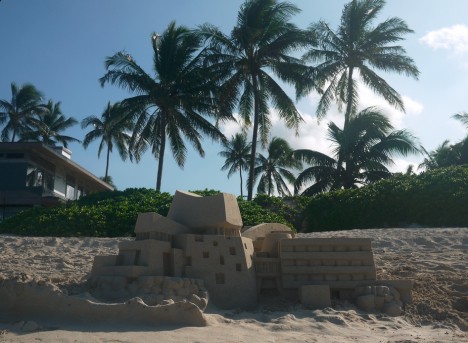
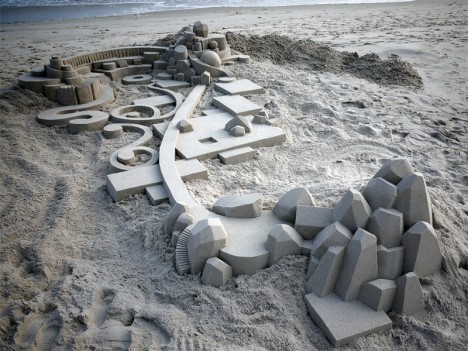
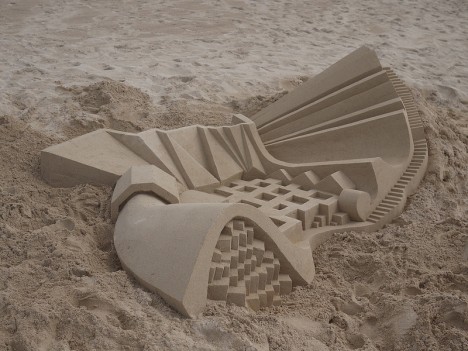
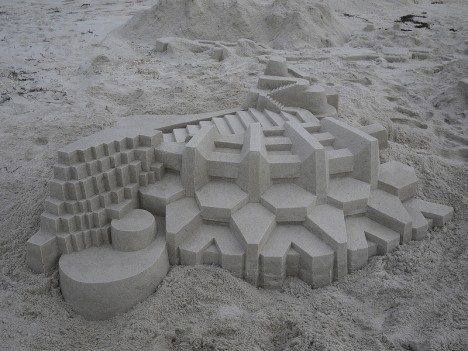
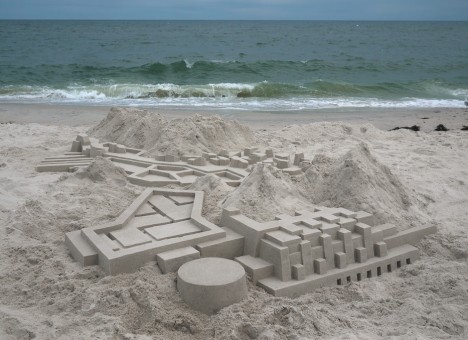
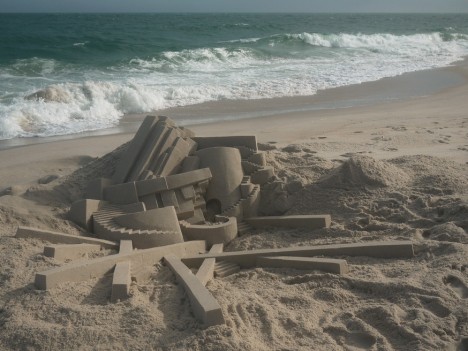
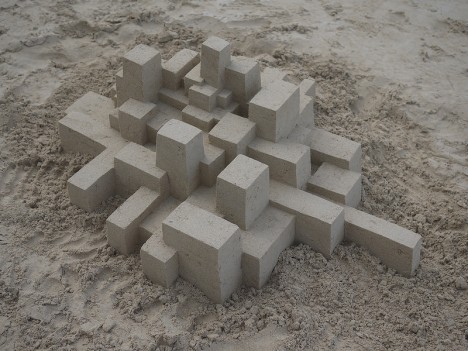
A serious step beyond traditional sand castles, these sculptural micro-structures range from simple sets of cubes to miniature buildings and architectural complexes.

geometric sand pavillion stairs

geometric sand building design

geometric mini city complex

Calvin Seibert of New York recently traveled to Hawaii to complete his latest series of semi-abstract beach sculptures, employing skills he has learned as an assistant sculptor and in carpentry and construction trades.

geometric micro urban design

geometric sand micro buildings

micro architecture sand city

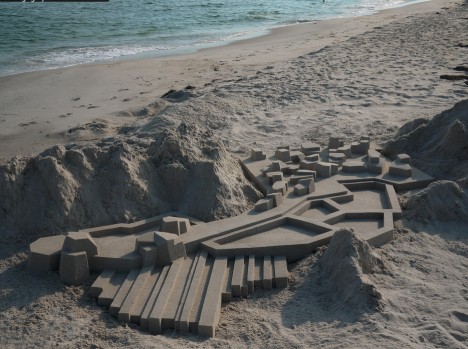
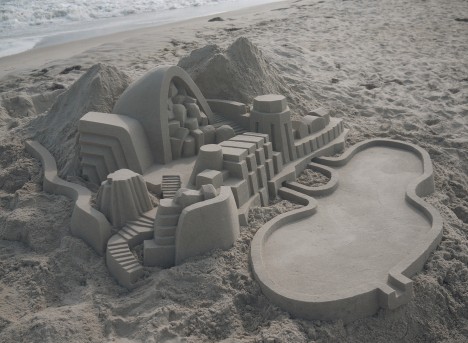
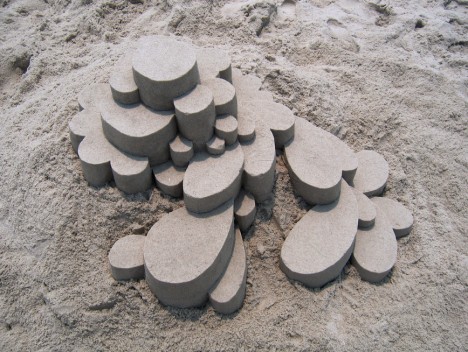
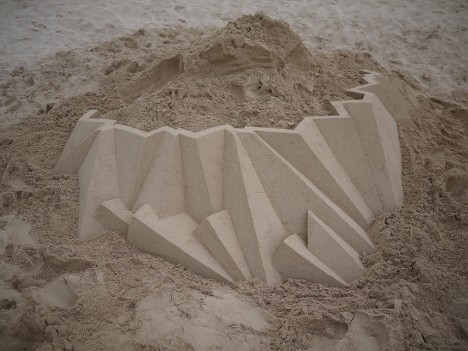
The results exhibit an uncanny grasp of architecture, design and composition, balancing structure and space within individual mini-buildings and larger arrays alike. Crisp edges and smooth curves make them look almost like stone or concrete.

geometric beach abstract art

mini micro curved sculpture

geometric beach art wall

Some of his pieces draw on landscaped earthworks and urban layouts, while others show off a whimsical and eclectic mix of imagination, art and geometry.

geometric beach architecture design

geometric sand castle art

geometric villa design mini

Naturally, the tides always turn on these creations, flattening them back out as the ocean rolls in, making each a temporary expression, but in many cases one could imagine a permanent, life-sized version standing the test of time.

Share on Facebook


[ By WebUrbanist in Art & Sculpture & Craft. ]

[ WebUrbanist | Archives | Galleries | Privacy | TOS ]

WebUrbanist

 
Comments Off on Sand Cities: Geometric Architecture Sculpted from Beaches

Posted in Creativity


Drowned Towns: 10 Underwater Ghost Cities & Buildings

10 Mar

[ By Steph in Global & Travel & Places. ]

Drowned Towns Main

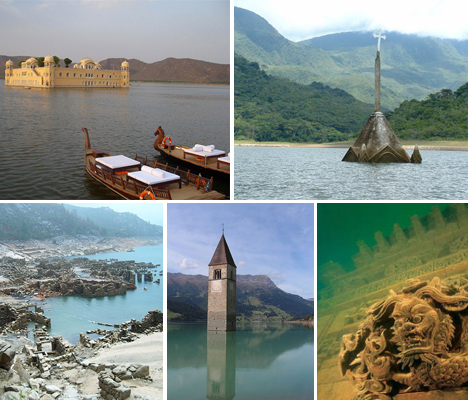
Mildewed crosses, lonely spires, barely-visible stone foundations and rusting bed frames are all that’s left to show for these 10 intentionally submerged towns and structures from India to Massachusetts. When additional water and power is needed to provide for growing populations, small villages often have to be sacrificed, and while some were demolished before their remains were flooded, others can still be seen as ghostly visions wavering beneath the surface.

Potosi, Venezuela

Drowned Towns Potosi 1

Drowned Towns Potosi 2

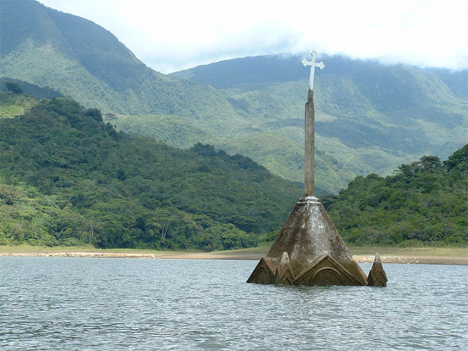
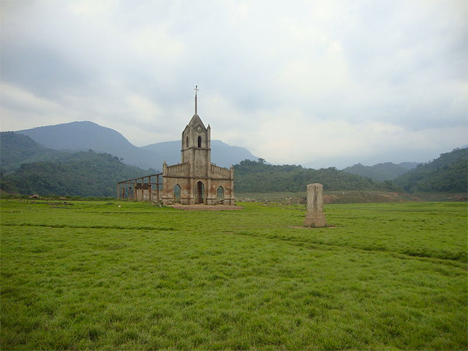
Another town lost to the creation of a hydroelectric dam, Potosi was abandoned in 1985, its residents relocating and leaving their former homes to be filled with water. For 20 years, all that was visible of the Veneuzuelan town was a single mildewed cross topping a drowned church, but by the year 2010, the waters began to recede and the town slowly reappeared. The gothic church that was once submerged is visible again due to droughts and water shortages, erosion and water damage making it appear much older than it really is.

Steeple Tombstone: Curon Venosta, Italy

Drowned Towns Steeple Tomb 1

Drowned Towns Steeple Tomb 2

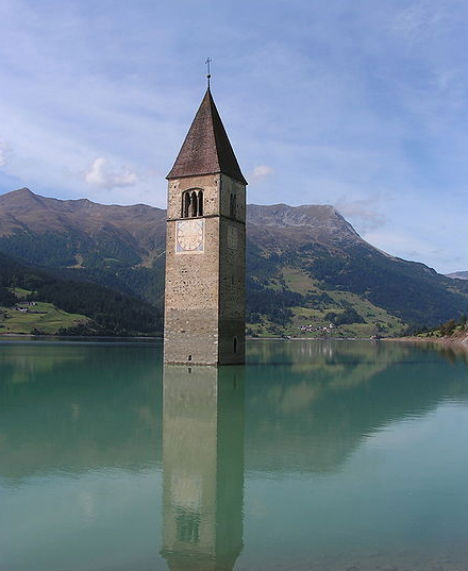
A single spire marks the location of an entire town lost beneath Lago di Resia. The alpine village of Curon Venosta was flooded soon after World War II when officials decided to merge three pre-existing lakes into one to create a hydroelectric dam. Before it was inundated, the town – which included 163 houses and nearly 1,300 acres of land planted with fruit – was filled with sand. The bell tower, which was built in the 14th century, was left intact as a memorial, and can be reached on foot in the winter when the lake freezes over.

Vilarinho da Furna, Portugal

Drowned Towns Vilarinho da Furna

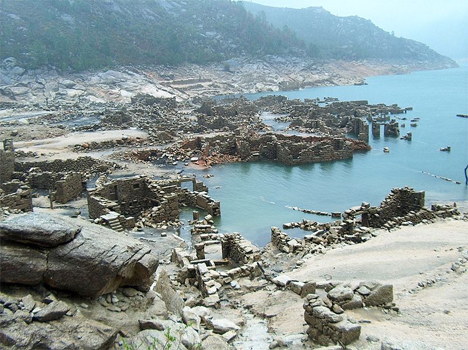
In 1972, the creation of a new dam meant the ancient Vilarinho da Furna was lost beneath the water. The Portuguese village, which dates back to Roman times, was home to almost 300 people inhabiting 80 houses before it was submerged; the property still belongs to their descendants, and reappears every now and then when the reservoir levels fall. The community was unique in that it had a communitarian social system with a council called the Junta made up of a single member from each family, a practice dating back to the Visigoths. When the villagers left they took as much as they could, creating their own road to transport things like rocks and roof tiles to their new homes. Some of those rocks were used to build a museum commemorating Vilarinho da Furna, which contains a collection of clothing, agricultural tools, and paintings depicting daily life in the village.

Jal Mahal, Jaipur, India

Drowned Towns Jal Mahal 1

Drowned Towns Jal Mahal 2

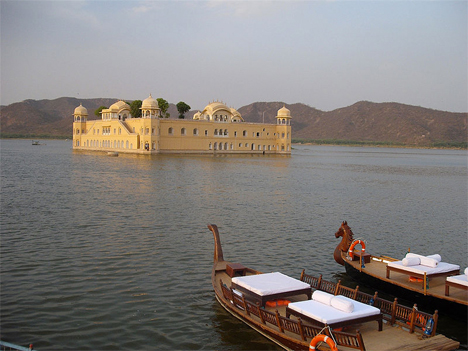
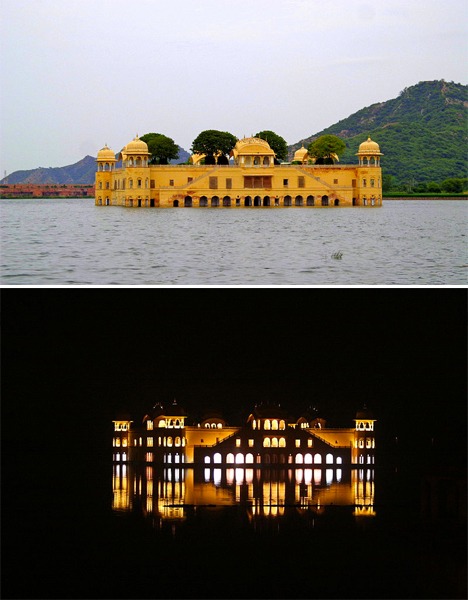
The Water Palace of Jaipur, India sits in the center of Man Sagar Lake. No one knows exactly when it was built, but it’s believed that the red sandstone structure is at least 300 years old and was constructed before damming created the lake, submerging its lower four stories. When the lake is full, only the top level can be reached, and only by boa. At night, the place is illuminated with floodlights like some kind of hallucinatory ghost structure. The palace was recently restored and is now open to visitors.

Next Page – Click Below to Read More:
Drowned Towns 10 Underwater Ghost Cities Buildings

Share on Facebook


[ By Steph in Global & Travel & Places. ]

[ WebUrbanist | Archives | Galleries | Privacy | TOS ]

WebUrbanist

 
Comments Off on Drowned Towns: 10 Underwater Ghost Cities & Buildings

Posted in Creativity


Invisible Cities: Tweets and Photos as Terrain on a Map

20 Feb

[ By Steph in Gadgets & Geekery & Technology. ]

Invisible Cities Data Visualization 1

What would it look like if you could actually see all of the tweets and Instagram photos from a Beyonce concert in New York City hovering above the skyline in physical form? A project called ‘Invisible Cities’ answers that question with an interactive map that displays geocoded activity from various online services in real time with individual nodes appearing anytime a message or image is posted.

Invisible Cities Data Visualization 2

Using a Leap Motion controller and various hand gestures, the user navigates a three-dimensional data landscape, with all of that information literally at their fingertips. As data is aggregated, the landscape of the city changes, with new hills and valleys representing areas where social networking is the most and least active.

Invisible Cities Data Visualization 3

Invisible Cities Data Visualization 4

The individual nodes seen on the maps are connected by narrative threads based on themes emerging from the information as it comes streaming in. So, those tweets from the Beyonce concert look a bit like a stream of smoke rising out of Barclays Center in Brooklyn as users exclaim, “Jay Z and Beyonce on stage together right now OMG!”

Invisible Cities Data Visualization 5

Take a look through Central Park and you’ll see Instagram posts of people running, walking their dogs or having a picnic. Version 1.0 is now available for the Leap Motion Controller and can be downloaded for free on Airspace. The creators, Christian Marc Schmidt and Liangjie Xia, say “Through an immersive, three-dimensional information landscape, the piece creates a parallel experience to the physical environment, one of intersections, discovery, and memory.”


Share on Facebook


[ By Steph in Gadgets & Geekery & Technology. ]

[ WebUrbanist | Archives | Galleries | Privacy | TOS ]

WebUrbanist

 
Comments Off on Invisible Cities: Tweets and Photos as Terrain on a Map

Posted in Creativity


Darkened Cities: Urban Skylines Minus Light Pollution

18 Jan

[ By Steph in Art & Photography & Video. ]

Darkened Cities 1

What would your city look like if it went completely dark? Words like majestic, awe-inspiring and magical come to mind – not as descriptions for the cities themselves, but how some of their most iconic architecture would look as black silhouettes against the bright starry skies of remote places. Artist Thierry Cohen gives us an idea of just who amazing these visuals would be in his series, ‘Darkened Cities.’

Darkened Cities 2

Cohen doesn’t just superimpose random images of the night sky behind each skyline – the imagery is actually what the sky would look like in each of those precise locations. Using methods pioneered by early 19th century photographers, Cohen first takes photos of each location, isolating and darkening the cities themselves, before adding in the sky.

Darkened Cities 3

Taking note of the exact latitude, longitude and angle of each city, the artist tracks the earth’s rotation to capture the sky in a place where light pollution doesn’t affect the clarity of the stars, like the Mohave desert.

Darkened Cities 4

Pictured here, in order of appearance, are Rio de Janeiro, Shanghai, San Francisco, Paris, Tokyo, Sao Paulo and New York. See more at Thierry Cohen’s website.

Share on Facebook


[ By Steph in Art & Photography & Video. ]

[ WebUrbanist | Archives | Galleries | Privacy | TOS ]

WebUrbanist

 
Comments Off on Darkened Cities: Urban Skylines Minus Light Pollution

Posted in Creativity


Walkability & Hyperdensity: 14 Concepts for Future Cities

07 Jan

[ By Steph in Architecture & Cities & Urbanism. ]

Urban Future Walkable Car-Free Cities Main

The city of the future addresses problems like overpopulation, pollution and sprawl by building high-density vertical neighborhoods that are interconnected at all levels so residents can move freely from one place to another on foot. These 14 city concepts, some of which are already under construction, emphasize walkability, sometimes going so far as to ban cars altogether.

Car-Free City in China

Urban Future Car-Free China 1

Urban Future Car-Free China 2

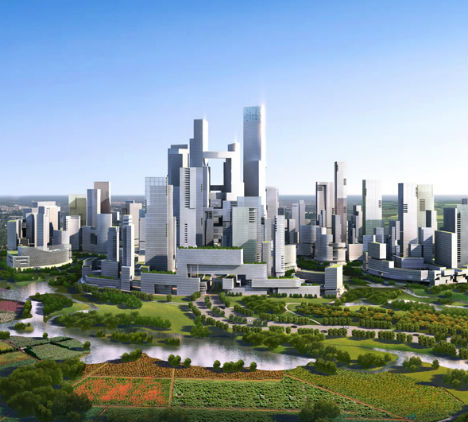
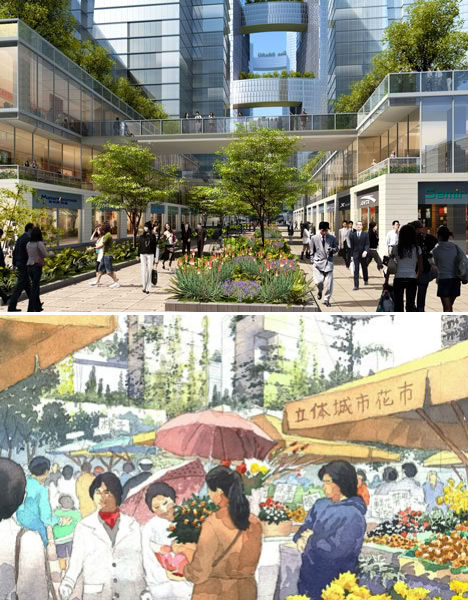
China is creating a totally car-free city from scratch, building a new urban center around a high-rise core housing 80,000 people. Great City, planned for a rural area outside Chengdu, will be entirely walkable and surrounded by green space. Getting from the center to the outer ring of parks on foot takes just ten minutes. Other nearby urban centers will be accessible via mass transit. The city will use 48% less energy and 58% less water than a more conventional city of the same size, and will produce 89% less landfill waste.

Masdar, World’s First Zero-Carbon City

Urban Future Masdar Eco City 1

Urban Future Masdar Eco City 2

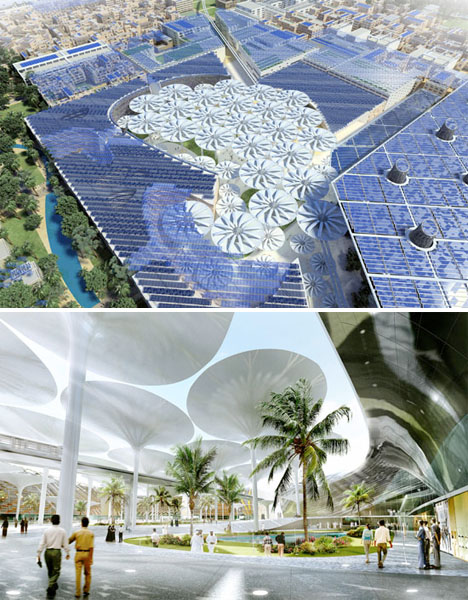
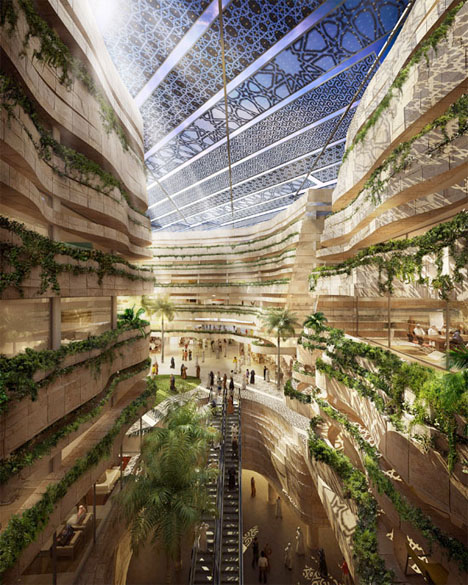
The world’s most sustainable metropolis – with no cars or skyscrapers allowed – is currently under construction in the desert outside Abu Dhabi. Masdar, the world’s first zero-carbon, zero waste city, will feature a public rapid transit system in place of personal automobiles, and will be fueled by solar, wind and geothermal power. Giant ‘sunflower umbrellas’ designed for the city center will provide movable shade during the day, store heat, and then close and release heat at night.

Shan-Shui City

Urban Future Shan Shui 1

Urban Future Shan Shui 2

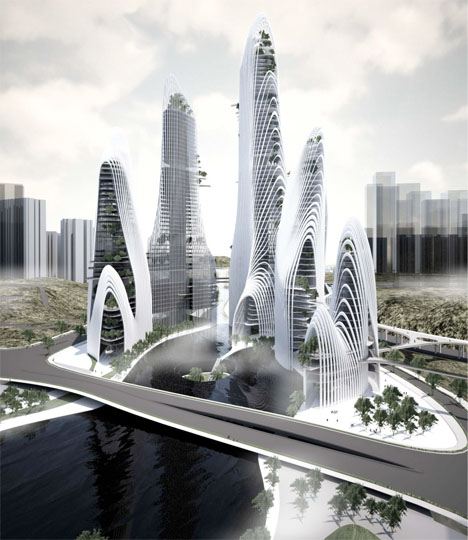
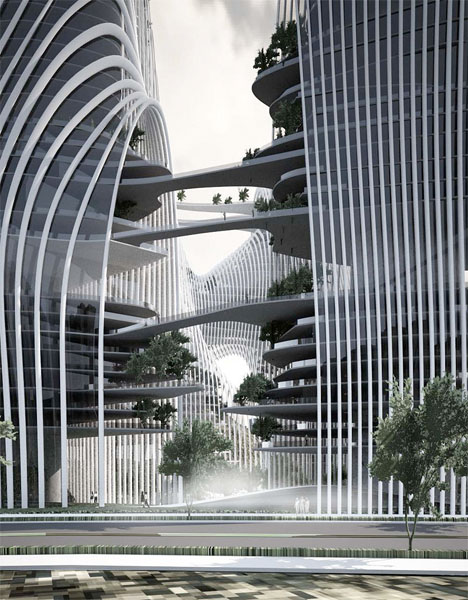
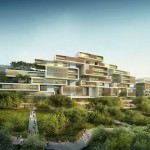
MAD Architects envisions Shan-Shui City as the city of the future. Inspired by the worship of mountains and water in China, the concept is made up of large-scale mixed-use buildings with lots of public spaces where people can gather, communicate and enjoy nature. High-density living and making all necessary resources readily available within easy walking or public transit distance is a far more sustainable way of building a city than the current trend of “boxes spreading all over,” say the architects. The concept makes access to nature just as vital as access to schools, health care and work.

Dubai Sustainable City

Urban Future Dubai Sustainable City 1

Urban Future Dubai Sustainable 2

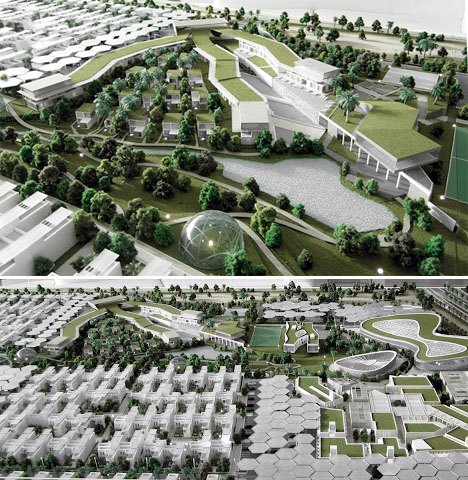
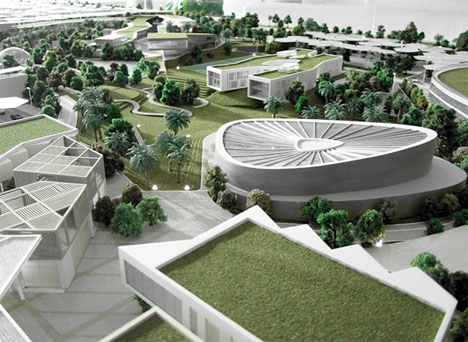
Baharash Architecture proposes a sustainable Dubai incorporating “the best practices in environmental building technologies,” with a strong focus on community connections and social interaction in green spaces. The design consists of 550 residential villas, organic farms, educational facilities and 600,000 square feet of solar panels. The city will produce 50 percent of its own energy through solar power and offset its carbon footprint via mass transit.

Next Page – Click Below to Read More:
Walkability Hyperdensity 14 Concepts For Future Cities

Share on Facebook


[ By Steph in Architecture & Cities & Urbanism. ]

[ WebUrbanist | Archives | Galleries | Privacy | TOS ]


WebUrbanist

 
Comments Off on Walkability & Hyperdensity: 14 Concepts for Future Cities

Posted in Creativity


Great Ghost Cities: 7 Eerie Abandoned Wonders of China

20 Dec

[ By Steph in 7 Wonders Series & Global. ]

Abandoned China Main

An ancient city made of intricately carved stone sits silent at the bottom of a lake, a replica of Paris complete with an Eiffel Tower is eerily empty, and a city leveled by disaster has been cordoned off indefinitely as a memorial to those who were lost. China might just be home to more ghost cities than any other nation on earth, and most of them are of the modern variety, as the push for economic progress has led developers to get a bit ahead of themselves constructing vast communities, malls and amusement parks that never caught on with the public.

China’s Atlantis: Lost Underwater City

Abandoned China Underwater Lion City 1

Abandoned China Underwater Lion City 2

Roughly one hundred feet below the surface of Thousand Island Lake (Qiandao Lake) is one of the world’s most stunning submerged historical treasures: Lion City. This ancient city was built during the Eastern Han Dynasty (25-200 CE) and measures about 62 football fields. The city, which is complete with incredibly intricate relief sculptures all over the stone walls of its buildings, was intentionally flooded in the 1950s to create a dam. Evidently, authorities felt that attempting to preserve the city wasn’t worth the trouble. But now that it’s underwater, it has become a diving destination, and various tours have popped up allowing visitors to explore it. Some have even proposed building transparent floating tunnels and other new construction that could make it more accessible to everyone.

Paris of the East: Replica Ghost City

Abandoned China Paris Replica 2

Abandoned China Paris Replica 1

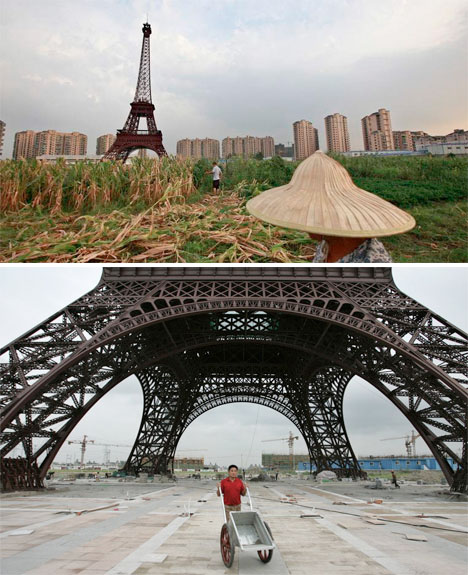
Paris is one of the world’s most vibrant cities, bustling with hundreds of thousands of people. At least, the one in France is. The meticulously built replica city in China – not so much. Tianducheng, in China’s Zhejiang district, was modeled after the real Paris, complete with a 354-foot replica of the Eiffel Tower as well as other landmarks. Intended to be a luxurious gated community that could house 100,000 and draw rural families into a centralized urban location, the city has been a ghost town since its construction in 2007. Only about 2,000 people moved there, and that small number seems to be dwindling by the day. But work is still in progress, and officials are hoping to get more people there before the whole complex is totally complete in 2015.

Ordos: A Modern Ghost Town

Abandoned China Ordos 1

Abandoned China Ordos 2

It seems as if the entire population of a large city simply vanished into thin air. In reality, they were never here in the first place. The Kangbashi New Area of Ordos is a planned community for one million people, envisioned as the Dubai of Northern China – but only about 20,000 people live there, and you’d never even guess there are that many residents based on the eerie photos of deserted streets and empty skyscrapers. It’s close to abundant natural resources and has plenty of public infrastructure, and economic woes aren’t actually a problem. The government just can’t seem to convince people to move here. Some of the architecture, like the Ordos Art Museum, is really quite stunning, and it’s strange to see it accumulating dust as it waits for visitors that might never come. City officials are still hoping that many of the 1.5 million residents of the old section of Ordos, located 15 miles away, will decide to make the move.

Beichuan: Left Behind After a Disaster

Abandoned China Beichuan Disaster City 2

Abandoned China Beichuan Disaster City 1

Imagine an entire city leveled by an earthquake, roped off and left to rot as a sad and rather dangerous tribute to all that was lost. It happened in Christchurch, New Zealand (sort of – they do plan to rebuild, and the process has already begun) and it happened in Beichuan, China. A deadly earthquake killed thousands of residents and displaced tens of thousands more, and the damage is so extensive that reconstructing it would require leveling almost all of the remaining buildings. So, it’s now basically a memorial park that you shouldn’t enter unless you’re keen to get trapped in the rubble and join the other victims.

Next Page – Click Below to Read More:
Ghost Cities Of China 7 Eerie Abandoned Wonders

Share on Facebook


[ By Steph in 7 Wonders Series & Global. ]

[ WebUrbanist | Archives | Galleries | Privacy | TOS ]


WebUrbanist

 
Comments Off on Great Ghost Cities: 7 Eerie Abandoned Wonders of China

Posted in Creativity


Great Ghost Cities of China: 7 Eerie Abandoned Wonders

19 Dec

[ By Steph in 7 Wonders Series & Global. ]

Abandoned China Main

An ancient city made of intricately carved stone sits silent at the bottom of a lake, a replica of Paris complete with an Eiffel Tower is eerily empty, and a city leveled by disaster has been cordoned off indefinitely as a memorial to those who were lost. China might just be home to more ghost cities than any other nation on earth, and most of them are of the modern variety, as the push for economic progress has led developers to get a bit ahead of themselves constructing vast communities, malls and amusement parks that never caught on with the public.

China’s Atlantis: Lost Underwater City

Abandoned China Underwater Lion City 1

Abandoned China Underwater Lion City 2

Roughly one hundred feet below the surface of Thousand Island Lake (Qiandao Lake) is one of the world’s most stunning submerged historical treasures: Lion City. This ancient city was built during the Eastern Han Dynasty (25-200 CE) and measures about 62 football fields. The city, which is complete with incredibly intricate relief sculptures all over the stone walls of its buildings, was intentionally flooded in the 1950s to create a dam. Evidently, authorities felt that attempting to preserve the city wasn’t worth the trouble. But now that it’s underwater, it has become a diving destination, and various tours have popped up allowing visitors to explore it. Some have even proposed building transparent floating tunnels and other new construction that could make it more accessible to everyone.

Paris of the East: Replica Ghost City

Abandoned China Paris Replica 2

Abandoned China Paris Replica 1

Paris is one of the world’s most vibrant cities, bustling with hundreds of thousands of people. At least, the one in France is. The meticulously built replica city in China – not so much. Tianducheng, in China’s Zhejiang district, was modeled after the real Paris, complete with a 354-foot replica of the Eiffel Tower as well as other landmarks. Intended to be a luxurious gated community that could house 100,000 and draw rural families into a centralized urban location, the city has been a ghost town since its construction in 2007. Only about 2,000 people moved there, and that small number seems to be dwindling by the day. But work is still in progress, and officials are hoping to get more people there before the whole complex is totally complete in 2015.

Ordos: A Modern Ghost Town

Abandoned China Ordos 1

Abandoned China Ordos 2

It seems as if the entire population of a large city simply vanished into thin air. In reality, they were never here in the first place. The Kangbashi New Area of Ordos is a planned community for one million people, envisioned as the Dubai of Northern China – but only about 20,000 people live there, and you’d never even guess there are that many residents based on the eerie photos of deserted streets and empty skyscrapers. It’s close to abundant natural resources and has plenty of public infrastructure, and economic woes aren’t actually a problem. The government just can’t seem to convince people to move here. Some of the architecture, like the Ordos Art Museum, is really quite stunning, and it’s strange to see it accumulating dust as it waits for visitors that might never come. City officials are still hoping that many of the 1.5 million residents of the old section of Ordos, located 15 miles away, will decide to make the move.

Beichuan: Left Behind After a Disaster

Abandoned China Beichuan Disaster City 2

Abandoned China Beichuan Disaster City 1

Imagine an entire city leveled by an earthquake, roped off and left to rot as a sad and rather dangerous tribute to all that was lost. It happened in Christchurch, New Zealand (sort of – they do plan to rebuild, and the process has already begun) and it happened in Beichuan, China. A deadly earthquake killed thousands of residents and displaced tens of thousands more, and the damage is so extensive that reconstructing it would require leveling almost all of the remaining buildings. So, it’s now basically a memorial park that you shouldn’t enter unless you’re keen to get trapped in the rubble and join the other victims.

Next Page – Click Below to Read More:
Ghost Cities Of China 7 Eerie Abandoned Wonders

Share on Facebook


[ By Steph in 7 Wonders Series & Global. ]

[ WebUrbanist | Archives | Galleries | Privacy | TOS ]

WebUrbanist

 
Comments Off on Great Ghost Cities of China: 7 Eerie Abandoned Wonders

Posted in Creativity


Secret Cities: Capturing Hidden Abandoned Places on Film

12 Nov

[ By Steph in Abandoned Places & Architecture. ]

Secret Cities Abandoned Places 1
Just beyond all of the noise and activity of daily urban life is a secret world of forgotten spaces which are nearly always dank and dusty, but often surprisingly beautiful. Photographer Andrew Brooks seeks out these spots in Manchester, UK and Sittard-Geleen, The Netherlands, capturing them on film so the less adventurous can experience a small fraction of their crumbling glory.

Secret Cities Abandoned Places 2

Brooks gains entry into grand disused buildings that seem frozen in time, like the Hulme Hippodrome and Manchester’s Albert Hall, as well as subterranean tunnels and decommissioned water towers. At his website, the photographer provides detailed information about each location he shoots, describing what it felt like to experience them firsthand, as well as offering his stunning images.

Secret Cities Abandoned Places 3

Secret Cities Abandoned Places 6

The forgotten spaces just out of view of the average person in virtually any major city around the world start to occupy ‘imaginary spaces,’ says Brooks. It’s easy to envision them as settings for all sorts of fictional intrigue, to let our imaginations run wild with the possibilities of these often complex spaces, yet most of us are too wrapped up in our immediate surroundings to give them much thought.

Secret Cities Abandoned Places 4

Secret Cities Abandoned Places 5

“The familiar space we occupy gradually take on the character of wallpaper in our lives as we hurry from meeting to meeting, commitment to commitment, never stopping to appreciate the places where we live. In our rush we miss both the fantasy and reality of our pace in the world, habitually ignoring even the points where the opportunities for simple adventure encourage us to indulge.”

Share on Facebook


[ By Steph in Abandoned Places & Architecture. ]

[ WebUrbanist | Archives | Galleries | Privacy | TOS ]

WebUrbanist

 
Comments Off on Secret Cities: Capturing Hidden Abandoned Places on Film

Posted in Creativity


Explore Everything: Epic Book Shows How to Hack Cities

22 Oct

[ By WebUrbanist in Global & Urbex & Parkour. ]

urban exploration guide book

Combining harrowing first-hand experiences, vivid images and historical context, urban explorer and photographer Bradly L. Garrett takes his readers on a stunning in-depth tour through the hidden world of urban exploration and building infiltration. This trip passes through the sewers and subway tunnels of London, over bridges and skyscrapers of New York, and slip you in between derelict buildings and abandoned places around the world.

urban crane tower climb

Explore Everything: Place-Hacking the City (from Verso Books) is more accessible than a manifesto yet more revealing than a manual. In highly readable and engaging prose, it manages to combine personal storytelling and thoughtful reflection with factual urban histories and practical tips for exploring secret spaces.

urban tunnel vertical view

If you are looking for a coffee-table book of eye candy to flip through, this is not the one for you, but there are plenty of those already. Instead, this is a rarer sort of volume that goes far deeper, drawing on meticulous notes, handmade maps, diligent research and many years of direct experience.

urban paris rooftop

urban deserted building structure

urban derelict building decay

urban tunnel graffiti art

urban subway tunnel

Like something from a China Miéville or Neil Gaiman novel, this author reveals that there truly is a layer of fantastic mystery behind, between or below the surfaces of any city. With stories of personal adventures, from climbing skyscrapers under construction to descending into derelict subway tunnels, Garrett conveys the hot sweat and cold fear experienced in his travels. At the same time, he manages to provide commentary that goes beyond the level of an explorer and into the realm of researcher and philosopher. His combination of first-hand and historical knowledge make this a book worth reading.

urban abandoned interior

urban detroit interior volume

The heavy volume may have travel anecdotes and photographs, but it is also not lacking in powerful insights and revealing opinions. Discussing Detroit, Garrett reveals the complexities of a city that is known for its abandonments but is simultaneously in many ways and places a “light, bright, vibrant, beautiful place” that is “full of life, events, politically active citizens, great places to go out” as well as “a plethora of sites ripe for infiltration.” He notes that “as images of decay had become culturally ubiqituitous in this city” many photographers have focused too hard on “sharp, vibrant, long-exposure photography” that produces stylized and idealized imagery that “look uncomfortably similar to traditional photos of colonial explorers, evoking images of white men sticking flags in the soil.” Detroiters sick of their city being seen as a one-sided wasteland will appreciate the author’s even-handed and open-minded approach to and appreciation of their home – and this is just one of many such examples.

Next Page:
Explore Everything Epic Book Shows How To Hack Cities

Share on Facebook


[ By WebUrbanist in Global & Urbex & Parkour. ]

[ WebUrbanist | Archives | Galleries | Privacy | TOS ]


WebUrbanist

 
Comments Off on Explore Everything: Epic Book Shows How to Hack Cities

Posted in Creativity