RSS
 

Posts Tagged ‘Cities’

Desert Cities: Modular Nodal Network Idea for the Middle East

30 Jan

[ By WebUrbanist in Architecture & Cities & Urbanism. ]

desert city social organization

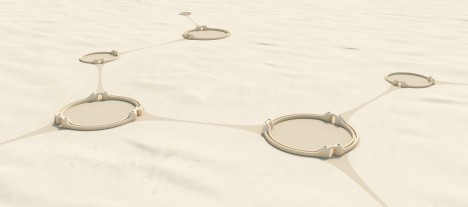
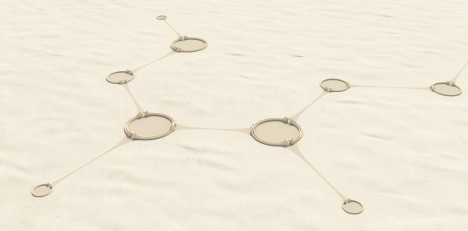
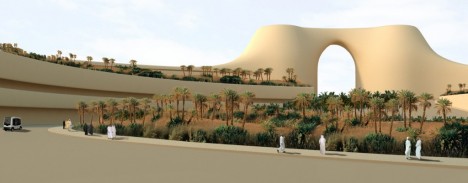
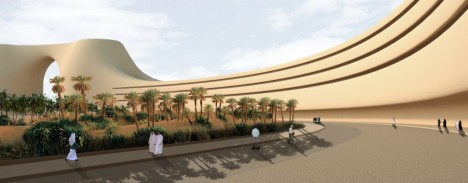
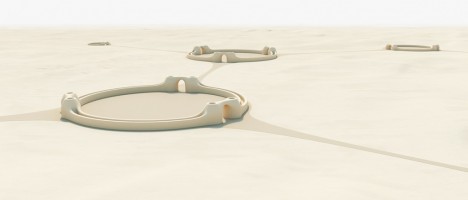
A combination of contemporary regionalism and sustainable urbanism, this design strategy proposed by an Italian architecture firm involves a series of modules for living, working and interacting at different scales. Notably different from most models of urban design is the intentional lack of density, raising the question: is the premise that good urban strategies revolve around dense centers a universally valid one?

desert city expanse

desert city different scales

desert cities node network

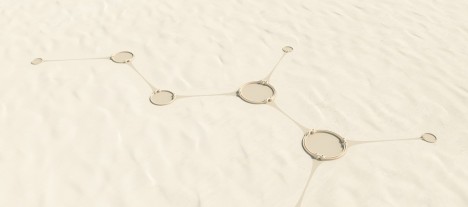
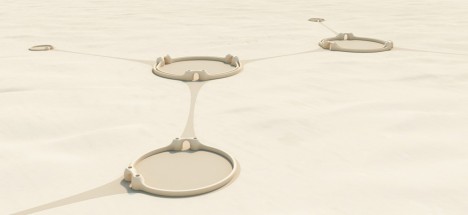
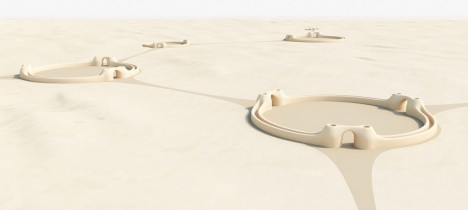
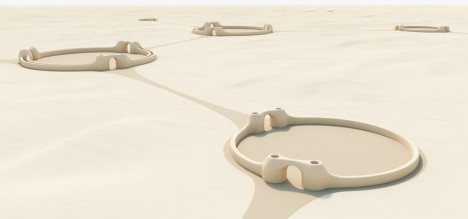
Connected by lines that serve as both dividers and connectors, the smallest modules are family-sized units, the mid-sized variants working as cultural, research and service centers and the largest operating as micro-cities with more complex communities.

desert city concept rendering

desert city individual community

By spreading these out, maximum use can be made of minimal rainfall (water capture) as well as sun exposure (solar power), rendering each unit relatively or entirely self-sufficient. Internally, composing, recycling and other sustainable strategies would be employed as well.

desert city design urban

desert city layout strategy

desert city streets connectors

desert city angled view

Luca Curci Architects describes the approach as follows: “The project-plane is made by a series of identity-places with symbiotic interconnections among them which create an organic and articulated system. The identity-places can be divided in 3 macro architectural types, different for dimension, function and inhabitants. Each identity-place is developed following residential and architectural solutions which respect the environment’s tradition, climatic condition and resources.”

Share on Facebook


[ By WebUrbanist in Architecture & Cities & Urbanism. ]

[ WebUrbanist | Archives | Galleries | Privacy | TOS ]


WebUrbanist

 
Comments Off on Desert Cities: Modular Nodal Network Idea for the Middle East

Posted in Creativity


11 Tips for Creating Stunning Photographs of Cities at Dawn

30 Jan

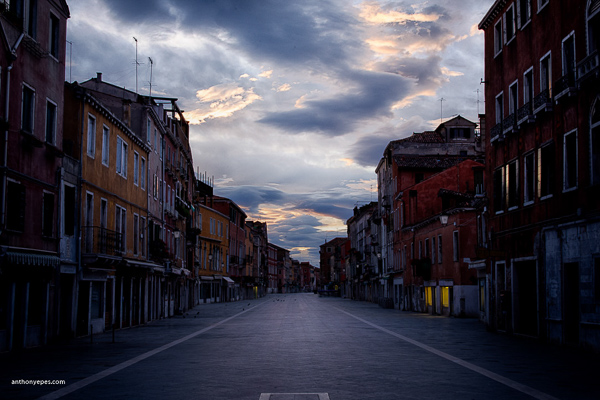
We’ve all seen hundreds of gorgeous photos of sunrises over beaches and beautiful landscapes. Of course they have the capacity to wow and inspire, but I would argue that it’s far more interesting to photographs cities at dawn. You have so much more to work with – buildings, graffiti, debris, rivers, glass, the odd person, roads, and greenery in the midst of all of this urban-ness. The possibilities to create unique photos are endless. So, if you combine all this intense city landscape with the wonderful and quickly-changing light of dawn, you have an amazing combination.
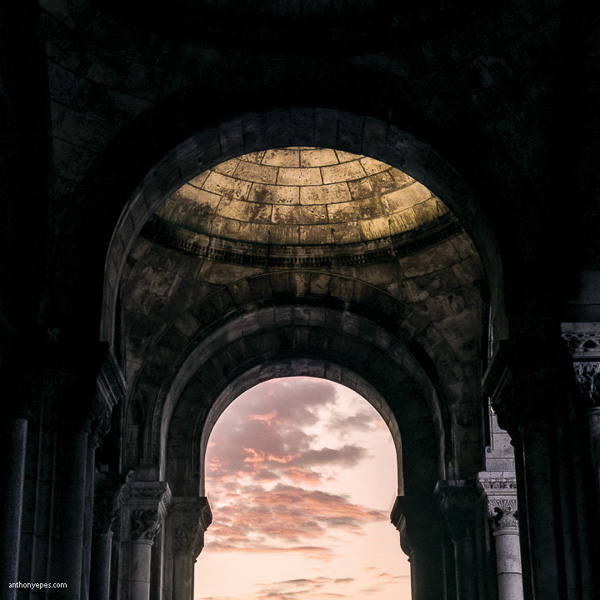
Anthonyepesphotography DPS 1

I’ve been shooting cities at dawn for over a decade now. For me cities are at their most inspiring when they are empty of people, traffic, and chaos and bathed in the beautiful light of dawn.

Here are 11 tips on how to create stunning photographs of cities at dawn:

1. Sunrise

Sunrise, especially when it’s an epic one, is obviously the focus for any early morning shoot. But it shouldn’t be just about capturing the sunrise.

  • Clouds: To me what is special about any given morning is what kind of clouds are in the sky. Clouds are what make mornings different from day to day and are one of the reasons to keep going back to the same place again and again.
  • Other elements: Think about other elements you can use to enhance the photo. Try framing the sunrise, and the sky, to create an interesting contrast (see photo above).
  • Foreground: Find an interesting subject for your foreground, using the sunrise like a tapestry.
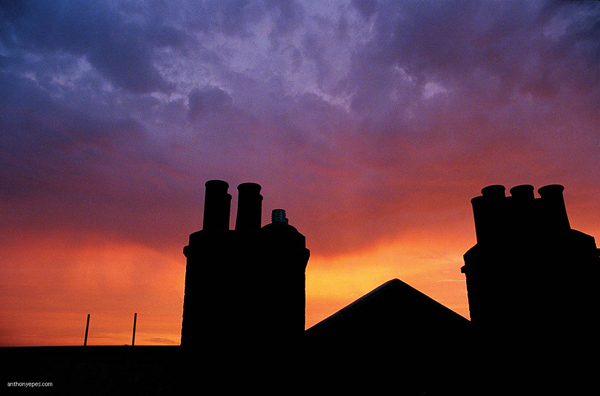
Anthonyepesphotography DPS 2

2. Emptiness

Being in a city (which is usually densely packed with people) suddenly deserted, creates a feeling that you are in a different world. You see the city as it really is, and it changes what you see but also what you photograph.

This sense of emptiness is made especially impactful when you photograph:

  • Tourist attractions
  • Roads
  • Monuments
  • Public squares

Anthonyepesphotography DPS 3

3. Varying types of light

The sunrise may be the shining moment of the morning, but don’t forget other unique qualities to early morning photography.

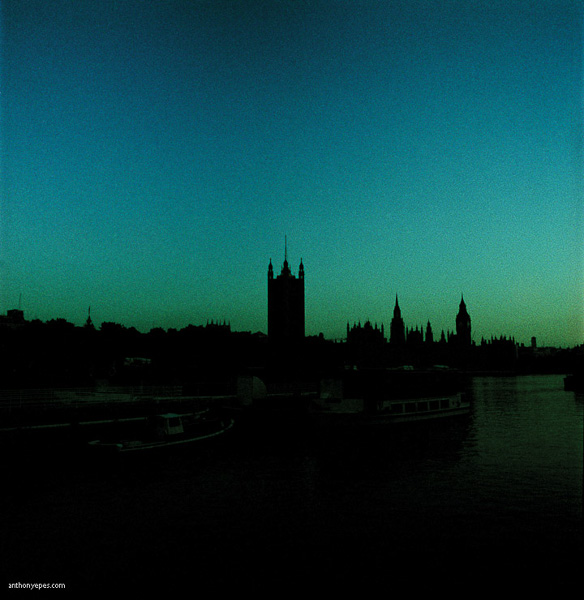
  • Blue hour: Is a very short time between night and sunrise, when the sky changes quickly from dark to light. It happens again before sunset, but at dawn the beauty of the blue hour is enhanced by the emptiness and stillness of the city. When you are shooting during the blue hour, be prepared as the light changes very quickly. Get your camera set up on a tripod and have your scene already composed, so that when it arrives and the light is changing, you won’t miss it. If you have a shot you really like, be patient, and shoot slowly as the light changes. Slowing down like this also creates the opportunity to relax enjoy the view and look around for the next shot.
Anthonyepesphotography DPS 4

  • Artificial and natural light: Contrasting artificial and natural light. There is a very short time at dawn when you have both, and the effect is beautiful.
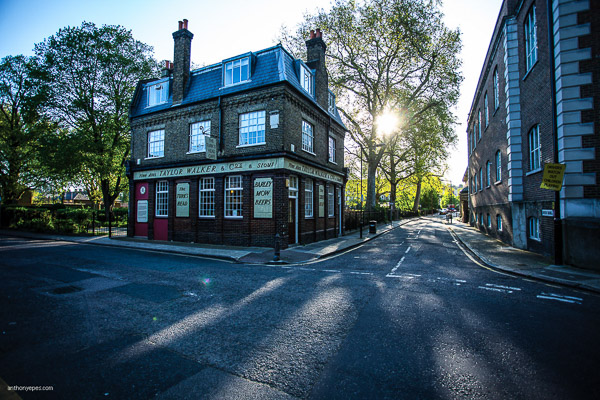
  • Low sun, long shadows: At dawn the sun rises from below the horizon and moves up into the sky at a height dependent on the time of year (and what part of the world you are in). The effect of a low sun is that it creates long shadows, which are stunningly effective with the low light of dawn. Stick around for a few hours after sunrise to capture the light falling over the streets and buildings like this:
Anthonyepesphotography DPS 5

4. Look for light sources

A bundle of different elements like buildings, roads, glass, and windows with the light falling onto them creates a myriad of opportunities for light to bounce, reflect, bend and distort. If you see light falling onto a wall, or reflecting onto a piece of glass, look for its source. It could be that the source is more interesting than the effect the light is creating.

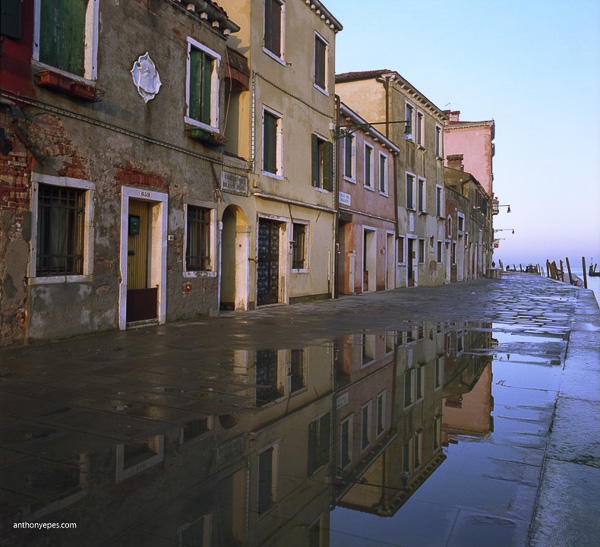
  • Reflections: Are a gem to photograph and dawn is such a brilliant time because there aren’t people crowding around disturbing them. Search out water as it’s usually still – puddles, canals, ponds and my favourite – glass buildings.
Anthonyepesphotography DPS 6

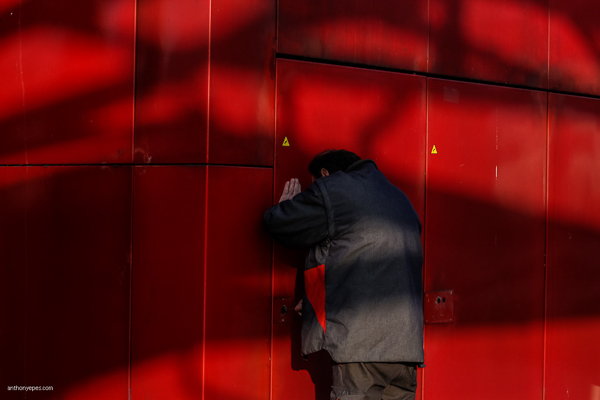
  • Light effects: The low sun creates a myriad of effects as it filters through trees, buildings and other city architecture. Look at this man, locking up, and how the shadows enhance the mood and meaning of the photo.
Anthonyepesphotography DPS 7

  • Use the light for contrast: Search out the unusual. I love the contrast of some of the rougher, decaying edges of a city with the vibrant light of dawn.
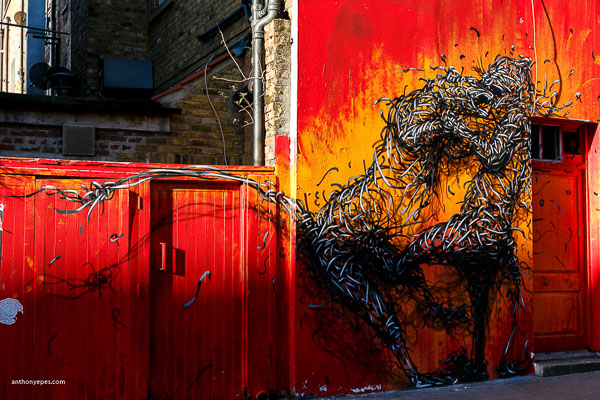
Anthonyepesphotography DPS 8

5. Seek out people – they are usually doing interesting things at dawn

Most people out at dawn are either working or they’ve been out all night enjoying themselves. They make interesting, and often very willing subjects!
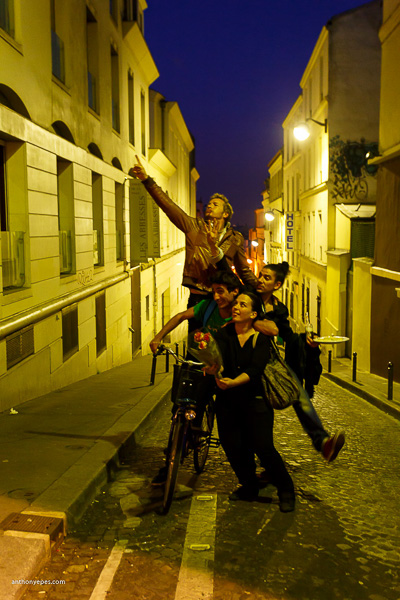
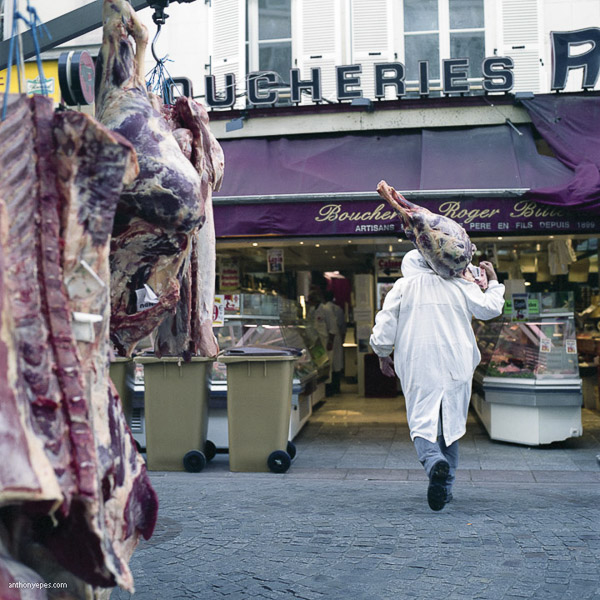
Anthonyepesphotography DPS 9

Anthonyepesphotography DPS 10

6. Return to your favourite spots

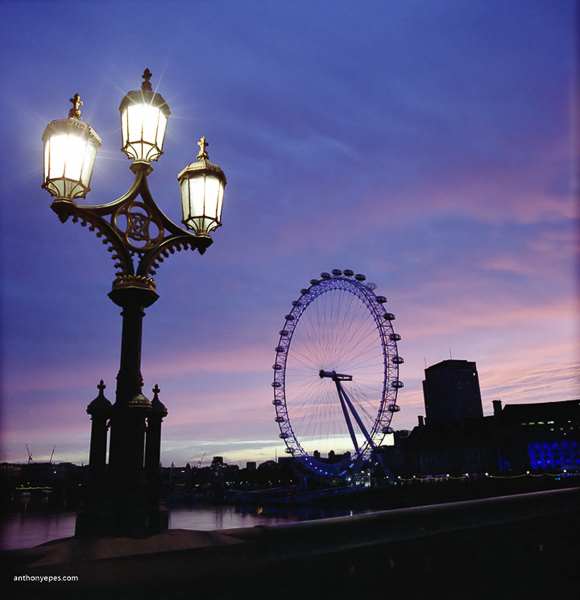
No two sunrises are the same. So, if you have a favourite spot, go back and photograph it on a different day, during different seasons. The quality of the light will be different, perhaps there will be changes in the cityscape (London is never the same year to year), you will notice contrasts. Give yourself a challenge, ask yourself: How can I make this same scene a distinctive photograph? What else can I do? Push yourself to create more unique photographs every day.
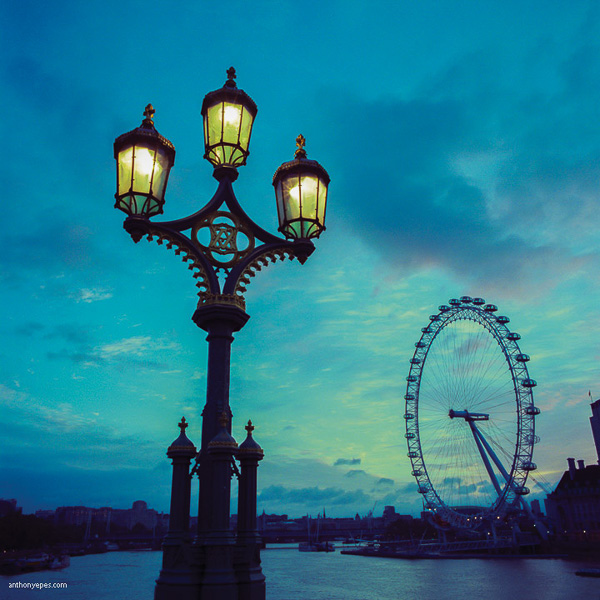
Anthonyepesphotography DPS 11

Anthonyepesphotography DPS 12

7. Explore

Go off the beaten track. Photographing the iconic sites is amazing in any city (it’s iconic for a reason, right?) and having St. Mark’s Square in Venice to yourself at dawn is a heady experience. But there are always so many areas of any city that are not so frequently photographed. It could be the docklands in London’s East End, the rough and run down area east of Paris’s Sacre Coeur or the eastern edge of Venice, where I found abandoned buildings and ancient fortresses. Everything seems other-worldly at dawn and worth exploring.

8. Look behind you (and above, below, around and everywhere)

When you are going out to shoot, it’s important to really look around you. Doesn’t this sound like a simple task that we spend all of our lives doing? Actually no! You will be surprised by how much we all miss as we rush around in the little bubble of our minds, distracted by our thoughts and our tasks for the day.

Don McCullin says it brilliantly: “You can feast your eyes on a daily basis, although I suspect the average man on the street goes through life with narrowed vision, not seeing the whole scope of what’s going on around him.”

If you want to create images with a WOW factor you have to pay attention to what’s around you. What the photo world calls, “The art of seeing”.

I find being out at dawn helps me see, because there isn’t the usual distractions, our senses are more heightened, it’s an unusual time of day to be awake (for most of us) and we are seeing our familiar streets and places in a new light.

9. Get started early

I like to have found my location before I go out. From there I wander, but it’s good to have a initial place so you don’t waste time. I like to be in this first location at least an hour, sometimes an hour and half, before sunrise. There are some incredible opportunities to photograph the blue hour.

10. Be prepared with your kit

The light changes very quickly at dawn, and you definitely don’t want to miss that spectacular sunrise. My essential kit list for dawn shooting includes:

  • A small torch (flashlight) for setting up your camera in the dark
  • A plastic bag for my camera in case it rains (cheap but it works!)
  • A visor or hat as walking into the sunlight is hard on the eyes
  • Gloves (it’s often cold at dawn, even in summer)
  • A light, but sturdy tripod, (you’ll need this for the first couple of hours, but then you’ll be carrying it, hence it should be light)

11. Get yourself acquainted with your camera

This may seem a bit obvious but it is something most people don’t do; know your camera. Lack of camera knowledge can turn a simple shoot into a difficult one (especially in the dark)! Know what all those buttons do, some may make your life easier.

Does that give you some ideas for photographing your city at dawn? Or perhaps getting up early on the next trip? Share your comments below please.

BIO
Photographer Anthony Epes is currently publishing a series of photo books on Cities at Dawn, with instalments on London, Paris, Venice, New York and Istanbul. Inspired by his books Anthony runs photo workshops at dawn in some of the world’s most interesting and beautiful cities. His work has been featured on BBC World, French Photo Magazine, The Economist, Hyperallergic and CNN. He blogs about photography on his website.

SOCIAL MEDIA
• https://plus.google.com/u/0/+AnthonyEpes/posts

Twitter
• https://www.facebook.com/londonatdawn
• https://www.flickr.com/people/anthonyepes/
• https://www.linkedin.com/in/anthonyepes

googletag.cmd.push(function() {
tablet_slots.push( googletag.defineSlot( “/1005424/_dPSv4_tab-all-article-bottom_(300×250)”, [300, 250], “pb-ad-78623” ).addService( googletag.pubads() ) ); } );

googletag.cmd.push(function() {
mobile_slots.push( googletag.defineSlot( “/1005424/_dPSv4_mob-all-article-bottom_(300×250)”, [300, 250], “pb-ad-78158” ).addService( googletag.pubads() ) ); } );

The post 11 Tips for Creating Stunning Photographs of Cities at Dawn by Anthony Epes appeared first on Digital Photography School.


Digital Photography School
 
Comments Off on 11 Tips for Creating Stunning Photographs of Cities at Dawn

Posted in Photography


Wearable Cities: 15 Urban-Patterned Outfits & Accessories

15 Jan

[ By Steph in Drawing & Digital. ]

subway map tights main

Wear your love for your city on your sleeve – and your t-shirt, tote bag, necklace, cuff bracelet and bandanna. Aerial maps, transit maps, city skylines, notable architecture and even the abstracted colors of a certain neighborhood are printed onto all manner of urban wearables in this collection of city-themed clothes and accessories.
New York City Subway Map Tights
cityscape subway map

Display your love for your hometown as a relocated New Yorker with these Manhattan subway map tights, or be prepared for fellow transit riders to peer at your legs trying to figure out which stop to get off at if you decide to don them in the city.

Handscape City Rings

cityscape zlda 1

cityscape zlda 2

Turn your fingers into a ‘handscape’ with these rings by Studio ZLDA, designed to be worn together to create a personal collection of buildings, trees and tiny figures.

Cityscape Clothes Valet

cityscape valet 3

Start your day off getting dressed next to this cityscape clothes valet by Andrea Brugnera for Formabilio, a simple geometric structure held together with small leather straps.

City Grid Dog Tags

cityscape dog tags 1

cityscape dog tags 2

This dog tag IDs where you come from in a more abstract and visual way, with a cut-out of an urban grid pattern. The collection from A Minimal Studio includes over 120 major cities from 32 countries around the world, and can be used as a functional map.

Neighborhood Scarves

cityscape neighborhood scarves

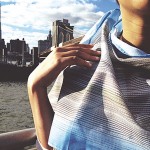
The visuals of a particular spot are captured on video, stretched out and processed to create an abstracted motion of the place in visual form. The Brooklyn Block then prints this image on scarves so you can wear the colors and patterns of your favorite neighborhood.

Next Page – Click Below to Read More:
Wearable Cities 15 Urban Patterned Outfits Accessories

Share on Facebook


[ By Steph in Drawing & Digital. ]

[ WebUrbanist | Archives | Galleries | Privacy | TOS ]


WebUrbanist

 
Comments Off on Wearable Cities: 15 Urban-Patterned Outfits & Accessories

Posted in Creativity


Scalpel Cities: Urban Landscapes Made of Surgical Tools

13 Nov

[ By Steph in Art & Drawing & Digital. ]

scalpel landscapes 1

Bird’s-eye views of cities around the world, from Paris to Hong Kong, are visualized in the form of surgical tools like scalpels and skin graft blades against glossy black surfaces by famed British artist Damien Hirst. The ‘Black Scalpel Cityscapes’ series continues the artist’s method of using sharp metal objects to create complex compositions in stark monochrome.

scalpel landscapes 3 scalpel landscapes 4

The depiction of these cities (many of which are sites of recent conflict) from an aerial viewpoint references the ‘all-seeing eye’ of constant surveillance in the modern era. Look closely and among the blades and surgical tools you’ll also see small items that relate to each individual city, like cheap silver keychains of the Eiffel Tower in Paris, and even silvery condom wrappers.

scalpel cityscapes 8 scalpel cityscapes 9

In a video interview with White Cube, Hirst explains that he began working with scalpel blades “because they’ve got kind of a nice and nasty feel to them.” Flying over Milton Keynes, a town in England, he noted how modern and unnatural the landscape looked, sparking the idea for the series. In addition to cities like Baghdad, which have a symbolic connection to the medium used, Hirst depicted cities that are personally meaningful to him.

scalpel cityscapes 10 scalpel landscapes 6 scalpel landscapes 7

“I’ve done one of the Vatican where I’ve used lots of religious symbols. So I think you try to make them into a portrait, but always from a distance they’re going to look totally like a photograph.”

Share on Facebook


[ By Steph in Art & Drawing & Digital. ]

[ WebUrbanist | Archives | Galleries | Privacy | TOS ]


WebUrbanist

 
Comments Off on Scalpel Cities: Urban Landscapes Made of Surgical Tools

Posted in Creativity


Urban Glider: Compact Portable Electric Unicycle for Cities

17 Sep

[ By WebUrbanist in Technology & Vehicles & Mods. ]

urban glider design crowdfunding

Light, small and surprisingly fast, this single-wheeled cycle is designed to let you zip around cities, then stop and pick it up like a suitcase when you arrive at your destination – a sweet last-mile solution for urban commuters and travelers.

unicycle electric personal vehicle

The Urban Glider uses a gyroscopically-stabilized electric mono-wheel to help you stay upright as you stand on footplates straddling the sides of a central 16-inch wheel.

urban glider prototype concept copy

Leaning back lets you slow, stop or reverse while leaning forward engages the engine in that direction, and tilting to either side allows you to turn using intuitive movements.

urban glider colors

The convenient size of the device means you don’t have to worry about parking or locking up your car, scooter or bike. And unlike other small-scale solutions, you also do not need to switch out blades or skates for shoes between uses.

unicycle city street sidewalk

Hopping from the glider to other transit is also simple, since you can carry the 24-pound vehicle onto buses, trains or planes.

urban glider design

unicycle urban glider design

With a top speed of around 13 miles per hour you won’t be breaking any records for velocity, but can get places much faster than you would be able to on foot.

The battery is designed to last for up to 6 hours of use and can be charged in last than 30 minutes. Currently, crowdfunding on Kickstarter is paused but the company seems adamant about making a go of this personal vehicle one way or another. The Urban Glider is set to retail for $ 1200 – expensive on some metrics, perhaps, but fairly cheap as short-distance electric transit goes.

Share on Facebook


[ By WebUrbanist in Technology & Vehicles & Mods. ]

[ WebUrbanist | Archives | Galleries | Privacy | TOS ]


WebUrbanist

 
Comments Off on Urban Glider: Compact Portable Electric Unicycle for Cities

Posted in Creativity


Modular Cities: 13 Expandable Solutions for Urban Growth

09 Sep

[ By Steph in Architecture & Cities & Urbanism. ]

Modular Cities Seeds of Life 1

As urban populations flourish, cities typically expand outward into suburbia or suffer growing pains with static infrastructure that just can’t keep up. What if, instead, cities were based upon modular structures with virtually no limits as to how much they could grow? These modular urban concepts include developments that hover above LA’s freeway system, Jenga-like towers and pixelated stacks of prefabricated residential units.

Modular Paracity
Modular Cities Paracity 1

Modular Cities Paracity 2

A gridded framework made up of basic 6-meter-square wooden structural models can be built out almost endlessly, rising above the ground in flood-prone places like Taipei City and Jakarta. ‘Paracity’ by Marco Casagrande is designed for unrestricted growth by gradually infilling the open column-and-beam lattice framework with dwellings, gardens, roadways, shops, restaurants and more. The idea is ‘self-sustainable bio-urban growth,’ using sustainable technology for water purification, waste water treatment and energy production. Says the designer, “In a sense Paracity is a high-tech slum, which can start tuning the industrial city towards an ecologically more sustainable direction. Paracity is a third generation city, an organic machine, urban compost, which is helping the industrial cit to transform into being part of nature.”

Garden City K66
Modular Cities K66 1

Modular Cities K66 2

The ‘pixelated’ look of this development comes from the seemingly random arrangement of 10×10 modular volumes stacked in a flexible grid that’s interchangeable and adaptable. The modules can for the basis of apartments, offices and other spaces, making it easy to switch out the function of various parts of the community. Public spaces are on the lower levels, and living spaces on the top.

Car-Free Skyvillage Over Los Angeles’ Freeways
Modular Cities Skyvillage 1

Modular Cities Skyvillage 2

Modular Cities Skyvillage 3

LA’s system of freeways divides the city into separate quadrants, restricting activity to whatever area you happen to live in, hemmed in by the massive and perpetually backed up roads. But what if the city could literally rise above that freeway system? This concept called Skyvillage imagines a Los Angeles that grows vertically, interconnecting above the roads to bring the community together. This would eliminate the need for cars, making it easy for residents to fulfill all of their needs within walking distance. The pillars that make up the building are ‘green filtering towers’ filled with vegetation to counteract the pollution from the freeways.

A New Vision for Egypt’s Garbage City
Modular Cities Seeds of Life 1

Modular Cities Seeds of Life 2

Modular Cities Seeds of Life 3

The people of Egypt’s so-called ‘Garbage City,’ which processes nearly all of the waste from the enormous city of Cairo, do so with an admirably inventive spirit – but as you might imagine, sorting trash for a living can make for a less-than-pleasant living environment. Mekano Architects came up with a way that actually uses the heaps of waste around the city as an advantage, recycling it as building material for a vertical city. The Seeds of Life skyscraper consists of a series of ‘wind stalks’ that can be stacked with modular homes interspersed with parks, plazas and other public spaces. The ‘wind stalks’ would be topped with mini turbines to collect energy.

Vertical City with Plug-In Houses
Modular Cities Plug In 1

Modular Cities Plug-In 2

Hexagonal living units are plugged into a primary structure made of reinforced concrete, making it easy to add and remove modules as necessary or group several together into a larger home. Inspired by Le Corbusier’s theory that “a house is a machine for living,” the concept is flexible, easy to dismantle and could be prefabricated and transported to cities anytime growth calls for it.

Next Page – Click Below to Read More:
Modular Cities 13 Expandable Solutions For Urban Growth

Share on Facebook


[ By Steph in Architecture & Cities & Urbanism. ]

[ WebUrbanist | Archives | Galleries | Privacy | TOS ]


WebUrbanist

 
Comments Off on Modular Cities: 13 Expandable Solutions for Urban Growth

Posted in Creativity


‘Cities at Night’ project puts citizens to work identifying images of Earth

21 Aug

Got a few minutes to spare? You’ve got enough time on your hands to help a group of researchers tackle a massive problem. Cities at Night is a project aiming to recruit help from ordinary citizens in classifying images of Earth at night taken by astronauts aboard the International Space Station. An effort of Universidad Complutense de Madrid staff and students, their main goal is to better understand and reduce light pollution. See how you can help

Articles: Digital Photography Review (dpreview.com)

 
Comments Off on ‘Cities at Night’ project puts citizens to work identifying images of Earth

Posted in Uncategorized


Guerrilla Kindness: Add-Ons Make Cities more Convenient

21 Aug

[ By Steph in Design & Fixtures & Interiors. ]

Hacktion 1

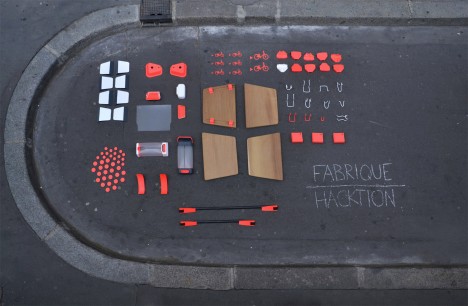
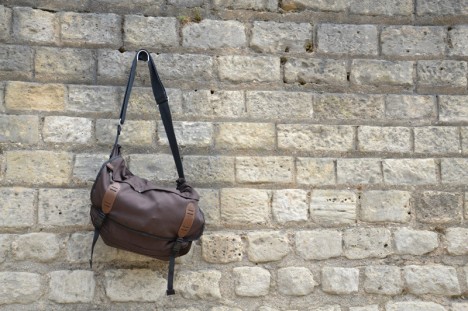
Three designers sneak around Paris, quickly installing brightly-colored machine-fabricated objects onto public chairs, phones, vending machines and other urban surfaces to make them more convenient to city residents. They call it ‘Fabrique-Hacktion,’ taking extra steps beyond what city officials are willing to fund with tax dollars to create a more comfortable and welcoming place to live.

Hacktion 2

Hacktion 3

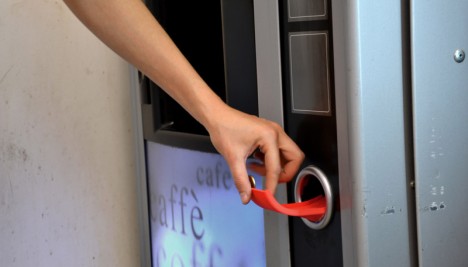
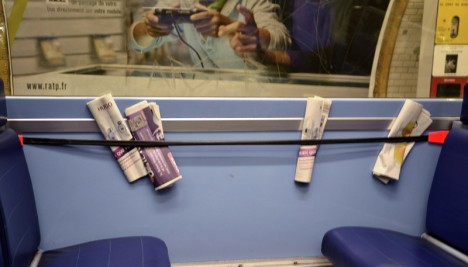
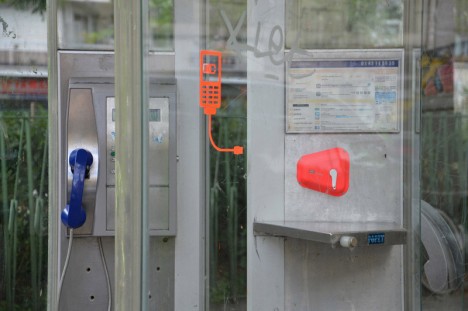
Little slides shoot coins out of the receptacles in vending machines to make them easier to retrieve. Coat hooks hang helpfully from rock walls near bus stops. Tension bands hold newspapers against the wall of the subway, offering them to each new rider in turn.

Hacktion 5 Hacktion 4

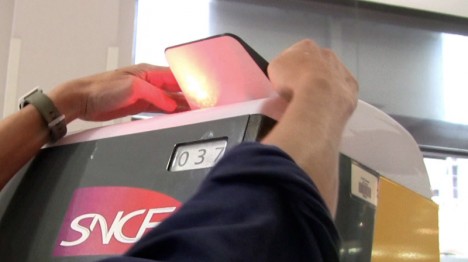
Highly recognizable in bright shades of orange, blue and green, these thoughtful conveniences even go so far as hand-crank phone chargers and reflectors on top of the red and green lights of metro ticketing machines so users can tell from far away which machines are working and which aren’t.

Hacktion 6

Hacktion 7

Beyond just installing these items themselves, the designers offer up an explanatory video, manual and all construction plans and files for download on their website so anyone can take the project to their own city.

Share on Facebook


[ By Steph in Design & Fixtures & Interiors. ]

[ WebUrbanist | Archives | Galleries | Privacy | TOS ]


WebUrbanist

 
Comments Off on Guerrilla Kindness: Add-Ons Make Cities more Convenient

Posted in Creativity


Bizarre Cities: 7 More Strange Urban Wonders of the World

26 Jun

[ By Steph in 7 Wonders Series & Travel. ]

Strangest Cities

A retirement community for circus freaks, a village of Chinese dwarves and a gated community for people who claim to speak to the dead are among the world’s weirdest settlements. Going beyond mere unlikely locations for human habitation, these towns are intentional communities devoted to the strange and unusual.

Dwarf City: Mountain Home for Little People Only

Strangest Cities Dwarf Village 1
Strangest Cities Dwarf Village 2

Is an amusement park full of little people dressed up to amuse paying visitors exploitative? Maybe. But the nearly 100 people who reside at Dwarf Empire have come from all over China for guaranteed housing and, reportedly, fair wages. They live and work in tiny castles, dress up as fairies and medieval soldiers and put on shows for hundreds of guests each day, and receive dance training and English lessons. The park owners hope that many more little people – who often have difficulty finding work in China, and end up living on the streets – will help the village expand to 800-1,000 residents in the near future.

Lily Dale: Gated Community for Spiritualists

Strangest Cities Lily Dale 1

Strangest Cities Lily Dale 2

A group of spiritual mediums came together at the height of the spiritualist movement in the late 19th century to found their very own village, where only people who can read minds and communicate with spirits (and their families) could reside. Established in 1879 on the shady banks of a New York lake, the town of Lily Dale has been the setting for seances, ‘automatic messages’ that appeared on chalkboards and other such phenomena ever since. Visitors still flock to Lily Dale to talk to dead relatives or marvel at the gated-off ‘Inspiration Stump’ where mediums once called upon spirits to show themselves. Mediums who want to work in the town must pass three 30-minute test readings evaluated by officials of the Lily Dale Assembly.

Retirement Community for Carnies
Strangest Cities Gibsonton 1

Strangest Cities

Where do carnival workers go when they’re not on the road? Many live in ordinary houses in ordinary towns just like anyone else, but in the mid-20th century, some sought a refuge where they could get away from the civilians who gawk at the unusual physical features that drew them to become a part of the carnival life. Gibsonton, Florida was a small town of fishermen and lumber workers before carnival legends like Al “The Giant” Tomiani (who was 7’11″ tall) and his wife Jeanie “The Half-Woman” (2’6″ tall) bought property there. The town ultimately drew many more so-called ‘circus freaks,’ including Grady Stiles Jr., known as Lobster Boy for his claw-like hands, whose infamy was enhanced by the fact that he murdered his daughter’s fiance on the night before their wedding and was subsequently murdered in a hit taken out by his ex-wife and stepson. The town has a museum-like meeting hall with old photos of the carnivals and their stars, and features its own retirement village.

No Laws, No Utilities: Slab City, CA
Strangest Cities Slab 1

Strangest Cities Slab 2

An unforgiving stretch of the Colorado Desert near an active bombing range in southeastern California is the unlikely location for a lawless ‘alternative living community’. Slab City started as Camp Dunlop, a World War II training ground preparing United States Marines for combat duty. The camp was abandoned after the war, but a handful of chemical company workers set up trailers there in the early 1960s, and when Riverside County ordered people to leave a camping area at nearby Painted Canyon, the community grew. Today, it’s half squatter haven, half off-grid experiment, taking up some 600 acres. Home to RVs, trailers, vans, campers and shacks, the “Last Free Place in America” is home to anywhere from several hundred to a few thousand people depending on the time of year (only the hardiest can withstand the summers.) The state of California generally turns a blind eye to the community despite issues with trash and human waste. Slab City’s entrance is marked by ‘Salvation Mountain,’ a colorful hill covered in bible quotes.

Next Page – Click Below to Read More:
Bizarre Cities 7 More Strange Urban Wonders Of The World

Share on Facebook


[ By Steph in 7 Wonders Series & Travel. ]

[ WebUrbanist | Archives | Galleries | Privacy | TOS ]


WebUrbanist

 
Comments Off on Bizarre Cities: 7 More Strange Urban Wonders of the World

Posted in Creativity


Fake Facades: Transformative Murals Make Cities Vibrant

27 May

[ By Steph in Art & Street Art & Graffiti. ]

Fake Facade Murals 1

You might think you see a stone turret, a bunch of celebrities hanging out on a balcony, construction in progress or a man precariously dangling from a clock, but what you’re actually looking at is a clever trompe l’oeil work of trickery in paint. Artist Patrick Commecy heads up a team of muralists that transform facades throughout France from blank walls to wacky scenes full of life.

Fake Facade Murals 2

Fake Facade Murals 3

The most dramatic example is a Montpelier building, the back of which is within view of a nearby park (pictured top). Worn and neglected, the structure was a bit of an eyesore as-is. Commecy’s team A-Fresco transformed it with a full faux facade including a tiled roof, windows with balconies and a small tower. The figures seen in the outdoor spaces are famous and influential Montpelier residents throughout history.

Fake Facade Murals 4

Another project involved painting 20 pioneers of mountaineering on the side of the first Guides Office within view of Mont Blanc. The painted-on windows and balconies so closely resemble the real ones on the front of the building, it takes a minute to realize they’re not three-dimensional.

Fake Facades Mural 5

See more of these murals, each tailored to its unique location, at the A-Fresco website (in French.)

Share on Facebook


[ By Steph in Art & Street Art & Graffiti. ]

[ WebUrbanist | Archives | Galleries | Privacy | TOS ]


WebUrbanist

 
Comments Off on Fake Facades: Transformative Murals Make Cities Vibrant

Posted in Creativity