RSS
 

Posts Tagged ‘Choosing’

A Concise Guide to Choosing a New Lens

09 Feb

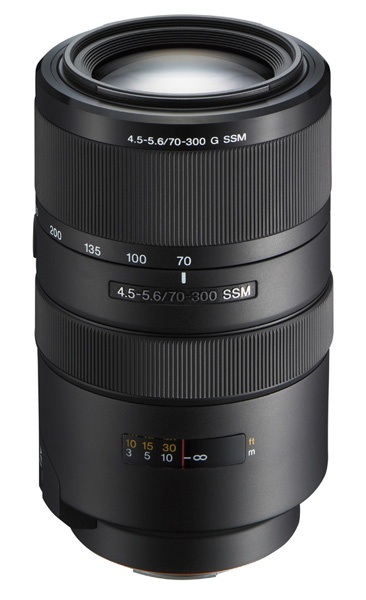
Sony zoom lens

I think it’s fair to say that most photographers buy a kit lens with their first camera. It’s a good place to start, as despite the limitations, a good one is versatile (an idea I explored in my article Why Your Kit Lens is Better Than You Think).

But, however well a kit lens performs in the right hands, at some point you will ask yourself what lens you want to buy next. Or, you might already own more than one lens and be wondering if a new one may improve your photography. I am going to help you answer these questions by outlining some of the things you need to think about when choosing a new lens.

You may find it helpful to think of lenses in categories rather than specific focal lengths. That’s because the field-of-view of a specific focal length depends on the size of your camera’s sensor (learn why in our article Crop Factor Explained).

The benefit of considering lenses this way is that each type suits certain subjects. If you are into landscape photography, for example, then a wide-angle lens of some sort is essential. If you photograph sports, then it is difficult to do without a telephoto lens.

By the way, if you follow the links in the article you will see plenty of photos taken with these lens types.
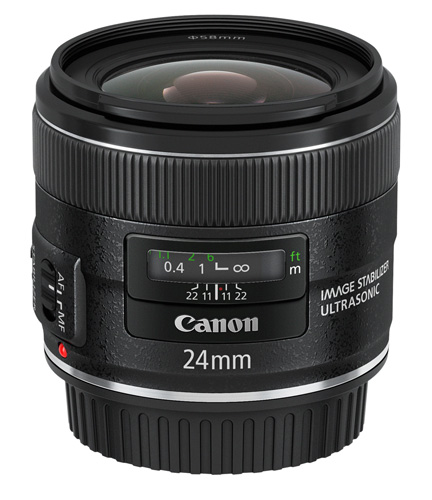
Canon 24mm lens

Wide-angle lenses

A good definition of a wide-angle lens is one with a focal length shorter than the diagonal measurement of your camera’s sensor (or negative if you have a film camera).

The idea of measuring the diagonal is a useful one for understanding the relationship between sensor size, focal length and field-of-view.

Let’s look at a specific camera to see how that works: the EOS 70D. The corner to corner distance of the sensor is approximately 27mm:
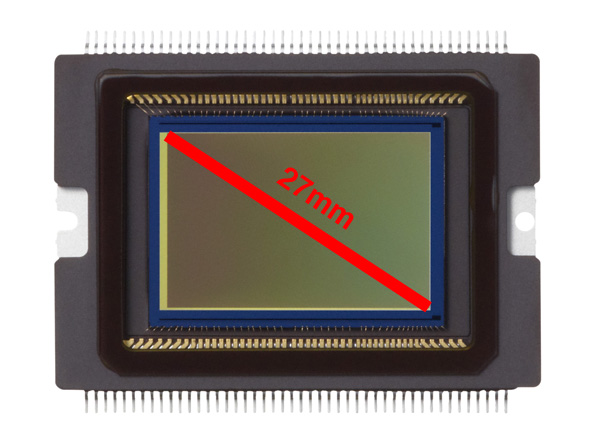
Canon EOS 70D CMOS sensor

From that figure, you can say that any focal length shorter than around 25mm is a wide-angle lens.

Wide-angle lenses are used for subjects like landscape photography and environmental portraiture. My article 7 Ways to Get More Out of a Wide-Angle Lens explores the use of wide-angle lenses in more detail.
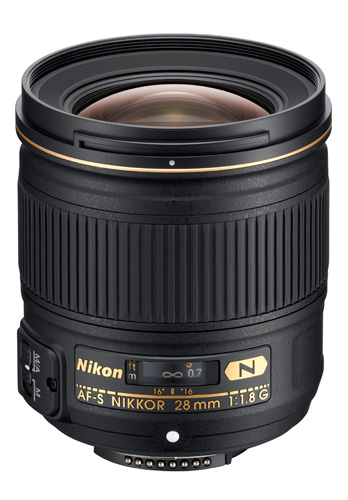
Nikkor 28mm lens

Normal lenses and short telephoto primes

A normal lens is a prime lens with a focal length similar to the diagonal measurement of your camera’s sensor.

In the example of the EOS 70D used above, a 28mm prime lens is a normal lens. A 50mm lens is considered normal for full-frame and 35mm film cameras (despite the diagonal measurement being 42mm – these things are often approximations).

A short telephoto lens is one with a focal length slightly longer than the diagonal measurement of the camera’s sensor.

Normal lenses and short telephoto primes are ideal for portraits, some types of landscape photography, and for close-up photography. Being primes, they have much wider maximum apertures than zoom lenses. This helps limit depth-of-field and create images with lots of beautiful bokeh. It also helps you take photos in low light.

Learn more about the versatility of these lenses by reading these articles Why a 50mm Lens is your new best friend and How A Humble 85mm Lens Became my Favourite.
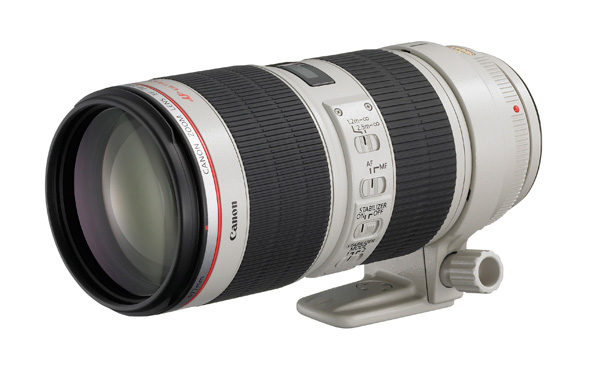
Canon 70-200mm zoom lens

Telephoto lenses

This category includes focal lengths from around double the diagonal measurement of your camera’s sensor and upwards.

There are two main reasons to use a telephoto lens. The first is for the compressed perspective they provide to pick your subject out of the background. Portrait and fashion photographers often use them for this reason.

The other is that you need a telephoto because you are photographing something that you can’t get physically close to. This includes subjects like wildlife and sports.
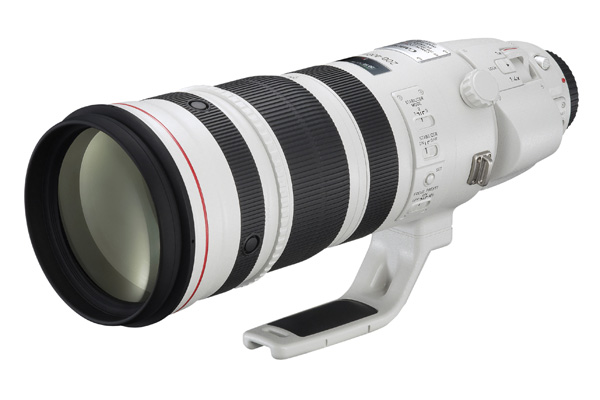
Canon 200-400mm zoom lens

Super Telephoto lenses

These are the large telephoto lenses you often see photographers using at major sporting events. With focal lengths of 300mm and upwards, you will probably want to buy one of these if you are serious in any way about sports or wildlife photography. Be warned – many of these lenses are also super expensive. The new Canon 200-400mm zoom (pictured above) retails for over $ 11,000. Ouch!
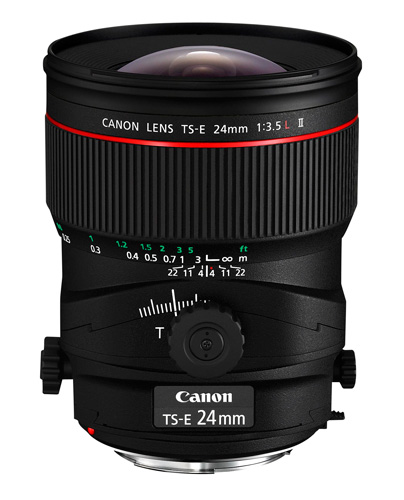
Canon 24mm tilt-shift lens

Specialty lenses

The final category includes other types of lens that you would probably only buy if you really wanted to use them, as they are specialty items, and some of them are pricey. They include macro, fisheye and tilt-shift or perspective-control lenses.

Other factors

Once you have decided which category of lens you are interested in, it’s time to consider other factors:

Image quality: You can say a lens has good image quality if it gives you sharp, contrasty images free from chromatic aberrations, colour fringing and barrel distortion from corner to corner at all aperture ranges of the lens.

No lens is perfect. There is no such thing as the lens that I just described. But good quality lenses come close. Generally speaking, the more you pay for a lens the better the image quality.

You may be wondering how to evaluate the image quality of a lens you don’t actually own. One tip is to read plenty of reviews, including the ones on the sellers’ websites, personal blogs and on Digital Photography School. DxO Mark has tested lots of lenses and posted the results on their website. You will soon get a feel for what people think about a particular lens.

Build quality and weatherproofing: These could be important if you subject your lenses to any kind of rough treatment or want to shoot in adverse weather conditions. The higher end lenses in each manufacturers’ range are the ones that have the best build quality and weatherproofing.

Another benefit of weatherproofed lenses is that they let less dust into your camera to get on the sensor.

Budget: Also important, for fairly obvious reasons. If you’re on a tight budget, consider buying prime lenses rather than zooms. You can get great image quality from relatively inexpensive prime lenses, much better than you would from zoom lenses in the same price range.

You could also consider buying second-hand (our article An Introduction to Buying Used Lenses will help).

Bear in mind that good quality glass should last you a long time. The life span of lenses surpasses that of most cameras. In the words of Sir Henry Royce: “The quality is remembered long after the price is forgotten.”

How many lenses do you need? I prefer to take the simple approach to photography and that includes equipment. The more gear you have, the more it weighs if you carry it all around in one go, and the more it costs to insure. I currently own four lenses and, depending on the subject, I take two lenses with me at the most on a shoot.

Your view

That’s my approach, what’s yours? How many lenses do you own? What are your favourite lenses and what are your recommendations for choosing a new lens? Do you buy new or second-hand? Let us know in the comments. It will be interesting to hear what our readers have to say.

Understanding Lenses ebooks
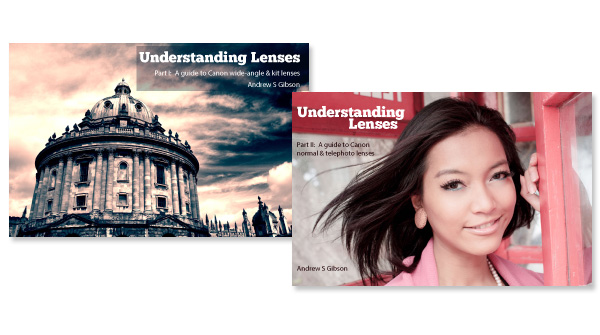
Understanding Lenses ebook bundle

My ebooks Understanding Lenses Part I and Understanding Lenses Part II will help Canon EOS owners decide what lenses to buy for their cameras. They are both filled with lots of tips to getting the most out of your Canon lenses. Click the links to learn more.

The post A Concise Guide to Choosing a New Lens by Andrew S. Gibson appeared first on Digital Photography School.
Digital Photography School

 
Comments Off on A Concise Guide to Choosing a New Lens

Posted in Photography


Choosing the Right Color Reflector for Your Photography

27 Oct

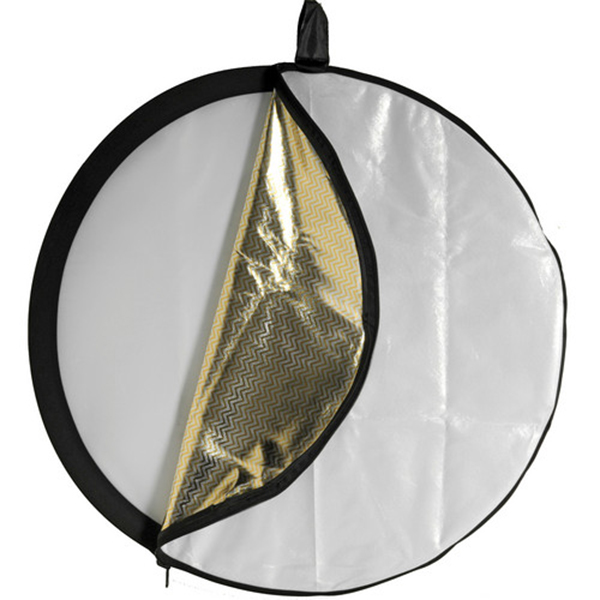
Of all the portrait lighting tools at our disposal, none are quite as versatile as the the five-in-one reflector. The concept itself is extremely basic. In the hands of a photographer comfortable with common lighting principles, the reflector helps us bounce light into or onto those areas that aren’t getting enough light, regardless of whether we are using natural, ambient, or studio/strobe lighting.  A reflector placed directly opposite a main light can act as a hair light, creating separation between the subject and background. Placed in front of a back-lit subject, we can negate the silhouette effect, using available, natural light to balance the exposure between our subject and background. Held at a ninety-degree angle to a subject’s chest, we can toss some light up on the subject’s face and neck, eliminating troublesome shadows caused by foreheads and chins when using overhead or mid-day lighting.

The possibilities really are nearly endless, and– just as importantly– affordable. While there are many options available, at about $ 40.00, The Westcott 40″ 5-in-1 Reflector meets (and often exceeds) my needs, in terms of price, size, durability, and versatility. But dropping $ 40 on a reflector and adding it to your bag of tricks is only half the battle. Like the name says, you’ve got five-in-one. While technically not all five are actually reflectors, knowing which of the five to use and under what circumstances is essential to successful photographs.

gold-reflector-guyer-photography

5-in-1 Reflector surfaces are attached to or removed from the outer ring with zippers.

Silver

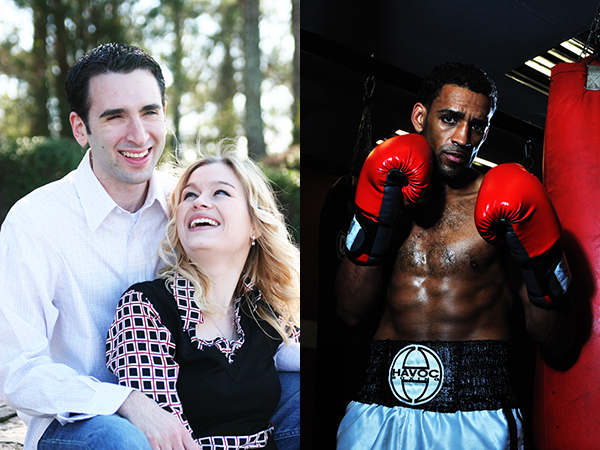
The silver panel is one of the most useful, and is best for beginners first getting their bearings with reflectors. Since the silver reflects the most amount of light of the five, it is a great choice for low-light situations or those scenarios where you need a strong fill light. Since it  doesn’t change the color of white-balanced flash or studio lights, it is perfect for both indoor and outdoor portraits. Another reason it works so well for beginners is that most first-timers make the mistake of not placing the reflector close enough to their subject. The silver reflector’s ability to shine more light than the gold, for instance, allows it to be placed further away from the subject than we typically want, without sacrificing results. One word of caution, though– the fact that the silver is the strongest of the five is an advantage, but it can also be too strong in already bright light unless it’s feathered. Take some time to experiment with proper and effective placement.

Gold

The gold reflector is great for outdoor portraits because it matches the warm color tones of sunlight. The gold reflector is actually at its best when it is reflecting sunlight, casting a warm glow on the subject. It’s easy to turn normal skin tones overly yellow, however, if you aren’t careful. This is also why the gold reflector is also not recommended for studio or flash work. It not only changes the color of the white light that hits it, but can cast uneven color tones on the subject.

White

Under most circumstances, this one is my favorite. The white panel may not reflect quite as much light as the silver or gold, but when used properly it can still bounce just enough light onto the subject to overcome shadows and add subtle dimension opposite larger light sources. Since it is soft, clean light, it works well both in the studio and outside when there is ample light. While effective, the white reflector won’t do you much good at all in low-light situations.  It is also important to remember, though, that for the white reflector to do its job, you’re doing to have to get it very close to your subject. Wedding photographers love the white reflector because it doesn’t change the color of the light– or the dress.

reflector-examples-guyer-photography

In the outdoor portrait on the left, a white reflector adds just enough light to open up the shadows, while a silver reflector casts some dramatic light across the boxer on the right.

Black

This one is pretty much the “anti-reflector.” Black, as we know, absorbs light, which helps to cut down on the reflections from shiny, reflective surfaces– one of the reasons it is used so often in jewelry photography. When placed properly, the black panel also creates shadows when light falls too evenly across the subject. The benefit of this “negative fill” is that it allows you to create shadows rather than overcome them.

split-light-guyer-photography

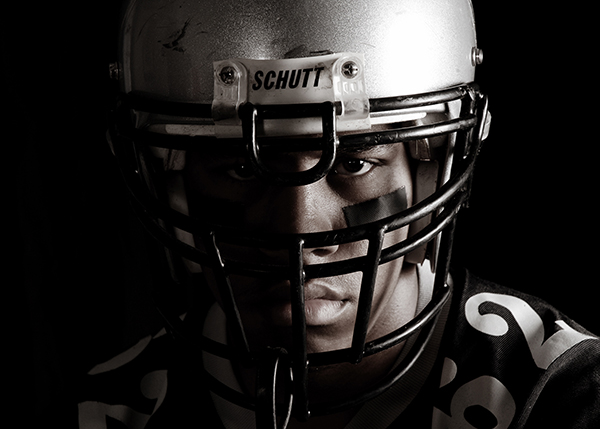
Using the black “reflector” in a small space helped me achieve split lighting, which I usually create with a silver reflector in a larger area.

Translucent

When all of the other reflection panels have been removed, the translucent is left. While technically not a reflector, this panel works great as a shoot-through diffuser for flash or location lighting, or as a diffusion panel between the sun and your subject. Since larger light sources provide softer light, using the translucent panel as a large diffuser gives you a very large, easily portable light source. While a large enough translucent reflector can also be used as an impromptu background for a head shot, the translucent panel will almost always be between your subject and the light source.

translucent-guyer-photography

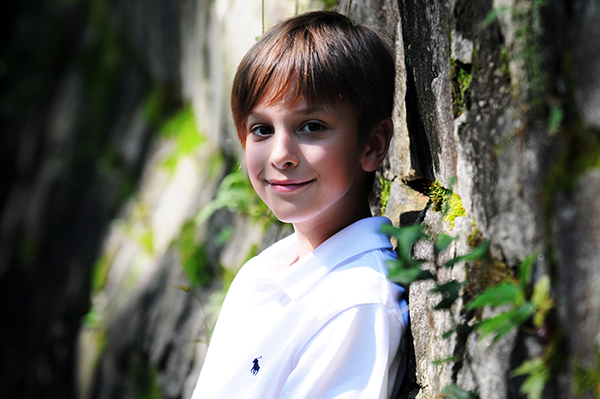
Using the translucent panel above the subject’s head, we spread the light and softened it.

Conclusion

The 5-in-1 Reflector can one of the most versatile lighting tools in your entire workflow. Taking full advantage of its capabilities, though, won’t be possible until you know what color reflector to use for which lighting scenario. Remember, though, that photography rules were made to be broken once you’ve learned them, so be sure to experiment with color and placement.

Post originally from: Digital Photography Tips.

Check out our more Photography Tips at Photography Tips for Beginners, Portrait Photography Tips and Wedding Photography Tips.

Choosing the Right Color Reflector for Your Photography

The post Choosing the Right Color Reflector for Your Photography by Jeff Guyer appeared first on Digital Photography School.

Digital Photography School

 
Comments Off on Choosing the Right Color Reflector for Your Photography

Posted in Photography


Choosing Paper To Print Your Photography

21 Jun

If you recently searched for a suitable printed media on which to print your photography, you must have felt quite overwhelmed. Printing media in the form of photo paper is gaining from improvement in chemicals, ink and paper production, that makes the decision as to the best photo paper for the job harder than it used to be. These improvements Continue Reading

The post Choosing Paper To Print Your Photography appeared first on Photodoto.


Photodoto

 
Comments Off on Choosing Paper To Print Your Photography

Posted in Photography


Tips For Choosing The Right Photographer For The Occasion

27 Feb

Choosing the right photographer for your special day can be a real concern for some, you want to have beautiful photos of the day that you can treasure forever. So it makes sense to do your homework before deciding on a photographer.

Here are some things you should be aware of before hiring your photographer to ensure your day goes as smoothly as possible.

Digital Or Film?

While the vast majority of photographers these days have made the switch to digital, there are some photographers who prefer to keep it traditional and use film. It is down to personal choice and budget as to which method you choose, bear in mind using film will be more expensive due to the process of developing the prints afterwards. The drawback of film is that it is not quite so easy to make changes to your prints, even switching a colour print to black and white. With digital, there is no danger of over-exposure and the photographer can literally take thousands of shots at no extra cost to you.

Today’s digital photography offers sharp, clear, bright photographs with great clarity. What’s more, digital film allows the photographer to quickly and easily edit the photographs, put them onto DVD and email the shots to the client. This means you can share your photographs with family and friends without waiting weeks after the event.

Choosing A Photographer

No photographer is alike; they have their own individual style which reflects in their work. Depending on the occasion in which you want the photographer for, you need to check out their portfolio. For example, a wedding photographer should have an extensive range of photographs in different conditions, outside, indoor, candid, formal and more classic shots. Businesses and corporations may wish to use a commercial photographer. Make sure the photographer you select has adequate experience in photographing most events such as weddings, christenings and graduations etc. Check out their colour and black and white work as there can be variations on both styles.

Personality

A sign of a good photographer is one that is prepared to listen to what you want and work closely with you to get the best results, a good photographer will never dismiss your ideas and tell you that he/she knows best, they will want you to be happy with their work and though they may offer their opinion the final decision should always rest with the customer. Also evaluate how they work with other people. A family photographer, particularly working with children should be patient and accommodating.

Experience

How long have they been in the business for? Do they have experience in working at many different events? Make sure they have at least a few years’ experience under their belt before hiring them for an important event. This will ensure that there are no tears when looking at the images of the day. Check out testimonials and ask around for references of your chosen photographer.

Pricing

Before signing on the dotted line, make sure the photographer is upfront about all of the costs involved. And don’t be afraid to ask. Be wary of photographers that offer a very low fee initially as you can get caught out when purchasing the prints as they most likely charge extremely high prices to buy the prints.

Get a full written and signed contract of what you are paying for, the hours, the location/s, the date/s of the event etc. Does the photographer have a cancellation policy? What about copyright?

By following these guidelines will assure that you will have a permanent record of your special day for many years to come.

This post was written by the team at Beck Photographic – the premier Northampton wedding photographers.

dslrBlog

 
Comments Off on Tips For Choosing The Right Photographer For The Occasion

Posted in Photography


DSLR Tips – Choosing an “All around” lens

15 Dec

The process of deciding on a “walkaround” – “carry around” lens is different for everyone but here is some talk on the subject.


Choosing the best camera angle photography tip

03 Aug

More Info: www.silberstudios.tv We tossed out a challenge for ideas for a video tip and as it turned out the one we picked was from a local pro photographer who offered to come by and shoot it with us so we took him up on it! Eric Gould joined us at Silber Studios to demonstrate various camera angles and how to choose the best one for your shot. Eric shows you how to take shots from many different angels and heights and how these change the way your subject will look. For example, he shows a tip for helping an overweight person look thinner. You can easily follow along with Eric to see how these will work for you. After watching this video go out and shoot and post your best to the AYP forum and we’ll give you feedback!


Just posted: Printer Primer Part 1: Choosing a new printer

08 Aug

Just Posted: Printer Primer Part 1: Choosing a new printer. Over the coming months we will be expanding our printing content to include reviews and technique articles. As part of that process we’re also taking the opportunity to update some of our existing content. Part one of our updated printer primer replaces an earlier guide to photo printers and explains the different types of models available, the technologies they use, and how you should determine which is right for you.
News: Digital Photography Review (dpreview.com)

 
Comments Off on Just posted: Printer Primer Part 1: Choosing a new printer

Posted in Uncategorized


Canon XSi – Choosing the Right Exposure Mode

03 Oct

It’s one thing to enjoy the XSi’s advanced automatic shooting modes, but in order to take control of your camera, you’ve got to start shooting manually, with either shutter or aperture priority, or both in fully manual mode – from the Magic Lantern DVD Guide to the Canon XSi
Video Rating: 4 / 5

When the automatic settings cannot correctly expose your shot, try locking the Auto-Exposure on the most important part of the shot and then recomposing, from the Magic Lantern DVD Guide to the Canon XSi
Video Rating: 4 / 5


photography Tips ( Choosing a Lens )

14 May

What lens should you get??? Let me help you make an educated decision about getting a lens for your photography. What is the difference in Prime or Zoom. What focal length is right for your needs. what makes a lens fast or slow. Presented by http:www.samys.com , the answers are all right here. Buying a lens for your digital SLR has never been easier. Canon site www.usa.canon.com
Video Rating: 4 / 5

In this months episode we explore basic shutter speed and flash synchronization concepts. I also discuss buying a good flash. If you haven’t bought the DVD this video shows the true POWER of owning this teaching wonder as we jump from subchapter to subchapter to learn our specific subject matter today. ORDER your DVD by emailing me at photomagic001@yahoo.com and check out my website at photomagicsocal.com. WOW you read all this……. NICE


2. Choosing a video lens nikon d90 interactive tutorial

03 Mar

part of the interactive tutorial series
Video Rating: 4 / 5

Nikon D90 photos lens 18-200 mm
Video Rating: 4 / 5