RSS
 

Posts Tagged ‘Canon’

Review Comparison of the Canon EOS 70D vs Canon 700D / Rebel T5i

21 Mar

EOS 700D and 70D review comparison

Earlier in the year I compared the EOS 5D Mark III and 6D, Canon’s least expensive full-frame cameras. Today I’m going to look at two other models that cause confusion: the Canon EOS 70D vs Canon 700D (Rebel T5i).

Note: North America readers will know the EOS 700D as the Digital Rebel T5i. EOS 700D is the European name for the same camera. It is called the Kiss X7i in Japan.

The confusion arises because many photographers, when buying a new camera, start by searching online for information. While there are lots of websites that list the differences between the two cameras, it isn’t always easy to understand which of these matter to you.

The major differences

I’m going to start by looking at the major points of differentiation between the two models. It’s impossible to list them all, but these are the ones most likely to influence a buying decision:

Price

Budget is an important part of the buying decision, and there is a sizeable difference in price between the two models. At the moment you can buy the EOS 700D (Rebel T5i) body only for around $ 700 and the EOS 70D for about $ 1100 (body only prices, excluding tax). The difference isn’t really surprising considering the difference in specifications between the two models.

Bottom line:  If you’re on a tight budget then the EOS 700D (Rebel T5i)  is the model for you, but not before considering the benefits of the 70D.

Megapixels

Not really a big deal in today’s world of high megapixel digital cameras, but it may matter to some. The EOS 70D has a 20.2 megapixel sensor compared to the EOS 700D’s (Rebel T5i) 18.0 megapixels.
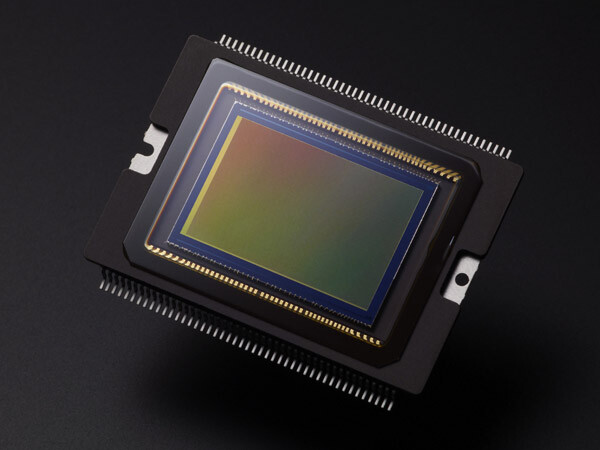
EOS 700D and 70D review comparison

The sensor of the EOS 70D. Both cameras have an APS-C size sensor with a similar megapixel count.

Bottom line:  The difference between the two models is negligible, and shouldn’t greatly influence your decision.

Autofocus performance

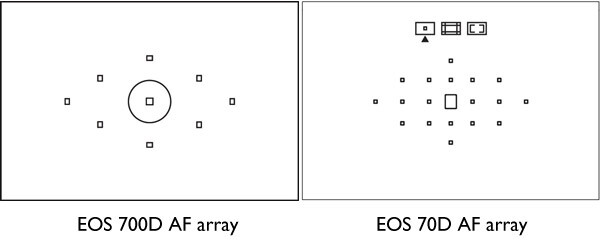
This is a big difference. Minor differences aside (and excluding AF in Live View or movie mode), the autofocus of the 70D is the same as that found in the more advanced Canon EOS 7D camera. It has 19 cross-type AF points (the more reactive ones) plus a transmissive LCD screen in the viewfinder that lets you configure different display options.

By contrast the EOS 700D (Rebel T5i) has 9 cross-type AF points and a fixed viewfinder display. This diagram shows the difference between the two:
EOS 700D and 70D review comparison

The autofocus arrays of the EOS 700D (Rebel T5i) and 70D compared

The higher AF point count of the EOS 70D makes it better for shooting moving subjects, as there are more AF points to measure the focusing distance to the subject. It is also more likely that you can find a well placed AF point to use when photographing still subjects, without having to focus and recompose. This is useful when using prime lenses at wide apertures, where the margin of error for focusing is small.

The autofocus of the EOS 70D also excels when using the camera in Live View or movie mode. It uses new technology called Dual Pixel CMOS Autofocus, the only EOS digital SLR to do so. This is mainly of interest to people who want to use the camera to shoot movies.

You can read about the autofocus performance of the EOS 70D in more detail in my article Understanding EOS Autofocus: The EOS 70D.

Bottom line:  The autofocus performance of the EOS 70D is much better than that of the EOS 700D (Rebel T5i). If you want to buy an EOS digital SLR to shoot movies, the 70D currently has the best AF performance in movie mode.

Lens micro-adjustment

The EOS 70D allows you to calibrate your lenses so they focus as accurately as possible. This is a feature found only on higher end Canon cameras and will appeal in particular to photographers who use prime lenses at wide aperture settings, where AF performance is critical. The EOS 700D (Rebel T5i) doesn’t have this feature.

Bottom line:  Autofocus micro-adjustment complements the more advanced autofocus of the EOS 70D. It is Canon’s least expensive camera with this feature.

The Quick Control dial

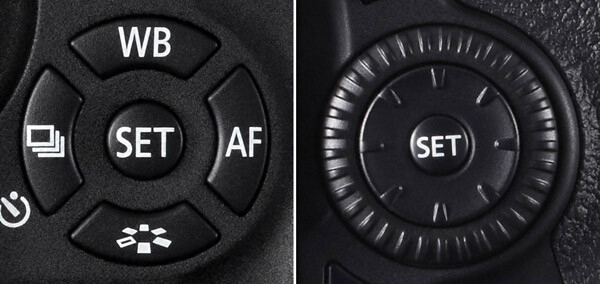
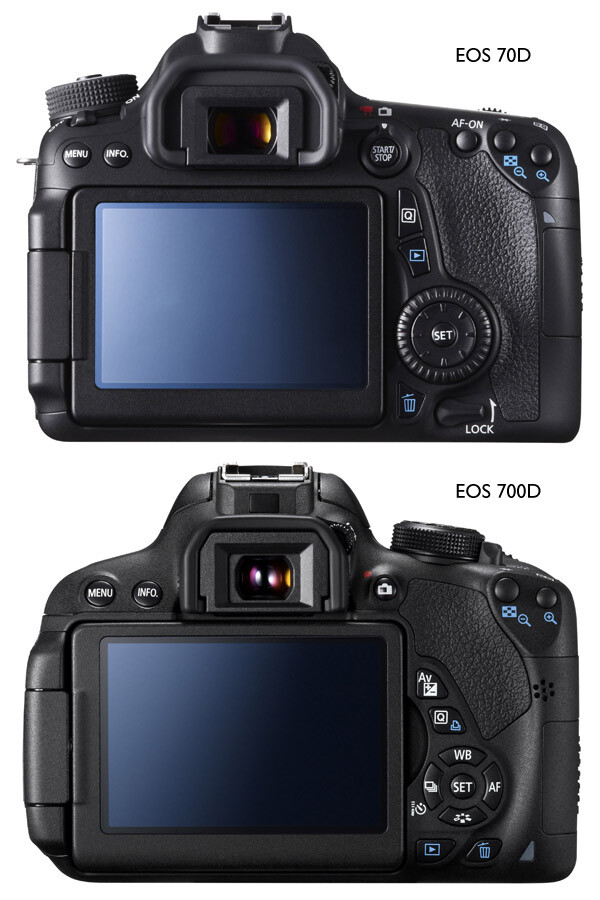
The Quick Control dial is one of the features that differentiates mid-range EOS cameras such as the EOS 70D from enthusiast level models like the 700D (Rebel T5i). It is located on the back of the camera where it is easily moved by your thumb when holding the camera. The benefit of the Quick Control dial is that it lets you adjust exposure compensation and focus point selection easily while looking through the viewfinder. This speeds up the photo taking process and may make the difference between getting a shot and missing it. The cross keys on the EOS 700D (Rebel T5i) can be used while looking through the viewfinder, but are much harder to do so.

This diagram shows the difference between the two:
EOS 700D and 70D review comparison

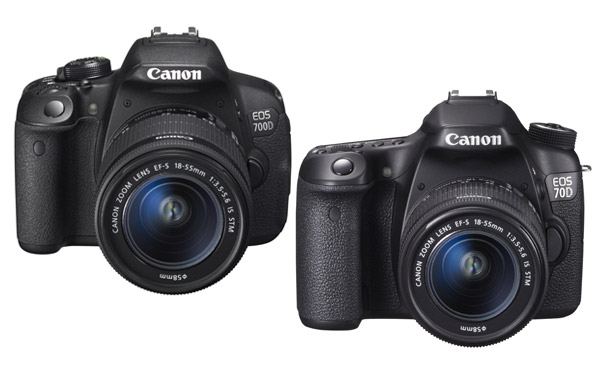
These photos show you how the Quick Control Dial (700D/T5i – left image) and (70D – right image above) cross keys influence the design of the back of the camera:
EOS 700D and 70D review comparison

Another advantage of the Quick Control dial is that it lets you scroll very quickly through your images when playing them back on the camera’s LCD screen.

For me, the Quick Control dial is so useful that I never want to use another camera without it.

Bottom line:  The Quick Control dial on the EOS 70D makes it easier and quicker to use in many situations. This is something you can only appreciate by trying the camera out, so make sure you do so before making a buying decision.

Size and weight

The EOS 70D isn’t a great deal bigger than the 700D/T5i, but it is heavier (755 grams/1.6 lbs. compared to 580 grams/1.3 lbs.). If you are intending to carry the camera around all day, then the lighter 700D/T5i may have more appeal. But it really is subjective, and this is where the hands-on comparison comes in again. I cannot stress the importance of trying out both models to see which one you prefer to handle.

Bottom line:  Try before you buy, as preferences when it comes to size and weight are personal.

Built-in Wi-fi

The EOS 70D has built-in Wi-fi, the EOS 700D/T5i doesn’t. The Wi-fi feature lets you:

  • Transfer images to other Canon cameras with Wi-fi
  • View saved images or operate the camera from a smartphone (the free app EOS remote is required)
  • Print images using a Wi-fi printer
  • Operate the camera remotely using EOS Utility (free software that comes with the camera) which lets you transfer photos wirelessly to your computer, something that photographers working in a studio may find useful
  • Upload images to Canon iMage Gateway, a free photo online service for Canon camera owners(but not to photo sharing sites like Flickr or FTP)
  • View photos on a television screen if you use a media player supporting (DLNA) Digital Living Network Alliance

You can’t do any of those things with an EOS 700D/T5i, nor can you buy a Wi-fi unit for the camera.

Bottom line:  If Wi-fi is important to you, then buy the EOS 70D. If you shoot tethered in a studio, remember you can transfer images to a computer using an extra long USB cable if your camera doesn’t have Wi-fi.

Electronic Level

The EOS 70D has an electronic level display that you can view on the LCD screen. It is useful for taking photos with a level horizon when you have the camera mounted on a tripod. There is also an electronic level display in the viewfinder to help you keep the camera level when shooting hand-held. The EOS 700D/T5i doesn’t have this feature.

Bottom line: The electronic level is a useful feature, especially for landscape photographers. However, if your budget doesn’t stretch to the EOS 70D, remember you can buy an inexpensive spirit level that fits in the EOS 700D/T5i’s hotshoe for landscape photography.

Shooting speed

The EOS 70D can shoot at 7 frames per second (fps), the 700D/T5i is a little slower at 5 fps. How important this is depends on the subjects you shoot – it is more likely to be of interest to those of you into sports and wildlife photography.

Bottom line: The more advanced autofocus and higher shooting speed of the EOS 70D makes it the better model for sports and wildlife photography.

Minor differences

There are lots of minor differences between the two cameras, so I’ve provided some links to in-depth reviews so that you can get more information before making a purchasing decision. You’ll also see some photos taken with both models. In the meantime, if you own or have used either of these cameras, why not tell us what you think in the comments. Why did you choose one or the other, and do you think you made the best choice?

EOS 70D reviews

  • Digital Photography School
  • DP Review
  • Camera Labs
  • Petapixel

EOS 700D/T5i reviews

  • Digital Photography School
  • DP Review
  • Pocket Lint

Finally, if you want to ask owners of these cameras what they think, a good place to do so is the EOS magazine forum. It’s a high quality forum with lots of helpful members. You should also take a look at EOS magazine – the most in-depth magazine for Canon EOS users you can buy.

For more reviews and discussion on cameras and equipment see our Cameras section!


Understanding EOS – a new ebook

Understanding EOS ebookMy ebook Understanding EOS is written for photographers who want to learn to get the best from their EOS cameras. It teaches you everything you need to know to take control of your camera and start creating beautiful photos. Click the link to learn more.

The post Review Comparison of the Canon EOS 70D vs Canon 700D / Rebel T5i by Andrew S. Gibson appeared first on Digital Photography School.


Digital Photography School

 
Comments Off on Review Comparison of the Canon EOS 70D vs Canon 700D / Rebel T5i

Posted in Photography


Firmware roundup: Updates for the Alpha 7/7R, Nikon D4, Canon EOS 6D

19 Mar

shared:download-button.png

This week camera manufacturers released a number of new firmware versions. Today Sony released the previously announced Sony Alpha 7/7R update that promises faster start-up speeds, improved image quality and better AF support. There are also updates for a host of other Sony NEX cameras. Meanwhile, Nikon and Canon released updates to the D4 and EOS 6D, respectively. Learn more

News: Digital Photography Review (dpreview.com)

 
Comments Off on Firmware roundup: Updates for the Alpha 7/7R, Nikon D4, Canon EOS 6D

Posted in Uncategorized


Canon Interview: ‘We don’t see the smartphone as an enemy’

04 Mar

DSCF7300-1.JPG

Recently, editor Barnaby Britton had the opportunity to interview senior figures at Canon Inc. on two occasions, in Japan. The first meetings were held in late 2013 at Canon’s headquarters in Tokyo, and a follow-up interview was arranged at the recent CP+ show in Yokohama. Topics covered include the future of Canon’s mirrorless system, how Canon is innovating in its DSLRs and what 4K video means for photographers. Click through for the full interview.

News: Digital Photography Review (dpreview.com)

 
Comments Off on Canon Interview: ‘We don’t see the smartphone as an enemy’

Posted in Uncategorized


A Buyer’s Guide to Canon Normal and Telephoto Lenses

03 Mar
Canon 400mm lens

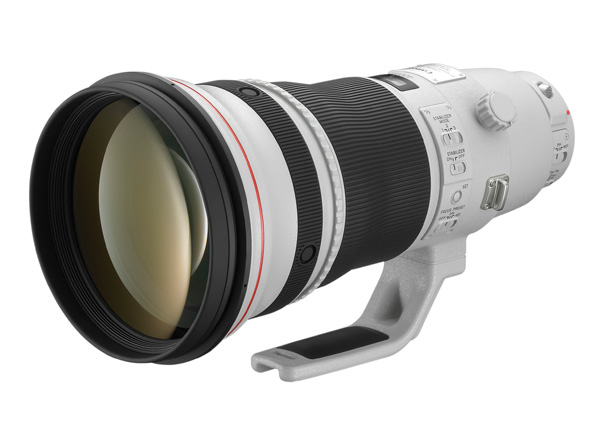
Canon EF 400mm f2.8L IS II USM lens

Andrew S. Gibson is the author of Understanding Lenses Part II: A Guide to Canon Normal & Telephoto Lenses, on 40% now at Snapndeals for a limited time only.

With so many lenses to choose from, it’s little wonder that photographers become confused about which option is the best. In this article I’m going to take a look at some of Canon’s best or most interesting normal and telephoto lenses, to give you a head start when it comes to understanding just what Canon offers in this part of their lens range.

But first, let’s take a quick look at the state of Canon’s lens line-up. I have no inside knowledge about which lenses Canon may introduce this year, but I do see a couple of emerging trends.

Trends in Lenses

The first is that Canon is not afraid to take an old lens and update it with a newer version. Good recent examples are the new EF 24mm and 28mm f/2.8 IS USM lenses. Both replaced older versions and included an Image Stabilizer (IS) which the previous models didn’t have.

The second trend is that newer lenses tend to be more expensive than the ones they replace. This is reasonable, as the newer lenses are better quality. If a new lens comes out and it seems expensive, you can be patient and wait a year or so for the price to drop if you don’t need it urgently. The two wide-angle lenses mentioned above have dropped in price by over 30% since their release.

That does mean it is possible that Canon will replace some of their aging normal and telephoto lenses in the near future. If you’re thinking about buying one and are worried about this, it’s up to you to decide how badly you need the current version. While the rumour websites like to speculate about forthcoming lenses, and are sometimes accurate, you never really know what will happen as Canon keep the details of new releases under wraps until the official day of release.

A good example of this is the EF 50mm f/1.4 lens. Some rumours sites are saying this is due for an update. But if this is true, and how far in the future it will happen, no-one really knows. Plus the replacement is likely to be more expensive than the current 50mm f/1.4 lens (but it may have IS). In the end, it’s up to you, but my advice is don’t spend too long waiting for new lenses – you could be waiting a long time.

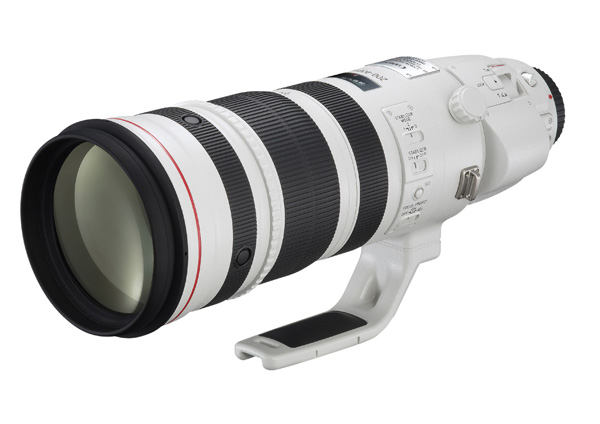
Canon EF 200-400mm f/4L IS USM – the beast!

Canon 200-400mm zoom

Canon EF 200-400mm f/4L IS USM Extender 1.4x– only about $ 12,000 USD!

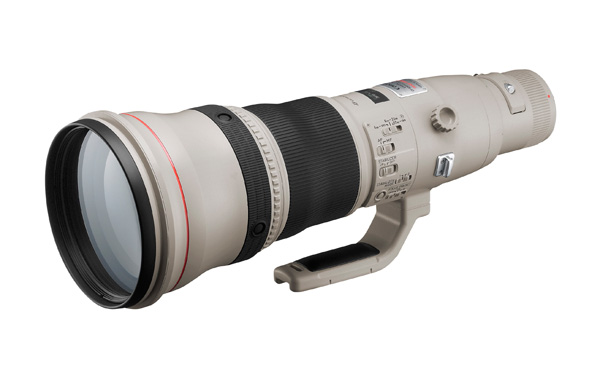
Let’s start off with this beast. It’s fun to speculate who would buy such an expensive lens. A professional sports photographer? Agencies like Getty or Reuters? This L series, super telephoto zoom, comes with a built in 1.4x extender (the only Canon lens to do so), a four stop Image Stabilizer, and a fixed f/4 aperture throughout the zoom range. It weighs over three and half kilos (7.9 pounds), but is not Canon’s heaviest lens. That honour belongs to the Canon EF 800mm f/5.6L IS USM lens (below), which weighs four and half kilos (9.9 pounds) and is another option for those of you with $ 13,000 to spend on new glass.

Canon 800mm lens

Canon EF 800mm f/5.6L IS USM Super Telephoto Lens for Canon Digital SLR Cameras

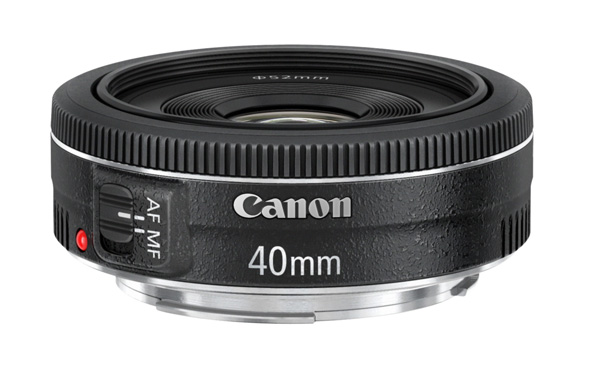
Canon 40mm f/2.8 STM

Canon 40mm pancake lens

Canon EF 40mm f/2.8 STM Lens

At the other end of the scale is one of Canon’s lightest, smallest and least expensive lenses. This 40mm pancake lens delivers excellent image quality, and excellent value for money. However it doesn’t have IS or a distance scale on the lens, features which may be important to some people.

How does this lens give such excellent quality for such a low price? It contains just six optical elements that measure little more than a centimetre across (0.4″). They are cheaper to manufacture than the larger elements found in Canon’s other lenses, and the result is a lower price.

This focal length is a short telephoto on an APS-C camera or a normal lens on a full-frame camera.

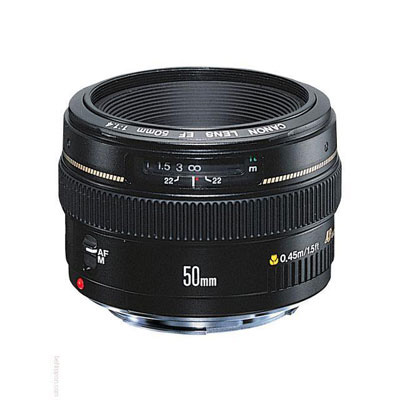
Canon 50mm f1.4 USM

Canon 50mm f1.4 lens

EF 50mm f/1.4 USM

Canon users aren’t lacking for choice when it comes to 50mm lenses. Canon makes four models, including the 50mm f/1.8, the 50mm f/1.2L and 50mm f/2.5 macro. But my favourite is the EF 50mm f/1.4 USM. It’s a third of the price of the more expensive L series 50mm lens, but has better autofocus and smoother bokeh than the f/1.8.

50mm lenses make great portrait lenses on APS-C cameras and deliver value for money in terms of image quality and versatility. You can use a 50mm lens with extension tubes or close-up lenses for close-up photography, or with a reversing ring on a longer lens for macro photography.

Read more about 50mm lens in my article Nifty Fifties – Why I Love 50mm Prime Lenses.

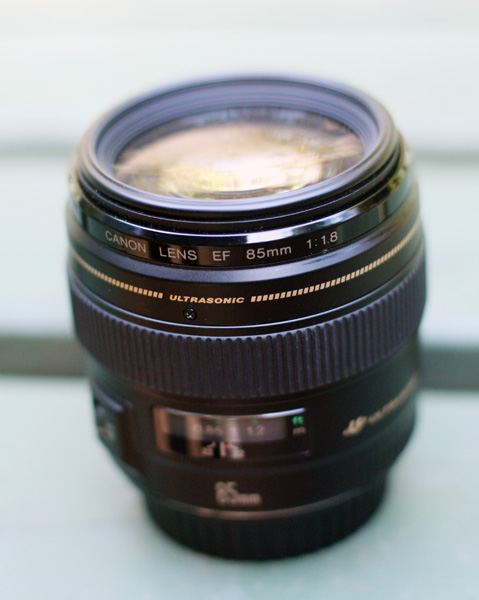
Canon 85mm f/1.8 USM

Canon 85mm lens

Another of my favourite lenses is the 85mm f/1.8. It’s an ideal portrait lens for owners of full-frame cameras. It’s also great for close-up photography with the addition of a 500D close-up lens. It’s a shame it doesn’t have IS, but that would push the price up. If you have deep pockets you can also consider the EF 85mm f/1.2L II USM lens, but bear in mind the wide f/1.2 aperture means it has a large front element (to let in the more light) and that makes the lens heavier and slower to autofocus.

Read more about this lens in my article How a Humble 85mm Lens Became My Favourite.

Canon 70-200mm zooms

Canon 70-200mm zoom lens

EF 70-200mm f2.8L IS II USM

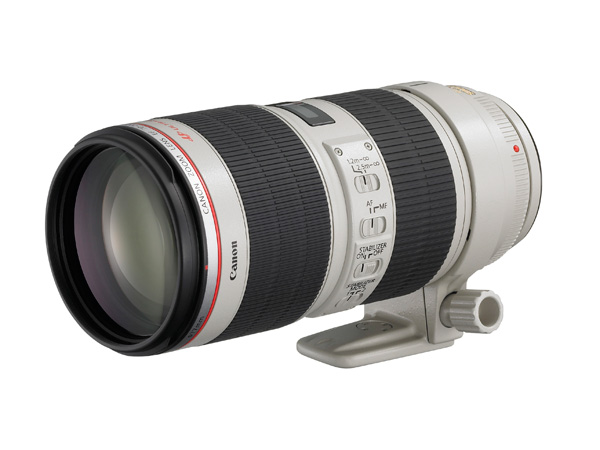
Canon has four 70-200mm zoom L series lenses. Two of these have maximum f/4 apertures and cost less. The other two have maximum f/2.8 apertures. For each aperture setting there is both a non-IS and an IS model. This gives you plenty of choice, for what is a very versatile focal length. The EF 70-200mm f/4L USM lens is Canon’s cheapest L series lens and a great option for anyone wanting to experience L series quality on a low budget. The EF 70-200mm f2.8L IS II USM (above) is the most expensive and comes with a collar so you can mount it on a tripod.

Canon 70-300mm f/4-5.6L IS USM

Canon 70-300mm zoom lens

Canon EF 70-300mm f/4-5.6L IS USM UD Telephoto Zoom Lens for Canon EOS SLR Cameras

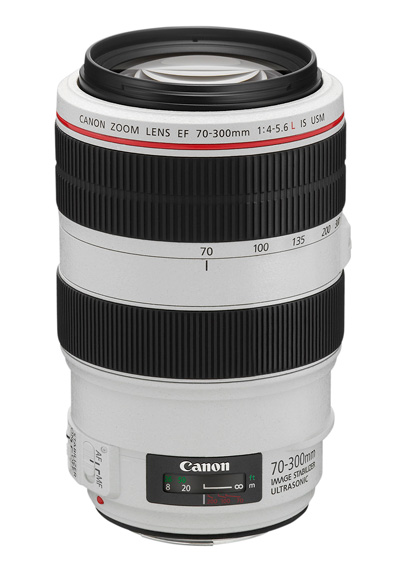
If 200mm isn’t long enough for you then Canon’s trio of 70-300mm zooms may appeal. The only drawback of these lenses is the variable aperture, but it’s hard to avoid this along such a long focal length range. The EF 70-300mm f/4-5.6L IS USM is the most recent model, but also the most expensive. The EF 70-300mm f4/-5.6 IS USM lens is the least expensive and ideal for those on a tight budget.

The EF 70-300mm f/4-5.6 DO IS USM lens is an interesting alternative. DO stands for Diffractive Optics. The construction of the lens elements in DO lenses means they are smaller and lighter than their non-DO equivalents, making this a good option for photographers concerned with size and weight. In every other respect DO lenses are equivalent to L series lenses. Will Canon make more DO lenses in the future? I hope so, because they are a great idea. The only other DO lens in Canon’s range is the EF 400mm f/4 DO IS USM.

Hopefully that has given you a good overview of some of Canon’s more notable normal and telephoto lenses. It’s impossible to include every model, let alone those made by other manufacturers, but that’s where you come in. What normal or telephoto lenses have you purchased? How have they performed and what would you recommend? Let us know in the comments.


Understanding Lenses Part II: A Guide to Canon Normal & Telephoto Lenses

Understanding Lenses ebookMy ebook Understanding Lenses Part II will teach you how to get the most out of Canon’s normal and telephoto lenses. It contains a buying guide, takes a deep look at aperture and bokeh, and shows you how to focus accurately with telephoto lenses. It’s offered for a special price now on 40% off at Snapndeals for a limited time only.

The post A Buyer’s Guide to Canon Normal and Telephoto Lenses by Andrew S. Gibson appeared first on Digital Photography School.

Digital Photography School

 
Comments Off on A Buyer’s Guide to Canon Normal and Telephoto Lenses

Posted in Photography


Canon PowerShot ELPH 150 IS, 140 IS and 135 compacts introduced

15 Feb

HR_ELPH140IS_RED_3Q_CL.png

Canon announces the PowerShot ELPH 150 IS, ELPH 140 IS and ELPH 135, replacing its A-series of budget-friendly compacts. Each model uses a CCD sensor, providing a top video resolution of 720p. The 20 megapixel PowerShot ELPH 150 IS offers a 10x optical zoom and Intelligent IS. The PowerShot ELPH 140 IS has a 16 megapixel sensor, Intelligent IS and an 8x zoom, and the ELPH 135 provides an 8x zoom and 16 megapixels without IS. All three cameras are offered with a sub-$ 200 MSRP – a significant step down in price for the ELPH series.

News: Digital Photography Review (dpreview.com)

 
Comments Off on Canon PowerShot ELPH 150 IS, 140 IS and 135 compacts introduced

Posted in Uncategorized


Waterproof Canon PowerShot D30 dives deep

14 Feb

HR_D30_BLUE_FRONT_CL.png

Canon has announced the PowerShot D30 rugged digital camera, boasting a new design and a 12.1 megapixel CMOS sensor. It’s waterproof to an impressive 25m/82 ft, making it a class-leader. It’s also temperature resistant from -10° C/14° F to 40° C/105° F and shockproof to 2m/6.5 ft. The D30 features built-in GPS and is capable of 1080p HD video recording. It’s also equipped with a new Sunlight LCD mode, which boasts improved visibility in bright conditions. The PowerShot D30 is available in April for $ 330.

News: Digital Photography Review (dpreview.com)

 
Comments Off on Waterproof Canon PowerShot D30 dives deep

Posted in Uncategorized


Canon unleashes PowerShot SX700 HS travel zoom

14 Feb

HR_SX700HS_RED_3Q_CL-2.png

Canon has introduced its new PowerShot SX700 travel zoom, which features a 25-750mm equivalent F3.2-6.9 lens and the company’s latest DIGIC 6 processor. While you’re zoomed in tight, the camera’s Zoom Framing Assist feature lets you quickly back out, recompose, and return to where you were. The SX700 also features manual exposure control, Wi-Fi with NFC, and 1080/60p video. The camera will be shipping next month in your choice of black or red for $ 349.99.

News: Digital Photography Review (dpreview.com)

 
Comments Off on Canon unleashes PowerShot SX700 HS travel zoom

Posted in Uncategorized


CP+ 2014: Canon stand report

14 Feb

canonstand2.jpg

Canon has a large stand at this year’s CP+ show in Yokohama, Japan, showcasing its current range of DSLRs, compact cameras and Cinema EOS video lineup. We’re at the show, and stopped by earlier today for a look at what’s on offer. Click through for our stand report, which we’ll be updating over the next couple of days. 

News: Digital Photography Review (dpreview.com)

 
Comments Off on CP+ 2014: Canon stand report

Posted in Uncategorized


CP+ 2014: Hands-on with Canon PowerShot G1 X Mark II

13 Feb

g1xii_3.jpg

We’re at the CP+ show in Yokohama, Japan where Canon is showing off its latest high-end compact camera, the PowerShot G1 X Mark II. The G1 X Mark II replaces the original G1 X, which was announced two years ago and offers several improvements over the older model including a faster 24-120mm equivalent F2.0-3.9 lens and a closer minimum focus distance. The G1 X Mark II is built around a 1.5 inch 12.8MP CMOS sensor and can be used with an (optional) electronic viewfinder. Click through for a hands-on look.

News: Digital Photography Review (dpreview.com)

 
Comments Off on CP+ 2014: Hands-on with Canon PowerShot G1 X Mark II

Posted in Uncategorized


Canon announces entry-level Rebel T5 (EOS 1200D) and macro ring light

12 Feb

HR_T5_EFS18-55_IS_II_3Q_CL.png

There’s a new entry-level camera in Canon’s DSLRs lineup, and it’s the Rebel T5 (EOS 1200D). This model replaces the Rebel T3 (EOS 1100D) and features the company’s familiar 18 megapixel CMOS sensor, DIGIC 4 processor, and 9-point AF system. The T5 also has a 3″ LCD, 3 fps continuous shooting, and 1080p video recording. Canon also announced the MR-14EX II Macro Ring Light, which can be controlled wirelessly using the radio-based ‘RT’ system. Both the camera and ring light are priced at $ 549, with the former including an 18-55mm lens.

News: Digital Photography Review (dpreview.com)

 
Comments Off on Canon announces entry-level Rebel T5 (EOS 1200D) and macro ring light

Posted in Uncategorized