RSS
 

Posts Tagged ‘Canon’

Canon EF-M 32mm F1.4 sample gallery

02 Jan

$ (document).ready(function() { SampleGalleryV2({“containerId”:”embeddedSampleGallery_6596689888″,”galleryId”:”6596689888″,”isEmbeddedWidget”:true,”selectedImageIndex”:0,”isMobile”:false}) });

Users of Canon’s EOS M system got a treat this fall, with the announcement of the EF-M 32mm F1.4. Announced more than a year after Canon’s last EF-M lens (the EF-M 28mm F3.5 Macro), the new 32mm offers a native 50mm equivalent field of view, a metal mount, a focus limiter switch and overall solid construction. But how is it optically? Take a look through our sample gallery to get an idea of how it performs.

Articles: Digital Photography Review (dpreview.com)

 
Comments Off on Canon EF-M 32mm F1.4 sample gallery

Posted in Uncategorized


Canon patent details schematics for a possible RF 90mm F2.8L IS Macro lens

28 Dec

A recently published patent from Canon details a set of optical formulas for what appears to be an RF 90mm F2.8L IS Macro lens.

Japanese Patent Application Number 2018-205435, first detailed by Northlight Images, is fairly standard as far as patents go, but there is one interesting element worth noting.

The image stabilization elements inside the lens — labelled L12 — are located within the first optical group towards the front of the lens. More often the image stabilization component is towards the center of the lens, but that doesn’t appear to be the case here.

This could be for a number of reasons, but the patent text specifically mentions that in order to get the most accurate image stabilization, larger optical components and accompanying motors are needed. As such, the larger front area of the lens makes more sense than the middle of the lens where the optics are more confined, especially with the aperture mechanism located there (represented by ‘SP’ in the illustrations).

It’s also worth noting that the focusing component of the lens is towards the rear of the lens. The patent text says this too is due to the larger focusing motor(s) needed, but it could also have an added benefit of creating a more balanced lens with the heavy image stabilization component towards the front of the lens. As Canon showed the world with its RF 35mm F1.8 IS STM lens, the RF mount makes it possible to put larger elements and more electronics towards the rear of the lens due to the larger mount size.

Articles: Digital Photography Review (dpreview.com)

 
Comments Off on Canon patent details schematics for a possible RF 90mm F2.8L IS Macro lens

Posted in Uncategorized


Lensrentals tears down the Canon 400mm F2.8L IS III

20 Dec
Photographs kindly provided by Lensrentals

Roger Cicala, founder of Lensrentals, has torn apart the 400mm F2.8L IS III to see what Canon has done to remove 2.2lbs of weight from the third-generation super telephoto lens.

It’s only been a few weeks since Cicala shared Lensrentals 50mm F1.2L RF lens teardown, but as he hinted at in that teardown, it’s time for Canon’s much larger larger lens to get the signature treatment.

‘We tend to not publish tear-downs of super-telephoto lenses. They’re big and heavy, always well made and well engineered, like you would expect in something that costs as much as a used car,’ says Cicala in the teardown post. ‘But when the new 400mm f/2.8 lenses were released we decided it was finally time to publish a teardown of one. Largely, because they are amazingly light (you see what I did there? largely light?) and we were really interested in how they did that.’

Cicala also says he’s interested in doing a direct comparison between Canon’s latest 400mm F2.8 lens and its Sony counterpart. So it’s safe to say a Sony 400mm F2.8 teardown is just around the corner as well.

The small spring-loaded mechanism used to help lock the lens in place while rotating inside its collar.

The first order of business for Cicala and team was to remove the lens collar. While it might seem like a small detail for such a massive — and expensive — lens, the collar itself is quite complicated in its own right and often one of the first things that can break, due to an internal clicking mechanism that helps lock the lens into place at 90-degree intervals while rotating it on a tripod. As expected, the tripod collar assembly was solid and fairly straightforward — good news for photographers who prefer a more DIY approach to fixing smaller issues like a stuck collar tripod.

From there, it was onto the drop-in filter, which was probably the easiest part of the lens to remove. Cicala says ‘we really, really, really like [the drop-in filter] Because instead of being a proprietary $ 200 filter, it’s a holder that you can attach any 52mm filter to.’

With the easy stuff out of the way, now it was onto the lens itself. Without giving away all of Lensrentals findings, it’s worth pointing out a few details discovered during the teardown.

One of the adjustable screws can be seen in the internal structure of the lens (surrounded by red)

Starting with build quality, Cicala says that despite being light, the ‘inner, weight-bearing barrel is very sturdy magnesium alloy.’ It was at this point in the teardown Cicala noticed two adjustable elements integrated into the lens. The first is a set of screws found just in front of the rear element group, while the other was a set of adjustable collars where the two halves of the lens are joined together.

Regarding the image above, Cicala says ‘a couple of interesting things are in this image […] First, you see the two barrel halves are joined without shimming and held tightly together with 12 large screws – it’s a very strong joint with interlocking pieces. Also, as we saw with the RF 50mm f1.2 teardown, there are springs going down to the focusing ring, we assumed to put tension on a ball bearing ring for a smooth focusing feel in this electronically focused lens. We assumed wrong.’

A little deeper into the build, Cicala and team come across the image stabilization unit. Cicala notes the unit is roughly 2cm thick and full of various electromagnets, springs, sensor inputs and optical elements.

A look inside the intricate image stabilization unit.

In his 50mm F1.2L RF teardown, Cicala said the USM motor used by Canon in its fast prime is the exact same one used in the 400mm F2.8L IS III. Sure enough, that’s been confirmed again with this teardown, complete with the tension spring that continues to leave Cicala and team bamboozled.

A profile view of the ultrasonic motor in all its glory.

‘This is really interesting information, that the same motor and electronic focusing system is used in both lenses,’ says Cicala in the blog post. ‘Obviously, there is a business advantage in using the same subsystem in several lenses. But putting the same electronic focusing system in this EF lens makes me think that going forward Canon lenses may have a lot of internal similarity in either RF or EF mount. Converting the Canon 400mm f/2.8 to an RF wouldn’t be quite as simple as a different rear element and an RF bayonet mount, of course. The additional electronics for the RF Control Ring would have to be stuffed in here and probably some optical tweaks made, but the core structure could be very similar.’

Further disassembly of the USM section also revealed it’s the section of the lens that contains the aperture assembly. From there, it was onto the front optical elements of the lens, some of which were held in place by another adjustable element, which included screws to account for centering and tilting.

The aperture assembly shows all nine aperture blades in action.

After a little more work, the focus ring comes off and bears the various springs and more adjustable components. Cicala and team come up with a theory or two as to why the tension spring is there and what it does, but a definitive purpose is still unknown. Cicala says ‘one day we’ll spend 4 or 5 hours playing with them and figure it out. But don’t tell Canon that; they get aggravated when we do void-the-warranty stuff.’

In the conclusion section titled “So What Did We Learn Today,’ Cicala shares a few of his final thoughts regarding the teardown. The first thing Cicala mentions is the movement of the optical elements inside the glass. Canon said when it announced the 400mm F2.8L IS III that it had moved elements more towards the mount of the lens to create a better center of gravity and that proved to be the case. Also, Cicala says that ‘Despite being far lighter, it’s still very solidly built with a very strong frame, tons of big screws holding everything together, and no weak joints that we can see […] It’s what we expected; Canon’s been building super telephotos for a long time.’

The USM is also elaborated on. Cicala says it’s a very likely possibility Canon will continue to use this motor for all electrically focused lenses, or at least in lenses with a hefty amount of glass in the focusing element.

Overall, it appears as though the 400mm F2.8L IS III is roughly what Cicala was expecting from Canon. A well-built lens with plenty of adjustments in a tightly packaged frame. As interesting of a teardown as this was though, Cicala says the more interesting teardown will be the Sony 400mm F2.8 G lens. ‘Hopefully, it is awesome and for once the Sonyfans* won’t line up 6 deep to explain how what I find is wrong again.’

To see the full teardown in all its glory (and to discover the footnotes on what Sonyfans* means), head over to the Lensrentals blog and take in every bit of detail.

Articles: Digital Photography Review (dpreview.com)

 
Comments Off on Lensrentals tears down the Canon 400mm F2.8L IS III

Posted in Uncategorized


Gear Review: Canon EOS M50 Mirrorless Camera Kit

19 Dec

The post Gear Review: Canon EOS M50 Mirrorless Camera Kit appeared first on Digital Photography School. It was authored by Anabel DFlux.

1 - Gear Review Canon EOS M50 Mirrorless Camera Kit

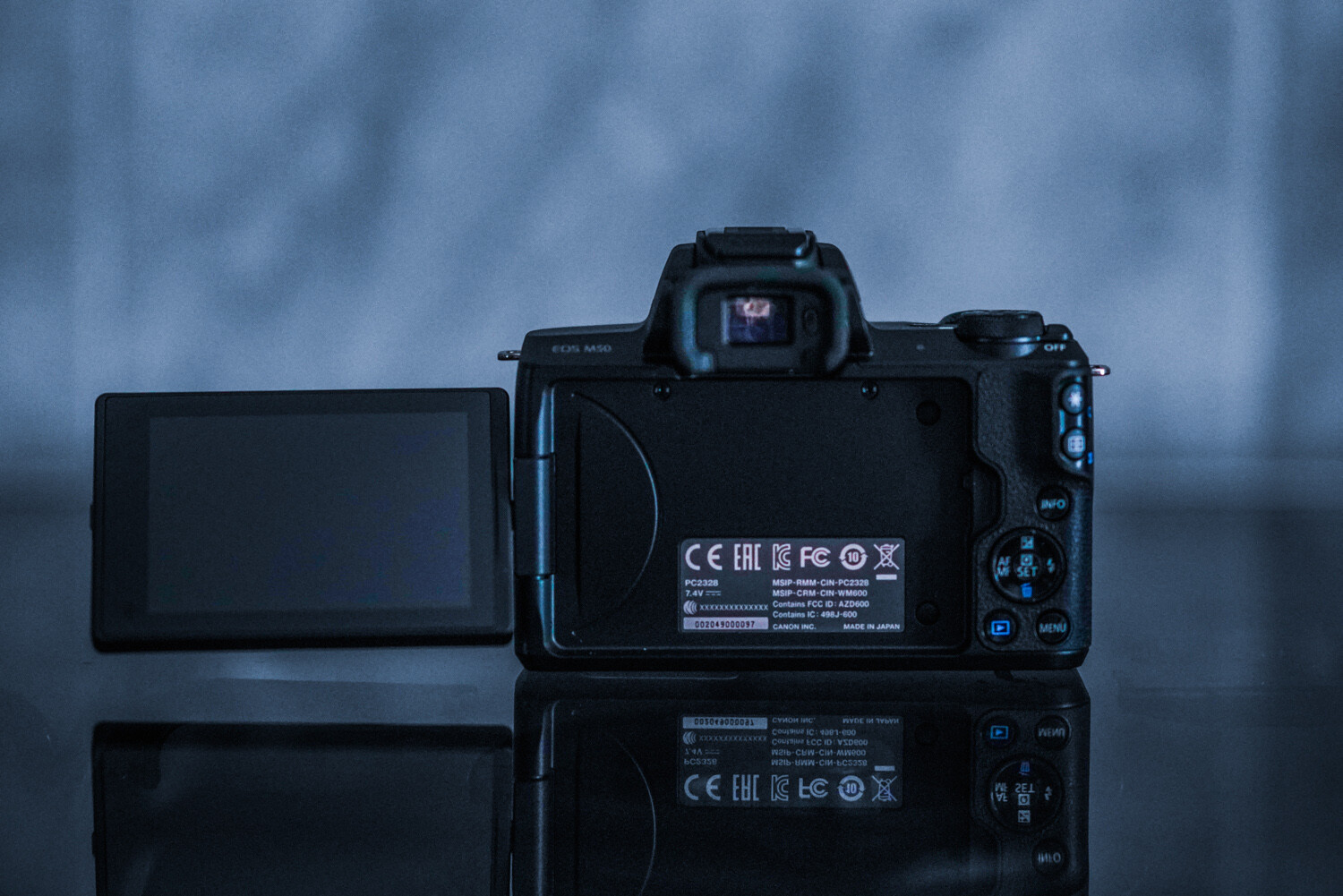
The Canon EOS M50 is a compact interchangeable lens camera for aspiring photographers looking for an easy way to boost the quality of their photos and videos. Sporting 4k video capabilities to capture your favorite memories, 24-megapixel vibrant photographs, and Dual Pixel Autofocus system, the Canon EOS M50 is a masterful piece of technology.

Social media mavens can benefit from the camera’s Wifi function that allows users to connect to the Canon Camera Connect app to transfer images to their smart device. From there, you can share and upload from your device directly to various social media sites.

Canon’s newest addition is an excellent introduction to mirrorless cameras. Complete with a lens, its ready to go right out of the box – making it a fantastic holiday season gift for any photography enthusiast. Following is why this camera is so spectacular!

What is a Mirrorless Camera?

Before we get into it, let’s have a quick look at what a mirrorless camera is and how this new technology compares to digital Single Lens Reflex cameras (DSLRs).

2 - Gear Review Canon EOS M50 Mirrorless Camera Kit

The way that a digital SLR camera works is that a mirror inside the camera reflects the light up to the optical viewfinder (which is also how you see the image before you take it). When you release the shutter, the mirror lifts, allowing the light to hit the sensor and capture the image.

In a mirrorless camera, there is no mirror or optical viewfinder. Instead, the imaging sensor gets exposed to light at all times. This method gives you a digital preview of your image either on the rear LCD screen or an electronic viewfinder (EVF).  As such, a mirrorless camera is one that doesn’t require a reflex mirror – a key component of DSLR cameras.

Due to the lack of mirror, the camera is significantly smaller and lighter weight than a DSLR, a very distinct difference between the two. However, DSLRs are well-trusted because of their true-to-life through-the-lens optical viewfinder system, which uses a series of mirrors to reflect light to your eye.

Mirrorless cameras, on the other hand, require an electronic viewfinder or LCD screen for image monitoring. Both are equally spectacular. Each model has their own pros and cons and it comes down to personal choice.

Canon EOS M50 features and specifications

3 - Gear Review Canon EOS M50 Mirrorless Camera Kit

Features

The Canon EOS M50 mirrorless camera sports some very impressive features that would make even the smuggest photographer blush. The EOS M50 delivers improved Dual Pixel CMOS AF for fast, accurate autofocus that helps you get the photo you want right at the moment it happens.

The 24.1 Megapixel (APS-C) sensor is capable of capturing high-resolution image and video. The files grant the user images suitable for enlargements with sufficient resolution for significant cropping. The video capability of this hardy little camera is even more impressive. It has the ability to record in 4K UHD at 24 frames per second. The high-speed 120p mode is possible in HD.

According to the manufacturer, the built-in high-resolution electronic viewfinder features approximately 2,360,000 dots. So, you can see high amounts of detail in whatever you’re capturing.

The vari-angle Touchscreen LCD, which has a flexible tilt range. The tilt range is ideal for high-angle and low-angle shooting so you can get the composition you want without breaking your back. The Canon EOS M50 camera features the new DIGIC 8 Image Processor, which helps improve autofocus performance, enables you to shoot 4K UHD 24p video and aids with many other advanced features.

4 - Gear Review Canon EOS M50 Mirrorless Camera Kit

Specifications

  • Improved Dual Pixel CMOS AF and Eye Detection AF.
  • 24.1 Megapixel (APS-C) CMOS Sensor with ISO 100-25600 (H: 51200).
  • 4K UHD* 24p and HD 120p** for Slow Motion.
  • Built-in OLED EVF*** with Touch and Drag AF.
  • Vari-angle Touchscreen LCD.
  • Built-in Wi-Fi, NFC, and Bluetooth Technology.
  • Automatic Image Transfer to Compatible Devices while Shooting.
  • New DIGIC 8 Image Processor with Improved Auto Lighting Optimizer.
  • Silent Mode for Quiet Operation.

This is only the second EOS M model to have a built-in Electronic View Finder (with the first being the EOS M5). It is also the first EOS M model to offer 4k video, which puts it one step ahead of the EOS M5. The camera also uses a DIGIC 8 processor, rather than the older DIGIC 7 processor.

Physical build

5 - Gear Review Canon EOS M50 Mirrorless Camera Kit

This camera’s size is brilliant! It is smaller than my cell phone (Google Pixel). Easy to throw into any bag, purse, or pocket. The body construction consists of polycarbonate rather than a metal body shell, but it still feels robust enough in your hand. The camera features a very comfortable and well-designed grip containing  ‘hooks’ for your second finger and thumb. As a result, the M50 feels surprisingly secure, even when used with one hand.

Much like Canon’s pro-level DSLRs, the controls are well laid-out. The buttons are a decent size and easily located by touch while using the viewfinder. However, the size may be an issue for those with larger hands. My hands are petite, and I find the controls just fine (haha)!

6 - Gear Review Canon EOS M50 Mirrorless Camera Kit

The tilt, vari-angle touch screen is brilliant. This nifty feature has infinite uses. Additionally, the screen can be stowed backward against the camera body to avoid any potential scratches (for those that don’t purchase screen protectors). The built-in viewfinder is very helpful when shooting during the noon sun or other bright conditions. There’s an auto activation when your eye approaches the viewfinder, ensuring that the LCD doesn’t blind you.

Canon has a knack for making its small models handle well and feel professional. The M50 is proof of this.

Autofocus

Canon’s autofocus is what has kept me loyal to the brand for over ten years now. Canon’s Dual Pixel CMOS sensor that the M50 sports mean every sensor pixel is capable of being used for phase detection. Allowing fast autofocus almost wherever the subject gets situated within the frame. The AF system is sensitive down to -2 EV, which means the camera continues to focus in extremely low light.

7 - Gear Review Canon EOS M50 Mirrorless Camera Kit

A new autofocus feature of this model is the eye-detection autofocus. The camera can find eyes on your subject and lock focus on them with the push of a button. It is photographic witchcraft, and I love it. This feature is activated when face detection is turned on, to focus specifically on your subject’s eye.

Do make note that this fun feature is only available in single-AF mode, which means you can’t use it track focus during burst shooting. As can be seen above, the eyes of my dog are nicely in focus (and this was easy to achieve, even when she moved a bit).

I have always preferred the AI Servo | Continuous Focus mode due to the majority of my subjects moving around a lot. Thanks to the ability to use phase-detection anywhere in the frame, this feature is fast and reliable.

Low light capability

8 - Gear Review Canon EOS M50 Mirrorless Camera Kit

As the years’ progress, so does low-light capability. In higher ISO levels, image quality stands up very well at ISO 800. It’s only at ISO 3200 noise, and noise reduction starts to blur away detail. However, the color gets retained well. The higher numbers are passable for smaller reproductions, but you’ll generally find yourself not wanting to move beyond 12,500 max! The autofocus continues to shine even at low-light levels.

9 - Gear Review Canon EOS M50 Mirrorless Camera Kit

Battery life

I have always been a tremendous fan of Canon’s batteries. They always continue to impress me with their longevity. This camera is no exception, despite having an always-on LCD screen! As always, I do suggest purchasing more than one battery, but you can remain confident in this camera lasting you through your entire photo session and photography adventures.

10 - Gear Review Canon EOS M50 Mirrorless Camera Kit

The lens: EF-M 15-45mm f/3.5-6.3 IS STM

The M50 kit comes complete with the EF-M 15-45mm f/3.5-6.3 IS STM, a compact and stylized zoom lens for the mirrorless camera. The lens is very compact and features a side switch to flatten the lens when stored. This feature makes traveling with the M50 kit an absolute breeze.

11 - Gear Review Canon EOS M50 Mirrorless Camera Kit

With the 15-45mm kit lens with its STM focus motor, autofocus is great. It is super-fast, silent, accurate, and excellent for any photography style. The 35mm-equivalent 24-72mm range combines a wide-angle for landscapes and big group photos, with a telephoto zoom for close-ups and detailed headshots.

12 - Gear Review Canon EOS M50 Mirrorless Camera Kit

I found the lens to be reliable, fast, and sharp – no complaints whatsoever!

Final thoughts

13 - Gear Review Canon EOS M50 Mirrorless Camera Kit

The Canon EOS M50 is an excellent entry-level camera for aspiring, beginner, and hobbyist photographers alike. From its variety of features to its portable size and ease-of-use, unraveling this camera under the Christmas tree would excite even the most controlled picture-takers. Plus, having a kit that comes with a lens is just a brilliant bonus!

The post Gear Review: Canon EOS M50 Mirrorless Camera Kit appeared first on Digital Photography School. It was authored by Anabel DFlux.


Digital Photography School

 
Comments Off on Gear Review: Canon EOS M50 Mirrorless Camera Kit

Posted in Photography


Sony a7 III vs. Canon EOS R vs. Nikon Z6, which is best?

18 Dec

Introduction

Sony had the full-frame mirrorless market to itself for nearly five years. And, while it’s been doing clever and interesting things with the likes of the a9, it’s the more basic a7 models that have had the most impact. The original a7 was the least-expensive full-frame camera yet launched, which helped make the format look more accessible than it had been since the film era.

They’re all good cameras but there are practical differences

But it’s no longer alone, with both Nikon’s Z6 and Canon’s EOS R both arriving priced in the $ 2000 region. The Canon stands out a little, costing 15% more and, with its simpler control system, not being so overtly aimed at committed enthusiasts. But in most respects, these cameras are direct competitors.

Before going any further, we should make clear that they’re all good cameras (most modern cameras are), they’re all very well built and can all take great photos, so don’t listen to anyone who says any one of them is terrible. However, there are practical differences, so we’re going to look at what each offers in different shooting situations.

Loyalty and inertia

This article primarily looks at the cameras themselves, but lenses should play a fundamental role in any decision. If you have no commitment to an existing system, you can skip ahead to the next slide, but if you already own some lenses, does that mean you have to stay on-brand?

It might be worth taking stock of how committed you really are to your existing lenses

Owners of Nikon lenses can adapt them to work on Sony cameras (and, in theory, someone enterprising could develop an F-mount to Canon RF adapter). But Nikon’s complex legacy of autofocus and aperture actuation systems mean adapting them to other bodies often gives a pretty poor experience. This gives the Nikon Z6 a bit of an edge for F-mount shooters but even then, any lens without its own AF motor is rendered manual focus only on the Nikon.

Legacy DSLR lens compatibility
Canon EF mount lenses Nikon F mount lenses Sony/Minolta A-mount lenses
Canon EOS R Full function (+ optional control ring or filter) Unproven or limited* Unproven or limited*
Nikon Z6 Unproven or limited* Full function with AF-S, AF-P and AF-I lenses. Others MF only Unproven or limited*
Sony a7 III Full Function with Sigma MC-11 or Metabones adapters Unproven or limited* Full Function
*While such adapters are theoretically possible, most that exist at the time of writing are simple adapter tubes with significant limitations in terms of focus and aperture control.

Canon EF lenses work similarly well on the EOS R and on the Sony a7 III, so need not be a deciding factor in making that choice (though long teles work better on the EOS R). If you own any other Canon accessories, that might tip you towards the EOS R, but if anything, Canon’s forward-thinking in the 1980s means EF lens owners have the most flexibility.

However, especially if you’re coming from APS-C, it might be worth stopping and taking stock of how committed you really are to your existing lenses. That prime lens you like so much on APS-C won’t fulfill the same role on full-frame. And if you only have one really great lens, you may find its second-hand value allows you to switch systems without too much of a loss.

Native lenses

With its five year headstart, Sony has a wider range of native lenses available for its E mount. Sony advocates point to the sheer number of lenses when trying to point-score, and it’s true that the company has developed some small lenses with fast, well optimized autofocus. But the E-mount is a relatively young, raw system and some of those lenses (the 28-70mm F3.5-5.6, the 85mm F1.4, 35mm F1.4 and 24-70s, for instance), possess various quirks in terms of optical quality or AF speed. Others, such as the 24-105mm F4 and 24mm F1.4 are fantastic, though.

These are all young systems so, as well as checking whether the lens you want exists, it’s probably worth researching their performance

However, it’s not safe to assume Canon and Nikon will steer clear of these same pitfalls. Canon’s 24-105mm F4 seems very good. It’s fast and quiet to focus and has been well optimized for video (presumably for some future body that’s good at video). But its 35mm F1.8 and 50mm F1.2 aren’t as snappy, either because they have a long focus throw (the 35mm is a Macro), or because they use ring-type focus motors better suited to DSLRs.

It’s a similar story with Nikon. The 24-70mm F4 is a solid all-round zoom but the bokeh on the 50mm F1.8 isn’t exactly attractive, which is disappointing on a 50/1.8 costing $ 600. Also, it’s interesting to note that the native Z-mount lenses appear to focus more slowly than some F-mount lenses designed for DSLRs. There’s a chance that from a future perspective, these early Z lenses will stand out as the ones to avoid if you want full AF performance on Z cameras.

Sony’s willingness to share its mount specs means an increasing degree of third-party support

Sony’s headstart, but also its willingness to share its mount specification means it has an increasing degree of third-party support. This spans the range from dedicated, full-function mirrorless-specific designs, such as Tamron’s 28-75mm F2.8 and Samyang’s 35mm F2.8, through to the modified DSLR lenses from Sigma and a host of niche manual focus lenses from smaller makers, such as Venus Optics. It’ll be interesting to see which of these get reverse-engineered to work with the RF and Z mounts, but neither camera maker seems supportive of this process.

Ultimately these are all young systems so, as well as checking whether the lens you want exists, it’s probably also worth doing some research into their performance, to ensure you’re not paying to be a guinea pig for a large corporation. You might also consider whether a good F4 zoom gives you much of a benefit over an F2.8 on APS-C. Or perhaps choose to wait to see how each system develops.

Core features

The three cameras have some similarities but there’s also a divergence of spec that suggests none of the camera makers have yet worked out who the target photographer is, and what they need.

The Sony and Nikon both offer 24MP sensors (which are likely to be pretty similar other than, perhaps, differences in phase-detection layout and masking). The Canon offers a variant of the 30MP Dual Pixel chip used in the EOS 5D IV. The difference between 24 and 30MP is pretty small: 11% in each direction, but that Dual Pixel design offers something distinctive.

The Sony has more control dials (three plus a dedicated exposure comp dial), while the other two have top-plate settings displays, which appear to be making an unexpected comeback. All three cameras are solidly built and have pretty comfortable hand grips, and each promises some degree of environmental sealing. The main handling difference is how the cameras let you choose your AF point:

AF Joystick Touchscreen AF Touchpad AF
Canon EOS R No Yes Yes
Nikon Z6 Yes Yes No
Sony a7 III Yes Yes Yes

However, while the a7 III’s touchscreen is put to good use for AF point control, it’s the least well utilized for other functions. Both the Canon and Nikon provide more extensive touch control of menus and settings, giving a more consistent experience.

One of the other big spec differences is that the Sony still uses a 2.36M dot viewfinder and 0.9M-dot rear screen, while the Nikon and Canon both go to 3.68M-dot finders and 2.1M dot touchscreens. Finally, the a7 III has a much larger battery than the other two, giving it a huge advantage.

But, rather than dwelling on specifications, we want to look at how the three cameras have performed in different shooting situations.

Portraits

Our choice: Sony a7 III

Anyone arriving from DSLRs is likely to be impressed by any of these cameras for portrait shooting. They can all focus precisely, even when using off-center AF points with a level of consistency that DSLRs can’t match, and will do so even if you choose to shoot with shallow depth-of-field.

The Sony is the easiest of the three to shoot portraits with. Eye-detection AF has existed for a while but Sony’s push-button implementation is hugely impressive for its ability to identify and tenaciously follow your subjects’ eyes. Canon’s Pupil Detection isn’t quite as dogged and only works for single AF acquisition, requiring that your subject stays much more still. It’ll happily focus the 50mm F1.2 wide-open, though, so it does its job.

All three cameras focus precisely, even when using off-center AF points in a way that DSLRs can’t match

The Nikon is weakest in this regard. Its Face Detection doesn’t focus specifically on eyes, so can leave focus mis-placed when working at wide apertures. Its small AF point is effective in some situations but the smaller ‘Pinpoint AF’ system is contrast-detect only, which can be too slow, both to position and to focus, so you’ll need much more patient subjects.

The Sony has the fastest flash sync speed, at 1/250th second but modern high-speed sync and the other cameras’ compatibility with their respective radio-frequency flash triggers may outweigh this small, 1/3EV advantage.

Historically Canon’s JPEG skintones have been widely admired (though the other two brands are closing this attractiveness gap). This may make no difference to you at all, though, if you have a well-honed Raw workflow.

The slightly smaller size of a Sony a7 III with something like the 85mm F1.8 might make it a touch less intimidating than the other, larger cameras, but it’s really the Eye-AF that makes the Sony stand out from the crowd for portraiture.

Sports and Wildlife

Our choice: Sony a7 III

None of these cameras is primarily intended as a sports or wildlife camera but it’s fair to consider how well they can dabble at it.

Sony’s subject tracking system is the best polished and most reliable of the three. The Canon also does well, albeit at a much slower frame rate, while the Nikon Z6 wrestles with an awkward interface and somewhat unreliable subject recognition. In more simple modes, trying to manually keep an AF point over your subject, the performance is more similar, and all three do a reasonable job of refreshing the viewfinder to let you follow action.

The Sony and Nikon both do a good job of balancing shooting speed and buffer depth, despite the Sony depending on the generally slower SD format. The Canon shoots away quite happily but at around half the speed of the other two.

Unsurprisingly, the Sony has the best native telephoto options, with the 100-400mm GM being especially good. The other two cameras do a decent job driving their respective DSLR tele lenses, though.

Overall, we see the Sony as the most reliable performer for sports and wildlife, with the other two falling behind, either in AF reliability or shooting speed.

Wedding and Events

Our choice: Sony a7 III

The price tags and feature sets of these cameras make clear that they’re not the dedicated pro cameras in their lineup, but cameras such as the Nikon D750 have raised expectations of what should be possible for the price. As such it’s fair to assess how well these will behave as second cameras for a professional wedding shooter or as the primary camera for someone shooting weddings as a side-line.

The once-in-a-lifetime nature of weddings is one of the few strong arguments for worrying about the number of card slots a camera has. Whether it’s for separate stills/video capture or the peace-of-mind that redundant backups bring, weddings are one of the areas where the Sony’s twin card slots give it an edge.

The once-in-a-lifetime nature of weddings is one of the few arguments for worrying about the number of card slots

Battery life again plays a big role when shooting weddings and events because, while it only takes a second or two to swap batteries, the need to charge-up spares just ends up adding another pre-event task and another thing to go wrong. The Sony can be expected to offer around twice the battery life of the Nikon and nearly three times that of the Canon.

The Sony’s AF performance, whether in terms of Eye-AF, subject tracking or low light performance, is the most flexible and dependable of the three. The EOS R continues to work in very low light, which is a major asset for this kind of work, making the EOS R and 50mm F1.2 a tempting option, though probably as a second camera.

Sony’s native lens lineup includes more of the classic workhorse lenses than the new RF or Z systems. That said, both the Canon and Nikon are compatible with DSLR-mount versions of these lenses, if you already have them (we wouldn’t generally recommend buying DSLR lenses specifically to adapt to a new system).

The Canon and Nikon are compatible with their respective brands’ RF and IR flash trigger systems, if you own or are renting strobes. That said, none of the three cameras will fire the focus assist lamp on these flashes, which can be a drawback.

Again, Canon’s much-liked JPEG color may play a role in your decision, depending on how much Raw processing your workflow usually entails.

Of the three, we’d feel most comfortable shooting a wedding with the Sony.

Video

Our choice: Nikon Z6

All three cameras promise 4K video, but that’s about where the similarities end. The Canon is clearly the weakest of the three in that it derives its video from a 1.83x cropped region of its sensor and does so with significant rolling shutter.

Both the Sony and Nikon use the full 16:9 region of their sensors, giving detailed, significantly oversampled video. Both have features such as focus peaking and zebra warnings, to help monitor focus and exposure, though the Nikon can’t do both simultaneously. Both cameras are similarly good at video AF.

The Sony and Canon can shoot Log footage internally but only do so in 8-bit, which can limit the files’ flexibility. The Nikon and Canon, meanwhile, will both output 10-bit Log footage to an external recorder over HDMI, giving an advantage in exactly the situations you might need to shoot Log.

The Nikon is the easiest of the trio for switching back and forth between stills and video

The Nikon pulls ahead by retaining separate exposure settings for stills and video. It also gives you the option to use different white balance and color settings. Furthermore, it allows you to define a different i-menu for video and stills shooting. And, in common with the Sony, it lets you define different custom buttons for stills and video. All this makes the Nikon the easiest of the trio for switching back and forth between the two shooting methods.

Ironically, the Canon comes closer to the Nikon in terms of ease of stills/video switching, again maintaining distinct exposure settings and buttons settings, though not distinct white balance settings. Unfortunately, in a camera without in-body stabilization to keep your horizons straight, that offers disappointing resolution, significant rolling shutter and the image quality of a sub-APS-C sensor. Still, it’s a positive sign for whatever comes next.

Of course, if you really find yourself getting into video, Sony’s E-mount is the only one of these three that currently has pro-grade video lenses and cameras available.

Landscape

Our choice: Nikon Z6 or Sony a7 III

Resolution and dynamic range are the critical image quality factors for landscape shooting. The Canon has the edge in resolution, while Sony (in uncompressed Raw mode, at least) wins out in terms of dynamic range. The Nikon is a fraction behind the Sony in this respect, as slight banding can be revealed from the deep shadows if you try to use its full dynamic range.

Close inspection makes the Nikon appear to have the most substantial weather sealing, but the Canon and Sony also make the same claims. The Sony is the only one that can be powered over USB while being used, somewhat ironically since it’s the one that lasts longest on its own battery. All three cameras can be charged over USB.

We’ve also found the Nikon the easiest of the three to operate while wearing gloves

The Nikon has a pretty sophisticated intervalometer and time-lapse move mode, which the other two lack. We’ve also found the Nikon the easiest of the three to operate while wearing gloves, with the Sony a little behind. The Canon and Sony don’t offer any internal interval shooting controls, which is a particular shame on the a7 III, since it can run from an external USB power source and its predecessor let you install a time-lapse function.

The Canon is alone in needing stabilized lenses if you don’t have a tripod, since the other two have in-body stabilization.

Travel

Our choice: Sony a7 III (but they’re all pretty good)

Travel is perhaps the most difficult use-case for any of these cameras, since it could require a little of everything. On top of the capabilities already discussed, all three have pretty good Wi-Fi systems for sharing your images with the people back home.

Some of the strongest lenses in all three systems are the 24-something F4 zooms, with the Canon and Sony examples extending out to a more versatile 105mm focal length. Nikon’s 24-70mm is smaller as a result of its shorter reach, though. Sony’s willingness to share its mount details means Tamron’s 28-75mm F2.8 should also be considered. All three cameras with these do-everything lenses make pleasant (if somewhat large) travel companions, though.

Some of the strongest lenses in all three systems are the 24-something F4 zooms, ideal for travel photography

Nikon’s weather sealing might be more reassuring when you’re out-and-about but its reliance on XQD cards might leave you in a tricky spot if you lose or fill your card on a long trip.

The Sony would probably be our favored travel camera, though. It’s the smallest of the three bodies and for now, at least, has a wider choice of small lenses. It’s got the most capable (though probably most complex) autofocus system, for shooting whatever you encounter. But, most significantly, it offers by far the best battery life.

Conclusion

Even without thinking about lenses, it’s clear that Nikon and Canon still have some work to do to catch up with Sony’s half-decade headstart. It’s not an insurmountable difference, though and both brands have brought their extensive experience of ergonomics and user interfaces, which Sony should probably be worried about.

The camera body you choose now is likely to commit you to a new lens system for the foreseeable future

All three cameras can produce excellent images but the Sony more readily adapts to a wider range of situations. The Nikon acquits itself well for certain types of photography, while also doing unexpectedly well at video, but the Z6 has the least dependable AF system of the trio, which counts against it. Canon has tried to make an easy-to-use camera, rather than simply mimicking its DSLRs, but, while we’re not fully convinced by the results of this first attempt, it’s still a very able camera.

Ultimately, though, the decision is likely to come down to what lenses you own, which lenses you plan to buy and how much faith you have in each company to produce camera bodies to match your needs, several years down the road. Because, if you’re trying to avoid major costs later, the camera body you choose now is likely to commit you to a new lens system for the foreseeable future.

Articles: Digital Photography Review (dpreview.com)

 
Comments Off on Sony a7 III vs. Canon EOS R vs. Nikon Z6, which is best?

Posted in Uncategorized


Kipon adds Nikon Z and Canon R mounts to medium format lens adapter range

14 Dec

Chinese optics manufacturer Kipon has added the Nikon Z and Canon R mounts to its range of medium format to full frame camera adapters. The company claims the adapters ‘virtually eliminate any crop factor’ by way of optics within the adapter that compensate for the difference in imaging areas of the full frame and medium format systems, and says the diagonal angle of view is maintained.

The eight Baveyes focal reducers use a five-element design and work with a number of popular medium format brands, namely Pentax, Mamiya and Hasselblad.

These adapters already exist for Sony full frame, Leica M and Leica SL cameras.
The new adapters will cost $ 695 and can be ordered from this week.
For more information see the Kipon website.

Press information

KIPON start to deliver 8 models new Baveyes/focal reducer for new Nikon Z mount & Canon R mount cameras

KIPON start to deliver 8 models new 0.7x Baveyes/focal reducer for new Nikon Z mount & Canon R mount cameras, increased Baveyes lineup for using medium format lenses on full frame cameras from 24 to 32 models.

  • Baveyes Pentax645-Nikon Z 0.7x
  • Baveyes Pentax67-Nikon Z 0.7x
  • Baveyes MAMIYA645-Nikon Z 0.7x
  • Baveyes Hasselblad V-Nikon Z 0.7x
  • Baveyes Hasselblad V-EOS R 0.7
  • Baveyes MAMIYA645-EOS R 0.7x
  • Baveyes Pentax67-EOS R 0.7x
  • Baveyes Pentax645-EOS R 0.7x

KIPON Baveyes introduces a line-up of the world’s first lens adapters that bring the famous medium format optics to Sony E, Leica SL and Leica M, Nikon Z, Canon R 35mm full frame cameras, virtually eliminating any crop factor image loss and maintaining diagonal angle of view.

The transformation results in a 0.7x factor to the original lens focal length with a gain of one stop in lens speed. Foremost in the advanced adapters, is the custom designed five element multicoated formula by German optics research institution, with the ability to use full frame SLR lenses on crop sensor camera bodies and mirrorless cameras.

Many medium format lenses are legendary for contrast, flare resistance, color saturation, bokeh and are in a class of their own compared to even the best 35mm format glass. And the Sony, Leica, Nikon, Canon image sensors, in the heart of their robust camera bodies, give new life to these medium format legendary lenses.

The retailer price for these optic focal reducer is 695USD,can order from Amazon Japan and Tmall China and Ebay factory shop from this week.

Articles: Digital Photography Review (dpreview.com)

 
Comments Off on Kipon adds Nikon Z and Canon R mounts to medium format lens adapter range

Posted in Uncategorized


Going Back to Basics – My Week With a Canon EF 50mm f/1.8 II Lens

12 Dec

The post Going Back to Basics – My Week With a Canon EF 50mm f/1.8 II Lens appeared first on Digital Photography School. It was authored by Megan Kennedy.

The demise of my first Canon EF 50mm f/1.8 II lens was an unfortunate one.

First, I dropped it – which is OK.

It happens. Still recoverable, I know.

Until, clumsily, I stood on it too.

And, just to be sure it was finished, what was left of the lens then rolled down a small hill. When I caught up, I scooped it up in my hands, all scratches and broken glass. It was my first, and I was gutted.

Nevertheless, after what seemed like an appropriate period of mourning, I did what any photographer would. I bought something newer, and shinier.

I decided to graduate to a Canon EF 24-105mm f/4L IS USM. From there it was all systems go, zooming in and out of those hard to reach spots and enjoying the freedom that a versatile medium-range workhorse affords. And despite the occasional bashing here and there, its been my go-to lens ever since.

Recently, however, I acquired another Canon EF 50mm f/1.8 II. Just like my old one, but much less crunched. So I decided to see what going back to a prime lens would be like. Especially after relying so heavily on the reach of the Canon EF 24-105mm f/4L IS USM. Here’s a quick rundown on my week with the Canon EF 50mm f/1.8 II and why a break from your old favorite can be surprisingly beneficial.

Suddenly lighter

The first difference I noticed after clicking the Canon EF 50mm f/1.8 II into place was the weight, or should I say, the lack thereof? The bulk of the Canon EF 24-105mm f/4L IS USM was enormous compared to the little ‘plastic fantastic’ (as the Canon EF 50mm f/1.8 II has come to be known). Photographing with the Canon EF 50mm f/1.8 II, I had a lot less neck pain, which meant I could stay out shooting for longer without needing some painkillers.

Ditching the weight of the Canon EF 24-105mm f/4L IS USM had another benefit too. Without swinging around a heavy lens, I was able to move a lot more freely. I could crouch, jump up and down, do some parkour…

Okay, I’m not that athletic.

However, being able to move allowed me to line up shots with more ease.

A lighter lens meant I could easily sneak my camera under this umbrella for a photograph

Slowing it down

The technical differences between Canon EF 24-105mm f/4L IS USM, and the Canon EF 50mm f/1.8 II took some getting used to – zoom being one of the most pronounced. Instead of getting closer to a subject in-camera, I needed to reassess what I wanted to achieve. This meant strategically positioning my body to get the shot. Sure, I walk around seeking out subjects to photograph all the time. But, with the Canon EF 50mm f/1.8 II, I needed to be just a little more active to get the image I was after.

Sticking with the Canon EF 50mm f/1.8 II got me thinking about the physical and mental elements that come together to create a successful shot. It made me slow down and appreciate the machinations of photography and the tactility of the image-making process.

Lots of light

One of the biggest differences between the Canon EF 24-105mm f/4L IS USM and the Canon EF 50mm f/1.8 II is written in the name of the lenses themselves. It’s aperture. While the Canon EF 24-105mm f/4L IS USM can manage a valiant F/4, it doesn’t quite cut the mustard compared to the Canon EF 50mm f/1.8 II, opening up to an aperture of f/1.8.

What does this all mean? Basically, the Canon EF 50mm f/1.8 II can allow a lot more light to pass through to the camera’s sensor. That’s a big deal in low lighting conditions. For example, shooting at night with the Canon EF 24-105mm f/4L IS USM may require a much slower shutter speed or higher ISO value to achieve the same exposure the Canon EF 50mm f/1.8 II can at a faster shutter speed and a lower ISO. This means that the Canon EF 50mm f/1.8 II can produce much better image quality in low light.

Photographing in darker environments can be challenging. But the Canon EF 50mm f/1.8 II allowed me to experiment at different times of the day without having to worry about available light. Of course, its a consideration when calculating exposure, but I was a lot less concerned about clogging up my images with insane amounts of noise than I would be with the Canon EF 24-105mm f/4L IS USM in the same conditions.

The f/1.8 aperture of the Canon EF 50mm f/1.8 II allowed me to take this shot with a lot less noise and a faster shutter speed

Extension tubes

Another benefit of the ample aperture of the Canon EF 50mm f/1.8 II is its versatility when coupled with a set of extension tubes. Extension tubes physically move your lens away from the focal plane. This makes the minimum focusing distance (the shortest distance at which a lens can focus) smaller, meaning you can get closer to your subject while still maintaining focus. It’s a way to shoot macro photography without an expensive dedicated lens.

However, extension tubes do have their drawbacks. One of them being diminishing the available light in a scene. With the addition of each extension tube, less light is able to reach the camera sensor. This drop in light can be difficult to contend with if you don’t have a tripod and a perfectly still subject. A fast lens like the Canon EF 50mm f/1.8 II is ideal in this situation. Even on a terribly overcast day, I was able to get some nice, sharp shots at a decent shutter speed. It meant that I could hand-hold my camera to take macro shots that may have required a tripod with the Canon EF 24-105mm f/4L IS USM.

Bokeh

One aspect of the Canon EF 50mm f/1.8 II lens that I was eager to experiment with was its capacity for bokeh. A Japanese word meaning ‘blur’or ‘blurry’, bokeh refers to the quality of the out of focus parts of an image. The term is often used to describe how unfocused bright points in a scene are rendered as disks of light in a photograph.

While all lenses are capable of bokeh effects, zoom lenses tend to smooth a background over rather than shape it. Prime lenses, on the other hand, deliver a more defined disk-like bokeh result. In addition, bokeh requires the lowest possible aperture value to take full effect. This makes the maximum f/1.8 aperture of the Canon EF 50mm f/1.8 II ideal for some sweet bokeh magic.

Seeking out opportunities for bokeh made me re-evaluate my surroundings. I had to quickly develop an eye for points of light that I could use to disperse into globes of color. But with the ease that a small camera lens affords, the little ‘nifty fifty’ produced some really fascinating results with little effort on my part.

Testing bokeh out on a rainy night in the city

Conclusion

There are plenty of other comparisons to explore between the Canon EF 50mm f/1.8 II and the Canon EF 24-105mm f/4L IS USM. I know, a week isn’t a very long time to truly get accustomed to a new piece of equipment, but challenging myself to a week of prime-lens-only photography was a lot less difficult than I thought it would be.

In fact, it was pretty fun!

Up until now, I’ve been a one-camera-one-lens kinda gal.

But playing around with the Canon EF 50mm f/1.8 II made me think twice about my equipment repertoire. And with the weight and maneuverability of a small mammal, captivating bokeh and such a tight performance in low light conditions, I think I might just add it to the camera bag too. Just in case.

Without stepping on it this time.


Do you use the nifty fifty? What are your thoughts?

The post Going Back to Basics – My Week With a Canon EF 50mm f/1.8 II Lens appeared first on Digital Photography School. It was authored by Megan Kennedy.


Digital Photography School

 
Comments Off on Going Back to Basics – My Week With a Canon EF 50mm f/1.8 II Lens

Posted in Photography


Kipon announces five ‘Elegant’ F2.4 prime lenses for Canon RF and Nikon Z mounts

11 Dec

Lens and lens adapter manufacturer Kipon has announced a new series of lenses for the latest Canon and Nikon full-frame mirrorless cameras.

The Elegant series, as it’s called, consists of five prime lenses in the following focal lengths and apertures: 24mm F2.4, 35mm F2.4, 50mm F2.4, 75mm F2.4 and 90mm F2.4. Each lens comes in both Nikon Z and Canon RF mount options and is entirely manual. The lenses features a focus ring, a physical aperture dial, and focus guide markings. The exact optical construction of each lens remains unknown, as the press release is vague and short on details.

The lenses will be available by the end of December 2018 with the following pricing:

• 24mm F2.4 — $ 499 USD
• 35mm F2.4 — $ 468 USD
• 50mm F2.4 — $ 325 USD
• 75mm F2.4 — $ 355 USD
• 90mm F2.4 — $ 386 USD

Although not currently available for purchase, the lenses will be listed on Kipon’s Adorama and eBay shop when they become hit shelves later this month.


Update (12/10/2018 247pm EST): As pointed out by diligent readers, these five lenses are effectively rebranded and re-mounted versions of the IBE-Optics HandeVision IBERIT 24, 35, 50, 75 and 90mm f/2.4 lenses available for Fujifilm X, Leica L, Leica M and Sony E mounts.

Articles: Digital Photography Review (dpreview.com)

 
Comments Off on Kipon announces five ‘Elegant’ F2.4 prime lenses for Canon RF and Nikon Z mounts

Posted in Uncategorized


Canon patent shows off EOS M speedbooster-style adapter for EF lenses

08 Dec
This diagram from the patent shows the optical construction of the Converter Adapter (labelled CL) with a Master Lens (labelled ML) in front of it.

A new patent application filed by Canon, and first detailed on Canon News, lays out the schematics for its own version of a speedbooster adapter that would enable Canon EOS M users to adapt EF lenses onto the EF-M mount.

Japanese patent application 2018-189864 details an adapter that includes both a 0.8x focal length reducer, as well as a ‘variable flare cutter.’

As with the speedbooster adapters, Canon’s adapter would use a series of lenses to reduce much of the full-frame field of view onto an APS-C sensor, such as those used inside Canon’s EOS M cameras.

Where things get interesting is that Canon isn’t stopping there. Similar to how Canon has introduced a line of EF to RF adapters with added features, including an integrated control dial and drop-in ND/CPL filters, the adapter detailed in this patent adds yet another component: an adjustable aperture or set of apertures that effectively mask off sections of the adapter to reduce the potentially negative impact of stray, non-image forming, light rays.

This diagram from the patent highlights two separate locations where the variable aperture could be located within the converter (the front of the converter being the left side and the rear of the converter being the right side).

The patent explains this is done by calculating, on the fly via communication through integrated contacts, the ideal pupil sizes and locations of the in-adapter apertures, based on the attached lens’ current aperture and focus distance. With this information, the the adapter could ideally adjust its multiple variable flare cutters.

Within the patent, an example scenario is detailed showing how a full frame 50mm F1.4 lens would effectively become a 40mm F1.2 lens with an image height of 13.66mm and 18mm back focus — precisely the size needed for EOS M cameras.

The resulting combination would act as a 64mm F1.9 equivalent. Not quite as wide or with such a bright equivalent aperture as the full frame lens used on full frame, but still better than using a pass-through adapter.

Articles: Digital Photography Review (dpreview.com)

 
Comments Off on Canon patent shows off EOS M speedbooster-style adapter for EF lenses

Posted in Uncategorized


Best DSLR For Beginners: Canon or Nikon?

30 Nov

If you’re a beginner DSLR camera user, it means you’ve outgrown your smartphone or compact camera and want to take your photography to the next level and deliver quality images.  Right? If that’s the case, we’ll help you take that big step up. There’s a range of DSLR Cameras for entry-level users like the Canon and Nikon brands that offer Continue Reading

The post Best DSLR For Beginners: Canon or Nikon? appeared first on Photodoto.


Photodoto

 
Comments Off on Best DSLR For Beginners: Canon or Nikon?

Posted in Photography