RSS
 

Posts Tagged ‘Cameras’

Zeiss names and defines new lenses for Sony NEX and Fujifilm X cameras

01 May

Touit12.jpg

Zeiss has announced more detail on two forthcoming lenses for Sony NEX and Fujifilm X-mount APS-C cameras –  the 12mm F2.8 and 32mm F1.8 lenses it unveiled at Photokina last year. The announcement came via the Zeiss blog, which went into detail on how they came to the name for the new series, ‘Touit.’ Pronounced like the English ‘do it,’ the new lenses are named after a Latin American band-tailed parrot, which Zeiss describes as ‘small and agile,’ much like mirrorless cameras are meant to be. Click for more on the new lenses.

News: Digital Photography Review (dpreview.com)

 
Comments Off on Zeiss names and defines new lenses for Sony NEX and Fujifilm X cameras

Posted in Uncategorized


100 Cameras — How to Improve Kids’ Lives Through Photography

30 Apr
Photo by Brooke Schwab

Photography is a solo sport. It’s just you and your camera out there!

You’ve asked yourself a million times how you can make a difference with your photo skills, and 100 cameras figured it out.

This non-profit gives cameras to kids in developing communities around the world. Which is so great!

The kids are then able to sell their own photos giving them educational resources, healthcare, and lifeline supplies. Even greater!

These new photogs also learn about empowerment — they first-hand experience their own talent and skill positively affecting their communities.

Remember the first time you felt you could make a difference? Suddenly you felt like you could do so much! One empowering experience is all it takes.

BTW! 100 Cameras is actually raising funds to launch 100 Cameras 2.0, which will let anyone start their own photo community. Helping kids with photography? Sounds like a no-brainer!

Help Kids via 100 Cameras

p.s. Attention gadget lovers – we’re hiring for a Buyer aka Treasure Hunter. Apply here.

Related posts:

  1. How Cameras & Toys Change Kids’ Lives We’ve all been there: not having the words to express…
  2. How Shooting Just One Thing Can Improve Your Photography Chops ~Have a cool photo product or site? Reach 270,000 photo…
  3. See Through Your Kids’ Eyes, Wirelessly Upload from Their Camera to a Flickr Stream The little ones in our lives are fascinating people. They…


Photojojo

 
Comments Off on 100 Cameras — How to Improve Kids’ Lives Through Photography

Posted in Equipment


Android co-founder says mobile OS was originally designed for cameras

17 Apr

Screen_Shot_2013-04-16_at_11.38.58_AM.png

Andy Rubin, co-founder of Android, claims that the popular mobile operating system was originally designed for digital cameras, not phones. In an interview published by PC World, Rubin said that the original concept, as pitched to investors back in 2004, was for ‘a camera platform with a cloud portion for storing images online’. By the time Google acquired Android in 2005, however, the plan had changed and Android was developed for mobile handsets. Click through for more details and a link to the full story at PCWorld.com.

News: Digital Photography Review (dpreview.com)

 
Comments Off on Android co-founder says mobile OS was originally designed for cameras

Posted in Uncategorized


Sigma’s DP Merrill Cameras Compared – World-Beating Image Quality In Compact Bodies

07 Apr

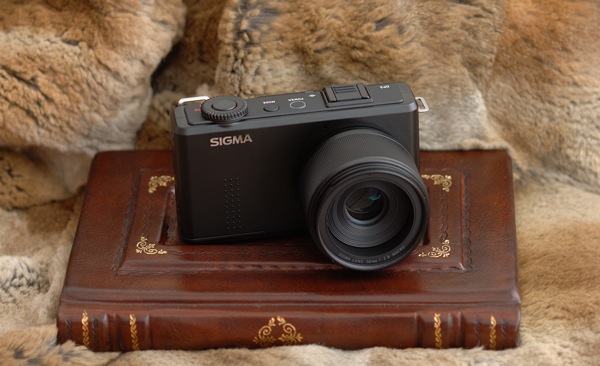
Sigma, known mainly to photographers for their affordable lenses, recently caused quite a stir among discerning photographers. How? By building three compact cameras around the incredible sensor taken from the SD1, which initially cost $ 10,000. The image quality is simply incredible, and the cameras themselves are small, light and unobtrusive. For photographers seeking the best possible image quality on a budget, they’re unmatched.

Photo1

But there are lots of compromises. Foremost among them is battery life. The small batteries don’t last long so you’ll need to buy spares. Fortunately, they’re cheap. Second compromise; usability. It’s pretty good for a compact camera, and the controls are well laid out for photographers, but there’s some shutter lag, the auto-focus can’t match dSLRs and the huge RAW files take a while to write to the card.

The main compromise we’ll deal with is focal length. Each DP Merrill camera is essentially identical except for the length of the fixed prime lens.

  • The Sigma DP1m has a 19mm lens; equivalent to a 28mm wide-angle on full frame.
  • The Sigma DP2m has a 30mm lens; equivalent to a 45mm standard lens.
  • The Sigma DP3m has a 50mm lens; equivalent to a 75mm short telephoto.

All three lenses have a maximum aperture of f2.8 and a minimum aperture of f16. In my opinion (and not just mine), they are some of the best lenses ever made, including Leica and Zeiss.

In use, being restricted to a single focal length changes the camera entirely. This comparison therefore focusses on which of the Sigma DP series will be right for you. For the cameras themselves, I highly recommend Michael Reichmann’s review at Luminous Landscape.

I’ve used all three cameras for a variety of genres. Now comes time to choose.

Photo2

The Sigma DP1m is very convenient if you want amazing image quality in a tiny package. I was able to take photographs that I otherwise couldn’t have made. This is because it doesn’t look like a serious camera and it’s effectively silent in use. Professional photographers, especially those working where cameras are unwelcome, will appreciate this. Compared to carrying a Nikon pro-body with a wide-angle lens, it’s very much smaller. However, I missed photographs due to the shutter lag and the corners a bit softer than the other two DP cameras.

Photo3

The Sigma DP3m is specialised. I found a 75mm equivalent lens a bit long in use as an everyday camera. However, it is a pocket portrait monster, delivering incredibly sharp files with beautiful bokeh. It’s also got an amazing macro capability which, while not a true 1:1 reproduction, gets close enough for most applications. And there’s no noticeable distortion. The Sigma DP3m really excels when you fuss about and stitch images. 14.85 megapixels is enough for most applications, but if you want to print enormous files, you can increase the image resolution by making mosaics from multiple pictures using software that can stitch panoramas. Because the image quality is so amazing at a 100% level (because it’s not interpolated like a Bayer sensor), the files can be that much better, rivalling medium format cameras worth tens of thousands. For me, this is the niche use the DP Merrill series excels for. I can carry a tiny compact camera, a few cheap batteries and a lightweight CF tripod when I’m doing fine art photography and create the most amazing results.

Photo4

The Sigma DP2m is a bit of a compromise. I’d recommend getting both the Sigma DP1m and the Sigma DP3m; they work very well together as a pair. But if this isn’t an option, the DP2m is your camera. It’s neither too wide-angle nor too telephoto. You can stitch images if you choose as there’s no real distortion, but the standard-lens approach works well for a range of subjects. The important thing is that you get access to that incredible X3 Foveon sensor. Download some Sigma DP Merrill sample images here; they speak for themselves.

Ben Evans teaches Barcelona Photography. Learn the most important things about photography in one hour for (and for less than the price of a lunch) with the best-selling ‘Photography: The Few Things You Need To Know’ Audiobook – www.GreatBigBear.com/Audiobook

Post originally from: Digital Photography Tips.

Check out our more Photography Tips at Photography Tips for Beginners, Portrait Photography Tips and Wedding Photography Tips.

Sigma’s DP Merrill Cameras Compared – World-Beating Image Quality In Compact Bodies


Digital Photography School

 
Comments Off on Sigma’s DP Merrill Cameras Compared – World-Beating Image Quality In Compact Bodies

Posted in Photography


Equinox modular and Leica X3 concept cameras

15 Mar

leica_x3_2.jpg

What is an ideal camera for today’s smartphone generation? Designers Vincent Sall, Dae jin Ahn and Chun hyun Park have created designs to explore the question. Inspired by the Leica X2, Vincent Sall envisions a Leica X3 that is an extremely mobile version of the high-end compact that folds up and communicates with a smartphone to share its images. Korean designers Dae jin Ahn and Chun hyun Park have put together a modular camera design calling it the Equinox. It reminds us of the Ricoh’s GXR modular system. The ‘core’ consists of the sensor and lens mount that can be attached to various kinds of camera body shells to step it up from a compact interchangeable lens camera to a large DSLR. (via Yanko Design & Petapixel)

News: Digital Photography Review (dpreview.com)

 
Comments Off on Equinox modular and Leica X3 concept cameras

Posted in Uncategorized


ACDSee 15 and Pro 6 gain Raw support for 19 additional cameras

08 Mar

ACDSee.png

ACD Systems has extended the Raw support offered by its ACDSee Pro 6 and ACDSee 15 software packages. Version 6.2 of the Pro version and and ACDSee v15.2 gain support for an additional 19 cameras including the Canon EOS M, Nikon D5200, Sony SLT-A99V and the Olympus E-PL5. This update also includes performance improvements. Click through for more information.

News: Digital Photography Review (dpreview.com)

 
Comments Off on ACDSee 15 and Pro 6 gain Raw support for 19 additional cameras

Posted in Uncategorized


Plastic Cameras: Lo-Fi Photography in the Digital Age [Book Review]

27 Feb

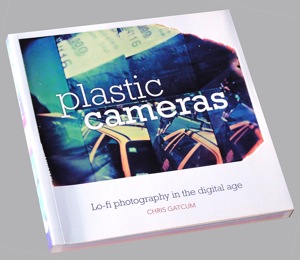
Plastic camerasYears ago a cinematographer friend told me of a dinner he once had in Paris with a Mr Cooke. Mr Cooke of the famed British optical firm Cooke, Taylor and Hobson.

During the meal Mr Cooke explained that he spent most of his waking and working hours designing lenses to perform with maximum sharpness and minimum degrees of aberration to achieve the perfect capture of the photographic image. In spite of these heroic efforts he spoke with some level of bitterness that certain cinematographers persisted in covering his carefully crafted lenses with all sorts of rubbish, grease and diffusers to degrade, soften and generally muck up the performance of these precisely manufactured optics … all in the pursuit of artistic expression!

Just as the plastic cameras described in this book do today!

Author Gatcum is of the opinion that digital photography and the associated image editing software has made it so much easier to produce perfect shots … but there are many enthusiasts out there who don’t necessarily want ‘perfect shots’. It’s at this point in the argument that plastic cameras and their ‘lo-fi’ aesthetic enter the discussion.

You have only to flip through the images in the book to enjoy the thrills and spills that plastic cameras can create! Images with severe vignetting, extreme aberrations, uneven sharpness across the frame, colour that shows that things are definitely not right in the lenses’ colour capture. For not right, read very right in the vocab of the adventurous photographer!

From my own experiences with early Diana cameras and more recent LOMO replicas you have to take a chance, sometimes succeeding with a shot that stuns! Or that doesn’t! Perfection is not on the menu! Chance is the name of the game!

Diana F front

The story really starts with the original Diana, made by the Great Wall Plastics factory in Hong Kong in the 1960s and first sold for about a dollar. By the 1970s the resourceful and wise out there quickly saw the Diana’s potential and snapped them up from junk shops to began using them for creative photography. These days the original $ 1.00 Dianas sell on eBay for $ 50 plus.

By 2007 the Lomography company saw an opportunity and cleverly re-manufactured the Diana and its sub models, selling them for prices approaching $ 100, complete with all their imperfections.

These days we’re spoilt for choice. The book lists dozens of crazy models, all available from companies such as Lomo and the like.

Like the magnificent 120 format Holga and its variations. These include the Holga 120 TLR, the Holgaroid, the Holga 120 3D, Holga PC pinhole camera. Also in 35mm: Holga 135 TLR.

Lomo of course markets a wide variety of models: the 35mm based LC-A, the Lomo Smerna duet of models, with one sporting a flash socket. Plus many, many more.

And a long list from other makers: Blackbird; Recesky TLR; Halina Panorama; Twinkle 2; Split-Cam; Robot 3; Action 4; Agat 18k; Ikinimo 110 … the list goes on.

Then the game got clever: you can now buy Holga lenses that fit current DSLR models such as Olympus and Panasonic Four Thirds format models.

There are even apps that digitally replicate the look and feel of plastic cameras!
The book is a ball of fun and even if you never buy a plastic camera to pursue the path of erratic photographic capture you will enjoy the ride as you thumb through its pages.

Footnote: these days the name Cooke appears on high level lenses used still in feature film and TV series photography. They’re highly regarded and no doubt are frequently plastered with layers of Vaseline, parachute silk, ripstop nylon etc!

Author: G Gatcum.
Publisher: Ammonite Press.
Distributor: Capricorn Link.
Length: 192 pages.
ISBN: 978 1 90770 840 4.
Price: “Get a price on Plastic Cameras at Amazon (currently 22% off)

Post originally from: Digital Photography Tips.

Check out our more Photography Tips at Photography Tips for Beginners, Portrait Photography Tips and Wedding Photography Tips.

Plastic Cameras: Lo-Fi Photography in the Digital Age [Book Review]


Digital Photography School

 
Comments Off on Plastic Cameras: Lo-Fi Photography in the Digital Age [Book Review]

Posted in Photography


Sony US introduces Cyber-shot WX300, HX300 and TX30 compact cameras

25 Feb

sony_dschx300.png

Sony has announced the Cyber-shot DSC-WX300, DSC-HX300 and DSC-TX30 compact cameras in the US market. The HX300 is a 20MP 50x superzoom with a 24-1200mm equiv. lens. Meanwhile the WX300 is an 18MP Wi-Fi compact superzoom with a 25-500mm equiv. lens. The tough, waterproof, card-style TX30 offers a 26-130mm equiv zoom. The WX300 will cost around $ 330, while the HX300 and TX30 will have retail prices of $ 500 and $ 350 respectively.

News: Digital Photography Review (dpreview.com)

 
Comments Off on Sony US introduces Cyber-shot WX300, HX300 and TX30 compact cameras

Posted in Uncategorized


Sony US announces SLT-A58 DSLR and NEX-3N mirrorless cameras

25 Feb

sony_slta58.png

Sony US has announced the Alpha SLT-A58 and NEX 3N cameras, five days after they were announced in Europe. The A58 replaces both the A37 and A57, helping to simplify the company’s lineup. Meanwhile, the NEX-3N gains a compact-camera-style zoom lever and a smaller body than its predecessor, the F3. Both gain a lock-on focus mode and Auto Object Framing mode. The SLT-A58 will cost around $ 600 as a kit with the 18-55mm zoom, while the NEX-3N comes with a 16-50mm power zoom lens for around $ 500.

News: Digital Photography Review (dpreview.com)

 
Comments Off on Sony US announces SLT-A58 DSLR and NEX-3N mirrorless cameras

Posted in Uncategorized


Sony launches Cyber-shot WX300, HX300 and TX30 compact cameras

20 Feb

sony_dschx300.png

Sony has announced the Cyber-shot DSC-WX300, DSC-HX300 and DSC-TX30 compact cameras. The HX300 is a 50x superzoom with a 24-1200mm equivalent lens in front of a 20MP CMOS sensor. Meanwhile the WX300 is a Wi-Fi compact superzoom that Sony says is the slimmest 20x camera. It has an 18MP CMOS chip behind its 25-500mm equiv. lens. Finally, the tough, waterproof card-style TX30 shares the same sensor and offers a 26-130mm equiv zoom. The three models are not currently being announced in the USA.

News: Digital Photography Review (dpreview.com)

 
Comments Off on Sony launches Cyber-shot WX300, HX300 and TX30 compact cameras

Posted in Uncategorized